Nederlands
  English
  简体中文
简体中文  Deutsch
  Español
  Français
  Italiano
  日本語
日本語  한국어
한국어  Polski
  Português
  Русский
  Türkçe
  Tiếng Việt
  ไทย
ไทย 
Het verbeteren van de akoestiek van het gebouw betekent het controleren van hoe geluid zich in een ruimte gedraagt, zodat het comfort, communicatie en dagelijks gebruik ondersteunt in plaats van ertegen te werken. Een goede akoestiek vermindert ongewenste ruis, beperk echo en galm en helpt de spraak helder en begrijpelijk te blijven. Wanneer de akoestiek slecht is, ervaren mensen vermoeidheid, afleiding, stress en verminderde productiviteit. Dit geldt in kantoren en coworking-ruimtes, maar ook in huizen, scholen, ziekenhuizen en openbare gebouwen waar welzijn en duidelijkheid er net zo veel toe doen als esthetiek.
Het verbeteren van de akoestiek gaat niet over het volledig elimineren van geluid. Het gaat erom dat je geluid beheert op een manier die past bij de functie van de ruimte.
Dit artikel legt uit dat praktische manieren worden uitgelegd om de akoestiek van gebouwen te verbeteren, materiaalkeuzes, lay-outstrategieën en moderne akoestische oplossingen die in echte projecten worden gebruikt, te dekken.
1. Wat betekent "goede akoestiek bouwen"?
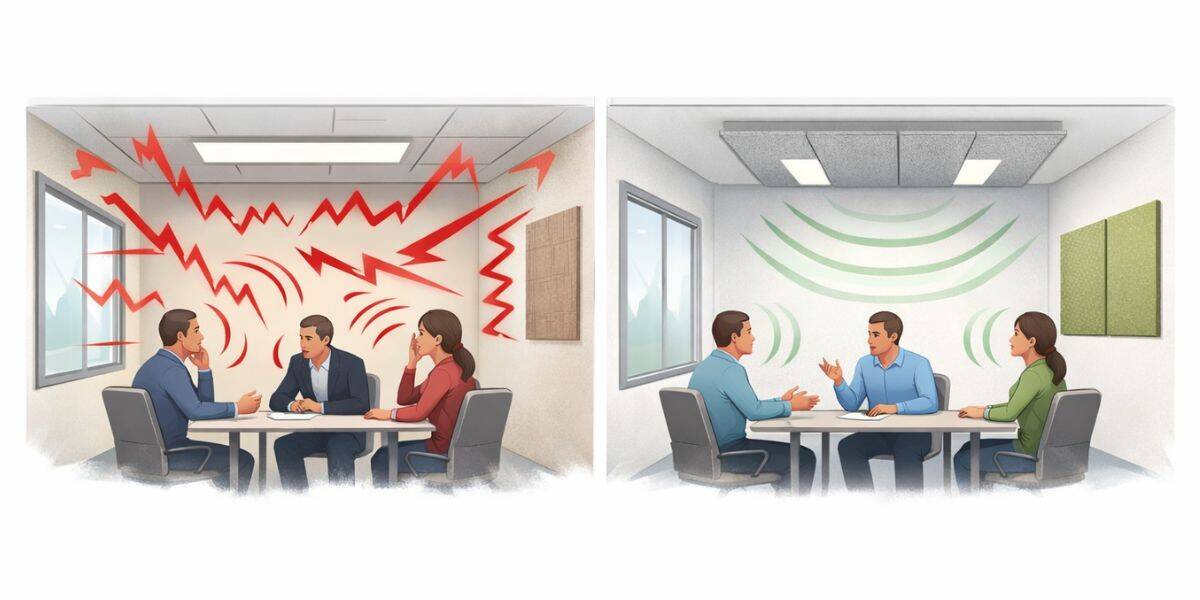
Een goede akoestiek van het gebouw verwijst naar hoe effectief een ruimte geluid regelt om overeen te komen met het beoogde gebruik. Dit houdt meer in dan het verlagen van het geluidsniveau. Het vereist begrip hoe geluid reist, reflecteert en wordt waargenomen door de bewoners.
Een belangrijk onderscheid is geluidsabsorptie, geluidsblokkerende en geluidsmaskering. Geluidsabsorptie vermindert echo en galm door geluidsenergie vast te leggen in plaats van deze te reflecteren. Materialen zoals akoestische panelen, plafondsystemen en viltgebaseerde producten absorberen geluidsgolven en voorkomen dat ze door een kamer stuiteren. Geluidsblokkering daarentegen richt zich op het voorkomen van geluid door muren, vloeren of plafonds te passeren. Dit wordt meestal bereikt door massa, luchtdichte constructie en structurele scheiding. Geluidsmaskering vermindert het geluid niet direct. In plaats daarvan introduceert het een gecontroleerd achtergrondgeluid dat storende ruis minder merkbaar maakt, wat gebruikelijk is in open kantoren.
Akoestiek wordt vaak ten onrechte behandeld als een synoniem voor ruisonderdrukking, maar die weergave is te smal. Een ruimte kan stil zijn en toch een slechte akoestiek hebben als spraak onduidelijk klinkt of als de kamer ongemakkelijk aanvoelt om te gebruiken. In kantoren vermindert een slechte akoestiek de focus en verhoogt de cognitieve belasting. In woongebouwen beïnvloeden ze de privacy en de slaapkwaliteit. Op scholen beïnvloedt akoestiek de leerresultaten en het begrijpen van spraak. In ziekenhuizen hebben ze invloed op het herstel van de patiënt en de prestaties van het personeel. In commerciële ruimtes vormen ze de klantervaring en tijd die ze in het milieu doorbrengen.
Goede akoestiek in het bouwen van een evenwichtige absorptie, blokkering en lay-outbeslissingen om te ondersteunen hoe mensen de ruimte daadwerkelijk gebruiken.
2. Veelvoorkomende akoestische problemen in gebouwen
Er verschijnen verschillende terugkerende akoestische problemen in moderne gebouwen, vooral waar ontwerp prioriteit geeft aan openheid en harde afwerkingen.
- Echo en overmatige nagalm
Geluid dat herhaaldelijk van onbehandelde oppervlakken reflecteert, zorgt ervoor dat geluid blijft hangen, waardoor ruimtes luider en chaotischer aanvoelen dan ze in werkelijkheid zijn. - Spraakverstaanbaarheidsproblemen
Gereflecteerd geluid interfereert met directe spraak, vermindert de duidelijkheid in vergaderruimtes, klaslokalen en open kantoren en toenemende luistermoeheid. - Geluidsoverdracht tussen kamers
Geluid reist door muren, plafonds, vloeren en gedeelde bouwsystemen, wat van invloed is op de privacy in woon-, kantoor- en zorgomgevingen. - Overmatig gebruik van harde oppervlakken
Materialen zoals glas, beton, gipsplaat, steen en metaal reflecteren het geluid efficiënt en dragen weinig bij aan akoestische controle bij gebruik zonder compensatie. - Hoge plafonds en open lay-outs
Grote volumes en ononderbroken oppervlakken vergroten de reflectiepaden, waardoor de galm wordt versterkt, tenzij de absorptie strategisch wordt toegevoegd.
3. Praktische manieren om de akoestiek van het gebouw te verbeteren
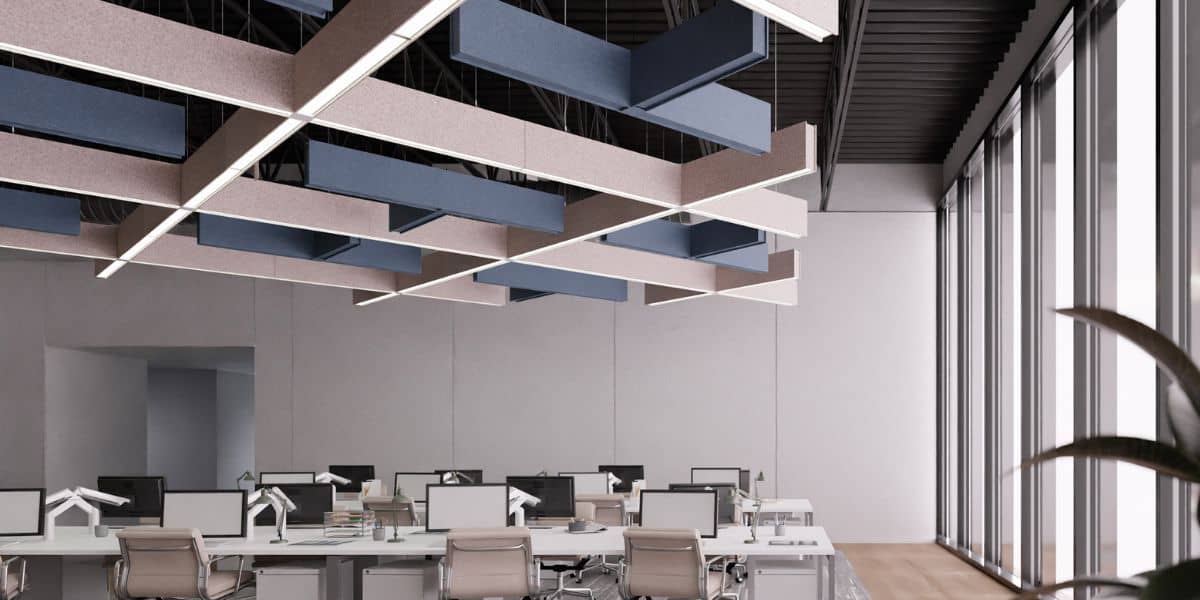
Het verbeteren van de akoestiek vereist geen enkele oplossing. Effectieve resultaten komen uit het combineren van materialen, plaatsing en ontwerpstrategieën die ingaan op hoe geluid zich in de ruimte gedraagt.
Oppervlakte absorptie op muren en plafonds
Het toevoegen van absorptie aan kameroppervlakken is een van de meest effectieve manieren om echo te verminderen en de helderheid te verbeteren. Aan de muur gemonteerde akoestische panelen worden vaak gebruikt, maar plafonds worden ondanks hun impact vaak onderbenut. Geluid reist van nature naar boven en reflecteert van plafondoppervlakken, waardoor ze een kritiek gebied zijn voor behandeling.
Absorberende oppervlakken moeten worden geplaatst waar de geluidsenergie het hoogst is, zoals in de buurt van zitjes, werkstations en spreekposities. Het doel is niet om elk oppervlak te bedekken, maar om reflectiepaden te onderbreken en de galm nagalm te beheersen.
Waarom plafonds belangrijk zijn in akoestisch ontwerp
Plafonds beïnvloeden de akoestiek meer dan veel mensen beseffen. In open ruimtes dragen plafondreflecties sterk bij aan het algehele geluidsniveau. Door plafonds te behandelen, kunnen ontwerpers het geluid regelen zonder de wandruimte op te offeren die nodig kan zijn voor opslag, displays of beglazing.
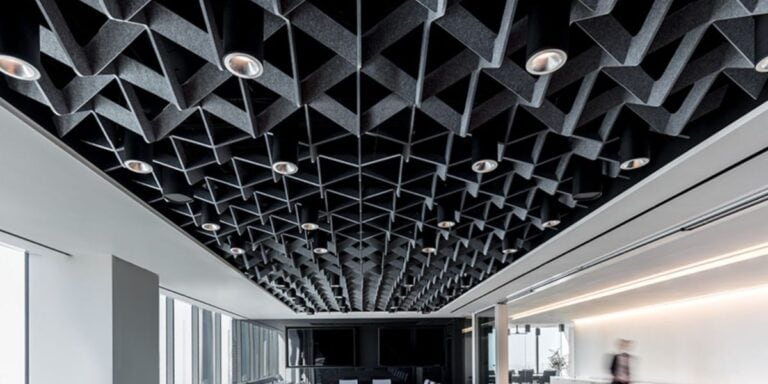
Op het plafond gebaseerde oplossingen zijn onder meer akoestische tegels, baffles en wolken. Deze systemen zijn bijzonder nuttig in ruimtes met hoge plafonds of een beperkt wandoppervlak. Door absorptie boven de inzittenden te plaatsen, wordt het geluid dichter bij de bron geregeld.
De rol van akoestische armaturen in moderne gebouwen
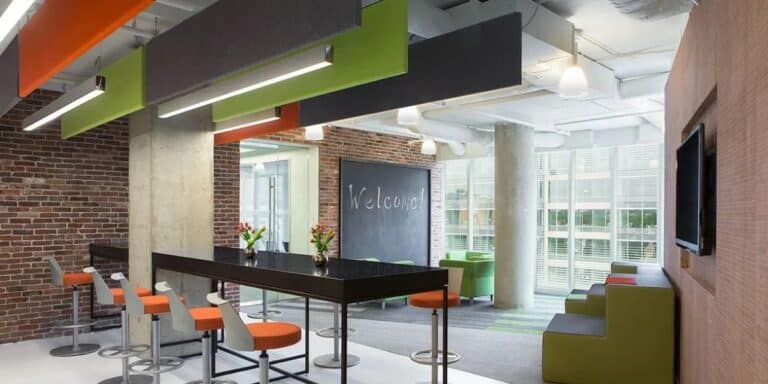
Moderne interieurs vragen vaak om multifunctionele elementen die zowel technische als esthetische doeleinden dienen. Hier spelen akoestische armaturen een steeds belangrijkere rol. Deze elementen combineren geluidsabsorptie met andere functies, zoals verlichting of ruimtelijke definitie.
Akoestische armaturen zijn vooral waardevol in hedendaagse kantoren en openbare ruimtes waar schoon ontwerp en flexibiliteit prioriteiten zijn. Ze maken het mogelijk om akoestische behandeling te integreren in het algehele ontwerp in plaats van als bijzaak toe te voegen.
Hoe akoestische verlichting de akoestiek verbetert zonder in te boeten aan design
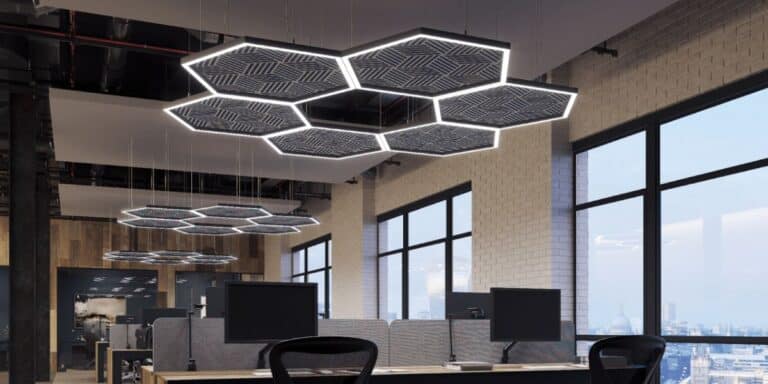
Akoestische verlichting Combineert geluidsabsorberende materialen met geïntegreerde verlichting. Deze benadering richt zich op twee essentiële bouwsystemen tegelijk: verlichting en akoestische regeling. In plaats van afzonderlijke panelen en verlichtingsarmaturen toe te voegen, kunnen ontwerpers visuele rommel verminderen en tegelijkertijd de prestaties verbeteren.
Correct gebruikt, akoestische verlichting helpt bij het beheren van nagalm in open kantoren, vergaderruimtes en gedeelde ruimtes. Producten die voor dit doel zijn ontworpen, hebben vaak de vorm van hangende panelen of armaturen die geluid absorberen en tegelijkertijd functioneel licht bieden. Wanneer doordacht gespecificeerd, wordt akoestische verlichting onderdeel van de architectonische taal van de ruimte in plaats van een puur technische interventie. Voorbeelden van dergelijke geïntegreerde oplossingen zijn te vinden in moderne akoestische verlichtingssystemen die speciaal zijn ontworpen voor commerciële interieurs.
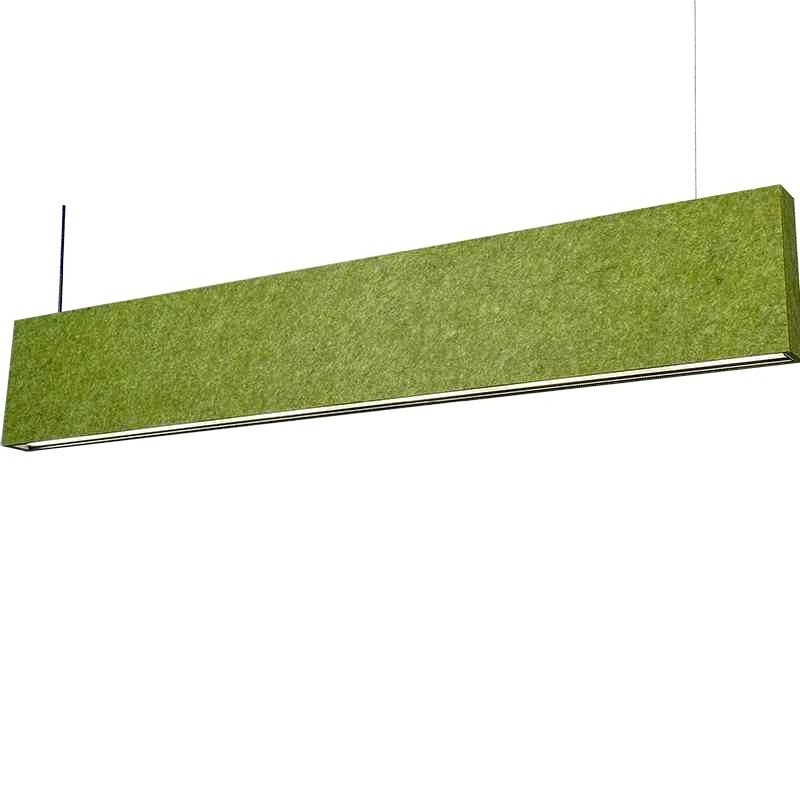
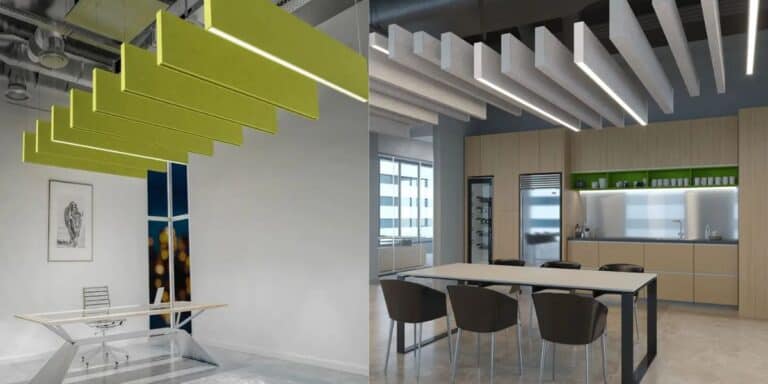
Slanke anti-glare akoestische LED lineair licht
- Ingangsspanning: AC100-277V / AC220-240V, 50-60Hz
- Maatbehuizing: W58*H200 mm/W58*H300mm
- Richting uitzenden: naar beneden
- Lengte optie: 1218mm / 1220mm / 1288mm
- CCT: 3000K / 4000K / 6000K
- Vermogen: 30W / 32W
- Lichtstroom: 100-110lm/W
- CRI: >90Ra
- PF: >0.90
- Gratis flikkeren: ja
- Stralingshoek: 36°
- IP-klasse: IP20
- Garantie: 5 jaar
- Kleur vilt akoestisch bord: rood / groen / blauw / grijs meer dan 48 kleuren optie
Viltverlichting en armaturen in eigentijdse interieurs
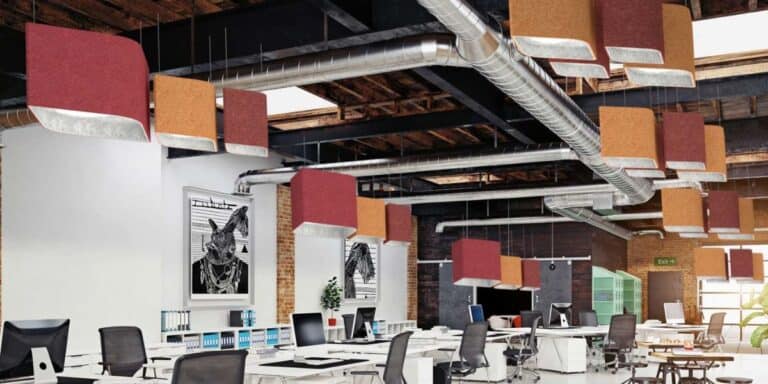
Op vilt gebaseerde materialen worden steeds vaker gebruikt in akoestische toepassingen vanwege hun absorberende eigenschappen en ontwerpflexibiliteit. Viltverlichting en armaturen verzachten zowel het geluid als het visuele karakter, waardoor ze geschikt zijn voor samenwerkingsruimtes, lounges en creatieve omgevingen.
Deze oplossingen werken goed in ruimtes waar een warmere, minder technische esthetiek gewenst is. Op vilt gebaseerde akoestische armaturen kunnen middelmatige en hoogfrequente galm reverbereren, terwijl ze bijdragen aan een comfortabelere sfeer.
4. Ontwerptips die de akoestiek verbeteren
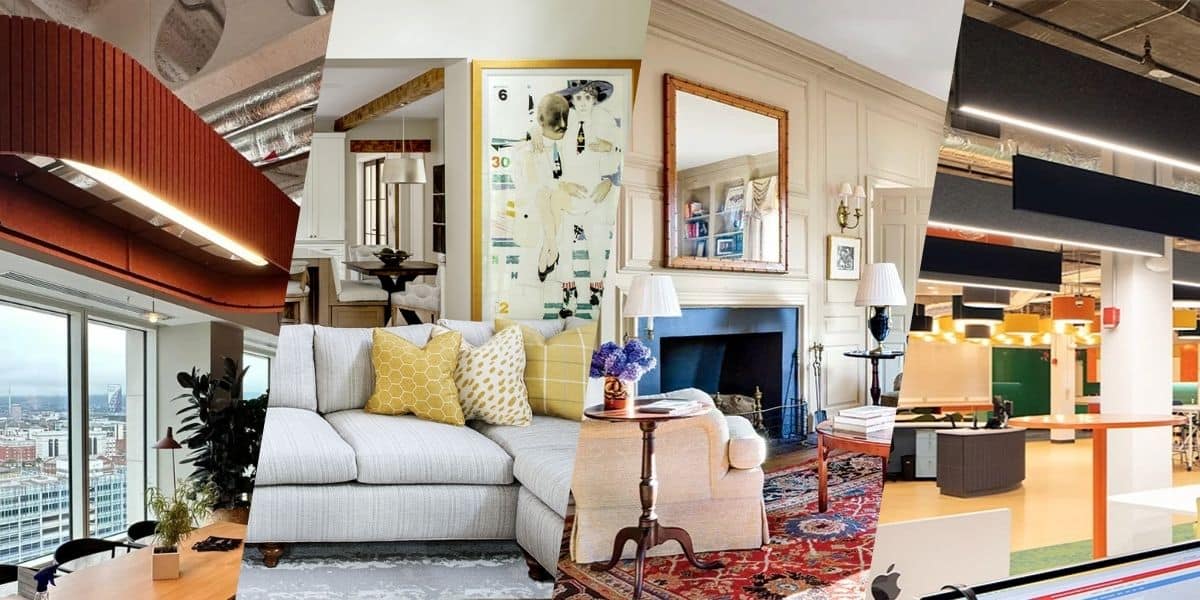
Veel akoestische verbeteringen kunnen worden bereikt door ontwerp- en lay-outkeuzes zonder de bouwstructuur te veranderen.
- Zoningstrategieën
Scheid de lawaaierige activiteiten van stille activiteiten door opzettelijk lay-outs te plannen, zoals het plaatsen van vergaderruimtes uit de buurt van gerichte werkzones. - plaatsing van meubels
Gestoffeerde zitplaatsen, boekenplanken, scheidingswanden en opbergeenheden helpen bij het absorberen en diffuus geluid wanneer ze langs reflectiepaden worden gepositioneerd. - Gebruik van zachte materialen en afwerkingen
Tapijten, tapijten, gordijnen en met stof beklede meubels verminderen gereflecteerd geluid, met name in residentiële en gemengde ruimtes. - Prioriteiten plaatsen boven hoeveelheid
Een kleiner aantal goed geplaatste absorberende elementen presteert vaak beter dan overmatige behandeling die zonder akoestische logica wordt geïnstalleerd.
5. Akoestische materialen en oplossingen vergeleken
| Oplossingstype | Hoofdfunctie | Beste gebruiksgeval | vastleggen |
| Akoestische wandpanelen | opslorping | kantoren, gangen | Vermindert echo en verbetert de helderheid |
| Plafondspats of wolken | opslorping | Open ruimten | Bedient nagalm van bovenaf |
| Akoestische verlichtingspanelen | Licht en absorptie | kantoren, coworking-ruimtes | Twee-doeloplossing |
| Vilt verlichtingsarmaturen | Absorptie en ontwerp | Moderne interieurs | Visuele en akoestische balans |
| Geluidsmaskering systemen | afleidingscontrole | Kantoren openen | Ondersteunt absorptiestrategieën |
Deze vergelijking benadrukt dat geen enkele oplossing elke akoestische uitdaging aangaat. Elke optie heeft een specifieke rol binnen een bredere akoestische strategie.
6. Waar akoestische verlichting het beste past in het bouwen van een gebouw
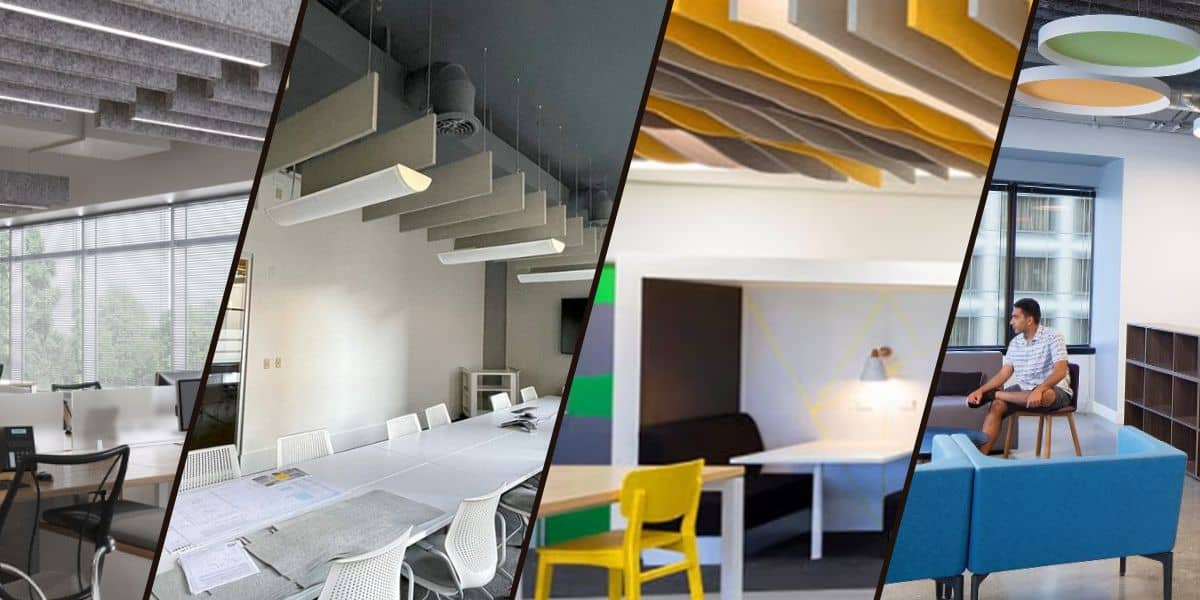
Akoestische verlichting is het meest effectief in ruimtes waar zowel geluidsregeling als verlichtingskwaliteit van cruciaal belang zijn en waar wandoplossingen beperkt zijn.
In Kantoren en coworking-ruimtes, akoestische verlichting helpt bij het beheersen van ruis in open-planomgevingen. Het vermindert de nagalm en zorgt voor een consistente, taakspecifieke verlichting. Dit ondersteunt de focus en vermindert vermoeidheid zonder het open karakter van de ruimte te veranderen.
vergaderzalen Profiteer van akoestische verlichting, want spraakhelderheid is essentieel. Plafondgebaseerde absorptie in de buurt van de tafel vermindert reflecties die het gesprek verstoren, terwijl geïntegreerde verlichting zorgt voor een gelijkmatige zichtbaarheid voor deelnemers.
educatieve gebouwen Vaak geconfronteerd met beperkingen op de muurruimte als gevolg van planken, displays en opslag. Akoestische verlichtingspanelen Zorg voor absorptie zonder te concurreren met functionele wandelementen, waardoor de spraakverstaanbaarheid in klaslokalen en collegeruimtes wordt verbeterd.
Gezondheidszorg en openbare ruimtes Vereisen akoestiek die rust en privacy ondersteunt. Akoestische verlichting kan helpen bij het verminderen van achtergrondgeluid in wachtruimtes en gangen met behoud van een schoon, overzichtelijk plafondontwerp.
In al deze gevallen zijn akoestische verlichtingspanelen vooral handig wanneer de wandruimte beperkt of visueel gevoelig is, waardoor plafondintegratie de meest praktische benadering wordt.
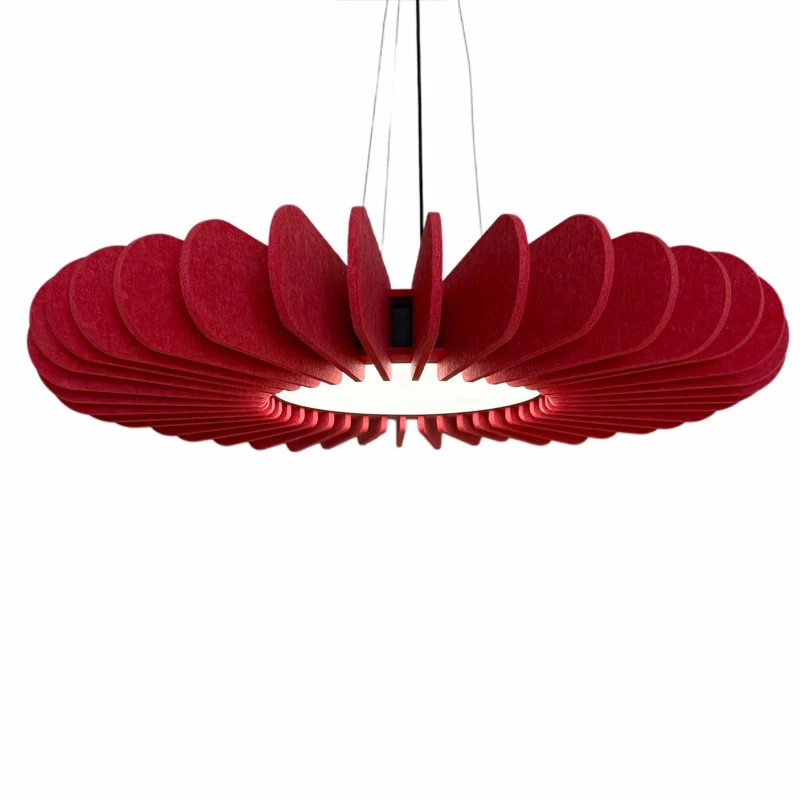
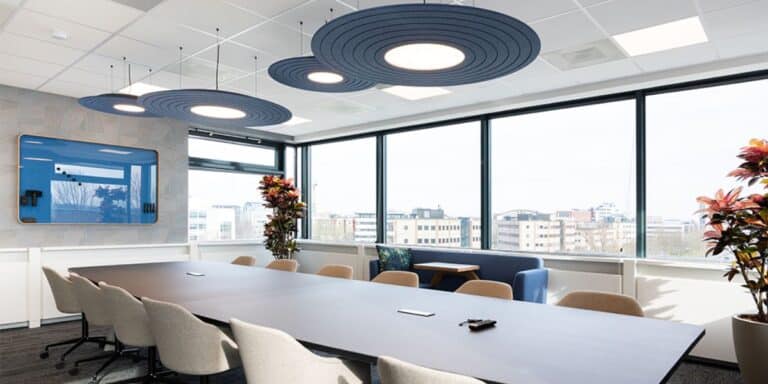
Ultradunne slanke ronde akoestische LED-hanglamp
- Ingangsspanning: AC100-277V / AC220-240V, 50-60Hz
- Maatbehuizing: 120 mm
- Richting uitzenden: naar beneden
- Maat DH: 50080mm
- CCT: 3000K / 4000K / 6000K
- Vermogen: 15W
- Lichtstroom: 100-110lm/W
- CRI: >90Ra
- PF: >0.90
- fllikker gratis: ja
- Stralingshoek: 120°
- IP-klasse: IP20
- Garantie: 5 jaar
- Akoestische paneelkleuroptie: rood / groen / blauw / grijs meer dan 48 kleuren optie
7 Veelvoorkomende fouten in akoestisch ontwerp
Zelfs goedbedoelende projecten schieten vaak tekort vanwege vermijdbare ontwerpaannames.
- Plafondoppervlakken negeren
Door alleen muren te behandelen, blijft een groot reflectievlak onaangeroerd, vooral in kamers met harde vloeren. - Vertrouwen op decoratieve elementen zonder akoestische waarde
Niet alle visueel zachte materialen absorberen geluid effectief, wat leidt tot minimale verbetering in de echte wereld. - Verwacht één oplossing om alle problemen op te lossen
Akoestiek vereist een systeemgebaseerde benadering die absorptie, blokkering en lay-outstrategieën combineert. - Slechte plaatsing van akoestische elementen
Zelfs hoogwaardige materialen presteren ondermaats wanneer ze worden geïnstalleerd, weg van belangrijke reflectiepunten of geluidsbronnen.
8. 2026 Trends in het bouwen van akoestiek
Het bouwen van akoestiek is op weg naar integratie in plaats van add-on-oplossingen. Systemen die verlichting, absorptie en zelfs luchtbeheer combineren, komen steeds vaker voor naarmate ontwerpers efficiëntie en visuele duidelijkheid zoeken.
modulair Akoestische armaturen winnen aan populariteit omdat ze zich aanpassen aan veranderende lay-outs, vooral in hybride werkomgevingen. Flexibiliteit is nu een kernvereiste.
Ook is er een groeiende focus op welzijn. Akoestiek wordt steeds meer erkend als een factor in de geestelijke gezondheid, productiviteit en algemeen comfort, en beïnvloedt hoe ruimtes vanaf de vroegste stadia worden ontworpen.
Conclusie
Het verbeteren van de akoestiek van de gebouwen vereist een evenwichtige aanpak. Effectieve oplossingen combineren geluidsabsorptie, slimme plaatsing en inzicht in hoe ruimtes worden gebruikt. Muren, plafonds, meubels en lay-out dragen allemaal bij aan akoestische prestaties.
Geïntegreerde oplossingen zoals akoestische verlichting en goed ontworpen akoestische armaturen maken geluidsregeling mogelijk om samen te leven met moderne ontwerpvereisten. Wanneer ze doordacht worden toegepast, creëren deze strategieën ruimtes die comfortabel, functioneel en ondersteunend zijn voor welzijn zonder te vertrouwen op overmatige of opdringerige behandelingen.
FAQs
Gerelateerde berichten