Nederlands
  English
  简体中文
简体中文  Deutsch
  Español
  Français
  Italiano
  日本語
日本語  한국어
한국어  Polski
  Português
  Русский
  Türkçe
  Tiếng Việt
  ไทย
ไทย 
In moderne commerciële ruimteontwerp, worden geluids- en galmproblemen steeds prominenter, vooral in omgevingen zoals open kantoren en vergaderruimtes. Overmatige geluidsniveaus hebben een grote impact op de efficiëntie van het werk en de klantervaring. Geluidsreflectie en galm maken niet alleen ruimtes luidruchtig, maar verminderen ook de communicatie en concentratie.
Akoestische verlichtingsarmaturen bieden een innovatieve oplossing, die hoogwaardige verlichting levert, terwijl het effectief absorbeert en geluid vermindert om de akoestische omgevingen te verbeteren. Deze armaturen integreren akoestische materialen met verlichtingsfunctionaliteit, wat dubbele voordelen biedt voor commerciële ruimtes, vooral in geluidsbeheersing.
Bij het selecteren van akoestische LED-verlichting dient de ruisonderdrukkingscoëfficiënt (NRC)-classificatie als een belangrijke maatstaf voor het evalueren van akoestische prestaties. De NRC-classificatie kwantificeert het geluidsabsorptievermogen van een armatuur, waardoor consumenten de meest geschikte producten kunnen kiezen om het akoestische ontwerp van een ruimte te optimaliseren.
Het belang van NRC-classificaties voor akoestische LED-lampen begrijpen
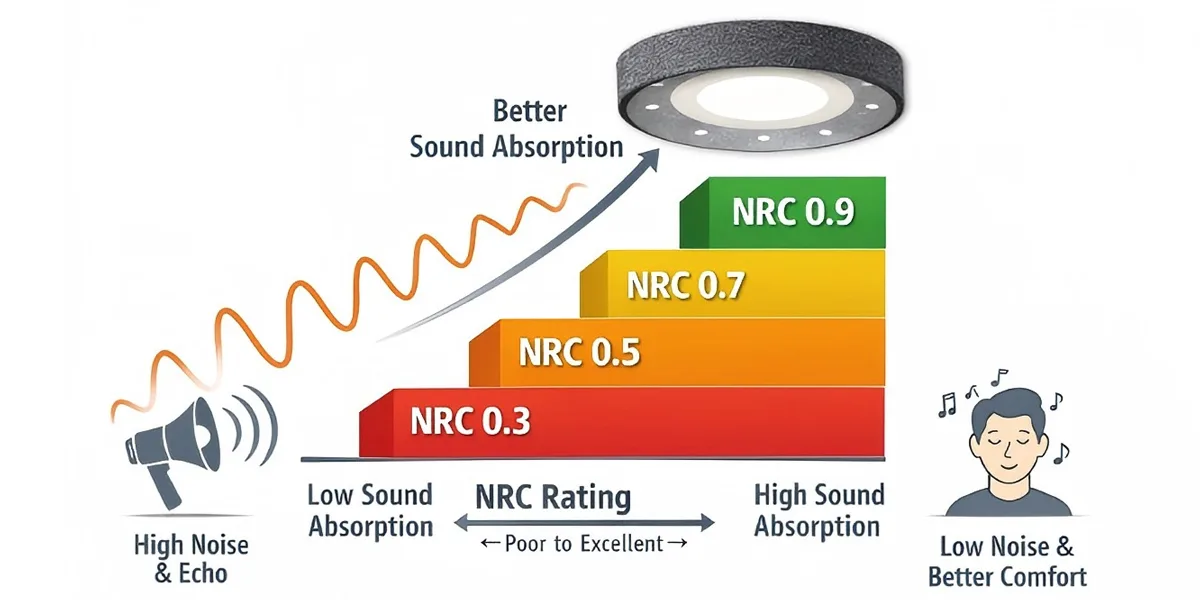
Bij het selecteren van Akoestische LED-verlichting, dient de NRC-classificatie als een cruciale indicator voor het evalueren van hun geluidsabsorptiemogelijkheden. De NRC-schaal varieert van 0 tot 1, waarbij hogere scores wijst op superieure geluidsabsorptie-eigenschappen. Een geluidsabsorberend licht met een hoge NRC-classificatie kan de echo's en ruis in een ruimte aanzienlijk verminderen, waardoor de akoestische kwaliteit en het comfort worden verbeterd. Dit is met name cruciaal in moderne kantooromgevingen, vergaderruimten, ziekenhuizen en soortgelijke omgevingen.
De NRC-classificatie weerspiegelt niet alleen het geluidsabsorptievermogen van een materiaal, maar heeft ook invloed op het algehele akoestische comfort van de omgeving. Door dit te begrijpen, kunnen consumenten de meest geschikte geluidsabsorberende LED-licht selecteren op basis van hun specifieke behoeften.
Welke NRC-classificatie is geschikt voor akoestische verlichting?
Voordat we het bespreken "wat een geschikte NRC is", is het essentieel om eerst de definitie van NRC en de betekenis ervan in akoestische verlichting te verduidelijken.
Wat is NRC (noise reductiecoëfficiënt)?
NRC (Noise Reduction Coefficient) is een gestandaardiseerde numerieke metriek die in de akoestiek wordt gebruikt om de geluidsabsorptieprestaties van een materiaal te meten. Het wordt berekend door de geluidsabsorptiecoëfficiënten te meten bij vier middenfrequenties (250 Hz, 500 Hz, 1000 Hz en 2000 Hz), waarbij hun rekenkundig gemiddelde wordt genomen en afrondt op de dichtstbijzijnde 0,05.
Waardebereik: 0,00–1,00
Fundamentele betekenis: Vanuit een akoestisch perspectief duidt een hogere waarde op een sterker geluidsabsorptievermogen, terwijl een lagere waarde een meer uitgesproken geluidsreflectie betekent.
- NRC < 0,20: doorgaans geclassificeerd als reflecterende materialen
- NRC ≥ 0,20: Kan worden herkend als geluidsabsorberende materialen
- NRC ≥ 0,80: Behoort tot zeer efficiënte geluidsabsorberende materialen, geschikt voor ruimtes met hoge akoestische vereisten
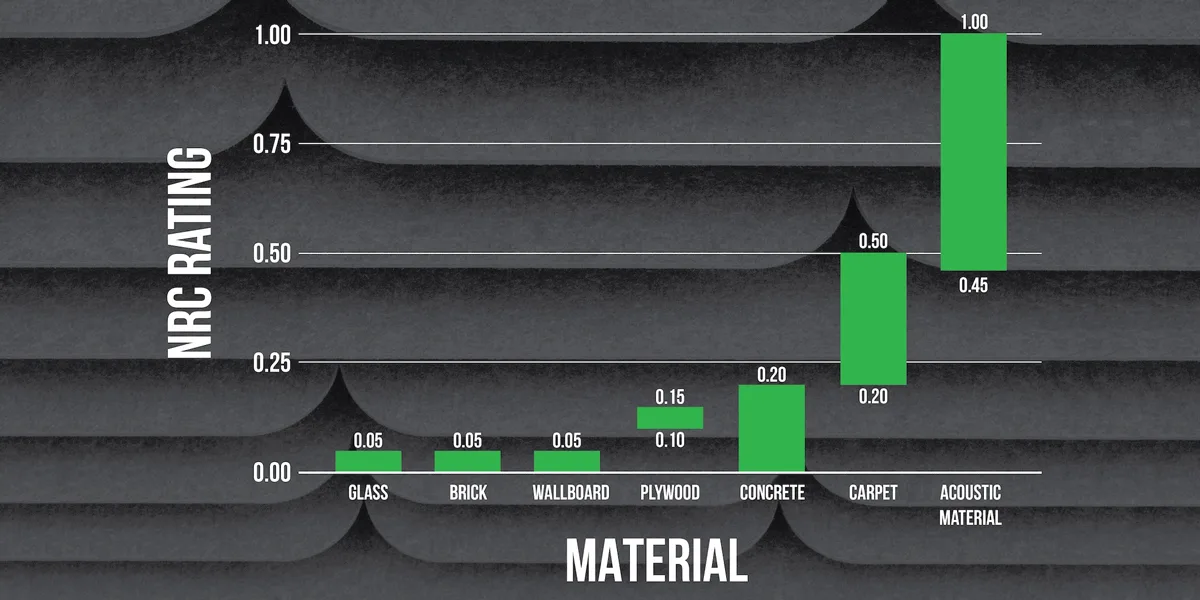
Hoe beïnvloedt NRC-classificatie de prestaties van akoestische verlichting?
In akoestische verlichtingssystemen bepaalt NRC direct het vermogen van een armatuur om nagalm te verminderen en omgevingsgeluid te regelen. Aangezien akoestische LED-lampen doorgaans worden geïnstalleerd in plafonds of verhoogde gebieden, zijn geluidsabsorp Eigenschappen hebben een aanzienlijke invloed op de algehele akoestische omgeving van een ruimte. Hogere NRC-waarden minimaliseren echo's en ruisreflecties, waardoor de spraakverstaanbaarheid en auditief comfort worden verbeterd, wat resulteert in een stabielere en controleerbare akoestische omgeving.
Wat is de juiste NRC-beoordeling voor verschillende toepassingsscenario's?
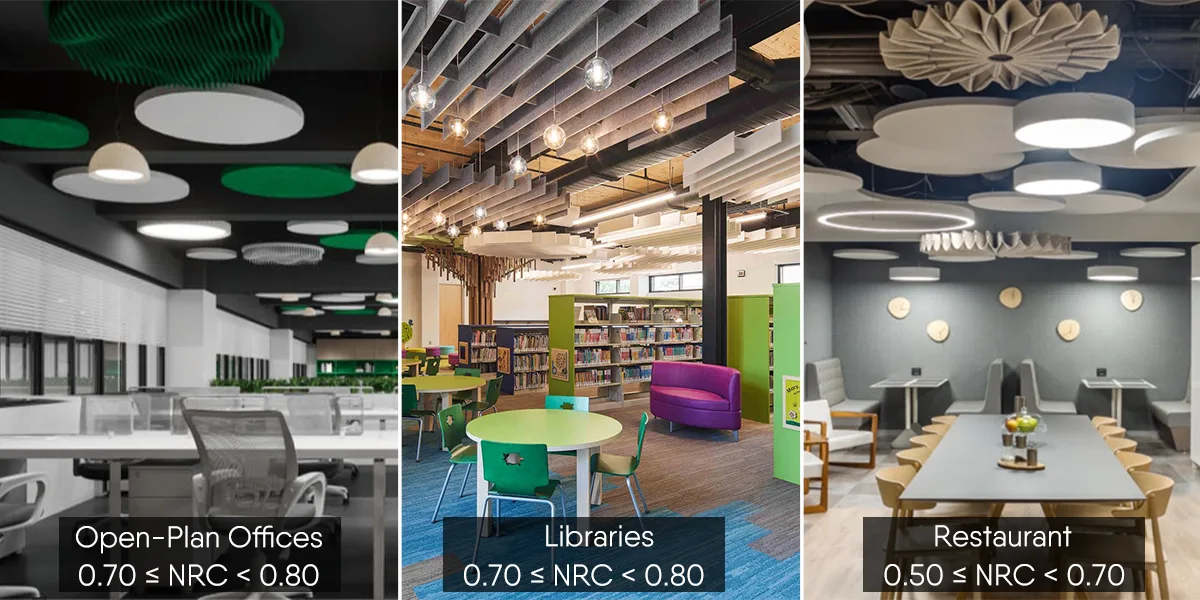
Akoestische verlichtingsvereisten voor NRC variëren in verschillende gebruiksomgevingen. Bij selectie moet rekening worden gehouden met ruimtefunctionaliteit, budget en ontwerpspecificaties. Voor akoestische LED-verlichting worden producten met NRC ≥ 0,70 aanbevolen om optimale akoestische prestaties te bereiken. Raadpleeg de volgende NRC-classificatienormen en toepassingstabel voor richtlijnen:
NRC-classificatienormen en -toepassingen
| NRC-bereik | Akoestische prestatieklasse | Aanbevolen toepassing | Kernfunctie |
| NRC ≥ 0,80 | Hoog rendement geluid absorberend materiaal | Hoog rendement geluid absorberend materiaal | Bereikt optimale akoestische controle, vermindert de galm aanzienlijk, verbetert de helderheid en audiozuiverheid van de spraak. |
| 0,70 ≤ NRC < 0,80 | Uitstekend geluidabsorberend materiaal | Open kantoren, klaslokalen, bibliotheken, ziekenhuizen, vergaderzalen | Vermindert effectief achtergrondgeluid en galm, verbetert de communicatie-efficiëntie en ruimtelijk comfort. |
| 0,50 ≤ NRC < 0,70 | Matig geluidabsorberend materiaal | Gewone woonruimtes, winkels, gangen, openbare rustruimtes | Verbetert de omgevingslawaai aanzienlijk, balanceert de kosten en de ontwerpflexibiliteit, geschikt voor gematigde akoestische behoeften. |
| 0,20 ≤ NRC < 0,50 | Basis geluidsabsorberend materiaal | magazijnen, parkeerplaatsen, industriële installaties | Biedt basis geluidsabsorptiefunctie, vermindert wat gereflecteerd geluid. |
| NRC < 0,20 | Geluid reflecterend materiaal | Elke akoestische omgeving die geluidsreflectie vereist (bijv. podia, muziekplatforms) | Weerspiegelt het geluid, dat niet geschikt is voor scenario's die geluidsabsorptie vereisen. |
Waarom is NRC bijzonder geschikt voor het evalueren van akoestische verlichting?
NRC wordt veel gebruikt om de prestaties van architecturale akoestische materialen zoals plafond- en wandpanelen te beoordelen. Akoestische verlichting combineert inherent "verlichtingssystemen met akoestische plafondoplossingen."
Daarom is het gebruik van NRC als kernmaatstaf voor het meten van de akoestische prestaties van geluidsabsorberende LED-lampen niet alleen professioneel, maar ook intuïtief, waardoor vergelijking en selectie door ontwerpers, aannemers en kopers wordt vergemakkelijkt. Voor de meeste commerciële ruimtes wordt een NRC-classificatie tussen 0,6 en 0,9 beschouwd als ideale akoestische verlichting, omdat deze zorgt voor een effectieve geluidsabsorptie met behoud van flexibiliteit en verlichtingsprestaties.
Hoe akoestische LED-lampen de geluidsbeheersing in moderne ruimtes verbeteren
Moderne gebouwen, met name open kantoren, hebben vaak last van overmatige geluidsniveaus. Akoestische LED-lampen pakken dit aan door geluidsabsorberende materialen of constructies te integreren. Ze zorgen voor verlichting terwijl ze geluidsgolven absorberen en echo's verminderen, waardoor de geluidshelderheid en het comfort in de ruimte aanzienlijk worden verbeterd. Hun ontwerp combineert lichtbronnen met akoestische materialen, niet alleen het oplossen van geluidsproblemen, maar ook om de algehele esthetische aantrekkingskracht van het milieu te verbeteren.
Door wetenschappelijke configuraties helpen deze lichten moderne ruimtes om optimale akoestische prestaties te bereiken terwijl ze voldoen aan esthetische en verlichtingsvereisten, waardoor omgevingsgeluid van een afleiding wordt omgezet in een onopvallend element.
De rol van akoestische LED-lampen in het verbeteren van kantoor- en woonomgevingen
Op hedendaagse werkplekken en huizen brengt geluidsinterferentie vaak in gevaar voor efficiëntie en comfort. Akoestische LED-lampen, als een innovatieve fusie van akoestiek en verlichting, optimaliseren stilletjes de akoestische ervaring in deze ruimtes.
- Kantoorinstellingen : Terwijl open lay-outs de samenwerking bevorderen, weven ze ook de zoom van printerzomen en klikken op het toetsenbord in een constant achtergrondgeluid. De vergaderruimte echoot verdere warboel discussies. Geluidsabsorberende LED-lampen bevatten poreuze materialen die geluidsgolven absorberen en reflecties verminderen, waardoor vergaderingen duidelijker worden. Tegelijkertijd past de instelbare kleurtemperatuur (van koel wit tot warm geel) aan op verschillende momenten van de dag, waardoor de vermoeidheid van de ogen wordt verminderd en een gerichte atmosfeer wordt gestimuleerd. Dit "geluidslichtsynergie"-ontwerp transformeert luidruchtige ruimtes in efficiënte toevluchtsoorden.
- Woonomgeving: Stedelijke rumoer - zoals verkeerslawaai en burenactiviteiten - dringt vaak in op de rust van het huis. Geluidsabsorberende LED-lampen absorberen hoogfrequent geluid en bouwen binnenshuis een "akoestische barrière". Gebruikt in woonkamers of slaapkamers, genieten bewoners van rustigere momenten om te rusten of te lezen. De energie-efficiëntie en lange levensduur van de LED sluiten verder aan op de duurzame levensbehoeften.
Van vergaderruimtes tot slaapkamers, geluidsabsorberende LED-lampen wetenschappelijk herdefiniëren de ruimtelijke kwaliteit, waardoor zowel het leven als het werk geruisloos worden verbeterd.
Interpretatie van NRC-beoordelingen: waarom ze cruciaal zijn voor akoestische Verlichtingsprestaties
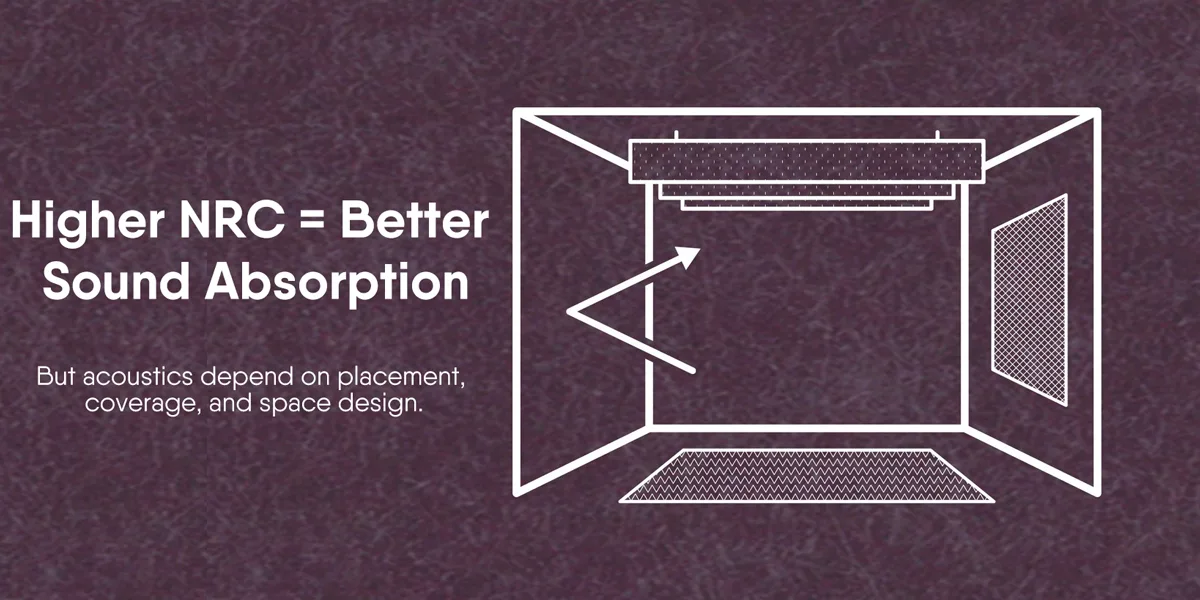
De NRC-classificatie dient als een kernmaatstaf voor het evalueren van de akoestische prestaties van akoestische verlichting, waarbij de betekenis ervan ligt in zijn directe invloed op de geluidsomgeving van binnenshuis.
Akoestische verlichting bereikt geluidsenergieconversie door geïntegreerde poreuze materialen (zoals polyestervezel, geperforeerde aluminium panelen en akoestisch katoen). De NRC-waarde bepaalt direct:
- Verminderde nagalmtijd: In een vergaderruimte van 50 ㎡ Verminder de galm van 2,1 seconden tot 1,3 seconden aanzienlijk, waardoor de spraakverstaanbaarheid aanzienlijk wordt verbeterd.
- Verbeterde spraakoverdrachtsindex (STI): Gemeten STI neemt toe van 0,62 naar 0,78, wat de communicatie-efficiëntie en focus aanzienlijk verhoogt.
- Onderdrukking van ruisonderdrukking: Effectief absorbeert apparatuur hum en menselijke stemecho's, waardoor een stil, laag-afstoot kantoor of vergaderomgeving ontstaat.
Huidige industriestandaarden en -voorschriften
- internationaal: ASTM C423 dient als de gezaghebbende standaard voor NRC-testen.
- Geen verplichte voorschriften: Momenteel bestaat er geen speciale industriestandaard voor "akoestische LED-verlichting", waarbij NRC alleen als functionele referentie dient.
- Trend voor samenwerking: Verlichtingsnormen zoals ISO/CIE 8995-1:2025 benadrukken de synergie tussen 'visueel comfort' en 'akoestisch comfort', waardoor geluidsabsorberende verlichting standaard wordt gestuwd in slimme ruimtes.
Real-World applicatiewaarde
Feedback van gebruikers van daadwerkelijke installaties geeft aan dat na het installeren van high-NRC geluidabsorberende LED-lampen, vergaderruimtes "geen echo meer ervaren tijdens het spreken", "aanzienlijk verminderde airconditioninggeluid" en "versterkte scherpstelling". De waarde gaat verder dan ruisonderdrukking om de ruimtelijke waarneming opnieuw vorm te geven - waar licht en geluid gezamenlijk cognitieve efficiëntie en psychologisch comfort dienen.
Een uitstekende NRC-classificatie vermindert niet alleen effectief het geluid, maar voorkomt ook de voortplanting ervan in ruimtes, waardoor de geluidskwaliteit consistent blijft binnen comfortabele niveaus.
Hoe u de optimale akoestische LED-licht voor een betere geluidsabsorptie selecteert
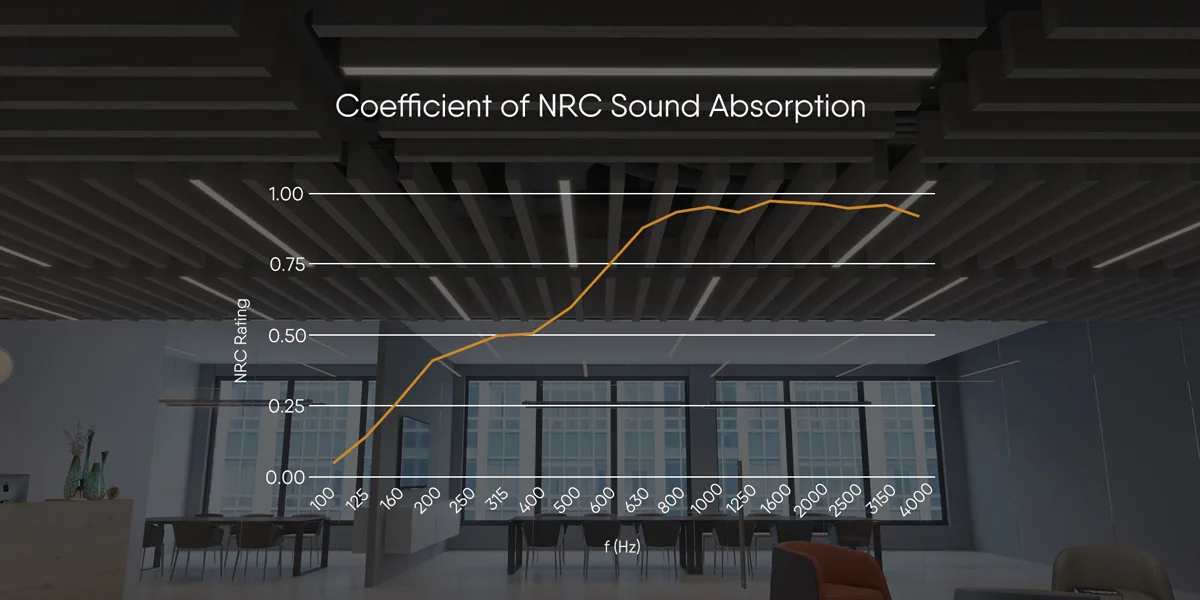
wanneer Kies geschikte akoestische LED-lampen, prioriteit te geven aan de NRC-beoordeling. Hoogwaardige armaturen zijn ideaal voor ruimtes met strenge geluidsbeheersingsvereisten. Houd bovendien rekening met het type en de kwaliteit van akoestische materialen om ervoor te zorgen dat ze de verwachte geluidsabsorptieprestaties leveren in real-world gebruik. Tegelijkertijd zijn armatuurontwerp en lichtgevende werkzaamheid kritische factoren die de algehele ruimtelijke ervaring direct beïnvloeden.
- NRC-scenario's voor het matchen van waarde:
a) Kleine ruimtes (bijv. thuiskantoren) kunnen kiezen voor NRC 0.6 of NRC 0,5-0,7. Dit bereik absorbeert effectief alledaags geluid (zoals tv-geluiden of spelende kinderen), terwijl overmatige absorptie wordt vermeden die een onnatuurlijk stille ruimte creëert.
b) Grote ruimtes (bijv. vergaderruimtes) worden aanbevolen voor NRC 0,7-0,9. Hogere NRC-waarden verminderen de echo's in vergaderruimtes, verbeteren de videogesprekskwaliteit en minimaliseren achtergrondgeluidsinterferentie in open kantoren.
c) NRC-waarden boven 0,8 zijn geschikt voor professionele instellingen zoals opnamestudio's, maar woon-/kantoorruimtes vereisen een evenwichtsabsorptie met verlichtingsfunctionaliteit.
- Materiaal Duurzaamheid: Prioriteit geven aan brandwerende en vochtbestendige akoestische materialen (bijv. Klasse A brandwerende schuim) om verminderde geluidsabsorptie door omgevingsvochtigheid te voorkomen.
- Verlichtingsparameters: Kleurtemperatuur (2700K-4000K) en kleurweergave-index (CRI>90) moeten aansluiten bij ruimtelijke vereisten, bijvoorbeeld 4000K neutraal licht verhoogt de focus in kantoren.
- Certificering naleving: Selecteer merken met strenge testcertificeringen om ervoor te zorgen dat armaturen voldoen aan de akoestische prestatienormen.
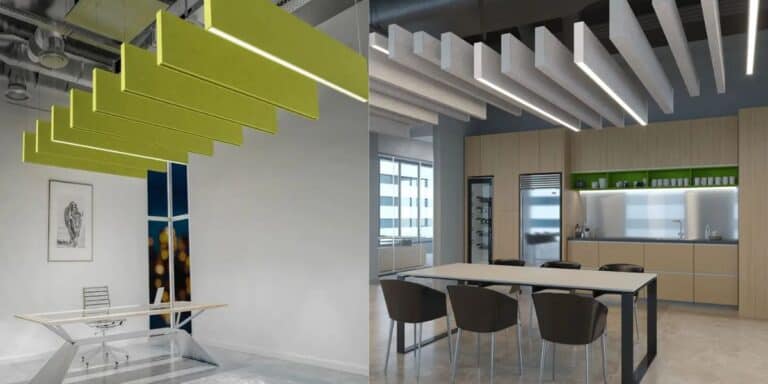
Signlitetled's akoestische verlichting Geeft prioriteit aan zowel akoestische prestaties als esthetisch ontwerp. De geïllustreerde honingraatgestructureerde lamp behaalt UGR<19, levert een NRC van 0,75 en bevat verblindingspreventiefuncties, waardoor hij ideaal is voor woonruimtes.
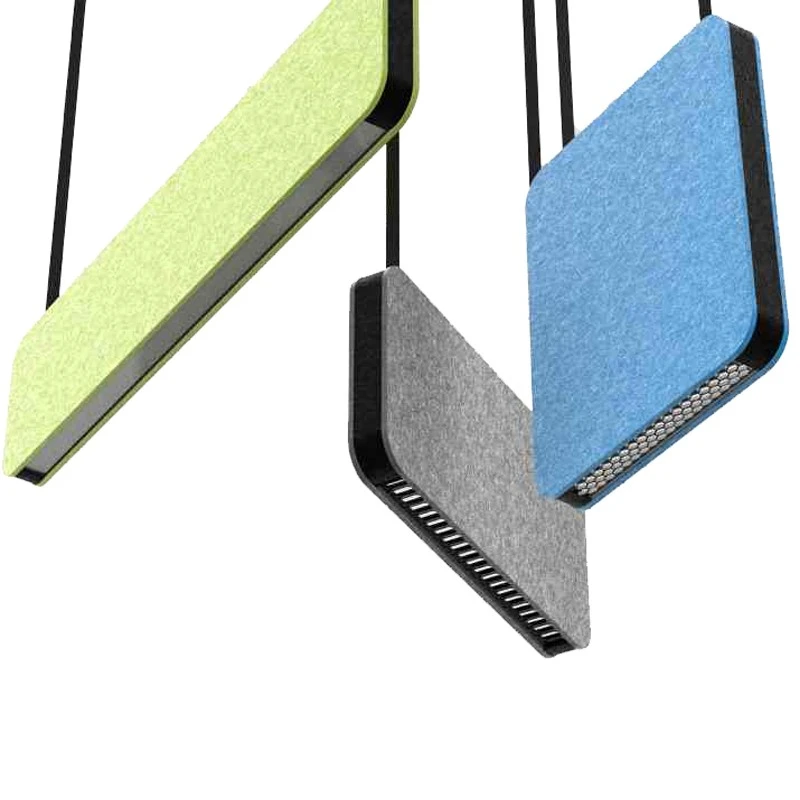
Super slanke akoestische LED lineair licht
Ingangsspanning: AC100-277V / AC220-240V, 50-60Hz
Richting uitzenden: verergerend
Grootte: 1218 *36*400mm
CCT: 3000K / 4000K / 6000K
Vermogen: 30W
Lichtstroom: 100-110 lm/w
CRI: >80Ra
PF: >0.90
fllikker gratis: Ja
Stralingshoek: 120°
IP-klasse: IP20
Garantie: 5 jaar
Vilt akoestische board kleur: Rood / Groen / Blauw / Grijs Meer dan 48 kleuren Optie
Hoe bereiken akoestische armaturen tegelijkertijd zowel verlichting als ruisonderdrukking?
Moderne consumenten geven steeds meer de voorkeur aan verlichtingsproducten die uitstekende akoestische prestaties combineren met ruimtelijke esthetiek. Door ingenieus ontwerp combineert akoestische LED-verlichting de functionaliteit naadloos met het kunstenaarschap, waardoor het een onmisbaar element is in hedendaagse ruimtes.
Akoestische armaturen integreren functionaliteit door middel van de volgende ontwerpelementen:
- Materiaallagen: Het lampoppervlak maakt gebruik van poreus schuim of vezelachtige stoffen (bijv. polyestervezel), waardoor geluidsgolven kunnen binnendringen en omzetten in warmte door wrijving met behoud van lichttransmissie.
- Structureel ontwerp: De lampenkap bevat intern geluidsabsorberende katoen- of honingraatstructuren om de reflectiepaden van geluidsgolf te maximaliseren. De LED-lichtbron is ingebed in de geluidsabsorberende laag, waardoor een uniforme lichtverdeling wordt gegarandeerd.
Conclusie
Als innovatieve Akoestische verlichtingsoplossing, geluidabsorberende LED-armaturen worden steeds meer standaard in moderne architectuur en ruimtelijk ontwerp vanwege hun uitstekende NRC-beoordelingen en akoestische prestaties.
Van kantooromgevingen tot woonruimtes, commerciële locaties tot onderwijsinstellingen, LED-akoestiekverlichting speelt een cruciale rol bij het verbeteren van het ruimtelijke akoestische comfort. Door de juiste NRC-beoordelingen en -armaturen te selecteren, kunnen consumenten een rustigere, comfortabelere omgeving creëren, waardoor de kwaliteit van leven en werk wordt verhoogd.
FAQs
Gerelateerde berichten