Nederlands
  English
  简体中文
简体中文  Deutsch
  Español
  Français
  Italiano
  日本語
日本語  한국어
한국어  Polski
  Português
  Русский
  Türkçe
  Tiếng Việt
  ไทย
ไทย 
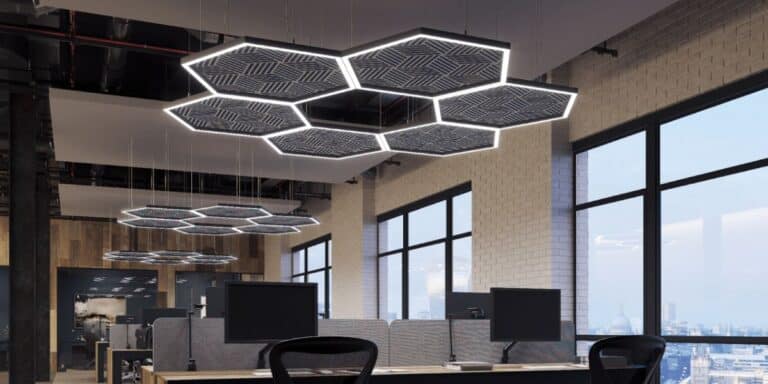
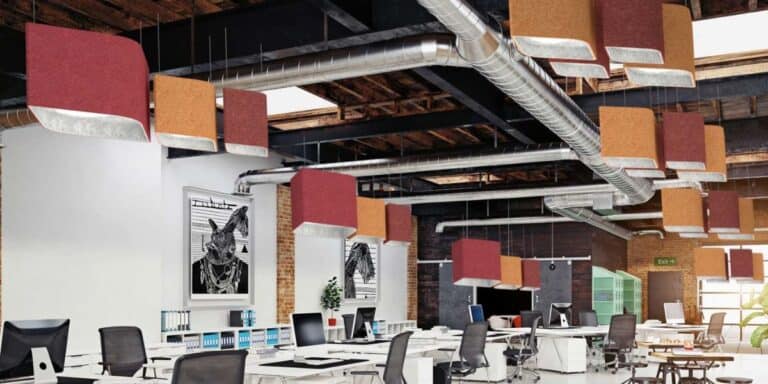
Akoestische verlichting presteert het beste wanneer deze direct boven de primaire geluidsactiviteitszones wordt geïnstalleerd, zoals werkstations, vergadertafels, samenwerkingsruimtes en open zitplaatsen. Plafondplaatsing is van cruciaal belang omdat het plafond fungeert als een belangrijk reflectieoppervlak voor spraak. De juiste afstand, hoogte en verdeling bepalen hoe effectief de armatuur de galm vermindert en de spraakhelderheid verbetert.
Dit artikel legt de optimale plaatsingszones, hoogteoverwegingen, reflectiecontrolelogica, kamertypestrategieën en veelvoorkomende installatiefouten uit. De focus ligt strikt op plaatsingsprestaties, zodat architecten, ontwerpers, akoestische consultants en facility managers weloverwogen installatiebeslissingen kunnen nemen.
Waarom plafondplaatsing belangrijker is dan plaatsing van de muur
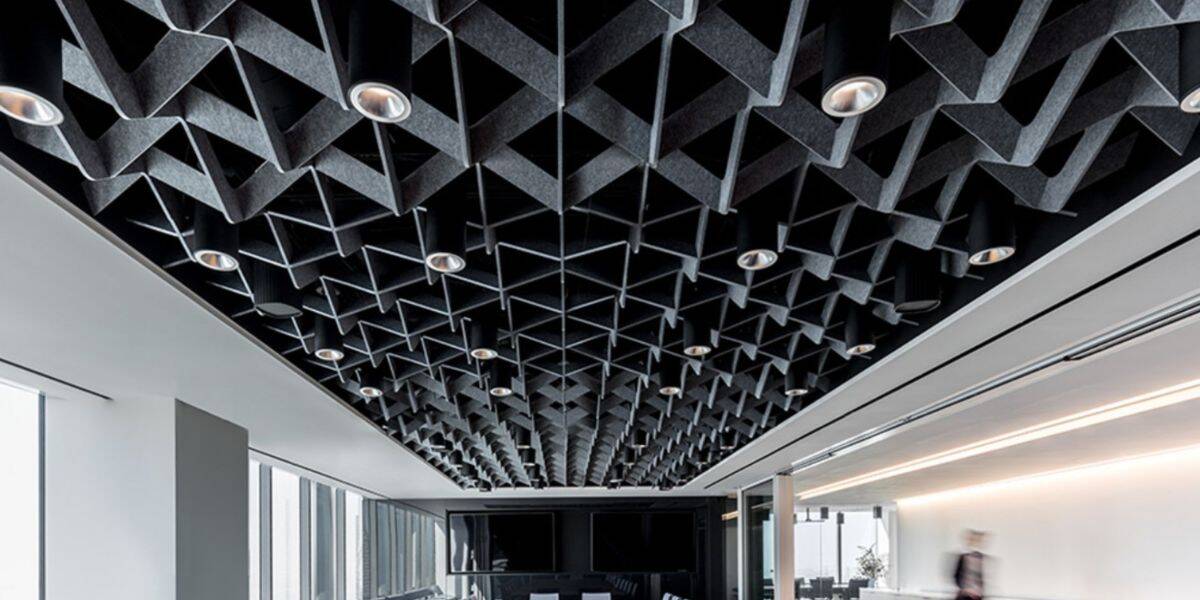
In de meeste commerciële interieurs reist spraakenergie onmiddellijk na het verlaten van de mond van de spreker omhoog. De eerste significante reflectie vindt vaak plaats bij het plafondvlak voordat hij naar beneden terugkeert naar de bezette zone. Dit creëert wat akoestische mensen noemen een eerste reflectiepad:
Spraakbron → Plafond → Gereflecteerde energie → Luisteraars.
Wanneer plafonds harde, reflecterende oppervlakken zoals gipsplaat, beton of metalen terrasplanken, gereflecteerde spraakenergie de kamer snel opnieuw binnenkomt, waardoor de galmtijd toeneemt en de helderheid wordt verminderd.
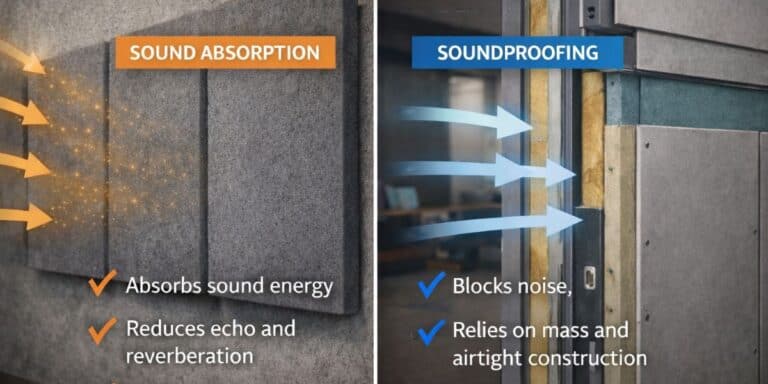
Aan de muur gemonteerde absorptie helpt, maar het richt zich voornamelijk op laterale reflecties. Overheadreflecties zijn doorgaans dominanter in open- en conferentieomgevingen omdat:
- Het plafond overspant de gehele bezette zone.
- Het reflecteert energie terug in het spraakveld.
- Het versterkt geluid over grote horizontale gebieden.
Akoestische verlichting Onderbreekt deze verticale reflectielus direct bij het reflectievlak. Door akoestische armaturen in het reflectiepad voor het plafond te plaatsen, wordt mid-frequente spraakenergie (meestal 500-2000 Hz) geabsorbeerd voordat deze terugkeert naar de inzittenden.
De plaatsing van de omtrekwand onderschept deze vroege verticale stuiter niet. Op plafonds gebaseerde viltverlichtingsarmaturen verminderen de intensiteit van eerste reflecties effectiever omdat ze direct in het geluidspad zitten.
Vooral in open omgevingen levert bovengrondse absorptie een hogere akoestische impact per vierkante meter in vergelijking met alleen omtrekbehandeling.
Kernplaatsingszones
A: Boven werkstations en bureauclusters
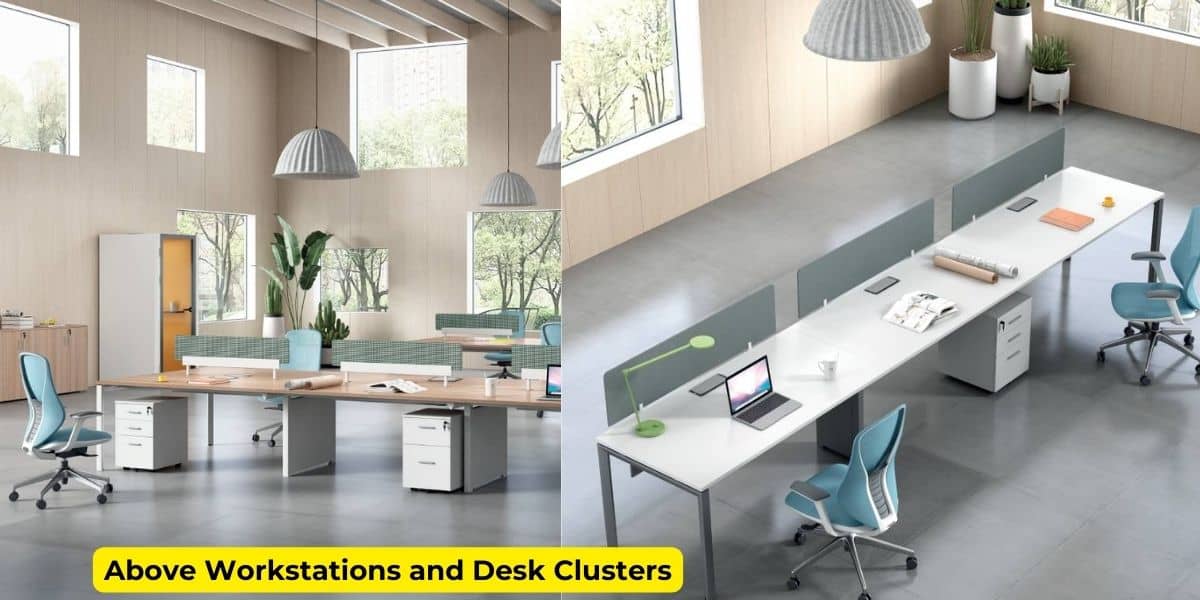
Open-plan kantoren concentreren de spraak binnen werkstationgroeperingen. Gesprekken, videogesprekken en collaboratieve uitwisselingen genereren aanhoudende middenfrequentiegeluidsenergie.
Akoestische verlichting direct boven bureauclusters installeren:
- Absorbeert spraak voordat het zich zijdelings verspreidt.
- Vermindert de opbouw van galmen over rijen.
- Beperkt overspraak tussen teams.
Vilt verlichtingsarmaturen zijn bijzonder effectief omdat dicht polyester vilt spraak in het midden van de frequentie absorbeert waar de meeste verstaanbaarheidsenergie ligt.
Distributielogica is van belang. In plaats van armaturen langs gangen of nabij muren te plaatsen, moeten armaturen worden gecentreerd boven actieve bureaus en iets buiten de voetafdruk van de zitplaats uitsteken. Als richtlijn:
- Doel 20–35%-plafonddekking boven de bureauzones met hoge activiteiten.
- Zorg voor een consistente afstand om onbehandelde reflectiehiaten te voorkomen.
- Vermijd lay-outs met alleen perimeters, waardoor centrale spraakzones reflecterend kunnen blijven.
Ondermaatse lay-outs plaatsen verlichting meestal decoratief langs circulatiepaden in plaats van boven geluidsbronnen.
B: Boven vergadertafels
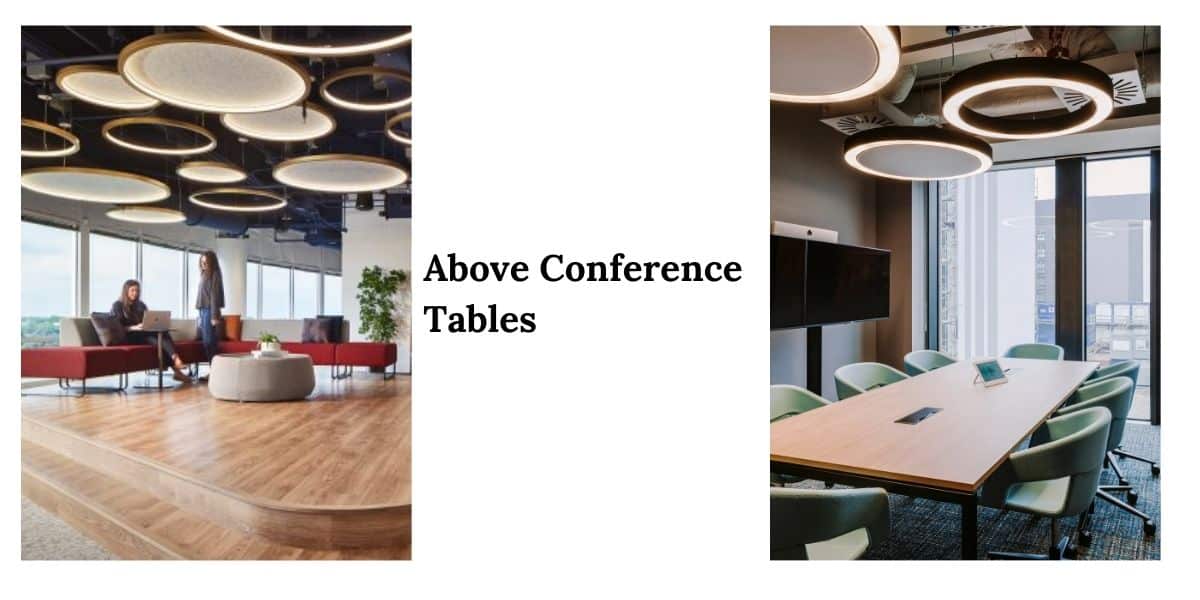
Conferentiezalen concentreren directe spraak in een vast gebied. Meerdere deelnemers spreken naar het midden van de tafel en het geluid reflecteert verticaal van het plafond.
De optimale configuratie:
- Installeer akoestische verlichting centraal boven de tafel.
- Verleng de dekking 300-600 mm buiten de tafelvoetafdruk.
- Lijn de armaturen uit met de tafelas voor een gelijkmatige absorptie.
Als een kamer langwerpig is, presteert een lineaire opstelling die de tafelvorm weerspiegelt beter dan een enkele compacte cluster.
Hoogte is ook van belang. In typische plafonds van 2,7-3 m verbetert het schorten van armaturen 400-800 mm onder de plaat de absorptie-efficiëntie door materiaal dichter bij de reflectiezone te plaatsen.
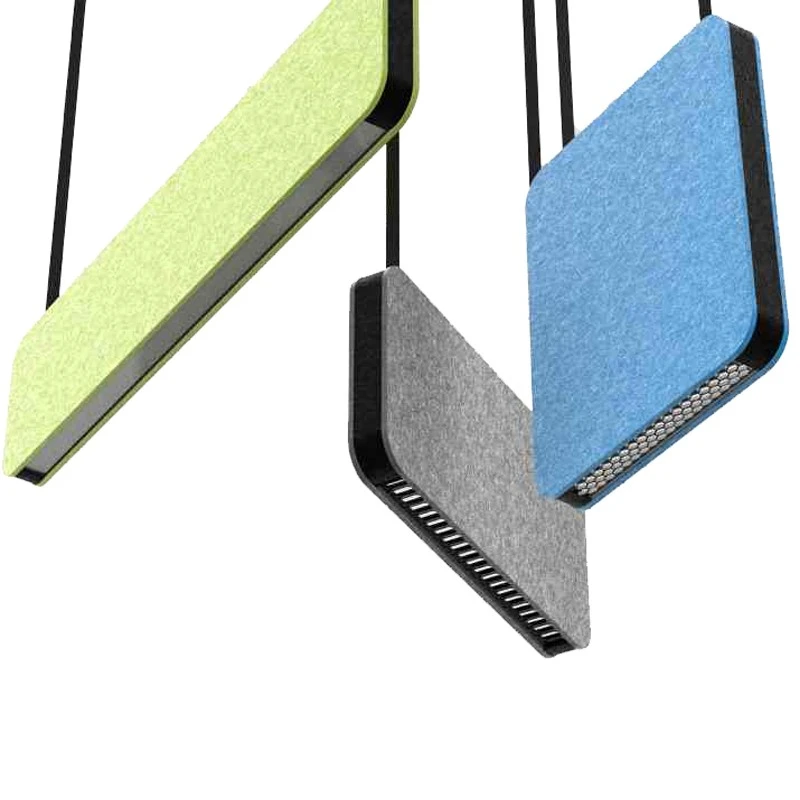
Super slanke akoestische LED lineair licht
- Ingangsspanning: AC100-277V / AC220-240V, 50-60Hz
- Richting uitzenden: naar beneden
- Maat: 121836400mm
- CCT: 3000K / 4000K / 6000K
- Vermogen: 30W
- Lichtstroom: 100-110lm/W
- CRI: >80Ra
- PF: >0.90
- fllikker gratis: ja
- Stralingshoek: 120°
- IP-klasse: IP20
- Garantie: 5 jaar
- Kleur vilt akoestisch bord: rood / groen / blauw / grijs meer dan 48 kleuren optie
C: Samenwerkingszones & loungeruimtes
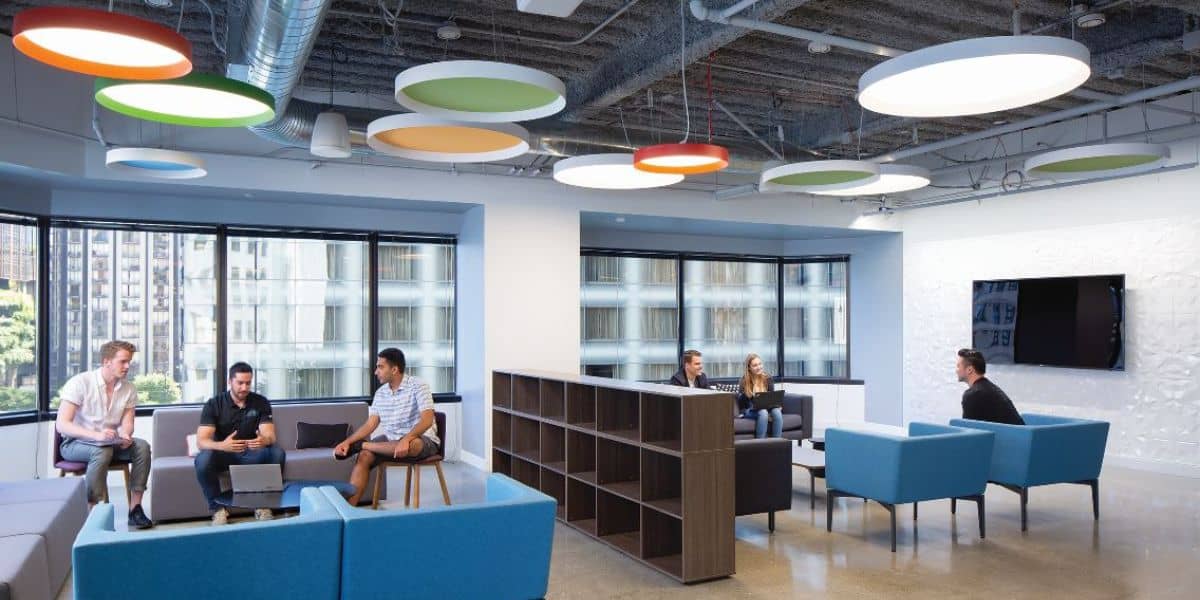
Informele zones genereren onvoorspelbare maar geconcentreerde spraakclusters. Zonder absorptie boven het hoofd vloeit geluid in aangrenzende stille zones.
Akoestische verlichting hierboven installeren:
- Zachte zitclusters
- Huddle-ruimtes
- informele vergaderingen
Creëert gelokaliseerde absorptiezones. Dit bevat geluid in de buurt van de bron en voorkomt galmvorming over de vloerplaat.
Plaatsingsstrategie moet prioriteit geven aan geluidsbeheer, niet op visuele symmetrie.
Installatiehoogte en ophangingsrichtlijnen
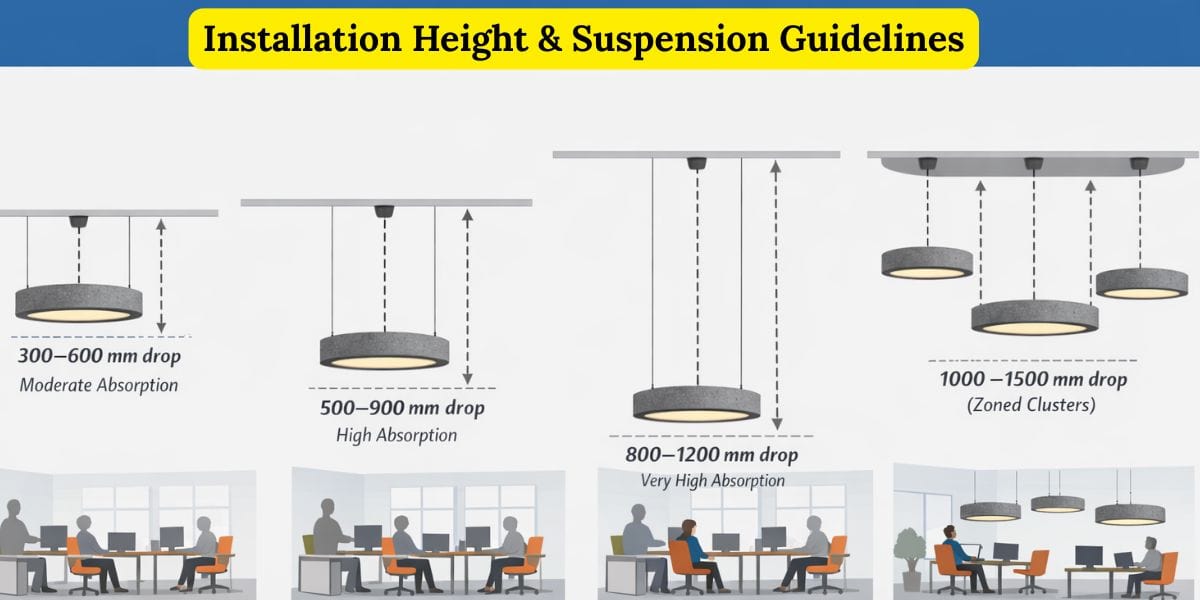
De diepte van de ophanging heeft een aanzienlijke invloed op de prestaties. Het verlagen van akoestische verlichting verhoogt de interactie met geluidsgolven door materiaal te positioneren binnen actieve reflectiepaden.
Voor zichtbare plafonds of hoge platen verbetert een diepere ophanging de akoestische opname.
Tabel 1 – Aanbevolen ophangingsrichtlijnen
| Plafondhoogte | Voorgestelde ophangdiepte | Akoestische impact | vastleggen |
| 2,6–2,8 m | 300-600 mm | Matig tot hoog | Geschikt voor vergaderzalen en kantoren |
| 2,8–3,2 m | 500-900 mm | Hoog | Verbetert spraakcontrole in open plan |
| 3,2–4,0 m | 800-1200 mm | Hoog (gelokaliseerde zones) | Essentieel voor zichtbare plafonds |
| >4,0 m | 1000-1500 mm (gezoneerde clusters) | gericht | Combineer met extra akoestische armaturen |
Een lagere suspensie verhoogt de effectieve absorptie omdat geluid het materiaal tegenkomt voordat het volledig wordt verspreid.
In hoge plafonds boven 3 m, vermindert het installeren van armaturen op de plaat de prestaties aanzienlijk. Door akoestische verlichting naar beneden te brengen, verbetert de interactie met spraakfrequenties.
Dekking & distributiestrategie
Dekkingspercentage en distributiepatroon bepalen de algehele effectiviteit.
Als vuistregel:
- 20-25%-dekking in gematigde lawaaikantoren.
- 30-40%-dekking in zones met een hoge samenwerking.
- Hogere gelokaliseerde dichtheid boven conferentiegebieden.
Een gelijkmatige verdeling over actieve zones presteert beter dan het clusteren van alle armaturen in één gebied.
Kleine hangers die gelijkmatig op elkaar zijn geplaatst, kunnen net zo goed presteren als grote panelen als ze correct worden verdeeld. Grote akoestische verlichtingspanelen creëren bredere absorptievelden, maar vereisen een zorgvuldige afstemming met activiteitszones.
Tabel 2 – Distributiestrategie per ruimtetype
| ruimtetype | Primaire plaatsingszone | Distributiepatroon | extra behandeling nodig? |
| Open kantoor | Boven bureauclusters | zelfs raster over werkgebieden | Soms wandakoestische armaturen als ze sterk reflecterend zijn |
| vergaderzaal | Gecentreerd boven tabel | Lineaire of rechthoekige cluster | Zelden als de dekking voldoende is |
| coworking-ruimte | Gemengde samenwerkingsgebieden | Gezoneerde clusters | Vaak ja voor glazen wanden |
| heling | Wachtstoelzone | Geconcentreerd over zitplaatsen | Mogelijk voor hoge plafonds |
| hoog plafond atrium | Activiteitenzakken | Opgeschorte clusters | Ja voor volumeregeling |
Vermijd het plaatsen van alle akoestische verlichting langs de randen van de omtrek. Gedistribueerde plaatsing in lijn met spraakconcentratie levert betere prestaties op dan decoratieve groepering.
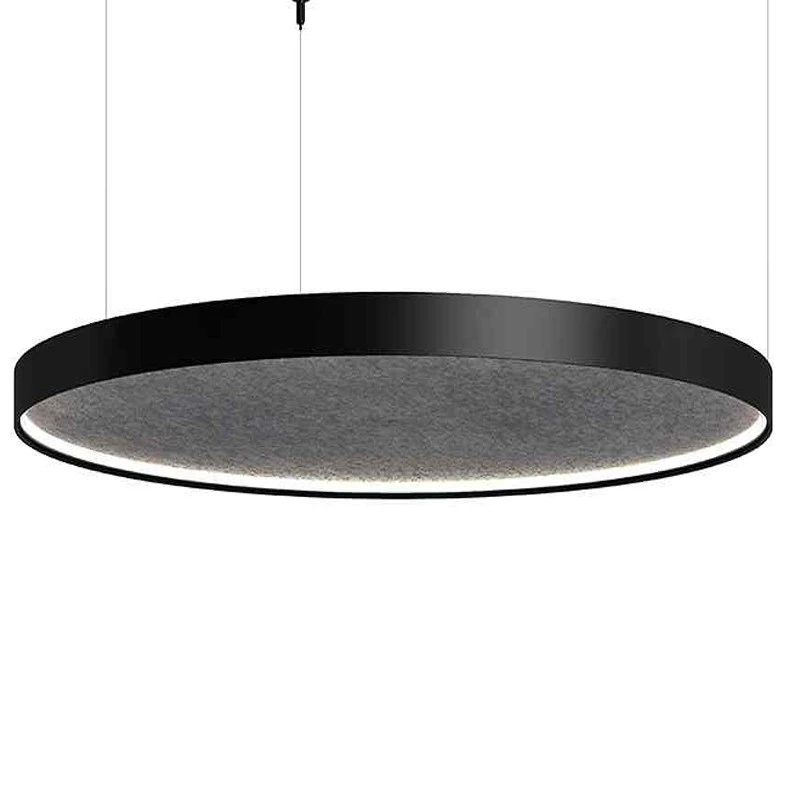
Directe cirkel akoestische LED-hanglamp
- Ingangsspanning: AC100-277V / AC220-240V, 50-60Hz
- Hoogte maat: H65mm
- Maat D: 600mm / 800mm / 1000mm / 1200mm
- CCT: 3000K / 4000K / 6000K
- Vermogen: 40W / 60W / 80W / 96W
- Lichtstroom: 100-110lm/W
- verhinderend -verblindend: ja
- CRI: >80Ra
- PF: >0.90
- fllikker gratis: ja
- Stralingshoek: 120°
- IP-klasse: IP20
- Garantie: 5 jaar
- Kleur vilt akoestisch bord: rood / groen / blauw / grijs meer dan 48 kleuren optie
Kamerspecifieke installatiebegeleiding
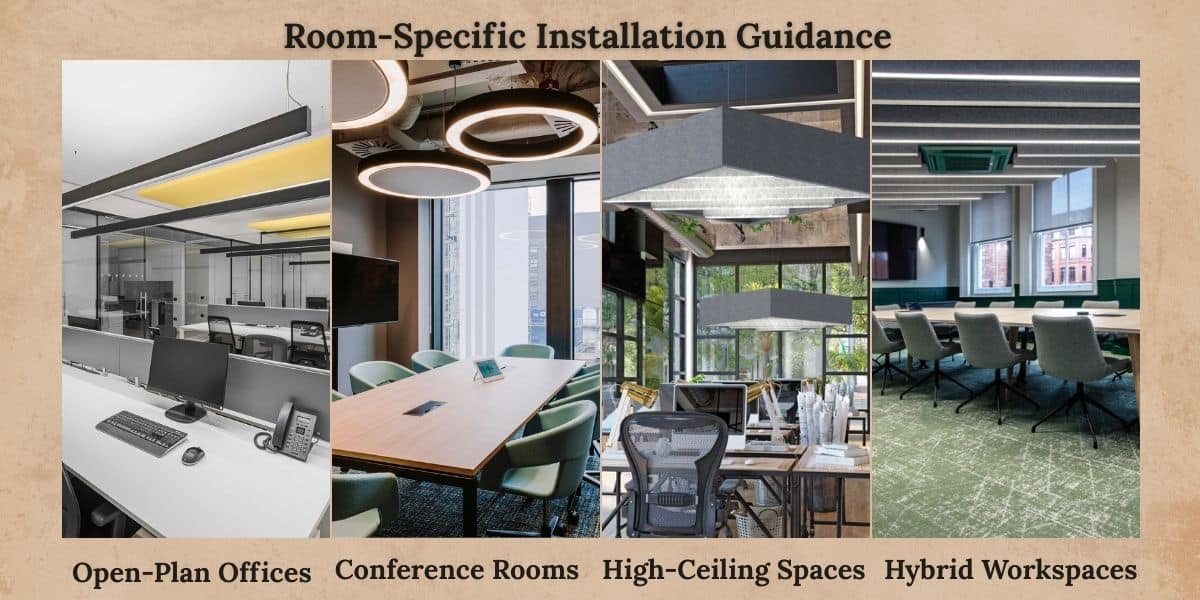
open kantoren
Gebruik gedistribueerde rasters boven bureaus, geen gangen. Gecentraliseerde lay-outs met alleen corridors kunnen spraak bij de bron niet aanpakken.
Als plafonds groter zijn dan 3 m:
- Verhoog de diepte van de ophanging.
- Cluster akoestische armaturen direct boven actieve bureaus.
- Vul bij als de galm hoog blijft.
vergaderzalen
Installeer centrale akoestische verlichting boven de tafel. Voor lange kamers:
- Gebruik lineaire arrays die de tabelgeometrie volgen.
- Voeg indien nodig secundaire armaturen toe bij de tafeluiteinden.
Vermijd het plaatsen van armaturen in de buurt van muren, tenzij zijwaartse reflecties ernstig zijn.
Ruimtes met hoog plafond
Hoge plafonds verhogen de nagalm door een groter volume. In deze ruimtes:
- Schuif de armaturen lager in de bezette zone.
- cluster boven actieve zitplaatsen of samenwerkingsgebieden.
- Combineer met akoestische wanden als wanden als glazen oppervlakken domineren.
Plaatsing moet activiteitengebieden targeten, niet open lege ruimte.
Hybride werkruimten
Hybride kantoren herconfigureren vaak bureaulay-outs. Modulaire akoestische verlichtingssystemen bieden flexibiliteit.
Plaatsingsstrategie:
- Identificeer waarschijnlijke spraakclusters.
- Gebruik herconfigureerbare ophangsystemen.
- Vermijd vaste decoratieve centerpieces die zich niet aanpassen aan lay-outwijzigingen.
Akoestische logica moet in lijn blijven met evoluerende bezettingspatronen.
Wanneer akoestische verlichting alleen niet genoeg is
Bepaalde voorwaarden beperken standalone prestaties:
- Zeer hoge nagalmtijden.
- Grote glazen gevels.
- betonnen muren.
- Volumes met dubbele hoogte.
In deze gevallen moet akoestische verlichting dienen als absorptie boven het hoofd, aangevuld met verticale Akoestische armaturen.
Plafondbehandeling onderschept verticale reflecties, terwijl wandbehandeling laterale reflecties regelt. De combinatie levert een gebalanceerde prestatie.
Het negeren van wandreflectiviteit in sterk beglazingen kan oplossingen voor het plafond ondermijnen.
Veelvoorkomende installatiefouten
- Alleen installeren aan de perimeter in plaats van boven spraakzones.
- akoestische verlichting als puur decoratief behandelen.
- Het negeren van de ophanghoogte in hoge plafonds.
- Over-afstandsarmaturen, waardoor onbehandelde reflecterende gaten ontstaan.
- Alleen boven circulatiepaden installeren.
- Niet in staat om plaatsing af te stemmen op werkelijke spraakpatronen.
De meeste prestatieproblemen komen voort uit verkeerd uitgelijnde plaatsing, niet van onvoldoende aantallen.
Checklist voor plaatsing
Tabel 3 – Checklist voor installatiebeslissing
| Evaluatiefactor | Wat te beoordelen? | Waarom het de prestaties beïnvloedt |
| Spraakactiviteitsconcentratie | Bureaudichtheid, vergaderzones | Bepaalt waar de absorptie het hoogst moet zijn |
| Plafondhoogte | plaat-naar-vloer dimensie | Beïnvloedt de ophangdiepte |
| Oppervlaktereflectiviteit | glas, beton, metaal | Hogere reflectie verhoogt de behoefte aan dekking |
| Kamervolume | kubieke meter | Groter volume verhoogt de nagalm |
| Hybride versus vaste lay-out | Herconfiguratie frequentie | Impacts behoefte aan modulaire plaatsing |
| Behoefte aan extra akoestische armaturen | Ernst van de muurreflectie | Zorgt voor een gebalanceerde akoestische regeling |
Deze checklist ondersteunt gestructureerde besluitvorming in plaats van esthetisch gedreven installatie.
Praktische plaatsingswerkstroom
Een professioneel plaatsingsproces volgt meestal deze stappen:
Stap 1: identificeer spraakzware zones
Breng werkstationclusters, vergadertafels en informele zitjes in kaart.
Stap 2: Kaartreflectieoppervlakken
Evalueer plafondreflectiviteit en kamerhoogte.
Stap 3: Bepaal het ophangingsbereik
Selecteer de ophangingsdiepte op basis van plafondhoogte en gewenste absorptie-efficiëntie.
Stap 4: Plan distributiepatroon
Kies raster-, lineaire of geclusterde lay-outs die zijn uitgelijnd met activiteitszones.
Stap 5: Evalueer aanvullende behandeling
Beoordeel of wandakoestische armaturen nodig zijn voor een gebalanceerde regeling.
Deze workflow geeft prioriteit aan prestatie-uitlijning boven visuele uniformiteit.
Trends voor plaatsing in 2026
Opkomende trends benadrukken prestatie-integratie:
- Geïntegreerde plafondsystemen die verlichting en absorptie combineren.
- Modulaire akoestische verlichting voor hybride werkomgevingen.
- Flexibele ophangsystemen voor instelbare prestaties.
- Gezoneerde akoestische besturing vervangt roosters voor het volledige plafond.
Steeds vaker vervangt akoestische verlichting afzonderlijke plafondpanelen door verlichting en gerichte absorptie binnen de reflectiezone te combineren.
Conclusie
Akoestische verlichting moet direct boven de primaire geluidszones worden geïnstalleerd, strategisch over plafondgebieden worden verdeeld en op hoogtes worden geschorst die de absorptie-efficiëntie maximaliseren. Plaatsingslogica is belangrijker dan het aantal armaturen. Wanneer spraakpatronen en plafondgeometrie worden afgestemd, verbetert akoestische verlichting aanzienlijk het comfort en de helderheid.
FAQs
Gerelateerde berichten