Polski
 English
 简体中文
 Deutsch
 Español
 Français
 Italiano
 日本語
 한국어
 Português
 Русский
 Türkçe
 Nederlands
 Tiếng Việt
 ไทย

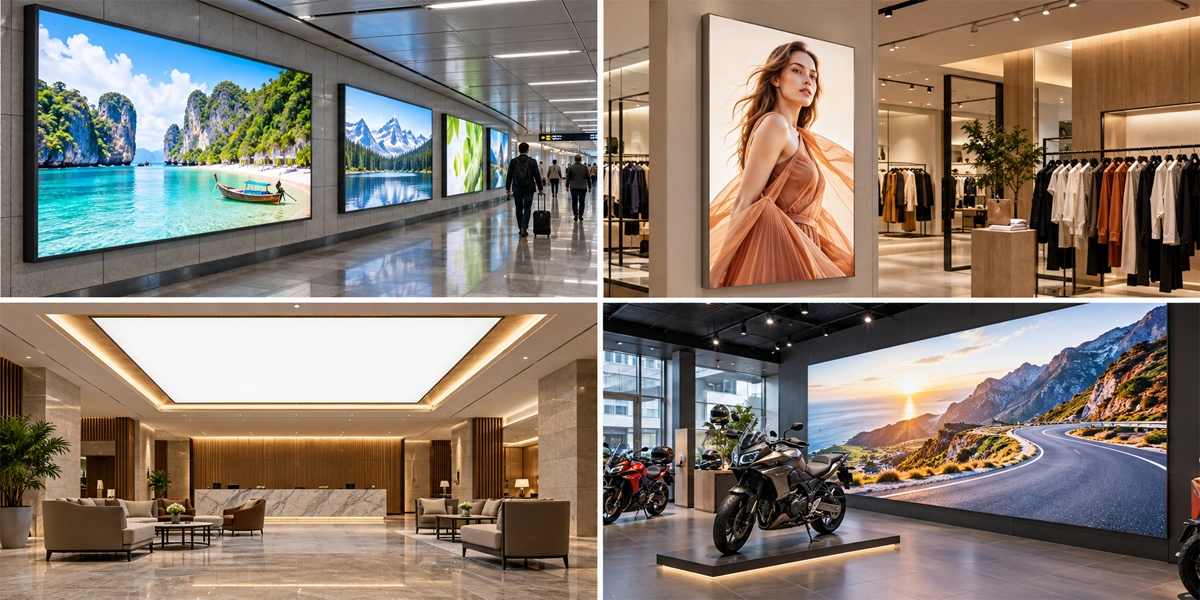
There is no single LED light source that works best for every light box.
Choosing LED lights for a light box starts with the construction. A deep outdoor sign cabinet, a shallow retail display, a fabric light box and a curved logo box have different requirements. Installation depth, lighting direction, shape, face material, brightness, color control and maintenance access all affect the final choice.
This guide compares the main LED lights for light boxes used in illuminated advertising and architectural displays:
- Moduły znakowe LED
- Rigid LED lens bars
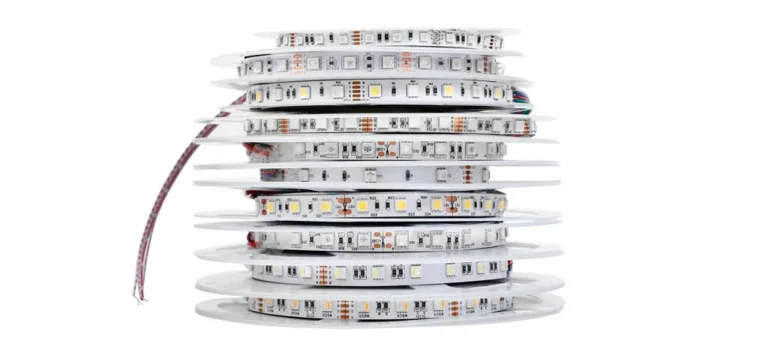
- Flexible backlight strips
- Cuttable LED light sheets
- Taśmy LED SMD
- Taśmy LED COB
The goal is not to identify one universal winner. It is to show which options fit each construction and why more than one solution often works.
szybka odpowiedź
For a conventional deep sign cabinet, LED modules or rigid LED bars usually provide the most practical combination of brightness, spacing and cost.
For a shallow light box, a flexible backlight strip, cuttable LED sheet or closely spaced COB strip can reduce visible hotspots.
Large fabric light boxes often use rigid lens bars because they cover long, regular areas efficiently. Curved surfaces, logos and unusual shapes benefit from flexible strips or LED sheets that follow the available space.
Edge-lit acrylic panels require a side-lighting system rather than a standard backlighting layout. RGB, RGBW and tunable-white installations also need compatible controllers, wiring and power supplies.
The right LED lights for a light box depend on the complete structure, not only on the individual LED product.
Project Details to Confirm Before Choosing LED Lights for a Light Box
Start with the light box construction. Product comparisons become much easier after the physical limits are clear.
Installation Depth
Measure the distance between the LEDs and the illuminated face. This distance controls how much room the light has to spread before reaching the graphic or diffuser.
A deep cabinet offers more freedom in LED spacing. A shallow box needs a denser or broader light source to avoid bright spots.
Lighting Direction
Confirm whether the design uses:
- Direct backlighting
- Edge lighting
- Double-sided backlighting
- Side or perimeter lighting
- A mixed layout
The same light box dimensions can require a completely different light source when the direction changes.
Shape and Internal Obstacles
Check for curves, narrow sections, dividers, mounting frames, structural ribs and areas that cannot accept LEDs. A regular rectangle is easier to illuminate with rigid bars. Irregular shapes often benefit from modules, flexible strips or cuttable sheets.
Facing Material
Acrylic, fabric, polycarbonate, printed film and translucent stone transmit and diffuse light differently.
The illuminated face matters as much as the LEDs. A highly diffusing material can hide wider LED spacing, while a clearer surface exposes bright points and dark gaps.
Light Color and Control
Define whether the project needs:
- Single-color white
- przestrajalny biały
- RGB
- RGBW
- Addressable digital color
- Dimming only
- Efekty dynamiczne
Color-changing systems require more conductors and compatible control equipment. Plan these components before production rather than adding them after the light source has been installed.
Środowisko instalacji
Indoor retail, outdoor signage, transport facilities and hospitality interiors create different requirements for waterproofing, temperature, service access, color quality and operating time.
Main LED Lights for Light Boxes
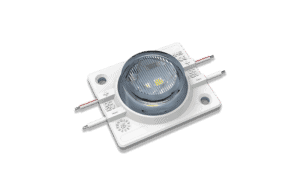
Moduły znakowe LED
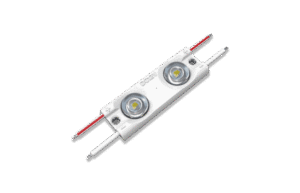
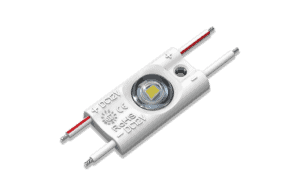
Moduły znakowe LED combine one or more LEDs, a small PCB, lenses and connecting wires in a compact unit. Installers distribute the modules across the back of the cabinet according to the required spacing.
Modules adapt well to letters, logos and irregular sign cabinets. Individual units can be positioned around structural obstacles, and failed sections are relatively easy to replace.
Their main limitation is installation labor. Large cabinets require many modules, adhesive points and wire connections. Poor spacing also creates visible bright spots.
For deeper sign cabinets and conventional advertising boxes, modules remain one of the most versatile solutions.
LED Module Lights
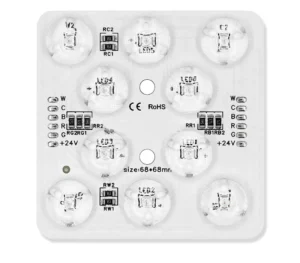
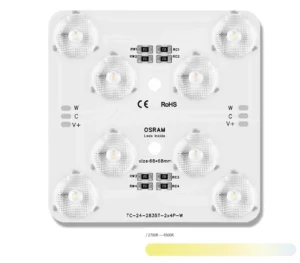
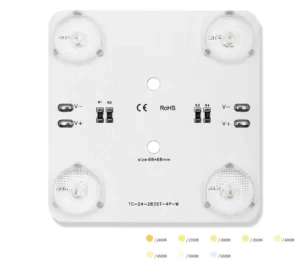
LED module lights use a larger body or optical structure than small sign modules. They cover more area per unit and reduce the number of individual pieces needed in medium or large cabinets.
They work well when the box has enough depth for the lens to spread the light. The larger pitch becomes more visible in very shallow structures.
Rigid LED Lens Bars
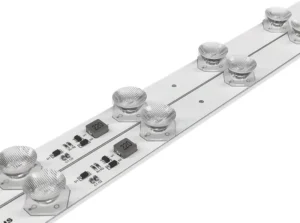
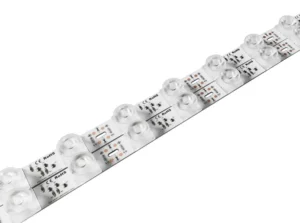
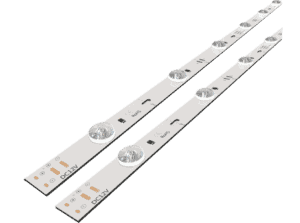
Rigid LED strips place multiple LEDs and lenses on a straight aluminum or rigid PCB bar. Their regular spacing suits rectangular light boxes, fabric displays and long sign cabinets.
Rigid bars reduce installation time because one bar covers more distance than a group of separate modules. Aluminum construction also supports heat transfer and mechanical alignment.
They are less convenient around curves, tight corners and irregular internal structures. Bar length and connector position must match the cabinet layout.
The rigid LED strip selection guide provides a more detailed explanation of bar spacing and light-box depth.
Flexible Backlight Strips
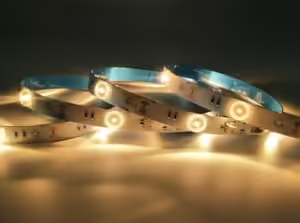
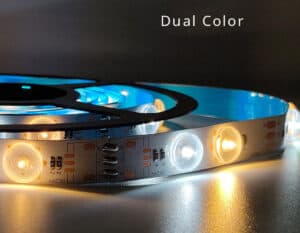
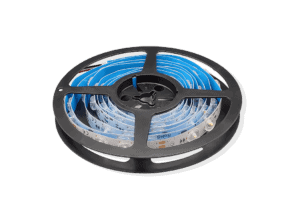
Flexible backlight strips combine a flexible PCB with optical lenses designed to spread light over a wider area.
They suit curved cabinets, rounded corners, irregular logos and installations where a rigid bar cannot follow the surface. Compared with ordinary linear LED tape, the lens helps distribute light across the illuminated face.
The strip still needs support, thermal planning and secure mounting. Excessive bending close to components or solder joints can damage the circuit.
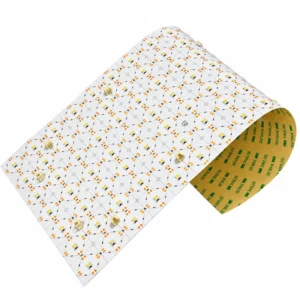
Cuttable LED Light Sheets
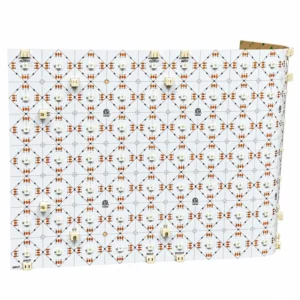
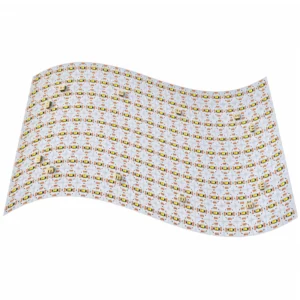
diody led distribute LEDs across a wide flexible circuit rather than one narrow strip. Marked cutting cells allow selected models to fit around corners, openings and irregular shapes.
This broad matrix structure reduces the layout work required to build a large luminous surface from separate strips. It is particularly useful in shallow light boxes, counters, translucent stone panels and complex backlighting areas.
Cutting freedom depends on the circuit. A sheet cannot be cut at random. Check the cutting diagram, remaining power paths and connection points before finalizing the shape.
For more detail, see the cuttable matrix LED light sheet guide.
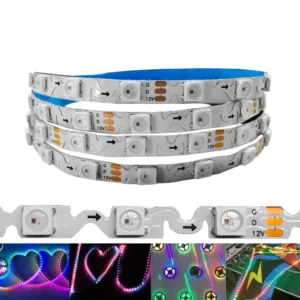
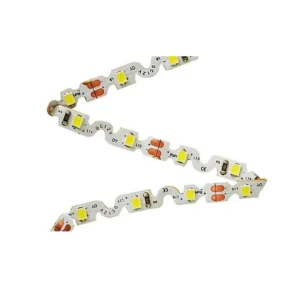
SMD and COB LED Strips
cover a wide range of brightness levels, color temperatures, densities and control options.
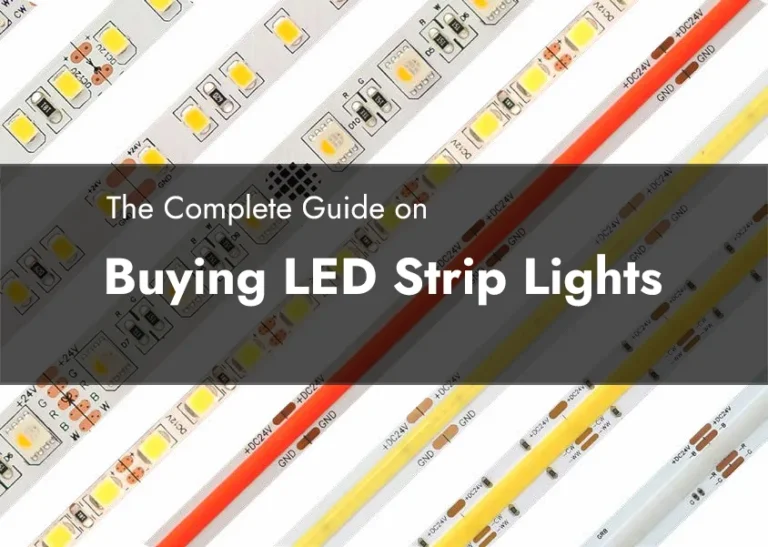
Taśmy LED SMD I Taśmy LED COB provide linear lighting for perimeter layouts, narrow boxes, local correction and decorative backlighting. Their flexible, narrow construction makes them easy to route around internal structures.
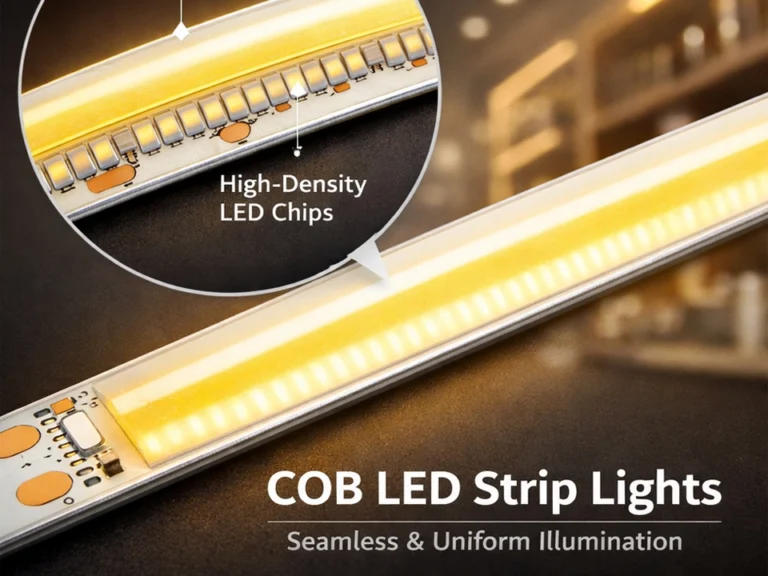
SMD strips offer more choices in brightness, LED density, color temperature and control. COB strips use a dense light-emitting surface that reduces visible LED points, making them useful when the strip sits close to the illuminated face or remains indirectly visible.
Both are linear products. Broad direct-backlit surfaces usually require several parallel rows, along with additional profiles, wiring and connection points. Compare the complete layout with LED modules, rigid bars and LED sheets before selecting LED strips for a light box.

Quick Comparison of LED Lights for Light Boxes
| Źródło światła | Common use | Layout flexibility | Visual characteristic | Wstallation pattern | Main point to verify |
| Moduły znakowe LED | Standard, curved and irregular light boxes | Wysoki | Overlapping pools of light | Individual modules or connected strings | Module pitch, lens angle and wiring |
| LED module lights | Large regular areas and controlled-color displays | Średni | Repeatable illuminated matrix | Regular modular grid | Grid spacing and controller type |
| Rigid LED lens bars | Rectangular backlit or side-lit cabinets | Średni | Straight and consistent rows | Parallel rigid bars | Correct backlighting or side-lighting optic |
| Flexible backlight strips | Long, curved or roll-installed layouts | Wysoki | Wide lensed distribution | Parallel flexible runs | Row spacing and thermal mounting |
| Cuttable LED sheets | Shallow, wide and irregular surfaces | bardzo wysoki | Dense area backlighting | Cut and connect sheets | Cutting grid and power-entry points |
| SMD and COB LED strips | Narrow, perimeter and decorative areas | Wysoki | Linear light; COB shows fewer visible dots | Parallel rows or perimeter runs | Diffusion distance, row quantity and heat management |
The table narrows the options, but it does not replace a lighting test. Two products in the same category can use different optics, power levels and LED densities.
Choose by Light Box Construction
Choose by Installation Depth
A deep box gives lenses and diffusers more distance to blend individual LEDs. Modules, block modules and rigid bars work well when the optical spacing matches the depth.
Shallow construction leaves less mixing distance. Useful candidates include:
- LED sheets that spread LEDs over a wide area
- Flexible backlight strips with wide-angle lenses
- High-density COB strips
- Closely spaced rigid bars or modules
Adding more LEDs is not always the best correction. A better lens, a more diffusing face or a revised source-to-face distance can produce a more uniform result with fewer components.
Choose by Lighting Direction
Direct backlighting positions the LEDs behind the illuminated face. Modules, rigid bars, flexible backlight strips and LED sheets all fit this approach.
Edge lighting sends light through the side of an acrylic light-guide panel. It requires a compatible panel, polished or prepared edges and a suitable edge-emitting source. See the guide to edge-lit LED light boxes for the construction differences.
Double-sided cabinets need balanced light on both faces. Depending on the depth, the system can use a central double-sided light source or two independent backlighting layers.
Choose by Shape
Regular rectangular boxes favor rigid products because straight bars are fast to align.
Curved outlines and irregular logos favor modules, flexible strips or cuttable sheets. These products can work around internal structures and reduce unused illuminated area.
A product does not need to cover every part of the project alone. A large cabinet can use rigid bars across the main area and flexible strips near curved edges or difficult corners.
Choose by Color and Control
Single-color white covers most advertising light boxes. Select the color temperature and color rendering according to the graphic, brand colors and surrounding environment.
Tunable-white systems allow adjustment between warmer and cooler white light. RGB and RGBW systems add static or dynamic colors. Addressable digital systems control individual pixels or groups for programmed effects.
These systems need compatible Kontrolery LED. Confirm voltage, channel count, current capacity, control protocol and dimming method before ordering the light source.
12V vs 24V LED Light Box Systems
Both voltages are common. The choice affects current, voltage drop, product availability and power distribution.
| Czynnik | System 12V | System 24V |
| Typical application | Small signs, short runs and compact sections | Large cabinets, long runs and higher-power layouts |
| Current at equal power | Wyższy | Niższy |
| Voltage-drop control | Requires shorter feeds or more injection points | Easier across longer sections |
| Common products | Modules and compact LED strips | Rigid bars, backlight strips, LED sheets and long strip runs |
| Kompatybilność zasilania | Wide choice of compact drivers | Common in commercial signage and architectural lighting |
A 24V system carries half the current of a 12V system at the same wattage. Lower current reduces cable losses and helps control voltage drop, although wire size and feed length still matter.
Twelve volts remains practical for small signs and products designed specifically around 12V circuits. Do not change a product’s rated voltage to simplify the power plan.
Do not place an entire large cabinet on one long feed simply because its total wattage fits the driver. Divide large systems into manageable electrical zones and add power-entry points where required.
Choose by Installation Environment
| ośrodek | Główne zagrożenia | Priorities |
| Retail stores and indoor displays | Limited depth, hotspots and frequent design changes | Uniform lighting, compact construction and easy replacement |
| Outdoor light boxes | Water, dust, heat and temperature changes | Suitable IP protection, sealed connections, drainage and thermal management |
| Transport hubs and public spaces | Long operating hours and difficult maintenance access | Stable output, serviceable wiring and reliable power supplies |
| Hotels, bars and decorative interiors | Color quality, dimming performance and visible finish | High CRI, smooth dimming, COB strips, tunable white or RGB/RGBW control |
The environment does not automatically decide the light source, but it changes which risks deserve the most attention.
Outdoor protection covers more than an IP rating. Cable entries, connectors, cut edges, power supplies, drainage and cabinet ventilation all form part of the waterproofing system.
Installation Time, Maintenance and Installed Cost
Czas instalacji
Count the complete installation process, not only the number of LED products.
Small modules provide excellent layout control but require more placement and wiring. Rigid bars cover large regular areas quickly. LED sheets reduce row-by-row alignment in broad or irregular sections.
Pre-assembled cables, connectors and marked mounting positions also reduce production time.
Maintenance and Replacement
A serviceable design divides the light box into accessible electrical sections. A technician can then test and replace one area without removing the complete lighting system.
Keep drivers, controllers and major connection points accessible. Label the electrical zones and record the product specification used in each project.
LED lifetime is influenced by the entire system, including heat, current, drivers, connectors and operating conditions. The U.S. Department of Energy also distinguishes LED source life from complete system reliability in its overview of LED basics and reliability.
Installed Cost
Compare the cost of the finished lighting system rather than the price of one module, bar or meter of strip.
Obejmuje:
- LED products
- Aluminum profiles or mounting panels
- Power supplies and controllers
- Connectors, cables and terminals
- Praca instalacyjna
- Testing and rework
- Future service access
A low price per meter can be misleading if the layout needs more rows, extra aluminum profiles or more installation time to reach the same uniformity.
How to Avoid LED Hotspots and Dark Edges in a Light Box
Hotspots appear when the light source is too close to the face, the LED spacing is too wide or the diffuser does not mix the light effectively.
Dark edges usually come from insufficient coverage near the frame, optical losses at corners or shadows created by internal structures.
Start with four checks:
- Głębokość instalacji
- LED pitch and lens angle
- Face material and diffusion
- Coverage near edges and corners
Test a representative section before producing a large batch. Use the real face material, expected cabinet depth and intended LED spacing.
For important projects, photograph the illuminated sample at a fixed exposure. This makes it easier to compare layouts and identify brightness differences that are difficult to judge by eye.
Power Supply, Wiring and Control for Light Boxes
Calculate total power from the final layout, then add a practical reserve according to the driver specification and operating environment.
Use appropriately rated zasilacze LED and divide large systems into electrical zones. Match wire size to current and cable length.
Sprawdź:
- Input and output voltage
- Total connected load
- Driver loading
- Cable size
- Feed length
- Spadek napięcia
- Dimming method
- Controller capacity
- Indoor or outdoor rating
- Access for future replacement
LED performance and service life depend on the complete system, including the LED packages, optics, driver electronics, connections and operating environment. The U.S. Department of Energy provides further technical resources through its LED Systems Reliability Consortium.
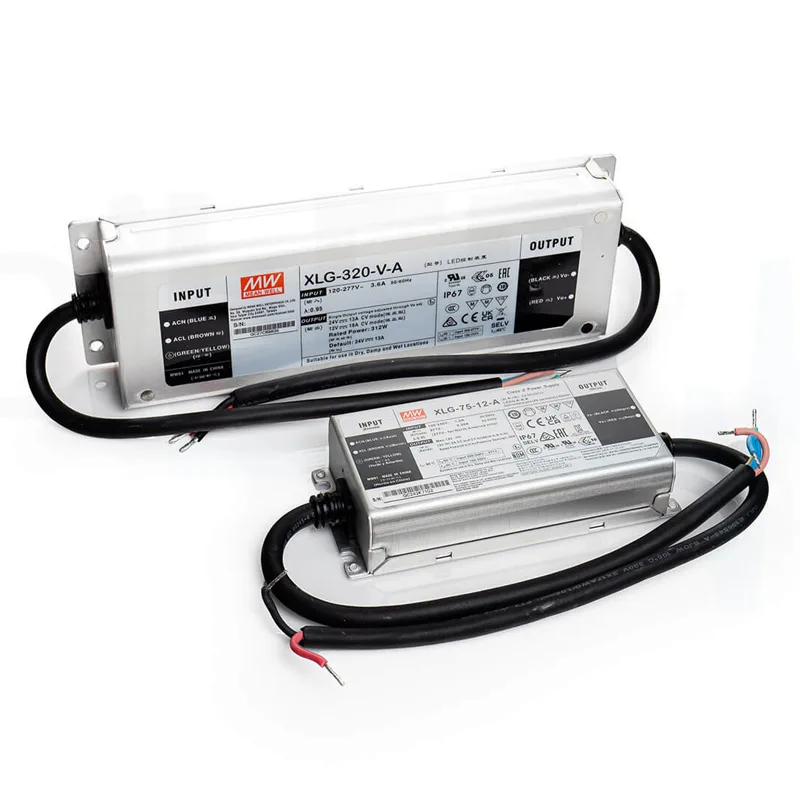
Stałonapięciowy zasilacz LED Mean Well serii XLG IP67
- Model: XLG-75, XLG-100, XLG-150, XLG-200, XLG-320
- Napięcie wejściowe: AC100-305V
- Napięcie wyjściowe: DC12V/DC24V
- Prąd wyjściowy: 5 A-18 A przy DC24 V, 3,1 A-13 A przy DC12 V
- Moc: 75W-320W
- Skuteczność: 89%-94%
- PF: >0,95
- Ściemnianie: możliwość ściemniania 3 w 1
- Stopień ochrony IP: IP67
- Gwarancja: 5 lat
Typical Applications and Suitable Options
| Zastosowanie | Suitable options and selection notes |
| Shallow retail poster box | LED light sheet for broad coverage; flexible backlight or COB strips for adjustable row spacing |
| Large fabric light box | Rigid lens bars for fast installation; LED module lights for adjustable positioning |
| Outdoor sign cabinet | Waterproof LED sign modules for irregular areas; rigid bars for long, regular cabinets |
| Curved logo light box | Flexible backlight strips, sign modules or cuttable LED sheets, depending on the curve radius, available depth and permitted cutting pattern |
| Backlit stone counter | LED sheets for broad coverage; COB or dense SMD strips for layouts divided into replaceable sections |
| Double-sided light box | Central lens bars or two separate backlighting layers, depending on cabinet depth and service access |
| Color-changing display light box | RGB/RGBW strips or color modules for zone control; tunable-white modules for adjustable CCT; digital strips for addressable effects |
| Edge-lit acrylic sign | Side-emitting LED strips with a compatible light-guide panel and prepared acrylic edges. Panel preparation affects the result more than LED quantity. |
These are starting points rather than fixed rules. Different products can produce similar results through different layouts, installation time and maintenance strategies.
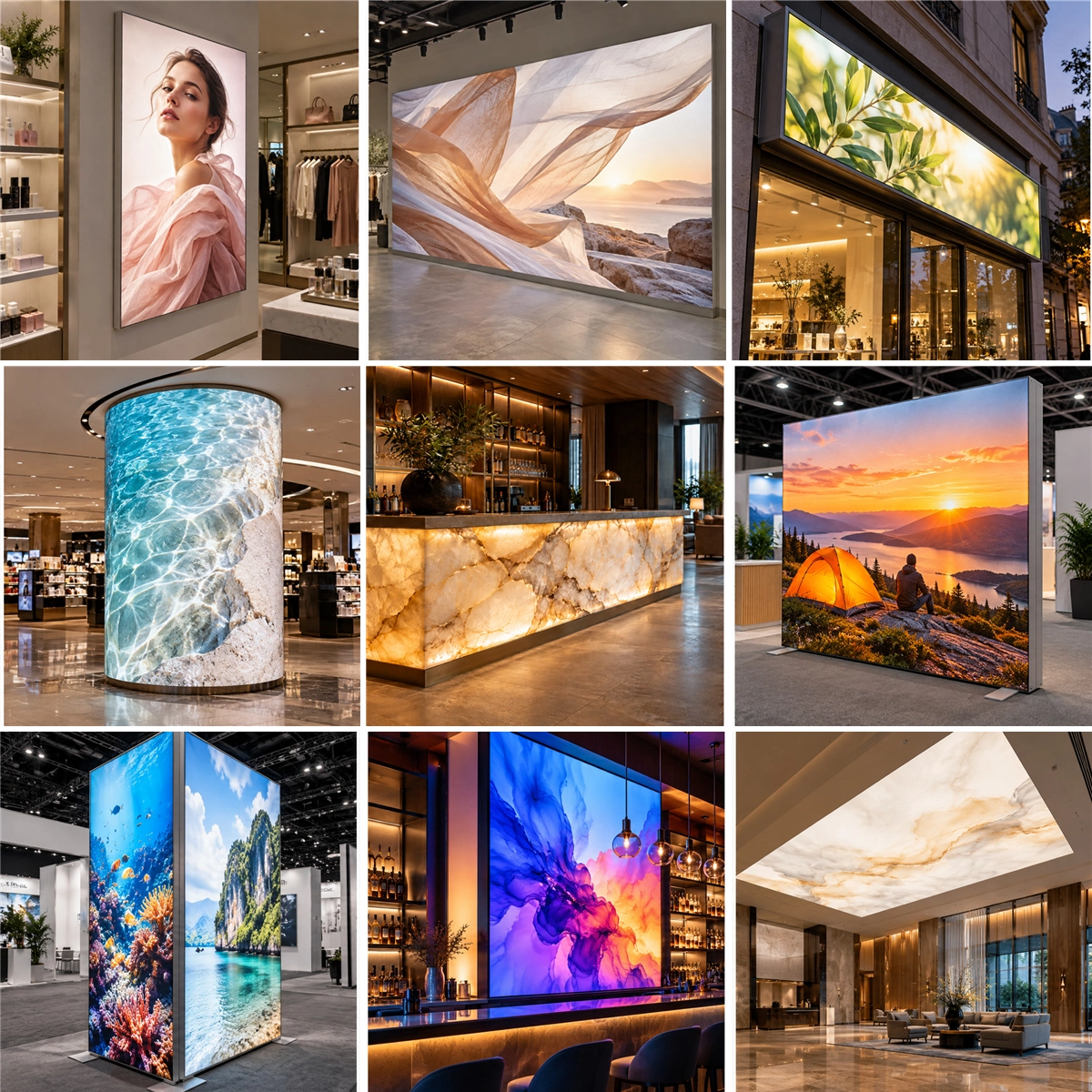
What to Send for an LED Light Box Lighting Recommendation
Provide the following details when requesting a product recommendation or quotation:
- Overall light box dimensions
- Internal installation depth
- Single-sided or double-sided construction
- Direct-lit or edge-lit design
- Face material and thickness
- Instalacja wewnętrzna lub zewnętrz
- Wymagana jasność
- White, tunable white, RGB, RGBW or digital color
- Preferred input voltage
- Dimming or control requirements
- Drawings or internal photographs
- Szacowana ilość zamówienia
A section drawing is more useful than an exterior photograph alone. It shows the LED-to-face distance, frame depth, internal obstacles and mounting surface.
Często zadawane pytania
Wniosek
Choosing LED lights for a light box starts with the complete structure. Cabinet depth, lighting direction, shape and face material determine whether LED modules, rigid bars, flexible backlight strips, LED sheets or conventional strips offer the most practical result.
Test the preferred options behind the actual face material before production. A small mock-up can reveal hotspots, dark corners and spacing problems while providing a reference for the final layout.
Need help selecting LED lights for your light box? Send SignliteLED the cabinet drawing, depth, face material and required lighting effect. We can recommend suitable light sources, power components and control options for sampling.
Powiązane posty