Polski
  English
  简体中文
简体中文  Deutsch
  Español
  Français
  Italiano
  日本語
日本語  한국어
한국어  Português
  Русский
  Türkçe
  Nederlands
  Tiếng Việt
  ไทย
ไทย 
Urządzenia zabezpieczające przed przepięciami (SPD) są klasyfikowane jako typ 1, Typ 2 i Typ 3, aby odzwierciedlić, gdzie działają w systemie elektrycznym i jak zarządzają energią udarową w tym miejscu. Te typy nie są wymienne. Każdy z nich jest zaprojektowany dla określonego środowiska przepięciowego i funkcji ochrony, a działa poprawnie tylko wtedy, gdy jest stosowany w ramach skoordynowanego systemu.
Ten artykuł jest porównawczym przewodnikiem technicznym. Nie wprowadza podstaw ochrony przed przepięciami. Zamiast tego skupia się na tym, jak SPD typu 1, Typ 2 i Type 3 różnią się rolą, możliwościami i interakcją systemu oraz jak inżynierowie określają prawidłowe rozmieszczenie w rzeczywistych instalacjach elektrycznych.
Ramy porównawcze: Jak zróżnicowane są typy SPD
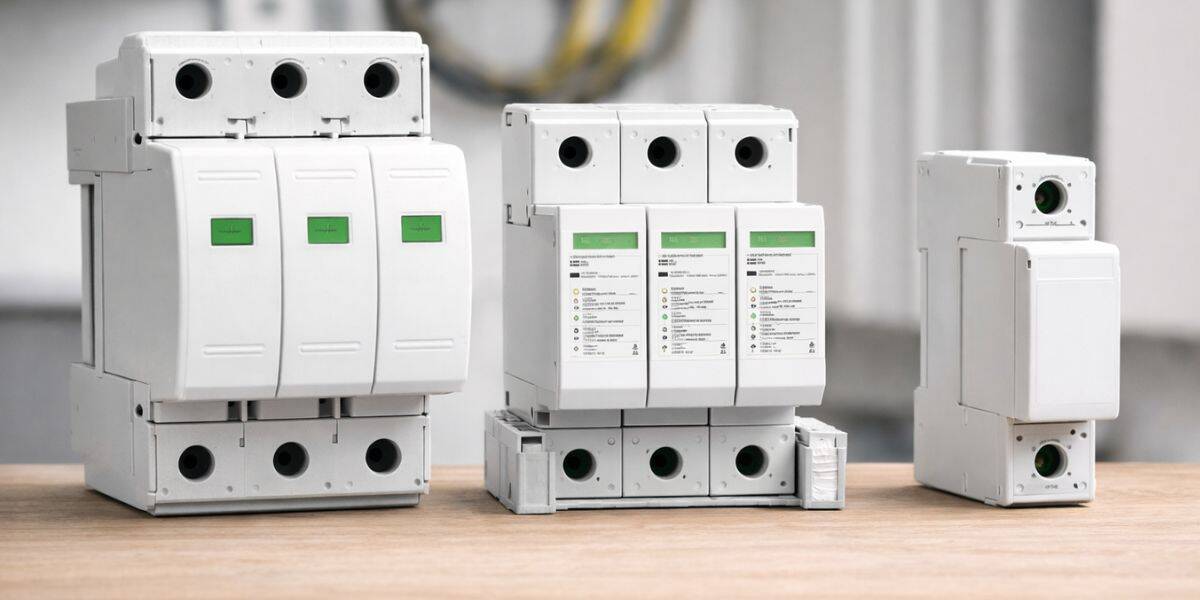
Klasyfikacja SPD nie jest oparta na wielkości produktu, cenie ani postrzeganej solidności. Opiera się na pozycji instalacji i oczekiwanej ekspozycji na przepięcia.
W miarę jak Energia Surge przemieszcza się przez system elektryczny, jego charakterystyka zmienia się:
- Zmniejsza się wielkość prądu udarowego
- Kształt kształtu kształtu ewolu
- Napięcie resztkowe pozostaje niebezpieczne dla wrażliwych urządzeń
Z powodu tego zachowania ochrona przeciwprzepięciowa jest podzielona na strefy. Każdy typ SPD jest przeznaczony do działania w określonej strefie, gdzie może radzić sobie z naprężeniami udarowymi bez przeciążenia lub niedostatecznego działania.
Porównanie między SPD typu 1, Typ 2 i Typ 3 powinno zawsze uwzględniać:
- Miejsce instalacji
- Oczekiwany poziom energii przepięcia
- Podstawowa funkcja ochrony
- Zależność od innych typów SPD
Typ 1 vs. Typ 2 vs. Typ 3: Porównanie side-by-side
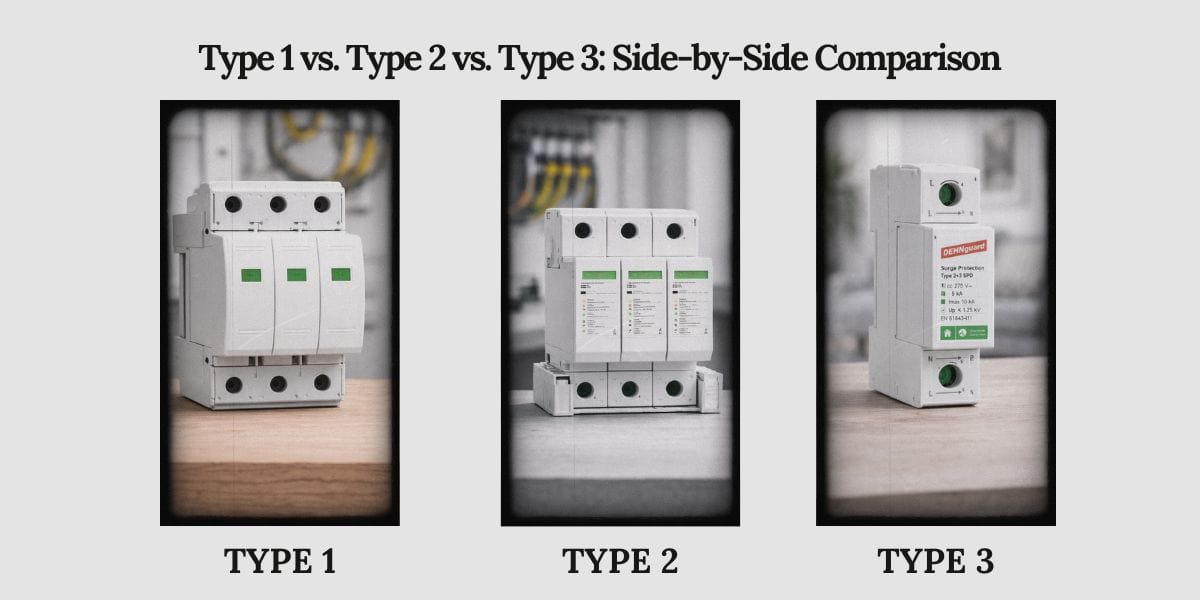
| Parametr | Typ 1 SPD | Typ 2 SPD | Typ 3 SPD |
| Typowe miejsce instalacji | Wejście serwisowe, strona linii głównego odłączenia | Panele rozdzielcze, strona obciążenia rozłączania | prawie wrażliwy sprzęt |
| Poziom ekspozycji na przepięcia | bardzo wysoki | Średni do wysokiej | Niski |
| Podstawowa funkcja | Przekieruj wchodzący prąd udarowy | Zacisk szczątkowy i przełączający przepięcia | Drobne ograniczenie napięcia |
| Obsługa prądu przepięciowego | bardzo wysoki | Umiarkowany do wysokiego | Niski |
| Precyzja zaciskania napięcia | Niski | Średni | Wysoki |
| Samodzielna przydatność | Nie | ograniczony | Nie |
| Zależność od innych SPD | Wymaga typu 2 downstream | Często sparowane z typem 1 i typem 3 | Wymaga przedwzmacniacza typu 1 lub typu 2 |
| Typowe ryzyko, jeśli jest niewłaściwie zastosowane | Nieodpowiednia ochrona sprzętu | Nadmierne napięcie i skrócenie żywotności | Katastrofalna awaria |
To porównanie podkreśla kluczową zasadę: Typy SPD są definiowane przez funkcję i rozmieszczenie, a nie według rankingu wydajności.
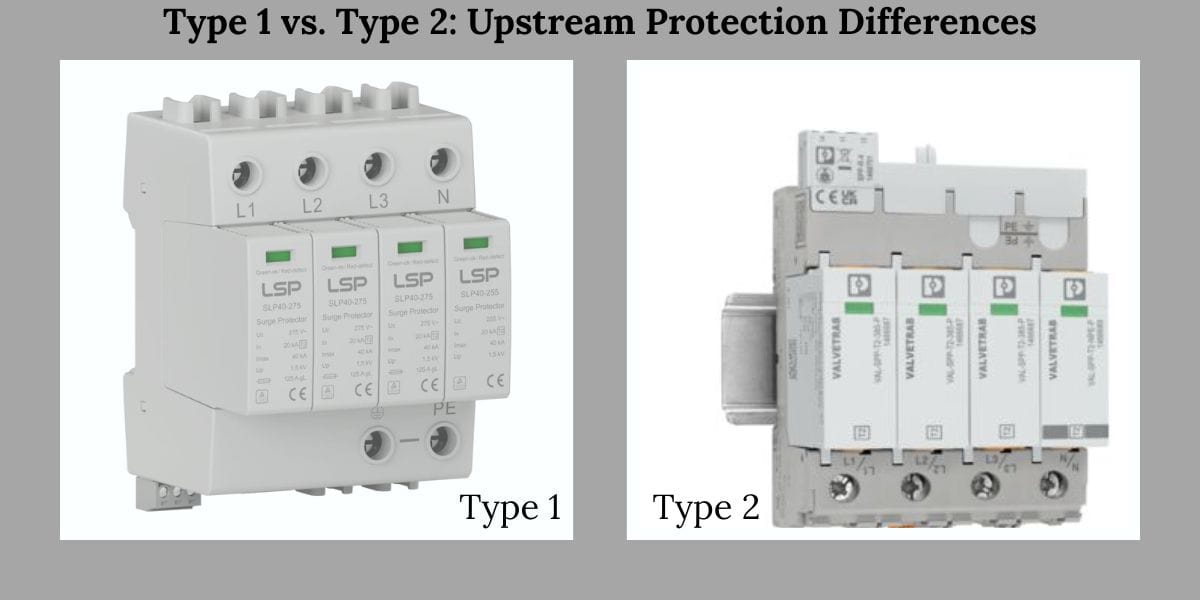
Typ 1 vs. Typ 2: różnice w zabezpieczeniach przed poprzedzającym
Kontekst instalacji
SPD typu 1 są instalowane przy wejściu serwisowym, gdzie zewnętrzne narażenie na przepięcia jest najwyższe. SPD typu 2 są instalowane w dół, w wewnętrznym systemie dystrybucji.
Ta różnica pozycyjna zasadniczo zmienia to, co każde urządzenie ma obsługiwać.
Profil energii przepięciowej
- SPD typu 1 Napotkaj wysokoenergetyczne impulsy związane z zdarzeniami związanymi z piorunami wchodzącymi z sieci komunalnej.
- SPD typu 2 Napotkaj resztkową energię błyskawicy i częste wewnętrznie generowane przejściowe stany nieustające przełączania.
Ponieważ urządzenia typu 2 nie są przeznaczone do impulsów o najwyższej energii, nie mogą zastąpić ochrony typu 1 na wejściu serwisowym.
Rozróżnienie funkcjonalne
- Typ 1 skupia się na przekierowaniu prądu udarowego
- Typ 2 skupia się na ograniczeniu napięcia i powtarzalnym sterowaniu przepięciami
Instalacja tylko ochrony typu 2 w środowiskach o wysokiej ekspozycji przenosi nadmierne naprężenia na urządzenia, które nie są do tego przeznaczone, prowadząc do przedwczesnej degradacji.
Typ 2 vs. Typ 3: Dystrybucja vs. ochrona na poziomie sprzętu
Bliskość instalacji
Typ 2 SPD chronią sieci dystrybucyjne, podczas gdy SPD typu 3 chronią poszczególne urządzenia lub obwody. Odległość między SPD a chronionym obciążeniem jest krytycznym wyróżnikiem.
regulacja napięcia resztkowego
Po zabezpieczeniu przed prądem resztkowe napięcie przejściowe może nadal przekraczać zdolność wrażliwego elektroniki impulsowej. Typ 3 SPD zapewnia drobne udoskonalenie napięcia w miejscu użytkowania.
Ograniczenie obsługi energii
SPD typu 3 nie są przeznaczone do pochłaniania energii przepięć. Jeśli zostaną bezpośrednio wystawione na zdarzenia o wysokiej energii, mogą szybko zawieść. Dlatego nigdy nie mogą być używane bez ochrony przed prądem.
Porównanie między Typem 2 i Typem 3 nie polega na tym, co jest „lepsze”, ale o to, gdzie precyzja zastępuje obsługę energii.
Dlaczego nie wystarczy żaden pojedynczy typ SPD
Ochrona przed przepięciami nie jest addyt Instalacja wielu urządzeń tego samego typu nie zapewnia ochrony warstwowej.
Każdy typ SPD działa optymalnie tylko w swoim przewidzianym zakresie naprężeń:
- Typ 1 zmniejsza energię przychodzącego przepięcia
- Typ 2 zarządza pozostałym przepięciami
- Typ 3 ogranicza ostateczne napięcie resztkowe
Próba wykonania wszystkich tych funkcji za pomocą jednego urządzenia powoduje złamanie ochrony, skrócenie okresu eksploatacji lub jedno i drugie.
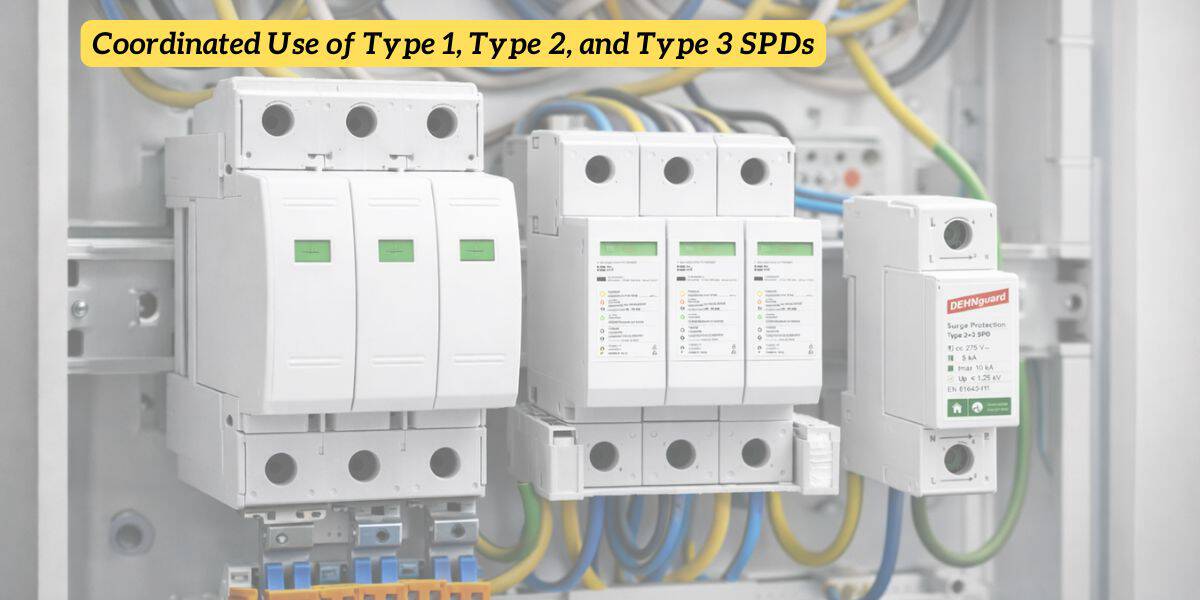
Skoordynowane użycie SPD typu 1, Typ 2 i Typ 3
Jak działa koordynacja
Skoordynowany system ochrony przeciwprzepięciowej odzwierciedla sposób, w jaki energia przepięć rozprzestrzenia się:
- Typ 1 Przekierowuje impulsy o wysokiej energii przy wejściu do systemu
- Typ 2 Zaciski Pozostałe przepięcia w systemie dystrybucji
- Typ 3 Chroni wrażliwe obciążenia przed napięciem resztkowym
Każdy etap zmniejsza stres na następnym.
Dlaczego koordynacja ma większe znaczenie niż ilość
Niewłaściwa koordynacja może spowodować:
- Nierównomierne dzielenie się
- Zlokalizowane przegrzanie
- Nieprzewidywalne zachowanie w awariach
Prawidłowe umieszczenie i separacja impedancji mają większe znaczenie niż instalacja dodatkowych urządzeń.
Scenariusze porównania oparte na aplikacjach
Wejście serwisowe z ekspozycją zewnętrzną
Obiekty z napowietrznymi liniami komunalnymi lub zewnętrzną infrastrukturą elektryczną wymagają ochrony typu 1 przy wejściu do serwisu, a następnie ochronie typu 2 w dół.
Komercyjne i przemysłowe systemy dystrybucji
Operacje przełączania dominują w aktywności przepięciowej. SPD typu 2 zapewniają podstawową rolę ochronną, często koordynowaną z urządzeniami typu upstream typu 1.
Wrażliwe systemy elektroniczne
Kontrolery automatyzacji, oprzyrządowanie i interfejsy komunikacyjne wymagają ochrony typu 3, ale tylko wtedy, gdy energia przepięcia w górę została już zmniejszona.
Systemy jednofazowe vs. trójfazowe
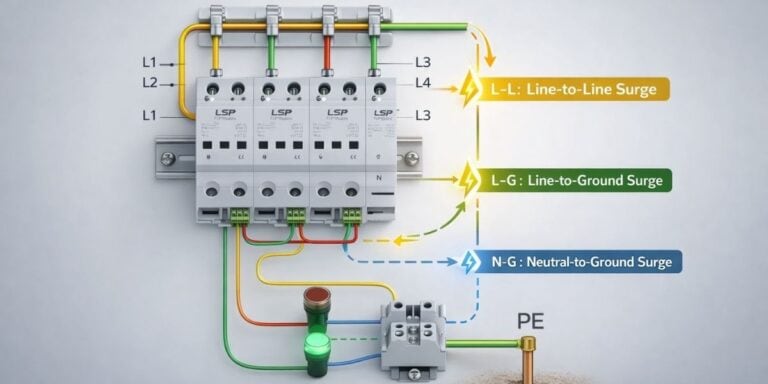
3 faza Urządzenie ochronne przeciwprzepięci Musi konsekwentnie zarządzać stanami przejściowymi między fazą i fazą do gruntu. Wybór typu SPD musi być zgodny z konfiguracją systemu, a nie tylko napięciem znamionowym.
Częste błędy porównawcze popełniane przez inżynierów
- Zakładając, że urządzenia typu 3 mogą działać samodzielnie
- Przewymiarowanie jednego SPD zamiast koordynowania wielu typów
- Instalowanie wielu urządzeń typu 2 bez uwzględnienia impedancji
- Traktowanie typów SPD jako poziomów wydajności, a nie ról funkcjonalnych
Błędy te zmniejszają skuteczność ochrony i zwiększają ryzyko konserwacji.
Kontekst standardów
Normy takie jak UL 1449 i IEC 61643 określają warunki testowe i kryteria klasyfikacji dla typów SPD. Obsługują spójne porównania, ale nie zastępują oceny inżynieryjnej na poziomie systemu dotyczącego rozmieszczenia i koordynacji.
Wniosek
Urządzenia zabezpieczające przed przepięciami typu 1, typu 2 i typu 3 pełnią różne i uzupełniające się role w układzie elektrycznym. Ich różnice są definiowane przez lokalizację instalacji, ekspozycję na przepięcia i funkcję ochrony, a nie według klasy produktu lub pozycji marketingowej.
Skuteczna ochrona przed przepięciami zależy od koordynacji, a nie nadmiernego przewymiarowania lub nadmiarowości. Gdy każdy typ SPD jest stosowany tam, gdzie działa najlepiej, energia przepięciowa jest stopniowo kontrolowana, zmniejsza się obciążenie sprzętu, a długoterminowa niezawodność systemu poprawia się.
Najczęściej zadawane pytania
Powiązane posty