Русский
  English
  简体中文
简体中文  Deutsch
  Español
  Français
  Italiano
  日本語
日本語  한국어
한국어  Polski
  Português
  Türkçe
  Nederlands
  Tiếng Việt
  ไทย
ไทย 
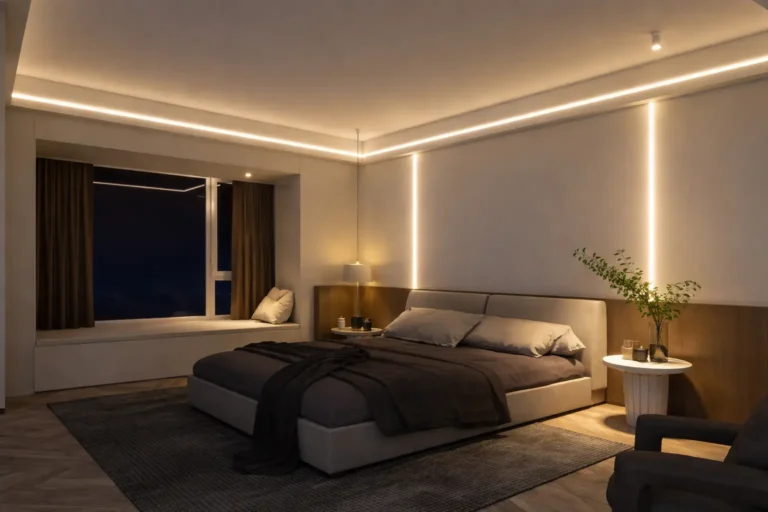
Светодиодное освещение стало стандартным решением для архитектурных, коммерческих и жилых проектов. Однако даже с высококачественными светодиодными лентами и алюминиевые каналы, многие установки все еще страдают от видимых световых пятен, бликов или неровного освещения. В большинстве случаев первопричиной является не сама светодиодная лента, а крышка диффузора.
Светодиодный диффузорный чехол — это не просто эстетический аксессуар. Это критически важный оптический компонент, который напрямую влияет на равномерность света, визуальное удобство, эффективность и общий профессиональный внешний вид системы освещения. В то время как алюминиевые светодиодные каналы функционируют в основном как радиаторы для защиты срока службы светодиодов, диффузор определяет, как воспринимается свет.
В этом руководстве основное внимание уделяется трем наиболее распространенным вариантам диффузора, используемым в каналах светодиодной ленты: прозрачные, молочные и черные чехлы. Понимая их различия, материалы, компромиссы производительности и соображения по установке, вы можете принимать обоснованные решения, соответствующие техническим требованиям и визуальным ожиданиям.
Что такое диффузор светодиодного канала и почему он имеет значение
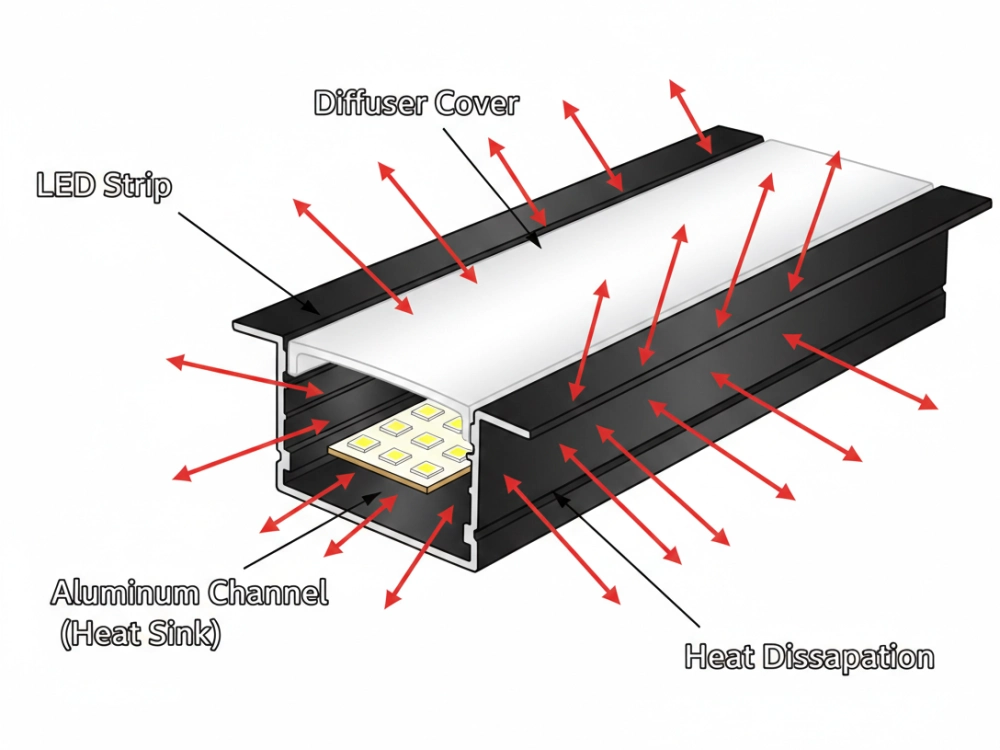
Диффузор канала LED (также известный как крышка или линза) представляет собой компонент поликарбоната или PMMA, который защелкивается на алюминиевый светодиодный профиль. Его основная цель - рассеять свет от светодиодных лент, чтобы устранить точки доступа, защитить светодиоды от пыли и физического контакта, а также контролировать угол луча для профессиональной отделки.
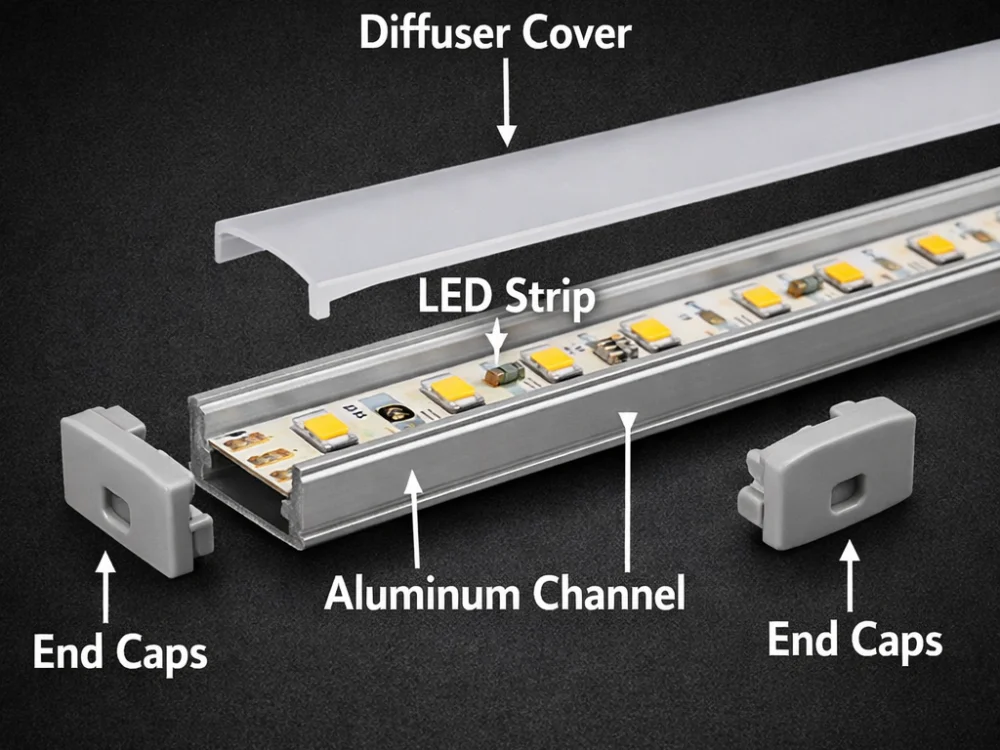
В полной системе светодиодных лент алюминиевый профиль и диффузор ленты светодиодов работают вместе. Алюминиевый канал рассеивает тепло, стабилизируя температуру перехода светодиода и увеличивая срок службы. С другой стороны, диффузор управляет распределением света и бликами. Пренебрежение любым из элементов часто приводит к плохому качеству освещения или преждевременному выходу из строя.
С оптической точки зрения диффузор влияет на три основных фактора:
- Легкая однородность и точечная видимость
- Сокращение бликов и визуальный комфорт
- Эстетический внешний вид, когда свет включен и выключен
Поэтому понимание выбора диффузора необходимо как для дизайнеров освещения, так и для покупателей проектов.
Материальные вопросы: PMMA против поликарбоната против ПВХ
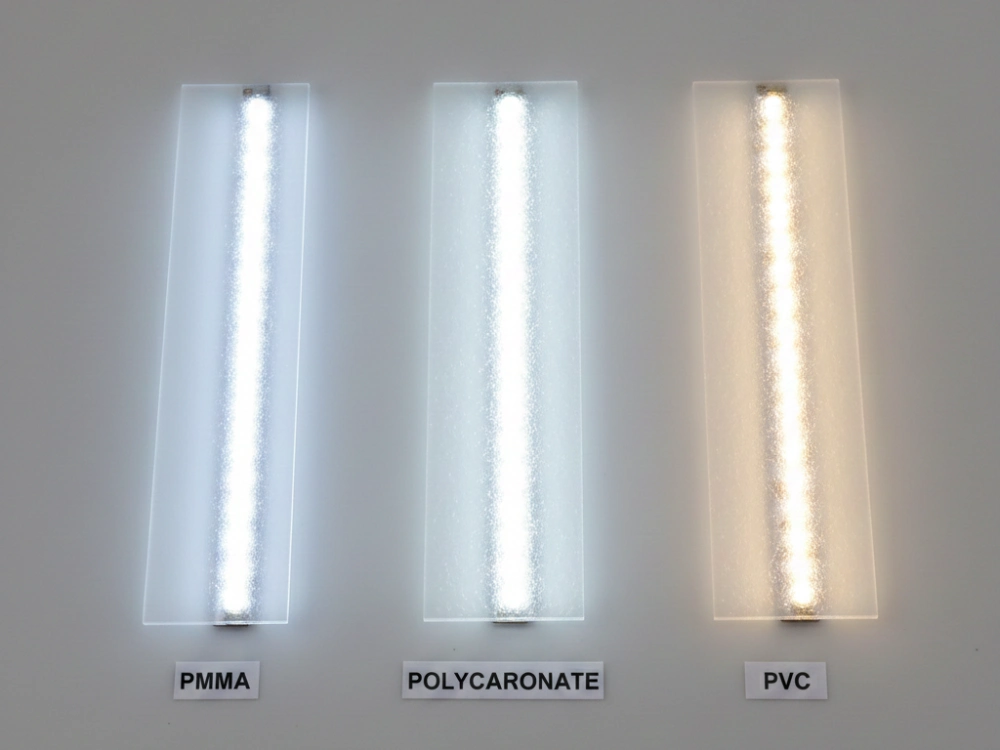
Производительность диффузора LED канала сильно зависит от используемого материала. Хотя многие диффузоры выглядят одинаково на первый взгляд, их долгосрочное поведение может значительно отличаться.
Матрица сравнения характеристик материала
| Материальная особенность | ПММА (акрил) | Поликарбонат (ПК) | ПВХ (стандарт) |
| светопропускание | Высокий (~92%) | Высокий (~88%) | Средний (~80%) |
| Устойчивость к ультрафиолетовому излучению | Отлично (не желтеет) | Хорошие (требуются стабилизаторы) | Плохо (желтые в течение 1–2 лет) |
| ударопрочность | Средний | чрезвычайно высокий | Низкий |
| Лучшее приложение | Архитектурный / Рознич | общественные места / на открытом воздухе | Бюджет/Временный |
PMMA, широко известная как акрил, широко считается лучшим материалом для оптической ясности. Он обеспечивает превосходную светопропускание и высокую устойчивость к пожелтению, вызванному УФ-излучением, что делает его идеальным для архитектурного и розничного освещения, где со временем важная консистенция имеет значение.
Поликарбонат обеспечивает превосходную ударопрочность и часто выбирают для общественных пространств или установок, где механическая долговечность имеет решающее значение. Однако для ПК обычно требуются стабилизаторы УФ-излучения для наружного использования и имеют несколько меньшую оптическую четкость по сравнению с PMMA.
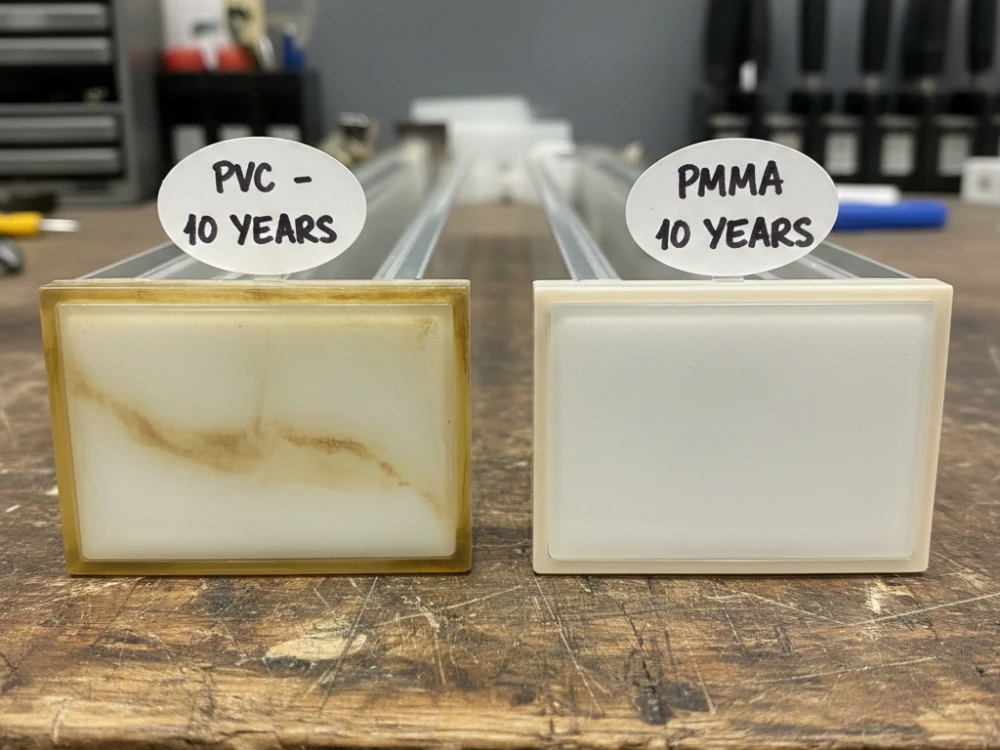
Диффузоры из ПВХ являются главным образом рентабельными решениями. Хотя это приемлемо для временных или малобюджетных проектов, необработанный ПВХ имеет тенденцию к разрушанию при воздействии УФ-излучения, что приводит к видимому пожелтению и снижению качества света.
Согласно данным исследований отрасли пластмасс, PMMA может поддерживать оптическую прозрачность в течение десяти лет, в то время как необработанный ПВХ может показать значительное изменение цвета в течение двух лет после воздействия УФ-излучения.
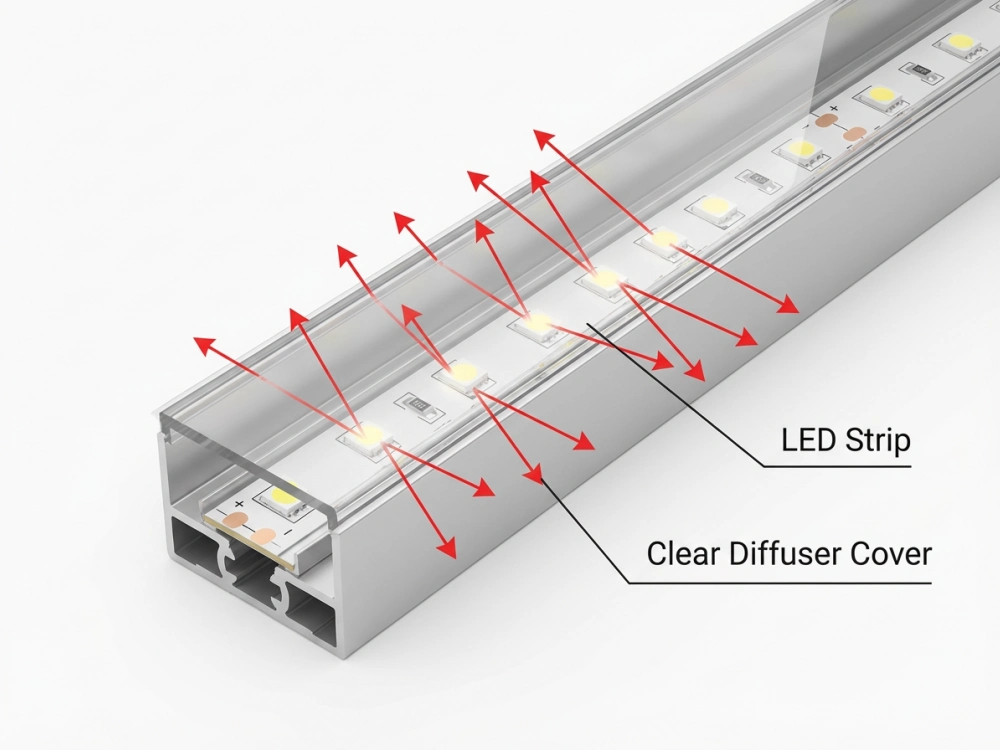
Прозрачные крышки диффузора: максимальная яркость, точки видимого освещения
Прозрачные светодиодные крышки диффузора предназначены для сохранения максимально возможного светового сигнала. Они вводят минимальные оптические помехи и часто выбираются, когда основная цель является яркостью.
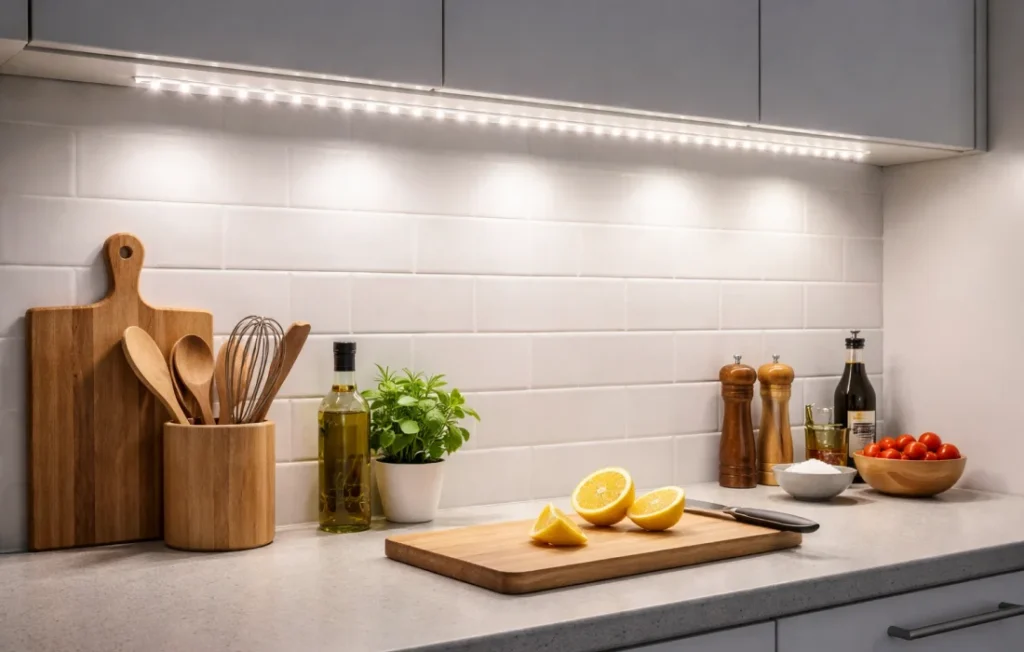
Когда использовать прозрачный светодиод Полоса диффузоры
Прозрачные диффузоры лучше всего подходят для тех случаев, когда световая эффективность перевешивает визуализацию. Типичные варианты использования включают функциональное освещение, рабочее освещение и освещение дисплея, где точки светодиода приемлемы или даже желательны.
При расчетной потере света менее десяти процентов прозрачные покрытия обеспечивают самый высокий люмен среди всех типов диффузоров.
Плюсы и минусы прозрачных чехлов для диффузора
Преимущества включают высокую эффективность, четкую подсветку и минимальную потерю передачи. Однако прозрачные диффузоры мало что делают для маскировки отдельных точек светодиода, особенно при использовании со светодиодными лентами низкой плотности или неглубокими каналами. Глядя также может стать проблемой в установках с прямым видом.
Организации освещения стандарты освещения подчеркивают, что потери при передаче являются критическим фактором при проектировании освещения, что объясняет, почему прозрачные диффузоры предпочитают, когда производится приоритетное производство люменов.
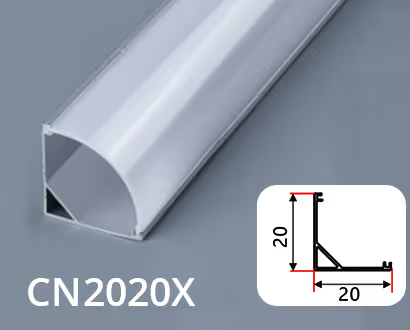
Угловые алюминиевые профили
Вес: 0.087KG
Толщина: 0,8 мм
Цвет ПК: прозрачный
Размер: L1000*W20*H20mm
Торцевые заглушки/зажимы: 1 пара/м
Цвет алюминия: серебристый/черный
Для освещения под кабинетом, где яркость является ключевым, используйте прозрачный диффузор с помощью нашего Угловые каналы V-образной формы чтобы направить свет именно туда, где вы работаете.
Молочные чехлы диффузора: лучший выбор для освещения без точек
Светодиодные диффузоры с молоком LED являются наиболее часто используемым вариантом для светодиодных лент, особенно для архитектурного и декоративного освещения. Их основное преимущество заключается в их способности рассеивать свет и уменьшать видимые точки доступа.
Почему молочный LED Dисправитель Cчересчур предпочтительны для светодиодных ленточных каналов
Молочный покров обеспечивает диффузию и эффективность баланса света. Рассеивая свет внутри полости канала, они смягчают луч и значительно снижают видимость точек. Это делает их идеальными для непрямого освещения, бухт, потолков и линейных архитектурных приложений.
Однако один диффузор не гарантирует безупречного внешнего вида. Глубина канала и плотность светодиодов играют не менее важную роль.
Безупречный секрет: отношение глубины к светодиоду
Освещение без точек зависит от взаимосвязи между шагом светодиодной ленты и диффузионным расстоянием. Чем больше расстояние между светодиодным источником и поверхностью диффузора, тем более равномерно может распространяться свет.
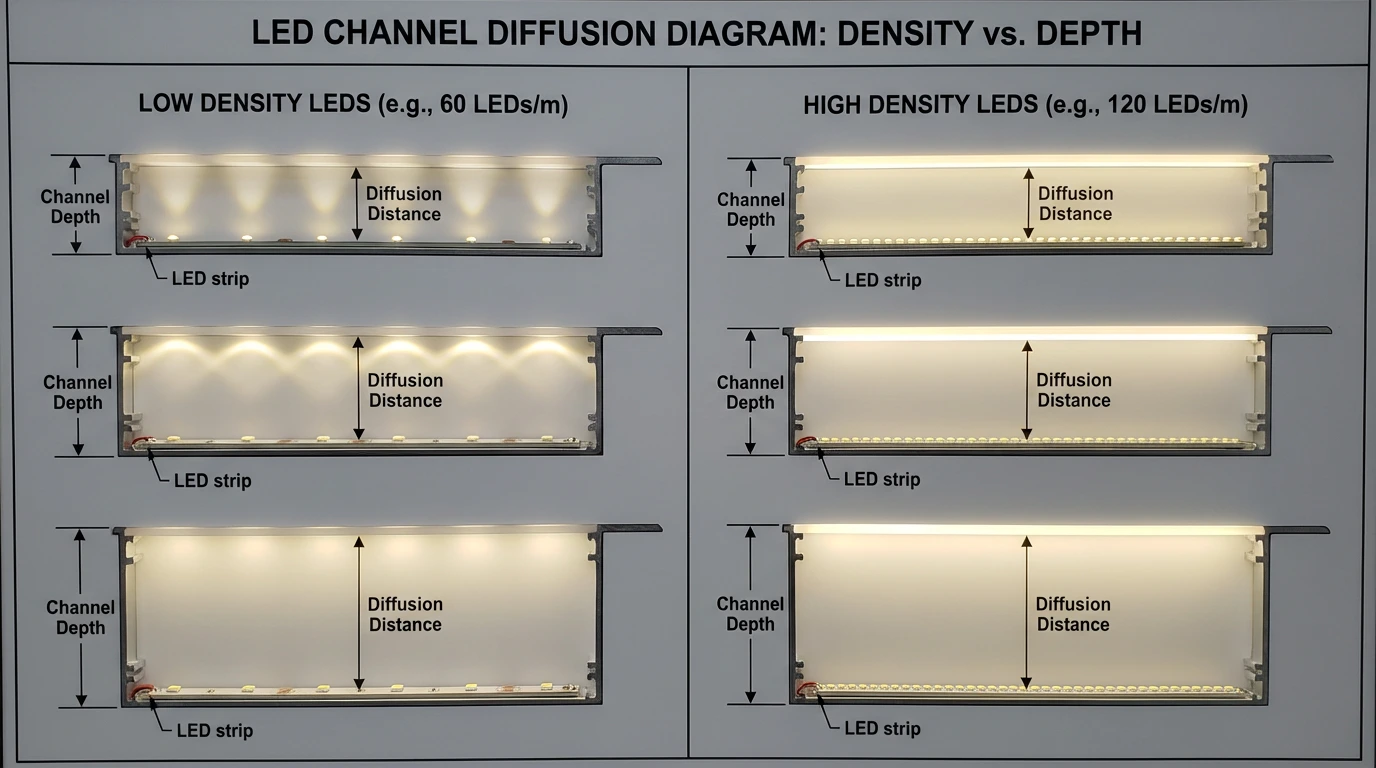
Справочная таблица безупречного расстояния
| Плотность светодиодной ленты | Тип | мин Глубина канала для безупречного эффекта (молочная крышка) |
| 30 светодиодов/м | Стандартный СМД | > 20 мм (глубокая встраиваемая) |
| 60 светодиодов/м | Стандартный СМД | > 12–15 мм |
| 120 светодиодов/м | СМД высокой плотности | > 7–10 мм |
| Светодиодная лента COB | чип | > 3–5 мм |
В этой таблице показано, почему светодиодные ленты COB становятся все более популярными в линейном освещении. Их чрезвычайно высокая светодиодная плотность позволяет равномерное освещение даже в ультратонких каналах.
Молочный диффузор и светодиодные ленты COB: идеальное сочетание
В сочетании со светодиодными полосами COB, молочные диффузоры могут достигать неоновой, непрерывной световой линии с минимальной глубиной канала. Эта комбинация широко используется в высококлассных жилых, гостиничных и коммерческих проектах, где визуальный комфорт имеет решающее значение.
Черные чехлы диффузора: когда эстетика имеет больше, чем яркость
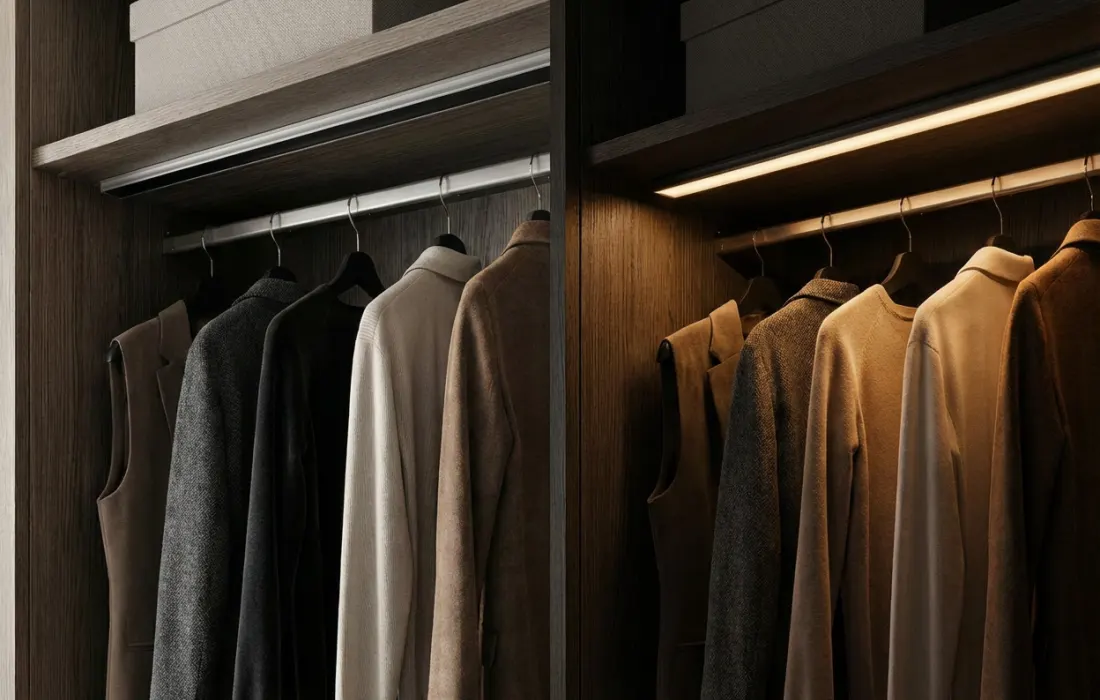
Черные чехлы диффузора служат совсем другой цели. Вместо того, чтобы максимизировать световую мощность, они сосредотачиваются на визуальной интеграции и атмосфере.
Что такое черный светодиод Свет диффузор
Черные диффузоры кажутся темными или непрозрачными, когда свет выключен, что позволяет каналу плавно сливаться с потолками или стенами. При освещении они излучают мягкий, управляемый свечение, а не яркий линейный луч.
Применение черных диффузоров в архитектурном освещении
Черные чехлы обычно используются в отелях, торговых центрах класса люкс, барах и современных жилых интерьерах. Они идеально подходят для освещения настроения, акцентного освещения и пространств, где светильники должны оставаться визуально незаметными.
В то время как потери света могут достигать от шестидесяти до семидесяти процентов, этот компромисс является преднамеренным и соответствует целям окружающего освещения.
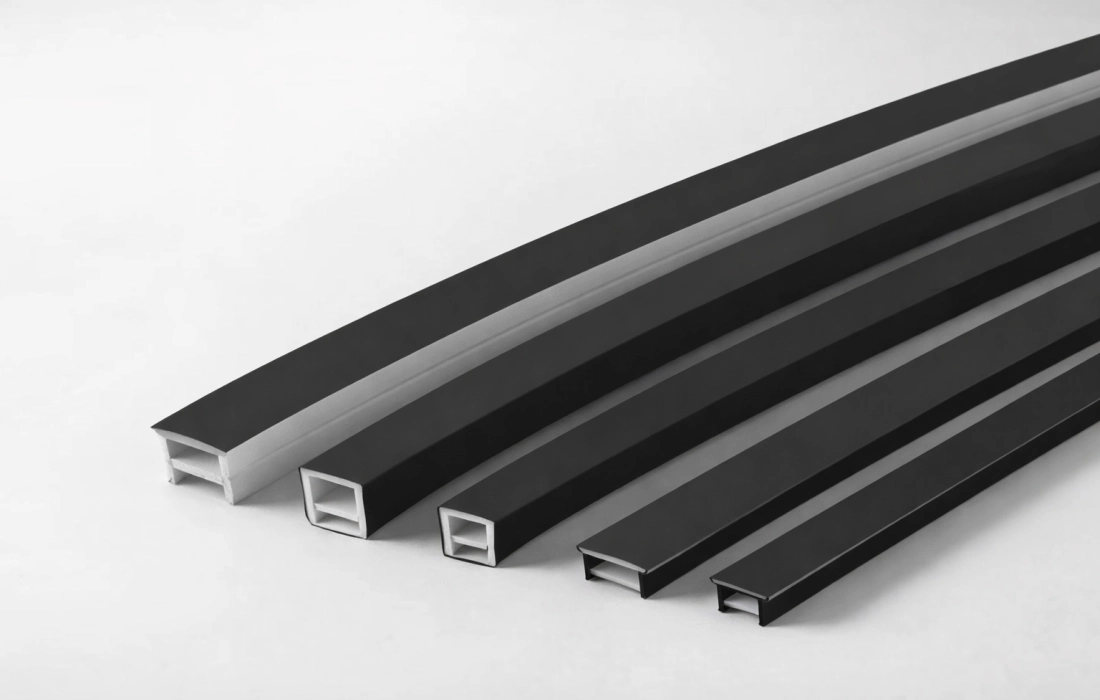
Встраиваемый гибкий канал для светодиодной ленты
Общая длина: 1м/3м/5м
Направление света: Фронтальный свет
Количество светодиодов: 30 светодиодов/м и более
Цвет: черный
Размер секции: T1212/T1616/T2010/T2014/T2020/T2520
Ширина печатной платы: 7 мм - 20 мм
Угол луча: 120 градусов
Материал: Силикон
Водонепроницаемость: IP65/IP67/IP68
Источник света: SMD2835/5050, COB светодиодная лента
Для кинотеатра или темных интерьеров могут отвлекаться стандартные серебряные каналы. наш Профили черного издания исчезнуть на заднем плане при выключении.
Clear vs Milky vs Black Diffusers: сравнение параллельно
окончательная матрица сравнения
Выбор правильного покрытия — это компромисс между выходом просвета (яркость) и светодиффузией (гладкость). Используйте эту таблицу, чтобы найти баланс:
| Характеристика | прозрачный диффузор (прозрачный) | молочный диффузор (опал/заморозка) | диффузор (выкурил) |
| светопропускание | 90% – 95% | 70% – 85% | 30% – 40% |
| Видимость | Высокий (светодиодные чипы полностью видны) | Низкий или ни один (в зависимости от глубины) | Ноль (полностью скрытый) |
| Цветовая температура сдвиг | Нет (оригинальный CCT) | Небольшое потепление (от -100к до -200К) | значительное потемнение |
| контроль | минимальный | Отлично (смягчает свет) | Высокая (освещение настроения) |
| Эстетика (вне штата) | Видимая внутренняя полоса | Чистая белая поверхность | Скрытая черная отделка |
| Лучшее приложение | Подкабинет, бухта, освещение, непрямая утилита | Архитектурные линии, прямой просмотр, офис | Кино, бар, темный декор |
Анализ визуальных эффектов
Прозрачные чехлы (Король эффективности): лучше для Приложения для непрямого освещения где скрыт источник света, например, внутри бухты или над шкафом. Поскольку вы не видите приспособление напрямую, пикселизация не имеет значения, и вы получаете максимальный уровень люкса.
Молочные чехлы (Универсальный стандарт): они действуют как легкий гомогенизатор. Рассеивая световой луч, они увеличивают угол луча (часто до 120 градусов) и уменьшают нагрузку на глаза. Это стандарт для линейных осветительных приборов, на которых находится канал.
Черные чехлы (выбор дизайнера): хотя они значительно снижают светоэффективность, они не имеют себе равных по контрасту и стилю. Идеально подходит для эстетики, где канал должен сливаться с темными потолками или стенами.
Типы установки: оснастка и диффузоры
Перед покупкой необходимо рассмотреть где Вы устанавливаете канал. Неправильный тип крышки может сделать установку невозможной.
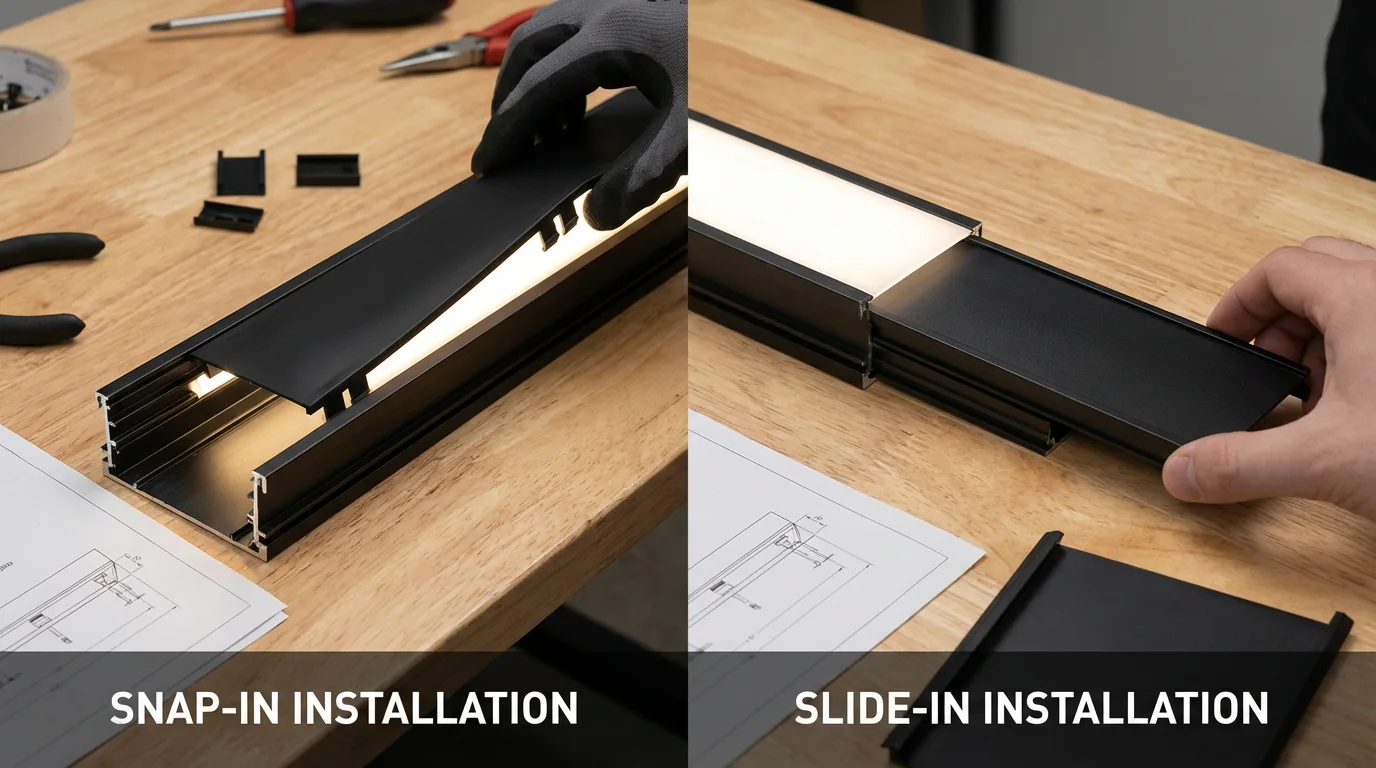
Диффузоры с оснасткой (кнопка нажатия): удобный выбор
Также известные как чехлы для пресс-фит, они предназначены для нажатия на алюминиевый канал спереди.
- Подходит для: утопленных инсталляций или желобков (например, в шкафах или гипсокартоне), где забиты концы канала.
- Плюсы: простое обслуживание. Если светодиодная лента не вышла из строя, вы можете просто снять крышку, не снимая все приспособление.
- Механизм: использует небольшие гребни, чтобы «щелкнуть» по краям профиля.
Вставные диффузоры: надежный захват
Их необходимо вставлять с открытого конца алюминиевого профиля и скользить по всей длине.
- Лучше всего подходит для: подвесного освещения или зон с высокой вибрацией. Структура часто более тесная и более устойчивая к выскакиванию.
- Загвоздка: вам нужно место для зазора на концах. Не используйте вставные чехлы для встраиваемых пазов от стены до стены, иначе вы никогда не сможете вставить линзу!

Как правильно выбрать диффузор для светодиодного ленты
на Выбирайте правильный диффузор для светодиодных каналов, выполните эти пять шагов:
- Проверьте плотность светодиода и тип полосы. Полоски с высокой плотностью или початками лучше всего сочетаются с молочными диффузорами.
- Определите свою визуальную цель. Выбирайте для яркости, молочно-млёсток для однородности или черный для атмосферы.
- Измерьте глубину канала. Более глубокие каналы улучшают диффузию и уменьшают горячие точки.
- Выбирайте правильный материал. PMMA предлагает долговечность, ПК обеспечивает долговечность, а ПВХ следует избегать для долгосрочных проектов.
- Определитесь с типом установки. Защелкивающиеся чехлы упрощают техническое обслуживание, а линзы для врезки обеспечивают более чистую отделку.
Наружные и водонепроницаемые диффузоры: особые соображения
Для наружной установки светодиодных лент требуют больше, чем просто выбор диффузора с хорошими оптическими характеристиками — они также требуют тщательного рассмотрения защиты окружающей среды, оценок водонепроницаемости и соответствующих типов светодиодных лент. Хорошо подобранный светодиодный диффузор поможет смягчить блики и горячие точки, но в внешней или влажной среде рейтинг защиты IP системы и тип светодиодной ленты, который вы сочетаете с ним, одинаково важны для долгосрочной надежности.
При планировании установки светодиодного канала наружного освещения сначала убедитесь, что сама светодиодная лента подходит для наружных условий. Различные типы светодиодных лент имеют различную степень гидроизоляции и устойчивость к окружающей среде, а выбор правильной защиты обеспечивает как производительность, так и срок службы. Вы можете просмотреть различия между вариантами светодиодной ленты и их соотнесение со сценариями использования в этом Какие бывают виды светодиодных лент Справочная страница.
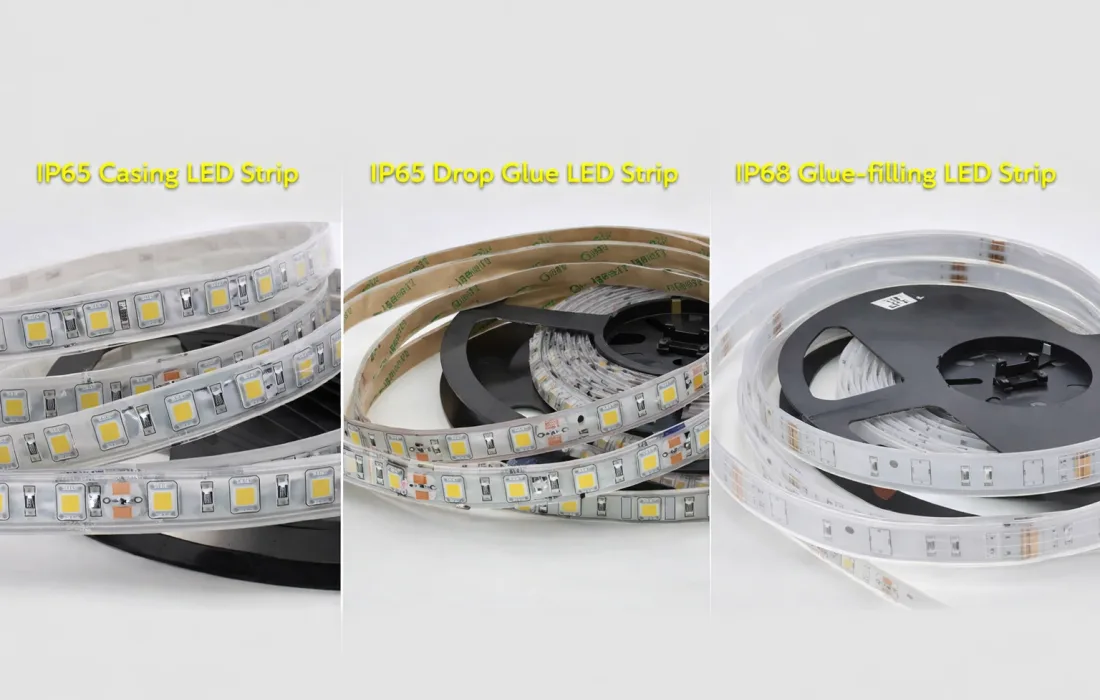
Что касается защиты от воды и пыли, светодиодные ленты и диффузоры должны идеально соответствовать IP65 или более высоким рейтингам. по Руководство по рейтингу IP водонепроницаемых светодиодных лент, рейтинги IP65 защищают от воды низкого давления и незначительных дождей, что делает их подходящими для общего наружного декора и полуэкспонированных установок; IP67 обеспечивает защиту от погружения до 1 метра на короткую продолжительность; а рейтинги IP68 поддерживают длительное использование подводных конструкций, например, в бассейнах или фонтанах.
Для каналов диффузоров и светодиодных лент, работающих вместе на открытом воздухе, помните, как герметизация влияет на рассеивание тепла. Полностью закрытая водонепроницаемая система может препятствовать тепловыделению, что, в свою очередь, влияет на температуру соединения светодиодов и общую долговечность. Интеграция алюминиевых каналов с соответствующими водонепроницаемыми диффузорами помогает сбалансировать защиту и управление температурой.
На практике рассмотрите возможность сочетания водонепроницаемых светодиодных лент с надежными диффузорами и каналами, рассчитанными на наружные условия. Сочетание полос наружного применения с диффузорами IP65+ внутри правильно герметичных алюминиевых каналов не только предотвращает попадание влаги, но и обеспечивает постоянную производительность при изменении погодных условий.
Распространенные ошибки при выборе светодиодного диффузора покровы
Ошибка #1: ловушка «горячего места» (глубокая глубина + низкая плотность)
Использование неглубокого профиля поверхности (например, высота 6 мм) со стандартной полосой 60 светодиодов/м гарантирует видимые точки даже с молочной крышкой.
Исправить: Используйте светодиодные ленты COB или глубокий профиль (минимум 15 мм), чтобы лучи света перекрывались перед ударом по объективу.
Ошибка #2: игнорирование УФ-деградации (эффект «желтого»)
Покупка самого дешевого диффузора обычно означает, что он изготовлен из обычного пластика без УФ-стабилизаторов. В помещении возле окон или на открытом воздухе они станут хрупкими и желтыми в течение нескольких месяцев.
Исправить: Всегда указывайте крышки PMMA (акрил) или поликарбонат, стабилизированные УФ-излучением, для долговечности.
Ошибка #3: забываем допуски на торцевые заглушки
Диффузоры могут расширяться и сокращаться с тепловым (тепловым расширением). Режущий диффузор до такой же длины, что и алюминиевый канал, иногда может вызвать изгиб.
Исправить: Оставьте зазор 1-2 мм или убедитесь, что торцевые крышки предназначены специально для удержания диффузора.
Индивидуальные опции диффузора для алюминиевых каналов
Стандартной длины 1 метр или 2 метра для профессиональных проектов не всегда достаточно. Именно здесь партнерство со специализированным производителем, таким как Signleteled Adds Value.
Мы предлагаем индивидуальные решения для коммерческого и архитектурного освещения:
- Пользовательская длина: Нужна непрерывная пробежка 3 или более без швов? Signleteled может выдавливать индивидуальную длину, чтобы свести к минимуму утечки света и точки соединения.
- Индивидуальная непрозрачность: для OEM-проектов мы можем настроить диффузионную смесь наших чехлов PMMA, создавая идеальный баланс между сокрытием светодиодных точек и максимальным освещением для вашей конкретной светодиодной ленты.
- Выбор материала: выберите между поликарбонатом с высоким воздействием (PC) для общественных пешеходных дорожек или оптического PMMA для ясности в музейном качестве.
- Полное соответствие системы: не гадать, подходит ли чехол. Signliteled предоставляет полностью интегрированные системы, обеспечивающие полную гармонию алюминиевых радиаторов, диффузора и монтажных аксессуаров.
Вопросы и ответы
Заключительные размышления
Выбор диффузора является одним из самых заниженных аспектов дизайна светодиодного освещения. Понимая различия между прозрачными, молочными и черными обложками, а также материаловедением, глубиной канала и методами установки, вы можете получить результаты освещения, которые являются одновременно визуально усовершенствованными и технически звучными.
Хорошо подобранный диффузор превращает светодиодный канал из простого корпуса в профессиональное освещение, отвечающее современным архитектурным стандартам.
Похожие посты