English
  简体中文
简体中文  Deutsch
  Español
  Français
  Italiano
  日本語
日本語  한국어
한국어  Polski
  Português
  Русский
  Türkçe
  Nederlands
  Tiếng Việt
  ไทย
ไทย 
The lighting ideas that pair most effectively with home theater ceilings are recessed lighting for functional visibility, LED strips for indirect ambient light, cove lighting for soft ceiling glow, and dimmable systems to adapt the room to different viewing moments. Together, these approaches help manage glare, preserve screen focus, and create an immersive atmosphere without overwhelming the visual experience.
Home theaters are not lit like ordinary living spaces. The ceiling plays a central role in shaping how light behaves in the room. Thoughtful ceiling lighting supports comfort, visual balance, and immersion while avoiding reflections and distractions that can pull attention away from the screen.
Why Ceiling Lighting Matters in a Home Theater
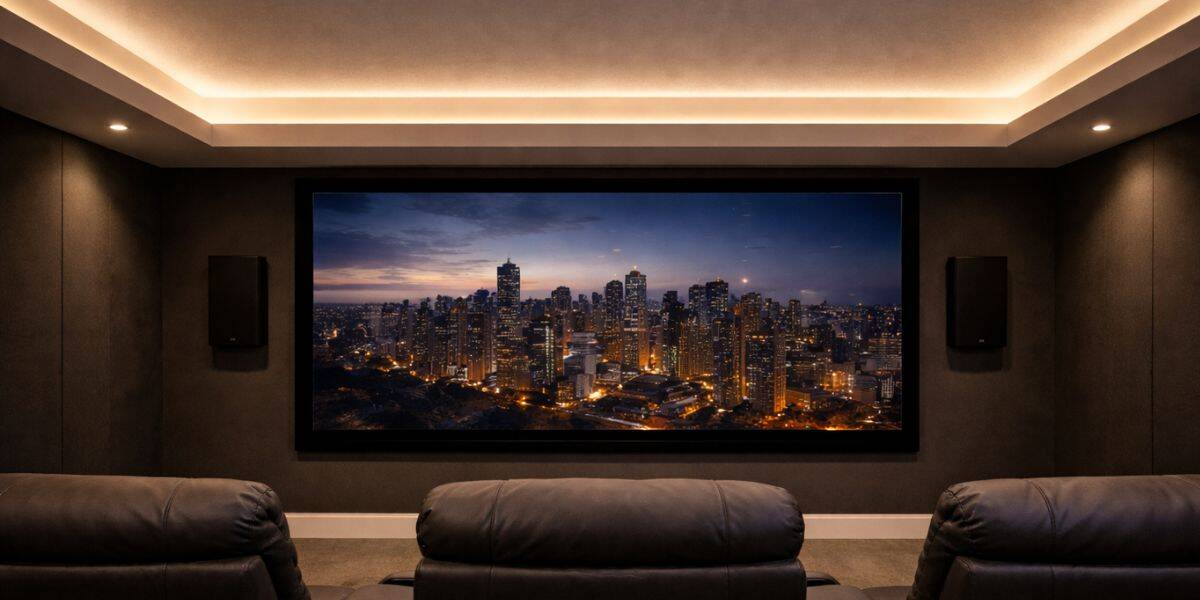
Ceiling lighting directly affects how a home theater feels and functions. Unlike task-oriented rooms, a theater environment needs controlled light rather than high visibility. The goal is not brightness, but balance.
Poorly planned ceiling lighting can cause glare on the screen, visual fatigue, and uneven contrast across the room. Well-considered lighting helps create a sense of depth and comfort while allowing viewers to move safely before and after viewing.
Key reasons ceiling lighting matters include:
- Supporting visual comfort during long viewing sessions
- Preserving screen contrast by avoiding direct light spill
- Enhancing immersion through soft, indirect illumination
Because the ceiling is the highest and most expansive surface, lighting choices made there have an outsized impact on the overall experience.
Recessed Lighting in Home Theater Ceilings
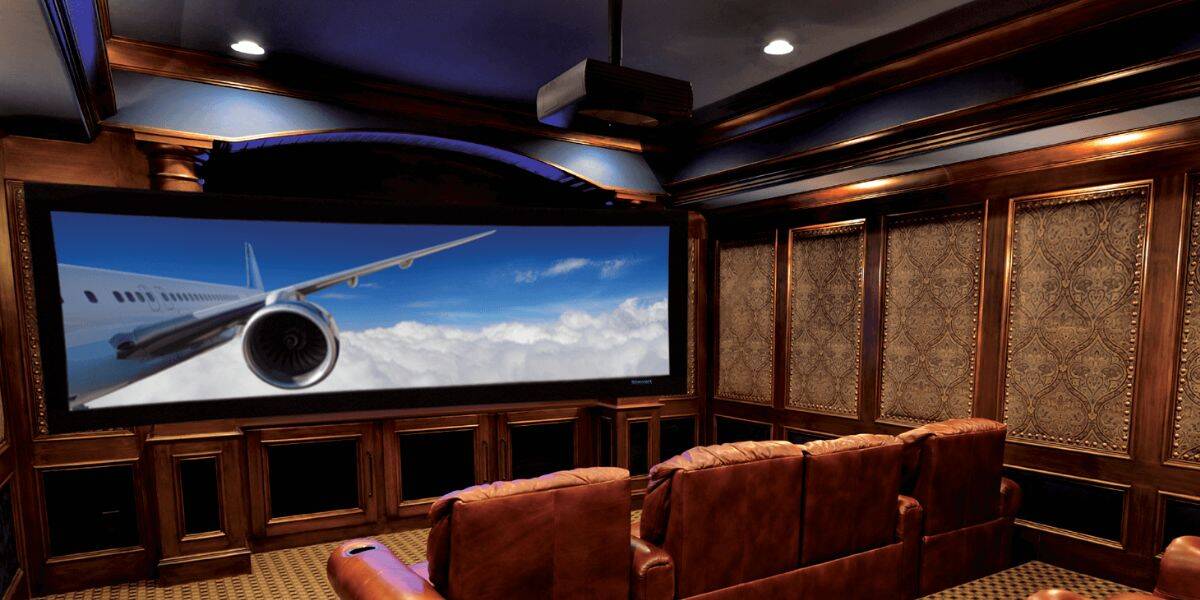
Recessed lighting is a familiar ceiling solution in many homes, including theaters. These fixtures sit within the ceiling plane and provide focused pools of light.
When recessed lighting is useful
In home theaters, recessed lighting is commonly used for practical purposes rather than continuous illumination. It can help during entry, exit, or setup without dominating the room.
Typical uses include:
- Providing general visibility when the screen is off
- Highlighting walkways or seating rows
- Supporting cleaning or maintenance tasks
Because recessed fixtures are directional, they can be aimed away from the screen when carefully planned.
Limitations in theater environments
Recessed lighting alone rarely creates an ideal theater atmosphere. Direct downlighting can introduce glare, shadows, and unwanted reflections. If overused, it can flatten the room visually and reduce immersion.
For this reason, recessed lighting is often paired with indirect lighting methods rather than used as the sole ceiling solution.
LED Strips as Ambient and Accent Lighting
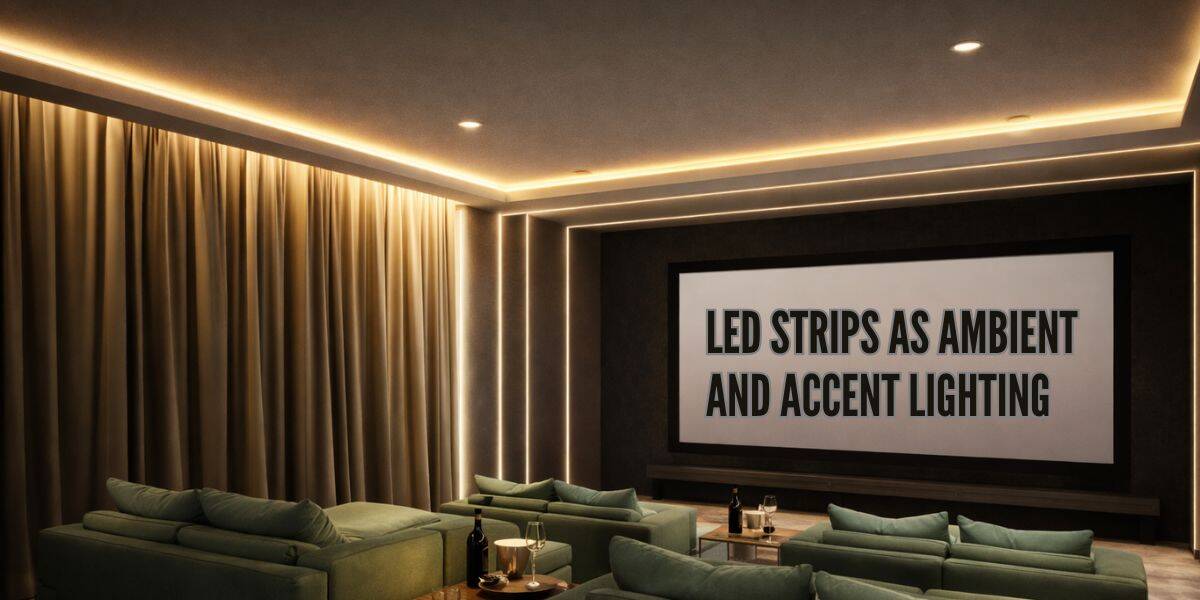
LED strips are widely used in home theater ceilings because they support indirect lighting strategies. Instead of shining directly into the room, they are typically hidden and used to reflect light off surfaces.
How LED strips are used in ceilings
In theater settings, LED strips are commonly installed along ceiling edges, inside coves, or behind architectural features. This approach helps create a soft glow that outlines the space without drawing attention to the light source itself.
Common applications include:
- Perimeter ceiling accents
- Backlighting for soffits or trays
- Subtle illumination behind ceiling features
This indirect placement helps maintain focus on the screen while still providing ambient light.
COB LED strip lights for uniform illumination
COB LED strip lights are often referenced for ceiling applications because they are designed to produce a continuous, dot-free line of light. This makes them suitable for architectural and ambient uses where visible points of light would be distracting.
In home theater ceilings, this uniform appearance supports clean lines and consistent visual flow, especially when the light source is partially visible through diffusers or reflective surfaces.
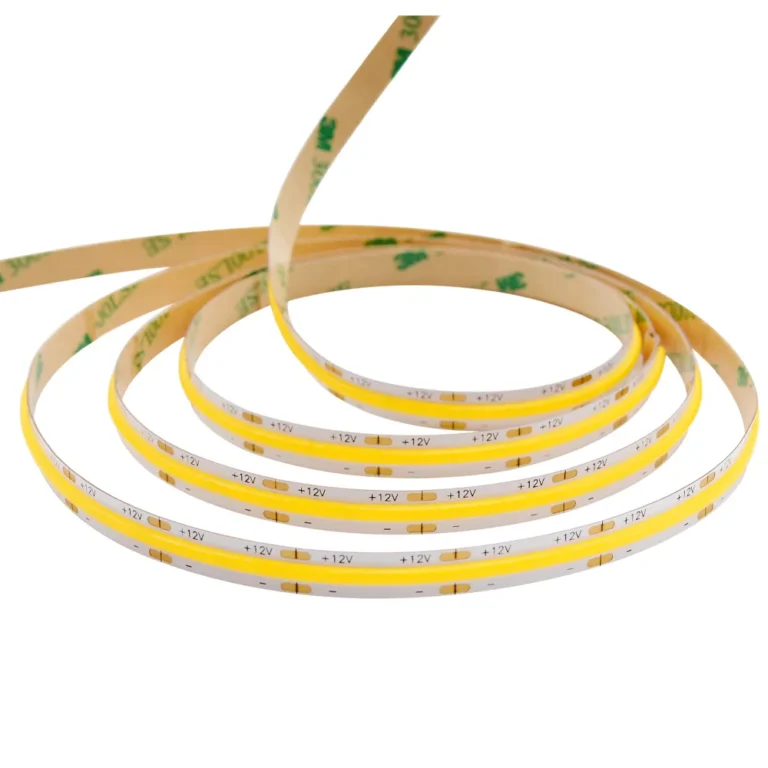
Single Color COB LED Strip Light
- Main Model: FYX08T480C
- LED Chip QTYper Meter:320/384/480/528chips (Sanan)
- CRl:>90
- PCB Width:8mm/10mm
- Color Temperature:2700K/3000K/4000K/6500K
- Input Voltage:DC12V/DC24V
- Power per Meter: 8W/10W/11W/14w
- Effciency:130-150lm/W
- IP Grade:1IP20/IP54/IP65/IP67/IP68
- Warranty: 3years
Cove Lighting and Indirect Ceiling Illumination
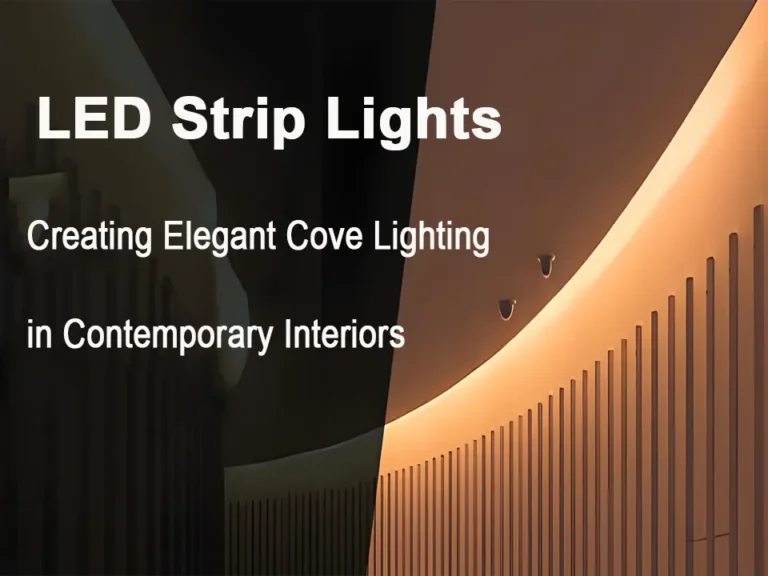
Cove lighting refers to a lighting technique where fixtures are concealed within a ledge, recess, or molding near the ceiling. The light is directed upward or sideways, washing the ceiling surface rather than the room directly.
Why cove lighting works well in theaters
Cove lighting is commonly used in home theaters because it creates a calm, enveloping glow. By illuminating the ceiling indirectly, it reduces harsh contrasts and avoids direct glare.
Benefits of cove lighting in a theater context include:
- Soft ambient illumination without visible fixtures
- Enhanced sense of depth and ceiling height
- Reduced distraction during viewing
This approach supports immersion by keeping light sources out of the viewer’s direct line of sight.
Relationship between cove lighting and LED strips
LED strips are frequently used within cove lighting designs due to their linear form and flexibility. When concealed properly, they help create smooth, continuous illumination along ceiling edges or architectural contours.
The result is not decorative brightness, but controlled ambient light that complements the screen rather than competing with it.
The Role of LED Strip Channels
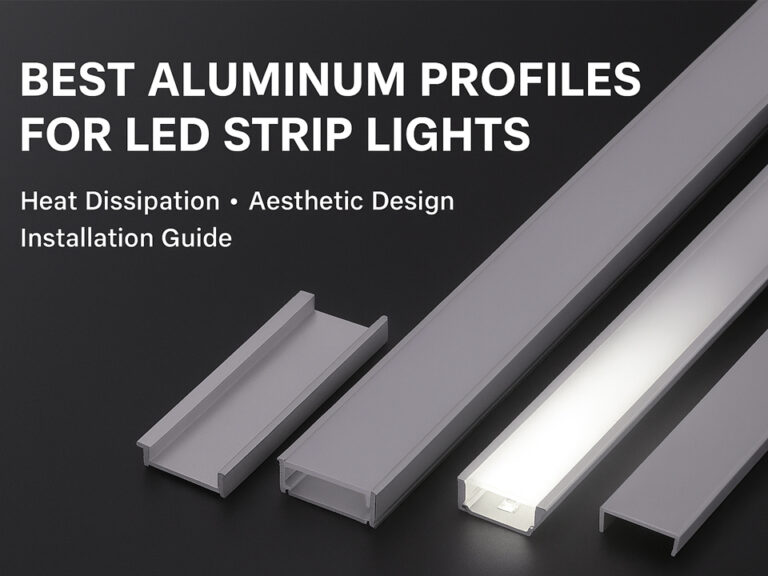
An LED strip channel is a housing system, often made from aluminum, designed to hold LED strips in place. These channels play an important role in ceiling installations, particularly in visible or semi-visible applications.
Why aluminum profiles are used
LED aluminum profiles are designed to provide structure and consistency for linear lighting installations. In ceiling designs, they help ensure straight lines, secure mounting, and a finished appearance.
Based on the referenced product page, LED aluminum profiles are used to:
- House LED strips securely
- Support clean, organized installation
- Allow for diffused lighting when paired with covers
The aluminum profile itself does not create light. Instead, it supports the LED strip and contributes to a more refined visual outcome.
Supporting diffused, clean ceiling lighting
When used with appropriate covers, LED strip channels help soften the appearance of the light source. This diffusion is especially valuable in home theaters, where visible points of light can be distracting.
By keeping installations neat and concealed, channels support ceiling designs that feel intentional rather than improvised.
Why Dimmable Lighting Is Important for Home Theaters
Dimmable lighting is a functional necessity in home theaters. Viewing conditions change depending on whether the room is being used for watching content, socializing, or transitioning in and out of the space.
Adapting light to different moments
A fixed lighting level rarely works for all situations. Dimming allows the same ceiling lighting setup to serve multiple purposes without redesign.
Dimmable lighting helps:
- Lower ambient light during viewing
- Increase visibility before and after use
- Fine-tune the atmosphere without changing fixtures
This flexibility supports comfort and usability without adding visual clutter.
Supporting immersion without distraction
Being able to reduce light gradually helps the room fade into the background once viewing begins. This supports immersion and minimizes abrupt visual changes that can distract from the screen.
Combining Multiple Lighting Layers
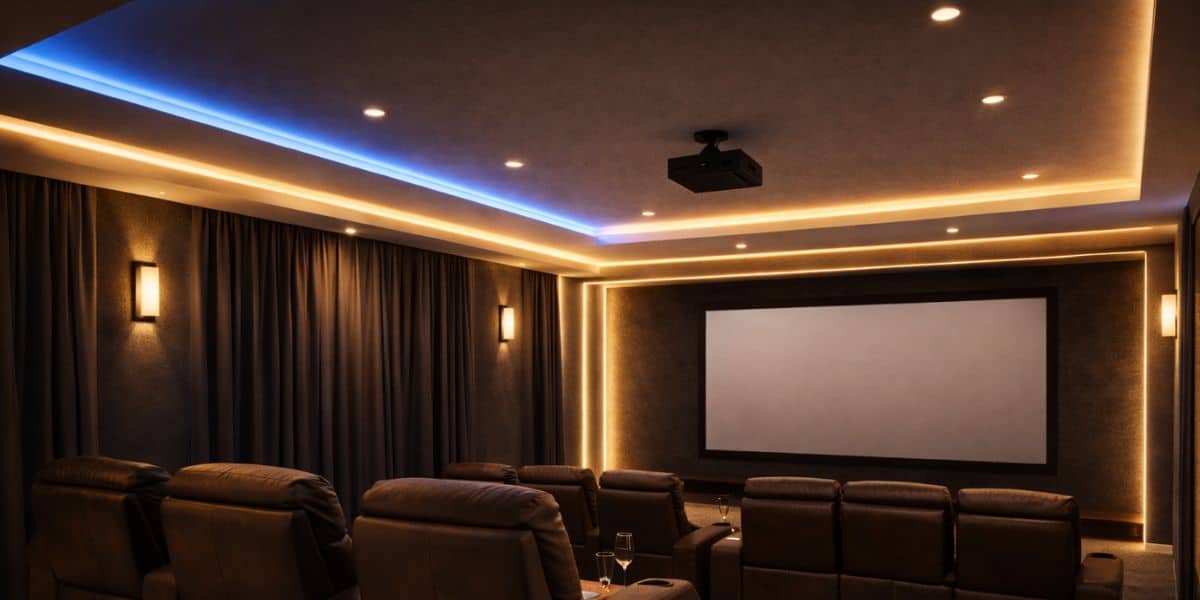
Layered lighting is a common approach in home theater design. Instead of relying on a single lighting type, multiple layers work together to create balance and flexibility.
Conceptual approach to layered lighting
In a ceiling context, layers often include:
- Recessed lighting for general visibility
- LED strips for ambient or accent light
- Cove lighting for indirect ceiling glow
Each layer serves a different purpose. Used together, they allow the room to adapt without relying on one dominant source.
Why layering is common in theaters
Layered lighting supports control. It allows homeowners and designers to adjust mood, reduce glare, and maintain visual comfort across different activities. The ceiling becomes an active design element rather than a flat surface with fixtures.
Comparison of Common Home Theater Ceiling Lighting Approaches
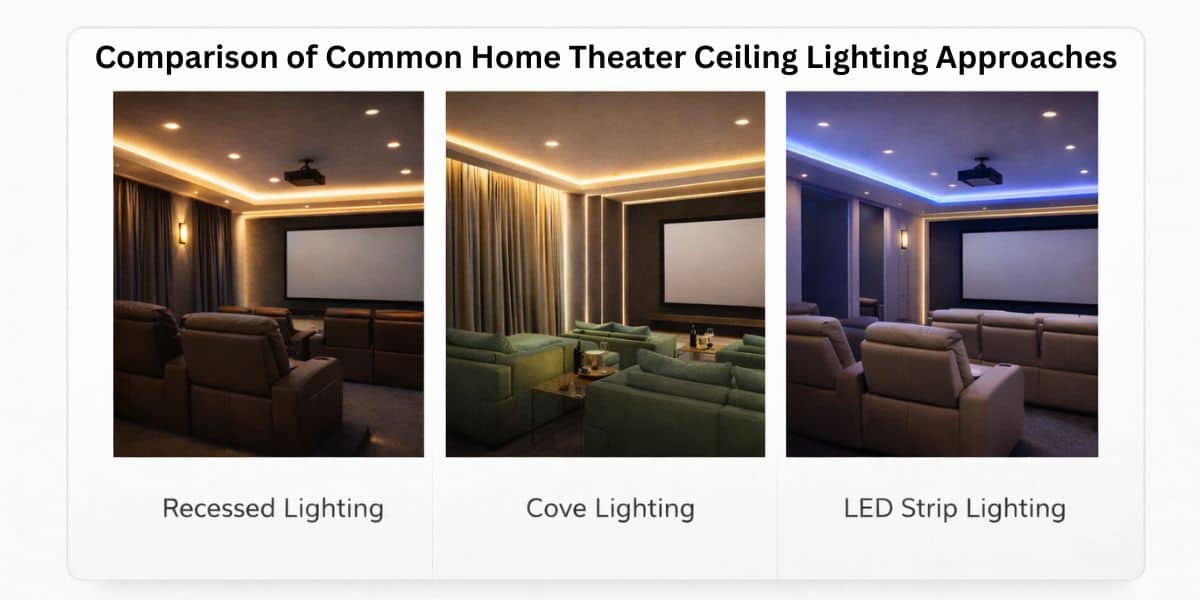
| Lighting Type | Primary Purpose | Visual Effect | Typical Placement |
| Recessed lighting | Functional visibility | Focused, directional | Set into ceiling plane |
| LED strips | Ambient and accent lighting | Soft, linear glow | Perimeter or concealed edges |
| Cove lighting | Indirect illumination | Diffuse ceiling wash | Recesses or ceiling coves |
This comparison highlights how each approach contributes differently to a home theater environment.
Conclusion
Ceiling lighting plays a defining role in how a home theater looks and feels. Recessed lighting provides practical visibility, while LED strips and cove lighting support indirect illumination that enhances immersion and comfort. Dimmable systems add flexibility, allowing the space to transition smoothly between different uses.
Within ceiling designs, LED strips are commonly used for ambient and architectural lighting, especially when paired with cove lighting concepts. LED strip channels support clean, organized installations by housing strips and enabling diffused light where needed.
By understanding how each lighting approach functions and how they work together, homeowners and designers can create home theater ceilings that feel balanced, comfortable, and visually focused without relying on exaggerated claims or unnecessary complexity.
FAQs
Related Posts