简体中文
简体中文  English
  Deutsch
  Español
  Français
  Italiano
  日本語
日本語  한국어
한국어  Polski
  Português
  Русский
  Türkçe
  Nederlands
  Tiếng Việt
  ไทย
ไทย 
Architectural LED lighting has become a core element of modern building design, where lighting is used not only for visibility but also to define space, enhance structure, and create visual identity. In contemporary architecture, lighting is integrated from the early design stage to ensure both functionality and aesthetics work together.
With the advancement of LED technology, designers now rely on solutions such as LED strips, neon flex, and modular lighting systems to achieve precise illumination. These systems support dynamic control through DMX and DALI, allowing buildings to adapt lighting based on usage, time, and environment.
From commercial interiors to large-scale facades, architectural LED lighting delivers energy efficiency, long lifespan, and design flexibility, making it the preferred choice for modern projects. These systems are widely applied in architectural lighting design to achieve both functional illumination and visually engaging environments.
What is Architectural LED Lighting?
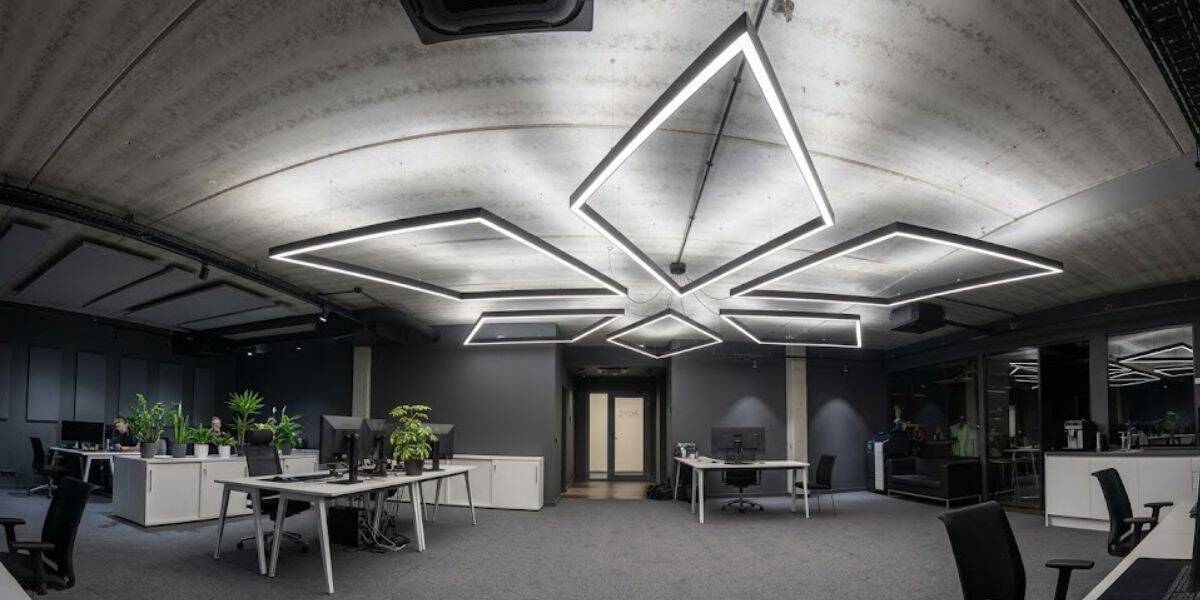
Architectural LED lighting refers to the strategic use of LED-based lighting systems to enhance both the function and visual experience of a space. It combines technical lighting performance with design intent to shape how a building is perceived.
Its primary purpose is to provide usable illumination while highlighting architectural features such as textures, edges, and spatial depth. This makes it essential in environments where both performance and aesthetics matter.
In practice, architectural lighting is applied across interiors, facades, and commercial environments, where it enhances visual clarity, creates atmosphere, and supports the overall design concept.
In modern architecture, it is considered both a technical system and a design element, playing a key role in how buildings are experienced during both day and night.
Core Principles of Architectural Lighting Design
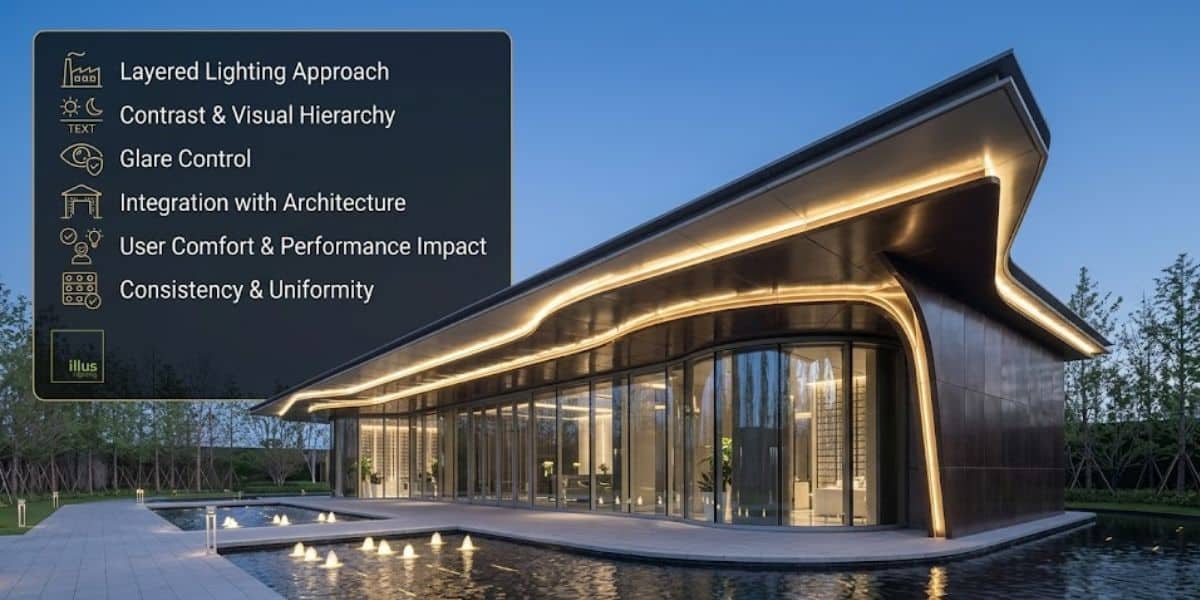
Effective architectural lighting is not just about placing lights but about designing how light interacts with space. A well-designed system follows a layered approach that combines ambient, task, and accent lighting to create depth and balance.
Contrast plays a key role in defining focal points and guiding visual attention. Instead of uniform brightness everywhere, designers use controlled variation to highlight important areas while keeping secondary zones subtle.
Glare control is another critical factor. Poor lighting placement or excessive brightness can cause discomfort, which is why indirect lighting and proper beam control are often used. Integration with architectural elements ensures that lighting feels natural rather than added on.
In real-world projects, these principles directly affect user comfort, energy performance, and how a space is visually experienced. Poor lighting design can result in glare, uneven brightness, and reduced usability, even if high-quality fixtures are used.
Techniques such as concealed and indirect lighting are often used to enhance depth, as explained in this guide on Hidden lighting in architectural design
Key Design Parameters
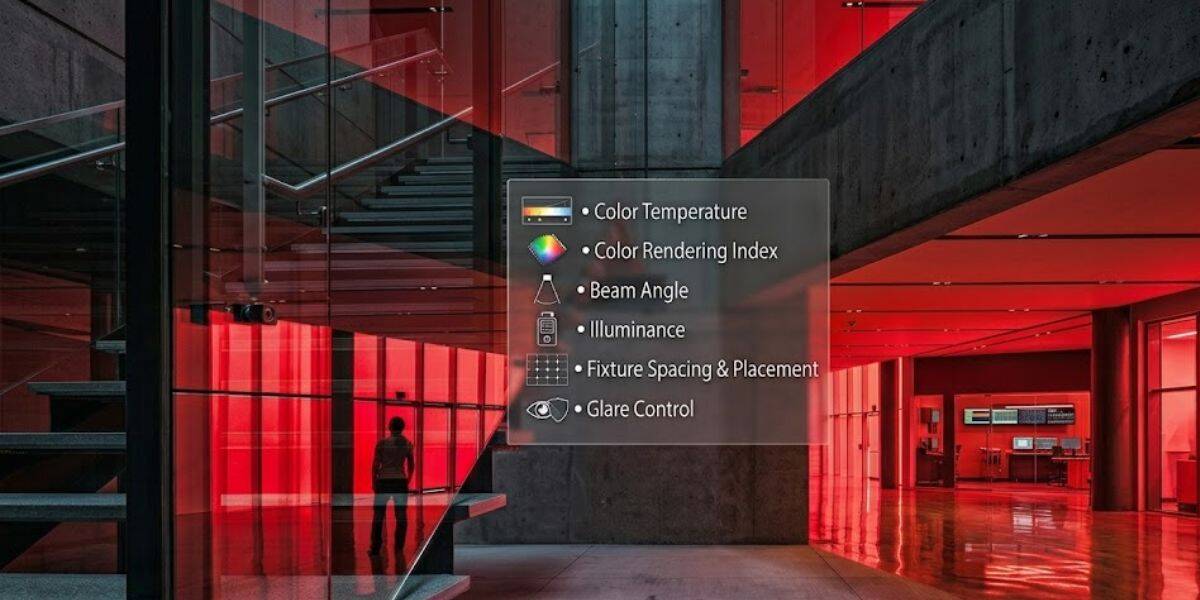
Architectural lighting design relies on several technical parameters that directly influence both visual quality and performance. Understanding these factors helps ensure that the lighting system is effective, comfortable, and aligned with the overall design.
- 色温 (CCT)
Determines the visual tone of a space. Warm light (2700K–3000K) creates a relaxed atmosphere, while neutral to cool light (4000K–5000K) is better for work-focused environments. - 显色指数 (CRI)
Measures how accurately colors appear under lighting. A CRI of 90+ is preferred in retail and hospitality settings where true color representation is critical. - 光束角度
Controls how light spreads from a fixture. Narrow beams are used for highlighting features, while wider beams provide general illumination. - Illuminance (Lux Levels)
Defines the brightness required for different spaces. Proper lux levels ensure visibility, comfort, and compliance with lighting standards. - Fixture Spacing & Placement
Affects uniformity and shadow control. Incorrect spacing can lead to uneven lighting or visible hotspots. - 眩光控制
Essential for visual comfort. Indirect lighting, diffusers, and proper positioning help reduce glare in working environments.
Why is LED Preferred in Architectural Lighting?
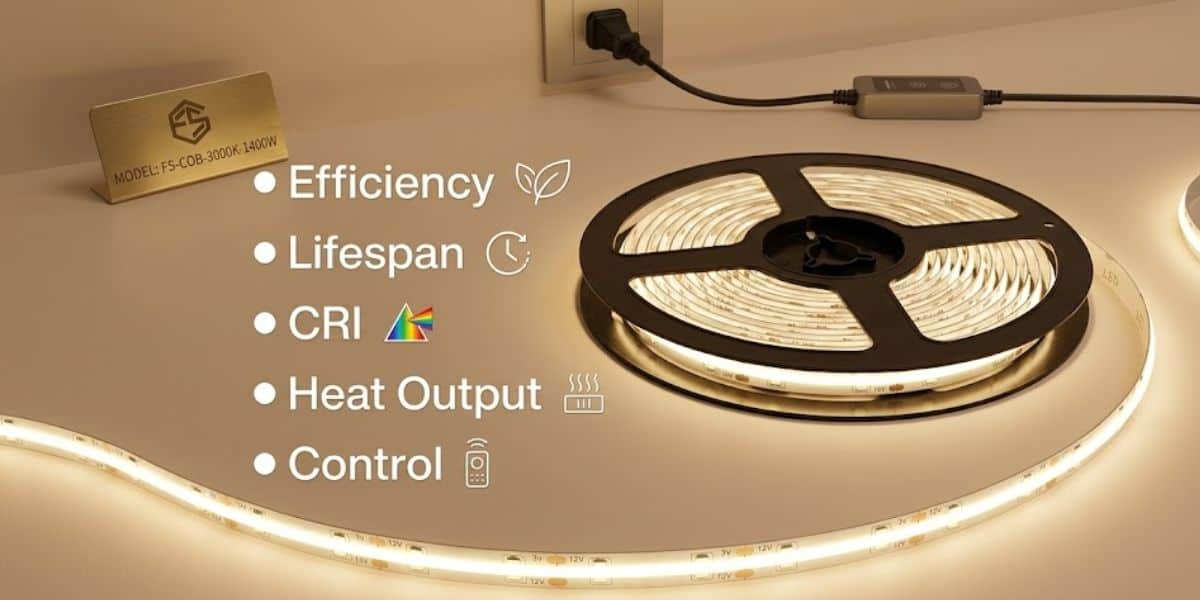
LED technology offers clear advantages in architectural applications, particularly in efficiency, lifespan, and control flexibility.
| 参数 | LED 照明 | 传统照明 |
| 效率 | 90–150 lm/w | 40–80 lm/w |
| 寿命 | 50,000–70,000 hrs | 3,000–10,000 hrs |
| 中国国际广播电台 | 80–98 | 60–80 |
| 热量输出 | 低 | 高 |
| 控制 | DMX/DALI compatible | 陋 |
These advantages make LEDs more suitable for long-term commercial use, where energy savings and reduced maintenance are critical. Their compatibility with smart control systems also allows dynamic lighting effects and automation.
建筑LED照明系统的类型
LED Strip Lighting
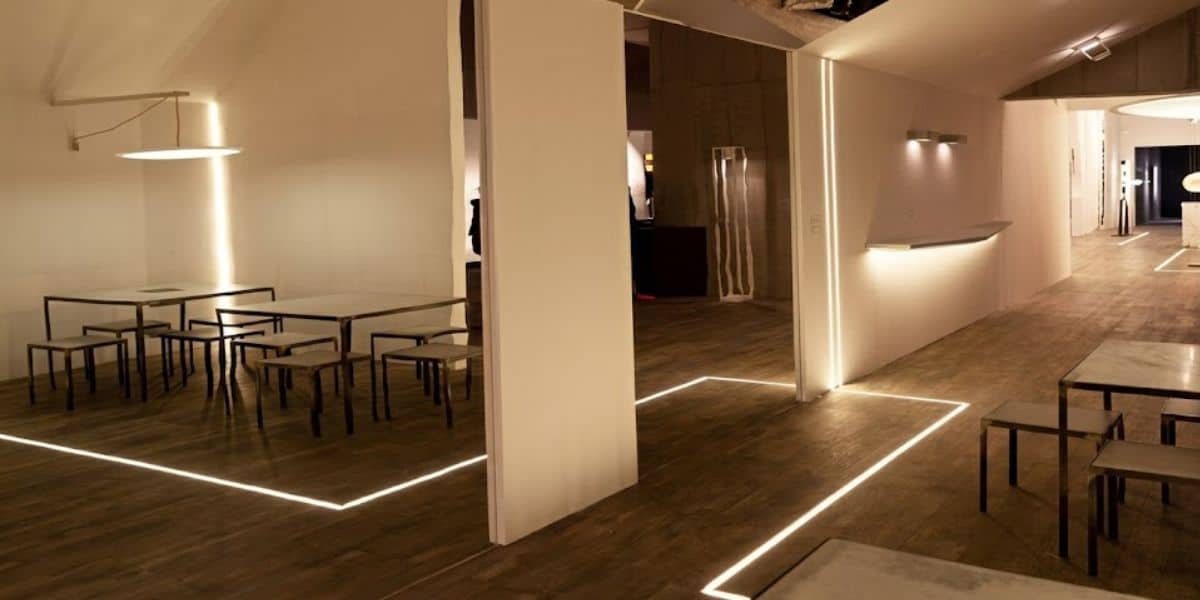
LED strip lighting is widely used for linear and indirect lighting applications. Its flexibility allows it to be installed in concealed areas such as ceiling coves, wall recesses, and under surfaces, where it creates smooth and continuous illumination.
It is commonly used in cove lighting, architectural edges, and retail displays. The final lighting quality depends on LED density, CRI, and the use of diffusers to eliminate visible hotspots.
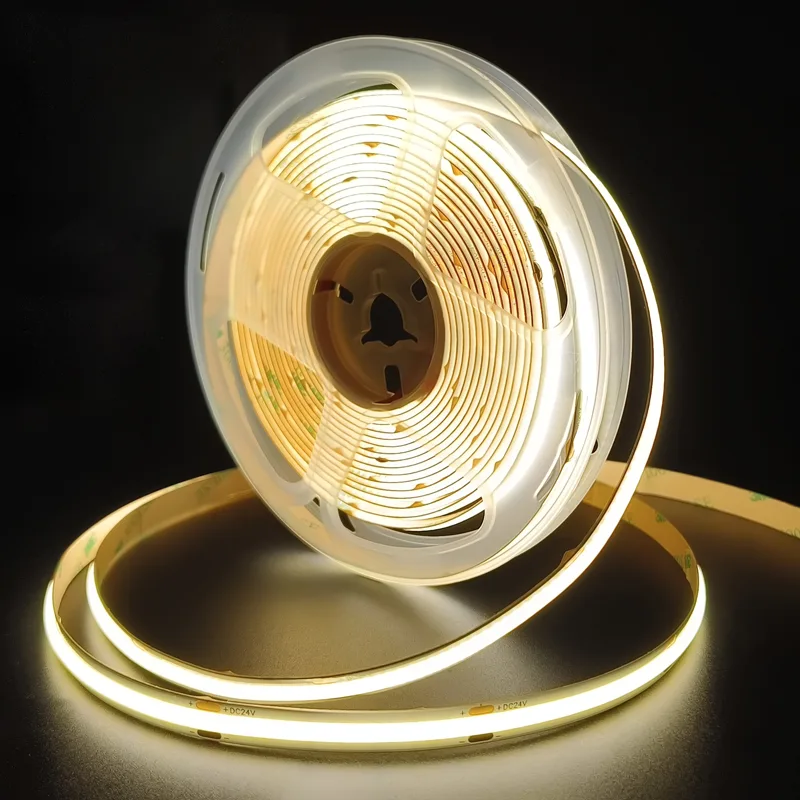
单色 COB LED 灯条
- 每米 LED 芯片数量: 320/384/480/528 芯片
- 国际广播电台:>90
- PCB宽度: 8 毫米/10 毫米
- 色温: Red/Green/Blue/3000K/4000K/6000K
- 输入电压: DC12V/DC24V
- 每米功率 8瓦/米、10瓦/米、11瓦/米、14瓦/米
- 效率: 90Im/w – 105Im/w
- IP 等级: IP20/IP65/IP67/IP68
- 保修单: 3年
- 价格 每米 $0.93-1.65 美元
LED 柔性霓虹灯
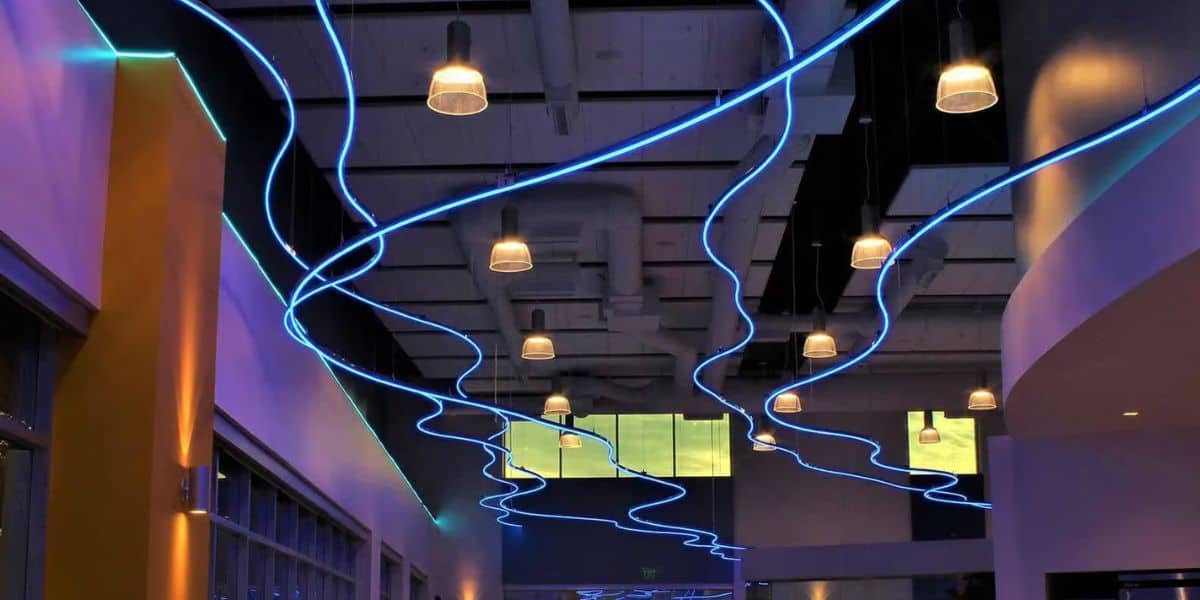
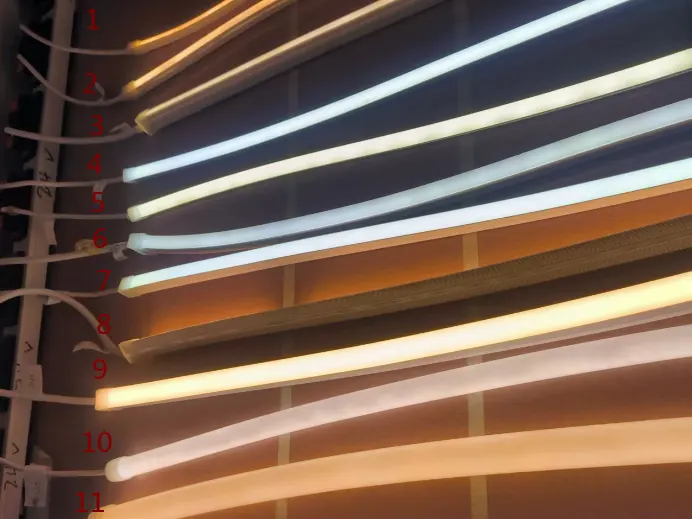
LED neon flex provides continuous, dot-free lighting, making it ideal for outlining architectural shapes and facades. It is designed for both indoor and outdoor use, with strong resistance to environmental conditions.
Its flexibility allows it to follow curves and complex structures, making it a preferred choice for facade lighting, signage, and decorative applications.
For more detailed applications and installation insights, refer to this complete guide on LED neon flex lighting systems.
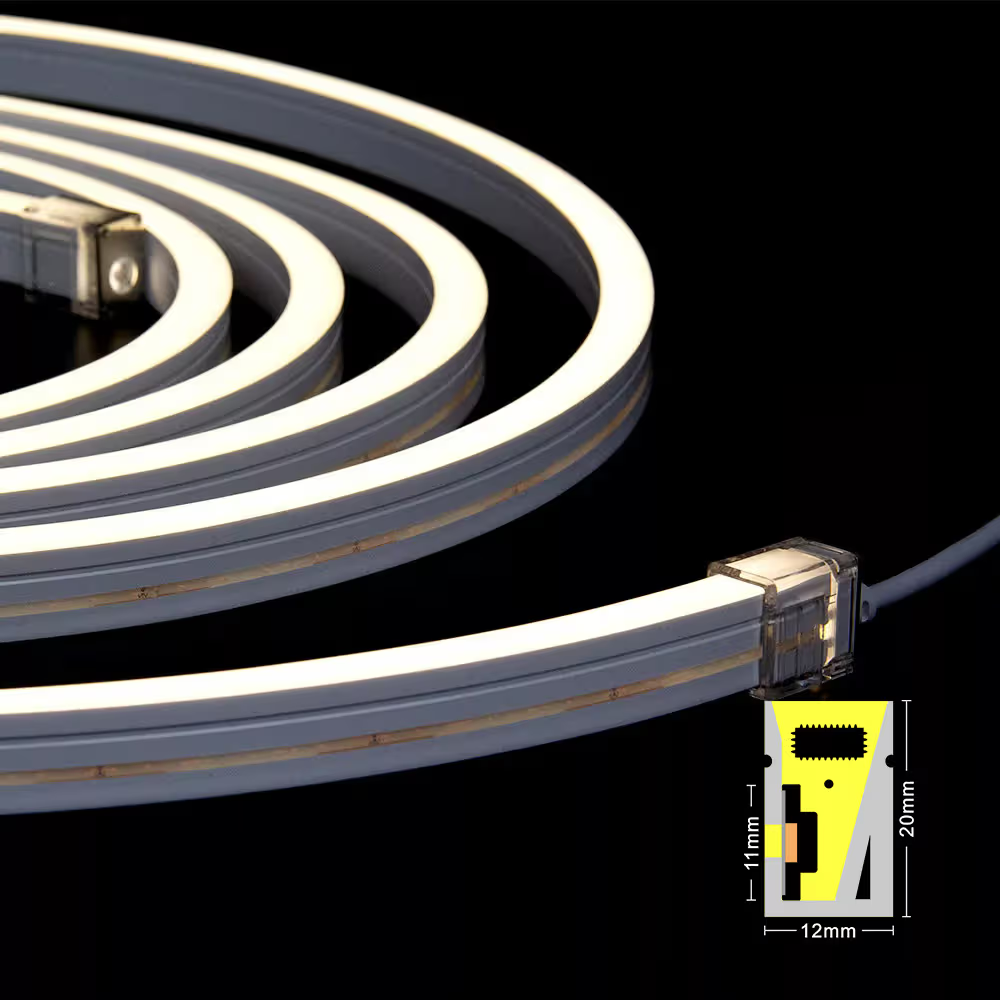
Side Bend S1220 硅树脂 RGB RGBW LED 霓虹灯带,用于建筑、墙面玻璃和外墙照明
- 输入电压: DC24V
- 瓦特 12 瓦/米
- LED 数量 SMD5050 60LEDs/m
- 色温: RGB/RGBW(2700K-6500K)
- 控制方法: RGB/RGBW 控制器或 DMX 解码器
- IP 等级: IP65/IP67
- 电缆入口: 正面
- 最小弯曲直径: 100 毫米
- 可切割长度: 100 毫米
- 长度 5 米/卷
LED Modules & Panels
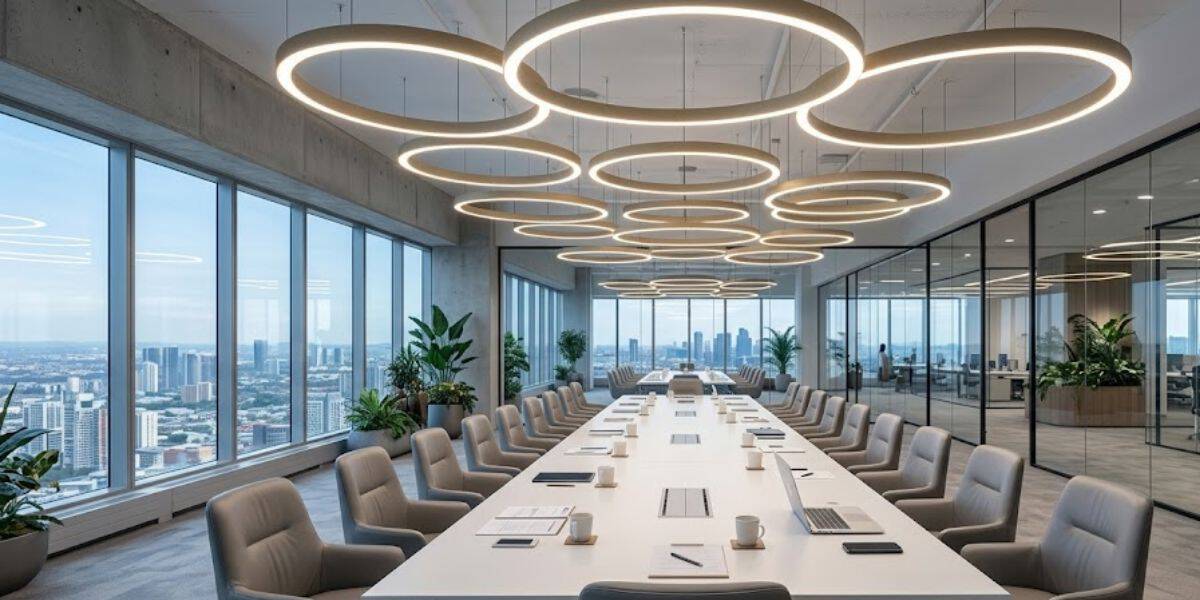
LED modules and panels are designed for uniform lighting across large surfaces. They are commonly used in offices, commercial ceilings, and open spaces where consistent brightness is required.
These systems are often integrated with building management systems, allowing efficient control of brightness and energy usage.
Architectural Lighting Systems & Components
Architectural lighting systems consist of multiple components that work together to deliver controlled illumination.
| 组成 | Role | 弹着 |
| LED Luminaires | 光源 | Determines brightness & quality |
| 驾驶员 | Power regulation | Ensures stability & lifespan |
| 控制系统 | Automation | Enables smart lighting |
| Optics | Beam control | Improves distribution |
Each component plays a role in ensuring that the lighting system performs efficiently and meets design expectations.
In modern projects, LED strip lighting is widely applied in linear and modular systems, as detailed in this guide on LED linear module solutions
建筑照明中的LED条和铝型材
In architectural lighting, LED strip and aluminum profile systems are used together to create structured, durable, and visually consistent linear lighting. While LED strips provide the light source, aluminum profiles act as a housing system that improves performance, installation quality, and overall finish.
This combination is widely used in modern architectural projects where clean lines, uniform illumination, and long-term reliability are required.
Role of LED Strip in Architectural Lighting
LED strips serve as the primary light source in linear lighting systems. Their flexibility allows them to be installed in narrow or concealed spaces where traditional fixtures cannot fit.
They are mainly used for:
- 海湾和间接照明
- Linear architectural lighting
- Accent and edge lighting
High-quality LED strips with proper density and CRI ensure smooth illumination without visible hotspots, making them suitable for both residential and commercial applications.
Role of Aluminum Profile in Lighting Systems
Aluminum profiles are not just mounting accessories; they are essential components that directly impact lighting performance.
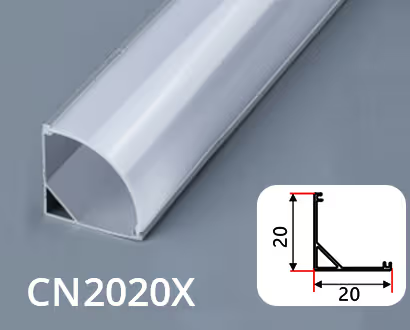
CornerAluminum Profiles
- 重量: 0.087公斤
- 厚度: 0.8mm
- 电脑颜色: 较
- 尺寸 L1000W20H20mm
- 端盖/夹子: 1对/米
- 铝色 银色/黑色
Their key functions include:
- Heat dissipation – prevents overheating and extends LED lifespan
- Structural support – provides stable and precise installation
- Light diffusion – when paired with diffusers, creates smooth and uniform output
- Protection – shields LED strips from dust, moisture, and damage
Without aluminum profiles, LED strips may lose efficiency over time and fail to deliver professional-grade results.
Why This Combination is Essential
Using LED strips without aluminum profiles often leads to uneven lighting, visible LED نقاط, and reduced durability. In contrast, integrating both ensures:
- Consistent light output
- Better thermal management
- Clean architectural finish
- Longer system lifespan
This is why most professional architectural lighting projects rely on integrated strip and profile systems.
室内与室外应用
| 应用类型 | LED Strip Role | Aluminum Profile Role | 主要考虑因素 |
| Indoor Lighting | Provides indirect and accent lighting | Ensures clean finish and diffusion | Focus on aesthetics and glare control |
| 户外照明 | Used for facade and edge lighting | Provides protection and heat dissipation | Requires high IP rating and durability |
Common Use Cases in Architectural Projects
| 应用领域 | System Usage | 裨 |
| 科维照明 | LED strip + recessed profile | Soft indirect illumination |
| 外墙照明 | Weatherproof strip + sealed profile | Durable outdoor lighting |
| Retail Display | High CRI strip + diffuser profile | Enhanced product visibility |
| Office Interiors | Linear strip + aluminum channel | Uniform and glare-free lighting |
Practical Considerations
When selecting LED strip and aluminum profile systems, it is important to consider factors such as LED density, profile depth, diffuser type, and installation environment. These elements directly affect lighting quality, durability, and maintenance requirements.
Lighting Control Systems (DMX, DALI, Smart)
Control systems are essential in modern architectural lighting as they allow flexibility and automation.
DMX systems are mainly used for dynamic lighting effects, especially in facades and large installations where color changes and animations are required. DALI systems are more common in commercial interiors, where centralized control and energy management are important.
Smart and IoT-based systems take this further by enabling remote control, scheduling, and automation, improving both efficiency and usability.
For dynamic lighting setups, DMX-based systems are widely used in architectural projects, as explained in this Guide on addressable lighting control.
Architectural Lighting Standards and Lux Levels
Lighting standards ensure that spaces are properly illuminated for their intended use while maintaining comfort and efficiency.
| 境 | 推荐勒克斯 | 目的 |
| 办公室 | 300-500 勒克斯 | 生产力 |
| 零售 | 500-1000 勒克斯 | 可见性 |
| Facade | 50–200 lux | Visual impact |
Designers typically follow IES and CIE guidelines to maintain consistent lighting quality across projects.
How Architectural Lighting is Used in Buildings
Architectural lighting is applied differently depending on the type of space:
- 办公室照明
Focuses on productivity and comfort through uniform and glare-free illumination. - Retail Lighting
Highlights products and enhances visual contrast to improve customer experience. - Hospitality Lighting
Uses warm tones and layered lighting to create a welcoming atmosphere. - 外墙照明
Emphasizes building structure and creates strong nighttime visual identity.
Commercial Applications of Architectural LED Lighting
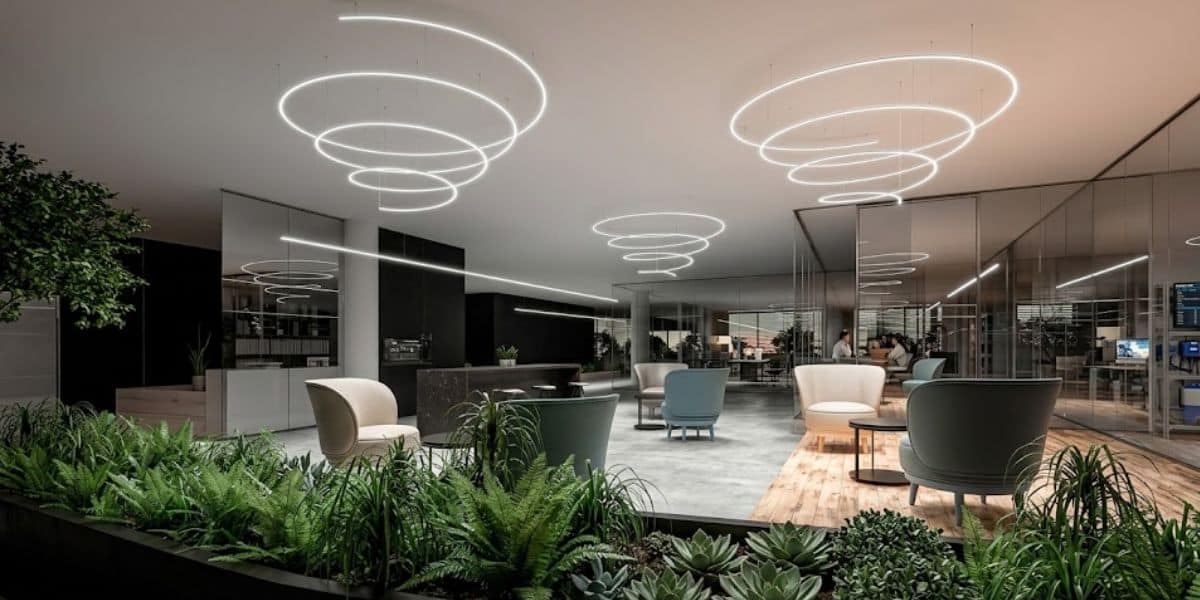
In commercial projects, architectural lighting plays a strategic role beyond illumination.
Corporate offices use lighting to improve employee comfort and productivity. Retail chains rely on lighting to influence customer behavior and enhance product presentation. Hospitality projects use it to create memorable environments, while urban facades use lighting to strengthen brand identity.
From a business perspective, LED lighting improves ROI by reducing energy consumption and maintenance costs while enhancing overall user experience.
From a commercial perspective, architectural LED lighting is not just a design feature but a long-term investment. It reduces operational costs through energy efficiency, lowers maintenance requirements, and improves overall user experience, making it a critical factor in modern building projects.
Real-World Application Examples
In office environments, LED panels combined with indirect strip lighting create balanced illumination that supports long working hours. Retail stores use high-CRI LED strips to enhance product visibility and attract attention.
For building facades, LED neon flex and DMX-controlled systems are used to create dynamic lighting effects that define the building’s identity and visibility at night.
How to Choose the Right Architectural LED Lighting System

Selecting the right architectural LED lighting system requires a balance between design intent, technical performance, and long-term efficiency. Instead of focusing only on fixtures, it is important to evaluate how the system will perform in real-world conditions.
Different environments require different approaches. Indoor spaces prioritize comfort and uniformity, while outdoor applications demand durability and weather resistance. At the same time, factors such as brightness, color quality, and control flexibility directly influence both visual results and user experience.
Many of these applications rely on advanced LED systems and control integration, which are further explained in Modern architectural lighting solutions and system guides
To simplify the decision-making process, the key selection factors are outlined below:
Key Selection Factors
| 系数 | 需要考虑什么 | 为何重要 |
| 应用 | Indoor vs outdoor usage | Determines required protection level and system type |
| 亮度 | Lux levels instead of wattage | Ensures proper illumination for the space |
| Color Quality | CRI and color temperature (CCT) | Affects visual accuracy and atmosphere |
| 操纵系统 | DMX, DALI, or smart controls | Enables flexibility, automation, and scalability |
| 耐用性 | IP rating and heat management | Ensures long-term performance, especially outdoors |
| 成本效益 | Initial cost vs lifecycle cost | Impacts ROI and maintenance over time |
By evaluating these factors together, it becomes easier to select a lighting system that not only meets design requirements but also delivers consistent performance and long-term value.
Where to Start with Architectural Lighting Design
A structured approach helps ensure successful lighting design:
- Analyze the space and layout
Evaluate dimensions, materials, and natural light conditions to understand lighting requirements. - Define lighting goals
Identify whether the focus is functional lighting, aesthetics, or a combination of both. - Plan layered lighting
Combine ambient, task, and accent lighting to create balance and depth. - Select appropriate systems
Choose LED strips, neon flex, or modules based on application needs. - Set technical parameters (CCT, CRI)
Define color temperature and color accuracy based on the environment. - Integrate control systems
Use DMX or DALI systems for automation and flexibility. - Evaluate energy usage and ROI
Assess energy efficiency, maintenance needs, and long-term cost savings.
Get Expert Architectural LED Lighting Solutions
Architectural LED lighting is not just about choosing fixtures — it requires the right combination of design, system selection, and control strategy. Whether you are working on a commercial building, retail space, or facade project, selecting the correct lighting solution can significantly impact both performance and visual results.
If you are planning a project, it is important to choose systems that match your application, environment, and long-term efficiency goals. From LED strip lighting for cove applications to neon flex for facade lighting and advanced control systems, the right setup ensures better outcomes and lower operational costs.

You can take the next step by:
- Requesting a customized lighting solution based on your project
- Getting technical support for system selection and design
- Exploring professional-grade LED lighting products
结论
Architectural LED lighting combines design, technology, and functionality to transform modern buildings. By integrating efficient LED systems with smart controls, designers can create spaces that are visually appealing, energy-efficient, and adaptable.
Choosing the right lighting system is not just about illumination but about enhancing how a space is experienced. With the right approach, architectural lighting becomes a powerful tool for both design and performance.
Architectural Lighting Hub
To better understand how different architectural LED lighting systems work in real projects, explore the following detailed guides:
- LED strip lighting for cove and linear architectural applications
- LED neon flex for facade lighting and outdoor building design
- DMX512 lighting control systems for dynamic architectural lighting
- Hidden lighting techniques to highlight architectural features
These resources provide deeper technical insights and help in selecting the right architectural lighting systems for different applications.
常见问题
相关文章