English
  简体中文
简体中文  Deutsch
  Español
  Français
  Italiano
  日本語
日本語  한국어
한국어  Polski
  Português
  Русский
  Türkçe
  Nederlands
  Tiếng Việt
  ไทย
ไทย 
Yes, modern energy-efficient acoustic lighting options are not only available but are widely adopted in modern commercial projects. High-performance systems combine effective sound absorption, typically with an NRC above 0.7, and high-efficacy LED lighting that often exceeds 120 lm/W, allowing buildings to reduce both reverberation and electricity consumption using a single integrated fixture.
These systems are engineered solutions. A passive sound-absorbing core reduces ambient noise, while an optimized LED light engine delivers efficient, low-glare illumination. Their performance is evaluated using verified acoustic and photometric data, not subjective descriptions or design claims.
This article explains how energy efficiency in acoustic ceiling lighting is measured, which specifications matter most, how efficiency impacts total cost of ownership, and what defines a properly engineered acoustic lighting solution.
What is Energy-Efficient Acoustic Lighting and How Does It Work?
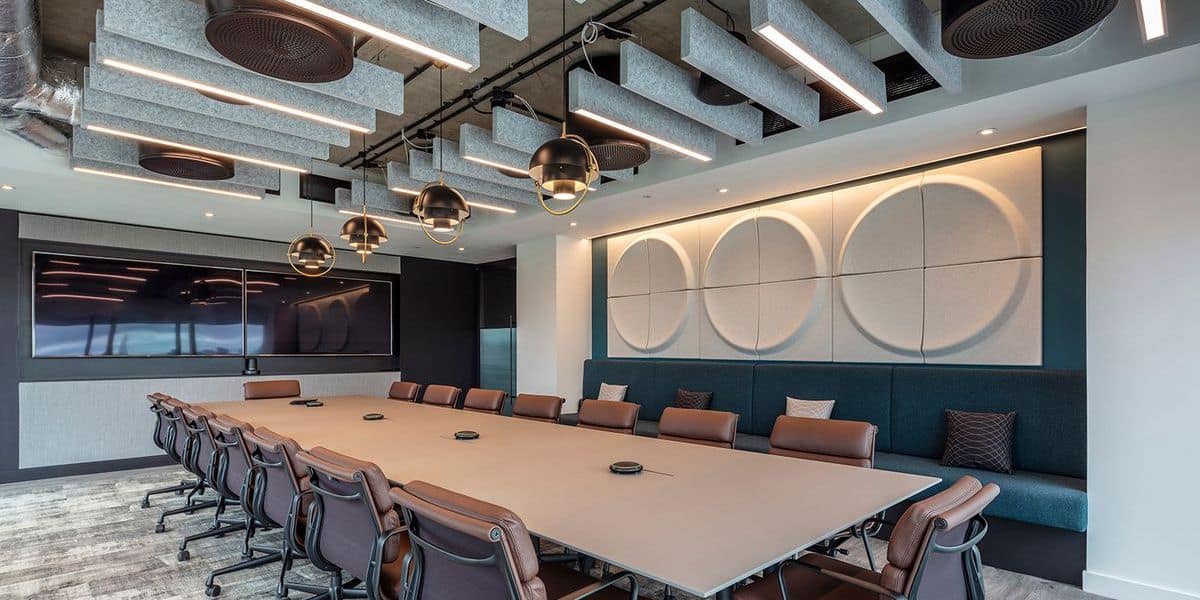
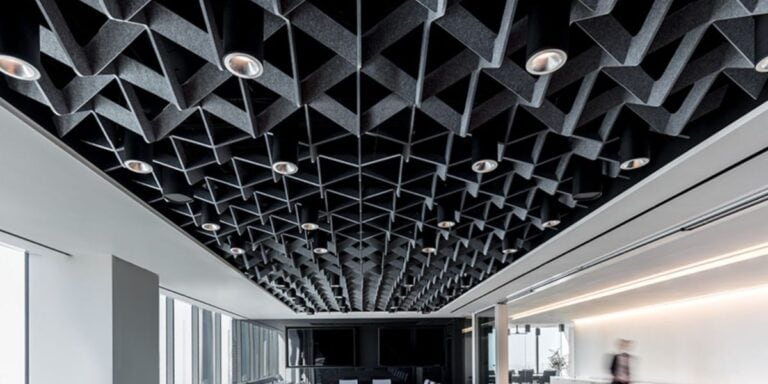
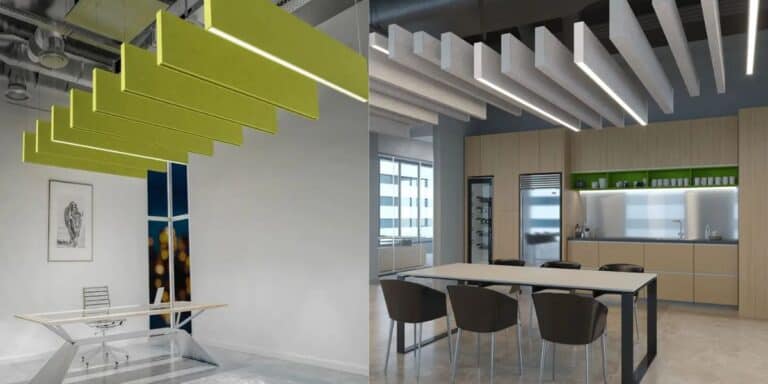
Energy-efficient acoustic lighting is a hybrid system designed to address two performance requirements simultaneously: noise control and delivering efficient illumination. Instead of installing traditional luminaires and separate acoustic panels, these fixtures integrate both functions into one coordinated product.
The system works by combining a porous sound-absorbing material, such as PET felt or mineral fiber, with a high-lumen-output, low-glare LED module. The fixture housing, commonly aluminum, serves as the structural frame and functions as a heat sink, helping maintain LED efficiency and long-term reliability.
Efficiency in acoustic lighting is defined across two measurable performance axes.
| Performance Axis | Metric Used | Purpose |
| Acoustic Performance | Noise Reduction Coefficient (NRC) | Measures how effectively the fixture absorbs sound and reduces reverberation. |
| Lighting Performance | Luminous Efficacy (lm/W), UGR | Measures how efficiently electricity is converted into usable, comfortable light. |
A product is only considered energy-efficient acoustic lighting when it performs strongly in both areas.
Key Specifications: The Efficiency Selection Guide
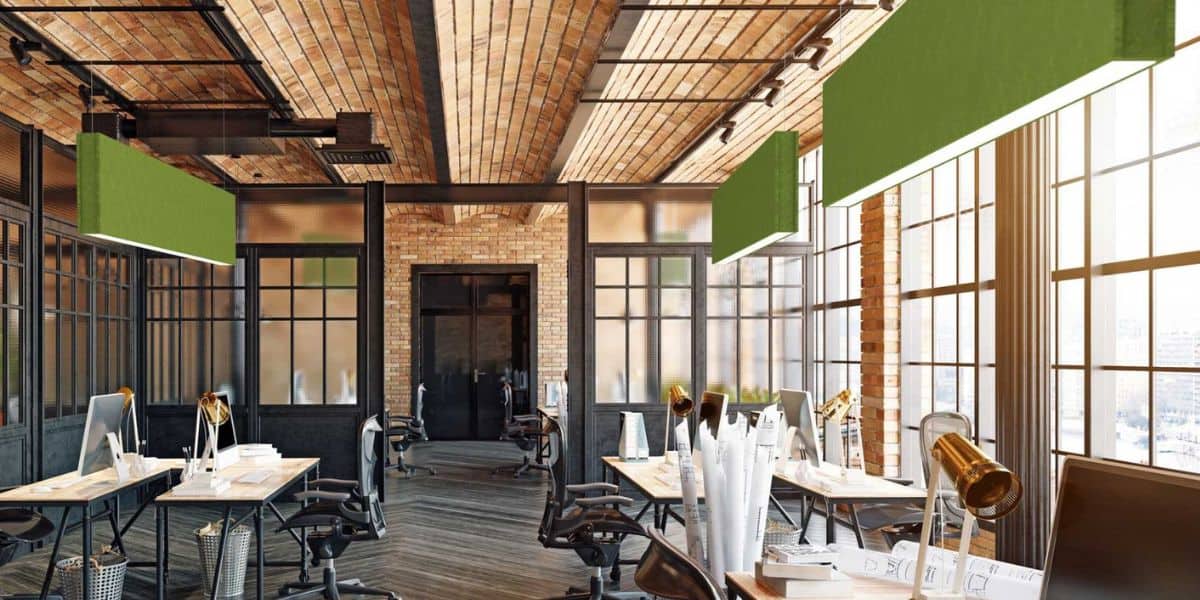
The table below outlines the core specifications used to evaluate efficiency, durability, and real-world performance in acoustic lighting systems.
| Specification / Factor | What It Measures | Benchmark for Efficiency | Why It Matters |
| Luminous Efficacy (lm/W) | Light output per watt of electricity | > 120 lm/W | Higher efficacy delivers more light with less energy, directly reducing operating costs. |
| NRC Rating | Sound absorption performance (0.0–1.0) | > 0.70 | Higher NRC means better reverberation control and improved acoustic comfort per fixture. |
| UGR Rating | Visual glare from the light source | < 19 | Low glare ensures visual comfort and prevents light from being wasted as discomfort. |
| LED Lifespan (L80) | Time until light output drops to 80% | > 50,000 hours | Longer lifespan lowers maintenance frequency, replacement cost, and material waste. |
| Warranty Period | Manufacturer-backed durability | 3-5 years | Longer warranties usually correlate with better thermal and component design. |
The NRC and lm/W relationship is critical. A fixture with high luminous efficacy but poor sound absorption is simply an efficient light. Conversely, a fixture with strong acoustic performance but inefficient LEDs increases long-term energy costs. True efficiency requires both metrics to be optimized together.
Thermal management plays a decisive role. Poor heat dissipation reduces LED output over time and can compromise acoustic material stability. Aluminum housings and engineered heat paths are essential for sustaining long-term performance.
Verified Benefits and Total Cost of Ownership
Energy-efficient acoustic lighting delivers measurable value when evaluated across its full service life rather than initial purchase cost alone.
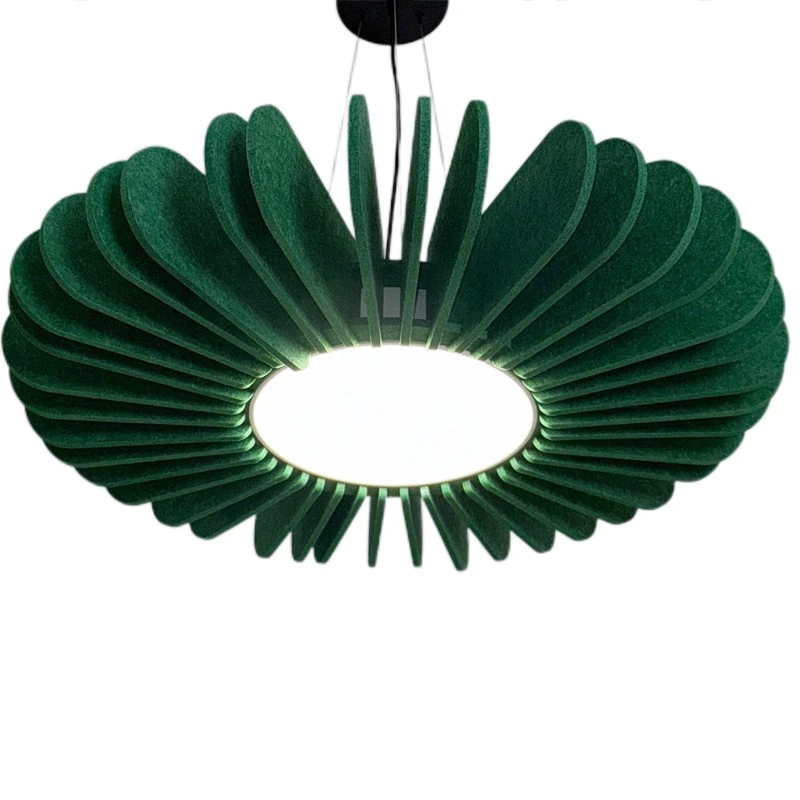
Ultrathin Slim Round Acoustic LED Pendant Light
- Input Voltage: AC100-277V / AC220-240V,50-60HZ
- Housing Size: 120 mm
- Emitting Direction: Downward
- Size D*H: 500*80mm
- CCT: 3000K / 4000K / 6000K
- Power: 15W
- Luminous Flux: 100-110Lm/W
- CRI: >90Ra
- PF: >0.90
- Fllicker Free: Yes
- Beam Angle: 120°
- IP Grade: IP20
- Warranty: 5 years
- Acoustic Panel Color Option: Red / Green / Blue / Grey more than 48 colors option
Application-Based Value
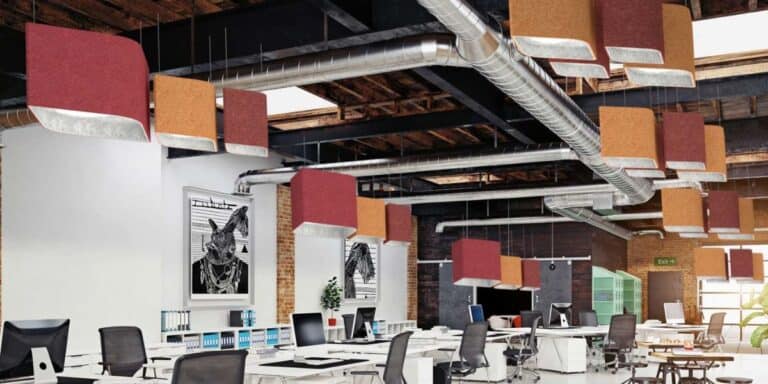
- Open-Plan Offices: Replaces separate lights and acoustic panels, reducing installation complexity and ceiling congestion.
- Educational Facilities: High lm/W lowers operating costs while high NRC improves speech clarity and learning conditions.
- Commercial Renovations: Long lifespan and stable performance reduce future retrofit and maintenance expenses.
- Healthcare and Public Spaces: Low glare and controlled noise improve occupant comfort and usability.
Total Cost of Ownership Insight
Efficiency should be evaluated over a three to five year horizon. While energy-efficient acoustic lighting may have a higher upfront cost, energy savings of up to 30 to 50 percent compared to legacy lighting systems, combined with minimal acoustic maintenance, typically result in a lower total cost than operating separate lighting and sound-control products.
Why Choose SignliteLED for Energy-Efficient Acoustic Lighting?
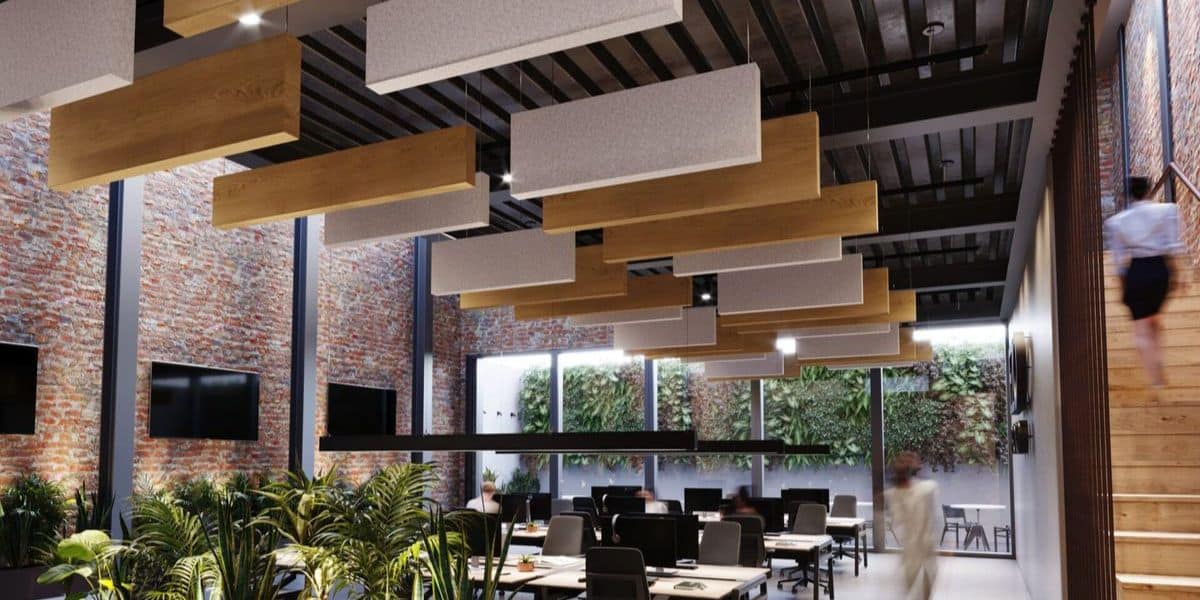
SignliteLED’s acoustic lighting fixtures are engineered as integrated systems where the acoustic and lighting components are developed in unison, designed to support consistent performance and durability. The design directly addresses the efficiency benchmarks outlined above.
Feature–Benefit Overview: Engineered for Dual Performance
| Engineered Feature | Specification & Component | Direct Efficiency & Performance Benefit |
| High-Performance Acoustic Core | Material: High-density, porous PET felt or equivalent sound-absorbing material. | Passively absorbs sound energy, reducing ambient noise and reverberation (designed to achieve high NRC performance, typically above 0.7 in tested configurations). This directly improves speech intelligibility and acoustic comfort in the space. |
| Optimized LED Light Engine | Specs: Utilizes high-efficacy LED chips paired with precision optics and drivers. | Delivers high lumen output per watt (lm/W), minimizing electricity consumption. Provides consistent, high-quality light with options for high CRI and various CCTs. |
| Integrated Thermal & Structural Design | Construction: Extruded aluminum body acting as both the structural frame and primary heat sink. | Effectively dissipates heat from the LED module. This protects LED lifespan, maintains light output, and preserves the integrity of the acoustic material over time. |
| Design for Application & Control | Options: Available in various finishes (e.g., White, Black), sizes, and with dimming/tunable white compatibility. | Enables seamless integration into diverse projects (offices, schools, healthcare). Allows for dynamic lighting scenes that further enhance energy savings and occupant well-being. |
This coordinated approach results in a fixture that provides verified acoustic performance and lighting efficiency from a single, reliable source. For detailed technical specifications, configuration options, and performance data, you can review SignliteLED’s product information.
Conclusion
Energy-efficient acoustic lighting options are clearly available and can be objectively verified through dual performance metrics. The most efficient solutions deliver strong sound absorption and high luminous efficacy without compromising glare control, lifespan, or reliability.
When evaluating products, always request technical data sheets and test reports. Look for documented NRC ratings, luminous efficacy values, and references to recognized testing standards such as LM-79 and ASTM C423. Solutions that perform strongly across both acoustic and lighting metrics represent the true benchmark for modern, energy-efficient acoustic lighting systems.
FAQs
Related Posts