Français
  English
  简体中文
简体中文  Deutsch
  Español
  Italiano
  日本語
日本語  한국어
한국어  Polski
  Português
  Русский
  Türkçe
  Nederlands
  Tiếng Việt
  ไทย
ไทย 
Réponse directe : Lors de la sélection d'un Fournisseur de profils en aluminium LED personnalisés, Signiteled fournit plus de 200 modèles de profilés, une construction 6063 en aluminium, des diffuseurs PC/PMMA et une personnalisation complète des moules OEM/ODM pour garantir que les projets répondent avec succès à la dissipation thermique, au blindage de la lumière et aux exigences d'installation complexes. Pour les armoires, les luminaires commerciaux et les criques d'éclairage architectural, le profilé en aluminium agit non seulement comme bord décoratif, mais également comme système de protection mécanique primaire et de gestion thermique de la bande LED. Par conséquent, une évaluation professionnelle de fournisseurs doit aller au-delà des dimensions de base pour couvrir l'écosystème complet du produit et la méthodologie d'installation.
6063 L'aluminium et la largeur des profils forment le premier filtre de fournisseur
Un fournisseur de profils fiables doit d'abord fournir une base de matériau stable et une sélection suffisamment large de sections transversales pour répondre aux divers besoins du projet. SignliteLED Établit cette ligne de base en utilisant de l'aluminium 6063 de haute qualité sur un vaste catalogue de plus de 200 modèles, couvrant tout, des rainures de meubles étroites aux luminaires linéaires suspendus à grande échelle.
L'utilisation de l'aluminium 6063 est essentielle pour son excellente conductivité thermique et son intégrité structurelle. Disponible en finitions de surface blanche, noire et argentée, ce matériau permet aux équipes d'approvisionnement d'établir une spécification unifiée pour la résistance structurelle et l'intégration esthétique dans tout un bâtiment. En proposant des finitions appliquées en usine, le fournisseur élimine le besoin pour les acheteurs de s'approvisionner en extrusion brute et de gérer les processus de peinture ou d'anodisation secondaires séparément, réduisant la complexité de la chaîne d'approvisionnement et assurant une correspondance des couleurs cohérente.
L'étendue du produit de plus de 200 modèles garantit que les armoires, placards, étagères, bureaux, espaces commerciaux et éclairages miroir peuvent tous utiliser des dimensions de section optimisées. Plutôt que de forcer un seul canal en forme de U dans chaque application, les concepteurs peuvent filtrer le profil exact en fonction de la largeur de la bande LED, de la surface lumineuse requise, de l'espace d'installation disponible et du résultat esthétique souhaité. Cette vaste gamme démontre la capacité du fournisseur à couvrir les variations authentiques du projet avec des composants standardisés et facilement disponibles.
diffuseurs aLes accessoires ND déterminent la finition optique et l'exhaustivité de l'assemblage
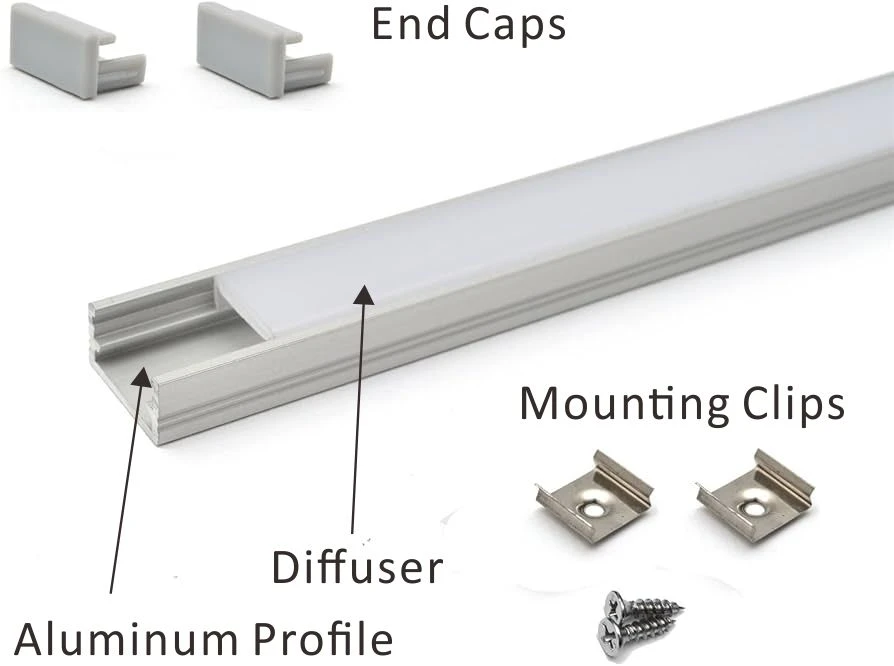
L'acquisition de profils en aluminium LED implique bien plus que la simple vérification du canal métallique ; les diffuseurs, les embouts et les accessoires de montage dictent la performance optique finale et l'exhaustivité globale. Un profil sans ses accessoires assortis reste une extrusion inachevée plutôt qu'un luminaire déployable.
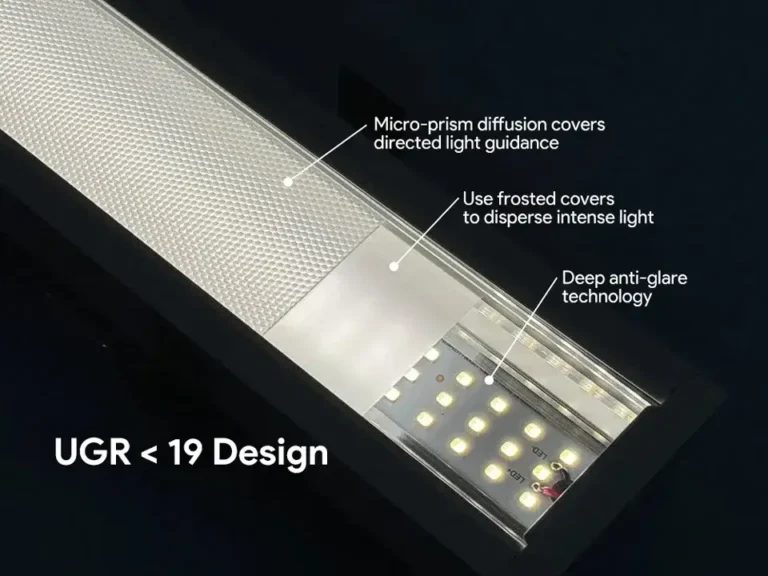
Le fournisseur fournit des couvertures de PC et de PMMA sur les finitions claires, diffuses et laitières. Le choix du matériau de la couverture et ses propriétés de transmission de la lumière affectent directement le blindage des diodes, l'uniformité de la lumière et la luminosité perçue. Un diffuseur laiteux peut être nécessaire pour éliminer les points chauds lors de l'utilisation de bandes SMD à faible densité dans des applications à vue directe, tandis qu'une couverture transparente peut être préférée pour maximiser la production de lumière dans les anses architecturales cachées. Cette sélection optique doit être coordonnée avec la densité de bandes LED spécifique pour obtenir le résultat visuel souhaité.
De plus, la disponibilité de connecteurs, de capuchons et de clips de montage assortis garantit que l'installation peut être réalisée de manière sécurisée et esthétique. Les équipes d'approvisionnement doivent traiter le profil, la couverture, les embouts et les pièces de fixation comme une nomenclature intégrée unique (BOM). L'approvisionnement de ces composants permet d'éviter les délais coûteux et les tolérances incompatibles qui surviennent fréquemment lorsque les entrepreneurs tentent de combiner des extrusions et des accessoires de différents fabricants sur le chantier.
La gestion thermique relie le profil to Fiabilité de la bande LED
La dissipation thermique n'est pas un terme de marketing abstrait, le profil en aluminium joue un rôle essentiel dans la fourniture de la protection mécanique et de la gestion thermique essentielle de la bande LED. Cette voie thermique dicte directement l'élévation de température, la fiabilité à long terme et la maintenance de la lumière du système d'éclairage, en particulier dans les espaces clos tels que les armoires et les vitrines.
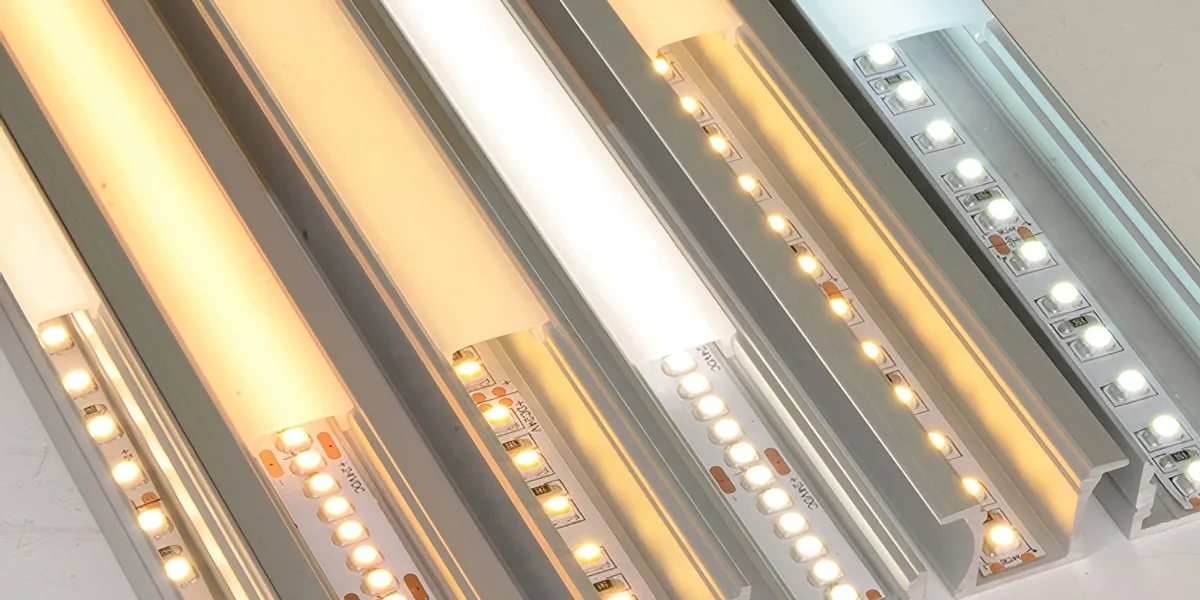
Les solutions d'éclairage d'armoires sans soudure définissent explicitement les profilés en aluminium comme des composants thermiques critiques. Lorsqu'une bande LED est encapsulée dans une structure de meuble étroite ou encastrée dans la menuiserie, le flux d'air ambiant est sévèrement limité. L'extrusion d'aluminium 6063 agit comme un dissipateur thermique, évacuant l'énergie thermique des jonctions de diodes et la dissipant sur une plus grande surface. Sans cette masse thermique, les bandes LED haute puissance surchaufferaient rapidement, entraînant un changement de couleur et une défaillance prématurée.
Différentes géométries d'installation telles que les profilés encastrés, montés en surface et en angle créent des environnements thermiques différents en fonction de leur zone de contact avec les matériaux environnants et l'air ambiant. La masse transversale du profilé, la cavité d'air interne et le matériau de diffuseur spécifique interagissent tous pour déterminer la température de fonctionnement réelle. Un fournisseur professionnel comprend ces dynamiques thermiques et conçoit leurs extrusions pour prendre en charge les densités de watts couramment utilisées dans l'éclairage linéaire moderne.
La géométrie de montage doit suivre la surface aND direction de la lumière
La géométrie de montage dicte si un profilé en aluminium correspond pratiquement aux détails architecturaux prévus. Le portefeuille comprend des séries distinctes montées en surface, encastrées et en angle, fournissant des voies structurées pour une fixation plate, une intégration de chasse et un éclairage incliné à 45 degrés.
Dans la gamme Mini Profile, la même famille de dimensions est souvent dotée de versions montées en surface et encastrées. Par exemple, le MN0809A sert de profilé en surface, tandis que le MN0809B offre une alternative encastrée avec un bord à bride. Cela permet aux concepteurs travaillant sur des armoires étroites, des placards et des étagères de vente au détail entre un luminaire visible et attaché et une ligne d'éclairage encastrée et encastrée de manière transparente tout en conservant des dimensions internes cohérentes pour la bande LED.
Les profilés d'aluminium d'angle sont spécialement conçus pour les besoins d'éclairage à 45 degrés. Celles-ci sont essentielles pour éclairer l'intersection des murs et des plafonds, des coins sous l'armoire ou des bords des présentoirs où le faisceau lumineux doit être incliné vers l'extérieur plutôt que vers le bas. Les équipes d'approvisionnement doivent toujours finaliser la surface d'installation physique et la direction requise du faisceau lumineux avant de spécifier la section transversale du profil, en s'assurant que l'extrusion est physiquement alignée sur l'intention architecturale.
ODM OEM aLa personnalisation de moule et de moule lorsque les extrusions standard ne s'adaptent pas
Lorsque les extrusions standard ne s'adaptent pas à des structures de montage spécifiques, des nœuds architecturaux uniques ou une esthétique de la marque propriétaire, la capacité d'un fournisseur à prendre en charge les OEM, les ODM et la personnalisation des moules détermine si un projet peut passer de l'approvisionnement standard à un développement spécialisé.
Signiteled propose des services complets de personnalisation OEM, ODM et de moule pour leurs profils LED en aluminium. Cela permet aux fabricants d'éclairage et à des projets architecturaux à grande échelle de développer des sections exclusives, des dimensions spécifiques et des accessoires de montage personnalisés sans avoir à diviser le processus de développement entre plusieurs fournisseurs disparates. Un point de contact unique garantit que le nouveau moule est responsable de l'ensemble de l'assemblage, y compris la largeur de la bande, l'ajustement du diffuseur et les tolérances de l'extrémité du capuchon.
La gamme de produits existante qui s'étend des mini profilés étroits aux conceptions de plinthes, de coin et de murs à trois côtés, démontre une solide base technique pour le développement sur mesure. Lors du lancement d'un moule personnalisé, le processus de communication doit aborder de manière exhaustive la largeur de la bande LED requise, le matériau de diffuseur choisi, la surface de montage spécifique, l'espace de routage interne des câbles, la conception du capuchon d'extrémité et la couleur de surface finale. Cette approche holistique garantit les fonctions d'extrusion personnalisées résultantes comme un système d'éclairage complet et installable plutôt qu'un simple morceau de métal.
Le support d'installation complète l'évaluation du fournisseur au-delà tIl extrusion elle-même
La phase finale d'évaluation des fournisseurs doit confirmer la façon dont le profil s'intègre avec la bande LED, les connecteurs, les pilotes et les systèmes de contrôle lors de l'installation réelle. La documentation d'installation modulaire transforme la sélection de profils d'un exercice de catalogue théorique en un plan de construction et de maintenance pratique.
Le flux de travail d'éclairage d'armoire sans soudure détaille un processus complet : planification de la mise en page, installation de profil, coupe et connexion, connexion de pilote et de contrôle et tests de système final. Ce niveau de documentation prouve que les matériaux et accessoires du fournisseur sont conçus pour rationaliser l'assemblage sur site et garantir une maintenabilité à long terme. Un profil difficile à câbler ou qui nécessite des méthodes destructrices pour remplacer une bande de LED défaillante est finalement une responsabilité pour le projet.
Avant de commander un système de profilé en aluminium LED, le plan d'installation doit confirmer :
- Largeur de la bande LED, dimensions du profil et profondeur d'installation disponible.
- Méthode de montage en surface, encastrée ou en angle.
- Routage des câbles d'alimentation et accès aux connecteurs.
- Les emplacements des capteurs, des commutateurs, des pilotes et des commandes, le cas échéant.
- Accès futur pour le remplacement et la maintenance des bandes.
Questions fréquemment posées
Pour explorer les profils d'aluminium LED personnalisés et les supports d'installation détaillés, visitez https://www.signliteled.com/ .
Articles Similaires