2011年からの看板とLEDストリップ照明工場

SMD LED ストリップ ライトが提供する調光オプションと LED の種類は何ですか? SignLiteLED の高度な工場からの洞察

直接の答え: When selecting linear lighting for commercial, architectural, or residential projects, procurement teams must carefully evaluate how dimming capabilities intersect with specific LED packaging choices. Through its extensive catalog of SMD LEDストリップライト, SignliteLED provides a versatile framework for brightness and color control, supported by a range of compatible dimmers, advanced controllers, and dimmable drivers. The factory’s offerings cover numerous packaging types, including SMD3528, SMD5050, SMD2835, SMD5630, SMD3014, and SMD2216. Navigating from basic monochrome pulse-width modulation or radio frequency dimming to sophisticated 0-10V, DALI, and DMX architectural systems requires more than simply checking a “dimmable” box on a specification sheet. The true determinant of system compatibility lies in aligning the operating voltage, total wattage, color channel architecture, and control protocol to ensure flawless execution across diverse lighting applications.

SMD Package Choice Defines the Electrical and Optical Starting Point

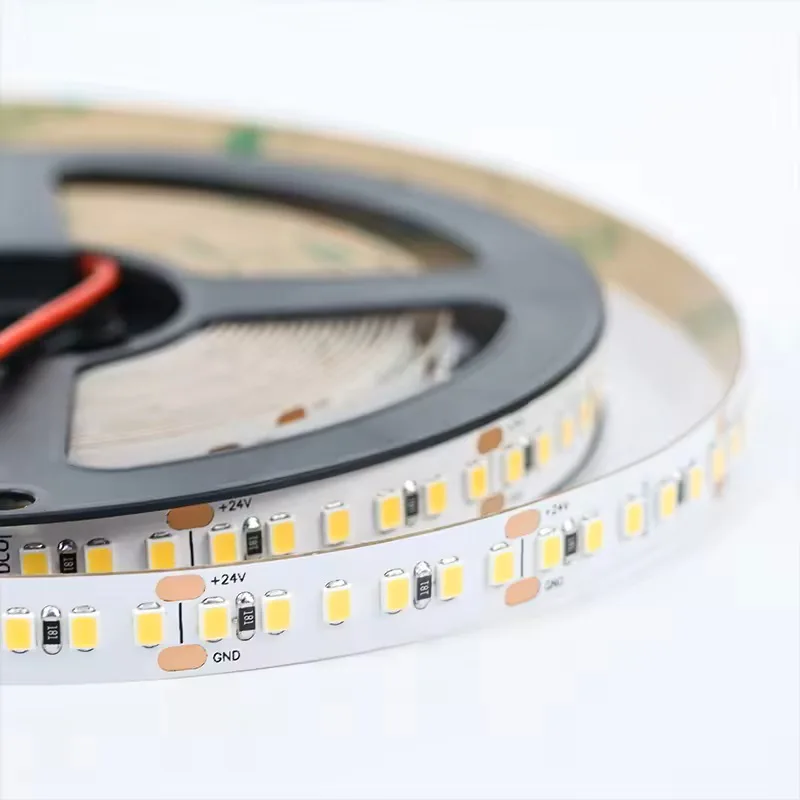
SMD LEDの滑走路端燈_SMD2835 LEDの滑走路端燈
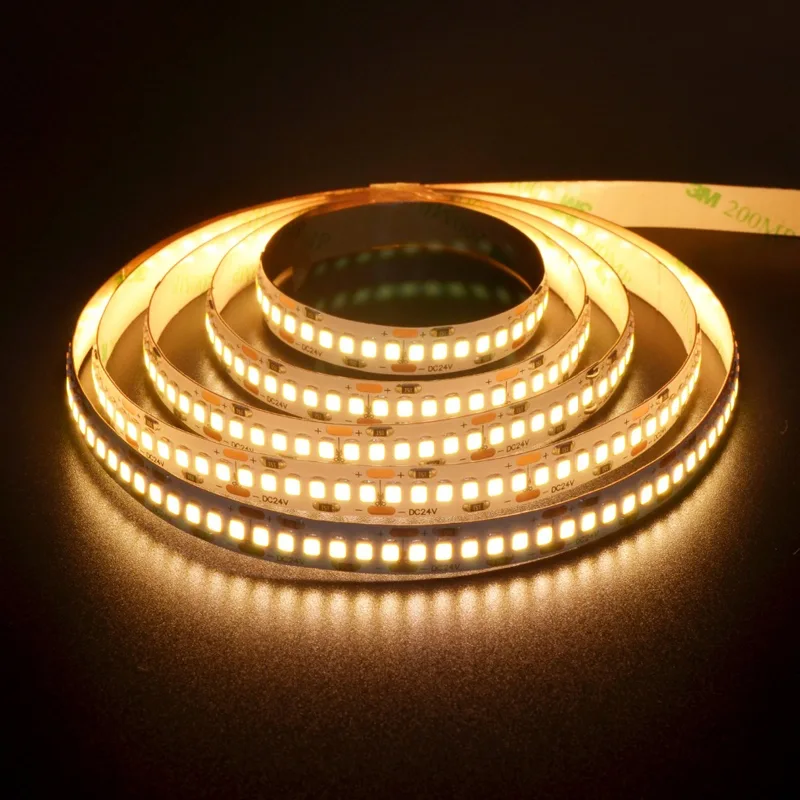
SMD LED ストリップ_SMD2216 LED ストリップ ライト

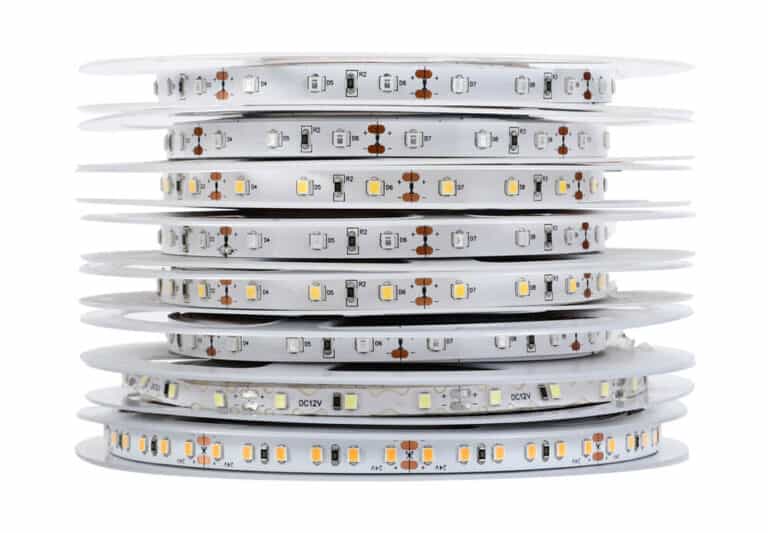
Selecting an SMD LED strip starts with package type, PCB design, and target light output, not with a universal ranking of chip sizes. SignliteLED’s range includes SMD3528, SMD5050, SMD2835, SMD5630, SMD3014, and SMD2216. SMD2835 is commonly used in white-light families, while SMD5050 supports many multicolor architectures. The package identifies the physical LED platform; the finished strip specification still needs LED density, PCB width, power, color architecture, and environment.

Furthermore, because the surface-mounted devices are integrated onto a flexible printed circuit board, the package type represents only one component of the complete strip design. Engineers must simultaneously evaluate the LED density per meter, the PCB width, overall power consumption, correlated color temperature, ingress protection grade, and the selected power supply method. These variables interact directly with the physical constraints of the lighting fixture and the intended environment. By breaking down the specification process into these distinct engineering variables, lighting designers can avoid the pitfall of generalizing a single SMD package type as the absolute optimal choice for every project, ensuring that the selected technology precisely matches the specific luminous requirements.

Model Examples Show Why LED Type Must Be Read with Channel Architecture

Model selection shows why package and channel architecture must be read together. An SMD2835 strip can be configured for single-color white or tunable white, while an SMD5050 design can support RGBW. Those configurations require different numbers of control channels even when the package name remains familiar. Buyers should therefore identify the color architecture and model parameters before selecting the dimmer or controller.

Expanding the color capabilities, an SMD5050 configuration designed for RGBW applications shifts the architectural complexity significantly. Operating on DC12V or DC24V with 60 LEDs per meter, this structure expands the control requirement from a single white channel to a four-channel system that manages independent red, green, blue, and dedicated white outputs. Consequently, the project controller must perfectly match the actual number of channels present on the strip. Specifying a product based solely on the “5050” designation ignores the crucial differences between a standard RGB strip and an RGBW system. The LED package and the color architecture must be read together; only by placing the SMD type back into the context of the complete model parameters can buyers correctly determine the necessary dimming and control strategies.

Basic Dimming Can Use Inline, Knob, RF or Touch Controllers

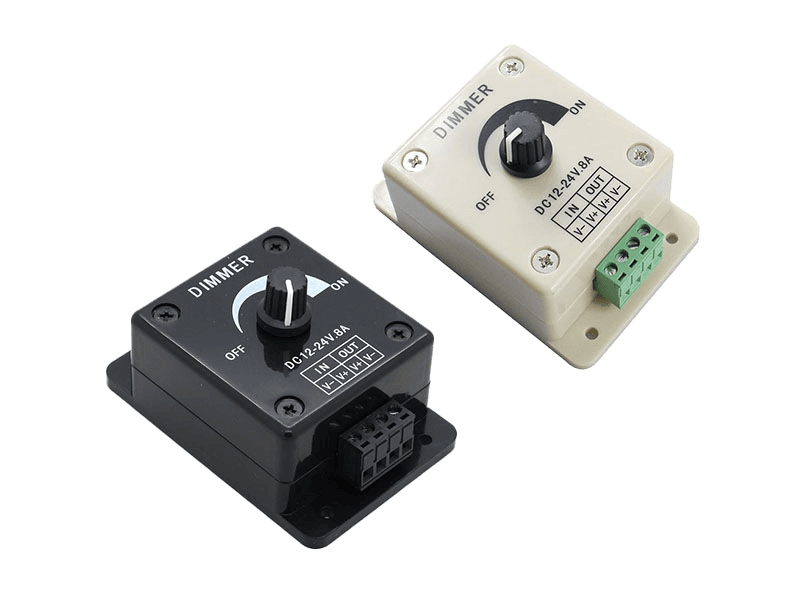
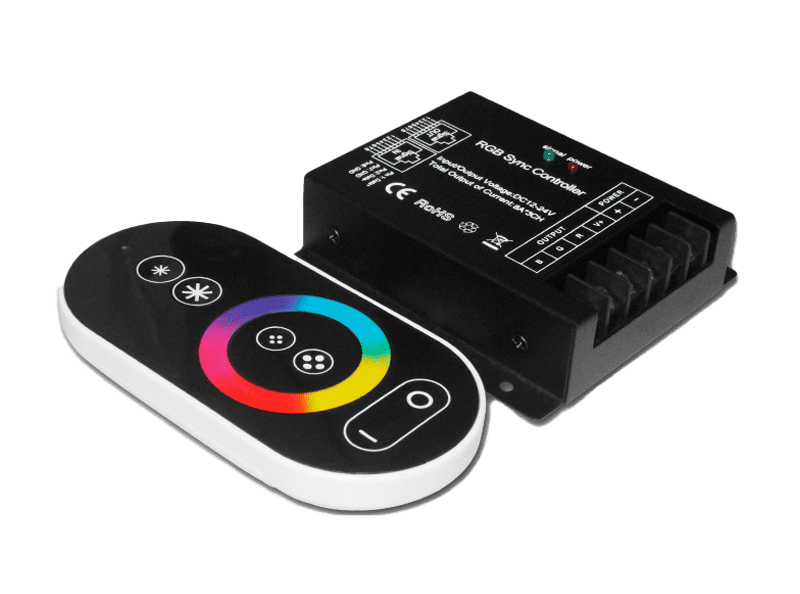
For standard single-color, tunable white, and conventional RGB or RGBW SMD strips, there is a comprehensive, multi-tiered control pathway that ranges from simple inline knobs and radio frequency remotes to elegant wall-mounted touch panels. This ensures that essential brightness adjustments can be accomplished efficiently without the expense and complexity of introducing building-wide architectural protocols. SMD strips can achieve precise brightness or color regulation when paired with the appropriate dimmer or controller. The expansive LED controller portfolio includes options such as straightforward single-color rotary knob dimmers, DC12-24V inline controllers, and responsive RF 2.4G synchronous systems, which are perfectly suited for adjusting standard constant-voltage lighting installations.

調光コントローラ_CTL-S-DIM-T1
RGBコントローラ_CTL-RGB-RF-SYNCD03

The wall-mounted controller series further refines the user experience by offering distinct interfaces tailored to specific channel configurations. These include dedicated single-color dimming touch panels, specialized CCT and dimming touch panels, and comprehensive RGBW dimming touch panels. This targeted approach allows the physical control interface to correspond directly with the color channel architecture of the installed strip. By separating single-color, tunable white, and RGBW controllers by their functional channels, the system ensures seamless integration. Routine SMD dimming can therefore be managed through localized controllers selected based on the user interface preference and the specific color output, freeing projects from defaulting to overly complex control networks for basic illumination needs.

0-10V, DALI and DMX Serve Larger or More Integrated Lighting Systems

For commercial and multi-zone projects, 0-10V, DALI, and DMX can provide system-level control when the strip is paired with compatible controllers, decoders, or dimmable drivers. These protocols are not native capabilities of every SMD strip. The correct pathway depends on the constant-voltage output, channel count, load, and the building or lighting-control system that must communicate with the strip.

SignliteLED’s controller and driver range provides the bridge between the control network and the LED load, including DALI constant-voltage drivers and DMX-to-PWM or DMX-to-SPI decoding options. Project teams should confirm the exact controller or driver configuration for the selected strip rather than assuming protocol compatibility from the strip name alone.

Compatibility Checks Prevent Flicker, Limited Range and Control Failure

The dimming system should be checked as one electrical chain before procurement:

  • Operating voltage must match the strip, controller, and power supply.
  • Rated controller and driver capacity must exceed the connected load.
  • The controller must match the strip’s color-channel architecture.
  • The dimming protocol and signal path must match the selected driver or decoder.

Conversely, RGB and RGBW strips are generally best managed through PWM paired with a precisely matched RGB controller to handle the multi-channel output, while high-power engineering strips might require integration into a 0-10V or DALI pathway. Furthermore, the rated voltage and total power capacity of the dimmer must comfortably exceed the actual load of the connected LED strips. Selecting components based solely on the name of the control protocol without verifying electrical thresholds inevitably leads to operational issues. Reliable dimming is not a feature of a single accessory, but the result of a perfectly matched electrical and control architecture, dictating that procurement specifications must lock in the strip and the control system simultaneously prior to purchase.

Factory Integration Converts Dimming Requirements into Custom SMD Specifications

The significant manufacturing value provided by シグライトLED rests in its ability to translate specific LED types, color channel architectures, PCB designs, operating voltages, and precise control methodologies into production-ready SMD specifications. This capability is underpinned by an expansive automated production facility and dedicated OEM/ODM services, creating a reliable foundation for transitioning from standard models to entirely new PCB customizations. The company actively supports lighting distributors, project engineering companies, and facility buyers through comprehensive in-house production, engineering-oriented customization, and rigorous quality control protocols. The SMD product line encourages project managers to meticulously confirm the exact model, color temperature, IP rating, and control compatibility dictated by their specific application requirements.

To accommodate diverse procurement strategies, the factory maintains flexible ordering parameters. Standard SMD models are generally available with no minimum order quantity (MOQ), facilitating straightforward procurement for conventional installations. However, when a project necessitates a completely new PCB design to address unique spatial or electrical constraints, a specific MOQ boundary is established to support the custom manufacturing run. This distinct separation allows both standard purchasing and custom development to follow optimized pathways. By directly connecting the packaging, channel, and dimming requirements of SMD LED strip lights to concrete manufacturing capabilities and control system specifications, the supplier ensures a comprehensive pathway from initial component selection to fully integrated custom production.

よくある質問

次のインストールに関する詳細な製品仕様、カスタマイズ機能、およびテクニカル プロジェクト サポートについては、次の公式 Web サイトにアクセスしてください。 https://www.signliteled.com/.

LEDライトシートLEDライトシート
商業照明プロジェクトの LED ライト シートの選び方
商用照明プロジェクトに適した LED ライト シートを選択するには、一般的な性能の主張に頼るのではなく、測定可能な技術基準を評価する必要があります。 調達チームは、1 平方メートルあたりのルーメン出力、CRI レベル (通常は 80 以上または 90 以上の小売店)、一貫した色温度 (ケルビンの安定性)、電圧の互換性 (通常は 24V システム) を評価する必要があります。
DALI 制御の LED リニア ライトが現代のオフィス スペースに最適な理由
現代のオフィスでは、照明は照明を超えて、人々の働き方や雰囲気を形作ります。 LED リニア ライトは、クリーンなデザイン、均一な配光、およびワークスペース全体の汎用性の標準となっています。 DALI 制御システムと組み合わせると、スマート調光、省エネ、集中照明管理が提供されます。 この記事は、調べています...
LEDストリップライトのハード配線は可能か?LEDストリップライトのハード配線は可能か?
LEDストリップライトのハード配線は可能か?
近年、LEDストリップ照明は、そのエネルギー効率、汎用性、長寿命により、ますます人気が高まっている。LEDストリップは、タスク照明からアクセント照明までさまざまな用途で使用でき、さまざまな色と輝度レベルで利用できる。 一般的に...
LED照明-色温度比較-5000K対-6000KLED照明-色温度比較-5000K対-6000K
LED照明の色温度の比較:5000Kと6000Kの比較
色温度は、可視光源の色を表すパラメータで、ケルビン(K)で測定されます。5000Kや6000Kといった具体的な値は、実際には相関色温度(CCT)である。相関色温度(CCT)は、光源の色を表現するために使用されます。
シリコンLEDネオンフレックスの用途
シリコンLEDネオンフレックスは、その柔軟性、耐久性、そして省エネルギー性から、近年、フレキシブル照明として人気が高まっています。この種の照明は、装飾用、商業用、住宅用など、様々な用途に使用されています。用途:本稿では、シリコンLEDネオンフレックスの最も人気のある用途をいくつかご紹介します。
LEDストリップエージングテストLEDストリップエージングテスト
LEDフレキシブル・ストリップ製造における一般的な問題点
LEDフレキシブルストリップの製造工程では、どうしてもいくつかの問題が発生する。今日は、よくある問題を簡単にまとめてみよう。 ひとつ。LEDフレキシブルストリップの製造中に接着剤に気泡が入る。主な原因は、接着剤の操作時間が長すぎること、接着剤の量が...

共有:

フェイスブック
ツイッター
ピンタレスト
リンクトイン
購読する
通知する
ゲスト
0 コメント
最古
最新 最も投票された
インラインフィードバック
すべてのコメントを表示

SignliteLEDブログを検索

カテゴリー

上部へスクロール

今すぐ見積もりを取る