Nederlands
  English
  简体中文
简体中文  Deutsch
  Español
  Français
  Italiano
  日本語
日本語  한국어
한국어  Polski
  Português
  Русский
  Türkçe
  Tiếng Việt
  ไทย
ไทย 
De beste COB-LED-striplampen voor commerciële verlichting zijn die voldoen aan gedefinieerde, meetbare prestatienormen in plaats van esthetische voorkeuren of marketingclaims. In commerciële omgevingen betekent "beste" een hoge lichtopbrengst die typisch is in de 110-160 lm/W-reeks op systeemniveau, kleurweergave-index (CRI) van ten minste 80 voor algemene toepassingen en 90 of hoger voor retail- en hospitality, stabiele 24V-werking voor verminderde spanningsval, consistente binning met 3 SDCM-kleurtolerantie, thermisch beheer door de juiste PCB-constructie en aluminiummontage, en compatibiliteit met commerciële dimsystemen zoals 0-10v of DALI. Een product dat deze kenmerken consistent levert over lange oplagen en grote installaties kwalificeert als commerciële kwaliteit.
In dit artikel wordt uitgelegd hoe u COB LED-striplampen kunt evalueren met behulp van technische benchmarks, hoe specificaties verschillen tussen commerciële toepassingen en welke elektrische en installatiefactoren de prestaties en betrouwbaarheid op lange termijn bepalen.
Kernprestatiecriteria voor commerciële LED-witte strips
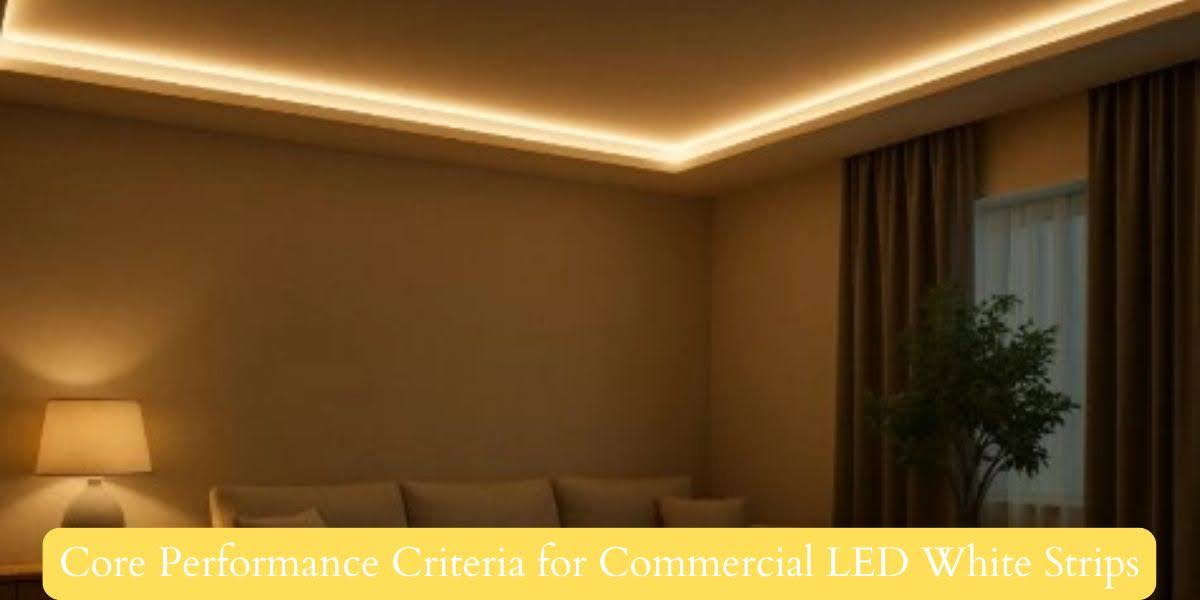
Commerciële verlichting vereist herhaalbaarheid, stabiliteit en naleving van meetbare normen. De volgende criteria definiëren of COB LED-strips geschikt zijn voor professionele installaties:
- Lichtopbrengst (lm/W)
COB LED-lichtstrips van commerciële kwaliteit leveren doorgaans systeemefficiënten tussen 110-140 lm/W bij nominale bedrijfstemperatuur. Hoogwaardige configuraties kunnen 150–160 lm/W bereiken, afhankelijk van de aandrijfstroom en kleurtemperatuur. Lagere waarden duiden vaak op thermische inefficiëntie of overgedreven chips. - Kleurweergave-index (CRI)
Voor kantoren en algemene commerciële interieurs is CRI ≥80 standaard. Retail-, horeca- en premium architecturale projecten vereisen CRI ≥90 om nauwkeurige materiaal- en merchandisepresentatie te garanderen. Hoge CRI-versies van Beste COB LED Strip Lights Moet R9-waarden behouden die de consistentie van rode weergave ondersteunen. - Kleur temperatuur stabiliteit
Commerciële witte verlichting gebruikt vaak:
- 3000K voor gastvrijheid en warme winkelomgevingen
- 4000K voor kantoren en algemene commerciële interieurs
- 5000K voor taakgestuurde of industriële instellingen
Stabiliteit wordt gedefinieerd door ≤3 SDCM-kleurtolerantie, waardoor uniformiteit tussen partijen en installatiezones wordt gegarandeerd.
- 3000K voor gastvrijheid en warme winkelomgevingen
- Spanning selectie
24V COB LED-strips hebben de voorkeur in commerciële projecten omdat ze de spanningsval verminderen, langere continue runs mogelijk maken en de systeemstabiliteit verbeteren. 12V-configuraties zijn over het algemeen ongeschikt voor lange lineaire installaties. - Thermisch beheer
Warmte heeft een directe invloed op het onderhoud van lumen en de levensduur. Commerciële COB LED Strip Lights vereisen:
- Voldoende kopergewicht (2 oz bij voorkeur voor hoge belastingsystemen)
- Juiste montage van aluminiumprofielen
- Thermische kleefstof met sterke geleidbaarheid
- Voldoende kopergewicht (2 oz bij voorkeur voor hoge belastingsystemen)
- PCB-dikte en kopergewicht
PCB's van commerciële kwaliteit zijn typisch 2-3 oz koper om resistieve verliezen te verminderen en een uniforme stroomverdeling te ondersteunen. Dunne PCB's leiden tot ongelijke helderheid en versnelde degradatie. - Uniforme verlichtingsvoordeel van COB-technologie
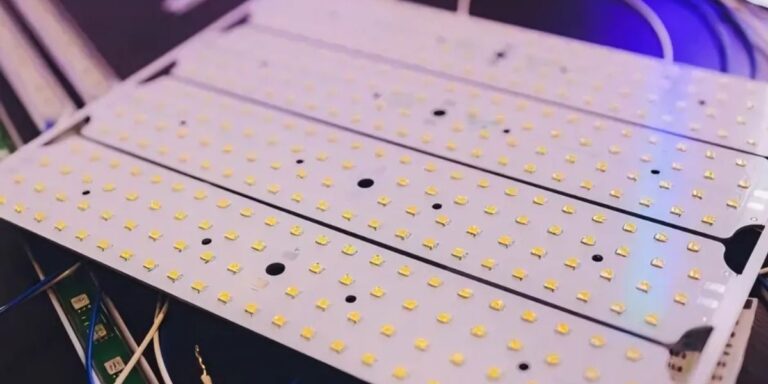
COB LED Strip Lights maken gebruik van dicht opeengepakte LED-chips die zijn gecoat met fosfor om continue lichtlijnen te creëren. Dit vermindert het spotten van de diodes en verbetert de compatibiliteit van de diffusor, waardoor ze geschikt zijn voor ondiepe profielen en zichtbare lineaire installaties.
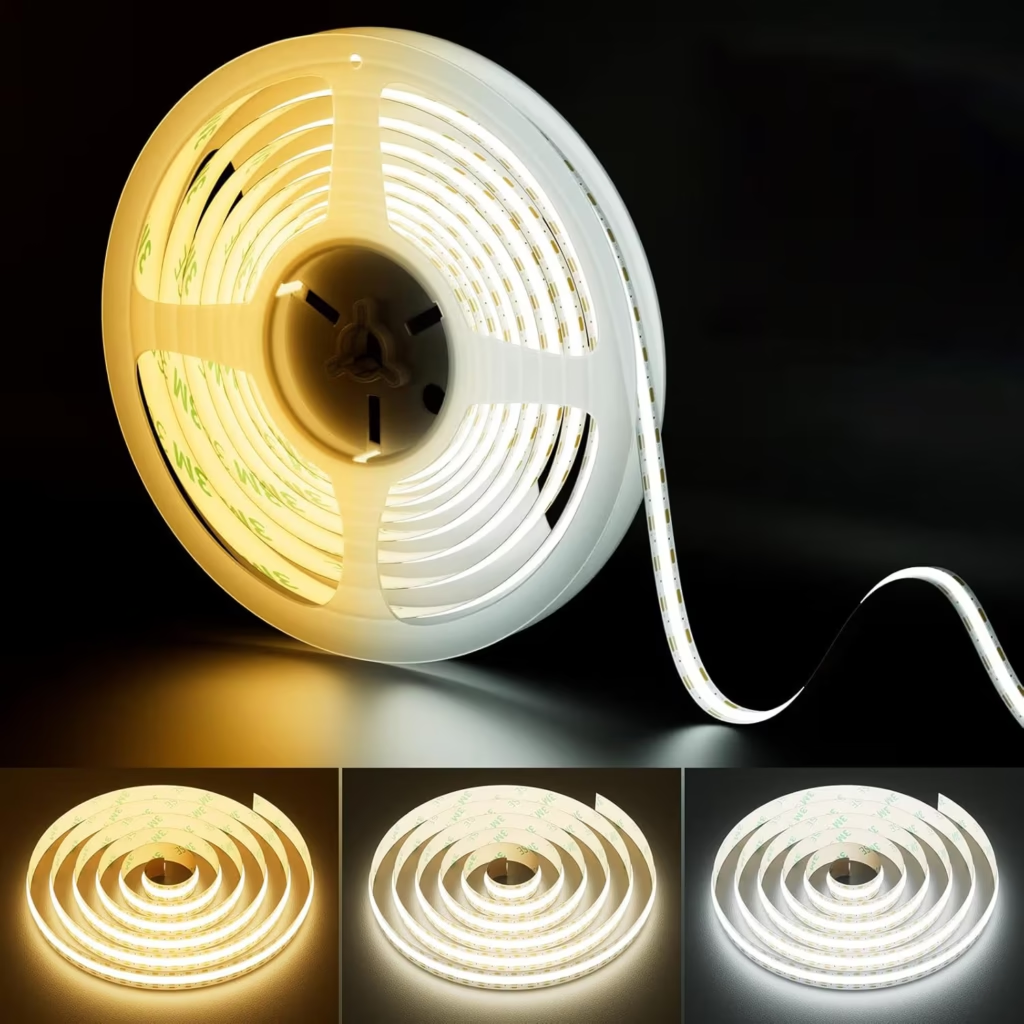
Afstembaar wit COB LED Striplicht
- Hoofdmodel: FYT10T608C
- LED AANTAL per meter Optie: 608/640chips (Sanan)
- PCB-breedteoptie: 10 mm
- Kleuroptie: 2700K - 6500K afstembaar
- CRI:>90
- Ingangsspanning: DC12V/DC24V
- Vermogen per meter: 14W/16W
- Efficiëntie: 90-110 lumen/watt
- IP-klasse optie: IP20/IP54/IP65/IP67/IP68
- Garantie: 3 jaar
Beste COB LED-striplampen voor verschillende commerciële toepassingen
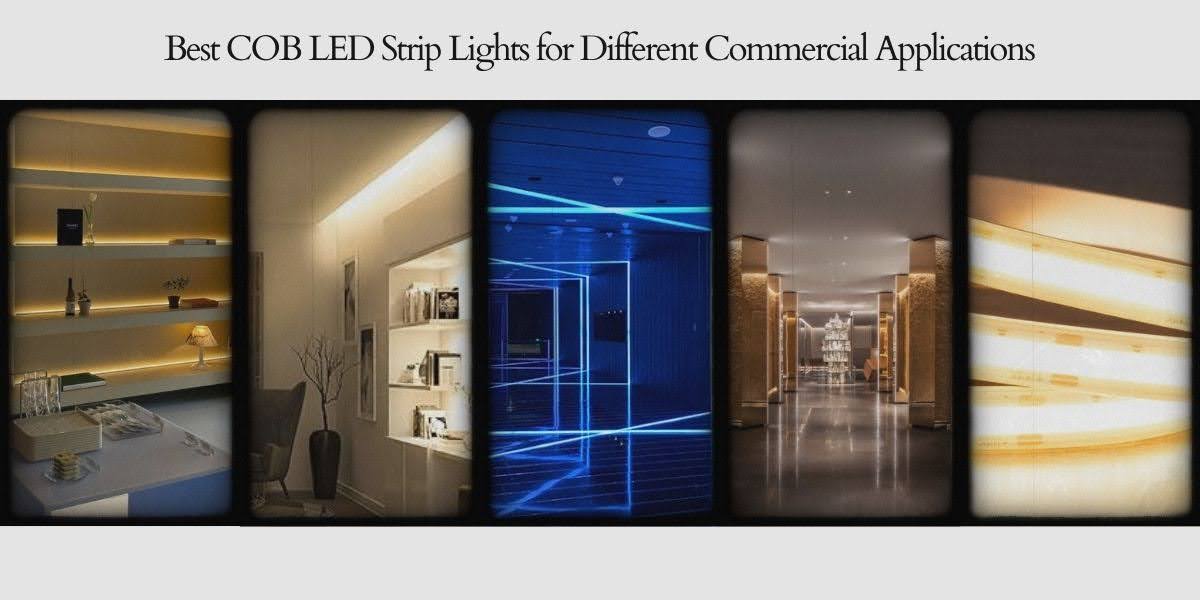
Winkel- en displayverlichting
Retailomgevingen vragen zowel helderheid als kleurgetrouwheid. Koopwaar moet er levendig en nauwkeurig uitzien onder kunstlicht. Om deze reden is de beste COB LED-stripverlichting Voor de detailhandel hebben doorgaans CRI ≥90 en consistente chromaticiteit binnen ≤3 SDCM.
Hoge uniformiteit is van cruciaal belang bij verlichting op het scherm en verlichting onder de kast waar kijkers dicht bij de bron staan. COB LED-strips minimaliseren het "dotting" -effect dat gebruikelijk is bij traditionele LED-pakketten, waardoor het visuele comfort wordt verbeterd. Een kleurtemperatuur van 3000.000 of 3500K wordt vaak geselecteerd voor mode- en lifestyle-retail, terwijl 4000K wordt gebruikt in supermarkt- of hardwareomgevingen waar duidelijkheid wordt geprioriteerd.
De spanningsstabiliteit bij 24V zorgt voor een consistente helderheid langs lange plankruns. Slechte spanningsregulatie resulteert in zichtbare luminantiegradiënten, die onaanvaardbaar zijn in commerciële merchandising.
Kantoor- en werkruimteverlichting
In kantooromgevingen zijn visueel comfort en taakprestaties primaire doelstellingen. 4000K COB LED-lichtstrips worden veel gebruikt om neutrale witte verlichting te creëren die alertheid ondersteunt zonder er hard uit te zien.
Hier is CRI 80 over het algemeen acceptabel, hoewel een hogere CRI kan worden gespecificeerd voor op ontwerp gerichte ruimtes. Lichtgevende werkzaamheid wordt een sterkere prioriteit, aangezien de energieprestaties rechtstreeks van invloed zijn op de operationele kosten in grote vloergebieden.
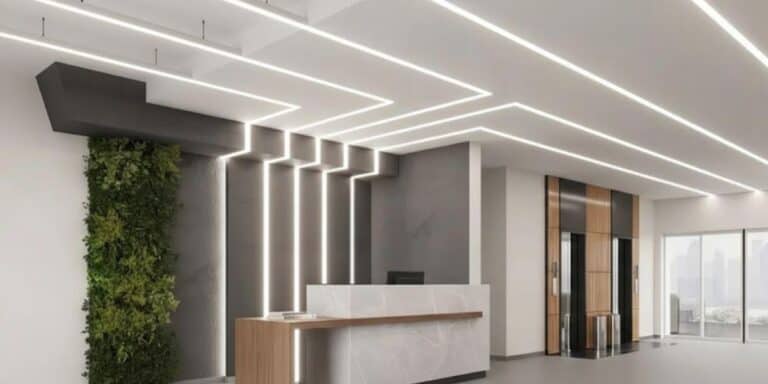
Uniforme verlichting van LED-strips COB-configuraties vermindert schittering onder diffusers en voorkomt schurft op muren. Wanneer geïnstalleerd in aluminium profielen met opaalafdekkingen, zorgen COB LED-striplampen met hoge dichtheid voor gladde indirecte verlichting voor baaien en omtrekplafonds.
Lange runs in open kantoren versterken de voorkeur voor 24V-systemen om de spanningsval te verminderen en de bedradingtopologie te vereenvoudigen.
Gastvrijheid & architecturale verlichting
Hospitality-projecten geven prioriteit aan sfeer, consistentie en integratie met architecturale details. 3000K COB LED-strips worden vaak gespecificeerd voor warme, uitnodigende atmosferen.
High CRI (≥90) verbetert de binnenafwerkingen zoals hout, steen en textiel. In deze toepassingen zijn de beste COB-LED-striplampen niet noodzakelijk de hoogste outputversies, maar die die uniformiteit, dimvlakheid en kleurstabiliteit in evenwicht brengen.
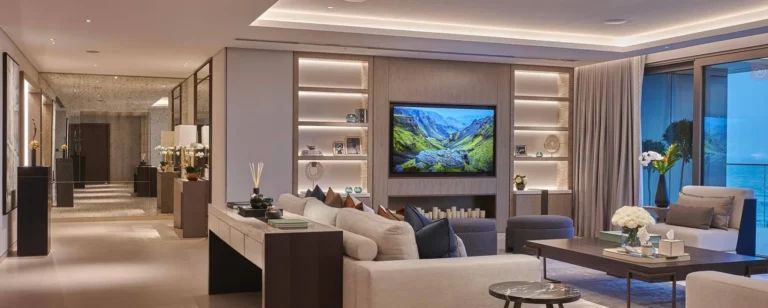
Architectural Cove Lighting maakt vaak gebruik van verborgen lineaire kanalen. COB-technologie maakt ondiepe uitsparingen mogelijk zonder zichtbare diodebeeldvorming. Compatibiliteit met DALI of 0-10V dimsystemen zorgt voor scène-setting flexibiliteit in eet-, lounge- en receptieruimtes.
Thermisch beheer blijft van cruciaal belang omdat horecaverlichting vaak langere uren in gebruik is.
Taakverlichting met hoge output
Industriële of taakgerichte omgevingen zoals werkplaatsen en commerciële ruimtes in de achterhuis vereisen een hogere lumendichtheid. In deze gevallen kunnen COB LED-striplampen werken met een verhoogd wattage per meter met behoud van aanvaardbare thermische prestaties.
5000K kleurtemperaturen worden vaak geselecteerd voor duidelijkheid en contrast. CRI 80 is typisch, hoewel speciale toepassingen een hogere weergave kunnen vereisen.
De bepalende eigenschap hier is stabiliteit onder aanhoudende belasting. PCB-kopergewicht en aluminium montageoppervlakken moeten de warmte effectief afvoeren om lumenafschrijvingen te voorkomen.
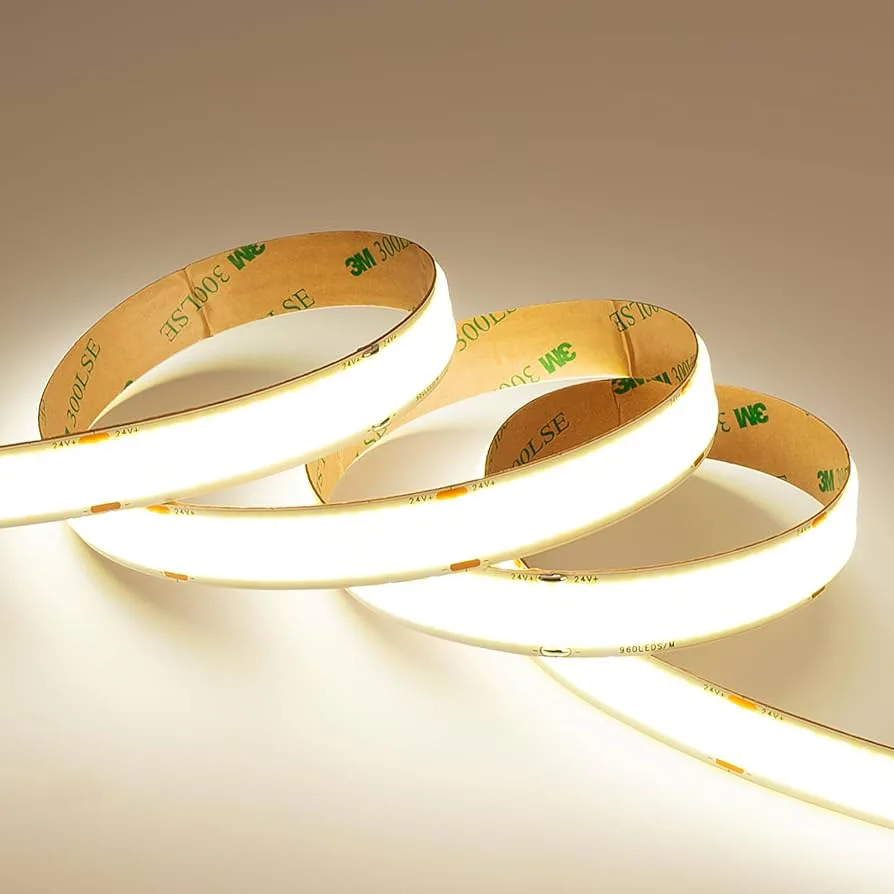
15 mm brede, ultraheldere, puntloze COB LED-stripverlichting
- Model: FYX15T1920C
- Aantal LED-chips per meter: 1920chips
- CRI: >90
- PCB-breedte: 15 mm
- Kleurtemperatuur: 3000K/4000K/6000K
- Ingangsspanning: DC24V
- Vermogen per meter: 25W
- Snijbare lengte: 20,67 mm
- Waterdichte versie: IP20/IP65
- Garantie: 3 jaar
COB versus traditionele SMD LED-strips in commerciële projecten
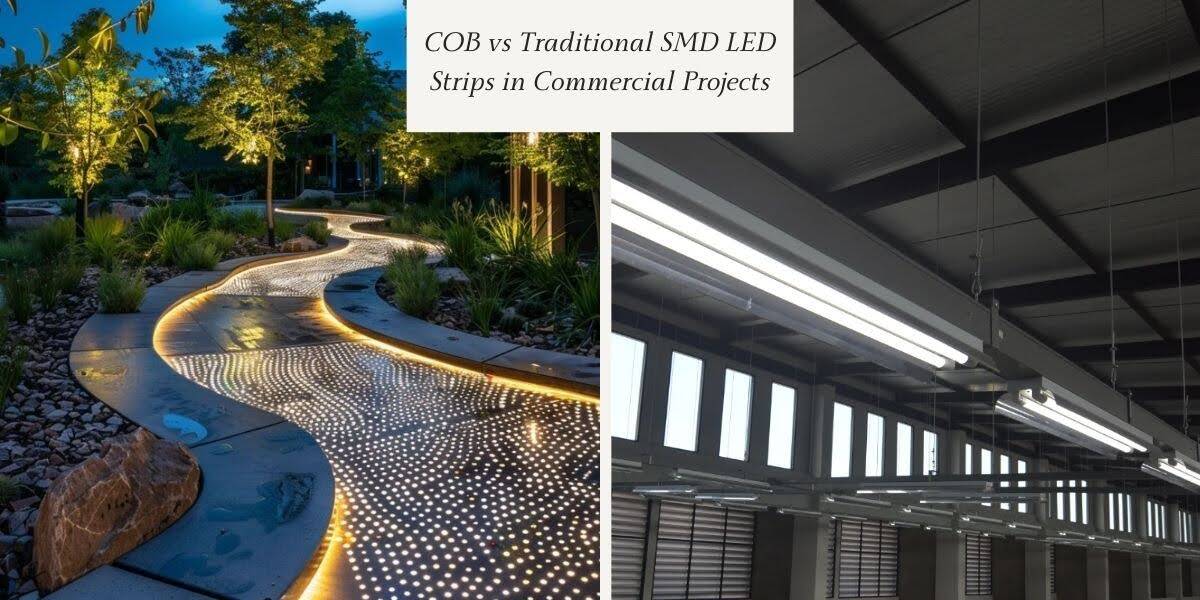
COB en traditionele opbouw diodestrips hebben vergelijkbare doeleinden, maar hun prestatiekenmerken verschillen aanzienlijk in commerciële contexten.
LED-strips COB-technologie plaatst tal van micro-LED-chips direct op de PCB en bedekt ze met een uniforme fosforlaag. Dit creëert een continu lineair emissieoppervlak. Traditionele SMD-strips gebruiken gespreide diodepakketten, die zichtbare hotspots kunnen produceren via diffusers.
In commerciële installaties waar verlichting zichtbaar of gereflecteerd wordt op gepolijste oppervlakken, wordt uniformiteit van cruciaal belang. COB-configuraties elimineren punt-source spotting, waardoor ze ideaal zijn voor architecturale baaien en blootgestelde kanalen.
Ondiepe kanalen profiteren van COB LED-lichtstrips omdat ze minder diffusordiepte vereisen om een soepele verlichting te bereiken. Met SMD-strips hebben installateurs vaak diepere extrusies nodig om zichtbare diodebeeldvorming te voorkomen.
Ook de onderhoudsoverwegingen verschillen. Omdat COB-ontwerpen de stroom over veel microchips verspreiden, kunnen ze een verbeterde uniformiteit vertonen, zelfs als gelokaliseerde afbraak optreedt. Een goed thermisch beheer is echter essentieel, omdat een hogere chipdichtheid de warmteconcentratie verhoogt.
Objectief gezien moet de beslissing tussen technologieën gebaseerd zijn op uniformiteitsvereisten, installatiediepte en visuele nabijheid in plaats van alleen de kosten.
Commerciële specificatietabel
| Functie | Standaard commerciële kwaliteit | Hoogwaardige rang |
| Lichtgevende efficiëntie | 110–130 lm/W | 140–160 lm/W |
| CRI | 80 | ≥90 |
| Spanning | 24v bij voorkeur | 24V geoptimaliseerd met stabiliteit op lange termijn |
| PCB-dikte | 2 oz koper | 2-3 Oz koper met versterkte sporen |
| Tolerantie kleur | ≤5 SDCM | ≤3 SDCM |
| Typische toepassingen | kantoren, algemene commerciële | Retail, gastvrijheid, premium architectonisch |
Deze tabel illustreert hoe meetbare parameters baseline commerciële producten onderscheiden van varianten met een hogere prestatie. De beste COB-ledstriplampen zijn die afgestemd op de projectvereisten in plaats van standaard op maximale output.
Installatie & elektrische overwegingen voor commerciële projecten
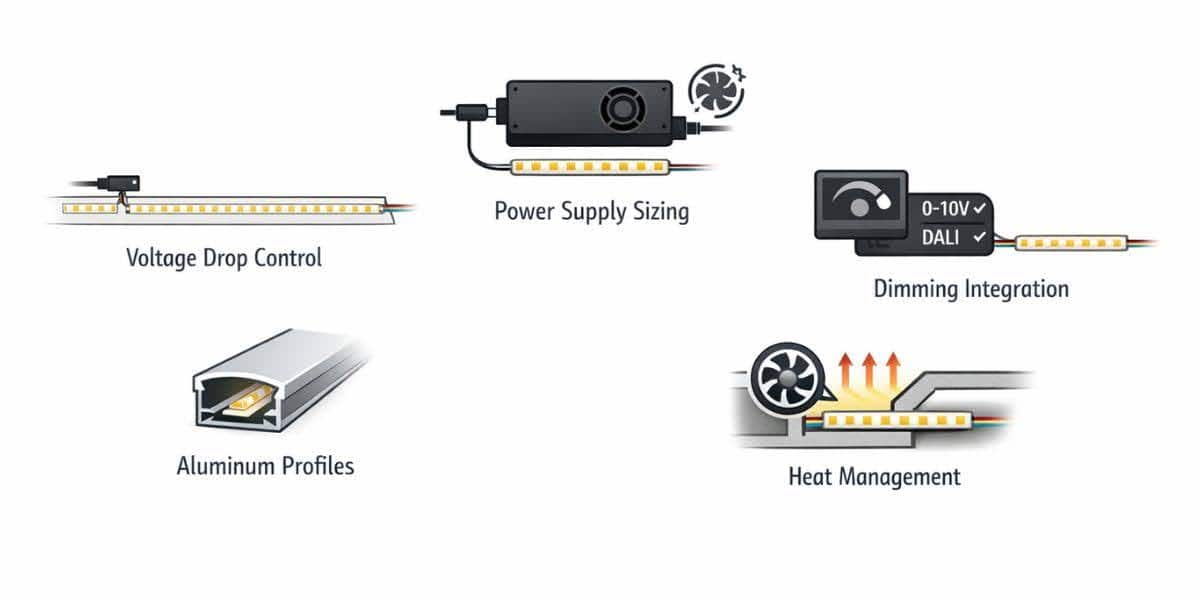
Het selecteren van geschikte COB-LED-strips is slechts een deel van de vergelijking. Installatie en elektrisch ontwerp bepalen de levensduur van het systeem.
- Maximale looplengte
Zelfs bij 24V-systemen moet de spanningsval worden berekend. Typische maximale voerafvoeren variëren van 5-10 meter, afhankelijk van wattage per meter. - Beheer spanningsval
Voor langere runs is stroominjectie op meerdere punten of parallelle bedradingslay-outs nodig om een uniforme helderheid te behouden. - Voeding dimensionering
De chauffeurs moeten een maat hebben van 80-851 TP3T met nominale capaciteit om continue werking van de volle belasting te voorkomen. Dit verbetert de betrouwbaarheid en levensduur. - Aluminium profielvereiste
Aluminiumkanalen zijn niet optioneel in commerciële toepassingen. Ze functioneren als koellichamen en structurele ondersteuning. Directe montage op niet-thermische oppervlakken versnelt degradatie. - Compatibiliteit dimmen
Commerciële COB LED-lichtstrips moeten worden gekoppeld aan stuurprogramma's die compatibel zijn met 0-10V- of DALI-systemen om te integreren in gebouwbesturing. - Planning van warmteafvoer
Installaties met een hoge dichtheid vereisen een doorstroming van de lucht. Ingesloten baaien zonder ventilatie kunnen warmte vasthouden en lumenonderhoud verminderen.
Aandacht voor deze factoren zorgt ervoor dat zelfs de beste COB LED-striplampen presteren zoals gespecificeerd in de loop van de tijd.
Veelgemaakte fouten bij het selecteren van LED-witte strips voor commercieel gebruik
Een veelgemaakte fout is het kiezen van 12V-strips voor uitgebreide commerciële runs. Hoewel 12V-systemen geschikt zijn voor kleine residentiële installaties, vertonen ze een aanzienlijke spanningsdaling in langere configuraties, wat resulteert in zichtbare helderheidsvariatie.
Een ander frequent toezicht is het negeren van de CRI-vereisten. Retail- en horecaomgevingen lijden visueel wanneer CRI onder de 90 komt, zelfs als de lumenproductie voldoende lijkt.
Consistentie van kleurenbak wordt vaak over het hoofd gezien. Zonder ≤3 SDCM-tolerantie kunnen aangrenzende installatiesegmenten merkbare schaduwvariatie vertonen, wat de professionele esthetiek ondermijnt.
Het gebruik van strips met een lage dichtheid in omgevingen met een hoge zichtbaarheid zorgt voor spotting onder diffusers. Zelfs een hoge lumenoutput kan de slechte uniformiteit niet compenseren.
Ten slotte leidt het uitsluitend vertrouwen op totale lumen-output zonder het evalueren van de lichtrendement en thermische stabiliteit tot inefficiënte systemen. Hoog wattage garandeert geen kwaliteitsprestaties.
Commerciële verlichtingsbeslissingen moeten de efficiëntie, uniformiteit en levensduur in evenwicht houden.
Conclusie
De beste COB-ledstriplampen voor commerciële verlichting worden gedefinieerd door prestatiebenchmarks in plaats van marketingclaims. Hoge lichtopbrengst, geschikte CRI-niveaus, 24V spanningsstabiliteit, strakke kleurenbinning, goede PCB-constructie en thermisch beheer bepalen of een product geschikt is voor professionele omgevingen.
Commerciële verlichting vereist uniformiteit, elektrische stabiliteit en schaalbaarheid over grote installaties. Toepassingsvereisten, niet branding, dicteren de ideale configuratie. Indien correct gespecificeerd, bieden COB LED-striplampen betrouwbare, visueel consistente lineaire verlichting voor retail, kantoor, horeca en taakgestuurde omgevingen.
FAQs
Gerelateerde berichten