Nederlands
  English
  简体中文
简体中文  Deutsch
  Español
  Français
  Italiano
  日本語
日本語  한국어
한국어  Polski
  Português
  Русский
  Türkçe
  Tiếng Việt
  ไทย
ไทย 
In de elektronica-industrie worden bijna dagelijks "PCB" en "PCBA" genoemd. Deze twee concepten zorgen echter vaak voor verwarring, zelfs bij hardware-startups of inkoopteams zonder een elektronica-achtergrond.
Sommigen geloven dat ze slechts synoniemen zijn, anderen gaan er ten onrechte van uit dat PCBA gewoon een "geüpgradede versie van PCB" is, en sommige inkooppersoneel blijft zelfs onduidelijk welke service ze echt nodig hebben bij het aanvragen van offertes.
In werkelijkheid gaat het onderscheid tussen PCB en PCBA verder dan definities, wat rechtstreeks van invloed is op productkosten, leveringscycli, kwaliteitsrisico's en complexiteit van de toeleveringsketen. Vooral in de context van 2026, waar elektronica zeer intelligent is en AI-technologie diep is geïntegreerd in productieprocessen, is het van cruciaal belang geworden om het onderscheid tussen PCB en PCBA correct te begrijpen voor ondernemingen om risico's te verminderen en de efficiëntie te verbeteren.
Dit artikel zal systematisch de kernverschillen analyseren tussen PCB en PCBA uit meerdere dimensies - technische definities, productieprocessen, kostenstructuren, trends in de sector en beslissingen over inkoop - om ingenieurs en inkooppersoneel te helpen beter geïnformeerde keuzes te maken in de vroege stadia van projecten.
Wat is een PCB? (geprinte printplaat)
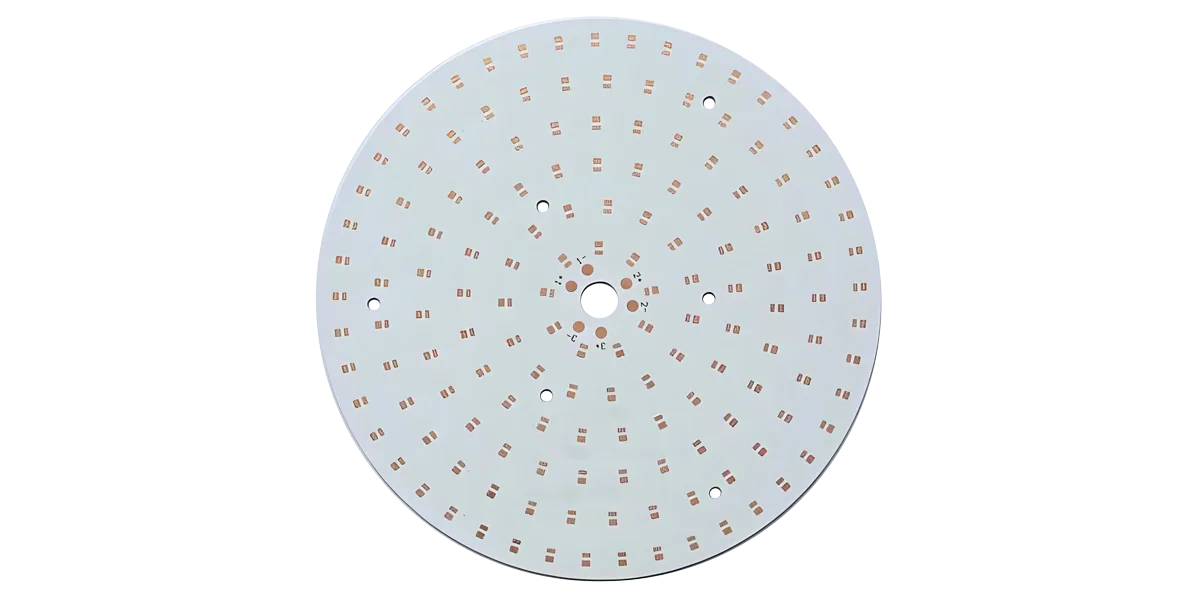
Een PCB (geprinte printplaat) dient als de fundamentele drager voor elektronische componenten, waardoor elektrische verbindingen mogelijk zijn door koperfoliesporen, pads en via's. Een PCB verwijst uitsluitend naar het "kale bord" zonder dat er elektronische componenten op zijn gemonteerd. Het vormt echter de fysieke basis van elektronische producten, die het substraat voor circuits en het vergemakkelijken van elektrische verbindingen verschaffen.
PCB's dienen als uitgangspunt voor alle LED-verlichtingssystemen, of het nu gaat om flexibele LED-strips of krachtige LED-modules.
Structurele componenten van LED-PCB's
Een typische LED-PCB omvat meestal:
1. grondstof
- FR-4: Geschikt voor laag-tot-medium vermogens-LED's
- Metal Core PCB (MCPCB): aluminium of koper, veel gebruikt in krachtige LED-strips en modules voor superieure thermische prestaties
- Hoogfrequente materialen: gebruikt in slimme verlichting en IoT LED-systemen
2 Koperlaag
Koperdikte (1 oz-6 oz) heeft een directe invloed op:
- Huidige draagkracht
- Spanningsvalregeling
- Thermisch beheerprestaties van LED-strips
3. soldeermasker
Voorkomt kortsluiting en oxidatie. In de LED-industrie wordt wit soldeermasker op grote schaal gebruikt vanwege zijn superieure reflecterende eigenschappen.
4. Zeefdruk
Markeringen geven de polariteit, oriëntatie en onderdeelnummers van LED's aan, waardoor massaproductie en onderhoud worden vergemakkelijkt.
Veel voorkomende PCB-types in de LED-industrie
De PCB-typen en -toepassingen in de LED-industrie zijn voornamelijk als volgt:
| Type | Materiaal | Toepassingsscenario |
| LED flexibele strip PCB | Flexibel gedrukt circuit (FPC) | Lichte sleuven, kasten, onregelmatige installatieomgevingen |
| LED-module PCB | FR-4 glasvezelplaat/aluminium basisplaat | Lineaire verlichting, plafondlampen (FR-4 voor laag vermogen, aluminium voor hoog vermogen) |
| LED stijve strip PCB | Aluminium basis PCB / dik koper FR-4 bord | Lineaire verlichting, industriële verlichting |
| LED-aangepast printplaat | LED custom printplaat | Hoogwaardige / professionele verlichting |
Wat is PCBA? (geprinte printplaat montage)
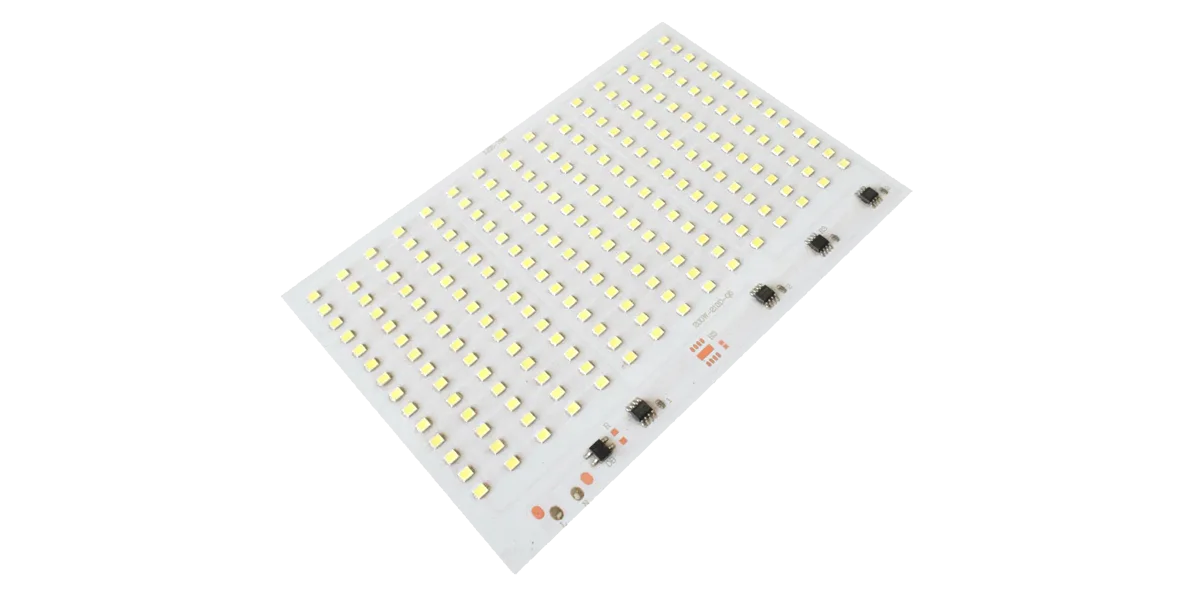
PCBA (geprinte printplaatmontage) Verwijst naar de afgewerkte printplaat die wordt geproduceerd door elektronische componenten zoals weerstanden, condensatoren, IC's, LED's en connectoren op een PCB te solderen met behulp van SMT- of THT-processen. Het bezit volledige elektrische en functionele eigenschappen. Het is het voltooide circuitsysteem nadat elektronische componenten zijn gesoldeerd, geassembleerd en getest op de PCB.
PCBA is de cruciale stap die een PCB "echt functioneel" maakt.
1. Waarom moeten LED-producten PCBA ondergaan?
Zonder PCBA:
- LED's kunnen niet branden.
- Constant-current drivers kunnen niet stabiel werken.
- Slimme bedienings- en dimfuncties kunnen niet worden geïmplementeerd.
PCBA gesoldeerde LED-chips, weerstanden, condensatoren, driver-IC's, connectoren en andere componenten op de PCB, transformeren het in een functioneel verlichtingssysteem.
2 Led PCBA-assemblageprocessen
- SMT (Surface Mount-technologie)
– Mainstream proces voor LED-strips en modules
– Hoge automatisering, efficiëntie en consistentie
– Geschikt voor hoge-dichtheid LED-arrangementen
- THT (door-gat-technologie)
– Gebruikt voor stroominterfaces en terminals met hoge stroom
– Hoge mechanische sterkte en stabiliteit
– Hybride montage (SMT + THT)
– Gemeenschappelijk in commerciële en industriële LED-armaturen, balancerende prestaties en betrouwbaarheid.
Vergelijking van PCB- en PCBA-productieprocessen (stap voor stap)
Het begrijpen van de productieprocessen is de sleutel tot het begrijpen van hun verschillen.
Het PCB-productieproces omvat voornamelijk blootstelling, ets, boren, plateren, enz. Raadpleeg het volgende diagram voor de specifieke workflow:
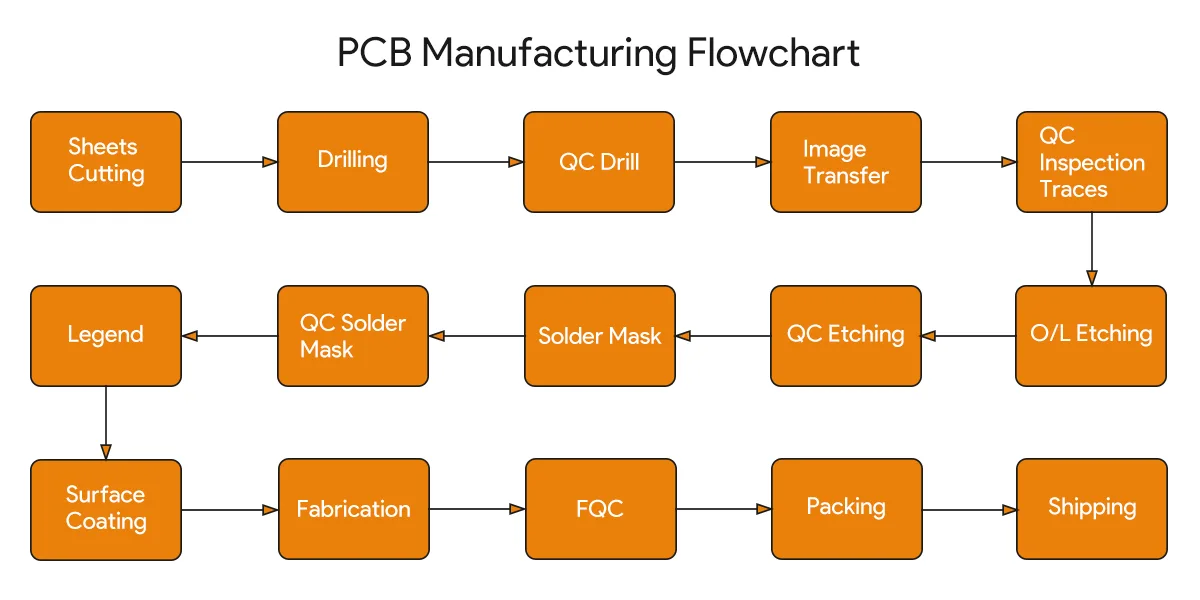
In dit stadium blijft de voltooide PCB een kaal bord zonder enige verlichtings- of bedieningsfuncties.
Het PCBA-productieproces omvat voornamelijk SMT-plaatsing, montage en testen. De specifieke workflow wordt geïllustreerd in het onderstaande diagram:
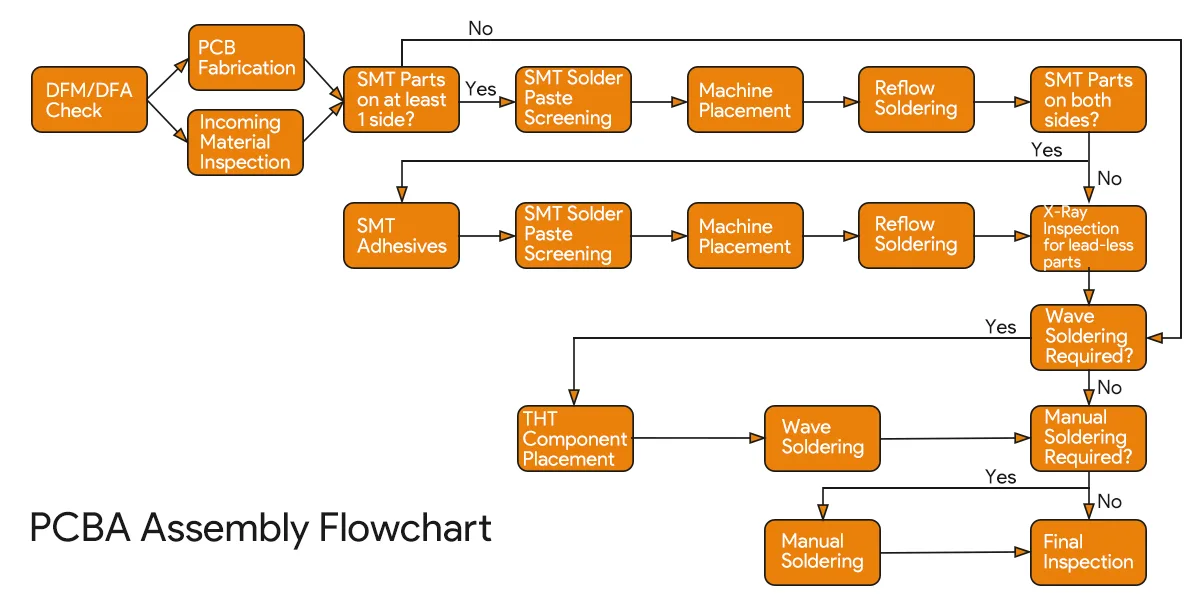
Zoals getoond, is het PCBA-proces aanzienlijk langer dan de productie van PCB's en is het meer afhankelijk van expertise, apparatuur en managementmogelijkheden.
PCB versus PCBA: belangrijke verschillen in één oogopslag
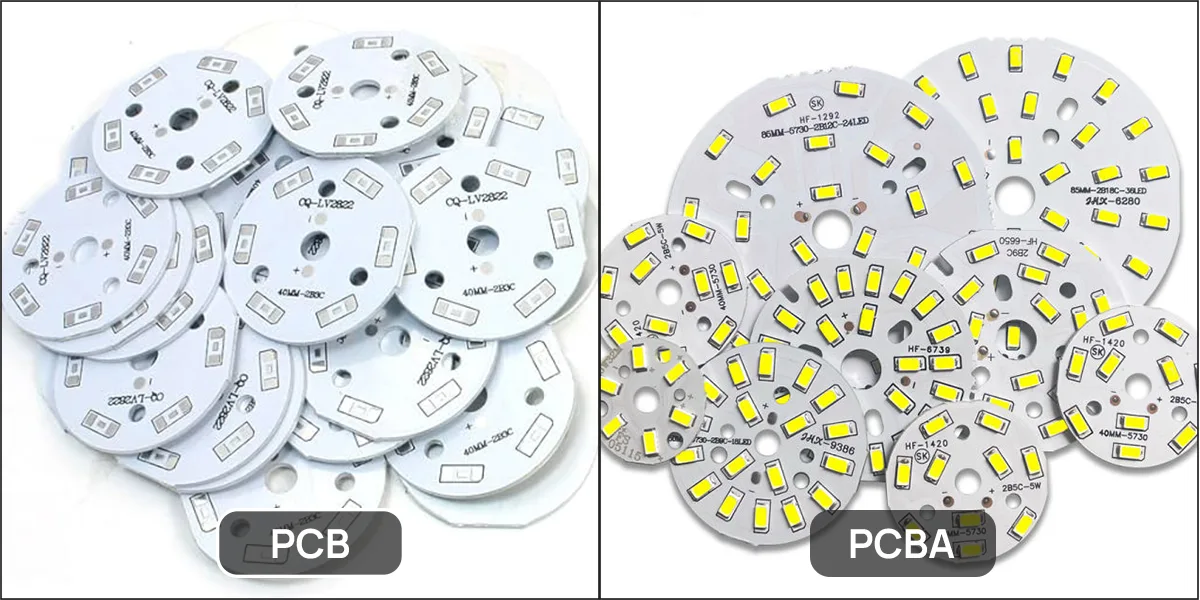
Wat is precies het verschil tussen PCB en PCBA? Een eenvoudige analogie: PCB = de fundamentele structuur, verwant aan het raamwerk en de leidingen van een gebouw; PCBA = het functionele eindproduct, een volledig aangedreven en operationeel gebouw.
In LED-verlichtingsproducten kan een kale PCB alleen geen licht uitstralen. Pas na het voltooien van de PCBA kunnen LED-strips of modules naar behoren functioneren.
| Categorie | PCB (geprinte printplaat) | PCBA (geprinte printplaat montage) |
| Definitie | Een kale plank gemaakt van isolerend substraat en geleidende kopersporen, zonder elektronische componenten | Een functionele module die is gemaakt door elektronische componenten (resistors, condensatoren, IC's, enz.) op een PCB te monteren |
| primaire functie | Biedt elektrische verbindingspaden en mechanische ondersteuning voor componenten | Voert actuele elektronische functies uit, zoals signaalverwerking, energiebeheer en besturingslogica |
| fysische toestand | Onbevolkt "kaal bord" | Volledig geassembleerd en gesoldeerd "afgewerkte module" |
| Uiterlijk | Groen (of andere kleur) soldeermasker met zichtbare kopersporen en pads | Bedekt met componenten, soldeerverbindingen en leads; functionele lay-out duidelijk zichtbaar |
| Productieomvang | Alleen fabricage van borden | Componentsourcing + assemblage + testen |
| Productieproces | Materiaal snijden → koperlaminering → circuit etsen → boren → oppervlakteafwerking | Inkomende inspectie → SMT-plaatsing → Reflow / Wave Solderen → Inspectie & Functioneel testen |
| Belangrijkste technische focus | Trace nauwkeurigheid, impedantieregeling, etsprecisie op micronniveau | Soldeerkwaliteit, plaatsingsnauwkeurigheid, opbrengstcontrole (meestal ≥99.9%) |
| Kostenstructuur | Grondstoffen + PCB-fabricageprocessen | Elektronische componenten (BOM) + assemblage + testen |
| Typisch kostenniveau | Relatief laag (aangepaste PCB: ca. $0.1–$5 per bord) | hoger (PCBA-prototypes beginnen meestal vanaf $30, afhankelijk van BOM) |
| Levering-uitgang | Elektrische drager zonder functionaliteit | Gebruiksklaar elektronisch circuit met gedefinieerde functies |
1. Functionele verschillen
- PCB: biedt alleen circuitroutes
- PCBA: volledig operationeel LED-systeem klaar voor power-up
2. Omvang van de productie
- PCB: printplaat fabricage
- PCBA: Component Inkoop + Assemblage + Testen
3. Vereiste documentatie (vaak gestelde inkoopvragen)
PCB-productie vereist:
- Gerber-bestanden
- NC-boorbestanden
PCBA vereist:
- BOM (Bill of Materials)
- Pick-and-Place (coördineren bestanden)
- stencil-bestanden
4. Testen en kwaliteitscontrole
PCB:
- Elektrische continuïteitstests
- Visuele inspectie
- Meting van de dikte van de
- Impedantietesten
PCBA:
- SPI Soldeerpasta Inspectie
- AOI automatische optische inspectie
- Röntgenfoto (BGA, driver IC-soldeer gezamenlijke inspectie)
- ICT/functioneel testen (helderheid, stroom, stabiliteit)
- Veroudering en betrouwbaarheid testen
- Lichtstroom en elektrische prestatietests
5. Verpakking en logistiek
- PCB: vacuüm vochtbestendige verpakking
- PCBA: antistatische verpakking (ESD), aangepaste trays
Waarom is PCBA aanzienlijk duurder dan PCB?
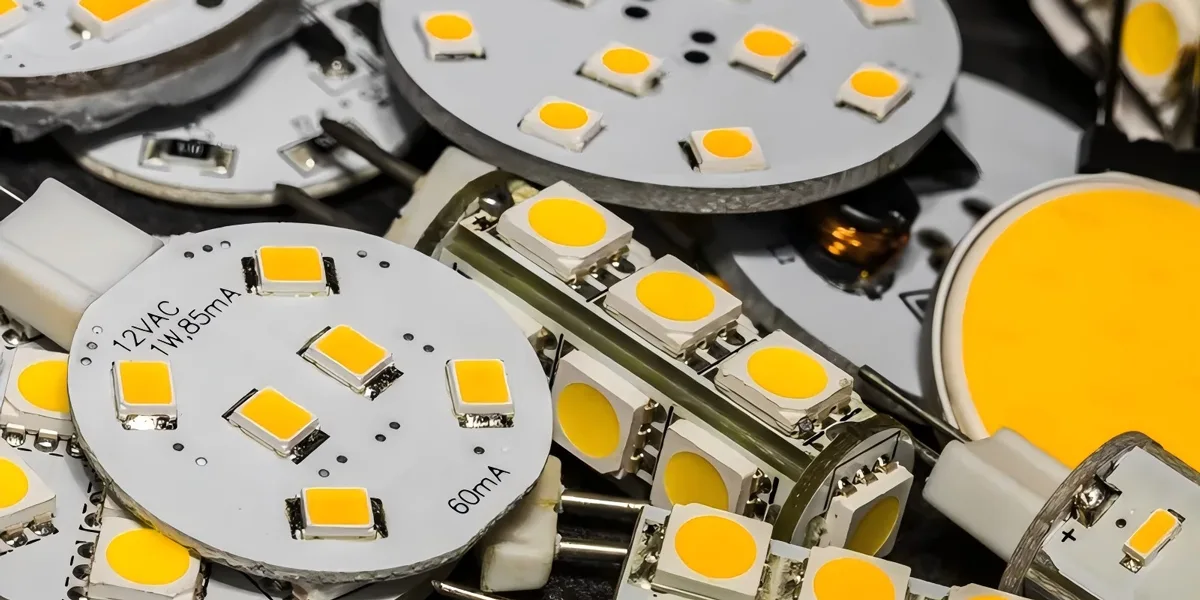
Dit is een van de meest gestelde vragen door inkooppersoneel. De hogere kosten van PCBA zijn niet alleen te wijten aan 'verhoogde verwerkingskosten', maar eerder door meerdere factoren:
- Componentenkosten: Chips, weerstanden, condensatoren, LED's, driver-IC's en andere componenten vormen vaak het grootste deel van PCBA-kosten.
- Investeringen in arbeid en uitrusting: Hogesnelheidsmachines voor pick-and-place, reflow-ovens, AOI-systemen en testapparatuur zijn allemaal hoogwaardige activa.
- Opbrengst- en risicokosten: Soldeerfouten, materiaalfouten en ontwerpproblemen brengen allemaal risico's van nabewerking of schroot met zich mee.
- Kosten voor supply chain: Materiële tekorten, vervangingen van componenten en fluctuaties van leveringsschema's vereisen extra coördinatie.
Vanuit zakelijk perspectief is PCBA in wezen een 'systeemengineeringservice', niet alleen productieverwerking.
2026 Industrietrends: hoe AI PCB/PCBA transformeert?
Tegen 2026 is kunstmatige intelligentie verder gegaan dan conceptuele stadia om diep te integreren in de productie van PCB's en PCBA's, waardoor de verschuiving van de industrie naar sterk geïntegreerde en intelligente productie versneld wordt.
Belangrijke trends zijn onder meer:
- AI-geassisteerde DFM-analyse: Voorspelt potentiële productieproblemen vóór de productie, waardoor proefruns worden verminderd.
- AI-aangedreven AOI-defectdetectie: identificeert complexe gebreken zoals koude soldeerverbindingen en verkeerde uitlijning door diep leren, waardoor de tarieven voor misselijkheid worden verlaagd.
- Intelligente planning en materiaalvoorspelling: Optimaliseert de capaciteitsbenutting en vermindert de leveringsonzekerheid.
- Gesloten gegevens over kwaliteit: Verbetert continu de opbrengst en consistentie door middel van data-analyse.
In de toekomst zullen AI-compatibele PCBA-fabrieken aanzienlijke voordelen behalen in levertijdlijnen, kwaliteitscontrole en kostenbeheer.
Moet je kiezen voor een kale PCB of een one-stop PCBA?
Er is geen one-size-fits-all antwoord - het hangt volledig af van uw projecttype.
Als u een ervaren elektronicateam en betrouwbare SMT-bronnen heeft en alleen kale boards nodig heeft, bieden PCB's meer flexibiliteit en kunnen ze kosteneffectiever zijn.
Als u de coördinatiekosten wilt verlagen, kwaliteitsrisico's wilt minimaliseren en de time-to-market wilt versnellen, is one-stop PCBA doorgaans de superieure keuze.
Voor producten zoals LED-lichtborden, LED-modules, en slimme verlichting, PCBA verbetert de consistentie en leveringsbetrouwbaarheid aanzienlijk.
Gemeenschappelijke valkuilen voor PCB/PCBA-aankopen
De volgende fouten worden vaak aangetroffen in echte projecten:
- Het verstrekken van onvolledige of niet-geverifieerde ontwerpbestanden
- Stuklijstverschillen met daadwerkelijk ontwerp
- het verwaarlozen van testvereisten terwijl u zich uitsluitend richt op een eenheidsprijs
- Toewijzen van complexe PCBA-projecten aan PCB-leveranciers
Deze problemen blijven vaak onopgemerkt tijdens het citeren, maar vergroten de risico's tijdens de massaproductie.
Inkoopbeslissingsgids: Hoe moet u kiezen?
Voordat u uw selectie afrondt, moet u prioriteit geven aan het evalueren van deze factoren:
- Projectcomplexiteit en batchgrootte
- Interne engineering en supply chain
- Vereisten voor doorlooptijd en consistentie
- behoefte aan een langdurige, stabiele partner
De optimale keuze is niet per se de laagste offerte, maar de oplossing met het laagste totale risico.
Conclusie
Samenvattend dienen PCB's en PCBA's verschillende maar complementaire rollen in de productie van elektronica. PCB's bieden de fundamentele structuur en elektrische verbindingen, terwijl PCBA volledige functionaliteit en commerciële waarde aan het product levert.
Voor fabrikanten van LED-verlichting overstijgt het begrijpen van het onderscheid tussen PCB en PCBA technische overwegingen: het is een strategische beslissing. Het selecteren van de juiste productie- en montageoplossing helpt de kosten te verlagen, de kwaliteit te verbeteren en de productlanceringen op de wereldmarkten te versnellen. Naarmate de productintegratie zich verder ontwikkelt, zullen PCBA-oplossingen met technische mogelijkheden en voordelen voor kwaliteitscontrole een steeds vitalere rol spelen in de wereldwijde elektronica- en LED-verlichtingsmarkten.
FAQs
Gerelateerde berichten