Português
  English
  简体中文
简体中文  Deutsch
  Español
  Français
  Italiano
  日本語
日本語  한국어
한국어  Polski
  Русский
  Türkçe
  Nederlands
  Tiếng Việt
  ไทย
ไทย 
Na indústria de sinalização comercial, o neon LED elegante e continuamente iluminado se tornou uma escolha padrão para vitrines, locais de hospitalidade e fachadas de construção. Muitas instalações comerciais de néon de LED para exteriores falham não por causa da própria tira de néon, mas porque a fonte de alimentação é subdimensionada, protegida incorretamente ou instalada incorretamente.
Embora os empreiteiros invistam fortemente em néon de silicone premium, a fonte de alimentação é frequentemente tratada como um componente secundário - embora determine a estabilidade, a eficiência e a vida útil do sistema. Uma fonte de alimentação LED mal selecionada pode causar tremulação, mudança de cor, falha prematura e até riscos de segurança - tudo isso corroendo a confiança do cliente e resultando em um retrabalho caro.
Este guia foi escrito especificamente para gerentes de projeto, engenheiros de detalhamento e instaladores de sinalização, ajudando-os a acertar os detalhes técnicos na primeira vez. Exploraremos o papel crítico dos motoristas, as diferenças práticas entre as classificações IP67 e internas, o impacto real da queda de tensão, os limites da distância da transmissão do cabo, uma comparação direta entre as fontes de alimentação genérica e genérica e técnicas profissionais de fiação.
Ao final deste artigo, você saberá como fazer a seleção correta para letreiros de neon de nível comercial fontes de alimentação, protegendo a sinalização e a reputação da indústria.
Porquê fonte de alimentaçãoS são fundamentais para sinais de néon externos
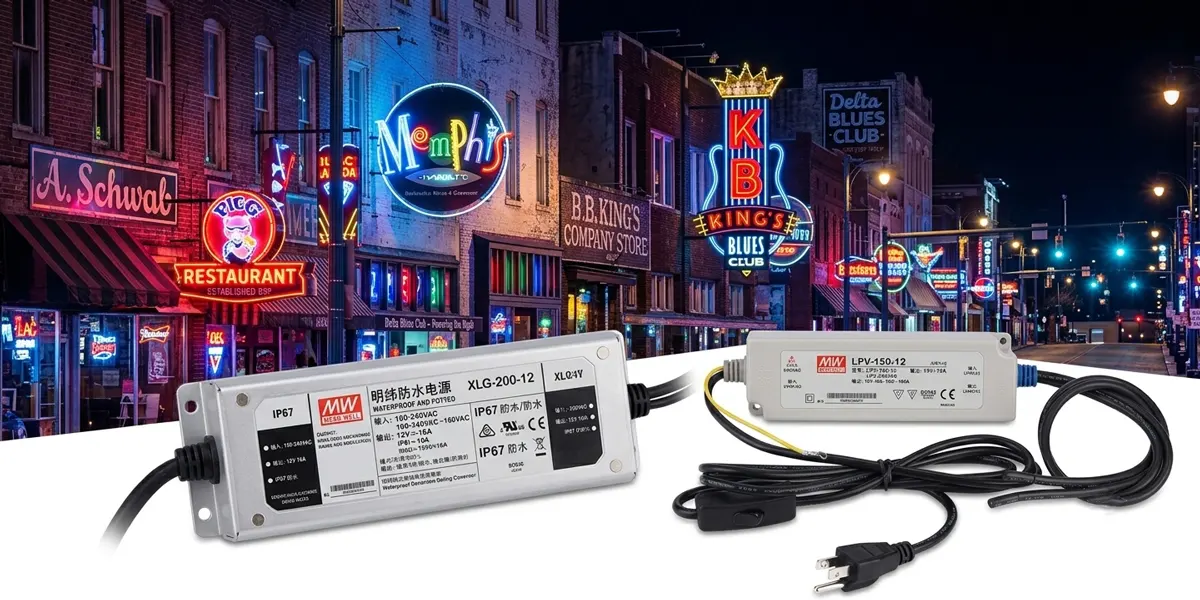
Cada instalação de leds leds de neon requer uma fonte de alimentação LED - muitas vezes chamada de driver de LED, ou na indústria de néon tradicional, um transformador de led de led externo com sinais de néon. Mas, ao contrário dos antigos transformadores magnéticos que impulsionaram o neon do tubo de vidro a milhares de volts, o LED de hoje opera em corrente contínua de baixa tensão, normalmente 12 V ou 24 V. A tarefa do motorista de LED é converter a eletricidade da rede elétrica em uma saída DC estável e precisamente regulada que corresponde aos requisitos exatos de tensão e corrente da tira de néon de silicone.
Um driver de qualidade faz muito mais do que simplesmente fazer o sinal “Light Up”. Deve:
- Manter a tensão constante sob condições variadas de carga e temperatura.
- Filtre o Ripple AC – o Ripple causa uma piscadela imperceptível a olho nu, levando à fadiga visual e afetando a fotografia da câmera.
- Fornecer surto, curto-circuito e proteção contra superaquecimento.
- Maximize a vida útil dos fósforos LED, mantendo a temperatura da cor e a consistência do brilho.
Quando uma fonte de alimentação de LED falha, geralmente leva a tira de néon protegida. Substituir os dois componentes simultaneamente em um sinal de fachada selado pode custar apenas dez vezes o preço do motorista. Para projetos comerciais em que o tempo de inatividade de sinalização significa perda de receita, o driver de LED não é um consumível – é um investimento em confiabilidade do sistema de longo prazo.
IP67 vs fontes de alimentação internas: entendendo a proteção ambiental
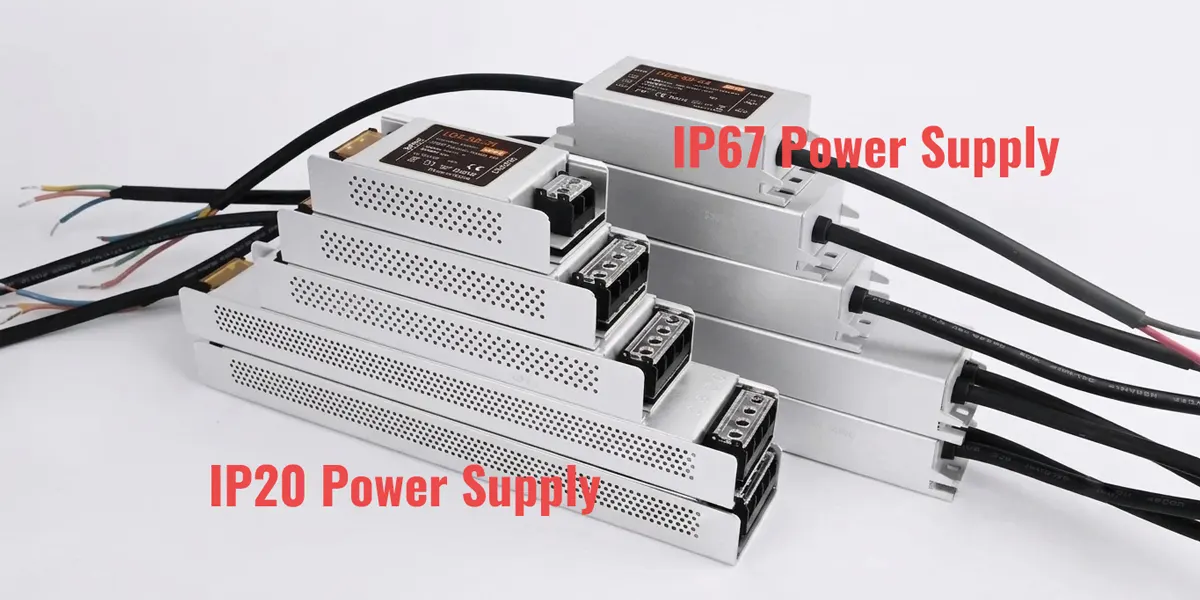
O erro de seleção mais sério em projetos de néon externos é usar uma fonte de alimentação classificada apenas para ambientes internos. O código IP (Proteção de Ingresso) define a proteção de uma caixa contra poeira e umidade. Para aplicações de fonte de alimentação de sinal de néon ao ar livre, essa classificação é um requisito difícil de negociável.
| Classificação IP | proteção contra poeira | Proteção da água | Adequação ao ar livre | Aplicação típica |
| IP20 | sem proteção | sem proteção | Somente para dentro de casa | Dentro dos armários de sinalização seca, salas de controle |
| IP65 | à prova de poeira | jatos de água de qualquer direção | Exterior limitado (abrigado) | Sob coberturas, dentro de caixas bem fechadas |
| IP67 | à prova de poeira | Imersão até 1m de profundidade por 30 minutos | Exposição completa, totalmente externa | Sinais de fachada, instalações no nível do solo, áreas costeiras |
Uma fonte de alimentação LED IP67 bloqueia completamente a entrada de poeira e pode suportar imersão em curto prazo em água. Isso significa que chuvas fortes, neve derretida e lavagem com alta pressão não danificam seus eletrônicos internos. Uma das perguntas mais comuns dos empreiteiros e engenheiros de projeto é: uma fonte de alimentação IP65 pode funcionar se colocada em um gabinete selado? Embora isso possa teoricamente funcionar, a condensação e o ciclo de temperatura geralmente fazem com que o gabinete “respire”, atraindo gradualmente a umidade para dentro. Uma fonte de alimentação LED com classificação IP67 mantém a integridade à prova d'água mesmo quando condensada. Para projetos comerciais de missão crítica, a abordagem mais segura é selecionar o IP67 desde o início, em vez de arriscar.
Ao fornecer componentes de transformador de néon externo, observe que o termo moderno da indústria é “Fonte de alimentação LED de tensão constante IP67”. No entanto, clientes familiarizados com o neon tradicional geralmente confundem o termo “transformador”. Na Signliteld, nossos kits de néon de silicone ao ar livre são uniformemente equipados com fontes de alimentação IP67 que atendem aos requisitos UL e CE, garantindo nenhuma ambiguidade nos processos de licenciamento e inspeção.
Queda de tensão: o assassino de sinais silenciosos
A queda de tensão refere-se à atenuação da tensão à medida que a corrente percorre um condutor. Em sistemas CC de baixa tensão, esse efeito é significativo e frequentemente subestimado. Uma fonte de alimentação pode produzir 24 V perfeitos em seus terminais, mas depois de percorrer um cabo subdimensionado por 50 pés, a faixa de néon pode receber apenas 20 V. O resultado é inconfundível: a extremidade do sinal escurece, a luz branca muda para o amarelo e certas áreas podem ficar completamente escuras.
De acordo com a lei de Ohm, a queda de tensão é igual à corrente multiplicada pela resistência. Quanto mais longo o cabo, maior a resistência. Este efeito é especialmente significativo em sistemas de 12V porque, para a mesma potência, a corrente é aproximadamente o dobro de um sistema de 24V. Como a queda de tensão está diretamente relacionada à corrente, um sistema de 24 V transporta menos corrente, resultando em queda de tensão significativamente menor e permitindo que os cabos muito mais longos sejam executados nas mesmas condições de instalação. Esta é uma das principais razões pelas quais a maioria dos projetos comerciais de néon ao ar livre são projetados em torno de sistemas de 24 V.
Efeitos visuais da queda de tensão em tiras de neon de longa distância:
- primeiros pés: brilho total, cor correta.
- seção do meio: leve escurecimento, o branco quente fica leitoso.
- extremo: Atenuação significativa do brilho, as tiras de luz branca podem apresentar tons rosados (os chips de LED azuis não acendem adequadamente).
- Para sinalização premium: Os engenheiros devem manter a queda de tensão do lado CC dentro de 3%. Para sinais de fachada de alto significado de marca e de alta importância, o limite superior recomendado é 1%.
Distância do cabo e seleção do medidor de fio
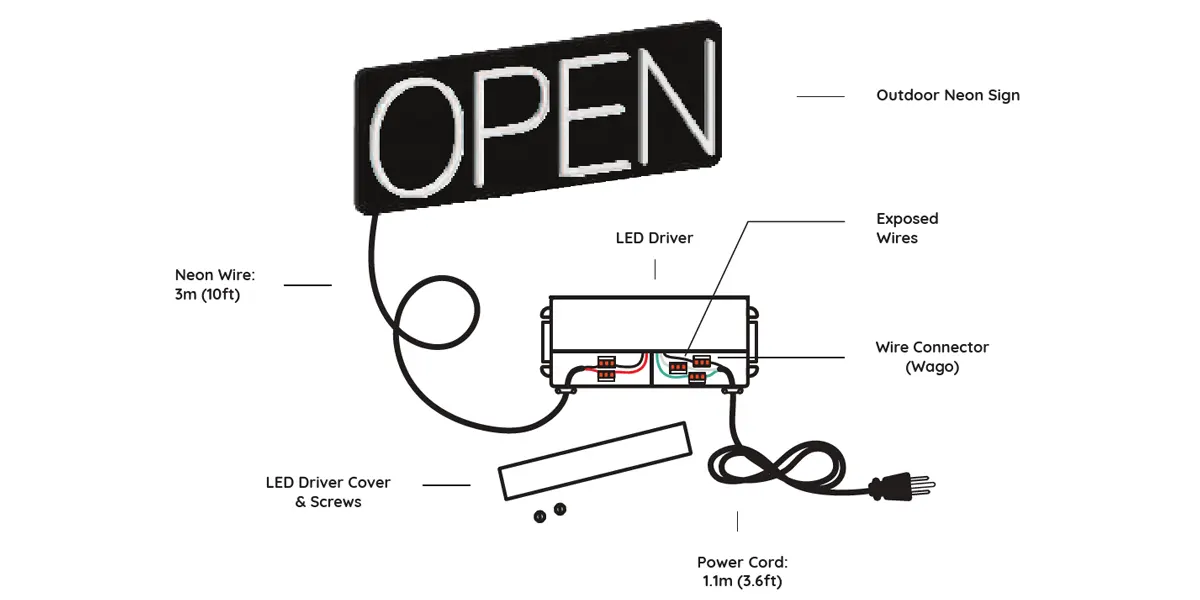
Escolher o medidor de fio correto entre a fonte de alimentação IP67 e o sinal de néon é o passo mais prático para evitar queda de tensão. A tabela abaixo fornece comprimentos máximos de cabo conservadores para uma malha de 24 Vcc na queda de tensão de 5% (aceitável para sinalização comercial geral). Para aplicações críticas, reduza a distância em 40% para atingir a queda de tensão de 3%.
máximo One-Wsem Ccapaz DIstância (pés) a 24 Vcc e 5% Voltage Dpular
| Carregamento (Watts) | Atual (amps) | 18 AWG | 16 AWG | 14 awg | 12 awg |
| 50W | 2.1a | 35 pés | 55 pés | 90 pés | 140 pés |
| 100W | 4.2a | 17 pés | 28 pés | 45 pés | 70 pés |
| 150W | 6.3a | 12 pés | 18 pés | 30 pés | 47 pés |
| 200W | 8.3A | 9 pés | 14 pés | 22 pés | 35 pés |
Quando as distâncias de transmissão devem exceder esses comprimentos, considere as seguintes soluções:
- Mude a fonte de alimentação para mais perto do sinal e estenda o cabo de alimentação CA (a distâncias curtas para projetos comerciais, a queda de tensão CA é insignificante).
- Use várias fontes de alimentação menores distribuídas ao longo do caminho do sinal.
- Para distâncias ultra longas, use 10 AWG ou cabo mais grosso.
Durante a fase de projeto, sempre coloque a fonte de alimentação de sinal de néon o mais próximo possível do sinal. Isso reduz simultaneamente os custos de materiais e as perdas elétricas. Para instalações de fachadas, a Signlited normalmente recomenda a instalação da caixa de junção da fonte de alimentação atrás de um pilar ou em uma sala de equipamentos próximas e, em seguida, passando pela parede com fios DC mais curtos e de grande calibre para o sinal.
O comprimento real do cabo permitido depende do material do condutor, da temperatura ambiente, do método de instalação e da queda de tensão máxima aceitável para a aplicação específica. Sempre verifique os cálculos com as especificações do fabricante do cabo e os códigos elétricos aplicáveis.
Meanwell vs fontes de alimentação genéricas: por que a marca é importante
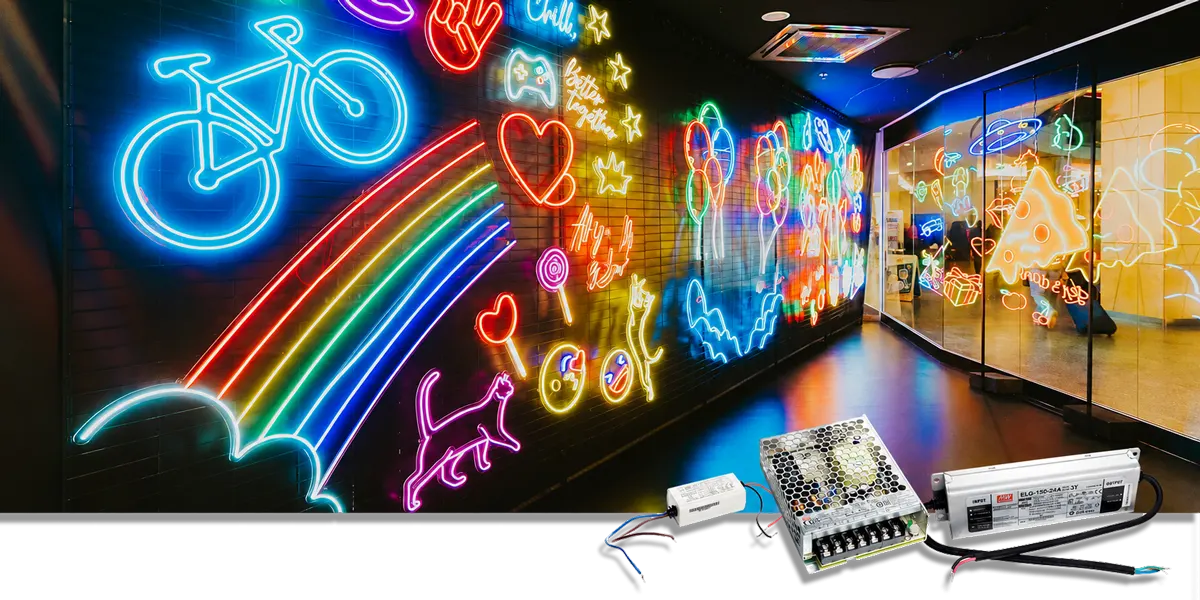
O mercado de fontes de alimentação é inundado com unidades sem marca, sem marca, reivindicando as classificações IP67 e alta eficiência. Na superfície, eles parecem econômicos. Mas sob carga do mundo real e o teste do tempo, a diferença é gritante.
| Caraterística | Série Meanwell HLG/ELG | Driver genérico típico de IP67 |
| Eficiência | Até 95% | 80–85% |
| Vida útil (MTBF) | 50.000+ horas com carga total | Não verificado, frequentemente <10.000 horas |
| ondulação e ruído | <150MVP-P | Freqüentemente >500MVP-P, causando cintilação |
| proteção contra surtos | 4–6kV (linha para terra) | muitas vezes nenhum ou mínimo |
| Certificações de segurança | UL Reconhecido, CE, ENEC | Marcas falsificadas comuns |
| Garantia | 5–7 anos | Nenhum ou 1 ano (não aplicável) |
| gerenciamento térmico | Composto de envasamento com condutividade térmica | Potting barato que retém o calor |
As fontes de alimentação LED Meanwell IP67 usam componentes de alta qualidade, Correção de fator de potência ativo (PFC) e seu renomado design térmico de envasamento realmente dissipa o calor através da carcaça. Fontes de alimentação genéricas de baixo custo podem usar componentes eletrônicos de baixo grau, proteção simplificada de circuitos e gerenciamento térmico menos eficaz. Com o tempo, esses compromissos de design podem aumentar o risco de produção instável, falha prematura ou redução da confiabilidade a longo prazo, principalmente em ambientes externos exigentes.
Em projetos comerciais, o verdadeiro custo de uma falha do motorista raramente é o custo de substituição do próprio driver. A mão de obra, aluguel de equipamentos, interrupção de serviço e manutenção de emergência geralmente excedem em muito as economias iniciais alcançadas ao selecionar uma fonte de alimentação de baixo custo. Na Signliteled, todos os nossos kits externos vêm de fábrica com fontes de alimentação Meanwell IP67. Visite nosso série de tiras de led de neon Para ver os kits pré-equipados com uma potência genuína Meanwell, precisamente combinada com o comprimento e a tensão da tira.
Dicas comerciais para fiação e melhores práticas de instalação
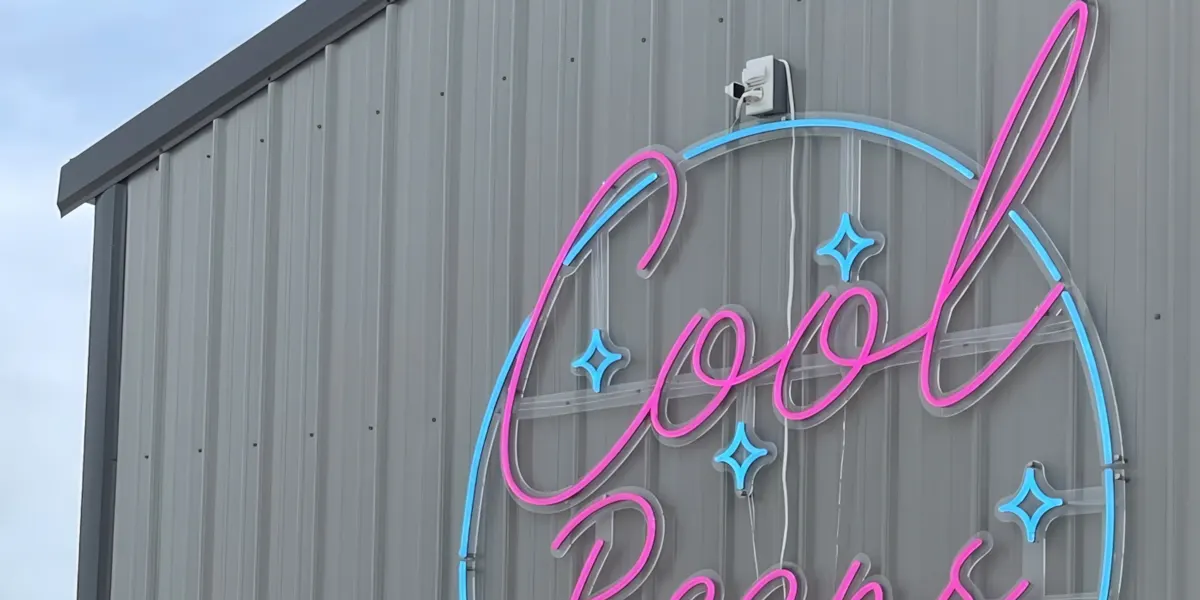
Até mesmo o melhor driver e tira de neon falharão se a fiação não seguir os padrões elétricos comerciais. Aqui estão nossos rígidos requisitos para instalações de letreiros de fachada:
a) Siga a regra de carga 80%
A carga contínua de uma fonte de alimentação nunca deve exceder 80% de sua saída nominal. Operando abaixo de 80% da capacidade nominal, também permite que o motorista restenda melhor as altas temperaturas ambientes, sobrecargas temporárias e o envelhecimento dos componentes a longo prazo, resultando em uma confiabilidade geral aprimorada. Uma fonte de alimentação de 150 W pode transportar no máximo 120 W de tira de neon. Essa margem prolonga a vida do motorista, reduz o calor e deixa o buffer térmico para os dias quentes de verão.
b) Use condutos à prova de líquido e caixas de junção à prova d'água
Todas as conexões CA devem ser encapsuladas em caixas de junção com classificação NEMA com conexões de conduíte estanque. Os circuitos de sinalização externos devem ser equipados com interruptores de circuito de falta de aterramento (GFCI) de acordo com o Código Elétrico Nacional (NEC) e equivalentes internacionais.
c) Implementar proteção contra surtos
As ameaças vêm não apenas de relâmpagos, mas também de transientes de comutação de grade que podem destruir as fontes de alimentação LED. Instale os dispositivos de proteção contra surtos do tipo 2 no painel de distribuição de sinais. Em áreas costeiras ou propensas a tempestades, adicione proteção independente contra surtos em cada motorista.
d) polaridade e terminação
As tiras de néon LED são sensíveis à polaridade. A polaridade invertida normalmente não danifica as tiras de qualidade, mas faz com que elas não acendam. Use conectores sem solda com classificação IP67 ou para instalações permanentes, solda de estanho e vedação com tubos termorretráteis revestidos com adesivos. As porcas de arame espiral são estritamente proibidas em aplicações externas.
e) dissipação de calor
As fontes de alimentação LED IP67 são projetadas para dissipar o calor através de sua caixa de metal ou resina para o ambiente circundante. A ventilação adequada – mesmo em recintos fechados – é essencial.
Como selecionar e combinar corretamente uma fonte de alimentação
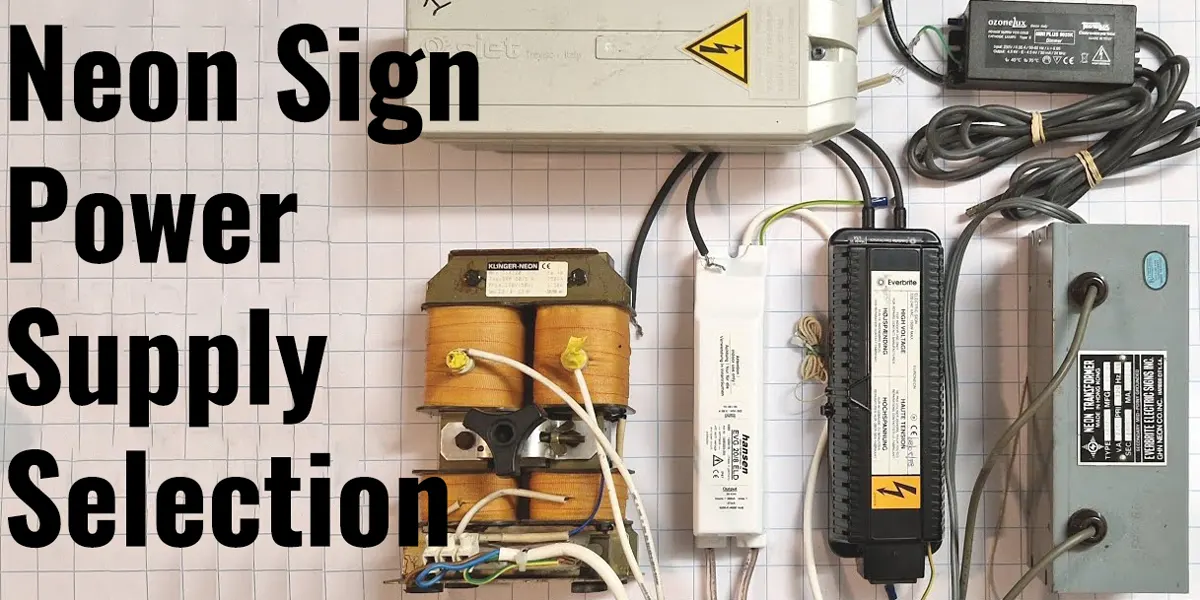
A seleção da fonte de alimentação correta envolve uma abordagem sistemática:
1. Calcule a carga total. Exemplo: tira de 40 pés a 5 W por pé = 200 W.
2. Determine a tensão do sistema. Para a maioria das aplicações comerciais, 24V é preferido em relação a 12V para reduzir a corrente e a queda de tensão.
3. Adicione uma margem de 20%. 200W × 1,2 = 240W, a capacidade mínima do driver.
4. Selecione um driver de tensão constante de 24 V com no máximo 240 W. Neste caso, o Meanwell HLG-240H-24A é uma combinação perfeita.
5. Verifique a corrente: 240W / 24V = 10A. Certifique-se de que os cabos e conectores selecionados estejam classificados em pelo menos 10A com margem de segurança.
6. Para sinais grandes, considere dividir a carga em dois ou mais drivers menores em vez de usar uma única unidade gigante. Isso reduz o risco de falha única, minimiza as corridas DC de alta corrente e permite o escurecimento da zona mais fina quando necessário.
Integração de controles inteligentes e escurecimento
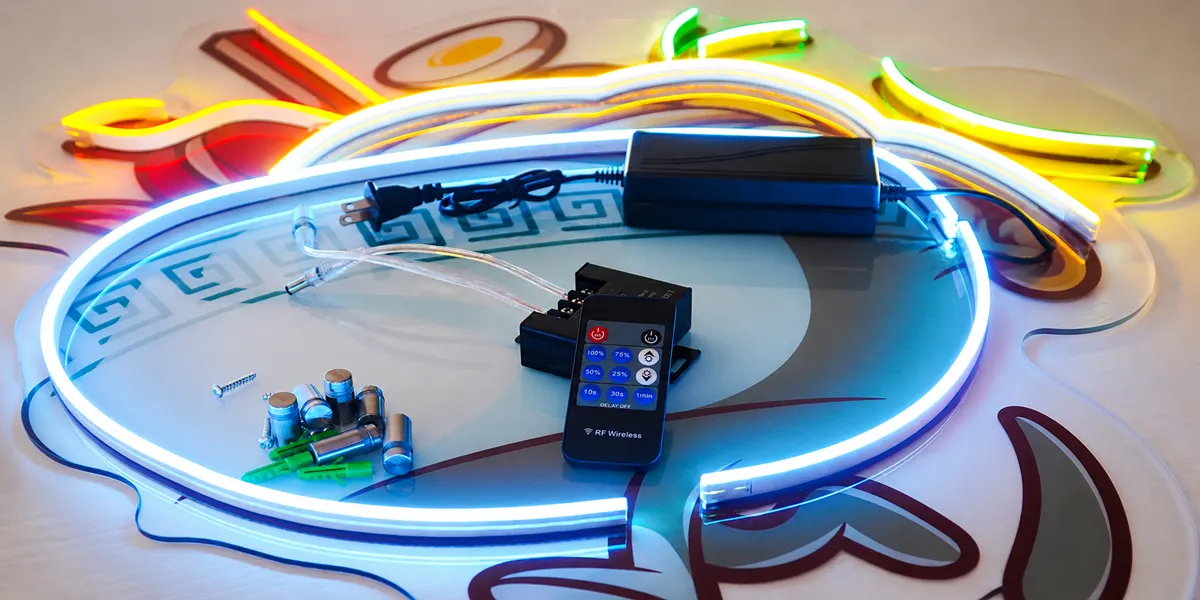
Os projetos de sinais comerciais exigem cada vez mais capacidade de escurecimento para ajuste de brilho diurno ou de noite ou sequências de fachadas dinâmicas. Nem todas as fontes de alimentação LED IP67 suportam o escurecimento e, mesmo quando o fazem, o método de controle deve corresponder à infraestrutura do site.
0-10 V escurecimento: O protocolo analógico mais comum em iluminação comercial. Um par de linhas de controle de baixa tensão vai do sistema de dimmer ou automação de construção ao driver. Os drivers Meanwell “B” tipo IP67 (por exemplo, HLG-240H-24B) aceitam sinais de 0-10V.
Dimerização PWM: Usado para controle digital preciso, frequentemente emparelhado com decodificadores DMX. Requer um driver com capacidade de entrada PWM.
dáli: um protocolo de endereçamento digital comum em projetos comerciais europeus, com drivers compatíveis com DALI dedicados disponíveis.
Quando o escurecimento for necessário, determine a interface de escurecimento do motorista com antecedência. A retroajuste da capacidade de escurecimento após a instalação aumenta significativamente os custos. A Signliteld oferece soluções reguláveis de fonte de alimentação de sinais de néon ao ar livre e pode pré-integrar as fontes de alimentação Meanwell de acordo com seus padrões de controle.
Conclusão
A sinalização comercial de néon ao ar livre é um investimento de longo prazo projetado para mostrar a qualidade da marca 24 horas por dia. Sua fonte de alimentação deve suportar chuva, altas temperaturas e ruídos elétricos, fornecendo continuamente tensão CC pura e estável. Os princípios básicos são claros:
- Qualquer cenário de exposição ao ar livre requer uma fonte de alimentação LED verdadeira IP67, não uma unidade interna colocada em um gabinete temporário.
- Ao projetar instalações de fonte de alimentação de sinais de néon, minimize o comprimento do cabo CC para reduzir a queda de tensão.
- Sinais de grande extensão de grau comercial devem usar sistemas de 24 V para diminuir a corrente e manter o brilho uniforme.
- Invista em drivers certificados Meanwell ou equivalentes para garantir eficiência, segurança e desempenho no ciclo de vida.
- Siga os padrões comerciais de fiação, observe estritamente a regra de carga 80% e proteja o sistema contra danos causados por surtos.
Na Signliteld, vemos todos os projetos como um desafio de engenharia, não apenas como uma venda de produtos. Se você precisa de tiras de néon padrão ou de uma solução de fachada totalmente personalizada com potência e controles integrados, nossa equipe fornece documentação técnica completa, diagramas de fiação e suporte remoto para sua equipe de instalação.
todos sinal de néon ao ar livre O projeto possui requisitos elétricos exclusivos. A seleção da fonte de alimentação correta, do tamanho do cabo, do método de proteção e do layout da fiação no estágio de design pode melhorar significativamente a confiabilidade do sistema, reduzindo os custos futuros de manutenção. Se você precisar de ajuda com o dimensionamento da fonte de alimentação LED, cálculos de queda de tensão ou o projeto completo do sistema de sinais de néon ao ar livre, nossa equipe de engenharia está disponível para fornecer recomendações técnicas adaptadas ao seu projeto.
FAQs
Postagens relacionadas