Русский
  English
  简体中文
简体中文  Deutsch
  Español
  Français
  Italiano
  日本語
日本語  한국어
한국어  Polski
  Português
  Türkçe
  Nederlands
  Tiếng Việt
  ไทย
ไทย 
Да, наружные светодиодные неоновые вывески могут работать в дождь и снег, когда они предназначены для установки на открытом воздухе и соответствуют правильным условиям окружающей среды. Однако долгосрочная надежность на открытом воздухе обычно зависит больше от водонепроницаемой герметизации, защиты разъема, способа установки, воздействия ультрафиолета и размещения источника питания, чем только светодиодная лента.
Многие знаки, продаваемые как «водостойкие», по-прежнему имеют проблемы после повторяющихся дождей, влажности, солнечного света или зимней погоды, потому что самыми слабыми точками часто являются соединители, кабельные соединения, торцевые крышки и драйверы, а не сами светодиоды.
Например, знак, установленный под навесом кафе, испытывает очень иные условия по сравнению с тем, что полностью установлены на придорожном фасаде. Один из них в основном касается влажности и случайных дождевых брызг, в то время как другой может столкнуться с штормами, прямыми солнечными лучами, скоплением снега и изменением температуры в течение года. Эта разница в воздействии может существенно повлиять на долгосрочную работу на открытом воздухе.
Во многих наружных сбоях светодиоды сами по-прежнему работают нормально. Проблемы обычно начинаются гораздо раньше, когда влага медленно достигает плохо герметичных соединителей, вокруг водителя накапливается влажность, а длительное воздействие погоды ослабляет уязвимые части системы.
В этой статье объясняется, что на самом деле делает на открытом воздухе Светодиодный неон Знак водонепроницаемый, почему некоторые знаки выходят из строя после дождя или зимней погоды, что на самом деле означают IP65, IP67 и IP68 на открытом воздухе, и что покупатели должны проверить, прежде чем выбрать неоновую вывеску для долгосрочной установки на открытом воздухе.
Могут ли наружные светодиодные неоновые вывески пережить дождь?
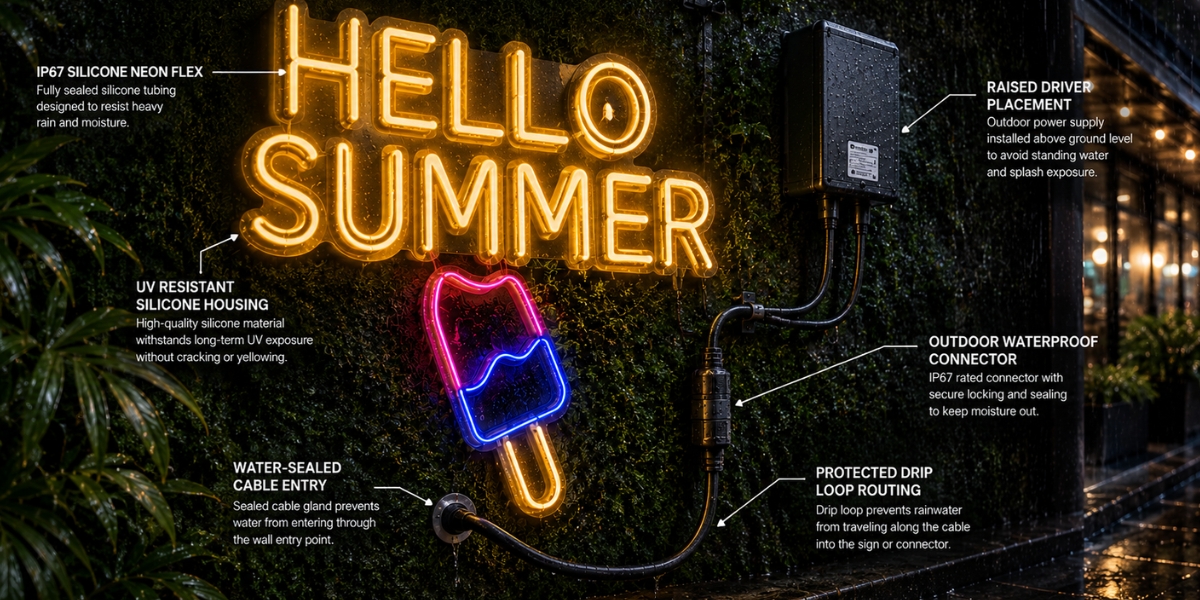
Да, наружные светодиодные неоновые вывески могут пережить дождь, когда они предназначены для установки на открытом воздухе и защищены правильно. Однако долгосрочные характеристики на открытом воздухе в значительной степени зависят от уплотнения соединителей, метода установки, планирования дренажа, защиты электроснабжения и воздействия окружающей среды.
Небольшая неоновая вывеска, висевшая под крытым входом в кафе, испытывает совсем другие условия по сравнению с большим вывеской, установленной на полностью открытом придорожном фасаде. Один из них в основном касается влажности и случайных дождей, в то время как другой может столкнуться с бурями, прямыми солнечными лучами, зимней влагой и изменением температуры в течение года.
Эта разница в воздействии является одной из причин, по которой некоторые неоновые вывески на открытом воздухе продолжают работать в течение многих лет, в то время как другие начинают проявлять проблемы после повторного воздействия погоды.
В реальных установках на открытом воздухе сбои часто начинаются вокруг уязвимых точек соединения, а не самого неона.
Проблемы часто начинаются в небольших областях вокруг знака:
- кабельные соединения
- соединители
- торцевые заглушки
- источники питания
- Дренажные зоны за вывеской
Например, во время сильного дождя вода может медленно перемещаться по кабелю питания и собираться вокруг разъема, а не стекать. Если запечатывание в этой области ослабевает со временем, влага может постепенно проникать во время повторяющихся штормов.
Знак может работать по-прежнему нормально. Затем через несколько месяцев начинают появляться небольшие проблемы:
- случайное мерцание
- затемнить
- нестабильные цвета
- Части знака отключаются после дождя
Обычно это происходит потому, что коррозия уже начала формироваться вокруг точек электричества внутри системы.
Изображение крупным планом, сравнивая герметичный водонепроницаемый разъем и плохо защищенный разъем, здесь подойдут естественным образом, потому что многие покупатели никогда не увидят, где на самом деле начинаются сбои на открытом воздухе.
Еще одна распространенная проблема — адаптер питания. Некоторые знаки используют водители в помещении на открытом воздухе, потому что они стоят дешевле. Проблема в том, что внутренняя часть корпуса водителя может медленно накапливаться, особенно за закрытыми табличками или плохо проветриваемыми фасадами.
Даже без прямого воздействия дождя, влагоудерживаемая влага может со временем влиять на электронику.
Материал трубки также влияет на то, как знак ведет себя на открытом воздухе с течением времени. Трубка из ПВХ может выглядеть стабильно при первой установке, но длительное воздействие солнечного света может постепенно делать некоторые материалы более твердыми или слегка желтыми, особенно при свете неоновых прямых солнечных лучей каждый день.
Поведение материала также зависит от конкретного неонового профиля и воздействия окружающей среды. Некоторые неоновые системы на открытом воздухе используют силикон, поскольку он, как правило, остается более гибким при перепадах температуры и может более устойчиво переносить погодные условия, хотя долгосрочные характеристики на открытом воздухе по-прежнему во многом зависят от качества уплотнения, условий УФ-излучения и конструкции установки.
| проблема на открытом воздухе | Что обычно вызывает это |
|---|---|
| мерцание после дождя | Влажность, медленно поступающая в разъемы |
| Мертвые участки зимой | Вода достигает слабых швов и замерзания |
| желтая трубка | Длительное воздействие УФ на некоторых материалах |
| Неудача водителя | Внутренний адаптер, используемый на открытом воздухе |
| ржавчина вокруг проводов | Плохое уплотнение вблизи точек соединения |
Коммерческие наружные неоновые системы часто сконструированы с более сильным вниманием к уплотнению соединителей, планированию дренажа и защите водителя, поскольку долгосрочные характеристики на открытом воздухе зависят не только от самой неоновой трубки. Как только знак попадает в реальную погоду круглый год, качество установки часто становится столь же важным, как и спецификации продукта.
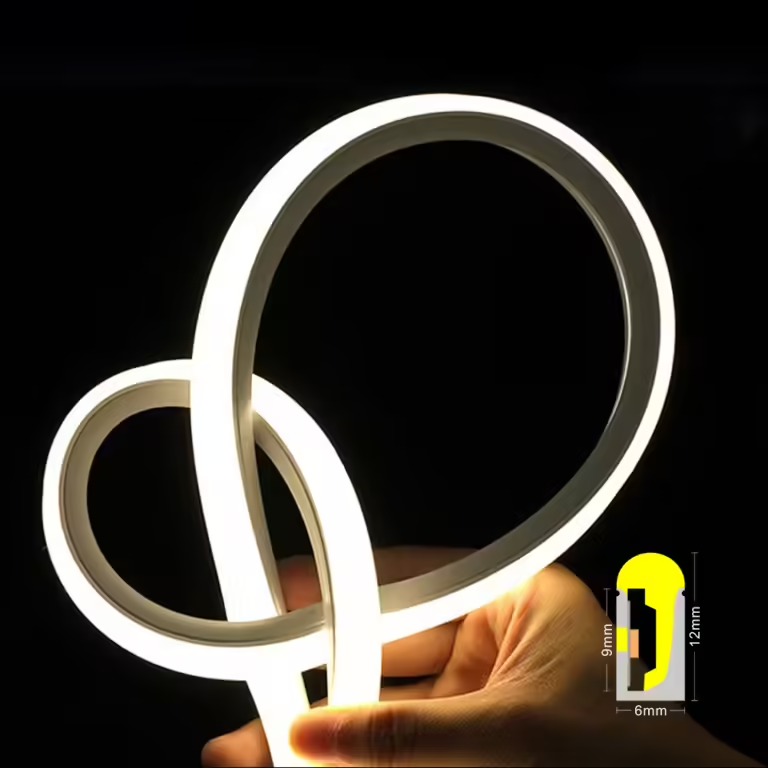
Боковой изгиб S0606/S0612 силиконовый светодиодный неон Flex Strip
- Входное напряжение: DC24V
- Ватт: 9,6 Вт/м
- КОЛИЧЕСТВО СВЕТОДИОДОВ: SMD2835 120LEDs/m
- Цветовая температура: 2700K/3000K/4000K/5000K/6500K/customizable
- ИКР: >80
- Люмен: >240 лм/м
- Степень защиты IP: IP65/IP67
- Ввод кабеля: Передняя/боковая/нижняя часть для опции
- Минимальный диаметр изгиба: 100 мм
- Длина реза: 50 мм
- Длина: 5 метров/рулон
Почему некоторые неоновые вывески на открытом воздухе начинают мерцать после дождя?
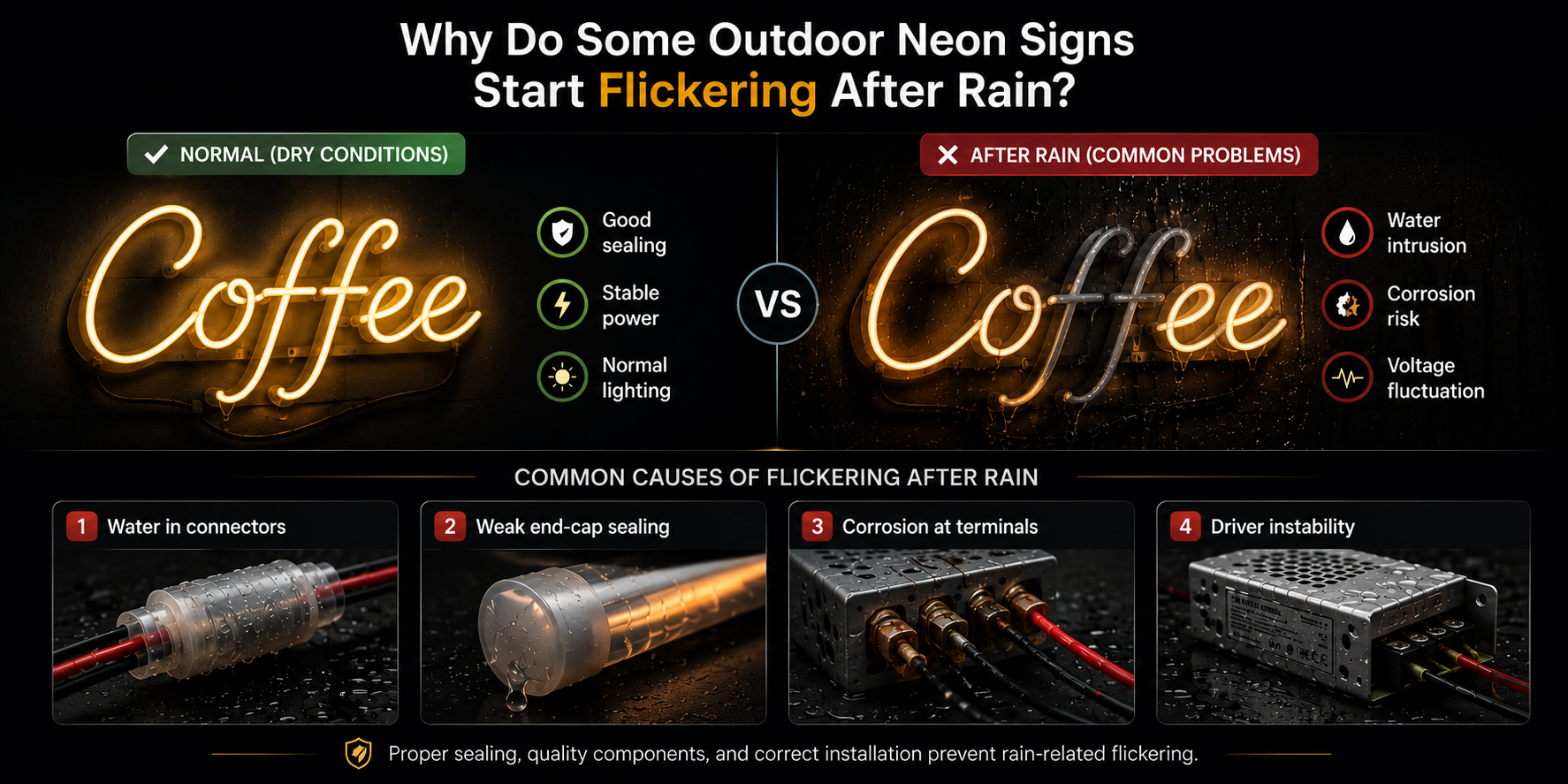
Наружные неоновые вывески обычно начинают мерцать после дождя, когда влага медленно достигает уязвимых электрических точек соединения. Во многих случаях сами светодиоды все еще работают нормально, но слабое уплотнение разъема, задержка влажности или попадание воды в кабели постепенно влияют на электрическую стабильность.
Одним из первых признаков повреждения на открытом воздухе является мерцание. Знак все еще может нормально загореться, но после дождя начинают мигать определенные буквы, цвета становятся нестабильными, или одна секция вдруг выглядит тусклой, чем остальные.
Во многих наружных установках эта проблема развивается постепенно, а не происходит все сразу. Знак может нормально работать в сухой погоде в течение нескольких месяцев, прежде чем небольшие проблемы начинают появляться после штормов или влажных ночей. Это часто означает, что влага уже дошла до электрического соединения где-то внутри системы.
На открытом воздухе мерцание обычно начинается вокруг уязвимых областей, таких как:
- кабельные соединения
- Паянные зоны
- Открытые соединители
- Плохо запечатанные торцевые колпачки
Например, дождевая вода может медленно перемещаться по силовому кабелю и собираться рядом с разъемом, а не стекать. Если при герметизации вокруг этой области со временем ослабляется влага, влажность поступает в точку соединения во время повторного воздействия дождя.
Сначала заметить повреждения сложно. Может быть, один угол мерцает изредка после сильного дождя. Позже электрическое соединение становится менее устойчивым, и мерцание становится более очевидным.
Вывески ресторана на открытом воздухе и открытые фасадные установки часто развивают эти проблемы быстрее, потому что они сталкиваются с повторяющимся солнечного света, влажностью и изменением погодных условий. Прямые солнечные лучи также могут влиять на более дешевые уплотнительные материалы с течением времени. Некоторые клеи или термоусадочные материалы могут постепенно ослабляться после длительного воздействия окружающей среды.
Небольшие детали установки имеют большее значение, чем многие покупатели. Соединители, обращенные вверх, часто после дождя часто собирают воду, в то время как плохо проложенные кабели могут обеспечивать влагу непосредственно в сторону электрических соединений.
Коммерческие установщики на открытом воздухе обычно снижают эти риски, более тщательно защищая уязвимые зоны. Соединители обычно размещаются внутри водонепроницаемых распределительных коробок, выходы кабеля направлены вниз для улучшения дренажа, а источники питания расположены вдали от стоячей воды.
Изображения сравнения соединителей обычно облегчают понимание этих различий во время планирования установки, поскольку многие сбои на открытом воздухе начинаются в тех областях, которые покупатели редко замечают во время первой установки.
Для коммерческих проектов эти проблемы не только в внешнем виде. Плохо запечатанный наружный знак может работать во время установки, но повторные посещения технического обслуживания после штормов или зимней погоды могут увеличить долгосрочные эксплуатационные расходы. Это одна из причин, по которой рестораны, розничные магазины и проекты освещения фасадов обычно уделяют пристальное внимание водонепроницаемым соединителям, планированию дренажа и защите водителя перед началом установки.
| Проблема видна после дождя | Что обычно вызывает это |
|---|---|
| мерцающие письма | Влага, достигающая слабой точки соединителя |
| Один раздел становится тусклым | Коррозия медленно формируется вокруг паяных соединений |
| Знак работает нормально только в сухую погоду | Вода, застрявшая внутри кабельных соединений |
| Случайные отключения после штормов | Слабая водонепроницаемая уплотнение вокруг соединителей |
| Временно остановка драйвера | Нарастание влажности внутри блока питания |
Как только наружная влажность неоднократно достигает электрических соединений, одних только водонепроницаемых оценок обычно недостаточно, чтобы гарантировать долгосрочную надежность.
Что на самом деле означают IP65, IP67 и IP68 для наружных неоновых вывесок?

IP-классы объясняют, какая влаго и водная облучение предназначена для наружной неоновой системы. В большинстве уличных неоновых установок IP65 работает для частично защищенных зон, IP67 обычно используется для более открытых условий наружного воздуха, а IP68 обычно предназначен для сред, где постоянно находится вода.
Однако водонепроницаемость зависит от не только печатного номера IP. Уплотнение соединителей, способ установки, планирование дренажа и воздействие окружающей среды по-прежнему играют важную роль в долгосрочной надежности на открытом воздухе.
Например, неоновая вывеска, установленная под крытой витриной, испытывает совсем другие условия по сравнению с вывеской, установленной на полностью открытом придорожном фасаде. Один сталкивается с небольшим дождем и влажностью, а другой может иметь дело со штормами, сильным ветром, скоплением снега и сбором воды вокруг соединителей во время сильного дождя.
Именно поэтому имеют значение именно то, почему имеют значение рейтинги IP.
IP65: лучше всего работает в частично защищенных открытых площадках
IP65 в основном предназначен для обработки водяного распыления, а не длительной прямой воды.
В реальных проектах на открытом воздухе IP65 часто используется для:
- крытые входы
- Знаки, установленные под навесами
- Частично защищенные витрины
- области, где дождь редко достигает соединителей напрямую
Ограничение становится более заметным, когда установка полностью выставлена.
Во время штормов ветровой дождь может легче достигать швов и торцевых колпачков. Вода также может собираться за вывеской, если дренаж плохой. В таких ситуациях одна только защита от брызг может не всегда обеспечивать долгосрочную защиту.
IP67: обычно используется для более открытых условий на открытом воздухе
IP67 обеспечивает более сильную защиту от временного воздействия воды и обычно используется там, где более требовательны наружные погодные условия.
Это может стать более важным в таких средах, как:
- Открытые фасады на придорожной среде
- Внешний вид ресторана
- вывески на крыше
- длинные сезоны дождей
- Области с повторяющимся воздействием влаги
Например, таяние снега вокруг соединителей может оставлять влагу на одной зоне в течение нескольких часов перед высыханием. В подобных ситуациях более прочное уплотнение может обеспечить дополнительную защиту по сравнению с базовой устойчивой к брызговоду.
Изображения сравнения соединителей часто делают эти различия более понятными при планировании установки.
Для проектов, связанных с открытыми фасадами или долгосрочными установками на открытом воздухе, также может помочь во время планирования. Вы можете узнать больше в нашем руководстве по IP67 водонепроницаемый гибкий неоновый гибкий для наружного освещения фасада
IP68: в основном используется для непрерывного воздействия воды
IP68 обычно используется, когда освещение постоянно остается близко к воде, а не только с дождем или влажностью.
Это чаще встречается в:
- фонтаны
- подводное освещение
- Пейзаж водные особенности
- Среда для бассейна
Большинство наружных неоновых вывесок не требуют IP68, поскольку погодное воздействие отличается от непрерывного погружения в воду.
Для проектов, связанных с постоянным воздействием влаги или погруженными в воду освещением, этот пример водонепроницаемого неона изгиба IP68 показывает, как обычно разрабатываются герметичные системы с рейтингом наружного воздуха.

| Рейтинг IP | Что обычно обрабатывает на открытом воздухе | Общий пример установки |
|---|---|---|
| IP65 | Дождь и свет на открытом воздухе | Покрытые вывески |
| IP67 | Сильный дождь и временное накопление влаги | Открытые фасады и вывески в ресторане |
| IP68 | Непрерывное воздействие воды | Фонтан и подводное освещение |
Даже при сильном рейтинге IP-качество установки все же влияет на надежность наружного воздуха.
Правильно закрытая система IP67 может по-прежнему иметь проблемы, если:
- Соединители остаются открытыми за стенами
- Вода собирается вокруг водителя
- дренаж игнорируется
- Кабель выходит вверх во время дождя
Вот почему коммерческие установки на открытом воздухе часто уделяют пристальное внимание направлению соединителя, дренажным каналам и размещению драйверов, а не полагаться только на печатную оценку IP.
Почему силиконовые неоновые ручки лучше погоды на улице, чем ПВХ

Выбор материала может повлиять на возрастность неоновых вывесок с течением времени, хотя долгосрочные характеристики также сильно зависит от конкретного неона, воздействия УФ-излучения, среды установки и качества уплотнения.
Когда наружные неоновые вывески являются новыми, ПВХ и силиконовые трубки могут выглядеть очень похожими. Разница часто становится более заметной после повторного воздействия солнечного света, дождя, влажности и сезонных изменений температуры.
Многие более дешевые наружные знаки используют трубки из ПВХ, потому что их производство, как правило, дешевле. Со временем длительное воздействие на открытом воздухе может постепенно менять материал. В некоторых более светлых неоновых системах длительное воздействие УФ-излучения может способствовать пожелтению, в то время как более низкие температуры могут заставить некоторые материалы казаться более твердыми или менее гибкими.
Это часто становится более заметным вокруг изогнутых букв, углов и площадок крепления, где трубки остаются под нагрузкой. По мере старения материалов небольшие трещины на поверхности или слабости уплотнения могут стать более вероятными в области изгибов и зон соединения, что увеличивает риск попадания влаги в уязвимые точки.
Поведение материала также зависит от конкретного неонового профиля и условий окружающей среды. Некоторые наружные неоновые системы используют силикон, поскольку он, как правило, остается более гибким при перепадах температуры и может более устойчиво переносить связанные с погодой движения. Тем не менее, долгосрочная надежность на открытом воздухе по-прежнему в значительной степени зависит от УФ-условий, водонепроницаемой герметизации, защиты разъемов и конструкции установки, а не только от материала.
Сравнение состаренного ПВХ труб и силиконового неона может помочь визуализировать, как со временем может появляться наружное старение материалов.
| открытый | Силиконовый неон | ПВХ неон |
|---|---|---|
| прямые солнечные | Может оставаться визуально стабильным дольше в некоторых наружных условиях | Некоторые трубки более светлого цвета могут постепенно желтеть |
| температура льда | часто остается более гибким во время перепадов температуры | Материал может постепенно казаться более твердым |
| Изогнутые буквы и логотипы | Может терпеть движения вокруг изгибов более устойчиво | Старение может стать более заметным вблизи стрессовых зон |
| Долгосрочное воздействие на открытом воздухе | Производительность зависит от установки и условий окружающей среды | Со временем поверхностное старение может стать более заметным |
Как только наружные трубки начинают закалку, старение или возникают недостатки уплотнения, водонепроницаемая защита вокруг разъемов и выходов кабеля может стать более уязвимой к проблемам с влажностью.
Почему наружные блоки питания выходят из строя чаще, чем сам неон
Во многих наружных неоновых вывесках блок питания или драйвер могут возникнуть перед самими светодиодами. Надежность на открытом воздухе зависит не только от водонепроницаемой неоновой трубки, но и от того, насколько хорошо водители защищены от влаги, конденсации, перепадов температуры и стоячей воды.
Многие покупатели сосредотачиваются в основном на неоновых трубках, потому что это видимая часть вывески, но производительность на открытом воздухе также сильно зависит от размещения водителя и воздействия окружающей среды.
Например, водитель, установленный близко к земле за фасадом ресторана, может дольше оставаться сырым после штормов, потому что дождевая вода и таяние снега естественным образом собираются у подножия наружных стен. Даже когда сам неон водонепроницаем, захваченная влагозахваченная влага вокруг источника питания со временем может постепенно влиять на электронику.
Еще одна распространенная проблема возникает внутри закрытых знаков. В течение дня внутри корпуса накапливается тепло. Ночью температура падает, и вокруг водителя и электрических соединений могут образовываться конденсации. Система может оставаться защищенной от прямого дождя, но при этом постоянно испытывать захваченную влажность.
Это одна из причин, по которой проблемы с электроснабжением наружного питания часто развиваются постепенно. При знаке иногда после дождя может мерцать, яркость может стать нестабильной во время влажной погоды, а некоторые участки могут возобновиться после высыхания.
Коммерческие установщики на открытом воздухе часто снижают эти риски, отводя водителей от стоячей воды, обеспечивая проток воздуха вокруг корпуса и защищая проводку внутри водонепроницаемых распределительных коробок или герметичных систем каналов.
Проблемы с влажностью на открытом воздухе могут стать еще более заметными зимой, потому что снег, конденсация и температура замерзания создают дополнительную нагрузку на драйверы, соединители и точки уплотнения.
Понимание того, как водонепроницаемая герметизация, разъемы, драйверы и условия установки работают вместе, часто важнее, чем только спецификации яркости при планировании наружного освещения.
Покупатели, сравнивающие системы наружного освещения, также могут извлечь выгоду из понимания того, как водонепроницаемая защита работает в различных форматах светодиодного освещения. наш Полная направляющая для водонепроницаемых светодиодных лент Более подробно объясняется более подробное описание водонепроницаемых конструкций, методов уплотнения и защиты наружного воздуха.
Почему на открытом воздухе иногда выходят неоновые вывески после зимы
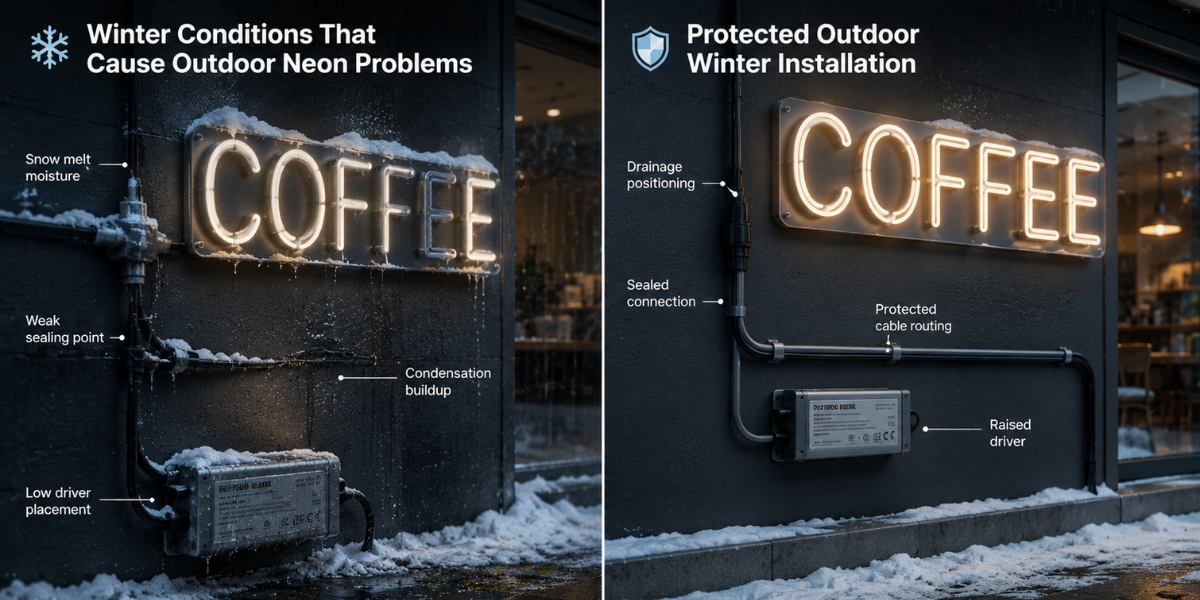
Наружные неоновые вывески иногда начинают мерцать или отключаться после зимы, потому что снег, температура замерзания, поламанная влажность и конденсация создают различные типы нагрузок на соединители, точки уплотнения и электрические компоненты, чем обычные дожди.
Многие неоновые вывески на открытом воздухе выживают без явных проблем, а затем начинают показывать проблемы после зимы. Одна из причин заключается в том, что снег ведет себя совсем не так, как дождевая вода на открытом воздухе.
Дождевая вода обычно стекает с поверхности относительно быстро, в то время как снег часто остается вокруг соединителей и мест крепления на гораздо дольше.
Зимой снег может собирать вокруг:
- Кабельные выходы
- монтажные зажимы
- Соединительные соединения
- Крышки блока питания
- пробелы за знаком
Когда в течение дня температура поднимается, тающий снег медленно превращается в воду и может проникать в небольшие отверстия вокруг более слабых точек уплотнения. Позже ночью в ловушке влага снова может замерзнуть.
Повторные циклы замораживания-оттаивания часто усиливают стресс вокруг уязвимых зон связи.
Вода при замерзании немного расширяется. Если влага уже достигла слабого соединителя или шнурка кабеля, повторное замерзание и оттаивание могут со временем постепенно ослаблять уплотнение. Знак может продолжать работать зимой, а затем начать проявлять проблемы через несколько недель, так как вокруг внутренних соединений медленно развивается коррозия.
Это одна из причин, по которой некоторые сбои на открытом воздухе весной кажутся «случайными», даже если повреждения, связанные с влагой, могли начаться в холодные месяцы.
Холодная погода также создает еще одну проблему, которую многие покупатели задумывают редко: конденсат.
Например, шкаф для вывесок может оставаться защищенным от прямого дождя, при этом погружаясь в влагу внутри. Во время перепадов температуры более теплый воздух внутри корпуса может превращаться в конденсат вокруг более прохладных металлических поверхностей и электрических компонентов.
Влажность обычно накапливается:
- ведущий
- Проводные соединения
- металлические штифты
- пайки
Даже без видимых утечек, захваченная влажность может постепенно влиять на электронику с течением времени.
Простое изображение, показывающее конденсацию, образующуюся внутри закрытой коробки с надписью, объясняет это более ясно, чем высокотехнологичная схема.
Коммерческие наружные неоновые системы часто разрабатываются с более сильным вниманием к дренажу, вентиляции и управлению влагой. Вместо того, чтобы герметизировать каждую область, некоторые установки позволяют контролируемому воздушному потоку, чтобы влага, захваченная влагу, может выходить более естественным образом.
Небольшие детали установки могут иметь заметную разницу в более холодных условиях:
- Соединители, обращенные вниз, часто сливайте воду быстрее
- Поднятые водители могут держаться подальше от таяния снега
- Вентиляция может уменьшить конденсацию в ловушку
- Поведение материала может меняться по-разному при температуре замерзания в зависимости от неонового профиля и воздействия окружающей среды.
| зимнее состояние | Что часто случается с плохо защищенными знаками |
|---|---|
| Снег сидит вокруг соединителей | Влага медленно достигает слабой точки уплотнения |
| Цикл замораживания дня/ночи | Замерзшая влага расширяется внутри небольших промежутков |
| Захваченная конденсация внутри ящиков | Коррозия развивается вокруг электроники |
| Некоторые трубки в морозную погоду | Материальное поведение может постепенно меняться |
| Стоячая вода после растаяния снег | Драйверы и кабельные соединения остаются влажными дольше |
Зимнее воздействие также является одной из причин, по которой долгосрочные результаты на открытом воздухе зависят не только от оценок водонепроницаемых. Выбор материала, герметизация соединителей, планирование дренажа и качество установки влияют на то, как неоновая система с течением времени реагирует на холодную погоду.
Распространенные ошибки установки на открытом воздухе, которые вызывают повреждение водой
Многие проблемы с неоновой водой на открытом воздухе начинаются во время установки, а не с самой неоновой трубки. Даже когда система Neon предназначена для использования на открытом воздухе, позиционирование разъема, дренаж, кабельная развязка и размещение драйверов все равно могут повлиять на долгосрочную надежность.
Одна из распространенных ошибок — оставлять соединители обращенными вверх. После сильного дождя вода может медленно накапливаться вокруг точек уплотнения, а не стекать естественным путем.
Плохой дренаж за вывеской создает еще одну проблему. Когда вода задерживается между поверхностью стены и подложкой знака, влага вокруг разъемов и кабелей намного дольше после бури.
Внутренние адаптеры питания также иногда используются на открытом воздухе для снижения затрат на установку. Знак может работать изначально, но влажность и конденсация могут постепенно влиять на электронику с течением времени.
Открытые швы, создают аналогичные риски. Даже небольшие промежутки вокруг проводных соединений могут позволить влаге постепенно проникать во время повторного воздействия дождя.
Также имеет значение размещение водителя. Водители, установленные слишком близко к земле, часто остаются влажными, потому что дождевая вода и таяние снега естественным образом собираются у нижней части наружных стен.
| Ошибка установки | Что обычно происходит позже |
|---|---|
| Разъем обращен вверх | Вода собирается вокруг точек уплотнения |
| Нет дренажа за вывеской | Влага остается в ловушке после дождя |
| Внутренний водитель используется на открытом воздухе | Влажность постепенно влияет на электронику |
| Открытые швы | Влага достигает электрических соединений |
| Драйвер, установленный у земли | Вокруг жилища остаются дождевые воды и таяние снега |
Эти проблемы являются одной из причин, по которой коммерческие наружные неоновые установки часто уделяют пристальное внимание направлению соединителя, планированию дренажа и позиционированию водителя по сравнению с временными дисплеями или декоративными вывесками в помещении.
Как коммерческие наружные неоновые вывески строятся по-разному
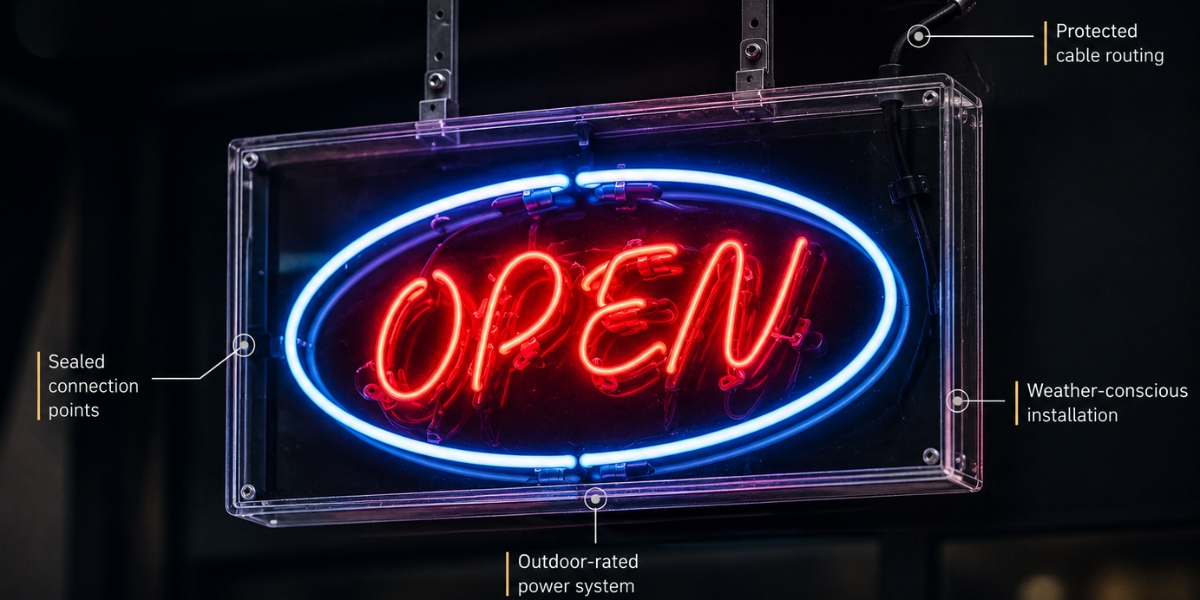
Коммерческие наружные неоновые системы часто сконструированы с более сильным вниманием к водонепроницаемым уплотнениям, дренажу, защите водителя и длительному воздействию окружающей среды, чем декоративные вывески в помещении. Наружные установки могут оставаться подверженными воздействию дождя, влажности, солнечного света, перепадов температуры и зимней погоды, что может повлиять на долгосрочную надежность.
Из-за этого многие коммерческие проекты на открытом воздухе сосредоточены не только на внешнем виде, но и на том, как вся система с течением времени справляется с влагой, дренажей и стрессом окружающей среды.
Запечатыванию разъемов часто уделяется больше внимания, обычно планируется прокладка кабеля для снижения прямого воздействия воды, а водители с рейтингом наружного воздуха расположены там, где влага меньше шансов собраться. Установщики также могут уделять пристальное внимание дренажу за вывеской, потому что захваченная вода может постепенно создавать проблемы с разъемами и источниками питания.
Выбор материала также может влиять на то, как наружные системы со временем стареют. Некоторые декоративные неоновые вывески используют трубки из ПВХ, поскольку это может снизить себестоимость производства, в то время как некоторые наружные системы используют силикон, где более важна гибкость при изменении температуры и движении окружающей среды. Тем не менее, долгосрочные характеристики на открытом воздухе по-прежнему во многом зависят от типа профиля, воздействия УФ-излучения, качества уплотнения и конструкции установки.
Это может стать более заметным на более крупных фасадных знаках, где неон наклоняется вокруг букв каналов, алюминиевых конструкций и форм логотипа. Со временем гибкость материала и воздействие окружающей среды могут повлиять как на внешний вид, так и на характеристики уплотнения.
В коммерческих проектах на открытом воздухе также обычно рассматриваются более сильные водонепроницаемые защитные устройства, где установки сталкиваются с повторяющимся дождем, влажностью или снегом. Однако долгосрочная надежность зависит от только оценок IP. Уплотнение разъема, планирование дренажа, маршрутизация кабелей и размещение драйверов влияют на то, как работает наружная неоновая система с течением времени.
Наружные коммерческие неоновые системы, как правило, спроектированы с учетом более длительного воздействия на окружающую среду, а не только появление в день установки.
Что покупатели должны проверить перед выбором открытого неонового знака?
Прежде чем выбрать открытый неоновый знак, покупатели должны смотреть за пределы яркости и внешнего вида. Долгосрочная надежность на открытом воздухе часто зависит больше от водонепроницаемой герметизации, среды установки, трубопровода, защиты водителя и планирования дренажа, чем на фотографиях продукта.
Большинство наружных неоновых вывесок выглядят одинаково в Интернете, но производительность на открытом воздухе может значительно различаться в зависимости от воздействия окружающей среды и качества установки.
Рейтинг IP должен соответствовать среде установки. Знак под крытой витриной имеет очень иные условия по сравнению с тем, что установлено на полностью открытом придорожном фасаде. Для более открытых условий наружного воздуха часто рассматривается более сильная водонепроницаемая защита, хотя долгосрочные характеристики по-прежнему сильно зависят от качества уплотнения, дренажа и способа установки.
Материал трубок также может повлиять на старение вывески на открытом воздухе. Некоторые материалы могут постепенно становиться более твердыми или проявлять видимое старение после длительного воздействия УФ-излучения, особенно под прямыми солнечными лучами. Поведение материала также зависит от конкретного неонового профиля, условий окружающей среды и среды установки.
Уплотнение разъема является одной из самых важных деталей, которые необходимо проверить. Слабые кабельные соединения являются распространенной причиной, по которой наружные неоновые вывески начинают мерцать после дождя. Правильно запечатанные разъемы помогают уменьшить вероятность постепенного попадания влаги в точки электрических соединений.
Блок питания должен быть пригодным для наружных условий. Многие проблемы надежности на открытом воздухе начинаются, когда водители в помещении устанавливаются на улице без надлежащей защиты от влажности или конденсации.
Размещение водителя имеет значение не меньше, чем качество водителя. Даже водители с наружным покрытием могут возникнуть проблемы, если они установлены слишком близко к стоящей воде или внутри влажных закрытых помещений без воздушного потока.
Также следует учитывать дренаж за знаком. Многие коммерческие установки позволяют воде стекать естественным путем, а не улавливать влагу за конструкцией.
| Что покупатели должны проверить | Почему это важно на открытом воздухе |
|---|---|
| Степень защиты IP | Влияет на то, какая влаги в окружающей среде система предназначена для обработки |
| материал для труб | Материалы старения могут варьироваться в зависимости от воздействия УФ-излучения и условий окружающей среды |
| уплотнение разъема | Помогает уменьшить влагу, достигающую электрических соединений |
| Драйвер с рейтингом на открытом воздух | Защищает электронику от влажности и воздействия погодных условий |
| Дренаж вокруг вывески | Уменьшает длительное накопление влаги за установкой |
Крупный план между закрытым наружным разъемом и недорогим открытым разъемом естественным образом поместится здесь, потому что многие покупатели никогда не увидят, где обычно начинаются неоновые отказы на открытом воздухе.
Многие коммерческие покупатели сравнивают водонепроницаемую герметизацию, поведение трубок, защиту разъемов и размещение драйверов, прежде чем выбрать систему для долгосрочных установок на открытом воздухе.
Для читателей, планирующих более крупные проекты внешнего освещения, наше руководство по Как выбрать лучшие водонепроницаемые светодиодные ленты для проектов на открытом воздухе Охватывает дополнительные соображения, такие как водонепроницаемые рейтинги, условия установки и выбор системы наружного освещения.
В большинстве проектов на открытом воздухе долгосрочная надежность зависит меньше только от яркости, а от того, насколько хорошо вся система управляет влажностью, погодными условиями и сезонными изменениями температуры с течением времени.
Заключение
Наружные светодиодные неоновые знаки не всегда выходят из строя, потому что светодиоды перестают работать. Во многих случаях долгосрочные проблемы на открытом воздухе начинаются гораздо раньше, когда соединительные контакты, задержка влаги, материалы для старения, плохо защищенные источники питания или проблемы, связанные с установкой.
Выполнение на открытом воздухе зависит не только от водонепроницаемых требований. Уплотнение соединителей, планирование дренажа, защита водителя, воздействие окружающей среды и качество установки влияют на то, как неоновая система реагирует на дождь, влажность, воздействие УФ-излучения, конденсацию и сезонные изменения погоды с течением времени.
Для долгосрочных проектов на открытом воздухе понимание того, как полная система работает вместе, часто важнее, чем только спецификации яркости.
часто задаваемые вопросы
Похожие посты