ไทย
ไทย  English
  简体中文
简体中文  Deutsch
  Español
  Français
  Italiano
  日本語
日本語  한국어
한국어  Polski
  Português
  Русский
  Türkçe
  Nederlands
  Tiếng Việt
ใช่ ป้ายไฟนีออน LED กลางแจ้งสามารถทำงานได้ท่ามกลางสายฝนและหิมะ เมื่อได้รับการออกแบบสำหรับการติดตั้งกลางแจ้งและจับคู่กับสภาพแวดล้อมที่เหมาะสม อย่างไรก็ตาม ความน่าเชื่อถือกลางแจ้งในระยะยาวมักจะขึ้นอยู่กับการปิดผนึกกันน้ำ การป้องกันตัวเชื่อมต่อ วิธีการติดตั้ง การเปิดรับแสงยูวี และการจัดวางแหล่งจ่ายไฟมากกว่าแถบ LED เพียงอย่างเดียว
ป้ายจำนวนมากที่ขายเป็น "กันน้ำ" ยังคงมีปัญหาหลังจากฝนตก ความชื้น แสงแดด หรือสภาพอากาศในฤดูหนาวซ้ำแล้วซ้ำเล่า เนื่องจากจุดอ่อนที่สุดมักเป็นข้อต่อ ข้อต่อเคเบิล ฝาปิดท้าย และตัวขับมากกว่าตัวไฟ LED
ตัวอย่างเช่น ป้ายที่ติดตั้งใต้หลังคาร้านกาแฟประสบกับสภาพที่แตกต่างกันมากเมื่อเทียบกับป้ายที่ติดตั้งบนด้านหน้าถนน ส่วนใหญ่เกี่ยวข้องกับความชื้นและละอองฝนเป็นครั้งคราว ในขณะที่อีกส่วนหนึ่งอาจเผชิญกับพายุ แสงแดดโดยตรง การสะสมของหิมะ และอุณหภูมิที่เปลี่ยนแปลงไปตลอดทั้งปี ความแตกต่างในการเปิดรับแสงสามารถส่งผลกระทบอย่างมากต่อประสิทธิภาพการทำงานกลางแจ้งในระยะยาว
ในความล้มเหลวกลางแจ้งหลายครั้ง ไฟ LED เองยังคงทำงานได้ตามปกติ ปัญหามักจะเริ่มต้นเร็วกว่ามากเมื่อความชื้นไปถึงขั้วต่อที่ปิดสนิทอย่างช้าๆ ความชื้นจะสะสมรอบๆ ตัวขับ หรือการรับสัมผัสสภาพอากาศในระยะยาวจะทำให้ส่วนที่เปราะบางของระบบอ่อนแอลง
บทความนี้อธิบายสิ่งที่ทำให้กลางแจ้งจริงๆ นำนีออน ป้ายกันน้ำ เหตุใดสัญญาณบางอย่างจึงล้มเหลวหลังจากฝนตกหรืออากาศหนาว IP65, IP67 และ IP68 หมายถึงกลางแจ้งจริงๆ และสิ่งที่ผู้ซื้อควรตรวจสอบก่อนเลือกป้ายไฟนีออนสำหรับการติดตั้งกลางแจ้งในระยะยาว
ป้ายไฟนีออนกลางแจ้งสามารถอยู่รอดได้จริงหรือไม่?
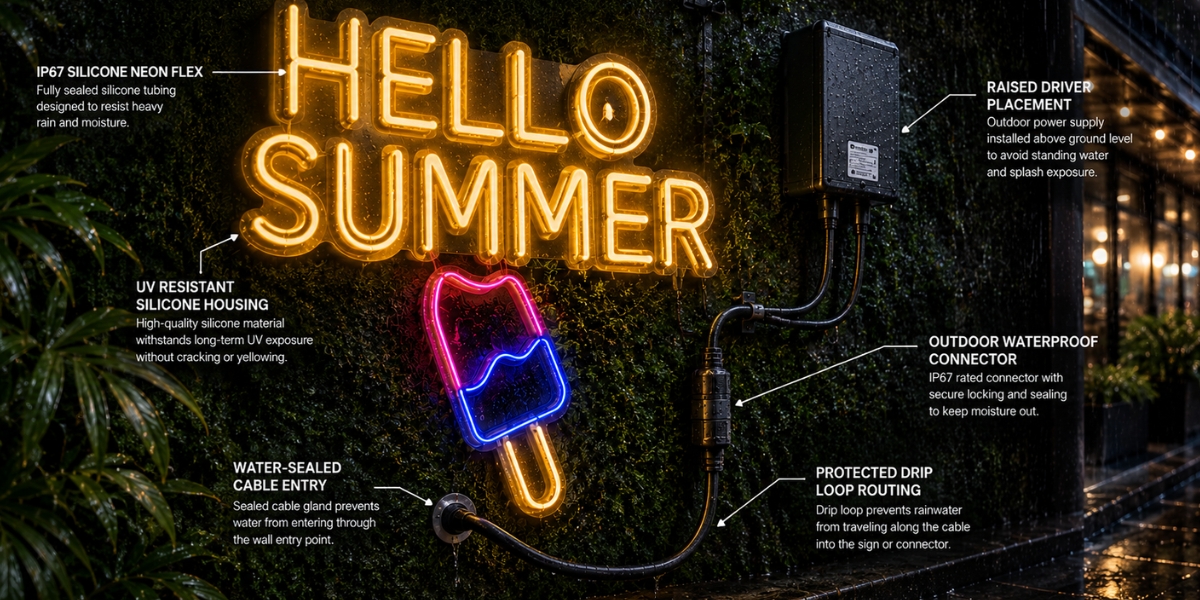
ใช่ ป้ายไฟนีออน LED กลางแจ้งสามารถอยู่รอดได้เมื่อได้รับการออกแบบสำหรับการติดตั้งกลางแจ้งและป้องกันอย่างถูกต้อง อย่างไรก็ตาม ประสิทธิภาพกลางแจ้งในระยะยาวขึ้นอยู่กับการปิดผนึกตัวเชื่อมต่อ วิธีการติดตั้ง การวางแผนการระบายน้ำ การป้องกันแหล่งจ่ายไฟ และการสัมผัสสิ่งแวดล้อม
ป้ายไฟนีออนขนาดเล็กที่แขวนอยู่ใต้ทางเข้าร้านกาแฟที่มีหลังคาคลุมประสบกับสภาพที่แตกต่างกันมากเมื่อเทียบกับป้ายขนาดใหญ่ที่ติดตั้งบนด้านหน้าถนนที่เปิดโล่ง ส่วนใหญ่เกี่ยวข้องกับความชื้นและละอองฝนเป็นครั้งคราว ในขณะที่อีกส่วนหนึ่งอาจเผชิญกับพายุ แสงแดดโดยตรง ความชื้นในฤดูหนาว และอุณหภูมิที่เปลี่ยนแปลงไปตลอดทั้งปี
ความแตกต่างในการเปิดรับแสงนั้นเป็นเหตุผลหนึ่งที่สัญญาณไฟนีออนกลางแจ้งบางตัวยังคงทำงานต่อไปเป็นเวลาหลายปี ในขณะที่สัญญาณอื่นๆ เริ่มแสดงปัญหาหลังจากสัมผัสกับสภาพอากาศซ้ำแล้วซ้ำเล่า
ในการติดตั้งกลางแจ้งจริง ความล้มเหลวมักจะเริ่มต้นจากจุดเชื่อมต่อที่มีช่องโหว่มากกว่าตัวนีออน
ปัญหามักเริ่มต้นในพื้นที่ขนาดเล็กรอบป้าย:
- ข้อต่อสายเคเบิล
- ขั้ว
- ฝาท้าย
- พาวเวอร์ซัพ
- พื้นที่ระบายน้ำด้านหลังป้าย
ตัวอย่างเช่น ในช่วงที่มีฝนตกหนัก น้ำอาจค่อยๆ เคลื่อนตัวไปตามสายไฟและเก็บสะสมรอบๆ ขั้วต่อแทนที่จะระบายออก หากการปิดผนึกในบริเวณนั้นอ่อนลงเมื่อเวลาผ่านไป ความชื้นจะค่อยๆ เข้าสู่ระหว่างพายุที่เกิดซ้ำ
ป้ายอาจยังคงทำงานได้ตามปกติในตอนแรก จากนั้นหลายเดือนต่อมา ปัญหาเล็กๆ ก็เริ่มปรากฏขึ้น:
- สุ่มกะพริบ
- ส่วนสลัว
- สีไม่คงที่
- ป้ายบางส่วนปิดหลังฝนตก
สิ่งนี้มักเกิดขึ้นเนื่องจากการกัดกร่อนได้เริ่มก่อตัวขึ้นรอบๆ จุดเชื่อมต่อไฟฟ้าภายในระบบ
ภาพระยะใกล้ที่เปรียบเทียบขั้วต่อกันน้ำแบบปิดผนึกและขั้วต่อที่มีการป้องกันไม่ดีจะพอดีกับที่นี่ เนื่องจากผู้ซื้อจำนวนมากไม่เคยเห็นว่าความล้มเหลวของกลางแจ้งเริ่มต้นที่ใด
ปัญหาที่พบบ่อยอีกอย่างหนึ่งคืออะแดปเตอร์แปลงไฟ ป้ายบางป้ายใช้ไดรเวอร์ในร่มกลางแจ้งเพราะมีค่าใช้จ่ายน้อยกว่า ปัญหาคือความชื้นสามารถสะสมภายในตัวเรือนคนขับได้ช้า โดยเฉพาะอย่างยิ่งด้านหลังกล่องปิดป้ายหรืออาคารที่มีการระบายอากาศไม่ดี
แม้จะไม่มีการสัมผัสกับฝนโดยตรง ความชื้นที่ติดอยู่อาจส่งผลต่ออุปกรณ์อิเล็กทรอนิกส์เมื่อเวลาผ่านไป
วัสดุท่อยังส่งผลต่อพฤติกรรมของสัญญาณกลางแจ้งเมื่อเวลาผ่านไป ท่อพีวีซีอาจดูมั่นคงเมื่อติดตั้งครั้งแรก แต่การได้รับแสงแดดเป็นเวลานานอาจทำให้วัสดุบางชนิดแข็งขึ้นหรือเหลืองเล็กน้อย โดยเฉพาะอย่างยิ่งบนนีออนที่มีสีอ่อนกว่าซึ่งต้องเผชิญกับแสงแดดโดยตรงทุกวัน
พฤติกรรมของวัสดุยังขึ้นอยู่กับโปรไฟล์นีออนเฉพาะและการสัมผัสสิ่งแวดล้อมอีกด้วย ระบบนีออนกลางแจ้งบางระบบใช้ซิลิโคนเพราะโดยทั่วไปยังคงมีความยืดหยุ่นมากกว่าในช่วงการเปลี่ยนแปลงของอุณหภูมิและอาจทนต่อการเคลื่อนไหวที่เกี่ยวข้องกับสภาพอากาศได้อย่างต่อเนื่องมากขึ้น แม้ว่าประสิทธิภาพกลางแจ้งในระยะยาวจะยังคงขึ้นอยู่กับคุณภาพการปิดผนึก สภาพ UV และการออกแบบการติดตั้งอย่างมาก
| ปัญหากลางแจ้ง | อะไรมักจะเป็นสาเหตุ |
|---|---|
| กระพริบหลังฝนตก | ความชื้นเข้าคอนเนคเตอร์อย่างช้าๆ |
| ส่วนที่ตายในฤดูหนาว | น้ำเข้าถึงข้อต่อสายเคเบิลที่อ่อนแอและการแช่แข็ง |
| หลอดสีเหลือง | การรับแสงยูวีในระยะยาวบนวัสดุบางชนิด |
| ความล้มเหลวของไดรเวอร์ | อะแดปเตอร์ในร่มใช้กลางแจ้ง |
| สนิมรอบสายไฟ | การปิดผนึกไม่ดีใกล้จุดเชื่อมต่อ |
ระบบนีออนกลางแจ้งเชิงพาณิชย์มักจะได้รับการออกแบบโดยให้ความสนใจมากขึ้นกับการปิดผนึกตัวเชื่อมต่อ การวางแผนการระบายน้ำ และการป้องกันผู้ขับขี่ เนื่องจากประสิทธิภาพกลางแจ้งในระยะยาวขึ้นอยู่กับมากกว่าท่อนีออน เมื่อสัญญาณสัมผัสกับสภาพอากาศจริงตลอดทั้งปี คุณภาพการติดตั้งมักจะมีความสำคัญพอๆ กับข้อกำหนดของผลิตภัณฑ์
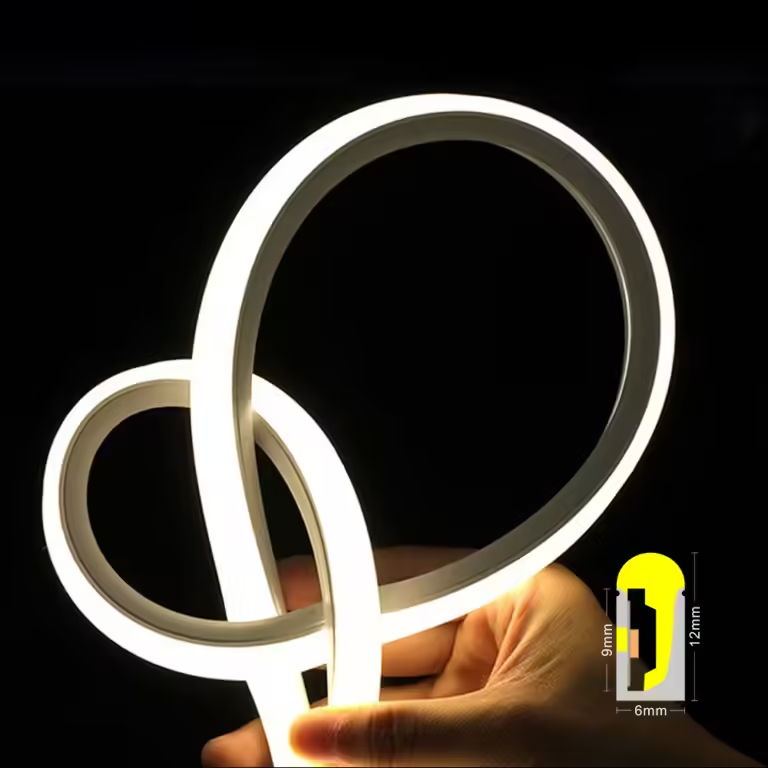
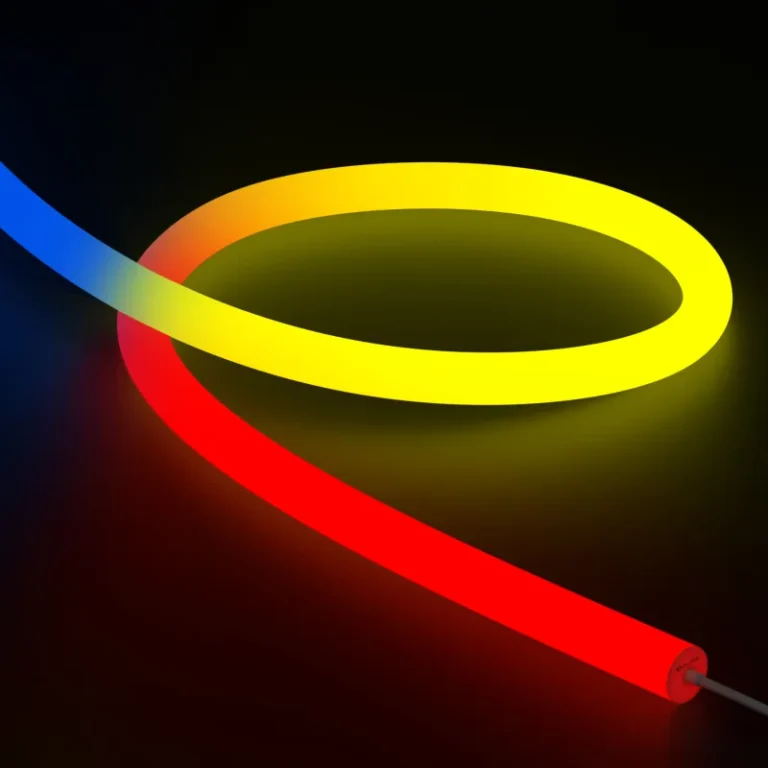
โค้งงอด้านข้าง S0606/S0612 ซิลิโคน LED แถบนีออนยืดหยุ่น
- แรงดันไฟฟ้าขาเข้า: DC24V
- วัตต์: 9.6W/m
- จำนวนนำ: SMD2835 120LEDs/M
- อุณหภูมิสี: 2700K/3000K/4000K/5000K/6500K/ปรับแต่งได้
- ศูนย์วิจัยกฤษณ์เคมี: >80
- ลูเมน: >240lm/m
- เกรด IP: IP65/IP67
- สายเข้า: ด้านหน้า/ด้านข้าง/ด้านล่างสำหรับตัวเลือก
- เส้นผ่านศูนย์กลางการดัดงอ: 100 มม.
- ความยาวที่สามารถตัดได้: 50 มม.
- ความยาว: 5 เมตร/ม้วน
ทำไมป้ายไฟนีออนกลางแจ้งถึงกะพริบหลังฝนตก?
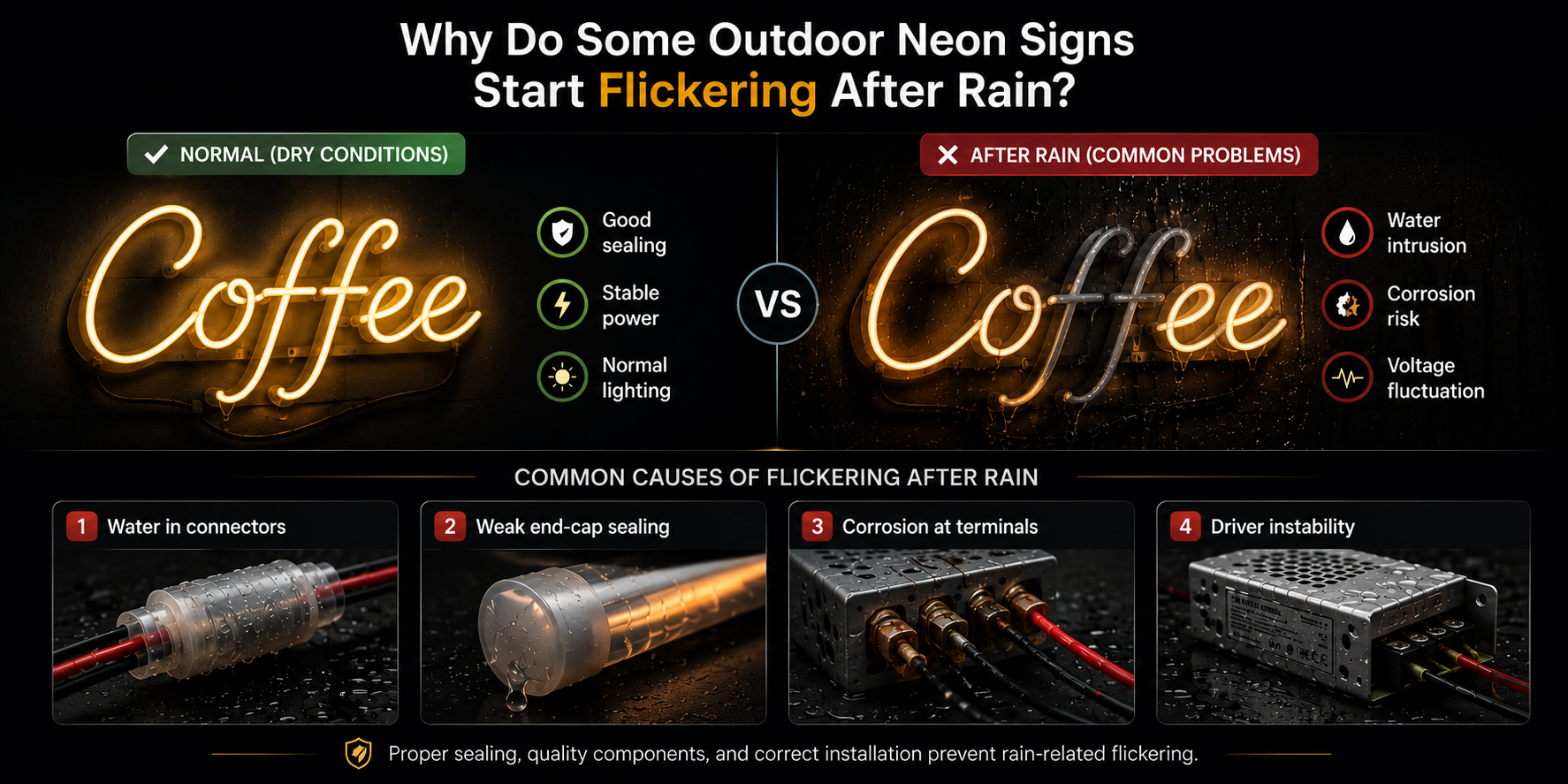
สัญญาณไฟนีออนกลางแจ้งมักจะเริ่มกะพริบหลังฝนตกเมื่อความชื้นค่อยๆ ถึงจุดเชื่อมต่อทางไฟฟ้าที่เปราะบาง ในหลายกรณี ไฟ LED เองยังคงทำงานได้ตามปกติ แต่การปิดผนึกขั้วต่อที่อ่อนแอ ความชื้นที่ติดอยู่ หรือข้อต่อสายเคเบิลน้ำจะค่อยๆ ส่งผลต่อความเสถียรทางไฟฟ้า
สัญญาณแรกของความเสียหายจากน้ำกลางแจ้งคือการกะพริบ ป้ายอาจยังคงเปิดตามปกติ แต่ตัวอักษรบางตัวเริ่มกะพริบหลังจากฝนตก สีไม่เสถียร หรือส่วนหนึ่งดูหรี่ลงกว่าส่วนที่เหลือ
ในการติดตั้งกลางแจ้งจำนวนมาก ปัญหานี้จะค่อยๆ พัฒนาแทนที่จะเกิดขึ้นพร้อมกันทั้งหมด ป้ายอาจทำงานได้ตามปกติในช่วงที่อากาศแห้งเป็นเวลาหลายเดือนก่อนที่ปัญหาเล็กๆ จะเริ่มปรากฏขึ้นหลังจากพายุหรือคืนที่ชื้น นั่นมักจะหมายความว่าความชื้นได้ไปถึงการเชื่อมต่อทางไฟฟ้าแล้วที่ใดที่หนึ่งภายในระบบ
การกะพริบกลางแจ้งมักเริ่มต้นขึ้นในพื้นที่เสี่ยง เช่น:
- ข้อต่อสายเคเบิล
- พื้นที่บัดกรี
- ตัวเชื่อมต่อแบบเปิด
- ฝาปิดปิดผนึกไม่ดี
ตัวอย่างเช่น น้ำฝนสามารถค่อยๆ เคลื่อนไปตามสายไฟและเก็บสะสมไว้ใกล้ขั้วต่อแทนที่จะระบายออก หากการปิดผนึกบริเวณนั้นอ่อนตัวลงเมื่อเวลาผ่านไป ความชื้นจะค่อยๆ เข้าสู่จุดเชื่อมต่อระหว่างที่ฝนตกซ้ำๆ
ในตอนแรกความเสียหายนั้นสังเกตได้ยาก อาจมีมุมหนึ่งกะพริบเป็นครั้งคราวหลังจากฝนตกหนัก ต่อมา การเชื่อมต่อทางไฟฟ้าจะเสถียรน้อยลงและการกะพริบจะชัดเจนขึ้น
ป้ายร้านอาหารกลางแจ้งและการติดตั้งส่วนหน้าอาคารมักจะพัฒนาปัญหาเหล่านี้เร็วขึ้น เนื่องจากต้องเผชิญกับแสงแดด ความชื้น และสภาพอากาศที่เปลี่ยนแปลงซ้ำๆ แสงแดดโดยตรงอาจส่งผลต่อวัสดุปิดผนึกที่มีต้นทุนต่ำเมื่อเวลาผ่านไป กาวหรือวัสดุหดความร้อนบางชนิดอาจค่อยๆ อ่อนลงหลังจากสัมผัสกับสิ่งแวดล้อมเป็นเวลานาน
รายละเอียดการติดตั้งขนาดเล็กมีความสำคัญมากกว่าที่ผู้ซื้อหลายคนตระหนัก ตัวเชื่อมต่อที่หันขึ้นด้านบนมักจะเก็บน้ำได้นานขึ้นหลังฝนตก ในขณะที่สายเคเบิลที่มีเส้นทางไม่ดีสามารถช่วยให้ความชื้นเคลื่อนตัวไปยังจุดเชื่อมต่อไฟฟ้าได้โดยตรง
ผู้ติดตั้งกลางแจ้งในเชิงพาณิชย์มักจะลดความเสี่ยงเหล่านี้ด้วยการปกป้องพื้นที่เสี่ยงอย่างระมัดระวังมากขึ้น ตัวเชื่อมต่อมักถูกวางไว้ในกล่องรวมสัญญาณกันน้ำ ทางออกของสายเคเบิลจะทำมุมลงเพื่อปรับปรุงการระบายน้ำ และแหล่งจ่ายไฟจะอยู่ห่างจากน้ำนิ่ง
ภาพเปรียบเทียบตัวเชื่อมต่อมักจะทำให้ความแตกต่างเหล่านี้เข้าใจง่ายขึ้นระหว่างการวางแผนการติดตั้ง เนื่องจากความล้มเหลวภายนอกจำนวนมากเริ่มต้นขึ้นในพื้นที่ที่ผู้ซื้อไม่ค่อยสังเกตเห็นระหว่างการติดตั้งครั้งแรก
สำหรับโครงการเชิงพาณิชย์ ปัญหาเหล่านี้ไม่ได้เกี่ยวกับรูปลักษณ์เท่านั้น ป้ายกลางแจ้งที่ปิดสนิทอาจยังคงใช้งานได้ระหว่างการติดตั้ง แต่การเข้ารับการบำรุงรักษาซ้ำๆ หลังจากพายุหรือสภาพอากาศในฤดูหนาวสามารถเพิ่มต้นทุนการดำเนินงานในระยะยาวได้ นี่เป็นเหตุผลหนึ่งที่ร้านอาหาร ร้านค้าปลีก และโครงการไฟส่องสว่างด้านหน้ามักจะให้ความสนใจอย่างใกล้ชิดกับตัวเชื่อมต่อแบบกันน้ำ การวางแผนการระบายน้ำ และการป้องกันผู้ขับขี่ก่อนเริ่มการติดตั้ง
| ปัญหาที่เห็นหลังฝนตก | อะไรมักจะเป็นสาเหตุ |
|---|---|
| ตัวอักษรที่ริบหรี่ | ความชื้นถึงจุดเชื่อมต่อที่อ่อนแอ |
| ส่วนหนึ่งกลายเป็นสลัว | การกัดกร่อนค่อยๆ ก่อตัวขึ้นรอบๆ ข้อต่อประสาน |
| ป้ายใช้งานได้ปกติเฉพาะช่วงอากาศแห้ง | น้ำติดอยู่ด้านในสายเคเบิล |
| การปิดระบบแบบสุ่มหลังจากพายุ | การปิดผนึกกันน้ำรอบขั้วต่อ |
| คนขับหยุดชั่วคราว | ความชื้นสะสมภายในแหล่งจ่ายไฟ |
เมื่อความชื้นภายนอกเข้าถึงการเชื่อมต่อทางไฟฟ้าซ้ำแล้วซ้ำเล่า ระดับการกันน้ำเพียงอย่างเดียวมักจะไม่เพียงพออีกต่อไปที่จะรับประกันความน่าเชื่อถือในระยะยาว
IP65, IP67 และ IP68 หมายถึงอะไรสำหรับสัญญาณไฟนีออนกลางแจ้ง

การให้คะแนน IP อธิบายว่าระบบนีออนกลางแจ้งได้รับการออกแบบให้รับความชื้นและสัมผัสกับน้ำได้มากเพียงใด ในการติดตั้งนีออนกลางแจ้งส่วนใหญ่ IP65 ทำงานสำหรับพื้นที่ที่มีการป้องกันบางส่วน โดยทั่วไปจะใช้ IP67 สำหรับสภาวะกลางแจ้งที่สัมผัสมากขึ้น และโดยทั่วไป IP68 จะสงวนไว้สำหรับสภาพแวดล้อมที่เกี่ยวข้องกับการสัมผัสกับน้ำอย่างต่อเนื่อง
อย่างไรก็ตาม ประสิทธิภาพการกันน้ำขึ้นอยู่กับมากกว่าหมายเลข IP ที่พิมพ์ การปิดผนึกตัวเชื่อมต่อ วิธีการติดตั้ง การวางแผนการระบายน้ำ และการเปิดเผยต่อสิ่งแวดล้อมยังคงมีบทบาทสำคัญในความน่าเชื่อถือภายนอกอาคารในระยะยาว
ตัวอย่างเช่น ป้ายไฟนีออนที่ติดตั้งอยู่ใต้หน้าร้านที่มีหลังคาคลุมประสบกับสภาพที่แตกต่างกันมากเมื่อเทียบกับป้ายที่ติดตั้งบนด้านหน้าถนนที่เปิดโล่ง ส่วนใหญ่ต้องเผชิญกับละอองฝนและความชื้นเล็กน้อย ในขณะที่อีกส่วนหนึ่งอาจจัดการกับพายุ ลมแรง การสะสมของหิมะ และการเก็บน้ำรอบ ๆ ขั้วต่อในช่วงฝนตกหนัก
ความแตกต่างในการเปิดเผยนั้นคือสาเหตุที่การให้คะแนน IP มีความสำคัญ
IP65: ทำงานได้ดีที่สุดในพื้นที่กลางแจ้งที่มีการป้องกันบางส่วน
IP65 ได้รับการออกแบบมาเป็นหลักเพื่อรองรับการฉีดน้ำมากกว่าการสัมผัสกับน้ำโดยตรงเป็นเวลานาน
ในโครงการกลางแจ้งจริง IP65 มักใช้สำหรับ:
- ทางเข้าที่ปกคลุม
- ป้ายติดตั้งใต้หลังคา
- หน้าร้านที่มีการป้องกันบางส่วน
- บริเวณที่ฝนไม่ค่อยเข้าถึงตัวเชื่อมต่อโดยตรง
ข้อจำกัดจะสังเกตเห็นได้ชัดเจนมากขึ้นเมื่อติดตั้งเปิดรับแสงจนสุด
ในช่วงที่มีพายุ ฝนที่พัดมาจากลมอาจไปถึงข้อต่อสายเคเบิลและฝาปิดปลายได้ง่ายขึ้น น้ำสามารถสะสมหลังป้ายได้หากระบายน้ำไม่ดี ในสถานการณ์เหล่านั้น การป้องกันการกระเซ็นเพียงอย่างเดียวอาจไม่ได้ให้การป้องกันในระยะยาวเสมอไป
IP67: ใช้กันทั่วไปสำหรับสภาพกลางแจ้งที่เปิดเผยมากขึ้น
IP67 ให้การป้องกันที่แข็งแรงขึ้นจากการสัมผัสกับน้ำชั่วคราว และมักใช้เมื่อสภาพอากาศภายนอกมีความต้องการมากขึ้น
สิ่งนี้อาจมีความสำคัญมากขึ้นในสภาพแวดล้อมเช่น:
- อาคารริมถนน
- ภายนอกร้านอาหาร
- ป้ายบนดาดฟ้า
- ฤดูฝนที่ยาวนาน
- บริเวณที่มีการสัมผัสความชื้นซ้ำๆ
ตัวอย่างเช่น หิมะละลายรอบขั้วต่ออาจทำให้ความชื้นอยู่ในพื้นที่หนึ่งเป็นเวลาหลายชั่วโมงก่อนทำให้แห้ง ในสถานการณ์เช่นนี้ การปิดผนึกที่แข็งแรงขึ้นอาจให้การป้องกันเพิ่มเติมเมื่อเทียบกับระบบป้องกันการกระเซ็นขั้นพื้นฐาน
ภาพเปรียบเทียบตัวเชื่อมต่อมักจะทำให้ความแตกต่างเหล่านี้เข้าใจง่ายขึ้นระหว่างการวางแผนการติดตั้ง
สำหรับโครงการที่เกี่ยวข้องกับส่วนหน้าอาคารหรือการติดตั้งกลางแจ้งในระยะยาว การทำความเข้าใจว่าระบบนีออนของ IP67 ถูกสร้างขึ้นอย่างไรและที่ที่ใช้กันทั่วไปสามารถช่วยได้ในระหว่างการวางแผน คุณสามารถสำรวจเพิ่มเติมได้ในคู่มือของเราเกี่ยวกับ IP67 ยืดหยุ่นนีออนกันน้ำยืดหยุ่นสำหรับแสงไฟหน้าอาคาร
IP68: ส่วนใหญ่ใช้ในการสัมผัสกับน้ำอย่างต่อเนื่อง
โดยทั่วไปจะใช้ IP68 โดยที่แสงยังคงอยู่ใกล้น้ำอย่างต่อเนื่อง แทนที่จะใช้เฉพาะกับฝนหรือความชื้นเท่านั้น
นี่เป็นเรื่องปกติมากขึ้นใน:
- น้ำพุ
- แสงใต้น้ำ
- ลักษณะน้ำภูมิทัศน์
- สภาพแวดล้อมสระว่ายน้ำ
ป้ายไฟนีออนกลางแจ้งส่วนใหญ่ไม่ต้องการ IP68 เนื่องจากสภาพอากาศแตกต่างจากการแช่น้ำอย่างต่อเนื่อง
สำหรับโครงการที่เกี่ยวข้องกับการสัมผัสความชื้นอย่างต่อเนื่องหรือสภาพแวดล้อมแสงที่จมอยู่ใต้น้ำ ตัวอย่างนี้ IP68 กันน้ำ Neon Flex แสดงให้เห็นว่าระบบที่ได้รับการจัดอันดับกลางแจ้งที่ปิดสนิทโดยทั่วไปได้รับการออกแบบอย่างไร

| เรตติ้งไอพี | สิ่งที่มักจะจัดการกลางแจ้ง | ตัวอย่างการติดตั้งทั่วไป |
|---|---|---|
| ip65 | สเปรย์กันฝนและแสงกลางแจ้ง | ป้ายหน้าร้านแบบมีหลังคา |
| ip67 | ฝนตกหนักและความชื้นสะสมชั่วคราว | ซุ้มกลางแจ้งและป้ายร้านอาหาร |
| ip68 | การเปิดรับน้ำอย่างต่อเนื่อง | น้ำพุและไฟใต้น้ำ |
แม้จะมีระดับ IP ที่แข็งแกร่ง แต่คุณภาพการติดตั้งยังคงส่งผลต่อความน่าเชื่อถือกลางแจ้ง
ระบบ IP67 ที่ปิดสนิทอาจยังคงมีปัญหาอยู่หาก:
- ตัวเชื่อมต่อยังคงถูกเปิดเผยหลังกำแพง
- น้ำสะสมรอบตัวคนขับ
- การระบายน้ำถูกละเลย
- สายออกหงายขึ้นตอนฝนตก
นั่นคือเหตุผลที่การติดตั้งกลางแจ้งเชิงพาณิชย์มักจะให้ความสนใจอย่างใกล้ชิดกับทิศทางของตัวเชื่อมต่อ เส้นทางการระบายน้ำ และตำแหน่งของไดรเวอร์ แทนที่จะอาศัยเฉพาะการจัดอันดับ IP ที่พิมพ์ออกมาเท่านั้น
ทำไมซิลิโคนนีออนถึงจับสภาพอากาศกลางแจ้งได้ดีกว่า PVC

การเลือกวัสดุอาจส่งผลต่อการที่สัญญาณไฟนีออนกลางแจ้งมีอายุมากขึ้นเมื่อเวลาผ่านไป แม้ว่าประสิทธิภาพในระยะยาวจะขึ้นอยู่กับโปรไฟล์นีออนเฉพาะ การสัมผัสรังสียูวี สภาพแวดล้อมในการติดตั้ง และคุณภาพการปิดผนึกเป็นอย่างมาก
เมื่อป้ายไฟนีออนกลางแจ้งเป็นของใหม่ ท่อพีวีซีและซิลิโคนอาจมีลักษณะคล้ายกันมาก ความแตกต่างมักจะสังเกตเห็นได้ชัดเจนมากขึ้นหลังจากได้รับแสงแดด ฝน ความชื้น และอุณหภูมิตามฤดูกาลซ้ำๆ
ป้ายกลางแจ้งราคาประหยัดจำนวนมากใช้ท่อพีวีซีเพราะโดยทั่วไปจะมีราคาถูกกว่าในการผลิต เมื่อเวลาผ่านไป การเปิดรับแสงกลางแจ้งเป็นเวลานานอาจค่อยๆ เปลี่ยนวัสดุ ในระบบนีออนที่มีสีอ่อนกว่าบางระบบ การได้รับรังสียูวีนานอาจทำให้สีเหลืองได้ ในขณะที่อุณหภูมิที่เย็นกว่าอาจทำให้วัสดุบางชนิดรู้สึกแข็งขึ้นหรือยืดหยุ่นน้อยลง
สิ่งนี้มักจะสังเกตเห็นได้ชัดเจนขึ้นเมื่อใช้ตัวอักษรโค้ง มุม และพื้นที่ติดตั้งที่ท่ออยู่ภายใต้ความเครียด เมื่ออายุมากขึ้น รอยแตกที่พื้นผิวขนาดเล็กหรือจุดอ่อนในการปิดผนึกอาจมีโอกาสมากขึ้นรอบๆ โค้งและบริเวณที่เชื่อมต่อ ซึ่งเพิ่มความเสี่ยงที่ความชื้นจะถึงจุดที่เปราะบาง
พฤติกรรมของวัสดุยังขึ้นอยู่กับโปรไฟล์นีออนและสภาพแวดล้อมเฉพาะอีกด้วย ระบบนีออนกลางแจ้งบางระบบใช้ซิลิโคนเพราะโดยทั่วไปยังคงมีความยืดหยุ่นมากกว่าในช่วงที่อุณหภูมิเปลี่ยนแปลง และอาจทนต่อการเคลื่อนไหวที่เกี่ยวข้องกับสภาพอากาศได้อย่างต่อเนื่องมากขึ้น อย่างไรก็ตาม ความน่าเชื่อถือกลางแจ้งในระยะยาวยังคงขึ้นอยู่กับสภาพรังสียูวี การปิดผนึกกันน้ำ การป้องกันขั้วต่อ และการออกแบบการติดตั้งมากกว่าวัสดุเพียงอย่างเดียว
การเปรียบเทียบแบบเคียงข้างกันระหว่างท่อพีวีซีที่มีอายุมากกับซิลิโคนนีออนสามารถช่วยให้เห็นภาพว่าวัสดุที่เสื่อมสภาพกลางแจ้งอาจปรากฏขึ้นเมื่อเวลาผ่านไป
| สภาพภายนอกอาคาร | ซิลิโคนนีออน | พีวีซีนีออน |
|---|---|---|
| รับแสงแดดโดยตรง | อาจคงสภาพสายตาได้นานขึ้นในสภาพกลางแจ้งบางอย่าง | ท่อสีอ่อนบางสีอาจค่อยๆ เหลือง |
| อุณหภูมิเยือกแข็ง | มักจะยังคงมีความยืดหยุ่นมากขึ้นในช่วงที่อุณหภูมิเปลี่ยนแปลง | วัสดุอาจค่อยๆรู้สึกหนักขึ้น |
| ตัวอักษรโค้งและโลโก้ | อาจทนต่อการเคลื่อนไหวรอบโค้งได้เรื่อยๆ | ความชราอาจมองเห็นได้ชัดเจนขึ้นใกล้บริเวณที่มีความเครียด |
| เปิดรับแสงกลางแจ้งระยะยาว | ประสิทธิภาพขึ้นอยู่กับการติดตั้งและสภาพแวดล้อม | ริ้วรอยบนพื้นผิวอาจสังเกตเห็นได้ชัดเจนขึ้นเมื่อเวลาผ่านไป |
เมื่อท่อกลางแจ้งเริ่มแข็งตัว เสื่อมสภาพ หรือพัฒนาจุดอ่อนในการปิดผนึก การป้องกันน้ำรอบขั้วต่อและทางออกของสายเคเบิลอาจเสี่ยงต่อปัญหาความชื้นมากขึ้น
ทำไมอุปกรณ์จ่ายไฟกลางแจ้งจึงล้มเหลวบ่อยกว่าตัวนีออนเอง
ในความล้มเหลวของสัญญาณไฟนีออนกลางแจ้งหลายครั้ง แหล่งจ่ายไฟหรือไดรเวอร์อาจพัฒนาปัญหาก่อนไฟ LED เอง ความน่าเชื่อถือกลางแจ้งไม่เพียงขึ้นอยู่กับท่อนีออนแบบกันน้ำเท่านั้น แต่ยังขึ้นอยู่กับว่าผู้ขับขี่ได้รับการปกป้องจากความชื้น การควบแน่น การเปลี่ยนแปลงของอุณหภูมิ และน้ำนิ่งได้ดีเพียงใด
ผู้ซื้อจำนวนมากมุ่งเน้นไปที่ท่อนีออนเป็นหลัก เนื่องจากเป็นส่วนที่มองเห็นได้ของป้าย แต่ประสิทธิภาพกลางแจ้งยังขึ้นอยู่กับตำแหน่งของผู้ขับขี่และการสัมผัสสิ่งแวดล้อมเป็นอย่างมาก
ตัวอย่างเช่น คนขับที่ติดตั้งใกล้กับพื้นด้านหลังด้านหน้าร้านอาหารอาจยังคงชื้นอยู่ได้นานขึ้นหลังจากเกิดพายุ เนื่องจากน้ำฝนและหิมะละลายตามธรรมชาติจะสะสมอยู่ใกล้ๆ กับผนังด้านนอก แม้ว่านีออนจะกันน้ำได้ แต่ความชื้นที่ติดอยู่รอบๆ แหล่งจ่ายไฟก็อาจส่งผลต่ออุปกรณ์อิเล็กทรอนิกส์เมื่อเวลาผ่านไป
ปัญหาทั่วไปอื่นปรากฏภายในกล่องป้ายที่ปิดล้อม ในระหว่างวัน ความร้อนจะก่อตัวขึ้นภายในตู้ ในเวลากลางคืน อุณหภูมิจะลดลงและการควบแน่นอาจเกิดขึ้นรอบๆ ตัวขับและการเชื่อมต่อทางไฟฟ้า ระบบอาจป้องกันฝนโดยตรงในขณะที่ยังคงประสบกับความชื้นที่ติดอยู่ซ้ำๆ
นี่เป็นเหตุผลหนึ่งที่ปัญหาแหล่งจ่ายไฟกลางแจ้งมักค่อยๆ พัฒนาไป สัญญาณอาจกะพริบเป็นครั้งคราวหลังจากฝนตก ความสว่างอาจไม่เสถียรในช่วงสภาพอากาศชื้น หรือบางส่วนอาจเริ่มใหม่หลังจากแห้ง
ตัวติดตั้งกลางแจ้งเชิงพาณิชย์มักจะลดความเสี่ยงเหล่านี้โดยการวางตำแหน่งคนขับให้ห่างจากน้ำนิ่ง ช่วยให้อากาศไหลเวียนรอบตัวเรือน และป้องกันการเดินสายไฟภายในกล่องรวมสัญญาณกันน้ำหรือระบบท่อร้อยสายที่ปิดสนิท
ปัญหาความชื้นในที่กลางแจ้งอาจสังเกตเห็นได้ชัดเจนมากขึ้นในช่วงฤดูหนาว เนื่องจากหิมะ การควบแน่น และอุณหภูมิเยือกแข็งทำให้เกิดความเครียดเพิ่มเติมต่อไดรเวอร์ ตัวเชื่อมต่อ และจุดปิดผนึก
การทำความเข้าใจว่างานปิดผนึกกันน้ำ คอนเนคเตอร์ ไดรเวอร์ และเงื่อนไขการติดตั้งทำงานร่วมกันได้อย่างไร มักจะมีความสำคัญมากกว่าข้อกำหนดด้านความสว่างเพียงอย่างเดียวระหว่างการวางแผนแสงกลางแจ้ง
ผู้ซื้อที่เปรียบเทียบระบบไฟส่องสว่างกลางแจ้งอาจได้รับประโยชน์จากการทำความเข้าใจว่าการป้องกันน้ำทำงานอย่างไรในรูปแบบไฟ LED ต่างๆ ของเรา คู่มือสุดยอดสำหรับไฟแถบ LED กันน้ำ อธิบายโครงสร้างกันน้ำทั่วไป วิธีการปิดผนึก และข้อควรพิจารณาในการป้องกันกลางแจ้งโดยละเอียดยิ่งขึ้น
ทำไมป้ายไฟนีออนกลางแจ้งบางครั้งล้มเหลวหลังฤดูหนาว
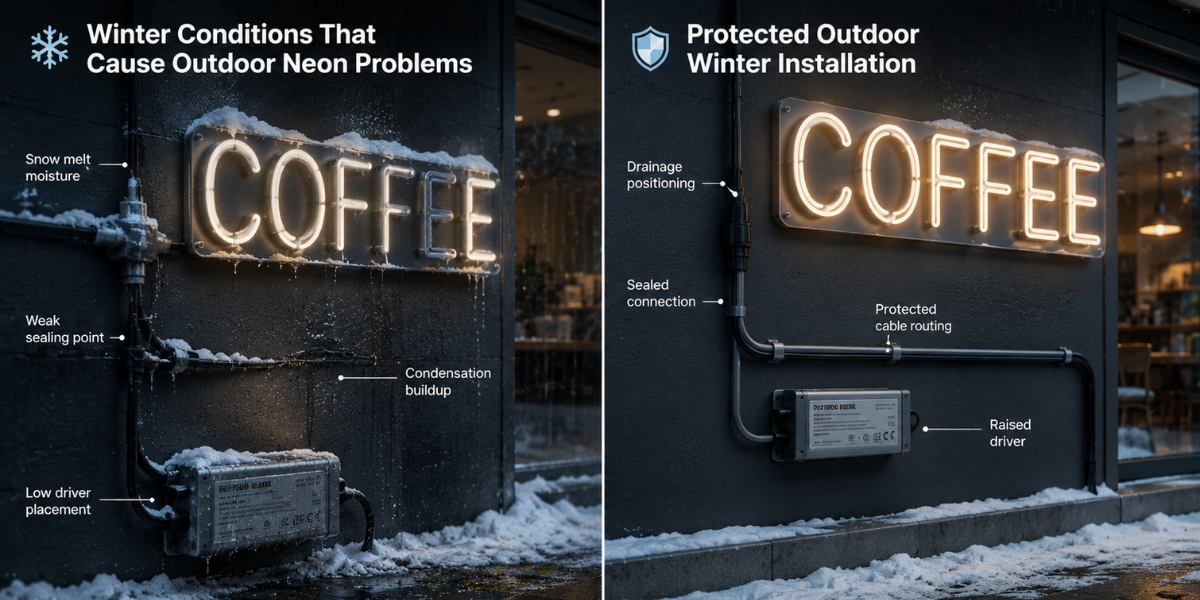
สัญญาณไฟนีออนกลางแจ้งบางครั้งเริ่มกะพริบหรือปิดตัวลงหลังจากฤดูหนาวเนื่องจากหิมะ อุณหภูมิเยือกแข็ง ความชื้นที่ติดอยู่ และการควบแน่นทำให้เกิดความเครียดประเภทต่างๆ บนขั้วต่อ จุดปิดผนึก และส่วนประกอบทางไฟฟ้ามากกว่าฝนปกติ
สัญญาณไฟนีออนกลางแจ้งจำนวนมากสามารถอยู่รอดได้ในฝนตกหนักโดยไม่มีปัญหาที่ชัดเจน จากนั้นจึงเริ่มแสดงปัญหาหลังฤดูหนาว เหตุผลหนึ่งคือหิมะมีพฤติกรรมแตกต่างจากน้ำฝนนอกบ้านอย่างมาก
น้ำฝนมักจะไหลออกจากพื้นผิวค่อนข้างเร็ว ในขณะที่หิมะมักจะยังคงอยู่รอบๆ ตัวเชื่อมต่อและพื้นที่ติดตั้งนานขึ้น
ในช่วงฤดูหนาว หิมะสามารถสะสมได้:
- ทางออกสายเคเบิล
- คลิปติด
- ข้อต่อ
- ฝาครอบแหล่งจ่ายไฟ
- ช่องว่างหลังป้าย
เมื่ออุณหภูมิสูงขึ้นในระหว่างวัน หิมะที่ละลายอย่างช้าๆ จะกลายเป็นน้ำและอาจเข้าสู่ช่องเล็กๆ รอบๆ จุดปิดผนึกที่อ่อนแอกว่า ในเวลากลางคืน ความชื้นที่ติดอยู่สามารถแข็งตัวได้อีกครั้ง
วัฏจักรการแช่แข็ง-ละลายซ้ำๆ มักจะเพิ่มความเครียดบริเวณจุดเชื่อมต่อที่มีช่องโหว่
น้ำจะขยายตัวเล็กน้อยเมื่อถูกแช่แข็ง หากความชื้นถึงขั้วต่อที่อ่อนแอหรือข้อต่อเคเบิลแล้ว การแช่แข็งซ้ำแล้วซ้ำอีกอาจทำให้การปิดผนึกอ่อนลงเมื่อเวลาผ่านไป ป้ายอาจทำงานต่อไปได้ตลอดฤดูหนาว จากนั้นเริ่มแสดงปัญหาในสัปดาห์ต่อมา เนื่องจากการกัดกร่อนค่อยๆ พัฒนารอบๆ การเชื่อมต่อภายใน
นี่เป็นเหตุผลหนึ่งที่ความล้มเหลวของกลางแจ้งบางอย่างปรากฏ "สุ่ม" ในฤดูใบไม้ผลิ แม้ว่าความเสียหายที่เกี่ยวข้องกับความชื้นอาจเริ่มต้นขึ้นในช่วงเดือนที่อากาศหนาวเย็น
สภาพอากาศหนาวเย็นยังสร้างปัญหาอีกอย่างหนึ่งที่ผู้ซื้อจำนวนมากไม่ค่อยพิจารณา: การควบแน่น
ตัวอย่างเช่น ตู้ป้ายอาจป้องกันฝนโดยตรงในขณะที่ยังคงดักจับความชื้นอยู่ภายใน ระหว่างการเปลี่ยนแปลงของอุณหภูมิ อากาศที่อุ่นขึ้นภายในตู้อาจเปลี่ยนเป็นการควบแน่นรอบพื้นผิวโลหะที่เย็นกว่าและส่วนประกอบทางไฟฟ้า
ความชื้นมักสะสมอยู่รอบๆ:
- ผู้ขับขี่
- การเชื่อมต่อสาย
- หมุดโลหะ
- ข้อต่อประสาน
แม้จะไม่มีการรั่วไหลที่มองเห็นได้ ความชื้นที่ติดอยู่อาจส่งผลต่ออุปกรณ์อิเล็กทรอนิกส์เมื่อเวลาผ่านไป
ภาพธรรมดาที่แสดงการควบแน่นที่ก่อตัวขึ้นภายในกล่องป้ายกลางแจ้งที่ปิดสนิทจะอธิบายสิ่งนี้ได้ชัดเจนกว่าแผนภาพทางเทคนิคขั้นสูง
ระบบนีออนกลางแจ้งเชิงพาณิชย์มักได้รับการออกแบบโดยให้ความสำคัญกับการระบายน้ำ การระบายอากาศ และการจัดการความชื้น แทนที่จะปิดผนึกทุกพื้นที่ให้แน่นสนิท การติดตั้งบางอย่างอนุญาตให้มีการควบคุมการไหลของอากาศเพื่อให้ความชื้นที่ติดอยู่สามารถหลบหนีได้อย่างเป็นธรรมชาติมากขึ้น
รายละเอียดการติดตั้งขนาดเล็กสามารถสร้างความแตกต่างที่เห็นได้ชัดเจนในสภาพแวดล้อมที่เย็นกว่า:
- ตัวเชื่อมต่อที่หันลงมักจะระบายน้ำเร็วขึ้น
- ผู้ขับขี่ที่ยกขึ้นอาจอยู่ห่างจากหิมะละลาย
- การระบายอากาศสามารถลดการควบแน่นที่ติดอยู่ได้
- พฤติกรรมของวัสดุอาจเปลี่ยนแปลงได้แตกต่างกันในช่วงอุณหภูมิเยือกแข็งขึ้นอยู่กับลักษณะการสัมผัสของนีออนและการสัมผัสสิ่งแวดล้อม
| สภาพฤดูหนาว | มักเกิดขึ้นกับสัญญาณที่ได้รับการคุ้มครองไม่ดี |
|---|---|
| สโนว์นั่งรอบตัวเชื่อมต่อ | ความชื้นค่อยๆ ถึงจุดปิดผนึกที่อ่อนแอ |
| รอบการแช่แข็งกลางวัน/กลางคืน | ความชื้นที่แช่แข็งจะขยายตัวภายในช่องว่างขนาดเล็ก |
| คอนเดนเสทติดอยู่ภายในกล่องป้าย | การกัดกร่อนเกิดขึ้นรอบอุปกรณ์อิเล็กทรอนิกส์ |
| ท่อบางในสภาพอากาศหนาวเย็น | พฤติกรรมทางวัตถุอาจค่อยๆเปลี่ยนไป |
| น้ำนิ่งหลังจากหิมะละลาย | ไดรเวอร์และข้อต่อสายเคเบิลยังคงเปียกอยู่นานขึ้น |
การเปิดรับฤดูหนาวเป็นเหตุผลหนึ่งที่ประสิทธิภาพกลางแจ้งในระยะยาวขึ้นอยู่กับมากกว่าการให้คะแนนแบบกันน้ำเพียงอย่างเดียว การเลือกวัสดุ การปิดผนึกตัวเชื่อมต่อ การวางแผนการระบายน้ำ และคุณภาพการติดตั้ง ล้วนส่งผลต่อการที่ระบบนีออนตอบสนองต่อสภาพอากาศหนาวเย็นเมื่อเวลาผ่านไป
ข้อผิดพลาดในการติดตั้งกลางแจ้งทั่วไปที่ทำให้เกิดความเสียหายจากน้ำ
ปัญหาน้ำนีออนกลางแจ้งจำนวนมากเริ่มต้นระหว่างการติดตั้งมากกว่าจากท่อนีออน แม้ว่าระบบนีออนจะได้รับการออกแบบสำหรับการใช้งานกลางแจ้ง การวางตำแหน่งขั้วต่อ การระบายน้ำ การกำหนดเส้นทางสายเคเบิล และตำแหน่งของไดรเวอร์ยังคงส่งผลต่อความน่าเชื่อถือในระยะยาว
ข้อผิดพลาดทั่วไปอย่างหนึ่งคือการปล่อยให้ขั้วต่อหงายขึ้น หลังจากฝนตกหนัก น้ำอาจค่อยๆ สะสมบริเวณจุดปิดผนึก แทนที่จะระบายออกตามธรรมชาติ
การระบายน้ำที่ไม่ดีหลังป้ายทำให้เกิดปัญหาอื่น เมื่อน้ำติดอยู่ระหว่างพื้นผิวผนังและแผ่นรองป้าย ความชื้นสามารถอยู่รอบๆ ขั้วต่อ และสายเคเบิลจะไหลออกนานขึ้นหลังจากเกิดพายุ
บางครั้งอะแดปเตอร์ไฟฟ้าในร่มก็ใช้กลางแจ้งเพื่อลดต้นทุนในการติดตั้ง ป้ายอาจยังคงทำงานได้ในตอนแรก แต่ความชื้นและการควบแน่นอาจส่งผลต่ออุปกรณ์อิเล็กทรอนิกส์เมื่อเวลาผ่านไป
ข้อต่อสายเคเบิลที่เปิดออกทำให้เกิดความเสี่ยงที่คล้ายคลึงกัน แม้แต่ช่องว่างเล็กๆ รอบจุดเชื่อมต่อของลวดก็อาจทำให้ความชื้นเข้ามาทีละน้อยได้ในระหว่างการสัมผัสกับฝนซ้ำๆ
เรื่องของคนขับก็สำคัญเช่นกัน ผู้ขับขี่ที่ติดตั้งใกล้กับพื้นมากเกินไปมักจะชื้นอีกต่อไปเนื่องจากน้ำฝนและหิมะละลายจะสะสมตามธรรมชาติใกล้กับด้านล่างของผนังภายนอก
| ข้อผิดพลาดในการติดตั้ง | สิ่งที่มักจะเกิดขึ้นในภายหลัง |
|---|---|
| ขั้วต่อหันขึ้น | น้ำสะสมรอบจุดปิดผนึก |
| ไม่มีการระบายน้ำหลังป้าย | ความชื้นติดอยู่หลังฝนตก |
| ไดรเวอร์ในร่มใช้กลางแจ้ง | ความชื้นค่อยๆ ส่งผลต่ออุปกรณ์อิเล็กทรอนิกส์ |
| ข้อต่อสายเคเบิลแบบเปิด | ความชื้นเข้าถึงการเชื่อมต่อทางไฟฟ้า |
| คนขับติดตั้งใกล้พื้นดิน | น้ำฝนและหิมะละลายยังคงอยู่รอบตัวเรือน |
ปัญหาเหล่านี้เป็นเหตุผลหนึ่งที่การติดตั้งนีออนกลางแจ้งเชิงพาณิชย์มักจะให้ความสนใจอย่างใกล้ชิดกับทิศทางของตัวเชื่อมต่อ การวางแผนการระบายน้ำ และตำแหน่งของผู้ขับขี่ เมื่อเทียบกับจอแสดงผลชั่วคราวหรือป้ายในร่มที่ตกแต่ง
ป้ายไฟนีออนกลางแจ้งเชิงพาณิชย์ถูกสร้างขึ้นแตกต่างกันอย่างไร
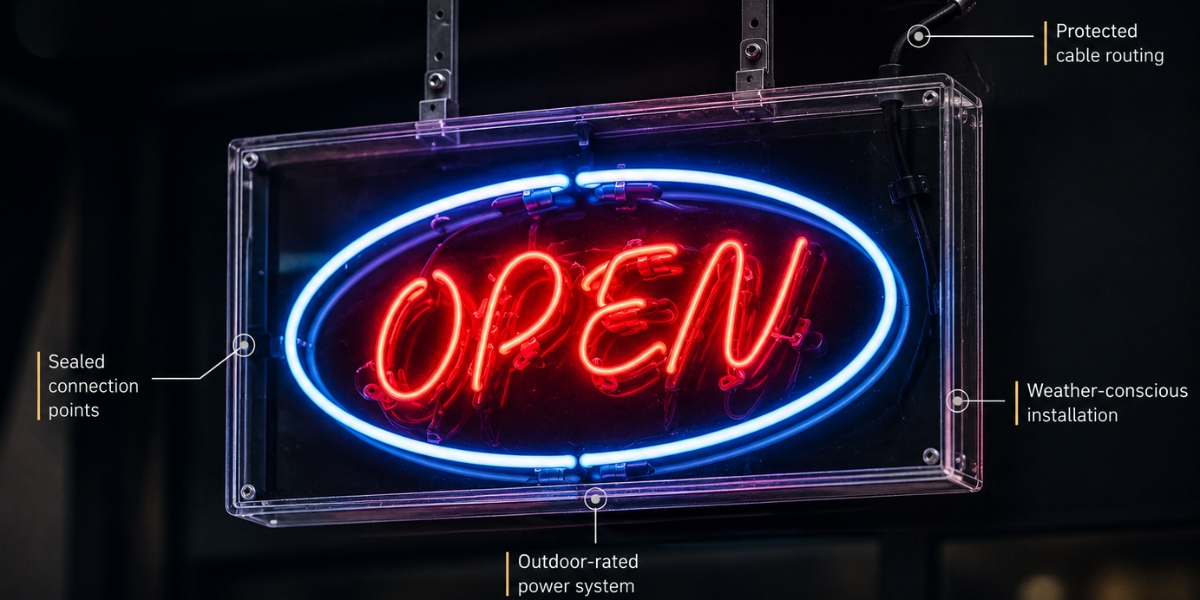
ระบบนีออนกลางแจ้งเชิงพาณิชย์มักได้รับการออกแบบโดยให้ความสำคัญกับการปิดผนึกกันน้ำ การระบายน้ำ การปกป้องผู้ขับขี่ และการสัมผัสสิ่งแวดล้อมในระยะยาวมากกว่าป้ายในร่มตกแต่ง การติดตั้งกลางแจ้งอาจต้องเผชิญกับฝน ความชื้น แสงแดด การเปลี่ยนแปลงของอุณหภูมิ และสภาพอากาศในฤดูหนาวเป็นระยะเวลานาน ซึ่งอาจส่งผลต่อความน่าเชื่อถือในระยะยาว
ด้วยเหตุนี้ โครงการกลางแจ้งเชิงพาณิชย์จำนวนมากจึงไม่ได้เน้นเฉพาะรูปลักษณ์เท่านั้น แต่ยังเน้นที่ระบบทั้งหมดจัดการกับความชื้น การระบายน้ำ และความเครียดจากสิ่งแวดล้อมเมื่อเวลาผ่านไป
การปิดผนึกตัวเชื่อมต่อมักจะได้รับความสนใจมากขึ้น การกำหนดเส้นทางสายเคเบิลมักจะมีการวางแผนเพื่อลดการสัมผัสน้ำโดยตรง และตัวขับที่ได้รับการจัดอันดับกลางแจ้งจะอยู่ในตำแหน่งที่ความชื้นมีโอกาสน้อยที่จะรวบรวม ผู้ติดตั้งอาจให้ความสนใจอย่างใกล้ชิดกับการระบายน้ำหลังป้าย เนื่องจากน้ำที่ติดอยู่อาจค่อยๆ สร้างปัญหาเกี่ยวกับขั้วต่อและแหล่งจ่ายไฟ
การเลือกวัสดุยังสามารถส่งผลต่ออายุของระบบกลางแจ้งเมื่อเวลาผ่านไป ป้ายไฟนีออนตกแต่งบางอันใช้ท่อพีวีซีเพราะอาจลดต้นทุนการผลิต ในขณะที่ระบบกลางแจ้งบางระบบใช้ซิลิโคนที่ความยืดหยุ่นระหว่างการเปลี่ยนแปลงของอุณหภูมิและการเคลื่อนไหวของสิ่งแวดล้อมมีความสำคัญมากขึ้น อย่างไรก็ตาม ประสิทธิภาพกลางแจ้งในระยะยาวยังคงขึ้นอยู่กับประเภทโปรไฟล์ การเปิดรับแสงยูวี คุณภาพการปิดผนึก และการออกแบบการติดตั้ง
สิ่งนี้อาจสังเกตเห็นได้ชัดเจนยิ่งขึ้นบนป้ายด้านหน้าที่ใหญ่ขึ้น โดยที่นีออนโค้งงอรอบๆ ตัวอักษรช่อง โครงสร้างอลูมิเนียม และรูปทรงโลโก้ เมื่อเวลาผ่านไป ความยืดหยุ่นของวัสดุและการสัมผัสสิ่งแวดล้อมอาจส่งผลต่อทั้งรูปลักษณ์และการปิดผนึก
โครงการกลางแจ้งเชิงพาณิชย์ยังพิจารณาถึงการป้องกันการกันน้ำที่แข็งแกร่งกว่า โดยที่การติดตั้งต้องเผชิญกับฝน ความชื้น หรือหิมะซ้ำๆ อย่างไรก็ตาม ความน่าเชื่อถือในระยะยาวขึ้นอยู่กับมากกว่าการให้คะแนน IP เพียงอย่างเดียว การปิดผนึกตัวเชื่อมต่อ การวางแผนการระบายน้ำ การกำหนดเส้นทางสายเคเบิล และตำแหน่งของไดรเวอร์ ล้วนส่งผลต่อการทำงานของระบบนีออนกลางแจ้งเมื่อเวลาผ่านไป
ระบบนีออนเชิงพาณิชย์กลางแจ้งโดยทั่วไปได้รับการออกแบบโดยคำนึงถึงสิ่งแวดล้อมในระยะยาวมากกว่ารูปลักษณ์ภายนอกในวันติดตั้ง
ผู้ซื้อควรตรวจสอบอะไรก่อนเลือกป้ายไฟนีออนกลางแจ้ง?
ก่อนเลือกป้ายไฟนีออนกลางแจ้ง ผู้ซื้อควรมองข้ามความสว่างและรูปลักษณ์เพียงอย่างเดียว ความน่าเชื่อถือกลางแจ้งในระยะยาวมักขึ้นอยู่กับการปิดผนึกกันน้ำ สภาพแวดล้อมในการติดตั้ง วัสดุท่อ การป้องกันผู้ขับขี่ และการวางแผนการระบายน้ำมากกว่าสิ่งที่เห็นในภาพถ่ายผลิตภัณฑ์
ป้ายไฟนีออนกลางแจ้งส่วนใหญ่มีลักษณะคล้ายกันทางออนไลน์ แต่ประสิทธิภาพภายนอกอาคารอาจแตกต่างกันอย่างมากขึ้นอยู่กับการสัมผัสสิ่งแวดล้อมและคุณภาพการติดตั้ง
การจัดอันดับ IP ควรตรงกับสภาพแวดล้อมการติดตั้ง ป้ายใต้หน้าร้านที่มีหลังคาคลุมประสบกับสภาพที่แตกต่างกันมากเมื่อเทียบกับป้ายที่ติดตั้งบนด้านหน้าถนนที่เปิดโล่ง สำหรับสภาพกลางแจ้งที่เปิดโล่งมากขึ้น มักจะพิจารณาถึงการป้องกันการกันน้ำที่แข็งแกร่งขึ้น แม้ว่าประสิทธิภาพในระยะยาวจะยังคงขึ้นอยู่กับคุณภาพการปิดผนึก วิธีการระบายน้ำ และการติดตั้งอย่างมาก
วัสดุท่อยังส่งผลต่ออายุป้ายกลางแจ้ง วัสดุบางชนิดอาจค่อยๆ แข็งขึ้นหรือแสดงริ้วรอยที่มองเห็นได้หลังจากได้รับรังสียูวีนาน โดยเฉพาะอย่างยิ่งในแสงแดดโดยตรง พฤติกรรมของวัสดุยังขึ้นอยู่กับโปรไฟล์นีออนเฉพาะ สภาพแวดล้อม และสภาพแวดล้อมในการติดตั้ง
การปิดผนึกคอนเนคเตอร์เป็นหนึ่งในรายละเอียดที่สำคัญที่สุดในการตรวจสอบ ข้อต่อสายเคเบิลที่อ่อนแอเป็นสาเหตุทั่วไปที่สัญญาณไฟนีออนกลางแจ้งเริ่มกะพริบหลังฝนตก ตัวเชื่อมต่อที่ปิดสนิทอย่างเหมาะสมช่วยลดโอกาสที่ความชื้นจะค่อยๆ ถึงจุดเชื่อมต่อทางไฟฟ้า
แหล่งจ่ายไฟควรเหมาะสมกับสภาพภายนอกอาคาร ปัญหาความน่าเชื่อถือกลางแจ้งจำนวนมากเริ่มต้นขึ้นเมื่อติดตั้งไดรเวอร์ในร่มด้านนอกโดยไม่มีการป้องกันความชื้นหรือการควบแน่นที่เพียงพอ
ตำแหน่งของไดรเวอร์มีความสำคัญมากพอๆ กับคุณภาพของไดรเวอร์ แม้แต่ไดรเวอร์ที่ได้รับการจัดอันดับกลางแจ้งอาจมีปัญหาหากติดตั้งใกล้กับน้ำนิ่งหรือภายในพื้นที่ปิดที่ปิดสนิทโดยไม่มีการไหลของอากาศ
ควรพิจารณาการระบายน้ำหลังป้ายด้วย การติดตั้งกลางแจ้งเชิงพาณิชย์จำนวนมากทำให้น้ำระบายออกตามธรรมชาติ แทนที่จะดักจับความชื้นด้านหลังโครงสร้าง
| สิ่งที่ผู้ซื้อควรตรวจสอบ | ทำไมมันสำคัญกลางแจ้ง |
|---|---|
| เรตติ้งไอพี | ส่งผลต่อความชื้นในสิ่งแวดล้อมที่ระบบออกแบบมาให้จัดการ |
| วัสดุท่อ | วัสดุที่เสื่อมสภาพอาจแตกต่างกันไปขึ้นอยู่กับการสัมผัสรังสียูวีและสภาพแวดล้อม |
| การปิดผนึกตัวเชื่อมต่อ | ช่วยลดความชื้นเข้าถึงข้อต่อไฟฟ้า |
| ไดร์เวอร์ที่จัดกลางแจ้ง | ปกป้องอุปกรณ์อิเล็กทรอนิกส์จากความชื้นและสภาพอากาศ |
| ระบายน้ำรอบป้าย | ลดการสะสมความชื้นในระยะยาวหลังการติดตั้ง |
การเปรียบเทียบระยะใกล้ระหว่างขั้วต่อกลางแจ้งที่ปิดสนิทและขั้วต่อแบบเปิดโล่งจะพอดีกับที่นี่อย่างเป็นธรรมชาติ เนื่องจากผู้ซื้อจำนวนมากไม่เคยเห็นว่าความล้มเหลวของนีออนกลางแจ้งมักจะเริ่มต้นที่ใด
ผู้ซื้อเชิงพาณิชย์จำนวนมากเปรียบเทียบการปิดผนึกกันน้ำ พฤติกรรมท่อ การป้องกันขั้วต่อ และตำแหน่งของไดรเวอร์ ก่อนเลือกระบบสำหรับการติดตั้งกลางแจ้งในระยะยาว
สำหรับผู้อ่านที่วางแผนโครงการไฟภายนอกขนาดใหญ่ขึ้น คำแนะนำของเราเกี่ยวกับ วิธีการเลือกไฟ LED แถบกันน้ำที่ดีที่สุดสำหรับโครงการกลางแจ้ง ครอบคลุมข้อควรพิจารณาเพิ่มเติม เช่น การให้คะแนนแบบกันน้ำ สภาพแวดล้อมในการติดตั้ง และการเลือกระบบไฟส่องสว่างภายนอกอาคาร
ในโครงการนีออนกลางแจ้งส่วนใหญ่ ความน่าเชื่อถือในระยะยาวจะขึ้นอยู่กับความสว่างเพียงอย่างเดียว และมากกว่านั้นว่าระบบทั้งหมดจัดการความชื้น การสัมผัสกับสภาพอากาศ และการเปลี่ยนแปลงของอุณหภูมิตามฤดูกาลได้ดีเพียงใดเมื่อเวลาผ่านไป
บทสรุป
ป้ายไฟนีออนกลางแจ้งไม่ได้ล้มเหลวเสมอไปเพราะไฟ LED หยุดทำงาน ในหลายกรณี ปัญหากลางแจ้งในระยะยาวเริ่มต้นขึ้นก่อนหน้านี้มากเกี่ยวกับตัวเชื่อมต่อที่อ่อนแอ ความชื้นที่ติดอยู่ วัสดุที่เสื่อมสภาพ อุปกรณ์ไฟฟ้าที่มีการป้องกันไม่ดี หรือปัญหาที่เกี่ยวข้องกับการติดตั้ง
ประสิทธิภาพกลางแจ้งขึ้นอยู่กับมากกว่าการเรียกร้องแบบกันน้ำเพียงอย่างเดียว การปิดผนึกตัวเชื่อมต่อ การวางแผนการระบายน้ำ การปกป้องผู้ขับขี่ การสัมผัสสิ่งแวดล้อม และคุณภาพการติดตั้ง ล้วนส่งผลต่อการที่ระบบนีออนตอบสนองต่อฝน ความชื้น การสัมผัสรังสียูวี การควบแน่น และสภาพอากาศตามฤดูกาลที่เปลี่ยนแปลงตลอดเวลา
สำหรับโครงการกลางแจ้งระยะยาว การทำความเข้าใจว่าระบบทั้งหมดทำงานร่วมกันอย่างไรมักจะสำคัญกว่าข้อกำหนดความสว่างเพียงอย่างเดียว
คำถามที่พบบ่อย
กระทู้ที่เกี่ยวข้อง