English
  简体中文
简体中文  Deutsch
  Español
  Français
  Italiano
  日本語
日本語  한국어
한국어  Polski
  Português
  Русский
  Türkçe
  Nederlands
  Tiếng Việt
  ไทย
ไทย 
Yes, outdoor LED neon signs can operate in rain and snow when they are designed for outdoor installation and matched with the right environmental conditions. However, long-term outdoor reliability usually depends more on waterproof sealing, connector protection, installation method, UV exposure, and power supply placement than the LED strip alone.
Many signs sold as “waterproof” still develop problems after repeated rain, humidity, sunlight, or winter weather because the weakest points are often connectors, cable joints, end caps, and drivers rather than the LEDs themselves.
For example, a sign installed beneath a cafe canopy experiences very different conditions compared to one mounted fully exposed on a roadside facade. One mainly deals with humidity and occasional rain spray, while the other may face storms, direct sunlight, snow buildup, and changing temperatures throughout the year. That difference in exposure can significantly affect long-term outdoor performance.
In many outdoor failures, the LEDs themselves are still working normally. Problems usually begin much earlier when moisture slowly reaches poorly sealed connectors, humidity builds up around the driver, or long-term weather exposure weakens vulnerable parts of the system.
This article explains what actually makes an outdoor LED neon sign waterproof, why some signs fail after rain or winter weather, what IP65, IP67, and IP68 really mean outdoors, and what buyers should check before choosing a neon sign for long-term outdoor installation.
Can Outdoor LED Neon Signs Actually Survive Rain?
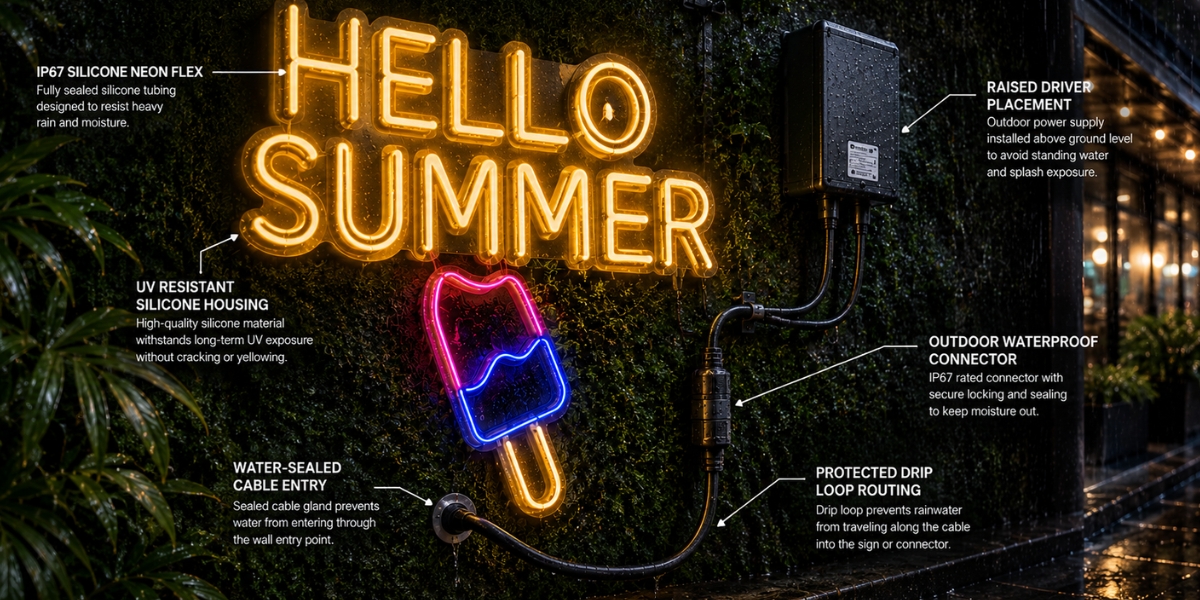
Yes, outdoor LED neon signs can survive rain when they are designed for outdoor installation and protected correctly. However, long-term outdoor performance depends heavily on connector sealing, installation method, drainage planning, power supply protection, and environmental exposure.
A small neon sign hanging beneath a covered cafe entrance experiences very different conditions compared to a large sign mounted on a fully exposed roadside facade. One mainly deals with humidity and occasional rain spray, while the other may face storms, direct sunlight, winter moisture, and changing temperatures throughout the year.
That difference in exposure is one reason some outdoor neon signs continue operating for years while others begin showing problems after repeated weather exposure.
In real outdoor installations, failures often begin around vulnerable connection points rather than the neon itself.
Problems often start in smaller areas around the sign:
- cable joints
- connectors
- end caps
- power supplies
- drainage areas behind the sign
For example, during heavy rain, water may slowly travel along the power cable and collect around the connector instead of draining away. If sealing in that area weakens over time, moisture can gradually enter during repeated storms.
The sign may still work normally at first. Then months later, small problems start appearing:
- random flickering
- dim sections
- unstable colors
- parts of the sign shutting off after rain
This usually happens because corrosion has already started forming around electrical connection points inside the system.
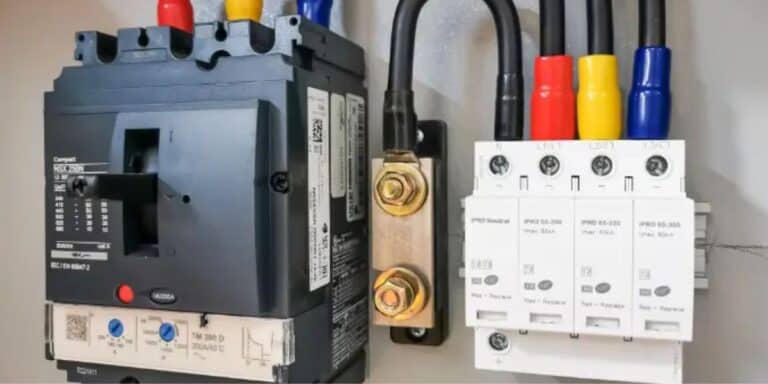
A close-up image comparing a sealed waterproof connector and a poorly protected connector would fit naturally here because many buyers never see where outdoor failures actually begin.
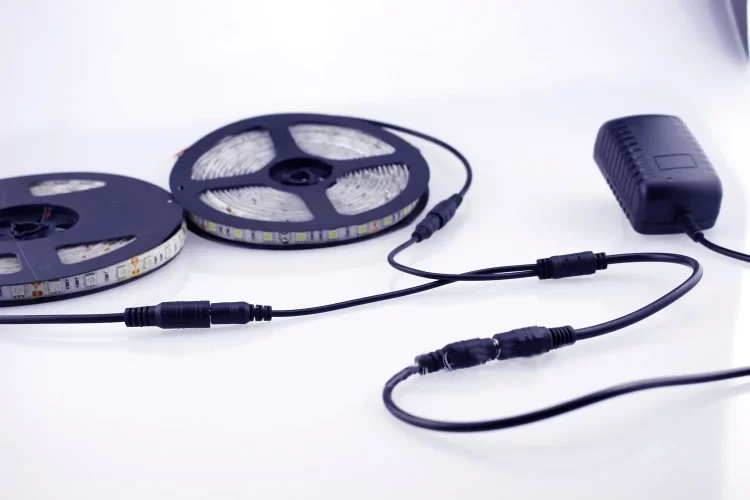
Another common issue is the power adapter. Some signs use indoor drivers outdoors because they cost less. The problem is that humidity can slowly build up inside the driver housing, especially behind enclosed sign boxes or poorly ventilated facades.
Even without direct rain exposure, trapped moisture may still affect the electronics over time.
The tubing material also affects how a sign behaves outdoors over time. PVC tubing may look stable when first installed, but prolonged sunlight exposure can gradually make some materials harder or slightly yellow, especially on lighter-colored neon facing direct sunlight every day.
Material behavior also depends on the specific neon profile and environmental exposure. Some outdoor neon systems use silicone because it generally remains more flexible during temperature changes and may tolerate weather-related movement more steadily, although long-term outdoor performance still depends heavily on sealing quality, UV conditions, and installation design.
| Outdoor Problem | What Usually Causes It |
|---|---|
| Flickering after rain | Moisture slowly entering connectors |
| Dead sections in winter | Water reaching weak cable joints and freezing |
| Yellow tubing | Long-term UV exposure on some materials |
| Driver failure | Indoor adapter used outdoors |
| Rust around wires | Poor sealing near connection points |
Commercial outdoor neon systems are often designed with stronger attention to connector sealing, drainage planning, and driver protection because long-term outdoor performance depends on more than the neon tubing itself. Once a sign is exposed to real weather year-round, installation quality often becomes just as important as the product specifications.
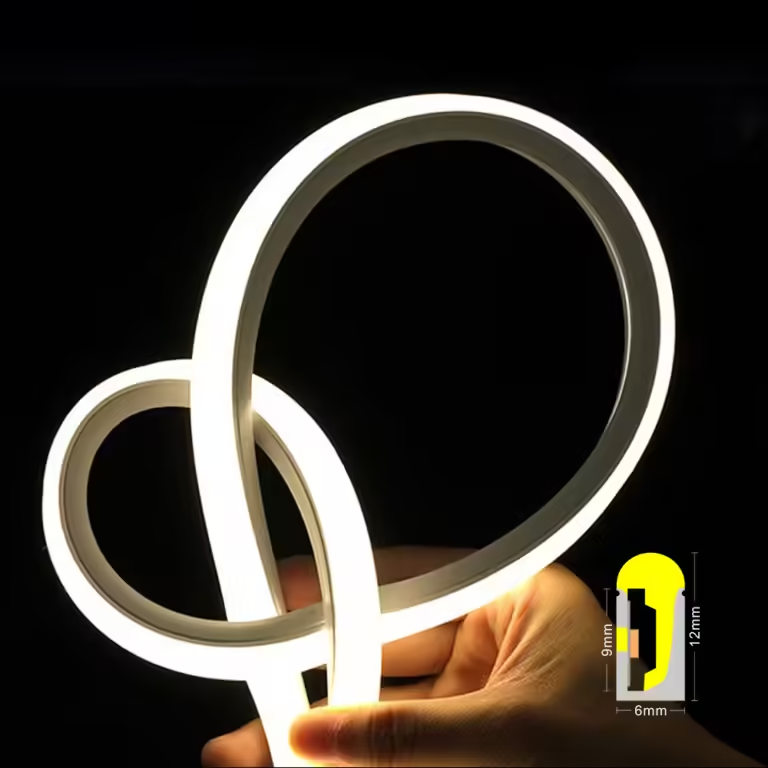
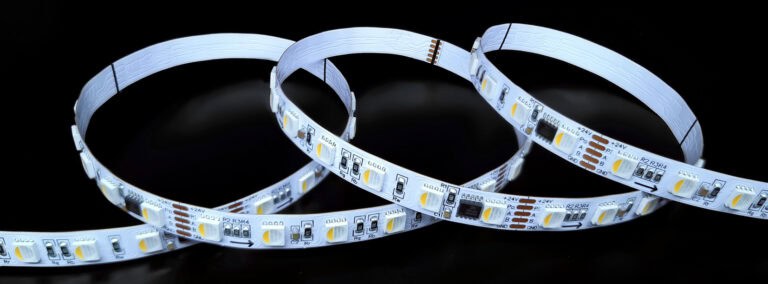
Side Bend S0606/S0612 Silicone LED Neon Flex Strip
- Input Voltage: DC24V
- Watt: 9.6W/m
- LED QTY: SMD2835 120LEDs/m
- Color Temperature: 2700K/3000K/4000K/5000K/6500K/customizable
- CRI: >80
- Lumen: >240lm/m
- IP Grade: IP65/IP67
- Cable Entry: Front/Side/Bottom for optional
- Min Bending Diameter: 100mm
- Cuttable Length: 50mm
- Length: 5meters/roll
Why Do Some Outdoor Neon Signs Start Flickering After Rain?
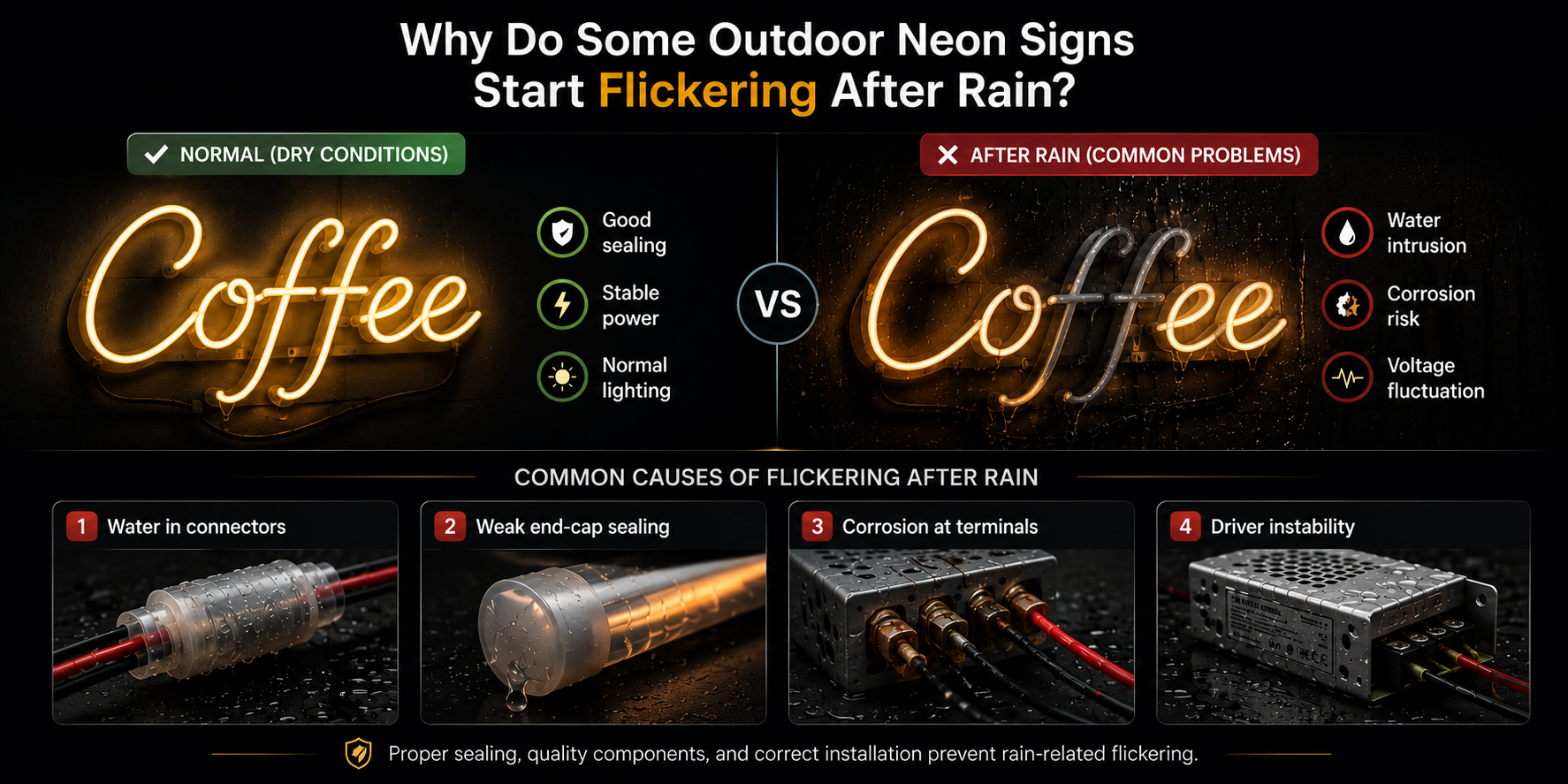
Outdoor neon signs usually start flickering after rain when moisture slowly reaches vulnerable electrical connection points. In many cases, the LEDs themselves are still working normally, but weak connector sealing, trapped humidity, or water entering cable joints gradually affects electrical stability.
One of the first signs of outdoor water damage is flickering. The sign may still turn on normally, but certain letters begin blinking after rain, colors become unstable, or one section suddenly looks dimmer than the rest.
In many outdoor installations, this problem develops gradually instead of happening all at once. A sign may work normally during dry weather for months before small issues start appearing after storms or humid nights. That often means moisture has already reached an electrical connection somewhere inside the system.
Outdoor flickering commonly begins around vulnerable areas such as:
- cable joints
- solder areas
- exposed connectors
- poorly sealed end caps
For example, rainwater can slowly travel along the power cable and collect near the connector instead of draining away. If sealing around that area weakens over time, moisture gradually enters the connection point during repeated rain exposure.
At first, the damage is difficult to notice. Maybe one corner flickers occasionally after heavy rain. Later, the electrical connection becomes less stable and the flickering becomes more obvious.
Outdoor restaurant signs and exposed facade installations often develop these problems faster because they face repeated sunlight, humidity, and changing weather conditions. Direct sunlight may also affect lower-cost sealing materials over time. Some adhesives or heat-shrink materials can gradually weaken after long environmental exposure.
Small installation details matter more than many buyers realize. Connectors facing upward often collect water longer after rain, while poorly routed cables can allow moisture to travel directly toward electrical connections.
Commercial outdoor installers usually reduce these risks by protecting vulnerable areas more carefully. Connectors are commonly placed inside waterproof junction boxes, cable exits are angled downward to improve drainage, and power supplies are positioned away from standing water.
Connector comparison images usually make these differences easier to understand during installation planning because many outdoor failures begin in areas buyers rarely notice during the first installation.
For commercial projects, these problems are not only about appearance. A poorly sealed outdoor sign may still work during installation, but repeated maintenance visits after storms or winter weather can increase long-term operating costs. This is one reason restaurants, retail stores, and facade lighting projects usually pay closer attention to waterproof connectors, drainage planning, and driver protection before installation begins.
| Problem Seen After Rain | What Usually Causes It |
|---|---|
| Flickering letters | Moisture reaching weak connector points |
| One section becoming dim | Corrosion slowly forming around solder joints |
| Sign works normally only during dry weather | Water trapped inside cable connections |
| Random shutdowns after storms | Weak waterproof sealing around connectors |
| Driver temporarily stopping | Humidity buildup inside the power supply |
Once outdoor moisture repeatedly reaches electrical connections, waterproof ratings alone are usually no longer enough to guarantee long-term reliability.
What Do IP65, IP67, and IP68 Actually Mean for Outdoor Neon Signs?

IP ratings explain how much moisture and water exposure an outdoor neon system is designed to handle. In most outdoor neon installations, IP65 works for partially protected areas, IP67 is commonly used for more exposed outdoor conditions, and IP68 is generally reserved for environments involving continuous water exposure.
However, waterproof performance depends on more than the printed IP number. Connector sealing, installation method, drainage planning, and environmental exposure still play a major role in long-term outdoor reliability.
For example, a neon sign installed beneath a covered storefront experiences very different conditions compared to one mounted on a fully exposed roadside facade. One mainly faces light rain spray and humidity, while the other may deal with storms, strong wind, snow buildup, and water collecting around connectors during heavy rain.
That difference in exposure is exactly why IP ratings matter.
IP65: Works Best in Partially Protected Outdoor Areas
IP65 is mainly designed to handle water spray rather than prolonged direct water exposure.
In real outdoor projects, IP65 is often used for:
- covered entrances
- signs installed beneath canopies
- partially protected storefronts
- areas where rain rarely reaches connectors directly
The limitation becomes more noticeable once the installation is fully exposed.
During storms, wind-driven rain may reach cable joints and end caps more easily. Water can also collect behind the sign if drainage is poor. In those situations, splash protection alone may not always provide long-term protection.
IP67: Commonly Used for More Exposed Outdoor Conditions
IP67 provides stronger protection against temporary water exposure and is commonly used where outdoor weather conditions are more demanding.
This may become more important in environments such as:
- exposed roadside facades
- restaurant exteriors
- rooftop signage
- long rainy seasons
- areas with repeated moisture exposure
For example, snow melting around connectors may leave moisture sitting in one area for hours before drying. In situations like that, stronger sealing may provide additional protection compared to a basic splash-resistant system.
Connector comparison images often make these differences easier to understand during installation planning.
For projects involving exposed facades or long-term outdoor installations, understanding how IP67 neon systems are built and where they are commonly used can also help during planning. You can explore more in our guide on IP67 waterproof flexible neon flex for outdoor facade lighting
IP68: Mostly Used Around Continuous Water Exposure
IP68 is generally used where lighting remains close to water continuously rather than only dealing with rain or humidity.
This is more common in:
- fountains
- underwater lighting
- landscape water features
- swimming pool environments
Most outdoor neon signs do not require IP68 because weather exposure is different from continuous water immersion.
For projects involving continuous moisture exposure or submerged lighting environments, this IP68 waterproof neon flex example shows how sealed outdoor-rated systems are typically designed.

| IP Rating | What It Usually Handles Outdoors | Common Installation Example |
|---|---|---|
| IP65 | Rain spray and light outdoor exposure | Covered shopfront signs |
| IP67 | Heavy rain and temporary moisture buildup | Outdoor facades and restaurant signage |
| IP68 | Continuous water exposure | Fountain and underwater lighting |
Even with a strong IP rating, installation quality still affects outdoor reliability.
A properly sealed IP67 system may still develop problems if:
- connectors remain exposed behind walls
- water collects around the driver
- drainage is ignored
- cable exits face upward during rain
That is why commercial outdoor installations often pay close attention to connector direction, drainage paths, and driver placement instead of relying only on the printed IP rating.
Why Silicone Neon Handles Outdoor Weather Better Than PVC

Material choice can affect how outdoor neon signs age over time, although long-term performance also depends heavily on the specific neon profile, UV exposure, installation environment, and sealing quality.
When outdoor neon signs are new, PVC and silicone tubing can appear very similar. The difference often becomes more noticeable after repeated sunlight exposure, rain, humidity, and seasonal temperature changes.
Many lower-cost outdoor signs use PVC tubing because it is generally less expensive to manufacture. Over time, prolonged outdoor exposure may gradually change the material. On some lighter-colored neon systems, long UV exposure can contribute to yellowing, while colder temperatures may make certain materials feel harder or less flexible.
This often becomes more noticeable around curved letters, corners, and mounting areas where the tubing stays under stress. As materials age, small surface cracks or sealing weaknesses may become more likely around bends and connection areas, increasing the risk of moisture reaching vulnerable points.
Material behavior also depends on the specific neon profile and environmental conditions. Some outdoor neon systems use silicone because it generally remains more flexible during temperature changes and may tolerate weather-related movement more steadily. However, long-term outdoor reliability still depends heavily on UV conditions, waterproof sealing, connector protection, and installation design rather than material alone.
A side-by-side comparison between aged PVC tubing and silicone neon can help visualize how outdoor material aging may appear over time.
| Outdoor Condition | Silicone Neon | PVC Neon |
|---|---|---|
| Direct sunlight exposure | May remain visually stable longer in some outdoor conditions | Some lighter-colored tubing may gradually yellow |
| Freezing temperatures | Often remains more flexible during temperature changes | Material may gradually feel harder |
| Curved letters and logos | May tolerate movement around bends more steadily | Aging may become more visible near stressed areas |
| Long-term outdoor exposure | Performance depends on installation and environmental conditions | Surface aging may become more noticeable over time |
Once outdoor tubing starts hardening, aging, or developing sealing weaknesses, waterproof protection around connectors and cable exits may become more vulnerable to moisture problems.
Why Outdoor Power Supplies Fail More Often Than the Neon Itself
In many outdoor neon sign failures, the power supply or driver may develop problems before the LEDs themselves. Outdoor reliability depends not only on waterproof neon tubing but also on how well drivers are protected from moisture, condensation, temperature changes, and standing water.
A lot of buyers focus mainly on the neon tubing because it is the visible part of the sign, but outdoor performance also depends heavily on driver placement and environmental exposure.
For example, a driver mounted close to the ground behind a restaurant facade may remain damp longer after storms because rainwater and snow melt naturally collect near the bottom of exterior walls. Even when the neon itself is waterproof, trapped moisture around the power supply can gradually affect the electronics over time.
Another common issue appears inside enclosed sign boxes. During the day, heat builds up inside the enclosure. At night, temperatures drop and condensation may form around the driver and electrical connections. The system may stay protected from direct rain while still experiencing trapped humidity repeatedly.
This is one reason outdoor power supply problems often develop gradually. A sign may flicker occasionally after rain, brightness can become unstable during humid weather, or certain sections may restart after drying out.
Commercial outdoor installers often reduce these risks by positioning drivers away from standing water, allowing airflow around the housing, and protecting wiring inside waterproof junction boxes or sealed conduit systems.
Outdoor moisture problems may become even more noticeable during winter because snow, condensation, and freezing temperatures place additional stress on drivers, connectors, and sealing points.
Understanding how waterproof sealing, connectors, drivers, and installation conditions work together is often more important than brightness specifications alone during outdoor lighting planning.
Buyers comparing outdoor lighting systems may also benefit from understanding how waterproof protection works across different LED lighting formats. Our ultimate guide to waterproof LED strip lights explains common waterproof structures, sealing methods, and outdoor protection considerations in more detail.
Why Outdoor Neon Signs Sometimes Fail After Winter
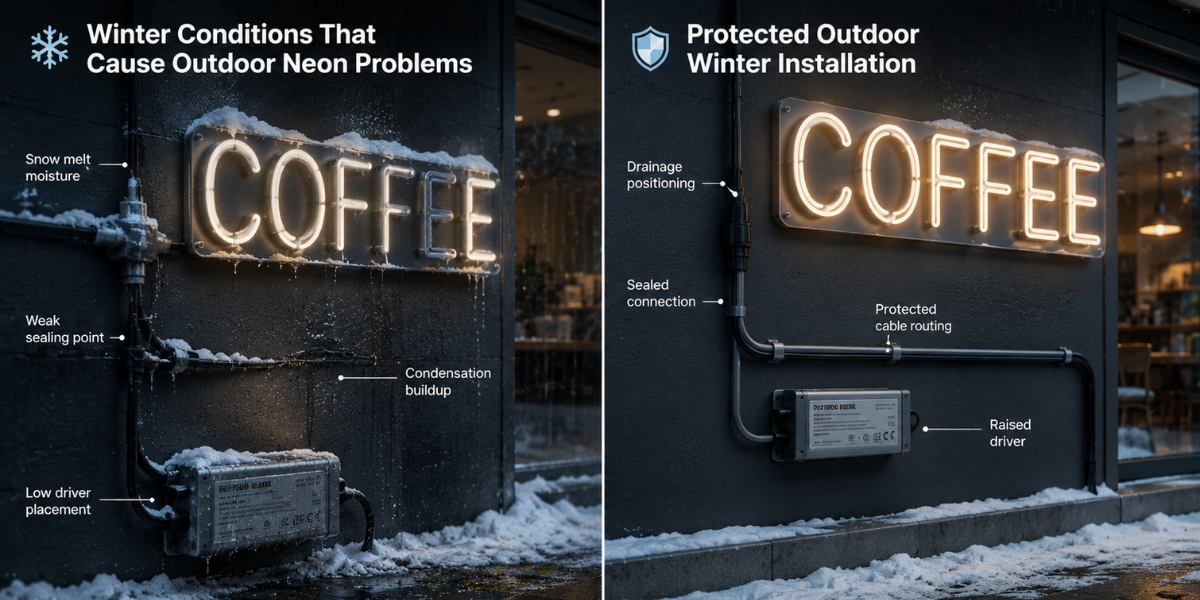
Outdoor neon signs sometimes begin flickering or shutting off after winter because snow, freezing temperatures, trapped moisture, and condensation place different types of stress on connectors, sealing points, and electrical components than normal rain.
A lot of outdoor neon signs survive heavy rain without obvious problems, then begin showing issues after winter. One reason is that snow behaves very differently from rainwater outdoors.
Rainwater usually runs off surfaces relatively quickly, while snow often remains around connectors and mounting areas for much longer.
During winter, snow can collect around:
- cable exits
- mounting clips
- connector joints
- power supply covers
- gaps behind the sign
When temperatures rise during the day, melting snow slowly turns into water and may enter small openings around weaker sealing points. Later at night, trapped moisture can freeze again.
Repeated freeze-thaw cycles often increase stress around vulnerable connection areas.
Water expands slightly when frozen. If moisture has already reached a weak connector or cable joint, repeated freezing and thawing may gradually weaken sealing over time. A sign may continue operating through winter, then begin showing problems weeks later as corrosion slowly develops around internal connections.
This is one reason some outdoor failures appear “random” in spring even though moisture-related damage may have started during colder months.
Cold weather also creates another issue many buyers rarely consider: condensation.
For example, a sign cabinet may stay protected from direct rain while still trapping moisture inside. During temperature changes, warmer air inside the enclosure may turn into condensation around cooler metal surfaces and electrical components.
Moisture commonly builds up around:
- drivers
- wire connections
- metal pins
- solder joints
Even without visible leaks, trapped humidity may gradually affect electronics over time.
A simple image showing condensation forming inside a sealed outdoor sign box would explain this more clearly than a highly technical diagram.
Commercial outdoor neon systems are often designed with stronger attention to drainage, ventilation, and moisture management. Instead of sealing every area completely airtight, some installations allow controlled airflow so trapped moisture can escape more naturally.
Small installation details can make a noticeable difference in colder environments:
- connectors facing downward often drain water faster
- raised drivers may stay further away from snow melt
- ventilation can reduce trapped condensation
- material behavior may change differently during freezing temperatures depending on neon profile and environmental exposure
| Winter Condition | What Often Happens to Poorly Protected Signs |
|---|---|
| Snow sitting around connectors | Moisture slowly reaches weak sealing points |
| Day/night freezing cycle | Frozen moisture expands inside small gaps |
| Trapped condensation inside sign boxes | Corrosion develops around electronics |
| Some tubing in freezing weather | Material behavior may gradually change |
| Standing water after snow melt | Drivers and cable joints remain wet longer |
Winter exposure is also one reason long-term outdoor performance depends on more than waterproof ratings alone. Material selection, connector sealing, drainage planning, and installation quality all affect how a neon system responds to cold weather over time.
Common Outdoor Installation Mistakes That Cause Water Damage
Many outdoor neon water problems begin during installation rather than from the neon tubing itself. Even when a neon system is designed for outdoor use, connector positioning, drainage, cable routing, and driver placement can still affect long-term reliability.
One common mistake is leaving connectors facing upward. After heavy rain, water may slowly collect around sealing points instead of draining away naturally.
Poor drainage behind the sign creates another issue. When water becomes trapped between the wall surface and the sign backing, moisture can remain around connectors and cable exits much longer after storms.
Indoor power adapters are also sometimes used outdoors to reduce installation costs. The sign may still work initially, but humidity and condensation can gradually affect electronics over time.
Exposed cable joints create similar risks. Even small gaps around wire connections may allow moisture to enter gradually during repeated rain exposure.
Driver placement matters as well. Drivers mounted too close to the ground often remain damp longer because rainwater and snow melt naturally collect near the bottom of exterior walls.
| Installation Mistake | What Usually Happens Later |
|---|---|
| Connector facing upward | Water collects around sealing points |
| No drainage behind the sign | Moisture stays trapped after rain |
| Indoor driver used outdoors | Humidity gradually affects electronics |
| Exposed cable joints | Moisture reaches electrical connections |
| Driver mounted near the ground | Rainwater and snow melt remain around the housing |
These issues are one reason commercial outdoor neon installations often pay closer attention to connector direction, drainage planning, and driver positioning compared to temporary displays or decorative indoor signage.
How Commercial Outdoor Neon Signs Are Built Differently
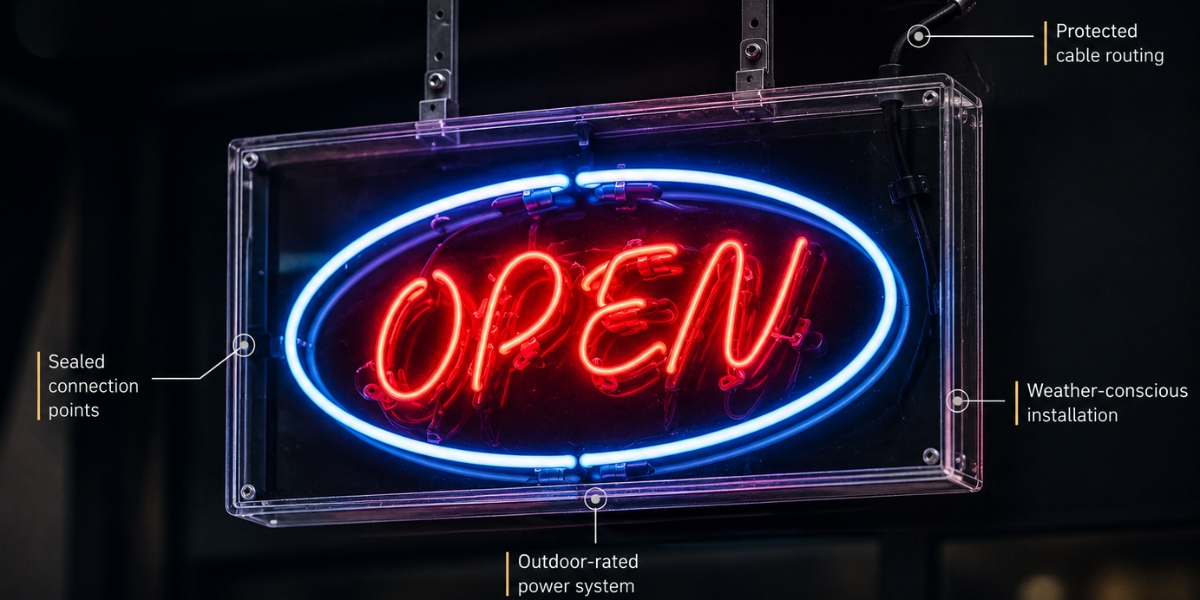
Commercial outdoor neon systems are often designed with stronger attention to waterproof sealing, drainage, driver protection, and long-term environmental exposure than decorative indoor signage. Outdoor installations may stay exposed to rain, humidity, sunlight, temperature changes, and winter weather for extended periods, which can affect long-term reliability.
Because of that, many commercial outdoor projects focus not only on appearance but also on how the entire system handles moisture, drainage, and environmental stress over time.
Connector sealing is often given more attention, cable routing is usually planned to reduce direct water exposure, and outdoor-rated drivers are positioned where moisture is less likely to collect. Installers may also pay closer attention to drainage behind the sign because trapped water can gradually create problems around connectors and power supplies.
Material selection can also influence how outdoor systems age over time. Some decorative neon signs use PVC tubing because it may reduce production cost, while some outdoor systems use silicone where flexibility during temperature changes and environmental movement becomes more important. However, long-term outdoor performance still depends heavily on profile type, UV exposure, sealing quality, and installation design.
This may become more noticeable on larger facade signs where neon bends around channel letters, aluminum structures, and logo shapes. Over time, material flexibility and environmental exposure can affect both appearance and sealing performance.
Commercial outdoor projects also commonly consider stronger waterproof protection where installations face repeated rain, humidity, or snow exposure. However, long-term reliability depends on more than IP ratings alone. Connector sealing, drainage planning, cable routing, and driver placement all affect how an outdoor neon system performs over time.
Outdoor commercial neon systems are generally designed with longer-term environmental exposure in mind rather than appearance alone on installation day.
What Should Buyers Check Before Choosing an Outdoor Neon Sign?
Before choosing an outdoor neon sign, buyers should look beyond brightness and appearance alone. Long-term outdoor reliability often depends more on waterproof sealing, installation environment, tubing material, driver protection, and drainage planning than what is visible in product photos.
Most outdoor neon signs look similar online, but performance outdoors may vary significantly depending on environmental exposure and installation quality.
The IP rating should match the installation environment. A sign beneath a covered storefront experiences very different conditions compared to one installed on a fully exposed roadside facade. For more exposed outdoor conditions, stronger waterproof protection is often considered, although long-term performance still depends heavily on sealing quality, drainage, and installation method.
Tubing material can also affect how a sign ages outdoors. Some materials may gradually become harder or show visible aging after long UV exposure, especially in direct sunlight. Material behavior also depends on the specific neon profile, environmental conditions, and installation environment.
Connector sealing is one of the most important details to check. Weak cable joints are a common reason outdoor neon signs begin flickering after rain. Properly sealed connectors help reduce the chance of moisture gradually reaching electrical connection points.
The power supply should be suitable for outdoor conditions. Many outdoor reliability problems begin when indoor drivers are installed outside without adequate protection from humidity or condensation.
Driver placement matters just as much as driver quality. Even outdoor-rated drivers may develop problems if they are installed too close to standing water or inside damp enclosed spaces without airflow.
Drainage behind the sign should also be considered. Many commercial outdoor installations allow water to drain naturally rather than trapping moisture behind the structure.
| What Buyers Should Check | Why It Matters Outdoors |
|---|---|
| IP rating | Affects how much environmental moisture the system is designed to handle |
| Tubing material | Material aging may vary depending on UV exposure and environmental conditions |
| Connector sealing | Helps reduce moisture reaching electrical joints |
| Outdoor-rated driver | Protects electronics from humidity and weather exposure |
| Drainage around the sign | Reduces long-term moisture buildup behind the installation |
A close-up comparison between a sealed outdoor connector and a low-cost exposed connector would fit naturally here because many buyers never see where outdoor neon failures usually begin.
Many commercial buyers compare waterproof sealing, tubing behavior, connector protection, and driver placement before selecting a system for long-term outdoor installations.
For readers planning larger exterior lighting projects, our guide on how to choose the best waterproof LED strip lights for outdoor projects covers additional considerations such as waterproof ratings, installation environments, and outdoor lighting system selection.
In most outdoor neon projects, long-term reliability depends less on brightness alone and more on how well the entire system manages moisture, weather exposure, and seasonal temperature changes over time.
Conclusion
Outdoor LED neon signs do not always fail because the LEDs stop working. In many cases, long-term outdoor problems begin much earlier around weak connectors, trapped moisture, aging materials, poorly protected power supplies, or installation-related issues.
Outdoor performance depends on more than waterproof claims alone. Connector sealing, drainage planning, driver protection, environmental exposure, and installation quality all affect how a neon system responds to rain, humidity, UV exposure, condensation, and seasonal weather changes over time.
For long-term outdoor projects, understanding how the full system works together is often more important than brightness specifications alone.
FAQ’s
Related Posts