Русский
  English
  简体中文
简体中文  Deutsch
  Español
  Français
  Italiano
  日本語
日本語  한국어
한국어  Polski
  Português
  Türkçe
  Nederlands
  Tiếng Việt
  ไทย
ไทย 
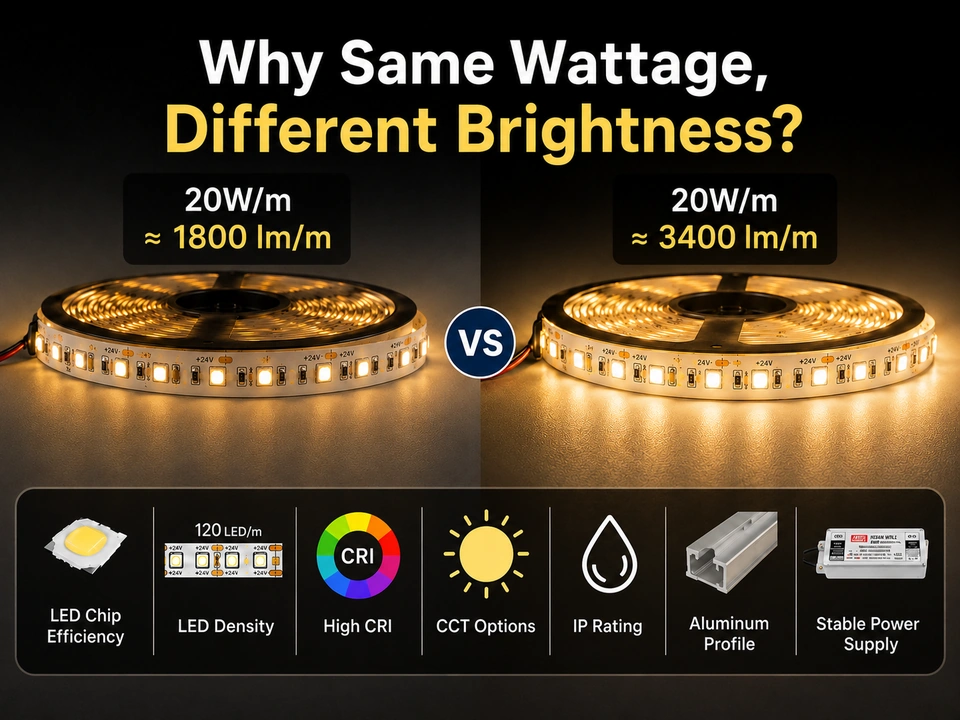
Менеджер по закупкам сравнивает две светодиодные полосы для одного и того же проекта коммерческого освещения. Оба продукта рассчитаны на 20 Вт на метр и работают при 24 В, но одна доставляет примерно 2200 люменов на метр, а другая производит более 3000 люменов на метр. Их заявленное потребление энергии почти идентично, но их световой выход явно отличается.
Почему это происходит? Мощность измеряет потребление электроэнергии, а не видимый свет. Яркость готовой светодиодной ленты также зависит от световой эффективности, качества светодиодной чипа, тока привода, CRI, цветовой температуры, формулы люминесцентного оборудования, печатной платы, оптических материалов, терморегулирования и условий испытаний.
В этой статье объясняются различия между ваттами, люменами и люменами на ватт, исследуются основные проектные факторы, влияющие на яркость светодиодной ленты, и поясняет, почему измеренные люмены и воспринимаемая яркость не всегда могут совпадать. Он также дает практические рекомендации по сравнению светодиодных лент одинаковой мощности в сопоставимых условиях, помогая покупателям оценивать реальные характеристики освещения, а не полагаться только на W/M.
В мощности, люменах и LM/W: существенное отличие
Самая распространенная ошибка при выборе светодиодной ленты — это трактовка мощности как шкалы яркости. Мощность важна, но она говорит только о том, сколько электроэнергии потребляет продукт при определенных условиях. Он не говорит вам, сколько полезного света достигает комнаты, дисплея, бухты, полки или рабочей поверхности.
| Параметр | Что он измеряет | единый | Зачем это нужно покупателям |
| Мощность | потребляемая электрическая энергия | Вт или Вт/м | Используется для загрузки, определения размера водителя, оценки тепла и расчета энергии |
| световой поток | Общий световой поток | лм или лм/м | Указывает, сколько видимого света производит готовая полоса |
| светоотдача | Видимый световой поток на ватт | лм/Вт | Показывает, насколько эффективно полоса преобразует электрическую энергию в свет |
Что измеряет мощность?
Рейтинг 20 Вт/м означает, что один метр светодиодной ленты предназначен для потреблять приблизительно 20 Вт при указанных входных напряжениях и рабочих условиях. Это значение необходимо для выбора питания и планирования кабеля, и это обеспечивает приблизительное указание на тепловую нагрузку. Это не прямая мера светового потока.
Тот же принцип применим и к осветительным изделиям. Светодиодная конструкция мощностью 15 Вт может быть ярче, чем 20 Вт, когда 15-Вт продукт преобразует большую долю своей входной мощности в видимый свет. Оставшаяся энергия в значительной степени выделяется в виде тепла или утрачена в электрической и оптической системе.
Что измеряют люмены?
Люмены измеряют световой поток: общее количество производимого видимого света, взвешенное в соответствии с чувствительностью зрительной системы человека. Для гибких светодиодных лент люмен на метр обычно является наиболее полезным сравнением, поскольку он нормализует выход по длине.
Не сравнивайте общие люмены однометровой пробы с общими люменами пятиметровой катушки. Не сравнивайте номинальный выход отдельных светодиодных пакетов с выходом готовой полосы. Значимая цифра обычно представляет собой измеренный выходной люмен готовой конструкции при задокументированном уровне мощности.
Что измеряет LM/W?
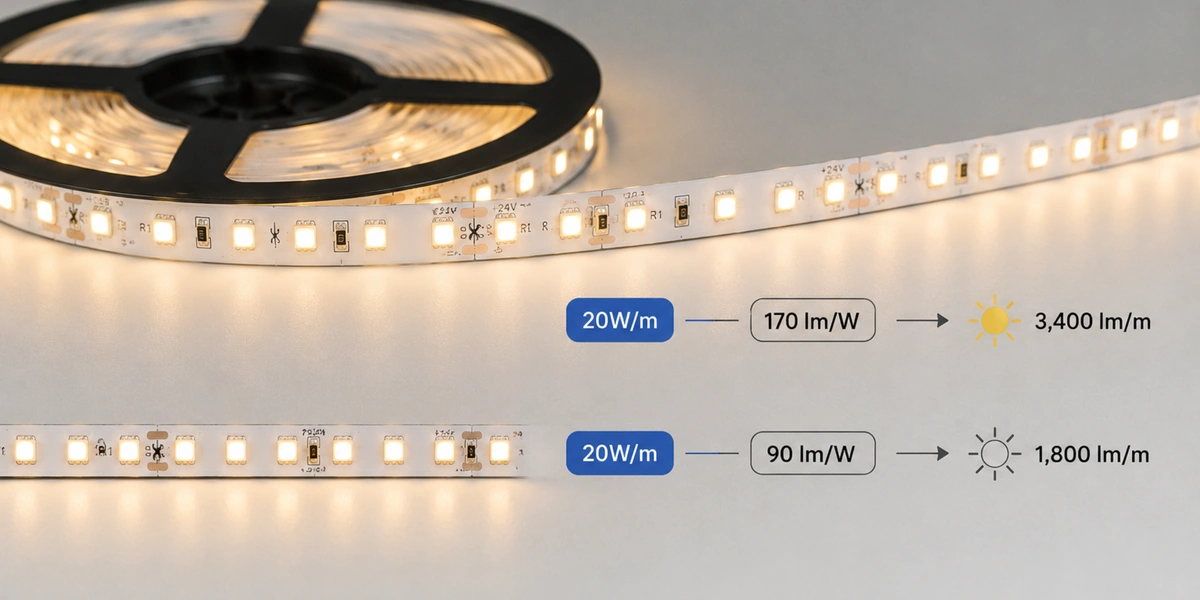
Световая эффективность, выраженная в люменах на ватт, соединяет потребление энергии и видимую светопроизводительность. Это центральная метрика разницы в яркости одинаковой мощности.
| Иллюстративная полоса | Мощность | Эффективность свечения | Расчетный выход |
| A | 20 Вт/м | 90 лм/Вт | 1800 лм/м |
| B | 20 Вт/м | 130 лм/Вт | 2600 лм/м |
| C | 20 Вт/м | 170 лм/Вт | 3400 м/м |
Для проектов, где энергоэффективность и снижение тепла являются основными приоритетами, Высокоэффективный светодиодный ленточный светильник может быть полезной точкой отсчета. Важным шагом является проверка данных готовой полосы для требуемого уровня CRI, CCT, напряжения и защиты, а не полагаться только на показатель эффективности заголовка.
Как запустить сравнительное сравнение с той же мощностью
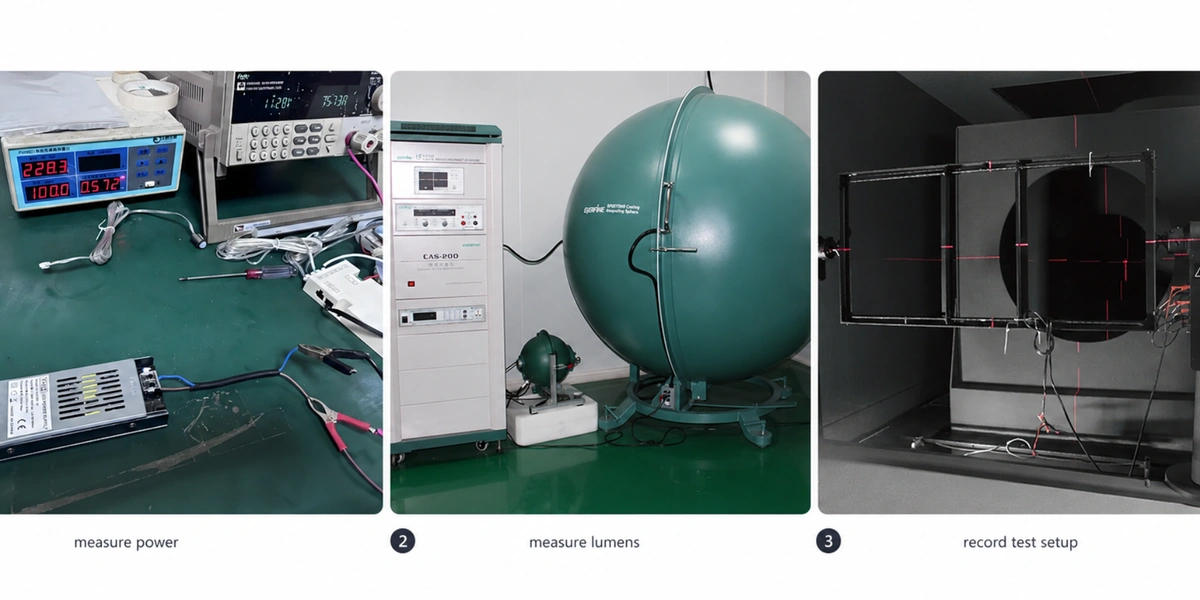
Фраза та же мощность часто относится к числу, напечатанному на техническом листе. Перед анализом эффективности светодиода убедитесь, что обе полосы фактически потребляют одинаковую мощность во время теста. Номинальная мощность и измеренная мощность не всегда идентичны.
Подтвердить фактическую мощность
Номинальная мощность — это дизайн или стоимость каталога. Измеренная мощность получается от фактического напряжения и тока во время работы. Два продукта, указанные как 20 Вт/м, могут иметь 18,6 Вт/м и 20,4 Вт/м при одном и том же номинальном источнике питания. Это не означает, что ни одна спецификация не является нечестной: допуски на компоненты, топология схемы, входное напряжение, светодиодное прямое напряжение, температура и процедура измерения могут влиять на результат.
Контрольная длина теста и впрыск
Полоса в один метр и полноценный катушек могут вести себя по-разному. Поскольку ток проходит через медные следы, проводники и соединители, сопротивление вызывает падение напряжения. Дальний конец длинной полосы может получать меньше напряжения и потреблять меньше энергии, чем в начале, что может уменьшить выходную мощность и создать видимую вариацию яркости.
Топология снабжения также имеет значение. Пятиметровую ленту, питающуюся от одного конца, не следует сравнивать напрямую с аналогичной лентой, питаемой с обоих концов. Должны быть задокументированы длина теста, размер провода, место входа и период стабилизации.
- Напряжение клеммы: Измеряйте на клеммах, а не только на этикетке питания.
- Стабилизируемый ток и Вт/м: Запись показаний после достижения стабильной рабочей температуры
- Длина образца и способ подачи: Соответствуйте длине и одноконцовке, двойному или многократному или многоканальному конфигурированию.
- Монтаж и тепловое состояние: Используйте ту же поверхность и постоянно сравнивайте показания холодного старта или стабилизированного режима.
Качество драйвера и размер системы также влияют на стабильную работу. правильно выбранный Светодиодный блок питания Должны соответствовать напряжению полосы, обеспечить соответствующую емкость и поддерживать стабильную выходную мощность в предполагаемой среде установки.
Контролируйте условия испытаний
- Спецификация цвета: Сопоставьте CCT и CRI, когда это возможно.
- Строительство продукта: Сравните тот же уровень защиты и оптический конструкцию.
- Условия установки: Используйте идентичный монтаж и позвольте обеим образцам достичь одного и того же стабилизированного состояния.
Измеряйте мощность и светоотдачу вместе
Запишите фактическое напряжение, ток, Вт/м, лм/м и лм/Вт во время одного и того же стабилизированного испытания. Длина образца документа, температура окружающей среды, способ монтажа, конфигурация подачи и измерительное оборудование.
Иллюстративное сравнение
| Параметр | стричь | полоса б |
| Номинальная мощность | 20 Вт/м | 20 Вт/м |
| измеренная мощность | 19,4 Вт/м | 19,7 Вт/м |
| CCT | 4000K | 4000K |
| CRI | РА 80 | РА 80 |
| Готовая полоса вывода | 2150 лм/м | 3050 лм/м |
| Расчетная эффективность | 111 лм/Вт | 155 лм/Вт |
| Стабилизированная температура платы | Выше | Нижний |
При почти равной измеренной мощности выходной разрыв в основном представляет собой разницу в эффективности. Вероятно, в качестве вкладчиков входят более низкая эффективность чипа и более высокие тепловые потери в полосе А по сравнению с более высокой эффективностью чипа и более сильной тепловой конструкцией в полосе B.
Почему светодиодные ленты одинаковой мощности имеют разную яркость
После подтверждения фактической мощности оставшаяся разница яркости зависит от того, как вся полоса преобразует и управляет энергией. Полезно следовать энергетическому пути: электрический вход, светодиодное преобразование, спектральная конструкция, оптическая передача, потери печатной платы и потери тепловой энергии.
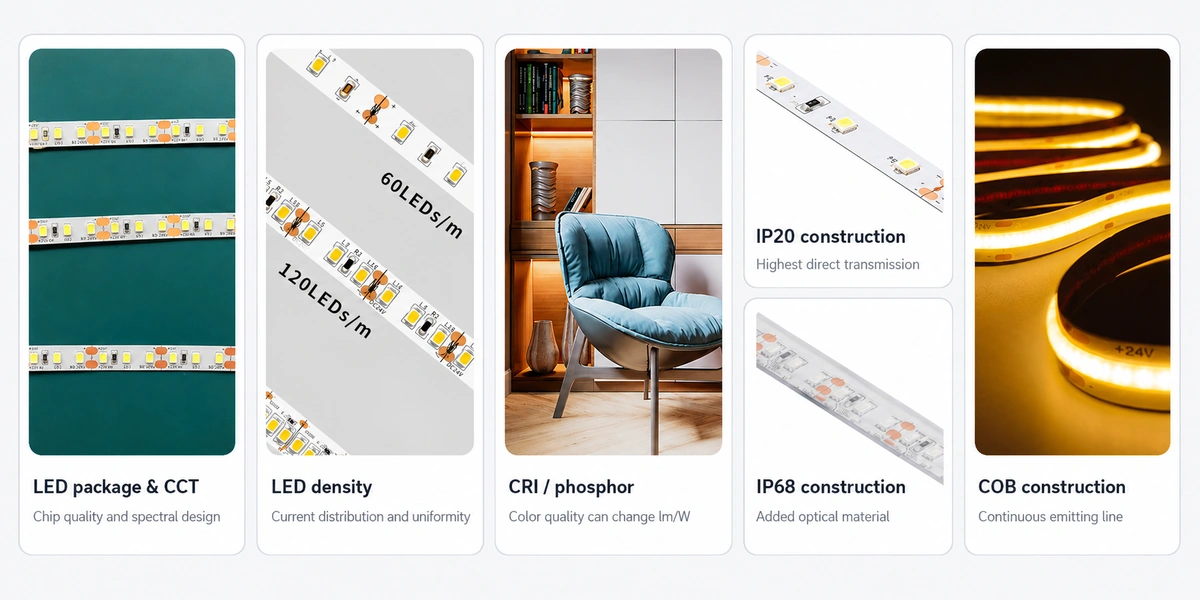
1. LED-чип бина и эффективность преобразования
Светодиодные имена пакетов, такие как SMD2835, SMD2216, CSP и COB, не представляют фиксированного уровня производительности. В продуктах, использующих один и тот же тип светодиода, могут использоваться разные детские отсекы, что приводит к различиям в прямом напряжении, выходе люмена, по консистенции цвета и эффективности светового сигнала.
Более высокие бензобаки могут производить больше люмен при том же токе или достигать того же выхода с меньшей мощностью. Эти различия могут существенно повлиять на яркость и энергопотребление в крупных проектах, даже когда полосы выглядят одинаково.
При сравнении Светодиодные ленты SMD, Оцените выходной люмен готовой полосы, биннинг светодиодов, CRI, CCT, PCB и условия привода. Один только номер упаковки светодиода не является надежным индикатором яркости.
2. Ток и эффективность падения
Увеличение тока светодиода обычно увеличивает светоотдачу, но соотношение не является полностью пропорциональным. При более высокой плотности тока приростные люмены, полученные от каждого дополнительного ватта, могут снижаться. Такое поведение часто называют эффективностью спуска.
Поэтому полоса может быть разработана для обеспечения высокой пиковой мощности, приводя к меньшему количеству светодиодов, а также для более высокой эффективности и снижения теплового напряжения за счет распределения нагрузки на большее количество эмиттеров. Оба подхода могут использовать одинаковую мощность на метр, но они могут обеспечивать разную LM/Вт, температуру и долгосрочную стабильность.
Вот почему большее количество электроэнергии не всегда приводит к пропорционально большему свету. Часть дополнительного входа становится теплом, а более высокая температура может еще больше снизить эффективность.
3. Плотность светодиодов и ток на светодиод
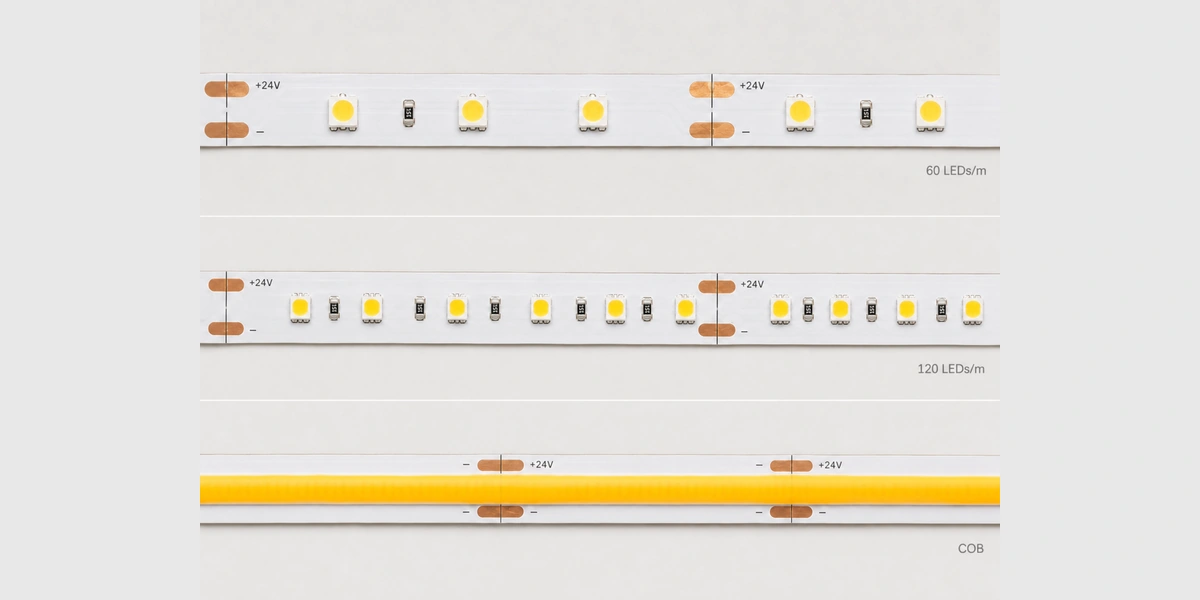
Плотность светодиодов влияет на внешний вид больше, чем на внешний вид. Полоса SMD 60 LED/M, полоска 120 светодиодов/м и полоска высокой плотности початков распределяют электрическую нагрузку по-разному. Больше эмиттеров может создавать более гладкую линию света и может позволить каждому излучателем работать при более низком токе.
Меньший ток на один светодиод может повысить эффективность и снизить локализованное тепло в некоторых конструкциях. Однако более высокая плотность не гарантирует более высокие общие люмены. Если отдельные микросхемы меньше, меньше, плохо охлаждены или приводятся в движение при пониженном токе, полоса высокой плотности может быть менее яркой, чем конструкция с более низкой плотностью.
4. CRI, CCT и люминофор
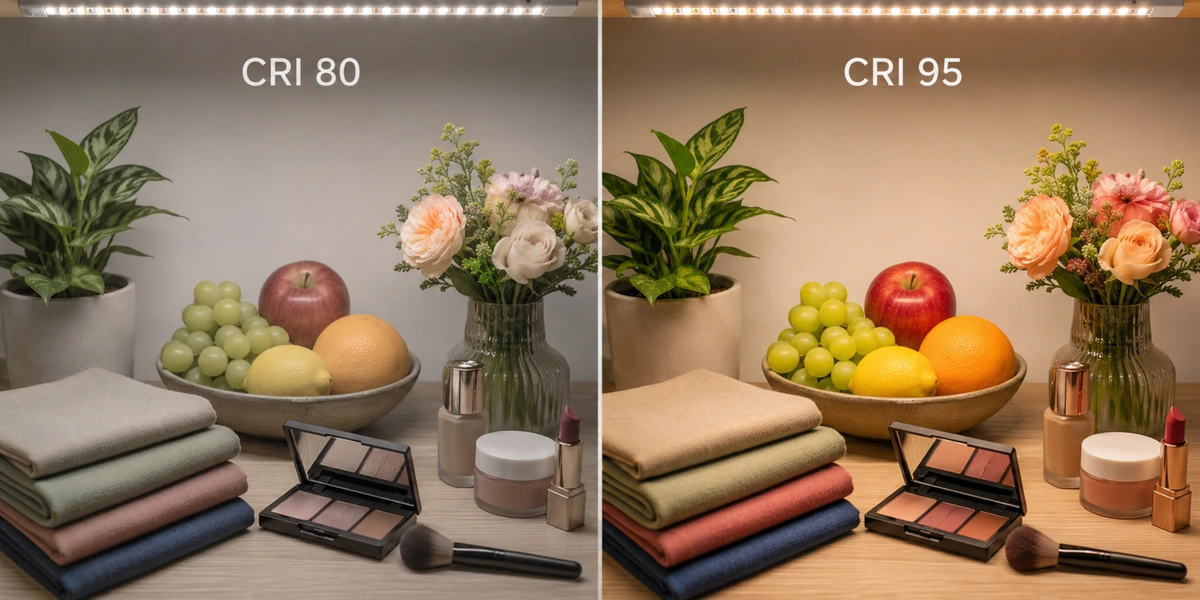
Фосфорная формулировка влияет на цветовую температуру светодиодной полосы, цветовую визуализацию и светоотражающую эффективность. В одном и том же семействе продуктов и CCT версии CRI 90 или CRI 95 могут давать меньше люменов на ватт, чем версии CRI 80, поскольку для повышения точности цвета используется больше спектра. Однако фактическая разница зависит от светодиодной упаковки и люминофорной технологии.
Этот компромисс может стоить в розничной торговле, гостеприимстве, искусстве, косметике и освещении для пищевых продуктов, где верный цвет важнее, чем максимальный просвет. Узнать больше в нашем CRI 95 светодиодная лента направляющая.
CCT также может влиять на эффективность, но более холодный белый свет не становится автоматически ярче или лучше. Покупатели должны сравнить варианты CCT в пределах одного и того же семейства продуктов и CRI, а затем выбрать комбинацию, которая лучше всего подходит для применения. см. наш Коммерческая светодиодная белая полоса выбора за практические рекомендации.
5. Оптическая инкапсуляция и гидроизоляция
Водонепроницаемые покрытия, материалы для горшков, защитные трубки, профили и диффузоры могут уменьшить количество света, проходящего через готовый светодиодный лентой. Поэтому не следует сравнивать полоску IP20 и полоску IP67, используя только номинальные люмены чипа LED.
Защитные конструкции повышают долговечность, а диффузоры улучшают однородность и контролирование бликов, но оба могут снизить измеренную мощность. Коммерческие покупатели должны сравнить люмены готовой полосы после гидроизоляции или диффузии в условиях тех же CRI, CCT, напряжения, температуры и испытаний. Фактические потери оптического характера зависят от конструкции материала и продукта, поэтому не следует применять один процент потерь к каждой системе.
- Голая полоса IP20: Высочайшая прямая передача, но не защита от влаги.
- Силиконовая полоса: Улучшена защита с некоторой абсорбцией и рассея
- Заполненная или экструдированная водонепроницаемая полоса: Более сильная защита окружающей среды, потенциально большие потери оптики.
- Молочный диффузор: Более гладкий свет и нижний блики, но уменьшаются просветы.
6. Электрическая конструкция печатной платы и падение напряжения
Сопротивление печатной плате влияет на то, насколько мощность достигает светодиодов. Более широкие следы, более толстая медь и хорошо продуманная схема могут уменьшить падение напряжения и поддерживать постоянную яркость вдоль полосы.
Для длительных установок покупатели должны сравнивать полноценные характеристики, а не полагаться только на короткую выборку, измеренную вблизи входной мощности. Полоса с сильными данными в один метр может давать более низкую или менее однородную выходную мощность на всей катушке.
7 . Термоконструирование и рабочая температура
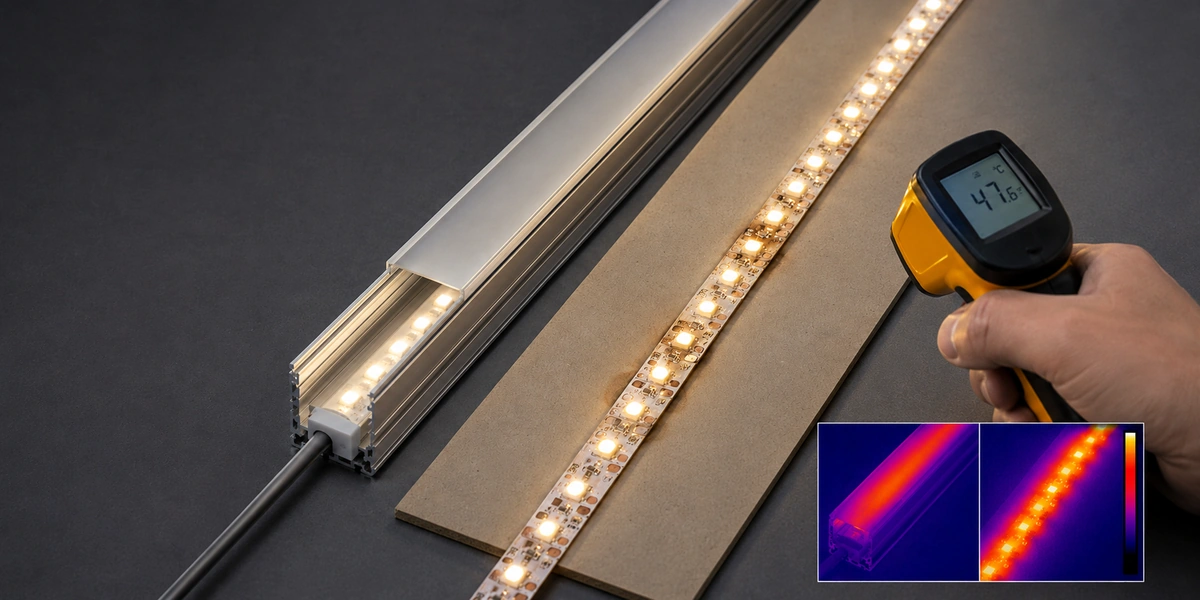
Светодиодные ленты обычно становятся менее эффективными по мере повышения рабочей температуры. Таким образом, конструкция печатной платы, ток привода, поверхность монтажа, воздушный поток и установочное пространство могут влиять как на стабилизированную яркость, так и на долгосрочную производительность.
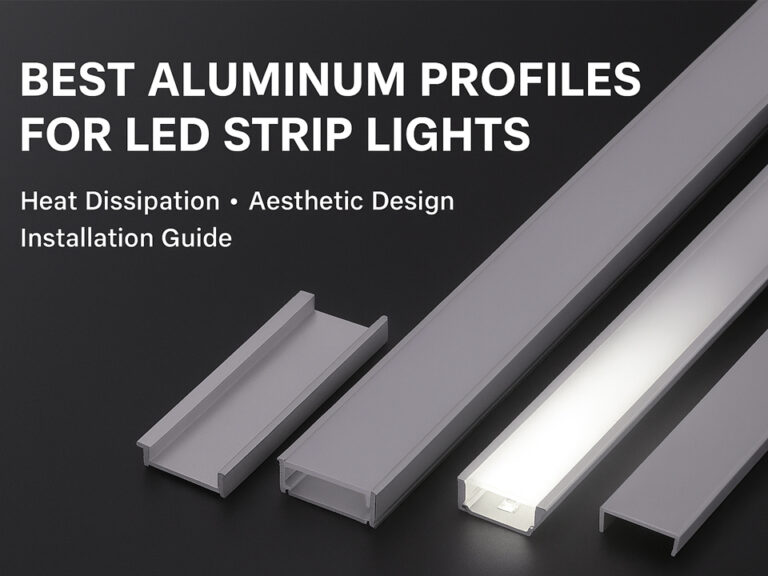
An Светодиодный алюминиевый профиль Не создает больше света, и его диффузор может уменьшить просвет, передающийся из люменов. Однако лучшее рассеивание тепла может помочь полоске поддерживать более стабильную производительность в реальных установках.
Для получения дополнительной информации о рабочей температуре и длительной амортизации просвета см. наш руководство по Светодиодная продолжительность жизни.
Измеренные люмены и воспринимаемая яркость
Люмены являются основным ориентиром для сравнения общего светового потока, но две светодиодные полосы с аналогичным LM/M все еще могут выглядеть по-разному после установки. Распределение луча, излучающая область, диффузоры, контраст, CCT и окружающие поверхности могут влиять на воспринимаемую яркость.
- Световой поток — люмен: Полный видимый свет, создаваемый источником.
- Освещенность — Люкс: Свет, поступающий на поверхность.
- Яркость — CD/м²: свет, излучаемый или отражающийся в определенном направлении.
- воспринимаемая яркость — Нет единого прямого юнита: визуальное впечатление зрителя в реальной среде.
Концентрированный источник света или открытая точка SMD могут казаться более интенсивными, в то время как диффузор более равномерно распространяет свет и уменьшает блики. Более прохладный свет также может выглядеть ярче в некоторых средах, но не всегда он дает больше люменов.
Это различие особенно важно при сравнении полос COB и SMD. COB обычно создает более плавную, непрерывную линию света, в то время как точки SMD могут казаться более яркими на близком расстоянии. Поэтому покупатели должны сравнивать люмены, люкс, равномерность и визуальный комфорт, а не полагаться только на выход люмена.
Определяет ли COB или SMD технология яркость?
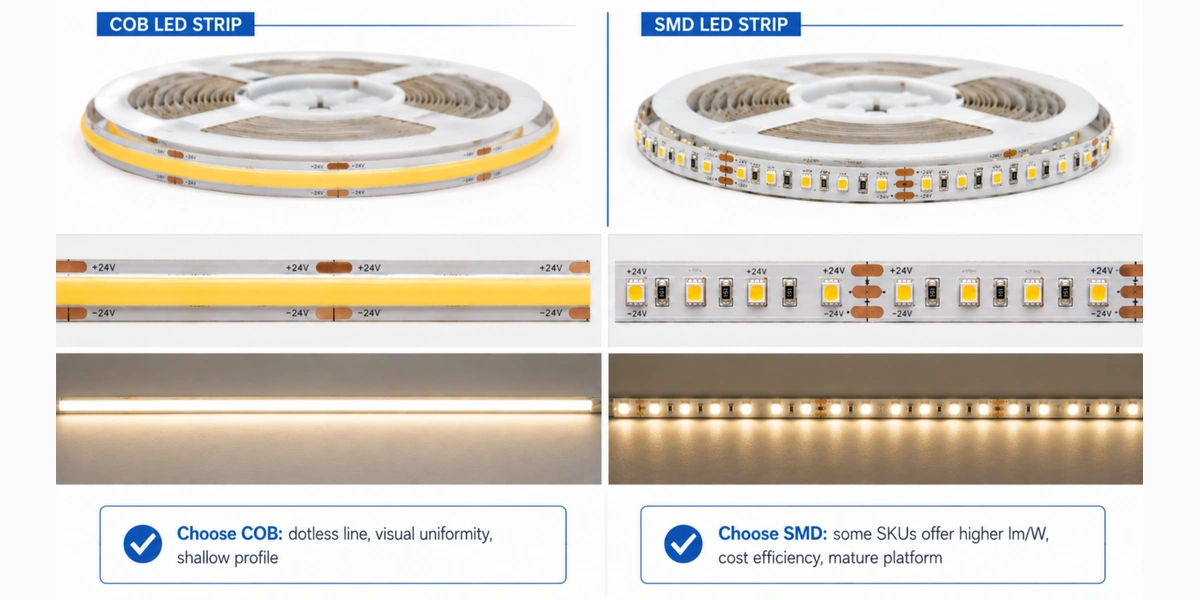
нет COB не ярче, а SMD не работает автоматически. Производительность готовой полосы зависит от качества чипа, тока привода, CRI, CCT, конструкции печатной платы, оптической конструкции и рабочей температуры.
COB обычно предпочтительнее, когда важны гладкая, безтотостная линия света и однородность близкого диапазона. SMD предлагает более широкий спектр пакетов, выходных уровней, оптических опций и экономичных конфигураций, а некоторые продукты SMD могут достичь очень высокого LM/W.
Выберите COB, когда:
- Непрерывная линия света без точек является приоритетом.
- Источник виден с близкого расстояния.
- Неглубокие профили и однородность ближнего действия имеют значение.
- Квалифицированный продукт COB отвечает необходимой эффективности и бюджету.
Выберите SMD, когда:
- Максимальная лм/Вт или экономическая эффективность является главным приоритетом.
- Источник скрыт или доступен соответствующий диффузор.
- Требуется больше вариантов упаковки, цвета, оптического или RGB/RGBW.
- Широкая доступность и гибкость конфигурации имеют значение.
Правильный выбор зависит от приложения. Сравните люмены с готовой полосой, LM/W, однородность, внешний вид и стоимость при аналогичных условиях испытаний, а не по типу упаковки. Для проектов, требующих непрерывной световой линии, ознакомьтесь с Светодиодные ленты COB.
Как точно оценить характеристики яркости светодиодной ленты
Различные поставщики могут публиковать данные о яркости, которые нельзя сравнивать напрямую. Это не обязательно означает, что цифры ложны. Продукты могут иметь различные CRI, CCT, гидроизоляцию, длину проб, периоды стабилизации, методы измерения или определения выхода люмена.
Подтвердите, являются ли данные чипом уровня или готовой полосой данных
Данные пакета светодиодов описывает компонент при определенных лабораторных условиях. Готовая полоса добавляет сопротивление печатной плате, компоненты управления током, люминофор или инкапсуляцию, водонепроницаемые слои, паяные соединения и тепловые ограничения. Для принятия решений о покупке запросите люмены готовой полосы на метр и фактические ватты на метр для точной конфигурации.
Сравните с лайком
В значимом сравнении используется тот же CRI, CCT, напряжение, уровень защиты, длина образца и состояние рабочего состояния. Полоса CRI 80 на 5000K не должна быть представлена как прямая эффективность, эквивалентная водонепроницаемой полосе CRI 95 на 2700K. Оба могут быть хорошими продуктами, но они решают разные требования.
Понимаем LM-79, LM-80 и ТМ-21
Эти методы IE часто упоминаются в спецификациях светодиодов, но они не описывают один и тот же тест.
| метод | Что он охватывает | Правильная интерпретация покупателя |
| ANSI/IES LM-79-24 | Оптические и электрические измерения твердотельных осветительных приборов в стандартных условиях | Относительно документированных фотометрических и электрических измерений на уровне продукта; подтвердите проверенный продукт и область отчета |
| ANSI/IES LM-80-21 | Поддержание светоотдачи и цветовых характеристик для светодиодных упаковок, массивов и модулей | Полезные данные технического обслуживания на уровне источника, а не тест с готовой лентой для готовой полосы |
| ANSI/IES ТМ-21-21 | Проекция долгосрочного обслуживания флюса с использованием данных LM-80 | метод проецирования с ограничениями; не гарантийный срок службы продукта или гарантийный срок |
Покупатель должен спросить, что было на самом деле протестировано, в соответствии с какой редакцией или методом, и относится ли отчет к точному источнику светодиода или готовой конфигурации полосы. Информация LM-80 и TM-21 может поддерживать обсуждение технического обслуживания, но производительность готовой полосы также зависит от тока привода, конструкции печатных плат, тепловых условий, качества электроэнергии и установки.
Контрольный список профессиональных покупателей
| спецификация | Почему это важно | Вопрос, чтобы задать |
| Измерено Вт/м | Устанавливает фактический электрический вход | Это измеренная или номинальная величина? |
| люмен за метр | Показывает используемый результат готовой полосы | Полная полоса была измерена? |
| лм/Вт | Подключает питание и видимый выход | Вычисляется ли он из того же теста? |
| CRI и R9 | Влияет на спектр, качество цвета и эффективность | Какая версия CRI и CCT была протестирована? |
| CCT и цветостойкость | влияет на внешний вид и согласованность проекта | Какой биннинг или управление SDCM предусмотрено? |
| печатная плата и медь | Влияет на сопротивление, тепло и долгосрочную согласованность | Какая ширина печатной платы и медная конструкция используются? |
| Напряжение и длина пробега | влияет на падение тока и напряжения | Каков рекомендуемый метод максимального запуска и подачи? |
| ИП строительное | влияет на долговечность и оптическое пропускание | Измерялась ли величина люмена после гидроизоляции? |
| тепловой режим | влияет на стабилизированную мощность и обслуживание | Каким образом образец был установлен и стабилизирован? |
| документация | Поддерживает повторяющиеся закупки | Может ли поставщик предоставить условия испытаний и информацию об контрольном пакете? |
Для более широкого анализа напряжения, выхода, CRI, защиты, установки и поставщика, используйте Коммерческая светодиодная лента для светодиодных лент Наряду с сравнением яркости.
Иллюстративный пример: достижение той же мишени люмена с меньшей мощностью
Более высокая светоэффективность может снизить установленную мощность, когда две светодиодные ленты предназначены для обеспечения одинаковой цели. В этом примере предполагается требуемая мощность 3000 мкм/м на 100 метров, работающая 10 часов в день, 365 дней в году при цене электричества $0,12/кВтч. Потери водителя исключены.
| Вариант | Эффективность готовой полосы | Требуемая мощность на метр | 100м нагрузка |
| A | 120 лм/Вт | 25,0 Вт/м | 2,50 кВт |
| B | 180 лм/Вт | 16,7 Вт/м | 1,67 кВт |
Разница составляет примерно 8,3 Вт/м, или около 0,83 кВт на 100 метрах. В 10 часов в день годовая разница в энергии составляет примерно 3030 кВтч. При $0.12/кВтч, это около $364 в год, прежде чем учесть плату за эффективность водителя, затемнение, техническое обслуживание и спрос.
Пример не доказывает, что опция 180 LM/W автоматически лучше. Продукты по-прежнему должны удовлетворять требованиям CRI, CCT, однородности, защите, надежности и требованиям к применению. Максимальная эффективность — это одна цель дизайна, а не единственное определение качества освещения.
Распространенные заблуждения о яркости светодиодной ленты
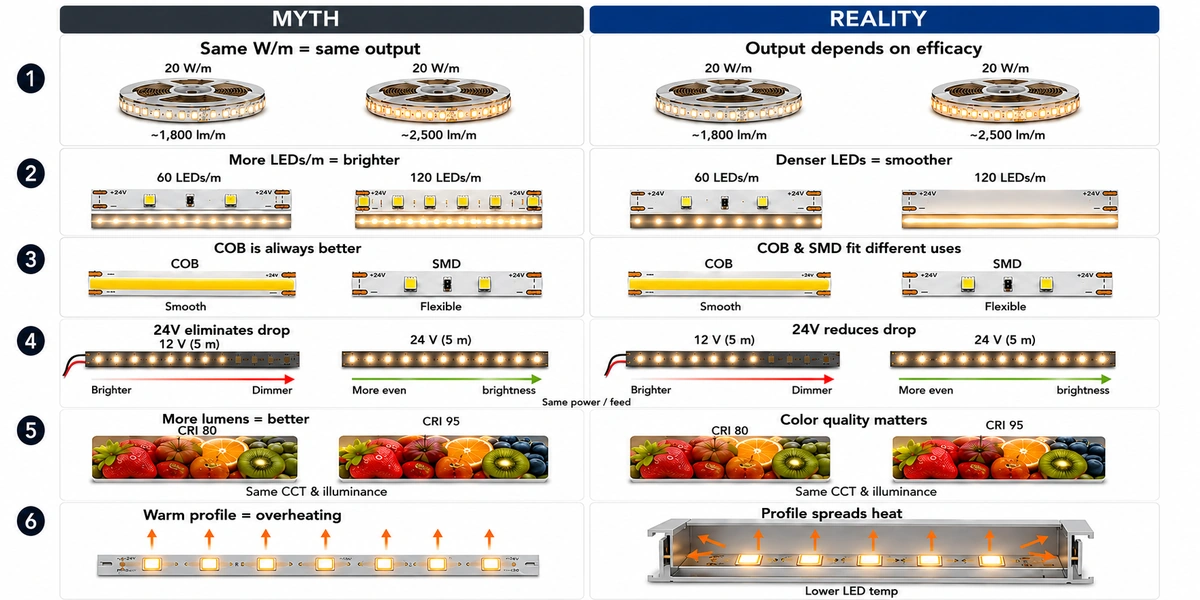
- Больше ватт всегда означает большую яркость. Только при сопоставимой эффективности и условиях испытаний люмены и LM/W показывают соотношение прямого выхода.
- Больше светодиодов на метр всегда означает больше люменов. Более высокая плотность может улучшить однородность или уменьшить ток на светодиоды без увеличения общего объема производства.
- COB всегда ярче, чем SMD. COB и SMD описывают подходы к строительству; они могут быть более яркими или более эффективными в конкретной готовой конструкции.
- Полоски 24 В автоматически ярче 12В. Напряжение не создает люмен, хотя 24 В может помочь контролировать падение напряжения в более длительных циклах.
- Полоса с высоким CRI с низким просветом имеет более низкое качество. Высокий CRI отдает приоритет спектральным качествам и цветам, что может включать компромисс с эффективностью.
- Алюминиевый профиль всегда увеличивает яркость. Диффузор может уменьшить проходящую лучи, а лучшее теплоотвод помогает стабилизировать производительность и долгосрочную производительность.
Заключение
Две светодиодные полосы с одинаковой мощностью могут давать очень разную яркость, потому что ватт измеряет потребление энергии, а не светоотдачу. Результат зависит от световой эффективности полосы, конструкции светодиода и печатной платы, оптической конструкции, тепловых характеристик и условий испытаний.
Для справедливого сравнения проверьте люмены готовой полосы на метр и Lm/W и подтвердите, что CRI, CCT, напряжение, длина испытаний, температура и конструкция продукта сопоставимы.
В конечном счете, лучшая светодиодная лента — это не та, которая имеет наибольшую мощность или рекламируемую люменовую фигуру, а та, которая обеспечивает требуемую яркость, качество цвета, однородность, эффективность и долгосрочную стабильность при монтаже.
Нужна помощь в сравнении яркости светодиодной ленты сверх мощности? Поделитесь своим целевым выходом люмен, CRI, CCT, напряжением, длиной проекта, условиями установки и предпочтительным типом ленты с командой инженеров Signliteled. Мы можем помочь оценить продукты по реальным характеристикам освещения, а не только по энергопотреблению.
ЧАСТО ЗАДАВАЕМЫЕ ВОПРОСЫ
Похожие посты