Türkçe
  English
  简体中文
简体中文  Deutsch
  Español
  Français
  Italiano
  日本語
日本語  한국어
한국어  Polski
  Português
  Русский
  Nederlands
  Tiếng Việt
  ไทย
ไทย 
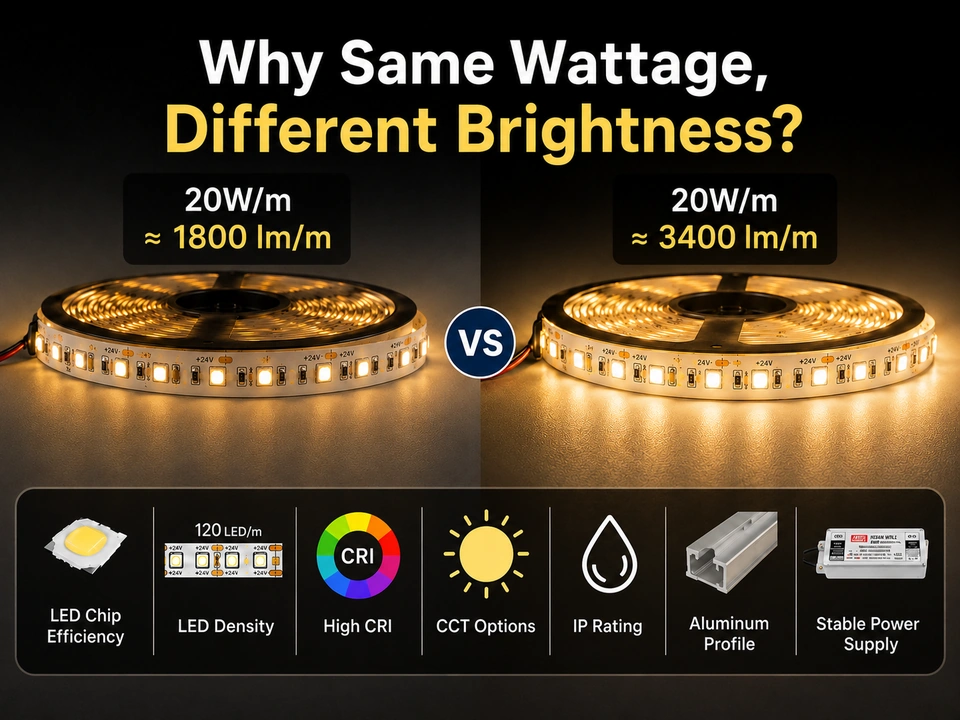
Bir tedarik yöneticisi, aynı ticari aydınlatma projesi için iki LED şeridi karşılaştırır. Her iki ürün de metre başına 20W'de derecelendirilmiştir ve 24V'de çalışır, ancak biri metre başına yaklaşık 2.200 lümen verirken, diğeri metre başına 3.000'den fazla lümen üretir. Belirtilen güç tüketimi neredeyse aynıdır, ancak ışık çıktıları açıkça farklıdır.
Bu neden oluyor? Watt, görünür ışık çıkışı değil, elektrik enerjisi tüketimini ölçer. Bitmiş bir LED şeridin parlaklığı aynı zamanda ışık etkinliğine, LED çip kalitesine, sürücü akımına, CRI'ye, renk sıcaklığına, fosfor formülasyonuna, PCB tasarımına, optik malzemelere, termal yönetime ve test koşullarına bağlıdır.
Bu makale, watt başına watt, lümen ve lümen arasındaki farkları açıklar, LED şerit parlaklığını etkileyen ana tasarım faktörlerini inceler ve ölçülen lümenlerin ve algılanan parlaklığın neden her zaman eşleşmediğini açıklar. Aynı wattlı LED şeritleri karşılaştırılabilir koşullar altında karşılaştırmak için pratik rehberlik sağlayarak, alıcıların yalnızca W/M'ye güvenmek yerine gerçek aydınlatma performansını değerlendirmelerine yardımcı olur.
Watt, Lümen ve LM/W: Temel Fark
LED şerit seçiminde en yaygın hata, watt'ı bir parlaklık derecesi olarak ele almaktır. Watt değeri önemlidir, ancak size yalnızca bir ürünün belirli koşullar altında ne kadar elektrik tükettiğini söyler. Size ne kadar kullanışlı ışığın odaya, ekrana, koya, rafa veya çalışma yüzeyine ne kadar ulaştığını söylemez.
| Parametre | ne ölçer | birlik | Alıcılar Neden İhtiyaç Duyar |
| Güç | Tüketilen elektrik enerjisi | w/m | Yükleme, sürücü boyutlandırma, ısı tahmini ve enerji hesaplamaları için kullanılır |
| Işık akısı | Toplam görünür ışık çıkışı | LM veya LM/M | Bitmiş şeridin ne kadar görünür ışık ürettiğini gösterir |
| ışık etkinliği | Watt başına görünür ışık çıkışı | lm/W | Şeridin elektrik gücünü ışığa ne kadar verimli bir şekilde dönüştürdüğünü gösterir |
Watt neyi ölçer?
20W/m'lik bir değer, LED şeridin bir metresinin belirtilen giriş voltajı ve çalışma koşulları altında yaklaşık 20 watt tüketecek şekilde tasarlandığı anlamına gelir. Bu değer, güç kaynağı seçimi ve kablo planlaması için gereklidir ve ısı yükünün kaba bir göstergesidir. Işık çıkışının doğrudan bir ölçüsü değildir.
Aynı prensip aydınlatma ürünleri için de geçerlidir. 15W'lık bir LED tasarımı, 15W'lik ürün, giriş gücünün daha büyük bir payını görünür ışığa dönüştürdüğünde, 20W'lik bir tasarımdan daha parlak olabilir. Kalan enerji büyük ölçüde elektrik ve optik sistemde ısı veya kayıp olarak salınır.
Lümenler neyi ölçer?
Lümenler, ışık akısını ölçer: İnsan görsel sisteminin hassasiyetine göre ağırlıklandırılmış, üretilen görünür ışığın toplam miktarı. Esnek LED şeritler için, metre başına lümen, çıktıyı uzunluklarına göre normalleştirdiği için genellikle en kullanışlı karşılaştırmadır.
Bir metrelik bir numunenin toplam lümenlerini beş metrelik bir makaranın toplam lümenleriyle karşılaştırmayın. Bireysel LED paketlerinin nominal çıkışını tamamlanmış bir şeridin çıktısıyla karşılaştırmayın. Anlamlı şekil normalde belgelenmiş bir güç seviyesinde bitmiş yapının ölçülen lümen çıkışıdır.
LM/W neyi ölçer?
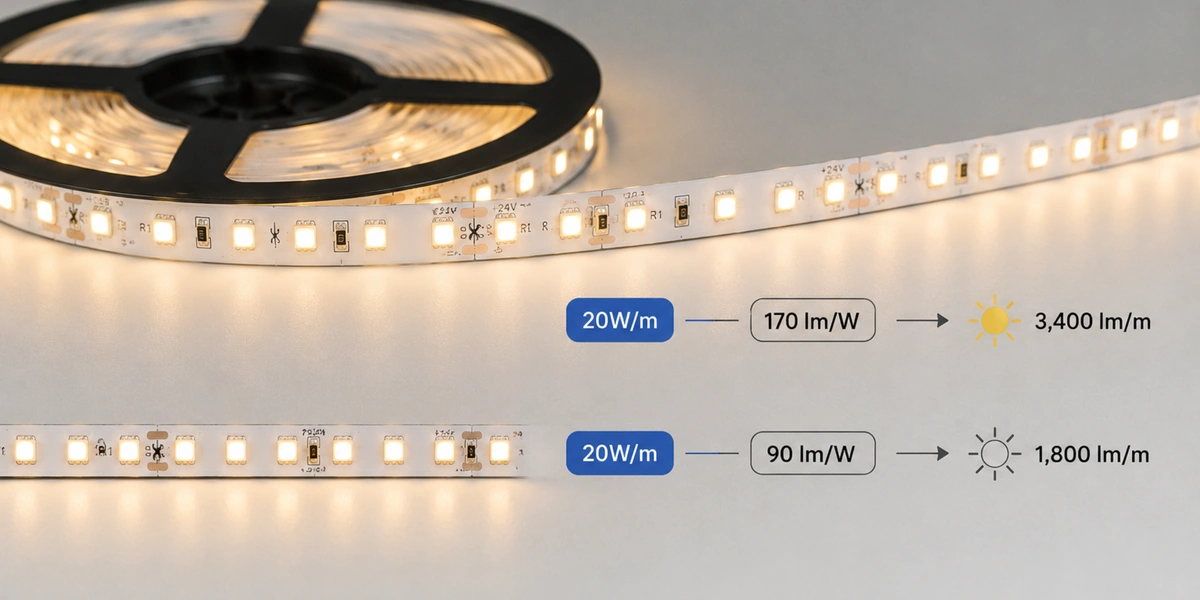
Watt başına lümen cinsinden ifade edilen ışık etkinliği, güç tüketimini ve görünür ışık çıkışını bağlar. Aynı wattlık parlaklık farkının arkasındaki merkezi metriktir.
| açıklayıcı şerit | Güç | Işık Etkinliği | hesaplanan çıktı |
| A | 20W/m | 90 lm/w | 1.800 lm/m |
| B | 20W/m | 130 lm/w | 2.600 lm/m |
| C | 20W/m | 170 lm/w | 3.400 lm/m |
Enerji verimliliği ve ısı azaltımının başlıca öncelik olduğu projeler için, Yüksek verimli LED şerit ışık faydalı bir referans noktası olabilir. Önemli adım, yalnızca bir ana etkinlik rakamına dayanmak yerine gerekli CRI, CCT, voltaj ve koruma seviyesi için bitmiş şerit verilerini doğrulamaktır.
Adil aynı voltaj karşılaştırması nasıl yapılır
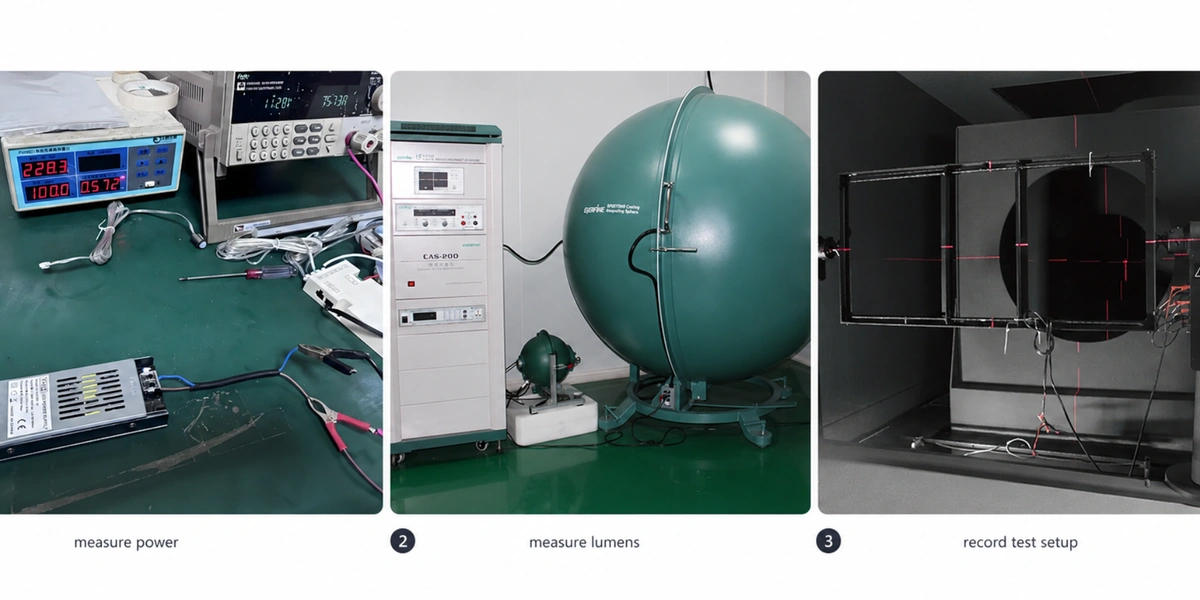
Aynı watt ifadesi genellikle bir veri sayfasına yazdırılan sayıyı ifade eder. LED verimliliğini analiz etmeden önce, test sırasında her iki şeridin de aynı gücü tükettiğini doğrulayın. Anma gücü ve ölçülen güç her zaman aynı değildir.
Gerçek gücü onaylayın
Anma watt, bir tasarım veya katalog değeridir. Ölçülen güç, çalışma sırasında gerçek voltaj ve akımdan elde edilir. Her ikisi de 20W/m olarak listelenen iki ürün, aynı nominal tedarik altında 18.6W/m ve 20.4W/m'yi ölçebilir. Bu, otomatik olarak her iki belirtimin de dürüst olmadığı anlamına gelmez; bileşen toleransları, devre topolojisi, giriş voltajı, ileri voltaj, LED ileri voltaj, sıcaklık ve ölçüm prosedürü sonucun tümü sonucu etkileyebilir.
Kontrol testi uzunluğu ve güç enjeksiyonu
Bir metrelik bir şerit ve tam bir makara farklı davranabilir. Akım bakır izler, iletkenler ve konektörler arasından geçerken direnç voltaj düşüşüne neden olur. Uzun bir şeridin uzak ucu, çıkışı azaltabilir ve görünür parlaklık değişimi yaratabilen, başlangıçtan daha az voltaj alabilir ve başlangıçtan daha az güç tüketebilir.
Tedarik topolojisi de önemlidir. Bir uçtan güç alan beş metrelik bir şerit, her iki uçtan güç alan benzer bir şeritle doğrudan karşılaştırılmamalıdır. Test uzunluğu, kablo boyutu, giriş yeri ve stabilizasyon süresi belgelenmelidir.
- Terminal voltajı: Sadece güç kaynağı etiketinde değil, şerit terminallerinde ölçün.
- Stabilize akım ve w/m: Şerit sabit bir çalışma sıcaklığına ulaştıktan sonra kayıt okumaları
- Örnek uzunluğu ve besleme yöntemi: Uzunluğu ve tek uçlu, çift uçlu veya çoklu besleme yapılandırmasını eşleştirin.
- Montaj ve termal durum: Aynı yüzeyi kullanın ve soğuk çalıştırma veya stabilize edilmiş okumaları tutarlı bir şekilde karşılaştırın.
Sürücü kalitesi ve sistem boyutlandırması da istikrarlı çalışmayı etkiler. A doğru seçilmiş LED güç kaynağı Şerit voltajına uymalı, uygun kapasite sağlamalı ve istenen kurulum ortamında kararlı çıktıyı sağlamalıdır.
Test koşullarını kontrol edin
- Renk özellikleri: Mümkün olduğunda CCT ve CRI'yi eşleştirin.
- Ürün Yapısı: Aynı koruma seviyesini ve optik yapıyı karşılaştırın.
- Kurulum koşulu: Aynı montajı kullanın ve her iki numunenin de aynı stabilize duruma ulaşmasına izin verin.
Güç ve ışık çıkışını birlikte ölçün
Aynı stabilize test sırasında gerçek voltaj, akım, W/M, LM/m ve LM/W kaydedin. Örnek uzunluğu, ortam sıcaklığı, montaj yöntemi, besleme konfigürasyonu ve ölçüm ekipmanı belgeleyin.
açıklayıcı karşılaştırma
| Parametre | soyunmak | B çizgisi |
| Anma gücü | 20W/m | 20W/m |
| ölçülen güç | 19.4w/m | 19.7W/m |
| CCT | 4000K | 4000K |
| CRI | RA 80 | RA 80 |
| Bitmiş şerit çıkışı | 2,150 lm/m | 3.050 lm/m |
| hesaplanan etkinlik | 111 lm/w | 155 lm/w |
| Stabilize tahta sıcaklığı | Daha yüksek | Daha düşük |
Ölçülen güç neredeyse eşit olduğunda, çıktı boşluğu esas olarak bir etkinlik farkıdır. Olası katkıda bulunanlar, şerit A'da daha düşük çip etkinliği ve daha yüksek termal kayıp, daha yüksek talaş etkinliği ve B'de daha güçlü termal tasarımdır.
Aynı wattlı LED şeritler neden farklı parlaklık üretir?
Gerçek güç onaylandıktan sonra, kalan parlaklık farkı, tüm şeridin enerjiyi nasıl dönüştürdüğü ve yönettiğinden gelir. Enerji yolunu takip etmek yararlıdır: elektrik girişi, LED dönüşümü, spektral tasarım, optik iletim, PCB kaybı ve termal kayıp.
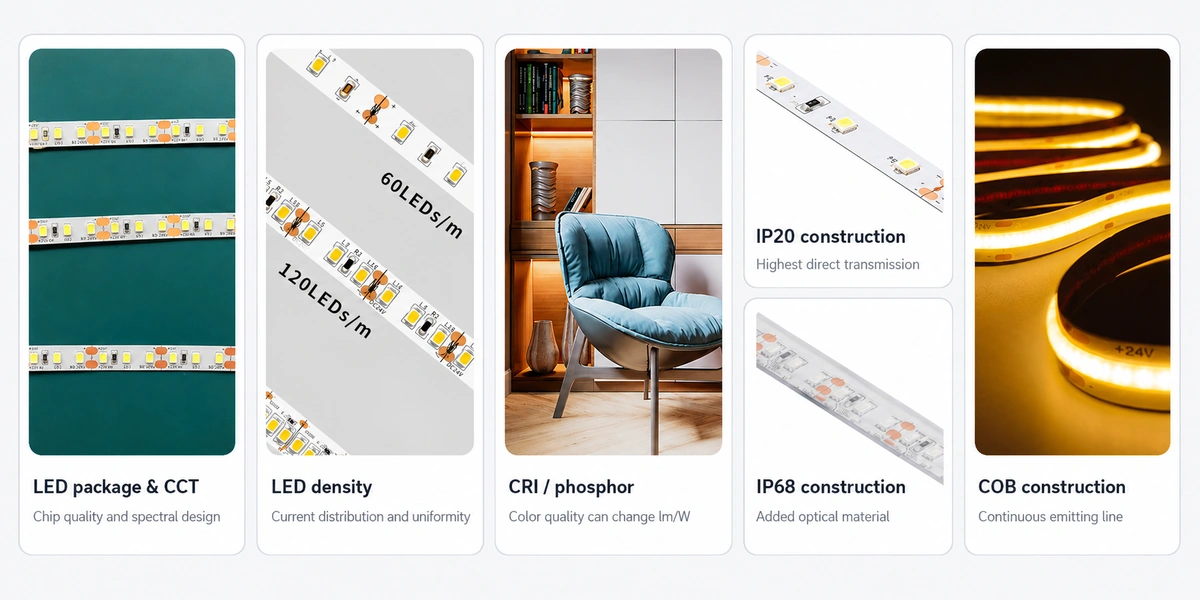
1. LED çip kutusu ve dönüşüm verimliliği
SMD2835, SMD2216, CSP ve COB gibi LED paket adları sabit bir performans düzeyini temsil etmez. Aynı LED tipini kullanan ürünler, ileri voltaj, lümen çıkışı, renk tutarlılığı ve ışık etkinliğinde farklılıklara neden olan farklı çip kutuları kullanabilir.
Daha yüksek verimli kutular, aynı akımda daha fazla lümen üretebilir veya daha az güçle aynı çıktıyı elde edebilir. Bu farklılıklar, şeritler benzer görünse bile, büyük projelerde parlaklık ve enerji tüketimini önemli ölçüde etkileyebilir.
Karşılaştırırken SMD LED şerit ışıklar, bitmiş şerit lümen çıkışını, LED binningini, CRI, CCT, PCB tasarımını ve sürücü koşullarını değerlendirin. LED paket numarası tek başına parlaklığın güvenilir bir göstergesi değildir.
2. Sürüş akımı ve verimlilik düşüşü
Artan LED akımı genellikle ışık çıkışını artırır, ancak ilişki mükemmel orantılı değildir. Daha yüksek akım yoğunluğunda, her ek watt'tan kazanılan artan lümenler düşebilir. Bu davranışa genellikle verimlilik düşüşü denir.
Bu nedenle, daha az LED'i daha sert sürüklü bir şekilde yüksek pik çıkış için veya yükü daha fazla yayıcıya yayarak daha yüksek etkinlik ve daha düşük termal stres için bir şerit tasarlanabilir. Her iki yaklaşım da metre başına aynı watt'ı kullanabilir, ancak farklı LM/W, sıcaklık ve uzun vadeli kararlılık sağlayabilirler.
Bu nedenle daha fazla elektrik gücü her zaman orantılı olarak daha fazla ışığa dönüşmez. Ek girdinin bir kısmı ısı olur ve daha yüksek sıcaklık verimliliği daha da azaltabilir.
3. LED yoğunluğu ve LED başına akım
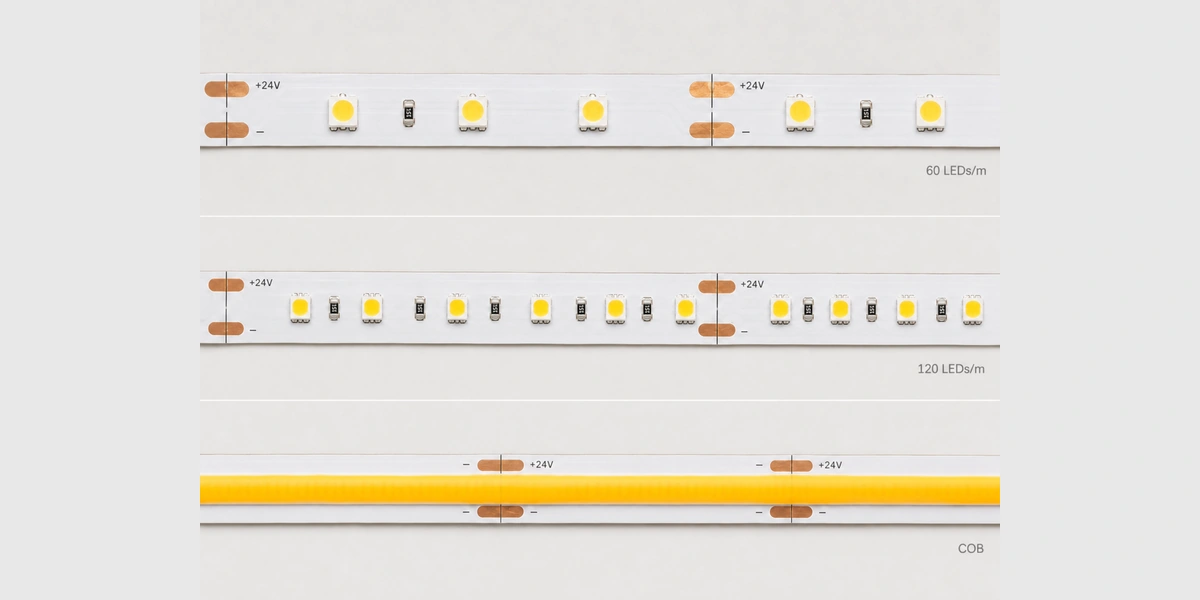
LED yoğunluğu görünümden daha fazlasını etkiler. 60 LED/m SMD şeridi, 120 LED/m şerit ve yüksek yoğunluklu COB şeridi elektrik yükünü farklı şekilde dağıtır. Daha fazla yayıcı daha yumuşak bir ışık çizgisi oluşturabilir ve her bir yayıcının daha düşük bir akımda çalışmasına izin verebilir.
LED başına daha düşük akım, bazı tasarımlarda verimliliği artırabilir ve yerelleştirilmiş ısıyı azaltabilir. Ancak, daha yüksek yoğunluk, daha yüksek toplam lümenleri garanti etmez. Bireysel talaşlar daha küçük, daha düşük dereceli, zayıf soğutulmuş veya azaltılmış akımda sürülüyorsa, yüksek yoğunluklu bir şerit, daha düşük yoğunluklu bir tasarımdan daha az parlak olabilir.
4. CRI, CCT ve Fosfor Formülasyonu
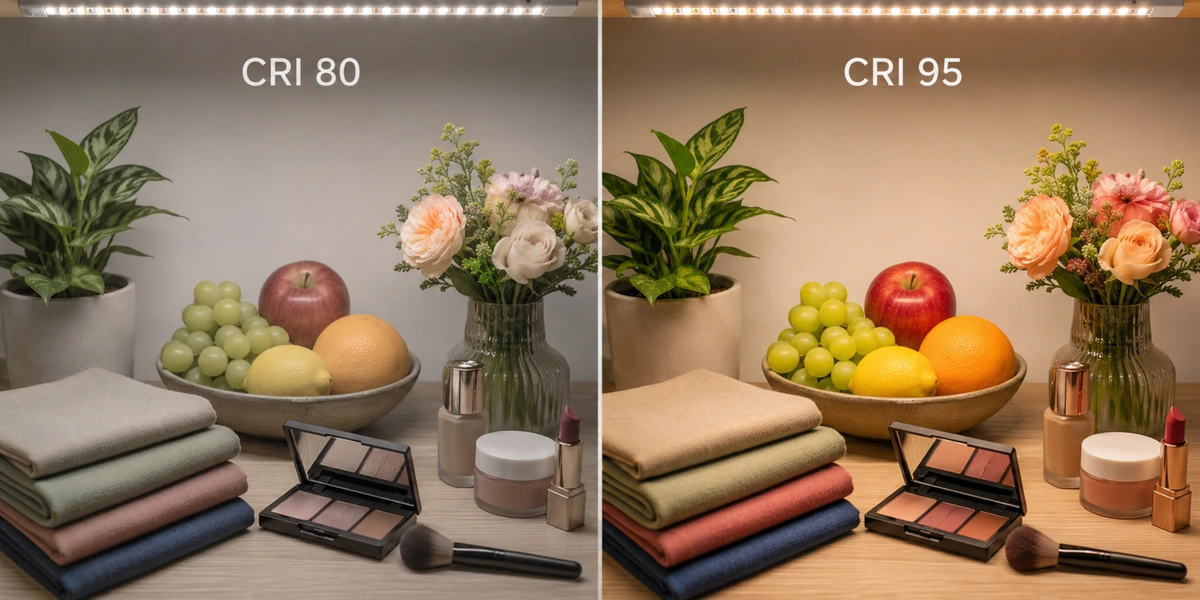
Fosfor formülasyonu, bir LED şeridin renk sıcaklığını, renk oluşturmasını ve ışık etkinliğini etkiler. Aynı ürün ailesi ve CCT içinde, CRI 90 veya CRI 95 versiyonları, renk doğruluğunu artırmak için daha fazla spektrum kullanıldığından, CRI 80 versiyonlarından daha az lümen üretebilir. Ancak, gerçek fark LED paketine ve fosfor teknolojisine bağlıdır.
Bu değiş tokuş, sadık renk görünümünün maksimum lümen çıktısından daha önemli olduğu perakende, konukseverlik, sanat, kozmetik ve gıda ekranı aydınlatmasında değerli olabilir. bizimki daha fazla bilgi CRI 95 LED Şerit Kılavuzu.
CCT ayrıca etkinliği etkileyebilir, ancak daha soğuk beyaz ışık otomatik olarak daha parlak veya daha iyi değildir. Alıcılar, aynı ürün ailesi ve CRI içindeki CCT seçeneklerini karşılaştırmalı ve ardından uygulamaya en uygun kombinasyonu seçmelidir. bizimkilere bakmak Ticari LED Beyaz Şerit Seçim Kılavuzu Pratik öneriler için.
5. Optik Kapsülleme ve Su Yalıtım Kayıpları
Su geçirmez kaplamalar, saksı malzemeleri, koruyucu tüpler, profil kapakları ve difüzörler, bitmiş bir LED şerit tarafından iletilen ışık miktarını azaltabilir. Bu nedenle, bir IP20 şeridi ve bir IP67 şeridi, yalnızca nominal LED çip lümenleri kullanılarak karşılaştırılmamalıdır.
Koruyucu yapılar dayanıklılığı artırır, difüzörler ise tekdüzeliği ve parlama kontrolünü iyileştirir, ancak her ikisi de ölçülen çıktıyı azaltabilir. Ticari alıcılar, aynı CRI, CCT, voltaj, sıcaklık ve test koşulları altında su yalıtımı veya difüzyonu sonrasında bitmiş şerit lümenlerini karşılaştırmalıdır. Gerçek optik kayıp, malzeme ve ürün yapısına bağlıdır, bu nedenle her sisteme bir sabit kayıp yüzdesi uygulanmamalıdır.
- Çıplak IP20 Şerit: En yüksek doğrudan iletim, ancak nem koruması yok.
- Silikon kaplı şerit: Biraz emilim ve saçılma ile daha iyi koruma.
- Doldurulmuş veya ekstrüde su geçirmez şerit: Daha güçlü çevre koruma, potansiyel olarak daha fazla optik kayıp.
- Sütlü difüzör: Daha yumuşak ışık ve daha düşük parlama, ancak iletilen lümenleri azalttı.
6. PCB elektrik tasarımı ve voltaj düşüşü
PCB direnci, LED'lere ne kadar güç ulaştığını etkiler. Daha geniş izler, daha kalın bakır ve iyi tasarlanmış bir devre, voltaj düşüşünü azaltabilir ve şerit boyunca tutarlı parlaklığın korunmasına yardımcı olabilir.
Uzun kurulumlar için alıcılar, güç girişinin yakınında ölçülen kısa bir örneğe güvenmek yerine tam çalışma performansını karşılaştırmalıdır. Güçlü bir metrelik verilere sahip bir şerit, tam bir makara boyunca daha düşük veya daha az düzgün çıktı üretebilir.
7 Termal tasarım ve çalışma sıcaklığı
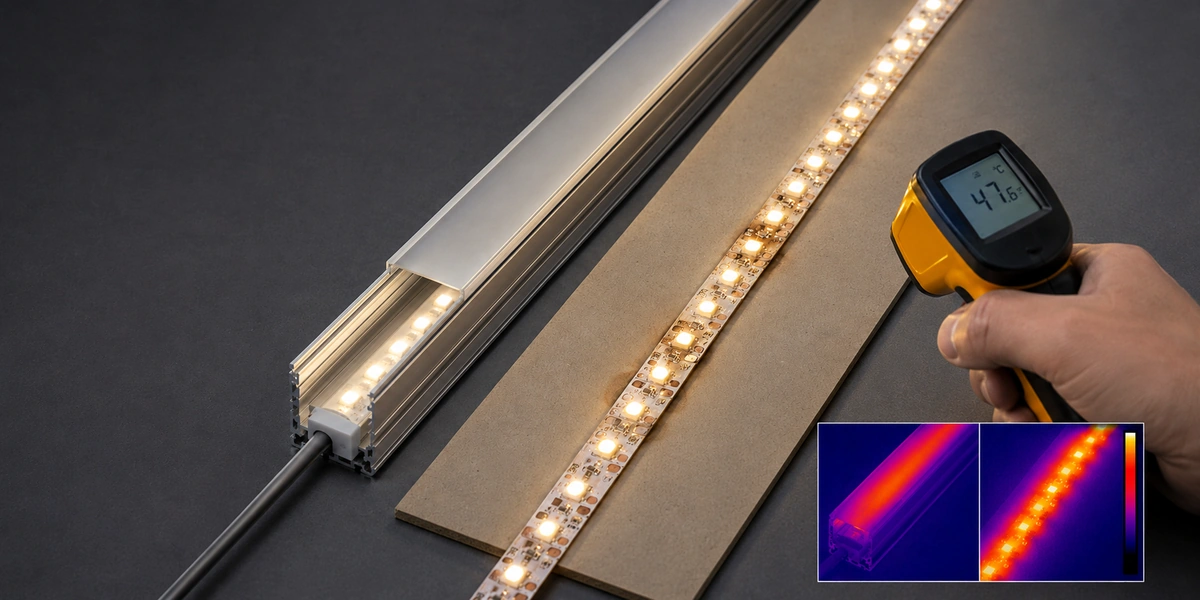
LED şeritler, çalışma sıcaklıkları arttıkça genellikle daha az verimli hale gelir. PCB yapısı, sürücü akımı, montaj yüzeyi, hava akışı ve kurulum alanı bu nedenle hem stabilize parlaklığı hem de uzun vadeli performansı etkileyebilir.
Bir LED alüminyum profil daha fazla ışık oluşturmaz ve difüzörü iletilen lümenleri azaltabilir. Bununla birlikte, daha iyi ısı dağılımı, şeridin gerçek kurulumlarda daha kararlı çıktıyı korumasına yardımcı olabilir.
Çalışma sıcaklığı ve uzun vadeli lümen amortismanı hakkında daha fazla bilgi için, LED şerit ışık ömrü.
Ölçülen lümen ve algılanan parlaklık
Lümenler, toplam ışık çıkışını karşılaştırmak için ana referanstır, ancak benzer LM/M'ye sahip iki LED şeridi kurulumdan sonra yine de farklı görünebilir. Işın dağılımı, yayan alan, difüzörler, kontrast, CCT ve çevreleyen yüzeylerin tümü algılanan parlaklığı etkileyebilir.
- Aydınlık akı - lümenler: Kaynak tarafından üretilen toplam görünür ışık.
- Aydınlık — Lux: bir yüzeye gelen ışık.
- Parlaklık — CD/m²: belirli bir yönde yayılan veya yansıtılan ışık.
- Algılanan parlaklık — Tek bir doğrudan birim yok: Gerçek ortamdaki izleyicinin görsel izlenimi.
Konsantre bir ışık kaynağı veya açıkta kalan SMD noktası daha yoğun görünebilirken, bir difüzör ışığı daha eşit bir şekilde yayar ve parlamayı azaltır. Daha soğuk ışık da bazı ortamlarda daha parlak görünebilir, ancak her zaman daha fazla lümen üretmez.
Bu ayrım özellikle COB ve SMD şeritlerini karşılaştırırken önemlidir. COB genellikle daha yumuşak, sürekli bir ışık çizgisi oluştururken, SMD noktaları yakın mesafeden daha parlak görünebilir. Bu nedenle alıcılar, yalnızca lümen çıkışına güvenmek yerine lümenleri, hedef alanı lüksü, tekdüzeliği ve görsel rahatlığı karşılaştırmalıdır.
COB veya SMD teknolojisi parlaklığı belirler mi?
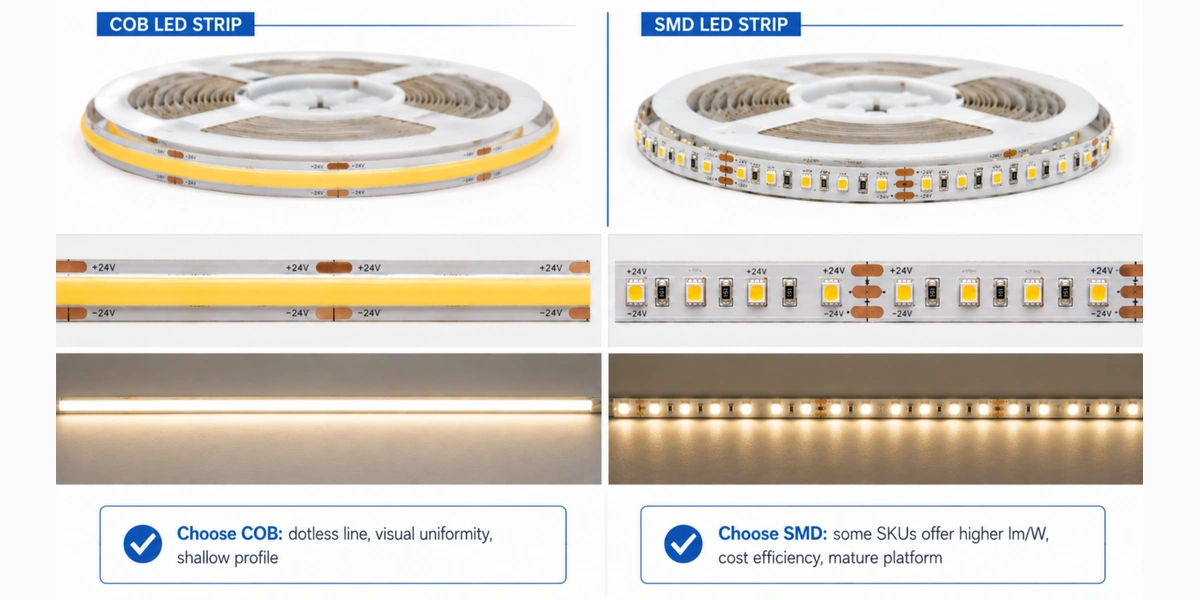
hiç COB otomatik olarak daha parlak değildir ve SMD otomatik olarak daha verimli değildir. Bitmiş şerit performansı, çip kalitesine, sürücü akımına, CRI, CCT, PCB tasarımına, optik yapıya ve çalışma sıcaklığına bağlıdır.
Pürüzsüz, noktasız bir ışık çizgisi ve yakın mesafe tekdüzeliği önemli olduğunda COB genellikle tercih edilir. SMD daha geniş bir paket, çıkış seviyeleri, optik seçenekler ve uygun maliyetli konfigürasyonlar sunar ve bazı SMD ürünleri çok yüksek LM/W elde edebilir.
COB'u seçin:
- Noktasız sürekli ışık hattı önceliktir.
- Kaynak yakın mesafeden görülebilir.
- sığ profiller ve yakın mesafe tekdüzelik önemlidir.
- Nitelikli bir COB ürünü, gerekli etkinlik ve bütçeyi karşılar.
SMD'yi seçin:
- Maksimum LM/W veya maliyet verimliliği ana önceliktir.
- Kaynak gizlenmiş veya uygun bir difüzör mevcuttur.
- Daha fazla paket, renk, optik veya RGB/RGBW seçeneği gereklidir.
- Geniş kullanılabilirlik ve yapılandırma esnekliği önemlidir.
Doğru seçim uygulamaya bağlıdır. Parlaklığı tek başına paket türüne göre değerlendirmek yerine, benzer test koşulları altında bitmiş şerit lümenleri, LM/W, tekdüzelik, görsel görünüm ve maliyeti karşılaştırın. Sürekli ışık hattı gerektiren projeler için mevcut bilgileri gözden geçirin. COB LED şerit ışıklar.
LED şerit parlaklık özellikleri doğru bir şekilde nasıl değerlendirilir
Farklı tedarikçiler, doğrudan karşılaştırılamayan parlaklık verilerini yayınlayabilir. Bu, rakamların yanlış olduğu anlamına gelmez. Ürünler farklı CRI, CCT, su yalıtımı, numune uzunlukları, stabilizasyon periyotları, ölçüm yöntemleri veya lümen çıktısı tanımlarına sahip olabilir.
Verilerin çip düzeyinde mi yoksa bitmiş şerit verileri mi olduğunu doğrulayın
LED Paket Verileri, bileşeni belirtilen laboratuvar koşulları altında tanımlar. Bitmiş bir şerit, PCB direnci, akım kontrol bileşenleri, fosfor veya kapsülleme, su geçirmez katmanlar, lehim bağlantıları ve termal kısıtlamalar ekler. Satın alma kararları için, tam konfigürasyon için metre başına bitmiş şerit lümenleri ve metre başına gerçek watt isteyin.
Beğeni ile karşılaştırın
Anlamlı bir karşılaştırma aynı CRI, CCT, voltaj, koruma seviyesi, numune uzunluğu ve çalışma koşulunu kullanır. 5000K'da bir çıplak CRI 80 şeridi, 2700K'da su geçirmez bir CRI 95 şeridine eşdeğer bir doğrudan verimlilik olarak sunulmamalıdır. Her ikisi de iyi ürünler olabilir, ancak farklı gereksinimleri çözerler.
LM-79, LM-80 ve TM-21'i anlayın
Bu IES yöntemleri, LED spesifikasyonlarında sıklıkla bahsedilir, ancak aynı testi tanımlamazlar.
| yöntem | ne kapsıyor | Doğru alıcı yorumu |
| ANSI/IES LM-79-24 | Standart koşullar altında katı hal aydınlatma ürünlerinin optik ve elektriksel ölçümleri | Belgelenmiş ürün düzeyinde fotometrik ve elektriksel ölçüm ile ilgili; test edilen ürünü ve rapor kapsamını onaylayın |
| ANSI/IES LM-80-21 | LED paketleri, dizileri ve modülleri için ışık çıkışı ve renk özelliklerinin korunması | Faydalı kaynak düzeyinde bakım verileri; bitmiş şeritli bir başlangıç lümen testi değil |
| ANSI/IES TM-21-21 | LM-80 verileri kullanılarak uzun vadeli akı bakımının projeksiyonu | Sınırlı bir projeksiyon yöntemi; battaniye ürün ömrü veya garanti garantisi değil |
Bir alıcı, gerçekte neyin test edildiğini, hangi sürüm veya yöntem altında ve raporun tam LED kaynağına mı yoksa bitmiş şerit konfigürasyonuna mı uygulandığını sormalıdır. LM-80 ve TM-21 bilgileri bir bakım tartışmasını destekleyebilir, ancak bitmiş şerit performansı aynı zamanda sürücü akımına, PCB tasarımına, termal koşullara, güç kalitesine ve kuruluma da bağlıdır.
Profesyonel alıcı kontrol listesi
| belirtme | Neden Önemli? | sorulacak soru |
| Ölçülen w/m | Gerçek elektrik girişini oluşturur | Bu ölçülen mi yoksa nominal bir değer mi? |
| metre başına lümen | Kullanılabilir bitmiş şerit çıktısını gösterir | Tam şerit ölçüldü mü? |
| lm/W | Güç ve görünür çıkışı bağlar | Aynı testten mi hesaplanıyor? |
| Cri ve R9 | Spektrum, renk kalitesi ve etkinliği etkiler | Hangi CRI ve CCT sürümü test edildi? |
| CCT ve renk toleransı | Görünümü ve proje tutarlılığını etkiler | Hangi binning veya SDCM kontrolü sağlanır? |
| PCB ve bakır | Direnç, ısı ve uzun dönem tutarlılığı etkiler | Hangi PCB genişliği ve bakır konstrüksiyon kullanılır? |
| Voltaj ve çalışma uzunluğu | akım ve voltaj düşüşünü etkiler | Önerilen maksimum çalıştırma ve besleme yöntemi nedir? |
| IP İnşaat | Dayanıklılığı ve optik iletimi etkiler | Su yalıtımı sonrası lümen değeri ölçülmüştür? |
| termal durum | Stabilize çıktı ve bakımı etkiler | Numune nasıl monte edildi ve stabilize edildi? |
| belgeleri belgeleyen | Tekrarlanabilir tedariki destekler | Tedarikçi, test koşulları ve parti kontrol bilgileri sağlayabilir mi? |
Voltaj, çıkış, CRI, koruma, kurulum ve tedarikçi kapasitesinin daha geniş bir proje düzeyinde incelemesi için, bir Ticari LED Şerit Işıkları Seçim Kılavuzu Parlaklık karşılaştırmasının yanı sıra.
Açıklayıcı örnek: Daha az güçle aynı lümen hedefine ulaşmak
Daha yüksek ışık etkinliği, aynı hedef çıktıyı sağlamak için iki LED şeridi tasarlandığında kurulu gücü azaltabilir. Bu örnek, 100 metrede 3.000 lm/m'lik bir çıktıyı $0.12/kWh elektrik fiyatıyla günde 10 saat, yılda 365 gün çalıştırdığını varsayar. Sürücü kayıpları hariçtir.
| Opsiyon | Bitmiş Şerit Etkinliği | Metre başına gerekli güç | 100m yük |
| A | 120 lm/w | 25.0W/m | 2.50kw |
| B | 180 lm/w | 16.7W/m | 1.67kw |
Fark yaklaşık 8.3W/m veya 100 metrede yaklaşık 0.83kW'dir. Günde 10 saatte, yıllık enerji farkı yaklaşık 3.030 kWh'dir. $0.12/kWh'de, sürücü verimliliği, karartma, bakım ve talep ücretlerini hesaba katmadan önce yılda yaklaşık $364'tür.
Örnek, 180 lm/w seçeneğinin otomatik olarak daha iyi olduğunu kanıtlamaz. Ürünler yine de aynı CRI, CCT, tekdüzelik, koruma, güvenilirlik ve uygulama gereksinimlerini karşılamalıdır. Maksimum etkinlik, aydınlatma kalitesinin tek tanımı değil, bir tasarım hedefidir.
LED şerit parlaklığı hakkında yaygın yanılgılar
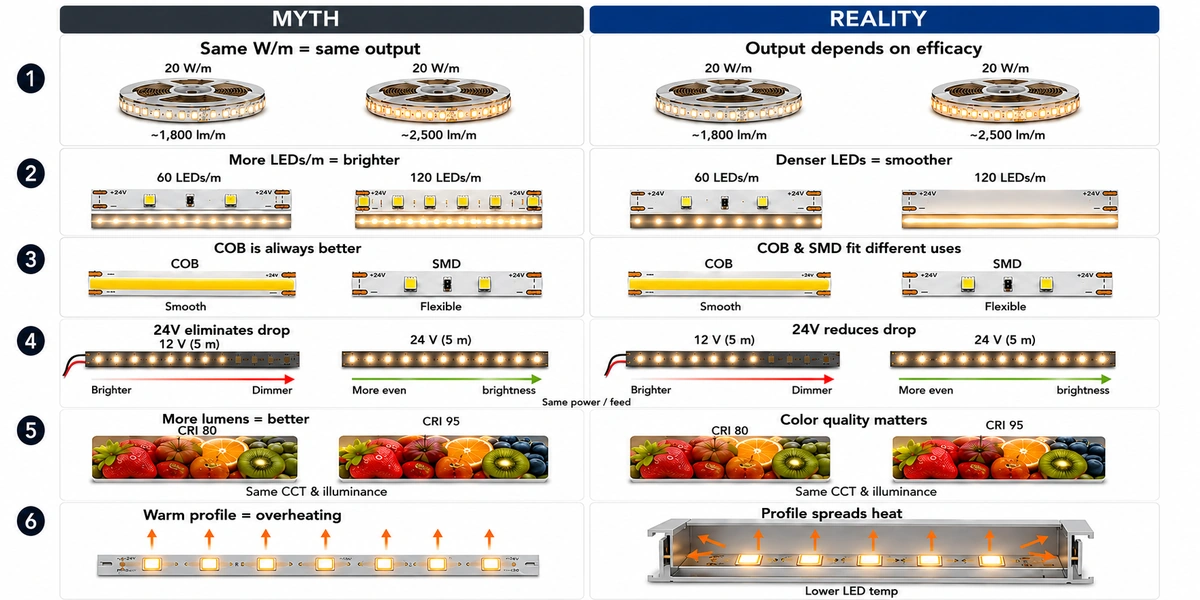
- Daha fazla watt her zaman daha fazla parlaklık anlamına gelir. Yalnızca etkinlik ve test koşulları karşılaştırılabilir olduğunda lümenler ve LM/W doğrudan çıktı ilişkisini gösterir.
- Metre başına daha fazla LED her zaman daha fazla lümen anlamına gelir. Daha yüksek yoğunluk, toplam çıktıyı artırmadan tekdüzeliği artırabilir veya LED başına akımı azaltabilir.
- COB her zaman SMD'den daha parlaktır. COB ve SMD, yapım yaklaşımlarını tanımlar; belirli bir bitmiş tasarımda daha parlak veya daha verimli olabilir.
- 24V şeritler otomatik olarak 12V şeritlerden daha parlaktır. Voltaj lümen oluşturmaz, ancak 24V daha uzun çalışmalarda voltaj düşüşünü kontrol etmeye yardımcı olabilir.
- Daha düşük lümenli yüksek CRI şeridi daha düşük kalitededir. Yüksek CRI, bir etkinlik değiş tokuşu içerebilecek spektral kaliteye ve renk aslına öncelik verir.
- Alüminyum profil her zaman parlaklığı artırır. Bir difüzör iletilen ışığı azaltabilirken, daha iyi ısı dağılımı, çıktıyı ve uzun vadeli performansı dengelemeye yardımcı olur.
Çözüm
Aynı watt değerine sahip iki LED şerit, ışık çıkışını değil, güç tüketimini ölçtüğü için çok farklı parlaklık üretebilir. Sonuç, şeridin ışıklı etkinliğine, LED ve PCB tasarımına, optik yapıya, termal performansa ve test koşullarına bağlıdır.
Adil bir karşılaştırma için, metre ve LM/W başına bitmiş şerit lümenlerini kontrol edin ve CRI, CCT, voltaj, test uzunluğu, sıcaklık ve ürün yapısının karşılaştırılabilir olduğunu doğrulayın.
Sonuç olarak, en iyi LED şerit, en yüksek watt veya reklamı yapılan lümen figürüne sahip olan değil, gerçek kurulumda gerekli parlaklığı, renk kalitesini, tekdüzeliği, verimliliği ve uzun vadeli kararlılığı sağlayan olanıdır.
LED Şerit Parlaklığını Watt'ın Ötesinde Karşılaştırmak için Yardıma mı ihtiyacınız var? Hedef lümen çıkışını, CRI, CCT, voltaj, proje uzunluğu, kurulum ortamını ve tercih edilen şerit tipini Signliteled mühendislik ekibiyle paylaşın. Ürünleri tek başına güç tüketimi yerine gerçek aydınlatma performansıyla değerlendirmeye yardımcı olabiliriz.
SSS
İlgili Yazılar