Addressable LED (SPI) Knowledge Hub
Learn how SPI addressable LED systems work, how to choose the right IC, and how to design reliable pixel lighting solutions for architectural, commercial, and entertainment projects.
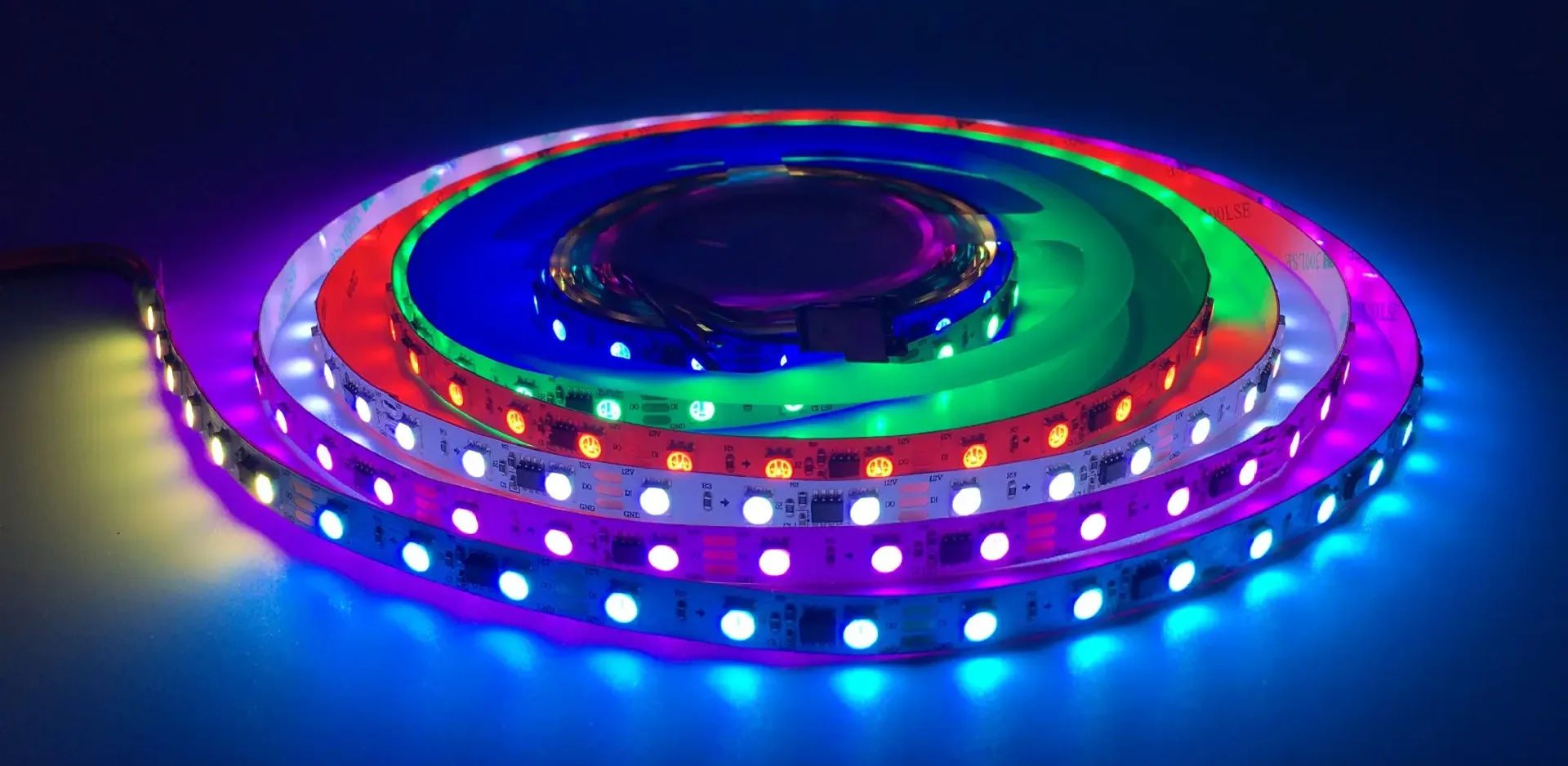
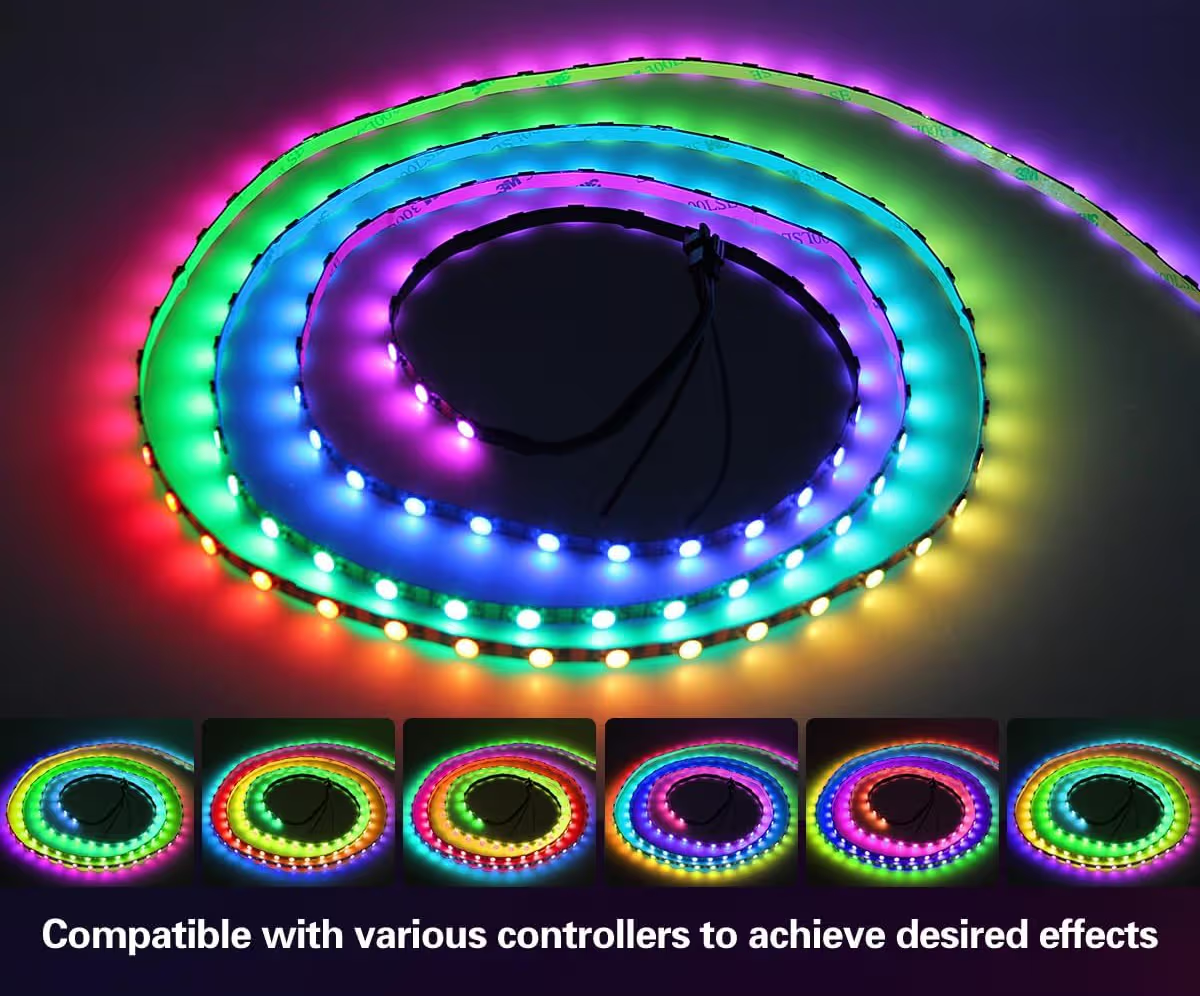
Addressable LED (SPI) technology enables pixel-level control of lighting systems, allowing dynamic effects such as animation, color chasing, gradients, and video-like lighting displays.
This knowledge hub helps you understand SPI LED technology from basics to advanced system design—including IC selection, wiring methods, controllers, and real-world applications.
SPI LED System Structure
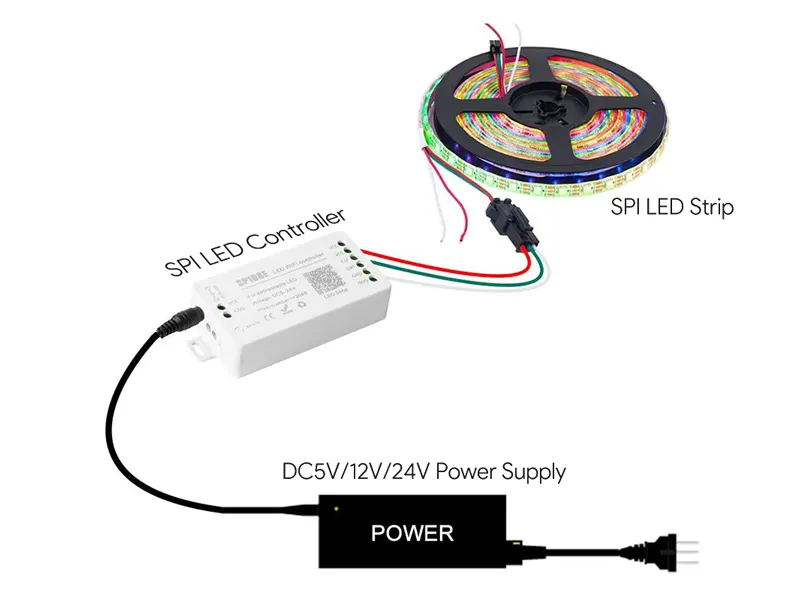
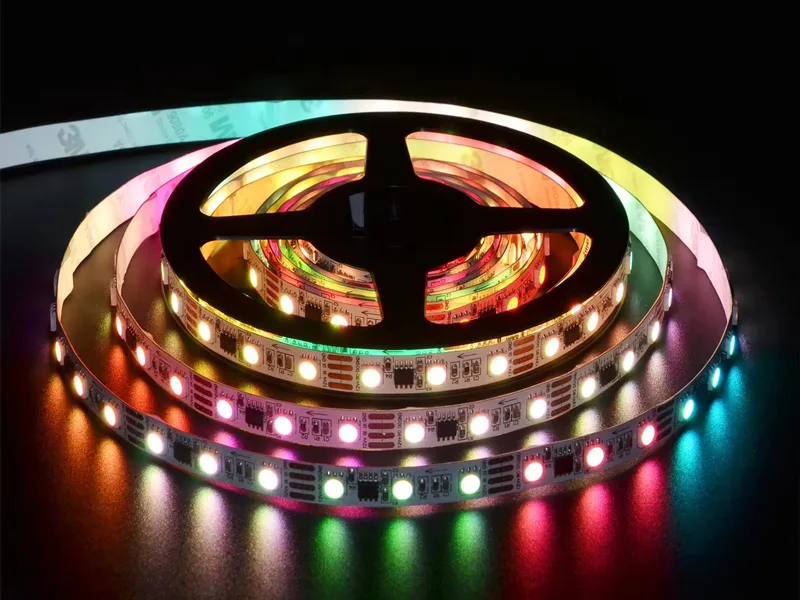
SPI LED systems are built as integrated lighting systems rather than standalone products. A complete setup typically includes addressable LED strips, a control unit, a power supply, and a structured data signal chain that connects all components.
Each part plays a critical role: the LED IC determines how pixels behave, the controller defines lighting effects, the power system ensures stability, and the signal flow enables precise communication between LEDs. Because these elements are interdependent, the overall performance of an SPI system depends on how well they are designed and integrated together.
Understanding this system structure is essential for avoiding common issues such as flickering, voltage drop, or signal loss—and for building reliable, scalable lighting solutions for real-world applications.
What is an SPI LED System?
SPI LED systems are not just LED strips—they are complete pixel-controlled lighting networks.
A full SPI system consists of:
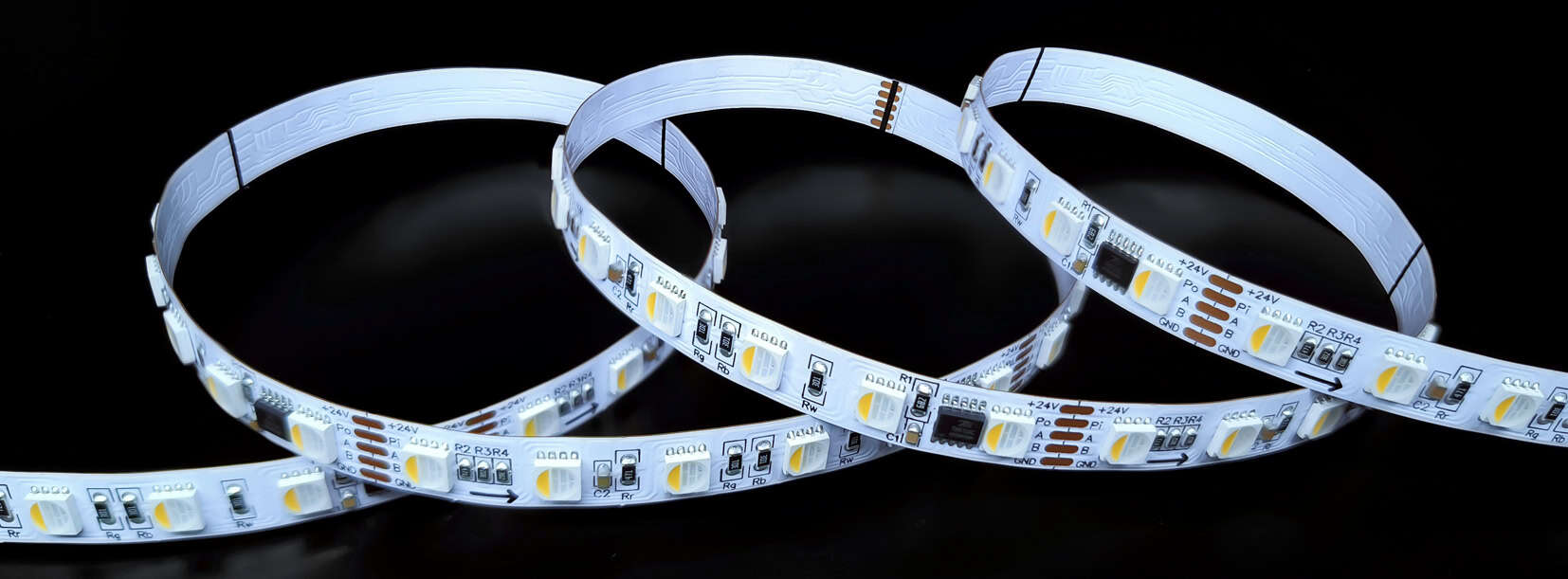
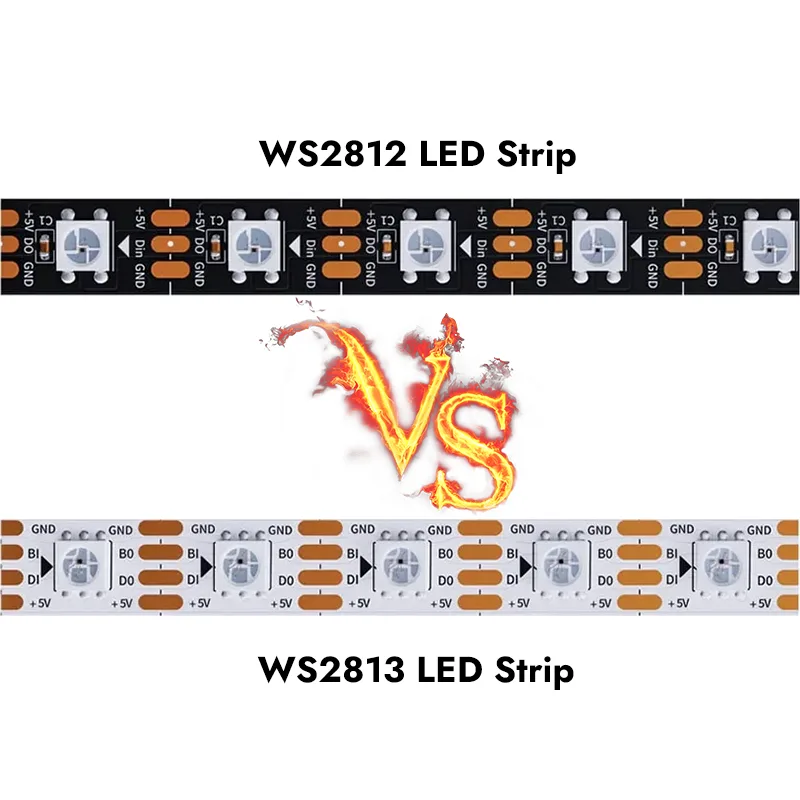
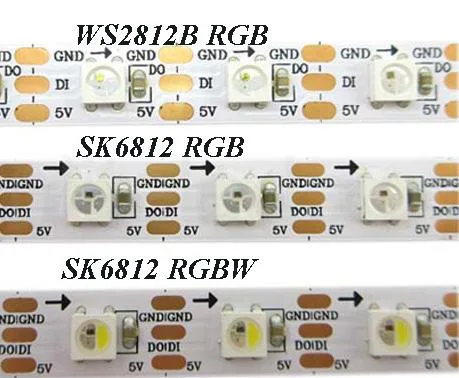
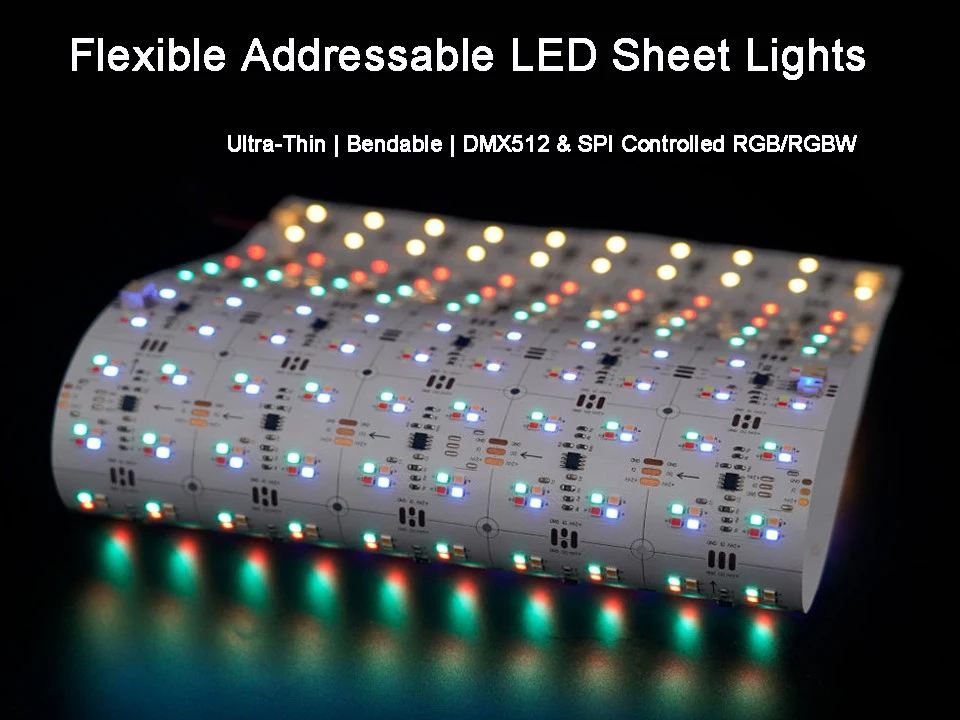
- LED strip (with IC chips like WS2812 / SK6812)
- Controller (signal generator)
- Power supply system
- Data transmission chain
Unlike traditional LED systems, each LED acts as an independent pixel controlled through digital data signals.
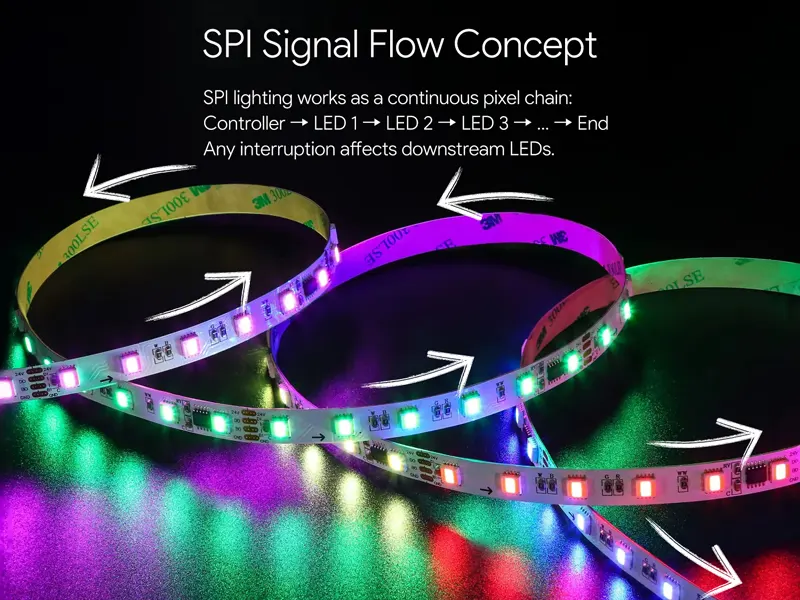
How SPI Signal Flow Works
SPI LED strips operate in a sequential data chain:
- Controller sends digital signal
- First LED receives data
- Each LED extracts its own pixel data
- Remaining data is passed to next LED
This creates a continuous pixel pipeline.
What Are the Limitations of SPI LED Systems?
While SPI addressable LED systems offer powerful pixel-level control and dynamic lighting effects, they also come with several technical limitations that must be considered during system design:
- Signal transmission distance
- Uzun çalışmalarda voltaj düşüşü
- Cascade dependency (Signal chain risk)
- Sınırlı ölçeklenebilirlik
- Sensitivity to electrical noise
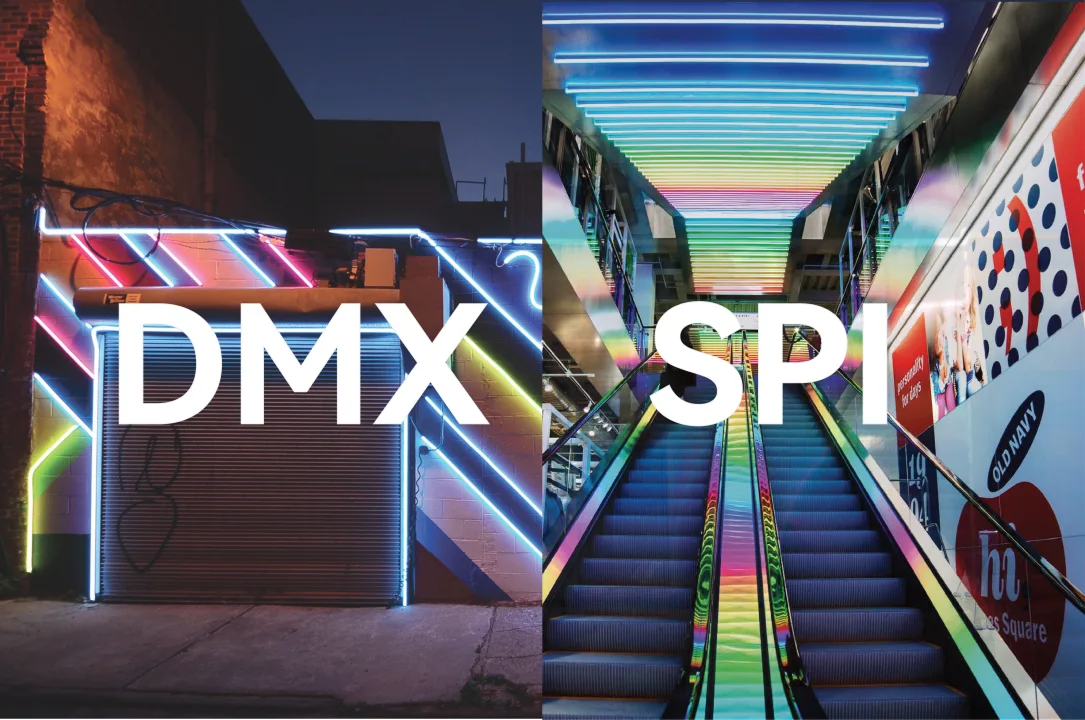
For large-scale or long-distance projects, consider comparing SPI with DMX control systems.
Featured SPI LED Articles

Adreslenebilir LED Şerit IC Türleri için Eksiksiz Kılavuz
Explore key differences between major addressable ICs in performance and color, and how they impact system design and control. Helps you select the right chip based on real project needs.

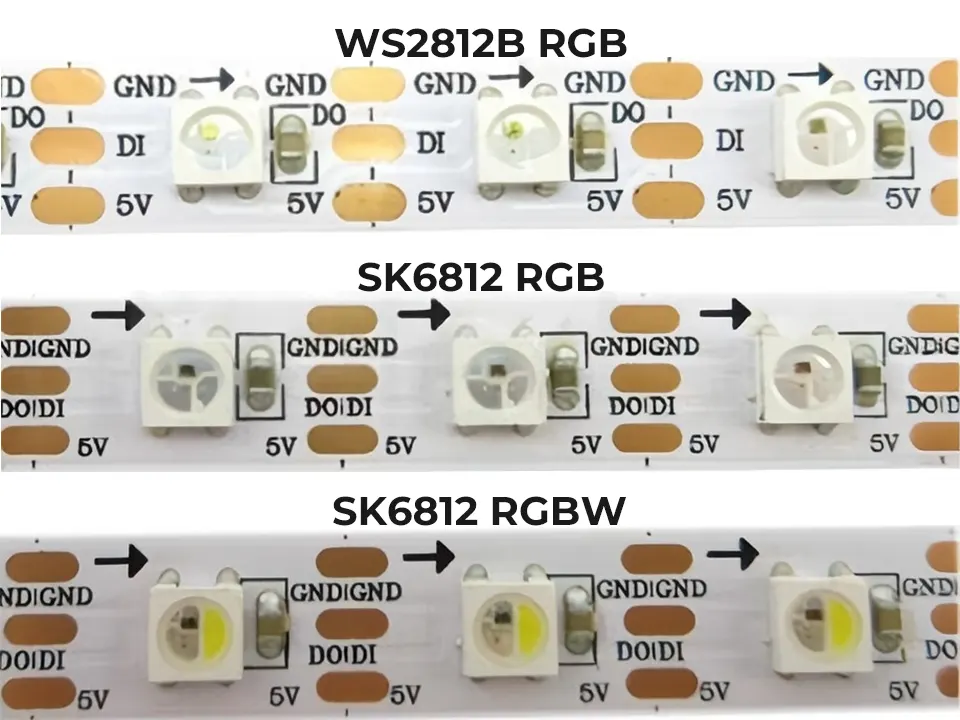
WS2812B LED Şerit VS SK6812 LED Şerit: Hangisi Daha İyi?
A detailed comparison of two of the most widely used addressable LED chips. Helps you select the right balance of cost, performance, and color quality.

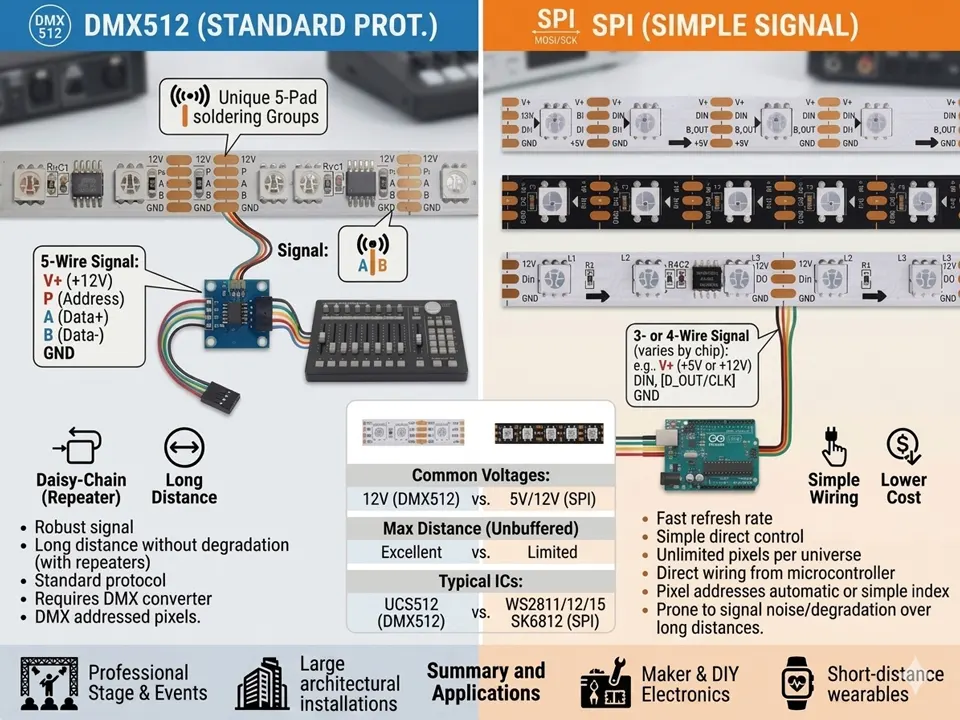
Piksel Adreslenebilir LED Şerit Karşılaştırması: DMX512 vs SPI
Compare two major lighting control technologies used in architectural and entertainment projects. Helps determine system architecture early in design stage.
Start Here: Learn SPI LED Step by Step
New to addressable LED systems or not sure where to begin?
This structured learning path is designed to guide you through SPI LED technology step by step—from understanding the basic concepts, to selecting the right LED IC, designing stable systems, and applying them in real-world projects.
Unlike traditional LED lighting, SPI systems involve multiple components working together, including LED chips, controllers, power supply, and signal transmission. Without a clear understanding of how these elements interact, it’s easy to encounter issues such as flickering, voltage drop, or unstable performance.
Whether you are a beginner, engineer, lighting designer, or project buyer, this guide will help you move from basic knowledge to confident system-level decision making.
Understand SPI Basic
Before choosing LED chips or designing a system, it’s important to understand how SPI addressable LED technology actually works.
SPI LED systems are fundamentally different from traditional LED strips. Instead of controlling the entire strip as one unit, SPI allows each LED to act as an independent pixel, controlled through digital signals.
Compare LED ICs & Control Systems
After understanding the fundamentals of SPI LED systems, the next step is selecting the right technology for your specific application.
Addressable LED chips and control systems can vary significantly in terms of performance, control capability, and system structure. These differences directly affect lighting quality, system stability, and overall project complexity.
Beyond choosing the right IC, it’s equally important to compare SPI with other control methods to ensure you’re using the most suitable solution for your project requirements.
System Control & Integration
SPI LED strips require a control system to generate signals, manage lighting effects, and connect with other devices. This typically involves choosing the right SPI controller to handle color, brightness, and animation—ranging from simple standalone units to advanced pixel control systems.
In real-world projects, SPI systems are often integrated with other platforms, such as DMX systems, lighting software, or centralized control systems, enabling larger and more flexible lighting setups.
Control methods can also vary depending on project needs, from pre-programmed effects to real-time or software-based control, allowing you to balance simplicity, flexibility, and performance.
Explore Real Applications
SPI LED technology is widely used across a range of applications where dynamic lighting and pixel-level control are required:
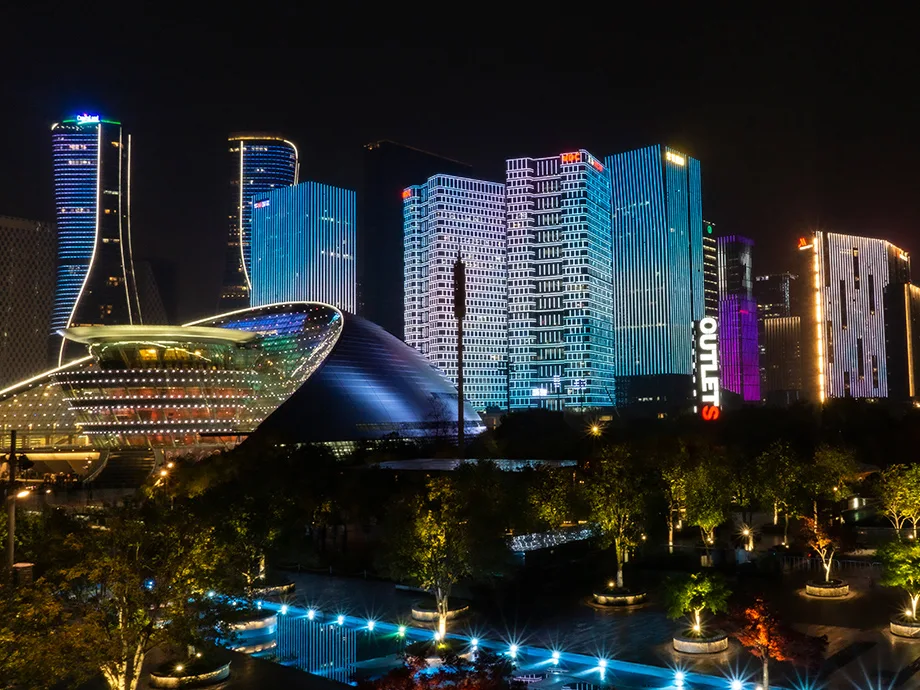
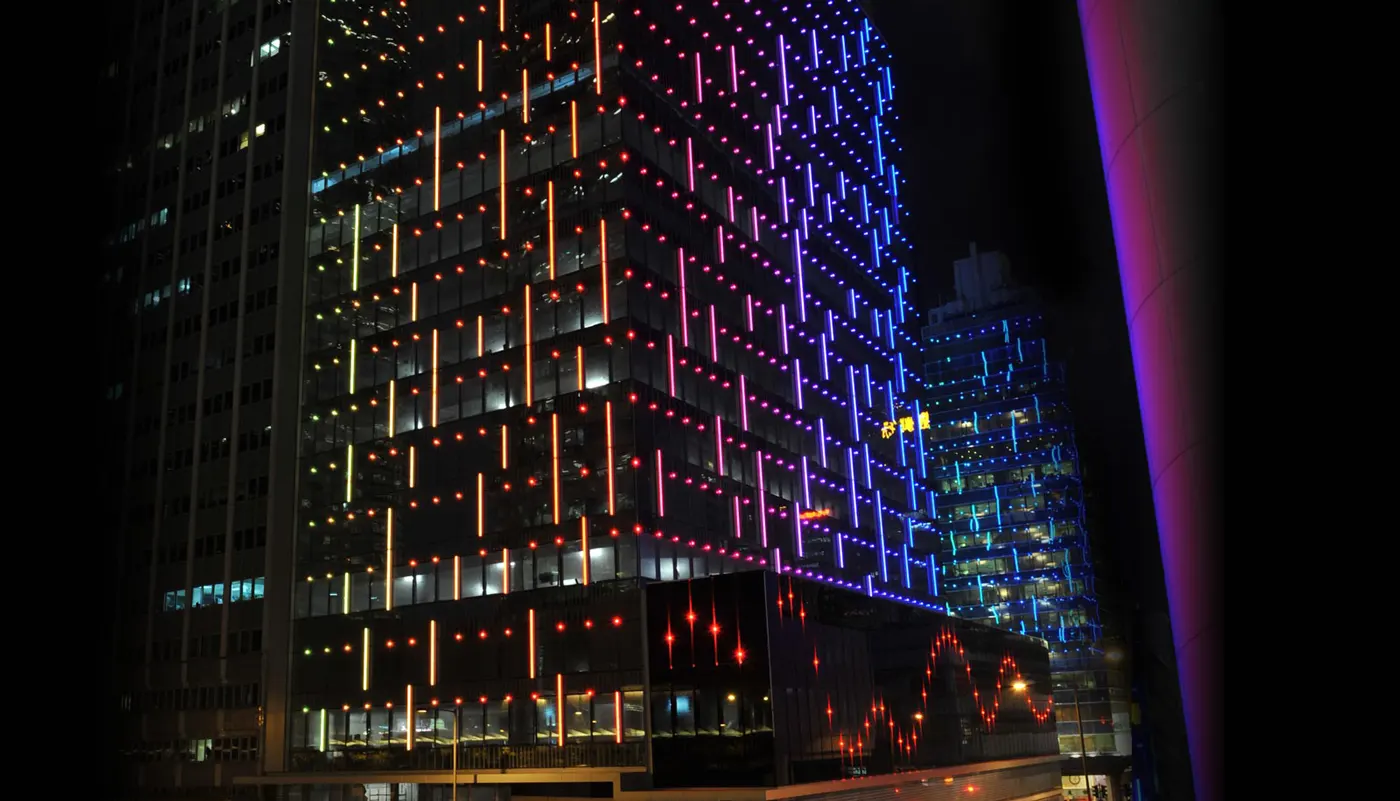
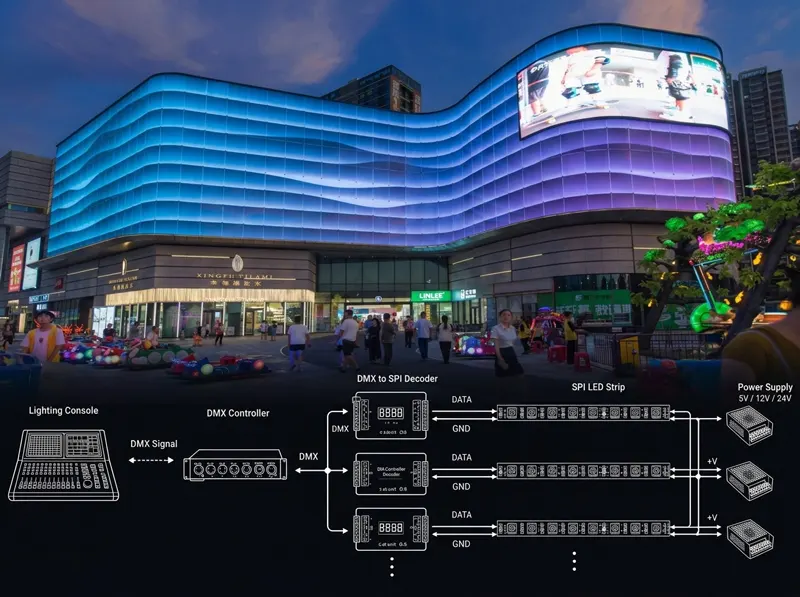
- Bina cephe aydınlatması: Create large-scale dynamic lighting effects that enhance architectural design and visual impact.
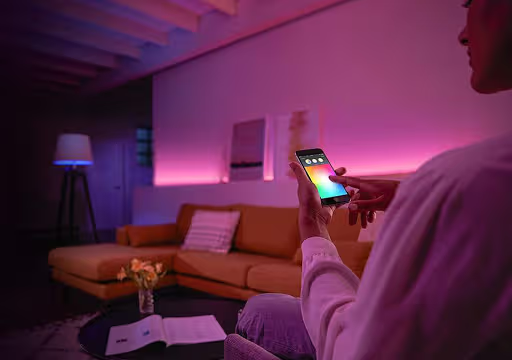
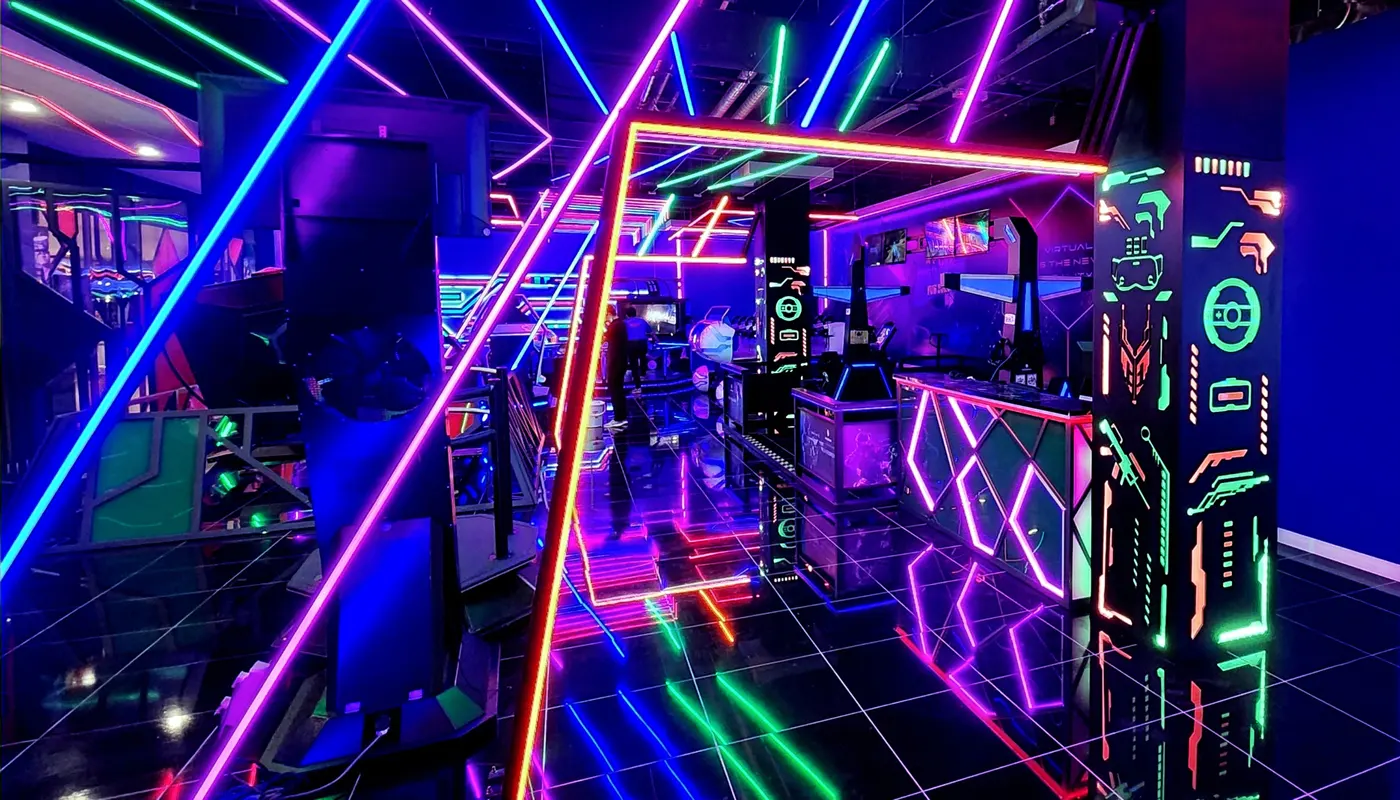
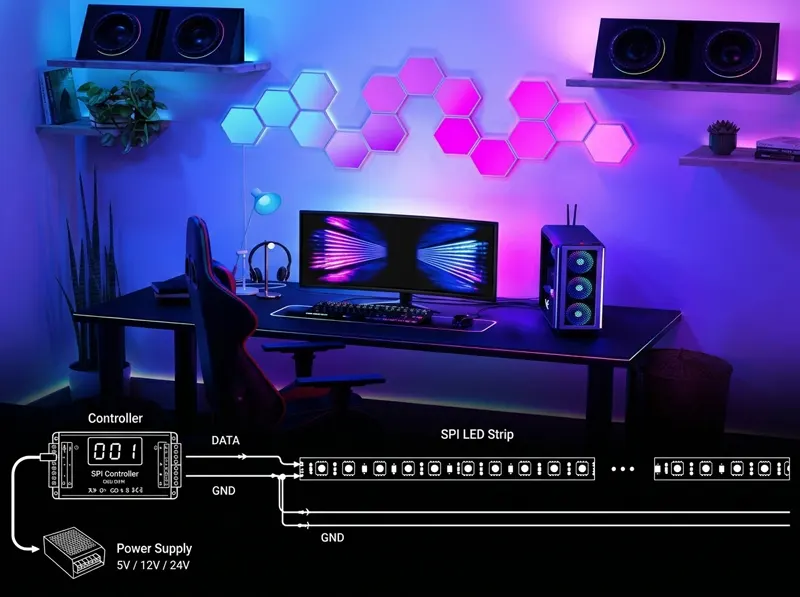
- Gaming Room Lighting: Build immersive environments with synchronized and customizable lighting effects.
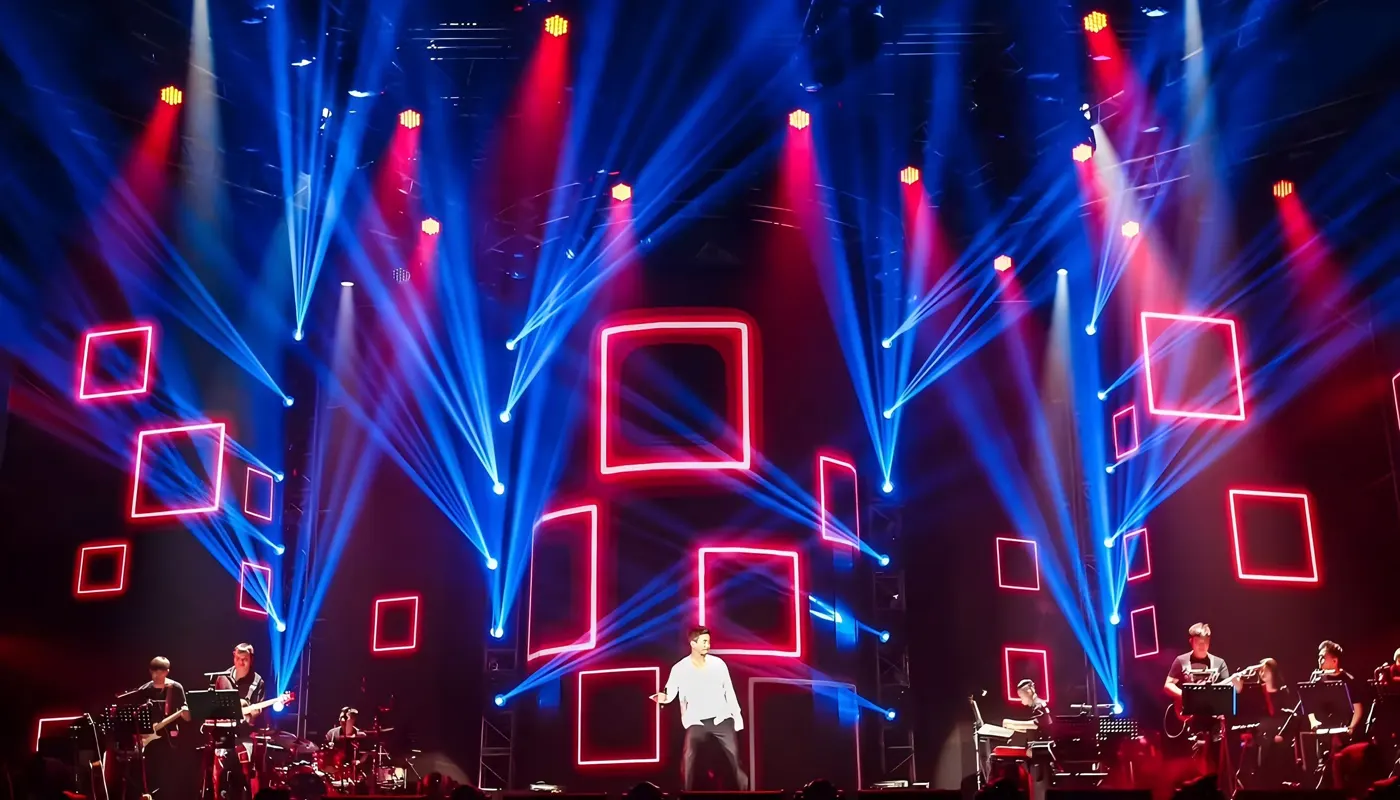
- Stage & Entertainment Lighting: Deliver high-speed, visually impactful lighting for concerts, events, and venues.
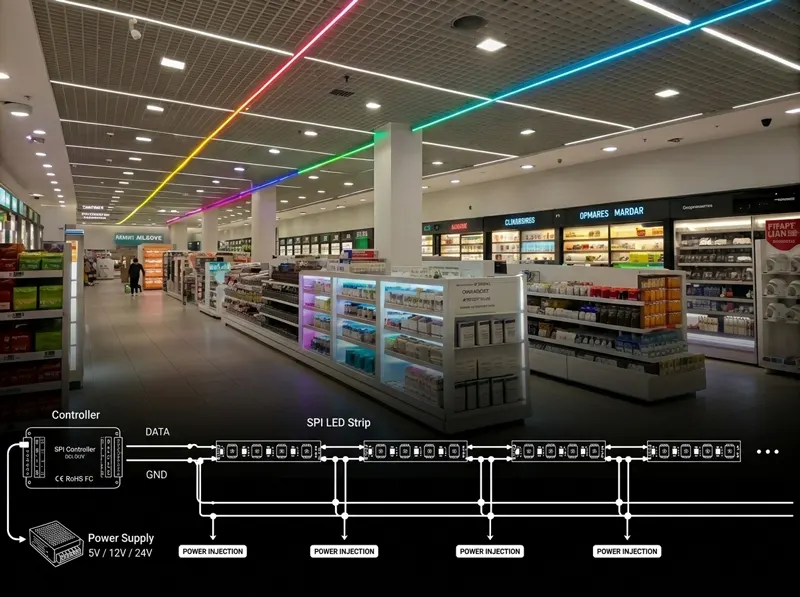
- Commercial & Retail Displays: Attract attention and enhance brand environments with animated lighting solutions.
Each application requires different system design, controller setup, and LED selection. Explore the guides above to find the right solution for your project.
SPI VS DMX ve PWM LED Kontrol Sistemleri
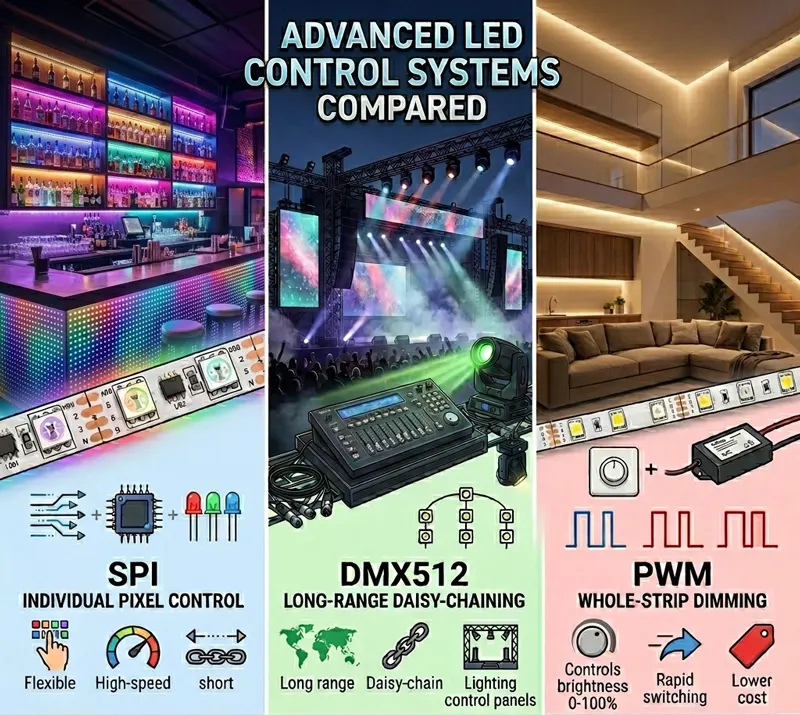
Choosing the right LED control system is one of the most important decisions in any lighting project. SPI, DMX, and PWM each have different architectures, control methods, and application scenarios.
Selecting the right control system depends on your project scale, required effects, and installation environment. Instead of focusing only on specifications, the best approach is to choose based on real application scenarios.
Understanding their differences will help you select the right system for performance, scalability, and installation requirements. For projects that require large-scale control and long-distance signal stability, learning more about DMX LED systems knowledge hub can provide deeper insights into system architecture and integration.
Sistem | Kontrol Türü | Strength | sınırlama |
|---|---|---|---|
SPI | Pixel-level control | Dynamic effects, flexibility | Limited distance, system complexity |
DMX | Channel-based control | Stability, scalability | Less pixel-level precision |
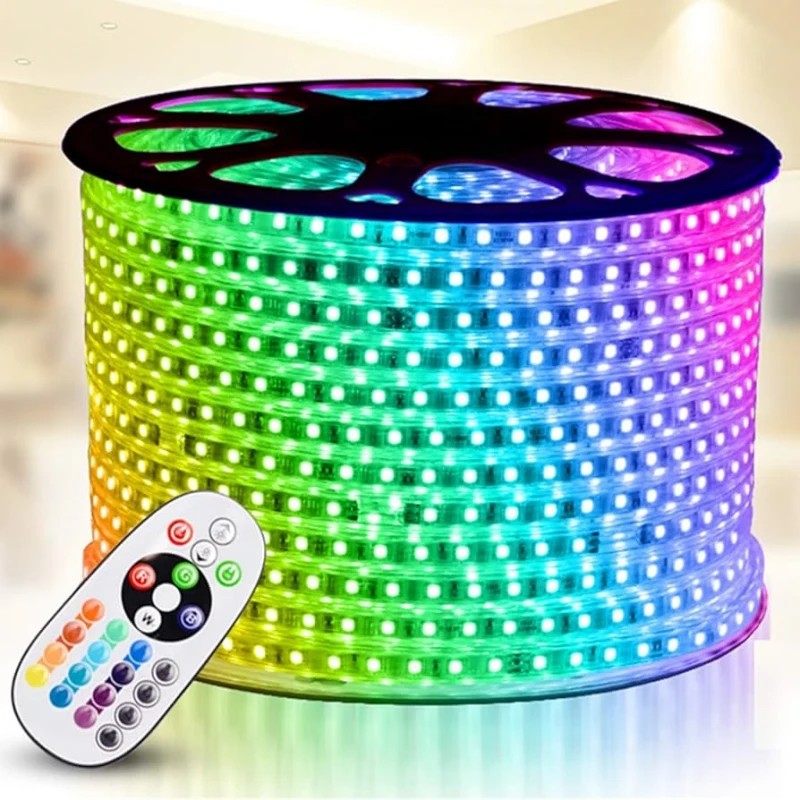
zabit | Group dimming | Basit, düşük maliyetli | No individual LED control |
How to Choose the Right System
- Choose SPI if you need dynamic, pixel-level lighting effects
- Choose DMX if you need large-scale, stable professional lighting
- Choose PWM if you only need simple brightness control
In many advanced projects, SPI and DMX are even used together to combine flexibility and system scale. Below is a practical guide to help you quickly determine whether SPI, DMX, or PWM is the right solution for your project.
-
Gaming, Entertainment & Immersive Lighting
-
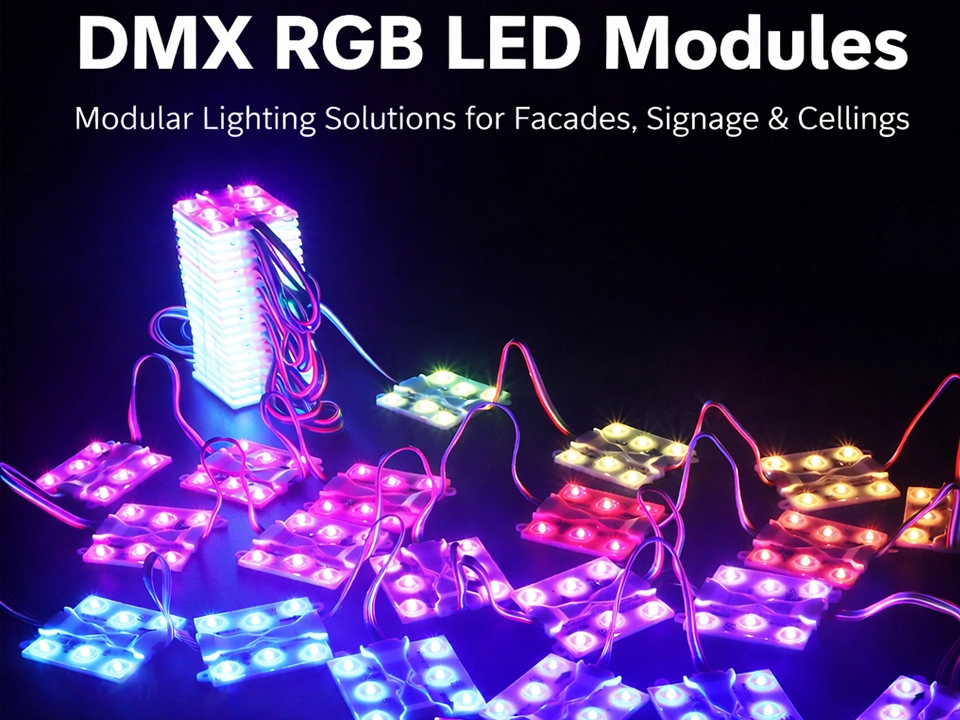
Architectural & Building Facade Lighting
-
Retail & Commercial Ambient Lighting
-
Stage, Events & Professional Lighting

For dynamic effects, color animation, and pixel-level visual design, flexibility is more important than distance.
Recommended: SPI
- Individual pixel control for dynamic effects
- Supports animations, gradients, and motion lighting
- Ideal for creative and interactive environments
- Easy to customize and program
Best choice for visual experience-focused projects.

For large-scale building lighting, stability and long-distance control are the top priorities.
Recommended: DMX
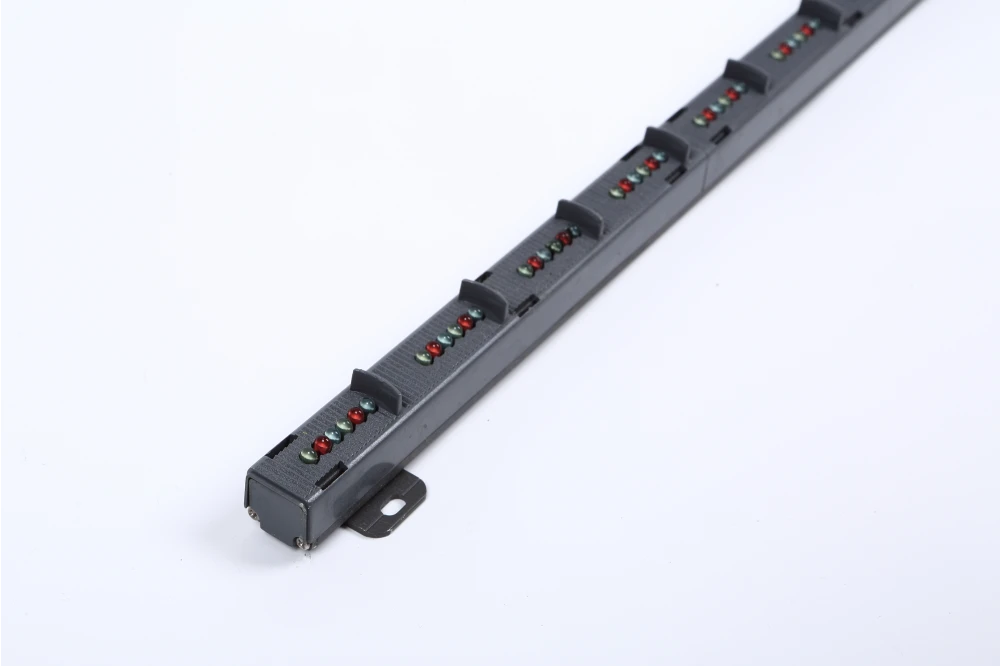
- Supports long-distance signal transmission
- Stable performance in large installations
- Ideal for centralized lighting control
- Widely used in architectural lighting projects
SPI is generally not recommended for large facades unless used in segmented or hybrid systems.

For simple, consistent lighting without complex effects, cost and simplicity are key factors.
Recommended: PWM
- Simple brightness control
- Uygun maliyetli çözüm
- Easy system integration
- Suitable for static lighting environments
Best for non-dynamic ambient lighting applications.

For professional lighting environments that require both scale and performance, hybrid systems are often used.
Recommended: DMX + SPI Hybrid
- DMX for system-level control and stability
- SPI for pixel-level visual effects
- Suitable for complex lighting designs
- Widely used in concerts and exhibitions
Common SPI LED System Configurations
SPI LED systems can be designed in different ways depending on project scale, control requirements, and installation complexity. A typical system is built around three core components: the Digital Pixel LED Strip Light, a compatible Smart LED Controller, and a stable LED Güç Kaynağı.
Depending on your application, system design may vary significantly—from simple standalone setups to complex multi-zone architectures. Factors such as installation distance, pixel density, control method, and power distribution all play a critical role in determining the final system structure.
Below are typical SPI system configurations used in real-world projects, helping you better understand how to select and combine the right components for your specific application.
Small-Scale Setup (Standalone SPI System)
Designed for small projects with simple control requirements and short installation distances.
Typical Configuration:
- SPI LED strip (WS2812 / SK6812)
- Standalone SPI controller
- Standard power supply
Temel Özellikler:
- Easy to install and configure
- Uygun maliyetli çözüm
- No complex system integration required
için en iyisi: gaming rooms, decorative lighting, small installations
Medium-Scale Installation (Enhanced SPI System)
Suitable for larger installations where power management and signal stability become more important.
Typical Configuration:
- SPI LED strips with multiple power injection points
- Advanced SPI controller
- Amplifiers or signal boosters (if needed)
Temel Özellikler:
- Improved system stability
- Supports longer runs and higher LED density
- More flexible control options
için en iyisi: commercial spaces, retail lighting, medium architectural projects
Large-Scale System (SPI + DMX Hybrid)
Used in complex projects where both scalability and dynamic effects are required.
Typical Configuration:
- SPI LED strips (segmented layout)
- DMX controller + DMX-to-SPI decoders
- Centralized control system
- Distributed power supply design
Temel Özellikler:
- Combines SPI flexibility with DMX stability
- Suitable for long-distance and large-scale control
- Enables synchronization across multiple zones
için en iyisi: building facades, stage lighting, large architectural installations
SPI Addressable LED FAQ
SPI addressable LED is a digital lighting system where each LED (pixel) can be individually controlled using data signals, enabling dynamic effects such as animations, color chasing, and gradients.
An SPI LED strip works by sending digital data from a controller to each LED in sequence. Each LED reads its own data and passes the remaining signal to the next LED.
SPI provides pixel-level control for dynamic effects, while DMX is designed for stable, long-distance control in large-scale lighting systems.
SPI allows individual LED control, while PWM controls brightness of entire LED groups. PWM is simpler but cannot create dynamic pixel effects.
WS2812 is more cost-effective, while SK6812 offers better color accuracy and supports RGBW. The best choice depends on your application requirements.
WS2812 uses a single data line, while APA102 uses separate data and clock signals, providing faster refresh rates and more stable performance.
Flickering is usually caused by unstable power supply, voltage drop, poor grounding, or signal interference.
Typically, SPI signals can travel a few meters without amplification. For longer distances, signal boosters or differential transmission are required.
Voltage drop occurs when power is distributed over long distances, leading to reduced brightness and color changes along the strip.
Add power injection at multiple points, use thicker cables, and ensure proper power distribution across the system.
Yes, most SPI LED strips can be cut at designated cutting points without affecting the rest of the strip.
In most cases, if one LED fails, all LEDs after it may stop working due to the serial data chain.
Yes, if they have proper waterproof ratings (such as IP65 or IP67) and are installed correctly.
SPI LED strips require a compatible controller that can generate digital signals, such as standalone controllers, DMX-to-SPI decoders, or software-based systems.
SPI LED strips are powered by external power supplies, typically 5V or 12V, depending on the LED type.
Power injection is the process of supplying power at multiple points along the strip to prevent voltage drop and maintain consistent brightness.
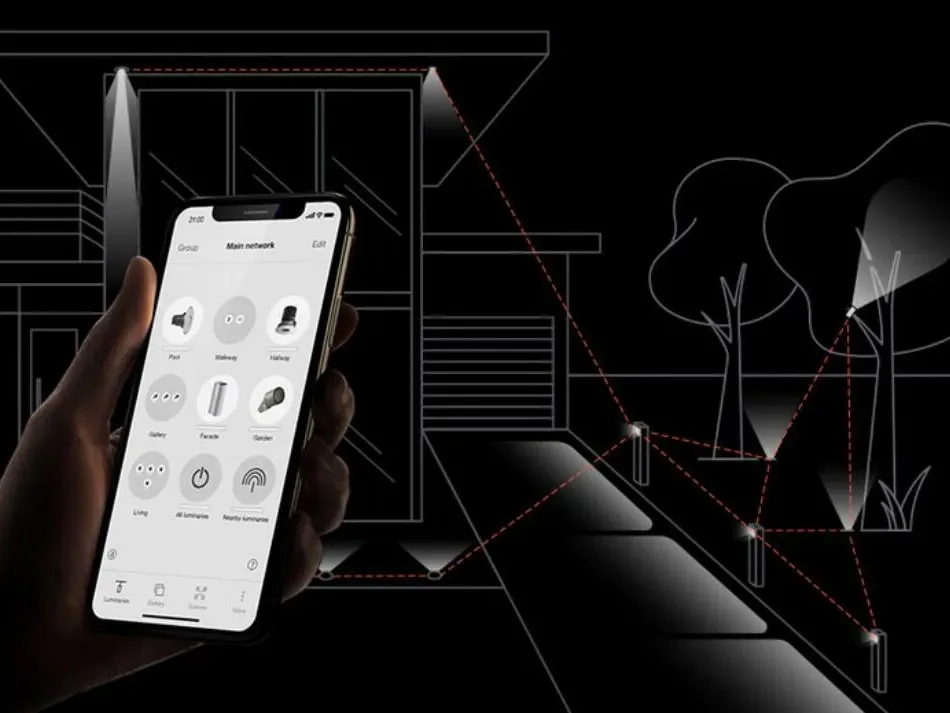
Yes, many SPI systems can be controlled using software platforms such as WLED, Madrix, or custom programming solutions.
They are more complex than standard LED strips because they require proper wiring, power planning, and signal management.
Use SPI when you need dynamic, pixel-level effects. Use DMX for large-scale, stable, long-distance lighting systems.
Yes, many projects use DMX for system control and SPI for pixel-level effects through DMX-to-SPI decoders.