English
  简体中文
简体中文  Deutsch
  Español
  Français
  Italiano
  日本語
日本語  한국어
한국어  Polski
  Português
  Русский
  Türkçe
  Nederlands
  Tiếng Việt
  ไทย
ไทย 
LED strip light durability and maximum achievable length are fundamentally interconnected through voltage drop physics, thermal management efficiency, and component quality. With modern high-voltage DC48V systems, professionally engineered LED strip lights can now achieve single continuous runs of up to 50 meters while maintaining stable current delivery and consistent luminous output when correctly designed.
This relationship is critical for professional and large-scale installations because durability and length directly affect brightness consistency, installation cost, energy efficiency, and long-term maintenance. Poorly engineered long runs lead to uneven illumination, accelerated LED degradation, frequent failures, and higher total cost of ownership. In contrast, properly designed high-voltage constant-current systems deliver extended continuous runs with predictable performance and lifespan.
This guide serves as a practical technical reference for LED strip lights durability and maximum length. It covers the durability–length relationship, proven conductor and thermal technologies, accurate maximum-length calculation methods, and installation techniques that protect long-term reliability.
The Physics Behind LED Strip Durability and Maximum Length
Voltage Drop as the Primary Length Limiter
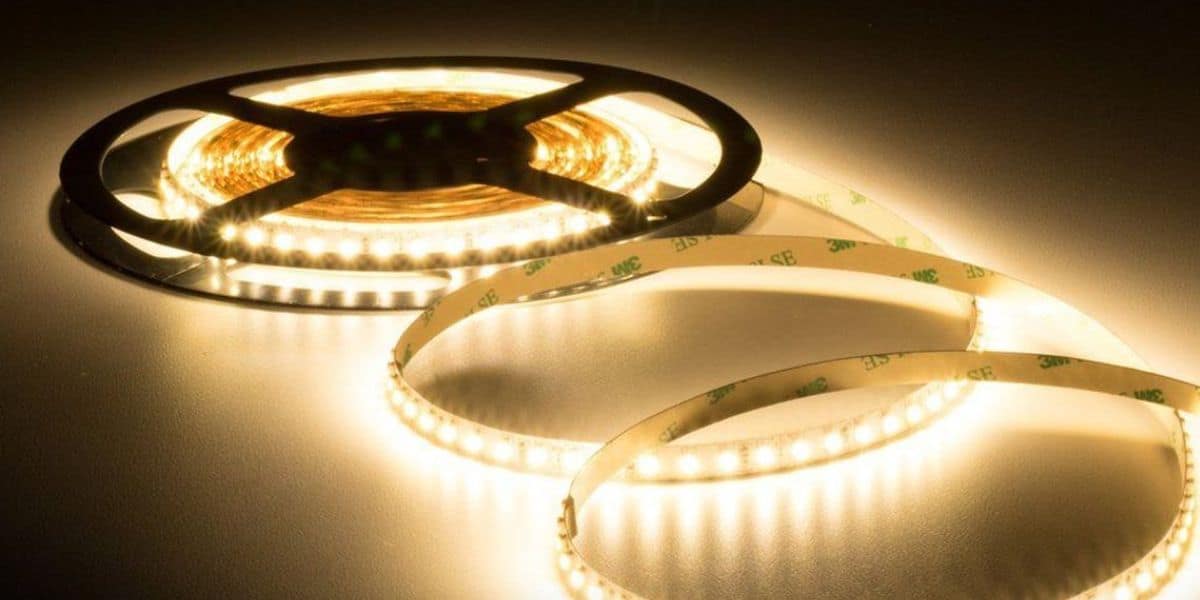
Voltage drop remains the primary factor limiting the maximum length of LED strip lights. As current flows through conductive traces, resistance causes gradual voltage reduction along the run. When voltage falls outside the operating window of the LED circuit, brightness inconsistency and efficiency loss occur.
From a durability perspective, voltage drop causes uneven electrical stress. LEDs closer to the power source may operate at higher thermal load, while downstream LEDs may operate near minimum forward voltage. Over time, this imbalance accelerates lumen depreciation and color shift, particularly in high-output installations.
Thermal Propagation and Lifespan Impact
Heat is the dominant durability constraint in long LED strip installations. As electrical energy converts to light, residual heat accumulates along the strip. Elevated operating temperatures accelerate phosphor aging, solder joint fatigue, and encapsulation degradation.
In extended runs, inadequate thermal dissipation can reduce effective lifespan by more than 50 percent, even when electrical limits are technically within specification.
Current Regulation in Modern LED Strip Systems
Constant-Current Technology
LED strip lights do not dynamically balance current across segments. Current technology relies on constant-current regulation, achieved through constant-current transistors or dedicated constant-current ICs integrated into the strip design.
These circuits ensure that each LED receives the same operating current, even when moderate voltage drop occurs along the run. This approach stabilizes brightness, reduces thermal variation between LEDs, and improves overall durability.
While current regulation maintains uniform output, it does not actively redistribute current between segments. Therefore, correct voltage planning, conductor sizing, and power distribution remain essential for long-run stability.
Failure Points in Extended Runs
The most common failure points in long LED strip installations include solder joints, connector interfaces, and high-resistance trace transitions. Each localized resistance increase generates heat, which further accelerates degradation.
Preventing these failures requires proper conductor design, secure mechanical connections, and controlled thermal conditions throughout the installation.
Durability Factors vs Run Length
| Run Length | Primary Limiting Factor | Durability Impact |
| < 5m | Minimal | Component quality dominates |
| 5–15m | Voltage drop onset | Minor brightness variation |
| 15–25m | Thermal and electrical stress | Accelerated aging without mitigation |
| 30-50m | System-level design limits | Requires DC48V + constant-current architecture |
Conductor and Thermal Technology

Copper Conductors as the Industry Standard
Copper remains the most stable and reliable conductor for LED strip lights, offering superior electrical conductivity, thermal transfer, and long-term mechanical reliability. Increased copper thickness (3oz–4oz) significantly reduces resistance and improves heat spreading across the strip.
Alternative materials such as aluminum-based conductors may be used in specific designs but do not outperform copper in combined electrical and thermal stability for flexible LED strips.
Thermal Management Breakthroughs
Thermal performance improvements are achieved through:
- Thicker copper traces
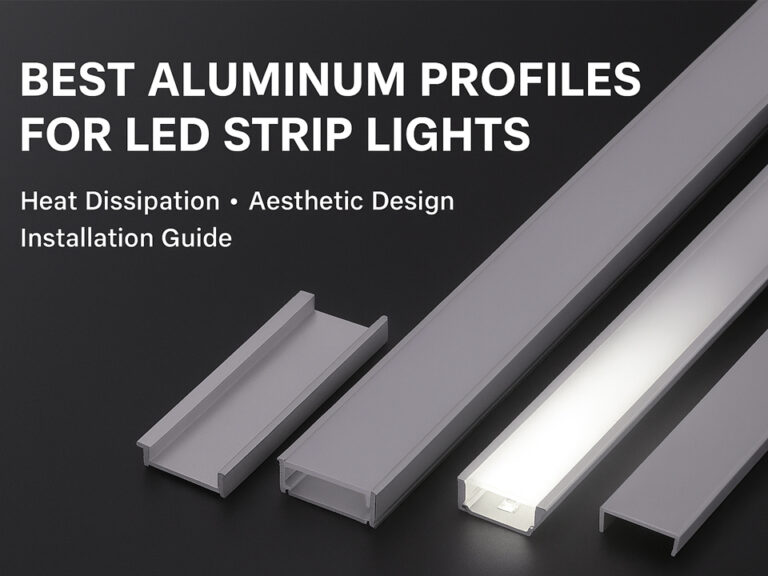
- Aluminum mounting channels
- Increased surface contact area
Aluminum mounting profiles remain the most effective and widely used solution for passive heat dissipation in long-run installations. Active cooling is generally reserved for specialized industrial applications.
LED and Driver Innovations
Quantum dot-enhanced LEDs achieve the same luminous output with lower heat generation, directly improving lifespan. Distributed driver architectures replace single-point power delivery with localized regulation, reducing voltage drop stress.
Constant-current regulation systems maintain consistent LED output across extended runs by stabilizing operating current, helping minimize brightness variation caused by voltage drop and temperature changes.
Connectivity and Protection Enhancements
Modern LED strip lights incorporate advanced protection systems. IP68-rated encapsulation now supports permanent water exposure, vibration-resistant solder alloys improve reliability, and UV-stable encapsulants enable outdoor lifespans exceeding five years. For projects where environmental exposure is a concern, understanding whether high-density LED strips are suitable for outdoor use is a critical planning step.
Calculating Maximum Length: 2026 Methodology
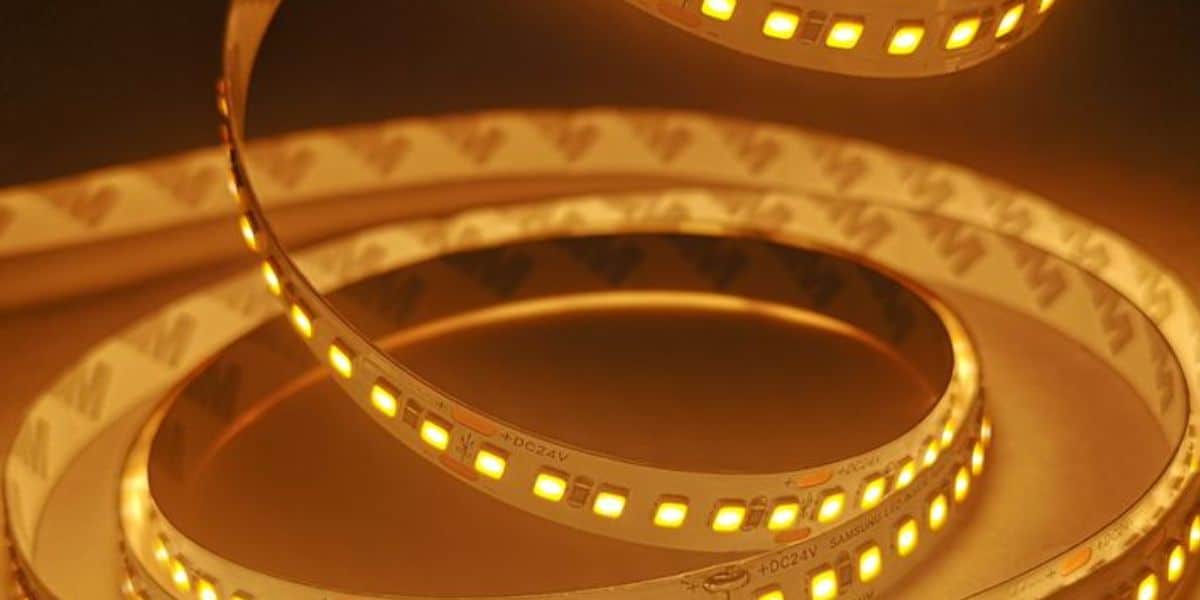
The following calculations and system limits represent best-practice engineering guidance used for professional LED strip lights design in 2026. Actual achievable continuous run length depends on strip architecture, conductor weight, current regulation method, and thermal design, and should always be validated against manufacturer specifications for the selected configuration.
Step-by-Step Calculation Framework
- Select system voltage (12V, 24V, or 48V)
- Determine power density (W/m)
- Calculate operating current
- Apply conductor resistance values
- Confirm constant-current operating range
- Validate thermal dissipation capability
Voltage Drop Formula
Voltage Drop = (2 × Length × Current × Resistance)
Design targets should keep voltage within the constant-current regulation window of the strip circuitry.
Maximum Recommended Lengths by System
| System | Typical Continuous Length | Key Requirement |
| 12V | 5–10m | Frequent power injection |
| 24V | 10–20m | Thick copper traces |
| 48V | 30–50m | Constant-current design + thermal control |
These values represent realistic, field-proven limits for professionally engineered LED strip lights.
Installation Techniques for Maximum Durability and Length
Power Injection Strategies
Single-end power is suitable only for short runs. Long installations benefit from multi-point power feeds or high-voltage DC48V distribution, which reduces current flow and minimizes thermal stress.
Correct wire gauge selection is essential to avoid secondary voltage losses.
Product here:
Thermal Management Installation
Soldered connections remain the most reliable option for long-term durability. Modern locking connectors are acceptable when rated for the operating current and environment. Multi-layer encapsulation improves moisture resistance and mechanical protection.
Connectivity Best Practices
Soldered joints remain the most reliable connection method, but modern locking connectors now meet professional durability standards. Waterproofing uses multi-layer encapsulation rather than single silicone coatings.
Proper strain relief prevents mechanical fatigue at connection points, particularly in flexible or vibration-prone installations.
Control System Integration
Zoning long LED strip lights installations improves control accuracy and durability. Integrated voltage monitoring systems provide real-time feedback and enable predictive maintenance.
| Installation Element | Traditional Approach | 2026 Best Practice | Durability Gain |
| Power Connections | Single-point | Multi-point injection | 40–60% longer stable runs |
| Heat Sinking | Passive aluminum | Active + passive hybrid | 2–3× lifespan at full load |
| Waterproofing | Silicone coating | Multi-layer encapsulation | IP68 permanent rating |
Application-Specific Guidelines
Residential Applications
Segmented power delivery and conservative brightness levels ensure comfort and longevity. Kitchens and enclosed spaces require enhanced thermal planning.
Commercial and Retail Applications
Long continuous runs benefit from DC48V systems and concealed access points for maintenance.
Industrial and Specialized Applications
Vibration resistance, corrosion protection, and temperature compensation are critical for automotive, marine, and cold-storage environments.
Maintenance and Longevity Optimization
Monitoring Parameters
Routine endpoint voltage measurements identify early voltage drop issues. Thermal imaging detects developing hot spots. Lumen maintenance tracking ensures consistent output over time.
Preventative Maintenance Schedule
- Every 6 months: Inspect connection points
- Annually: Full system thermal assessment
- Every 2 years: Driver and regulation performance verification
Failure Prediction Indicators
Early warning signs include localized dimming, color deviation, and elevated surface temperatures. Addressing these indicators early prevents system-wide failure.
Why Choose SignliteLED for Demanding Applications
For projects requiring extended uninterrupted runs and decade-plus durability, SignliteLED engineered systems apply these 2026 advancements through proprietary conductor design and verified thermal performance, delivering stable output and long-term reliability in demanding installations.
Technology Implementation Overview
| 2026 Challenge | SignliteLED Solution | Verified Performance |
| Extended Run Voltage Drop | Enhanced 3oz copper circuits | <3% drop at 15m (24V) |
| Thermal Management | Aluminum substrate with passive cooling | ≤60°C surface temperature at rated load |
| Long-Term Durability | Industrial-grade components + environmental sealing | 50,000-hour rated lifespan (L70) |
| Installation Support | Custom lengths and pre-terminated leads | Reduced on-site handling and connection errors |
2026 Differentiators
- 3–5 year professional-grade warranty
- Custom-engineered solutions for extended run lengths
- Verified thermal and electrical test data
- Project-specific voltage and thermal calculations
- Global safety and compliance certifications
Future Trends: Beyond 2026
Future development in LED strip lighting focuses on improved power efficiency, refined constant-current control, and enhanced thermal design rather than fundamental material changes. Advances in system-level integration will enable better voltage stability, simplified installation, and predictive maintenance through monitoring-based control systems.
Sustainability efforts emphasize recyclable substrates, reduced material waste, higher energy efficiency, and longer service life to minimize replacement cycles and environmental impact.
Conclusion
LED strip light durability is governed by three inseparable factors: voltage stability, thermal control, and installation quality. Maximum achievable length is always determined by system-level engineering, not by a single component.
Modern DC48V constant-current LED strip systems enable continuous runs of up to 50 meters when correctly designed and thermally managed. For projects exceeding 20 meters or requiring long service life, professional system planning is essential.
FAQs
Related Posts