Tiếng Việt
  English
  简体中文
简体中文  Deutsch
  Español
  Français
  Italiano
  日本語
日本語  한국어
한국어  Polski
  Português
  Русский
  Türkçe
  Nederlands
  ไทย
ไทย 
Câu trả lời trực tiếp: Signlited hoạt động như một chuyên ngành CRI cao COB Dải LED Nhà cung cấp, tích hợp các thông số kỹ thuật giá trị CRI 90+, CRI 95+ và R9 quan trọng vào các giải pháp chiếu sáng tuyến tính mật độ cao của chúng để đảm bảo tái tạo màu sắc chính xác trong môi trường bán lẻ, khách sạn và triển lãm. Bằng cách sử dụng kiến trúc chip-trên bo mạch (COB) để loại bỏ các điểm nóng chấm và kết hợp nó với các phosphor chính xác, nhà sản xuất cung cấp một đường ánh sáng liên tục cho thấy màu sắc vật thể thực sự mà không bị phân tâm trực quan của các điốt LED riêng lẻ. Chỉ số kết xuất màu cao (CRI), đặc biệt là giá trị R9 cho màu đỏ bão hòa, quy định cách các loại vải, tác phẩm nghệ thuật và tông màu da người chân thực xuất hiện dưới ánh sáng nhân tạo. Do đó, các nhóm mua sắm phải ưu tiên các đặc tính quang phổ này hơn độ sáng khi chỉ định ánh sáng cho các ứng dụng quan trọng màu, đảm bảo việc lắp đặt cuối cùng đáp ứng các tiêu chuẩn chiếu sáng chuyên nghiệp.
CRI 90 nốt thứ sáu trongND CRI 95 trang trí môi trường riêng biệt nốt thứ tư trongROM màu sắc quan trọng nhiệm vụ chiếu sáng
Chỉ số kết xuất màu (CRI) đóng vai trò là số liệu chính để đánh giá khả năng tái tạo màu sắc của nguồn sáng một cách tự nhiên, so sánh đầu ra quang phổ của nó với ánh sáng ban ngày hoặc bộ tản nhiệt cơ thể màu đen. như một SignliteLED Đặc biệt, các dải CRI COB cao được cố ý tách thành các tầng hiệu suất khác nhau để giải quyết các yêu cầu cụ thể của dự án. Hiểu được sự phân biệt giữa CRI 80, CRI 90 và CRI 95 ngăn người mua không chỉ định quá mức ánh sáng xung quanh tiêu chuẩn hoặc các khu vực nhiệm vụ quan trọng màu dưới chỉ định, đảm bảo rằng ngân sách dự án phù hợp với chất lượng hình ảnh cần thiết.
CRI 90 là một thiết thực phù hợp cho nhiều không gian thương mại trong nhà, nơi màu sắc cần phải xuất hiện tự nhiên mà không có mục tiêu trung thực màu sắc chặt chẽ hơn của các màn hình chuyên dụng. Sàn bán lẻ, hành lang khách sạn và văn phòng có thể sử dụng tầng này khi thông số kỹ thuật của dự án không yêu cầu phân biệt màu sắc đòi hỏi nhiều hơn liên quan đến CRI 95.
CRI 95 thích hợp hơn khi sự khác biệt nhỏ màu sắc ảnh hưởng trực tiếp đến cách trình bày, bao gồm bảo tàng, thời trang, mỹ phẩm và trưng bày thực phẩm tươi sống. Các tùy chọn CRI cao của Signiteled cho phép các nhà thiết kế khớp mục tiêu kết xuất cho từng khu vực thay vì áp dụng cùng một cấp CRI trong toàn bộ dự án.
Giá trị R9 xác định tính xác thực Ấyf màu đỏ bão hòa nốt thứ sáu trongtông màu da người
Trong khi CRI chung (RA) lấy trung bình tám mẫu màu pastel đầu tiên, nó hoàn toàn bỏ qua các màu bão hòa cao, giúp nguồn sáng có thể có CRI tổng thể cao nhưng hoạt động kém trên màu đỏ đậm. Đây là lý do tại sao các thông số kỹ thuật chiếu sáng chuyên nghiệp ngày càng tập trung vào giá trị R9, đặc biệt đo lường độ chính xác của các tông màu đỏ bão hòa. Tài liệu sản phẩm COB của Signiteled giải quyết rõ ràng số liệu này, đảm bảo rằng phổ ánh sáng hỗ trợ các ứng dụng mà màu đỏ không thể thương lượng.
Giá trị R9 rất quan trọng vì màu đỏ là thành phần nền tảng của nhiều màu hữu cơ, bao gồm hoàn thiện gỗ, đồ da và quan trọng nhất là tông màu da người. Trong môi trường khách sạn, phòng thử đồ và studio chụp chân dung, giá trị R9 thấp sẽ khiến mọi người trông nhợt nhạt hoặc không lành mạnh, bất kể CRI chung có thể cao đến mức nào. Bằng cách đảm bảo chỉ số R9 cao, dòng CRI COB cao đảm bảo rằng môi trường ấm áp, rực rỡ và trực quan tâng bốc người ngồi.
R9 trở nên đặc biệt liên quan khi hàng hóa hoặc hoàn thiện có chứa các thành phần màu đỏ mạnh. Do đó, các nhà thiết kế ánh sáng nên kiểm tra giá trị R9 trong dữ liệu trắc quang của nhà cung cấp thay vì chỉ dựa vào RA, đặc biệt là đối với các ứng dụng liên quan đến tông màu da, hàng dệt may, trưng bày thực phẩm, gỗ hoặc da.
Bao bì COB chuyển đổi đầu ra CRI cao thành nốt thứ sáu trong Trải nghiệm hình ảnh không có dấu chấm
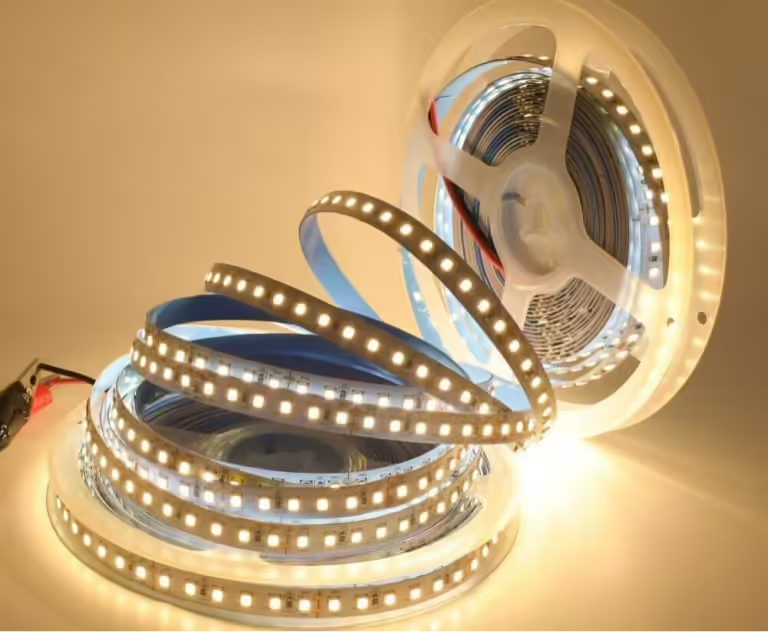
Lợi ích trực quan của việc kết xuất màu cao có thể bị phá vỡ nếu nguồn sáng tự nó tạo ra các chấm gây mất tập trung hoặc phản xạ không đồng đều trên các bề mặt bóng. Bằng cách sử dụng bao bì chip-trên bo mạch (COB), nhà cung cấp dải CRI COB cao giải quyết vấn đề này, gắn hàng trăm chip LED nhỏ trực tiếp lên PCB và phủ chúng bằng một lớp phosphor liên tục. Cấu trúc này biến đổi đầu ra CRI cao thành một dòng ánh sáng không có chấm, không có dấu chấm.
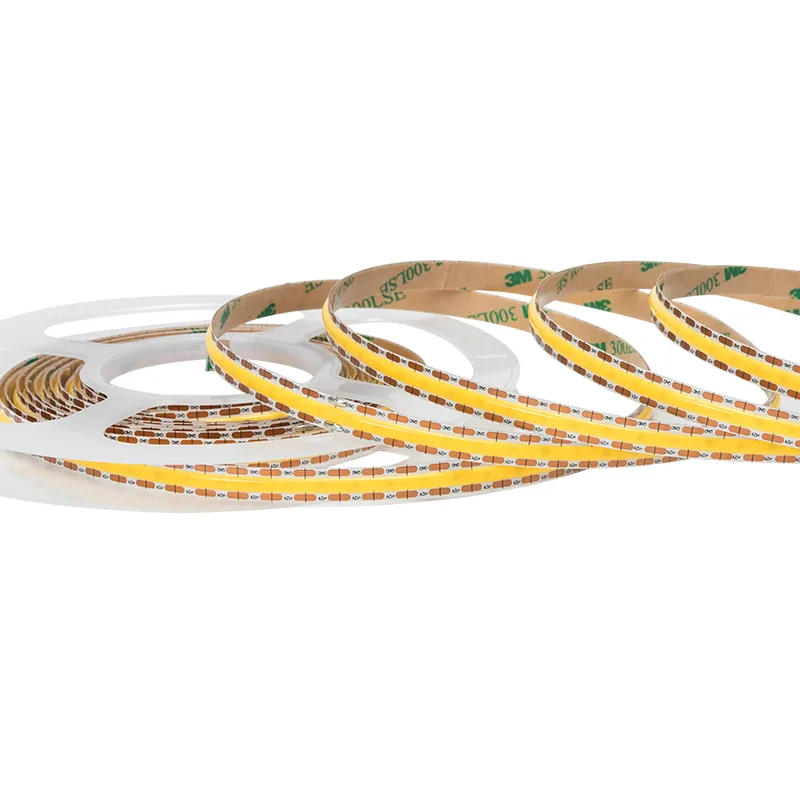
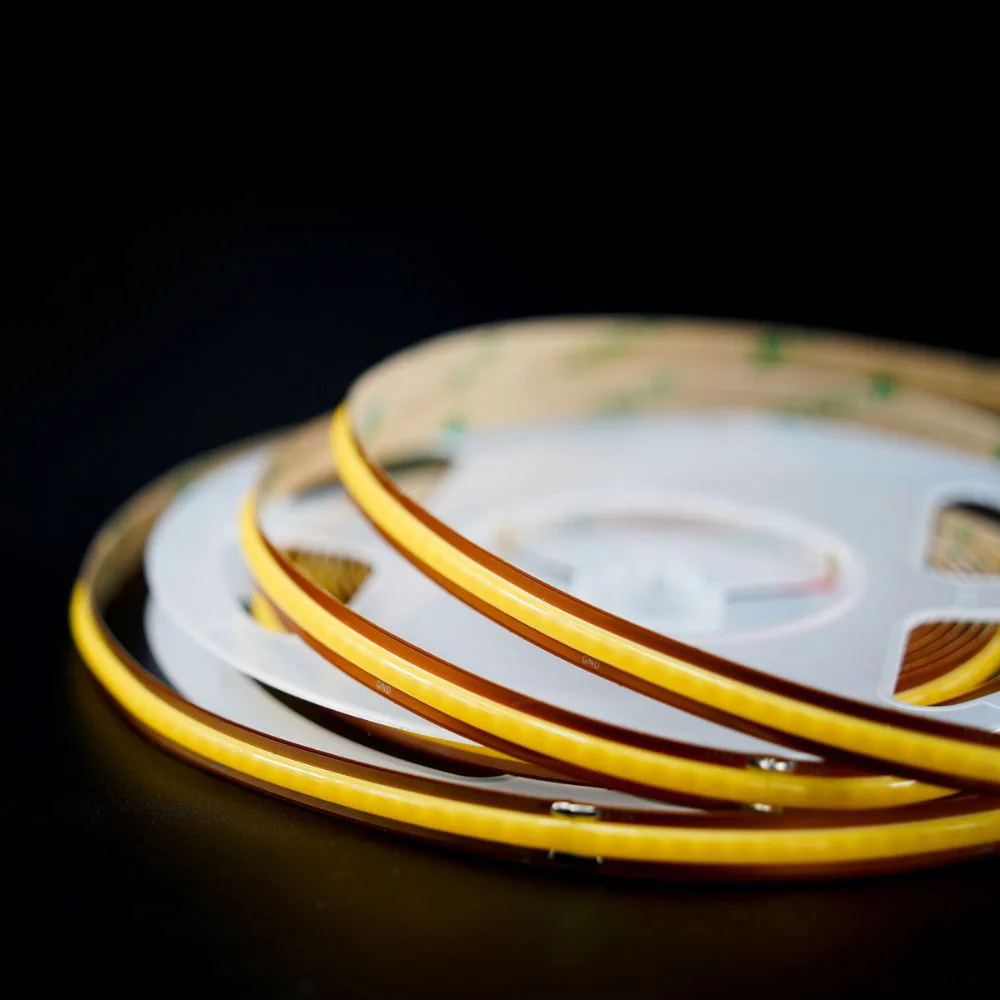
Dải đèn LED SMD truyền thống thường yêu cầu các cấu hình nhôm sâu và bộ khuếch tán màu trắng sữa để ẩn điốt riêng lẻ, có thể làm giảm lượng ánh sáng phát ra và thay đổi nhiệt độ màu được hiệu chỉnh cẩn thận. Ngược lại, bố cục chip dày đặc của dòng COB thường dao động từ 320 đến 528 đèn LED mỗi mét mang lại sự khuếch tán vốn có. Điều này cho phép lắp đặt cấu hình nông hơn trong tủ, kệ và gương, mang lại màu sắc trung thực cao mà không có các ràng buộc cơ học của các kênh khuếch tán sâu.
Lớp phosphor liên tục của COB cũng hỗ trợ đầu ra nhất quán trực quan dọc theo dải. Đối với các vịnh nhỏ hoặc màn hình bán lẻ, người mua vẫn nên xác minh dữ liệu nhất quán màu ở cấp độ mô hình thay vì giả sử một cấu trúc COB đảm bảo hiệu suất giống hệt nhau trên mọi cấu hình.
Hiệu quả phát sáng cân bằng chất lượng màu với yêu cầu năng lượng thương mại
Đạt được CRI cao hơn thường liên quan đến việc thêm nhiều phospho đỏ vào gói LED, điều này có thể làm giảm hiệu quả phát sáng tổng thể (lumens trên mỗi watt) của nguồn sáng. Đặc điểm kỹ thuật chiếu sáng chuyên nghiệp đòi hỏi phải cân bằng nhu cầu này về chất lượng màu sắc với các giới hạn tiêu thụ năng lượng nghiêm ngặt được quy định bởi các quy tắc xây dựng thương mại hiện đại. Dòng COB giải quyết sự đánh đổi này bằng cách sử dụng chip LED hiệu quả cao và thiết kế PCB được tối ưu hóa để duy trì hiệu quả cạnh tranh ngay cả ở mức CRI 90 và CRI 95.
Đối với các dự án thương mại quy mô lớn như khách sạn và trung tâm mua sắm, sự khác biệt của một vài lumen trên mỗi watt có thể ảnh hưởng đáng kể đến tổng lượng năng lượng và kích thước của cơ sở hạ tầng cung cấp điện. Signelited cung cấp dữ liệu trắc quang chi tiết tương quan CRI, nhiệt độ màu và hiệu quả phát sáng cho từng mô hình COB cụ thể. Sự minh bạch này cho phép các kỹ sư điện tính toán các yêu cầu điện chính xác và đảm bảo tuân thủ các quy định năng lượng địa phương mà không phải hy sinh chất lượng kết xuất màu cần thiết.
Sự lựa chọn giữa đầu vào DC12V và DC24V cũng đóng một vai trò trong hiệu quả hệ thống. Để chạy liên tục lâu hơn, cấu hình 24V giảm thiểu sự sụt giảm điện áp, đảm bảo rằng cả độ sáng và nhiệt độ màu vẫn nhất quán từ nguồn điện đến cuối dải. Bằng cách tích hợp các phospho CRI cao với các thiết kế mạch hiệu quả, nhà sản xuất cho phép các dự án đáp ứng đồng thời cả mục tiêu thẩm mỹ và mục tiêu tiết kiệm năng lượng của chúng.
Báo cáo thử nghiệm cụ thể của dự án xác thực phổ trước khi lắp đặt hàng loạt
Trong mua sắm ánh sáng chuyên nghiệp, các tuyên bố tiếp thị chung về chất lượng màu sắc phải được hỗ trợ bởi dữ liệu trắc quang có thể kiểm chứng được. Là một nhà cung cấp có trách nhiệm, Signelited cung cấp các báo cáo thử nghiệm hình cầu tích hợp chi tiết phân phối công suất phổ hoàn chỉnh, giá trị RA, giá trị R1 đến R15 cụ thể (bao gồm R9), CCT chính xác và số liệu DUV (Delta U, V). Những báo cáo này rất cần thiết để xác nhận phổ ánh sáng trước khi bắt đầu lắp đặt khối lượng lớn.
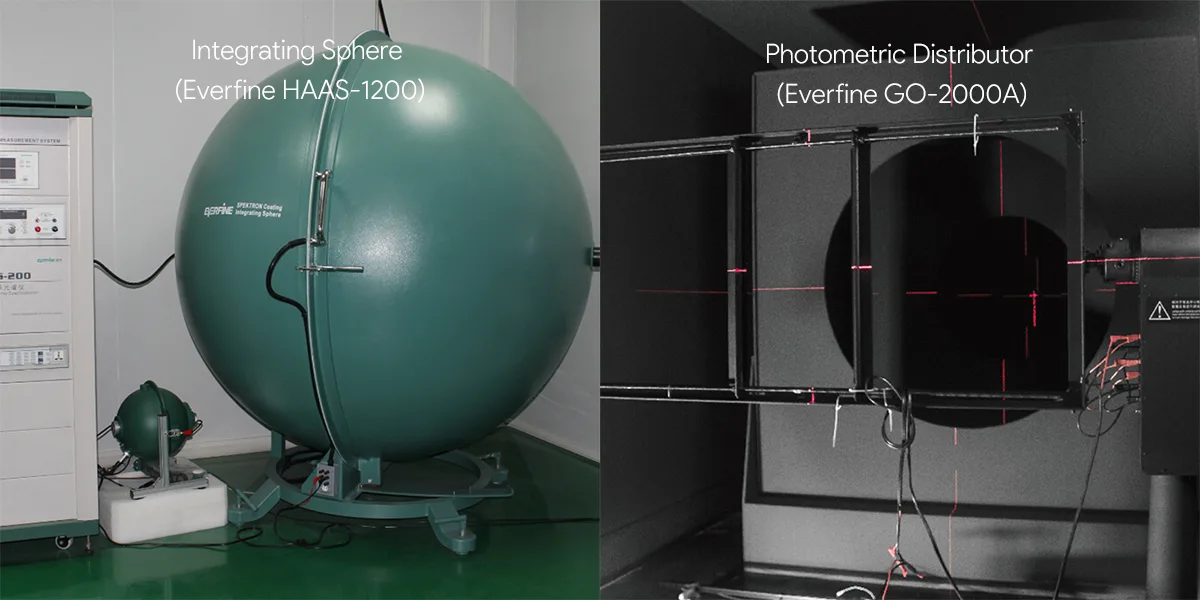
Các nhà thiết kế ánh sáng sử dụng dữ liệu quang phổ cấp mô hình này để so sánh dải COB với các thiết bị cố định khác trong cùng một không gian và để kiểm tra xem CCT và CRI đã lên kế hoạch có còn nhất quán trong sơ đồ chiếu sáng hay không.
Hơn nữa, các báo cáo thử nghiệm này cung cấp cơ sở để kiểm soát chất lượng trong quá trình sản xuất. Bằng cách thiết lập mức dung sai có thể chấp nhận được đối với độ lệch màu và hiệu suất CRI ở giai đoạn mẫu, người mua có thể yêu cầu nhà cung cấp chịu trách nhiệm duy trì các thông số kỹ thuật chính xác đó trong suốt quá trình sản xuất hàng loạt. Tài liệu này chuyển đổi yêu cầu CRI cao từ sở thích trực quan chủ quan thành một tham số kỹ thuật ràng buộc khách quan, ràng buộc theo hợp đồng.
Phương pháp tiếp cận cấp hệ thống đảm bảo hiệu suất CRI cao đạt đến bề mặt mục tiêu
Chất lượng kết xuất màu cuối cùng trên bề mặt mục tiêu không chỉ phụ thuộc vào bản thân dải lõi mà còn phụ thuộc vào các thành phần quang học và điện xung quanh. Hệ thống chiếu sáng CRI cao hoàn chỉnh đòi hỏi sự phối hợp cẩn thận với các cấu hình nhôm, bộ khuếch tán, bộ nguồn và bộ điều khiển làm mờ để đảm bảo rằng phổ nguồn không bị biến dạng hoặc xuống cấp trước khi nó đến đối tượng được chiếu sáng.
Việc lựa chọn nắp khuếch tán trên mặt hồ sơ nhôm có thể ảnh hưởng đến cả CCT và CRI. Một nắp rõ ràng giúp tối đa hóa sự truyền ánh sáng và bảo tồn phổ ban đầu, trong khi một bộ khuếch tán màu trắng đục có thể làm thay đổi nhiệt độ màu nhẹ và hấp thụ một số đầu ra quang phổ. Vì dải COB tự nhiên không có chấm, các nhà thiết kế thường có thể sử dụng các tấm phủ mờ hoặc mờ, bảo toàn hiệu suất CRI cao và tối đa hóa hiệu quả phát sáng của hệ thống.
Ổn định điện cũng quan trọng không kém. Nguồn điện và bộ điều khiển làm mờ PWM phải tương thích với dải COB đã chọn để tránh nhấp nháy hoặc không ổn định ở mức độ thấp. Người mua nên xác nhận trình điều khiển cuối cùng, bộ điều khiển và kết hợp dải thay vì giả định nguồn CRI cao sẽ hoạt động giống hệt nhau với mọi hệ thống điện.
Câu hỏi thường gặp
Để khám phá chuỗi CRI COB cao và xác minh dữ liệu hiệu suất quang phổ cho dự án của bạn, hãy truy cập https://www.signliteled.com/
Bài viết liên quan