Tiếng Việt
  English
  简体中文
简体中文  Deutsch
  Español
  Français
  Italiano
  日本語
日本語  한국어
한국어  Polski
  Português
  Русский
  Türkçe
  Nederlands
  ไทย
ไทย 
Chọn sai khung chip LED có thể rút ngắn dải đèn LEDTuổi thọ của nó, giảm hiệu quả ánh sáng và tăng chi phí. Với các tùy chọn hợp kim đồng, nhôm, sắt và đồng, điều cần thiết là phải biết vật liệu nào phù hợp với ứng dụng, ngân sách và yêu cầu hiệu suất của bạn. Hướng dẫn này chia nhỏ từng loại khung, giải thích cách mạ tác động đến độ tin cậy và giúp bạn chọn khung LED phù hợp nhất cho các dải LED công suất cao, trong nhà, ngoài trời hoặc thương mại.
Hiểu được vật liệu giá đỡ nào được sử dụng trong dải đèn LED của bạn và cách nó được mạ là rất quan trọng để đưa ra quyết định mua đúng đắn. Trong hướng dẫn này, chúng tôi chia sẻ sự khác biệt giữa giá đỡ hợp kim đồng, nhôm, sắt và đồng, giải thích tại sao mạ quan trọng hơn vật liệu cơ bản và cho thấy những lựa chọn này ảnh hưởng đến cả hiệu suất và giá cả.
Câu trả lời nhanh: Chân đế bằng đồng tốt nhất cho dải LED công suất cao và ngoài trời do tản nhiệt và độ tin cậy vượt trội. Hợp kim nhôm và đồng-sắt mang lại hiệu suất cân bằng, trong khi sắt chỉ phù hợp cho các ứng dụng chi phí thấp hoặc tạm thời.
Thông tin chính:
- Chân đồng = Tốt nhất cho công suất cao, ngoài trời và sử dụng lâu dài.
- Chân đế sắt = tiết kiệm chi phí nhưng ngắn hạn, chỉ phù hợp với các ứng dụng công suất thấp hoặc tạm thời.
- Hợp kim nhôm & đồng-sắt = Cân bằng giữa chi phí và hiệu suất.
- Chất lượng mạ (đặc biệt là độ dày bạc) ảnh hưởng đáng kể đến tuổi thọ và sản lượng ánh sáng.
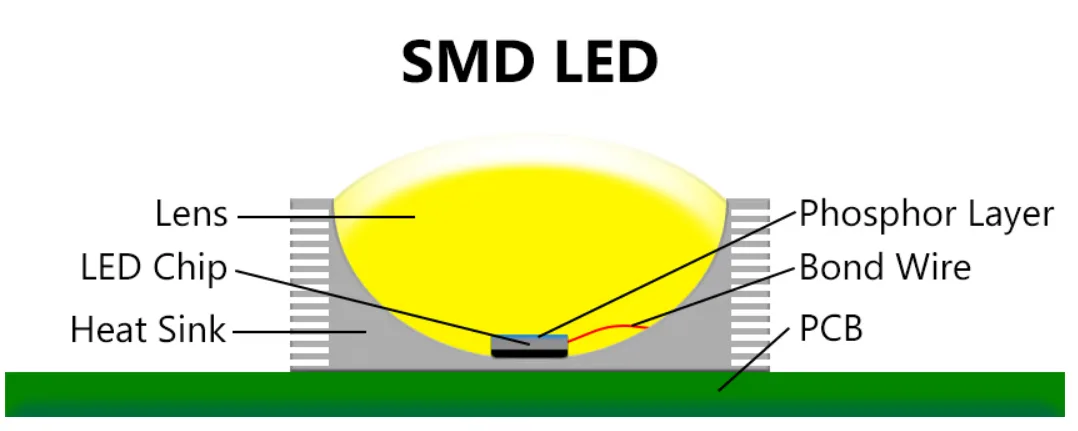
Giá đỡ LED làm gì?
Một giá đỡ chip LED có thể trông giống như một miếng kim loại đơn giản, nhưng nó đóng một số vai trò quan trọng ảnh hưởng trực tiếp đến hiệu suất, độ tin cậy và tuổi thọ của dải LED của bạn. Hiểu được những vai trò này là điều cần thiết trước khi so sánh các vật liệu như đồng, nhôm, sắt hoặc hợp kim.
chức năng cốt lõi:
- Hỗ trợ chip: Giá đỡ giữ an toàn chip LED tại chỗ với sự liên kết chính xác. Ngay cả khi bị lệch nhẹ cũng có thể làm giảm hiệu quả ánh sáng, độ đồng đều và chất lượng chùm sáng.
- Dẫn điện: Dòng điện đi qua giá đỡ để cấp nguồn cho chip LED. Độ dẫn điện kém có thể gây mất năng lượng, nhấp nháy hoặc thậm chí là hỏng LED.
- Tản nhiệt: Trong quá trình hoạt động, chip LED sinh nhiệt. Giá đỡ dẫn nhiệt đến PCB hoặc tản nhiệt. Tản nhiệt không đủ làm tăng tốc độ phân rã ánh sáng và rút ngắn tuổi thọ của đèn LED.
- Khả năng chống oxy hóa & khả năng hàn: Chân đế thường được mạ bằng kim loại như bạc để chống lại quá trình oxy hóa, tăng cường khả năng phản xạ và tạo điều kiện hàn. Mạ kém có thể dẫn đến đèn LED bị đen hoặc các mối hàn bị hỏng.
Bảng so sánh chức năng
| chức vụ | sự miêu tả | Tác động lên đèn LED | lời ghi chép |
| Hỗ trợ chip | Giữ chip LED trong căn chỉnh chính xác | Sự lệch hướng làm giảm hiệu quả ánh sáng và tính đồng nhất | Quan trọng cho chất lượng chùm |
| sự dẫn điện | Dẫn dòng điện vào chip LED | Dẫn truyền kém → nhấp nháy, mất năng lượng, khả năng hỏng hóc | Phụ thuộc vào độ dẫn của vật liệu khung |
| tản nhiệt | Truyền nhiệt sang PCB hoặc tản nhiệt | Tiêu tán kém → phân rã ánh sáng nhanh hơn, tuổi thọ ngắn hơn | Quan trọng hơn đối với đèn LED công suất cao |
| Khả năng chống oxy hóa & khả năng hàn | Bề mặt mạ chống lại quá trình oxy hóa và tạo điều kiện hàn | Mạ kém → Đèn LED tối, mối hàn bị hỏng | Vấn đề độ dày mạ bạc |
Tóm lại, giá đỡ LED hoạt động như bộ xương, dây dẫn và tản nhiệt của chip. Bất kỳ sự cố nào trong các chức năng này đều có thể gây ra sự phân rã ánh sáng sớm hoặc sự cố hoàn toàn của đèn LED. Hiểu được những vai trò cốt lõi này là điều cần thiết trước khi đánh giá các vật liệu khung như đồng, nhôm, sắt hoặc hợp kim đồng, vì việc lựa chọn vật liệu sẽ ảnh hưởng đến việc quản lý nhiệt, hiệu suất điện và độ tin cậy tổng thể của dải LED của bạn.
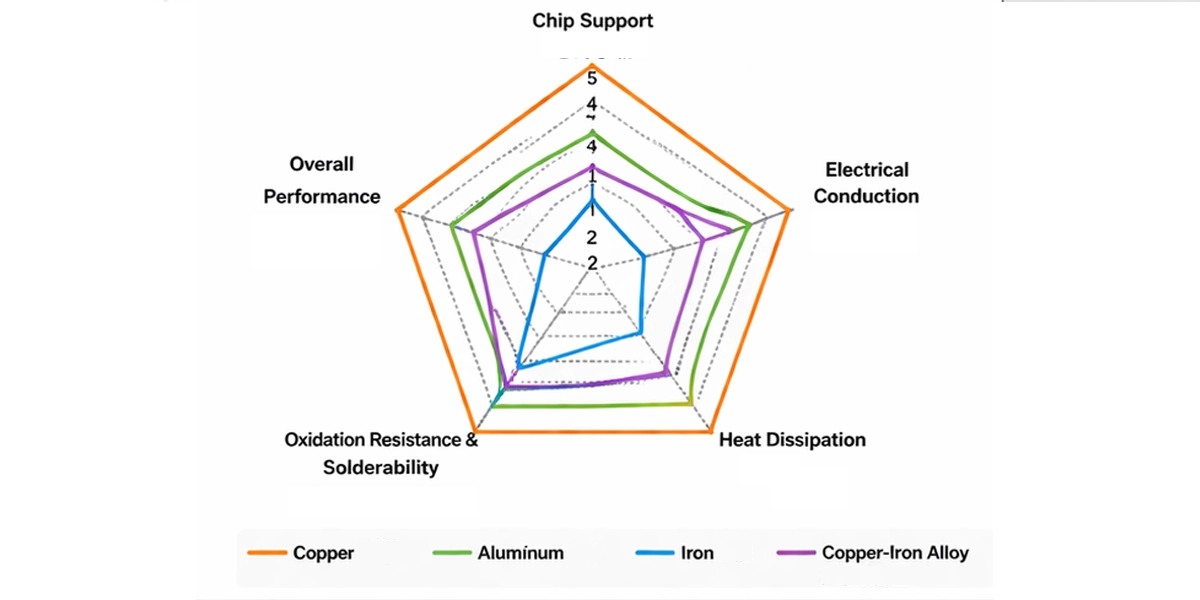
Các loại vật liệu khung LED: đồng, nhôm, sắt & hợp kim để đạt hiệu suất dải tối ưu
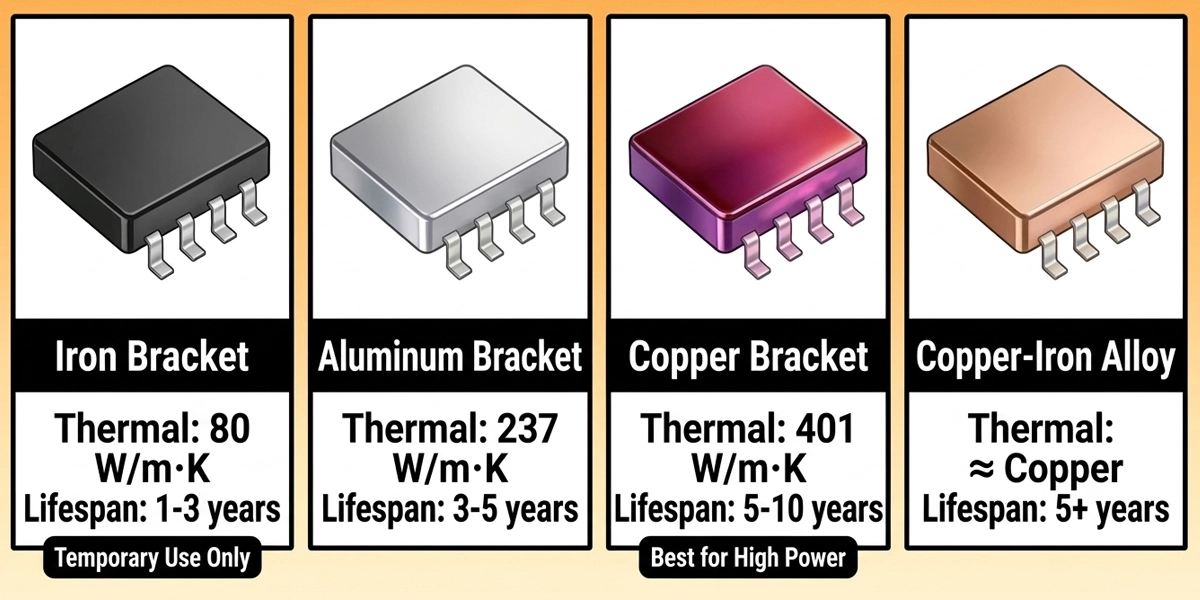
Chân đế chip LED có bốn vật liệu chính: Hợp kim đồng, sắt, nhôm và đồng. Mỗi loại có đặc tính riêng ảnh hưởng đến tản nhiệt, hiệu suất điện, tuổi thọ và chi phí.
Dựa trên kinh nghiệm của chúng tôi trong sản xuất dải LED, giá đỡ đồng được sử dụng rộng rãi trong các ứng dụng hiệu suất cao và tuổi thọ cao, trong khi các tùy chọn nhôm và hợp kim thường được chọn cho các dự án nhạy cảm với chi phí.
Hiểu được những khác biệt này giúp bạn có sự lựa chọn phù hợp cho dải đèn LED của mình.
đồng giá đỡ
Nó là gì
Chân đế đồng là giá đỡ chip LED được làm từ đồng nguyên chất (đỏ / đồng màu tím) hoặc hợp kim đồng. Chúng cung cấp dẫn nhiệt tuyệt vời, độ dẫn điện cao và khả năng chống ăn mòn lâu dài.
sự tự xưng:
- tản nhiệt tuyệt vời
- Độ dẫn điện cao
- Chống ăn mòn, tuổi thọ cao
có hại:
- đắt
- Một số sản phẩm có nhãn “đồng” thực sự có thể là sắt mạ đồng
sự thi hành:
- Dải đèn LED công suất cao
- Ánh sáng ngoài trời
- Dự án thương mại và kỹ thuật
- Mô-đun LED COB
Tác động giá cả:
Cao - 8–10 × chi phí của giá đỡ sắt
khung sắt
Nó là gì
Chân đế sắt là bộ phận giữ chip LED được làm từ sắt giá rẻ. Chúng đơn giản nhưng dễ bị gỉ và hạn chế nhiệt.
sự tự xưng:
- chi phí rất thấp
- có sẵn rộng rãi
có hại:
- tản nhiệt kém
- Dễ bị gỉ
- Tuổi thọ ngắn, phân rã ánh sáng nhanh hơn
sự thi hành:
- Công suất thấp hoặc ánh sáng tạm thời
- Các dự án trang trí hoặc trong nhà ngắn hạn
Tác động giá cả:
Lựa chọn thấp - rẻ nhất
Chân đế nhôm
Nó là gì
Chân đế bằng nhôm được làm từ hợp kim nhôm hoặc nhôm, mang lại sự cân bằng giữa tản nhiệt, trọng lượng và chi phí.
sự tự xưng:
- tản nhiệt vừa phải
- nhẹ
- không thấm
có hại:
- Không thích hợp cho đèn LED công suất cao
- Độ dẫn điện vừa phải
sự thi hành:
- Chiếu sáng trong nhà công suất trung bình
- Dự án nhạy cảm với ngân sách
Tác động giá cả:
Trung bình - thấp hơn đồng, cao hơn sắt
Chân đế hợp kim đồng-sắt
Nó là gì
Chân đế bằng đồng-sắt được làm bằng cách thêm một lượng nhỏ sắt vào đồng, cân bằng hiệu suất và chi phí.
sự tự xưng:
- tản nhiệt cân bằng
- Sức mạnh được cải thiện
- Chi phí vừa phải
có hại:
- Độ dẫn điện thấp hơn đồng nguyên chất
- Chống ăn mòn vừa phải
sự thi hành:
- Dải LED trung cấp, nơi cần cân bằng hiệu suất chi phí
Tác động giá cả:
Trung bình - rẻ hơn đồng, đắt hơn sắt
Bảng so sánh nhanh
| thuộc về vật chất | Nó là gì | sự tự xưng | có hại | sự thi hành | định giá |
| dây đồng | Đồng nguyên chất hoặc hợp kim đồng | Hiệu suất nhiệt và điện tốt nhất, chống ăn mòn | đắt tiền, một số là sắt mạ đồng | Công suất cao, ngoài trời, thương mại, lõi | địa vị cao |
| ủi | bàn ủi giá rẻ | Rất rẻ, có sẵn rộng rãi | Nhiệt kém, gỉ sét, tuổi thọ ngắn | Công suất thấp, tạm thời, trang trí | thấp kém |
| nhôm | Hợp kim nhôm hoặc nhôm | Nhiệt độ vừa phải, nhẹ, chống ăn mòn | Không dành cho công suất cao, độ dẫn vừa phải | Dự án trung cấp, ngân sách | trung bình |
| hợp kim đồng-sắt | Đồng với bổ sung sắt nhỏ | Nhiệt cân bằng, mạnh hơn sắt, chi phí vừa phải | Độ dẫn điện thấp hơn đồng, ăn mòn vừa phải | Các dự án trung cấp/hiệu quả cao | trung bình |
Chất lượng mạ LED: Nâng cao hiệu suất, tuổi thọ và độ tin cậy
Trong khi vật liệu khung xác định tản nhiệt Và hiệu suất điện, lớp mạ - đặc biệt là mạ bạc - thậm chí có thể quan trọng hơn đối với các dải LED của bạn. Nó ảnh hưởng đến khả năng chống oxy hóa, khả năng hàn, độ phản xạ ánh sáng và độ tin cậy lâu dài.
Vai trò chính của mạ
- Chống oxy hóa: Lớp mạ tốt ngăn chặn sự ăn mòn của giá đỡ theo thời gian. Mạ kém có thể gây ra đèn LED bị tối hoặc các mối hàn bị hỏng.
- Độ phản xạ: Mạ bạc phản xạ tới 95% ánh sáng do chip phát ra, nâng cao hiệu quả ánh sáng.
- Khả năng hàn: Mạ thích hợp tạo điều kiện cho các mối hàn chắc chắn, đáng tin cậy.
- Lưu huỳnh & chống ăn mòn: Mạ bạc dày có xử lý chống sulfua ngăn ngừa đen trong môi trường ẩm ướt hoặc mặn.
Khuyến nghị độ dày mạ
| lớp mạ | Độ dày điển hình | Tùy chọn cao cấp | Tác dụng |
| làm bạc tóc | 8 μm | ≥15 μm | Chống oxy hóa & chống lưu huỳnh tốt hơn, độ phản xạ cao hơn |
| ken két | 1–3 μm | 3–5 μm | Ngăn chặn sự khuếch tán kim loại cơ bản |
| dây đồng | 5–10 μm | 10–15 μm | Cải thiện độ dẫn điện và truyền nhiệt |
Ngay cả vật liệu khung tốt nhất cũng không thể hoạt động tốt nếu không được mạ phù hợp. Độ dày mạ bạc, xử lý chống sulfua và độ đồng nhất mạ ảnh hưởng trực tiếp đến tuổi thọ, hiệu quả ánh sáng và độ tin cậy của dải đèn LED. Đối với các ứng dụng ngoài trời, công suất cao, hoặc lâu dài, hãy chọn giá đỡ có lớp mạ bạc dày hơn và xử lý chống ăn mòn chất lượng.
Vật liệu khung ảnh hưởng như thế nào đến giá, hiệu suất và độ tin cậy của dải LED
Vật liệu giá đỡ của chip LED có thể ảnh hưởng đáng kể đến giá cuối cùng của dải LED, ngay cả khi chip, PCB và thiết kế vẫn giữ nguyên. Việc lựa chọn vật liệu phù hợp sẽ cân bằng hiệu suất, độ tin cậy và hiệu quả chi phí.
Tại sao vật chất lại quan trọng
- Chi phí vật liệu: Chân đồng đắt hơn nhiều so với sắt, đôi khi cao hơn 8–10 ×, điều này làm tăng trực tiếp chi phí dải LED.
- Năng suất sản xuất: Chất lượng thấp hơn hoặc dễ bị gỉ (như sắt) có thể dẫn đến hỏng hàn cao hơn hoặc suy thoái LED sớm, tăng chất thải sản xuất và chi phí.
- Yêu cầu mạ: Chân đồng cao cấp thường yêu cầu mạ bạc dày hơn và xử lý chống sulfua, làm tăng thêm chi phí vật liệu và gia công.
- Ứng dụng & Độ tin cậy: Các dự án chiếu sáng ngoài trời, công suất cao hoặc lâu dài yêu cầu giá đỡ bằng đồng mạ phù hợp, biện minh cho mức giá cao hơn.
Bảng tác động giá điển hình
| vật liệu khung | Tác động chi phí | giá tương đối |
| dây đồng | địa vị cao | rất cao |
| ủi | thấp kém | thấp kém |
| nhôm | trung bình | trung bình |
| hợp kim đồng-sắt | trung bình | trung bình |
Chìa khóa rút ra
- Vật liệu khung ảnh hưởng trực tiếp đến chi phí và độ tin cậy của dải LED.
- Chân đế bằng đồng mạ phù hợp là lý tưởng cho các ứng dụng hiệu suất cao, lâu dài hoặc ngoài trời, nhưng tăng giá.
- Sắt hoặc nhôm có thể tiết kiệm chi phí cho các dự án ngân sách hoặc sử dụng trong nhà ít năng lượng, tuổi thọ ngắn hơn.
Cách chọn khung LED phù hợp cho dự án của bạn
Cách các nhà sản xuất dải đèn LED chọn vật liệu khung
Các nhà sản xuất chọn vật liệu khung LED bằng cách cân bằng hiệu suất, chi phí và yêu cầu ứng dụng. Sự lựa chọn không phải là ngẫu nhiên — nó ảnh hưởng trực tiếp đến độ tin cậy của sản phẩm, tuổi thọ và giá cuối cùng.
Đối với dải đèn LED công suất cao hoặc ngoài trời, giá đỡ bằng đồng có mạ bạc dày thường được chọn để đảm bảo hiệu suất ổn định và độ bền lâu dài. Đối với các ứng dụng thương mại hoặc trong nhà tầm trung, hợp kim đồng-sắt hoặc giá đỡ nhôm thường được sử dụng để cân bằng chi phí và hiệu suất. Đối với các dự án có ngân sách hoặc ngắn hạn, có thể chọn giá đỡ sắt để giảm chi phí sản xuất.
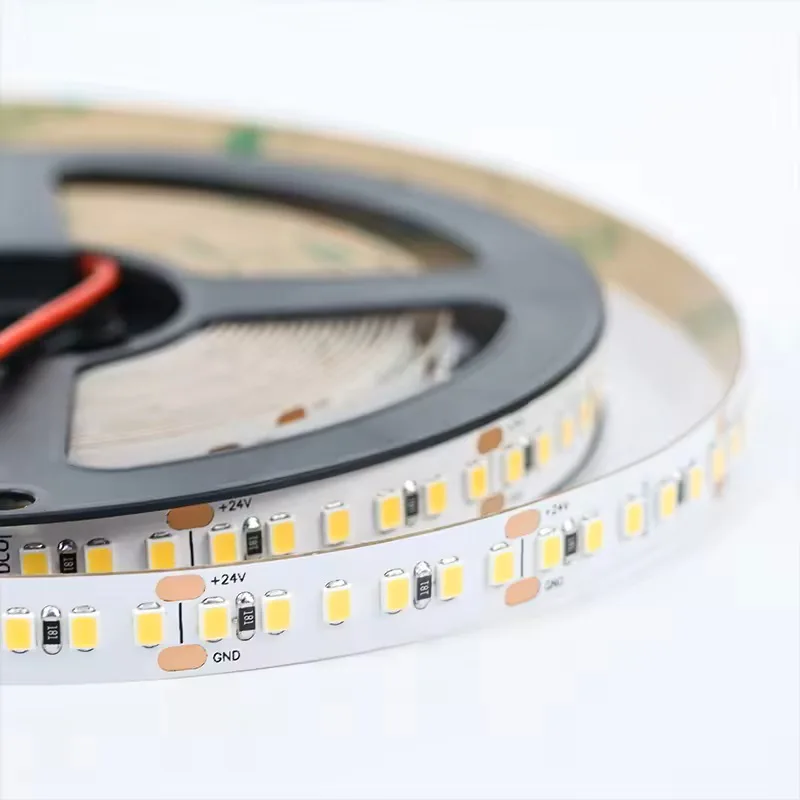
ánh sáng dải smd2835
Số mô hình: FQX10T120X
Điện áp đầu vào: DC12V/24V
Công suất: 19.2W/m
Số lượng LED: 120LED/m
CCT: 2700k, 3000k, 4000k, 6500k
CRI:> 80
Hiệu quả: 110lm/W
Góc chùm: 120 °
Phần cắt: 50mm @ 12V, 100mm @ 24V
IP 20/IP65/IP67/IP68
Bảo hành: 3 năm
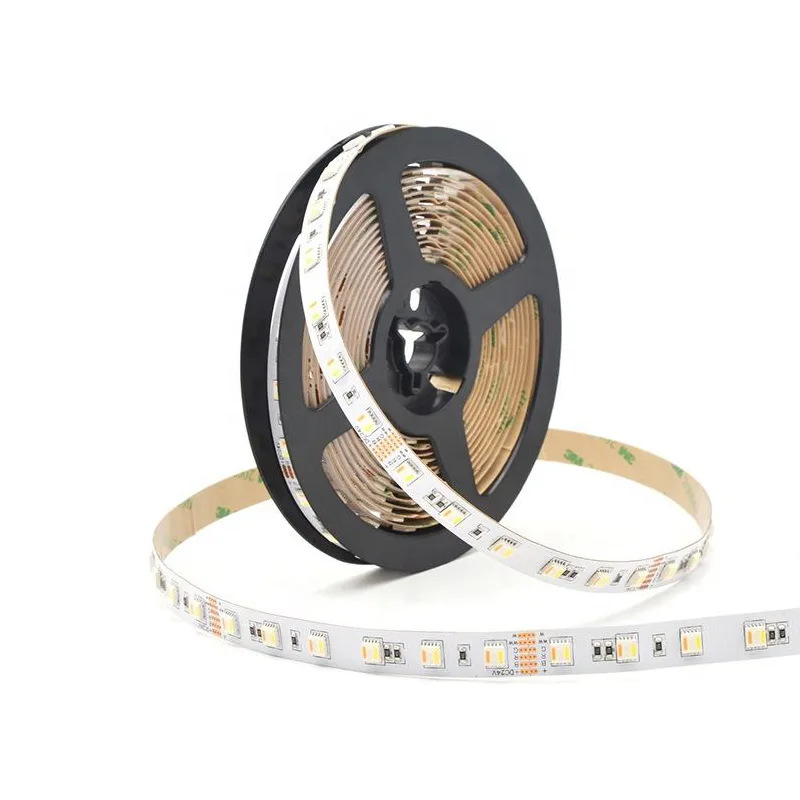
ánh sáng dải smd5050
Số mô hình: fah12t096x
Điện áp đầu vào: DC12V/24V
Công suất: 20W/m
Số lượng LED: 96LED/m
CCT: RGBW
CRI:> 80
Hiệu quả: N/A
Góc chùm: 120 °
Cắt cắt: 31,25mm @ 12V, 62,5mm @ 24V
IP 20/IP65/IP67/IP68
Bảo hành: 3 năm
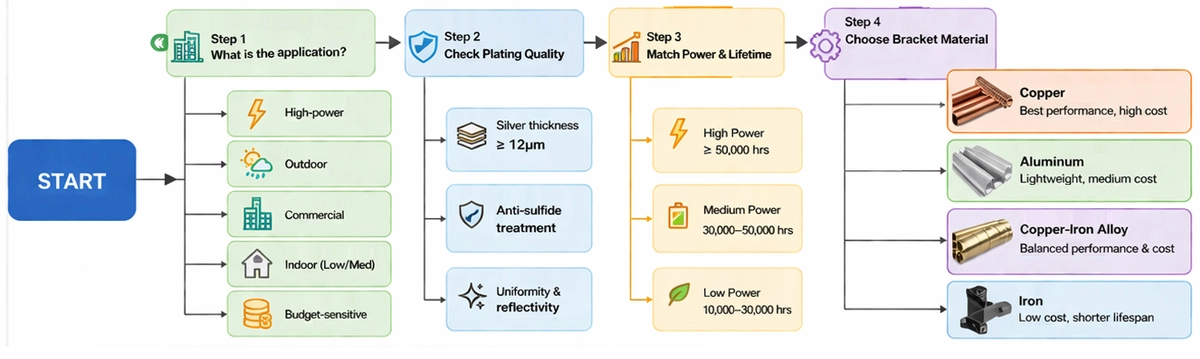
Hướng dẫn lựa chọn khung LED: ứng dụng, mạ, điện & chi phí
Bước 1: Xác định ứng dụng
| kịch trường | khung đề xuất | lời ghi chép |
| Dải đèn LED công suất cao | dây đồng | Sử dụng ≥12μm mạ bạc & xử lý chống sulfua |
| Ánh sáng ngoài trời | dây đồng | Đảm bảo chống ăn mòn |
| dự án thương mại | Hợp kim đồng hoặc sắt đồng | Cân bằng chi phí & hiệu suất |
| Công suất trung bình/thấp trong nhà | Nhôm hoặc hợp kim | Giải pháp tiết kiệm chi phí |
| có ngân sách | ủi | Tuổi thọ ngắn hơn |
Bước 2: Kiểm tra chất lượng mạ
- Độ dày bạc: Mạ bạc dày hơn giúp cải thiện khả năng oxy hóa và chống lưu huỳnh.
- bài chống Đối -Sulfua xử lý: cần thiết cho môi trường ẩm ướt hoặc ven biển.
- Tính đồng nhất: Đảm bảo sản lượng ánh sáng ổn định và độ tin cậy hàn.
Bước 3: Phù hợp với yêu cầu về sức mạnh và tuổi thọ
| quyền thay mặt | Vật liệu được đề xuất | tính mạng |
| địa vị cao | dây đồng | ≥50.000 giờ |
| trung bình | Hợp kim/Nhôm | 30.000–50.000 giờ |
| thấp kém | Sắt / nhôm | 10.000–30.000 giờ |
Bước 4: Cân bằng chi phí so với hiệu suất
- Độ tin cậy cao → Đồng đáng để đầu tư
- nhạy cảm với chi phí → nhôm hoặc sắt là chấp nhận được
- Dự án dài hạn → tránh khung sắt
Bước 5: Đặt câu hỏi đúng
- Giá đỡ là đồng, nhôm, sắt, hay hợp kim?
- Nếu đồng, nó là đồng nguyên chất hay đồng thau / mạ đồng?
- Độ dày mạ bạc là gì?
- Điều trị chống sulfide có được áp dụng không?
Để biết thêm hướng dẫn về cách chọn chip LED cho dải LED, xem Cách chọn hạt LED phù hợp cho đèn dải LED.
FAQ
Phần kết luận
Chân đế LED là xương sống của chip LED, ảnh hưởng trực tiếp đến tản nhiệt, hiệu suất điện, tuổi thọ và thậm chí là chi phí cuối cùng của dải LED. Trong khi vật liệu cơ bản xác định hiệu suất lõi, lớp mạ - đặc biệt là độ dày bạc và xử lý chống sulfua - đóng một vai trò quan trọng trong độ tin cậy lâu dài.
Không có vật liệu khung LED “tốt nhất” nào — nó phụ thuộc vào ứng dụng, yêu cầu nguồn và ngân sách của bạn:
- Sử dụng cho công suất cao, ngoài trời hoặc lâu dài → Giá đỡ đồng là lựa chọn tốt nhất
- Để cân bằng hiệu suất chi phí → hợp kim đồng-sắt hoặc nhôm
- Đối với chi phí thấp hoặc sử dụng tạm thời → Giá đỡ bằng sắt có thể được chấp nhận
Chọn đúng khung không phải là chọn phương án đắt nhất, mà là lựa chọn phù hợp nhất cho dự án cụ thể của bạn. Luôn xác nhận vật liệu khung, loại đồng và chất lượng mạ với nhà cung cấp của bạn để tránh hỏng hóc sớm và đảm bảo hiệu suất nhất quán.
Nếu bạn không chắc chắn thông số kỹ thuật dải LED nào là tốt nhất cho dự án của mình, nhóm của chúng tôi có thể giúp bạn đánh giá giải pháp phù hợp dựa trên yêu cầu ứng dụng của bạn.
Bài viết liên quan