English
  简体中文
简体中文  Deutsch
  Español
  Français
  Italiano
  日本語
日本語  한국어
한국어  Polski
  Português
  Русский
  Türkçe
  Nederlands
  Tiếng Việt
  ไทย
ไทย 
LED light boards are core components that integrate LED light-emitting units, resistors, capacitors, driver ICs, and other elements onto a PCB substrate. Unlike traditional electronic circuits, LED light boards place particular emphasis on thermal performance, current-carrying capacity, and long-term stability—all of which are highly dependent on PCB design and manufacturing quality.
Particularly in LED strip and module PCBs, parameters like copper thickness, thermal substrate material, trace width/spacing, and impedance control directly affect luminous efficiency, thermal stability, and lifespan. Therefore, one must balance cost considerations with technical specifications and quality control when selecting PCB manufacturing and assembly services. This article explores what constitutes high-value PCB manufacturing and assembly, with a focus on LED applications.
Core PCB Requirements for LED Strips and Modules
As core components of modern lighting, LED strips and modules are widely used in decorative lighting, automotive tail lights, advertising displays, and smart home applications. Their performance heavily relies on the PCB’s thermal dissipation capability, electrical conductivity efficiency, and weather resistance. Particularly with the proliferation of mini/micro LED technology, PCBs must support higher-density layouts and optimized thermal designs. For instance, in outdoor advertising displays, PCBs must maintain stability under high-temperature and high-humidity conditions to prevent light decay caused by inadequate heat dissipation.
With the advancement of 5G and IoT technologies, LED modules impose significantly heightened demands on PCB signal integrity. LED modules in automotive autonomous driving systems, for example, require millisecond-level response times, presenting greater challenges for PCB routing precision and material selection.
What are the types of LED PCB?
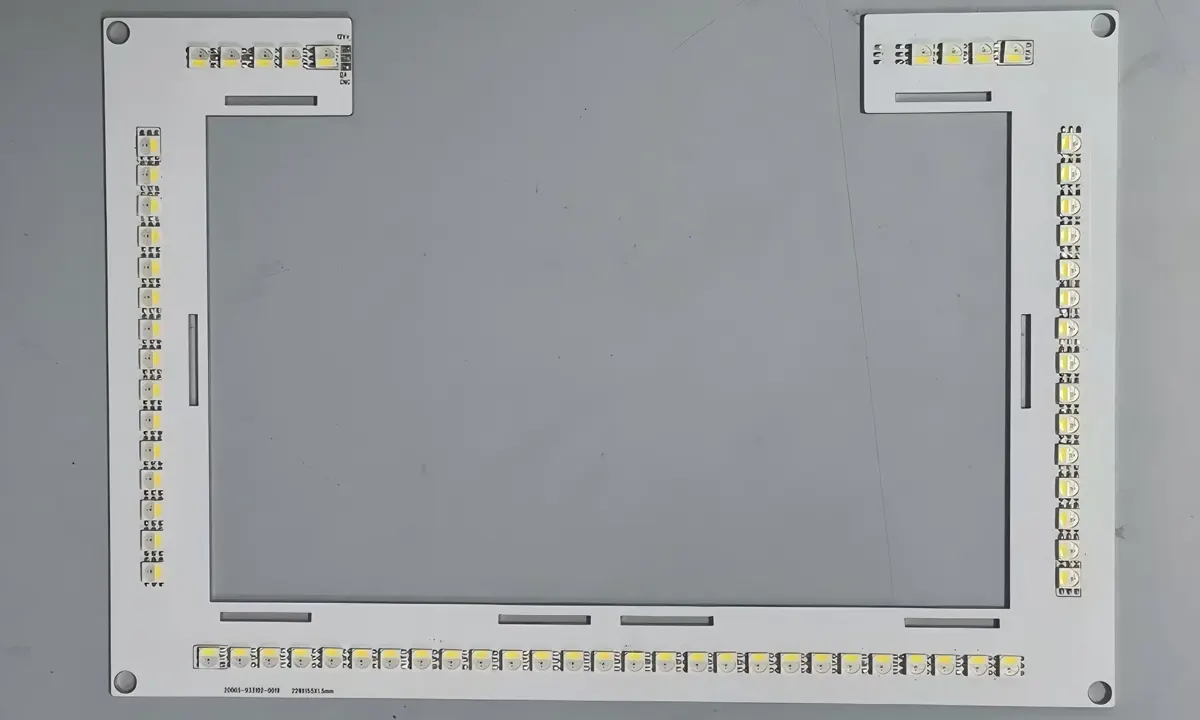
LED PCBs serve as the core component of LED lighting products. Different applications demand varying PCB structures and materials. Common types include.
| Type | Material | Application Scenario | Price Range |
| LED Flexible Strip PCB | Flexible Printed Circuit (FPC) | Light slots, cabinets, irregular installation environments | 0.88 USD (starting) |
| LED Module PCB | FR-4 Fiberglass Board / Aluminum Base Board | Linear lights, ceiling lights (FR-4 for low power, aluminum for high power) | 1.35 USD (starting) |
| LED Rigid Strip PCB | Aluminum Base PCB / Thick Copper FR-4 Board | Linear lighting, industrial lighting | 2.10 USD (starting) |
| LED Custom PCB Board | LED Custom PCB Board | High-end / professional lighting | 2.2USD (starting) |
LED Flexible Strip PCB
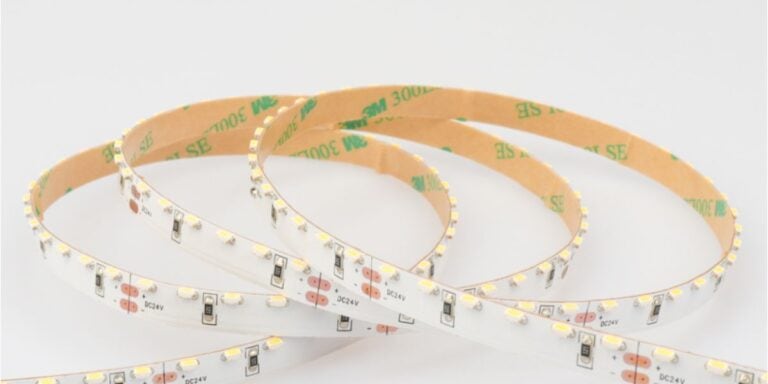
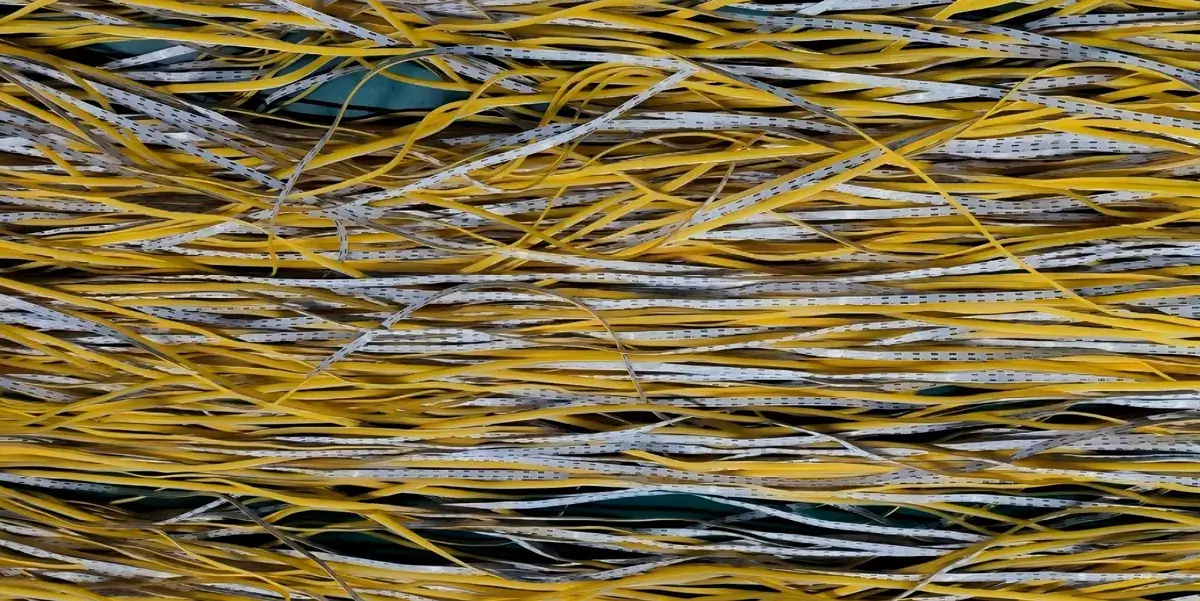
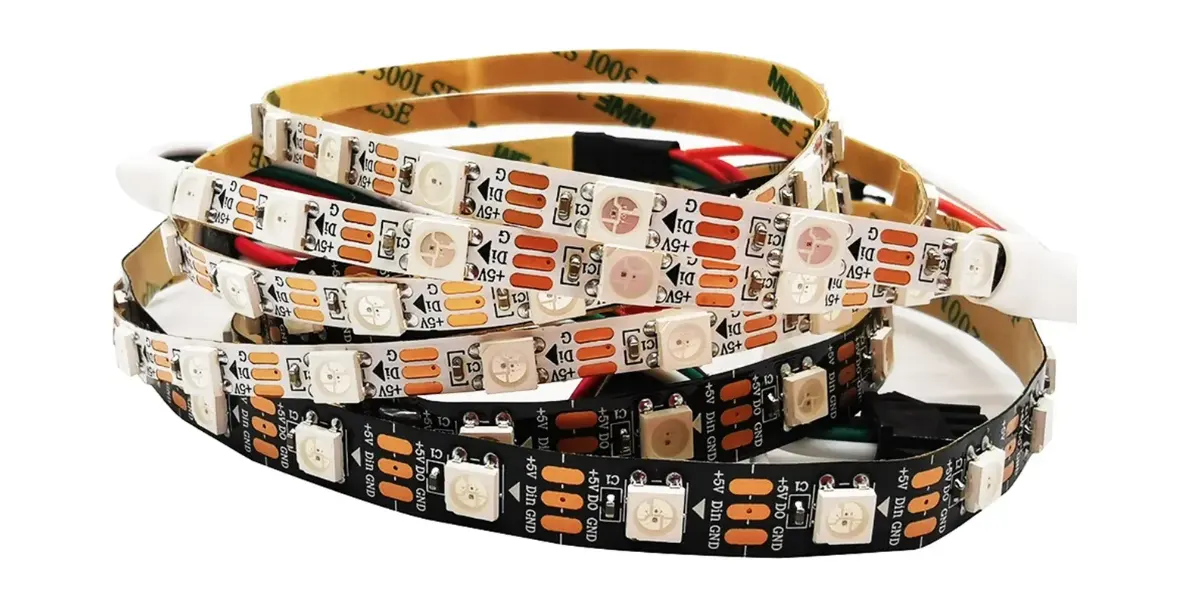
Flexible printed circuits (FPC) are predominantly used for LED light strips, offering bendability and slim profiles ideal for light channels, cabinets, and irregular installation environments. These PCBs require a balance between flexibility and conductivity, typically achieved through thicker copper foil or dual-layer structures to enhance current-carrying capacity and stability.
LED Module PCB
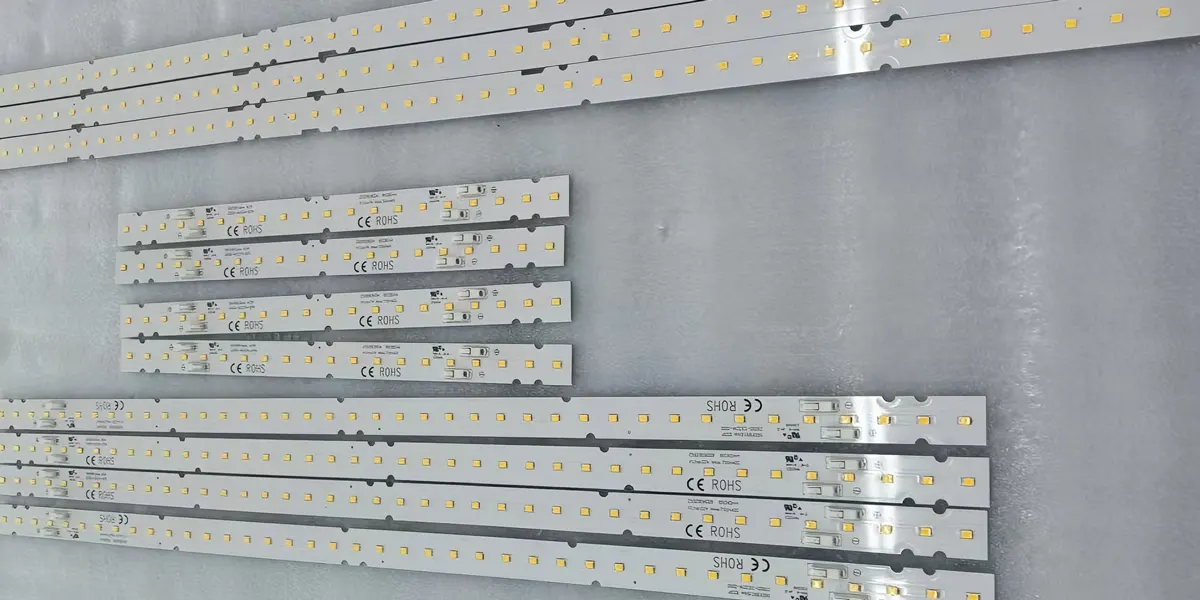
LED modules are widely used in linear lights and ceiling lights. Common PCBs include FR-4 fiberglass boards or aluminum substrates. FR-4 offers lower cost and is suitable for low-to-medium power applications; aluminum substrates provide superior heat dissipation, making them ideal for high-brightness modules, though they demand higher reliability and consistency in solder pads.
LED Rigid Strip PCB
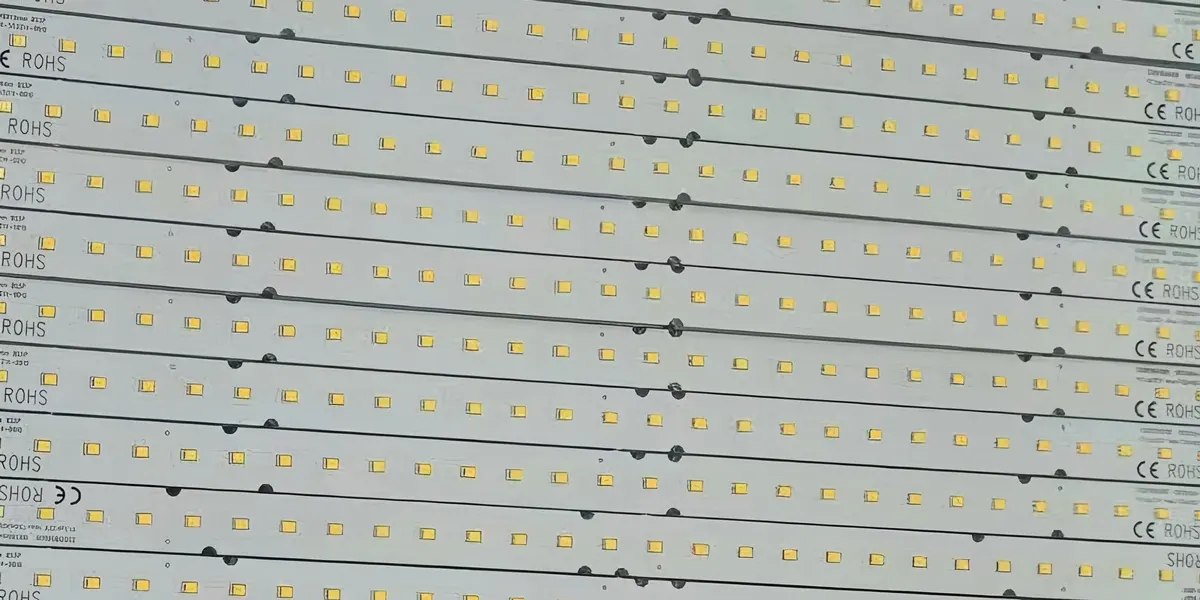
Rigid light strips typically employ aluminum-based PCBs or thick-copper FR-4 boards, offering high structural rigidity and effective heat dissipation. They are commonly used in linear and industrial lighting applications, effectively reducing light decay and extending lifespan.
Custom LED Light Board PCBs
Custom light boards are designed based on power requirements, dimensions, and thermal management needs, allowing flexible selection of PCB structures. They form a critical foundation for high-end and specialized lighting solutions.
Practical Recommendations for Selecting PCB Manufacturers
When choosing a PCB manufacturer, conduct a comprehensive evaluation based on three key aspects: quality, capability, and service.
First, assess the quality management system. Prioritize manufacturers certified with ISO9001, ISO14001, etc., and verify they possess complete inspection processes—including incoming material inspection and in-process testing (AOI, flying probe/fixture testing)—to ensure product stability.
Second, evaluate technical capabilities and production capacity, including copper thickness control, substrate grade, trace precision, and relevant experience with LED board assemblies, strip PCBs, and module PCBs. This prevents thermal management and lifespan issues caused by inadequate manufacturing processes.
Third, prioritize delivery timelines and responsiveness. Consistent delivery cycles and rapid engineering support significantly reduce project risks. Finally, focus on cost-effectiveness and long-term partnership potential. Price should not be the sole criterion; PCB manufacturers capable of delivering consistent quality, technical support, and after-sales service are better suited for sustained collaboration.
When comparing quotes from different PCB manufacturers, avoid focusing solely on bare board pricing. Verify whether electrical testing, AOI inspection, and pad surface treatment processes are included. Simultaneously assess whether the manufacturer supports custom copper thickness and substrate materials per design requirements. For LED light boards, strips, and modules, conduct a DFM review before mass production to proactively avoid design-process mismatches, minimizing rework, delays, and additional costs.
Customization Trends in LED PCBs
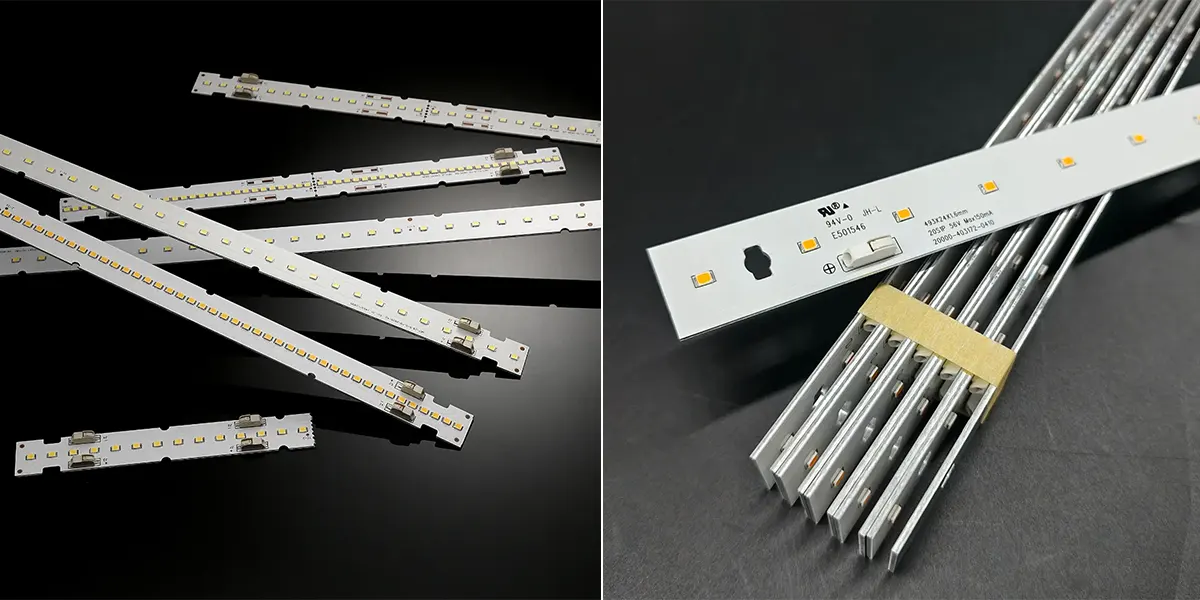
Modern LED applications are evolving toward high power, customization, and intelligence. Notably, the establishment of the Zhaga standard enables LED linear modules to achieve design flexibility, maintenance convenience, and long-term sustainability through specific technical specifications, driving the lighting industry toward modular development. Custom light boards support rapid replacement of modules in various shapes (such as circular or linear), adapting to downlights, linear lights, and more. Featuring a plug-and-play design, they support parallel module expansion to meet diverse lumen output requirements, enabling tool-free rapid installation of luminaires.
Custom lighting boards offer the following advantages:
- Installation & Maintenance: Plug-and-play design enables tool-free installation. Standardized module usage reduces design costs, facilitates future replacements, and lowers overall expenses.
- Reliability: Certified by independent testing centers to ensure high luminous efficacy, low blue light, and other characteristics. Superior thermal management and PCBs with high-copper-thickness bases significantly enhance product usability and quality.
- Efficient Innovation: Manufacturers upgrading any luminaire need not redesign from scratch. They can adhere to Zhaga-standard core lighting components while modifying specific sections. Modular design facilitates partial replacements, lowering overall maintenance costs. This not only saves R&D expenses but also accelerates new product launches.
These trends demand PCB manufacturers and assemblers to possess stronger process capabilities, such as multilayer technology and metal substrate manufacturing expertise.
What advantages does SignliteLED offer in PCB manufacturing and assembly services?
Rapid Manufacturing and Low-Cost Advantages
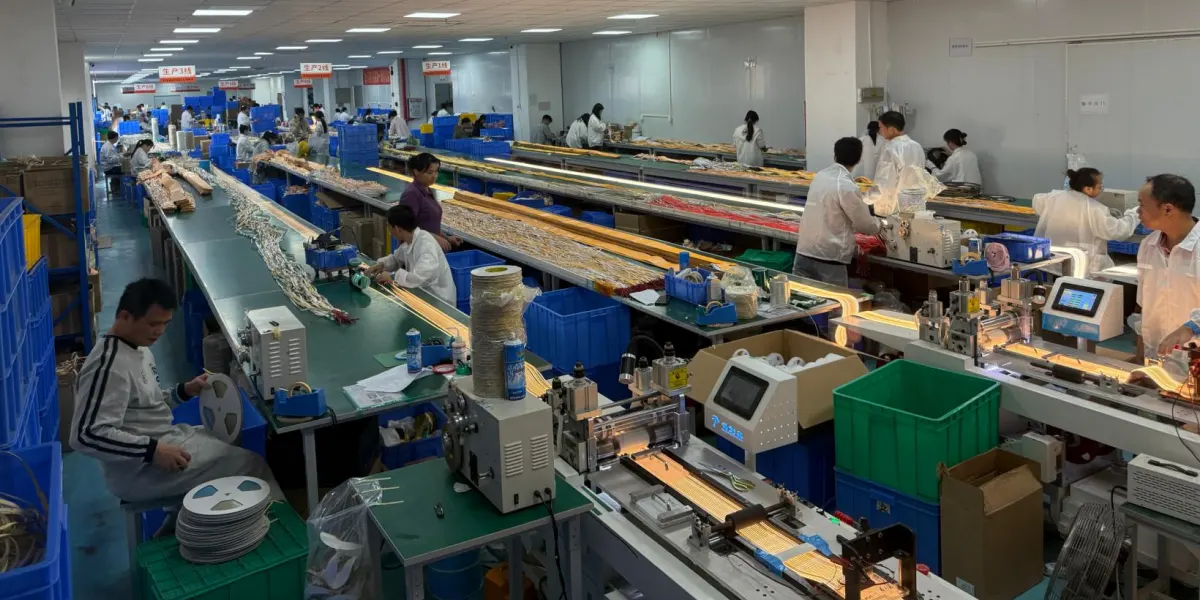
SignliteLED offers one-stop electronic manufacturing services spanning electronic component procurement, PCB production and processing, SMT placement, PCBA testing, and final assembly. Leveraging large-scale purchasing and a rigorous quality control system, the company maintains long-term partnerships with numerous leading domestic and international component suppliers. This ensures stable material quality and reliable delivery, with procurement advantages directly passed on to customers. Significant cost advantages exist for common materials like LEDs, resistors, capacitors, and inductors, effectively reducing customer inventory pressure, improving production turnover efficiency, and shortening lead times.
Quality Assurance Capabilities
SignliteLED has established a comprehensive quality management system, implementing full-process control over incoming materials, manufacturing processes, and shipments. For LED boards, strips, and module products, the company provides aging tests and reliability verification to proactively mitigate application risks. Through standardized operations and continuous improvement mechanisms, we enhance yield rates and delivery stability, delivering reliable, high-quality PCBA manufacturing services.
Integrated Manufacturing and Assembly Solutions
SignliteLED deeply integrates PCB manufacturing with SMT assembly, complemented by digital order management and BOM support. This enables rapid design validation and functional prototype development—particularly suited for LED boards, strips, and modules—significantly boosting supply chain efficiency while reducing overall manufacturing costs.
Cost-Effective PCBA Manufacturing Capabilities
The company covers both rapid PCB prototyping and volume production, with capabilities in multilayer PCBs and metal-clad laminate (MCPCB) manufacturing suitable for mid-to-high power LED applications. Through stable production capacity, mature processes, and comprehensive testing services, we deliver cost-effective, sustainable PCBA manufacturing solutions.
Comprehensive R&D and Engineering Support Capabilities
Beyond manufacturing and assembly strengths, SignliteLED possesses mature R&D and engineering support capabilities. Our experienced teams in electronic engineering, PCB processes, and LED application development provide early-stage project support, including solution evaluation, DFM reviews, and BOM optimization. The company offers end-to-end collaborative development from design and PCB optimization to prototyping and mass production, enabling rapid response to custom requirements, shortening product development cycles, and improving first-time design success rates. The seamless integration of R&D and production enhances product competitiveness in performance, reliability, and cost control.
Impact of PCB Material Properties on LED Products
- Base Material Type: FR-4 substrates offer low cost but average heat dissipation, making them suitable for low-power strips like residential decorative lighting. Aluminum substrates provide superior heat dissipation for high-power modules such as automotive headlights. Ceramic substrates withstand high temperatures, ideal for extreme environments like industrial lighting equipment.
- Copper Foil Thickness: Thicker copper foil (e.g., 2 oz) enhances current-carrying capacity, reduces heat generation, and improves strip stability. For instance, voltage drop tests on 24V DC-driven LED strips show 2 oz copper foil delivers 30% greater current stability than 1 oz foil.
- Solder Mask: White solder mask reflects light to boost luminous efficiency, suitable for high-brightness applications like stage lighting. Black solder mask is used in concealed installations, balancing aesthetics and functionality, such as hidden light strips in smart homes.
How to distinguish PCB quality?
- Visual Inspection: High-quality PCBs feature flat pads and crisp, burr-free traces. Inferior products often exhibit scratches or warping, compromising solder joint reliability. For instance, in AOI (Automated Optical Inspection), defect rates for premium PCBs are below 0.1%, while substandard products can exceed 5%.
- Dimensional Accuracy: Tolerances must strictly adhere to design specifications. For instance, hole diameter deviations can cause component installation failures. Verify critical parameters using precision measurement tools—line width/spacing tolerances should be controlled within ±0.05 mm.
- Functional Testing: Continuity testing ensures circuit integrity, while insulation resistance testing prevents short circuits. Basic screening can be done with simple tools like multimeters, but professional equipment such as LCR meters provides more precise data.
- Copper Thickness: PCB copper thickness selection is critical in LED light boards. Thicker copper layers support higher currents and better heat dissipation, preventing thermal damage from excessive temperature rise. For standard LED strips, 2 oz of copper is considered sufficient. However, for high-power LED strips or extended operation, 3 oz or more is recommended to ensure stable brightness, minimal voltage drop, and long-term reliability.
Testing Methods for LED PCBs
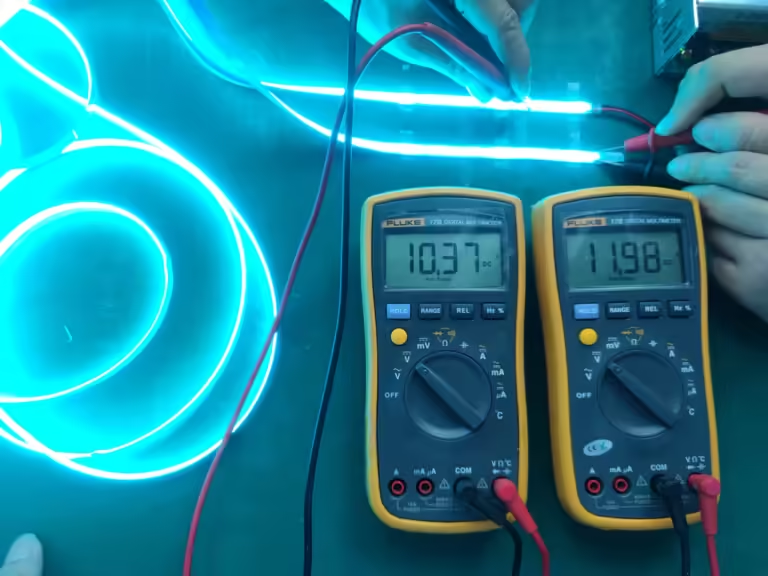
- Electrical Performance Testing: Voltage drop testing evaluates current stability. A constant-current power supply simulates actual load conditions to prevent uneven brightness. For example, at 1A current, a high-quality PCB should exhibit a voltage drop less than 0.5V.
- Thermal Performance Testing: Infrared thermal imaging detects localized hotspots to identify heat dissipation flaws. For instance, after continuous operation for 1 hour, aluminum substrates should exhibit uniform temperature distribution without localized overheating.
- Reliability Testing: Temperature cycling simulates seasonal variations, while vibration testing verifies transportation durability. For example, during -40°C to 85°C cycling, high-quality PCBs should maintain a failure rate below 0.01%.
- Optical Performance Testing: An integrating sphere measures color temperature and brightness consistency to prevent luminous efficiency variations between modules. For example, in advertising displays, color differences between modules should be controlled within ΔE<3.
- Soldering Quality Inspection: AOI automatic optical inspection and X-ray scanning detect cold solder joints or solder bridges to improve yield rates. For instance, in automotive electronic modules, X-ray inspection achieves a defect detection rate of 99.9%.
- Environmental Adaptability Testing: Salt spray tests evaluate outdoor corrosion resistance, while waterproof tests validate IP ratings. For example, in IP65-rated testing, modules must operate continuously for 24 hours without failure under water spray conditions.
Common Issues and Solutions
- Uneven LED strip brightness: May result from uneven PCB current distribution or incorrect LED grading. Countermeasures include optimizing routing design and rigorously screening components, such as using constant-current drive circuits.
- Poor module heat dissipation: Insufficient aluminum substrate thickness or inadequate thermal paste application are primary causes. Increasing substrate thickness and improving application processes significantly improve performance, e.g., raising aluminum substrate thickness from 1.5 mm to 2.0 mm.
- Soldering defects: Poor solder paste quality or insufficient placement machine precision causes cold solder joints. Selecting high-reliability materials and calibrating equipment reduces failures, e.g., using lead-free solder paste and automatic optical inspection equipment.
Conclusion
The core competitiveness of premium PCB suppliers lies in technological iteration, quality control, and customized services. With growing demand for AI servers and mini LED applications, the PCB industry is advancing toward high-frequency, high-speed, and low-loss solutions. This places higher demands on material selection and manufacturing processes. It is recommended to balance cost and performance based on project requirements: Future material innovations, such as novel copper-clad laminates, will further enhance LED product performance. For instance, adopting aluminum nitride ceramic substrates can significantly improve thermal efficiency.
With the widespread adoption and technological advancement of LED lighting products, demand for circuit boards—from LED strip PCBs and LED module PCBs to high-power lighting applications—is rapidly increasing. Consequently, the value of “PCB manufacturing and assembly” has become a central focus within the industry chain. PCB manufacturing and assembly companies deliver optimal value in LED application scenarios, underscoring the critical importance of PCB selection in LED board design.
FAQs
Related Posts