Español
  English
  简体中文
简体中文  Deutsch
  Français
  Italiano
  日本語
日本語  한국어
한국어  Polski
  Português
  Русский
  Türkçe
  Nederlands
  Tiếng Việt
  ไทย
ไทย 
Al buscar letreros de neón personalizados para exteriores para un proyecto comercial, ya sea para una tienda, un patio de restaurante o iluminación arquitectónica, los materiales que elija hoy determinarán cómo se ve y se desempeña el letrero dentro de cinco, cinco o incluso dentro de diez años. Si se utilizan los materiales incorrectos, un letrero que se ve muy bien en el piso de la sala de exposición puede amarillear, agrietarse, parpadear o fallar por completo después de una sola temporada de exposición al aire libre.
Para los profesionales de adquisiciones, ingenieros de proyectos y dueños de negocios, el desafío no es simplemente encontrar un proveedor que pueda hacer que un letrero de neón parezca atractivo. Es encontrar un proveedor que realmente entienda el neón personalizado al aire libre desde una perspectiva de ingeniería de materiales: alguien que sabe por qué la silicona de neón supera al PVC en resistencia a los rayos UV, entiende cómo seleccionar los tableros de acrílico y perfiles de aluminio adecuados, y sabe lo que constituye materiales de neón impermeables genuinamente confiables.
Esta guía analizará cada componente material clave de Outdoor Letreros de neón personalizados, desde los propios tubos de neón hasta las conexiones eléctricas. Después de leerlo, tendrá una lista de verificación clara para evaluar a los proveedores y podrá especificar con precisión los materiales necesarios para su proyecto en función de sus requisitos ambientales únicos.
Si necesita una guía completa paso a paso desde el diseño hasta la entrega, consulte nuestra guía completa sobre cómo comprar letreros de neón personalizados.
Silicona vs PVC: Elegir el material de núcleo correcto
Al especificar los requisitos técnicos para las luces de neón para exteriores personalizadas, la decisión material más fundamental es la elección del material de tubo de neón. La silicona y el PVC son los dos materiales dominantes en el mercado de iluminación LED de neón, pero su rendimiento en ambientes exteriores varía significativamente.
Comparación de propiedades de materiales
| propiedad | Flex de neón de silicona LED | Flex de neón LED de PVC |
| Composición material | Elastómero de silicona premium | Cloruro de polivinilo con plastificantes |
| Vida útil (al aire libre) | Más de 50.000 horas | 8.000-15.000 horas |
| Resistencia a los rayos UV | Excelente: sin amarilleo por más de 5 años | Pobre: amarillos y se vuelve frágil |
| Rango de temperatura | -50°C a +150°C | -15°C a +80°C |
| Flexibilidad a baja temperatura | Sigue siendo suave y flexible | se vuelve duro y quebradizo |
| clasificacion impermeable | IP67 / IP68 alcanzable | Limitado, típicamente IP65 máximo |
| Resistencia al fuego | autoextinguible, ignífugo | Produce humos tóxicos cuando se quema |
| Disipación del calor | Conductividad térmica de 27 W/mk | 0.14W/mk — Mala gestión del calor |
| Coste | Mayor inversión inicialt | Mayor inversión inicial |
| Mejor caso de uso | Diseños complejos al aire libre, a largo plazo | Proyectos de interior, temporales y de bajo presupuesto |
Por qué la silicona es el estándar de oro para uso en exteriores

La silicona sobresale en cada métrica relevante para el uso al aire libre. Su resistencia a los rayos UV le permite soportar la luz solar directa durante más de cinco años sin amarillear o quebradiza. Su amplio rango de temperatura (-50°C a +150°C) le permite adaptarse a diversos climas, desde fríos inviernos del norte hasta calurosos veranos en el desierto. Además, la conductividad térmica superior de la silicona (27 W/m·k, en comparación con el PVC de 0,14 W/m·k) ayuda a disipar el calor generado por los LED de manera más efectiva, extendiendo la vida útil de los tubos de neón y los LED.
Desde una perspectiva de seguridad, la silicona es ignífuga naturalmente. En contraste, el PVC libera cloruro de hidrógeno y otros gases tóxicos cuando se quema, lo que plantea serios riesgos de seguridad y responsabilidad. La silicona también ofrece una excelente resistencia química, lo que la hace adecuada para ambientes costeros, donde el spray de sal puede corroer rápidamente los materiales inferiores.
cuando IPVC Scajón Aapropiado?
El PVC no está del todo sin mérito. Para la señalización en interiores, las pantallas de eventos temporales o los proyectos con requisitos de vida útil limitados y presupuestos ajustados, el PVC es una opción rentable. Sin embargo, para cualquier aplicación expuesta a la luz solar directa, la lluvia o las fluctuaciones de temperatura significativas en el exterior, la silicona es la única opción confiable. Como señala una guía de la industria: “El PVC solo dura entre 8000 y 15,000 horas en condiciones al aire libre”, lo que equivale a solo uno o dos años de uso continuo en exteriores.
Soluciones de silicona de neón de SignLiteled
En SignLiteled, fabricamos una gama completa de luces de neón de silicona y Tiras de neón LED Diseñado para la durabilidad al aire libre. Nuestra línea de productos incluye una variedad de especificaciones para adaptarse a las diferentes necesidades de aplicación, desde las series S0612 y S0815 con iluminación lateral, hasta las series T1010 y T1212 con iluminación frontal para contornos arquitectónicos, hasta el Neon D15 circular omnidireccional de 360°. Todos nuestros productos de silicona de neón se someten a pruebas de calidad rigurosas para garantizar un rendimiento al aire libre a largo plazo.
Tipos de paneles de respaldo acrílico: la base que lo mantiene todo junto
El panel de respaldo de los letreros de neón personalizados a menudo se pasa por alto, pero juega un papel crucial para garantizar la durabilidad en exteriores. El panel de respaldo debe proporcionar soporte estructural, soportar la intemperie y mantener su apariencia sin amarillear, deformar o deslaminar.
Opciones de respaldo de acrílico comunes
| Tipo | espesor | Resistencia UV | Mejor aplicación |
| Acrílico transparente (fundido) | 3mm-10mm | Bueno - UV-estabilizado | Diseños modernos y transparentes |
| Acrílico Blanco (Fundado) | 3mm-10mm | Bueno - UV-estabilizado | Señales estándar para interiores/exteriores |
| Acrílico negro (fundido) | 3mm-10mm | Bueno - UV-estabilizado | Apariencia premium de alto contraste |
| Acrílico extruido | 2mm-5mm | mediano | Uso en interiores o protegidos en exteriores |
Acrílico fundido vs. Acrílico extruido

El acrílico fundido se produce vertiendo acrílico líquido en un molde, ofreciendo una claridad óptica superior, un grosor uniforme y una mejor resistencia a los rayos UV. El acrílico extruido se forma por extrusión a través de rodillos; aunque es menos costoso, tiene una estabilidad más pobre en condiciones exteriores y es más propenso a la deformación, la deformación y el amarilleo. Para letreros de neón personalizados para exteriores, el acrílico fundido es la opción recomendada.
Tratamiento y color de la superficie del panel trasero
El tratamiento de la superficie y el color del panel posterior impactan significativamente el efecto visual del signo de neón:
- Panel trasero transparente: Crea un efecto "flotante", haciendo que el neón parezca flotar en el aire, comúnmente utilizado para pantallas de escaparates y diseños minimalistas modernos.
- Tablero blanco: Proporciona el máximo contraste para los colores neón, lo que hace que el letrero sea particularmente vívido y llamativo a la luz del día.
- TABLILLA NEGRO: Presenta una apariencia sofisticada y refinada y oculta de manera efectiva el cableado y el montaje de hardware.
SignLiteled ofrece tres opciones de color de tablero (transparente/blanco/negro) y puede personalizar las dimensiones de corte bajo demanda para que coincida con cualquier requisito de diseño.

Revestimiento protector
Para instalaciones exteriores, es esencial una protección adicional. Los paneles traseros deben tratarse de fábrica con estabilización UV. Para señalización en entornos hostiles (como sal de sal, contaminantes industriales o alta humedad), aplicar una película transparente protectora contra los rayos UV a la superficie del panel posterior puede prolongar significativamente su vida útil.
Conectores impermeables: el punto de falla más pasado por alto
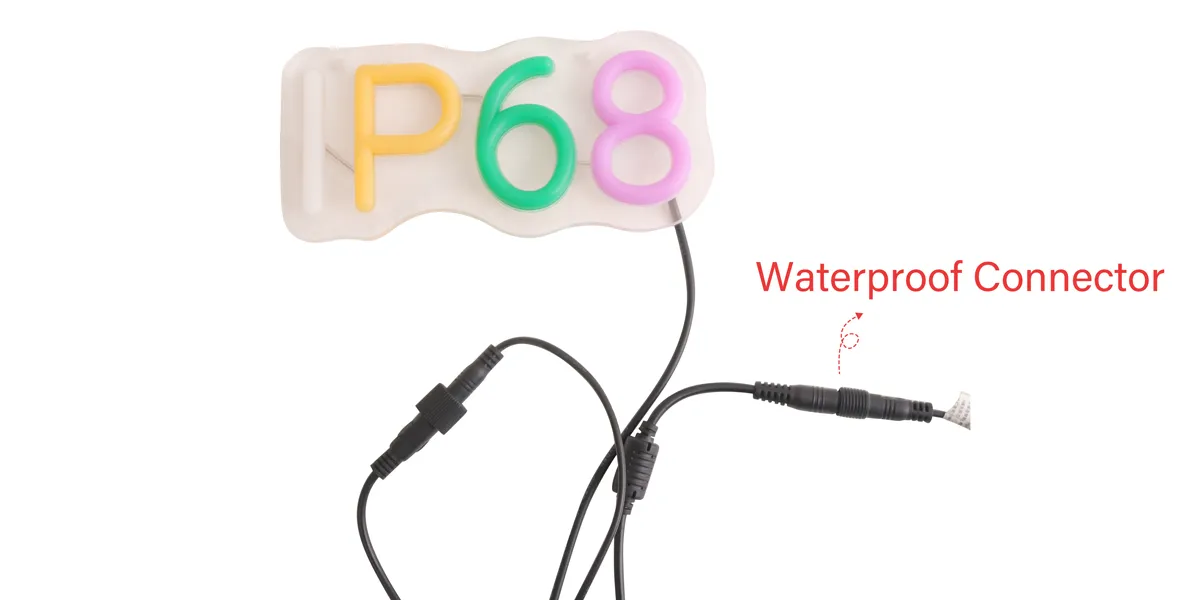
Si hay una parte de la iluminación de neón para exteriores personalizada que es más propensa a fallas, son los conectores. Muchos compradores se enfocan únicamente en la clasificación IP de la propia tira de Neon, pasando por alto completamente los puntos de conexión, y luego se quedan desconcertados cuando su iluminación de neón "impermeable" funciona mal después de la primera lluvia intensa.
Clasificaciones IP explicadas
| Clasificación IP | Nivel de protección | adecuado para |
| IP65 | Protegido contra chorros de agua | Patios cubiertos, bajo aleros, áreas exteriores protegidas |
| IP67 | Protegido contra la inmersión temporal (1m por 30 min) | Fachadas de construcción, señales exteriores completamente expuestas |
| IP68 | Protegido contra la inmersión continua | Piscinas, fuentes, aplicaciones submarinas |
Para la mayoría de los proyectos de señalización al aire libre, IP67 proporciona suficiente protección contra la lluvia y la humedad. IP65 es adecuado para ambientes parcialmente protegidos, mientras que IP68 se reserva típicamente para situaciones que requieren inmersión continua en agua.
¿Dónde fallan la mayoría de las luces de neón al aire libre?
Según los análisis de fallas reales, "el problema generalmente comienza cuando la humedad se filtra lentamente en conectores mal sellados, se acumula alrededor de los conductores o cuando la meteorización a largo plazo debilita las partes vulnerables del sistema". Las tiras de LED rara vez fallan; el verdadero culpable suele ser la intrusión de humedad en los puntos de conexión, lo que provoca la corrosión, el parpadeo y, en última instancia, la falla completa de la pantalla de neón.
¿Cómo especificar correctamente una solución de conexión a prueba de agua?
Para garantizar un rendimiento fiable en exteriores, asegúrese de que su proveedor utilice:
- Conectores moldeados por inyección: Conectores sobremoldeados personalizados que proporcionan un sello completo en los puntos de entrada de cable.
- maceta de silicona: Conectores llenos de silicona para evitar la penetración de humedad incluso bajo presión.
- Tubo termorretráctil de doble pared con respaldo adhesivo: forma un sello hermético sobre juntas soldadas.
- Contactos chapados en oro o resistentes a la corrosión: Prevenir la oxidación incluso en caso de una entrada de humedad menor.
En SignLiteled, todos los letreros de neón personalizados para exteriores usan conectores impermeables de grado industrial con tapas de extremo moldeadas por inyección de doble inyección, logrando Clasificaciones IP67/IP68 según sea necesario. Nuestro proceso de fabricación pone especial énfasis en el sellado de puntos de conexión, ya que sabemos que aquí es donde fallan la mayoría de los productos de la competencia.
Resistencia a los rayos UV: ¿Qué evita que sus letreros de neón se amarillen?

El envejecimiento UV es el asesino silencioso de la señalización exterior. Incluso si un letrero de neón es completamente impermeable, la exposición prolongada a la luz solar dañará gradualmente los materiales del tubo, que conduce al amarilleo, nublado, transmisión de luz reducida y finalmente agrietamiento.
Resistencia a los rayos UV por material
| Material | Resistencia UV | Amarillo esperado de inicio |
| Silicona curada con platino | Excelente | 5-10+ años |
| TPU estabilizado con UV | Bien | 3–5 años |
| Silicona estándar | Bien | 3–5 años |
| PU de alta calidad con aditivos UV | mediano | 2-3 edad |
| PVC estándar | Pobre | 6-12 meses |
| Plásticos reciclados de baja calidad | muy pobre | <6 meses |
Silicona curada con platino: el estándar de oro
El más alto nivel de protección UV proviene de silicona curada con platino, ampliamente reconocida como el mejor material para prevenir el amarilleo. Este material ofrece una excelente resistencia a los rayos UV y al calor, mantiene la flexibilidad para acomodar diseños arquitectónicos complejos y conserva colores vibrantes durante 5 a 10 años o más.
Los productos de neón de silicona de alta calidad se someten a rigurosas pruebas de envejecimiento acelerado. Por ejemplo, 3000 horas de exposición a los rayos UV (equivalente a aproximadamente 9 años al aire libre) da como resultado una diferencia de color (ΔE) de menos de 1,5, un cambio prácticamente imperceptible a simple vista.
Pruebas y Certificación
Antes de realizar un pedido, solicite lo siguiente a su proveedor:
- Informe de prueba de envejecimiento UV acelerado (ASTM G154 o estándar equivalente)
- Datos de prueba de meteorización al aire libre (resultados de exposición en el mundo real)
- Certificaciones de materiales (ROHS, REACH, UL)
Señales de advertencia de poca resistencia a los rayos UV
Si un proveedor no puede proporcionar datos de prueba UV, proceda con precaución. Los letreros de neón hechos de PVC de baja calidad o plástico reciclado pueden comenzar a ser amarillos dentro de los seis meses posteriores a la instalación en exteriores; este problema es irreversible y dañará la imagen de su marca.
En SignLiteled, todos nuestros productos de silicona Neon están formulados con estabilizadores UV y se someten a pruebas de envejecimiento para garantizar la estabilidad del color a largo plazo. También podemos proporcionar informes de prueba completos a pedido.
Lista de verificación de materiales de compra
Al evaluar a los proveedores para letreros de neón personalizados para exteriores, use esta lista de verificación para asegurarse de que los productos que recibe realmente puedan soportar las condiciones al aire libre.
Lista de verificación de materiales básicos
- Material del tubo de neón: Silicona (preferiblemente curado con platino) — No elija PVC para uso en exteriores
- Documentación de resistencia a los rayos UV: Resultados de las pruebas de envejecimiento acelerados (por ejemplo, 3.000 horas de exposición a los rayos UV, ΔE < 1.5)
- Clasificación IP: Mínimo IP67 para señalización exterior completamente expuesta (IP65 aceptable para áreas protegidas)
- Tipo de conector: Tubo termorretráctil de doble pared, moldeado por inyección, encapsulado en silicona o de doble pared con adhesivo
- Tapas: Doble inyección moldeada, no simplemente pegada
- Placa trasera acrílica: Acrílico fundido (no extruido), con tratamiento de estabilización UV
- Herrajes de montaje: Tornillos de acero inoxidable
Lista de verificación de calificación de proveedores
- Certificaciones: UL, CE, RoHS — Garantizar la seguridad y el cumplimiento de los proyectos comerciales
- Disponibilidad de datos de prueba de envejecimiento: ¿Puede el proveedor proporcionar datos de prueba reales en lugar de afirmaciones teóricas?
- Capacidades de personalización: ¿Puede el proveedor acomodar formas, tamaños, colores y direcciones de flexión personalizadas?
- asistencia técnica¿El proveedor proporciona orientación sobre el radio de curvatura mínimo, las recomendaciones de instalación y las instrucciones de construcción?
- Garantía: Al menos una garantía de 2 a 3 años para productos de silicona para exteriores de neón
- Control de calidad: ¿Están documentados los procedimientos de inspección e inspección interna?
Lista de verificación de evaluación ambiental
Antes de realizar un pedido, evalúe su sitio de instalación:
- exposición al sol: Número de horas de luz solar directa por día: determina los requisitos de protección UV
- exposición a la lluvia: completamente expuesto o protegido (por ejemplo, bajo un dosel o aleros)
- Temperatura: Temperaturas máximas anuales y mínimas esperadas
- humedad: Área costera (niebla de alta humedad/salada) o clima interior seco
- Cargas de viento: Resistencia de instalación requerida para la ubicación expuesta
- Nivel de contaminación: Área industrial (exposición química) o ambiente limpio
Conclusión
Seleccionar los materiales adecuados para letreros de neón personalizados para exteriores es una decisión que afecta directamente la vida útil del proyecto, la apariencia y el costo total de propiedad. Los datos son claros:
- Silicona: Supera el PVC en cada métrica relacionada con el exterior: resistencia a los rayos UV, resistencia a la temperatura, flexibilidad, seguridad contra incendios y vida útil.
- Paneles traseros de acrílico fundido: Proporcionar integridad estructural y estabilidad UV que el acrílico extruido no puede igualar en aplicaciones exteriores.
- Conectores sellados de forma adecuada: Ya sea que se moldee por inyección, silicón o esté protegido por un tubo termorretráctil de doble pared, esto determina si su letrero de neón durará años o falla después de una sola temporada de lluvia.
- Materiales resistentes a los rayos UV: específicamente silicona curada con platino, que mantiene sus letreros de neón vibrantes y libres de amarillo durante 5 a 10 años o incluso más.
- Certificaciones, informes de prueba y garantías: Estos son claves para distinguir a los proveedores confiables de los que hacen promesas no verificables.
Cuando se asocia con SignLiteled, no solo está comprando un letrero, está trabajando con un fabricante que entiende materiales, ingeniería y rendimiento al aire libre en el mundo real. Nuestros letreros de silicona de neón están probados, certificados y respaldados por un soporte técnico experto. No solo respondemos, “¿Cuánto?” Hacemos las preguntas correctas: ¿Cuál es su entorno de instalación? ¿Cuáles son las condiciones diarias de luz solar? ¿Qué tan complejo es el diseño que necesitas? ¿Qué certificaciones requiere su proyecto?
¿Listo para especificar un letrero de neón para exteriores verdaderamente duradero y personalizado? Comuníquese con SignLiteled para consultas técnicas y recomendaciones de materiales adaptadas a los requisitos específicos de su proyecto.
Preguntas frecuentes
Publicaciones relacionadas