Français
  English
  简体中文
简体中文  Deutsch
  Español
  Italiano
  日本語
日本語  한국어
한국어  Polski
  Português
  Русский
  Türkçe
  Nederlands
  Tiếng Việt
  ไทย
ไทย 
introduction
Extérieur Bande LED Sont des systèmes d'éclairage flexibles conçus pour résister à la pluie, au soleil, aux changements de température et à d'autres conditions extérieures. Ils sont largement utilisés pour l'éclairage extérieur de bandes dans les patios, les jardins, les façades, les allées et les piscines, mais leur durée de vie réelle dépend beaucoup plus de la qualité de l'installation et de la protection de l'environnement que sur les puces LED seules. Pour les architectes, les entrepreneurs et les propriétaires de projets, le choix de la luminosité extérieure à LED est non seulement une question de luminosité ou de cote IP, mais également d'assurer des performances à long terme, de réduire les coûts de maintenance et d'éviter un remplacement prématuré après l'installation.
Si vous avez installé des éclairages extérieurs à LED pour qu'ils durent des années et qu'ils aient échoué dans les douze mois, vous n'êtes pas seuls, et la cause est rarement celle des LED elles-mêmes. La plupart des pannes résultent d'une pénétration d'humidité, d'une dégradation des UV, d'une mauvaise dissipation de la chaleur, d'une alimentation électrique de mauvaise qualité ou d'erreurs d'installation. De nombreux acheteurs supposent Lumières de bande LED étanches Avec une cote IP65 ou IP67, il survivra sans problème pendant des années, mais les cotes IP ne reflètent que les performances dans le cadre de tests contrôlés en laboratoire, sans exposition prolongée à la lumière du soleil, à la pluie, aux cycles thermiques et aux conditions météorologiques extérieures.
Ce guide explique les sept causes les plus courantes de défaillance prématurée, les signes avant-coureurs à surveiller avant qu'une bande ne cesse de fonctionner complètement et les facteurs clés à prendre en compte lors du choix des sommiers à LED extérieurs qui peuvent durer cinq ans ou plus.
réponse rapide
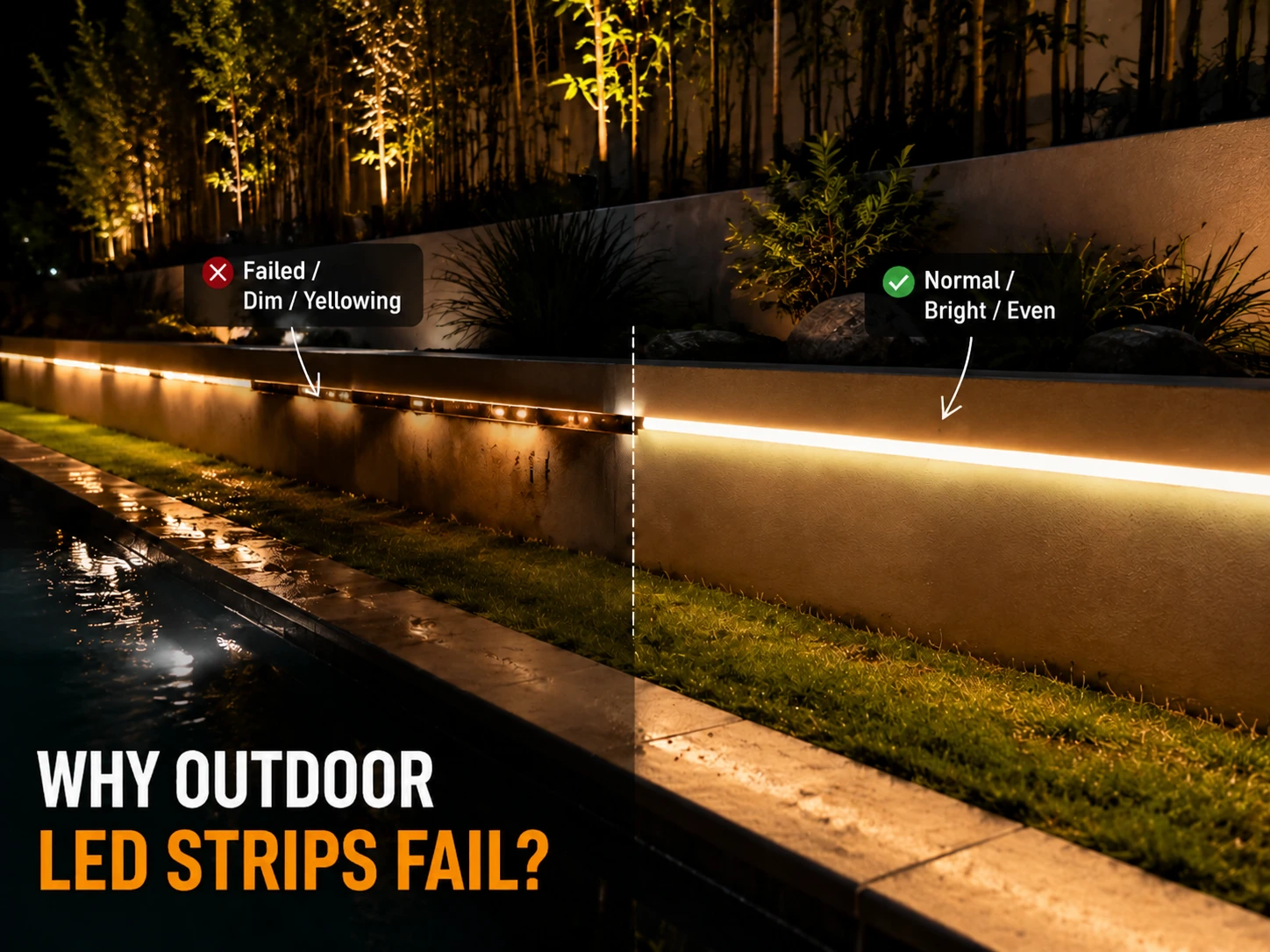
Les lumières de bandes LED extérieures échouent généralement avant leur durée de vie nominale en raison de l'infiltration d'eau, de la dégradation des UV, de la mauvaise dissipation thermique, des alimentations instables, des pannes de connecteur, de la corrosion et de la conception de câblage incorrecte. Les puces LED elles-mêmes sont rarement le premier composant à échouer. Dans la plupart des installations extérieures, la durée de vie réelle dépend de la construction imperméable, de la durabilité des matériaux, de la gestion thermique, de la conception électrique et de la qualité de l'installation.
Avec des pratiques de protection et d'installation appropriées, les sommiers extérieurs à LED de haute qualité peuvent offrir des performances fiables pendant cinq ans ou plus. Le choix des bandes étanches encapsulées en silicone, l'utilisation de blocs d'alimentation appropriés, la gestion de la chaleur avec des méthodes de montage appropriées et la protection des points de connexion vulnérables sont les facteurs clés qui empêchent les défaillances prématurées.
Qu'est-ce qui détermine la durée de vie des bandes de lumière LED extérieures ?
La durée de vie des bandes de lumière LED extérieures est déterminée par les performances de l'ensemble du système d'éclairage plutôt que par les puces LED seules. Alors que les puces LED sont souvent évaluées pendant des dizaines de milliers d'heures dans des conditions de laboratoire contrôlées, les environnements extérieurs réels exposent le système complet à l'humidité, au soleil, aux changements de température, au stress électrique et à l'usure mécanique.
Dans les applications pratiques en extérieur, le composant le plus faible détermine souvent la durée de vie de l'ensemble de l'installation. Une puce LED de haute qualité peut continuer à fonctionner normalement, tandis que les composants environnants tels que les matériaux imperméables, les connecteurs, les alimentations ou les systèmes de câblage échouent beaucoup plus tôt.
Les principaux facteurs qui influencent la durée de vie des bandes de lumière LED extérieures sont les suivants :
| Facteur | Impact sur la performance à long terme |
| Construction impermé | Empêche l'humidité d'atteindre le circuit imprimé, les traces de cuivre et les composants électriques |
| Matériaux résistants aux UV | Protège les vestes en silicone ou en PVC contre les fissures, le jaunissement et la perte de protection sous la lumière du soleil |
| Conception de dissipation de chaleur | Réduit le stress thermique sur les LED, les drivers, les adhésifs et les matériaux de protection |
| Qualité d'alimentation | Empêche l'instabilité de la tension, la surchauffe et la défaillance des composants électriques |
| Qualité de connecteur et d'étanchéité | Protège les points de connexion vulnérables contre les pénétrations d'eau et la corrosion |
| Conception de l'installation | Assure un câblage approprié, une distribution de tension et une protection mécanique |
Parmi ces facteurs, la protection imperméable, la gestion de la chaleur et la qualité de l'installation ont généralement le plus d'impact sur la fiabilité du monde réel. C'est pourquoi deux éclairages à LED extérieurs avec des spécifications de LED similaires peuvent avoir une durée de vie complètement différente lorsqu'ils sont installés dans des environnements différents.
Par exemple, une bande lumineuse LED extérieure installée sur une façade de bâtiment orientée au sud subit une exposition aux UV et des contraintes thermiques beaucoup plus élevées qu'une installation sous un patio couvert. De même, les applications au bord de la piscine et côtières nécessitent une protection contre l'humidité et la corrosion plus forte que les projets d'éclairage de jardin standard.
Ces différences expliquent pourquoi la durée de vie annoncée des bandes de lumière LED extérieures ne correspond pas toujours aux performances réelles. Les fabricants font souvent référence à des LED d'une durée de vie de 50 000 heures ou plus, mais ces chiffres sont généralement basés sur des conditions de test contrôlées plutôt que sur des installations extérieures complètes.
La plupart des cotes de durée de vie LED annoncées sont basées sur les tests LM-80 et L70, qui évaluent la qualité des puces LED qui maintiennent la luminosité au fil du temps. Cependant, ces normes mesurent principalement les performances des LED et ne représentent pas entièrement la durabilité des composants extérieurs tels que les joints, les connecteurs, les pilotes ou les systèmes d'installation.
Lumières de bandes LED extérieures : durée de vie théorique ou durée de vie réelle
| Durée de vie théorique | Durée de vie du monde réel |
| Basé sur les tests LM-80 et L70 | Basé sur les conditions réelles en extérieur |
| Se concentre sur les performances des puces LED | Dépend de l'ensemble du système d'éclairage |
| Testé dans des conditions de laboratoire contrôlées | Affecté par la météo, l'installation et la maintenance |
| Suppose des conditions de fonctionnement idéales | Influencé par l'exposition aux UV, la chaleur, l'humidité et la qualité du câblage |
Dans les environnements extérieurs réels, les facteurs externes raccourcissent souvent la durée de vie avant que les puces LED n'atteignent leurs heures de fonctionnement nominales. Lorsque les lumières de bande LED extérieures échouent après seulement un ou deux ans, les puces LED sont rarement le principal problème. La plupart des pannes proviennent des systèmes environnants, notamment des joints imperméables affaiblis, des connecteurs endommagés, une surchauffe, une mauvaise distribution de l'énergie ou une corrosion environnementale.
La section suivante explique les sept mécanismes de défaillance les plus courants qui font que les lumières de bandes LED extérieures tombent prématurément et comment les choix de conception appropriés peuvent aider à prévenir ces problèmes. (Pour un examen plus approfondi de la façon dont les évaluations de la durée de vie des LED sont calculées et des facteurs qui les raccourcissent dans les installations réelles, consultez notre guide sur Combien de temps durent réellement les lumières de bande LED extérieures.)
Pourquoi les lumières de bandes LED extérieures échouent après un an
Quels sont les symptômes les plus courants avant l'échec des lumières extérieures à bande LED ?
Avant qu'une bande ne tombe en panne, elle montre généralement des signes avant-coureurs. Faire correspondre le symptôme que vous voyez à sa cause probable peut vous aider à attraper le problème plus tôt, avant qu'il ne se propage au reste de la course.
| symptôme | cause la plus probable | cause connexe |
| Le strip ne s'allume pas du tout | Panne d'alimentation, connecteur endommagé ou circuit cassé | Panne #4, #6 |
| s'éteint tout seul, puis revient plus tard | Protection thermique Déclenchant, alimentation instable, connexion desserrée | Panne #3, #4 |
| Chaud au toucher, surtout près du conducteur | Dissipation thermique inadéquate, pas de canal en aluminium, conducteur sous-dimensionné | échec #3 |
| Variation, jaunissement ou changement de couleur sur des mois | Dégradation UV de la veste en silicone/PVC, dépréciation de la lumière LED | Échec #2 |
| Plusieurs bandes sur la même exécution échouent à peu près au même moment | Alimentation partagée ou défaut de câblage, non une coïncidence de défauts de LED | Panne #4, #7 |
| Corrosion visible, résidus verts ou décoloration sur le PCB | Ingrès d'humidité combiné avec de l'air salin ou une humidité élevée | Échec #5 |
| Flicker, surtout à la fin d'une longue course | Chute de tension ou injection de puissance sous-dimensionnée | Échec #7 |
| La section près d'un connecteur ou d'un capuchon d'extrémité échoue en | Point faible de l'étanchéité, pas un défaut à l'échelle de la bande | Panne #1, #6 |
Si vos feux extérieurs à LED scintillent, s'assombrissent, s'arrêtent par intermittence ou tombent à proximité des connecteurs, les puces LED ne sont généralement pas la cause première. Dans la plupart des cas, la défaillance est née ailleurs dans le système d'éclairage, comme les joints étanches, les connecteurs, l'alimentation ou la conception de câblage. L'identification du symptôme facilite d'abord le diagnostic du mécanisme de défaillance réel expliqué dans les sections suivantes. (Pour un examen plus approfondi de la façon dont les évaluations de la durée de vie des LED sont calculées et des facteurs qui les raccourcissent dans les installations réelles, consultez notre guide sur Combien de temps durent réellement les lumières de bande LED extérieures.)
Échec #1 — Comment l'infiltration d'eau provoque-t-elle une défaillance des lumières de bandes LED extérieures ?
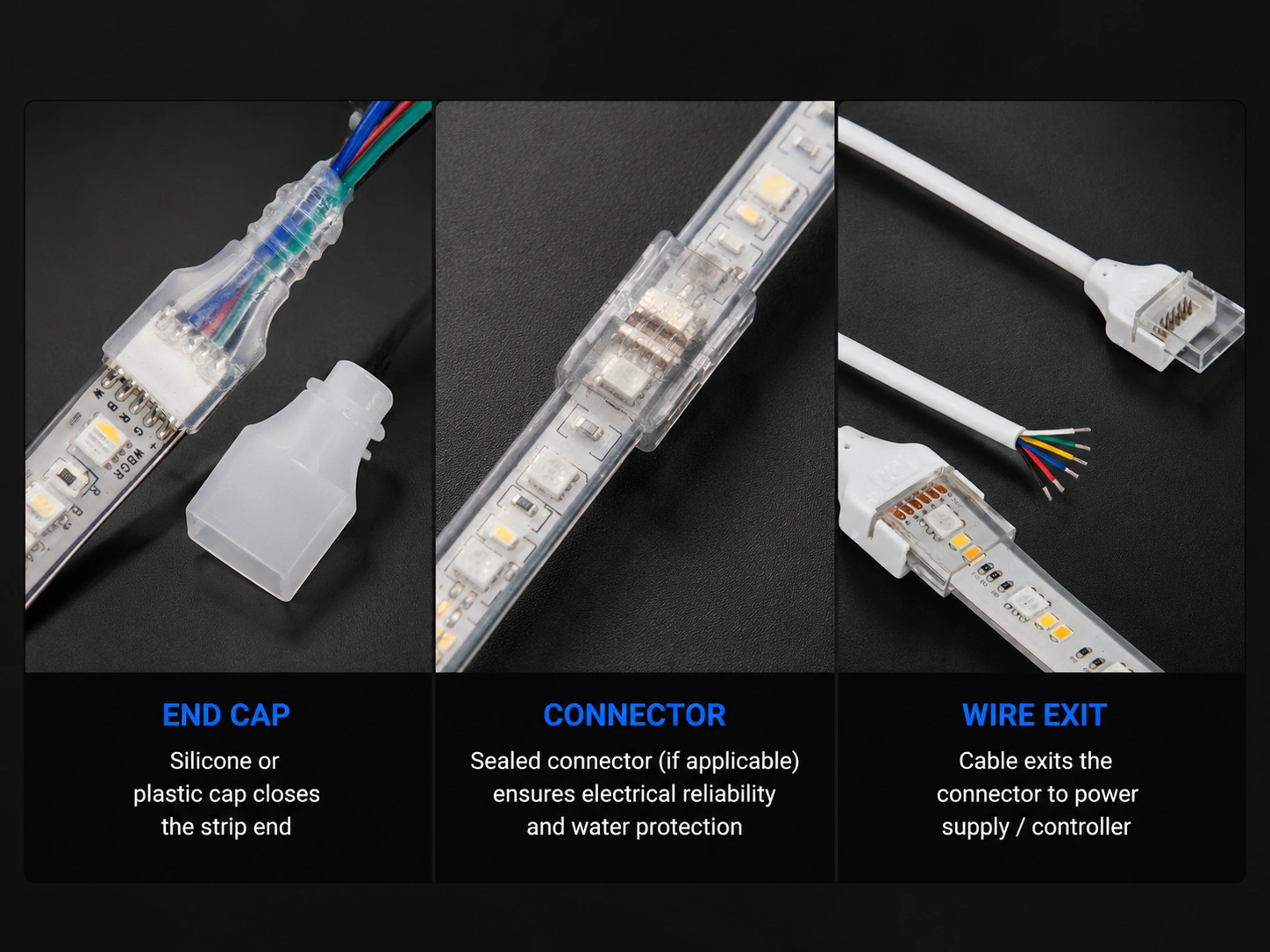
L'infiltration d'eau est la principale cause de défaillance prématurée des éclairages à LED extérieurs. Dans la plupart des cas, l'eau ne traverse pas le revêtement de silicone lui-même - elle entre par des points d'étanchéité faibles tels que les embouts, les sorties de fils et les connecteurs, où une expansion, une contraction et une exposition aux intempéries réduisent progressivement le joint d'origine.
Pourquoi les cotes IP ne suffisent-elles pas à elles seules
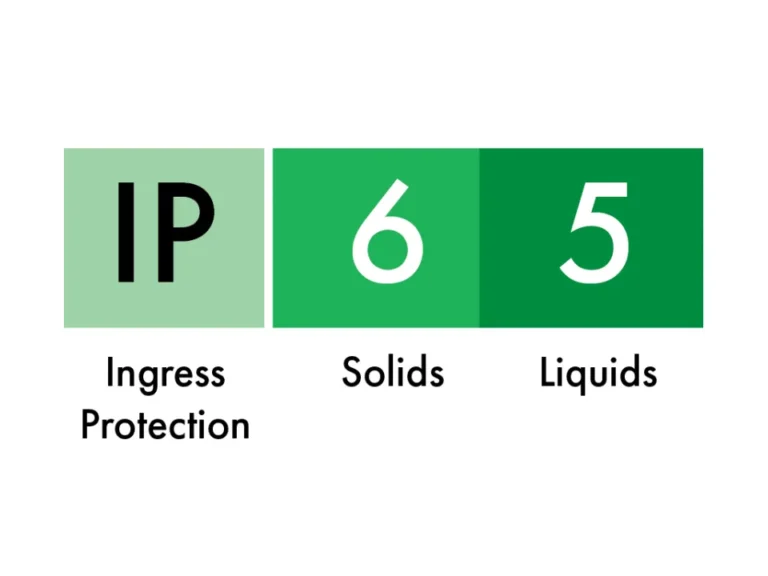
Une cote IP mesure la résistance à l'eau et à la poussière lors des tests standardisés en laboratoire, ce qui ne garantit pas une durabilité à long terme en extérieur. Une cote IP67, par exemple, signifie qu'un produit a survécu à une submersion temporaire dans un mètre d'eau douce pendant trente minutes dans des conditions contrôlées, sans exposition aux UV, en cycle thermique ou en contrainte mécanique.
Ce qui se passe à l'extérieur est très différent. La dilatation et la contraction quotidiennes causées par la variation des températures affaiblissent progressivement les joints, tandis que la lumière du soleil prolongée accélère le vieillissement des matériaux. Une bande peut passer un test IP67 tout en développant des fuites dans un an, car la cote reflète un test de laboratoire unique plutôt que des années d'utilisation en extérieur.
Deux éclairages extérieurs à LED portant la même cote IP peuvent donc avoir une durée de vie très différente. Dans de nombreux cas, la fiabilité à long terme dépend davantage de la qualité de l'étanchéité et de la cohérence de la fabrication que du nombre IP lui-même. (Pour une ventilation complète des cotes IP65, IP67 et IP68 et laquelle correspond à votre installation, consultez notre Guide complet des cotes d'étanchéité des bandes LED extérieures.)
Points faibles imperméables courants
L'eau entre rarement par la veste en silicone elle-même. Au lieu de cela, la plupart des échecs commencent à trois points de scellement vulnérables :
- Embouts – Le point de défaillance le plus courant. De minuscules écarts laissés par une colle insuffisante ou une mauvaise étanchéité permettent à l'humidité de pénétrer lors des cycles de chauffage et de refroidissement répétés.
- Sorties de fil – Lorsque les câbles d'alimentation passent à travers la gaine en silicone, le joint est constamment stressé par le mouvement, l'exposition aux UV et les changements de température, ce qui le rend sujet à la fissuration au fil du temps.
- Connecteurs – Les raccords à connexion rapide intérieure sont souvent utilisés à l'extérieur pour des raisons de commodité, mais manquent généralement des performances d'étanchéité à long terme nécessaires pour une exposition continue à la pluie et au soleil.
Comment prévenir l'infiltration d'eau
- Choisissez des bandes de LED extérieures à LED en plein air au lieu de conceptions revêtues de surface chaque fois que possible.
- Appliquez un scellant en silicone à l'extérieur sur les capuchons d'extrémité et les sorties de fil, même s'ils sont scellés en usine.
- Utilisez des connecteurs spécialement conçus pour une utilisation à long terme en extérieur, de préférence avec une protection IP68 lorsque l'exposition est sévère.
- Placez les connecteurs et les joints de câbles à l'écart des zones où l'eau de pluie ou l'eau stagnante peut s'accumuler
- Inspectez les scellés périodiquement, surtout après de longues périodes de soleil ou de changements de température saisonniers.
Suivre ces pratiques d'installation simples améliore considérablement les performances d'étanchéité à long terme sans augmenter la complexité de l'installation. (Pour une visite guidée plus approfondie de la sélection des bandes imperméables par type de projet - piscines, façades, jardins - consultez notre Guide de choix de socles de bandes LED étanches pour des projets en plein air.)

Échec #2 — Pourquoi l'exposition aux UV endommage-t-elle les bandes LED extérieures ?
La dégradation des UV est la dégradation progressive des matériaux de protection causée par une exposition à long terme au soleil. Pour les éclairages extérieurs à LED, les dommages aux UV affectent la veste en silicone ou en PVC bien avant qu'elle n'endommage les LED elles-mêmes. Une fois que ces matériaux de protection ont perdu de la flexibilité ou développent des fissures, l'humidité peut pénétrer dans la bande et raccourcir considérablement sa durée de vie.
Comment l'exposition aux UV endommage les matériaux de protection
De nombreuses pannes d'éclairage extérieur commencent bien avant que les dommages visibles n'apparaissent. Le rayonnement ultraviolet décompose progressivement la structure moléculaire du silicone et du PVC, réduisant ainsi leur flexibilité et leur résistance aux intempéries au fil du temps. Au moment où le jaunissement, le trouble ou les fissures de surface deviennent perceptibles, le matériau a souvent déjà perdu une grande partie de ses performances de protection.
Ce processus est accéléré dans les régions où le soleil est intense, les installations orientées au sud et les endroits sans ombre, ce qui fait de l'exposition aux UV l'un des facteurs les plus importants affectant la durabilité à long terme en extérieur.
Silicone VS PVC pour applications extérieures
| Fonctionnalité | PVC | Silicone |
| Résistance aux UV | kermesse | Excellent |
| Flexibilité dans le temps | Diminue rapidement | reste stable plus longtemps |
| Risque de fissuration | Plus élevé | Plus bas |
| Durée de vie typique en plein air | 1 à 2 ans en plein soleil | 3 à 5 ans et plus dans des conditions similaires |
| Meilleure application | Zones couvertes ou ombragées | Exposition directe à l'extérieur |
Point clé : Pour les installations exposées au soleil, le silicone offre une durabilité à long terme nettement meilleure que le PVC, même lorsque les deux produits ont des cotes IP similaires.

Les premiers signes de dommages aux UV
Surveillez ces signes avant-coureurs avant que les performances d'eau ne soient compromises :
- Jaunissement ou obscurcissement de la veste de protection
- Souplesse réduite lors du pliage de la bande
- Fines fissures de surface autour des virages ou des embouts
- Fissuration visible qui expose les composants internes
Une fois que la fissuration apparaît, la barrière imperméable a déjà été affaiblie, ce qui rend l'humidité beaucoup plus probable. Le remplacement de la bande à ce stade est généralement plus rentable que d'attendre une panne électrique.
Comment minimiser les dommages causés par les UV
✓ Choisissez des lumières de bandes LED extérieures encapsulées en silicone pour les zones avec la lumière directe du soleil.
✓ Évitez une exposition prolongée lorsque l'ombrage partiel ou le montage de protection sont disponibles.
✓ Inspectez les vestes périodiquement pour le jaunissement ou les fissures de surface.
✓ Remplacez les sections endommagées avant que l'humidité n'atteigne le circuit imprimé interne.
Point clé : Les dommages causés par les UV commencent généralement des mois avant qu'ils ne deviennent visibles. Une inspection régulière aide à empêcher les petits défauts de matériaux de se développer en une défaillance complète de la bande.
Échec #3 — Comment une mauvaise dissipation thermique réduit-elle la durée de vie des bandes LED extérieures ?
L'accumulation de chaleur se produit lorsque les bandes de lumière LED extérieures ne peuvent pas dissiper efficacement la chaleur. Des températures de fonctionnement excessives accélèrent le vieillissement des LED, des drivers, des adhésifs et des matériaux de protection, réduisant ainsi la durée de vie de l'ensemble du système d'éclairage plutôt que des LED seules.
Les installations extérieures connaissent souvent des conditions thermiques beaucoup plus difficiles que les applications intérieures. La lumière directe du soleil, les surfaces de montage sombres et les espaces fermés peuvent augmenter la température de fonctionnement bien au-dessus de la température de l'air environnant. Même les bandes de lumière LED extérieures de haute qualité peuvent surchauffer si l'installation empêche la chaleur de s'échapper efficacement.
Lorsque la chaleur excessive s'accumule, les conducteurs et les matériaux de protection se détériorent généralement plus rapidement que les puces LED elles-mêmes, entraînant des arrêts intermittents, une perte de luminosité ou une défaillance prématurée du système. (C'est également l'une des principales raisons pour lesquelles les bandes intérieures et extérieures ne sont pas interchangeables. Consultez notre ventilation de Comment les bandes LED COB diffèrent entre l'utilisation intérieure et extérieure Pour en savoir plus sur la façon dont l'exposition à l'humidité et la variation de température affectent les performances à long terme.)
Pourquoi les profilés en aluminium améliorent la durée de vie
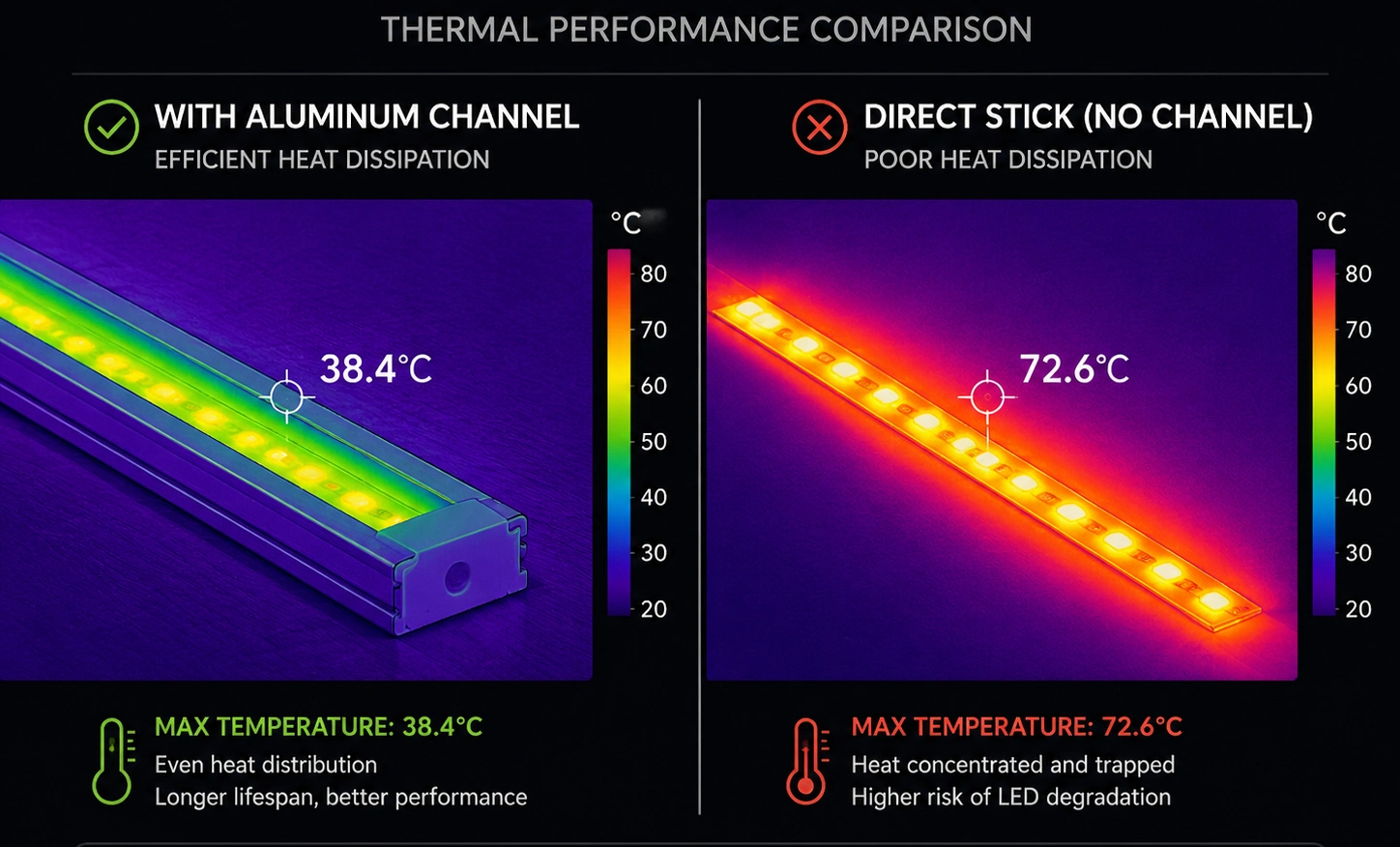
Un profilé en aluminium pour les bandes LED agit comme un dissipateur thermique, éloignant la chaleur du circuit imprimé et des LED tout en lui permettant de se dissiper dans l'air ambiant. Par rapport aux bandes de montage directement sur le bois, le plastique ou d'autres surfaces isolantes, les profilés en aluminium réduisent considérablement la température de fonctionnement et améliorent la fiabilité à long terme.
En plus d'améliorer la dissipation thermique, les profilés en aluminium offrent également une protection mécanique, aidant ainsi à réduire les dommages causés par les impacts accidentels et l'exposition à l'environnement. Pour la plupart des installations extérieures, elles sont l'une des mises à niveau les plus simples et les plus rentables pour prolonger la durée de vie. (Pour voir de plus près la sélection de profils, consultez notre guide pour Profils LED en aluminium.)
Liste de contrôle de la gestion de la chaleur
✓ Installez chaque fois que possible des éclairages à bande LED extérieures dans des profilés en aluminium.
✓ Laissez de l'espace de ventilation autour des canaux fermés au lieu de les sceller complètement.
✓ Évitez les bandes de montage directement sur les surfaces sombres qui absorbent et retiennent la chaleur.
✓ Sélectionnez une alimentation avec au moins 20% de capacité de réserve au lieu de fonctionner en continu à pleine charge.
✓ Éloignez les conducteurs des zones fermées où la chaleur peut s'accumuler.
Point clé : Une bonne gestion de la chaleur protège non seulement les puces LED, mais elle prolonge également la durée de vie des conducteurs, des matériaux imperméables et des connexions électriques, ce qui réduit la probabilité de pannes prématurées en extérieur.
Échec #4 — Pourquoi les alimentations de mauvaise qualité font-elles échouer les lumières de bande LED extérieures ?
L'alimentation électrique est l'un des points de défaillance les plus courants d'un système d'éclairage à bande LED extérieure. Alors que les puces LED se dégradent généralement progressivement au fil des ans, les conducteurs et les alimentations électriques contiennent des composants électroniques beaucoup plus vulnérables aux fluctuations de la chaleur, de l'humidité et de la tension. Lorsque plusieurs éclairages à LED extérieurs échouent en même temps, l'alimentation partagée est souvent le premier composant à inspecter.
De nombreux utilisateurs supposent qu'une bande de LED sombre signifie que les LED ont échoué. En réalité, les alimentations s'usent généralement beaucoup plus tôt, car les condensateurs et autres composants électroniques sont sensibles aux températures élevées, à l'humidité et aux conditions électriques instables. Les conducteurs d'extérieur subissent un stress supplémentaire dû à l'exposition aux intempéries et aux fluctuations de température quotidiennes, ce qui rend la sélection appropriée des conducteurs tout aussi importante que le choix de bandes LED de haute qualité.
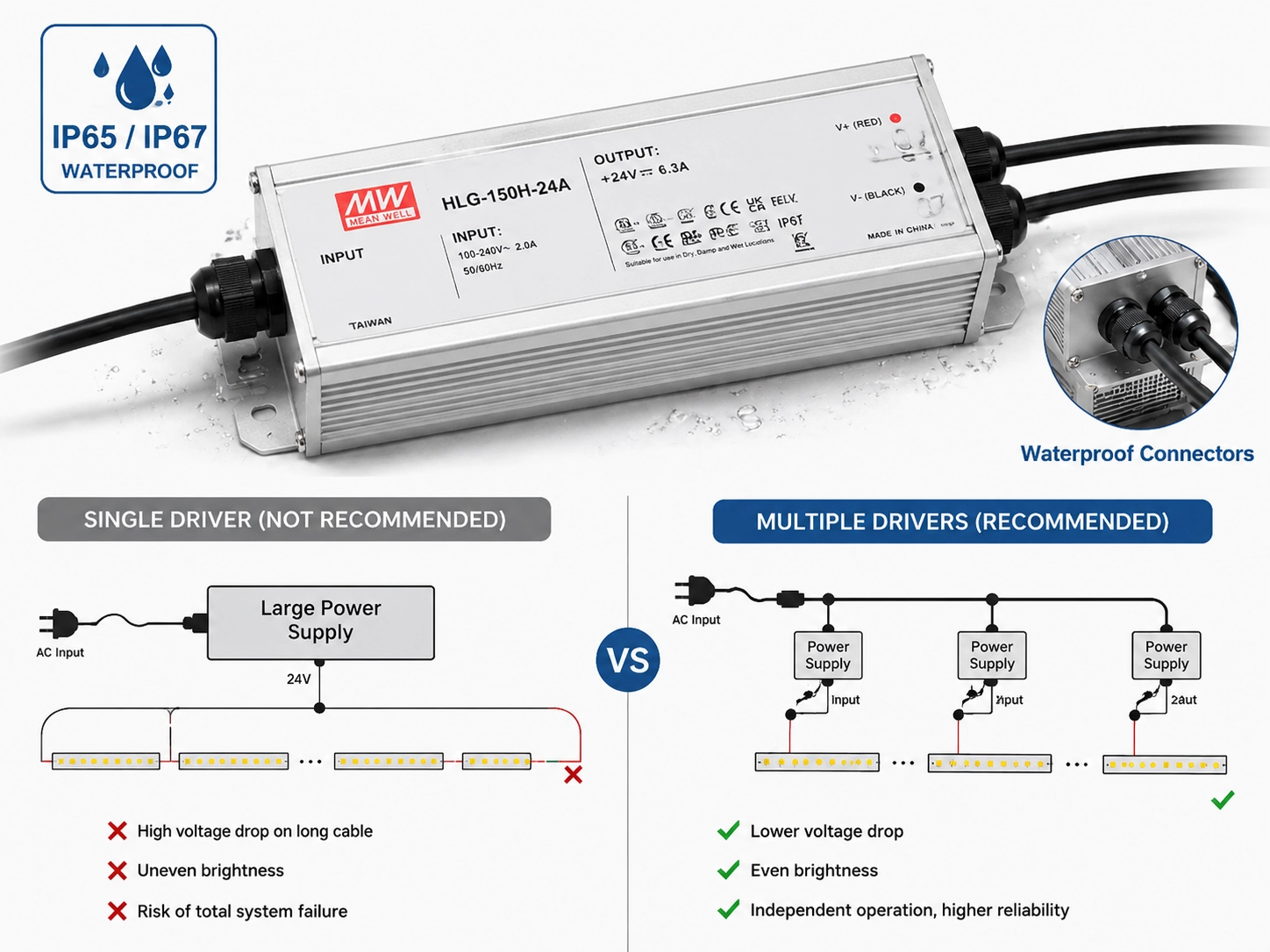
Signes courants de panne d'alimentation
Si les symptômes suivants affectent plusieurs bandes ou apparaissent sur une installation entière, le pilote est plus susceptible d'être le problème que les LED.
- scintillement aléatoire, surtout après que le système est en cours d'exécution depuis un certain temps
- Changements de luminosité sans ajuster le contrôleur ou le variateur
- Plusieurs bandes échouant simultanément Sur la même alimentation
- Une partie d'un éclairage fonctionne uniquement Alors que d'autres sections restent sombres
- Arrêts intermittents qui se rétablissent après refroidissement
Comment sélectionner les pilotes classés en plein air
✓ Sélectionnez les pilotes spécialement conçus pour une utilisation en extérieur avec une protection IP65 ou supérieure.
✓ Laissez au moins 20% pour réduire les contraintes thermiques à long terme.
✓ Pour les grands projets, divisez la charge sur plusieurs pilotes au lieu de vous fier à une seule unité.
✓ Installez les conducteurs dans des endroits bien ventilés, à l'abri de l'eau stagnante et de la chaleur excessive.
✓ Faites correspondre la tension et les spécifications de sortie du conducteur aux recommandations du fabricant de la bande LED. (Si vous ne savez pas si votre configuration de bande de LED nécessite un pilote dédié ou comment en faire la correspondance correctement, consultez notre guide sur Quand et comment choisir le bon pilote pour les bandes LED.)
Point clé : Un conducteur d'extérieur de haute qualité peut prolonger de manière significative la durée de vie de l'ensemble du système d'éclairage et réduire le risque de défaillance de plusieurs bandes à la fois.
Échec #5 — Comment la corrosion endommage-t-elle les lumières de la bande LED extérieures dans les environnements extérieurs ?
La corrosion se produit lorsque l'humidité et l'oxygène attaquent progressivement les composants métalliques exposés à l'intérieur d'une bande LED. Dans les environnements extérieurs, en particulier près de la côte ou dans des zones à forte humidité, la corrosion peut endommager les traces de cuivre et les joints de soudure bien avant que les puces LED n'atteignent la fin de leur durée de vie.

Où la corrosion se produit le plus souvent
Toutes les installations extérieures ne sont pas toutes confrontées au même niveau de corrosion. Les environnements suivants nécessitent une protection supplémentaire :
- Emplacements côt – Le sel transporté par l'air marin accélère l'oxydation et augmente la probabilité de corrosion au niveau des connecteurs, des embouts et des traces de cuivre exposées.
- Régions à haute humidité – La condensation fréquente et l'humidité prolongée peuvent endommager progressivement les assemblages de circuits imprimés insuffisamment scellés.
- Installations de piscine et de front de mer – L'humidité associée au chlore ou au sel crée un environnement plus agressif que les précipitations ordinaires.
Même lorsque les éclairages extérieurs à LED ont la même cote IP, les installations dans ces environnements nécessitent généralement une étanchéité de meilleure qualité et une construction résistante à la corrosion.
Résultats des tests de pulvérisation de sel ASTM B117
Les tests de pulvérisation au sel fournissent une mesure plus réaliste de la durabilité côtière à long terme que les seules évaluations IP. Contrairement aux tests IP, qui évaluent la pénétration d'eau dans des conditions contrôlées, ASTM B117 simule une exposition prolongée à l'humidité chargée de sel et aide à évaluer la résistance à la corrosion dans les environnements marins.
| ASTM B117 (336 heures) | Bande entièrement en pot | Bande IP67 à revêtement de surface / creuse |
| corrosion visible | nul | Oxydation du cuivre et vert-de-gris observé |
| panne électrique | nul | Défaillance localisée après 48 à 72 heures |
| Protection contre les PCB | Pas d'entrée d'eau salée | Oxydation au niveau des joints de soudure |
Ces résultats montrent pourquoi les bandes LED entièrement en pot offrent généralement de meilleures performances à long terme dans les installations côtières et à haute humidité. En encapsulant le PCB dans du silicone, ils réduisent le risque d'humidité salée atteignant le circuit de cuivre. Pour voir comment la qualité de la bande LED COB diffère d'une marque à l'autre dans des conditions de stress prolongées, y compris la maintenance de la lumière et la stabilité thermique mesurées sur 2 200 heures de fonctionnement continu, consultez notre Rapport de test de durabilité de bande LED COB de 2 200 heures.
Échec #6 — Pourquoi les connecteurs étanches sont-ils un point de défaillance courant pour les éclairages extérieurs à LED ?
Les connecteurs étanches sont conçus pour protéger les joints électriques de l'humidité, mais tous les connecteurs étanches ne fournissent pas le même niveau de protection à long terme en extérieur. La défaillance du connecteur est souvent causée par des joints vieillissants, une mauvaise installation ou la sélection de connecteurs qui ne sont pas destinés à une exposition continue à l'extérieur.
Même un connecteur qui fonctionne bien lors de la première installation peut devenir un point faible au fil du temps. L'exposition aux UV, les changements de température répétés et l'humidité durcissent ou rétrécissent progressivement les joints en caoutchouc, permettant à l'eau de pénétrer par de minuscules interstices. Dans de nombreux cas, la corrosion commence à l'intérieur du connecteur bien avant que tout dommage visible n'apparaisse.
L'emplacement d'installation compte également. Les connecteurs placés là où les eaux de pluie sont beaucoup plus susceptibles de tomber en panne que ceux installés dans des positions abritées ou bien drainées.
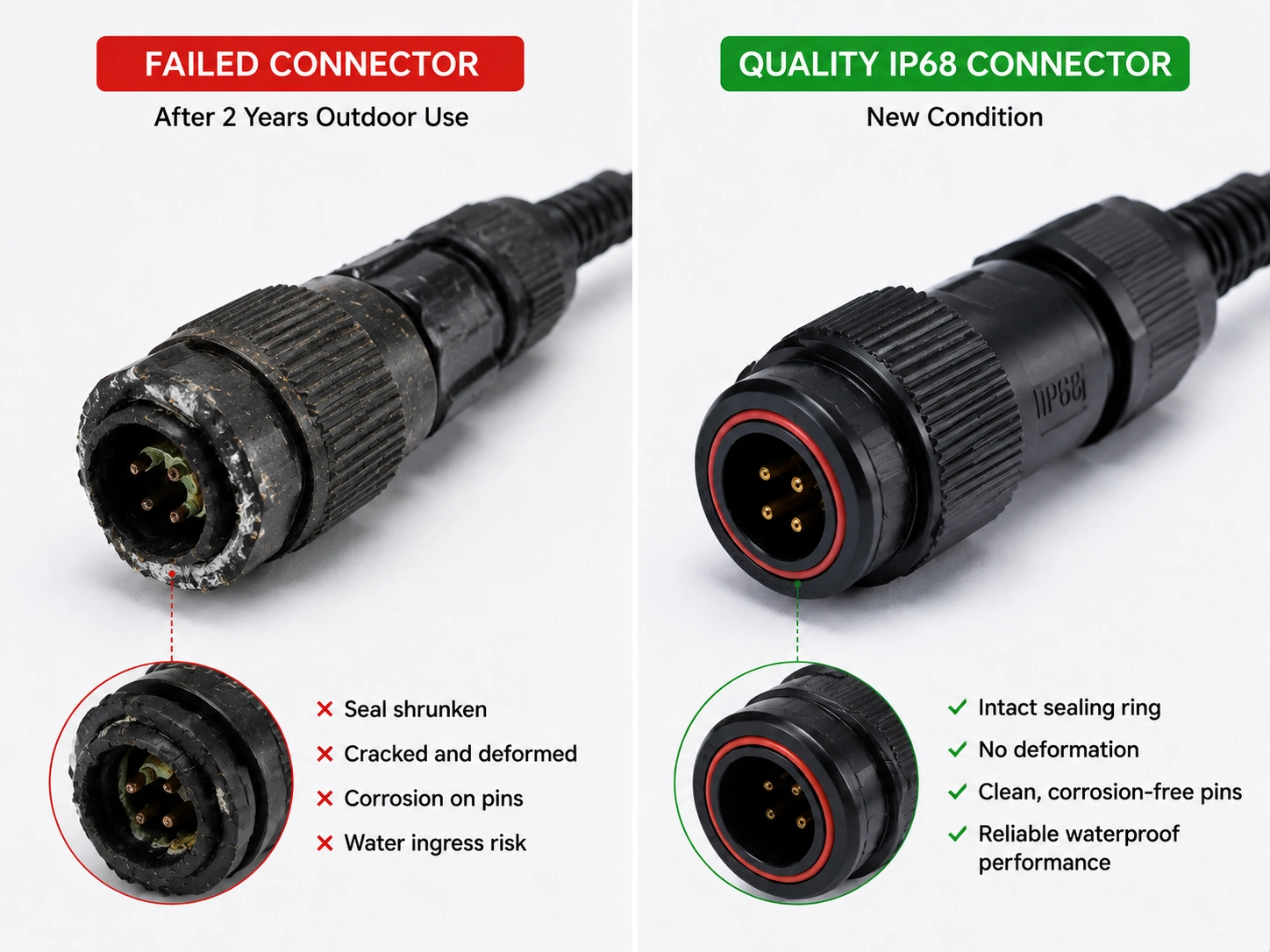
Erreurs d'installation de connecteurs courantes
Les erreurs d'installation suivantes expliquent la plupart des défaillances liées aux connecteurs :
- Utilisation de connecteurs à connexion rapide intérieure dans des applications extérieures.
- Installer des connecteurs au point le plus bas d'un passage d'éclairage où l'eau peut s'accumuler.
- Ne vous fiez qu'au joint d'usine sans ajouter de mastic d'extérieur supplémentaire.
- Laissant les connecteurs exposés à la lumière directe du soleil et aux intempéries.
Point clé : Même les connecteurs de haute qualité peuvent échouer prématurément s'ils sont installés au mauvais endroit ou sans étanchéité adéquate.
Quand utiliser les connecteurs IP68
Bien que les connecteurs IP67 conviennent à de nombreuses applications extérieures, les connecteurs IP68 offrent généralement une meilleure protection à long terme dans les endroits exposés aux fortes pluies, aux systèmes d'irrigation ou à l'eau stagnante. Leur conception d'étanchéité est destinée à des environnements plus exigeants, ce qui en fait un meilleur choix pour les jardins, les entourages de piscine et l'éclairage paysager.
Le choix du bon indice de connecteur n'est qu'une partie de la solution : une installation correcte et une étanchéité supplémentaire restent tout aussi importantes. (Pour une procédure pas à pas, comment câbler les bandes LED et les connecter correctement pour une utilisation en extérieur, consultez notre guide sur Comment câbler des bandes LED avec des connecteurs appropriés.)
Défaillance #7 — Comment le câblage et la chute de tension influent-il sur les feux extérieurs de bande LED ?
La chute de tension est la perte progressive de la tension électrique lorsque la puissance se déplace à travers une longue bande LED. Lorsque la tension atteignant l'extrémité distante devient trop basse, les lumières extérieures de bandes LED peuvent sembler plus faibles, scintiller ou afficher une couleur incohérente, même si les LED elles-mêmes fonctionnent normalement.
La chute de tension est l'un des problèmes électriques les plus courants dans l'éclairage extérieur, car les installations nécessitent souvent des câbles beaucoup plus longs que les projets d'intérieur. L'éclairage de clôture, les façades des bâtiments, l'éclairage de paysage et l'éclairage périmétrique dépassent fréquemment la longueur recommandée pour un seul alimentation.
Lorsque la résistance électrique augmente sur la distance, l'extrémité la plus éloignée de la bande reçoit moins de tension que la section la plus proche de la source d'alimentation. Le résultat est généralement une gradation progressive, un décalage de couleur ou un scintillement plutôt qu'une défaillance complète de la bande.
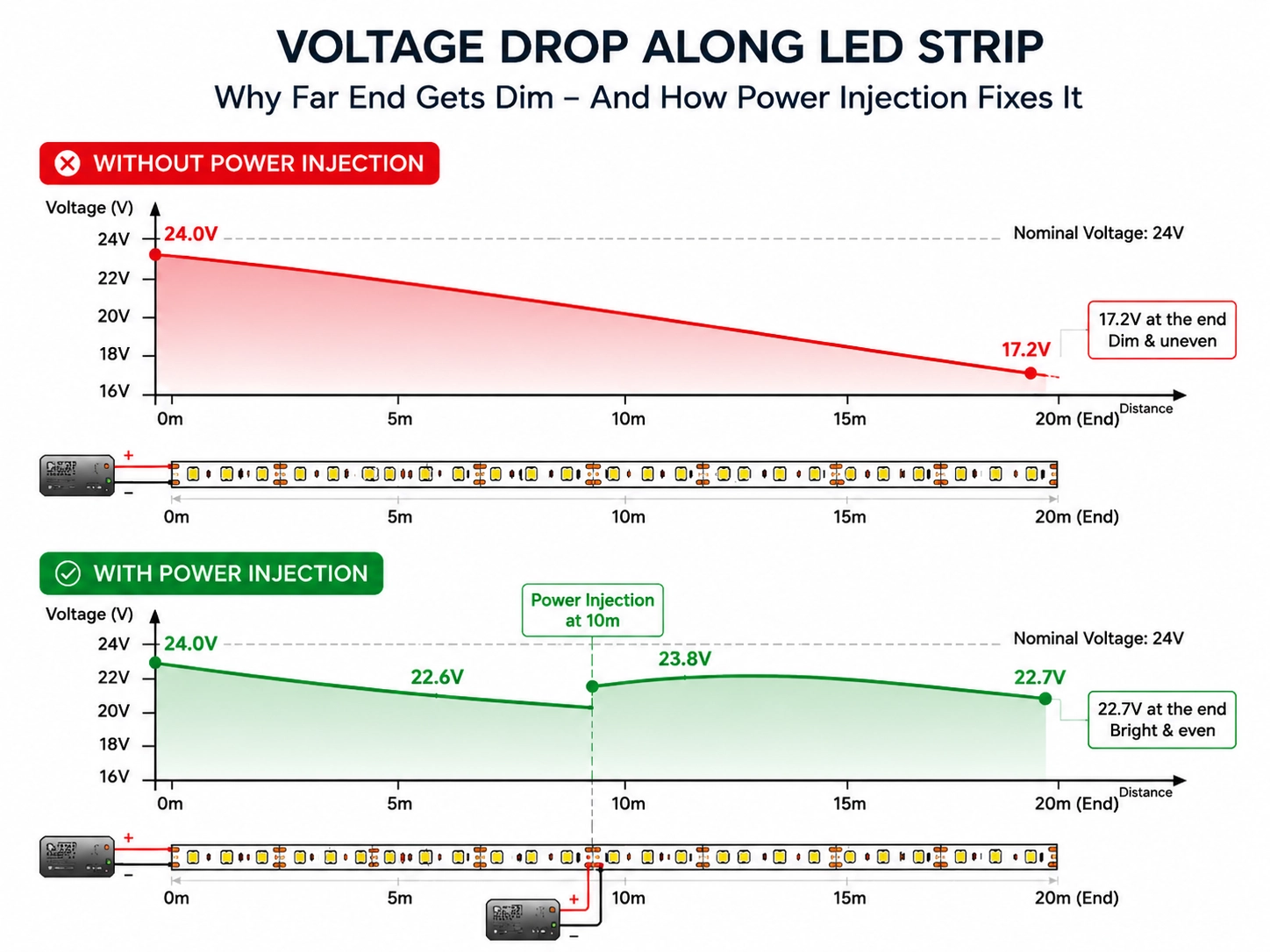
Symptômes courants de chute de tension
| symptôme | cause la plus probable |
| L'extrémité distante apparaît plus faible | chute de tension |
| Flicker au bout de la bande | Injection de puissance insuffisante |
| Luminosité irrégulière | L'exécution dépasse la longueur recommandée |
| Décalage de couleur le long de la bande | Perte de tension sur la distance |
Comment éviter la chute de tension
✓ Suivez la longueur maximale recommandée par le fabricant.
✓ Ajoutez une injection de puissance pour les longs éclairages au lieu d'utiliser une seule alimentation.
✓ Utilisez des câbles de taille appropriée pour réduire la résistance électrique.
✓ Divisez les grandes installations extérieures en plusieurs circuits plus courts lorsque cela est possible.
✓ Vérifier la tension à l'extrémité la plus longue avant la fin du projet.
Point clé : La plupart des problèmes de chute de tension peuvent être évités lors de la phase de conception. Le câblage et la distribution d'énergie sont bien plus efficaces que le remplacement des bandes LED après que des problèmes de luminosité apparaissent. (Pour une ventilation détaillée des calculs de chute de tension et des longueurs de course maximales, consultez notre Chute de tension dans les installations de bandes LED guide.)
Comment choisir les bandes de lumière LED extérieures qui durent plus longtemps
Le choix des éclairages extérieurs à LED est plus que la sélection de la cote IP la plus élevée. La fiabilité à long terme dépend des performances combinées d'une construction étanche, d'une résistance aux UV, d'une dissipation thermique, d'une qualité d'alimentation électrique et d'une installation correcte. Avant de faire un achat, évaluez l'ensemble du système d'éclairage plutôt que de vous concentrer sur une seule spécification.
Protection recommandée par application
| Type de projet | Protection minimale | Recommandation supplémentaire |
| Jardin & Paysage | IP65 / IP67 | Profilé en aluminium pour une meilleure dissipation thermique |
| Façades de bâtiments | IP67 | Bande encapsulée en silicone avec des matériaux résistants aux UV |
| Zones de piscine | IP68 | Connecteurs étanches et joints de câbles scellés |
| Installations côtières | Construction de qualité marine | Bande entièrement en pot avec les données de test de spray au sel ASTM B117 |
Liste de contrôle d'achat de bandes LED extérieures
Avant d'acheter, vérifiez si le produit propose :
✓ Encapsulation de silicone au lieu d'un revêtement de base de surface
✓ Matériaux résistants aux UV pour une exposition à long terme à l'extérieur
✓ Compatibilité avec les profils en aluminium pour une meilleure dissipation thermique
✓ Alimentation électrique à l'extérieur avec une capacité suffisante
✓ Connecteurs IP68 où une exposition à l'eau est attendue
✓ Données de test de brouillard salin pour les applications côtières
Point clé : Les produits qui fonctionnent bien dans des environnements extérieurs réels combinent des matériaux durables, des composants électriques fiables et une installation correcte, et non seulement une cote IP élevée.
Exemples d'installation de lumières de bande de LED d'extérieur dans le monde réel
Les projets du monde réel montrent souvent que les défaillances prématurées sont causées par des conditions d'installation plutôt que par des puces LED défectueuses. Les exemples suivants illustrent comment la correction du problème sous-jacent, et non simplement de remplacer la bande, a entraîné un système d'éclairage extérieur plus fiable.
Cas 1 : Échec de la piscine de la villa côtière après 14 mois
Une installation de pont de piscine côtière utilisant des bandes LED IP67 standard a développé des sections sombres dispersées après environ 14 mois. L'inspection a révélé une corrosion autour des embouts et des connecteurs causés par l'air salin et l'humidité plutôt que par une défaillance des LED.
Le système a été mis à niveau avec des bandes LED entièrement en pot, des profilés en aluminium et une étanchéité améliorée à chaque connecteur. Plus de 18 mois après la mise à niveau, aucune corrosion ou panne électrique supplémentaire n'a été observée.
Cas 2 : panne d'installation de mur végétalisé sur le toit après 9 mois
Un projet de paysage sur le toit a connu des arrêts intermittents et des scintillements après 9 mois de fonctionnement. L'enquête a révélé une accumulation de chaleur excessive et une chute de tension causées par un montage médiocre et une seule alimentation surchargée.
Après avoir ajouté des profils en aluminium, introduit l'injection de puissance et divisé la charge entre deux pilotes, les bandes LED d'origine ont continué à fonctionner de manière fiable sans autre défaillance.
Leçons apprises
Bien que les environnements soient très différents, les deux projets sont parvenus à la même conclusion :
- Les puces LED n'étaient pas la principale cause de défaillance.
- La qualité de l'installation a eu un impact plus important que la seule cote IP.
- La correction de l'étanchéité, de la gestion de la chaleur et de la distribution d'énergie a résolu le problème sans modifier la conception de l'éclairage.
Point clé : La plupart des défaillances de la bande de LED extérieures peuvent être évitées en s'adressant au système d'installation plutôt qu'en remplaçant simplement les bandes de LED.
Fabricant Testing Insight : ce que nous apprenons des applications de bandes LED extérieures
Grâce à des tests de feux de bande LED extérieurs et à des applications de projets dans le monde réel, nous avons constaté que les défaillances prématurées sont rarement causées par les puces LED elles-mêmes. Dans la plupart des cas, le point de défaillance apparaît dans le système environnant, notamment la protection étanche, la gestion thermique, les connecteurs, les alimentations et les méthodes d'installation.
Différents environnements extérieurs créent différents défis de fiabilité. Par exemple, les projets côtiers nécessitent une résistance à la corrosion plus forte, car l'air chargé de sel peut accélérer l'oxydation des traces de cuivre et des joints de soudure. Les façades des bâtiments et les installations sur le toit nécessitent une meilleure résistance aux UV et une meilleure dissipation de la chaleur, car le système d'éclairage est exposé aux rayons directs du soleil et aux fluctuations de température pendant de longues périodes.
Sur la base d'observations sur le terrain et d'évaluations de durabilité, plusieurs facteurs contribuent systématiquement à une durée de vie plus longue des bandes LED extérieures :
- Construction entièrement scellée ou encapsulée en silicone Fournit une meilleure protection contre l'humidité et l'exposition à l'environnement par rapport aux revêtements de base de surface.
- Solutions de dissipation thermique appropriées, tels que les profilés en aluminium, aident à réduire les températures de fonctionnement et à protéger les LED, les conducteurs et les matériaux environnants.
- Alimentations électriques fiables avec une capacité suffisante Réduisez les contraintes électriques et évitez le fonctionnement instable.
- Choix corrects des connecteurs et méthodes d'étanchéité Protégez les points de connexion vulnérables là où de nombreuses défaillances extérieures commencent.
- Conception de câblage appropriée, y compris le contrôle des chutes de tension et l'injection de puissance si nécessaire, garantit une luminosité constante et un fonctionnement stable sur de longues installations.
Ces résultats mettent en évidence un principe important pour les projets d'éclairage extérieur : la fiabilité dépend du système d'éclairage complet, pas seulement de la bande LED elle-même.
Pour les architectes, les entrepreneurs et les propriétaires de projets, la sélection des bandes de lumière LED extérieures devrait donc impliquer l'évaluation de la construction imperméable, de la durabilité des matériaux, des performances thermiques, de la conception électrique et des conditions d'installation. Un système bien conçu peut réduire considérablement les besoins de maintenance et offrir des performances extérieures fiables pendant de nombreuses années.
Conclusion
Les éclairages extérieurs à LED peuvent offrir des années de performances fiables dans les environnements extérieurs lorsque la construction, la gestion thermique, la qualité de l'alimentation et la conception de l'installation sont correctement prises en compte.
La bonne nouvelle est que presque tous ces problèmes peuvent être évités. Choisir des matériaux de haute qualité, installer des bandes dans des profilés en aluminium, utiliser des connecteurs et des pilotes à l'extérieur et suivre des pratiques appropriées d'étanchéité peut prolonger considérablement la durée de vie d'un système d'éclairage extérieur.
Que vous conceviez un éclairage architectural, un éclairage de paysage ou des installations au bord de la piscine, les meilleurs résultats à long terme proviennent de l'évaluation de l'ensemble du système, et non seulement de la comparaison des cotes IP ou des spécifications LED. En se concentrant sur la qualité de la construction, les pratiques d'installation et la protection de l'environnement, les bandes de lumière LED extérieures peuvent offrir des performances fiables pendant cinq ans ou plus.
FAQ
Questions de dépannage courantes
Achat et installation
Articles Similaires