English
  简体中文
简体中文  Deutsch
  Español
  Français
  Italiano
  日本語
日本語  한국어
한국어  Polski
  Português
  Русский
  Türkçe
  Nederlands
  Tiếng Việt
  ไทย
ไทย 
CRI 95+ LED strips represent professional-grade lighting, providing color rendering nearly identical to natural sunlight. For environments where color accuracy is critical—such as retail displays, art galleries, luxury interiors, and photography—CRI 95+ ensures products, artwork, and materials appear as intended, enhancing perception and overall experience.
Selecting the right CRI is essential not only for visual appeal but also for commercial outcomes. High CRI LED strips improve the realism of colors, making fresh food look appetizing, cosmetics look vibrant, and textiles true to their intended hue. Choosing high CRI LED strips for retail display can increase customer satisfaction and drive conversions.
For professional applications, CRI 95+ is considered the industry standard. Whether in design studios, museums, or high-end hospitality, proper lighting affects mood, perception, and the fidelity of visual details. This guide explains CRI levels, their practical impact, and how to select the best LED strips for your project.
Understanding Color Rendering Index (CRI) and Its Impact on LED Quality
Color Rendering Index (CRI) is a quantitative metric (scaled 0–100) that measures how accurately an artificial light source reveals the “true” colors of objects compared to natural sunlight. (Wikipedia).
Developed by the CIE (International Commission on Illumination), CRI is the industry benchmark for Color Fidelity. A higher CRI score indicates that the light source will make colors appear more vibrant, natural, and accurate.
Quick Summary: Which CRI Level Do You Need?
- CRI 80+ (Functional): Best for warehouses, garages, and utility spaces where visibility is prioritized over color aesthetics.
- CRI 90+ (High Quality): The “Gold Standard” for modern homes, high-end offices, and standard retail, ensuring natural and comfortable visuals.
- CRI 95+ (Professional Grade): Mandatory for art galleries, luxury retail, photography, and food displays to achieve near-daylight color perfection.
The Science Behind the Score: Ra vs. R9
Standard CRI (often denoted as Ra) is calculated by averaging the first eight test colors (R1–R8). However, for professional applications, the R9 value (Deep Red) is equally critical.
- Why R9 Matters: Standard LEDs often struggle to render red tones. A high R9 (typically found in CRI 95+ strips) is essential for making skin tones look healthy, wood textures rich, and fresh produce appetizing.
Moving Toward Modern Standards: TM-30-15
While CRI remains the most recognized metric, professional lighting design is shifting toward the TM-30-15 standard. This newer method uses 99 color samples (instead of 8) and provides two distinct scores:
- Rf (Fidelity Index): Similar to CRI but more precise.
- Rg (Gamut Index): Measures color saturation and vibrancy.
Industry Insight: For high-end projects, SignliteLED recommends looking for a combination of CRI 95+ and R9 ≥ 90 to ensure the highest possible visual integrity.
Strategic CRI Selection: Which Level Suits Your Project?
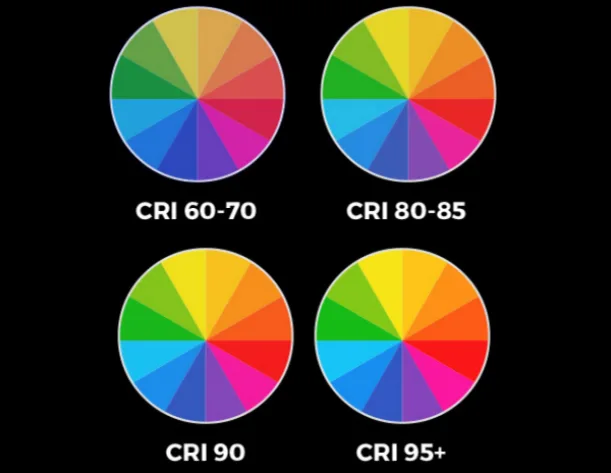
Choosing the right CRI balances visual quality and budget. CRI 90 is sufficient for general environments, while CRI 95+ is recommended for color-critical spaces, such as retail displays high CRI LED strip, galleries, and professional design areas, where accurate color rendering can impact perception and outcomes.
| CRI Level | Quality | Visual Impact | Key Applications |
| 80+ | Acceptable | Colors may appear slightly dull or distorted. | Warehouses, parking lots, utility corridors. |
| 90+ | High | Colors appear natural, crisp, and comfortable. | Living rooms, standard retail, corporate offices. |
| 95+ | Excellent | True-to-life colors; reveals subtle nuances. | Art galleries, luxury retail, food displays, photography. |
Industry Insight:
Choosing the right CRI balances visual quality and budget. CRI 90 is sufficient for general environments, while CRI 95+ is recommended for color-critical spaces, such as retail displays, galleries, and professional design areas, where accurate color rendering can impact perception and outcomes.
Industry-Specific Guide: Why CRI 95+ is Mandatory for Professional Environments
A CRI of 95+ is considered professional-grade, offering a spectral output that mimics natural sunlight. Below is a breakdown of why this level of accuracy is critical across different sectors:
| Application | Recommended CRI | Strategic Impact | Professional Note |
| High-End Retail | 95+ | Enhances product appeal & reduces returns. | Vital for cosmetics and luxury fashion. |
| Art Galleries | 95+ | Preserves the original integrity of the artwork. | Requires high R9 for deep red tones. |
| Food & Hospitality | 95+ | Makes food look fresh and appetizing. | Best paired with 3000K warm white. |
| Design Studios | 97–98+ | Essential for precise color matching tasks. | Reduces eye strain and color errors. |
| General Offices | 90 | Provides natural light for daily productivity. | CRI 95 is rarely required for general tasks. |
Key Takeaway
For color-critical projects, prioritize CRI 95+ strips in customer-facing areas and CRI 90 for general zones to balance performance and cost.
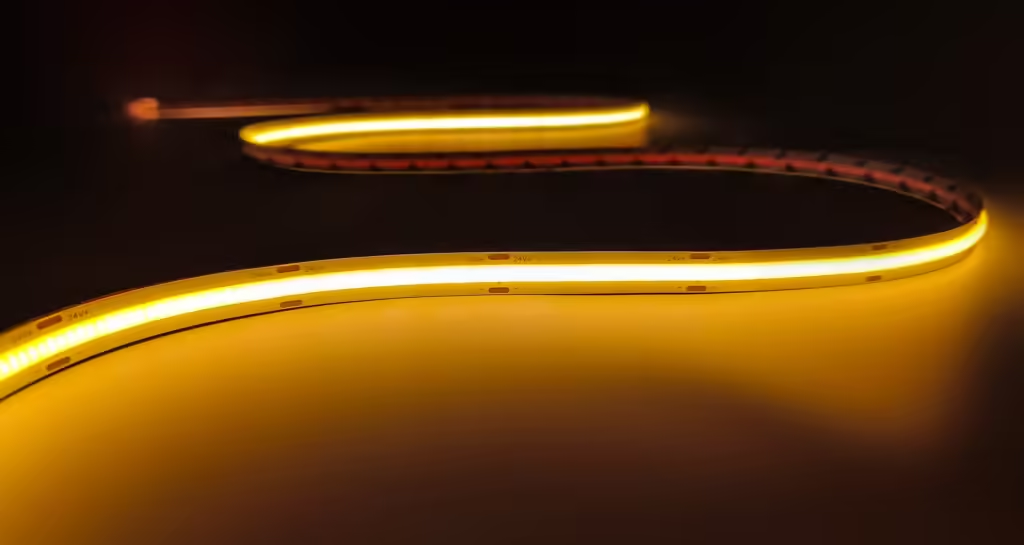
480Chips LED COB Strip Light for Decorative Lighting
- 480chips/m, 100lm/W, dot-free
- Available in color temperature 2700K to 6500K
- Dimmable
- 180 degree beam angle
- CRI90+, for decorative lighting
- Solderless, reel to reel technology
Beyond CRI — The Multi-Dimensional Metrics of Light Quality
While CRI is a vital indicator, professional-grade lighting (like SignliteLED’s High-CRI series) relies on a synergy of multiple technical parameters. To achieve true visual integrity, you must consider the following “Big Four” factors:
The R9 Value: The Secret to Vivid Red Tones
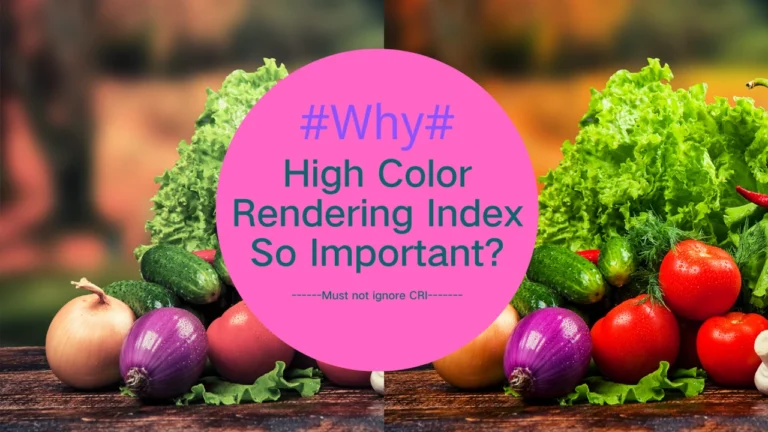
Standard CRI (Ra) is an average of 8 pastel colors, often neglecting deep reds, which are crucial for food display LED strip CRI 95, high-end retail lighting CRI 95, and professional design applications.
- What it is: R9 measures a light source’s ability to render saturated red.
- Why it matters: Red is the most critical color for human skin tones, fresh meats, fruits, and premium textiles.
- Gold Standard: Specify CRI 95+ with R9 ≥ 90 for retail, hospitality, and galleries to ensure vivid reds.
CCT (Correlated Color Temperature) vs. CRI
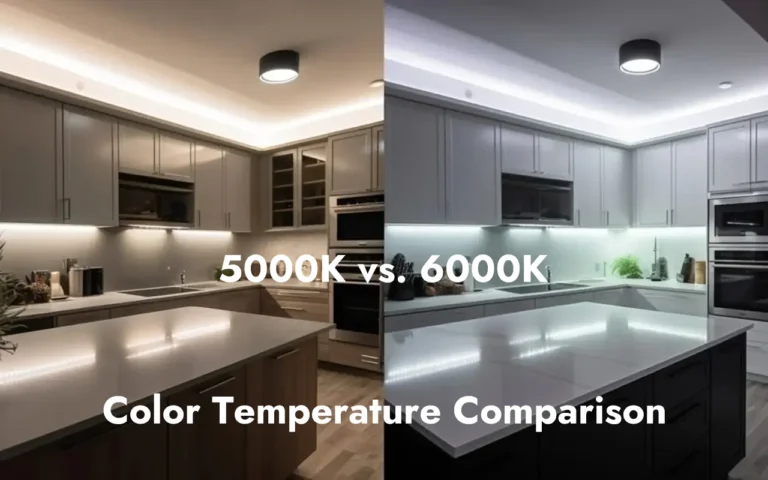
CRI measures accuracy, while CCT measures the hue (warmth or coolness).
- Warm White (2700K–3000K): Ideal for creating a cozy, high-end ambiance in restaurants and bedrooms. Pair with CRI 95 to make wood and gold accents pop. Learn more about 2700K vs 3000K.
- Neutral White (4000K): The “natural daylight” look for offices and modern retail. Learn more about 4000K vs 5000K.
- Cool White (5000K–6500K): Best for task-oriented environments like hospitals or photography studios. High CRI here ensures white balance is perfect without “greenish” tints.
The Modern Benchmark: TM-30-15 (Rf & Rg)
For cutting-edge projects, the industry is shifting from CRI to TM-30-15.
- Rf (Fidelity Index): Uses 99 color samples (vs. CRI’s 8) for extreme precision.
- Rg (Gamut Index): Measures saturation. A score >100 means colors look more vibrant than in natural light, while <100 means they look more muted.
- Pro Tip: A light can have a high CRI but a low Rg, making colors look accurate but “dull.” SignliteLED products aim for a balanced Rf 90+ and Rg 100 for optimal vibrancy.
Hardware Integrity: Voltage, Density, and Drivers
The “hidden” factors that sustain color quality over time:
- Voltage (24V vs. 12V): 24V is mandatory for runs over 5m to prevent voltage drop, which causes the end of the strip to look dimmer and shift in color.
- LED Density (COB vs. SMD): High density (≥120 LEDs/m) or COB (Chip-on-Board) technology eliminates “spotting,” providing a seamless “line of light” that enhances visual comfort.
- Driver Quality: A flicker-free, UL/CE-certified driver ensures the CRI remains stable and protects the LEDs from premature aging.
Why High-CRI LEDs Outperform Traditional Fluorescent Lighting
After exploring advanced metrics like R9 and TM-30 in the previous section, it becomes clear why professional lighting has shifted toward LED technology. The secret lies in the Spectral Power Distribution (SPD)—how a light source “builds” its light.
The Spectral Continuity Advantage
Unlike traditional fluorescent tubes, which rely on mercury vapor and phosphors that create “spiky” and incomplete spectrums, SignliteLED’s high-CRI strips provide a continuous, smooth spectrum similar to natural sunlight.
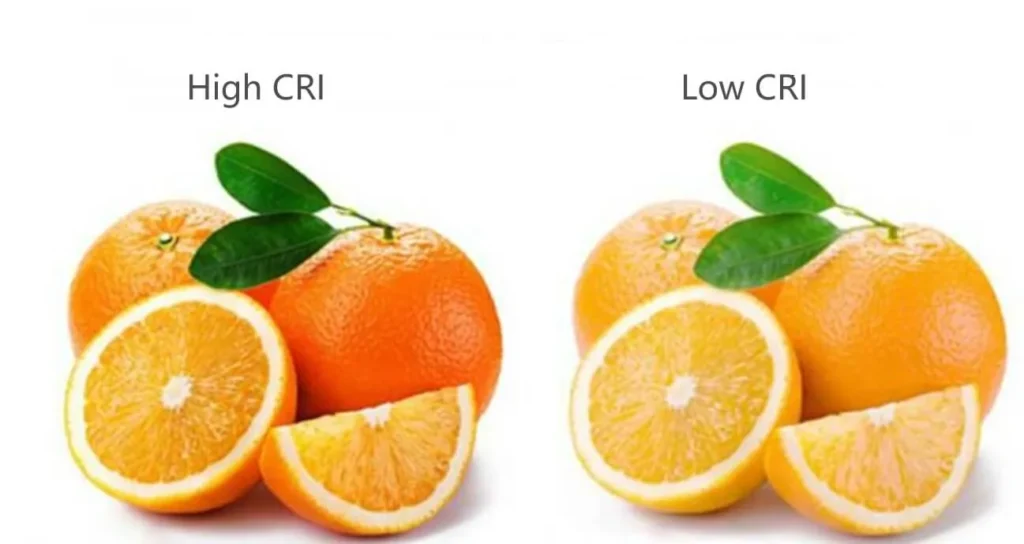
- Fluorescent Limitations: Most fluorescent lamps (even “Daylight” versions) have significant gaps in the red and cyan wavelengths. This is why colors often look “washed out” or distorted under older office lighting.
- LED Precision: Modern high-quality LEDs can be engineered to fill those spectral gaps, achieving CRI 95–98+ and R9 values above 90.
Direct Performance Comparison
To understand the gap in color fidelity, compare these industry-standard benchmarks:
| Light Source Technology | Typical CRI (Ra) | Red Rendering (R9) | Visual Quality |
| Standard Fluorescent | 62–75 | Often < 0 | Dull, grayish tones; skin looks pale. |
| Tri-Phosphor Fluorescent | 82–85 | 10–20 | Functional for offices, but lacks vibrance. |
| Standard LED (CRI 80) | 80+ | 0–10 | Flat colors; suitable for utility spaces. |
| SignliteLED (CRI 95+) | 95–99 | 90+ | Near-Daylight; vivid reds and textures. |
The Transition to Professional Standards
Switching from fluorescent to high-CRI LED isn’t just an energy-saving move; it is an aesthetic upgrade, particularly for professional lighting CRI 95 or high CRI LED strip for retail display scenarios. For galleries, retail, and hospitality
The Ultimate High-CRI Specification Checklist
Now that you understand the technical nuances of CRI, R9, and the spectral advantages of LED over fluorescent lighting, use this checklist to ensure your project achieves professional-grade color accuracy.
Before purchasing any LED strip, verify these five critical factors:
CRI (Ra) Value:
- Is it 95+ for food display LED strip CRI or luxury retail CRI 95 applications?
- Is it 95+ for food display LED strip CRI or luxury retail CRI 95 applications?
R9 (Deep Red) Score:
- Ensures red tones in high-end retail LED strips CRI 95 or professional gallery LED strips look natural.
R9 (Deep Red) Score:
- Does the strip have an R9 ≥ 90? This is essential for rendering natural skin tones, warm wood textures, and fresh food.
Voltage (24V vs. 12V):
- For professional installations over 5 meters, 24V is mandatory to prevent voltage drop and ensure color consistency from the start to the end of the strip.
LED Density & Technology:
- Choose High-Density (≥120 LEDs/m) or COB (Chip-on-Board) strips. This eliminates “spotting” and creates a seamless, high-end “line of light.”
Certification & Reliability:
- Ensure the product is UL/CE/RoHS certified. This guarantees that the advertised CRI and R9 values are stable and that the driver will provide flicker-free operation.
Conclusion
Choosing the right CRI is about more than just “picking a bulb”—it is about preserving the integrity of your design.
Whether you are illuminating a world-class art gallery or a high-end kitchen, the quality of light dictates how people perceive space, color, and texture. While CRI 90 is sufficient for most daily environments, CRI 95+ (especially when paired with a high R9 value) delivers a professional-grade fidelity that transforms an ordinary space into an extraordinary one.
At SignliteLED, we specialize in high-CRI lighting solutions that bridge the gap between artificial light and natural daylight. By prioritizing spectral quality and hardware reliability, we ensure that your project’s colors remain as vibrant and true as the day they were designed.
Frequently Asked Questions (FAQ)
To help you make the most informed decision for your lighting project, we’ve compiled the most common questions our experts receive regarding CRI and light quality.
Related Posts