Русский
  English
  简体中文
简体中文  Deutsch
  Español
  Français
  Italiano
  日本語
日本語  한국어
한국어  Polski
  Português
  Türkçe
  Nederlands
  Tiếng Việt
  ไทย
ไทย 
В сентябре 2025 года мы получили запрос WhatsApp с окончательной линией, которая отпугнула бы большинство поставщиков. Заказчиком был специализированный подрядчик в Сербии со своими заводскими и сборочными линиями. Он производит линейные светильники для местных проектов по монтажу в Сербии. Он сам производит светильники и получает только Светодиодные модули от поставщиков.
Главное требование было несложно: модули должны были работать с драйверами, уже использованными на его заводе. Он не хотел менять драйверы или менять существующую производственную установку на своем заводе.
Я сразу понял задачу, стоящую за просьбой.
У него уже есть запасы на складе. Смена драйверов означала изменение расчета стоимости по его производственной линии.
Спецификация, которую он прислал, и единственная строка, которая изменила все
Этот подрядчик уже изготовил свои собственные линейные светильники в Сербии, прежде чем связался с нами. Ему не нужны были рекомендации по продукту. Ему нужен был поставщик, который мог бы построить модули вокруг драйверов и размеров, уже использованных в его производственной линии.
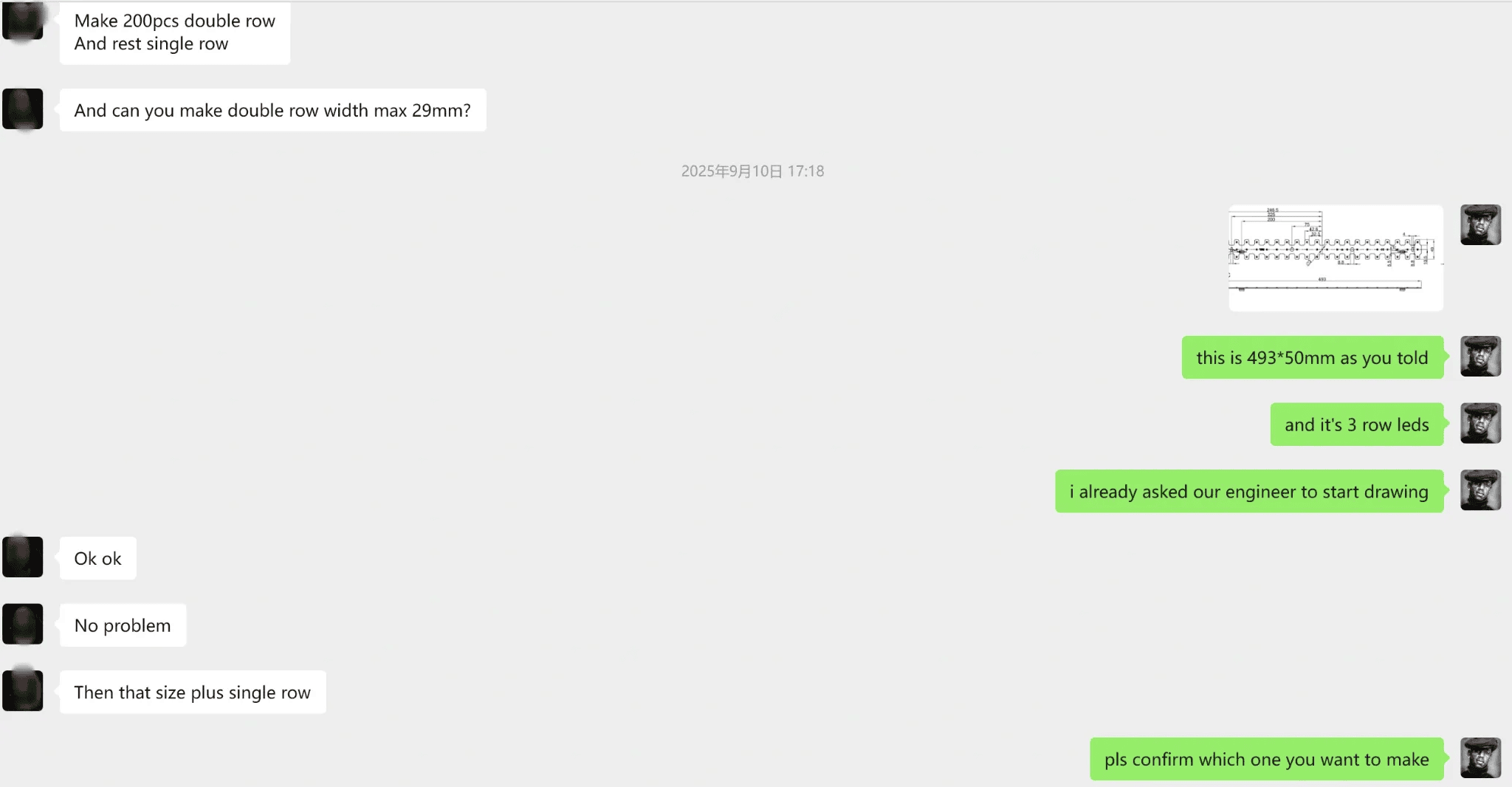
Сами спецификации можно было управлять. Настоящей проблемой было состояние драйвера: все должно было работать с уже существующими драйверами, уже сидящими на его заводе.
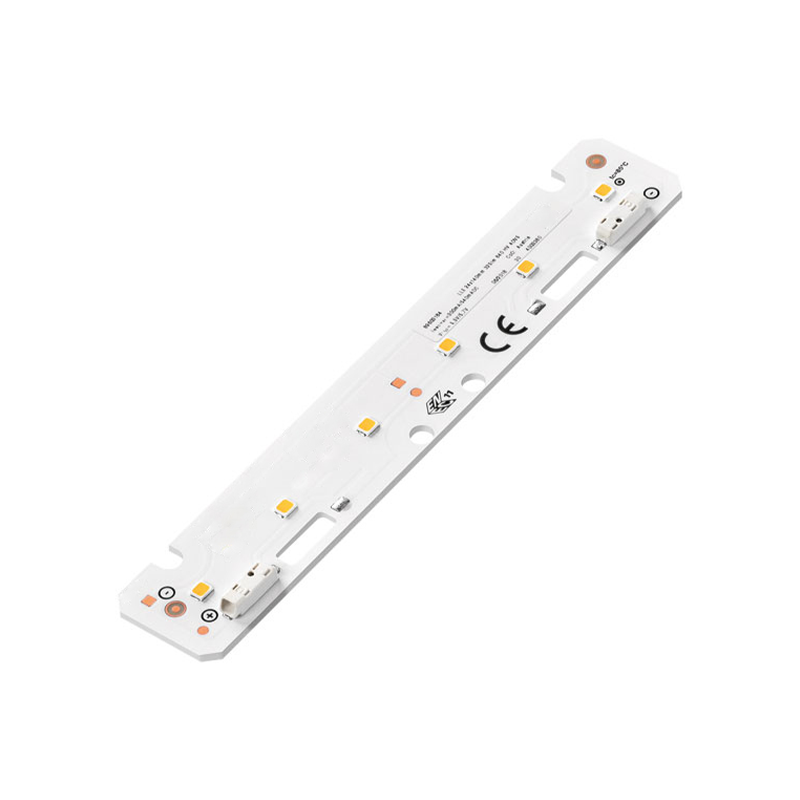
140x24 мм 550LM модульный светодиодный светильник
- Модель: ROX24T012E-140MM/RQX24T012E-140MM
- Входное напряжение: 10,4-11,4 В постоянного тока
- Входной ток: 275 мА
- Входной ватт: 3W
- люмен: 549-621 лм
- Светоотдача: 183-205 лм/Вт
- Типы светодиодов: SMD3030/SMD2835
- Светодиодный чип Samsung/OSRAM/Lumileds/BridgeLux/Сеул
- КОЛИЧЕСТВО СВЕТОДИОДОВ: 12 шт.
- Цветовая температура: 2700K/3000K/4000K/5000K/6500K
- ИКР: 80/90
- Размеры: 139×23,6×1,6 мм
- Материал печатной платы: Алюминий/FR-4
- Сертификация: CE, RoHS
- Гарантия: 5 лет
Почему состояние водителя было настоящей проблемой и почему я не ушел
Драйвер постоянного тока выдает фиксированный ток. Его существующий драйвер работал на 350 мА. Модуль с одним рядом тянет 120 мА. Модуль с тройным рядом тянет 360 мА. Я видел подобные конфликты драйверов раньше, и большинство из них заканчивались тем, что поставщик рекомендовал совершенно новое оборудование. Спецификации напряжения были легко сопоставлены. Настоящая проблема заключалась в том, чтобы обе конфигурации модулей работали с одним и тем же драйвером.
Простой ответ был: попросить его купить второго водителя. Я не дал ему простого ответа.
Прежде чем обсуждать решения с инженерными решениями, я вернулся к оригинальным спецификациям, которые он отправил через WhatsApp.
Это была конфигурация, которую мы пытались заставить работать с тем же существующим драйвером:
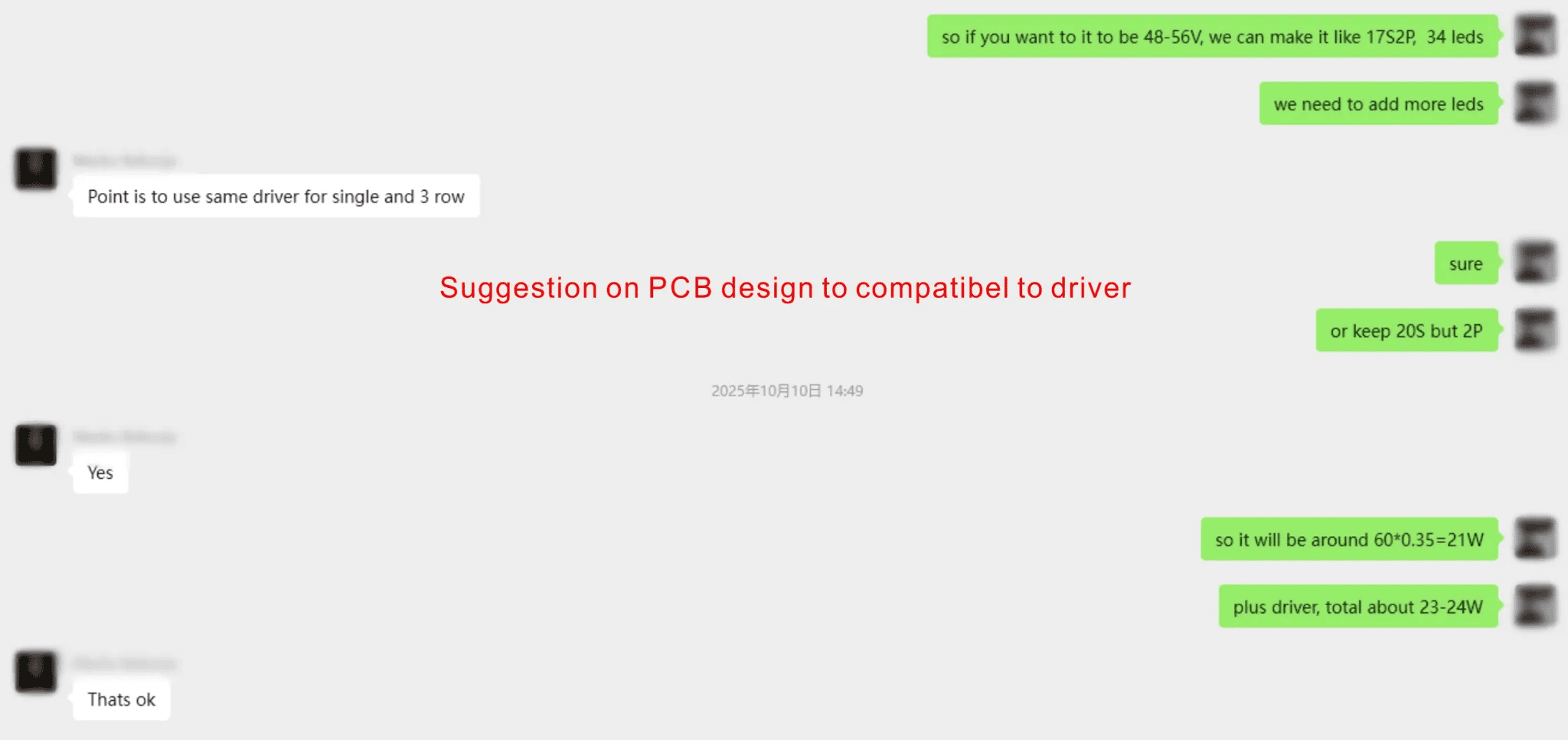
| Параметр | Однорядный модуль | Тройной модуль |
| Размер печатной платы | 493 х 25 мм | 493 х 50 мм |
| Светодиодная кон | 20 серии, 1 параллель | 20 серии, 3 параллельные |
| Всего светодиодов | 20 | 60 |
| рабочее напряжение | 50-60В | 50-60В |
| Цветовая температура | Теплый белый | Теплый белый |
| расчетная мощность | Приблизительно 7Вт | Модуль 21 Вт, 23-24 Вт с драйвером |
| Материал печатной платы | Алюминий | Алюминий |
| Сертификация | CE ROHS | CE ROHS |
| ведущий | Существующий запас — нет нового драйвера | Тот же существующий драйвер |
Прежде чем ответить, я обсудил требования водителя напрямую с нашей командой инженеров. Потому что я знал, что проект будет двигаться вперед или рушится только по одной из проблем. Клиент ждал ответа, прежде чем двигаться вперед с планированием производства. В этот момент проект мог двигаться вперед только в том случае, если конфигурация драйвера работала правильно. Я пока не знал, что это будет.
Решение, которое сохранило его существующий водитель и его бюджет
Три однорядных модуля, соединенные параллельно, каждый 120 мА.
В совокупности три модуля работают в рабочем диапазоне его существующей конфигурации драйвера 350 мА.
Это означало:
Нет нового драйвера. Без дополнительного оборудования. Никаких дополнительных затрат на его производственной линии.
Модули с одной строкой и тройной строкой становятся взаимозаменяемыми с точки зрения драйвера, если модули с одной строкой подключены параллельно в три группы.
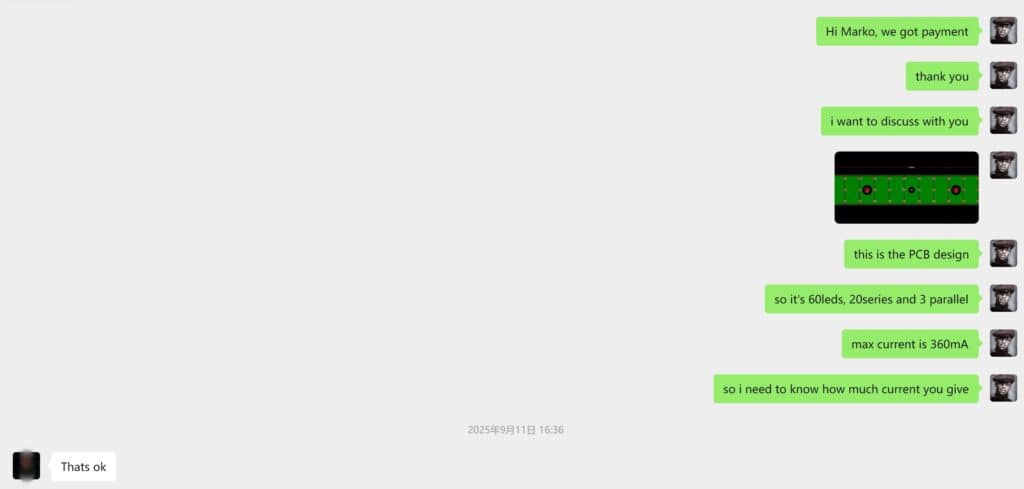
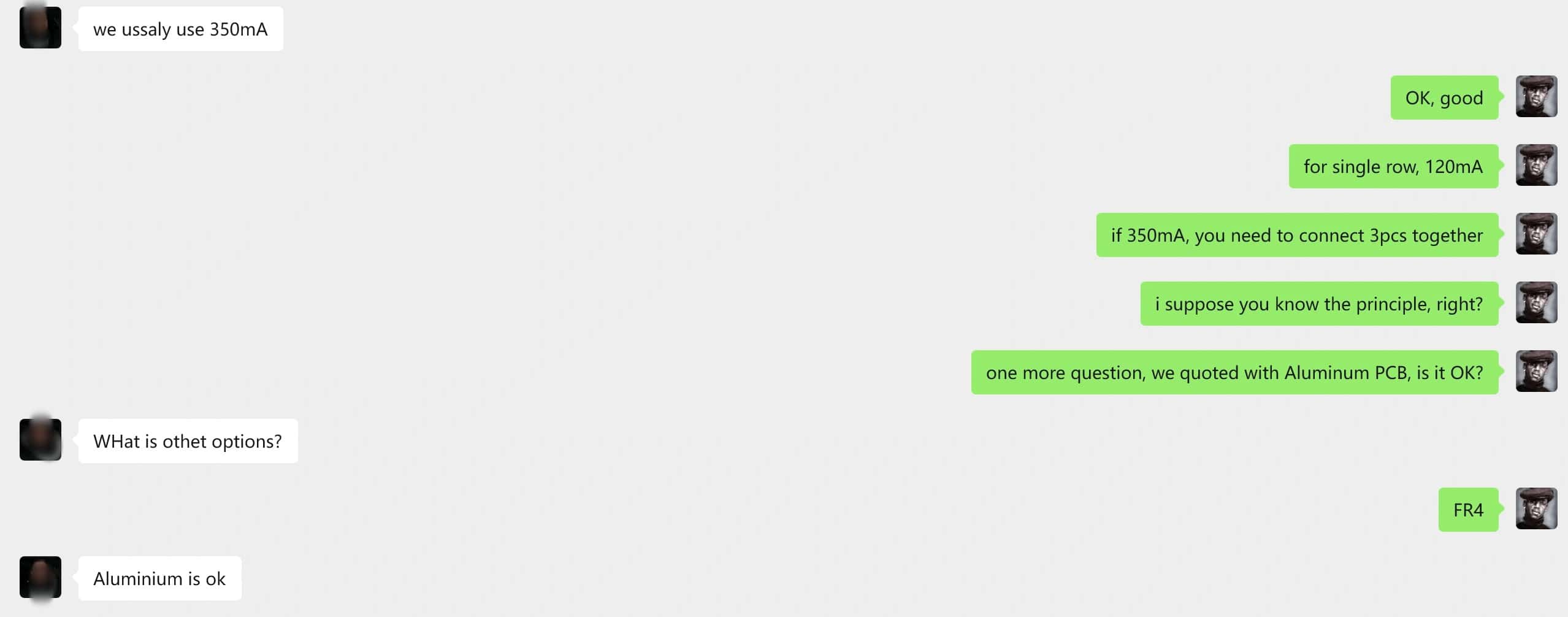
Как параллельное соединение решило проблему с драйвером:
| конфигурация | ток на единицу | связь | Полный ток | смена водителя |
| 1x одна строка | 120 мА | прямой | 120 мА | Да - нужен другой драйвер |
| 1x тройной ряд | 360 мА | прямой | 360 мА | Нет — совпадает с существующими |
| 3x однорядные параллельные | 120 мА каждый | параллельный | Всего 360мА | Нет — совпадает с существующими |
После просмотра текущих расчетов и конфигурации проводки его ответ пришел в два слова:
«Это нормально».
Клиент тщательно проверил каждую технические детали на протяжении обсуждения, что фактически было его одобрением продвигаться вперед.
Он не просил образец. Это говорит вам все.
Большинство покупателей в этой ситуации сначала просят прототип. Это нормальный процесс, когда вы заказываете индивидуальные светодиодные модули на заводе, который вы никогда не посещали.
Он никогда не просил об одном.
- Нет тестирования на выборку.
- Без посещения фабрики.
- Никакой сторонней проверки.
Он разместил заказ на основе нашего обсуждения в WhatsApp, инженерного решения и печатной платы, которую мы вместе подтвердили.
Этот уровень доверия строится за счет технической коммуникации и последовательного последования до начала производства.
от оплаты подтверждена до рисования печатной платы до следующего утра
После того, как спецификации были завершены, клиент подтвердил заказ, и мы сразу же перенесли печатную плату в производственный обзор. В тот же день я связался с инженером и отметил его как приоритет.
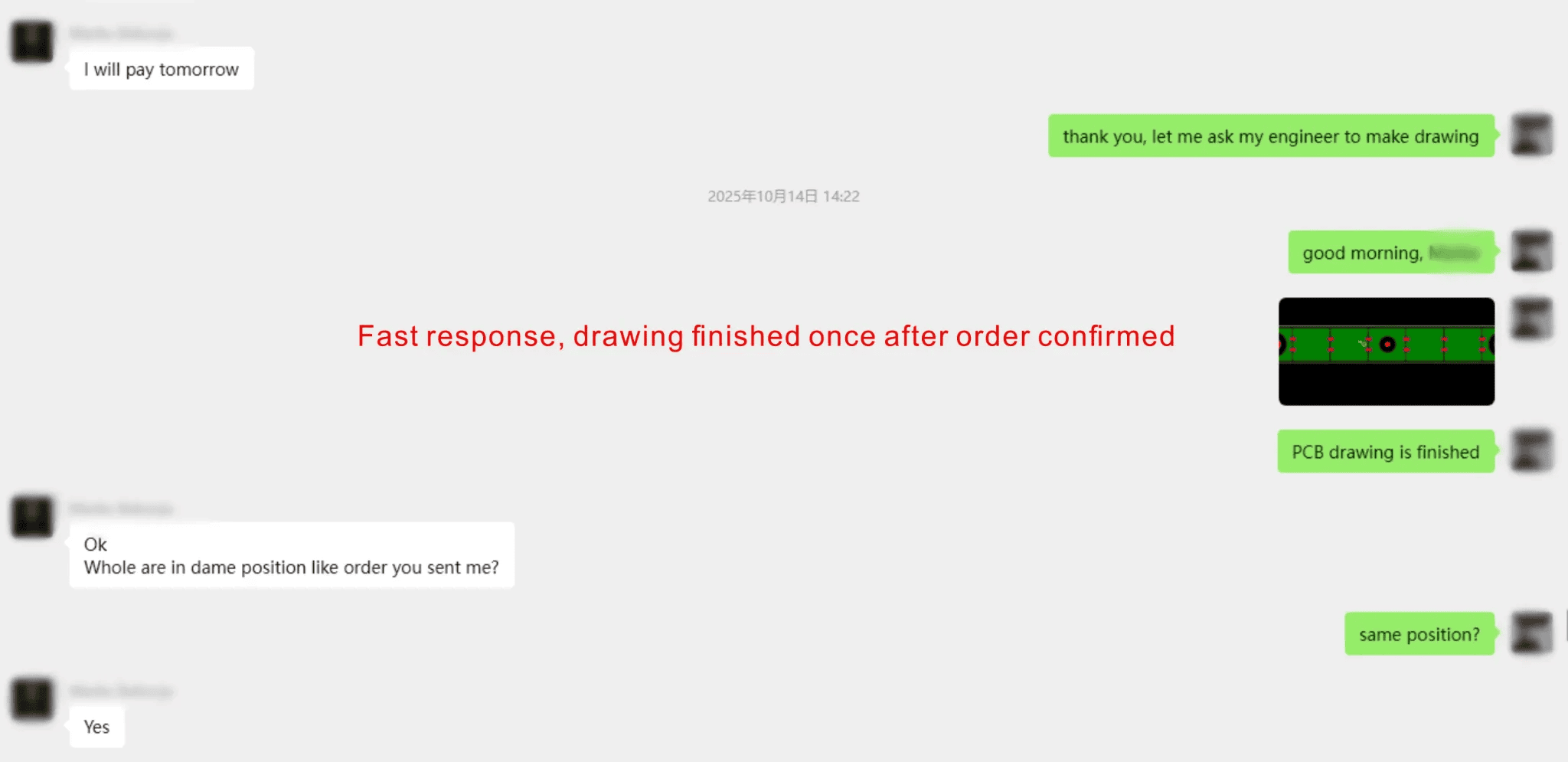
После одного дня технического обсуждения чертеж печатной платы был завершен на следующий день и отправлен для подтверждения. Эта скорость имела значение, потому что его собственное производство уже ждет подтверждения.
Позиции отверстий, расположение светодиодов и расположение разъемов были завершены за один обмен сообщениями.
Он просмотрел макет, подтвердил положение скважин и одобрил чертеж для производства.


Окончательные спецификации заблокированы для производства:
| Параметр | Один ряд | Тройной ряд |
| Размер печатной платы | 493 х 25 мм | 493 х 50 мм |
| Светодиодный счет | 20 | 60 |
| конфигурация | 20с 1п | 20 с 3р |
| рабочий ток | 120 мА на модуль | Всего 360мА |
| водитель б/у | 350мА существующий | 350мА существующий |
| полная мощность | Приблизительно 7Вт | Примерно 23-24 Вт |
| подложка | Алюминий | Алюминий |
| Сертификация | CE ROHS | CE ROHS |
Почему алюминий, а не FR4
Он спросил о FR4 во время обсуждения спецификаций. Я сразу же порекомендовал алюминий, потому что видел, что модули FR4 высокой плотности выходят из строя из-за нагрева в коммерческих приложениях.
Если вы сравниваете стоимость материала, теплоотвод и производственные компромиссы, это также помогает понять Как компании оценивают производство и сборку печатных плат значение в разных приложениях.
Алюминиевая печатная плата снижает температуру перехода светодиода на 15-20 градусов по сравнению с FR4, что напрямую продлевает срок службы модуля и повышает долгосрочную стабильность.
Для подрядчика, устанавливающего эти приспособления в коммерческие помещения под названием его собственной компании, надежность имела гораздо больше, чем небольшая разница в стоимости материала.
После подтверждения спецификаций и рисунка печатной платы можно было бы начать производство.
Что случилось с производственной линии
Так выглядела первая партия, прежде чем она была отправлена в Сербию.
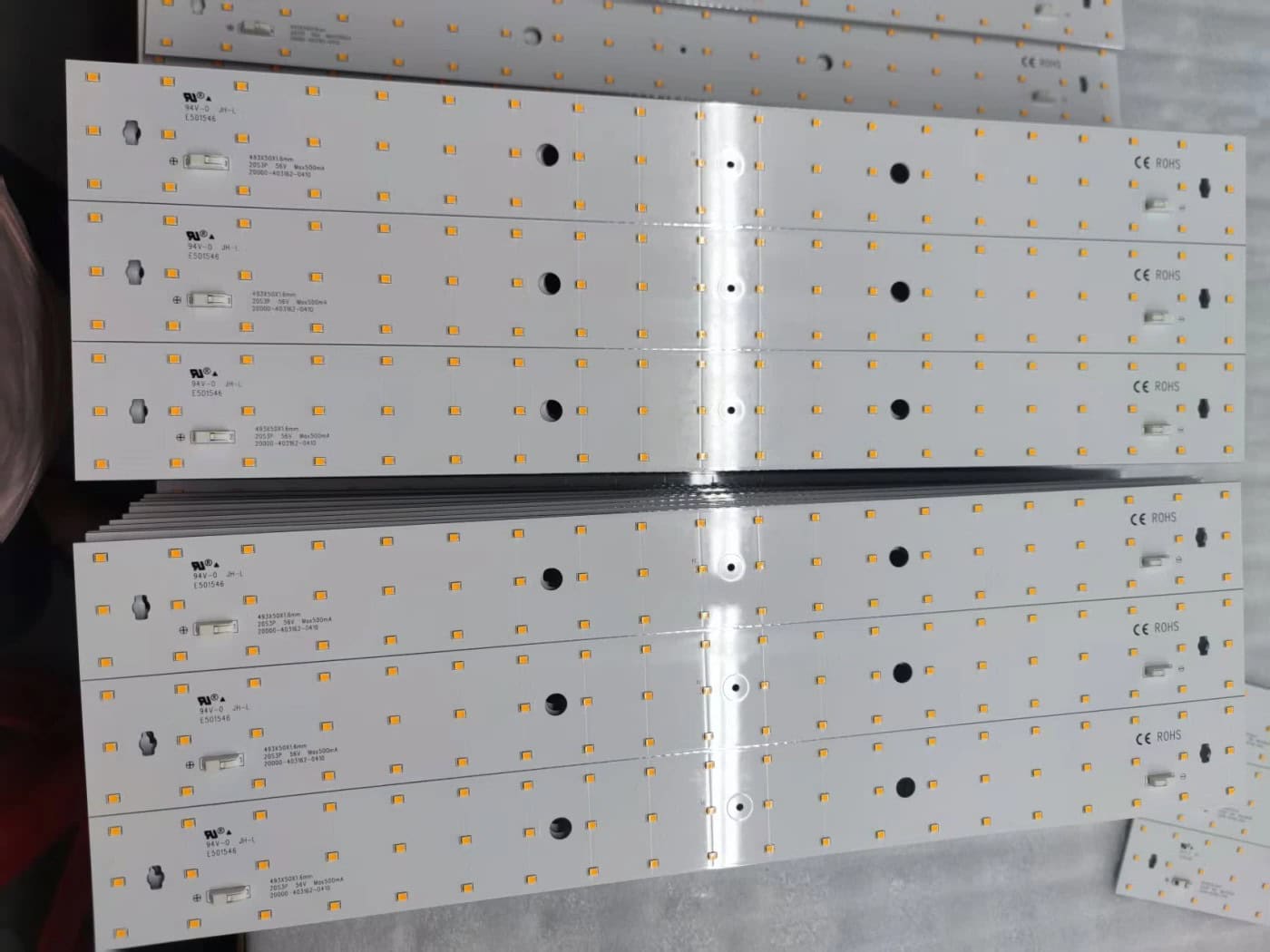
Он никогда не был на заводе. Никогда не видел, чтобы они были сделаны. Он доверился разговору и рисованию. все модуль В этой партии должно было быть именно то, что описано в спецификации, потому что не было второго шанса произвести первое впечатление.
Магазин в Сербии, как выглядели модули
После прибытия модулей он их установил. Он прислал фотографии.
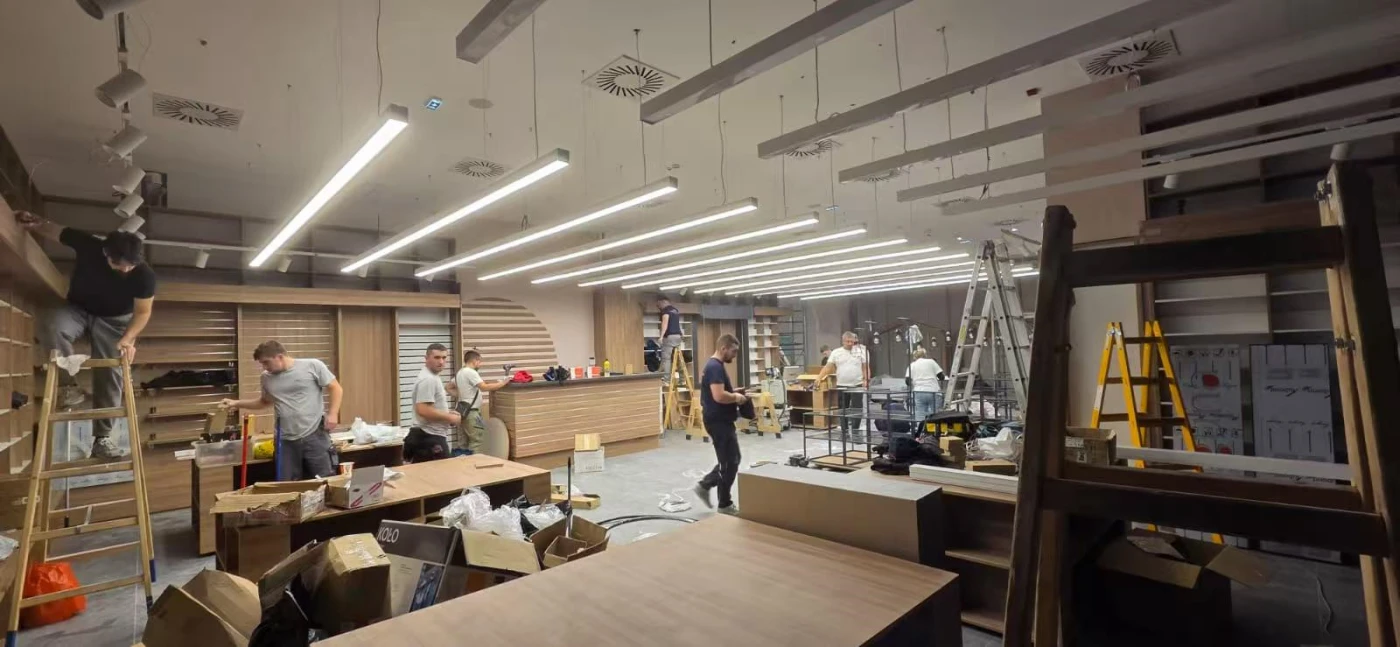
Готовая установка соответствовала исходным спецификациям, которые мы обсуждали в ходе проекта.
Видеозапись сделана из отдельного проекта современной офисной установки, выполненную подрядчиком с использованием тех же модулей. Он поделился им вместе с фотографиями магазина.
Через пять минут после прибытия первой партии
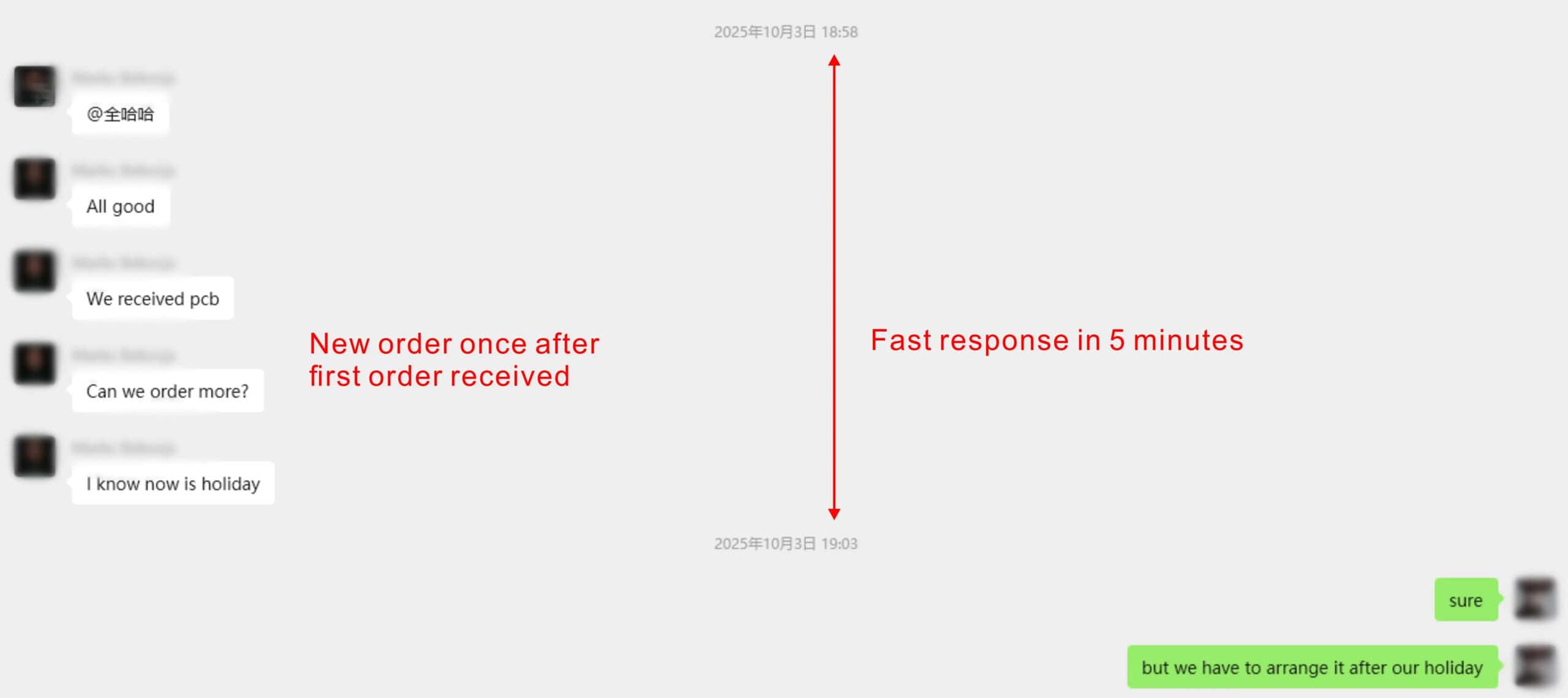
Этот подрядчик сам собирает светильники. Он сразу знает, работает ли модуль габариты, выход, совместимость драйверов. Когда он говорит «все хорошо» и просит еще в течение пяти минут с момента доставки, подрядчика, который сам собирает светильники, этого ответа было достаточно, чтобы подтвердить, что модули соответствовали его требованиям.
Мой ответ: «Конечно. Но мы должны устроить это после нашего отпуска».
Это был второй заказ. Модуль с двойным рядом, который он добавил в этом порядке 493x50 мм, был новой конфигурацией, которую он хотел для другого проекта. Тот же ожидание качества. тот же уровень доверия.
Четыре заказа позже, что на самом деле означает это партнерство
Этот второй порядок не был последним.
Полная хронология проекта:
| дата | Что случилось | результат |
| Сентябрь 2025 | Запрос WhatsApp — спецификация, справочник по веб-сайту | Проект запущен — образец не запрашивается |
| Сентябрь 2025 | Один день обсуждения — спецификации подтверждены | Трехуровневые и однорядные характеристики заблокированы |
| Сентябрь 2025 | Дизайн печатной платы подтвержден на следующий день | Инженерное подписание завершено |
| Сентябрь 2025 | Заказ подтвержден и выполнение печатной платы завершено | Начало Производственного обзор |
| Октябрь 2025 | Первая партия получена в Сербии | «Все хорошо» — ноль проблем |
| Октябрь 2025 г. — 5 минут спустя | — Можем ли мы заказать еще? | Второй порядок — добавлен двойной ряд |
| Конец 2025 г. | Третий и четвертый ордеры размещены | Активное постоянное партнерство |
Что имело значение:
| ситуация | Что сделало Signleteled | Что он произвел |
| Нет образца — только спецификации | Разработано на основе беседы WhatsApp и спецификаций | Производство соответствует спецификациям |
| Конфликт совместимости драйвер | Решение параллельного подключения — нет нового драйвера | нулевая дополнительная стоимость для подрядчика |
| Требуются два типа модулей | оба сконструированы за одну сессию | Полный ассортимент от одного поставщика |
| Требуется быстрая обработка | Рисунок печатной платы готов до следующего утра | Нет задержки производства |
| Первый заказ без образца | CE сертифицированная алюминиевая печатная плата CE | «Все хорошо» по прибытии |
| Четыре заказа с течением времени | Постоянные характеристики и качество каждой партии | Статус поставщика основного модуля |
Он пришел с условием, которое большинство поставщиков используют в качестве выхода. Мы использовали его в качестве отправной точки. Вот почему было четыре заказа.
Если вы производите свои собственные осветительные приборы
Если вы производите свои собственные осветительные приборы и уже имеете ограничения на драйверы или существующие производственные стандарты, перед началом планирования производства отправьте спецификации.
Большинство проблем в проектах по индивидуальному светодиодному модулю начинаются, когда эти детали обсуждаются слишком поздно.
На сайте SignliteLED, мы предпочитаем подтверждать совместимость до начала производства, а не исправлять проблемы после установки.
- Автор: Стивен Куан
- Менеджер по продажам
- Электронная почта: sales@signlite.com.cn
- Мобильный / WhatsApp: +86 15814478470

часто задаваемые вопросы
Похожие посты