ไทย
ไทย  English
  简体中文
简体中文  Deutsch
  Español
  Français
  Italiano
  日本語
日本語  한국어
한국어  Polski
  Português
  Русский
  Türkçe
  Nederlands
  Tiếng Việt
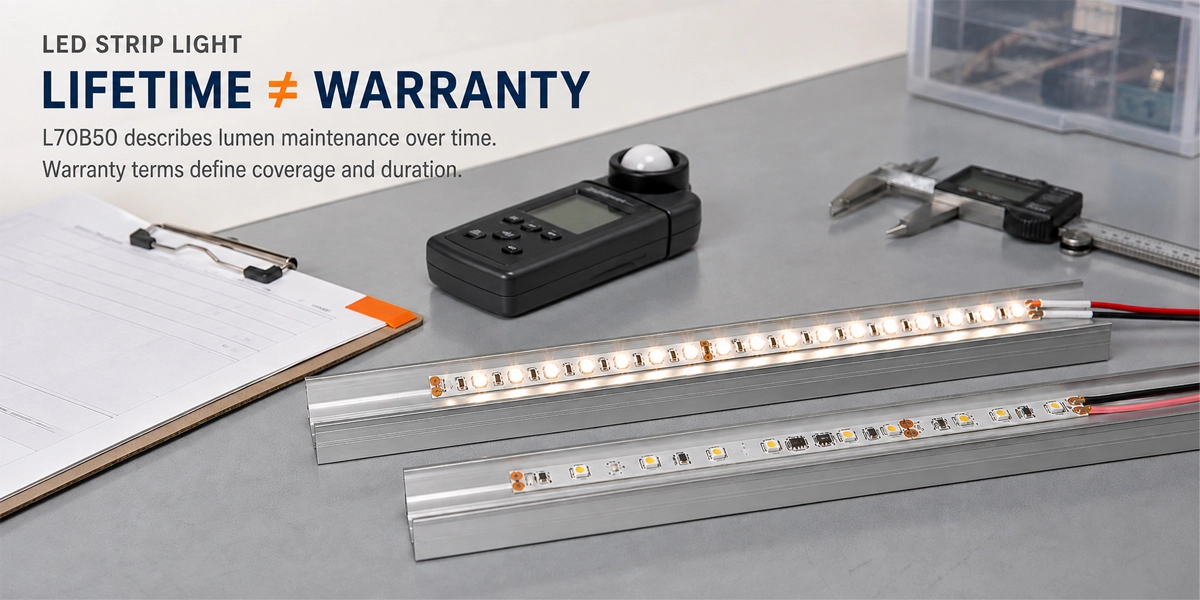
อันหนึ่ง ไฟเส้น LED การรับประกันและอายุการใช้งานจะวัดได้สองสิ่งที่แตกต่างกัน คะแนนตลอดอายุการใช้งาน เช่น L70B50 ที่ 50,000 ชั่วโมง ประมาณการการบำรุงรักษาลูเมนภายใต้เงื่อนไขการทดสอบที่กำหนดไว้ การรับประกัน 3, 5 หรือ 7 ปีจะกำหนดสิ่งที่ผู้ผลิตจะทำหากผลิตภัณฑ์ที่มีสิทธิ์ล้มเหลวเกิดขึ้นระหว่างจำนวนปีปฏิทินที่ระบุ
สิ่งนี้อธิบายได้ว่าทำไมไฟแถบ LED สองดวงสามารถมีอายุการใช้งาน L70B50 เท่ากัน แต่มีระยะเวลารับประกันต่างกัน ผลิตภัณฑ์ที่มีการรับประกันนานขึ้นอาจใช้ส่วนประกอบต่างๆ กระแสการทำงาน การออกแบบความร้อน การห่อหุ้ม หรือขั้นตอนการควบคุมคุณภาพ อย่างไรก็ตาม ความแตกต่างอาจเป็นเชิงพาณิชย์ ซึ่งเกี่ยวข้องกับราคา วิธีการชดเชย หรือการยกเว้นการรับประกัน
การรับประกันที่ยาวนานขึ้นจึงไม่ใช่การพิสูจน์อายุการใช้งานของแถบไฟ LED ที่ยาวขึ้นโดยอัตโนมัติ ผู้ซื้อควรเปรียบเทียบข้อกำหนดของผลิตภัณฑ์ เกณฑ์การทดสอบ และเงื่อนไขการรับประกันเป็นลายลักษณ์อักษร ก่อนเลือกระหว่างช่วงต่างๆ
ไฟ LED แถบการรับประกัน VS อายุการใช้งาน: ความแตกต่างที่สำคัญ
การให้คะแนนตลอดอายุการใช้งานของแถบไฟ LED อธิบายถึงการบำรุงรักษาแสงและเอาต์พุตที่คาดหวังตลอดชั่วโมงการทำงาน การรับประกันกำหนดความรับผิดชอบทางการค้าของซัพพลายเออร์ในช่วงระยะเวลาที่กำหนด
| เรื่อง | เรทตลอดอายุการใช้งาน | การรับประกัน |
| มันอธิบายอะไร | การบำรุงรักษาลูเมนที่คาดการณ์ไว้ | การป้องกันข้อบกพร่องหรือความล้มเหลวที่มีสิทธิ์ |
| มันแสดงออกอย่างไร | เวลาทำการ | ปีปฏิทิน |
| การอ้างอิงทั่วไป | L70, L80 หรือ L90 บางครั้งมีค่า B | เงื่อนไขการรับประกันเป็นลายลักษณ์อักษร |
| เงื่อนไขหลัก | อุณหภูมิกระแสไฟและพื้นฐานการทดสอบ | รูปแบบผลิตภัณฑ์ การติดตั้ง การใช้งานและการยกเว้น |
| สิ่งที่ไม่รับประกัน | การทำงานที่ปราศจากความล้มเหลวของระบบที่สมบูรณ์ | ความสว่างไม่เปลี่ยนแปลงตลอดระยะเวลาการรับประกัน |
การให้คะแนนตลอดอายุการใช้งาน 50,000 ชั่วโมงไม่ได้หมายความว่าแถบ LED จะหยุดทำงานในเวลา 50,001 ชั่วโมง ในทำนองเดียวกัน การรับประกันไฟ LED 5 ปีไม่จำเป็นต้องรับประกันความสว่างที่ไม่เปลี่ยนแปลงเป็นเวลาห้าปีหรือครอบคลุมทุกความล้มเหลวที่เป็นไปได้
กฎที่ใช้งานได้จริงนั้นง่าย: ใช้คะแนนตลอดอายุการใช้งานเพื่อประเมินการบำรุงรักษาลูเมนที่คาดหวังและนโยบายการรับประกันเพื่อประเมินการคุ้มครองเชิงพาณิชย์
L70B50 หมายถึงอะไร?
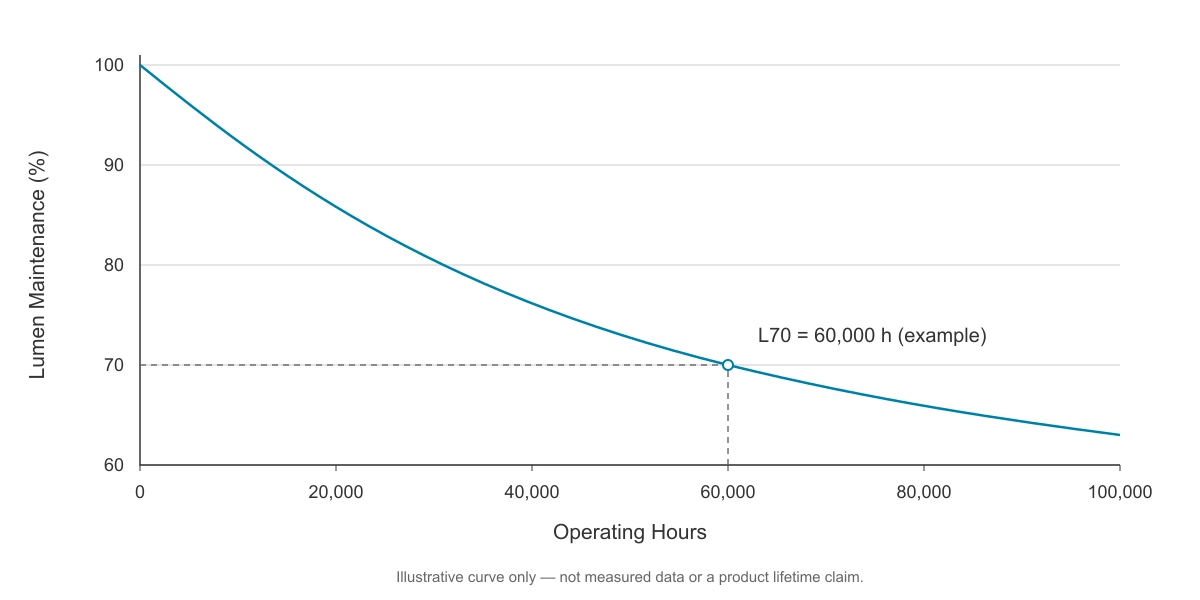
L70B50 รวมเกณฑ์การบำรุงรักษาลูเมนเข้ากับสถิติประชากร
- L70 หมายถึงแหล่งกำเนิดแสง LED รักษาฟลักซ์การส่องสว่างเริ่มต้น 70% มันแสดงถึงค่าเสื่อมราคาลูเมนประมาณ 30%—ไม่ใช่การสูญเสีย 70%
- B50 อธิบายผลลัพธ์ของประชากรมัธยฐาน เป็นค่าทางสถิติ ไม่รับประกันว่า LED ทุกตัวจะทำงานเหมือนกัน
- ชั่วโมงที่ระบุแสดงถึงเวลาทำงานที่คาดการณ์ไว้ซึ่งเกี่ยวข้องกับเงื่อนไขนั้นภายใต้เงื่อนไขการทดสอบที่ระบุ
ตัวอย่างเช่น L70B50 ที่ 50,000 ชั่วโมงหมายความว่าประชากร LED ที่ประเมินแล้วคาดว่าจะถึงระดับค่ามัธยฐานของค่าบำรุงรักษา 70% หลังจาก 50,000 ชั่วโมงการทำงานภายใต้เงื่อนไขที่บังคับใช้
ไม่ได้หมายความว่าทุก LED จะให้เอาต์พุต 70% ในเวลานั้น และไม่รับประกันว่าทุกส่วนประกอบในระบบไฟ LED แบบครบวงจรจะทำงานได้โดยไม่ล้มเหลวเป็นเวลา 50,000 ชั่วโมง
L70B50 ไม่ได้อธิบายความล้มเหลวโดยตรงเช่น:
- ไฟ LED ที่ตายแล้วหรือส่วนที่ไม่ทำงาน
- ร่องรอย PCB ที่เสียหาย
- ข้อต่อประสานล้มเหลว
- ขั้วต่อหรือสายไฟที่ผิดพลาด
- กาวล้มเหลว;
- ซิลิโคนเหลืองหรือแตก;
- การซึมผ่านของน้ำและการกัดกร่อน
- แหล่งจ่ายไฟหรือตัวควบคุมล้มเหลว
ความแตกต่างนี้มีความสำคัญเนื่องจากแถบ LED สองแถบสามารถมีระดับการคงค่าของลูเมนเท่ากันได้ แต่ระดับความน่าเชื่อถือของผลิตภัณฑ์ที่สมบูรณ์ต่างกัน
สำหรับข้อมูลเพิ่มเติม โปรดดูคำแนะนำของเราที่ อายุการใช้งานของแถบ LED และปัจจัยที่มีผลต่อมัน.
LM-80 และ TM-21 ใช้อย่างไร?
LM-80 เป็นวิธีทดสอบทางวิศวกรรมที่ให้แสงสว่างสำหรับการวัดการเปลี่ยนแปลงในเอาต์พุตแสงและลักษณะสีของแพ็คเกจ LED อาร์เรย์หรือโมดูลภายใต้สภาวะควบคุม
TM-21 ใช้ข้อมูล LM-80 ที่มีคุณสมบัติเหมาะสมเพื่อคาดการณ์การบำรุงรักษาลูเมนในระยะยาว สามารถประมาณการเมื่อแหล่งกำเนิดแสง LED อาจถึงระดับเช่น L70, L80 หรือ L90
LM-80 ให้ข้อมูลที่วัดได้ ในขณะที่ TM-21 ให้การฉายภาพ ไม่มีวิธีการใดที่กำหนดระยะเวลาการรับประกันหรือทดสอบทุกส่วนประกอบในระบบไฟ LED แถบที่ติดตั้งไว้
ความเกี่ยวข้องของการเรียกร้องตลอดชีวิตขึ้นอยู่กับปัจจัยต่างๆ ได้แก่ :
- แพ็คเกจ LED ทดสอบแล้ว
- กระแสไฟปฏิบัติการ;
- อุณหภูมิทดสอบ;
- ระยะเวลาการทดสอบ;
- ขนาดตัวอย่าง;
- เงื่อนไขที่ทดสอบแล้วแสดงถึงผลิตภัณฑ์สำเร็จรูปอย่างใกล้ชิดเพียงใด
ผู้ซื้อควรถามว่าข้อมูลตลอดอายุการใช้งานใช้กับรุ่น LED เฉพาะและเงื่อนไขการทำงานที่ใช้ในผลิตภัณฑ์ที่เสนอราคาหรือไม่ สมาคมวิศวกรรมที่ส่องสว่างให้ ทรัพยากรเครื่องมือและมาตรฐานอย่างเป็นทางการของ TM-21.

วิดีโอแสง Cree นี้อธิบายว่าข้อมูลการทดสอบ LM-80 และการฉายภาพ TM-21 ใช้เพื่อประเมินการบำรุงรักษาลูเมน LED อย่างไร ไม่ใช่อายุการใช้งานของผลิตภัณฑ์ทั้งหมด สำหรับไฟ LED แถบ ผู้ซื้อควรตรวจสอบสภาพการทำงาน ความน่าเชื่อถือของส่วนประกอบ และเงื่อนไขการรับประกันเป็นลายลักษณ์อักษร
ทำไมแถบ LED สองแถบสามารถมี L70B50 เดียวกันได้ แต่รับประกันต่างกัน?
การจัดอันดับ L70B50 เดียวกันไม่ได้พิสูจน์ว่าไฟ LED สองดวงมีโครงสร้างที่เหมือนกัน อัตราความล้มเหลว หรือความคุ้มครองการรับประกัน มันสร้างเฉพาะคำสั่งการบำรุงรักษาลูเมนภายใต้เงื่อนไขที่กำหนด
ความแตกต่างระหว่างช่วงการรับประกันอาจเป็นทางเทคนิค เชิงพาณิชย์ หรือทั้งสองอย่างรวมกัน
| ความแตกต่างที่เป็นไปได้ | พิมพ์ | ทำไมมันถึงสำคัญ |
| ส่วนประกอบ LED | วิชาการ | คุณภาพของบรรจุภัณฑ์ ความคงตัวของสารเรืองแสง และความสม่ำเสมอในการผลิตอาจส่งผลต่อประสิทธิภาพการทำงานในระยะยาว |
| กระแสไฟ | วิชาการ | ความเครียดจากไฟฟ้าที่ลดลงอาจลดความร้อนและการย่อยสลายช้า |
| การออกแบบความร้อน | วิชาการ | การออกแบบ PCB ความหนาแน่นของพลังงานและวิธีการติดตั้งมีผลต่ออุณหภูมิในการทำงาน |
| การใส่ในแค็ปซูล | วิชาการ | คุณภาพซิลิโคนและโครงสร้างการปิดผนึกมีผลต่อการแตกร้าวและกันน้ำ |
| การทดสอบการผลิต | วิชาการ | อายุ การตรวจสอบ และการควบคุมแบทช์สามารถลดความล้มเหลวในช่วงต้น |
| อัตราความล้มเหลวของผลิตภัณฑ์ที่สมบูรณ์ | วิชาการ | L70B50 ไม่ได้อธิบายส่วนที่ตายแล้ว รอยประสานปัญหา ตัวเชื่อมต่อ หรือน้ำเข้า |
| ความคุ้มครองการรับประกัน | เกี่ยวกับการค้า | การเยียวยา การยกเว้น ข้อจำกัดในการดำเนินงาน และข้อกำหนดในการเรียกร้องอาจแตกต่างกัน |
| ตำแหน่งทางการตลาด | เกี่ยวกับการค้า | แพลตฟอร์มผลิตภัณฑ์เดียวกันอาจมีข้อเสนอแพ็คเกจหรือราคาที่แตกต่างกัน |
1. ส่วนประกอบต่างๆ
แถบสองแถบสามารถใช้ LED ที่มีการอ้างสิทธิ์ในการบำรุงรักษาลูเมนที่คล้ายกัน แต่วัสดุ PCB ตัวต้านทาน กระบวนการบัดกรี กาว ตัวเชื่อมต่อ หรือการห่อหุ้มที่แตกต่างกัน
ความแตกต่างเหล่านี้อาจไม่เปลี่ยนแปลงค่า L70B50 ที่ประกาศไว้ แต่อาจส่งผลต่อความน่าเชื่อถือของผลิตภัณฑ์ที่สมบูรณ์
ผู้ซื้อควรถามว่าช่วงการรับประกันที่ยาวขึ้นใช้แพ็คเกจ LED ที่แตกต่างกัน ข้อกำหนด PCB กาว คอนเนคเตอร์ หรือวัสดุกันน้ำหรือไม่
2. กระแสไฟในการทำงานที่แตกต่างกัน
การขับรถ LED ที่กระแสไฟที่ต่ำกว่าโดยทั่วไปจะช่วยลดความเครียดทางไฟฟ้าและความร้อน แถบที่ขับเคลื่อนด้วยอนุรักษ์นิยมมากขึ้นจึงอาจมีความเสี่ยงความล้มเหลวที่ต่ำกว่าแม้ว่าคะแนนการบำรุงรักษาลูเมนที่ประกาศไว้จะเหมือนกับรุ่นอื่น
เมื่อเปรียบเทียบสินค้าแล้วอย่ามองแค่ความสว่าง เปรียบเทียบ:
- พลังงานต่อเมตร
- ปริมาณ LED ต่อเมตร
- กระแสต่อ LED หรือส่วนวงจร
- ประสิทธิภาพการส่องสว่าง;
- อุณหภูมิ PCB ภายใต้การทำงานปกติ
แถบที่มีความสว่างสูงจากไฟ LED ที่น้อยลงอาจทำให้เกิดความเครียดบน LED แต่ละดวงมากกว่าการออกแบบที่กระจายโหลดไปยังส่วนประกอบต่างๆ มากขึ้น
3. การออกแบบความร้อนที่แตกต่างกัน
ความร้อนมีผลต่อการอ่อนค่าของลูเมน ความคงตัวของสี ข้อต่อประสาน กาว และวัสดุโดยรอบ
แถบ LED สองแถบที่มีระดับ L70B50 เท่ากันอาจทำงานที่อุณหภูมิต่างกันเนื่องจากความแตกต่างใน:
- พลังงานต่อเมตร
- ความกว้างของ PCB;
- ข้อกำหนดทองแดง
- ระยะห่างส่วนประกอบ
- พื้นผิวการติดตั้ง;
- โปรไฟล์อลูมิเนียม;
- กระแสลมรอบการติดตั้ง
ที่เลือกอย่างเหมาะสม โปรไฟล์อลูมิเนียม LED ช่วยในการติดตั้ง ป้องกัน และถ่ายเทความร้อน คำแนะนำของเราเพื่อ การเลือกโปรไฟล์ LED ที่เหมาะสม อธิบายว่าขนาดแถบ กำลังไฟ และการติดตั้งส่งผลต่อการเลือกโปรไฟล์อย่างไร
4. การห่อหุ้มและการสร้าง IP ที่แตกต่างกัน
สำหรับการติดตั้งกลางแจ้ง ความชื้น หรือแบบเปิดโล่ง ระบบการห่อหุ้มและปิดผนึกอาจมีอิทธิพลต่ออายุการใช้งานของผลิตภัณฑ์จริงมากกว่าระดับการคงสภาพของลูเมนของ LED
จุดล้มเหลวที่อาจเกิดขึ้น ได้แก่ :
- รายการสายเคเบิล;
- ตัวเชื่อมต่อ;
- ตัดปลาย;
- ฝาปิดท้าย;
- ข้อต่อระหว่างวัสดุ
- ซิลิโคนหรือเคลือบที่เสียหาย
- ความชื้นและการควบแน่นที่ติดอยู่
ผลิตภัณฑ์สองชิ้นอาจมีค่า L70B50 เท่ากัน แต่ใช้วิธีการหรือวัสดุกันซึมที่แตกต่างกัน ผู้ซื้อควรเปรียบเทียบการสร้าง IP ที่สมบูรณ์ ไม่เพียงแต่เรตติ้ง IP ที่พิมพ์ออกมาเท่านั้น
บทความของเราเกี่ยวกับ ทำไมไฟแถบ LED กลางแจ้งถึงล้มเหลว อธิบายผลกระทบของการซึมผ่านของน้ำ การสัมผัสรังสียูวี การกัดกร่อน และการกระจายความร้อนที่ไม่ดี
5. การทดสอบและการควบคุมคุณภาพที่แตกต่างกัน
การรับประกันที่ยาวขึ้นอาจสะท้อนถึงความมั่นใจที่มากขึ้นตามการควบคุมการผลิตมากกว่าการให้คะแนน L70B50 อื่น
การควบคุมที่เกี่ยวข้องอาจรวมถึง:
- การตรวจสอบส่วนประกอบที่เข้ามา
- การตรวจสอบการบัดกรีและ PCB;
- ขับเคลื่อนความชรา;
- การทดสอบทางไฟฟ้าและโฟโตเมตริก
- การทดสอบกันน้ำ
- การระบุชุดงาน;
- การวิเคราะห์ความล้มเหลวและบันทึกการส่งคืน
อย่างไรก็ตาม ข้อความทั่วไป เช่น "การทดสอบอย่างเข้มงวด" ไม่เพียงพอสำหรับการเปรียบเทียบอย่างมืออาชีพ ผู้ซื้อควรถามว่าการทดสอบอะไร การทดสอบใช้เวลานานเท่าใด และสามารถติดตามบันทึกไปยังแบทช์ที่ให้มาได้หรือไม่
6. อัตราความล้มเหลวของผลิตภัณฑ์ที่สมบูรณ์ที่แตกต่างกัน
L70B50 ส่วนใหญ่เกี่ยวข้องกับการบำรุงรักษาลูเมน ไม่ได้อธิบายความน่าจะเป็นของความล้มเหลวของผลิตภัณฑ์ทั้งหมดหรือบางส่วนอย่างสมบูรณ์
ช่วงการรับประกันที่ยาวขึ้นอาจได้รับการออกแบบเพื่อลดความล้มเหลวที่เกี่ยวข้องกับ PCB ข้อต่อบัดกรี ตัวเชื่อมต่อ การห่อหุ้ม หรือส่วนประกอบอื่นๆ แม้ว่าแหล่งกำเนิดแสง LED จะมีระดับอายุการใช้งานเท่ากัน
ข้อมูลการส่งคืนและความล้มเหลวในอดีตอาจทำให้ผู้ผลิตมีความมั่นใจมากขึ้นในการให้ความคุ้มครองที่ยาวนานขึ้น ข้อมูลนี้มีความละเอียดอ่อนในเชิงพาณิชย์ แต่ซัพพลายเออร์ควรจะสามารถอธิบายได้ว่าการออกแบบและมาตรการควบคุมคุณภาพใดสนับสนุนระยะเวลาการรับประกัน
7 . เงื่อนไขการรับประกันที่แตกต่างกัน
บางครั้งผลิตภัณฑ์มีความคล้ายคลึงกันในทางเทคนิคและความแตกต่างที่สำคัญคือสัญญา
การรับประกันหนึ่งครั้งอาจให้การทดแทนทั้งหมด ในขณะที่อีกการรับประกันจะได้รับการคิดตามสัดส่วน การรับประกันที่ยาวนานขึ้นอาจกำหนดข้อจำกัดที่เข้มงวดขึ้นใน:
- เวลาทำการรายวัน
- อุณหภูมิแวดล้อม;
- แหล่งจ่ายไฟที่เข้ากันได้;
- วิธีการติดตั้ง
- การใช้งานในร่มหรือกลางแจ้ง
- ขนส่งสินค้ากลับ;
- ค่าแรงและค่าติดตั้งใหม่
ดังนั้นจึงเป็นไปได้ที่การรับประกันห้าปีจะให้การปกป้องที่มีประโยชน์มากกว่าการรับประกันเจ็ดปีโดยมีความคุ้มครองที่แคบกว่า
3. ความแตกต่างทางเทคนิคหรือความแตกต่างทางการค้า?
เมื่อผลิตภัณฑ์สองชิ้นมีอายุการใช้งาน L70B50 เท่ากัน แต่มีระยะเวลาการรับประกันต่างกัน โดยปกติแล้ว 1 ใน 3 สถานการณ์จะมีผลบังคับใช้:
- ผลิตภัณฑ์มีความแตกต่างกันในทางเทคนิค
ผลิตภัณฑ์ที่มีการรับประกันนานขึ้นอาจใช้ส่วนประกอบต่างๆ กัน ลดความเครียดจากการทำงาน การออกแบบความร้อนที่ดีขึ้น หรือการห่อหุ้มที่ทนทานยิ่งขึ้น - ความมั่นใจในการควบคุมคุณภาพนั้นแตกต่างกัน
การก่อสร้างอาจคล้ายกัน แต่การทดสอบเพิ่มเติม การบ่ม หรือการควบคุมแบทช์สนับสนุนความมุ่งมั่นที่ยาวนานขึ้น - ความแตกต่างส่วนใหญ่เป็นเชิงพาณิชย์
ผลิตภัณฑ์อาจใช้แพลตฟอร์มเดียวกัน แต่มีการกำหนดราคา การเยียวยา การยกเว้น หรือตำแหน่งทางการตลาดที่แตกต่างกัน
ระยะเวลาการรับประกันเพียงอย่างเดียวไม่สามารถระบุได้ว่าสถานการณ์ใดมีผลบังคับใช้ ซัพพลายเออร์ควรให้คำอธิบายเฉพาะแบบจำลอง
ผู้ซื้อสามารถตรวจสอบความแตกต่างได้อย่างไร?
ผู้จัดจำหน่ายและผู้ซื้อโครงการสามารถใช้คำถามต่อไปนี้เมื่อเปรียบเทียบช่วงการรับประกันไฟ LED แถบ
| คำถามที่จะถาม | ทำไมมันถึงสำคัญ |
| ผลิตภัณฑ์ทั้งสองใช้แพ็คเกจ LED และข้อกำหนดถังขยะเดียวกันหรือไม่? | ระบุความแตกต่างที่เป็นไปได้ในแหล่งกำเนิดแสง |
| กระแสไฟต่อ LED เท่ากันหรือไม่? | แสดงให้เห็นว่าการออกแบบหนึ่งใช้การโหลดไฟฟ้าแบบอนุรักษ์นิยมมากกว่า |
| ความกว้างของ PCB และทองแดงเหมือนกันหรือไม่? | ช่วยเปรียบเทียบการออกแบบความร้อนและไฟฟ้า |
| กำลังต่อเมตรเท่ากันหรือไม่? | ความหนาแน่นของพลังงานที่สูงขึ้นอาจสร้างความร้อนได้มากขึ้น |
| การห่อหุ้มและโครงสร้าง IP เหมือนกันหรือไม่? | สำคัญสำหรับการติดตั้งกลางแจ้งและชื้น |
| ผลิตภัณฑ์ทั้งสองใช้พื้นฐานการทดสอบตลอดอายุการใช้งานหรือไม่? | ยืนยันว่าการเรียกร้อง L70B50 นั้นเปรียบเทียบได้โดยตรงหรือไม่ |
| ข้อกำหนดด้านอายุและการควบคุมคุณภาพแตกต่างกันหรือไม่? | อาจอธิบายความมั่นใจในการรับประกันมากขึ้น |
| การรับประกันเต็มหรือตามสัดส่วน? | กำหนดมูลค่าค่าตอบแทนที่แท้จริง |
| ชั่วโมงการทำงานและอุณหภูมิจำกัดเท่ากันหรือไม่? | การรับประกันที่ยาวขึ้นอาจมีเงื่อนไขที่เข้มงวดกว่า |
| ใครเป็นผู้จ่ายค่าขนส่ง แรงงาน และการติดตั้งใหม่? | ค่าใช้จ่ายเหล่านี้สามารถเกินค่าของแถบ LED |
การเปรียบเทียบที่เป็นประโยชน์มากที่สุดรวมข้อกำหนดทางเทคนิคเข้ากับเอกสารการรับประกันฉบับสมบูรณ์ การเปรียบเทียบเพียง “50,000 ชั่วโมง” และ “ห้าปี” ไม่ได้ทำให้ปัจจัยที่มีแนวโน้มว่าจะส่งผลต่อความเสี่ยงของโครงการมากที่สุด
50,000 ชั่วโมงคือกี่ปี?
ปฏิทินที่เทียบเท่ากับ 50,000 ชั่วโมงการทำงานขึ้นอยู่กับระยะเวลาที่แถบ LED ทำงานในแต่ละวัน
| เวลาใช้งานรายวัน | เวลาตามปฏิทินโดยประมาณ |
| 24 ชั่วโมง/วัน | 5.7 ปี |
| 18 ชั่วโมง/วัน | 7.6 ปี |
| 12 ชั่วโมง/วัน | 11.4 ปี |
| 8 ชั่วโมง/วัน | 17.1 ปี |
การคำนวณคือ: 50,000 ÷ ชั่วโมงการทำงานรายวัน ÷ 365
การรับประกันห้าปีครอบคลุมชั่วโมงการทำงานประมาณ 43,800 ชั่วโมงในการสมัครต่อเนื่อง 24/7 แต่เพียงประมาณ 14,600 ชั่วโมงที่แปดชั่วโมงต่อวัน
นี่คือเหตุผลที่ชั่วโมงและปีการรับประกันไม่สามารถแปลงได้โดยไม่ต้องระบุตารางการทำงานรายวัน
ผู้ซื้อควรเลือกระหว่างช่วงการรับประกันที่แตกต่างกันอย่างไร?
การรับประกันที่ยาวที่สุดไม่ใช่ทางเลือกที่ดีที่สุดหรือประหยัดที่สุดเสมอไป ช่วงที่เหมาะสมขึ้นอยู่กับเวลาใช้งาน เงื่อนไขการติดตั้ง และค่าใช้จ่ายของความล้มเหลว
| แอปพลิเคชัน | ความเสี่ยงหลัก | ลำดับความสำคัญในการซื้อ |
| การตกแต่งที่อยู่อาศัย | ใช้รายวันและงบประมาณอย่างจำกัด | เอาต์พุตที่เหมาะสม แหล่งจ่ายไฟที่ปลอดภัย และการรับประกันพื้นฐานที่ชัดเจน |
| ชั้นวางขายปลีกและจอแสดงผล | ความแตกต่างของสีที่มองเห็นได้ยาวนานและมองเห็นได้ | ลูเมน การบำรุงรักษา ความสม่ำเสมอของสีและการควบคุมความร้อน |
| ป้ายและกล่องไฟ | การทำงาน 12–24 ชั่วโมงและการบำรุงรักษาที่ยากลำบาก | การออกแบบความร้อน, แหล่งจ่ายไฟที่เชื่อถือได้และครอบคลุมการเปลี่ยน |
| แสงสถาปัตยกรรมกลางแจ้ง | ความชื้น รังสียูวี การเปลี่ยนแปลงของอุณหภูมิและการกัดกร่อน | งานก่อสร้าง วัสดุและการป้องกันการติดตั้ง |
| โครงการสัญญา | ค่าแรง ความล่าช้า และการเรียกร้องค่าสินไหมทดแทนของลูกค้า | ความครอบคลุมเป็นลายลักษณ์อักษร การตรวจสอบย้อนกลับของแบทช์ และการสนับสนุนซัพพลายเออร์ |
การรับประกันแบบพรีเมียมอาจคุ้มค่าเมื่อ:
- แถบ LED ทำงานเป็นเวลานาน
- การทดแทนต้องใช้การเข้าถึงหรือค่าแรงที่มีราคาแพง
- การหยุดทำงานของโครงการทำให้เกิดความสูญเสียทางการค้า
- การติดตั้งสัมผัสกับความร้อนหรือความชื้น
- สัญญาลูกค้าต้องมีระยะเวลาการรับประกันที่กำหนดไว้
การรับประกันที่สั้นกว่าอาจเพียงพอสำหรับการติดตั้งในร่มที่เข้าถึงได้โดยมีการใช้งานทุกวันอย่างจำกัดและค่าใช้จ่ายในการเปลี่ยนทดแทนต่ำ
สำหรับการเปรียบเทียบผลิตภัณฑ์ที่กว้างขึ้น โปรดดูที่ คู่มือการเลือกไฟ LED เชิงพาณิชย์.
ผู้ซื้อควรขออะไรจากซัพพลายเออร์แถบ LED?
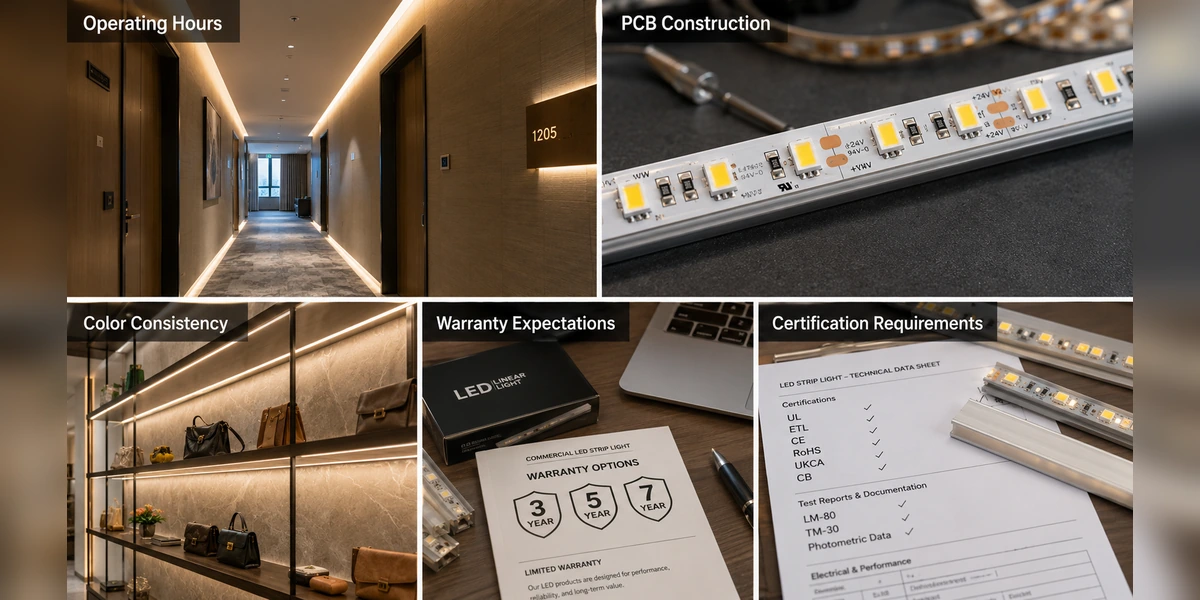
ก่อนอนุมัติไฟแถบ LED ให้ขอเอกสารสำหรับรุ่นที่แน่นอนและการกำหนดค่าที่เสนอราคา เน้นที่สิ่งต่อไปนี้:
- ข้อมูลจำเพาะของผลิตภัณฑ์: แรงดันไฟฟ้า, กระแสไฟ, กำลังต่อมิเตอร์, การก่อสร้าง PCB และขีดจำกัดอุณหภูมิในการทำงาน
- หลักฐานตลอดชีพ: ความหมายของการจัดอันดับ L70B50 ที่ประกาศไว้ ข้อมูล LM-80 ที่เกี่ยวข้อง การฉายภาพ TM-21 ใดๆ และพื้นฐานสำหรับการอ้างสิทธิ์ B50 ยืนยันว่าหลักฐานใช้กับส่วนประกอบ LED หรือแถบที่เสร็จแล้วหรือไม่
- การทดสอบความน่าเชื่อถือ: ผลการทดสอบความร้อน ไฟฟ้า ความชรา และสิ่งแวดล้อมที่เกี่ยวข้อง สำหรับผลิตภัณฑ์กันน้ำ โปรดขอหลักฐานสนับสนุนการจัดอันดับ IP ที่ระบุไว้
- เอกสารการปฏิบัติตามข้อกำหนด: การประกาศ ใบรับรอง หรือรายงานการทดสอบที่ใช้กับตลาดปลายทางและการติดตั้ง ตรวจสอบว่าครอบคลุมรุ่นที่ยกมาและการกำหนดค่าผลิตภัณฑ์ที่เกี่ยวข้อง
- ข้อกำหนดในการติดตั้ง: การกระจายความร้อน ความยาวสูงสุด การปรับขนาดแหล่งจ่ายไฟ และข้อจำกัดใดๆ ที่ส่งผลต่อประสิทธิภาพหรือการรับประกัน
- การรับประกันและการตรวจสอบย้อนกลับ: ความคุ้มครองเป็นลายลักษณ์อักษร การยกเว้น การเยียวยา การระบุชุดงาน และขั้นตอนการเรียกร้อง
เอกสารการปฏิบัติตามข้อกำหนด การฉายภาพตลอดอายุการใช้งาน และการทดสอบความน่าเชื่อถือมีวัตถุประสงค์ที่แตกต่างกัน ไม่ควรปฏิบัติแทนผู้อื่น—หรือสำหรับการรับประกันเป็นลายลักษณ์อักษร ขอให้ซัพพลายเออร์ยืนยันว่าเอกสารแต่ละฉบับมีผลกับผลิตภัณฑ์ที่เลือกอย่างไร
คำถามที่พบบ่อย
บทสรุป
ไฟ LED Strip ตลอดอายุการใช้งานและการรับประกันตอบคำถามที่แตกต่างกัน L70B50 อธิบายประสิทธิภาพการบำรุงรักษาลูเมนภายใต้เงื่อนไขที่กำหนด ในขณะที่เงื่อนไขการรับประกันเป็นลายลักษณ์อักษรจะระบุภาระหน้าที่ของผู้ผลิตหากเกิดความล้มเหลวที่มีสิทธิ์
แถบ LED สองแถบจึงสามารถมีระดับ L70B50 เท่ากัน แต่มีระยะเวลาการรับประกันต่างกัน การรับประกันที่ยาวนานขึ้นไม่ได้พิสูจน์ให้เห็นถึงอายุการใช้งานที่ยาวนานขึ้นโดยอัตโนมัติ เปรียบเทียบข้อมูลสนับสนุน ข้อกำหนดในการติดตั้ง และความครอบคลุมสำหรับรุ่นที่แน่นอน
สำหรับความช่วยเหลือในการเลือกไฟแถบที่มีสัญญาณไฟ แบ่งปันแอปพลิเคชันของคุณ เงื่อนไขการทำงาน และระยะเวลาการรับประกันที่จำเป็น และขอเอกสารข้อมูลที่เกี่ยวข้องและเงื่อนไขการรับประกันเป็นลายลักษณ์อักษรสำหรับรุ่นที่เสนอ
ผู้เขียน : เจสัน เฉิน
หัวหน้าฝ่ายวิจัยและพัฒนา
อีเมล์: engineer@signlite.com.cn
มือถือ: +86 13528844818

กระทู้ที่เกี่ยวข้อง