Tiếng Việt
  English
  简体中文
简体中文  Deutsch
  Español
  Français
  Italiano
  日本語
日本語  한국어
한국어  Polski
  Português
  Русский
  Türkçe
  Nederlands
  ไทย
ไทย 
giống như chử Dải đèn LED Bảo hành và tuổi thọ được đánh giá của nó đo hai điều khác nhau. Xếp hạng trọn đời như L70B50 ở 50.000 giờ ước tính việc bảo trì lumen trong các điều kiện thử nghiệm xác định. Bảo hành 3, 5 hoặc 7 năm xác định nhà sản xuất sẽ làm gì nếu lỗi sản phẩm đủ điều kiện xảy ra trong một số năm dương lịch được chỉ định.
Điều này giải thích tại sao hai đèn LED dải có thể có cùng tuổi thọ L70B50 nhưng thời gian bảo hành khác nhau. Sản phẩm bảo hành dài hạn có thể sử dụng các thành phần khác nhau, dòng điện vận hành, thiết kế nhiệt, đóng gói hoặc kiểm soát chất lượng. Tuy nhiên, sự khác biệt cũng có thể là thương mại, liên quan đến giá cả, phương pháp bồi thường hoặc loại trừ bảo hành.
Do đó, bảo hành lâu hơn không phải là bằng chứng tự động của tuổi thọ ánh sáng dải LED dài hơn. Người mua nên so sánh các thông số kỹ thuật sản phẩm, cơ sở kiểm tra và các điều khoản bảo hành bằng văn bản trước khi lựa chọn giữa các phạm vi khác nhau.
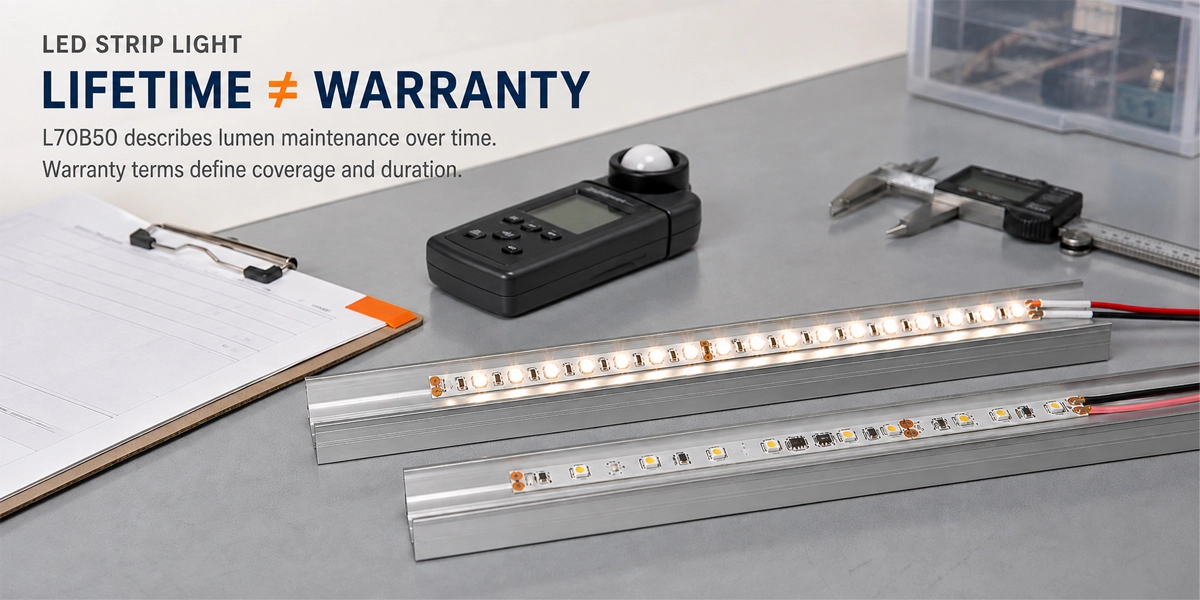
Đèn LED dải bảo hành so với tuổi thọ: Sự khác biệt chính
Xếp hạng tuổi thọ ánh sáng dải LED mô tả việc bảo trì ánh sáng dự kiến trong thời gian hoạt động. Bảo hành xác định trách nhiệm thương mại của nhà cung cấp trong một khoảng thời gian nhất định.
| vật phẩm | Tuổi thọ được đánh giá | sự bảo đảm |
| Những gì nó mô tả | Bảo trì lumen dự kiến | Bảo vệ chống lại các lỗi hoặc lỗi đủ điều kiện |
| nó được thể hiện như thế nào | giờ hoạt động | năm dương lịch |
| Tham khảo điển hình | l70, l80 hoặc l90, đôi khi có giá trị b | Điều khoản bảo hành bằng văn bản |
| Điều kiện chính | Nhiệt độ, hiện tại ổ đĩa và cơ sở thử nghiệm | Mô hình sản phẩm, cài đặt, sử dụng và loại trừ |
| Những gì nó không đảm bảo | Hoạt động không lỗi của hệ thống hoàn chỉnh | Độ sáng không thay đổi trong suốt thời gian bảo hành |
Xếp hạng 50.000 giờ không có nghĩa là dải đèn LED sẽ ngừng hoạt động ở giờ 50.001. Tương tự như vậy, bảo hành đèn LED dải LED 5 năm không nhất thiết đảm bảo độ sáng không thay đổi hoặc bao gồm mọi lỗi có thể xảy ra.
Quy tắc thực tế rất đơn giản: sử dụng đánh giá trọn đời để đánh giá bảo trì lumen dự kiến và chính sách bảo hành để đánh giá bảo vệ thương mại.
l70b50 nghĩa là gì?
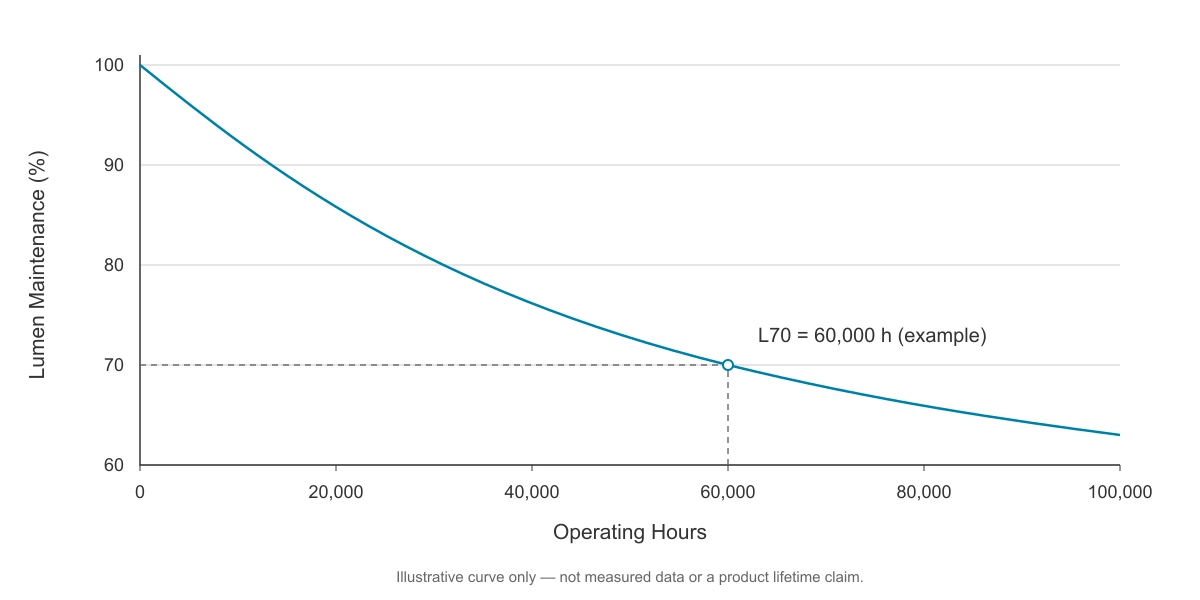
L70B50 kết hợp ngưỡng duy trì lumen với thống kê dân số.
- L70 có nghĩa là nguồn sáng LED duy trì 70% của thông lượng phát sáng ban đầu của nó. Nó đại diện cho khoảng 30% lumen khấu hao — không phải là khoản lỗ 70%.
- B50 mô tả một kết quả dân số trung bình. Nó là một giá trị thống kê, không phải là một đảm bảo rằng mọi đèn LED sẽ hoạt động giống hệt nhau.
- Giờ đã nêu đại diện cho thời gian hoạt động dự kiến liên quan đến điều kiện đó trong các điều kiện thử nghiệm quy định.
Ví dụ, L70B50 ở 50.000 giờ có nghĩa là dân số LED được đánh giá được dự đoán sẽ đạt mức trung bình-bảo dưỡng lumen là 70% sau 50.000 giờ hoạt động trong các điều kiện áp dụng.
Điều đó không có nghĩa là mỗi đèn LED sẽ cung cấp chính xác đầu ra 70% vào thời điểm đó, cũng không đảm bảo rằng mọi thành phần trong hệ thống chiếu sáng dải LED hoàn chỉnh sẽ hoạt động mà không bị hỏng trong 50.000 giờ.
L70B50 không trực tiếp mô tả các lỗi như:
- đèn LED chết hoặc các phần không hoạt động;
- dấu vết PCB bị hư hỏng;
- mối hàn không thành công;
- đầu nối bị lỗi hoặc hệ thống dây điện;
- sự cố kết dính;
- silicone vàng hoặc nứt;
- nước xâm nhập và ăn mòn;
- Cung cấp năng lượng hoặc lỗi bộ điều khiển.
Sự khác biệt này rất quan trọng vì hai dải LED có thể có cùng mức độ duy trì lumen nhưng mức độ tin cậy sản phẩm hoàn chỉnh khác nhau.
Để biết thêm thông tin, hãy xem hướng dẫn của chúng tôi về Tuổi thọ ánh sáng dải LED và các yếu tố ảnh hưởng đến nó.
LM-80 và TM-21 được sử dụng như thế nào?
LM-80 là phương pháp kiểm tra kỹ thuật chiếu sáng của Hiệp hội kỹ thuật chiếu sáng để đo các thay đổi về sản lượng ánh sáng và đặc tính màu của các gói LED, mảng hoặc mô-đun trong điều kiện được kiểm soát.
TM-21 sử dụng dữ liệu LM-80 đủ điều kiện để chiếu bảo trì lumen dài hạn. Nó có thể ước tính khi nào nguồn sáng LED có thể đạt đến mức như L70, L80 hoặc L90.
LM-80 cung cấp dữ liệu đo được, trong khi TM-21 cung cấp phép chiếu. Không chỉ phương pháp nào xác định thời gian bảo hành hoặc kiểm tra mọi thành phần trong hệ thống chiếu sáng dải LED đã lắp đặt.
Mức độ liên quan của yêu cầu trọn đời phụ thuộc vào các yếu tố bao gồm:
- Gói LED đã được kiểm tra;
- hoạt động hiện tại;
- nhiệt độ thử nghiệm;
- thời gian kiểm tra;
- cỡ mẫu;
- các điều kiện được thử nghiệm gần như thế nào thể hiện thành phẩm.
Do đó, người mua nên hỏi liệu dữ liệu trọn đời có áp dụng cho mô hình LED cụ thể và điều kiện hoạt động được sử dụng trong sản phẩm được báo giá hay không. Hiệp hội Kỹ thuật chiếu sáng cung cấp một Tài nguyên công cụ và tiêu chuẩn TM-21 chính thức.

Video CREE Lighting này giải thích cách sử dụng dữ liệu thử nghiệm LM-80 và TM-21 để đánh giá việc bảo trì lumen LED — không phải là thời gian tồn tại của sản phẩm hoàn chỉnh. Đối với đèn dải LED, người mua cũng nên xem xét lại các điều kiện vận hành, độ tin cậy của linh kiện và các điều khoản bảo hành bằng văn bản.
Tại sao hai dải đèn LED có thể có cùng L70B50 nhưng bảo hành khác nhau?
Cùng một đánh giá L70B50 không chứng minh được rằng hai đèn LED dải có cấu tạo giống hệt nhau, tỷ lệ hỏng hóc hoặc phạm vi bảo hành. Nó chỉ thiết lập một tuyên bố duy trì lumen trong các điều kiện xác định.
Sự khác biệt giữa các phạm vi bảo hành có thể là kỹ thuật, thương mại hoặc kết hợp cả hai.
| Sự khác biệt có thể | mẫu | Tại sao nó lại quan trọng |
| Linh kiện LED | thuộc về kỷ thuật | Chất lượng gói, độ ổn định của phosphor và tính nhất quán sản xuất có thể ảnh hưởng đến hiệu suất lâu dài |
| Hoạt động hiện tại | thuộc về kỷ thuật | Ứng suất điện thấp hơn có thể làm giảm nhiệt và chậm xuống cấp |
| Thiết kế nhiệt | thuộc về kỷ thuật | Thiết kế PCB, mật độ điện và phương pháp lắp đặt ảnh hưởng đến nhiệt độ hoạt động |
| sự bọc | thuộc về kỷ thuật | Chất lượng silicone và cấu trúc niêm phong ảnh hưởng đến màu vàng, nứt và chống nước |
| Kiểm tra sản xuất | thuộc về kỷ thuật | Lão hóa, kiểm tra và kiểm soát hàng loạt có thể làm giảm các lỗi sớm |
| Tỷ lệ lỗi sản phẩm hoàn chỉnh | thuộc về kỷ thuật | L70B50 không mô tả đầy đủ các phần chết, lỗi hàn, sự cố đầu nối hoặc sự xâm nhập của nước |
| Bảo hành | thuộc về thương m | Các biện pháp khắc phục, loại trừ, giới hạn hoạt động và yêu cầu yêu cầu có thể khác nhau |
| định vị thị trường | thuộc về thương m | cùng một nền tảng sản phẩm có thể được cung cấp với các gói dịch vụ hoặc giá khác nhau |
1. các thành phần khác nhau
Hai dải có thể sử dụng đèn LED với các yêu cầu bảo dưỡng lumen tương tự nhưng vật liệu PCB khác nhau, điện trở, quy trình hàn, chất kết dính, đầu nối hoặc đóng gói.
Những khác biệt này có thể không thay đổi giá trị L70B50 đã khai báo, nhưng chúng có thể ảnh hưởng đến độ tin cậy của sản phẩm hoàn chỉnh.
Người mua nên hỏi liệu phạm vi bảo hành dài hơn có sử dụng gói LED khác, đặc điểm kỹ thuật PCB, chất kết dính, đầu nối hoặc vật liệu chống thấm nước hay không.
2. Dòng điện hoạt động khác nhau
Lái đèn LED ở dòng điện thấp hơn thường làm giảm căng thẳng điện và nhiệt. Do đó, một dải được điều khiển thận trọng hơn có thể có nguy cơ hỏng hóc thấp hơn ngay cả khi xếp hạng bảo trì lumen được công bố của nó giống với một mô hình khác.
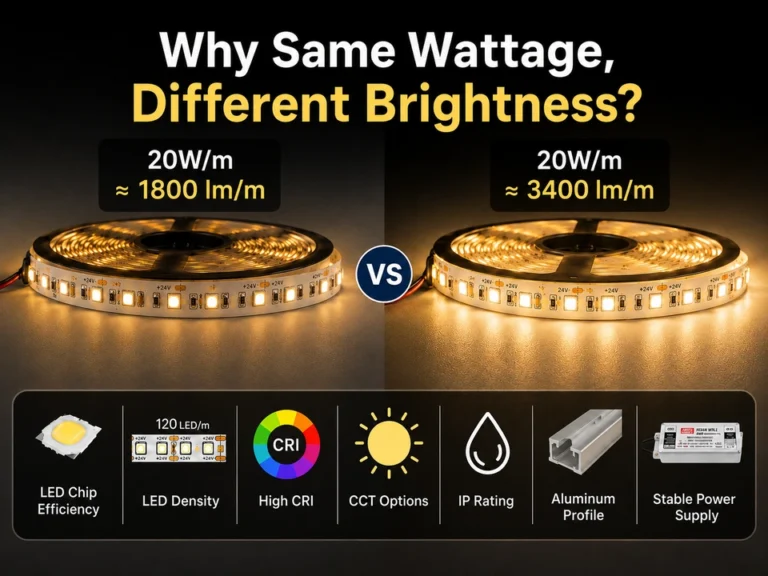
Khi so sánh sản phẩm, đừng chỉ nhìn vào độ sáng. So sánh:
- công suất trên mỗi mét;
- số lượng LED trên mỗi mét;
- dòng điện trên đèn LED hoặc đoạn mạch;
- hiệu quả phát sáng;
- Nhiệt độ PCB trong hoạt động bình thường.
Một dải tạo ra độ sáng cao từ ít đèn LED hơn có thể gây căng thẳng hơn cho mỗi đèn LED hơn là một thiết kế phân phối tải trên nhiều thành phần hơn.
3. Thiết kế nhiệt khác nhau
Nhiệt ảnh hưởng đến sự mất giá của lumen, độ ổn định màu sắc, mối hàn, chất kết dính và vật liệu xung quanh.
Hai dải LED có cùng mức đánh giá L70B50 có thể hoạt động ở các nhiệt độ khác nhau do sự khác biệt về:
- công suất trên mỗi mét;
- chiều rộng PCB;
- Đặc điểm kỹ thuật đồng;
- khoảng cách thành phần;
- bề mặt lắp;
- hồ sơ nhôm;
- luồng không khí xung quanh việc lắp đặt.
một lựa chọn thích hợp Hồ sơ nhôm LED Có thể hỗ trợ lắp đặt, bảo vệ và truyền nhiệt. Hướng dẫn của chúng tôi để Chọn đúng cấu hình LED Giải thích kích thước dải, nguồn và cài đặt ảnh hưởng như thế nào đến việc lựa chọn hồ sơ.
4. Đóng gói khác nhau và xây dựng IP
Đối với các lắp đặt ngoài trời, ẩm ướt hoặc tiếp xúc, hệ thống đóng gói và niêm phong có thể có ảnh hưởng lớn hơn đến tuổi thọ sản phẩm thực tế so với xếp hạng bảo trì lumen của đèn LED.
Điểm thất bại tiềm ẩn bao gồm:
- các mục cáp;
- đầu nối;
- cắt đầu;
- mũ kết thúc;
- khớp nối giữa các vật liệu;
- silicone hoặc lớp phủ bị hư hỏng;
- độ ẩm và ngưng tụ bị kẹt.
Hai sản phẩm có thể mang giá trị L70B50 như nhau nhưng sử dụng các phương pháp hoặc vật liệu chống thấm khác nhau. Người mua nên so sánh xây dựng IP hoàn chỉnh, không chỉ là xếp hạng IP in.
Bài viết của chúng tôi về Tại sao đèn dải LED ngoài trời bị lỗi Giải thích tác động của việc xâm nhập nước, tiếp xúc với tia cực tím, ăn mòn và tản nhiệt kém.
5. Kiểm tra và kiểm soát chất lượng khác nhau
Bảo hành lâu hơn có thể phản ánh sự tự tin cao hơn dựa trên các kiểm soát sản xuất hơn là xếp hạng L70B50 khác.
Các điều khiển có liên quan có thể bao gồm:
- kiểm tra thành phần đến;
- hàn và kiểm tra PCB;
- lão hóa bằng điện;
- kiểm tra điện và trắc quang;
- kiểm tra chống thấm;
- nhận dạng lô;
- Phân tích lỗi và hồ sơ trả lại.
Tuy nhiên, những tuyên bố chung chung như “kiểm tra nghiêm ngặt” là không đủ để so sánh chuyên nghiệp. Người mua nên hỏi những gì được kiểm tra, thời gian kiểm tra kéo dài và liệu hồ sơ có thể được truy tìm đến lô được cung cấp hay không.
6. Tỷ lệ lỗi sản phẩm hoàn chỉnh khác nhau
L70B50 chủ yếu liên quan đến việc bảo trì lumen. Nó không mô tả đầy đủ xác suất hỏng hóc một phần hoặc toàn bộ sản phẩm.
Một phạm vi bảo hành dài hơn có thể được thiết kế để giảm các lỗi liên quan đến PCB, mối hàn, đầu nối, đóng gói hoặc các thành phần khác, ngay cả khi nguồn sáng LED có cùng mức độ tuổi thọ.
Dữ liệu về sự cố và lỗi trong quá khứ cũng có thể giúp nhà sản xuất có thể tự tin hơn để cung cấp phạm vi bảo hiểm lâu hơn. Dữ liệu này rất nhạy cảm về mặt thương mại, nhưng nhà cung cấp vẫn có thể giải thích các biện pháp thiết kế và kiểm soát chất lượng nào hỗ trợ thời gian bảo hành.
7 .Các điều kiện bảo hành khác nhau
Đôi khi các sản phẩm tương tự về mặt kỹ thuật và sự khác biệt chính là hợp đồng.
Một bảo hành có thể cung cấp thay thế đầy đủ, trong khi bảo hành khác được tính theo tỷ lệ. Bảo hành lâu hơn cũng có thể áp đặt các giới hạn nghiêm ngặt hơn đối với:
- giờ hoạt động hàng ngày;
- nhiệt độ môi trường;
- nguồn điện tương thích;
- phương pháp cài đặt;
- Sử dụng trong nhà hoặc ngoài trời;
- trả lại cước;
- chi phí nhân công và lắp đặt lại.
Do đó, bảo hành 5 năm có thể cung cấp bảo vệ hữu ích hơn bảo hành bảy năm với phạm vi bảo hiểm hẹp hơn.
3. Sự khác biệt kỹ thuật hoặc sự khác biệt thương mại?
Khi hai sản phẩm có cùng tuổi thọ L70B50 nhưng thời gian bảo hành khác nhau, một trong ba trường hợp thường áp dụng:
- Các sản phẩm khác nhau về mặt kỹ thuật.
Sản phẩm bảo hành dài hơn có thể sử dụng các thành phần khác nhau, giảm ứng suất vận hành, cải tiến thiết kế nhiệt hoặc đóng gói bền hơn. - Độ tin cậy kiểm soát chất lượng là khác nhau.
Việc xây dựng có thể tương tự, nhưng thử nghiệm bổ sung, độ tuổi hoặc kiểm soát hàng loạt hỗ trợ cam kết lâu hơn. - Sự khác biệt chủ yếu là thương mại.
Các sản phẩm có thể chia sẻ cùng một nền tảng nhưng có giá cả, biện pháp khắc phục, loại trừ hoặc định vị thị trường khác nhau.
Chỉ riêng thời hạn bảo hành không thể xác định được tình huống nào áp dụng. Nhà cung cấp nên đưa ra lời giải thích cụ thể theo mô hình.
Làm thế nào người mua có thể xác minh sự khác biệt?
Nhà phân phối và người mua dự án có thể sử dụng các câu hỏi sau khi so sánh các dải bảo hành đèn LED dải.
| câu hỏi để hỏi | Tại sao nó lại quan trọng |
| Cả hai sản phẩm có sử dụng cùng một gói LED và thông số kỹ thuật thùng không? | Xác định sự khác biệt có thể có trong nguồn sáng |
| Dòng điện hoạt động trên mỗi đèn LED có giống nhau không? | Cho biết liệu một thiết kế có sử dụng tải điện thận trọng hơn không |
| Chiều rộng PCB và đặc điểm kỹ thuật đồng có giống nhau không? | Giúp so sánh thiết kế nhiệt và điện |
| Công suất trên mỗi mét có giống nhau không? | Mật độ công suất cao hơn có thể tạo ra nhiều nhiệt hơn |
| Các cấu trúc đóng gói và IP có giống hệt nhau không? | Quan trọng cho việc lắp đặt ngoài trời và ẩm ướt |
| Cả hai sản phẩm có sử dụng cùng một cơ sở thử nghiệm trọn đời không? | Xác nhận xem các yêu cầu L70B50 có thể so sánh trực tiếp không |
| Các yêu cầu về độ tuổi và kiểm soát chất lượng có khác nhau không? | Có thể giải thích độ tin cậy bảo hành cao hơn |
| Bảo hành có đầy đủ hay theo tỷ lệ không? | Xác định giá trị bồi thường thực tế |
| Giới hạn giờ hoạt động và nhiệt độ có giống nhau không? | Bảo hành lâu hơn có thể chứa các điều kiện nghiêm ngặt hơn |
| Ai trả tiền vận chuyển hàng hóa, nhân công và lắp đặt lại? | Chi phí này có thể vượt quá giá trị của dải LED |
So sánh hữu ích nhất kết hợp các thông số kỹ thuật với tài liệu bảo hành đầy đủ. Chỉ so sánh “50.000 giờ” và “năm năm” sẽ loại bỏ các yếu tố có khả năng ảnh hưởng đến rủi ro dự án cao nhất.
50.000 giờ là bao nhiêu năm?
Lịch tương đương 50.000 giờ hoạt động phụ thuộc vào thời gian dải đèn LED chạy mỗi ngày.
| Thời gian hoạt động hàng ngày | Thời gian lịch gần đúng |
| 24 giờ/ngày | 5,7 năm |
| 18 giờ / ngày | 7,6 năm |
| 12 giờ / ngày | 11,4 năm |
| 8 giờ / ngày | 17,1 năm |
Tính toán là: 50.000 ÷ Giờ hoạt động hàng ngày ÷ 365
Bảo hành 5 năm bao gồm khoảng 43.800 giờ hoạt động trong một ứng dụng liên tục 24/7, nhưng chỉ khoảng 14.600 giờ với tám giờ mỗi ngày.
Đây là lý do tại sao giờ trọn đời và năm bảo hành không thể chuyển đổi nếu không nêu rõ lịch hoạt động hàng ngày.
Người mua nên lựa chọn giữa các phạm vi bảo hành khác nhau như thế nào?
Bảo hành lâu nhất không phải lúc nào cũng là sự lựa chọn tốt nhất hoặc tiết kiệm nhất. Phạm vi thích hợp phụ thuộc vào thời gian vận hành, điều kiện lắp đặt và chi phí hỏng hóc.
| Ứng dụng | Rủi ro chính | Ưu tiên mua |
| trang trí dân cư | Hạn chế sử dụng hàng ngày và ngân sách | Đầu ra phù hợp, cung cấp điện an toàn và bảo hành cơ bản rõ ràng |
| kệ và trưng bày bán lẻ | Thời gian chạy dài và sự khác biệt màu sắc có thể nhìn thấy | Bảo trì lumen, tính nhất quán màu sắc và kiểm soát nhiệt |
| Bảng hiệu và hộp đèn | 12–24 giờ vận hành và bảo trì khó khăn | Thiết kế nhiệt, cung cấp điện đáng tin cậy và bảo hiểm thay thế |
| Ánh sáng kiến trúc ngoài trời | Độ ẩm, tia cực tím, thay đổi nhiệt độ và ăn mòn | Niêm phong xây dựng, vật liệu và bảo vệ lắp đặt |
| dự án hợp đồng | Chi phí lao động, sự chậm trễ và yêu cầu của khách hàng | Bảo hiểm bằng văn bản, truy xuất nguồn gốc lô hàng và hỗ trợ nhà cung cấp |
Bảo hành cao cấp có thể đáng giá khi:
- Dải đèn LED hoạt động trong nhiều giờ;
- thay thế đòi hỏi sự tiếp cận hoặc lao động tốn kém;
- thời gian ngừng hoạt động của dự án tạo ra tổn thất thương mại;
- Việc lắp đặt tiếp xúc với nhiệt hoặc độ ẩm;
- Hợp đồng khách hàng yêu cầu thời gian bảo hành xác định.
Bảo hành ngắn hơn có thể đủ cho các lắp đặt trong nhà có thể tiếp cận với chi phí thay thế hàng ngày hạn chế và chi phí thay thế thấp.
Để so sánh sản phẩm rộng hơn, hãy xem Hướng dẫn lựa chọn đèn LED dải thương mại.
Người mua nên yêu cầu gì từ một nhà cung cấp dải đèn LED?
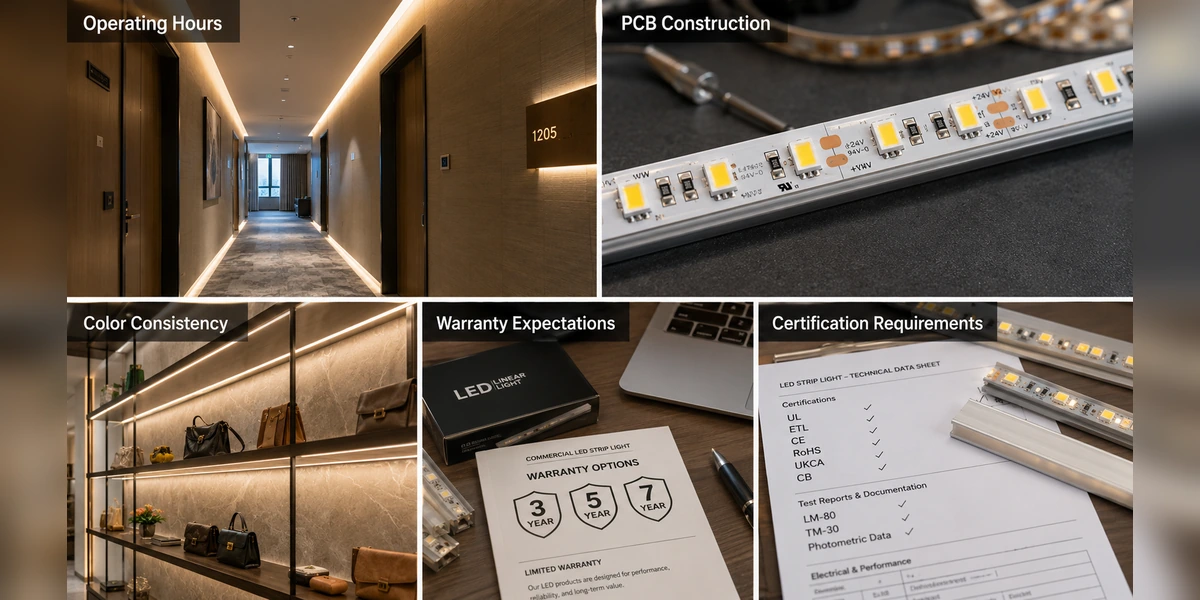
Trước khi phê duyệt đèn LED dải, yêu cầu tài liệu cho mô hình và cấu hình chính xác được trích dẫn. Tập trung vào những điều sau đây:
- Thông số kỹ thuật sản phẩm: Điện áp, dòng điện hoạt động, công suất trên mỗi mét, cấu tạo PCB và giới hạn nhiệt độ hoạt động.
- Bằng chứng trọn đời: Ý nghĩa của xếp hạng L70B50 đã khai báo, dữ liệu LM-80 có liên quan, bất kỳ dự báo TM-21 nào và cơ sở cho yêu cầu B50. Xác nhận xem bằng chứng có áp dụng cho các thành phần LED hay dải hoàn thiện hay không.
- Kiểm tra độ tin cậy: Kết quả kiểm tra nhiệt, điện, lão hóa và môi trường có liên quan. Đối với các sản phẩm chống thấm, yêu cầu bằng chứng hỗ trợ xếp hạng IP đã nêu.
- Tài liệu tuân thủ: Tuyên bố, chứng chỉ hoặc báo cáo thử nghiệm áp dụng cho thị trường đích và cài đặt. Kiểm tra xem chúng có bao gồm mô hình được trích dẫn và cấu hình sản phẩm có liên quan hay không.
- Yêu cầu lắp đặt: tản nhiệt, chiều dài chạy tối đa, kích thước nguồn điện và bất kỳ hạn chế nào ảnh hưởng đến hiệu suất hoặc tính đủ điều kiện bảo hành.
- Bảo hành và truy xuất nguồn gốc: bảo hiểm bằng văn bản, loại trừ, biện pháp khắc phục, nhận dạng lô và thủ tục yêu cầu bồi thường.
Tài liệu tuân thủ, dự báo trọn đời và kiểm tra độ tin cậy phục vụ các mục đích khác nhau. Không nên được coi là thay thế cho những thứ khác — hoặc cho bảo hành bằng văn bản. Yêu cầu nhà cung cấp xác nhận cách thức từng tài liệu áp dụng cho sản phẩm đã chọn.
Câu hỏi thường gặp
Phần kết luận
Đèn LED dải đèn có tuổi thọ và bảo hành trả lời các câu hỏi khác nhau. L70B50 mô tả hiệu suất bảo dưỡng lumen trong các điều kiện xác định, trong khi các điều khoản bảo hành bằng văn bản quy định nghĩa vụ của nhà sản xuất nếu xảy ra lỗi đủ điều kiện.
Hai dải LED do đó có thể có cùng mức xếp hạng L70B50 nhưng thời gian bảo hành khác nhau. Bảo hành lâu hơn không tự động chứng minh tuổi thọ lâu hơn; so sánh dữ liệu hỗ trợ, yêu cầu cài đặt và phạm vi bảo hiểm cho mô hình chính xác.
Để được trợ giúp chọn đèn dải có dấu hiệu, hãy chia sẻ ứng dụng, điều kiện hoạt động và thời gian bảo hành bắt buộc, đồng thời yêu cầu bảng dữ liệu liên quan và các điều khoản bảo hành bằng văn bản cho mô hình được đề xuất.
auther: Jason Chen
Lãnh đạo R & D
e-mail: e-rign@signlite.com.cn
Di động: +86 13528844818

Bài viết liên quan