Tiếng Việt
  English
  简体中文
简体中文  Deutsch
  Español
  Français
  Italiano
  日本語
日本語  한국어
한국어  Polski
  Português
  Русский
  Türkçe
  Nederlands
  ไทย
ไทย 
Lắp đặt đèn chiếu sáng tủ dùng để yêu cầu kỹ năng hàn, dụng cụ chuyên dụng, thời gian lắp đặt thêm. Tuy nhiên, chiếu sáng tủ không hàn đã giúp dễ dàng hơn trong việc tạo ra các giải pháp chiếu sáng LED sạch sẽ và chuyên nghiệp mà không cần công việc đi dây phức tạp.
Bằng cách sử dụng đèn LED dải không hàn, người lắp đặt có thể nhanh chóng kết nối và lắp đặt dưới ánh sáng tủ mà không cần thiết bị hàn. Phương pháp lắp đặt linh hoạt này đặc biệt phù hợp với tủ bếp, tủ quần áo, kệ, tủ trưng bày, và các dự án đồ nội thất tùy chỉnh, nơi có sự xuất hiện gọn gàng và bảo trì dễ dàng là rất quan trọng.
Trong hướng dẫn này, chúng tôi sẽ giải thích cách thức hoạt động của chiếu sáng tủ không hàn, cách lắp đặt đèn dải LED mà không cần hàn và những điều cần cân nhắc khi chọn đầu nối không hàn cho các ứng dụng chiếu sáng khác nhau.
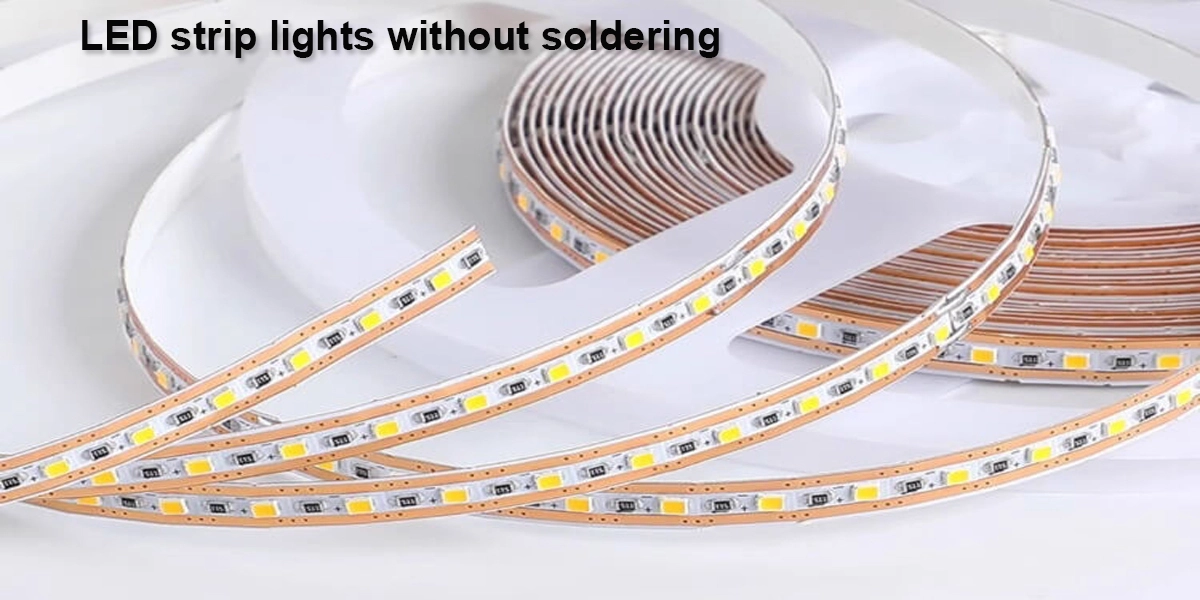
Câu trả lời nhanh: Tại sao chiếu sáng tủ không hàn lại trở nên phổ biến?
Chiếu sáng tủ không hàn đang trở nên phổ biến vì nó đơn giản hóa việc lắp đặt và bảo trì hệ thống chiếu sáng dải LED. Bằng cách thay thế các kết nối hàn truyền thống bằng các đầu nối plug-in, nó cho phép LED灯带, Hồ sơ nhôm, Và Phụ kiện chiếu sáng được cài đặt, thay thế và nâng cấp hiệu quả hơn. Điều này làm cho nó trở thành một giải pháp lý tưởng cho nhà bếp, tủ quần áo, tủ quần áo, tủ trưng bày và các dự án đồ nội thất tùy chỉnh, nơi lắp đặt sạch sẽ, thiết kế linh hoạt và bảo trì lâu dài là rất quan trọng.
Hệ thống chiếu sáng tủ không hàn là gì và nó hoạt động như thế nào?
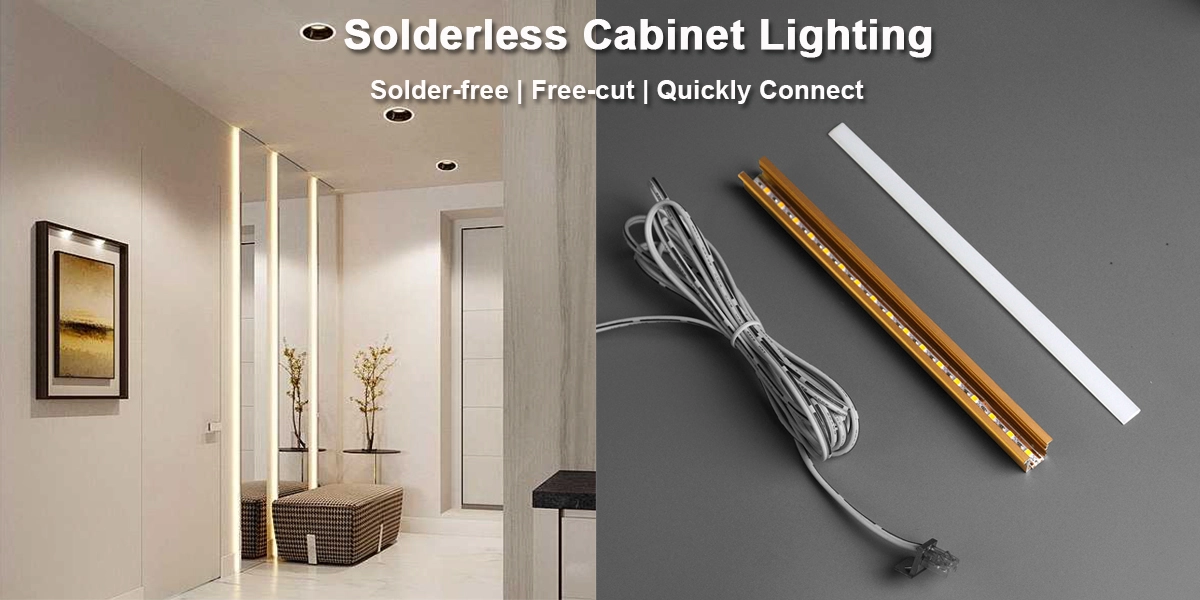
Hệ thống chiếu sáng tủ không hàn là giải pháp chiếu sáng LED mô-đun sử dụng đèn LED không hàn, đầu nối không hàn, cấu hình nhôm và các phụ kiện tương thích để đơn giản hóa việc lắp đặt, thay thế và bảo trì cho các dự án chiếu sáng đồ nội thất.
khác dải đèn LED truyền thống Các cài đặt yêu cầu dây phải được hàn thủ công vào dải, chiếu sáng tủ không hàn sử dụng các đầu nối cắm và các phương pháp kết nối được thiết kế sẵn để tạo ra các kết nối điện đáng tin cậy mà không cần dụng cụ hàn. Điều này cho phép đèn dải LED, nguồn cấp điện, Và Thành phần điều khiển được cài đặt, điều chỉnh hoặc thay thế hiệu quả hơn.
Sự khác biệt chính là thiết kế kết nối mô-đun của nó. Thay vì tạo ra các mối hàn vĩnh viễn, mỗi thành phần chiếu sáng có thể được lắp ráp, điều chỉnh, nâng cấp hoặc thay thế độc lập khi cần thiết. Điều này làm cho hệ thống nhanh hơn để lắp đặt và dễ bảo trì hơn, đặc biệt là cho tủ, tủ quần áo, tủ quần áo, tủ trưng bày và các ứng dụng chiếu sáng đồ nội thất tùy chỉnh, nơi lắp đặt và linh hoạt sạch sẽ là quan trọng.
Một hệ thống chiếu sáng tủ không hàn điển hình bao gồm một số thành phần tích hợp:
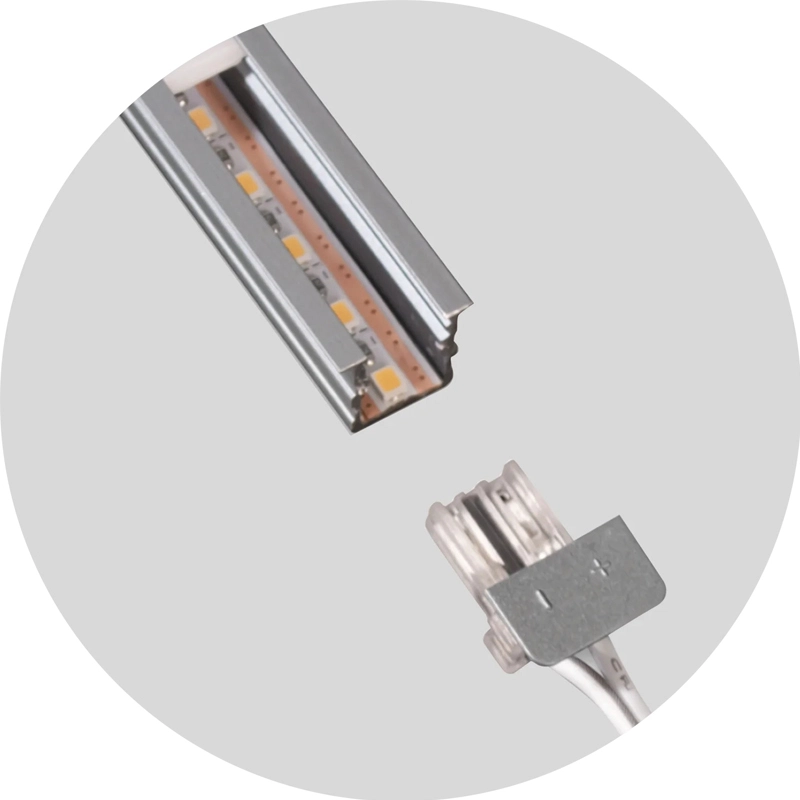
Đèn dải LED không hàn với thiết kế kết nối nhanh
Đèn LED không hàn là nguồn sáng chính của hệ thống chiếu sáng tủ không hàn. Được thiết kế để hoạt động với các đầu nối không cần hàn hoặc các điểm kết nối được cài đặt sẵn, các đèn LED không hàn này cho phép người lắp đặt cắt, kết nối lại hoặc thay thế các phần chiếu sáng mà không cần thêm công việc hàn.
Phương pháp kết nối đơn giản này cải thiện hiệu quả lắp đặt và giảm thời gian bảo trì, làm cho nó phù hợp cho tủ bếp, tủ quần áo, kệ và các ứng dụng chiếu sáng đồ nội thất khác.
Cấu hình nhôm để bảo vệ và tản nhiệt
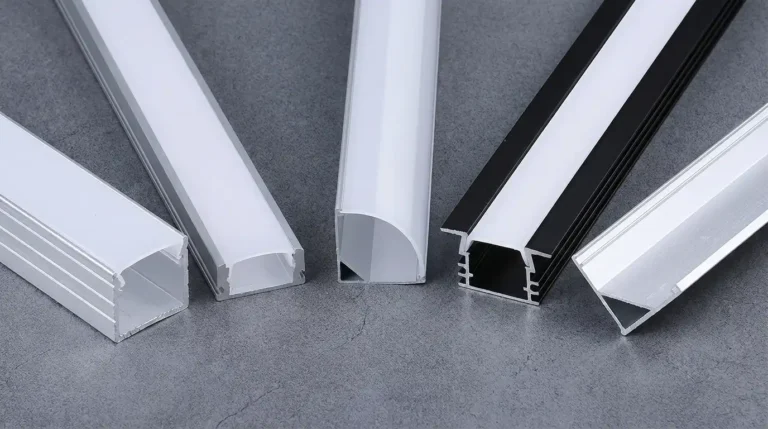
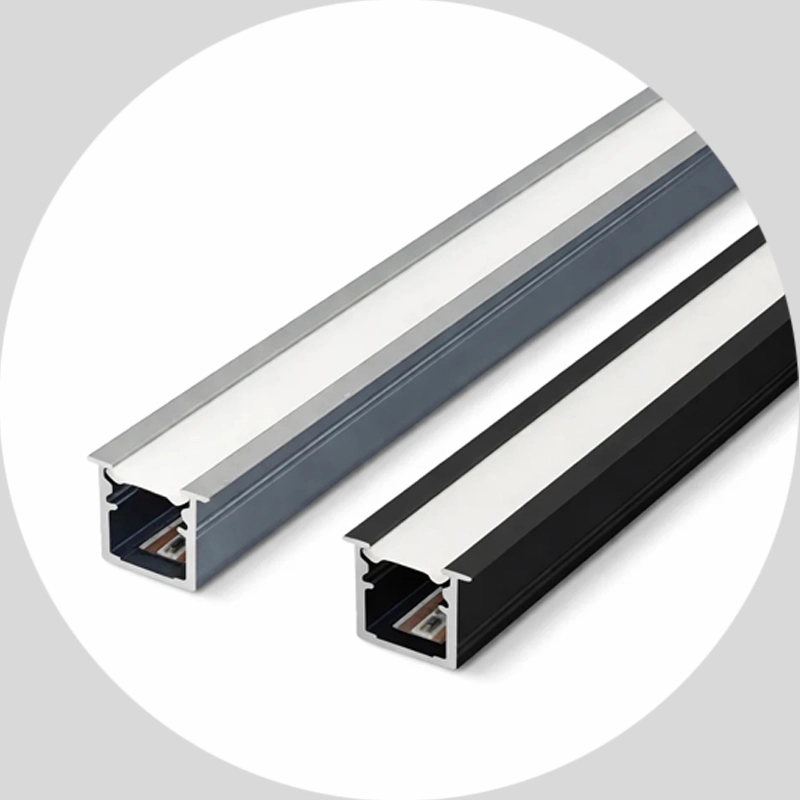
Cấu hình nhôm cung cấp một vẻ ngoài chuyên nghiệp hoàn thiện trong khi bảo vệ đèn dải LED và cải thiện quản lý nhiệt. Trong các dự án chiếu sáng tủ và đồ nội thất, các cấu hình âm tường, lắp trên bề mặt và góc thường được sử dụng để tạo ra các hiệu ứng chiếu sáng tuyến tính liền mạch bên trong tủ, tủ quần áo, kệ và khu vực trưng bày.
Đầu nối cắm và phụ kiện mô-đun
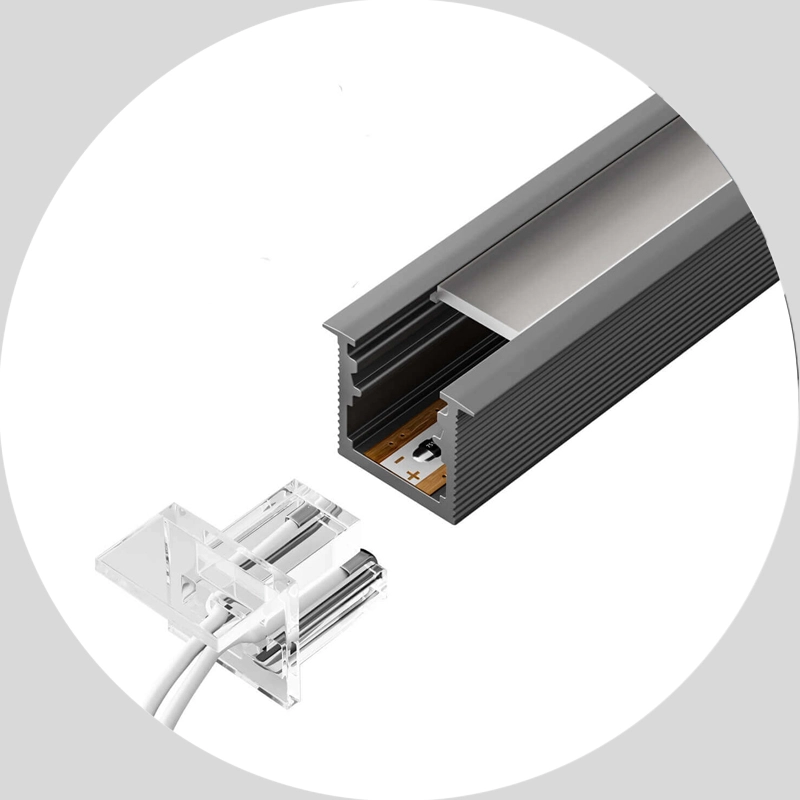
Đầu nối không hàn, cáp mở rộng và phụ kiện lắp tạo ra hệ thống kết nối linh hoạt giữa dải đèn LED và các thành phần ánh sáng khác. Các phụ kiện plug-and-play này làm giảm sự phức tạp của việc lắp đặt và cho phép bố trí ánh sáng được tùy chỉnh theo các thiết kế đồ nội thất khác nhau.
Trình điều khiển LED và các thành phần điều khiển tùy chọn
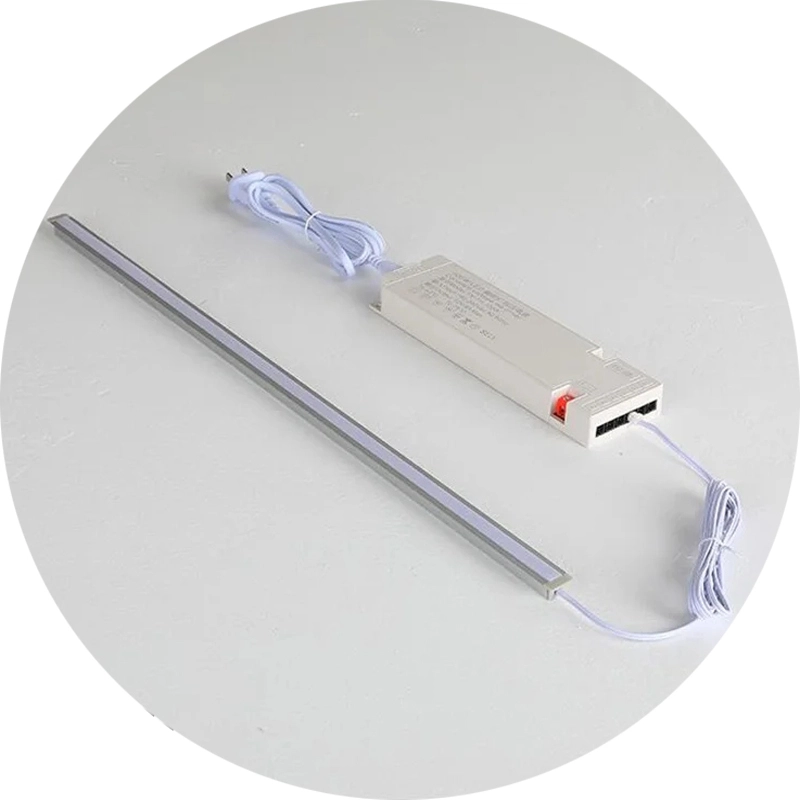
Trình điều khiển LED cung cấp năng lượng ổn định cho hệ thống chiếu sáng, trong khi các thành phần tùy chọn như cảm biến chuyển động, bộ điều chỉnh độ sáng và bộ điều khiển thông minh có thể được tích hợp để cải thiện sự tiện lợi, hiệu quả năng lượng và trải nghiệm người dùng.
Bằng cách kết hợp các thành phần mô-đun này, hệ thống chiếu sáng tủ không hàn cung cấp một sự thay thế sạch hơn, nhanh hơn và linh hoạt hơn cho các cài đặt dải LED truyền thống. Nó đang trở thành một giải pháp ngày càng phổ biến cho các dự án chiếu sáng đồ nội thất hiện đại, thiết kế nội thất và tủ đựng đồ theo yêu cầu.
Dòng LED không hàn cho ánh sáng tủ
Việc chọn đúng dải đèn LED không hàn cũng quan trọng như việc chọn thiết kế tủ. Các dự án nội thất khác nhau yêu cầu độ rộng PCB, mức độ sáng và nhiệt độ màu khác nhau.
Đối với tủ quần áo, giá sách, tủ bếp và đồ nội thất tùy chỉnh, thiết kế PCB hẹp và công nghệ trắng có thể điều chỉnh đang ngày càng trở nên phổ biến vì chúng mang lại sự linh hoạt khi lắp đặt và ánh sáng thoải mái hơn.
Dòng đèn LED không hàn phổ biến cho ánh sáng tủ
Bảng sau đây so sánh một số dòng đèn LED không hàn thường được sử dụng trong các ứng dụng chiếu sáng tủ.
| từng đoạn | Loại đèn LED | Số lượng dẫn | chiều rộng pcb | Điện áp đầu vào | quyền thay mặt | chuyện dữ dội | đầu ra lumen | Nhiệt độ màu |
| 2025-120-5mm-11.4W-CCT | 2025 SMD | 120 đèn LED / m | 5 mm | DC12V/24V | 11,4 W / m | RA90 | 557–606 lm / m | 2700–6500K |
| 2835-120-6.5mm-14.6W-CCT | 2835 SMD | 120 đèn LED / m | 6,5 mm | DC12V/24V | 14,6 W / m | RA90 | 775–876 lm / m | 2700–6500K |
| 2025-150-5mm-14W-CCT | 2025 SMD | 150 đèn LED / m | 5 mm | DC12V/24V | 14 W / M | RA90 | 586–636 lm / m | 2700–6500K |
| 2025-200-5mm-16W-CCT | 2025 SMD | 200 đèn LED / m | 5 mm | DC12V/24V | 16 W / m | RA90 | 754–871 lm / m | 2700–6500K |
| 2835-120-4mm-10W-CCT | 2835 SMD | 120 đèn LED / m | 4 mm | DC12V/24V | 10 W / m | RA90 | 382–414 lm / m | 2700 |
Cách chọn dải LED không hàn phù hợp
Đối với cấu hình nhôm siêu hẹp
Nếu không gian lắp đặt bị hạn chế, chẳng hạn như kệ tủ quần áo, tủ kính, hoặc đồ nội thất nổi, thiết kế PCB 4 mm và 5 mm mang lại sự linh hoạt cao hơn trong khi vẫn giữ được vẻ ngoài sạch sẽ.
Cho ánh sáng liền mạch, không có chấm
Mật độ LED cao hơn, chẳng hạn như dòng 2025-200, tạo ra ánh sáng mượt mà và đồng đều hơn khi lắp đặt bên trong các cấu hình nhôm, làm cho chúng lý tưởng cho các dự án đồ nội thất cao cấp.
Để chiếu sáng nhiệm vụ sáng hơn
Tủ bếp và màn hình bán lẻ thường yêu cầu mức độ sáng cao hơn. Trong những trường hợp này, dòng 2835-120-6,5 mm cung cấp sản lượng lumen cao nhất trong số các tùy chọn có sẵn.
Cho đèn chiếu sáng tủ trắng
All Series hỗ trợ công nghệ Tunable White từ 2700K đến 6500K, cho phép người dùng chuyển đổi giữa ánh sáng xung quanh ấm áp và ánh sáng tác vụ mát hơn theo các kịch bản khác nhau.
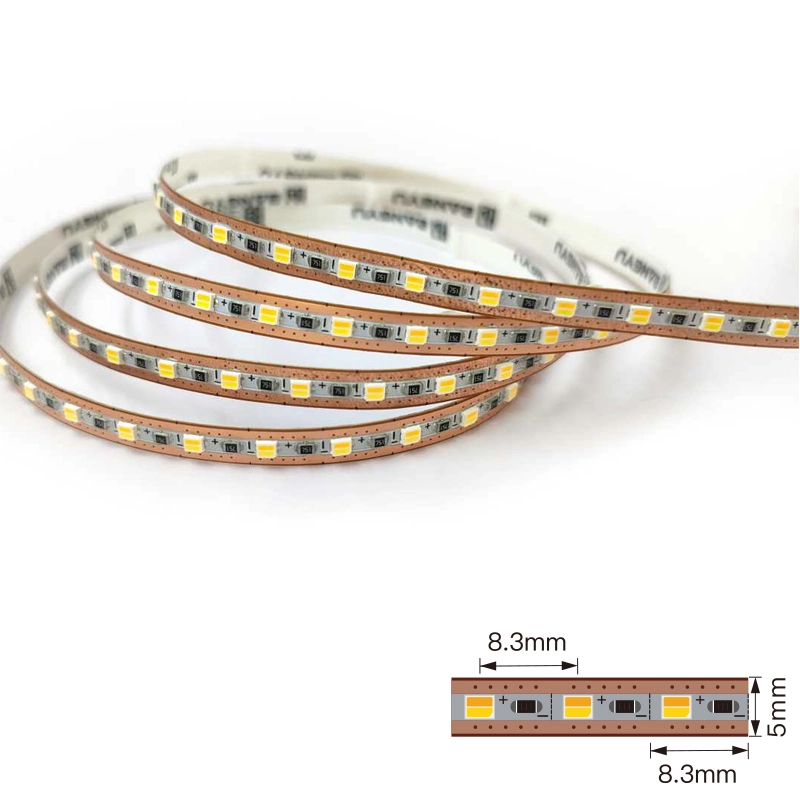
Đèn dải LED không hàn 2025-120-5mm-11.4W-CCT
- Điện áp đầu vào: DC12V/24V
- Loại LED: 2025 SMD
- Số lượng LED: 120 chiếc
- Watt: 5.7W + 5.7W/m
- Màu sắc: 2700-6500K
- CRI: RA 90
- Thông lượng phát sáng: 557/606 lm / m
- Chiều rộng PCB: 5mm
- Phía trên chức năng hỗ trợ tùy chỉnh
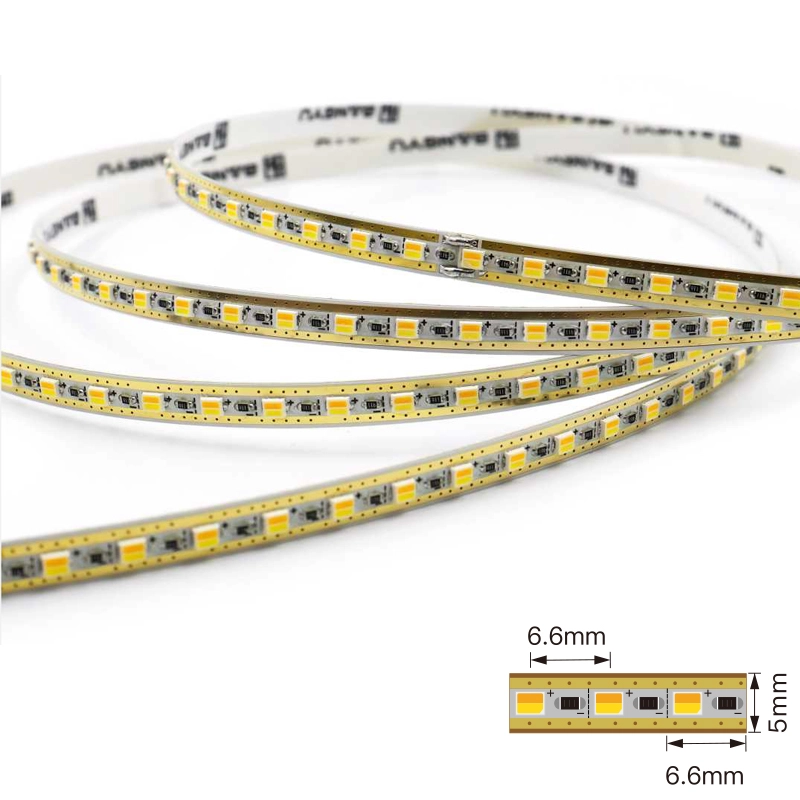
Đèn dải LED không hàn 2025-150-5mm-14W-CCT
- Điện áp đầu vào: DC12V/24V
- Loại LED: 2025 SMD
- Số lượng LED: 150 chiếc
- Watt: 7W + 7W/m
- Màu sắc: 2700-6500K
- CRI: RA 90
- Thông lượng phát sáng: 586–636 lm / m
- Chiều rộng PCB: 5mm
- Phía trên chức năng hỗ trợ tùy chỉnh
Tại sao chiếu sáng tủ không hàn đang trở thành một sự thay thế ưa thích cho hệ thống dải LED truyền thống
Hệ thống chiếu sáng tủ hiện đại không còn được đánh giá chỉ bằng độ sáng hay hiệu quả sử dụng năng lượng. Các nhà sản xuất, thiết kế và lắp đặt đồ nội thất đang chịu áp lực ngày càng tăng để rút ngắn chu kỳ sản xuất, đơn giản hóa việc lắp đặt và giảm chi phí bảo trì. Do đó, việc lắp đặt đèn LED dải LED truyền thống đang dần nhường chỗ cho hệ thống chiếu sáng tủ không hàn mô-đun.
Sự thay đổi không chỉ đơn giản là loại bỏ hàn — nó phản ánh các yêu cầu thay đổi của sản xuất đồ nội thất hiện đại và thiết kế nội thất. Từ tủ quần áo và tủ bếp đến giá sách và trưng bày bán lẻ, hệ thống chiếu sáng được kỳ vọng sẽ dễ lắp đặt hơn, linh hoạt hơn để tùy chỉnh và đơn giản hơn để bảo trì theo thời gian.
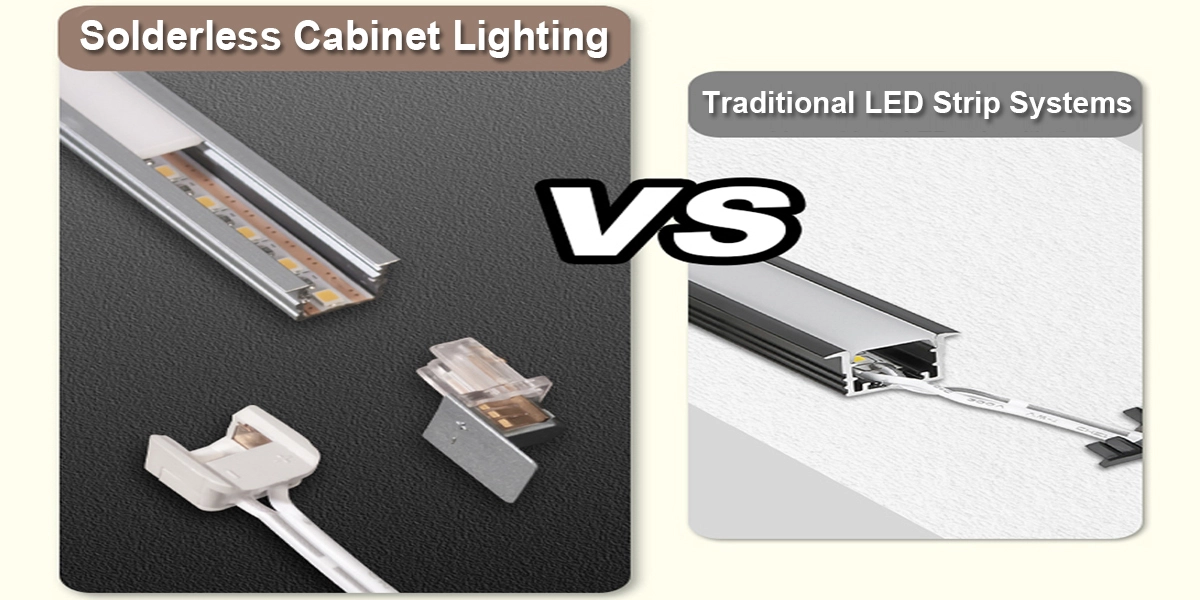
Bảng sau đây cho thấy các yêu cầu chính đối với các dự án chiếu sáng tủ hiện đại
| Những dự án nội thất hiện đại cần những gì | Hệ thống dải LED truyền thống | Hệ thống chiếu sáng tủ không hàn |
| Cài đặt nhanh hơn | Yêu cầu tước dây, hàn và thử nghiệm tại chỗ | Đầu nối cắm và chạy đơn giản hóa việc cài đặt |
| Bảo trì dễ dàng hơn | Thay thế các dải bị hư hỏng có thể yêu cầu quấn lại hoặc tháo rời tủ | Các dải và đầu nối riêng lẻ có thể được thay thế nhanh chóng |
| Linh hoạt hơn cho đồ nội thất tùy chỉnh | Cố định các mối hàn hạn chế bố trí bố trí | Phụ kiện mô-đun thích ứng với các thiết kế tủ khác nhau |
| Dáng sạch sẽ và chuyên nghiệp hơn | Dây và điểm hàn có thể vẫn hiển thị | Đầu nối ẩn tạo ra một kết thúc liền mạch |
| Tùy chọn cắt linh hoạt | Khoảng thời gian cắt dài hơn có thể tạo ra các đốm đen và lãng phí vật liệu | Khoảng thời gian cắt ngắn hơn cho phép bố trí chính xác hơn |
| Chi phí lao động thấp hơn trong các dự án lớn | Thời gian lắp đặt tăng theo quy mô dự án | Lắp ráp nhanh hơn giúp cải thiện năng suất |
| Nâng cấp trong tương lai và điều khiển thông minh | Việc thêm cảm biến hoặc bộ điều chỉnh độ sáng thường yêu cầu tua lại | Tích hợp dễ dàng với cảm biến, bộ điều chỉnh độ sáng và bộ điều khiển |
| Kết nối và thay thế | Các phần bị hỏng rất khó để loại bỏ sau khi lắp đặt | Dải đèn LED có thể được ngắt kết nối và thay thế mà không cần hàn |
Hệ thống dây truyền thống làm chậm sản xuất
Trong các dự án chiếu sáng tủ thông thường, người lắp đặt thường cần cắt dây, kết nối hàn và kiểm tra mọi phần chiếu sáng trước khi lắp đặt. Mặc dù các bước này có thể quản lý được đối với các dự án nhỏ, nhưng chúng ngày càng trở nên tốn thời gian trong các hệ thống tủ quần áo quy mô lớn, kệ bán lẻ và sản xuất đồ nội thất tùy chỉnh.
Chiếu sáng tủ không hàn thay thế hệ thống dây điện bằng tay bằng đầu nối cắm và chạy và các thành phần cấu hình sẵn, giúp nhà sản xuất giảm thời gian lắp ráp và nâng cao hiệu quả lắp đặt.
Bảo trì không nên yêu cầu xây dựng lại tủ
Một trong những thách thức lớn nhất trong việc chiếu sáng đồ nội thất là bảo trì. Một khi hệ thống chiếu sáng được tích hợp vào tủ quần áo, tủ hoặc kệ trưng bày, việc thay thế dải đèn LED bị hỏng có thể yêu cầu tháo rời các tấm nội thất hoặc nối lại các kết nối.
Hệ thống không hàn mô-đun giải quyết vấn đề này bằng cách cho phép thay thế các dải, đầu nối và phụ kiện riêng lẻ. Thay vì thay thế toàn bộ cài đặt, người dùng có thể nhanh chóng hoán đổi chỉ các thành phần bị hư hỏng.
Nội thất hiện đại đòi hỏi sự linh hoạt cao hơn
Thiết kế nội thất ngày càng trở nên tùy biến. Tủ quần áo không cửa ngăn, kệ nổi, tủ kính và đơn vị trưng bày hiếm khi tuân theo kích thước tiêu chuẩn.
Dải đèn LED truyền thống với các điểm hàn cố định thường phải vật lộn để thích ứng với các bố cục này. Tuy nhiên, các hệ thống không hàn hỗ trợ cắt linh hoạt, đầu nối cắm và chạy và nhiều tùy chọn cài đặt, giúp chúng dễ dàng tích hợp vào các thiết kế nội thất khác nhau.
Hệ thống chiếu sáng tủ đang trở thành một hệ thống hoàn chỉnh
Mười năm trước, khách hàng chủ yếu mua dải đèn LED. Ngày nay, họ mong đợi các giải pháp chiếu sáng hoàn chỉnh kết hợp dải, cấu hình nhôm, trình điều khiển, cảm biến và hệ thống điều khiển.
Việc chuyển đổi từ các sản phẩm riêng lẻ sang hệ thống tích hợp là một trong những lý do chính khiến ánh sáng tủ không hàn tiếp tục trở nên phổ biến. Nó không còn đơn giản là một phụ kiện chiếu sáng nữa - nó đã trở thành một phần của chính đồ nội thất.
Tương lai của ánh sáng đồ nội thất là mô-đun
Khi chi phí lao động tiếp tục tăng và các thiết kế đồ nội thất trở nên tinh vi hơn, hệ thống chiếu sáng mô-đun đang dần thay thế các lắp đặt hàn truyền thống.
Đối với các nhà sản xuất đồ nội thất, nhà thiết kế nội thất và nhà thầu, lợi thế thực sự của ánh sáng tủ không hàn không chỉ đơn giản là không có hàn. Đó là khả năng tạo ra hệ thống chiếu sáng nhanh hơn để lắp đặt, dễ bảo trì hơn và phù hợp hơn với nội thất hiện đại.
Đèn chiếu sáng tủ không hàn được sử dụng ở đâu? Các ứng dụng dải LED phổ biến
Ban đầu được phát triển để đơn giản hóa việc lắp đặt đèn dải LED, chiếu sáng tủ không hàn đã phát triển thành một giải pháp thiết thực cho một loạt các ứng dụng nội thất và nội thất. Thiết kế mô-đun, kết nối ẩn và bảo trì dễ dàng làm cho nó đặc biệt phù hợp cho các dự án đòi hỏi tính thẩm mỹ sạch sẽ và bố cục linh hoạt.
Sau đây là một số ứng dụng phổ biến nhất.
Tủ quần áo và tủ quần áo không cửa ngăn
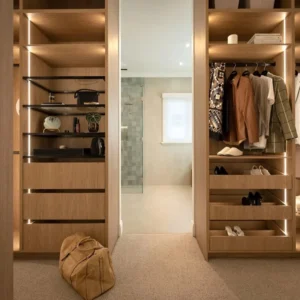
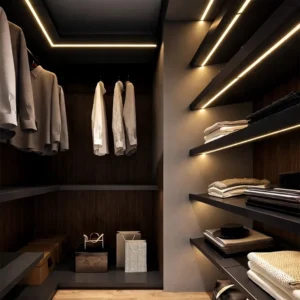
Tủ quần áo và tủ quần áo không cửa ngăn thường yêu cầu ánh sáng mềm mại, đồng đều để cải thiện tầm nhìn mà không cần lộ cáp hoặc đầu nối. Hệ thống chiếu sáng tủ không hàn có thể được tích hợp vào kệ, khu vực treo và ngăn kéo sử dụng cấu hình nhôm và cảm biến chuyển động.
Bởi vì hệ thống lưu trữ quần áo được tùy chỉnh cao, các tùy chọn cắt linh hoạt cho phép người lắp đặt điều chỉnh bố trí ánh sáng với các kích thước tủ khác nhau.
Tủ bếp và đèn chiếu sáng dưới tủ
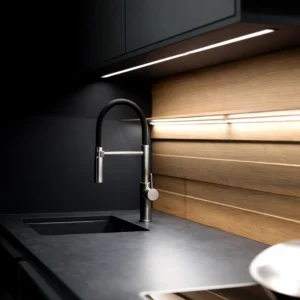
Đèn LED nhà bếp và dưới tủ cần phải có chức năng cũng như hấp dẫn về mặt thị giác. Dải đèn LED không hàn thường được lắp đặt bên dưới tủ tường, ngăn kéo bên trong và dọc theo các kệ mở để cung cấp ánh sáng nhiệm vụ cho việc chuẩn bị và lưu trữ thực phẩm.
So với các phương pháp đấu dây truyền thống, hệ thống không hàn đơn giản hóa việc lắp đặt và giúp bảo trì trong tương lai dễ dàng hơn nhiều.
kệ sách và tủ trưng bày
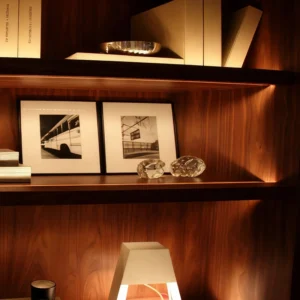
Giá sách, tủ kính và các đơn vị trưng bày được hưởng lợi từ ánh sáng tuyến tính liền mạch làm nổi bật các vật thể trang trí mà không tạo ra các điểm nóng có thể nhìn thấy được.
Nhờ các tùy chọn cắt linh hoạt và các đầu nối ẩn, ánh sáng tủ không hàn có thể được tích hợp vào không gian hẹp trong khi vẫn giữ được vẻ ngoài sạch sẽ.
Giá kệ bán lẻ và nội thất thương mại
Các cửa hàng bán lẻ ngày càng dựa vào ánh sáng tích hợp để tăng cường trình bày sản phẩm và cải thiện trải nghiệm của khách hàng. Tuy nhiên, việc lắp đặt quy mô lớn cũng đòi hỏi lắp ráp hiệu quả và bảo trì thuận tiện.
Hệ thống chiếu sáng không hàn mô-đun giúp giảm thời gian lắp đặt và cho phép thay thế các phần bị hư hỏng nhanh chóng, làm cho chúng lý tưởng cho các giá đỡ bán lẻ, trưng bày và các dự án nội thất thương mại.
Nội thất văn phòng và nội thất tùy chỉnh
Văn phòng hiện đại và nội thất thương mại thường kết hợp ánh sáng vào tủ lưu trữ, bàn tiếp tân và hệ thống giá đỡ.
Bởi vì hệ thống chiếu sáng tủ không hàn hỗ trợ bộ điều chỉnh độ sáng, cảm biến và điều khiển thông minh, nó có thể thích ứng với các yêu cầu thay đổi không gian làm việc trong khi vẫn duy trì một thiết kế tối giản.
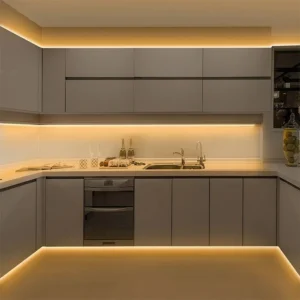
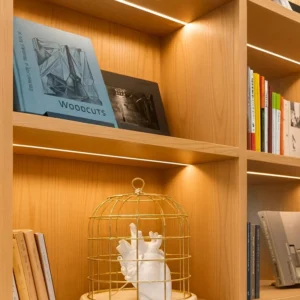
Tại sao ánh sáng dải đèn LED dưới tủ được phổ biến trong nhà bếp hiện đại
Dưới tủ LED chiếu sáng đã trở thành một trong những giải pháp chiếu sáng phổ biến nhất cho nhà bếp, tủ quần áo hiện đại và tủ trưng bày. So với đèn puck truyền thống hoặc đèn huỳnh quang, đèn dải LED cung cấp ánh sáng đồng đều hơn, lắp đặt linh hoạt và tích hợp dễ dàng hơn với các thiết kế nội thất.
Khi kết hợp với các đầu nối không hàn, cấu hình nhôm và điều khiển thông minh, hệ thống chiếu sáng dưới tủ có thể được lắp đặt, bảo trì và nâng cấp hiệu quả hơn.
Đèn LED dải đèn cho tủ bếp được sử dụng rộng rãi để chiếu sáng mặt bàn, cải thiện khả năng hiển thị, đồng thời tạo ra một thiết kế nội thất sạch sẽ, hiện đại hơn. Cấu hình mỏng và cách lắp đặt ẩn làm cho chúng đặc biệt phù hợp cho các ứng dụng chiếu sáng dưới tủ, nơi cả chức năng và tính thẩm mỹ đều quan trọng.
Mặc dù ánh sáng tủ dưới ánh sáng phổ biến nhất được liên kết với tủ bếp, các nguyên tắc chiếu sáng ngày càng được sử dụng nhiều hơn trong tủ quần áo, giá sách, tủ trưng bày và các dự án đồ nội thất tùy chỉnh khác đòi hỏi ánh sáng ẩn và vẻ ngoài sạch sẽ.
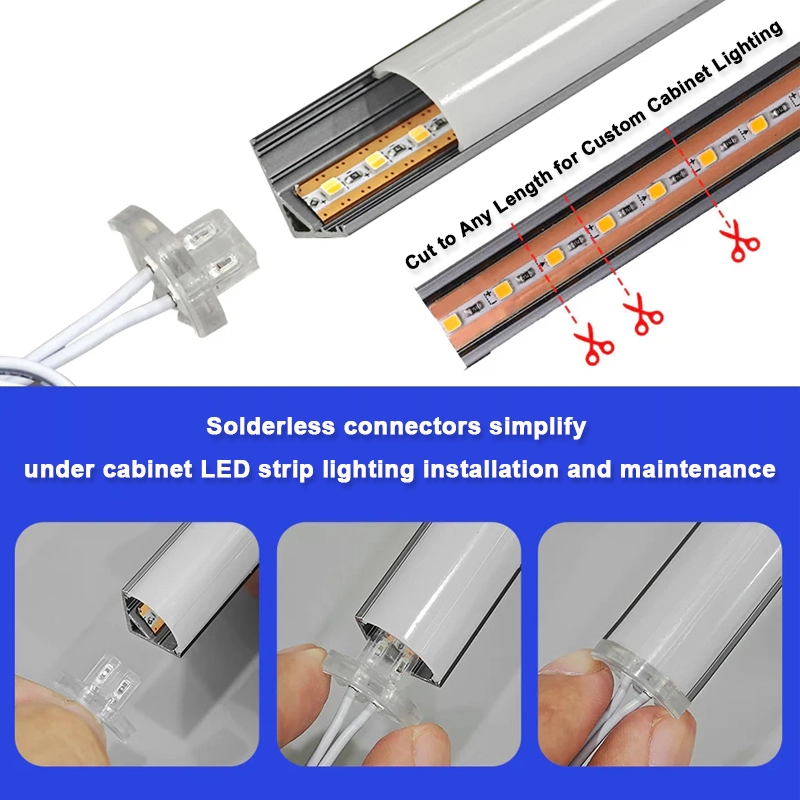
Tại sao nên chọn đèn dải LED cho tủ dưới?
So với đèn puck truyền thống và đèn huỳnh quang, đèn dải LED tạo ra hiệu ứng chiếu sáng và sáng hơn dưới tủ. Cấu hình mỏng của chúng cho phép chúng gần như vô hình trong khi cung cấp ánh sáng đồng đều trên mặt bàn, kệ và khu vực lưu trữ.
Đối với tủ bếp và đồ nội thất tùy chỉnh, dải đèn LED cũng cung cấp tính linh hoạt cao hơn vì chúng có thể được cắt theo kích thước và tích hợp với các cấu hình nhôm, bộ điều chỉnh độ sáng, cảm biến chuyển động và điều khiển thông minh.
Ngoài ra, các hệ thống không hàn mô-đun đơn giản hóa việc lắp đặt và bảo trì bằng cách cho phép các phần chiếu sáng riêng lẻ được kết nối, điều chỉnh hoặc thay thế mà không cần nối lại.
Đèn dải LED 12V VS 24V cho ánh sáng tủ dưới
Chọn đúng điện áp là một phần quan trọng trong việc thiết kế hệ thống chiếu sáng dưới tủ. Cả hai đèn LED dải 12V và 24V đều được sử dụng rộng rãi, nhưng chúng hoạt động khác nhau tùy thuộc vào chiều dài lắp đặt và kích thước tủ.
| lểgiác | dải đèn LED 12V | 2dải đèn LED 4V |
| Chiều dài chạy tối đa | người làm ngắn lại | hơn |
| điện áp rơi | ở trên | làm xấu |
| Cắt linh hoạt | hơn | tốt |
| tốt nhất cho | Tủ nhỏ và chạy ngắn | Nhà bếp và dự án nội thất lớn |
Cứng cáp và cắm dưới ánh sáng dải LED
Đèn dải LED cắm là phổ biến trong các dự án DIY vì chúng dễ lắp đặt và không cần sửa đổi điện. Chủ nhà có thể nhanh chóng thêm ánh sáng bên dưới tủ bếp, giá sách hoặc kệ trưng bày bằng các thành phần cắm và chơi.
Tuy nhiên, các hệ thống có dây cứng phổ biến hơn trong việc lắp đặt nhà bếp cố định, các dự án nội thất thương mại và nội thất cao cấp. Bằng cách giấu hệ thống dây điện bên trong tủ và tường, các giải pháp có dây cứng tạo ra một diện mạo sạch sẽ hơn và cho phép hệ thống chiếu sáng tích hợp liền mạch với công tắc, cảm biến và bộ điều chỉnh độ sáng.
Nhiều hệ thống chiếu sáng bên dưới tủ cũng hỗ trợ cảm biến cửa, cảm biến chuyển động và điều khiển thông minh, mang lại sự tiện lợi và hiệu quả năng lượng cao hơn.
Cách lắp đặt chiếu sáng tủ không hàn: Lắp đặt dải LED mà không cần hàn
Một trong những lợi thế lớn nhất của ánh sáng tủ không hàn là nó đơn giản hóa việc lắp đặt mà không phải hy sinh tính linh hoạt. Không giống như các hệ thống dải LED truyền thống yêu cầu tước và hàn dây, các giải pháp không hàn dựa vào đầu nối plug-and-play và các thành phần mô-đun, giúp chúng dễ dàng cài đặt, điều chỉnh và bảo trì hơn.
Mặc dù quy trình chính xác có thể khác nhau tùy thuộc vào thiết kế nội thất và yêu cầu chiếu sáng, hầu hết các dự án chiếu sáng tủ đều tuân theo quy trình làm việc cơ bản giống nhau.
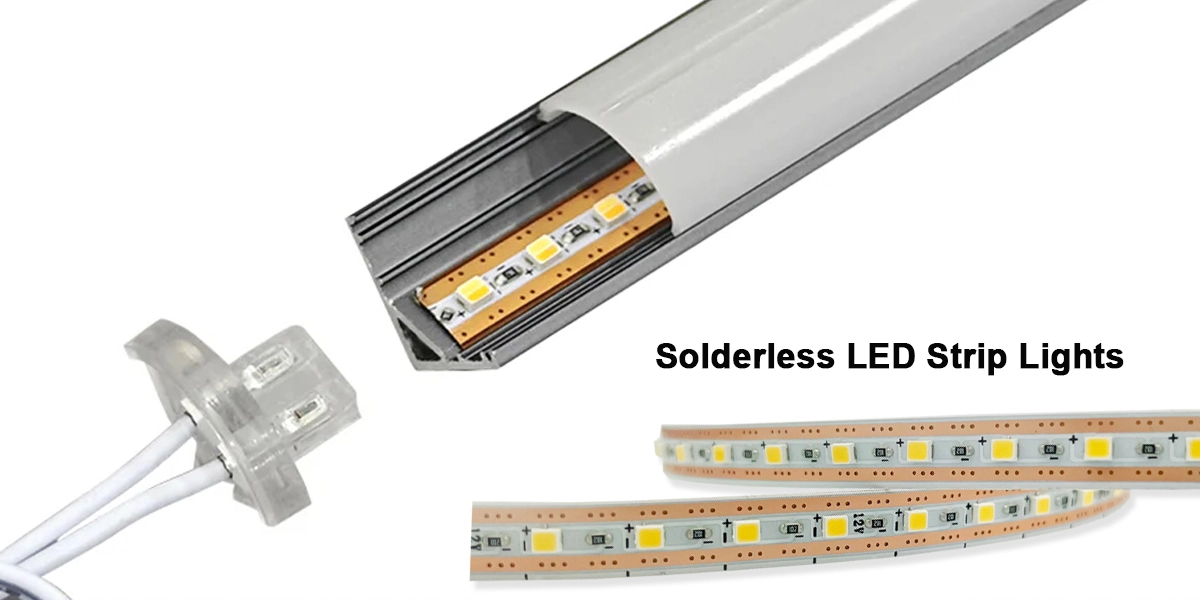
Bước 1: Lập kế hoạch bố trí ánh sáng
Trước khi lắp đặt, hãy xác định vị trí của đèn LED không hàn, hồ sơ nhôm, nguồn điện và phụ kiện. Bố cục được quy hoạch tốt giúp giảm thời gian lắp đặt và giảm thiểu những sửa đổi không cần thiết về sau.
Khi lập kế hoạch hệ thống, hãy xem xét các điều sau:
- Kích thước tủ và khoảng cách kệ
- lắp đặt lõm hoặc lắp trên bề mặt
- định tuyến cáp điện
- Cảm biến và chuyển đổi vị trí
- Quyền truy cập bảo trì trong tương lai
Đối với tủ quần áo và tủ trưng bày, định tuyến cáp ẩn và vị trí đầu nối là đặc biệt quan trọng để đạt được vẻ ngoài sạch sẽ.
Bước 2: Lắp đặt cấu hình nhôm cho đèn LED chiếu sáng
Đo và cắt các mặt cắt nhôm theo kích thước tủ, sau đó cố định nó ở vị trí mong muốn.
Tùy thuộc vào ứng dụng, các loại hồ sơ khác nhau có thể được sử dụng:
- Hồ sơ âm tường cho tủ quần áo và đồ nội thất cao cấp
- Cấu hình gắn trên bề mặt cho tủ bếp
- Cấu hình góc cho kệ và tủ trưng bày
Bên cạnh việc bảo vệ đèn dải LED, các cấu hình nhôm cải thiện khả năng tản nhiệt và tạo hiệu ứng chiếu sáng tuyến tính liền mạch.
Bước 3: Cắt và kết nối đèn LED bằng cách sử dụng đầu nối không hàn
Cắt đèn dải LED dọc theo các dấu cắt được chỉ định và kết nối chúng bằng các đầu nối không hàn tương thích.
So với các cài đặt truyền thống, hệ thống không hàn loại bỏ nhu cầu tước dây và hàn, giúp việc lắp đặt nhanh hơn và linh hoạt hơn.
Để đảm bảo hiệu suất đáng tin cậy, hãy kiểm tra các điều sau trước khi lắp ráp cuối cùng:
- Độ rộng PCB
- Điện áp đầu vào
- Loại kết nối
- sự sắp xếp cực tính
Do hệ thống là mô-đun, dải có thể được điều chỉnh hoặc thay thế dễ dàng hơn nếu bố trí tủ thay đổi. Các loại dải LED khác nhau, bao gồm dải LED COB và dải LED SMD, có thể yêu cầu các thiết kế đầu nối khác nhau. Luôn xác nhận độ rộng dải, điện áp và khả năng tương thích đầu nối trước khi lắp đặt để đảm bảo kết nối đáng tin cậy.
Bước 4: Kết nối trình điều khiển LED và các thành phần điều khiển
Sau khi dải đèn LED đã được cài đặt, hãy kết nối nó với nguồn điện và bất kỳ phụ kiện tùy chọn nào, chẳng hạn như:
- Cảm biến chuyển động
- Công tắc cảm ứng
- người đi cà rỏng
- bộ điều khiển thông minh
Trước khi sửa chữa tất cả các thành phần vĩnh viễn, hãy kiểm tra hệ thống để đảm bảo rằng mọi phần hoạt động đúng.
Bước 5: Hoàn tất cài đặt và kiểm tra hệ thống
Lắp đặt nắp bộ khuếch tán, sắp xếp các dây cáp và thực hiện kiểm tra lần cuối toàn bộ hệ thống chiếu sáng.
Một hệ thống chiếu sáng tủ không hàn được thiết kế phù hợp không chỉ cung cấp ánh sáng đồng đều mà còn cho phép bảo trì và nâng cấp trong tương lai mà không cần tháo cấu trúc tủ.
FAQ
Phần kết luận
Hệ thống chiếu sáng tủ hiện đại không còn chỉ là thêm ánh sáng nữa mà nó đã trở thành một phần thiết yếu của thiết kế đồ nội thất, hiệu quả lắp đặt và bảo trì lâu dài.
So với các hệ thống dải LED hàn truyền thống, ánh sáng tủ không hàn cung cấp giải pháp nhanh hơn, sạch hơn và linh hoạt hơn cho tủ quần áo, tủ bếp, giá sách, trưng bày bán lẻ và các dự án nội thất tùy chỉnh. Với các đầu nối plug-and-play, phụ kiện mô-đun và bảo trì dễ dàng, nó giúp nhà sản xuất và lắp đặt đơn giản hóa việc lắp ráp đồng thời tạo ra hiệu ứng ánh sáng liền mạch.
Khi thiết kế đồ nội thất tiếp tục phát triển theo hướng tùy biến và tích hợp thông minh, hệ thống chiếu sáng mô-đun được kỳ vọng sẽ đóng một vai trò ngày càng quan trọng trong các dự án trong tương lai.
Cho dù bạn đang thiết kế tủ quần áo không cửa ngăn, nâng cấp ánh sáng dưới tủ, hay phát triển các giải pháp đồ nội thất tùy chỉnh, việc chọn hệ thống chiếu sáng tủ không hàn phù hợp có thể cải thiện đáng kể cả hiệu quả lắp đặt và trải nghiệm người dùng.
Tìm kiếm một giải pháp chiếu sáng tủ không hàn cho dự án tiếp theo của bạn? Khám phá hệ thống chiếu sáng tủ, hồ sơ nhôm và phụ kiện mô-đun của chúng tôi để tìm cấu hình phù hợp nhất với yêu cầu thiết kế của bạn.
Viết bởi Elaine Zhu
Tổng giám đốc tại SignliteLEDĐánh giá kỹ thuật bởi Jason Chen
Lãnh đạo R & D, có dấu hiệu
Email: info@signliteled.com
Bài viết liên quan