Tiếng Việt
  English
  简体中文
简体中文  Deutsch
  Español
  Français
  Italiano
  日本語
日本語  한국어
한국어  Polski
  Português
  Русский
  Türkçe
  Nederlands
  ไทย
ไทย 
Nếu bạn đang xuất khẩu đèn LED dải sang Châu Âu hoặc mua các sản phẩm cho các dự án chiếu sáng thương mại, việc hiểu các yêu cầu ERP mới nhất không còn là tùy chọn nữa — đó là điều kiện bắt buộc.
Từ năm 2021, thị trường chiếu sáng châu Âu đã trải qua một sự thay đổi cơ bản. Các tiêu chuẩn hiệu quả năng lượng tự nguyện từng tồn tại hiện đã trở thành các yêu cầu tiếp cận thị trường bắt buộc. Ngày nay, các nhà nhập khẩu châu Âu, người mua OEM, nhà thiết kế ánh sáng và nhà thầu kỹ thuật đều đặt câu hỏi tương tự trước khi đặt hàng: “Đèn dải LED này có tuân thủ các quy định của ERP không?”
Hướng dẫn này được viết riêng cho các chuyên gia mua sắm, không phải người tiêu dùng nói chung. Chúng tôi sẽ giải thích các yêu cầu cụ thể của ERP đối với đèn dải LED, tiêu chuẩn mới nhất năm 2026, cách xác minh sự tuân thủ và quan trọng nhất là cách chọn nhà cung cấp có thể cung cấp sản phẩm tuân thủ cùng với tài liệu đầy đủ.
Đèn dải LED ERP là gì?
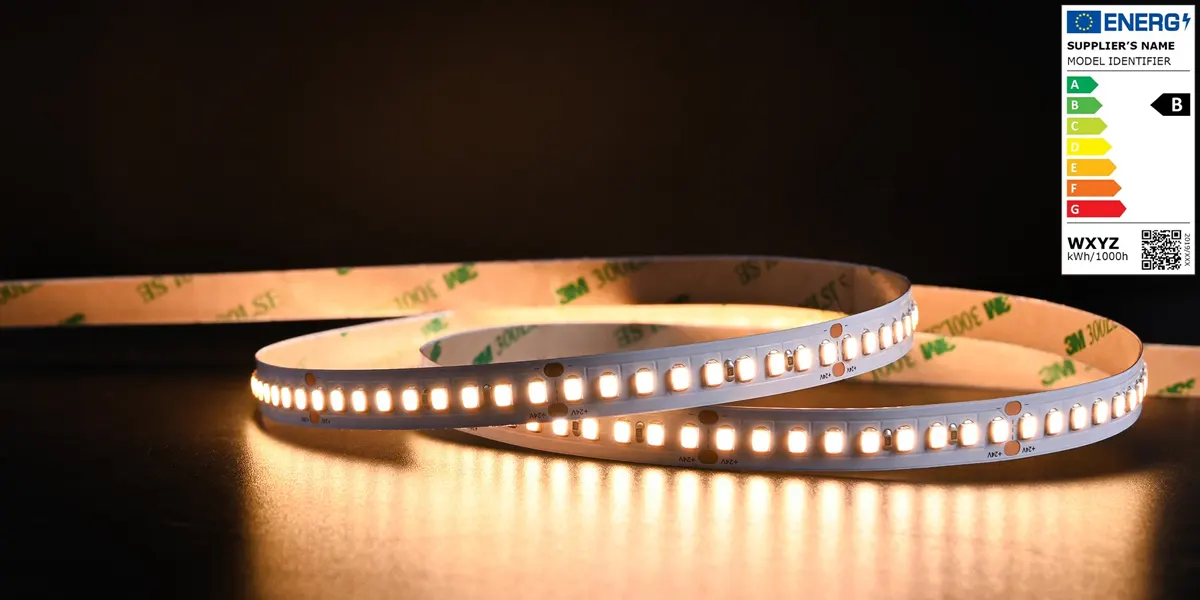
giống như chử ERP (Sản phẩm liên quan đến năng lượng) Đèn LED dải Đề cập đến các sản phẩm chiếu sáng LED linh hoạt đáp ứng các yêu cầu về hiệu quả năng lượng và thiết kế sinh thái bắt buộc do Liên minh Châu Âu đặt ra cho các sản phẩm được đặt trên thị trường Châu Âu. Việc tuân thủ được xác minh thông qua kiểm tra trong phòng thí nghiệm, tài liệu kỹ thuật và đăng ký cơ sở dữ liệu EPREL.
| vật phẩm | sự miêu tả |
| Quy định khung | (EU) 2019/2021 (EcoDesign) |
| Quy tắc thiết kế sinh thái | (EU) 2019/2020 (Quy định chiếu sáng đơn) |
| Quy tắc nhãn năng lượng | (EU) 2019/2015 (Quy định về nhãn năng lượng) |
| đi mua đồ | Liên minh châu Âu (tất cả 27 quốc gia thành viên) |
| áp dụng cho | Đèn LED dải, mô-đun LED và đèn chiếu sáng chứa nguồn sáng |
| tiêu điểm | Hiệu quả năng lượng, điện dự phòng, nhấp nháy, tuổi thọ và kinh tế vòng tròn |
| Quy mô hiệu quả | A (cao nhất) - G (thấp nhất) |
| 2026 tối thiểu cho ánh sáng chung | Lớp D trở lên (≥120 lm/w) |
| Giới hạn điện dự phòng | ≤0.5W (≤2.0W cho chế độ chờ mạng) |
ERP là viết tắt của gì?
ERP là viết tắt của các sản phẩm liên quan đến năng lượng. Đây là một chỉ thị bắt buộc trong khuôn khổ chứng nhận CE, được sử dụng để điều chỉnh hiệu quả năng lượng, bảo vệ môi trường và các yêu cầu tiết kiệm năng lượng. cái nầy Chỉ thị ERP (2009/125/EC) Đã thay thế chỉ thị EUP (Sản phẩm sử dụng năng lượng) trước đó vào năm 2009, mở rộng phạm vi để bao gồm các sản phẩm không tiêu thụ năng lượng nhưng ảnh hưởng đến tiêu thụ năng lượng.
Về mặt thực tế: LVD đảm bảo an toàn, EMC kiểm soát nhiễu điện từ và ERP đảm bảo hiệu quả năng lượng và tuân thủ môi trường. Các sản phẩm chỉ có an toàn và kiểm tra EMC vẫn chưa hoàn thiện — ERP là thành phần cần thiết của hệ thống CE.
Những quy định nào của EU áp dụng cho đèn dải LED?
Việc tuân thủ ERP đối với đèn dải LED được điều chỉnh bởi hai quy định:
- Quy định của Ủy ban Châu Âu (EU) 2019/2020 - được gọi là Quy định chiếu sáng đơn (SLR), đặt ra các yêu cầu về thiết kế sinh thái đối với các nguồn sáng và các bánh răng điều khiển riêng biệt. Nó thay thế các quy định trước đây (EC) số 244/2009, (EC) số 245/2009, và (EU) Số 1194/2012.
- Ủy ban Châu Âu đã ủy quyền Quy định (EU) 2019/2015 - được gọi là Quy định về nhãn năng lượng (ELR), quy định về ghi nhãn cho các nguồn sáng. Nó đã thay thế (EC) số 874/2012.
Đối với người mua, điểm mấu chốt là: Các quy định này áp dụng cho bất kỳ nguồn sáng nào được đặt trên thị trường EU, bao gồm đèn dải LED, mô-đun LED và đèn chiếu sáng chứa nguồn sáng.
Các quy tắc ERP mới có hiệu lực khi nào?
2018 → Xem xét các quy định hiện hành bắt đầu
2019 → EU 2019/2020 và EU 2019/2015
2021 → Các quy định mới có hiệu lực (tháng 9 năm 2021)
2024 → Siết chặt yêu cầu nhấp nháy (SVM ≤ 0,4)
2026 → Thực thi đầy đủ với mức tối thiểu Lớp D (≥ 120 lm / w)
Quy định có hiệu lực từ tháng 9/2021. Từ đó, EU dần thắt chặt các yêu cầu. Tính đến năm 2026, Quy định khung (EU) 2019/2021 vẫn có hiệu lực, không có quy định thay thế nào được dự đoán trước.
Tại sao các quy định mới của ERP được đưa ra?
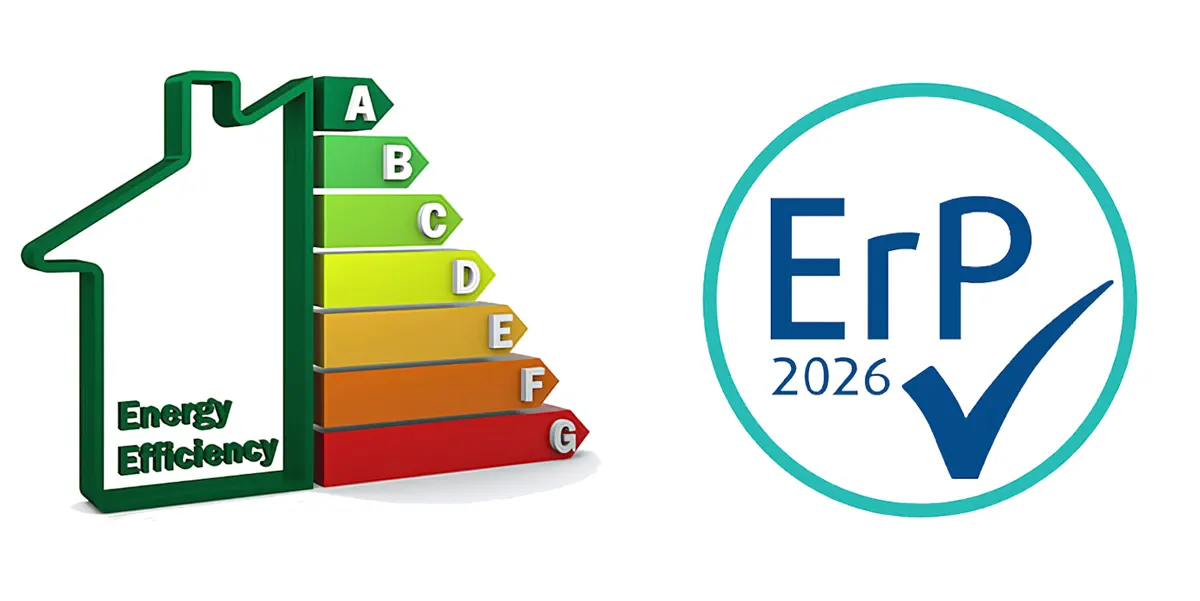
EU đã giới thiệu khung ERP mới để giải quyết ba thách thức liên kết với nhau:
- Giảm carbon và thỏa thuận xanh - EU đã cam kết đạt được sự trung lập về khí hậu vào năm 2050. Ánh sáng chiếm một phần đáng kể lượng điện tiêu thụ. Theo kế hoạch làm việc của Ecodesign, các biện pháp theo khuôn khổ này có thể tiết kiệm hơn 260 TWh năng lượng sử dụng cuối hàng năm vào năm 2030, tương đương với việc giảm khoảng 100 triệu tấn khí thải nhà kính mỗi năm.
- Công nghệ vượt xa các tiêu chuẩn cũ - Khi hệ thống phân loại A ++ cũ đến E được thành lập, công nghệ LED vẫn đang nổi lên. Đến năm 2019, nhiều sản phẩm LED đã vượt quá mức cao nhất, khiến nhãn không thể phân biệt hiệu quả chất lượng sản phẩm.
- Minh bạch sản phẩm và kinh tế tuần hoàn - Ngoài hiệu quả năng lượng, các quy định mới yêu cầu các nhà sản xuất xem xét độ bền, khả năng sửa chữa và khả năng tái chế trong thiết kế của họ. Điều này có nghĩa là các sản phẩm phải đáng tin cậy hơn, có thể nâng cấp (nếu có thể), hỗ trợ “quyền sửa chữa”, chứa nhiều vật liệu có thể tái chế hơn và dễ tháo rời hơn.
Tóm lại: EU không chỉ nâng mức thanh mà còn thiết kế lại toàn bộ hệ thống đánh giá.
Đèn LED dải nào phải tuân thủ ERP?
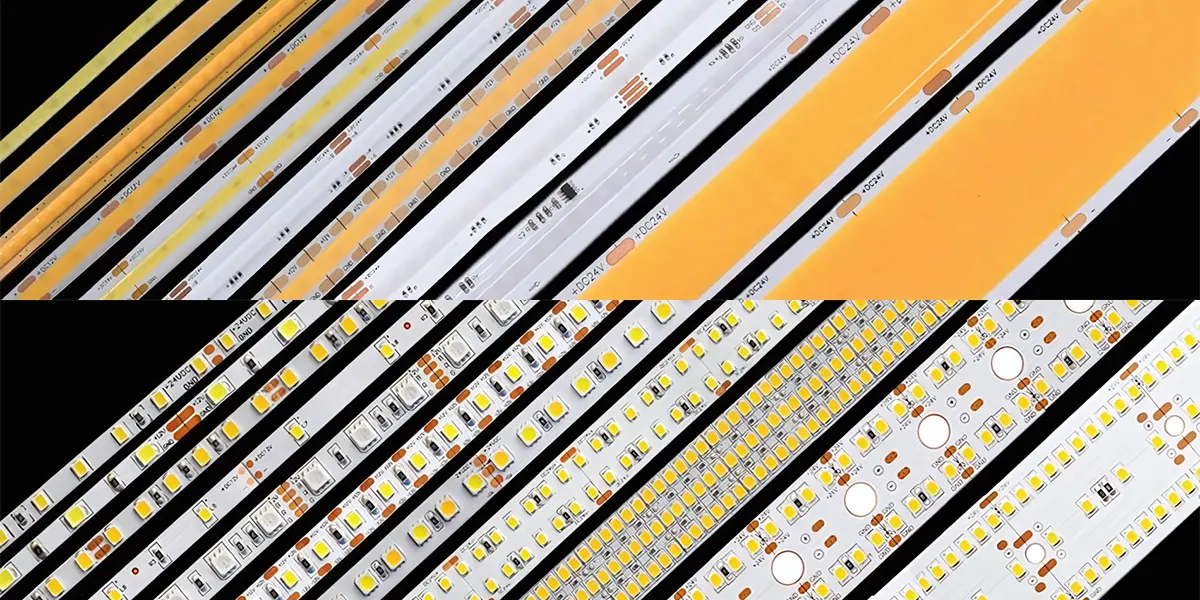
ERP áp dụng cho hầu như tất cả các đèn dải LED được bán ở EU.
Sản phẩm yêu cầu tuân thủ ERP:
- Đèn LED dải đèn LED đa năng trong nhà
- Đèn LED dải thương mại (bán lẻ, văn phòng, khách sạn)
- Đèn LED kiến trúc và trang trí
- Bán lẻ và chiếu sáng bảng hiệu
- Chiếu sáng tủ và đồ nội thất
- Đèn LED dải COB
- Đèn LED chống nước (IP20, IP54, IP65, IP67)
Miễn trừ (hạn chế):
- Nguồn sáng có thông lượng phát sáng dưới 60 lumens hoặc trên 82.000 lumens
- ánh sáng khẩn cấp
- Đèn điện chỉ được cung cấp bởi pin
- Sân khấu và chiếu sáng sân khấu
- Một số đèn công nghiệp chuyên dụng
Lưu ý quan trọng đối với người mua OEM: Bất kỳ thành phần phát sáng nào được sử dụng trực tiếp trong đèn LED chiếu sáng đều được coi là nguồn sáng theo quy định. Điều này có nghĩa là ngay cả đèn dải LED được bán làm linh kiện cho các nhà sản xuất đèn cũng phải tuân thủ các yêu cầu của ERP.
Yêu cầu ERP chính cho đèn dải LED
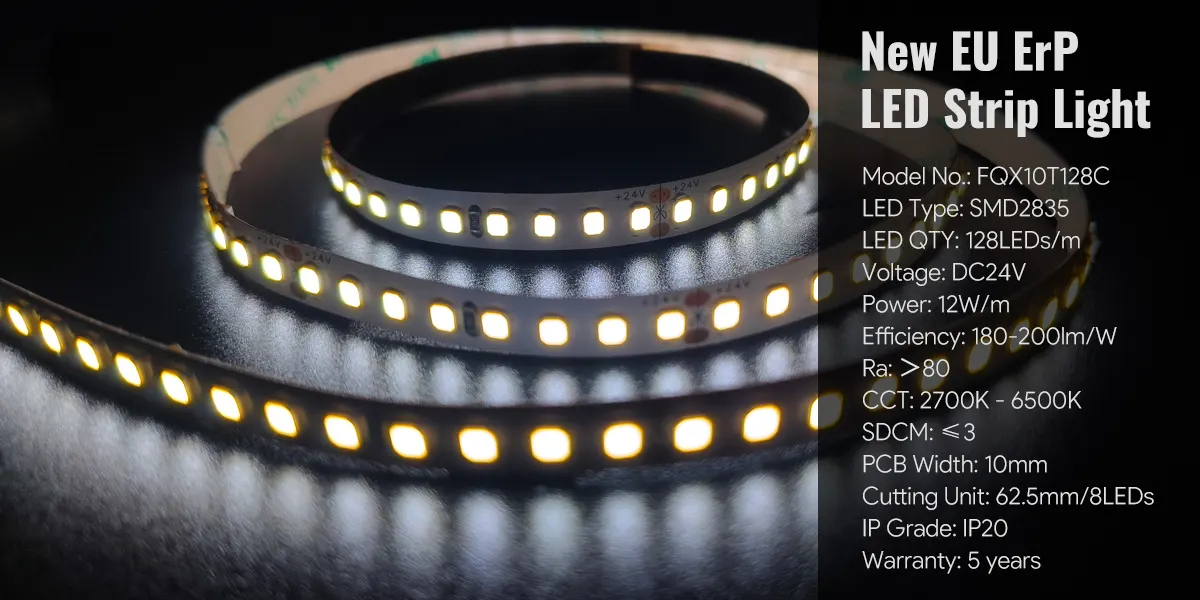
Khung ERP mới áp đặt một số yêu cầu cụ thể đối với đèn dải LED:
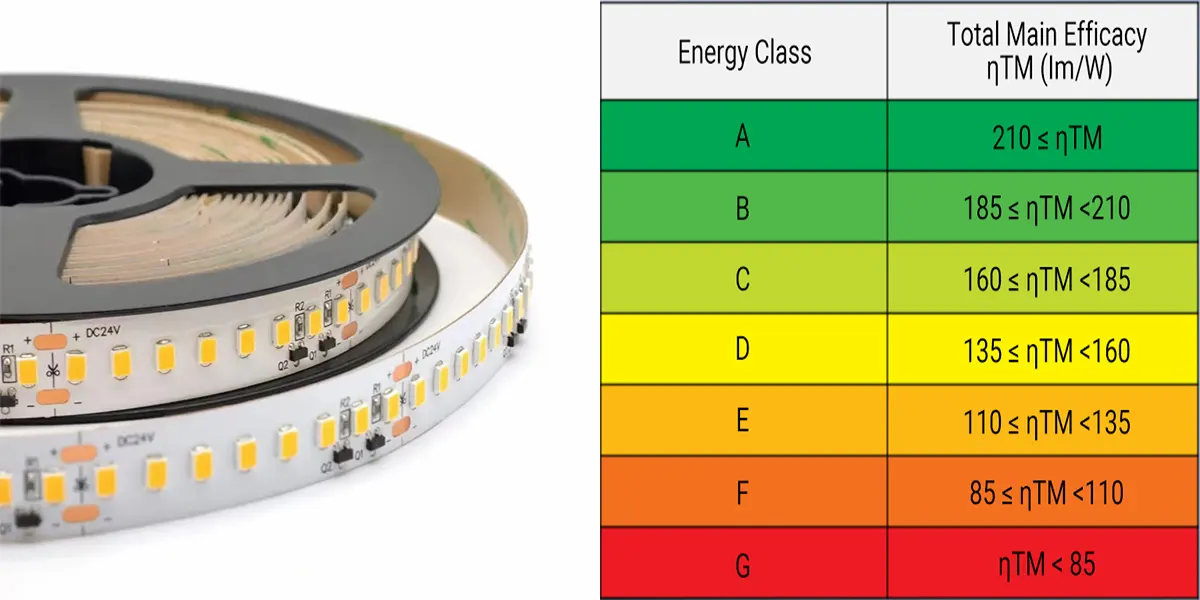
Hiệu quả phát sáng tối thiểu: Bắt đầu từ năm 2026, đèn dải LED chiếu sáng chung phải đạt ít nhất loại D (≥ 120 lm / w). Các lớp cao hơn (B hoặc C) được khuyến nghị cho các ứng dụng cao cấp.
| lớp năng lượng | Tổng hiệu quả chính (LM/W) |
| nốt thứ sáu trong | ≥210 |
| nốt si | 185 - <210 |
| nốt đô | 160 - <185 |
| nốt thứ hai trong | 120 - <160 |
| chữ thứ năm trong | 85 - <120 |
| nốt thứ tư trong | 60 - <85 |
| chữ thứ bảy trong | <60 |
Tiêu thụ điện năng dự phòng: Công suất chờ không được vượt quá 0,5 W và chế độ chờ mạng không được vượt quá 2,0 W.
hiệu suất nhấp nháy: Chỉ báo nhấp nháy ngắn hạn (PSTLM) phải là ≤ 1,0 và tỷ lệ nhấp nháy (SVM) phải là ≤ 0,4.
đời sống và suy thoái: Các nhà sản xuất phải cung cấp dữ liệu trọn đời L70 / B50 ≥ 6.000 giờ, chứng tỏ rằng sản phẩm giữ được ít nhất 70% của thông lượng phát sáng ban đầu sau khoảng thời gian đã nêu.
Ghi nhãn năng lượng: Tất cả các sản phẩm tuân thủ phải hiển thị nhãn hiệu quả năng lượng A – G mới với mã QR liên kết với cơ sở dữ liệu EPREL.
Tài liệu kỹ thuật: Hồ sơ kỹ thuật hoàn chỉnh phải được duy trì ít nhất 10 năm kể từ ngày sản phẩm được đưa ra thị trường.
yêu cầu kinh tế vòng tròn: Sản phẩm nên được thiết kế để có độ bền, khả năng sửa chữa và khả năng tái chế, với nhiều vật liệu có thể tái chế hơn và tháo gỡ dễ dàng hơn.
Hiểu nhãn năng lượng mới của EU
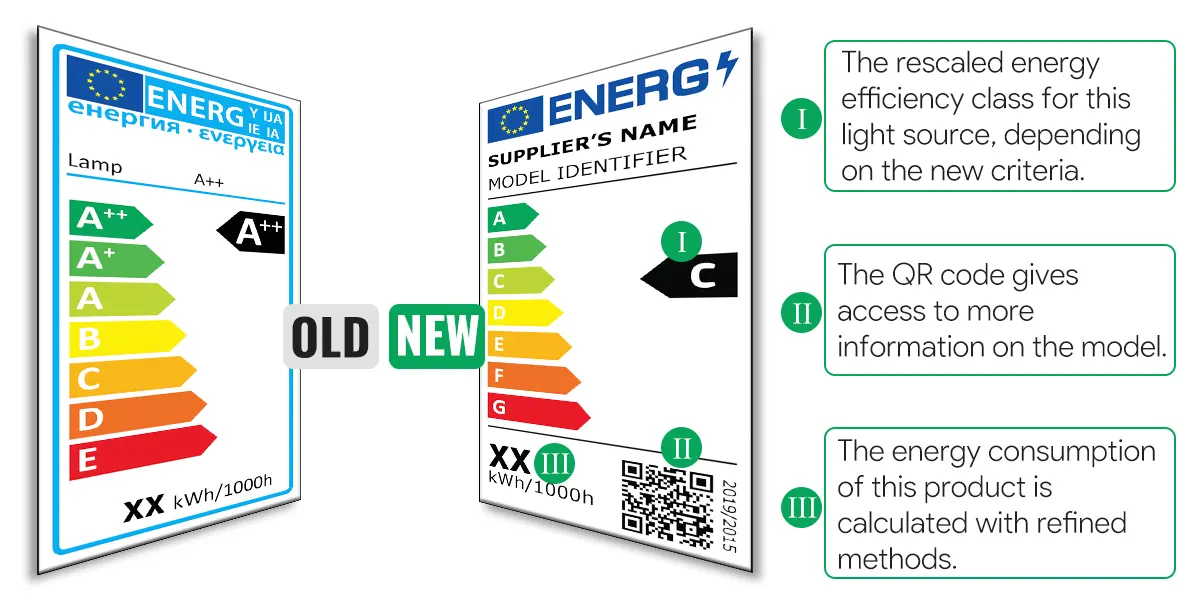
Nhãn năng lượng mới của EU sử dụng thang đo A – G đơn giản, thay thế hệ thống A +++ cũ sang D. Dưới đây là cách phân loại đèn LED:
- Loại A (≥ 210 lm / W): Hiệu quả cực cao - Cấp cao cấp trong tương lai, chưa được phổ biến rộng rãi
- Loại B (185– <210 lm/w): Hiệu quả cao cấp – Dải LED cao cấp
- Loại C (160– <185 lm / w): Hiệu quả cao - dải thương mại hiệu suất cao
- Loại D (120– <160 lm/w): Hiệu quả tiêu chuẩn – đáp ứng yêu cầu tối thiểu 2026
- Lớp E (85– <120 lm / w): Cấp nhập cảnh - tuân thủ nhưng dưới mức tối ưu
- Lớp F (60– <85 lm / w): Hiệu quả thấp - Công nghệ cũ hơn, bị loại bỏ dần
- Lớp G (<60 lm / w): Hiệu quả rất thấp - tương đương với sợi đốt / halogen, bị cấm hiệu quả
Nhãn năng lượng phải bao gồm mã QR liên kết đến cơ sở dữ liệu EPREL, cho phép người mua và thanh tra xác minh thông số kỹ thuật sản phẩm và trạng thái tuân thủ.
Tại sao sản phẩm A ++ của bạn hiện được xếp hạng D: Trong hệ thống cũ, nhiều sản phẩm LED có thể đạt được xếp hạng A ++. Các tiêu chuẩn mới nghiêm ngặt hơn nhiều — các sản phẩm trước đây là A ++ bây giờ có thể thuộc loại D hoặc E. Điều này không có nghĩa là sản phẩm đã trở nên tồi tệ hơn, mà EU đã nâng cao đáng kể các tiêu chuẩn.
Dải LED ERP so với dải LED truyền thống
Dưới đây là so sánh giữa dải LED truyền thống và dải LED tuân thủ ERP:
| làm nổi | dải đèn LED truyền thống | Dải LED tuân thủ ERP |
| Hiệu quả năng lượng | biến, thường thấp | ≥120 lm / w tối thiểu (Lớp D) |
| nhãn năng lượng | thường xuyên mất tích | Nhãn A – G với đăng ký EPREL |
| điện chờ | không phổ thông | ≤0.5W (≤2.0W) |
| điều khiển nhấp nháy | Không bắt buộc | PSTLM ≤1.0, SVM ≤0.4 |
| Kiểm tra trọn đời | Không bắt buộc | L70/B50 ≥6.000 giờ |
| Tạo nhiệt | ở trên | thấp hơn do hiệu quả cao hơn |
| điện năng tiêu thụ | Cao hơn mỗi lumen | thấp hơn lên đến 50% |
| dấu chân hiệu | ở trên | làm xấu |
| Tiếp cận thị trường EU | bị chặn tại hải quan | rõ ràng để nhập khẩu |
| Đăng ký Eprel | Không áp dụng | bắt buộc |
| Tài liệu kỹ thuật | thường không đầy đủ | Yêu cầu đầy đủ hồ sơ (giữ lại 10 năm) |
| tương lai | không chút nào —Rủi ro bị cấm | Có — đáp ứng các yêu cầu hiện tại |
Phần kết luận: Dải LED tuân thủ ERP không chỉ đơn thuần là vấn đề hiệu quả năng lượng mà còn là vấn đề tiếp cận thị trường. không -Sản phẩm tuân thủ sẽ bị giam giữ tại biên giới EU và bị loại bỏ khỏi các nền tảng thương mại điện tử.
Cách chọn dải LED tuân thủ ERP
Bước 1: Xác định kịch bản ứng dụng
Làm rõ các yêu cầu của dự án: trong nhà / ngoài trời, nhiệt độ màu yêu cầu, chỉ số hiển thị màu, xếp hạng bảo vệ, điện áp và thông lượng phát sáng trên mỗi mét. Các ứng dụng khác nhau đòi hỏi mức hiệu quả năng lượng khác nhau.
Bước 2: Kiểm tra hiệu quả phát sáng (LM/W)
Đối với bất kỳ dự án nào của EU vào năm 2026, yêu cầu tối thiểu là ≥120 lm / w. Đối với các dự án cao cấp, hãy nhắm đến loại B (≥160 lm / w) hoặc loại C (160–185 lm / w).
Bước 3: Xác minh tài liệu
Yêu cầu tài liệu kỹ thuật đầy đủ trước khi đặt hàng:
- Báo cáo kiểm tra ERP (Tuân thủ các quy định có hiệu lực sau năm 2024)
- Mô phỏng nhãn hiệu quả năng lượng với số EPREL
- Tuyên bố về sự phù hợp (DOC)
L L70/B50 Báo cáo kiểm tra trọn đời
Cờ đỏ: Nếu nhà cung cấp không thể cung cấp trước các tài liệu này, họ có thể không có chúng.
Bước 4: Kiểm tra tính hoàn chỉnh
Một số bài kiểm tra không hợp lệ. Nhà cung cấp phải hoàn thành:
- Kiểm tra hiệu quả phát sáng
- Kiểm tra điện dự phòng
- Kiểm tra nhấp nháy (PSTLM và SVM)
- Kiểm tra trọn đời
- Kiểm tra mức tiêu thụ điện năng không tải
Bước 5: Xác nhận đăng ký EPREL
Sản phẩm phải được đăng ký trong cơ sở dữ liệu EPREL trước khi đưa vào thị trường EU. không -Các nhà sản xuất EU phải chỉ định một đại diện được ủy quyền của EU để xử lý việc đăng ký.
Cơ sở dữ liệu Eprel phải chứa:
- Hồ sơ sản phẩm với xếp hạng hiệu quả năng lượng
- Bảng thông tin sản phẩm
- Tài liệu kỹ thuật có thể truy cập cho cơ quan giám sát thị trường
- Hệ thống tạo ra một số đăng ký duy nhất và mã QR, phải xuất hiện trên nhãn hiệu quả năng lượng.
Bước 6: Đánh giá nhà cung cấp
Các nhà cung cấp đáng tin cậy nên:
- Cung cấp báo cáo kiểm tra từ các phòng thí nghiệm được công nhận
- Lưu giữ tài liệu kỹ thuật cho từng mô hình
- Hỗ trợ đăng ký EPREL
- Có kinh nghiệm tuân thủ thị trường Châu Âu
- Duy trì tính minh bạch trong sản xuất và kiểm soát chất lượng
Các ứng dụng phổ biến của đèn dải LED ERP
Dưới đây là các ứng dụng điển hình và các lớp hiệu quả được khuyến nghị:
| Ứng dụng | Yêu cầu điển hình | Lớp đề nghị |
| đèn chiếu sáng văn phòng | Hiệu quả cao, CRI tốt, nhấp nháy thấp | Lớp B hoặc C |
| trưng bày bán lẻ | CRI cao, độ chính xác màu | Lớp C hoặc D |
| Khách sạn & Khách sạn | CCT ấm, khả năng làm mờ | Lớp C |
| bệnh viện | CRI cao, nhấp nháy thấp, vệ sinh (đánh giá IP) | Lớp C |
| Bảo tàng & Phòng trưng bày | CRI cao, không có tia cực tím, kiểm soát chính xác | Lớp C |
| Khu dân cư (bếp, tủ) | Hiệu quả tốt, tính linh hoạt | Lớp D hoặc C |
| đồ nội thất chiếu sáng | Cấu hình thấp, tính linh hoạt | Lớp D |
| mặt tiền kiến trúc | Chống thời tiết (IP65+), kiểm soát màu sắc | Lớp D |
| quảng cáo | Độ sáng cao, khả năng hiển thị | Lớp C hoặc D |
| chiếu sáng gương | CRI cao, phân phối đều | Lớp D |
Tuân thủ ERP áp dụng cho tất cả các ứng dụng nói trên. Đối với các dự án thương mại và khu vực công trong EU, việc tuân thủ ERP ngày càng trở thành một yêu cầu trong các cuộc đấu thầu — các sản phẩm không đáp ứng các tiêu chuẩn này sẽ bị loại trừ.
Những sai lầm phổ biến mà người mua mắc phải
Dưới đây là những sai lầm phổ biến và các thực hành đúng để tránh chúng:
- Không chính xác 1: Chỉ so sánh công suất (W / m) - Đúng: So sánh hiệu quả (LM / W) —Hiệu quả cao hơn có nghĩa là nhiều ánh sáng hơn trên mỗi watt
- Không chính xác 2: Bỏ qua hiệu quả có lợi cho độ sáng - Đúng: Nhu cầu ≥ 120 lm / w tối thiểu cho tất cả các dự án của EU
- 3: nhầm lẫn CE với ERP - Đúng: CE là an toàn + EMC; ERP là hiệu quả năng lượng. BẠN CẦN cả ba
- Không chính xác 4: Chấp nhận “CE” làm bằng chứng của ERP - Đúng: Yêu cầu Báo cáo Kiểm tra ERP và Số EPREL cụ thể
- Không chính xác 5: Giả sử “A ++” có nghĩa là chất lượng hàng đầu - Đúng: Thang đo A ++ cũ đã lỗi thời; hãy kiểm tra lớp A – G mới
- Không chính xác 6: Mua mà không có nhãn năng lượng - Đúng: Mọi sản phẩm tuân thủ ERP đều phải có nhãn A – G với mã QR Eprel
- Không chính xác 7: Bỏ qua các yêu cầu về tài liệu - Đúng: Các tệp kỹ thuật phải được giữ lại trong 10 năm
- Không chính xác 8: Tin tưởng các khiếu nại tuân thủ bằng lời nói - Đúng: Yêu cầu bằng chứng bằng văn bản: Báo cáo thử nghiệm, Tài liệu, Đăng ký EPREL
- Không chính xác 9: Không kiểm tra hiệu suất nhấp nháy - Đúng: Flicker là một yêu cầu tuân thủ — Yêu cầu kết quả kiểm tra PSTLM và SVM
- 10: Giả sử tất cả các dải chống thấm được bảo hiểm - Đúng: Xếp hạng IP không miễn trừ một sản phẩm khỏi ERP — tất cả các xếp hạng IP đều được bảo hiểm
Tại sao chọn Signlitedắt Đối với đèn dải LED ERP
Signeled là một chuyên gia Nhà sản xuất đèn LED dải Với kinh nghiệm chuyên sâu phục vụ thị trường Châu Âu. Sản phẩm của chúng tôi được thiết kế và kiểm tra để đáp ứng các yêu cầu ERP mới nhất, đảm bảo thông quan thông quan và tiếp cận thị trường cho các đối tác của chúng tôi.
Những gì chúng tôi cung cấp cho thị trường EU:
- Giải pháp dải LED hiệu quả cao - Sản phẩm của chúng tôi bao gồm các lớp ERP từ E đến E, với hiệu quả lên đến 220 lm / w cho các ứng dụng cao cấp. Chúng tôi sử dụng đèn LED đã được kiểm tra LM-80 để đảm bảo hiệu suất ổn định và tuổi thọ cao.
- Tùy chỉnh OEM / ODM - Chúng tôi làm việc với các thương hiệu chiếu sáng, nhà sản xuất và nhà phân phối để phát triển đèn dải LED tùy chỉnh đáp ứng các yêu cầu ERP cho các ứng dụng cụ thể, nhiệt độ màu, CRI, xếp hạng IP và nhu cầu điện áp.
- Kiểm soát chất lượng sản xuất nghiêm ngặt - Từ lựa chọn chip LED đến sản xuất PCB và lắp ráp cuối cùng, mỗi bước được theo dõi để đảm bảo tính nhất quán, độ tin cậy và tuân thủ.
- Hoàn thành hỗ trợ tài liệu ERP - Chúng tôi cung cấp các tệp kỹ thuật đầy đủ, bao gồm báo cáo thử nghiệm, tác phẩm nghệ thuật nhãn năng lượng và tuyên bố về sự phù hợp — mọi thứ bạn cần để đăng ký EPREL và thông quan hải quan của EU.
- Lựa chọn sản phẩm dựa trên ứng dụng - Đội ngũ kỹ thuật của chúng tôi giúp bạn chọn đúng loại ERP và thông số kỹ thuật sản phẩm dựa trên yêu cầu dự án và mục tiêu hiệu quả năng lượng của bạn.
- Nhiều chứng nhận - Ngoài ERP, các sản phẩm của chúng tôi còn mang CE, RoHS và các chứng nhận khác liên quan đến thị trường Châu Âu.
Sẵn sàng để tìm nguồn đèn dải LED tuân thủ ERP cho dự án Châu Âu tiếp theo của bạn? Liên hệ với nhóm kỹ thuật của chúng tôi để biết các đề xuất sản phẩm, thông số kỹ thuật tùy chỉnh và hỗ trợ tài liệu tuân thủ.
Phần kết luận
Khung ERP không phải là quy định tạm thời cho đèn dải LED — nó đã trở thành cơ sở mới cho thị trường chiếu sáng châu Âu. Kể từ năm 2026, các yêu cầu rõ ràng: loại D hoặc cao hơn (≥ 120 lm / w), giới hạn nhấp nháy nghiêm ngặt, đăng ký EPREL bắt buộc và tài liệu kỹ thuật đầy đủ.
Đối với người mua, điều này có nghĩa là:
- Ngừng so sánh công suất — so sánh hiệu quả (LM / W)
- Ngừng tin tưởng các khiếu nại bằng lời nói — yêu cầu báo cáo kiểm tra và số điện tử
- Ngừng giả sử CE là đủ — bạn cần LVD + EMC + ERP
Đối với nhà cung cấp, điều này có nghĩa là:
- Đầu tư vào đèn LED chất lượng là không thể thương lượng
- Tài liệu quan trọng như chính sản phẩm
- Đăng ký eprel là một dịch vụ bạn phải cung cấp hoặc hỗ trợ
Tại Signitel, chúng tôi đã xây dựng dòng sản phẩm Châu Âu của mình theo những yêu cầu này. Từ đèn LED dải đèn LED hiệu quả cao đến hỗ trợ tài liệu hoàn chỉnh, chúng tôi giúp bạn tự tin đưa sản phẩm tuân thủ ERP ra thị trường.
Có một dự án? Liên hệ với nhóm kỹ thuật của chúng tôi để chọn sản phẩm, thông số kỹ thuật tùy chỉnh và hỗ trợ tuân thủ. Hướng dẫn này chỉ dành cho mục đích thông tin. quy định có thể thay đổi. Luôn xác minh các yêu cầu mới nhất với chuyên gia tuân thủ được ủy quyền trước khi đưa sản phẩm vào thị trường EU.
hỏi Ẩn
Bài viết liên quan