Español
  English
  简体中文
简体中文  Deutsch
  Français
  Italiano
  日本語
日本語  한국어
한국어  Polski
  Português
  Русский
  Türkçe
  Nederlands
  Tiếng Việt
  ไทย
ไทย 
Si está exportando tiras de luces LED a Europa o procurando productos para proyectos de iluminación comercial, comprender los requisitos de ERP más recientes ya no es opcional, es una condición obligatoria.
Desde 2021, el mercado europeo de la iluminación ha experimentado un cambio fundamental. Los puntos de referencia voluntarios de eficiencia energética que alguna vez existieron se han convertido en requisitos obligatorios de acceso al mercado. Hoy en día, los importadores europeos, los compradores OEM, los diseñadores de iluminación y los contratistas de ingeniería hacen la misma pregunta antes de realizar un pedido: "¿Esta tira de luz LED cumple con las regulaciones de ERP?"
Esta guía está escrita específicamente para profesionales de adquisiciones, no para consumidores generales. Explicaremos los requisitos específicos de ERP para las tiras de luces LED, los últimos estándares 2026, cómo verificar el cumplimiento y, lo que es más importante, cómo seleccionar un proveedor que pueda proporcionar productos compatibles junto con la documentación completa.
¿Qué es una tira de luz LED ERP?
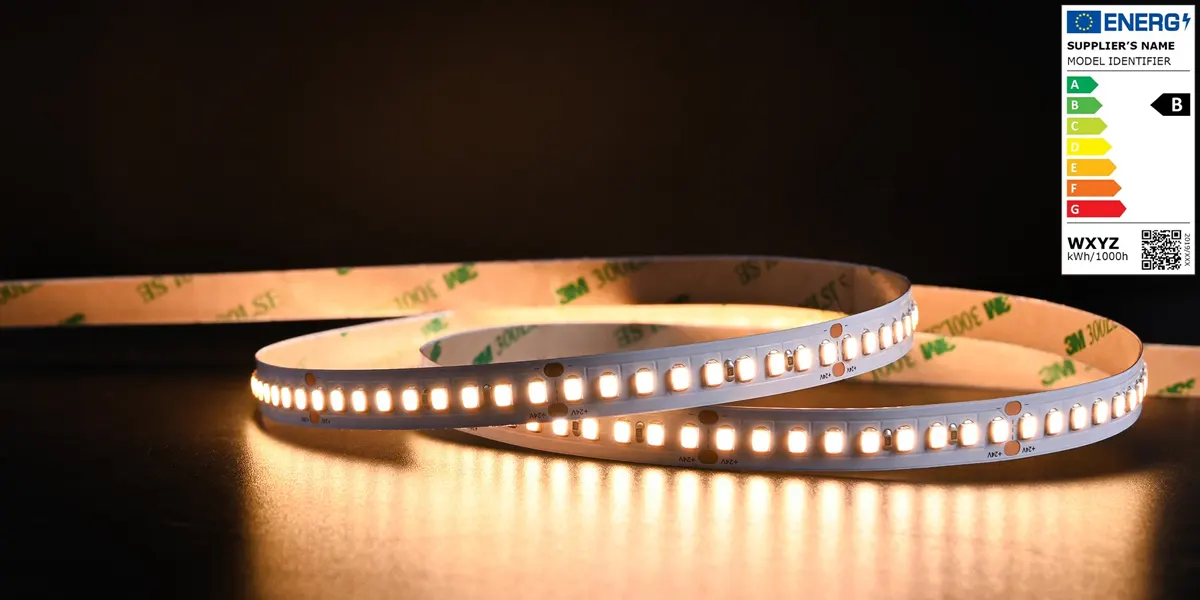
En ERP (productos relacionados con la energía) Tira de luz LED Se refiere a productos de iluminación LED flexibles que cumplen con los requisitos obligatorios de eficiencia energética y ecodiseño establecidos por la Unión Europea para los productos que se encuentran en el mercado europeo. El cumplimiento se verifica mediante pruebas de laboratorio, documentación técnica y registro de base de datos de EPREL.
| Artículo | Descripción |
| Reglamento Marco | (UE) 2019/2021 (Ecodiseño) |
| Reglas de diseño ecológico | (UE) 2019/2020 (Regulación de iluminación única) |
| Reglas de etiquetas energéticas | (UE) 2019/2015 (Reglamento de etiquetado de energía) |
| mercado | Unión Europea (todos los 27 Estados miembros) |
| se aplica a | Luces de tiras LED, módulos LED y luminarias que contienen fuentes de luz |
| Enfoque principal | Eficiencia energética, potencia de reserva, parpadeo, vida útil y economía circular |
| Escala de eficiencia | A (más alto) – G (más bajo) |
| 2026 Mínimo para iluminación general | Clase D o superior (≥120 lm/W) |
| Límite de potencia de reserva | ≤0.5W (≤2.0W para la red de espera) |
¿Qué significa ERP?
ERP significa productos relacionados con la energía. Es una directiva obligatoria dentro del marco de certificación CE, que se utiliza para regular la eficiencia energética, la protección del medio ambiente y los requisitos de ahorro de energía. los Directiva ErP (2009/125/CE) Reemplazó la anterior Directiva EUP (Productos que utilizan energía) en 2009, ampliando el alcance para incluir productos que no consumen energía pero que afectan el consumo de energía.
En términos prácticos: LVD garantiza la seguridad, EMC controla la interferencia electromagnética y ERP garantiza la eficiencia energética y el cumplimiento ambiental. Los productos con solo pruebas de seguridad y EMC aún están incompletos; ERP es un componente necesario del sistema CE.
¿Qué regulaciones de la UE se aplican a las tiras de luces LED?
El cumplimiento de ERP para tiras de luces LED se rige por dos regulaciones:
- Reglamento de la Comisión Europea (UE) 2019/2020 — conocido como Reglamento de Iluminación Único (SLR), que establece los requisitos de diseño ecológico para fuentes de luz y engranajes de control separados. Reemplazó el Reglamento anterior (CE) nº 244/2009, (CE) nº 245/2009 y (UE) No 1194/2012.
- Reglamento Delegado de la Comisión Europea (UE) 2019/2015 — conocido como Reglamento de Etiquetado Energético (ELR), que establece los requisitos de etiquetado para fuentes de luz. Reemplazó (EC) No 874/2012.
Para los compradores, el punto clave es: estas regulaciones se aplican a cualquier fuente de luz colocada en el mercado de la UE, incluidas las tiras de luces LED, los módulos LED y las luminarias que contienen fuentes de luz.
¿Cuándo surta efecto las nuevas reglas de ERP?
Comienza 2018 → Revisión de las Regulaciones existentes
2019 → UE 2019/2020 y UE 2019/2015 Publicado
2021 → entran en vigor las nuevas regulaciones (septiembre de 2021)
2024 → Requisitos de parpadeo ajustados (SVM ≤ 0,4)
2026 → Ejecución completa con mínimo de Clase D (≥ 120 lm/W)
El Reglamento entró en vigor en septiembre de 2021. Desde entonces, la UE ha ajustado gradualmente los requisitos. A partir de 2026, el Reglamento Marco (UE) 2019/2021 sigue vigente, sin prever el Reglamento de Reemplazo.
¿Por qué se introdujeron las nuevas regulaciones de ERP?
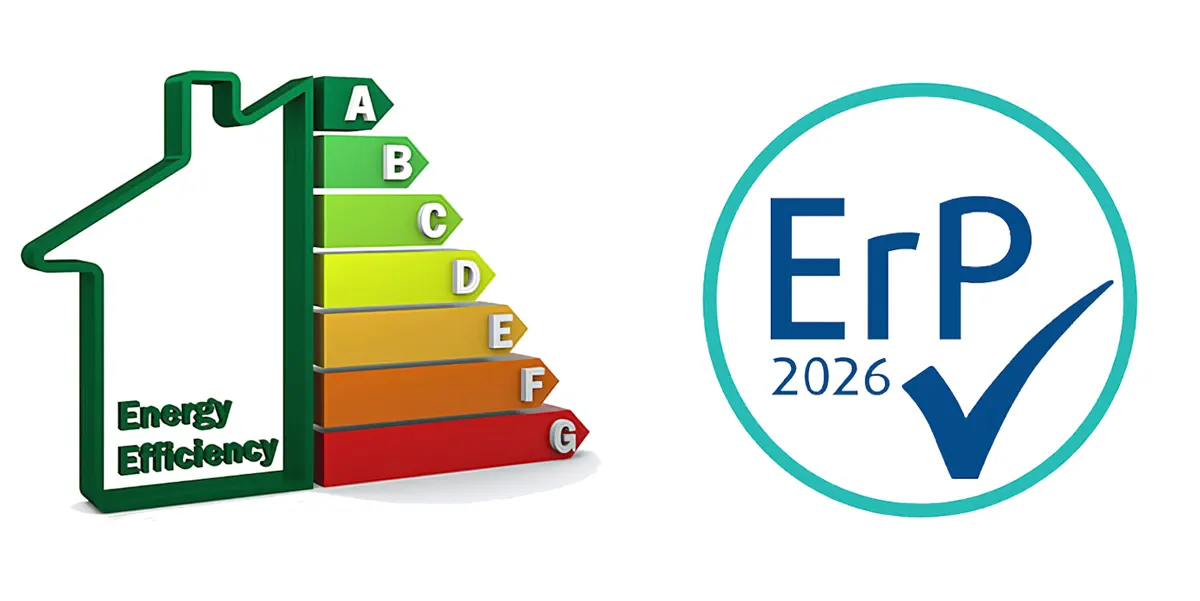
La UE introdujo el nuevo marco de ERP para abordar tres desafíos interconectados:
- Reducción de carbono y el Green Deal — La UE se ha comprometido a lograr la neutralidad climática para 2050. La iluminación representa una porción significativa del consumo de electricidad. Según el plan de trabajo de EcoDesign, las medidas en virtud de este marco podrían ahorrar más de 260 TWh de energía de uso final anual para 2030, lo que equivale a reducir aproximadamente 100 millones de toneladas de emisiones de gases de efecto invernadero al año.
- La tecnología ha superado los viejos estándares — Cuando se estableció el antiguo sistema de calificación A++ a E, aún estaba surgiendo tecnología LED. Para 2019, muchos productos LED ya habían superado el grado más alto, lo que hace que la etiqueta no pueda diferenciar de manera efectiva la calidad del producto.
- Transparencia de productos y economía circular — Más allá de la eficiencia energética, las nuevas regulaciones requieren que los fabricantes consideren la durabilidad, la reparabilidad y la reciclabilidad en su diseño. Esto significa que los productos deben ser más fiables, actualizables (si es posible), soportar el “derecho a la reparación”, contienen más materiales reciclables y son más fáciles de desmontar.
En resumen: la UE no solo ha elevado el listón sino que ha rediseñado todo el sistema de evaluación.
¿Qué tiras de luces LED deben cumplir con ERP?
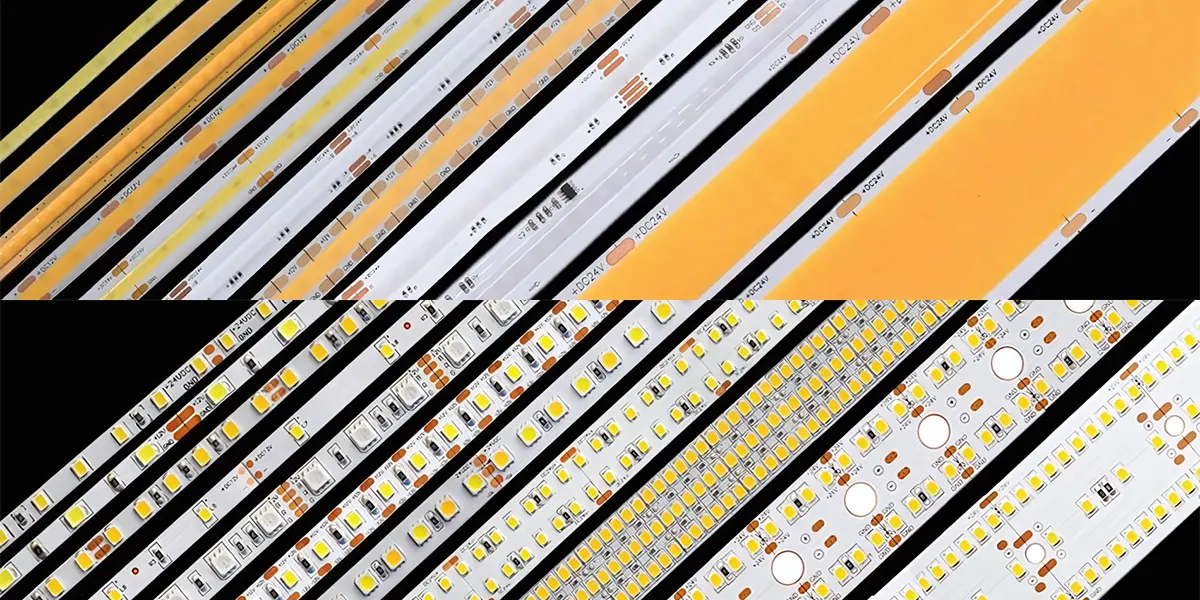
ERP se aplica a prácticamente todas las tiras de luces LED vendidas en la UE.
Productos que requieren cumplimiento de ERP:
- Luces de tiras LED de uso general para interiores
- Luces de tiras LED comerciales (minorista, oficina, hotel)
- Luces de tiras arquitectónicas y de
- Iluminación de exhibición y señalización de venta al por menor
- Iluminación de gabinetes y muebles
- Tiras de LED COB
- Luces de tiras LED impermeables (IP20, IP54, IP65, IP67)
Exenciones (limitadas):
- Fuentes de luz con flujo luminoso por debajo de 60 lúmenes o superior a 82.000 lúmenes
- Iluminación de emergencia
- Luminarias alimentadas únicamente por baterías
- Iluminación teatral y escénica
- Ciertas luminarias industriales especializadas
Nota importante para los compradores de OEM: Cualquier componente emisor de luz utilizado directamente en luminarias LED se considera una fuente de luz según las normas. Esto significa que incluso las luces de tiras LED vendidas como componentes a los fabricantes de luminarias deben cumplir con los requisitos de ERP.
Requisitos clave de ERP para luces de tira de LED
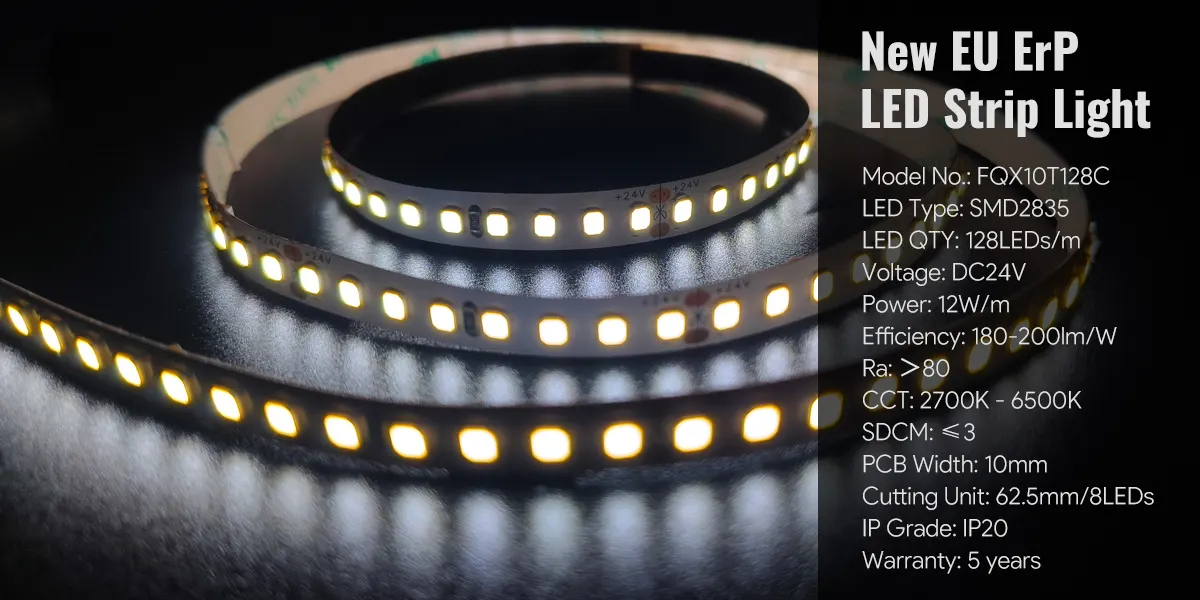
El nuevo marco ERP impone varios requisitos específicos sobre tiras de luces LED:
Eficacia luminosa mínima: A partir de 2026, las luces LED de tiras de iluminación general deben alcanzar al menos la clase D (≥ 120 lm/W). Se recomiendan clases superiores (B o C) para aplicaciones premium.
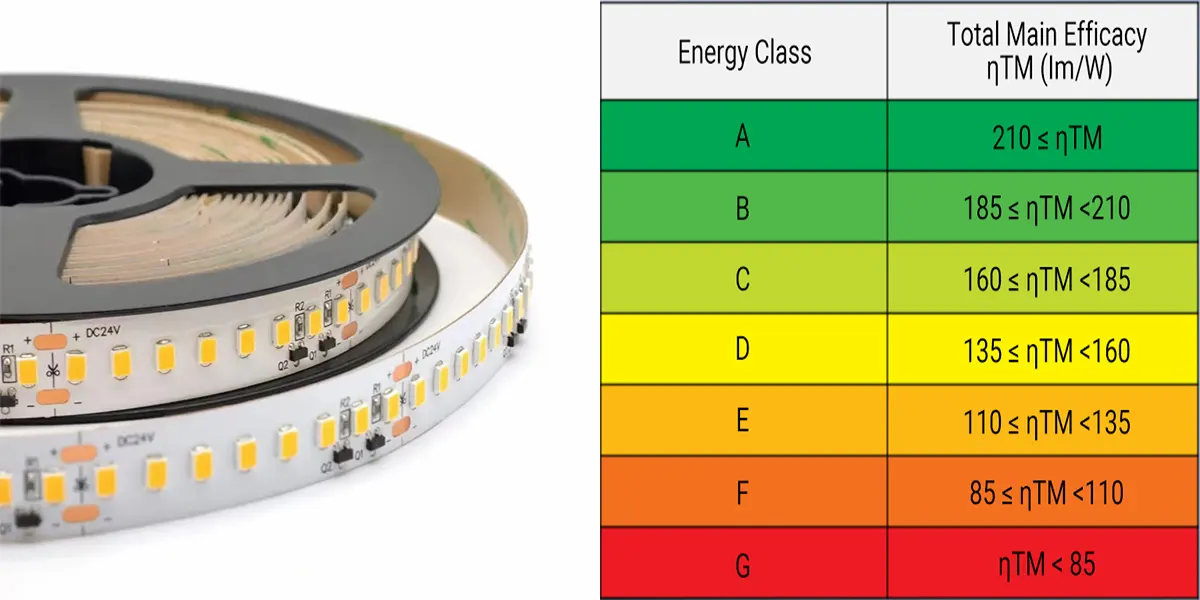
| clase de energía | Eficacia total de la red (LM/W) |
| A | ≥210 |
| B | 185 - <210 |
| C | 160 – <185 |
| D | 120 – <160 |
| E | 85 – <120 |
| F | 60 – <85 |
| G | <60 |
Consumo de energía en espera: La energía de reserva no debe exceder los 0,5 W, y el modo de espera de la red no debe exceder los 2,0 W.
Rendimiento de parpadeo: El indicador de parpadeo a corto plazo (PSTLM) debe ser ≤ 1.0, y el porcentaje de parpadeo (SVM) debe ser ≤ 0.4.
Vida y degradación: Los fabricantes deben proporcionar datos de vida útil L70/B50 ≥ 6.000 horas, lo que demuestra que el producto conserva al menos 70% de su flujo luminoso inicial después del período indicado.
Etiquetado de energía: Todos los productos que cumplen con los requisitos deben mostrar la nueva etiqueta de eficiencia energética A-G con un código QR que se vincula a la base de datos de EPREL.
Documentación técnica: Los archivos técnicos completos deben mantenerse durante al menos 10 años a partir de la fecha en que el producto se comercialice.
Requisitos de economía circular: Los productos deben diseñarse para mayor durabilidad, reparabilidad y reciclabilidad, con materiales más reciclables y desarmados más fáciles.
Comprender la nueva etiqueta energética de la UE
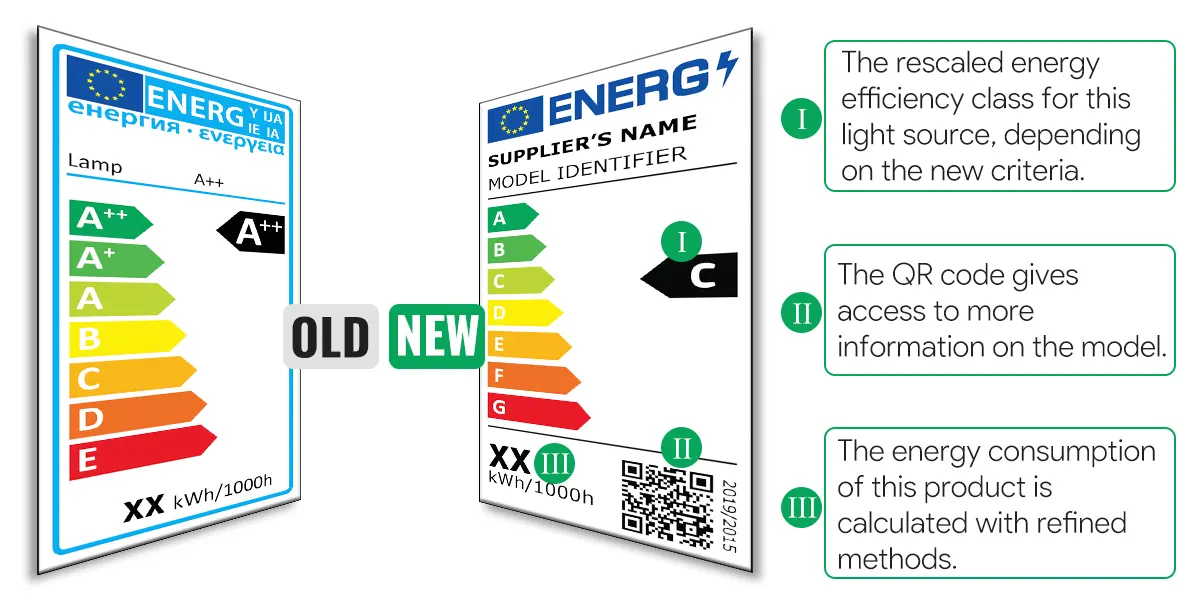
La nueva etiqueta energética de la UE utiliza una escala A-G simplificada, que reemplaza el antiguo sistema A+++ a D. Así es como se clasifican las luces de tira de LED:
- Clase A (≥ 210 lm/W): Eficiencia ultra alta — Futuro nivel Premium, aún no está ampliamente disponible
- Clase B (185–<210 lm/W): Eficiencia premium — Tiras de LED de primer nivel
- Clase C (160–185 lm/W): Alta eficiencia — tiras comerciales de alto rendimiento
- Clase D (120–160 lm/W): Eficiencia estándar: cumple con el requisito mínimo de 2026
- Clase E (85–<120 lm/W): Nivel de entrada: conforme pero por debajo de óptimo
- Clase F (60–<85 lm/W): Baja eficiencia — Tecnología antigua, eliminada gradualmente
- Clase G (< 60 lm/W): Eficiencia muy baja — equivalente a incandescente/halógeno, efectivamente prohibida
La etiqueta energética debe incluir un código QR que se vincula con la base de datos de EPREL, permitiendo a los compradores e inspectores verificar las especificaciones del producto y el estado de cumplimiento.
Por qué su producto A++ ahora está clasificado D: Bajo el antiguo sistema, muchos productos LED podrían lograr una calificación A++. Los nuevos estándares son mucho más estrictos: los productos que anteriormente eran A++ ahora podrían caer en la categoría D o E. Esto no significa que el producto haya empeorado, sino que la UE ha elevado significativamente los estándares.
Tira LED ERP vs. Tira LED tradicional
Aquí hay una comparación entre las tiras de LED tradicionales y las tiras LED compatibles con ERP:
| Característica | Tira LED tradicional | Tira de LED compatible con ERP |
| Eficiencia energética | Variable, a menudo bajo | ≥120 lm/W mínimo (clase D) |
| etiqueta de energía | a menudo falta | Etiqueta A-G con registro eprel |
| Poder en espera | no regulado | ≤0.5W (red ≤2.0W) |
| Control de parpadeo | No se requiere | PSLM ≤1.0, SVM ≤0.4 |
| Pruebas de por vida | No se requiere | L70/B50 ≥6.000 horas |
| generación de calor | Más alto | menor debido a la mayor eficacia |
| consumo de energía | mayor per lúmen | Hasta 50% inferior |
| Huella de carbono | Más alto | Baja |
| Acceso al mercado de la UE | bloqueado en la aduana | claro para importar |
| Registro de EPREL | no aplicable | preceptivo |
| Documentación técnica | A menudo incompleto | Archivo completo requerido (retención de 10 años) |
| a prueba de futuro | prohibido —riesgo de ser prohibido | Sí: cumple con los requisitos actuales |
Conclusión: Las tiras de LED que cumplen con ERP no son simplemente una cuestión de eficiencia energética, sino que son una cuestión de acceso al mercado. no -Los productos que cumplan con los requisitos serán detenidos en las fronteras de la UE y se retirarán de las plataformas de comercio electrónico.
Cómo elegir una tira de LED compatible con ERP
Paso 1: Determinar el escenario de la aplicación
Aclarar los requisitos del proyecto: interior/exterior, temperatura de color requerida, índice de reproducción de color, clasificación de protección, voltaje y flujo luminoso por metro. Las diferentes aplicaciones requieren diferentes niveles de eficiencia energética.
Paso 2: Comprobar la eficacia luminosa (LM/W)
Para cualquier proyecto de la UE en 2026, el requisito mínimo es ≥120 lm/W. Para proyectos de alta gama, apunta a la Clase B (≥160 lm/W) o Clase C (160–185 lm/W).
Paso 3: Verificar la documentación
Solicite documentación técnica completa antes de realizar un pedido:
- Informe de prueba ERP (cumple con las regulaciones efectivas después de 2024)
- Maqueta de etiqueta de eficiencia energética con número eprel
- Declaración de conformidad (DOC)
L70/B50 Informe de prueba de vida
Bandera roja: si un proveedor no puede proporcionar estos documentos con anticipación, es probable que no los tenga en absoluto.
Paso 4: Comprobar la integridad de la prueba
Algunas pruebas no son válidas. El proveedor debe completar:
- Prueba de eficacia luminosa
- Prueba de potencia de espera
- Pruebas de parpadeo (PSTLM y SVM)
- Pruebas de por vida
- Pruebas de consumo de energía sin carga
Paso 5: Confirmar registro de eprel
Los productos deben registrarse en la base de datos de EPREL antes de su comercialización. no -Los fabricantes de la UE deben designar a un representante autorizado de la UE para que se encargue del registro.
La base de datos de eprel debe contener:
- Registros de productos con clasificaciones de eficiencia energética
- Hojas de información de productos
- Documentación técnica accesible a las autoridades de vigilancia del mercado
- El sistema genera un número de registro único y un código QR, que deben aparecer en la etiqueta de eficiencia energética.
Paso 6: Evaluar a los proveedores
Los proveedores confiables deben:
- Proporcionar informes de prueba de laboratorios acreditados
- Mantener la documentación técnica de cada modelo
- Apoyo al registro de EPREL
- Tener experiencia en el cumplimiento del mercado europeo
- Mantener la transparencia en la fabricación y el control de calidad
Aplicaciones comunes de tiras de luces LED ERP
Aquí están las aplicaciones típicas y las clases de eficiencia recomendadas:
| Aplicación | Requisitos típicos | Clase recomendada |
| Iluminación de oficina | Alta eficacia, buen CRI, bajo parpadeo | Clase B o C |
| Pantallas minoristas | Alto CRI, precisión de color | Clase C o D |
| Hoteles y Hospitalidad | CCT cálido, capacidad de atenuación | Clase C |
| hospitales | Alto CRI, bajo parpadeo, higiene (Clasificación IP) | Clase C |
| Museos y galerías | Alto CRI, control preciso y sin UV | Clase C |
| Residencial (cocinas, armarios) | Buena eficacia, flexibilidad | Clase D o C |
| Iluminación de muebles | Perfil bajo, flexibilidad | clase D |
| fachadas arquitectónicas | Resistencia a la intemperie (IP65+), Control de color | clase D |
| señalización comercial | Alto brillo, visibilidad | Clase C o D |
| Iluminación de espejo | Alto CRI, distribución uniforme | clase D |
El cumplimiento de ERP se aplica a todas las aplicaciones mencionadas anteriormente. Para los proyectos del sector comercial y público dentro de la UE, el cumplimiento de ERP se está convirtiendo cada vez más en un requisito en las licitaciones, se excluirán los productos que no cumplan con estas normas.
Errores comunes que cometen los compradores
Aquí están los errores comunes y las prácticas correctas para evitarlos:
- Incorrecto 1: solo comparando vataje (W/m) — Correcto: Compare la eficacia (Lm/W)—La mayor eficacia significa más luz por vatio
- Incorrecto 2: ignorando la eficacia a favor del brillo — Correcto: Demanda ≥ 120 lm/W mínimo para todos los proyectos de la UE
- Incorrecto 3: CE confuso con ERP: correcto: CE es seguridad + EMC; ERP es eficiencia energética. Necesitas los tres
- Incorrecto 4: Aceptar "CE" como prueba de ERP — Correcto: Solicite el informe de prueba ERP y el número de EPREL específicamente
- Incorrecto 5: Suponiendo que “A++” significa calidad superior — Correcto: la escala A++ anterior está obsoleta; verifique la nueva clase A–G
- Incorrecto 6: Comprar sin etiqueta energética: correcto: cada producto que cumple con ERP debe tener una etiqueta A-G con código QR EPREL
- Incorrecto 7: Ignorar los requisitos de documentación — Correcto: Los archivos técnicos deben conservarse durante 10 años
- Incorrecto 8: Confiar en las reclamaciones de cumplimiento verbal — Correcto: Solicitar evidencia por escrito: Informes de prueba, DOC, Registro de EPREL
- Incorrecto 9: No verificando el rendimiento de parpadeo: correcto: el parpadeo es un requisito de cumplimiento: solicite los resultados de las pruebas PSTLM y SVM
- Incorrecto 10: Suponiendo que todas las tiras impermeables estén cubiertas, correcta: la clasificación IP no exime a un producto de ERP: todas las clasificaciones IP están cubiertas
¿Por qué elegir Signlite?LED Para luces de tira LED ERP
Signliteled es un profesional Fabricante de tiras de luz LED Con amplia experiencia al servicio del mercado europeo. Nuestros productos están diseñados y probados para cumplir con los últimos requisitos de ERP, lo que garantiza un despacho de aduana sin problemas y acceso al mercado para nuestros socios.
Lo que ofrecemos para el mercado de la UE:
- Soluciones de tiras LED de alta eficiencia — Nuestros productos cubren las clases ERP de B a E, con una eficacia de hasta 220 lm/W para aplicaciones premium. Utilizamos LED probados con LM-80 para garantizar un rendimiento constante y una larga vida útil.
- Personalización OEM/ODM — Trabajamos con marcas de iluminación, fabricantes y distribuidores para desarrollar luces de tiras LED personalizadas que cumplan con los requisitos de ERP para aplicaciones específicas, temperaturas de color, CRI, clasificaciones IP y necesidades de voltaje.
- Estricto control de calidad de producción — Desde la selección de chips LED hasta la fabricación y el ensamblaje final de PCB, se monitorea cada paso para garantizar la consistencia, la fiabilidad y el cumplimiento.
- Complete el soporte de documentación de ERP — Proporcionamos archivos técnicos completos, incluidos informes de prueba, ilustraciones de etiquetas energéticas y declaraciones de conformidad, todo lo que necesita para el registro de EPREL y el despacho de aduana de la UE.
- Selección de productos basada en aplicaciones — Nuestro equipo técnico le ayuda a elegir la clase de ERP y las especificaciones de productos adecuadas según los requisitos de su proyecto y los objetivos de eficiencia energética.
- Certificaciones múltiples — Además de ERP, nuestros productos llevan CE, RoHS y otras certificaciones relevantes para el mercado europeo.
¿Listo para obtener luces LED de tira de LED compatibles con ERP para su próximo proyecto europeo? Póngase en contacto con nuestro equipo técnico para obtener recomendaciones de productos, especificaciones personalizadas y soporte de documentación de cumplimiento.
Conclusión
El marco ERP no es una regulación temporal para las tiras de luces LED, se ha convertido en la nueva línea de base para el mercado europeo de la iluminación. A partir de 2026, los requisitos son claros: Clase D o superior (≥ 120 lm/w), límites estrictos de parpadeo, registro obligatorio de EPREL y documentación técnica completa.
Para los compradores, esto significa:
- Dejar de comparar la potencia: comparar la eficacia (LM/W)
- Dejar de confiar en las reclamaciones verbales: solicitar informes de prueba y números de eprel
- Deja de asumir que CE es suficiente: necesitas LVD + EMC + ERP
Para los proveedores esto significa:
- La inversión en LED de calidad no es negociable
- La documentación es tan importante como el producto en sí
- El registro de eprel es un servicio que debe proporcionar o apoyar
En SignLiteled, hemos construido nuestra línea de productos europea en torno a estos requisitos. Desde luces LED de alta eficiencia hasta soporte completo de documentación, lo ayudamos a llevar al mercado productos que cumplen con ERP con confianza.
¿Tienes un proyecto? Póngase en contacto con nuestro equipo técnico para la selección de productos, especificaciones personalizadas y soporte de cumplimiento. Esta guía es sólo para fines informativos. Las regulaciones pueden cambiar. Verifique siempre los requisitos más recientes con un experto en cumplimiento autorizado antes de poner productos en el mercado de la UE.
Preguntas frecuentes
Publicaciones relacionadas