Nederlands
  English
  简体中文
简体中文  Deutsch
  Español
  Français
  Italiano
  日本語
日本語  한국어
한국어  Polski
  Português
  Русский
  Türkçe
  Tiếng Việt
  ไทย
ไทย 
Als u LED-striplampen naar Europa exporteert of producten koopt voor commerciële verlichtingsprojecten, is het niet langer optioneel om de nieuwste ERP-vereisten te begrijpen - het is een verplichte voorwaarde.
Sinds 2021 heeft de Europese verlichtingsmarkt een fundamentele verschuiving ondergaan. Vrijwillige benchmarks voor energie-efficiëntie die ooit bestonden, zijn nu verplichte markttoegangsvereisten geworden. Vandaag stellen Europese importeurs, OEM-kopers, lichtontwerpers en engineeringaannemers allemaal dezelfde vraag voordat ze een bestelling plaatsen: "Houdt deze LED-striplamp in overeenstemming met de ERP-voorschriften?"
Deze gids is speciaal geschreven voor inkoopprofessionals, niet voor algemene consumenten. We zullen de specifieke ERP-vereisten voor LED-striplampen, de nieuwste 2026-normen, hoe u de naleving verifiëren en vooral - hoe u een leverancier selecteert die conforme producten kan leveren, samen met volledige documentatie uitleggen.
Wat is een ERP LED-striplicht?
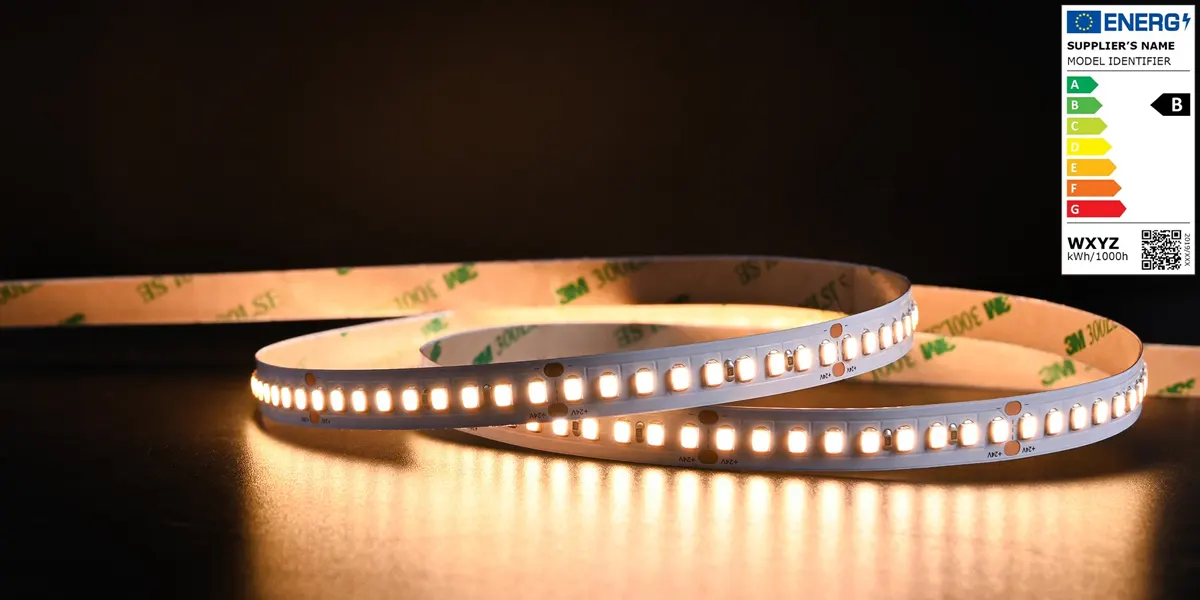
Een ERP (energie-gerelateerde producten) LED-striplicht Verwijst naar flexibele LED-verlichtingsproducten die voldoen aan de verplichte energie-efficiëntie en ecodesign-eisen die door de Europese Unie zijn gesteld voor producten die op de Europese markt worden gebracht. Naleving wordt geverifieerd door middel van laboratoriumtests, technische documentatie en EPrel-databaseregistratie.
| Item | Beschrijving |
| Kaderverordening | (EU) 2019/2021 (Ecodesign) |
| Ecodesign-regels | (EU) 2019/2020 (regelmatige verlichtingsregeling) |
| Regels voor energielabel | (EU) 2019/2015 (verordening energielabel) |
| marktprijs | Europese Unie (alle 27 lidstaten) |
| van toepassing op | LED-striplichten, LED-modules en armaturen met lichtbronnen |
| Hoofd focus | Energie-efficiëntie, stand-byvermogen, flikkeren, levenslange en circulaire economie |
| rendementschaal | A (hoogste) - G (laagste) |
| Minimum 2026 voor algemene verlichting | Klasse D of hoger (≥120 lm/W) |
| Standby-vermogenslimiet | ≤0,5 W (≤2.0W voor netwerk standby) |
Waar staat ERP voor?
ERP staat voor energiegerelateerde producten. Het is een verplichte richtlijn binnen het CE-certificeringskader, dat wordt gebruikt om energie-efficiëntie, milieubescherming en energiebesparende vereisten te reguleren. de ErP-richtlijn (2009/125/EG) Vervang de eerdere eUP (energiegebruikende producten) richtlijn in 2009, waarbij het toepassingsgebied werd uitgebreid met producten die zelf geen energie verbruiken maar het energieverbruik beïnvloeden.
In de praktijk: LVD zorgt voor veiligheid, EMC regelt elektromagnetische interferentie en ERP zorgt voor energie-efficiëntie en milieuvriendelijkheid. Producten met alleen veiligheids- en EMC-tests zijn nog steeds onvolledig - ERP is een noodzakelijk onderdeel van het CE-systeem.
Welke EU-regelgeving is van toepassing op LED-striplampen?
ERP-compliance voor LED-striplampen is onderworpen aan twee voorschriften:
- Verordening (EU) 2019/2020 van de Europese Commissie — bekend als de Single Lighting Regulation (SLR), waarin de eisen inzake ecologisch ontwerp voor lichtbronnen en afzonderlijke regelapparatuur worden vastgesteld. Het verving de vorige verordeningen (EG) nr. 244/2009, (EG) nr. 245/2009 en (EU) nr. 1194/2012.
- Europese Commissie Gedelegeerde Verordening (EU) 2019/2015 — Bekend als de Energy Labelling Regulation (ELR), waarin etiketteringsvereisten voor lichtbronnen worden vastgesteld. Het verving (EG) nr. 874/2012.
Voor kopers is het belangrijkste punt: deze voorschriften zijn van toepassing op elke lichtbron die op de EU-markt wordt geplaatst, inclusief LED-striplampen, LED-modules en armaturen die lichtbronnen bevatten.
Wanneer zijn de nieuwe ERP-regels van kracht geworden?
2018 → Beoordeling van bestaande regelgeving begint
2019 → EU 2019/2020 en EU 2019/2015 gepubliceerd
2021 → Nieuwe regelgeving treedt in werking (september 2021)
2024 → Flikkervereisten aangescherpt (SVM ≤ 0,4)
2026 → Volledige handhaving met minimumklasse D (≥ 120 lm/W)
De verordening is in september 2021 in werking getreden. Sindsdien heeft de EU geleidelijk aan de eisen gesteld. Vanaf 2026 blijft de Kaderverordening (EU) 2019/2021 van kracht, zonder dat er een vervangingsverordening wordt verwacht.
Waarom werden de nieuwe ERP-regels ingevoerd?
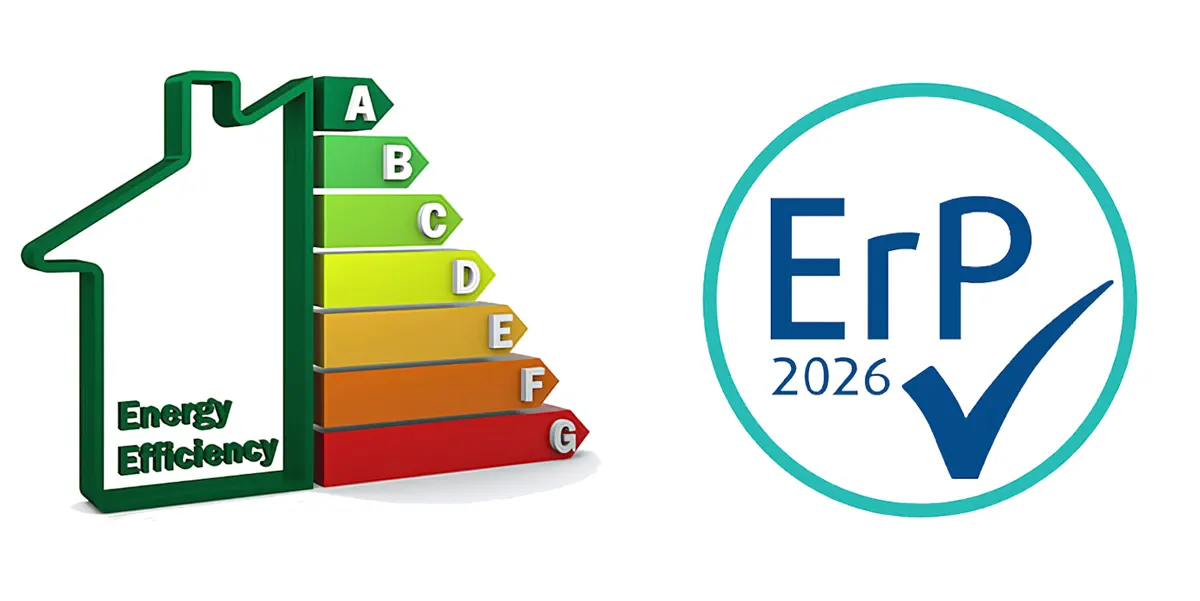
De EU heeft het nieuwe ERP-kader ingevoerd om drie onderling verbonden uitdagingen aan te pakken:
- Koolstofreductie en de Green Deal — De EU heeft zich ertoe verbonden klimaatneutraliteit tegen 2050 te bereiken. Verlichting is goed voor een aanzienlijk deel van het elektriciteitsverbruik. Volgens het werkplan Ecodesign kunnen maatregelen in dit kader tegen 2030 jaarlijks meer dan 260 TWh eindgebruiksenergie besparen, wat overeenkomt met het verminderen van ongeveer 100 miljoen ton broeikasgasemissies per jaar.
- Technologie heeft oude normen overtroffen — Toen het oude A++ tot E-beoordelingssysteem werd opgericht, was er nog steeds LED-technologie in opkomst. In 2019 waren veel LED-producten al overschreden de hoogste kwaliteit, waardoor het label niet in staat was om de productkwaliteit effectief te onderscheiden.
- Producttransparantie en de circulaire economie — Naast energie-efficiëntie, de nieuwe regelgeving vereisen dat fabrikanten duurzaamheid, herstelbaarheid en recyclebaarheid in hun ontwerp in overweging nemen. Dit betekent dat producten betrouwbaarder, upgradebaarder (indien mogelijk), het 'recht op reparatie' moeten ondersteunen, meer recyclebare materialen moeten bevatten en gemakkelijker te demonteren zijn.
Kortom: de EU heeft niet alleen de lat hoger gelegd, maar ook het hele evaluatiesysteem opnieuw ontworpen.
Welke LED-striplampen moeten voldoen aan ERP?
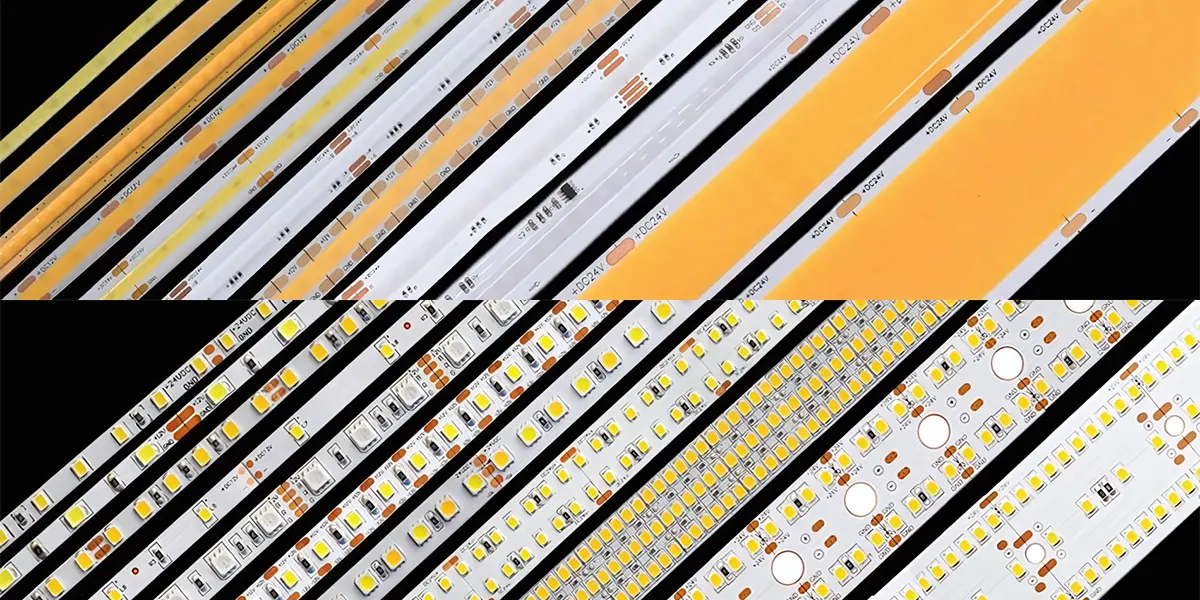
ERP geldt voor vrijwel alle LED-striplampen die in de EU worden verkocht.
Producten die ERP-compliance vereisen:
- Indoor universele ledstripverlichting
- Commerciële LED-striplichten (winkel, kantoor, hotel)
- Architectonische en decoratieve LED-striplicht
- Retail display en bewegwijzering verlichting
- Kast- en meubelverlichting
- COB LED-stripverlichting
- Waterdichte LED-striplichten (IP20, IP54, IP65, IP67)
Vrijstellingen (beperkt):
- Lichtbronnen met lichtstroom onder de 60 lumen of boven 82.000 lumen
- noodverlichting
- Armaturen die uitsluitend op batterijen worden gevoed
- Theatrale en podiumverlichting
- Bepaalde gespecialiseerde industriële armaturen
Belangrijke opmerking voor OEM-kopers: elk lichtgevend onderdeel dat rechtstreeks in LED-armaturen wordt gebruikt, wordt volgens de regelgeving als een lichtbron beschouwd. Dit betekent dat zelfs LED-striplampen die als componenten aan armaturenfabrikanten worden verkocht, moeten voldoen aan de ERP-vereisten.
Belangrijke ERP-vereisten voor LED-striplampen
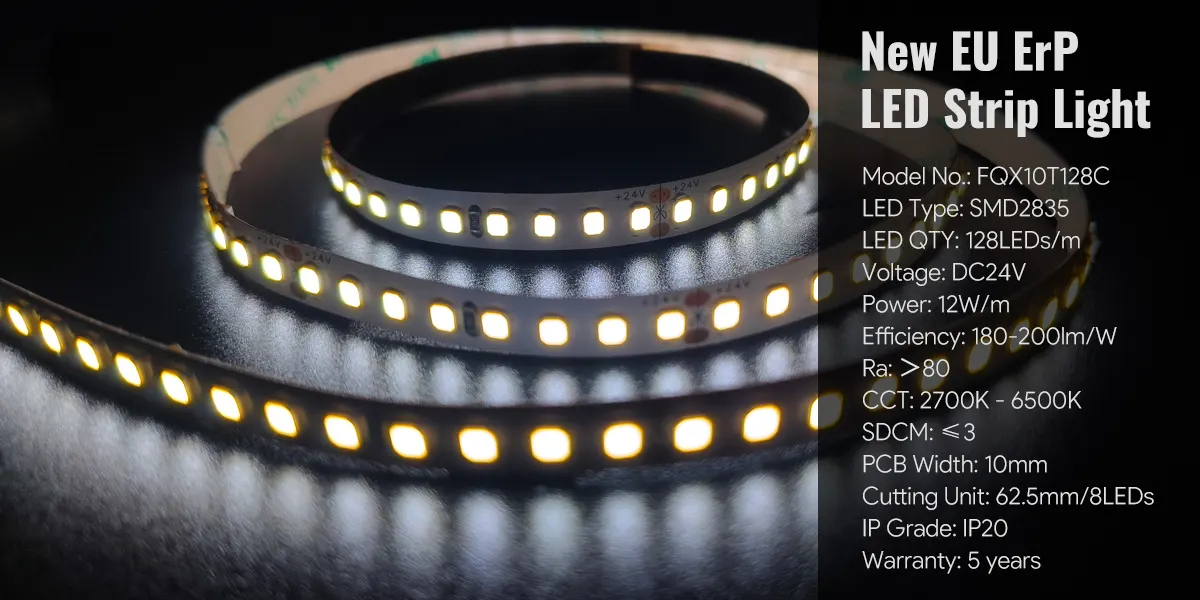
Het nieuwe ERP-framework stelt verschillende specifieke vereisten voor LED-striplampen:
Minimale lichtgevende werkzaamheid: Vanaf 2026 moet de algemene verlichtings-LED-striplichten minimaal klasse D (≥ 120 lm/W) bereiken. Hogere klassen (B of C) worden aanbevolen voor premium toepassingen.
| energieklasse | Totale werkzaamheid (lm/W) |
| A | ≥210 |
| B | 185 – <210 |
| C | 160 – <185 |
| D | 120 – <160 |
| E | 85 – <120 |
| F | 60 – <85 |
| G | <60 |
Standby stroomverbruik: Standby-vermogen mag niet hoger zijn dan 0,5 W en de netwerkstandby mag niet hoger zijn dan 2,0 W.
Flikkerprestaties: De kortdurende flikkerindicator (PSTLM) moet ≤ 1,0 zijn en het flikkerpercentage (SVM) moet ≤ 0,4 zijn.
Levenslang en degradatie: Fabrikanten moeten L70/B50 levenslange gegevens verstrekken ≥ 6.000 uur, wat aantoont dat het product na de vermelde periode ten minste 701 TP3T van zijn initiële lichtstroom behoudt.
Energie etikettering: Alle producten die compatibel zijn, moeten het nieuwe A-G Energy Efficiency-label weergeven met een QR-code die koppeling maakt met de EPrel-database.
Technische documentatie: Volledige technische dossiers moeten gedurende ten minste 10 jaar worden bijgehouden vanaf de datum waarop het product in de handel wordt gebracht.
Vereisten voor circulaire economie: Producten moeten worden ontworpen voor duurzaamheid, herstelbaarheid en recyclebaarheid, met meer recyclebare materialen en gemakkelijker demontage.
Het nieuwe EU-energielabel begrijpen
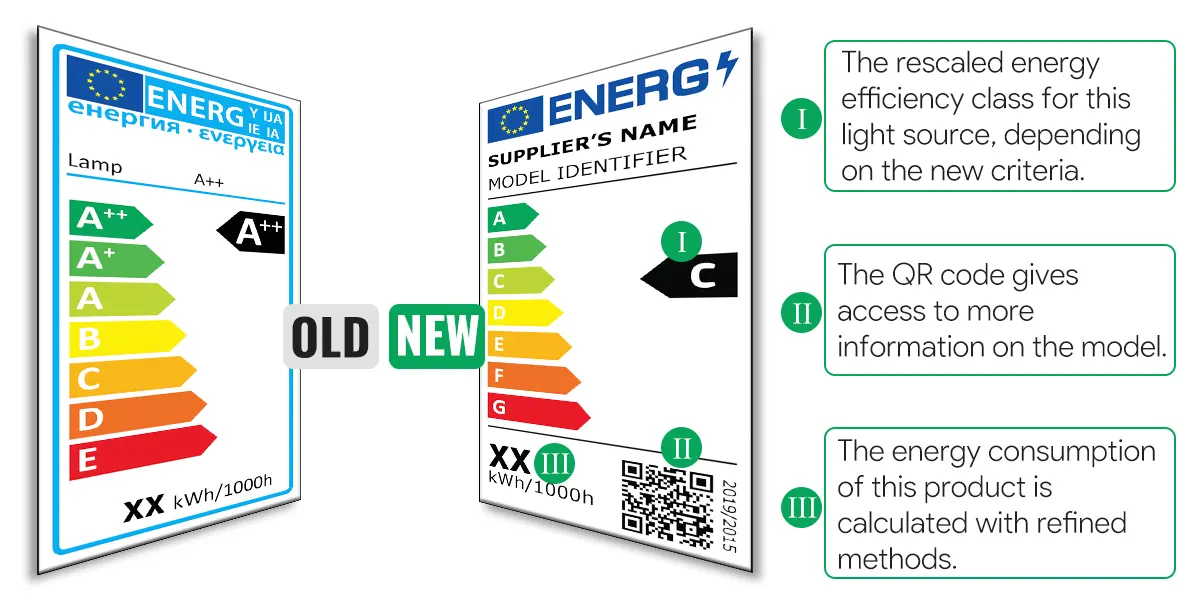
Het nieuwe EU-energielabel maakt gebruik van een vereenvoudigde A-G-schaal, ter vervanging van het oude A+++ naar D-systeem. Hier is hoe LED-striplichten worden geclassificeerd:
- Klasse A (≥ 210 lm/W): Ultra-hoog rendement — Toekomstige premiumlaag, nog niet algemeen verkrijgbaar
- Klasse B (185–<210 lm/W): Premium-efficiëntie — Top-tier LED-strips
- Klasse C (160–<185 lm/W): hoog rendement — hoogwaardige commerciële strips
- Klasse D (120–<160 lm/W): standaardefficiëntie — Voldoet aan de minimumvereiste 2026
- Klasse E (85–<120 lm/W): instapniveau — conform maar onder optimaal
- Klasse F (60–<85 lm/W): Lage efficiëntie — Oudere technologie, wordt uitgefaseerd
- Klasse G (< 60 lm/W): zeer laag rendement — gelijk aan gloeilamp/halogeen, effectief verboden
Het energielabel moet een QR-code bevatten die linkt naar de ePrel-database, waardoor kopers en inspecteurs de productspecificaties en de nalevingsstatus kunnen verifiëren.
Waarom uw A++-product nu beoordeeld is als D: Onder het oude systeem kunnen veel LED-producten een A++-classificatie behalen. De nieuwe normen zijn veel strenger - producten die voorheen A++ waren, kunnen nu in de categorie D of E vallen. Dit betekent niet dat het product erger is geworden, maar de EU heeft de normen aanzienlijk verhoogd.
ERP LED Strip vs. Traditionele LED Strip
Hier is een vergelijking tussen traditionele LED-strips en ERP-compliant LED-strips:
| Functie | Traditionele LED-strip | ERP-conforme LED-strip |
| Energie-efficiëntie | Variabel, vaak laag | ≥120 lm/W Minimum (klasse D) |
| energielabel | vaak vermist | A–G label met EPREL-registratie |
| Standby-vermogen | regulatieloos | ≤0,5 W (≤2.0W netwerk) |
| Flikkerbesturing | Geen vereist | PSSTLM ≤1.0, SVM ≤0.4 |
| Levenslange testen | Geen vereist | L70/B50 ≥6.000 uur |
| warmteopwekking | Hoger | Lager door hogere werkzaamheid |
| stroomverbruik | hoger per lumen | Tot 50% lager |
| CO2-voetafdruk | Hoger | Onder |
| Toegang tot de EU-markt | geblokkeerd bij de douane | duidelijk voor import |
| EPrel-registratie | Niet van toepassing | mandataris |
| Technische documentatie | Vaak onvolledig | Volledig dossier vereist (10 jaar retentie) |
| toekomstbestendig | heel weinig —Reis om verboden te worden | Ja - voldoet aan de huidige vereisten |
Conclusie: ERP-conforme LED-strips zijn niet alleen een kwestie van energie-efficiëntie - ze zijn een kwestie van markttoegang. stem- - Conforme producten worden aan de EU-grenzen vastgehouden en van e-commerceplatforms verwijderd.
Hoe een ERP-compatibele LED-strip te kiezen
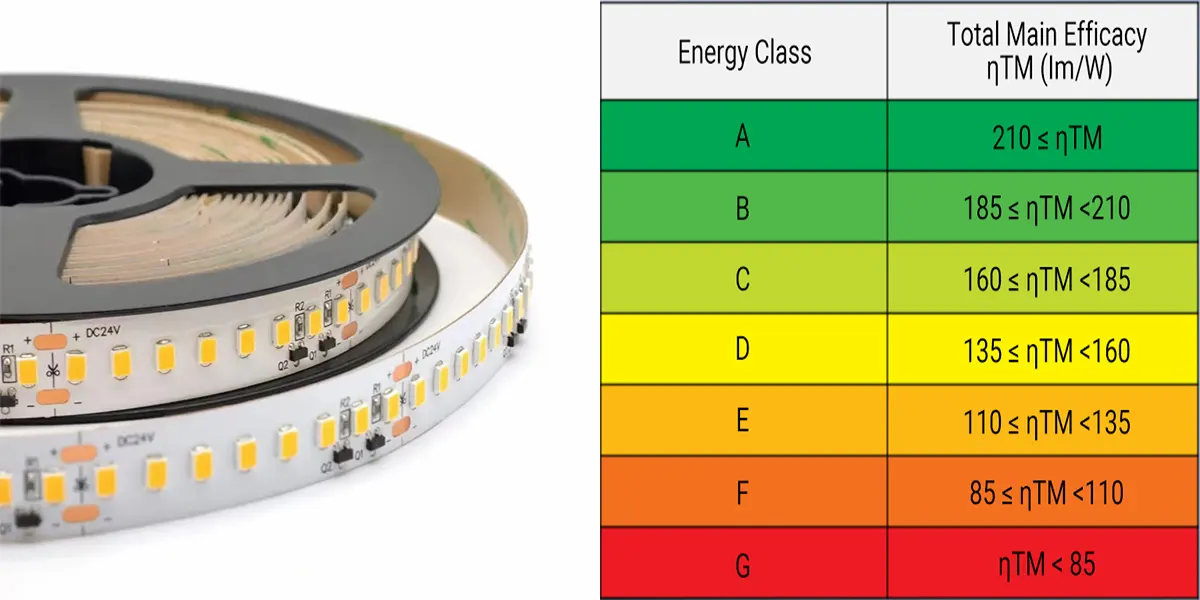
Stap 1: Bepaal het toepassingsscenario
Verduidelijk projectvereisten: binnen/buiten, vereiste kleurtemperatuur, kleurweergave-index, beschermingsclassificatie, spanning en lichtstroom per meter. Verschillende toepassingen vereisen verschillende energie-efficiëntieniveaus.
Stap 2: Controleer de lichtgevende werking (LM/W)
Voor elk EU-project in 2026 is de minimumvereiste ≥120 lm/W. Voor hoogwaardige projecten moet u streven naar klasse B (≥160 lm/W) of klasse C (160–185 lm/w).
Stap 3: documentatie verifiëren
Vraag volledige technische documentatie aan voordat u een bestelling plaatst:
- ERP-testrapport (conform de regelgeving die na 2024 van kracht is)
- Energie-efficiëntielabel mock-up met EPrel-nummer
- Conformiteitsverklaring (DOC)
L L70/B50 Levenslange testrapport
Rode vlag: Als een leverancier deze documenten niet van tevoren kan verstrekken, hebben ze ze waarschijnlijk helemaal niet.
Stap 4: Controleer de volledigheid van de test
Sommige tests zijn ongeldig. De leverancier moet invullen:
- Lichtgevende werkzaamheidstest
- Standby-vermogenstest
- Flikkertesten (PSTLM en SVM)
- Levenslange testen
- Testen op het stroomverbruik zonder belasting
Stap 5: Bevestig EPrel-registratie
Producten moeten in de EPrel-database worden geregistreerd voordat ze op de EU-markt worden gebracht. stem- -EU-fabrikanten moeten een gemachtigde EU-vertegenwoordiger aanwijzen om de registratie af te handelen.
De EPrel-database moet bevatten:
- Productrecords met energie-efficiëntiebeoordelingen
- Productinformatiebladen
- Technische documentatie die toegankelijk is voor markttoezichtautoriteiten
- Het systeem genereert een uniek registratienummer en QR-code, die op het label voor energie-efficiëntie moeten verschijnen.
Stap 6: Evalueer leveranciers
Betrouwbare leveranciers moeten:
- Verstrek testrapporten van geaccrediteerde laboratoria
- Technische documentatie bijhouden voor elk model
- Ondersteuning EPrel-registratie
- Heb ervaring met Europese marktcompliance
- Zorg voor transparantie in productie en kwaliteitscontrole
Veel voorkomende toepassingen van ERP LED-striplampen
Hier zijn typische toepassingen en aanbevolen efficiëntieklassen:
| Toepassing | Typische vereisten | Aanbevolen les |
| Kantoorverlichting | Hoge werkzaamheid, goede CRI, lage flikkering | Klasse B of C |
| Retaildisplays | Hoge CRI, kleurnauwkeurigheid | Klasse C of D |
| Hotels & Gastvrijheid | Warm CCT, dimvermogen | klasse C |
| ziekenhuizen | Hoge CRI, laag flikkeren, hygiëne (IP-classificatie) | klasse C |
| Musea & Galleries | Hoge CRI, UV-vrij, nauwkeurige controle | klasse C |
| Woonkamer (keukens, kasten) | Goede werkzaamheid, flexibiliteit | Klasse D of C |
| Meubelverlichting | Laag profiel, flexibiliteit | Klasse D |
| Architectonische gevel | Weerbestendigheid (IP65+), kleurregeling | Klasse D |
| Commerciële bewegwijzering | Hoge helderheid, zichtbaarheid | Klasse C of D |
| spiegel verlichting | Hoge CRI, gelijkmatige verdeling | Klasse D |
ERP-compliance is van toepassing op alle bovengenoemde applicaties. Voor commerciële en publieke sectorprojecten binnen de EU wordt ERP-compliance steeds meer een vereiste in aanbestedingen - producten die niet aan deze normen voldoen, worden uitgesloten.
Veelvoorkomende fouten die kopers maken
Hier zijn veelvoorkomende fouten en de juiste praktijken om ze te vermijden:
- Onjuist 1: Alleen wattage (w/m) vergelijken — Juist: Vergelijk de werkzaamheid (LM/W)—Hogere werkzaamheid betekent meer licht per watt
- Onjuist 2: Negeren van werkzaamheid ten gunste van helderheid — Correct: vraag ≥ 120 lm/W minimum voor alle EU-projecten
- Onjuist 3: Verwarrend CE met ERP — Correct: CE is veiligheid + EMC; ERP is energie-efficiëntie. je hebt ze alle drie nodig
- Onjuist 4: "CE" accepteren als bewijs van ERP — Correct: Vraag specifiek om het ERP-testrapport en het EPrel-nummer
- Onjuist 5: Ervan uitgaande dat "A++" topkwaliteit betekent - correct: de oude A++-schaal is verouderd; controleer de nieuwe A-G-klasse
- Onjuist 6: Kopen zonder energielabel — Correct: elk ERP-conform product moet een A-G-label hebben met Epl QR-code
- Onjuist 7: Documentatievereisten negeren — Correct: technische bestanden moeten 10 jaar worden bewaard
- Onjuist 8: Vertrouwen op verbale nalevingsclaims — Correct: Vraag om schriftelijk bewijs: testrapporten, DOC, EPEL-registratie
- Onjuist 9: Flikkerprestaties niet controleren — Correct: Flicker is een nalevingsvereiste: vraag naar PSTLM- en SVM-testresultaten
- Onjuist 10: Ervan uitgaande dat alle waterdichte strips gedekt zijn - correct: IP-classificatie stelt een product niet vrij van ERP - alle IP-beoordelingen zijn gedekt
Waarom kiezen voor SignLiteLED Voor ERP LED-striplampen
Signlitetled is een professional Fabrikant van LED-stripverlichting Met ruime ervaring op de Europese markt. Onze producten zijn ontworpen en getest om aan de nieuwste ERP-vereisten te voldoen, waardoor een vlotte douaneafhandeling en markttoegang voor onze partners worden gegarandeerd.
Wat bieden wij voor de EU-markt:
- Hoogrendements-LED-stripoplossingen — Onze producten omvatten ERP-klassen B tot en met E, waarbij de werkzaamheid tot 220 lm/w voor premiumtoepassingen bereikt. We gebruiken LM-80-getest LED's om consistente prestaties en een lange levensduur te garanderen.
- OEM/ODM Aanpassing — We werken met verlichtingsmerken, fabrikanten en distributeurs om op maat gemaakte LED-striplampen te ontwikkelen die voldoen aan ERP-vereisten voor specifieke toepassingen, kleurtemperaturen, CRI, IP-classificaties en spanningsbehoeften.
- Strikte productiekwaliteitscontrole — Van LED-chipselectie tot PCB-productie en eindmontage, elke stap wordt gemonitord om consistentie, betrouwbaarheid en naleving te garanderen.
- Volledige ERP-documentatie-ondersteuning — We leveren volledige technische bestanden, waaronder testrapporten, illustraties van energielabels en conformiteitsverklaringen - alles wat u nodig heeft voor EPREL-registratie en inklaring van de EU.
- Op applicaties gebaseerde productselectie — Ons technische team helpt u bij het kiezen van de juiste ERP-klasse en productspecificaties op basis van uw projectvereisten en energie-efficiëntiedoelen.
- Meerdere certificeringen — Naast ERP dragen onze producten CE, ROHS en andere certificeringen voor de Europese markt.
Klaar om ERP-compliant LED-striplampen te kopen voor uw volgende Europese project? Neem contact op met ons technisch team voor productaanbevelingen, aangepaste specificaties en ondersteuning voor nalevingsdocumentatie.
Conclusie
Het ERP-raamwerk is geen tijdelijke regulering voor LED-striplampen - het is de nieuwe basis voor de Europese verlichtingsmarkt geworden. Vanaf 2026 zijn de vereisten duidelijk: klasse D of hoger (≥ 120 lm/W), strikte flikkeringslimieten, verplichte EPrel-registratie en volledige technische documentatie.
Voor kopers betekent dit:
- Stop met het vergelijken van wattage: vergelijk de werkzaamheid (LM/W)
- Vertrouw niet meer op verbale claims - vraag testrapporten en ePrel-nummers aan
- Stop met de veronderstelling dat CE genoeg is - je hebt LVD + EMC + ERP nodig
Voor leveranciers betekent dit:
- Investeringen in kwaliteits-LED's zijn niet onderhandelbaar
- Documentatie is net zo belangrijk als het product zelf
- EPrel-registratie is een dienst die u moet bieden of ondersteunen
Bij Sigliteled hebben we onze Europese productlijn rond deze vereisten gebouwd. Van hoogrenderende LED-striplampen tot volledige documentatieondersteuning, wij helpen u met vertrouwen ERP-conforme producten op de markt te brengen.
Heb je een project? Neem contact op met ons technisch team voor productselectie, aangepaste specificaties en ondersteuning voor compliance. Deze handleiding is uitsluitend voor informatieve doeleinden. regelgeving kan veranderen. Controleer altijd de laatste vereisten met een geautoriseerde compliance-expert voordat u producten op de EU-markt plaatst.
FAQs
Gerelateerde berichten