标牌和 LED 灯带工厂,始于 2011 年

标牌和 LED 灯带工厂,始于 2011 年

带LED灯带灯的无焊柜照明:安装指南无焊接

As modern furniture design continues to evolve, cabinet lighting is no longer only about adding illumination. Designers, furniture manufacturers, and installers are looking for lighting solutions that offer cleaner aesthetics, faster installation, and easier long-term maintenance.

Traditional LED strip lighting installations often require soldering, manual wiring, and skilled labor to connect strips with power cables and accessories. While these methods are reliable, they can increase installation time and make future replacement or upgrades more difficult, especially in large-scale furniture and interior projects.

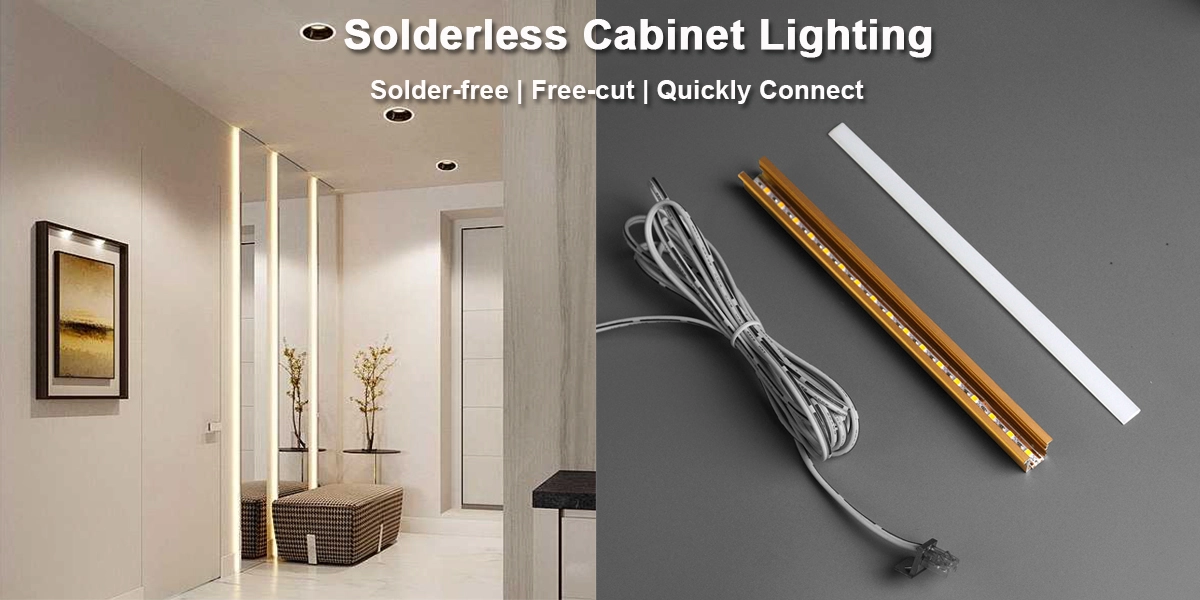
Solderless Cabinet Lighting provides a more efficient approach by combining LED strips, aluminum profiles, quick-connect components, and modular accessories into an integrated lighting system. Without soldering, installers can quickly connect, adjust, and replace lighting components while maintaining a clean and professional installation appearance.

This makes solderless cabinet lighting an ideal solution for kitchens, wardrobes, closets, display cabinets, retail shelving, and custom furniture applications. For lighting designers, furniture manufacturers, and project contractors, it offers improved installation efficiency, easier maintenance, and greater design flexibility.

Solderless-Cabinet-Lighting

Quick Answer: Why Is Solderless Cabinet Lighting Becoming Popular?

Solderless Cabinet Lighting is becoming popular because it simplifies the installation and maintenance of furniture lighting systems. By replacing traditional soldering connections with plug-in connectors, it allows LED 灯条, 铝型材, 和 配件 to be installed, replaced, and upgraded more efficiently. This makes it an ideal lighting solution for kitchens, wardrobes, closets, display cabinets, and custom furniture projects where clean installation and long-term maintenance are important.

What Is a Solderless Cabinet Lighting System and How Does It Work?

A solderless cabinet lighting system is a modular LED lighting solution designed to simplify the installation, replacement, and maintenance of furniture lighting. Unlike traditional LED strip installations that require soldering wires directly to the strip, a solderless system uses plug-in connectors and compatible accessories to connect LED strips, aluminum profiles, power supplies, and control components.

The key difference is its modular connection design. Instead of creating permanent soldered connections, each lighting component can be assembled, adjusted, or replaced independently. This makes the system faster to install and easier to maintain, especially for cabinet, wardrobe, closet, display cabinet, and custom furniture lighting projects where flexibility and clean installation are important.

A typical solderless cabinet lighting system works through several integrated components:

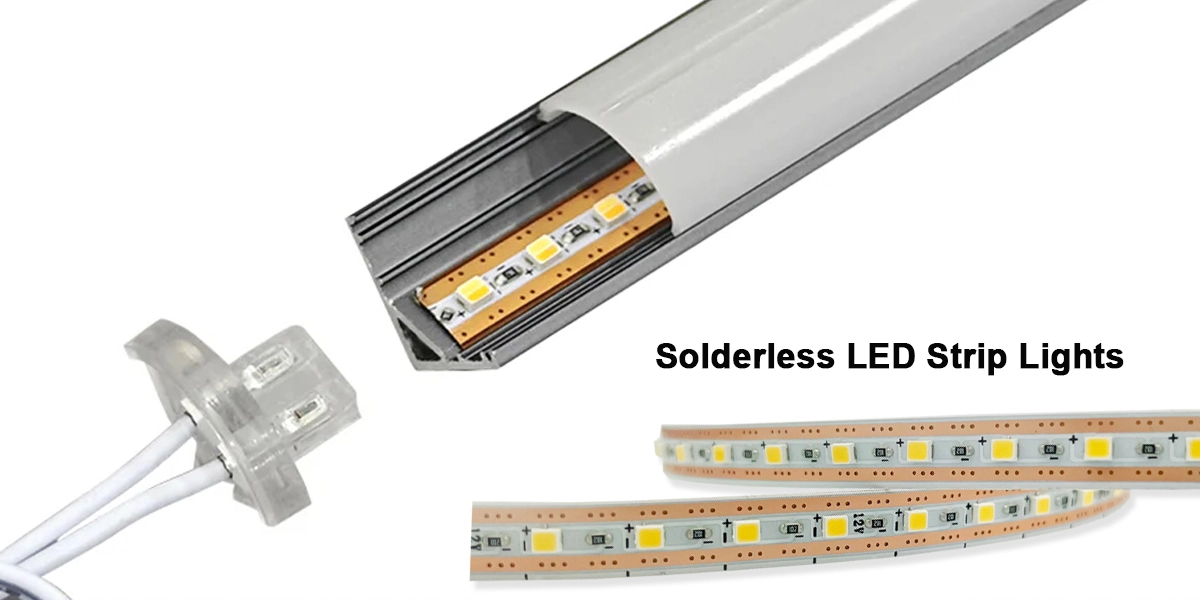
Solderless LED Strip with Quick Connection Design

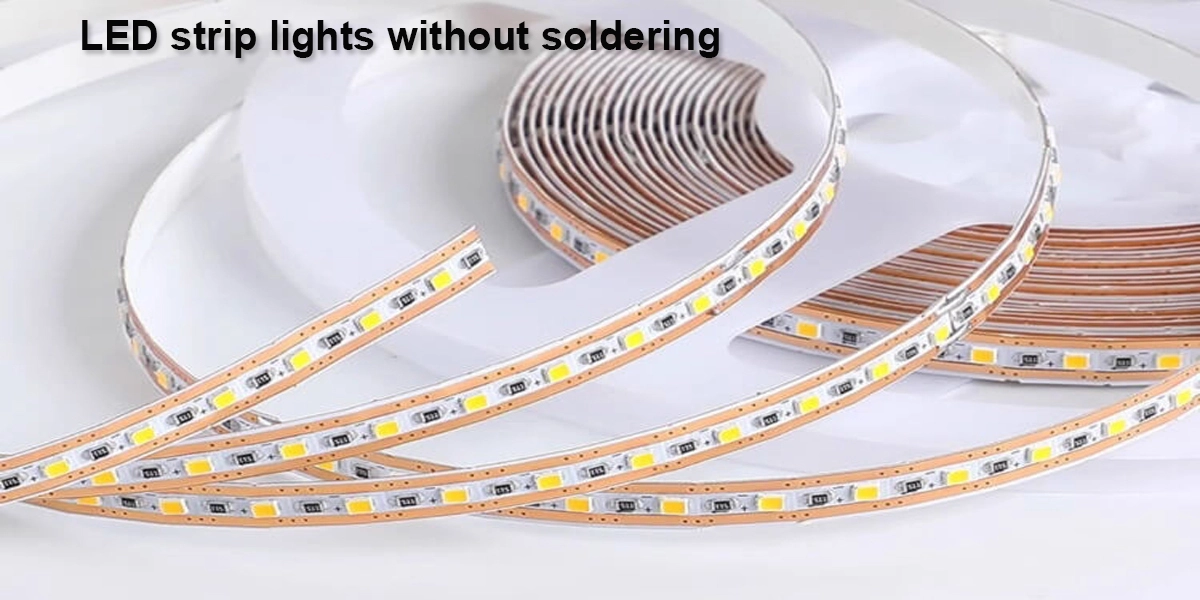
The LED strip is the primary light source and is designed to work with solder-free connectors or pre-installed connection points. This allows installers to cut, reconnect, or replace sections of the LED strip without additional soldering work, improving installation efficiency and reducing maintenance time.

Solderless-LED-Strip-with-Quick-Connection
Aluminum-Profile-with-Solderless-LED-Strip

Aluminum Profile for Protection and Heat Dissipation

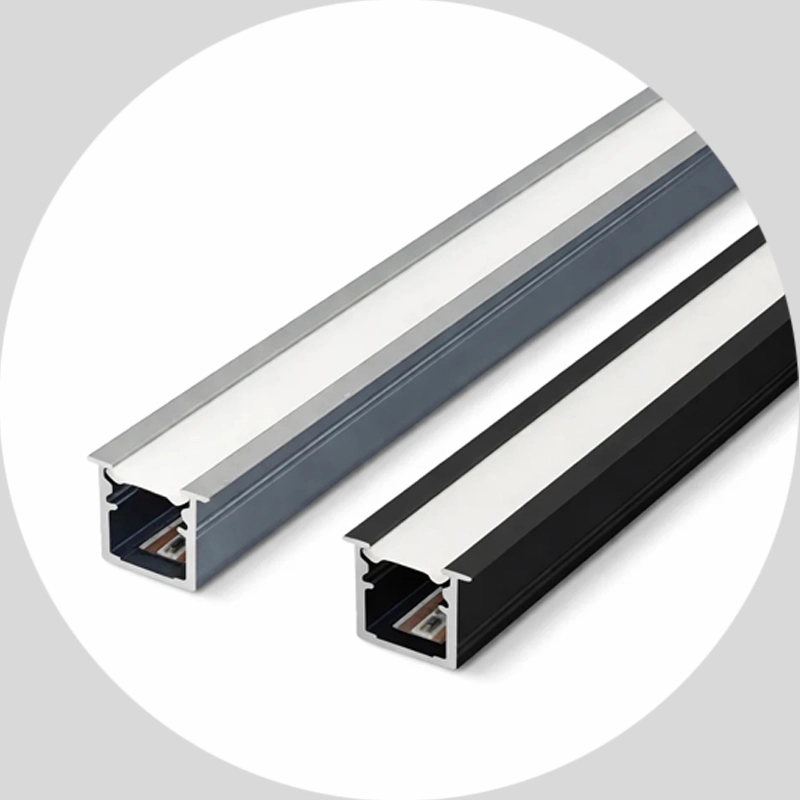
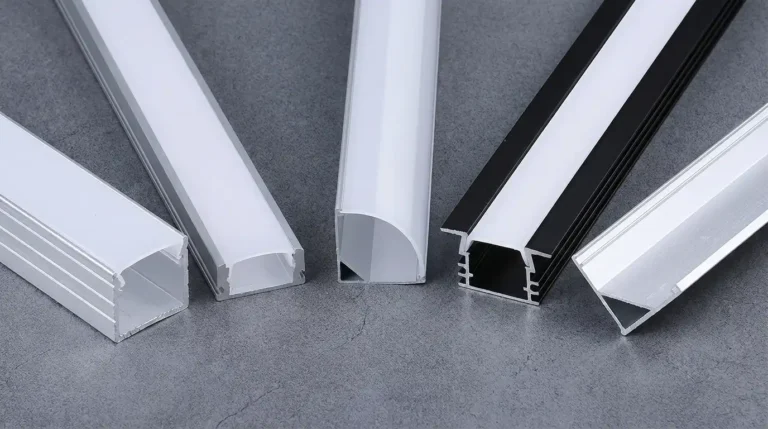
Aluminum profiles provide a professional finished appearance while protecting the LED strip and improving thermal management. In furniture lighting applications, recessed, surface-mounted, and corner profiles are commonly used to create seamless linear lighting effects inside cabinets, wardrobes, and shelves.

Plug-In Connectors and Modular Accessories

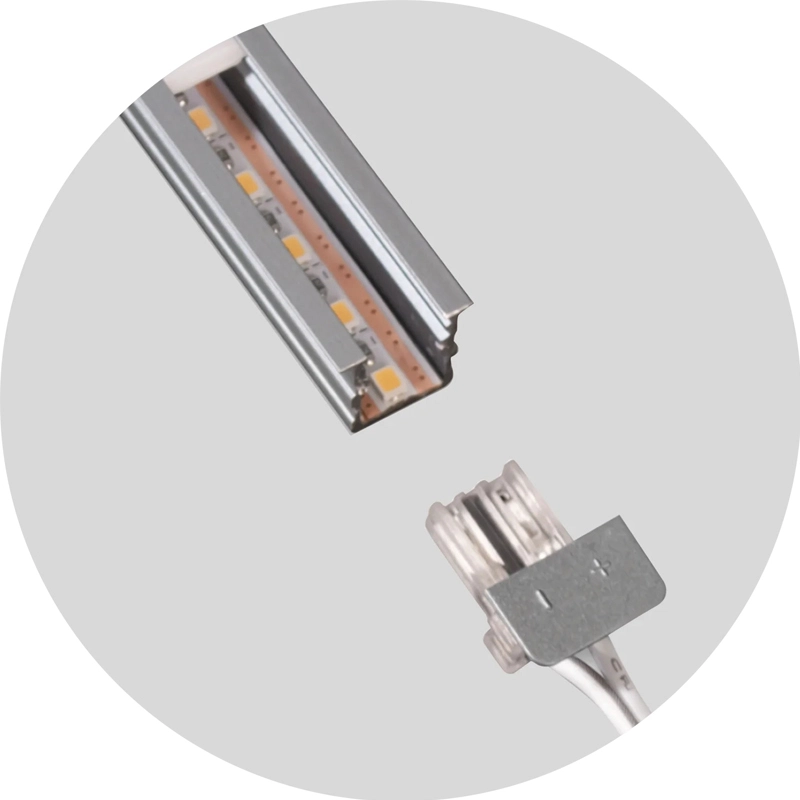
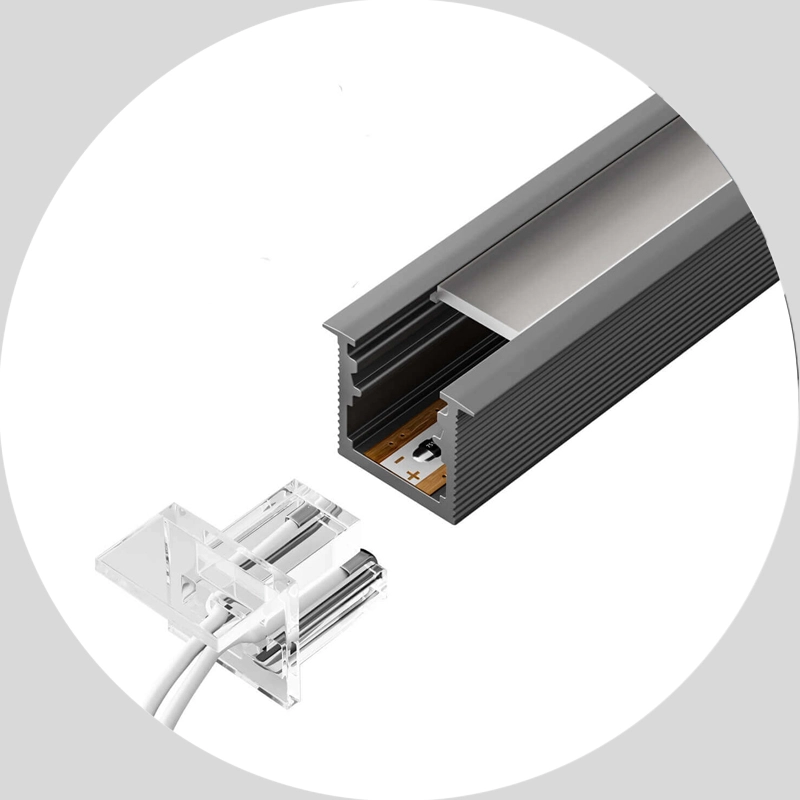
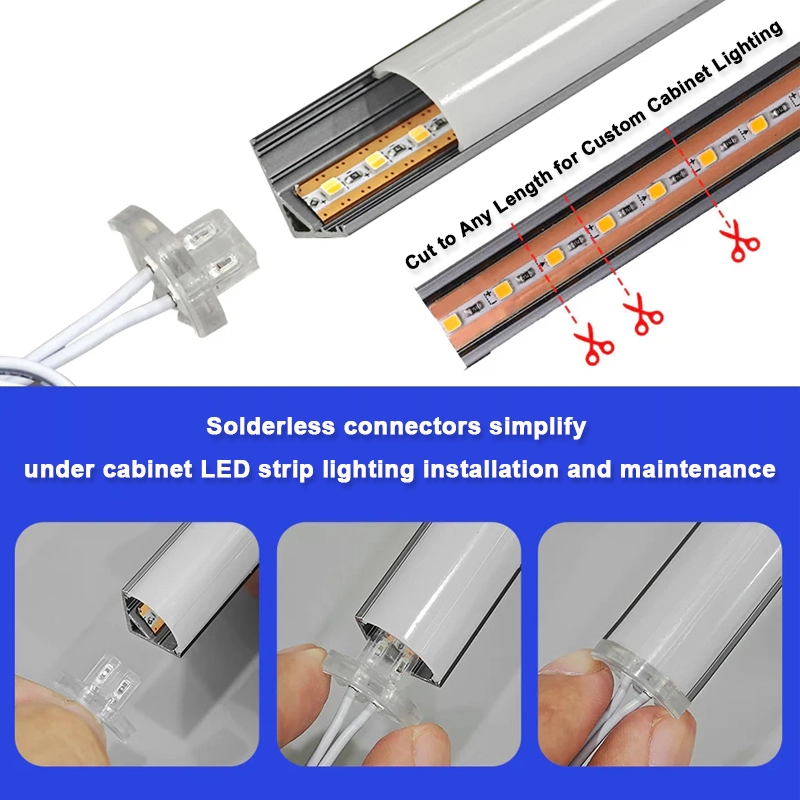
Quick connectors, extension cables, and mounting accessories create a flexible connection system between LED strips and other components. These plug-and-play accessories reduce installation complexity and allow lighting layouts to be easily customized according to different furniture designs.

Plug-In-Connectors-with-solder-free-led-strip
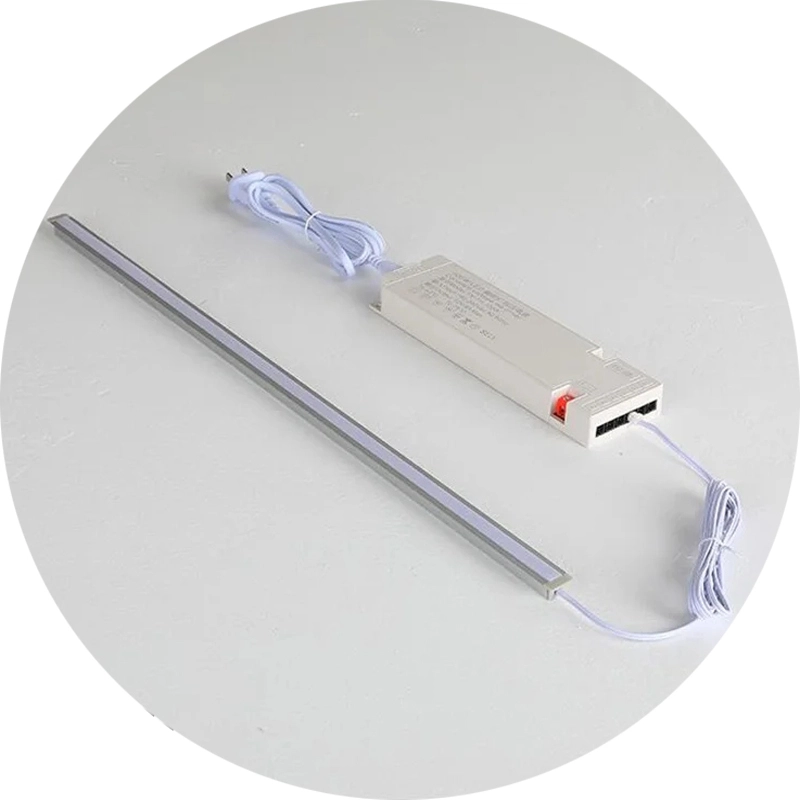
Solderless-Cabinet-Lighting-System

LED Driver and Optional Control Components

The LED driver provides stable power for the lighting system, while optional components such as motion sensors, dimmers, and smart controllers can be integrated to improve convenience, energy efficiency, and user experience.

By combining these modular components, a solderless cabinet lighting system provides a cleaner, faster, and more flexible alternative to traditional LED strip installations, making it increasingly popular for modern furniture and interior lighting applications.

Solderless LED Strip Series for Cabinet Lighting

Choosing the right solderless LED strip is just as important as selecting the cabinet design itself. Different furniture projects require different PCB widths, brightness levels, and color temperatures.

For wardrobes, bookshelves, kitchen cabinets, and custom furniture, narrow PCB designs and tunable white technology are becoming increasingly popular because they offer greater installation flexibility and lighting comfort.

The following table compares several solderless LED strip series commonly used in cabinet lighting applications.

系列LED 类型LED 数量PCB 宽度输入电压电源中国国际广播电台流明输出色温
2025-120-5mm-11.4W-CCT2025 贴片120 LED/m5 mmDC12V / 24V11.4 W/m雷达90557–606 lm/m2700–6500K
2835-120-6.5mm-14.6W-CCT第2835章120 LED/m6.5 mmDC12V / 24V14.6 W/m雷达90775–876 lm/m2700–6500K
2025-150-5mm-14W-CCT2025 贴片150 LEDs/m5 mmDC12V / 24V14 W/m雷达90586–636 lm/m2700–6500K
2025-200-5mm-16W-CCT2025 贴片200 LEDs/m5 mmDC12V / 24V16 W/m雷达90754–871 lm/m2700–6500K
2835-120-4mm-10W-CCT第2835章120 LED/m4 mmDC12V / 24V10 瓦/米雷达90382–414 lm/m2700

How to Choose the Right Solderless LED Strip

For ultra-narrow aluminum profiles

If the installation space is limited, such as wardrobe shelves, glass cabinets, or floating furniture, 4 mm and 5 mm PCB designs provide greater flexibility while maintaining a clean appearance.

For seamless, dot-free lighting

Higher LED densities, such as the 2025-200 series, produce smoother and more uniform illumination when installed inside aluminum profiles, making them ideal for premium furniture projects.

For brighter task lighting

Kitchen cabinets and retail displays often require higher brightness levels. In these cases, the 2835-120-6.5 mm series offers the highest lumen output among the available options.

For tunable white cabinet lighting

All series support tunable white technology from 2700K to 6500K, allowing users to switch between warm ambient lighting and cooler task lighting according to different scenarios.

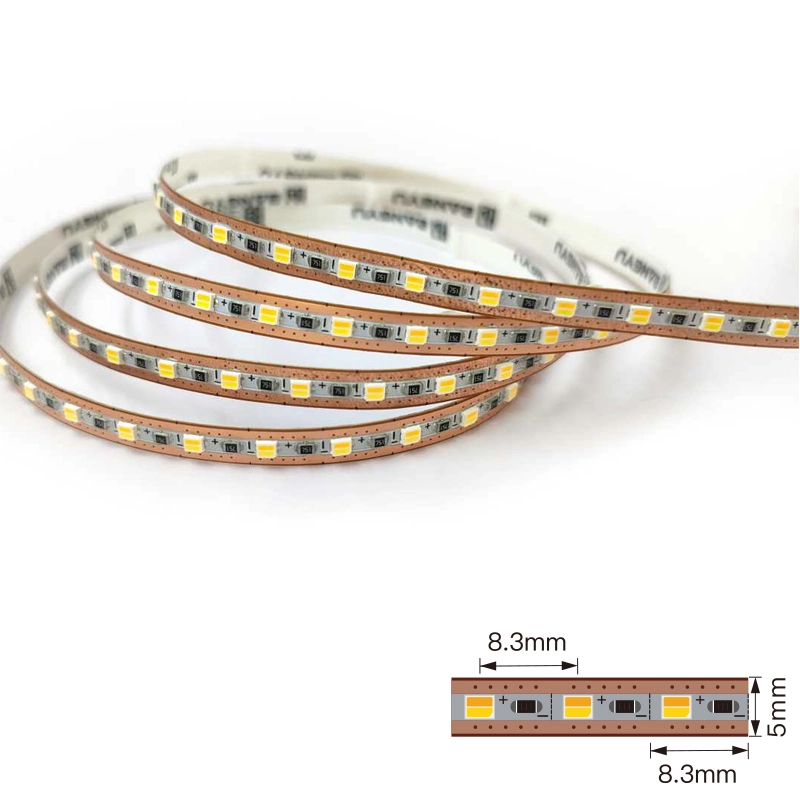
solder-free-led-strip-2025-120-5mm-11.4W-CCT

2025-120-5mm-11.4W-CCT

  • 输入电压:DC12V/24V
  • LED Type: 2025 SMD
  • LED QTY: 120pcs
  • Watt: 5.7W+5.7W/m
  • 颜色:2700-6500K
  • CRI : Ra 90
  • Luminous flux: 557/606 lm/m
  • PCB width: 5mm
  • 以上功能支持自定义

Under-Cabinet-Lighting

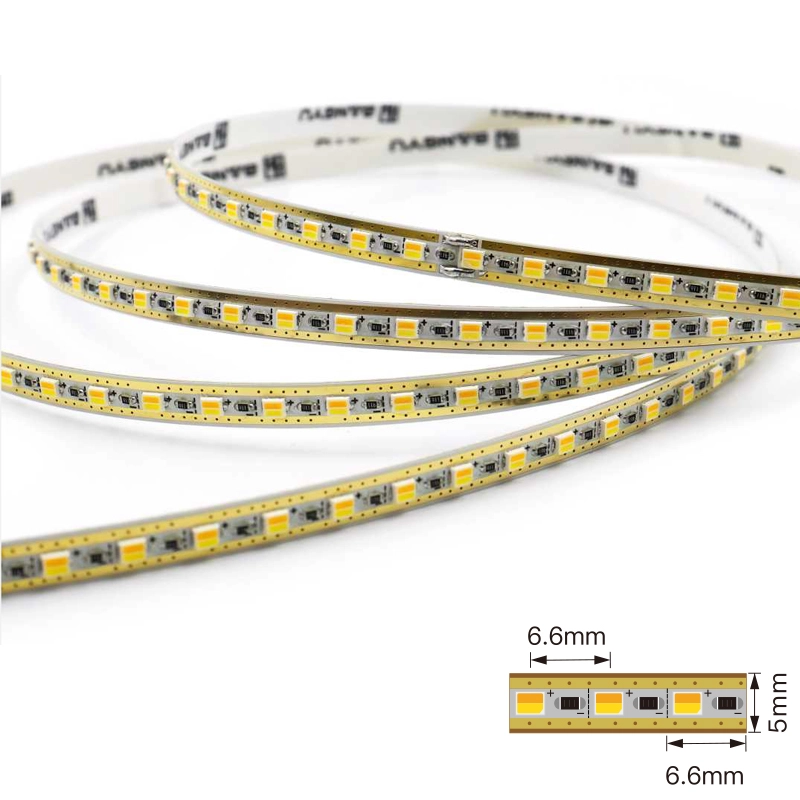
2025-150-5mm-14W-CCT

  • 输入电压:DC12V/24V
  • LED Type: 2025 SMD
  • LED QTY: 150pcs
  • Watt: 7W+7W/m
  • 颜色:2700-6500K
  • CRI : Ra 90
  • Luminous flux: 586–636 lm/m
  • PCB width: 5mm
  • 以上功能支持自定义

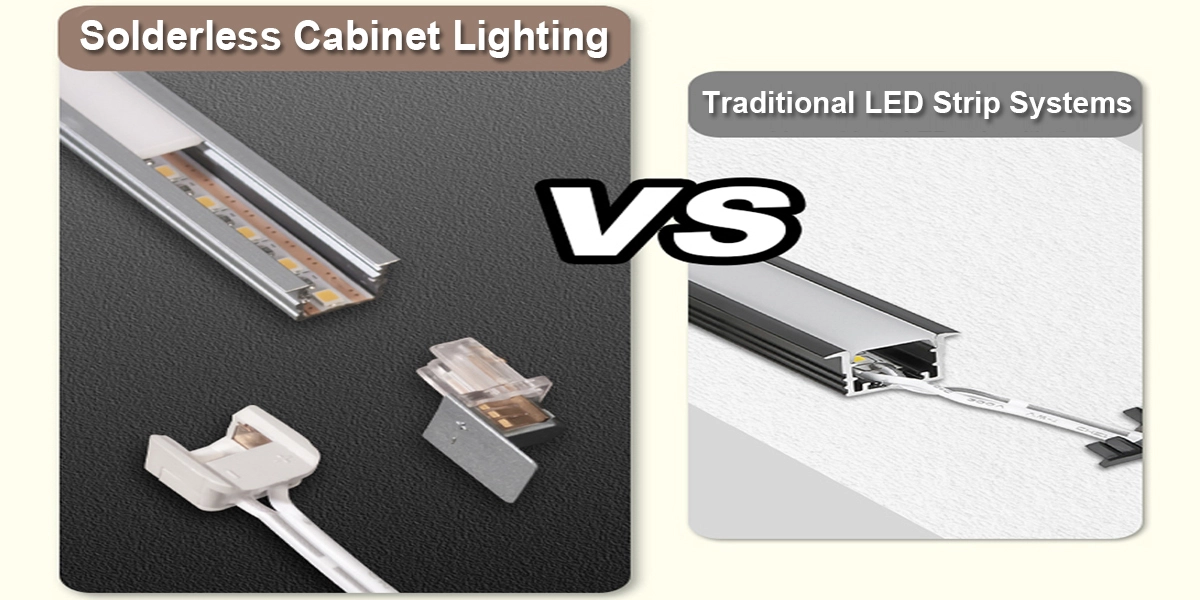
Why Solderless Cabinet Lighting Is Replacing Traditional LED Strip Systems?

Modern cabinet lighting is no longer judged solely by brightness or energy efficiency. Furniture manufacturers, designers, and installers are under increasing pressure to shorten production cycles, simplify installation, and reduce maintenance costs. As a result, traditional soldered LED strip installations are gradually giving way to modular, solderless lighting systems.

The shift is not simply about eliminating soldering—it reflects the changing requirements of modern furniture manufacturing and interior design. From wardrobes and kitchen cabinets to bookshelves and retail displays, lighting systems are expected to be easier to install, more flexible to customize, and simpler to maintain over time.

solderless-cabinet-lighting-vs-traditional-led-strip-installation

The following table shows why more furniture manufacturers are switching from traditional LED strip systems to solderless cabinet lighting.

What Modern Furniture Projects NeedTraditional LED Strip SystemsSolderless Cabinet Lighting Systems
安装速度更快Requires wire stripping, soldering, and testing on sitePlug-and-play connectors simplify installation
更便于维护Replacing damaged strips may require rewiring or disassembling cabinetsIndividual strips and connectors can be replaced quickly
Greater flexibility for custom furnitureFixed solder joints limit layout adjustmentsModular accessories adapt to different cabinet designs
Cleaner and more professional appearanceWires and solder points may remain visibleHidden connectors create a seamless finish
Flexible cutting optionsLonger cutting intervals may create dark spots and material wasteShorter cutting intervals allow more precise layouts
Lower labor costs in large projectsInstallation time increases with project sizeFaster assembly improves productivity
Future upgrades and smart controlsAdding sensors or dimmers often requires rewiringEasy integration with sensors, dimmers, and controllers
Connection and replacementDamaged sections are difficult to remove once installedLED strips can be disconnected and replaced without soldering

Traditional Wiring Slows Down Production

In conventional cabinet lighting projects, installers often need to cut wires, solder connections, and test every lighting section before installation. While these steps are manageable for small projects, they become increasingly time-consuming in large-scale wardrobe systems, retail shelving, and custom furniture production.

Solderless cabinet lighting replaces manual wiring with plug-and-play connectors and pre-configured components, helping manufacturers reduce assembly time and improve installation efficiency.

Maintenance Shouldn’t Require Rebuilding the Cabinet

One of the biggest challenges in furniture lighting is maintenance. Once lighting systems are integrated into wardrobes, cabinets, or display shelves, replacing a damaged LED strip can require disassembling furniture panels or rewiring connections.

Modular solderless systems solve this problem by allowing individual strips, connectors, and accessories to be replaced independently. Instead of replacing the entire installation, users can quickly swap out only the damaged components.

Modern Furniture Demands Greater Flexibility

Furniture design is becoming increasingly customized. Walk-in closets, floating shelves, glass cabinets, and display units rarely follow standard dimensions.

Traditional LED strips with fixed solder points often struggle to adapt to these layouts. Solderless systems, however, support flexible cutting, plug-and-play connectors, and multiple installation options, making them easier to integrate into different furniture designs.

Cabinet Lighting Is Becoming a Complete System

Ten years ago, customers mainly purchased LED strips. Today, they expect complete lighting solutions that combine strips, aluminum profiles, drivers, sensors, and control systems.

This transition from individual products to integrated systems is one of the main reasons solderless cabinet lighting continues to gain popularity. It is no longer simply a lighting accessory—it has become part of the furniture itself.

The Future of Furniture Lighting Is Modular

As labor costs continue to rise and furniture designs become more sophisticated, modular lighting systems are gradually replacing traditional soldered installations.

For furniture manufacturers, interior designers, and contractors, the real advantage of solderless cabinet lighting is not simply the absence of soldering. It is the ability to create lighting systems that are faster to install, easier to maintain, and better suited to modern interiors.

Where Is Solderless Cabinet Lighting Used?

Originally developed to simplify LED strip installation, solderless cabinet lighting has evolved into a practical solution for a wide range of furniture and interior applications. Its modular design, hidden connections, and easy maintenance make it particularly suitable for projects that require clean aesthetics and flexible layouts.

The following are some of the most common applications.

Wardrobes and Walk-In Closets

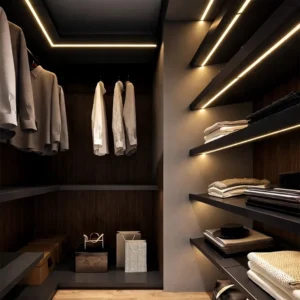
Wardrobes and walk-in closets often require soft, uniform lighting to improve visibility without exposing cables or connectors. Solderless cabinet lighting can be integrated into shelves, hanging areas, and drawers using aluminum profiles and motion sensors.

Because clothing storage systems are highly customized, plug-and-play connectors and short cutting intervals allow installers to adapt the lighting layout to different cabinet sizes.

Kitchen Cabinets and Under-Cabinet Lighting

Kitchen lighting needs to be functional as well as visually appealing. Solderless LED strips are commonly installed beneath wall cabinets, inside drawers, and along open shelves to provide task lighting for food preparation and storage.

Compared with traditional wiring methods, solderless systems simplify installation and make future maintenance much easier.

Bookshelves and Display Cabinets

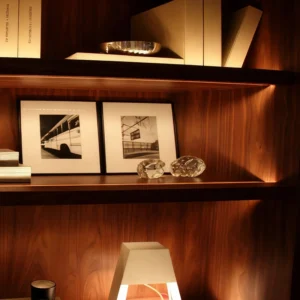
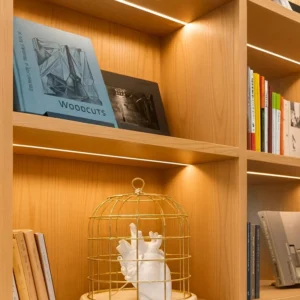
Bookshelves, glass cabinets, and display units benefit from seamless linear lighting that highlights decorative objects without creating visible hotspots.

Thanks to flexible cutting options and hidden connectors, solderless cabinet lighting can be integrated into narrow spaces while maintaining a clean appearance.

Retail Shelving and Commercial Furniture

Retail stores increasingly rely on integrated lighting to enhance product presentation and improve the customer experience. However, large-scale installations also require efficient assembly and convenient maintenance.

Modular solderless lighting systems help reduce installation time and allow damaged sections to be replaced quickly, making them ideal for retail shelving, showcases, and commercial furniture projects.

Office Furniture and Custom Interiors

Modern offices and commercial interiors often incorporate lighting into storage cabinets, reception desks, and shelving systems.

Because solderless cabinet lighting supports dimmers, sensors, and smart controls, it can adapt to changing workspace requirements while maintaining a minimalist design.

How to Install Solderless Cabinet Lighting in Furniture Projects

One of the biggest advantages of solderless cabinet lighting is that it simplifies installation without sacrificing flexibility. Unlike traditional LED strip systems that require wire stripping and soldering, solderless solutions rely on plug-and-play connectors and modular components, making them easier to install, adjust, and maintain.

Although the exact process may vary depending on the furniture design and lighting requirements, most cabinet lighting projects follow the same basic workflow.

Step 1: Plan the Lighting Layout

Before installation, determine where the LED strips, aluminum profiles, power supply, and accessories will be located. A well-planned layout helps reduce installation time and minimizes unnecessary modifications later.

When planning the system, consider the following:

  • Cabinet dimensions and shelf spacing
  • Recessed or surface-mounted installation
  • Power cable routing
  • Sensor and switch locations
  • Future maintenance access

For wardrobes and display cabinets, hidden cable routing and connector placement are particularly important to achieve a clean appearance.

Step 2: Install the Aluminum Profile

Measure and cut the aluminum profile according to the cabinet dimensions, then secure it in the desired position.

Depending on the application, different profile types can be used:

  • Recessed profiles for wardrobes and premium furniture
  • Surface-mounted profiles for kitchen cabinets
  • Corner profiles for shelves and display cabinets

Besides protecting the LED strip, aluminum profiles improve heat dissipation and create a seamless linear lighting effect.

Step 3: Cut and Connect the LED Strip

Cut the LED strip along the designated cutting marks and connect it using compatible solderless connectors.

Compared with traditional installations, solderless systems eliminate the need for wire stripping and soldering, making installation faster and more flexible.

To ensure reliable performance, check the following before final assembly:

  • PCB width compatibility
  • 输入电压
  • 连接器类型
  • Polarity alignment

Because the system is modular, the strip can be adjusted or replaced more easily if the cabinet layout changes.

Step 4: Connect the Driver and Control Components

After the LED strip has been installed, connect it to the power supply and any optional accessories, such as:

  • 运动传感器
  • Touch switches
  • 调光器
  • Smart controllers

Before fixing all components permanently, test the system to ensure that every section works properly.

Step 5: Complete the Installation and Test the System

Install the diffuser cover, organize the cables, and perform a final inspection of the entire lighting system.

A properly designed solderless cabinet lighting system should not only provide uniform illumination but also allow future maintenance and upgrades without removing the cabinet structure.

常见问题

结论

Modern cabinet lighting is no longer just about adding illumination—it has become an essential part of furniture design, installation efficiency, and long-term maintenance.

Compared with traditional soldered LED strip systems, solderless cabinet lighting offers a faster, cleaner, and more flexible solution for wardrobes, kitchen cabinets, bookshelves, retail displays, and custom furniture projects. With plug-and-play connectors, modular accessories, and easy maintenance, it helps manufacturers and installers simplify assembly while creating seamless lighting effects.

As furniture design continues to evolve toward customization and smart integration, modular lighting systems are expected to play an increasingly important role in future projects.

Whether you are designing a walk-in wardrobe, upgrading under-cabinet lighting, or developing custom furniture solutions, choosing the right solderless cabinet lighting system can significantly improve both installation efficiency and user experience.

Looking for a solderless cabinet lighting solution for your next project? Explore our cabinet lighting systems, aluminum profiles, and modular accessories to find the configuration that best fits your design requirements.

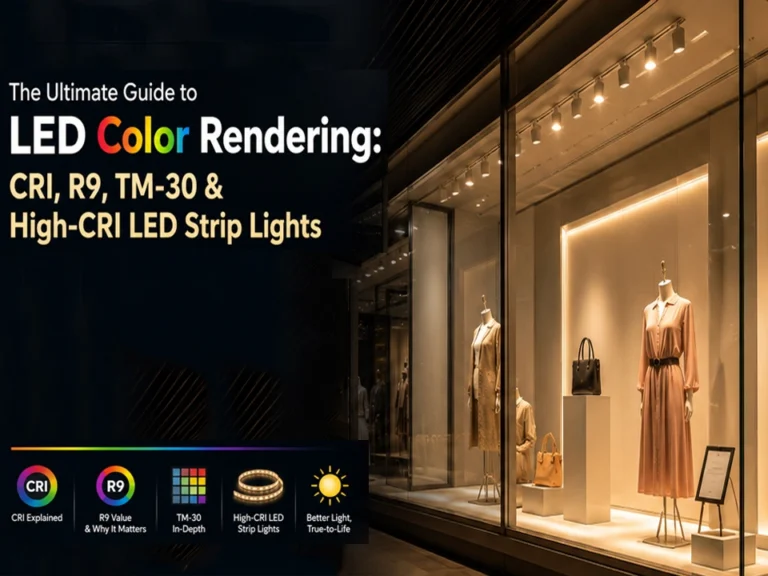
LED 显色的终极指南:CRI、R9、TM-30 和高 CRI LED 灯条
你有没有注意到一些LED灯让新鲜的肉看起来是棕色的,人的皮肤看起来很苍白,或者木制家具失去了它的自然温暖? 问题往往不是亮度——它是差的显色。 在现代LED照明中,色彩质量与流明输出和能量一样重要。
LED线性模块与LED灯带灯并排比较商业照明LED线性模块与LED灯带灯并排比较商业照明
LED 线性模块与 LED 灯条:哪个更适合商业照明?
对于商业照明,LED 线性模块通常优于 LED 灯带。 它们提供卓越的热管理、更长的使用寿命、更高的可靠性和标准化的安装选项。 LED灯带灯虽然灵活且装饰性强,但主要适用于重点、住宅和低功耗应用。 这两种技术都使用LED芯片和低压电源系统,...
用于点亮解决方案的SignliteLED铝型材用于点亮解决方案的SignliteLED铝型材
LED配置文件和照明解决方案:现代线性照明的完整指南
随着当代建筑继续偏爱简洁的线条和综合细节,照明已演变成结构设计元素,而不是纯粹的装饰特征。 线性LED照明系统现在广泛应用于住宅、商业和建筑项目,提供视觉连续性、效率和灵活性。 在这些的核心...
LED 灯条LED 灯条
如何在家中安装隐藏式 LED 灯条?
按照系统的5步过程,您可以在家中安装隐藏式LED灯带灯:规划灯光效果,选择正确的组件,准备和安装LED灯条通道,安装和连接LED灯条,最后添加扩散器和最后的润色,打造无缝的专业级隐藏式发光。 隐藏...
LED 灯条LED 灯条
LED灯带灯的耐用性和最大长度的终极指南(2026年更新)
LED灯带的耐久性和最大可实现的长度通过压降物理、热管理效率和组件质量基本相互连接。 采用现代高压DC48V系统,专业设计的LED灯带灯可实现高达50米的单次连续运行,同时保持稳定的电流传输和一致的发光...
最佳铝型材-LED-带灯-扩散器最佳铝型材-LED-带灯-扩散器
LED灯带灯的最佳铝型材:散热和美学指南
在LED灯带灯条项目中,铝型材的选择不仅影响安装的便利性,还影响热性能、光质量和使用寿命。 例如,6063-T5 铝(常用于 LED 型材)的热导率约为 201 W/(m·K),比大多数塑料高出 1,000 倍以上,使其能够...

分享:

Facebook
叽叽喳喳
Pinterest
LinkedIn
订阅评论
提醒
来宾
0 评论
最老的
最新 最多投票
内联反馈
查看所有评论

搜索 SignliteLED 博客

类别

滚动至顶部

立即获取报价