Français
  English
  简体中文
简体中文  Deutsch
  Español
  Italiano
  日本語
日本語  한국어
한국어  Polski
  Português
  Русский
  Türkçe
  Nederlands
  Tiếng Việt
  ไทย
ไทย 
Installation de l'éclairage d'armoires utilisé pour nécessiter des compétences en soudure, des outils spécialisés et un temps d'installation supplémentaire. Cependant, l'éclairage d'armoires sans soudure a facilité la création de solutions d'éclairage LED propres et professionnelles sans travaux de câblage compliqués.
En utilisant des éclairages à bande LED sans soudure, les installateurs peuvent rapidement se connecter et installer sous un éclairage de l'armoire sans soudure. Cette méthode d'installation flexible est particulièrement adaptée aux armoires de cuisine, armoires, étagères, vitrines et projets de meubles sur mesure où une apparence soignée et un entretien facile sont importants.
Dans ce guide, nous allons expliquer comment fonctionne l'éclairage des armoires sans soudure, comment installer des éclairages à bande LED sans soudure et ce qu'il faut prendre en compte lors du choix des connecteurs sans soudure pour différentes applications d'éclairage.
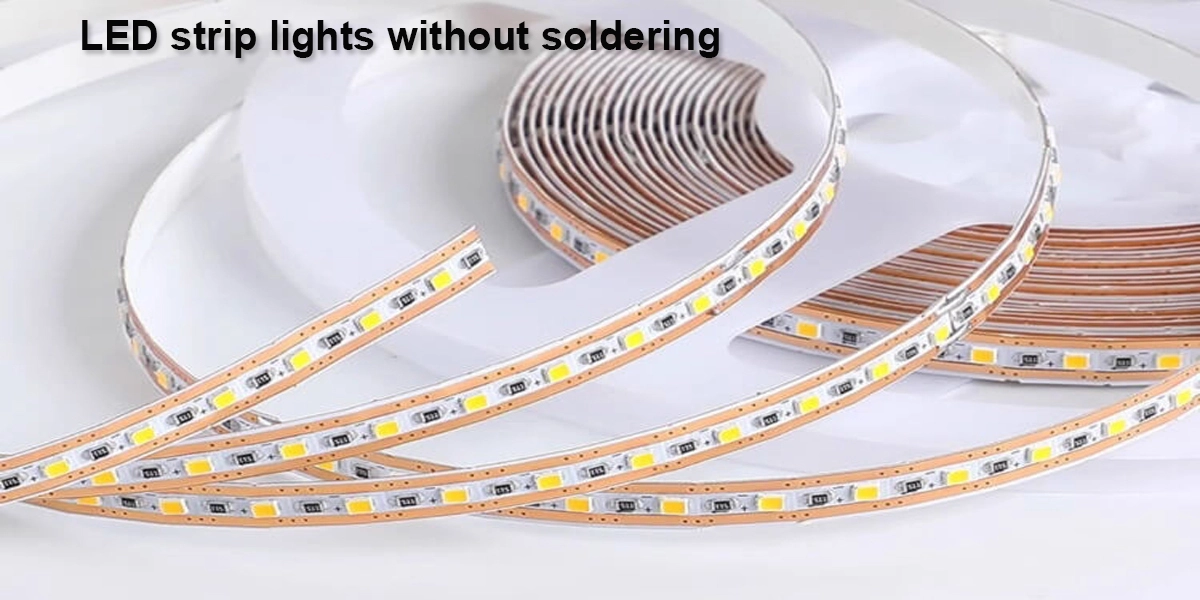
Réponse rapide : pourquoi l'éclairage des armoires sans soudure devient-il populaire ?
L'éclairage des armoires sans soudure devient populaire car il simplifie l'installation et la maintenance des systèmes d'éclairage à bande LED. En remplaçant les connexions de soudure traditionnelles par des connecteurs enfichables, cela permet Bande LED, profilés en aluminium, et Accessoires d'éclairage A installer, remplacer et mettre à niveau plus efficacement. Cela en fait une solution idéale pour les cuisines, les armoires, les placards, les vitrines et les projets de meubles personnalisés où une installation propre, une conception flexible et un entretien à long terme sont importants.
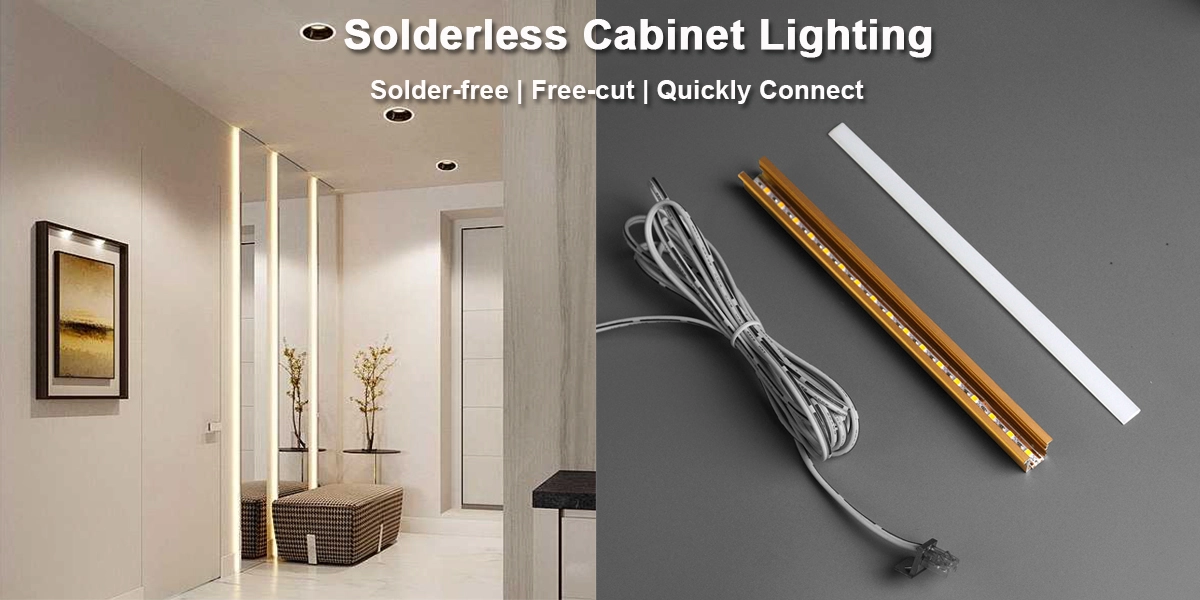
Qu'est-ce qu'un système d'éclairage d'armoire sans soudure et comment fonctionne-t-il ?
Un système d'éclairage d'armoire sans soudure est une solution d'éclairage LED modulaire qui utilise la bande de lumière LED sans soudure, les connecteurs sans soudure, les profilés en aluminium et les accessoires compatibles pour simplifier l'installation, le remplacement et la maintenance des projets d'éclairage de meubles.
différent Bande LED traditionnelle Les installations qui nécessitent une soudure manuelle sur la bande, l'éclairage de l'armoire sans soudure utilise des connecteurs enfichables et des méthodes de connexion préconçues pour créer des connexions électriques fiables sans outils de soudure. Cela permet des éclairages à bande LED, alimentation, et Composants de contrôle A installer, ajuster ou remplacer plus efficacement.
La principale différence est sa conception de connexion modulaire. Au lieu de créer des joints soudés permanents, chaque composant d'éclairage peut être assemblé, ajusté, mis à niveau ou remplacé indépendamment en cas de besoin. Cela rend le système plus rapide à installer et à entretenir plus rapide, en particulier pour les armoires, les armoires, les placards, les vitrines et les applications d'éclairage de meubles sur mesure où une installation et une flexibilité propres sont importantes.
Un système d'éclairage d'armoires sans soudure typique se compose de plusieurs composants intégrés :
Lampes à LED sans soudure avec connexion rapide
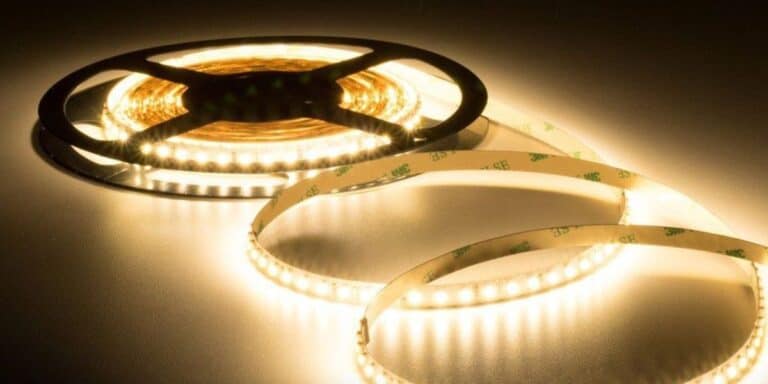
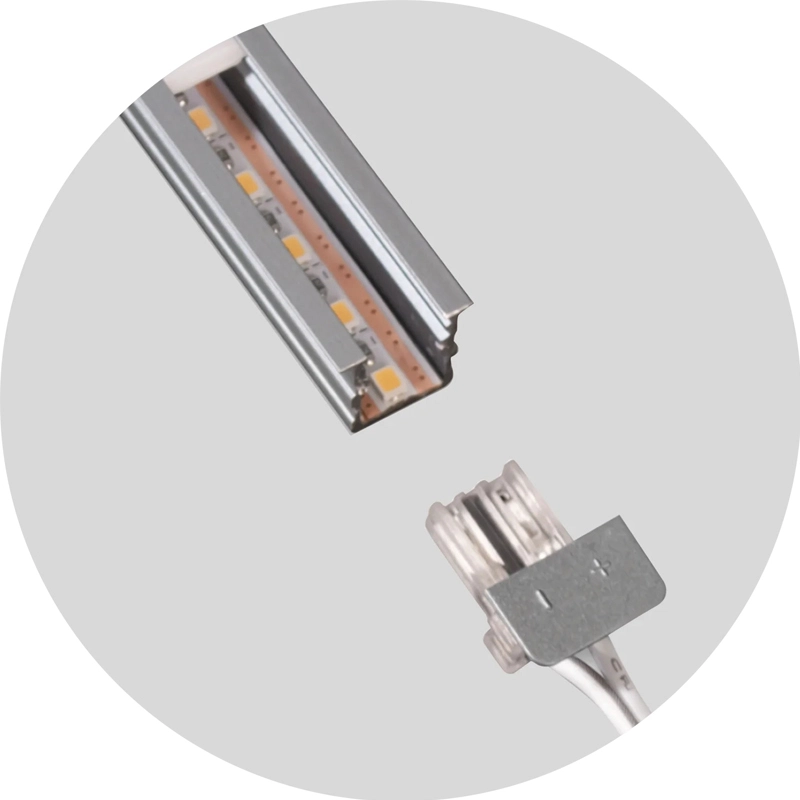
La bande lumineuse LED sans soudure est la principale source de lumière d'un système d'éclairage d'armoire sans soudure. Conçu pour fonctionner avec des connecteurs sans soudure ou des points de connexion préinstallés, ces bandes LED sans soudure permettent aux installateurs de couper, de se reconnecter ou de remplacer les sections d'éclairage sans soudure supplémentaire.
Cette méthode de connexion simplifiée améliore l'efficacité de l'installation et réduit le temps d'entretien, ce qui le rend adapté aux armoires de cuisine, armoires, étagères et autres applications d'éclairage de meubles.
Profils en aluminium pour la protection et la dissipation thermique
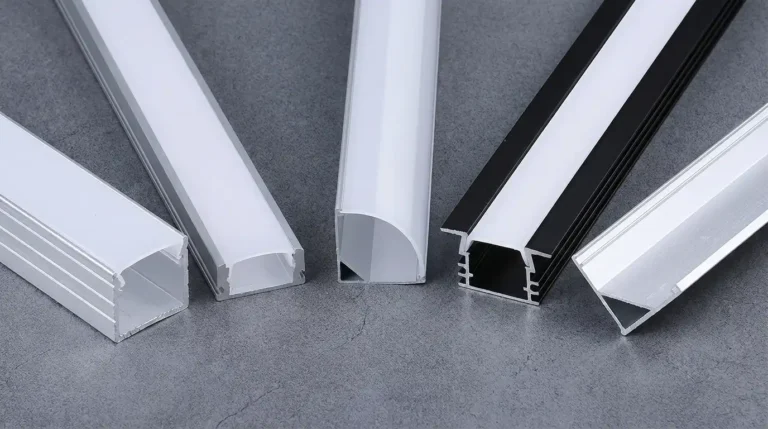
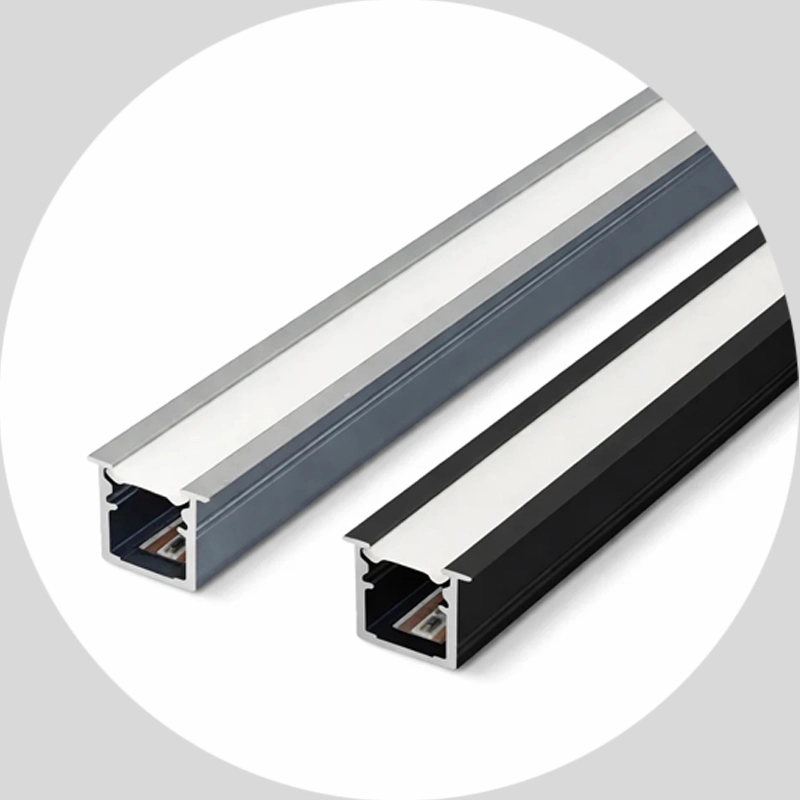
Les profilés en aluminium offrent une apparence finie professionnelle tout en protégeant les bandes de LED et en améliorant la gestion thermique. Dans les projets d'éclairage des armoires et des meubles, les profils encastrés, montés en surface et en angle sont couramment utilisés pour créer des effets d'éclairage linéaire sans soudure à l'intérieur des armoires, des armoires, des étagères et des zones d'affichage.
Connecteurs enfichables et accessoires modulaires
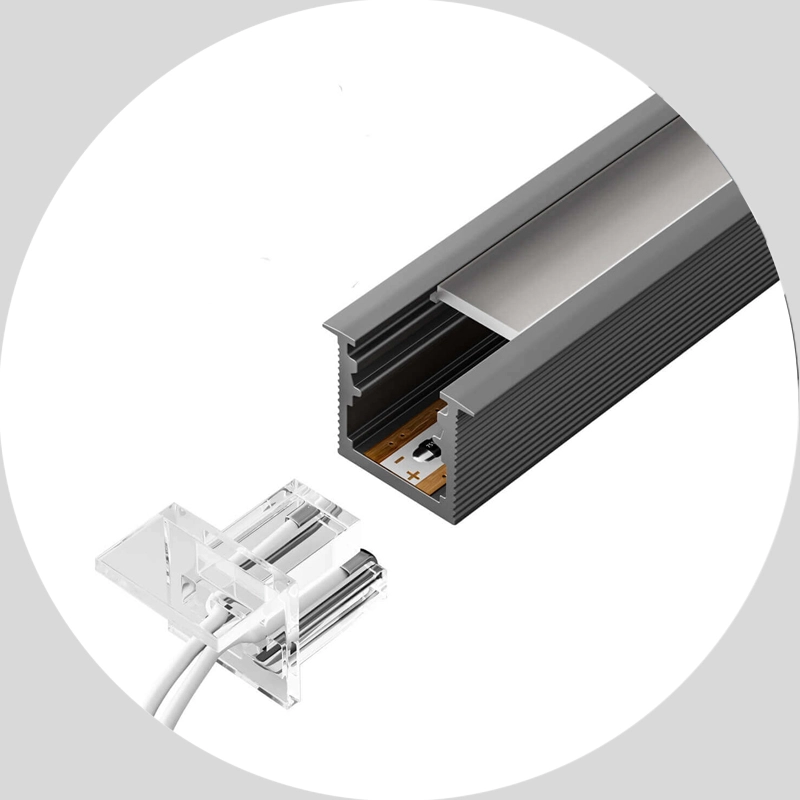
Les connecteurs, les câbles d'extension et les accessoires de montage sans soudure créent un système de connexion flexible entre les bandes LED et d'autres composants d'éclairage. Ces accessoires plug-and-play réduisent la complexité de l'installation et permettent de personnaliser les aménagements d'éclairage en fonction de différents modèles de meubles.
Pilotes LED et composants de commande en option
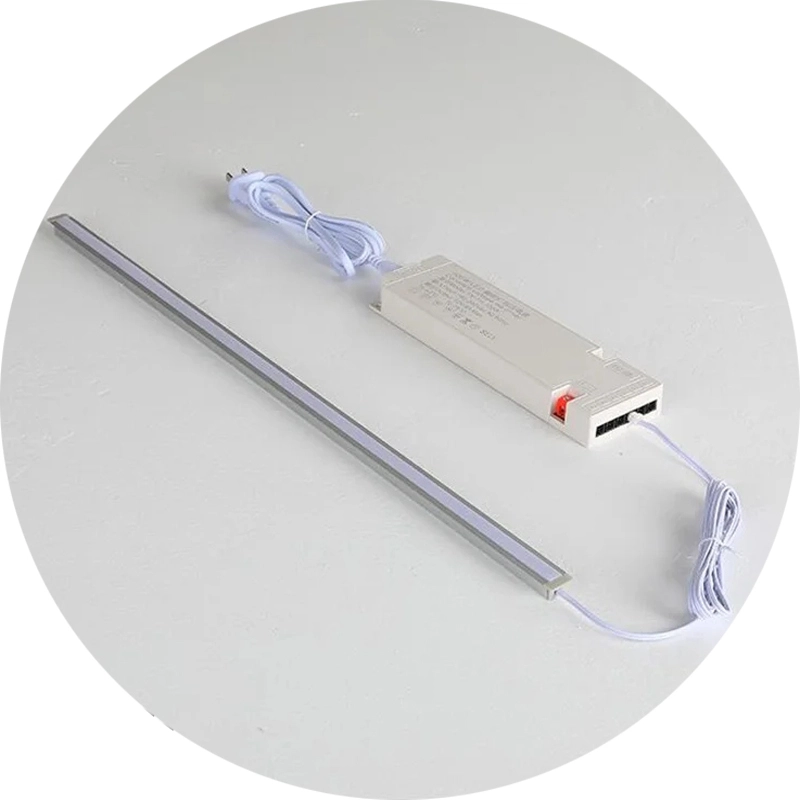
Le driver LED fournit une alimentation stable pour le système d'éclairage, tandis que des composants optionnels tels que des capteurs de mouvement, des gradateurs et des contrôleurs intelligents peuvent être intégrés pour améliorer la commodité, l'efficacité énergétique et l'expérience utilisateur.
En combinant ces composants modulaires, un système d'éclairage d'armoires sans soudure offre une alternative plus propre, plus rapide et plus flexible aux installations traditionnelles de bandes LED. Il devient une solution de plus en plus populaire pour les projets d'éclairage de meubles modernes, de design d'intérieur et d'armoires personnalisées.
Série de bandes LED sans soudure pour l'éclairage des armoires
Choisir la bonne bande LED sans soudure est tout aussi important que la sélection de la conception du meuble lui-même. Différents projets de meubles nécessitent des largeurs de circuits imprimées, des niveaux de luminosité et des températures de couleur différentes.
Pour les armoires, les étagères, les armoires de cuisine et les meubles sur mesure, les conceptions de circuits imprimés étroits et la technologie du blanc accordable sont de plus en plus populaires car elles offrent une plus grande flexibilité d'installation et un confort d'éclairage.
Série de bandes LED sans soudure populaire pour l'éclairage des armoires
Le tableau suivant compare plusieurs séries de bandes LED sans soudure couramment utilisées dans les applications d'éclairage des armoires.
| séries | Type de LED | LED Qté | Largeur du circuit imprimé | Tension d'entrée | Puissance | CRI | Puissance lumineuse | Température de couleur |
| 2025-120-5mm-11.4W-CCT | 2025 SMD | 120 LED/m | 5 mm | DC12V / 24V | 11,4 W/m | ra90 | 557–606 lm/m | 2700–6500K |
| 2835-120-6,5 mm-14,6 W-CCT | 2835 SMD | 120 LED/m | 6,5 mm | DC12V / 24V | 14,6 W/m | ra90 | 775–876 lm/m | 2700–6500K |
| 2025-150-5mm-14W-CCT | 2025 SMD | 150 LED/m | 5 mm | DC12V / 24V | 14 W/m | ra90 | 586–636 lm/m | 2700–6500K |
| 2025-200-5mm-16W-CCT | 2025 SMD | 200 LED/m | 5 mm | DC12V / 24V | 16 W/m | ra90 | 754–871 lm/m | 2700–6500K |
| 2835-120-4mm-10W-CCT | 2835 SMD | 120 LED/m | 4 mm | DC12V / 24V | 10 W/m | ra90 | 382–414 lm/m | 2700 |
Comment choisir la bonne bande LED sans soudure
Pour profilés en aluminium ultra-étroits
Si l'espace d'installation est limité, comme les étagères des armoires, les vitrines ou les meubles flottants, les conceptions de circuits imprimés de 4 mm et 5 mm offrent une plus grande flexibilité tout en conservant un aspect propre.
Pour un éclairage sans couture et sans points
Des densités de LED plus élevées, telles que la série 2025-200, produisent un éclairage plus lisse et plus uniforme lorsqu'ils sont installés à l'intérieur des profilés en aluminium, ce qui les rend idéaux pour les projets de meubles de qualité supérieure.
Pour un éclairage de tâche plus lumineux
Les armoires de cuisine et les présentoirs de vente au détail nécessitent souvent des niveaux de luminosité plus élevés. Dans ces cas, la série 2835-120-6,5 mm offre la plus grande puissance de lumen parmi les options disponibles.
Pour un éclairage de cabinet blanc accordable
Toutes les séries prennent en charge la technologie White Tunable de 2700 000 à 6 500 000, ce qui permet aux utilisateurs de basculer entre un éclairage ambiant chaud et un éclairage de travail plus froid selon les différents scénarios.
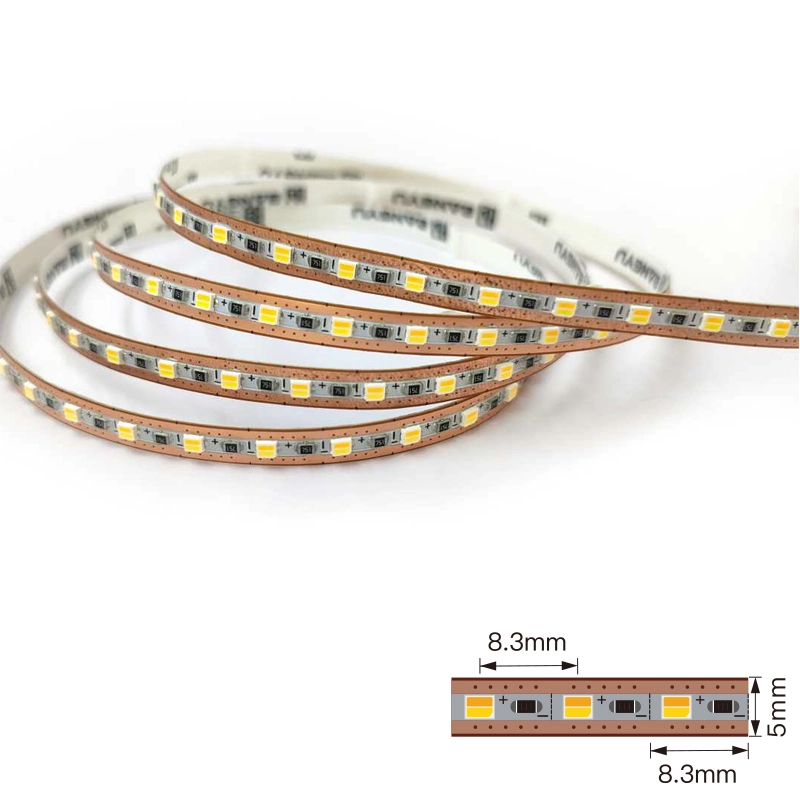
Lampes à LED sans soudure 2025-120-5mm-11.4W-CCT
- Tension d'entrée : DC12V/24V
- Type de LED : 2025 SMD
- Qté LED : 120 pièces
- Watt : 5,7 W + 5,7 W/m
- Couleur : 2700-6500K
- CRI : RA 90
- Flux lumineux : 557/606 lm/m
- Largeur du PCB : 5 mm
- La fonction ci-dessus permet la personnalisation
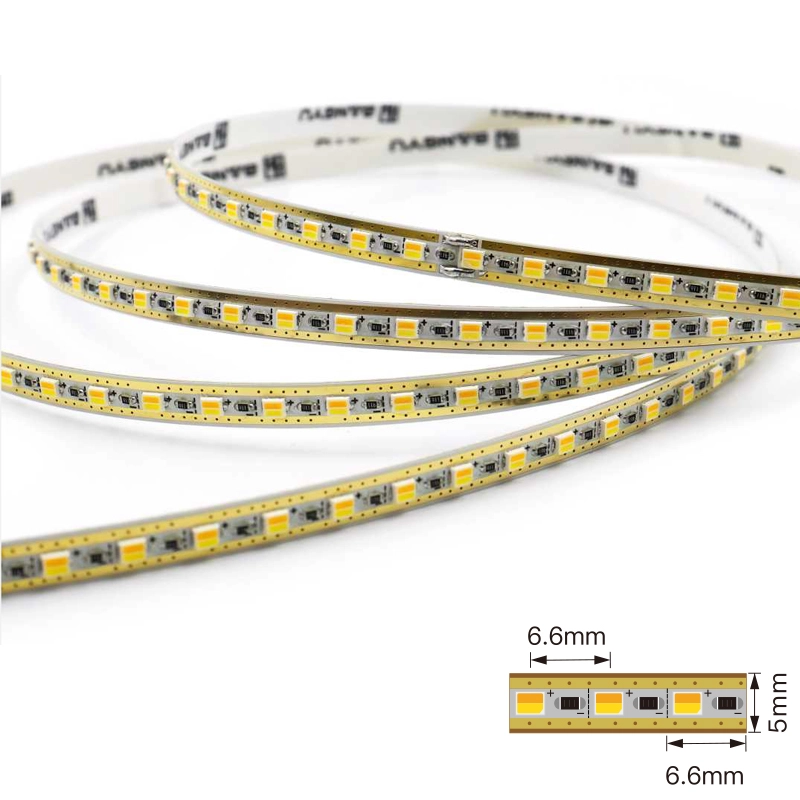
Lampes à LED sans soudure 2025-150-5mm-14W-CCT
- Tension d'entrée : DC12V/24V
- Type de LED : 2025 SMD
- Qté LED : 150 pièces
- Watt : 7W+7W/m
- Couleur : 2700-6500K
- CRI : RA 90
- Flux lumineux : 586–636 lm/m
- Largeur du PCB : 5 mm
- La fonction ci-dessus permet la personnalisation
Pourquoi l'éclairage des armoires sans soudure devient une alternative préférée aux systèmes de bandes LED traditionnelles
L'éclairage des armoires modernes n'est plus jugé uniquement par la luminosité ou l'efficacité énergétique. Les fabricants, concepteurs et installateurs de meubles subissent une pression croissante pour raccourcir les cycles de production, simplifier l'installation et réduire les coûts de maintenance. En conséquence, les installations traditionnelles d'éclairage à bande LED soudées cèdent progressivement la place à des systèmes d'éclairage modulaires sans soudure.
Le changement ne consiste pas simplement à éliminer la soudure, mais à refléter les exigences changeantes de la fabrication de meubles modernes et de la décoration intérieure. Des armoires et des armoires de cuisine aux étagères et aux présentoirs de vente au détail, les systèmes d'éclairage devraient être plus faciles à installer, plus flexibles à personnaliser et à entretenir plus simples dans le temps.
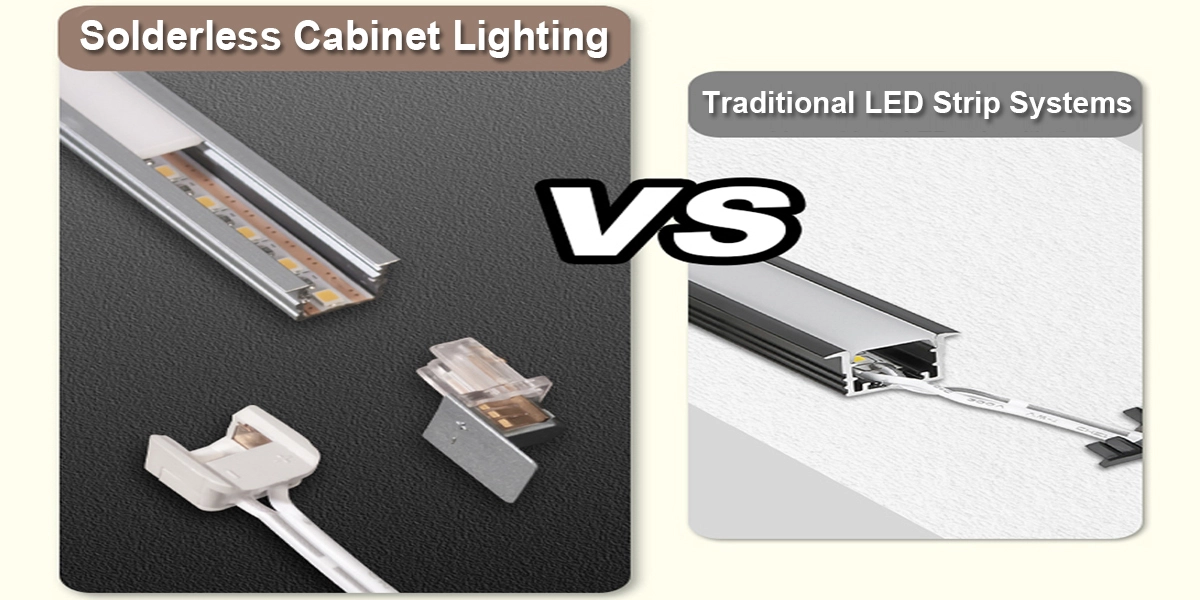
Le tableau suivant présente les principales exigences pour les projets d'éclairage d'armoires modernes
| De quoi ont besoin les projets de meubles modernes | Systèmes de bandes LED traditionnels | Systèmes d'éclairage d'armoires sans soudure |
| Installation plus rapide | Nécessite une strippage, une soudure et des tests sur site | Les connecteurs Plug-and-Play simplifient l'installation |
| Entretien plus facile | Le remplacement des bandes endommagées peut nécessiter un recâblage ou un démontage des armoires | Les bandes et les connecteurs individuels peuvent être remplacés rapidement |
| Plus de flexibilité pour les meubles personnalisés | Fixe joints de soudure Limitation de la disposition | Les accessoires modulaires s'adaptent à différents modèles de meubles |
| Plus propre et plus professionnelle | Les fils et les points de soudure peuvent rester visibles | Les connecteurs cachés créent une finition transparente |
| Options de coupe flexibles | Des intervalles de coupe plus longs peuvent créer des taches sombres et des déchets de matériaux | Des intervalles de coupe plus courts permettent des mises en page plus précises |
| Réduction des coûts de main-d'œuvre dans les grands projets | Le temps d'installation augmente avec la taille du projet | Un assemblage plus rapide améliore la productivité |
| Mises à niveau futures et commandes intelligentes | L'ajout de capteurs ou de gradateurs nécessite souvent un recâblage | Intégration facile avec des capteurs, des gradateurs et des contrôleurs |
| Connexion et remplacement | Les sections endommagées sont difficiles à enlever une fois installées | Les bandes LED peuvent être déconnectées et remplacées sans soudure |
Le câblage traditionnel ralentit la production
Dans les projets d'éclairage d'armoires conventionnels, les installateurs doivent souvent couper des fils, souder les connexions et tester chaque section d'éclairage avant l'installation. Bien que ces étapes soient gérables pour de petits projets, elles prennent de plus en plus de temps dans les systèmes de garde-robe à grande échelle, les rayonnages au détail et la production de meubles sur mesure.
L'éclairage de l'armoire sans soudure remplace le câblage manuel par des connecteurs plug-and-play et des composants préconfigurés, aidant les fabricants à réduire le temps d'assemblage et à améliorer l'efficacité de l'installation.
L'entretien ne devrait pas nécessiter de reconstruction de l'armoire
L'un des plus grands défis de l'éclairage des meubles est la maintenance. Une fois que les systèmes d'éclairage sont intégrés dans les armoires, les armoires ou les étagères, le remplacement d'une bande LED endommagée peut nécessiter le démontage des panneaux de meubles ou le recâblage des connexions.
Les systèmes modulaires sans soudure résolvent ce problème en permettant de remplacer les bandes, connecteurs et accessoires individuels de manière indépendante. Au lieu de remplacer l'ensemble de l'installation, les utilisateurs peuvent rapidement échanger uniquement les composants endommagés.
Les meubles modernes exigent une plus grande flexibilité
La conception des meubles est de plus en plus personnalisée. Les placards, les étagères flottantes, les vitrines et les présentoirs suivent rarement des dimensions standard.
Les bandes de LED traditionnelles avec des points de soudure fixes ont souvent du mal à s'adapter à ces mises en page. Les systèmes sans soudure, cependant, prennent en charge la coupe flexible, les connecteurs plug-and-play et les options d'installation multiples, ce qui facilite leur intégration dans différentes conceptions de meubles.
L'éclairage de l'armoire devient un système complet
Il y a dix ans, les clients ont principalement acheté des bandes LED. Aujourd'hui, ils attendent des solutions d'éclairage complètes qui combinent bandes, profilés en aluminium, drivers, capteurs et systèmes de contrôle.
Cette transition des produits individuels aux systèmes intégrés est l'une des principales raisons pour lesquelles l'éclairage sans soudure des armoires continue de gagner en popularité. Ce n'est plus simplement un accessoire d'éclairage, il est devenu une partie du meuble lui-même.
L'avenir de l'éclairage des meubles est modulaire
Alors que les coûts de main-d'œuvre continuent d'augmenter et que les conceptions de meubles deviennent plus sophistiquées, les systèmes d'éclairage modulaires remplacent progressivement les installations soudées traditionnelles.
Pour les fabricants de meubles, les architectes d'intérieur et les entrepreneurs, le véritable avantage de l'éclairage des armoires sans soudure n'est pas simplement l'absence de soudure. C'est la possibilité de créer des systèmes d'éclairage plus rapides à installer, plus faciles à entretenir et mieux adaptés aux intérieurs modernes.
Où est utilisé l'éclairage de l'armoire sans soudure ? Applications courantes de bandes LED
Développé à l'origine pour simplifier l'installation de la lumière de bande LED, l'éclairage d'armoires sans soudure a évolué en une solution pratique pour une large gamme de meubles et d'applications intérieures. Sa conception modulaire, ses connexions cachées et sa maintenance facile le rendent particulièrement adapté aux projets qui nécessitent une esthétique épurée et une disposition flexible.
Voici quelques-unes des applications les plus courantes.
Armoires et dressings
Les armoires et les dressings nécessitent souvent un éclairage doux et uniforme pour améliorer la visibilité sans exposer les câbles ou les connecteurs. L'éclairage des armoires sans soudure peut être intégré dans les étagères, les zones de suspension et les tiroirs à l'aide de profilés en aluminium et de capteurs de mouvement.
Parce que les systèmes de rangement des vêtements sont des options de coupe hautement personnalisées, les options de coupe flexibles permettent aux installateurs d'adapter la disposition de l'éclairage à différentes tailles d'armoires.
Armoires de cuisine et éclairage sous l'armoire
La cuisine et l'armoire sous le meuble LED doivent être fonctionnelles et visuellement attrayantes. Les bandes LED sans soudure sont généralement installées sous les armoires murales, les tiroirs intérieurs et le long des étagères ouvertes pour fournir un éclairage de travail pour la préparation et le stockage des aliments.
Par rapport aux méthodes de câblage traditionnelles, les systèmes sans soudure simplifient l'installation et facilitent grandement la maintenance future.
Bibliothèques et vitrines
Les étagères, les armoires en verre et les présentoirs bénéficient d'un éclairage linéaire sans soudure qui met en valeur les objets de décoration sans créer de points d'accès visibles.
Grâce à des options de coupe flexibles et à des connecteurs cachés, l'éclairage de l'armoire sans soudure peut être intégré dans des espaces étroits tout en conservant un aspect propre.
Rayonnages commerciaux et meubles commerciaux
Les magasins de détail comptent de plus en plus sur l'éclairage intégré pour améliorer la présentation des produits et améliorer l'expérience client. Cependant, les installations à grande échelle nécessitent également un montage efficace et une maintenance pratique.
Les systèmes d'éclairage modulaires sans soudure aident à réduire le temps d'installation et à permettre de remplacer rapidement les sections endommagées, ce qui les rend idéales pour les rayonnages de détail, les vitrines et les projets de meubles commerciaux.
Mobilier de bureau et intérieurs sur mesure
Les bureaux modernes et les intérieurs commerciaux intègrent souvent l'éclairage dans les armoires de rangement, les bureaux de réception et les systèmes d'étagères.
Étant donné que les systèmes d'éclairage d'armoires sans soudure prennent en charge les gradateurs, les capteurs et les commandes intelligentes, il peut s'adapter aux exigences de l'espace de travail tout en conservant une conception minimaliste.
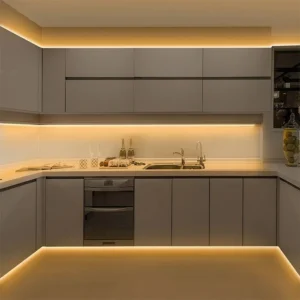
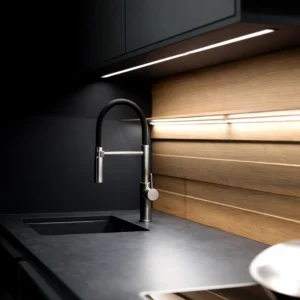
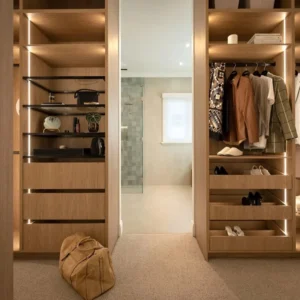
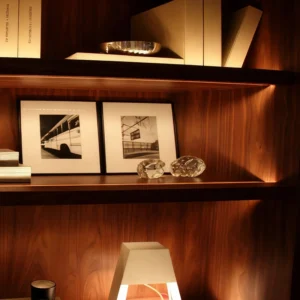
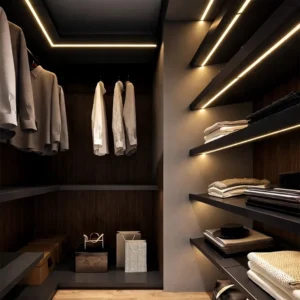
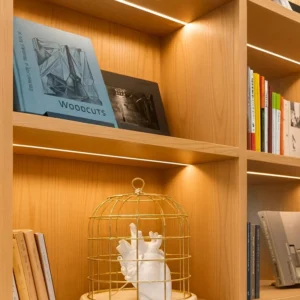
Pourquoi sous le meuble, l'éclairage de la bande LED est populaire dans les cuisines modernes
Under Cabinet LED Lighting est devenu l'une des solutions d'éclairage les plus populaires pour les cuisines, les armoires et les vitrines modernes. Comparé aux luminaires de rondelle ou aux luminaires fluorescents traditionnels, les bandes LED offrent un éclairage plus uniforme, une installation flexible et une intégration plus facile avec les conceptions de meubles.
Lorsqu'il est combiné avec des connecteurs sans soudure, des profilés en aluminium et des commandes intelligentes, des systèmes d'éclairage sous armoire peuvent être installés, entretenus et améliorés de manière plus efficace.
Les éclairages à bande LED pour les armoires de cuisine sont largement utilisés pour éclairer les comptoirs, améliorer la visibilité et créer un design d'intérieur plus propre et plus moderne. Leur profil mince et leur installation cachée les rendent particulièrement adaptés aux applications d'éclairage sous le placard où la fonctionnalité et l'esthétique sont importantes.
Bien que l'éclairage sous armoire soit le plus souvent associé aux armoires de cuisine, les mêmes principes d'éclairage sont de plus en plus utilisés dans les armoires, les étagères, les vitrines et autres projets de meubles personnalisés qui nécessitent un éclairage caché et un aspect propre.
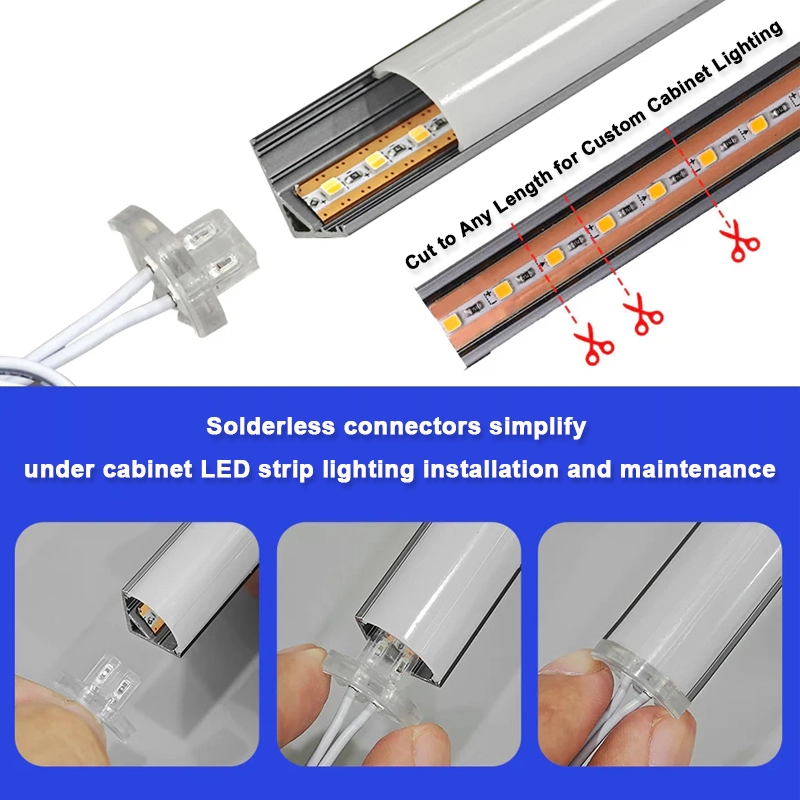
Pourquoi choisir des slips LED pour les armoires sous les armoires ?
Comparé aux luminaires traditionnels et aux luminaires fluorescents, les bandes LED créent un effet d'éclairage plus propre et plus transparent sous les armoires. Leur profil mince leur permet de rester presque invisibles tout en assurant un éclairage uniforme sur les comptoirs, les étagères et les zones de stockage.
Pour les armoires de cuisine et les meubles sur mesure, les bandes LED offrent également une plus grande flexibilité car elles peuvent être coupées à la taille et intégrées avec des profilés en aluminium, des gradateurs, des capteurs de mouvement et des commandes intelligentes.
De plus, les systèmes modulaires sans soudure simplifient l'installation et la maintenance en permettant de connecter, de régler ou de remplacer des sections d'éclairage individuelles sans se recâbler.
12V VS 24V LED pour l'éclairage de l'armoire
La sélection de la bonne tension est une partie importante de la conception d'un système d'éclairage sous le meuble. Les bandes de lumière LED 12V et 24V sont largement utilisées, mais elles fonctionnent différemment selon la longueur d'installation et la taille de l'armoire.
| FEture | Bande LED 12V | 2Bande LED 4V |
| Longueur de course maximale | plus court | plus |
| chute de tension | Plus élevé | Plus bas |
| Flexibilité de coupe | mieux | Bon |
| Meilleur pour | Petites armoires et courtes courses | Cuisines et grands projets de meubles |
Câblé VS Plug-in sous le meuble LED Strip Lighting
Les éclairages à bande LED enfichables sont populaires dans les projets de bricolage car ils sont faciles à installer et ne nécessitent aucune modification électrique. Les propriétaires peuvent rapidement ajouter de l'éclairage sous les armoires de cuisine, les étagères ou les étagères à l'aide de composants plug-and-play.
Les systèmes câblés, cependant, sont plus courants dans les installations de cuisine permanentes, les projets de meubles commerciaux et les intérieurs haut de gamme. En cachant le câblage à l'intérieur des armoires et des murs, les solutions câblées créent une apparence plus propre et permettent aux systèmes d'éclairage de s'intégrer de manière transparente avec les commutateurs, les capteurs et les gradateurs.
De nombreux systèmes d'éclairage sous armoire modernes prennent également en charge les capteurs de porte, les capteurs de mouvement et les commandes intelligentes, offrant ainsi une plus grande commodité et efficacité énergétique.
Comment installer l'éclairage de l'armoire sans soudure : installation de bandes LED sans soudure
L'un des plus grands avantages de l'éclairage d'armoires sans soudure est qu'il simplifie l'installation sans sacrifier la flexibilité. Contrairement aux systèmes de bandes LED traditionnelles qui nécessitent une dénuder et une soudure, les solutions sans soudure s'appuient sur des connecteurs plug-and-play et des composants modulaires, ce qui les rend plus faciles à installer, à ajuster et à entretenir.
Bien que le processus exact puisse varier en fonction de la conception des meubles et des exigences d'éclairage, la plupart des projets d'éclairage des armoires suivent le même flux de travail de base.
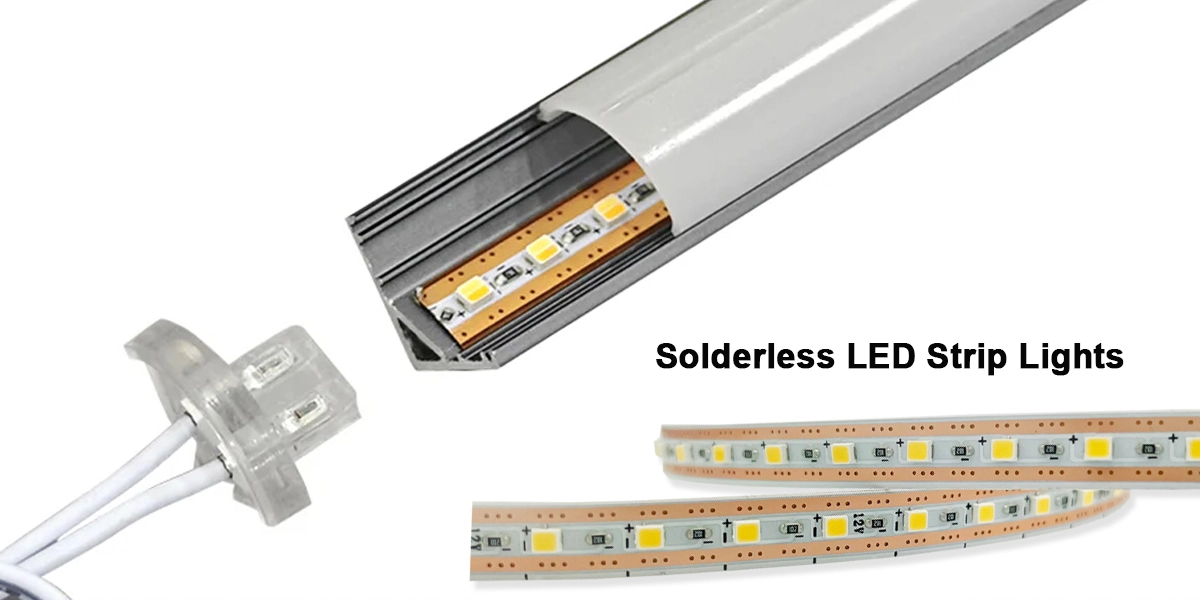
Étape 1 : Planifiez la disposition de l'éclairage
Avant l'installation, déterminez où seront situés les bandes de lumière LED sans soudure, les profilés en aluminium, l'alimentation et les accessoires. Une disposition bien planifiée permet de réduire le temps d'installation et de minimiser les modifications inutiles ultérieurement.
Lors de la planification du système, considérez les éléments suivants :
- Dimensions de l'armoire et espacement des étagères
- Installation encastrée ou en surface
- Acheminement des câbles d'alimentation
- Emplacements des capteurs et des commutateur
- Accès à la maintenance future
Pour les armoires et les vitrines, le passage des câbles cachés et le placement des connecteurs sont particulièrement importants pour obtenir un aspect propre.
Étape 2 : Installez le profilé en aluminium pour l'éclairage de la bande LED
Mesurez et coupez le profilé en aluminium en fonction des dimensions de l'armoire, puis fixez-le dans la position souhaitée.
Selon l'application, différents types de profils peuvent être utilisés :
- Profils encastrés pour armoires et meubles haut de gamme
- Profils montés en surface pour armoires de cuisine
- Profils d'angle pour étagères et vitrines
En plus de protéger les bandes de lumière LED, les profilés en aluminium améliorent la dissipation thermique et créent un effet d'éclairage linéaire sans couture.
Étape 3 : coupez et connectez les lumières de bandes LED à l'aide de connecteurs sans soudure
Coupez les bandes de lumière LED le long des marques de coupe désignées et connectez-les à l'aide de connecteurs sans soudure compatibles.
Comparativement aux installations traditionnelles, les systèmes sans soudure éliminent le besoin de dénuder et de souder, ce qui rend l'installation plus rapide et plus flexible.
Pour garantir des performances fiables, vérifiez les points suivants avant l'assemblage final :
- Compatibilité avec la largeur du PCB
- Tension d'entrée
- Type de connecteur
- Alignement de polarité
Parce que le système est modulaire, la bande peut être ajustée ou remplacée plus facilement si la disposition de l'armoire change. Différents types de bandes LED, y compris les bandes LED COB et les bandes LED SMD, peuvent nécessiter des conceptions de connecteurs différentes. Vérifiez toujours la largeur de la bande, la tension et la compatibilité des connecteurs avant l'installation pour garantir des connexions fiables.
Étape 4 : Connectez le pilote LED et les composants de commande
Une fois la bande LED installée, connectez-la à l'alimentation et à tous les accessoires en option, tels que :
- Capteurs de mouvement
- Interrupteurs tactiles
- Variateurs
- Contrôleurs intelligents
Avant de fixer tous les composants de façon permanente, testez le système pour vous assurer que chaque section fonctionne correctement.
Étape 5 : Terminez l'installation et testez le système
Installez le couvercle du diffuseur, organisez les câbles et effectuez une inspection finale de l'ensemble du système d'éclairage.
Un système d'éclairage d'armoires sans soudure correctement conçu devrait non seulement fournir un éclairage uniforme, mais également permettre l'entretien et les mises à niveau sans retirer la structure de l'armoire.
FAQ
Conclusion
L'éclairage des armoires modernes ne consiste plus à ajouter de l'éclairage, mais il est devenu un élément essentiel de la conception des meubles, de l'efficacité de l'installation et de la maintenance à long terme.
Comparé aux systèmes traditionnels de bandes de LED soudées, l'éclairage d'armoires sans soudure offre une solution plus rapide, plus propre et plus flexible pour les armoires, les armoires de cuisine, les étagères, les présentoirs et les projets de meubles sur mesure. Avec des connecteurs plug-and-play, des accessoires modulaires et une maintenance facile, il aide les fabricants et les installateurs à simplifier l'assemblage tout en créant des effets d'éclairage transparents.
Alors que la conception des meubles continue d'évoluer vers la personnalisation et l'intégration intelligente, les systèmes d'éclairage modulaires devraient jouer un rôle de plus en plus important dans les projets futurs.
Que vous conceviez une armoire à armatures, que vous amélioriez l'éclairage sous l'armoire ou que vous développiez des solutions de meubles sur mesure, le choix du système d'éclairage d'armoire sans soudure qui convenait à la fois peut considérablement améliorer à la fois l'efficacité de l'installation et l'expérience utilisateur.
Vous cherchez une solution d'éclairage d'armoires sans soudure pour votre prochain projet ? Explorez nos systèmes d'éclairage d'armoires, nos profilés en aluminium et nos accessoires modulaires pour trouver la configuration qui correspond le mieux à vos exigences de conception.
Écrit par Elaine Zhu
directeur général à SignliteLEDRévisé techniquement par Jason Chen
Responsable R&D, Signiteled
Courriel : info@signliteled.com
Articles Similaires