Português
  English
  简体中文
简体中文  Deutsch
  Español
  Français
  Italiano
  日本語
日本語  한국어
한국어  Polski
  Русский
  Türkçe
  Nederlands
  Tiếng Việt
  ไทย
ไทย 
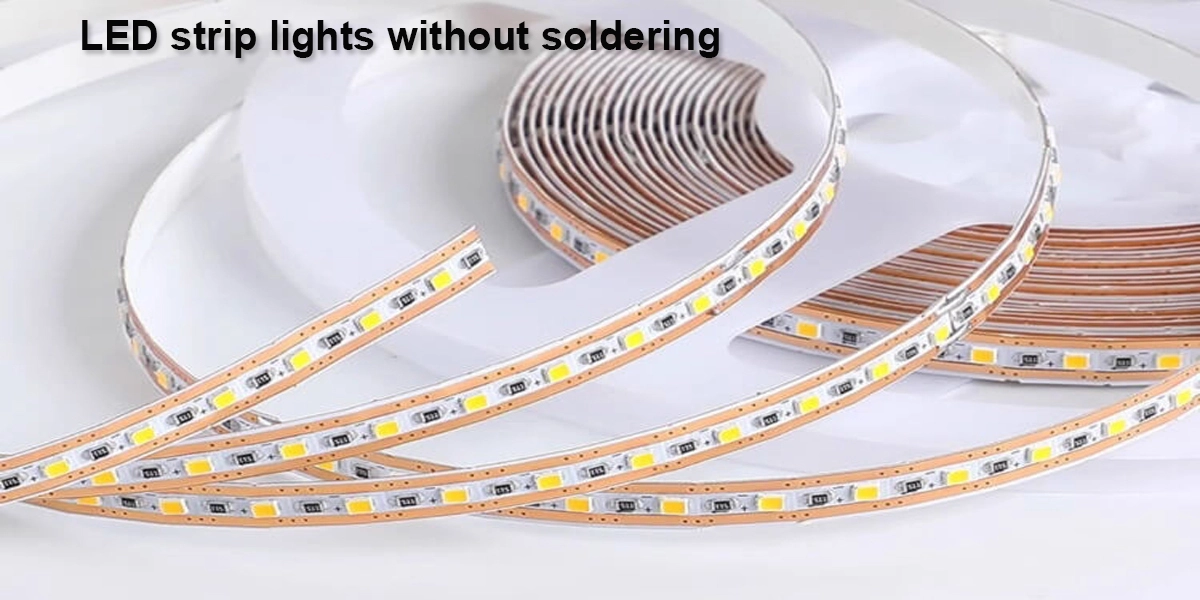
A instalação da iluminação do gabinete costumava exigir habilidades de solda, ferramentas especializadas e tempo extra de instalação. No entanto, a iluminação do armário sem solda tornou mais fácil criar soluções de iluminação LED limpas e profissionais sem trabalhos complicados de fiação.
Usando luzes de tiras de LED sem soldar, os instaladores podem conectar e instalar rapidamente sob a iluminação do gabinete sem equipamentos de solda. Este método de instalação flexível é especialmente adequado para armários de cozinha, guarda-roupas, prateleiras, vitrines e projetos de móveis personalizados, onde uma aparência elegante e fácil manutenção são importantes.
Neste guia, explicaremos como funciona a iluminação do armário sem solda, como instalar as luzes de LED sem soldar e o que considerar ao escolher conectores sem solda para diferentes aplicações de iluminação.
Resposta rápida: por que a iluminação do armário sem solda está se tornando popular?
A iluminação do armário sem solda está se tornando popular porque simplifica a instalação e manutenção de sistemas de iluminação LED. Ao substituir as conexões de solda tradicionais por conectores plug-in, ele permite Fitas de LED, perfis de alumínio, e acessórios de iluminação Para ser instalado, substituído e atualizado com mais eficiência. Isso o torna uma solução ideal para cozinhas, guarda-roupas, armários, vitrines e projetos de móveis personalizados, onde a instalação limpa, o design flexível e a manutenção a longo prazo são importantes.
O que é um sistema de iluminação de armário sem solda e como ele funciona?
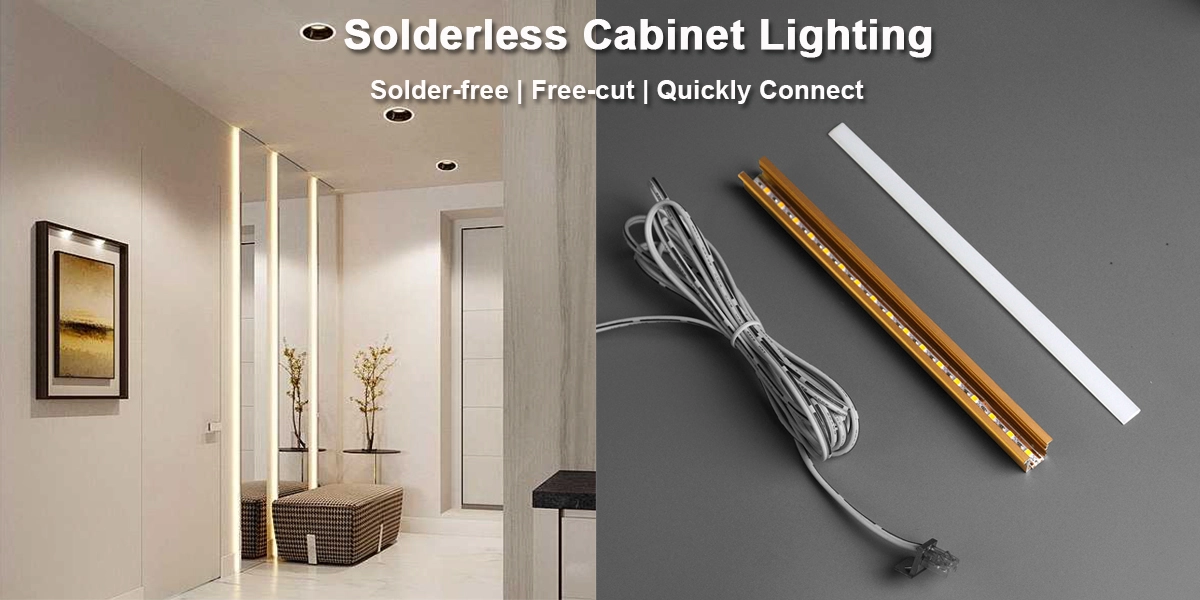
Um sistema de iluminação de armário sem solda é uma solução de iluminação LED modular que usa a luz de LED sem solda, conectores sem solda, perfis de alumínio e acessórios compatíveis para simplificar a instalação, substituição e manutenção de projetos de iluminação de móveis.
ao contrário faixa de led tradicional As instalações que exigem que os fios sejam soldados manualmente na tira, a iluminação do gabinete sem solda usa conectores plug-in e métodos de conexão pré-projetados para criar conexões elétricas confiáveis sem ferramentas de solda. Isso permite luzes de tiras de LED, fontes de alimentação, e Componentes de controle Para ser instalado, ajustado ou substituído com mais eficiência.
A diferença fundamental é o design modular da conexão. Em vez de criar juntas soldadas permanentes, cada componente de iluminação pode ser montado, ajustado, atualizado ou substituído de forma independente quando necessário. Isso torna o sistema mais rápido de instalação e mais fácil de manter, especialmente para armários, guarda-roupas, armário, armário de exibição e aplicações de iluminação de móveis personalizados, onde a instalação e flexibilidade limpas são importantes.
Um sistema de iluminação de armários sem solda típico consiste em vários componentes integrados:
Luzes de tiras de LED sem solda com design de conexão rápida
A luz de tira de LED sem solda é a principal fonte de iluminação de um sistema de iluminação de gabinete sem solda. Projetado para funcionar com conectores sem solda ou pontos de conexão pré-instalados, esta luz de tira de LED sem solda permite que os instaladores cortem, reconectem ou substituam as seções de iluminação sem trabalho de solda adicional.
Este método de conexão simplificado melhora a eficiência da instalação e reduz o tempo de manutenção, tornando-o adequado para armários de cozinha, guarda-roupas, prateleiras e outros aplicativos de iluminação para móveis.
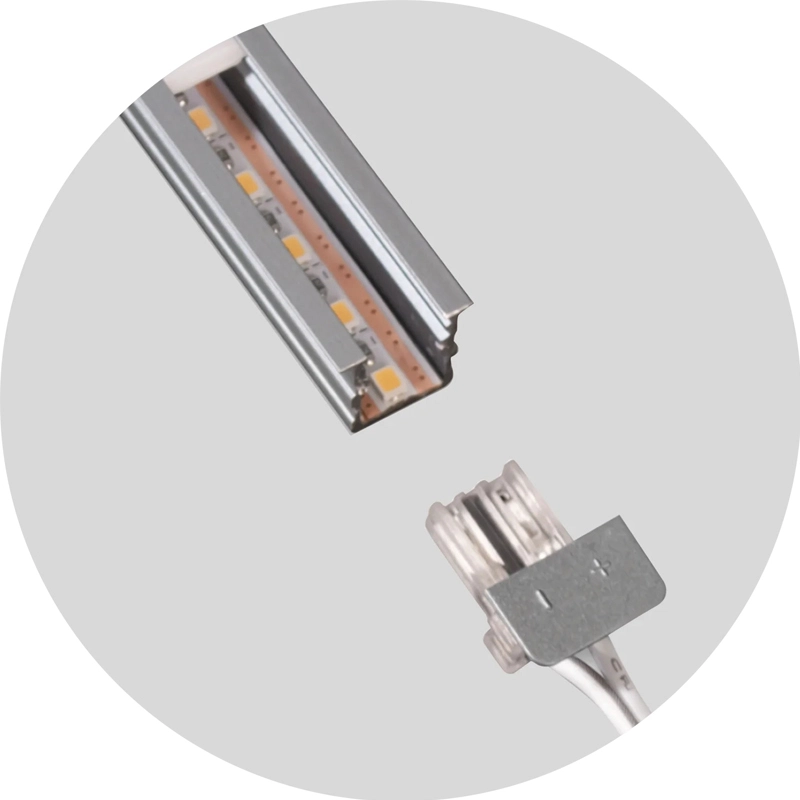
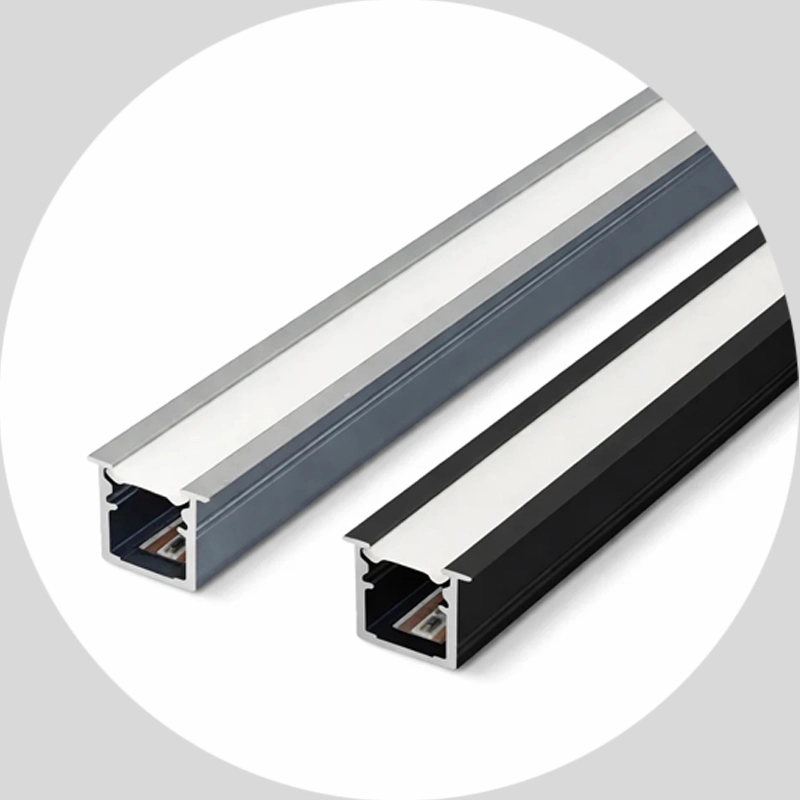
Perfis de alumínio para proteção e dissipação de calor
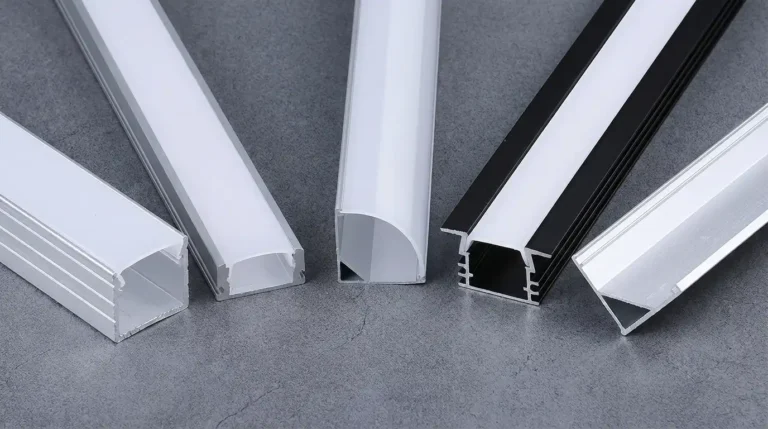
Os perfis de alumínio proporcionam uma aparência final profissional, protegendo as luzes de LED e a melhoria do gerenciamento térmico. Em projetos de iluminação de armários e móveis, perfis de cantos e de móveis embutidos, são comumente usados para criar efeitos de iluminação lineares sem costura dentro de armários, guarda-roupas, prateleiras e áreas de exibição.
Conectores plug-in e acessórios modulares
Conectores sem solda, cabos de extensão e acessórios de montagem criam um sistema de conexão flexível entre as tiras de LED e outros componentes de iluminação. Esses acessórios plug-and-play reduzem a complexidade da instalação e permitem que os layouts de iluminação sejam personalizados de acordo com diferentes designs de móveis.
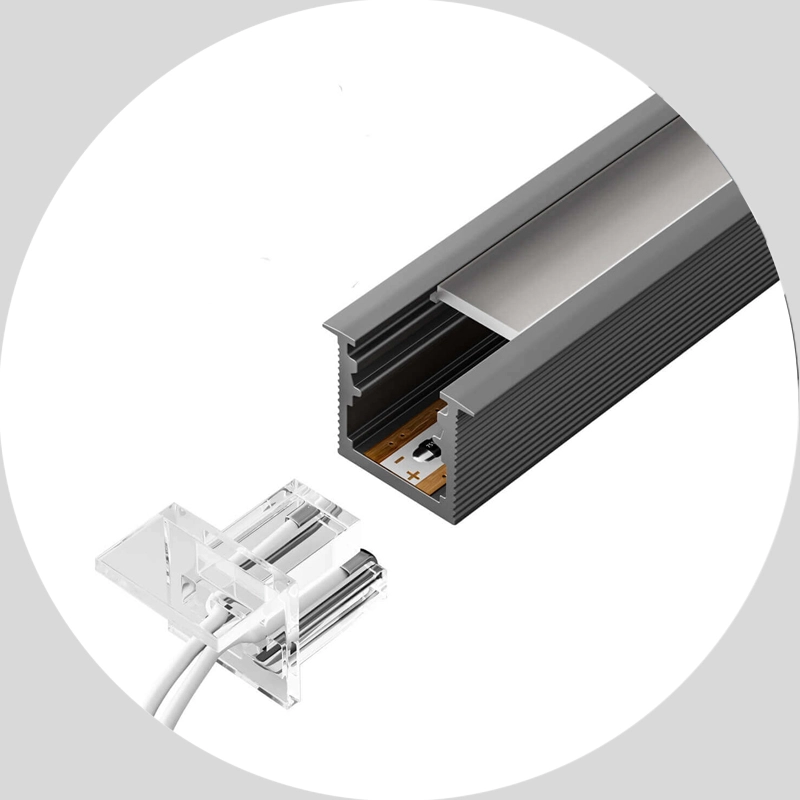
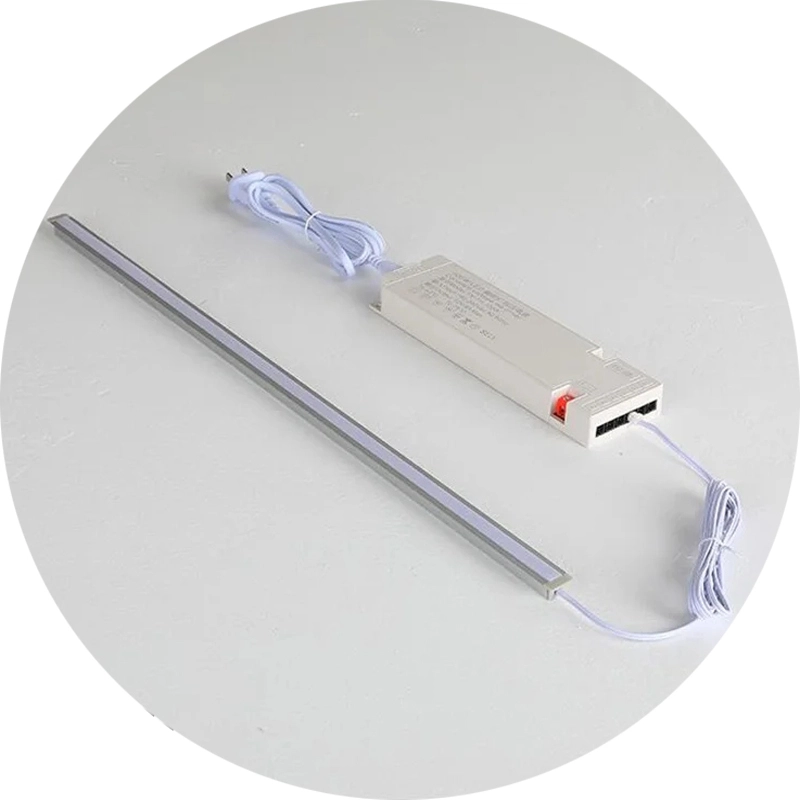
Drivers de LED e componentes de controle opcionais
O driver LED fornece energia estável para o sistema de iluminação, enquanto componentes opcionais, como sensores de movimento, dimmers e controladores inteligentes, podem ser integrados para melhorar a conveniência, a eficiência energética e a experiência do usuário.
Combinando esses componentes modulares, um sistema de iluminação de gabinete sem solda oferece uma alternativa mais limpa, rápida e flexível às instalações tradicionais de LED. Está se tornando uma solução cada vez mais popular para a iluminação de móveis modernos, design de interiores e projetos de armários personalizados.
série de tiras de led sem solda para iluminação de armário
Escolher a faixa de LED sem solda certa é tão importante quanto selecionar o design do gabinete. Projetos de móveis diferentes exigem larguras de PCB diferentes, níveis de brilho e temperaturas de cor.
Para guarda-roupas, estantes, armários de cozinha e móveis personalizados, designs estreitos de PCB e tecnologia branca ajustável estão se tornando cada vez mais populares porque oferecem maior flexibilidade de instalação e conforto de iluminação.
Série de tiras de LED sem solda populares para iluminação de armários
A tabela a seguir compara várias séries de tiras de LED sem solda comumente usadas em aplicações de iluminação de gabinetes.
| série | Tipo de LED | LED Qtd | Largura da placa de circuito impresso | Tensão de entrada | Potência | IRC | Saída de lúmen | Temperatura de cor |
| 2025-120-5mm-11.4W-CCT | 2025 SMD | 120 LEDs/m | 5 mm | DC12V / 24V | 11,4 W/m | ra90 | 557–606 lm/m | 2700–6500k |
| 2835-120-6.5mm-14.6W-CCT | 2835 SMD | 120 LEDs/m | 6,5 mm | DC12V / 24V | 14,6 W/m | ra90 | 775–876 lm/m | 2700–6500k |
| 2025-150-5mm-14w-cct | 2025 SMD | 150 LEDs/m | 5 mm | DC12V / 24V | 14 W/m | ra90 | 586–636 lm/m | 2700–6500k |
| 2025-200-5mm-16w-cct | 2025 SMD | 200 LEDs/m | 5 mm | DC12V / 24V | 16 W/m | ra90 | 754–871 lm/m | 2700–6500k |
| 2835-120-4mm-10w-cct | 2835 SMD | 120 LEDs/m | 4 mm | DC12V / 24V | 10 W/m | ra90 | 382–414 lm/m | 2700 |
Como escolher a faixa de LED sem solda certa
Para perfis de alumínio ultra-alimentados
Se o espaço de instalação for limitado, como prateleiras de guarda-roupa, armários de vidro ou móveis flutuantes, os designs de PCB de 4 mm e 5 mm proporcionam maior flexibilidade, mantendo uma aparência limpa.
Para uma iluminação perfeita e sem pontos
Densidades de LED mais altas, como a série 2025-200, produzem uma iluminação mais suave e uniforme quando instalada dentro de perfis de alumínio, tornando-os ideais para projetos de mobiliário premium.
Para uma iluminação de tarefas mais brilhante
Os armários de cozinha e os monitores de varejo geralmente exigem níveis de brilho mais altos. Nesses casos, a série 2835-120-6,5 mm oferece a maior saída de lúmen entre as opções disponíveis.
Para iluminação de armário branco ajustável
Todas as séries suportam tecnologia branca sintonável de 2700K a 6.500K, permitindo que os usuários alternem entre a iluminação ambiente quente e a iluminação de tarefas mais frias de acordo com diferentes cenários.
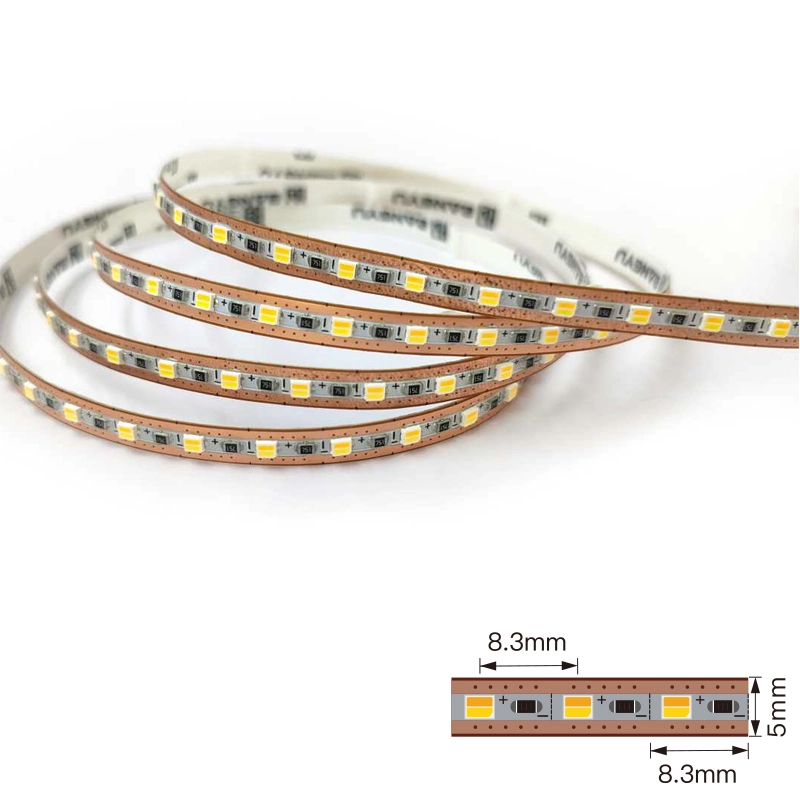
Luzes de tiras de LED sem solda 2025-120-5mm-11.4W-CCT
- Tensão de entrada: DC12V/24V
- Tipo de LED: SMD 2025
- Qdd de LED: 120 peças
- Watt: 5,7 W + 5,7 W/m
- Cor: 2700-6500K
- cri: ra 90
- Fluxo luminoso: 557/606 lm/m
- Largura da PCB: 5 mm
- Acima a função suporta a personalização
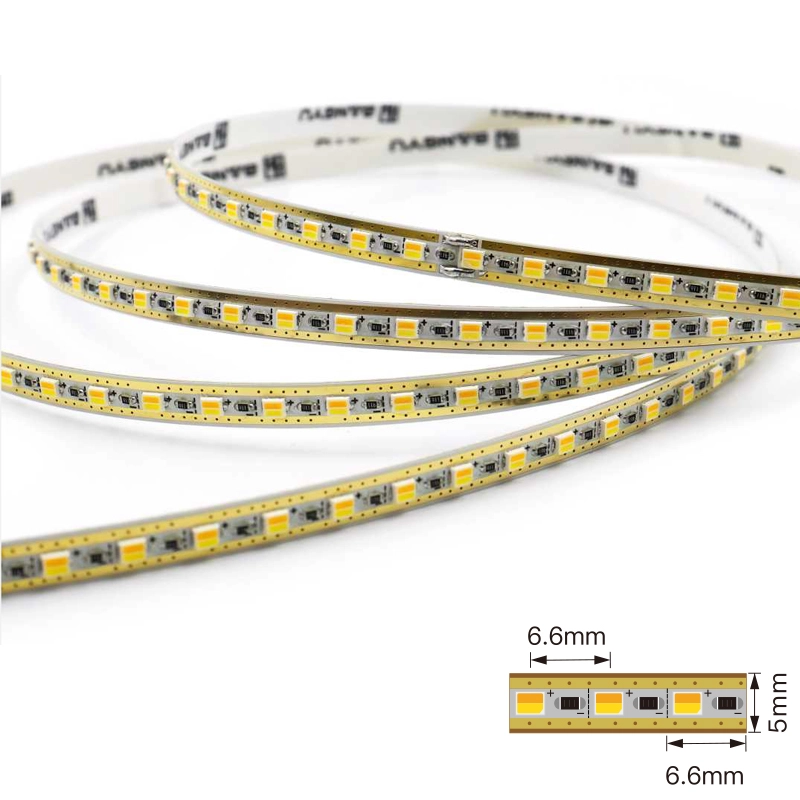
Luzes de tiras de LED sem solda 2025-150-5mm-14w-cct
- Tensão de entrada: DC12V/24V
- Tipo de LED: SMD 2025
- Qdd LED: 150 peças
- Watt: 7W + 7W/m
- Cor: 2700-6500K
- cri: ra 90
- Fluxo luminoso: 586–636 lm/m
- Largura da PCB: 5 mm
- Acima a função suporta a personalização
Por que a iluminação do armário sem solda está se tornando uma alternativa preferida aos sistemas tradicionais de tiras de LED
A iluminação moderna do armário não é mais julgada exclusivamente pelo brilho ou eficiência energética. Fabricantes de móveis, designers e instaladores estão sob crescente pressão para encurtar os ciclos de produção, simplificar a instalação e reduzir os custos de manutenção. Como resultado, as instalações de LED para tiras de LEDs soldados tradicionais estão gradualmente dando lugar a sistemas modulares de iluminação de armários sem solda.
A mudança não é simplesmente sobre a eliminação da soldagem, mas reflete as mudanças nos requisitos da fabricação de móveis modernos e do design de interiores. De guarda-roupas e armários de cozinha a estantes e displays de varejo, espera-se que os sistemas de iluminação sejam mais fáceis de instalar, mais flexíveis de personalizar e mais simples de manter ao longo do tempo.
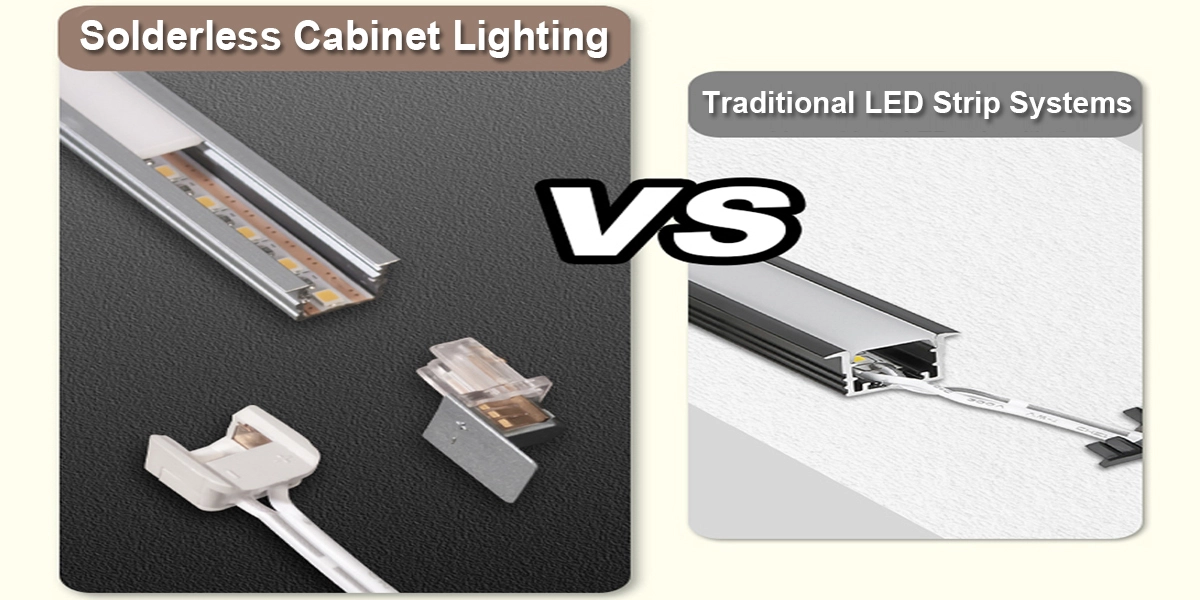
A tabela a seguir mostra os requisitos essenciais para projetos modernos de iluminação de gabinetes
| O que os projetos modernos de móveis precisam | Sistemas tradicionais de tiras de LED | Sistemas de iluminação de armários sem solda |
| Instalação mais rápida | Requer remoção de fio, solda e testes no local | Conectores plug-and-play simplificam a instalação |
| Manutenção mais fácil | A substituição de tiras danificadas pode exigir a religação ou desmontagem de armários | As tiras e conectores individuais podem ser substituídos rapidamente |
| Maior flexibilidade para móveis personalizados | As juntas de solda fixam os ajustes de layout | Acessórios modulares se adaptam a diferentes designs de armários |
| Aparência mais limpa e profissional | Fios e pontos de solda podem permanecer visíveis | Conectores ocultos criam um acabamento perfeito |
| Opções de corte flexíveis | Intervalos de corte mais longos podem criar manchas escuras e resíduos de materiais | Intervalos de corte mais curtos permitem layouts mais precisos |
| Reduza os custos de mão de obra em grandes projetos | O tempo de instalação aumenta com o tamanho do projeto | Montagem mais rápida melhora a produtividade |
| Atualizações futuras e controles inteligentes | A adição de sensores ou dimmers geralmente requer religação | Fácil integração com sensores, dimmers e controladores |
| Conexão e substituição | Seções danificadas são difíceis de remover uma vez instalados | As tiras de LED podem ser desconectadas e substituídas sem soldar |
A fiação tradicional retarda a produção
Em projetos convencionais de iluminação de gabinetes, os instaladores geralmente precisam cortar fios, soldar conexões e testar todas as seções de iluminação antes da instalação. Embora essas etapas sejam gerenciáveis para pequenos projetos, elas se tornam cada vez mais demoradas em sistemas de guarda-roupa de grande escala, prateleiras de varejo e produção de móveis personalizados.
A iluminação do armário sem solda substitui a fiação manual por conectores plug and play e componentes pré-configurados, ajudando os fabricantes a reduzir o tempo de montagem e melhorar a eficiência da instalação.
A manutenção não deve exigir a reconstrução do gabinete
Um dos maiores desafios na iluminação de móveis é a manutenção. Uma vez que os sistemas de iluminação sejam integrados em guarda-roupas, armários ou prateleiras, a substituição de uma faixa de LED danificada pode exigir a desmontagem de painéis de móveis ou conexões de religação.
Os sistemas modulares sem solda resolvem esse problema, permitindo que as tiras, conectores e acessórios individuais sejam substituídos de forma independente. Em vez de substituir toda a instalação, os usuários podem trocar rapidamente apenas os componentes danificados.
Móveis modernos exigem maior flexibilidade
O design de móveis está se tornando cada vez mais personalizado. Armários, prateleiras flutuantes, armários de vidro e unidades de exibição raramente seguem dimensões padrão.
As faixas de LED tradicionais com pontos de solda fixos geralmente lutam para se adaptar a esses layouts. Os sistemas sem solda, no entanto, oferecem suporte a cortes flexíveis, conectores plug-and-play e várias opções de instalação, tornando-os mais fáceis de integrar em diferentes designs de móveis.
A iluminação do gabinete está se tornando um sistema completo
Dez anos atrás, os clientes compravam principalmente tiras de LED. Hoje, eles esperam soluções completas de iluminação que combinam tiras, perfis de alumínio, drivers, sensores e sistemas de controle.
Essa transição de produtos individuais para sistemas integrados é uma das principais razões pelas quais a iluminação do armário sem solda continua a ganhar popularidade. Não é mais simplesmente um acessório de iluminação - tornou-se parte do mobiliário em si.
O futuro da iluminação de móveis é modular
À medida que os custos de mão de obra continuam a subir e os designs de móveis se tornam mais sofisticados, os sistemas de iluminação modular estão gradualmente substituindo as instalações soldadas tradicionais.
Para fabricantes de móveis, designers de interiores e empreiteiros, a verdadeira vantagem da iluminação do armário sem solda é simplesmente a ausência de solda. É a capacidade de criar sistemas de iluminação mais rápidos de instalação, de manutenção e mais adequados aos interiores modernos.
Onde a iluminação do armário sem solda é usada? Aplicações comuns de tiras de LED
Originalmente desenvolvido para simplificar a instalação de luz LED, a iluminação do armário sem solda evoluiu para uma solução prática para uma ampla gama de móveis e aplicações internas. Seu design modular, conexões ocultas e fácil manutenção o tornam particularmente adequado para projetos que exigem estética limpa e layouts flexíveis.
A seguir, alguns dos aplicativos mais comuns.
Roupeiros e armários
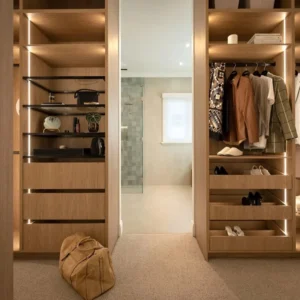
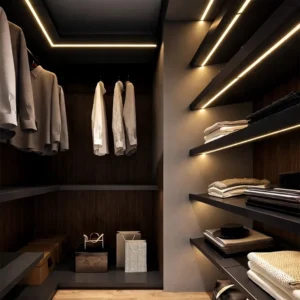
Os guarda-roupas e armários walk-in geralmente exigem uma iluminação suave e uniforme para melhorar a visibilidade sem expor cabos ou conectores. A iluminação do armário sem solda pode ser integrada em prateleiras, áreas suspensas e gavetas usando perfis de alumínio e sensores de movimento.
Como os sistemas de armazenamento de roupas são altamente personalizados, as opções de corte flexíveis permitem que os instaladores adaptem o layout da iluminação a diferentes tamanhos de gabinetes.
Armários de cozinha e iluminação sob o armário
A iluminação da tira de LED da cozinha e do armário precisa ser funcional e visualmente atraente. As tiras de LED sem solda são comumente instaladas sob os armários de parede, dentro das gavetas e ao longo das prateleiras abertas para fornecer iluminação de tarefas para preparação e armazenamento de alimentos.
Comparados com os métodos tradicionais de fiação, os sistemas sem solda simplificam a instalação e facilitam muito a manutenção futura.
Estantes e vitrines
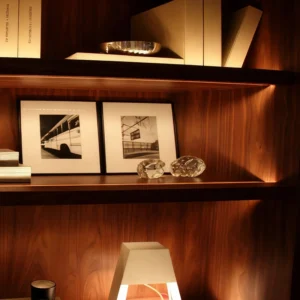
Estantes, armários de vidro e unidades de exibição se beneficiam de uma iluminação linear perfeita que destaca objetos decorativos sem criar hotspots visíveis.
Graças a opções de corte flexíveis e conectores ocultos, a iluminação do armário sem solda pode ser integrada em espaços estreitos, mantendo uma aparência limpa.
estantes de varejo e móveis comerciais
As lojas de varejo dependem cada vez mais da iluminação integrada para aprimorar a apresentação do produto e melhorar a experiência do cliente. No entanto, instalações em larga escala também exigem uma montagem eficiente e uma manutenção conveniente.
Os sistemas modulares de iluminação sem solda ajudam a reduzir o tempo de instalação e permitem que seções danificadas sejam substituídas rapidamente, tornando-as ideais para prateleiras de varejo, vitrines e projetos de móveis comerciais.
Móveis de escritório e interiores personalizados
Escritórios modernos e interiores comerciais geralmente incorporam iluminação em armários de armazenamento, mesas de recepção e sistemas de prateleiras.
Como os sistemas de iluminação de gabinetes sem solda oferecem suporte a dimmers, sensores e controles inteligentes, ele pode se adaptar às mudanças nos requisitos do espaço de trabalho, mantendo um design minimalista.
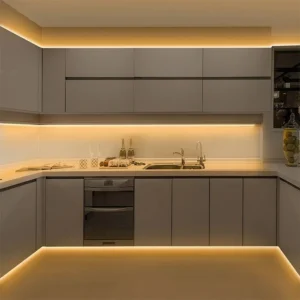
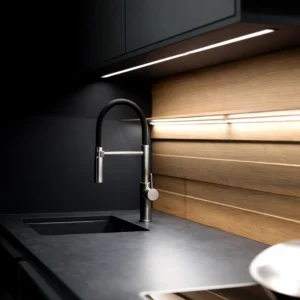
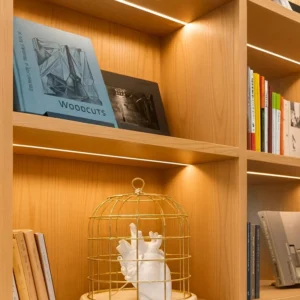
Por que a iluminação da tira LED sob o gabinete é popular nas cozinhas modernas
Sob o armário, a iluminação da faixa de LED tornou-se uma das soluções de iluminação mais populares para cozinhas modernas, guarda-roupas e vitrines. Comparado com as luzes tradicionais do disco ou luminárias fluorescentes, as luzes LED oferecem iluminação mais uniforme, instalação flexível e integração mais fácil com designs de móveis.
Quando combinados com conectores sem solda, perfis de alumínio e controles inteligentes, sob sistemas de iluminação do gabinete, podem ser instalados, mantidos e atualizados com mais eficiência.
As luzes de tiras de LED para armários de cozinha são amplamente utilizadas para iluminar as bancadas, melhorar a visibilidade e criar um design de interior mais limpo e moderno. Seu perfil fino e instalação oculta os tornam particularmente adequados para aplicações de iluminação sob o gabinete, onde tanto a funcionalidade quanto a estética são importantes.
Embora a iluminação sob o armário seja mais comumente associada a armários de cozinha, os mesmos princípios de iluminação são cada vez mais usados em guarda-roupas, estantes, vitrines e outros projetos de móveis personalizados que exigem iluminação oculta e uma aparência limpa.
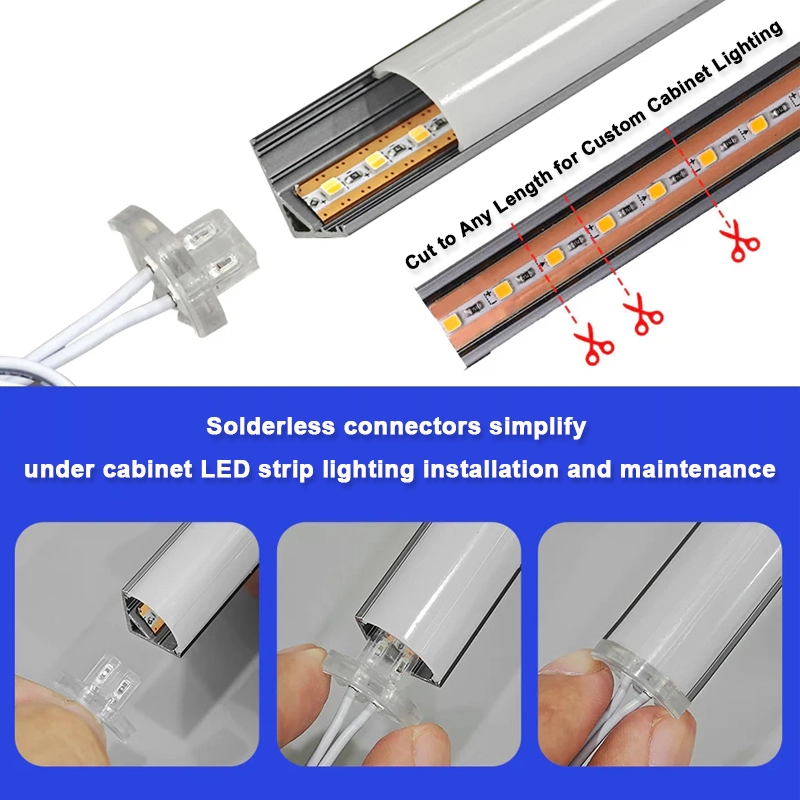
Por que escolher as luzes de tiras de LED para os armários?
Comparado com as luzes tradicionais do disco e as luminárias fluorescentes, as luzes LED criam um efeito de iluminação mais limpo e perfeito sob os armários. Seu perfil fino permite que eles permaneçam quase invisíveis, enquanto fornecem iluminação uniforme em bancadas, prateleiras e áreas de armazenamento.
Para armários de cozinha e móveis personalizados, as tiras de LED também oferecem maior flexibilidade, pois podem ser cortadas no tamanho e integradas com perfis de alumínio, dimmers, sensores de movimento e controles inteligentes.
Além disso, os sistemas modulares sem solda simplificam a instalação e a manutenção, permitindo que seções de iluminação individuais sejam conectadas, ajustadas ou substituídas sem religar.
Luzes de tira LED de 12 V vs 24 V para iluminação sob o armário
Selecionar a voltagem correta é uma parte importante do projeto de um sistema de iluminação sob o gabinete. As luzes LED de 12 e 24 V são amplamente utilizadas, mas elas funcionam de forma diferente, dependendo do comprimento da instalação e do tamanho do gabinete.
| feutensílio | tira led de 12 v | 2tira led de 4 v |
| Comprimento máximo da corrida | mais curto | mais |
| queda de tensão | Mais alto | Inferior |
| Flexibilidade de corte | superior | Bom |
| Melhor para | Pequenos armários e corridas curtas | Cozinhas e grandes projetos de móveis |
Fichas com fio vs plug-in sob iluminação de tiras de LED
As luzes de LED plug-in são populares em projetos de bricolage porque são fáceis de instalar e não requerem modificações elétricas. Os proprietários podem adicionar rapidamente iluminação sob armários de cozinha, estantes ou prateleiras de exibição usando componentes plug-and-play.
Os sistemas com fio, no entanto, são mais comuns em instalações de cozinha permanente, projetos de móveis comerciais e interiores de última geração. Ao ocultar a fiação dentro dos armários e das paredes, as soluções com fio criam uma aparência mais limpa e permitem que os sistemas de iluminação se integrem perfeitamente a interruptores, sensores e dimmers.
Muitos sistemas modernos de iluminação sob o gabinete também suportam sensores de porta, sensores de movimento e controles inteligentes, proporcionando maior comodidade e eficiência energética.
Como instalar a iluminação do armário sem solda: instalação de tiras de LED sem solda
Uma das maiores vantagens da iluminação do armário sem solda é que ela simplifica a instalação sem sacrificar a flexibilidade. Ao contrário dos sistemas tradicionais de tiras de LED que exigem decapagem e solda de fios, as soluções sem solda dependem de conectores plug-and-play e componentes modulares, tornando-os mais fáceis de instalar, ajustar e manter.
Embora o processo exato possa variar dependendo do design de móveis e dos requisitos de iluminação, a maioria dos projetos de iluminação de gabinetes segue o mesmo fluxo de trabalho básico.
Passo 1: Planeje o layout da iluminação
Antes da instalação, determine onde estarão localizadas as luzes de LED sem solda, perfis de alumínio, fonte de alimentação e acessórios. Um layout bem planejado ajuda a reduzir o tempo de instalação e minimiza as modificações desnecessárias posteriormente.
Ao planejar o sistema, considere o seguinte:
- Dimensões do armário e espaçamento das prateleiras
- Instalação embutida ou montada na superfície
- Roteamento do cabo de alimentação
- Localização do sensor e do interruptor
- Acesso futuro de manutenção
Para guarda-roupas e vitrines, o roteamento de cabos ocultos e a colocação do conector são particularmente importantes para obter uma aparência limpa.
Passo 2: Instale o perfil de alumínio para iluminação de tiras de LED
Meça e corte o perfil de alumínio de acordo com as dimensões do gabinete e, em seguida, prenda-o na posição desejada.
Dependendo do aplicativo, podem ser usados diferentes tipos de perfil:
- Perfis embutidos para guarda-roupas e móveis premium
- Perfis montados na superfície para armários de cozinha
- Perfis de canto para prateleiras e vitrines
Além de proteger as luzes de LED, os perfis de alumínio melhoram a dissipação de calor e criam um efeito de iluminação linear sem igual.
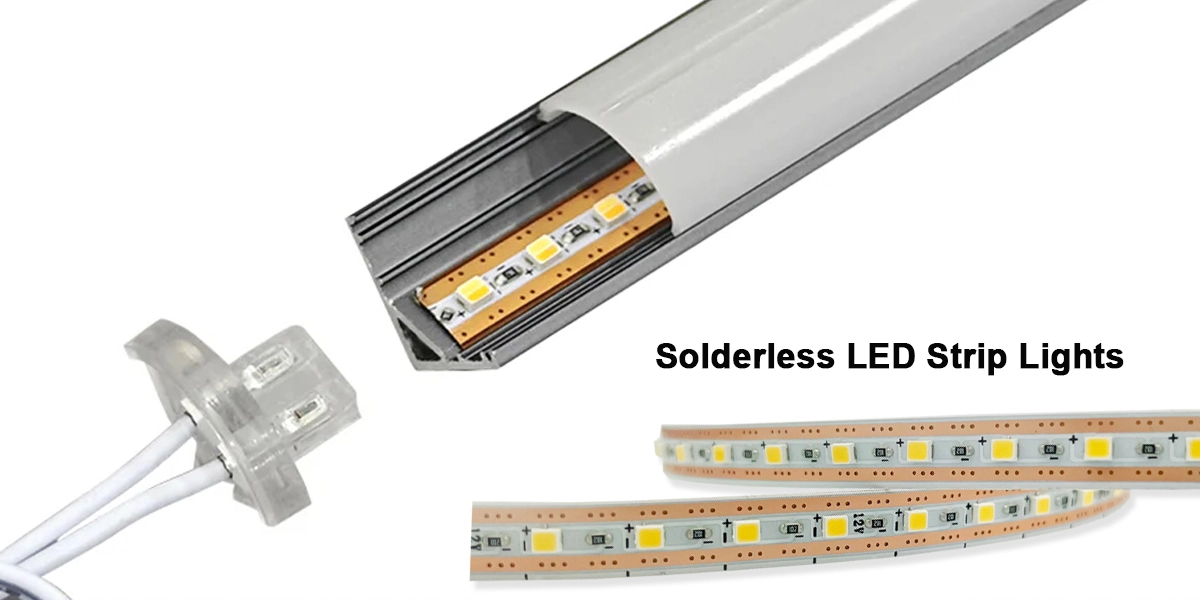
Etapa 3: corte e conecte as luzes da faixa de LED usando conectores sem solda
Corte as luzes de LED ao longo das marcas de corte designadas e conecte-as usando conectores sem solda compatíveis.
Comparados com as instalações tradicionais, os sistemas sem solda eliminam a necessidade de decapagem e solda de fios, tornando a instalação mais rápida e flexível.
Para garantir um desempenho confiável, verifique o seguinte antes da montagem final:
- Compatibilidade com largura de PCB
- Tensão de entrada
- Tipo de conector
- Alinhamento de polaridade
Como o sistema é modular, a tira pode ser ajustada ou substituída mais facilmente se o layout do gabinete mudar. Diferentes tipos de tiras de LED, incluindo tiras de LED COB e tiras de LED SMD, podem exigir diferentes designs de conectores. Sempre confirme a largura, a tensão e a compatibilidade do conector da tira antes da instalação para garantir conexões confiáveis.
Etapa 4: conecte o driver de LED e os componentes de controle
Após a instalação da tira de LED, conecte-a à fonte de alimentação e a todos os acessórios opcionais, como:
- sensores de movimento
- interruptores de toque
- Reguladores de fluxo luminoso
- controladores inteligentes
Antes de consertar todos os componentes permanentemente, teste o sistema para garantir que cada seção funcione corretamente.
Etapa 5: Conclua a instalação e teste o sistema
Instale a tampa do difusor, organize os cabos e faça uma inspeção final de todo o sistema de iluminação.
Um sistema de iluminação de armário sem solda devidamente projetado não deve apenas fornecer iluminação uniforme, mas também permitir manutenção e atualizações futuras sem remover a estrutura do armário.
FAQ
Conclusão
A iluminação moderna do armário não se trata mais apenas de adicionar iluminação – tornou-se uma parte essencial do design de móveis, eficiência de instalação e manutenção a longo prazo.
Comparado com os sistemas de tiras de LED soldados tradicionais, a iluminação do armário sem solda oferece uma solução mais rápida, limpa e flexível para guarda-roupas, armários de cozinha, estantes, displays de varejo e projetos de móveis personalizados. Com conectores plug-and-play, acessórios modulares e fácil manutenção, ajuda os fabricantes e instaladores a simplificar a montagem, criando efeitos de iluminação perfeitos.
À medida que o design de móveis continua evoluindo em direção à personalização e integração inteligente, espera-se que os sistemas de iluminação modular desempenhem um papel cada vez mais importante em projetos futuros.
Esteja você projetando um guarda-roupa, atualizando a iluminação sob o armário ou desenvolvendo soluções de móveis personalizados, escolher o sistema de iluminação de armário sem solda certo pode melhorar significativamente a eficiência da instalação e a experiência do usuário.
Procurando uma solução de iluminação de armário sem solda para seu próximo projeto? Explore nossos sistemas de iluminação de gabinete, perfis de alumínio e acessórios modulares para encontrar a configuração que melhor se adapta aos seus requisitos de design.
Escrito por Elaine Zhu
Gerente Geral da SignliteLEDTecnicamente revisado por Jason Chen
Líder de P&D, Signlited
E-mail: info@signliteled.com
Postagens relacionadas