Deutsch
  English
  简体中文
简体中文  Español
  Français
  Italiano
  日本語
日本語  한국어
한국어  Polski
  Português
  Русский
  Türkçe
  Nederlands
  Tiếng Việt
  ไทย
ไทย 
Die Installation der Schrankbeleuchtung erforderte Lötfähigkeiten, spezielle Werkzeuge und zusätzliche Installationszeit. Die lötfreie Schrankbeleuchtung hat es jedoch einfacher gemacht, saubere und professionelle LED-Beleuchtungslösungen ohne komplizierte Verdrahtungsarbeiten zu erstellen.
Durch die Verwendung von LED-Leuchten ohne Löten können Installateure ohne Lötgerät schnell unter Schrankbeleuchtung anschließen und installieren. Diese flexible Installationsmethode eignet sich besonders für Küchenschränke, Schränke, Regale, Vitrinen und maßgefertigte Möbelprojekte, bei denen ein gepflegtes Erscheinungsbild und eine einfache Wartung wichtig sind.
In diesem Handbuch erklären wir, wie lötfreie Schrankbeleuchtung funktioniert, wie man LED-Leuchten ohne Löten installiert und was bei der Auswahl von lötfreien Steckverbindern für verschiedene Beleuchtungsanwendungen zu beachten ist.
Schnelle Antwort: Warum wird die supportlose Schrankbeleuchtung populär?
Die Lötfreie Schrankbeleuchtung wird immer beliebter, da sie die Installation und Wartung von LED-Streifenbeleuchtungssystemen vereinfacht. Durch den Austausch traditioneller Lötverbindungen durch Steckverbinder ermöglicht es LED-Leuchtbänder, Aluminiumprofile, Und Beleuchtungszubehör Effizienter zu installieren, zu ersetzen und zu aktualisieren. Dies macht es zu einer idealen Lösung für Küchen, Schränke, Schränke, Vitrinen und maßgeschneiderte Möbelprojekte, bei denen eine saubere Installation, ein flexibles Design und eine langfristige Wartung wichtig sind.
Was ist ein lötfreies Schrankbeleuchtungssystem und wie funktioniert es?
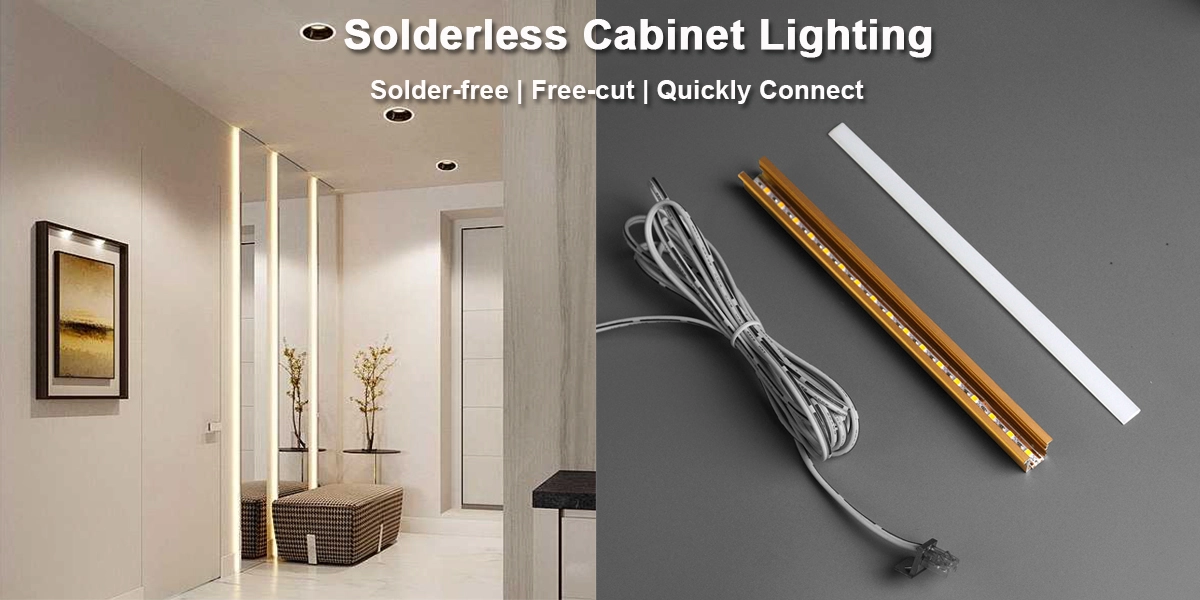
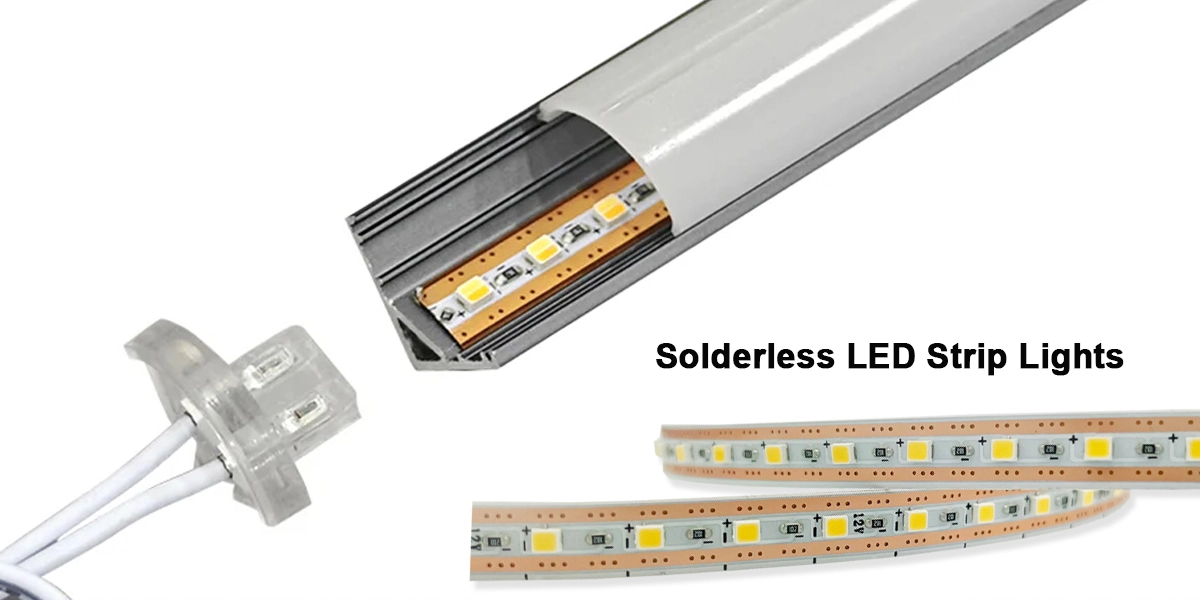
Ein lötfreies Schrankbeleuchtungssystem ist eine modulare LED-Beleuchtungslösung, die das lötfreie LED-Streifenlicht, die lötfreien Steckverbinder, die Aluminiumprofile und das kompatible Zubehör verwendet, um die Installation, den Austausch und die Wartung von Möbelbeleuchtungsprojekten zu vereinfachen.
ungleich Traditioneller LED-Streifen Bei Installationen, bei denen die Kabel manuell auf die Leiste gelötet werden, werden die Lötmittel-Schrankbeleuchtung mit Steckverbindern und vorgefertigten Verbindungsmethoden versehen, um zuverlässige elektrische Verbindungen ohne Lötwerkzeuge herzustellen. Dies ermöglicht LED-Streifen, Stromversorgung, Und Komponenten steuern effizienter installiert, angepasst oder ersetzt werden.
Der Hauptunterschied ist das modulare Verbindungsdesign. Anstatt dauerhafte Lötverbindungen zu erstellen, kann jede Beleuchtungskomponente unabhängig voneinander montiert, angepasst, aufgerüstet oder bei Bedarf ersetzt werden. Dies macht das System schneller zu installieren und zu warten, insbesondere für Schränke, Kleiderschrank, Schrank, Vitrine und maßgeschneiderte Möbelbeleuchtungsanwendungen, bei denen eine saubere Installation und Flexibilität wichtig sind.
Ein typisches lötfreies Schrankbeleuchtungssystem besteht aus mehreren integrierten Komponenten:
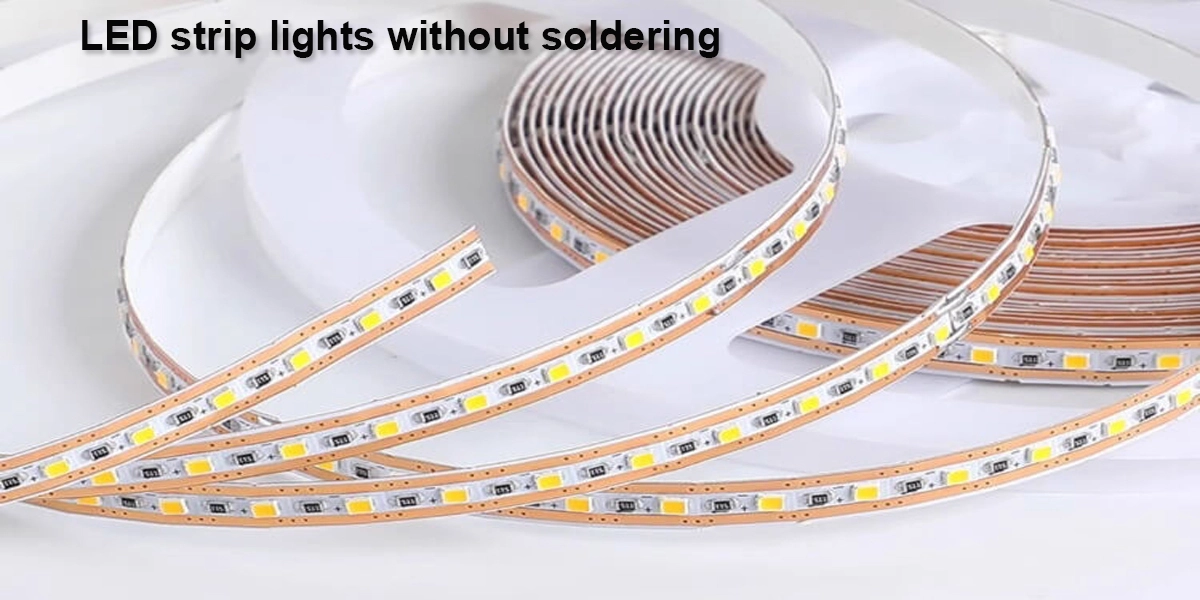
Lötfreie LED-Streifenleuchten mit Schnellanschluss-Design
Das lötfreie LED-Streifenlicht ist die primäre Lichtquelle eines lötfreien Schrankbeleuchtungssystems. Diese lötfreien LED-Streifen sind für die Arbeit mit lötfreien Steckern oder vorinstallierten Verbindungspunkten konzipiert und ermöglichen es den Installateuren, Beleuchtungsabschnitte ohne zusätzliche Lötarbeiten zu schneiden, wieder anzuschließen oder zu ersetzen.
Diese vereinfachte Verbindungsmethode verbessert die Installationseffizienz und reduziert die Wartungszeit. Dadurch eignet sie sich für Küchenschränke, Schränke, Regale und andere Möbelbeleuchtungsanwendungen.
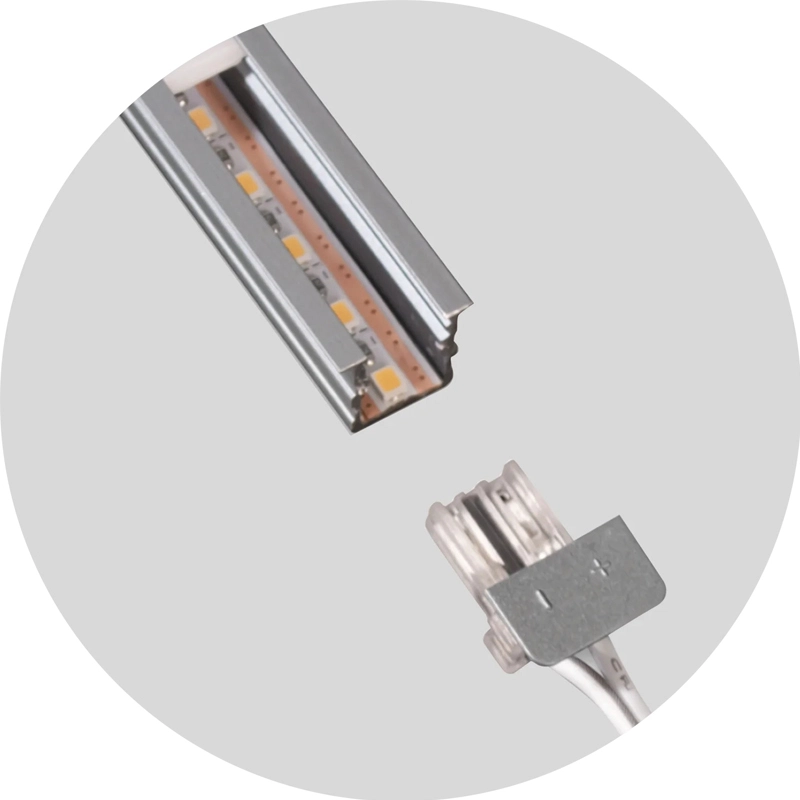
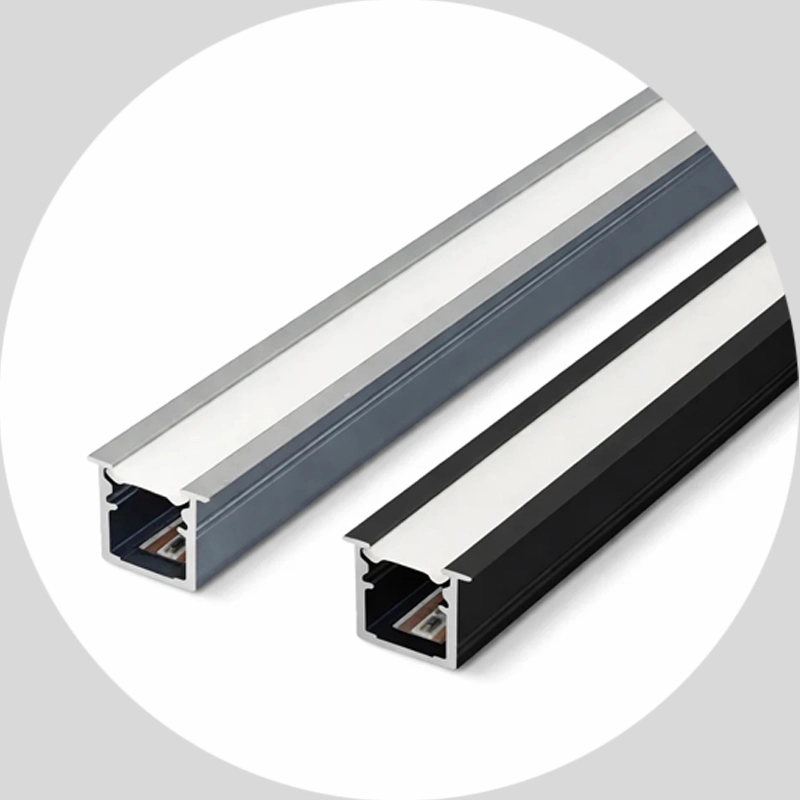
Aluminiumprofile für Schutz und Wärmeableitung
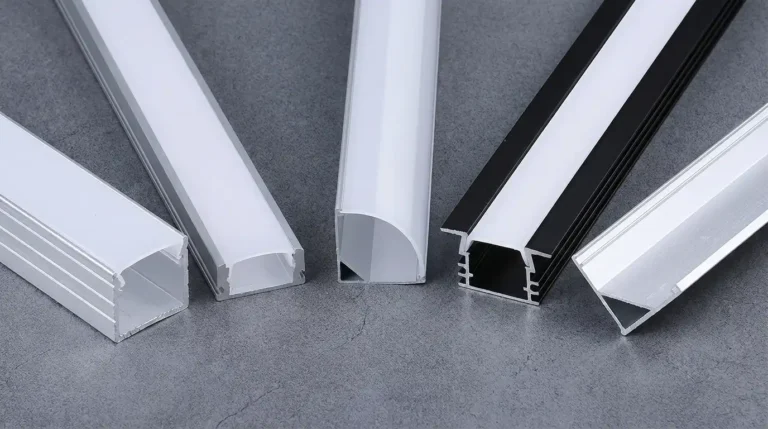
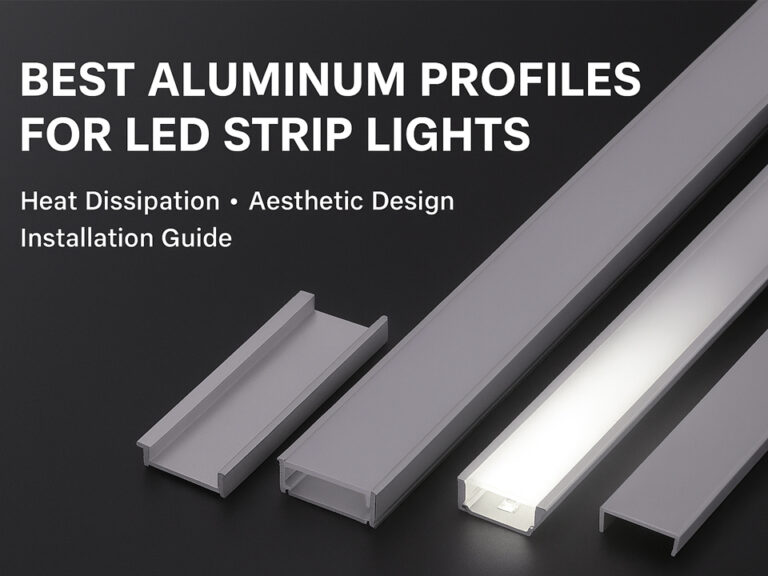
Aluminiumprofile sorgen für ein professionelles Aussehen, schützen LED-Leuchten und verbessern das Wärmemanagement. Bei Schrank- und Möbelbeleuchtungsprojekten werden häufig Einbau-, Anbau- und Eckprofile verwendet, um nahtlose lineare Lichteffekte in Schränken, Schränken, Regalen und Ausstellungsbereichen zu erzeugen.
Steckverbinder und modulares Zubehör
Lötfreie Steckverbinder, Verlängerungskabel und Montagezubehör schaffen ein flexibles Verbindungssystem zwischen LED-Streifen und anderen Beleuchtungskomponenten. Dieses Plug-and-Play-Zubehör reduziert die Komplexität der Installation und ermöglicht die Anpassung der Beleuchtungsplanung an verschiedene Möbeldesigns.
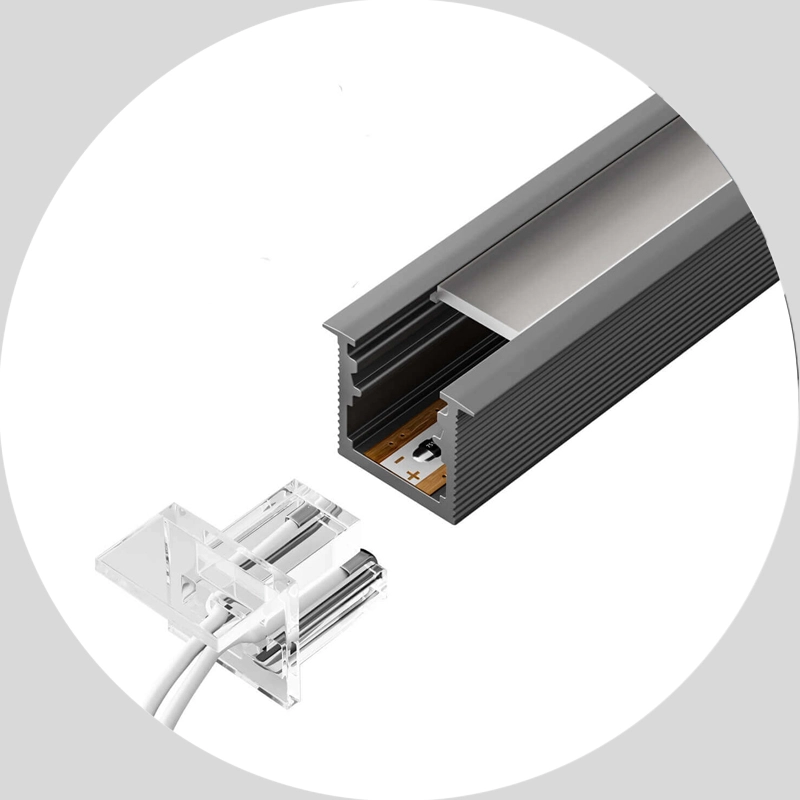
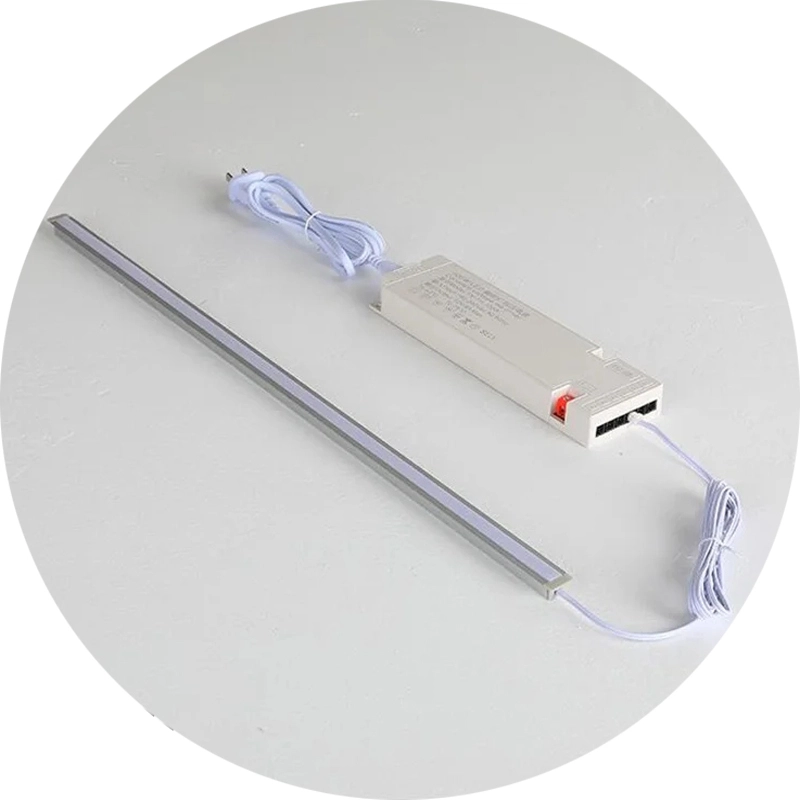
LED-Treiber und optionale Steuerkomponenten
Der LED-Treiber bietet stabile Leistung für das Beleuchtungssystem, während optionale Komponenten wie Bewegungssensoren, Dimmer und intelligente Steuerungen integriert werden können, um den Komfort, die Energieeffizienz und die Benutzererfahrung zu verbessern.
Durch die Kombination dieser modularen Komponenten bietet ein lötfreies Schrankbeleuchtungssystem eine sauberere, schnellere und flexiblere Alternative zu herkömmlichen LED-Streifeninstallationen. Es wird zu einer immer beliebter werdenden Lösung für moderne Möbelbeleuchtung, Innenarchitektur und maßgefertigte Schränke.
Lötfreie LED-Streifenserie für Schrankbeleuchtung
Die Wahl des richtigen lötfreien LED-Streifens ist genauso wichtig wie die Auswahl des Schrankdesigns. Verschiedene Möbelprojekte erfordern unterschiedliche Leiterplattenbreiten, Helligkeitsstufen und Farbtemperaturen.
Für Schränke, Bücherregale, Küchenschränke und maßgefertigte Möbel werden schmale Leiterplattendesigns und die einstellbare weiße Technologie immer beliebter, da sie eine größere Flexibilität bei der Installation und Komfort bieten.
Beliebte lötfreie LED-Streifenserie für Schrankbeleuchtung
Die folgende Tabelle vergleicht mehrere lötfreie LED-Streifenserien, die üblicherweise in Schrankbeleuchtungsanwendungen verwendet werden.
| Reihe | LED-Typ | LED-Anzahl | PCB Breite | Eingangsspannung | Strom | CRI | Lumen Output | Farbtemperatur |
| 2025-120-5mm-11.4W-CCT | 2025 SMD | 120 LEDs/m | 5 mm | DC12V / 24V | 11,4 W / M | RA90 | 557–606 lm/m | 2700–6500k |
| 2835-120-6,5mm-14.6W-CCT | 2835 SMD | 120 LEDs/m | 6,5 mm | DC12V / 24V | 14,6 W / M | RA90 | 775–876 lm/m | 2700–6500k |
| 2025-150-5mm-14W-CCT | 2025 SMD | 150 LEDs/m | 5 mm | DC12V / 24V | 14 W / M | RA90 | 586–636 lm/m | 2700–6500k |
| 2025-200-5mm-16W-CCT | 2025 SMD | 200 LEDs/m | 5 mm | DC12V / 24V | 16 W / M | RA90 | 754–871 lm/m | 2700–6500k |
| 2835-120-4mm-10W-CCT | 2835 SMD | 120 LEDs/m | 4 mm | DC12V / 24V | 10 W / M | RA90 | 382–414 lm/m | 2700 |
So wählen Sie den richtigen lötfreien LED-Streifen
Für ultraschmale Aluminiumprofile
Bei begrenzter Baufläche wie Schrankregale, Glasschränken oder schwimmenden Möbeln bieten 4 mm und 5 mm Leiterplattendesigns mehr Flexibilität bei gleichzeitiger Aufrechterhaltung eines sauberen Erscheinungsbilds.
Für nahtlose, punktfreie Beleuchtung
Höhere LED-Dichten wie die Serie 2025-200 sorgen für eine glattere und gleichmäßigere Beleuchtung, wenn sie in Aluminiumprofilen installiert werden, was sie ideal für Premium-Möbelprojekte macht.
Für hellere Aufgabenbeleuchtung
Küchenschränke und Einzelhandelsdisplays erfordern häufig höhere Helligkeitsstufen. In diesen Fällen bietet die 2835-120-6,5 mm-Serie die höchste Lumenleistung unter den verfügbaren Optionen.
Für abstimmbare weiße Schrankbeleuchtung
Alle Serien unterstützen die Tunable White-Technologie von 2700K bis 6500K, so dass Benutzer zwischen warmer Umgebungsbeleuchtung und kühlerer Aufgabenbeleuchtung wechseln können, je nach verschiedenen Szenarien.
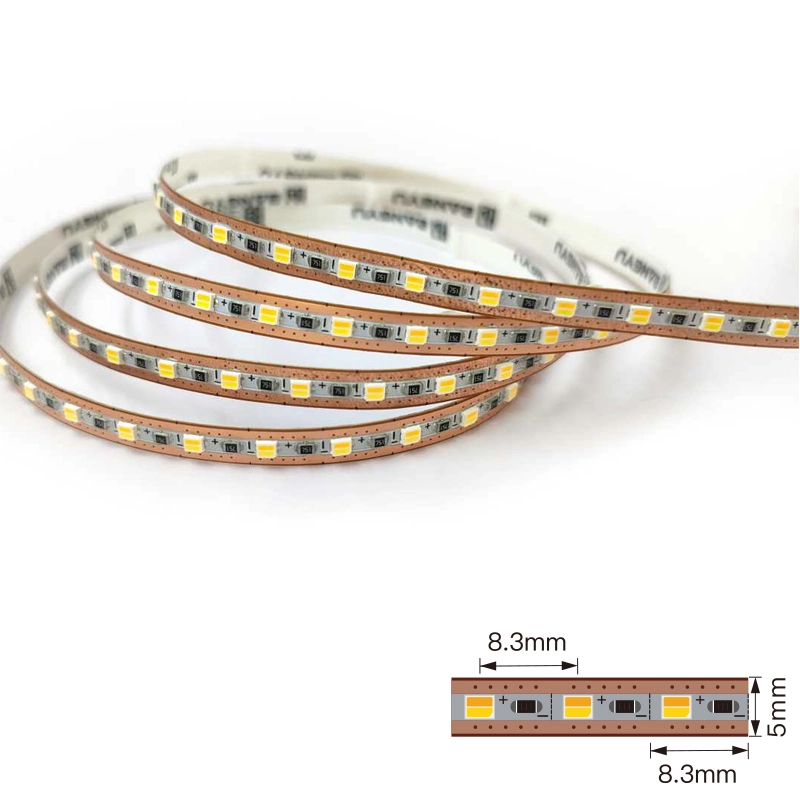
Lötfreie LED-Leuchtstreifen 2025-120-5mm-11.4W-CCT
- Eingangsspannung: DC12V/24V
- LED-Typ: 2025 SMD
- LED-Menge: 120 Stück
- Watt: 5,7 W + 5,7 W / m
- Farbe: 2700-6500K
- Cri: RA 90
- Lichtstrom: 557/606 lm/m
- Leiterplattenbreite: 5mm
- Über die Funktion unterstützt die Anpassung
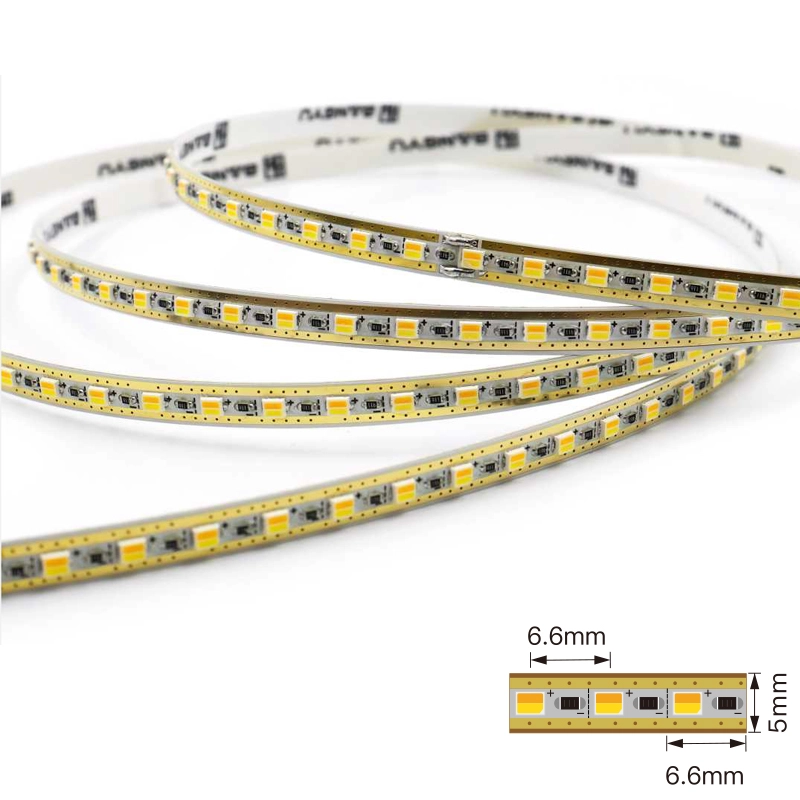
Lötfreie LED-Leuchtstreifen 2025-150-5mm-14W-CCT
- Eingangsspannung: DC12V/24V
- LED-Typ: 2025 SMD
- LED-Menge: 150pcs
- Watt: 7W + 7W / m
- Farbe: 2700-6500K
- Cri: RA 90
- Lichtstrom: 586–636 lm/m
- Leiterplattenbreite: 5mm
- Über die Funktion unterstützt die Anpassung
Warum sich die lötfreie Schrankbeleuchtung zu einer bevorzugten Alternative zu herkömmlichen LED-Streifensystemen entwickelt
Moderne Schrankbeleuchtung wird nicht mehr nur an Helligkeit oder Energieeffizienz beurteilt. Möbelhersteller, Designer und Installateure stehen unter zunehmendem Druck, die Produktionszyklen zu verkürzen, die Installation zu vereinfachen und die Wartungskosten zu senken. Infolgedessen weichen herkömmliche gelötete LED-Streifenlichtinstallationen allmählich modularen, lötfreien Schrankbeleuchtungssystemen.
Bei der Verschiebung geht es nicht nur um das Löten, sondern spiegelt die sich ändernden Anforderungen an moderne Möbelherstellung und Innenarchitektur wider. Von Kleiderschränken und Küchenschränken bis hin zu Bücherregalen und Einzelhandelsdisplays wird erwartet, dass Beleuchtungssysteme einfacher zu installieren, flexibler zu gestalten und im Laufe der Zeit einfacher zu warten sind.
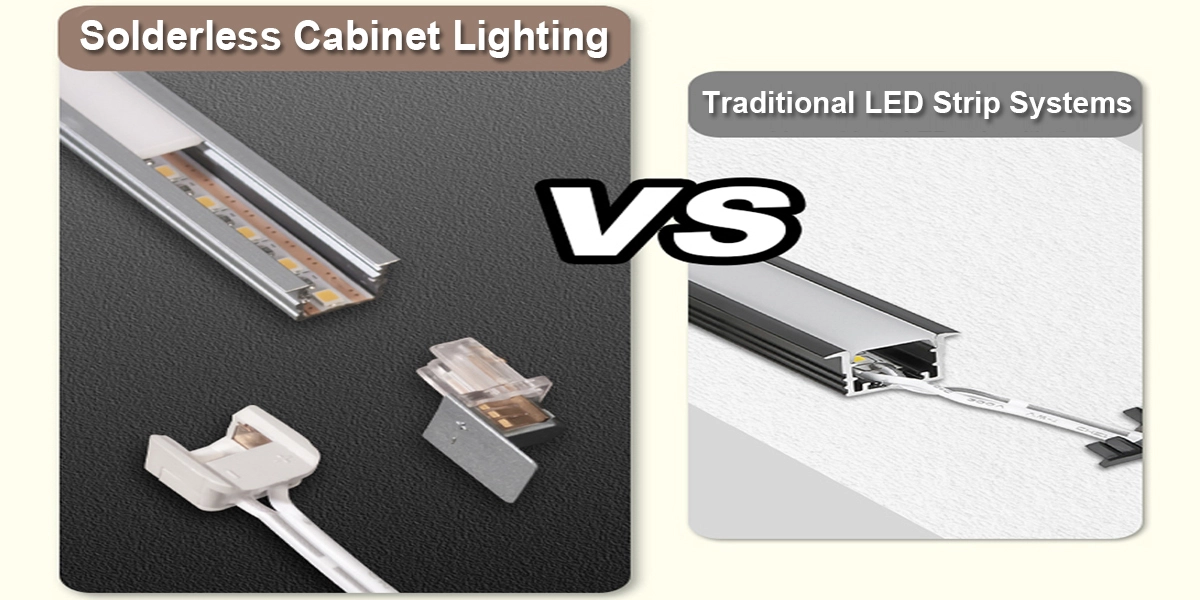
Die folgende Tabelle zeigt die wichtigsten Anforderungen an moderne Schrankbeleuchtungsprojekte
| Was moderne Möbelprojekte brauchen | Traditionelle LED-Streifensysteme | Lötfreie Schrankbeleuchtungssysteme |
| Schnellere Installation | Erfordert das Abisolieren, Löten und Testen von Draht vor Ort | Plug-and-Play-Anschlüsse vereinfachen die Installation |
| Einfachere Wartung | Ersetzen beschädigter Streifen kann eine Neuverkabelung oder Demontage von Schränken erfordern | Einzelne Streifen und Stecker können schnell ausgetauscht werden |
| Mehr Flexibilität für kundenspezifische Möbel | Feste Lötstellenbegrenzung Layout-Anpassungen | Modulares Zubehör passt sich an verschiedene Schrankdesigns an |
| sauberer und professionelleres Aussehen | Drähte und Lötstellen können sichtbar bleiben | Versteckte Anschlüsse schaffen ein nahtloses Finish |
| Flexible Schneidoptionen | Längere Schnittintervalle können dunkle Flecken und Materialabfälle verursachen | Kürzere Schnittintervalle ermöglichen präzisere Layouts |
| Geringere Arbeitskosten in großen Projekten | Die Installationszeit erhöht sich mit der Projektgröße | Schnellere Montage verbessert die Produktivität |
| Zukünftige Upgrades und intelligente Steuerungen | Das Hinzufügen von Sensoren oder Dimmern erfordert häufig eine Neuverdrahtung | Einfache Integration mit Sensoren, Dimmern und Controllern |
| Anschluss und Austausch | Beschädigte Abschnitte sind nach der Installation schwer zu entfernen | LED-Streifen können ohne Löten getrennt und ausgetauscht werden |
Traditionelle Verkabelung verlangsamt die Produktion
Bei herkömmlichen Schrankbeleuchtungsprojekten müssen Installateure häufig Drähte, Lötverbindungen abschneiden und jeden Beleuchtungsabschnitt vor der Installation testen. Während diese Schritte für kleine Projekte überschaubar sind, werden sie in großen Schranksystemen, im Einzelhandelsregal und in der Produktion von Möbeln immer zeitaufwändiger.
Lötfreie Schrankbeleuchtung ersetzt manuelle Verdrahtung durch Plug-and-Play-Steckverbinder und vorkonfigurierte Komponenten, wodurch Hersteller die Montagezeit verkürzen und die Installationseffizienz verbessern.
Wartung sollte nicht erforderlich sein, um den Schrank umzubauen
Eine der größten Herausforderungen bei der Beleuchtung von Möbeln ist die Wartung. Sobald die Beleuchtungssysteme in Schränken, Schränken oder Regalen integriert sind, kann es beim Ersetzen eines beschädigten LED-Streifens erforderlich sein, Möbelplatten zu zerlegen oder Anschlüsse neu zu verkabeln.
Modulare Lötsysteme lösen dieses Problem, indem einzelne Streifen, Steckverbinder und Zubehör unabhängig voneinander ausgetauscht werden. Anstatt die gesamte Installation zu ersetzen, können Benutzer nur die beschädigten Komponenten schnell austauschen.
Moderne Möbel fordern mehr Flexibilität
Möbeldesign wird immer individueller. Begehbare Schränke, schwimmende Regale, Glasschränke und Displayeinheiten folgen selten den Standardmaßen.
Traditionelle LED-Streifen mit festen Lötstellen haben oft Schwierigkeiten, sich an diese Layouts anzupassen. Lötfreie Systeme unterstützen jedoch flexibles Schneiden, Plug-and-Play-Steckverbinder und mehrere Installationsoptionen, sodass sie leichter in verschiedene Möbeldesigns integriert werden können.
Die Kabinettbeleuchtung wird zu einem Komplettsystem
Vor zehn Jahren kauften Kunden hauptsächlich LED-Streifen. Heute erwarten sie komplette Lichtlösungen, die Streifen, Aluminiumprofile, Treiber, Sensoren und Steuerungssysteme kombinieren.
Dieser Übergang von einzelnen Produkten zu integrierten Systemen ist einer der Hauptgründe, warum die Beleuchtung der lötfreien Schrank immer mehr an Popularität gewinnt. Es ist nicht mehr nur ein Beleuchtungszubehör - es ist Teil der Möbel selbst geworden.
Die Zukunft der Möbelbeleuchtung ist modular
Mit dem steigenden Arbeitsaufwand und der zunehmenden Möbelentwürfe ersetzen modulare Beleuchtungssysteme allmählich die traditionellen Lötanlagen.
Für Möbelhersteller, Innenarchitekten und Bauunternehmer ist der wahre Vorteil der lötfreien Schrankbeleuchtung nicht nur das Fehlen von Löten. Es ist die Fähigkeit, Beleuchtungssysteme zu erstellen, die schneller zu installieren, leichter zu warten sind und für moderne Innenräume besser geeignet sind.
Wo wird lötfreie Schrankbeleuchtung verwendet? Gemeinsame LED-Streifen-Anwendungen
Ursprünglich zur Vereinfachung der LED-Leuchtbeleuchtung entwickelt, hat sich die Löt-Schrankbeleuchtung zu einer praktischen Lösung für eine breite Palette von Möbel- und Innenanwendungen entwickelt. Dank modularem Design, versteckten Verbindungen und einfachen Wartungsarbeiten eignet es sich besonders für Projekte, die eine saubere Ästhetik und flexible Layouts erfordern.
Im Folgenden finden Sie einige der häufigsten Anwendungen.
Kleiderschränke und begehbare Kleiderschränke
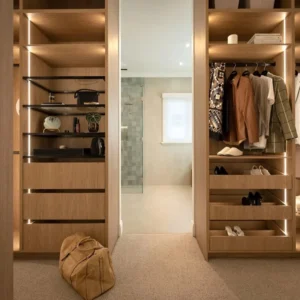
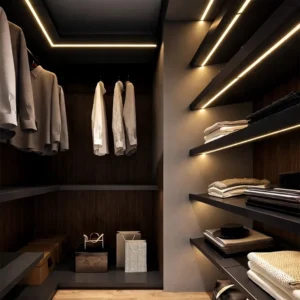
Kleiderschränke und begehbare Schränke erfordern häufig eine weiche, gleichmäßige Beleuchtung, um die Sicht zu verbessern, ohne Kabel oder Anschlüsse freizulegen. Die lötfreie Schrankbeleuchtung kann mit Aluminiumprofilen und Bewegungssensoren in Regale, Hängebereiche und Schubladen integriert werden.
Da die Lagerung von Kleidungsstücken hochgradig maßgeschneidert ist, ermöglichen flexible Schneidoptionen den Installateuren, das Beleuchtungslayout an unterschiedliche Schrankgrößen anzupassen.
Küchenschränke und Unterschrankbeleuchtung
Küche und Unterschrank LED-Streifenbeleuchtung muss funktional und optisch ansprechend sein. Lötfreie LED-Streifen werden üblicherweise unter Wandschränken, in Schubladen und entlang offener Regale installiert, um die Arbeitsbeleuchtung für die Zubereitung und Lagerung von Lebensmitteln zu gewährleisten.
Im Vergleich zu herkömmlichen Verdrahtungsmethoden vereinfachen lötfreie Systeme die Installation und erleichtern die zukünftige Wartung erheblich.
Bücherregale und Vitrinen
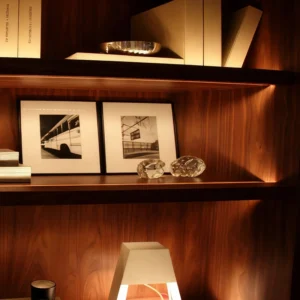
Bücherregale, Glasschränke und Displayeinheiten profitieren von nahtloser linearer Beleuchtung, die dekorative Objekte hervorhebt, ohne sichtbare Hotspots zu schaffen.
Dank flexibler Schnittoptionen und versteckter Steckverbinder lässt sich die lötfreie Schrankbeleuchtung in enge Räume integrieren und gleichzeitig ein sauberes Erscheinungsbild erhalten.
Regale und kommerzielle Möbel
Einzelhandelsgeschäfte setzen zunehmend auf integrierte Beleuchtung, um die Produktpräsentation zu verbessern und das Kundenerlebnis zu verbessern. Großinstallationen erfordern jedoch auch eine effiziente Montage und eine bequeme Wartung.
Modulare lötfreie Beleuchtungssysteme verkürzen die Installationszeit und ermöglichen es, beschädigte Teile schnell zu ersetzen, wodurch sie ideal für Einzelhandelsregale, Vitrinen und kommerzielle Möbelprojekte sind.
Büromöbel und maßgefertigte Innenräume
Moderne Büros und gewerbliche Innenräume beinhalten oft Beleuchtung in Lagerschränken, Empfangsschaltern und Regalsystemen.
Da lötfreie Schrankbeleuchtungssysteme Dimmer, Sensoren und intelligente Steuerungen unterstützen, kann es sich an sich ändernde Anforderungen an den Arbeitsplatz anpassen und gleichzeitig ein minimalistisches Design beibehalten.
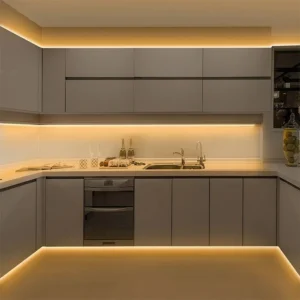
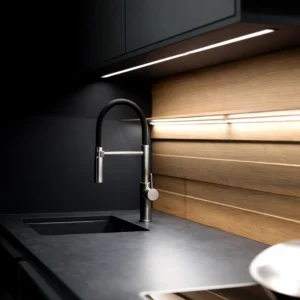
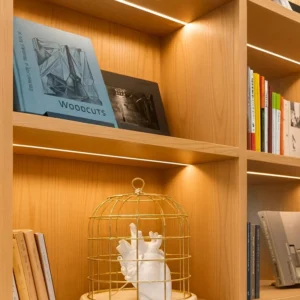
Warum unter Schrank LED-Streifenbeleuchtung in modernen Küchen beliebt ist
Unterschrank-LED-Streifenbeleuchtung ist zu einer der beliebtesten Beleuchtungslösungen für moderne Küchen, Schränke und Vitrinen geworden. Im Vergleich zu herkömmlichen Puck-Leuchten oder Leuchtstofflampen sorgen LED-Streifenleuchten für eine gleichmäßigere Beleuchtung, flexible Installation und einfachere Integration in Möbeldesigns.
In Kombination mit lötfreien Steckern, Aluminiumprofilen und intelligenten Steuerungen können unter Schrankbeleuchtungssysteme effizienter installiert, gewartet und verbessert werden.
LED-Streifenleuchten für Küchenschränke werden häufig verwendet, um Arbeitsplatten zu beleuchten, die Sicht zu verbessern und ein saubereres, moderneres Innendesign zu schaffen. Durch ihr schlankes Profil und ihre versteckte Installation sind sie besonders geeignet für unter Schrankbeleuchtungen, bei denen sowohl Funktionalität als auch Ästhetik wichtig sind.
Obwohl die Beleuchtung der Unterschrank am häufigsten mit Küchenschränken in Verbindung gebracht wird, werden die gleichen Beleuchtungsprinzipien zunehmend in Schränken, Bücherregalen, Vitrinen und anderen maßgeschneiderten Möbelprojekten verwendet, die eine verborgene Beleuchtung und ein sauberes Erscheinungsbild erfordern.
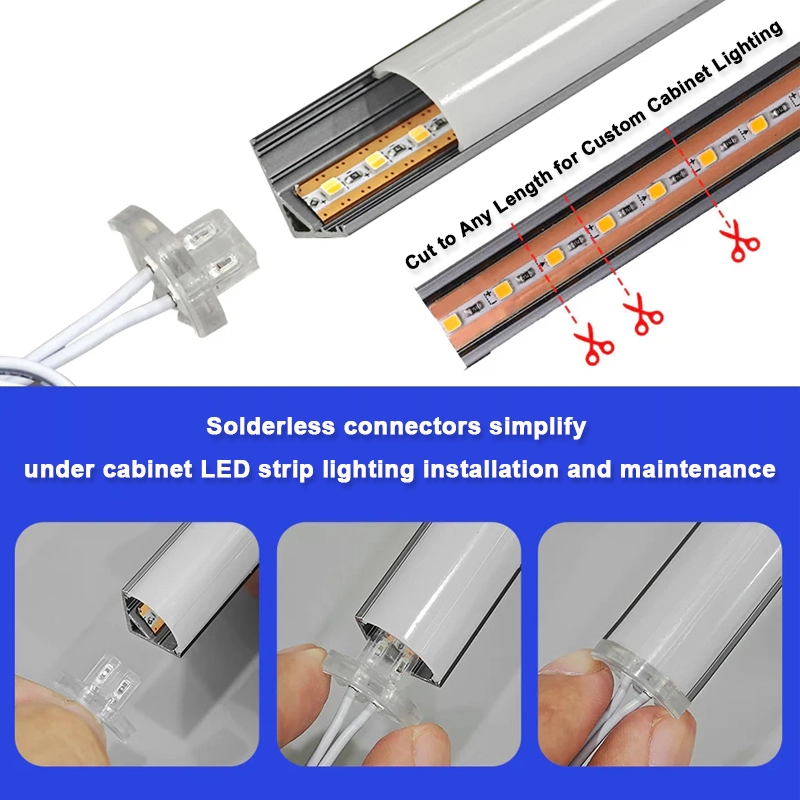
Warum LED-Streifenleuchten für Unterschränke wählen?
Im Vergleich zu herkömmlichen Puck-Leuchten und Leuchtstofflampen erzeugen LED-Streifen eine sauberere und nahtlosere Beleuchtungswirkung unter den Schränken. Ihr schlankes Profil ermöglicht es ihnen, fast unsichtbar zu bleiben und gleichzeitig eine gleichmäßige Beleuchtung über Arbeitsplatten, Regale und Lagerbereiche zu liefern.
Für Küchenschränke und maßgefertigte Möbel bieten LED-Streifen auch mehr Flexibilität, da sie auf Maß zugeschnitten und mit Aluminiumprofilen, Dimmern, Bewegungssensoren und intelligenten Steuerungen integriert werden können.
Darüber hinaus vereinfachen modulare Lötsysteme die Installation und Wartung, indem einzelne Beleuchtungsteile ohne Umverdrahtung angeschlossen, eingestellt oder ersetzt werden.
12V VS 24V LED-Streifenleuchten für Unterschrankbeleuchtung
Die richtige Spannung ist ein wichtiger Bestandteil der Konstruktion eines Unterschrankbeleuchtungssystems. Sowohl 12V als auch 24V LED-Leuchtstreifen sind weit verbreitet, aber sie funktionieren je nach Einbaulänge und Schrankgröße unterschiedlich.
| kostenreifen | 12V LED-Streifen | 24V LED-Streifen |
| Maximale Lauflänge | kürzer | länger |
| Spannungsabfall | Höher | Unter |
| Schnittflexibilität | sich bessern | Gut |
| Am besten für | Kleine Schränke und kurze Auflagen | Küchen und Großmöbelprojekte |
Hardwired VS Plug-in unter Schrank LED-Streifenbeleuchtung
Plug-in-LED-Leuchten sind in DIY-Projekten beliebt, da sie einfach zu installieren sind und keine elektrischen Änderungen erfordern. Hausbesitzer können unter Küchenschränken, Bücherregalen oder Regalen mit Plug-and-Play-Komponenten schnell Beleuchtung hinzufügen.
Hardverdrahtete Systeme sind jedoch häufiger in permanenten Kücheninstallationen, gewerblichen Möbelprojekten und hochwertigen Innenräumen. Durch das Verstecken der Verkabelung in Schränken und Wänden schaffen festverdrahtete Lösungen ein saubereres Erscheinungsbild und ermöglichen es, dass sich Beleuchtungssysteme nahtlos in Schalter, Sensoren und Dimmer integrieren.
Viele moderne Unterschrankbeleuchtungssysteme unterstützen auch Türsensoren, Bewegungssensoren und intelligente Steuerungen und bieten mehr Komfort und Energieeffizienz.
So installieren Sie lötfreie Schrankbeleuchtung: LED-Streifeninstallation ohne Löten
Einer der größten Vorteile der lötfreien Schrankbeleuchtung ist, dass sie die Installation vereinfacht, ohne dass sie Flexibilität beeinträchtigt. Im Gegensatz zu herkömmlichen LED-Streifensystemen, die ein Abisolieren und Löten erfordern, basieren lötfreie Lösungen auf Plug-and-Play-Anschlüssen und modularen Komponenten, wodurch sie einfacher zu installieren, einstellen und warten.
Obwohl der genaue Prozess je nach Möbeldesign und Beleuchtungsanforderungen variieren kann, folgen die meisten Schrankbeleuchtungsprojekte demselben grundlegenden Workflow.
Schritt 1: Planen Sie das Beleuchtungslayout
Stellen Sie vor der Installation fest, wo sich die lötfreien LED-Leuchten, Aluminiumprofile, das Netzteil und das Zubehör befinden. Ein gut geplantes Layout hilft bei der Installation und minimiert später unnötige Änderungen.
Beachten Sie bei der Planung des Systems Folgendes:
- Schrankabmessungen und Regalabstände
- Einbau- oder Aufputzmontage
- Stromkabelverlegung
- Sensor- und Schalter-Standorte
- Zukünftiger Wartungszu
Für Schränke und Vitrinen sind versteckte Kabelführung und Steckerplatzierung besonders wichtig, um ein sauberes Erscheinungsbild zu erzielen.
Schritt 2: Installieren Sie das Aluminiumprofil für die LED-Streifenbeleuchtung
Messen und schneiden Sie das Aluminiumprofil entsprechend den Schrankabmessungen ab und sichern Sie es dann in der gewünschten Position.
Je nach Anwendung können unterschiedliche Profiltypen verwendet werden:
- Einbauprofile für Schränke und Premium-Möbel
- Anbauprofile für Küchenschränke
- Eckprofile für Regale und Vitrinen
Neben dem Schutz von LED-Leuchten verbessern Aluminiumprofile die Wärmeableitung und sorgen für einen nahtlosen linearen Lichteffekt.
Schritt 3: Schneiden und verbinden Sie LED-Streifen mit lötfreien Anschlüssen
Schneiden Sie die LED-Leuchten entlang der angegebenen Schnittmarken und verbinden Sie sie mit kompatiblen lötlosen Steckern.
Im Vergleich zu herkömmlichen Installationen überflüssigen Lötsysteme machen das Abisolieren und Löten von Draht nicht mehr erforderlich, wodurch die Installation schneller und flexibler wird.
Überprüfen Sie vor der Endmontage Folgendes, um eine zuverlässige Leistung zu gewährleisten:
- Kompatibilität der Leiterplattenbreite
- Eingangsspannung
- Steckertyp
- Polaritätsausrichtung
Da das System modular ist, kann der Streifen leichter eingestellt oder ausgetauscht werden, wenn sich das Schranklayout ändert. Unterschiedliche LED-Streifentypen, einschließlich COB-LED-Streifen und SMD-LED-Streifen, können unterschiedliche Steckerdesigns erfordern. Bestätigen Sie vor der Installation immer die Bandbreite, Spannung und Steckerkompatibilität, um zuverlässige Verbindungen zu gewährleisten.
Schritt 4: Verbinden Sie die LED-Treiber- und Steuerkomponenten
Nachdem der LED-Streifen installiert wurde, schließen Sie ihn an das Netzteil und optionales Zubehör an, wie z.
- Bewegungssensoren
- Berührungsschalter
- Dimmer
- Smart Controller
Bevor Sie alle Komponenten dauerhaft befestigen, prüfen Sie das System, um sicherzustellen, dass jeder Abschnitt ordnungsgemäß funktioniert.
Schritt 5: Schließen Sie die Installation ab und testen Sie das System
Installieren Sie die Diffusorabdeckung, organisieren Sie die Kabel und führen Sie eine Endkontrolle des gesamten Beleuchtungssystems durch.
Ein richtig konstruiertes lötfreies Schrankbeleuchtungssystem sollte nicht nur eine gleichmäßige Beleuchtung bieten, sondern auch zukünftige Wartung und Upgrades ermöglichen, ohne die Schrankstruktur zu entfernen.
FAQ
Abschluss
Bei der modernen Schrankbeleuchtung geht es nicht mehr nur um die Beleuchtung von Möbeln, sondern um ein wesentliches Element des Möbeldesigns, der Installationseffizienz und der langfristigen Wartung.
Im Vergleich zu herkömmlichen gelöteten LED-Streifensystemen bietet die lötfreie Schrankbeleuchtung eine schnellere, sauberere und flexiblere Lösung für Schränke, Küchenschränke, Bücherregale, Einzelhandelsdisplays und maßgeschneiderte Möbelprojekte. Mit Plug-and-Play-Anschlüssen, modularem Zubehör und einfacher Wartung hilft es Herstellern und Installateuren, die Montage zu vereinfachen und dabei nahtlose Lichteffekte zu erzeugen.
Da sich das Möbeldesign zu einer Anpassung und intelligenter Integration weiterentwickelt, wird erwartet, dass modulare Beleuchtungssysteme in zukünftigen Projekten eine immer wichtigere Rolle spielen.
Egal, ob Sie einen begehbaren Kleiderschrank entwerfen, die Beleuchtung unter dem Schrank aufrüsten oder maßgeschneiderte Möbellösungen entwickeln, die Wahl des richtigen lötfreien Schrankbeleuchtungssystems kann sowohl die Effizienz der Installation als auch die Benutzererfahrung erheblich verbessern.
Suchen Sie nach einer lötfreien Schrankbeleuchtungslösung für Ihr nächstes Projekt? Entdecken Sie unsere Schrankbeleuchtungssysteme, Aluminiumprofile und modularen Zubehör, um die Konfiguration zu finden, die Ihren Designanforderungen am besten entspricht.
Geschrieben von Elaine Zhu
Geschäftsführer bei SignliteLEDTechnisch überprüft von Jason Chen
F&E-Führer, Signeliert
E-Mail: info@signliteled.com
Verwandte Artikel