English
  简体中文
简体中文  Deutsch
  Español
  Français
  Italiano
  日本語
日本語  한국어
한국어  Polski
  Português
  Русский
  Türkçe
  Nederlands
  Tiếng Việt
  ไทย
ไทย 
In 2025, lighting control technology continues to evolve with a focus on affordability, ease of integration, and versatility across diverse environments. Whether you’re setting up dynamic stage effects for live performances, enhancing ambiance in small venues like bars or churches, or creating immersive home theater experiences, selecting the right DMX interface is crucial.
These devices bridge computers or controllers to lighting fixtures, enabling precise control over colors, intensity, and movement. With trends like RGBW LED dominance and wireless compatibility on the rise, a reliable DMX interface ensures seamless operation without breaking the bank. This guide highlights top options tailored for stages, venues, and home setups, drawing from industry standards and real-user needs to help you make an informed choice.
Our Selection Criteria: How We Chose the Top DMX Interfaces
To identify the best DMX interfaces for 2025, we evaluated options based on key factors that matter most to users in stages, venues, and home environments. Ease of programming topped the list at 30% weight, ensuring beginners can set up without steep learning curves. Compatibility with common fixtures, such as LED strips and moving heads, accounted for 25%, while channel capacity and standalone capabilities followed at 20% each. Price under $100 and build quality rounded out the criteria, prioritizing compact, durable designs for hidden installations. These standards reflect the growing demand for plug-and-play solutions in compact spaces, as seen in recent market analyses showing a 15% uptick in affordable controllers.
| Application Area | Why It Excels Here | Typical Fixtures / Devices | 2025 Trend Boost |
| Small venues & stage lighting | Simple scenes, compact size, affordable, runs shows standalone | LED PARs, LED bars, moving heads | AI-driven auto-sync with music apps for hybrid events |
| LED strips & pixel LED projects | Controls decoders with up to 512 channels | RGB/RGBW strips, pixel LED bars, DMX decoders | Energy-efficient RGBW+ protocols for eco-venues |
| Architectural & outdoor lighting | Standalone playback, switch control, hidden installation | Facade strips, cove lighting, columns | Wireless DMX extensions for remote facade updates |
| Home setups & water features | Reliable signal for synchronized effects, easy integration | Submersible lights, DMX drivers, home theater LEDs | Voice-activated integration with smart home ecosystems |
Top Pick: NA Intelligent DMX 512 Interface
For 2025, the NA Intelligent DMX512 Interface stands out as the premier choice for versatile lighting control. This USB-based adapter excels in delivering professional-grade performance at an entry-level price, making it ideal for stages, small venues, and even home setups. Its compact design allows for discreet mounting in racks or ceilings, while robust software integration ensures smooth operation across live events and automated scenes. Whether syncing lights to music in a club or creating mood lighting for a home theater, this interface combines simplicity with power, supporting up to 512 channels in live mode.
Key Specifications and Why It Fits Stages & Venues
The NA Intelligent lighting interface fits scenarios demanding straightforward programming, stable performance during performances, and a small footprint for integration into stage rigs or venue control panels. In 2025, with the rise of hybrid events blending live and automated elements, its upgradable channel support aligns perfectly with evolving needs.
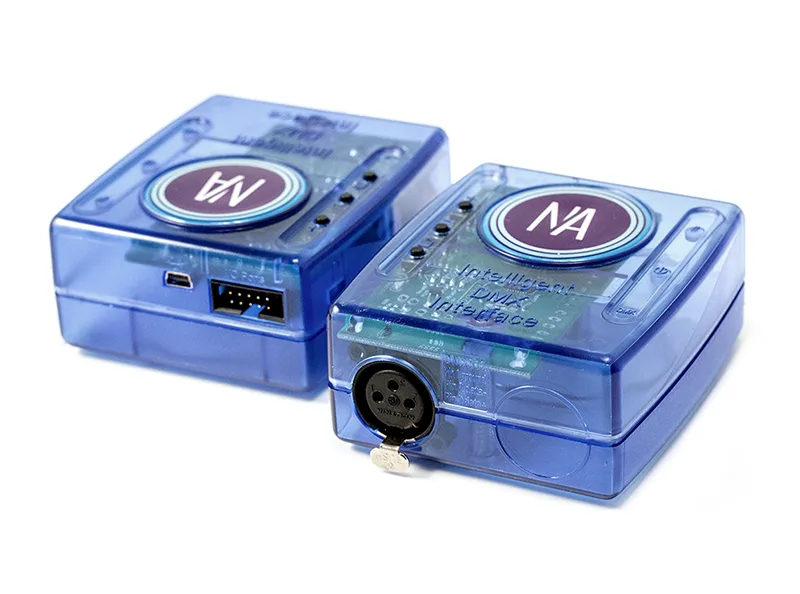
Product: NA Intelligent DMX Interface Controller (CTL-IF-DMX-U9)
- USB connection
- 256 DMX512 channels universe in stand alone
- 256 DMX512 channels universe in live mode
- Upgradable to 512 channels online using SUT
- 8 dry contact trigger ports via HE10 connector
- Stand alone mode with 1 area and 20 scenes
- Buttons for changing scenes and dimmer
- OEM customization
The NA Intelligent lighting interface fits scenarios demanding straightforward programming, stable performance during performances, and a small footprint for integration into stage rigs or venue control panels. In 2025, with the rise of hybrid events blending live and automated elements, its upgradable channel support aligns perfectly with evolving needs.
Seamless Integration with DMX Decoders and LED Drivers
The SignLite DMX adapter serves as an ideal match when paired with DMX decoders and LED drivers, enabling precise signal translation for vibrant, synchronized effects across setups. This lighting adapter ensures stable output over long runs, supporting everything from basic dimming to complex pixel mapping without signal loss. In 2025, its plug-and-play design aligns with energy-efficient drivers, making it a go-to for venues upgrading to sustainable LEDs.

- WS2811 decoders: Perfect for RGB pixel chains in stage backdrops.
- Constant-current LED drivers: Handles high-power PARs for outdoor facades.
- DMX-to-SPI converters: Bridges to addressable strips for home theater walls.
This compatibility streamlines installations, reducing wiring hassles and boosting reliability in real-world scenarios.
The Best USB DMX Interface for Fountain & Water Feature Lighting
The NA Intelligent USB DMX interface shines as the top choice for fountain and water feature lighting, offering reliable signal transmission to submersible fixtures for mesmerizing, synchronized water-light shows. Its compact USB design simplifies connections to pumps and nozzles, while standalone programming ensures flawless playback during evening displays or events. In 2025, with rising demand for eco-friendly aquatic installations, this water lighting controller supports low-voltage drivers, minimizing energy use while maximizing visual impact in pools, gardens, or venue centerpieces.

- Synchronized wave effects: Program DMX channels to pulse lights with water jets for dynamic fountains.
- Submersible compatibility: IP68-rated outputs via sealed drivers for underwater LED arrays.
- Trigger integration: Use dry contacts to sync with timers or sensors for automated nightly sequences.
- Easy upgrades: Expand to 512 channels for multi-zone water features in large home or public setups.
This setup transforms ordinary water elements into captivating focal points, ideal for both residential relaxation and professional spectacles.
Real-World Applications: Small Venues, Stages, and Home Setups
Connect via USB to a laptop running Easy Stand Alone software. Patch fixtures like LED PARs, moving heads, or LED bars into channels. Program scenes, chases, and color presets, then download for standalone operation. This setup suits small venues and stages where reliability trumps complexity, allowing operators to run shows without constant oversight.
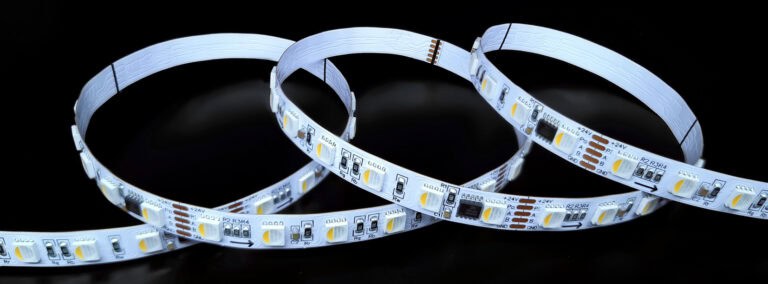
For LED strips and pixel projects, it outputs standard signals to decoders, handling RGB/RGBW setups in showrooms or home media walls. In architectural and outdoor applications, such as facade lighting or landscape features, the standalone mode ensures nightly playback triggered by simple switches. Even for home setups, it integrates with smart systems for automated ambiance changes.
| Application Area | Why It Excels Here | Typical Fixtures / Devices |
| Small venues & stage lighting | Simple scenes, compact size, affordable, runs shows standalone | LED PARs, LED bars, moving heads |
| LED strips & pixel LED projects | Controls decoders with up to 512 channels | RGB/RGBW strips, pixel LED bars, DMX decoders |
| Architectural & outdoor lighting | Standalone playback, switch control, hidden installation | Facade strips, cove lighting, columns |
| Home setups & water features | Reliable signal for synchronized effects, easy integration | Submersible lights, DMX drivers, home theater LEDs |
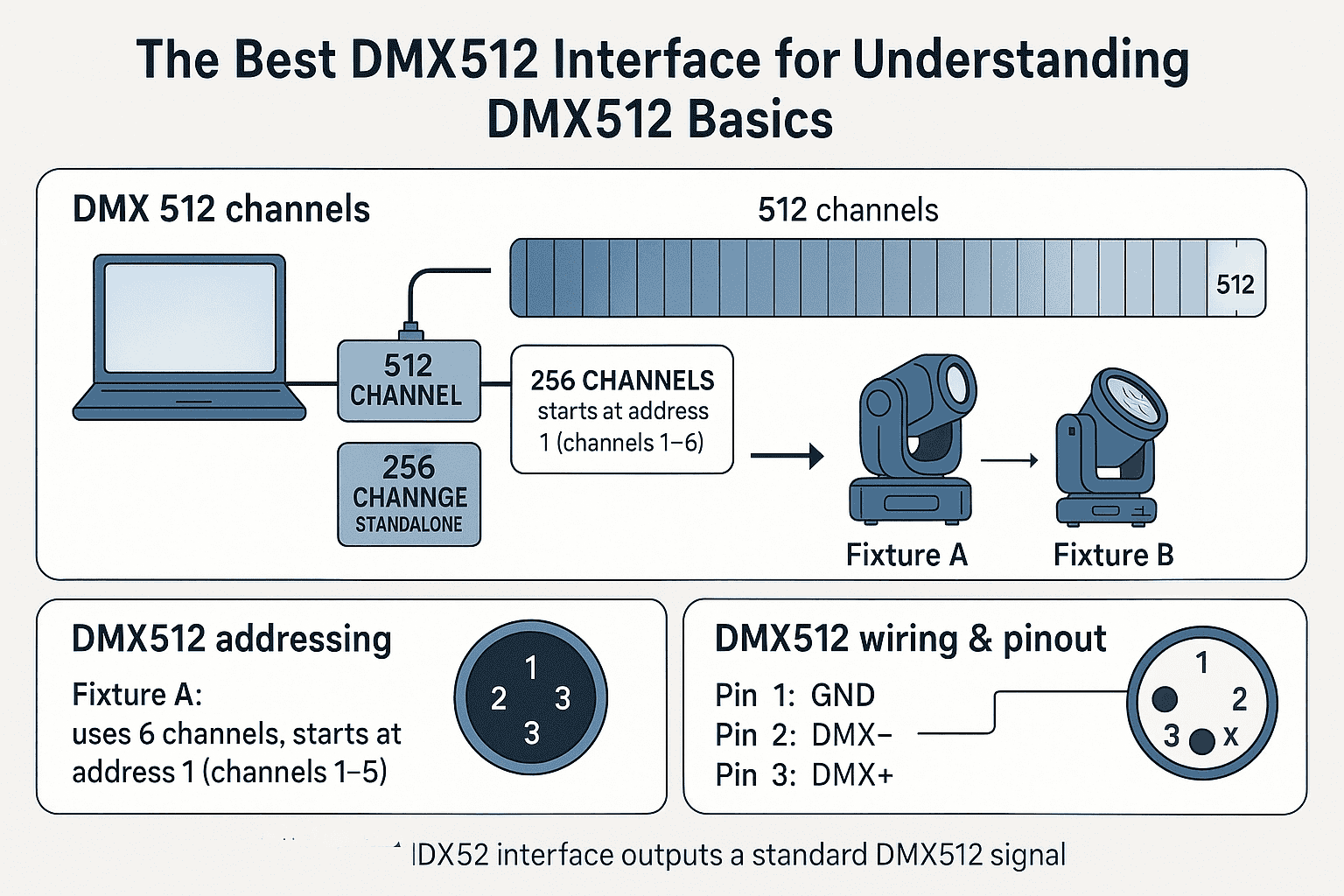
Understanding the basics: Each universe carries 512 channels, with addressing starting from 1 for fixtures. Wiring uses 3-pin XLR (Pin 1: GND; Pin 2: DMX-; Pin 3: DMX+), ensuring long-distance reliability over RS-485.
Features for Beginners and Easy Programming
The interface pairs with Easy Stand Alone software, designed for newcomers transitioning from basic setups. Graphical tools make adjustments intuitive, while a built-in fixture library speeds up configuration.
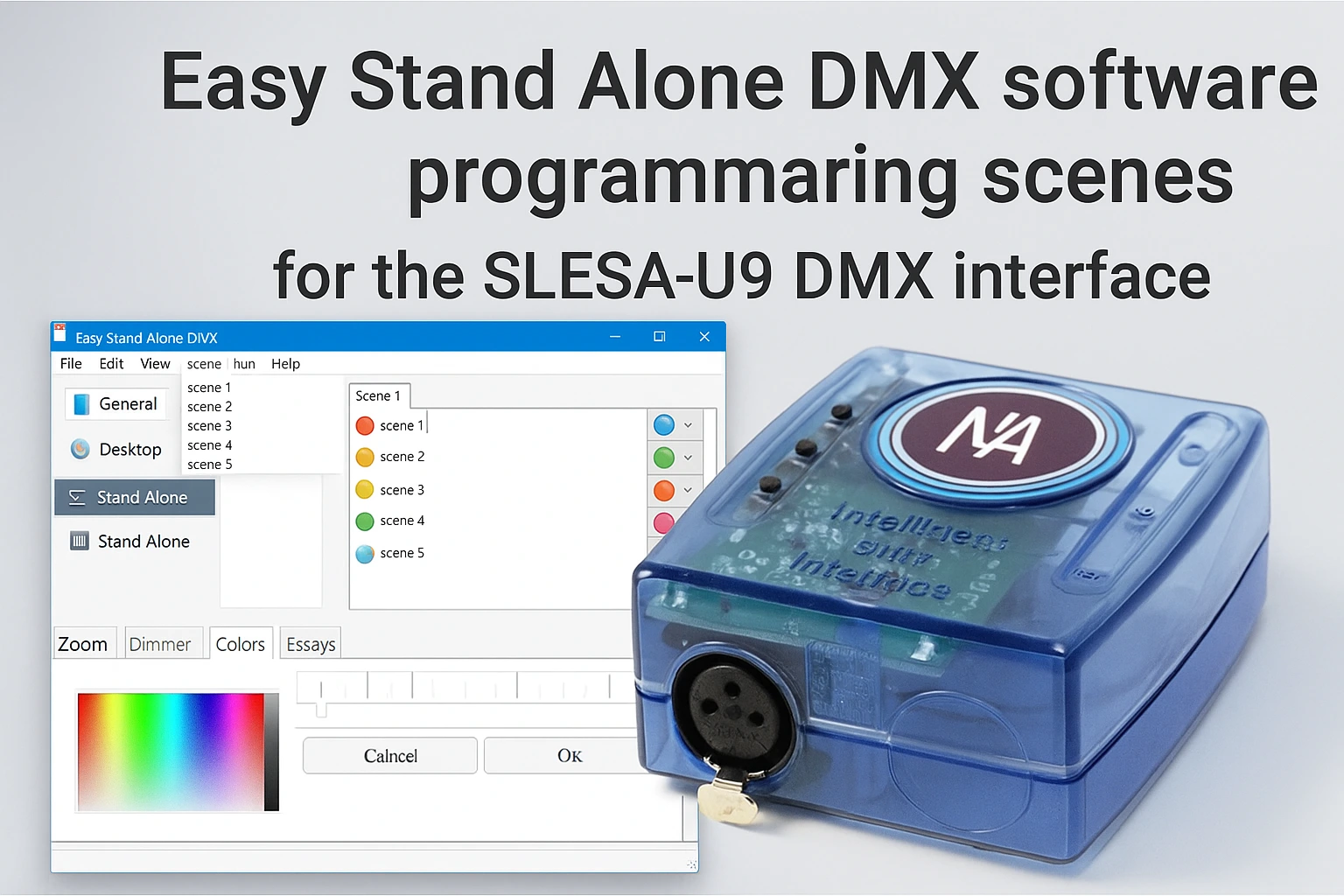
| Feature for Beginners | How It Helps You |
| Graphical faders & color controls | Adjust dimmer, color and movement visually, without complex console syntax. |
| Fixture library | Load profiles for common DMX fixtures instead of building every channel by hand. |
| Scene and chase builder | Create static looks or dynamic chases with a few clicks. |
| Standalone memory editor | Choose which scenes are stored in the interface and write them with one click. |
This approach democratizes professional control, ideal for home enthusiasts or venue staff with limited training.
Pros & Cons + User Ratings
Pros include its affordability under $100, plug-and-play USB connectivity, and robust standalone mode for uninterrupted shows. Cons are limited to 256 channels offline, which may constrain very large installations, though upgrades mitigate this. Based on user feedback from industry forums, it scores 4.5/5 for value in small-scale projects, praised for stability in 2025’s demanding hybrid environments.
Buyer’s Guide: Ultimate Checklist for Choosing a DMX Interface
Selecting a DMX interface starts with assessing your space: For stages, prioritize high channel counts; venues need trigger ports for automation; home setups favor compact, app-integrated models.
Step 1: Evaluate fixture needs—count devices and required channels.
Step 2: Test software compatibility with your OS.
Step 3: Verify standalone storage for offline use.
Step 4: Check for dry contacts if integrating with building systems.
| Checklist Item | Stages/Venues Recommendation | Home Setups Recommendation |
| Channel Capacity | 512+ for full universes | 128+ for basic effects |
| Connection Type | USB with XLR output | Wireless optional |
| Trigger Options | 8+ dry contacts | App or voice control |
| Protocol Support | DMX512 standard over RS-485 | Compatible with SPI hybrids |
Follow this to avoid mismatches, ensuring your lighting adapter enhances rather than complicates your setup.
Signlite 512 DMX bridge is an ideal match when used with DMX decoders and LED drivers:
- Output: standard DMX signal via 3-pin XLR.
- Compatible with:
- constant-voltage DMX decoders for RGB / RGBW LED strips
- 512 pixel decoders for pixel-mapped installations
- Up to 512 DMX channels via USB live mode, 256 channels standalone, enough for many small to medium LED jobs.
This makes it one of the best DMX 512 interfaces for LED strips, RGB LED and compact pixel LED projects in showrooms, bars and small architectural features.
FAQ: DMX Interfaces 101
What’s the Difference Between DMX 512 and SPI Control for Lighting?
When choosing between a USB DMX interface and SPI control for outdoor LED lighting, the DMX option often prevails for its robustness in expansive, weather-exposed setups. USB DMX adapters like the NA Intelligent model transmit standardized signals over long distances via RS-485 cabling, ideal for facade strips or landscape arrays where SPI’s chain limitations (typically under 10 meters) fall short. In 2025, with outdoor installations emphasizing durability against humidity and UV, DMX’s plug-and-play USB connectivity simplifies remote programming, while SPI suits compact, intricate patterns but requires more controllers.
| Aspect | USB DMX Interface (Outdoor Focus) | SPI Control (Outdoor Limitations) |
| Signal Range | 300+ meters with repeaters for facades | <10 meters per chain, needs boosters |
| Weather Resistance | RS-485 shielding protects against interference | Vulnerable to moisture in pixel chains |
| Setup Complexity | Standard addressing via USB software | Pixel-by-pixel mapping, chipset-specific |
| 2025 Trend Fit | Wireless extensions for app-controlled updates | Better for small solar-powered accents |
Opt for USB DMX when scalability matters, ensuring your outdoor lighting adapter delivers reliable, expansive effects without frequent maintenance. Learn the difference between RGB LED Neon Flex.
Can I Use DMX 512 For Home Lighting?
Yes, you can absolutely use a DMX512 interface for home lighting, transforming everyday spaces into customizable ambiance zones with professional precision. Devices like the NA Intelligent model connect via USB to smart hubs or laptops, controlling LED strips, recessed cans, or accent fixtures for mood shifts—from cozy dinners to cinematic evenings. Its standalone mode stores scenes for hands-free operation, syncing with timers or voice commands. In 2025, as smart homes integrate more IoT elements, DMX’s channel flexibility (up to 512) outshines basic Wi-Fi bulbs by supporting multi-zone effects without lag, all under $100 for budget-friendly upgrades.
- Zone control: Assign channels to rooms for independent dimming and color washes.
- Smart integration: Pair with Alexa or Google Home via gateways for voice-triggered scenes.
- Energy savings: Compatible with low-voltage LEDs for eco-conscious households.
- Beginner-friendly: Graphical software simplifies programming, no wiring expertise needed.
This approach makes DMX a versatile home lighting controller, blending pro features with everyday simplicity.
Can DMX512 Be Used In KNX Control Systems?
Yes, this DMX gateway can be seamlessly used in KNX control systems through dedicated gateways or bi-directional interfaces that convert KNX bus commands into DMX signals. This integration allows centralized management of lighting scenes, where KNX panels trigger DMX-controlled RGB/RGBW strips, spotlights, or wall washers for synchronized effects. Hardware like 512-channel KNX-DMX gateways (e.g., from ABB or Gira) ensures precise dimming and zoning, supporting up to 512 addresses per universe. In 2025, with smart buildings prioritizing energy automation, this setup excels in hotels or villas by linking HVAC sensors to lighting moods, reducing consumption via occupancy-based scenes.
Benefits include unified app control, fault-tolerant wiring (KNX over twisted pair + DMX RS-485), and scalability for multi-floor projects. Common applications span malls with dynamic facades, premium residences with automated atriums, and outdoor landscapes where KNX timers activate DMX fountains at dusk. For implementation, map KNX group addresses to DMX channels via ETS software, ensuring compatibility for high-end, integrated environments.
Related Posts