English
  简体中文
简体中文  Deutsch
  Español
  Français
  Italiano
  日本語
日本語  한국어
한국어  Polski
  Português
  Русский
  Türkçe
  Nederlands
  Tiếng Việt
  ไทย
ไทย 
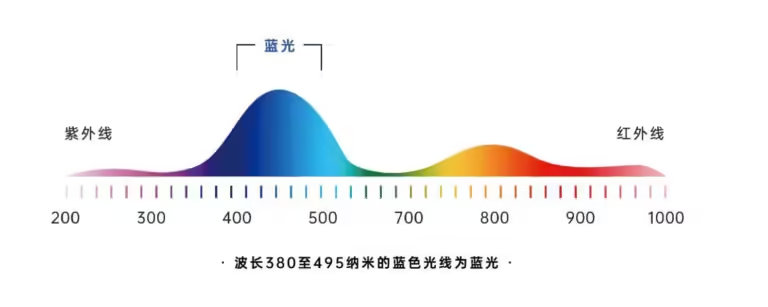
Blue light is a natural part of the visible spectrum, but modern LED lighting contains a proportionally higher amount of blue wavelengths—typically in the 400–500 nm range—due to the way white LEDs are manufactured. Most white LEDs use a blue LED chip paired with phosphor coating to generate full-spectrum white light. While this technology provides high efficiency and excellent lumen output, it also introduces concerns about blue light hazard, a photochemical risk to the human retina caused by excessive exposure to high-energy blue radiation.
In recent years, regulators, lighting designers, and OEM manufacturers have paid increasing attention to the potential effects of blue light. Long-term or high-intensity exposure may contribute to retinal stress, visual discomfort, and circadian rhythm disruption. As LED lighting becomes widely used in offices, homes, schools, commercial spaces, and displays, understanding and controlling blue light hazard has become essential for ensuring both visual safety and compliance with photobiological standards.
This article focuses on blue light hazard as defined in IEC 62471, explaining the key technical metrics, risk group classifications, and how to choose LED strip lights with lower blue light hazard for professional lighting applications.
What Is Blue Light Hazard Under IEC 62471?
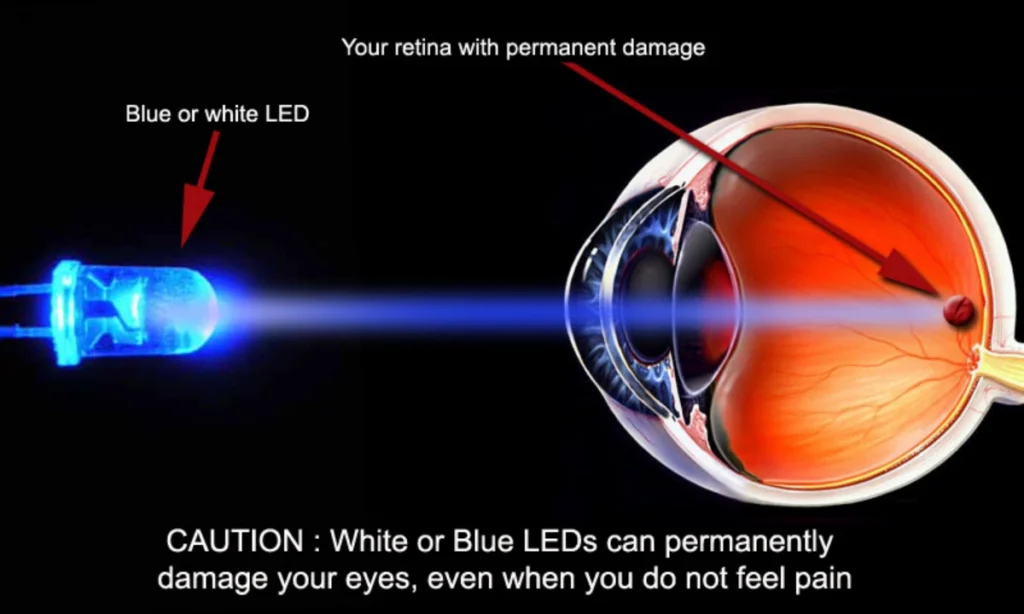
Blue light hazard refers to the potential photochemical damage to the retina caused by exposure to high-energy blue wavelengths, typically within 400–500 nm. When the eye is exposed to intense blue light for a sufficient duration, reactive oxygen species can form in retinal tissues, accelerating retinal cell degradation. This effect is cumulative and depends on both the intensity and exposure time, making it a critical safety consideration for lighting products viewed directly, such as LED strips, modules, and displays.
IEC 62471 is the internationally recognized standard that evaluates the photobiological safety of lamps and lamp systems. It defines measurement methods, hazard action spectra, exposure limits, and risk group classifications for different photobiological risks—including blue light hazard, UV hazard, and IR radiation hazard. For blue light evaluation specifically, IEC 62471 uses blue-light-weighted radiance and calculates maximum safe exposure times to determine the appropriate risk group.
As LED lighting technology continues to advance, compliance with IEC 62471 becomes essential. Because LEDs often have strong blue peaks due to their phosphor-converted design, they must undergo blue light hazard testing to ensure they meet safety thresholds for human exposure. Whether for residential, commercial, or professional applications, LED products are expected to be classified as RG0 or RG1 to enter many global markets, making IEC 62471 testing a mandatory part of LED product development.
Key Technical Parameters for Evaluating Blue Light Hazard
1. Blue Light Weighted Radiance (L_B)
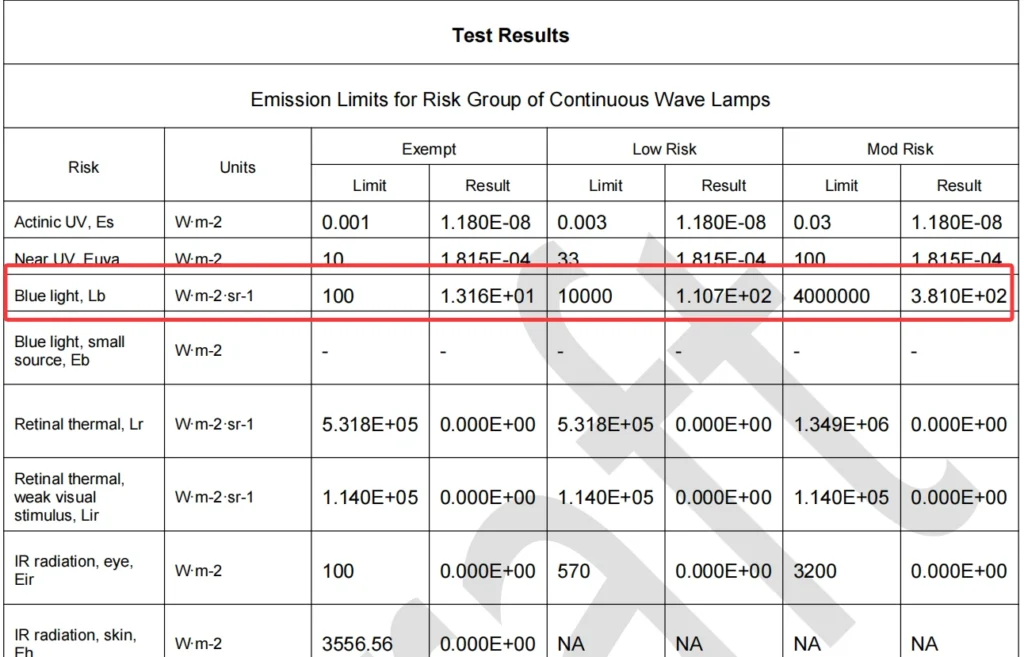
Blue Light Weighted Radiance (L_B) is the core parameter used in IEC 62471 to quantify blue light hazard. It represents the radiance of a light source weighted by the blue light hazard function B(λ), which emphasizes wavelengths most harmful to the retina (around 435–440 nm). The unit is W·m⁻²·sr⁻¹, expressing how much blue-weighted energy reaches the eye per unit area and per unit solid angle.
How It Is Determined:
Testing involves measuring the spectral radiance of the source using a calibrated spectroradiometer. Each wavelength component is multiplied by the blue hazard weighting function B(λ), and the integration across 300–700 nm yields the final L_B value. IEC 62471 requires measurements at a standardized distance—typically 200 mm—and mandates that the test captures the maximum luminance point of the source. For LED strips, this means measuring the brightest chip or hotspot. COB strips usually show smoother radiance distribution, resulting in lower L_B compared with point-source SMD strips.
2. Blue Light Radiant Exposure (H_B)
Blue light radiant exposure (H_B) refers to the total amount of blue-light-weighted energy delivered to the retina over time, taking both radiance and exposure duration into account. While L_B describes intensity at a moment, H_B represents cumulative exposure and is expressed in J·m⁻²·sr⁻¹. IEC 62471 uses H_B as a supporting parameter in scenarios where the source is extended or viewed at close range for longer periods. This parameter becomes essential in applications such as task lighting, displays, and luminaires installed in near-field environments.
3. Blue Light Hazard Exposure Limit (t_max)
To determine how long a person can safely view a light source, IEC 62471 defines the maximum permissible exposure time (t_max). It is derived by comparing the measured L_B to the exposure limit defined for blue light hazard. The simplified IEC expression is:
t_max = 100 / L_B
(Valid when L_B ≥ 100 W·m⁻²·sr⁻¹)
This means that as blue-light-weighted radiance increases, the allowable safe viewing time decreases sharply. For example, if L_B is 200 W·m⁻²·sr⁻¹, the maximum safe exposure would be just 0.5 seconds. This formula guides risk group classification and helps determine whether a product falls into RG0 (no risk), RG1 (low risk), RG2 (moderate risk), or RG3 (high risk). In LED lighting—especially strips and modules designed for direct viewing—meeting the t_max threshold is critical for ensuring safe usage and regulatory compliance.
IEC 62471 Blue Light Hazard Risk Group Classification
IEC 62471 classifies lighting products into four risk groups based on their blue-light-weighted radiance (L_B) and the corresponding maximum safe exposure time (t_max). These categories help determine whether a product is safe for direct human viewing.
1. Risk Group 0 (RG0 – Exempt)
No photobiological risk.
Limit: L_B ≤ 100 W·m⁻²·sr⁻¹ or t_max ≥ 100 s.
2. Risk Group 1 (RG1 – Low Risk)
No hazard under normal viewing conditions.
Limit: L_B ≤ 10,000 W·m⁻²·sr⁻¹ or t_max ≥ 0.01 s.
3. Risk Group 2 (RG2 – Moderate Risk)
Hazard only if the viewer intentionally stares at the source.
Limit: L_B ≤ 400,000 W·m⁻²·sr⁻¹.
4. Risk Group 3 (RG3 – High Risk)
Hazard from even momentary exposure.
Limit: L_B > 400,000 W·m⁻²·sr⁻¹.
Example Blue Light Hazard Levels for Different Lighting Products
| Lighting Product Type | Typical CCT | Optic / Diffusion | Typical Risk Group |
| COB LED Strip (frosted cover) | 3000K | Strong diffusion | RG0 |
| COB LED Strip (bare) | 2700-6500K | No cover | RG0 |
| SMD 2835 LED Strip (high density) | 4000K | No cover | RG1 |
| SMD 5050 RGB Strip | Mixed wavelengths | No cover | RG1 |
| Linear Light with PC Diffuser | 3000–4000K | Frosted diffuser | RG0 |
| LED Downlight | 3000–5000K | Lens + reflector | RG1 |
| High-Bay Industrial Light | 5000–6000K | Narrow beam | RG2 |
| Stage / Studio LED Spotlight | 6000–8000K | Concentrated beam | RG2–RG3 |
How to Choose LED Strip Lights with Lower Blue Light Hazard
1. Choose Lower CCT LED Strips
Warm white LED strips (2700K–4000K) contain significantly less high-energy blue wavelength content. Lower CCT options naturally reduce blue light hazard and are ideal for residential, hospitality, and commercial ambient lighting.
2. Select High-CRI LED Strips
High-CRI LEDs use improved phosphor formulations that produce a smoother, fuller spectrum with reduced blue peaks. CRI 90+ or CRI 95+ strips generally deliver safer optical performance compared with low-CRI LEDs.
3. Prefer COB LED Strips Over SMD
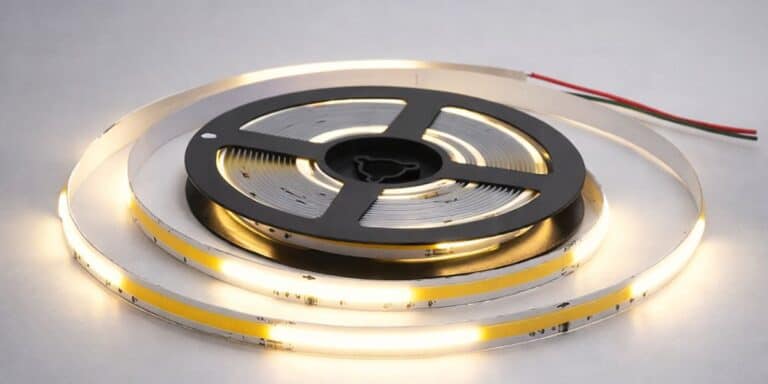
COB strips feature continuous phosphor-coated emitters that eliminate intense point-source hotspots. Their uniform luminance results in lower blue-light-weighted radiance (L_B), making COB a safer choice than SMD in close-viewing applications.
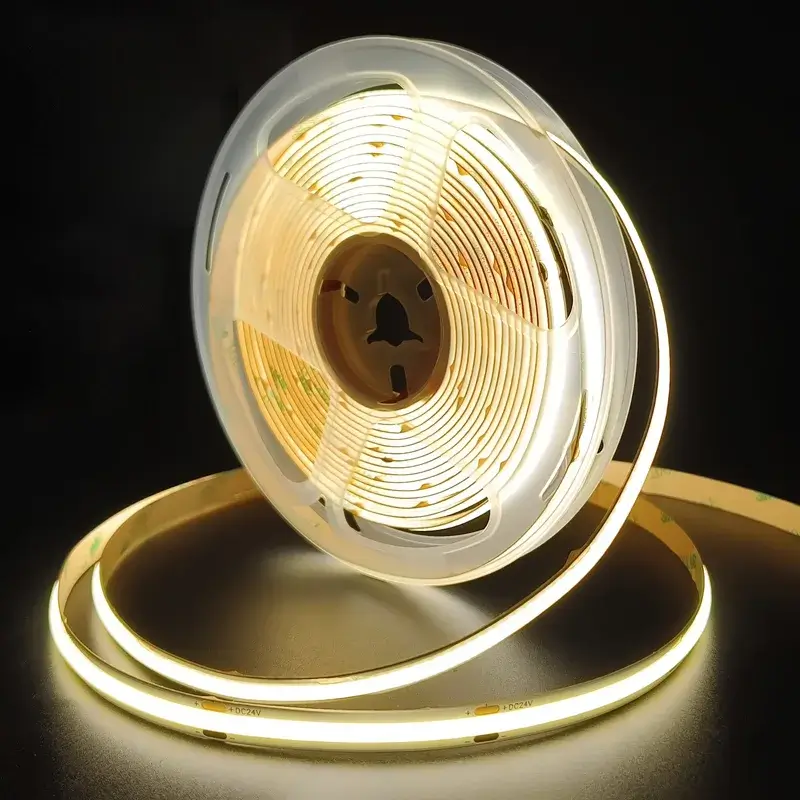
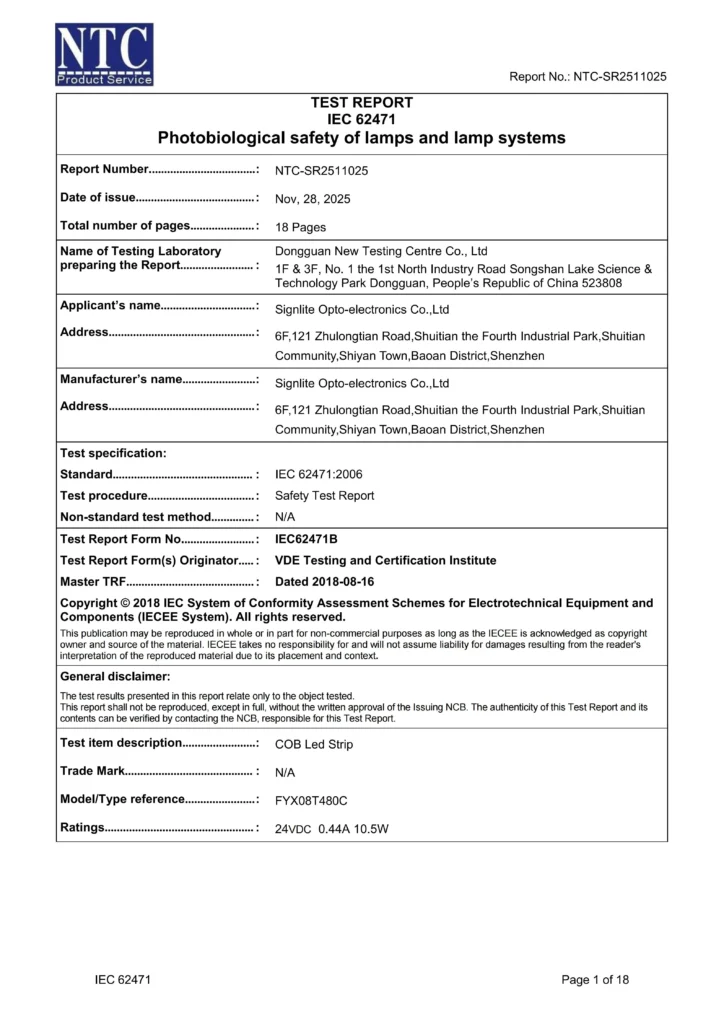
Seamless COB Strip Light, Ra90, Compiant with IEC 62471
Model No.: FYX08T480X
Input Voltage: DC12V/24V
Power: 11W/m
LED QTY: 480LEDs/m
CCT: 2700K, 3000K, 4000K, 6500K
CRI: >95
Efficiency: 105lm/W
Beam Angle: 180°
Cut Section: 25mm/50mm
IP Rating: IP20/IP65/IP67/IP68
Warranty: 3years
4. Choose High-Efficacy, Low-Power Strips
LEDs driven at lower current generate less radiance and produce a more stable spectrum. High-efficiency low-wattage designs reduce both blue peak intensity and thermal stress. Check SignliteLED 180lm/W strip light FQM10T128C.
5. Use Diffused Solutions
Strips paired with diffusers—such as frosted silicone tubes, neon flex, or rigid aluminum channels with PC covers—significantly reduce peak luminance, lowering blue light hazard while improving visual comfort.
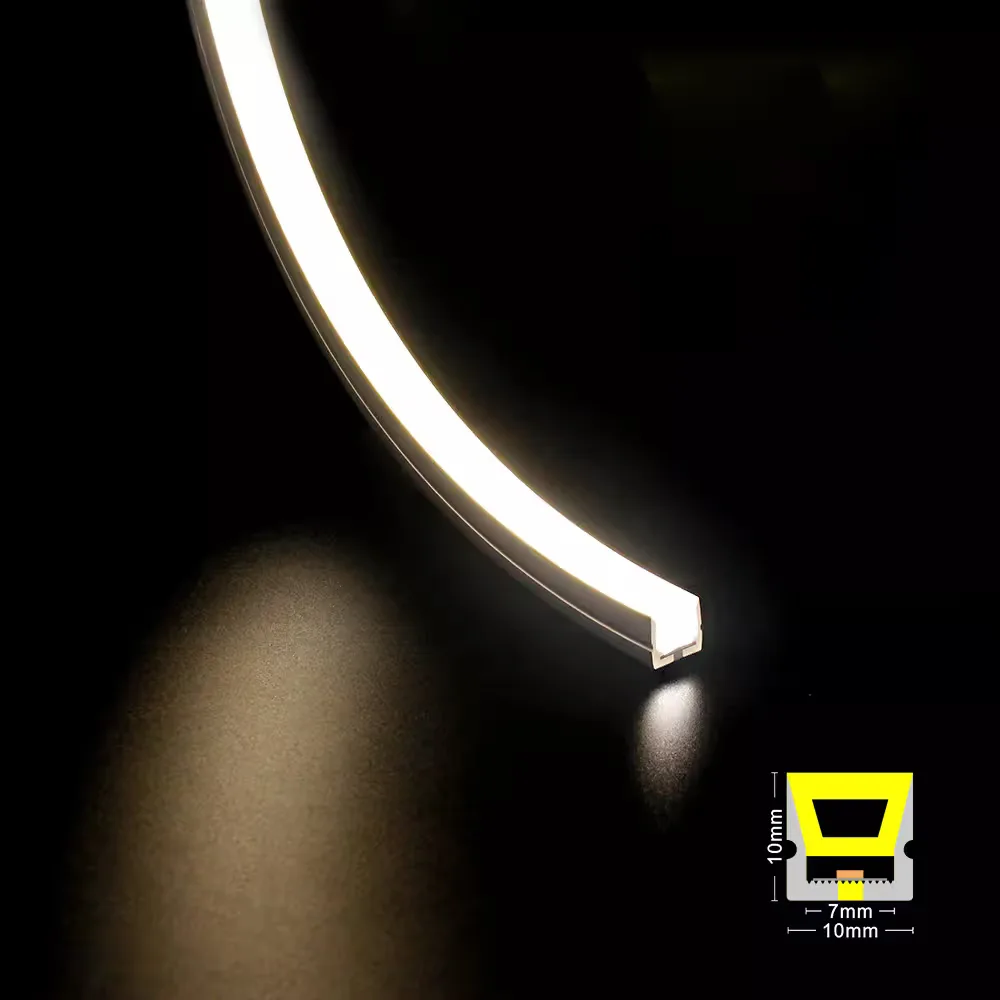
Top Bending Neon Strip Light
Model No.: NQX1010TC
Input Voltage: DC12V/24V
Watts: 8W/m
LED QTY: SMD2835 120LEDs/m
Color Temperature: 2700K/4000K/6500K
CRI: Ra>80
Min Bending Diameter: 25mm
Cuttable Length: 100mm
Length: 5meters/roll
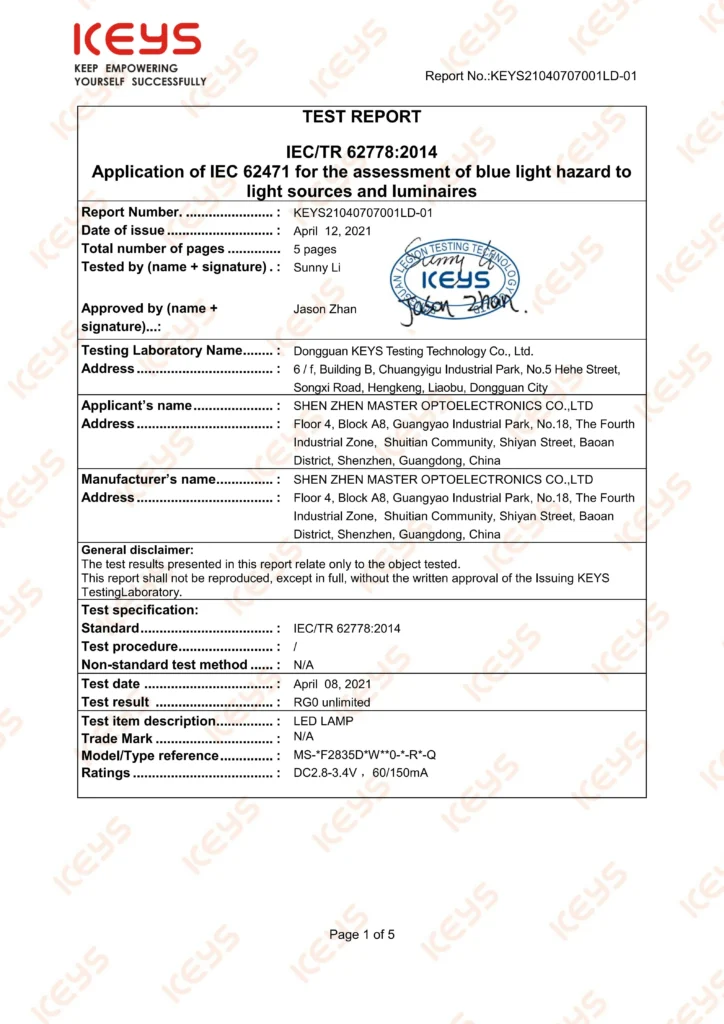
6. Choose LED Strips with IEC 62471 Certification
Always request a complete IEC 62471 report. Products rated RG0 or RG1 ensure compliance with global photobiological safety requirements.
SignliteLED offers IEC 62471-certified COB strip lights, low-CCT SMD LED strips, neon flex, and LED modules, providing safe and reliable solutions for professional lighting projects.
Related Posts