Deutsch
  English
  简体中文
简体中文  Español
  Français
  Italiano
  日本語
日本語  한국어
한국어  Polski
  Português
  Русский
  Türkçe
  Nederlands
  Tiếng Việt
  ไทย
ไทย 
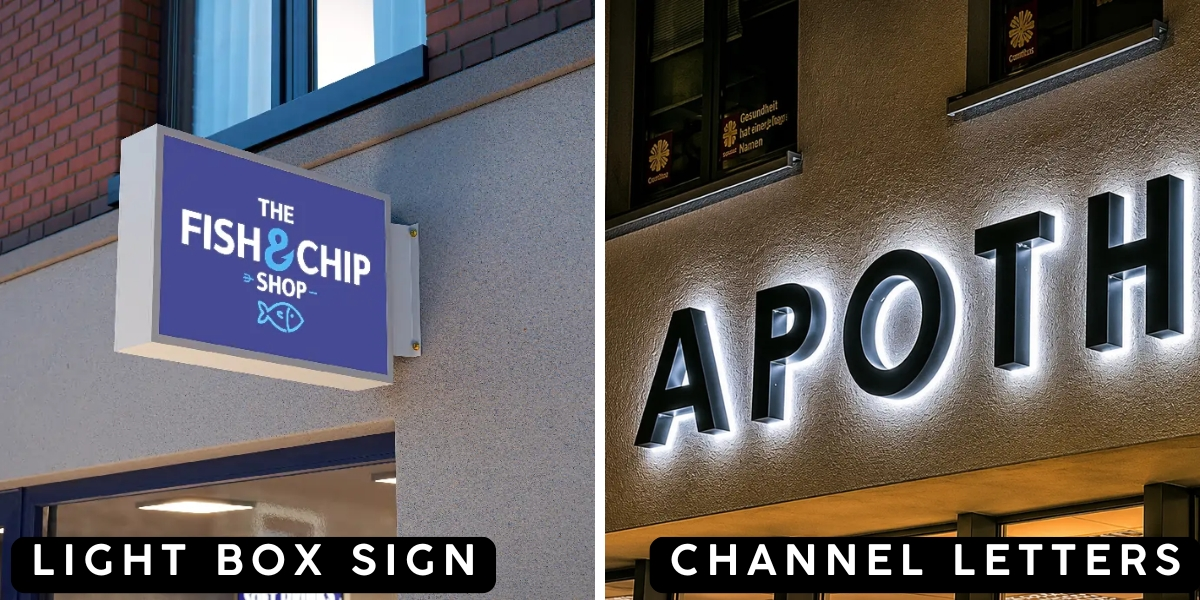
Kanalbuchstaben sind einzelne dreidimensionale Leuchtbuchstaben, die jeweils von selbst hergestellt und beleuchtet werden, während ein Leuchtkasten (oder ein Schrank) eine einzelne geschlossene Box mit einer durchscheinenden bedruckten Fläche ist, die als Ganzes leuchtet - und dass eine strukturelle Entscheidung, viele kleine Formen gegen eine einzelne große beleuchtete Platte, fast jeden Unterschied auslöst. Signlited produziert beide Kanalbuchstaben und Leuchtkasten-Schrankschilder, zusammen mit den internen LED-Quellen, die sie leuchten, werkseitig direkt.
Käufer entscheiden sich normalerweise zwischen den beiden auf drei Achsen: Sichtbarkeit (wie das Schild Tag und Nacht liest), Kosten (voraus und über die Lebensdauer) und Branding (das Aussehen, das Sie an der Fassade wünschen). Die Kurzversion: Kanalbuchstaben sorgen für dreidimensionale Tiefe und klare Nachtbuchstaben, ein Lightbox bietet geringere Kosten, die komplexesten Grafiken und den größten gleichmäßig beleuchteten Bereich.
Schlüssel zum Mitnehmen
- Struktur: Kanalbuchstaben sind separate 3D-Buchstaben mit eigenen LEDs, ein Lightbox ist ein versiegelter Schrank mit hinterleuchteter Oberfläche, ein- oder doppelseitig.
- Kostenbasis: Kanalbuchstaben werden pro Buchstabe zitiert, Leuchtkästen werden pro Schrank (pro Quadratfuß) angegeben und kosten normalerweise weniger für den gleichen Platzbedarf.
- Modell reparieren: Kanalbuchstaben sind modular - Service-Einbuchstabe; ein Leuchtkasten ist auch zu warten - seine LED-Module oder -Balken können ersetzt werden, und eine beschädigte bedruckte Fläche wird als eine Platte wieder aufgesetzt.
- Wo jeder passt: Kanalbuchstaben geben dreidimensionale, individuell beleuchtete Buchstaben; Leuchtkästen tragen Fotos, Farbverläufe, lange Texte und große oder große Paneele am Straßenrand.
- Hybrid-Option: Viele Ketten haben ihren Namen in Kanalbuchstaben sowie ein Logo in einem Leuchtkasten / Logo - Sie müssen nicht immer eines auswählen.
- Ein Lieferant für beide: Signlited (UL, ETL, CE, RoHS-zertifiziert) stellt die LED-Module und LED-Schilderbeleuchtung für beide Typen und auch die fertigen Schilder her.
Was sind Kanalbuchstaben?
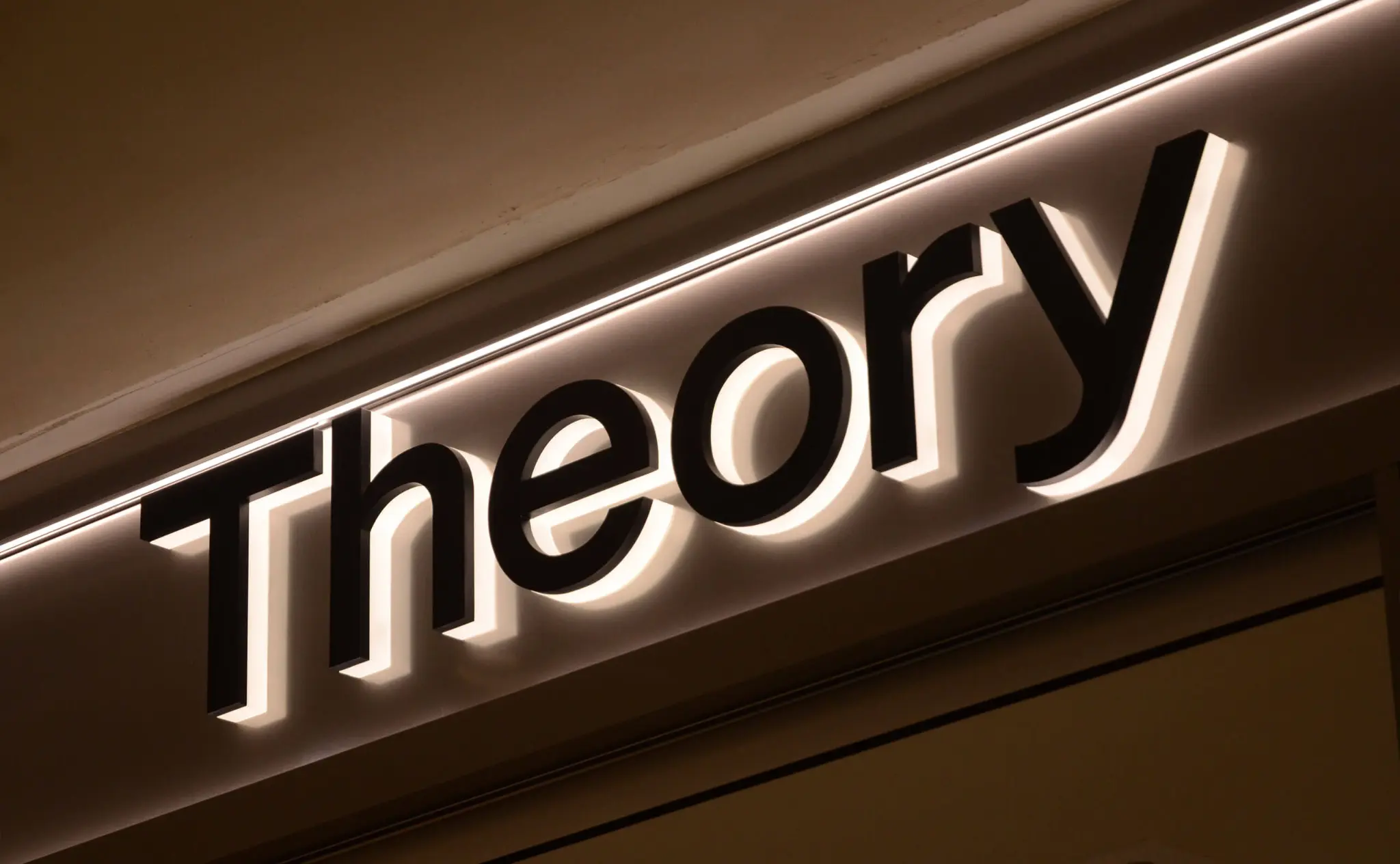
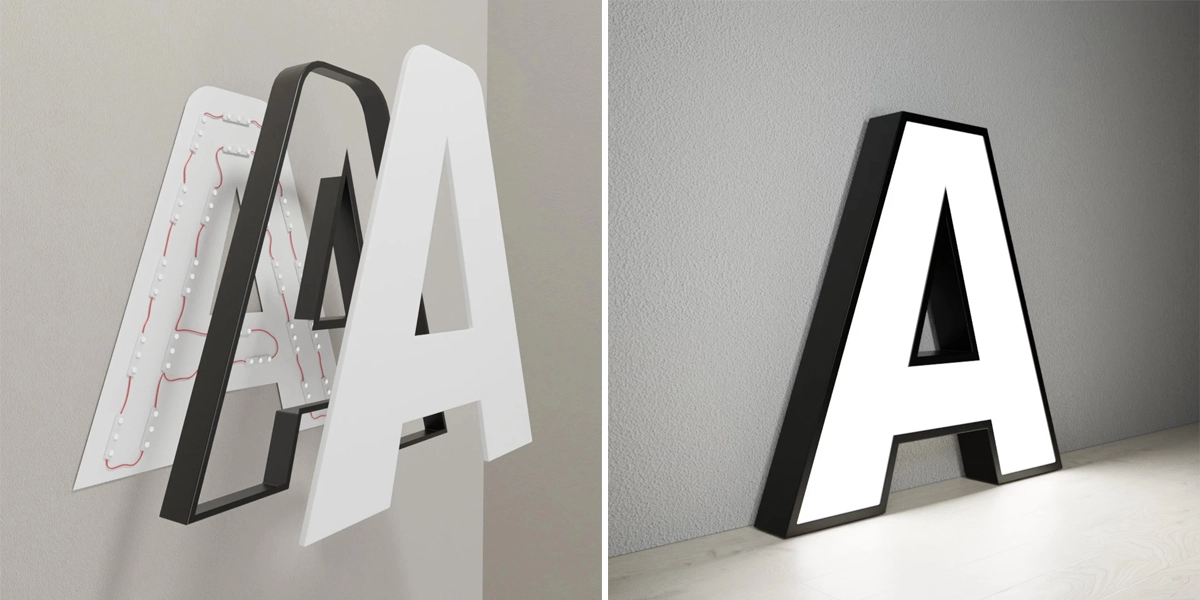
Kanalbuchstaben werden einzeln hergestellt, dreidimensionale Buchstaben und Formen, die jeweils als seichtes Metall „Dose“ ausgebildet und von innen durch LEDs beleuchtet werden. Jeder Buchstabe hat eine Acrylfläche, eine Rückgabe (die Seitenwand der Dose, typischerweise Aluminium) und eine Rückseite; die LEDs sitzen innen, so dass das Licht gleichmäßig über das Gesicht verteilt wird. Briefhöhen laufen üblicherweise von 100 mm bis 2000 mm, mit Buchstabentiefen von 30–150 mm, je nachdem, wie viel Platz die Beleuchtung benötigt, um zu blühen. Die vollständige Anatomie finden Sie in der Säulenführung auf Was sind beleuchtete Kanalbuchstaben.
Wie sie beleuchtet werden, ist Teil der Definition. Vorderbeleuchtete Buchstaben leuchten durch das Gesicht, halo-beleuchtete (Rückwärts-) Buchstaben montieren die LEDs auf der Rückseite, so dass das Licht die Wand hinter dem Buchstaben wäscht und einen schwebenden Umriss erzeugt, Kombinationsbuchstaben tun beides gleichzeitig. Buchstaben montieren auf drei Wegen - bündig zur Fassade, auf einer Laufbahn (eine horizontale Box, die die Verkabelung trägt und Wandlöcher reduziert) oder auf einer Backer-Platte.
Empfohlen für: Unternehmen, die nachts eine dreidimensionale Ladenfront mit scharfer Lesbarkeit in Briefen suchen - Einzelhandel, Gastgewerbe, Unternehmen und Mieter in Einkaufszentren, die diesen Typentyp benötigen.
Was sind Lightbox-Schilder (Schrank)?
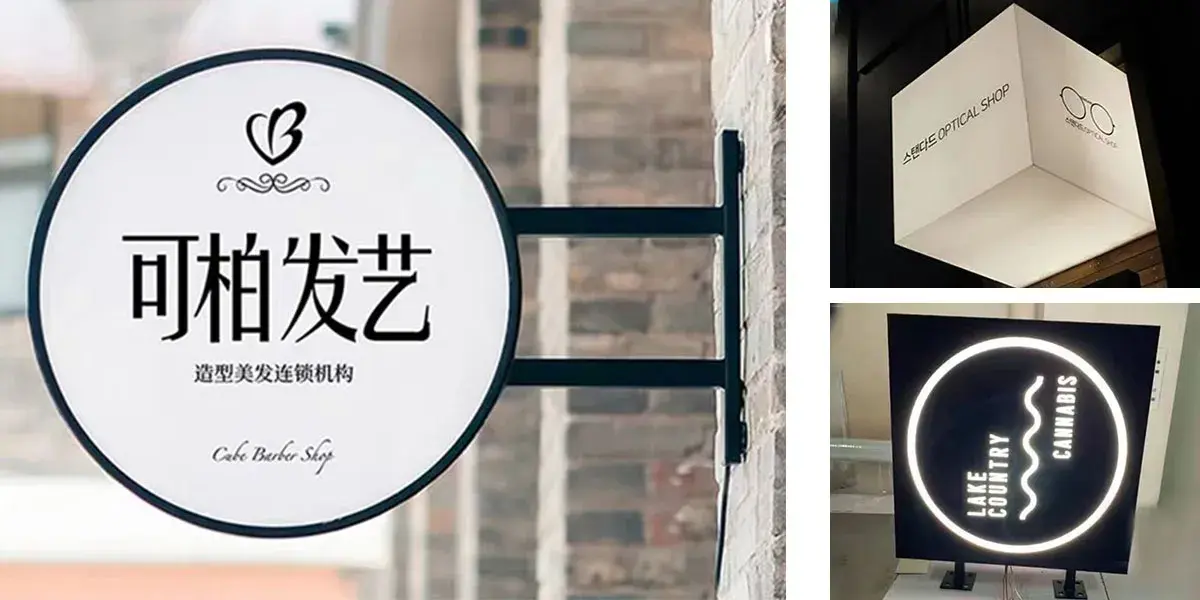
Ein Leuchtkastenschild ist ein einzelner geschlossener Aluminiumschrank mit einer durchscheinenden Acryl- oder Polycarbonat-Fläche, die digital bedruckt oder in aufgetragenem Vinyl eingewickelt wird und von innen gleichmäßig von LEDs beleuchtet wird, sodass das gesamte Gesicht leuchtet. Da die Grafik auf einem durchgehenden Bedienfeld lebt, kann ein Leuchtkasten alles enthalten, was gedruckt werden kann - ein vollständiges Logo, ein Foto, ein Verlauf, ein Slogan, mehrere Textzeilen - und es als ein heller Lichtblock anzeigen. Schränke sind einseitig für Wand- oder Faszienmontage und doppelseitig für Pylon- und Denkmalstrukturen aus zwei Richtungen.
Der Kompromiss, der in diese Einzelschrankarchitektur eingebaut ist, ist die Einheitlichkeit: Das gesamte Gesicht muss gleichmäßig ohne helle oder dunkle Flecken leuchten, was eher ein technisches Problem der LED-Platzierung als der Briefherstellung darstellt.
Empfohlen für: Unternehmen, die eine detaillierte oder fotografische Grafik, einen großen beleuchteten Bereich, ein doppelseitiges Schild am Straßenrand oder den schnellsten Weg zu einem beleuchteten Laden benötigen.
Vorteile & Nachteile von Kanalbuchstaben und Leuchtkastenschildern
Jeder Zeichentyp erhält seinen Platz aus bestimmten Gründen, das Kriterium für Kriterium wird im nächsten Abschnitt angezeigt.
Kanalbuchstaben – Vorteile
- Dreidimensionale Tiefe - Jeder Buchstabe steht von der Fassade.
- Exakte Marken-Farb-Match: Das Pantone-Ziel ist in das Acrylgesicht eingebaut und nicht angenähert.
- Starke Nachtbuchstaben Klarheit - Jeder Charakter ist seine eigene Lichtquelle.
- Modulare Reparatur: Ein Fehler wird auf einen Buchstaben isoliert, nicht auf das ganze Zeichen.
- Lange Lebensdauer durch versiegelte LEDs und Metallrückführungen.
- Häufig legen die Vermieter und Malls vom Zeichentyp die Mieterkriterien fest.
Kanalbuchstaben - Nachteile
- Höhere Vorabkosten, da jeder Buchstabe einzeln hergestellt und verdrahtet wird.
- Langsamere, komplexere Installation - jeder Buchstabe wird separat montiert und fügt Wanddurchdringungen hinzu.
- Begrenzt für feine Details, Fotos oder lange Textblöcke.
- längere Lieferzeit als ein einzelner Schrank.
Lightbox-Schilder — Vorteile
- Niedrigere Kosten - Ein Schrank bedeutet die niedrigsten Kosten pro Quadratfuß beleuchteter Fläche.
- Vollgrafisches Gesicht: Fotos, Verläufe, komplexe Logos und Slogans, die alle direkt gedruckt werden.
- Großer, gleichmäßig beleuchteter Bereich in einer einzigen Platte.
- Schnelle Installation als eine eigenständige Einheit.
- Erhältlich beidseitig für Stangen- und Denkmalplatzierungen.
Lightbox-Zeichen — Nachteile
- flaches, zweidimensionales Gesicht statt erhöhter Einzelbuchstaben.
- Einteilige Fläche: Die LED-Module oder -Stangen im Inneren können ersetzt werden, wenn sie ausfallen, aber eine gerissene oder vergilbte Fläche wird als eine Platte und nicht in Abschnitten wiederhergestellt.
- Höherer Energieverbrauch, da das gesamte Gesicht nicht nur leuchtet, sondern nur Briefstriche.
- Acrylflächen können sich über Jahre der UV-Exposition vergilben, wenn eine Gesichts geringerer Qualität verwendet wird.
Kanalbuchstaben gegen Lightbox-Zeichen: Schlüsselunterschied
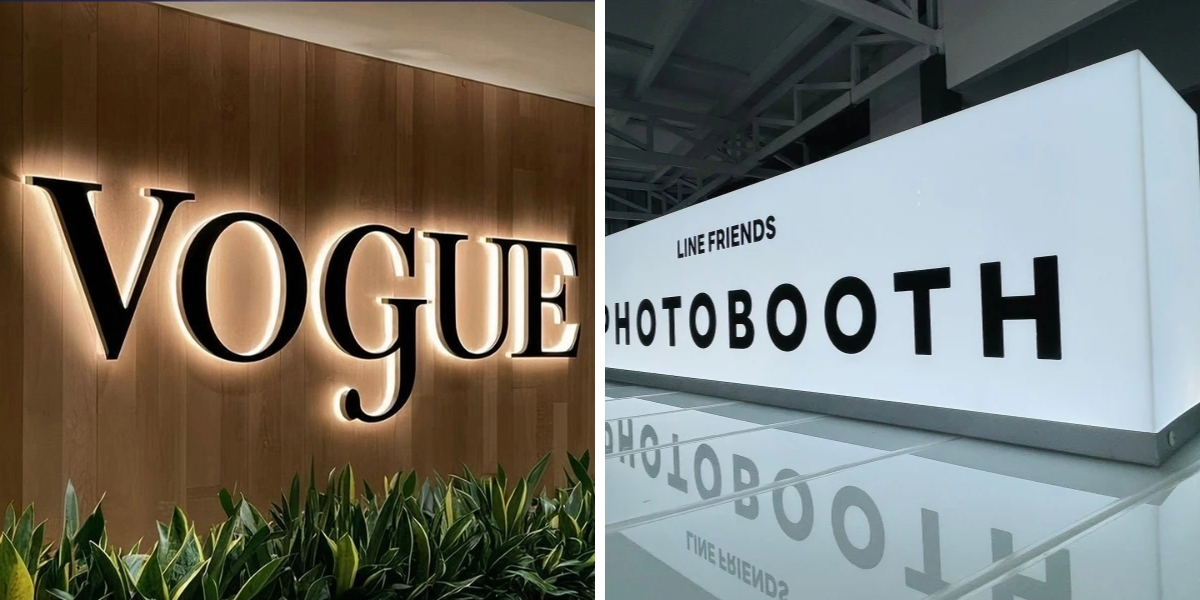
Nebeneinander differenzieren sich die beiden Typen auf fast jedem praktischen Kriterium, das ein Spezifizierer prüft. Dieses Raster ist die Referenz von Kopf an Kopf; lesen Sie es als „gleicher Job, zwei technische Antworten“.
| Kriterium | Kanalbuchstaben | Lightbox (Schrank) Schilder |
| Struktur und Aussehen | individuelle 3D-Buchstaben, jeder seine eigene Dose | ein geschlossener Schrank mit bedruckter Fläche (ein- oder doppelseitig) |
| Beleuchtungsstil | Jeder Buchstabe intern beleuchtet - vorne, halo oder beide | Ganzes Gesicht von innen gleichmäßig hinterleuchtet |
| Grafik- und Logo-Fähigkeit | Buchstaben und einfache Formen; feine Details und Fotos sind begrenzt | Beliebige gedruckte Grafiken — Fotos, Verläufe, Slogan, komplexe Logos |
| Bildstil | Dreidimensionale, einzeln beleuchtete Buchstaben | Flaches, gleichmäßig beleuchtetes Panel mit Vollfarbgrafiken |
| Sichtbarkeit und Lesbarkeit | Scharfe, Buchstaben für Buchstaben in der Nacht | Großes helles Paneel; starker Farbblock am Tag |
| Beleuchteter Bereich | Nur die Buchstabenstriche leuchten | Das ganze Gesicht leuchtet |
| Form und Anpassung | Buchstaben, Tiefen und Oberflächen | Schrankform (Rechteck, rund, Brauch); eine Fläche |
| Kostenbasis | Preis pro Brief | Preis pro Schrank / pro Quadratfuß (normalerweise niedriger pro FT²) |
| Einrichtung | Jeder Brief separat montiert; mehr Durchdringungen | einzelne Einheit; weniger Durchdringungen; schneller |
| Reparatur / Wartung | Modular – Service Ein Buchstabe oder seine LEDs | LED-Module/Bars austauschbar; bedruckte Fläche als eine Platte |
| Lebensdauer (LEDs) | ~ 50.000 Stunden (L70) | ~ 50.000 Stunden (L70) |
| Energieverbrauch | niedriger - nur Striche werden angezündet | Höher - das volle Gesicht wird beleuchtet |
| Einzeln gegen doppelseitig | Typisch einseitig, wandmontiert | einseitig (Wand) oder doppelseitig (Pylon/Denkmal) |
Das Muster ist konsistent: Kanalbuchstaben sind mit höheren Kosten und einer langsameren Installation mit dreidimensionaler Tiefe, Wartung pro Buchstaben und geringerer Laufleistung verbunden. Lightboxen haben eine flache Einteilige Fläche mit einem niedrigeren Preis, einer vollgrafischen Fähigkeit und einer schnelleren Installation mit einer Einheit. Beides ist von Natur aus besser - die richtige Wahl hängt davon ab, welche Kompromisse der Marke und dem Budget entsprechen.
Sichtbarkeit und Lesbarkeit: Tag, Nacht, Entfernung und Winkel
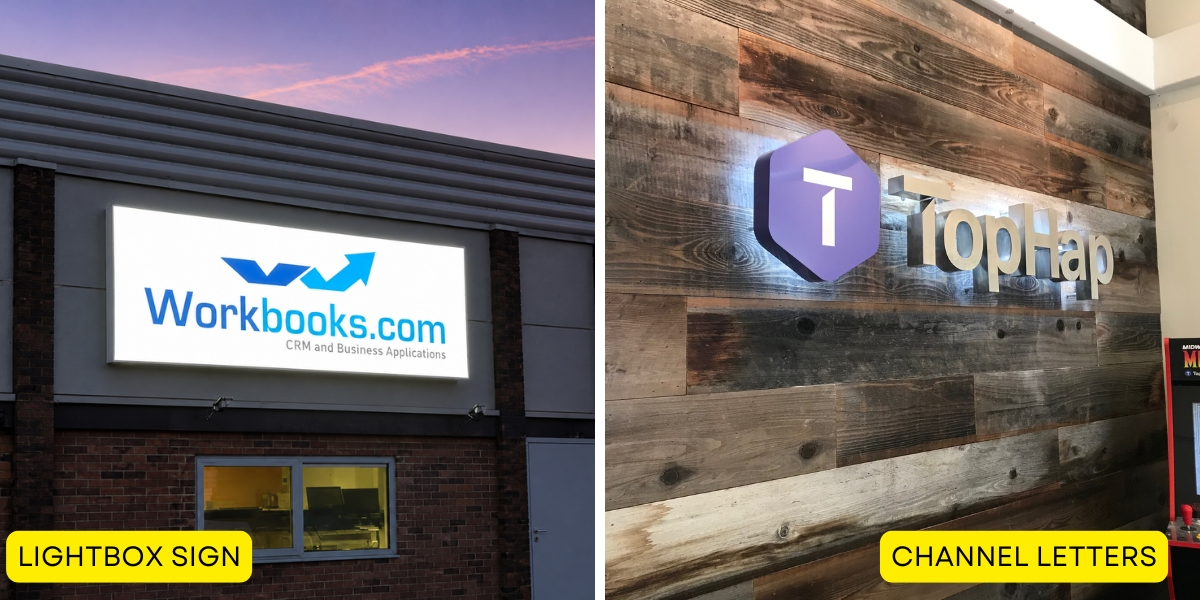
Wie ein Schild tatsächlich auf der Straße liest, ist sein eigener Entscheidungsfaktor, der von Kosten oder Konstruktion getrennt ist.
Kanalbuchstaben Haben Sie physische Tiefe, damit das Tageslicht Schatten wirft, die sie auch bei ausgeschalteter Beleuchtung lesbar halten. Nachts sorgen Briefe für Buchstaben, die Buchstaben für Buchstaben, klar und lichter beleuchtet, während Buchstaben mit halo beleuchteten Scheinen aus der Ferne und aus schrägen Seitenwinkeln lesbar sind.
Leuchtkastenschilder Leuchten Sie ein breites, gleichmäßiges Panel, das helle Grafiken, Fotos und Logos in voller Farbe und das diffuse Leuchten, das durch Nebel oder Regen passt, leuchten kann. Die Kompromisse: Ein großes Gesicht kann bei Betrachtung außerhalb der Mitte blenden oder Hotspots zeigen, und ein sehr helles Panel kann aus der Nähe verwaschen aussehen.
Schnell lesen: Für Buchstabenschärfe und tagsüber dimensionale Präsenz, Kanalbuchstaben, für einen hellen Farbblock und bildhohe Nachrichten von der Straße, einen Leuchtkasten.
Was ist drin: Wie jeder beleuchtet wird (der Unterschied in der LED-Technologie)
Der tiefste Unterschied zwischen den beiden Zeichentypen ist optisch, und die meisten Vergleiche überspringen ihn: Das Anzünden einer Handvoll schmaler Briefanschläge ist ein anderes Problem als die gleichmäßige Beleuchtung eines großen Flachbildschirms, sodass die LED-Hardware wirklich anders ist. Signlited stellt beide Quellenfamilien her – siehe LED-Module Und LED-Schilderbeleuchtung - Und die Wahl der Quelle ist das, was beide Zeichen sauber und nicht fleckig aussehen lässt.
Kanalbuchstaben werden von nach vorne gerichteten LED-Modulen in einem beabstandeten Gitter hinter der Acrylfläche beleuchtet. Das weiße Arbeitstier ist der SMD2835-Chip, der SMD5050 glänzt mit der Farbe RGB. Diese Front-beleuchteten Module verwenden einen breiten Strahl von ungefähr 160 °, sodass das Licht jedes Moduls seinen Nachbarn überlappt und die Dose ohne dunkle Lücken füllt. Für Skripte, kleine Buchstaben und enge Kurven, in die starre Module nicht passen, wechseln die Verarbeiter auf flexible 6-mm-S-Typ-Streifen, die sich um den Radius biegen. Halo-Buchstaben verschieben dieselben Module oder Streifen auf die Rückseite des Buchstabens, die an der Wand gerichtet sind - mehr über die passende Quelle an die Strichbreite in Welche LED-Beleuchtung wird in beleuchteten Zeichenbuchstaben verwendet.
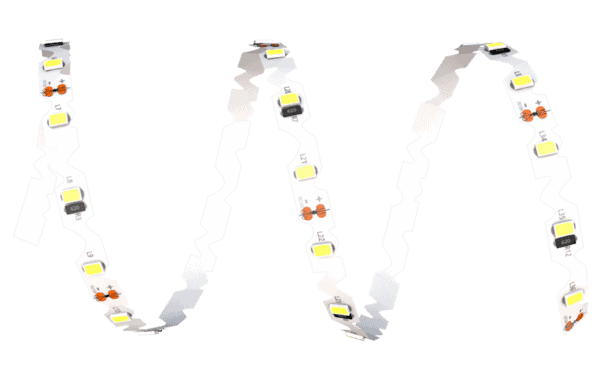
SMD2835 60LEDs 6mm S-förmiges weißes LED-Streifenlicht
- LED-Typ: SMD2835
- LED-Dichte: 60 LEDs/m
- PCB Breite: 6mm
- Streifendesign: S-förmige flexible Leiterplatte
- Farbe: Weiß
- Lichtausbeute: 220 lm/W
- Eingangsspannung: 12V / 24V DC
- CRI (Farbwiedergabeindex): ra ≥ 80
- Abstrahlwinkel: 120°
Leuchtkastenschilder Gesichter einer härteren optischen Aufgabe: Das ganze Gesicht muss gleichmäßig leuchten. Zwei LED-Quellen decken die meisten Schränke ab. Standard- und tiefe Schränke SMD2835 Module mit Hintergrundbeleuchtung Mit einem breiten (~ 160 °) Balken, der zur Gehäusetiefe beabstandet ist, überlappt das Licht jedes Moduls das nächste. Kantenbeleuchtete, doppelseitige und Plakatschränke SMD3030 (und SMD2835) Starre LED-Lichtleisten am Rahmen montiert, mit schmaler Seitenwurfoptik - wie 15 × 45 ° oder 10 × 25 ° -, die das Licht über eine oder beide Seiten schieben. Je flacher die Box, desto sorgfältiger werden die Balkenabstände und der Strahlwinkel berechnet, um helle Punkte durch das Gesicht zu vermeiden.
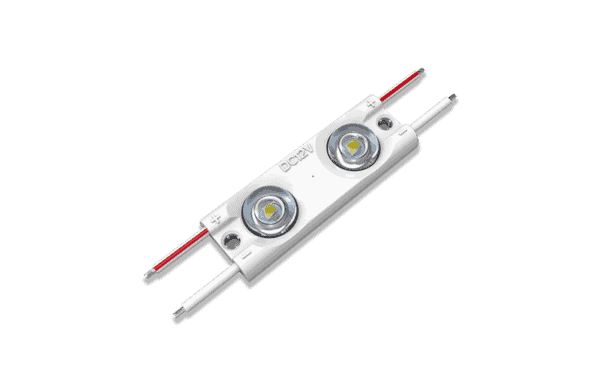
Einfarbige 2LED DC12V LED-Modul-Leuchte
- Freiliegendes Leiterplattendesign für gute Wärmeableitung
- Ausfall bei schlechten Lichtverhältnissen für eine längere Lebensdauer
- 9V High-Power LED-Chips für hellere Leistung und höheren Wirkungsgrad
- Konstantstrom-Design für weniger Spannungsabfall
- Verbinden Sie mehr pro Kette
- 160°-Linse für gleichmäßige Ausleuchtung
- Geeignet für dünne Schilder
Gemeinsame technische Grundlagen Auf beide anwenden:
- Spannung: Niederspannung 12 V oder 24 V DC.
- Schutz vor Eintritt: IP65 für den allgemeinen Außenbereich, IP67 für Nass- oder Küstengebiete.
- Fahrer: Konstantstrom- oder Konstantspannungsnetzteile, die auf maximal 801 tp3t Nennleistung für thermische Kopffreiheit geladen sind - Einheiten mit IP67-Bewertung (z. B. der mittleren Well XLG-Serie) für Außenboxen. sich vorstellen LED-Netzteile.
- Farbkonsistenz: Chips, die auf eine 3-Stufen-MacAdam-Toleranz verfüttert werden, so dass benachbarte Module als das gleiche Weiß gelesen werden.
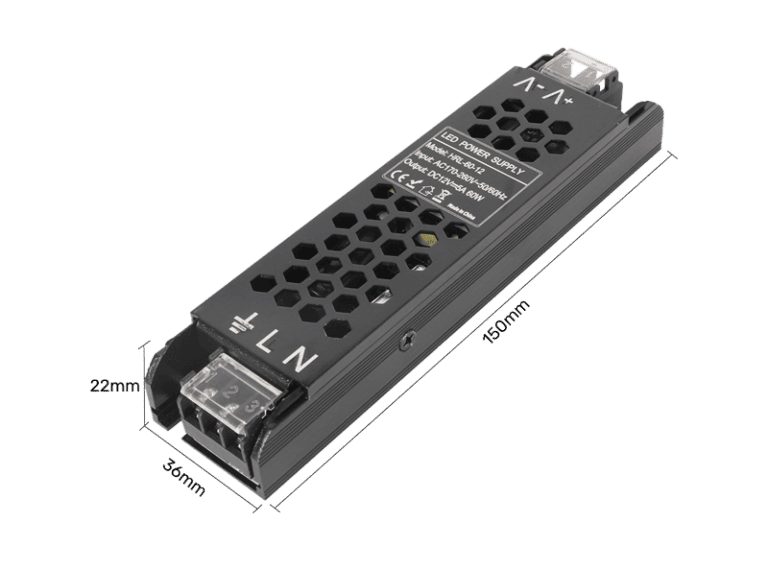
12V Ultraflacher Treiber für LED-Streifenlicht
- Eingangsspannung: AC110-260V
- Frequenzbereich: 47-63Hz
- Leistungsfaktor: 0,5-0,6
- Effizienz: >80%
- Nennleistung: 60W
- Ausgangsspannung: DC12V
- Bemessungsstrom: 5A
- IP-Bewertung: IP20
- Garantie: 3 Jahre
- Maß: L150 × W36 × H22mm
LED-Quelle nach Zeichentyp
Kanalbuchstaben Lichtquellen
| Element | Typische LED-Quelle | Warum diese Quelle |
| Buchstaben mit Frontbeleuchtung | SMD2835 Weiße Module (~160°-Strahl), SMD5050 für RGB | Breiter Strahl überlappt und füllt die Dose und drückt sogar Licht durch das Gesicht |
| Skript, kleine oder gebogene Buchstaben | 6 mm flexible Streifen | Biegt sich in enge Radien und schmale Hübe, wo starre Module nicht passen |
| Heiligenschein / Buchstaben mit umgekehrter Beleuchtung | Heckmodule oder -streifen | Ziel an der Wand, einen weichen Umriss hinter den Brief zu werfen |
Lightbox (Schrank) Lichtquellen
| Element | Typische LED-Quelle | Warum diese Quelle |
| Standard- / tiefe Schränke | SMD2835 Module mit Hintergrundbeleuchtung (~160°) | Das beabstandete Gitter überflutet die gesamte Fläche und entfernt Hot-Spots über einer großen Platte |
| Kantenbeleuchtete, doppelseitige & Plakatschränke | SMD3030 / SMD2835 Starre LED-Lichtleisten (15×45°, 10×25°-Optik) | Seitenwurfstangen entlang des Rahmens leuchten eine oder beide Flächen gleichmäßig |
Kostenvergleich
Die beiden Schilder sind auf verschiedenen Grundlagen zitiert - Kanalbuchstaben pro Brief, ein Leuchtkasten pro Schrank -, so dass die folgenden Tabellen jeden Typ auf eine typische Basis für Endzeichen für den US-Markt stellen, um eine ähnliche Ansicht zu erhalten. Signlited liefert sowohl fabrikdirekt, die unterhalb dieser fertigen Marktzahlen liegen (Sie überspringen die lokale Fertigung und den Einzelhandelsaufschlag) - senden Sie Größen für ein genaues Angebot.
Kanalbuchstaben
| Zeichenumfang | Typische fertige Kosten |
| Kleine Ladenfront (ein paar kurze Buchstaben) | $2,000–$4,000 |
| Mittelgroßes Schaufenster-Set | $3,000–$7,000 |
| Großes oder sehr benutzerdefiniertes Set | $4,000–$10,000+ |
Die Briefe selbst laufen ab Signlited ab und laufen ungefähr $40–$80 bei 8″ bis $350–$800+ bei 36″, ab Werk. Kanal-Letter-Kostenskalen mit Anzahl und Höhe, Buchstabenkomplexität (ein „W“ oder „&“ kostet mehr als ein „I“), Rücklaufmaterial (Aluminium vs. Stainles), Gesichtsqualität, LED-Anzahl und -stufe, IP-Bewertung und Montage (Raceway vs Flush).
Leuchtkasten / Schrankschilder
| Kabinett | Typische fertige Kosten |
| Klein / Standard | Ein paar hundert–1 tp4t1.500 |
| Einseitige Schaufenster | $1,500–$3,500 |
| doppelseitig (Pylon / Denkmal) | $1,800–$6,500 |
| Große / vakuumgeformte Fläche | bis zu ~ $8.000 |
Die Kosten für den Lightbox-Bereich werden durch die Größe des Gehäuses, ein- oder zweiseitige Form (Rechtecke und Rundungen kosten weniger als kundenspezifische Kurven), Gesichtsmaterial (Acryl gegen Polycarbonat) und graphische Komplexität bestimmt – ein fotografischer Druck kostet mehr als die Farbe eines flachen Blocks.
In der gesamten Branche sind Kanalbuchstaben im Allgemeinen etwas höher als ein vergleichbarer Leuchtkasten, da jeder Buchstabe einzeln hergestellt, beleuchtet und verdrahtet wird, während ein Leuchtkasten ein Schrank mit einer einzigen Fläche ist. Bei vergleichbaren mittelgroßen Zeichen können die beiden ziemlich nahe landen, und aufwändige Buchstabensätze vergrößern die Lücke. Die Zahlen spiegeln unterschiedliche Konstruktionen wider, nicht dass ein Zeichen mehr wert ist - die richtige Wahl hängt vom Budget neben den oben genannten visuellen und funktionalen Faktoren ab.
Für genaue Preise für einen der beiden Typen senden Sie Ihre Größen, Ihren Schildtyp und Ihre Menge für ein Angebot.
Installationsunterschiede
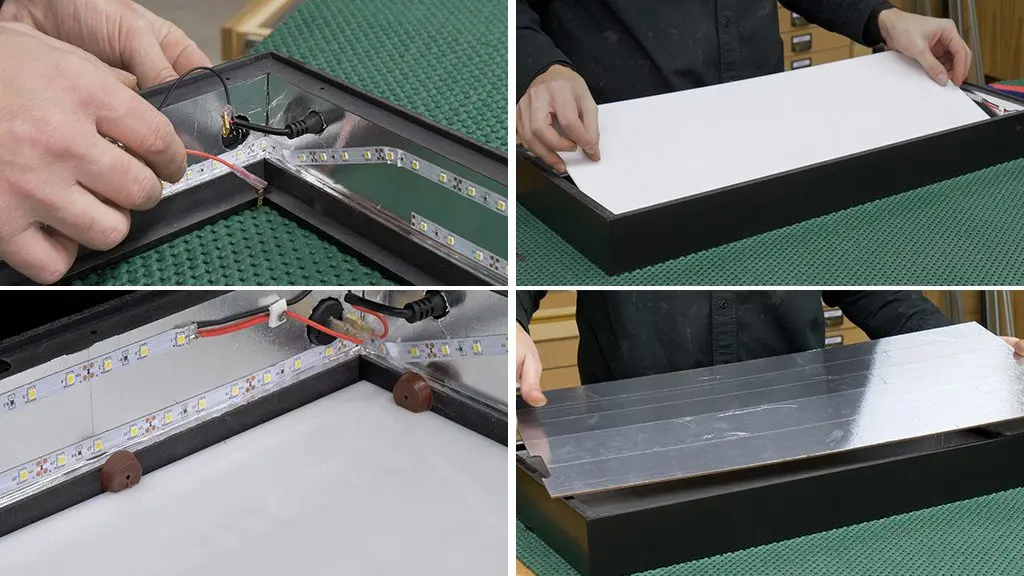
Der Installationsaufwand folgt direkt aus der Struktur. Kanalbuchstaben werden Buchstaben für Buchstaben montiert - bündig an der Wand, auf einer Laufbahn oder auf einem Backer -, sodass jeder Zeichen seine eigenen Layout-Markierungen, Befestigungselemente und Wanddurchdringungen sowie die Verkabelung zum Zusammenbinden bedeutet. Das macht die Installation langsamer und arbeitsintensiver, und deshalb wird häufig eine Laufbahn an geleasten Wänden angegeben: Sie konsolidiert die Verkabelung in einer Montagebox und minimiert die Löcher, die ein Vermieter genehmigen muss. Die Montageoptionen und das, was auf dem Datenblatt aufgestellt werden soll, sind in der Anleitung zu behandelt Kanalbuchstaben auswählen und angeben.
Ein Lightbox wird als eine Einheit mit weniger Wanddurchdringungen und einem schnelleren Prozess installiert - er wird an einer Wand oder Faszien montiert oder sitzt auf einer Stange oder einem Denkmal.
Technischer Hinweis: Für jeden Typ gehört der Fahrer an einem belüfteten, wartbaren Ort, wobei für die Versorgung die Leitungsläufe geplant sind. Elektrische Schilder in Nordamerika werden in UL 48 (der Sicherheitsnorm für elektrische Schilder) und NEC-Artikel 600 (Installation von elektrischen Schildern und Umrissbeleuchtung) geregelt. Beachten Sie, dass die Verwendung von UL-gelisteten Komponenten selbst kein fertiges Schild mit UL-gelistet ist, und wenn ein Schild im Feld geändert wird, kann die Auflistung ungültig werden. Bestätigen Sie daher, was Ihre Gemeinde vor der Herstellung benötigt. Die lokalen Codes variieren - einige Gemeinden begrenzen auch die Beleuchtung von Halo (umgekehrte Beleuchtung oder das Cap-Zeichen). Überprüfen Sie daher die Grenzwerte für die Zoneneinteilung und den Energiecode, bevor Sie die Entwürfe einhalten.
Haltbarkeit, Reparatur und Wartung
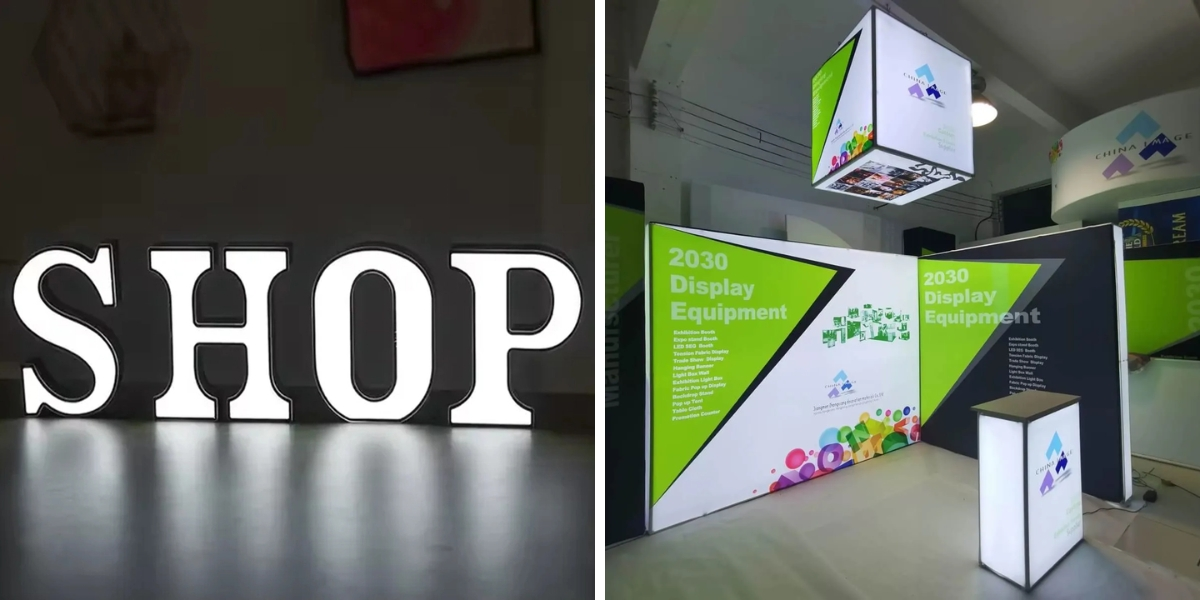
Die Wartung funktioniert für jeden Typ unterschiedlich. Kanalbuchstaben sind modular: Wenn die LEDs eines Buchstabens ausfallen, wird dieser einzelne Buchstabe (oder seine Modulfolge) gewartet oder ersetzt, während der Rest unberührt bleibt. Aluminium und Edelstahl Resistance Resist Weather — Edelstahl 304 ist Standard, 316 für die Küstensalzexposition gewählt.
Ein Lightbox wird als Schrank gewartet. Die internen LED-Module oder starren Stangen können bei Ausfall geöffnet und ersetzt werden, die gedruckte Fläche ist jedoch ein einziges Feld – wenn sie reißt oder vergilbt, wird sie als Ganzes und nicht in Abschnitten wieder aufgeteilt. Ein hochwertiges, UV-stabiles Gesicht hält das fern.
Klima und Struktur prägen auch die Wahl. Kanalbuchstaben tragen ein geringes Windlastprofil und ihre offene Konstruktion lässt den Wasserablauf abfließen, wodurch sie den Code in Hurrikan-anfälligen Bereichen erfüllen können. Ein Leuchtkasten stellt ein großes Gesicht dar, so dass intensive Hitze es beugen kann, starke Schneelasten erfordern verstärkte Rahmen, und Küsten- oder feuchte Standorte müssen im Schrankentlüftung und -entwässerung abgebaut werden, um Kondensation zu verhindern; unter rauer Wüstensonne kann ein gedrucktes Gesicht alle drei bis fünf Jahre erfrischt werden.
Bei der Lebensdauer verwenden beide Typen LEDs mit einer Leistung von etwa 50.000 Stunden - und diese Zahl ist L70, was bedeutet, dass die Helligkeit auf 701 tp3t Original verblasst ist, nicht dass das Zeichen dunkel geworden ist. Signlited ist UL-, ETL-, CE- und RoHS-zertifiziert und unterstützt seine Schilder und LED-Komponenten mit einer Garantie von 3 bis 7 Jahren.
Welches ist für Ihr Unternehmen richtig?
Passen Sie das Schild an den Job an. Die beiden Checklisten und die unten stehende Szenariotabelle machen den Vergleich zu einer Entscheidung.
Wählen Sie Kanalbuchstaben, wenn…
- Sie wollen eine dreidimensionale Fassade mit erhabenen, individuell beleuchteten Buchstaben.
- Die Schärfe der Nachtbriefe ist mehr als ein großer Lichtblock.
- Sie benötigen ein genaues Pantone-Match, das in das Gesicht eingebaut ist.
- Ein Vermieter oder ein Einkaufszentrum benötigt Kanalbuchstaben in den Kriterien des Mieterzeichens.
- Sie investieren in ein langfristiges Branding-Asset und möchten isolierte, kostengünstige Reparaturen.
Wählen Sie Leuchtkastenschilder, wenn…
- Das Budget ist knapp und Sie möchten die niedrigsten Kosten für die beleuchtete Fläche.
- Das Logo enthält ein Foto, einen Verlauf, feine Details oder einen langen Slogan.
- Sie benötigen eine große beleuchtete Tafel oder ein Straßenschild aus der Entfernung.
- Das Schild sitzt auf einer Stange oder einem Denkmal und muss doppelseitig sein.
- Sie möchten die schnellste Einzeleinheit installieren.
Empfohlenes Zeichen nach Szenar
| Situation | Empfohlener Typ |
| Nationale Einzelhandelsmarke oder Einkaufszentren | Kanalbuchstaben |
| Enges Budget für Erstsign- | Leuchtkasten |
| Logo mit einem Foto, einem Farbverlauf oder feinen Details | Leuchtkasten |
| Lange Slogan oder mehrzeilige Nachricht | Leuchtkasten |
| Straßenmast oder Denkmal von beiden Seiten gesehen | Doppelseitiger Leuchtkasten |
| Gastfreundschaft oder Flaggschifffassade | Kanalbuchstaben |
| Vermieter begrenzt Wanddurchdringung | Kanalbuchstaben auf einer Rennbahn oder einen einzelnen Leuchtkasten |
| Firmenname plus separates Logo | Hybrid: Kanalbuchstaben + Logobox |
Können Sie beides kombinieren? Ja - Der gewöhnliche Hybrid führt den Firmennamen in Kanalbuchstaben für die dimensionale Präsenz aus, gepaart mit dem Logo in einem kleinen Leuchtkasten / Logo, das die detaillierte Markierung verträgt, die ein einzelner Buchstabe nicht kann. Es ist Standard für Ketten: Der Name wird als erhabene Maßbuchstaben angezeigt, während die Logobox die Farb- und Formbuchstaben nicht enthält. Es ist sinnvoll, wenn Ihre Identität eine Wortmarke plus ein Symbol und nicht nur Text ist.
Senden Sie Ihr Logo, die Größe des Schildes und den Standort und Signlited wird die richtige Option empfehlen und es werkseitig direkt mit OEM / ODM-Produktion und weltweiter Lieferung zitieren.
Abschluss
Die Entscheidung ist auf Kompromisse zurückzuführen, nicht auf einen Gewinner: Kanalbuchstaben bieten Ihnen eine dreidimensionale Ladenfront mit Wartung pro Buchstaben und geringerer Betriebsleistung zu höheren Vorlaufkosten. Ein Lightbox bietet Ihnen Vollgrafik, ein großes, gleichmäßig beleuchtetes Panel und eine schnellere, kostengünstigere Einzelgerät-Installation mit flachem Gesicht. Für viele Unternehmen sind die Antworten sowohl Buchstaben für den Namen, ein Logo-Box für die Marke. Ein UL-, ETL-, CE- und RoHS-zertifizierter Hersteller seit 2011 produziert Signlited die LED-Komponenten und die kompletten kundenspezifischen Schilder für beide Ansätze, werkseitig direkt mit OEM/ODM; LED-beleuchtete Buchstaben Seite für ein Zitat.
FAQ
Verwandte Artikel