Deutsch
  English
  简体中文
简体中文  Español
  Français
  Italiano
  日本語
日本語  한국어
한국어  Polski
  Português
  Русский
  Türkçe
  Nederlands
  Tiếng Việt
  ไทย
ไทย 
Werbe-Neonschilder im Freien werden in Restaurants, Bars, Einzelhandelsgeschäften und Gebäudefassaden häufig verwendet, um die Sichtbarkeit bei Nacht zu verbessern, die Markenbekanntheit zu stärken und Unternehmen in wettbewerbsorientierten kommerziellen Umgebungen leichter zu identifizieren. Erfolgreiche Außenbeschilderung hängt jedoch normalerweise von mehr als nur dem Aussehen ab. Faktoren wie Betrachtungsabstand, Wetterexposition, Montagebedingungen, Umgebungsbeleuchtung und Kundenbewegung können die Leistung eines Schildes nach der Installation erheblich beeinflussen.
Eine Restaurant-Ladenfront benötigt möglicherweise eine Beschilderung, die die Sichtbarkeit des Eingangs ohne überwältigende Essbereiche im Freien verbessert, während das Nachtleben in hart umkämpften Umgebungen häufig der Erkennbarkeit nach Einbruch der Dunkelheit Priorität einräumt. Gewerbebauten und Fassadenprojekte nähern sich der Beschilderung in der Regel wieder anders und behandeln beleuchtete Beschilderungen als Teil der Architektur selbst und nicht als separates visuelles Element.
Aus diesem Grund wirken kommerzielle Neonschilder im Freien selten als Einheitslösung. Imprägnierung, Helligkeit, Einbauhöhe, Langstreckenlesbarkeit und Materialbeständigkeit spielen oft eine Rolle bei der Gestaltung.
In diesem Artikel untersuchen wir, wie Outdoor-Neonschilder für kommerzielle werden in Restaurants, Bars und Fassaden zusammen mit den praktischen Überlegungen verwendet, die Unternehmen vor der Installation evaluieren sollten.
Schnelle Antwort: Sind kommerzielle Neonschilder im Freien für Restaurants, Bars und Fassaden geeignet?
Kommerzielle Neonschilder im Freien werden häufig für Restaurants, Bars, Einzelhandelsgeschäfte und Gebäudefassaden verwendet, da sie die Sichtbarkeit verbessern, die Markenbekanntheit stärken und Unternehmen nach Einbruch der Dunkelheit helfen, sich zu bemerken. Bei den meisten kommerziellen Außenprojekten werden wasserdichte LED-Neonschilder aufgrund der besseren Haltbarkeit, geringerer Wartung und verbesserter Wetterbeständigkeit gegenüber herkömmlichem Glasneon bevorzugt. Abhängig von der Umgebung wählen viele Unternehmen die Außen-Neonsysteme mit IP65- oder IP67-Rating, um Regen, Feuchtigkeit, Staub und langfristige Außenbelichtung zu bewältigen und gleichzeitig die Sichtbarkeit zu gewährleisten.
Was macht kommerzielle Outdoor-Neonschilder für den Geschäftsgebrauch geeignet?
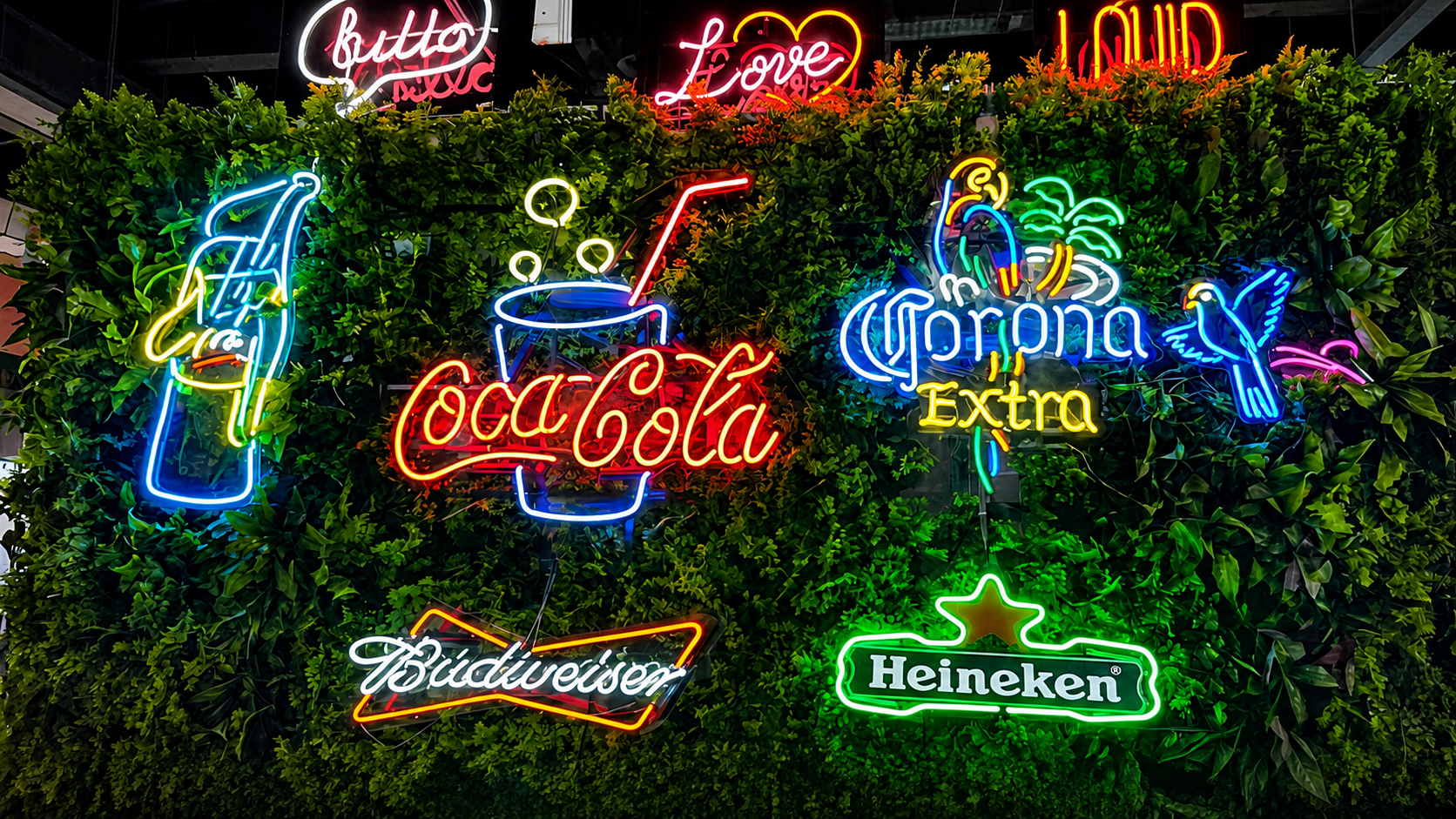
Kommerzielle Neonschilder im Freien sind anders gestaltet als dekorative Innenneon, da die Außenbereiche Herausforderungen mit sich bringen, für die die Innenbeschilderung niemals gebaut wurde. Restaurants, Bars, Schaufenster und kommerzielle Fassaden sind häufig mit Regenbelastung, Feuchtigkeit, wechselnden Temperaturen, starkem Sonnenlicht und unterschiedlichen Betrachtungsabständen konfrontiert. Dies bedeutet, dass die Außenbeschilderung in der Regel eine dauerhaftere Konstruktion und Installation erfordert.
Bei den meisten kommerziellen Anwendungen hängt die Leistung davon ab, ob das Zeichen nach langfristiger Außenbelichtung sichtbar, zuverlässig und leicht zu warten bleiben kann. Dies ist einer der Gründe, warum viele Unternehmen heutzutage wasserdichte LED-Neonsysteme für Außeninstallationen bevorzugen, insbesondere wenn die Sicht nach Dunkelheit und Wetterbeständigkeit beides von Bedeutung ist.
Wetterbeständigkeit & wasserdichter Schutz
Die Beschilderung im Freien funktioniert je nach Umweltbelastung oft unterschiedlich. Eine Restaurantterrasse, die Regen ausgesetzt ist, erfordert normalerweise einen anderen Schutz als eine unter Überkopfdeckung installierte Ladenfront.
Viele kommerzielle Projekte priorisieren daher wasserdichte Neonsysteme im Freien, insbesondere für Restaurantfassaden, Gastgewerbeeingänge und Schaufenster, bei denen die Wetterexposition Teil der normalen Betriebsbedingungen wird. In Außenanwendungen werden die LED-Neonschilder mit IP65- und IP67-Rating häufig ausgewählt, da sie stärker gegen Feuchtigkeit, Staub und Außenumfeldbedingungen geschützt sind.
Sichtbarkeit aus verschiedenen Betrachtungsabständen
Kommerzielle Außenschilder werden an jedem Ort selten auf die gleiche Weise gesehen.
Eine Ladenfront in einer Fußgängerzone kann es Kunden ermöglichen, kleinere Details aus der Nähe zu erkennen, während am Straßenrandgeschäfte häufiger von der schnellen Erkennung aus größerer Entfernung abhängen. Aus diesem Grund beeinflussen Helligkeit, Klarheit und Platzierung der Schrift die Sicht häufig mehr als die Zeichengröße allein.
In vielen kommerziellen Umgebungen funktionieren saubere Typografie und stärkere Kontraste in der Regel konsistenter als visuell überfüllte Designs.
Materialbeständigkeit für den langfristigen Außeneinsatz
Gewerbeschilder im Freien benötigen auch Materialien, die langfristige Umweltexpositionen bewältigen können.
Viele moderne Neon-Außenprojekte verwenden LED-Neon auf Silikonbasis, da sie dazu neigen, eine bessere Flexibilität, UV-Beständigkeit und Wetterschutz zu bieten als Materialien, die hauptsächlich für den dekorativen Innenbereich bestimmt sind. Für gewerbliche Unternehmen ist die Langzeithaltbarkeit oft so wichtig wie das optische Erscheinungsbild, insbesondere wenn der Wartungszugang nach der Installation schwierig wird.
Warum verwenden Unternehmen kommerzielle Neonschilder im Freien?
Unternehmen verwenden in der Regel kommerzielle Neonschilder im Freien, um die Sichtbarkeit bei Nacht zu verbessern, die Markenbekanntheit zu verbessern und die Identifizierung von Schaufenstern in geschäftigen kommerziellen Umgebungen zu erleichtern. Für viele Restaurants, Bars, Hotels und Einzelhandelsflächen ist die Beschilderung im Freien nicht nur dekorativ. Es hilft Kunden oft, Eingänge schneller zu erkennen und sich nach Einbruch der Dunkelheit leichter an ein Unternehmen zu erinnern.
Was die Beschilderung effektiv macht, hängt jedoch normalerweise von der Umgebung selbst ab.
Ein Restaurant in einer belebten Gaststätte kann der Sichtbarkeit des Eingangs priorisieren, sodass Kunden die Ladenfront während der Abendstunden schnell identifizieren können. Bars in Nachtlebensvierteln konzentrieren sich häufig stärker auf die Erkennbarkeit, da Kunden beim Gehen mehrere Veranstaltungsorte vergleichen. Hotels und Geschäftsgebäude gehen in der Regel anders aus, als dass sie beleuchtete Schilder als Teil der Fassade und nicht als separates visuelles Merkmal behandeln.
In vielen kommerziellen Umgebungen reicht die Sicht alleine selten aus. Ein Schild muss auch lesbar und praktisch bleiben, wenn es im Freien installiert ist. Betrachtungsabstand, Umgebungsbeleuchtung, Montagehöhe und Kundenbewegung können die Leistung der Beschilderung unter realen Bedingungen beeinflussen.
Beispielsweise unterstützen Storefronts mit Fußgängerzonen häufig mehr visuelle Details, da die Kunden die Anmeldung nah erleben. Straßenlage-Standorte profitieren jedoch in der Regel von saubereren Schriftzügen und stärkerem Kontrast, da die Fahrer nur wenige Sekunden Zeit haben, um das Geschäft zu erkennen.
Auch die Wetterbedingungen können die langfristige Leistung beeinflussen. Unternehmen, die in Bereichen mit Regen, Feuchtigkeit oder direktem Sonnenlicht tätig sind, bevorzugen häufig wasserdichte LED-Neonsysteme, da die Außenumgebung unterschiedliche Anforderungen an die Beschilderung stellt als Innenräume.
| Geschäftsumfeld | Was das Zeichen normalerweise priorisiert |
|---|---|
| Restaurant-Ladenfronten | Sichtbarkeit und Erkennung |
| Nachtlokale | Sichtbarkeit nach Einbruch der Dunkelheit und Einprägsamkeit |
| Einkaufszentren | Markenbekanntheit zwischen den nahe gelegenen Geschäft |
| Hotels und Gastfreundschaft | Architekturintegration |
| Gebäude mit gemischter Nutzung | Gebäudeidentifikation und Wegfindung |
Da das Kundenverhalten und die Anzeigebedingungen in den kommerziellen Umgebungen unterschiedlich sind, erzielen Unternehmen in der Regel bessere Ergebnisse, wenn die Entscheidungen für Beschilderungen auf Sichtbarkeitsanforderungen, Installationsbedingungen und Kundenbewegungen und nicht nur auf Erscheinungsbild basieren.
Dies macht sich besonders in Restaurants bemerkbar, in denen die Beschilderung häufig die Sicht verbessern muss, ohne die Gesamtatmosphäre zu überwältigen.
Wie Restaurants tatsächlich Neonschilder im Freien verwenden

Restaurants verwenden normalerweise Neonschilder im Freien, um die Sichtbarkeit des Eingangs zu verbessern, die Identität der Ladenfront zu stärken und den Kunden zu helfen, das Geschäft nach Einbruch der Dunkelheit leichter zu erkennen. Was für eine Restaurantumgebung funktioniert, funktioniert jedoch möglicherweise nicht gleich gut für eine andere. Kundenbewegung, Schaufensterwettbewerb, Sitzplätze im Freien und Sichtweite können die Leistung der Beschilderung unter realen Bedingungen beeinflussen.
Sichtbarkeit des Restaurants
Für viele Restaurants ist es die erste Priorität, den Kunden dabei zu helfen, den Eingang schnell zu erkennen, insbesondere in belebten Straßen, in denen mehrere Schaufenster nach Sonnenuntergang um Aufmerksamkeit konkurrieren.
Ein Restaurant zum Mitnehmen oder ein Schnellzugsort kann von einer besseren Sichtbarkeit und einfacheren Beschriftungen profitieren, da Kunden häufig schnelle Entscheidungen über das Essen treffen, während sie sich durch überfüllte Bereiche bewegen. In diesen Umgebungen ist die Lesbarkeit aus der Ferne oft wichtiger als die dekorative Komplexität.
Sitzrestaurants nähern sich normalerweise etwas anders. Die Sichtbarkeit ist immer noch wichtig, aber die Beschilderung funktioniert oft am besten, wenn sie sich mit der Ladenfront verbunden anfühlt, anstatt das kulinarische Erlebnis optisch zu überwältigen. Viele Restaurants mit Schwerpunkt auf Gastronomie bevorzugen eine Beschilderung, die die Atmosphäre unterstützt und auch nach Einbruch der Dunkelheit leicht zu erkennen bleibt.
Außenbereich und Terrassenbereich
Restaurants mit Sitzgelegenheiten im Freien stehen oft vor verschiedenen Herausforderungen.
Ein Schild, das sich von der anderen Straßenseite aus ausgeglichen anfühlt, kann sich plötzlich zu hell anfühlen, wenn die Kunden während des Abendessens in der Nähe sitzen. Übermäßige Helligkeit kann manchmal zu Blendungen im Außenbereich führen, insbesondere in Räumen mit Blick auf die Terrasse, in denen die Gäste längere Zeit in der Nähe der Beleuchtung bleiben.
Aus diesem Grund bevorzugen viele Restaurants eine stärker kontrollierte Helligkeit, die die Sichtbarkeit aufrechterhält, ohne optisch ablenkend zu werden.
Unterschiedliche Restauranttypen benötigen oft unterschiedliche Beschilderungen
Der Restauranttyp kann auch beeinflussen, welche Beschilderung am besten abschneidet.
Schnelle Restaurants setzen häufig eine stärkere Sichtbarkeit in der Nacht und eine schnellere Erkennung ein, da die Entscheidungen der Kunden schnell erfolgen. Premium-Essbereiche, Cafés, Restaurants auf dem Dach und mit Gastronomie ausgerichtete Veranstaltungsorte bevorzugen möglicherweise Beschilderungen, die sich weicher und besser in die gesamte Umgebung integriert anfühlen.
Dies ist einer der Gründe, warum Restaurants in derselben Straße häufig sehr unterschiedlich an die Beschilderung annähern, selbst wenn der Kundenverkehr ähnlich erscheint.
Empfohlene Outdoor-Einrichtung für Restaurants
Für viele Restaurantgeschäfte bevorzugen Unternehmen häufig:
- IP67 wasserdichte LED-Neon Für Outdoor-Haltbarkeit und Wetterbeständigkeit
- Warmes Weiß oder Bernsteinbeleuchtung Um ein einladendes Schaufensterauftritt zu schaffen
- Lesbare Typografie Das bleibt aus verschiedenen Betrachtungsentfernungen klar
- Geregelte Helligkeitsstufe Um die Blendung in der Nähe von Terrassen oder Sitzbereichen im Freien zu reduzieren
In vielen Restaurants im Restaurant ist die Neon-Beschilderung im Freien normalerweise am besten, wenn Kunden die Ladenfront schnell erkennen können, ohne dass sich das Licht optisch überwältigend anfühlt.
Warum Bars Outdoor Neon oft anders als Restaurants verwenden

Balken gehen Neon normalerweise anders an, da sich das Kundenverhalten nach Einbruch der Dunkelheit erheblich ändert. Im Gegensatz zu Restaurants, in denen viele Kunden bereits wissen, wo sie sich befinden, konkurrieren das Nachtleben oft um spontane Aufmerksamkeit. Die Leute gehen möglicherweise bereits durch belebte Unterhaltungsbereiche, die mehrere Veranstaltungsorte vergleichen, bevor sie entscheiden, wo sie anhalten sollen.
Aus diesem Grund wird die Beschilderung im Freien in Nachtleben oft Teil des ersten Eindrucks, anstatt den Kunden nur dabei zu helfen, den Standort zu identifizieren.
Sichtbarkeit in Umgebungen im Nachtleben
Bars, Pubs und Nachtlebensräume sind oft in einer visuell überfüllten Umgebung tätig, in der Kunden von beleuchteten Schaufenstern, LED-Displays, Fahrzeugbeleuchtung und konkurrierenden Veranstaltungsorten umgeben sind.
Unter diesen Bedingungen ist die Sicht allein selten genug. Kunden müssen sich auch den Veranstaltungsort schnell erkennen und merken. Aus diesem Grund ist die Lesbarkeit oft wichtiger als übermäßig dekorative Designs. Saubere Schriftzüge, stärkerer Kontrast und durchdachte Platzierung funktionieren in der Regel konsistenter als visuell überfüllte Beschilderungen.
Verschiedene Balkentypen benötigen oft unterschiedliche Beschilderungen
Nicht jeder Nachtlokal nähert sich der Beschilderung auf die gleiche Weise.
Sports Bars legen häufig eine stärkere Sichtbarkeit vor, da eine schnellere Erkennung begehbare Kunden anzieht. Cocktail-Lounges und Bars auf dem Dach bevorzugen möglicherweise eine kontrolliertere Beleuchtung, die die Atmosphäre unterstützt, ohne den Eingang des Veranstaltungsortes zu überwältigen. Live-Musik-Veranstaltungen konzentrieren sich häufig stärker auf die Erkennbarkeit, sodass Besucher den Ort nach Einbruch der Dunkelheit schnell identifizieren können.
Auch die Umgebung prägt die Entscheidung. Ein Cocktail auf dem Dach kann sich mehr um das Ambiente kümmern, während eine auf der Straße ausgerichtete Sportbar, die mit den umliegenden Veranstaltungsorten konkurriert, eine stärkere Sichtbarkeit und ein klareres Branding vorsieht.
Empfohlene Outdoor-Einrichtung für Bars und Nachtleben
Für viele Nachtleben-Unternehmen bevorzugen Betreiber oft:
- Wasserdichte LED-Neonsysteme für langfristige Haltbarkeit im Freien
- Typografie mit höherer Kontraste Für eine leichtere nächtliche Lesbarkeit
- Mäßige bis starke Helligkeitsstufen in wettbewerbsfähigen Nachtlebensbereichen spürbar zu bleiben
- wetterbeständige Outdoor-Materialien Für Regen, Feuchtigkeit und wechselnde Temperaturen
In vielen Umgebungen im Nachtleben ist die Beschilderung im Freien normalerweise am besten, wenn die Wiedererkennbarkeit und die Atmosphäre zusammenarbeiten, anstatt miteinander zu konkurrieren.
Imprägnierung und Outdoor-Zuverlässigkeit für kommerzielle Neonschilder
Es wird erwartet, dass kommerzielle Neonschilder im Freien in Umgebungen arbeiten, für die die Innenbeschilderung niemals ausgelegt war. Regen, Feuchtigkeit, Sonnenlicht, Staub und wechselnde Temperaturen können die Leistung der Beschilderung im Laufe der Zeit beeinflussen. Für Restaurants, Bars, Schaufenster und Fassadenprojekte ist die Zuverlässigkeit im Freien oft genauso wichtig wie das optische Erscheinungsbild.
Einer der größten Fehler, die Unternehmen machen, ist die Annahme, dass alle Neonschilder gleichermaßen für den Außenbereich geeignet sind.
In der Praxis erfordern Outdoor-Projekte normalerweise haltbarere Materialien, wasserdichte Konstruktionen und Installationsplanungen, um eine langfristige Leistung aufrechtzuerhalten.
Warum kommerzielle Neonschilder im Freien manchmal scheitern

Viele Probleme mit der Beschilderung im Freien beginnen lange vor der Installation.
In einigen Fällen konzentrieren sich Unternehmen stark auf das Design und übersehen dabei die Umweltbelastung oder den Strombedarf. Ein Schild, das sich im Innenbereich gut abschneidet, kann im Freien kämpfen, wenn der Wetterschutz oder die elektrische Planung unterschätzt werden.
Häufige Probleme mit der Beschilderung im Freien umfassen häufig:
| Häufiges Problem | Was verursacht es normalerweise | Praktische Lösung |
|---|---|---|
| Wasserschaden | Schwache Dichtungs- oder Innenmaterialien | Wasserdichte IP65/IP67-Konfigurationen |
| Geflimmer | Schlechter Fahrerschutz oder instabile Stromversorgung | Wettergeschützte Außenstromanlagen |
| Verringerte Hell | Spannungsabfall oder ungeeignete Platzierung | Richtige Transformatorplanung und Sichtbarkeit |
| Materielle Alterung | Langzeit-UV-Exposition | UV-beständiges Silikon-LED-Neon |
| Wartungsschwierigkeiten | Schlechter Installationszugriff | Wartungsplanung vor der Installation |
Verständnis der IP-Bewertungen für Outdoor-Neonschilder
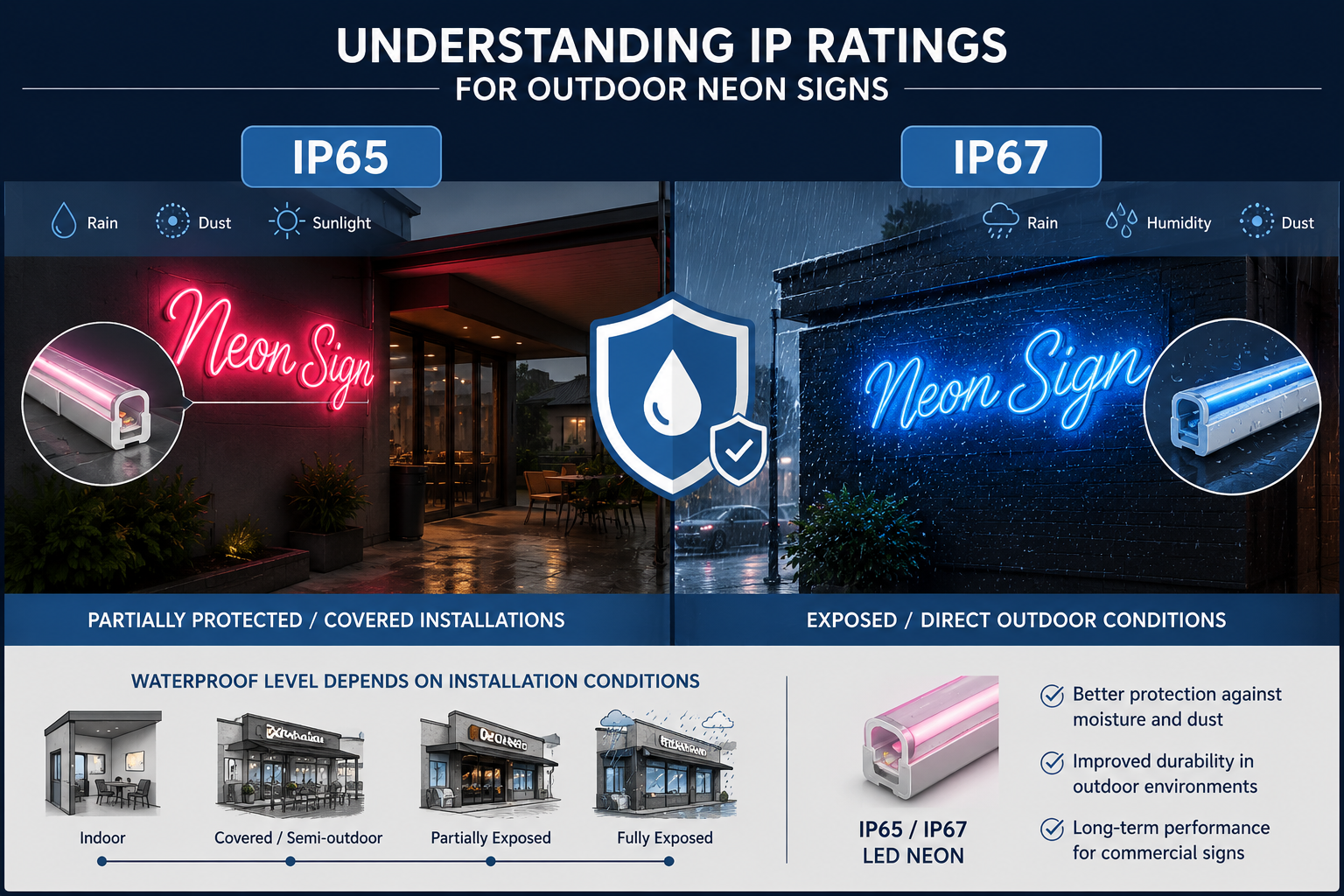
Bei kommerzieller Beschilderung im Freien wird der wasserdichte Schutz oft zu einem wichtigen Überdenken.
Viele Restaurants, Bars und Fassadenprojekte bevorzugen LED-Neonsysteme mit IP65- oder IP67-Rating Weil sie besseren Schutz vor Feuchtigkeit, Staub und wechselnden Wetterbedingungen bieten.
Im Allgemeinen:
- IP65 Wird häufig für teilweise geschützte Schaufenster oder abgedeckte Außenanlagen verwendet
- IP67 Wird häufig für Projekte bevorzugt, die Regen, Feuchtigkeit oder direkten Außenbedingungen ausgesetzt sind
Der ideale wasserdichte Wert hängt jedoch normalerweise von den Installationsbedingungen und nicht nur vom Schild ab.
Warum Outdoor-Materialauswahl wichtig ist
Die Materialauswahl kann auch die Langzeithaltbarkeit beeinflussen.
Viele kommerzielle Außenprojekte bevorzugen jetzt LED-Neon auf Silikonbasis Weil es im Allgemeinen eine bessere Flexibilität, UV-Beständigkeit und Wetterschutz bietet als Materialien, die hauptsächlich für dekorative Innenanwendungen ausgelegt sind.
Für Unternehmen, die langfristige Außeninstallationen planen, hängt die Zuverlässigkeit häufig davon ab, wie gut die Beschilderung mit der Umgebung übereinstimmt, in der sie tatsächlich funktionieren.
Langfristige Haltbarkeit hängt auch von der Umweltbelastung und der Installationsqualität ab. Kommerzielle Außenschilder, die Regen, Feuchtigkeit oder direkter Sonneneinstrahlung ausgesetzt sind, können im Laufe der Zeit unterschiedliche Wartungsanforderungen haben. Unternehmen, die Außenschilder auswerten, schauen häufiger auf Wie lange dauern benutzerdefinierte Leuchtreklamen? Bei der Planung wasserdichter Konfigurationen, Wartungszugang und langfristigen Betriebskosten.
Was Unternehmen vor dem Einbau von Neonschildern im Freien oft übersehen
Viele Neon-Projekte im Freien kämpfen wegen schlechter Designs nicht. Häufiger beginnen Probleme, wenn Unternehmen unterschätzen, wie das Zeichen in einem echten kommerziellen Umfeld funktioniert.
Ein Schild, das sich in einem Modell ausgewogen anfühlt, kann nach der Installation im Freien sehr unterschiedlich funktionieren. Betrachtungsabstand, Montagehöhe, Kundenbewegung und Umgebungsbeleuchtung beeinflussen die Sicht oft stärker als die Unternehmen anfangs erwarten.
Betrachtungsabstand ändert oft alles
Einer der häufigsten Fehler ist die Annahme, dass Kunden in jeder Umgebung auf die gleiche Weise Signage erleben.
Ein Geschäft mit Fußgängerzonen gegenüber funktioniert normalerweise anders als ein Geschäft am Straßenrand, in dem die Fahrer nur wenige Sekunden Zeit haben, um das Schild zu erkennen. Ebenso erfordert ein mehrere Meter überirdisches Fassadenschild oft andere Proportionen als die Schilder, die näher an der Augenhöhe positioniert sind.
In vielen kommerziellen Projekten schneiden sauberere Schriftzüge und einfachere Layouts normalerweise besser ab als visuell überfüllte Designs.
Umgebungsbeleuchtung kann die Sicht beeinträchtigen
Die nahe gelegene Schaufensterbeleuchtung, reflektierende Fenster, LED-Anzeigen und Straßenbeleuchtung können die Beschilderung nach Einbruch der Dunkelheit völlig verändern.
In einigen Umgebungen verbessert die Helligkeit allein nicht die Erkennung. Platzierung, Kontrast und Lesbarkeit sind oft genauso wichtig.
Wartungszugriff wird oft übersehen
Unternehmen konzentrieren sich manchmal stark auf das Erscheinungsbild, ohne zu berücksichtigen, wie einfach das Schild später gewartet werden kann.
Ein Schild, das hoch an einer Fassade montiert ist, kann möglicherweise gereinigt, elektrisch gewartet oder repariert werden. Bei größeren kommerziellen Projekten ist der Wartungszugang oft fast genauso wichtig wie die Installation selbst.
| Installationsfaktor | Warum es in realen Projekten wichtig ist |
|---|---|
| Betrachtungsabstand | Beeinflusst Schriftgröße und Lesbarkeit |
| Montagehöhe | beeinflusst, wie Kunden das Zeichen natürlich sehen |
| Beleuchtung in der Nähe | Ändert die Sichtbarkeit der Nacht |
| Kundenbewegung | Beeinflusst, wie schnell die Beschilderung erkannt wird |
| Wartungszugang | Beeinflusst langfristige Wartung |
In vielen erfolgreichen Projekten vermeiden Unternehmen in der Regel einen häufigen Fehler: das Design für das Erscheinungsbild und dann die Umgebung.
Wie Unternehmen das richtige Werbe-Neonschild für den Außenbereich wählen
Wählen Sie einen Werbespot Outdoor-Neonschild Hängt normalerweise davon ab, wo das Schild installiert wird, wie Kunden es sehen und was das Unternehmen mit der Beschilderung erwartet. Ein Schild für ein Restaurant am Straßenrand funktioniert selten genauso wie ein Schild, das an einer Hotelfassade oder einem Bareingang installiert ist.
Viele Unternehmen machen den Fehler, zuerst mit Design zu beginnen.
In der Praxis funktionieren kommerzielle Projekte in der Regel besser, wenn Entscheidungen mit Umgebung, Sichtbarkeit und Kundenverhalten beginnen. Sobald diese Faktoren klar sind, werden die Designentscheidungen oft einfacher und praktischer.
Beginnen Sie mit der Betrachtungsentfernung
Eines der ersten Dinge, die Unternehmen oft unterschätzen, ist, wie Kunden das Zeichen tatsächlich erleben.
Eine Schaufensterfront, die hauptsächlich für Fußgänger konzipiert wurde, ermöglicht normalerweise mehr visuelle Details, da die Kunden die Beschilderung aus nächster Nähe betrachten. Unternehmen mit Straßenlage profitieren jedoch häufig von einfacheren Schriftzügen und einer besseren Lesbarkeit, da die Fahrer nur wenige Sekunden Zeit haben, um die Ladenfront zu erkennen.
Ebenso erfordert die an größeren Fassaden installierte Beschilderung normalerweise eine andere Skalenplanung als die Schilder, die näher an der Augenhöhe angebracht sind.
| Anzeigesituation | Welche Unternehmen priorisieren normalerweise |
| Fußgängerzonen | Klare Ablesbarkeit im Nahbereich |
| Straßenstandorte | Fernerkennung |
| Große kommerzielle Fassaden | Skalierung und Sichtbarkeitsbalance |
| Essbereich im Freien | Sichtbarkeit ohne Blendung |
Wenn Sie verstehen, wo Kunden zuerst das Schild bemerken, werden Probleme in der Regel später verhindert.
Entscheiden Sie, was das Zeichen tatsächlich tun muss
Nicht jedes Unternehmen nutzt Neon im Freien aus dem gleichen Grund.
Einige Unternehmen benötigen hauptsächlich Kunden, um den Eingang leichter zu finden. Andere interessieren sich mehr für die Anerkennung, das Branding von Storefront oder die Schaffung von Atmosphäre nach Einbruch der Dunkelheit.
Restaurants priorisieren beispielsweise häufig die Sichtbarkeit, ohne dass sich die Ladenfront optisch überwältigt. Bars in Nachtlebensgebieten interessieren sich möglicherweise mehr für die Erkennbarkeit, da Kunden häufig mehrere Veranstaltungsorte beim Gehen vergleichen. Gewerbebauten und Hotels nähern sich häufig wieder anders und behandeln die Beleuchtung eher als Teil der Fassade als als eigenständiges Schild.
Wenn Sie die Hauptaufgabe des Zeichens frühzeitig kennen, wird es oft einfacher, spätere Entscheidungen zu erleichtern.

Beispiel dafür, wie flexibel LED-Neon zu einer kundenspezifischen Schrift für kommerzielle Beschilderungen im Freien geformt wird
Betrachten Sie die Umwelt vor den Materialien
Die Beschilderung im Freien steht normalerweise vor den Bedingungen. Die Innenbeschilderung wurde nie für die Handhabung entwickelt.
Regen, Feuchtigkeit, direktes Sonnenlicht, Windbelastung und wechselnde Temperaturen können die langfristige Leistung beeinflussen. Dies ist einer der Gründe, warum viele kommerzielle Projekte wasserdichte Außenkonfigurationen priorisieren, insbesondere für Restaurantgeschäfte, Gastfreundschaftseingänge und Gebäudefassaden, die dem Wetter ausgesetzt sind.
Die Wetterbeständigkeit allein löst jedoch selten jede Herausforderung.
Die Materialauswahl wird auch einfacher, wenn Unternehmen verstehen So kaufen Sie benutzerdefinierte Neonschilder und wählen Materialien, insbesondere für Projekte, die Regen, Feuchtigkeit oder wechselnden Bedingungen im Freien ausgesetzt sind.
Ein Schild, das unter einer überdachten Ladenfront installiert ist, kann eine andere Planung erfordern als eines, das direkt dem Regen ausgesetzt ist. Ebenso profitieren die Essbereiche im Freien häufig von einer kontrollierteren Helligkeit, da die Kunden über längere Zeiträume in der Nähe der Beleuchtung bleiben.
Denken Sie früher als erwartet über die Wartung nach
Die Wartung ist einer der am meisten übersehenen Teile der Planung der kommerziellen Beschilderung.
Ein Schild, das hoch über einer Fassade montiert ist, kann möglicherweise gereinigt, elektrisch gewartet oder repariert werden. Unternehmen konzentrieren sich manchmal stark auf das Erscheinungsbild, ohne zu berücksichtigen, wie leicht das Zeichen später zugegriffen werden kann.
Bei größeren kommerziellen Projekten ist der Installationszugang oft fast genauso wichtig wie das Schild selbst.
In vielen erfolgreichen Projekten machen Unternehmen in der Regel eine wichtige Denkveränderung:
Sie wählen die Beschilderung basierend auf der Umgebung zuerst und das Design zweitens.
Wie Fassaden-Neonschilder an Gewerbebauten funktionieren
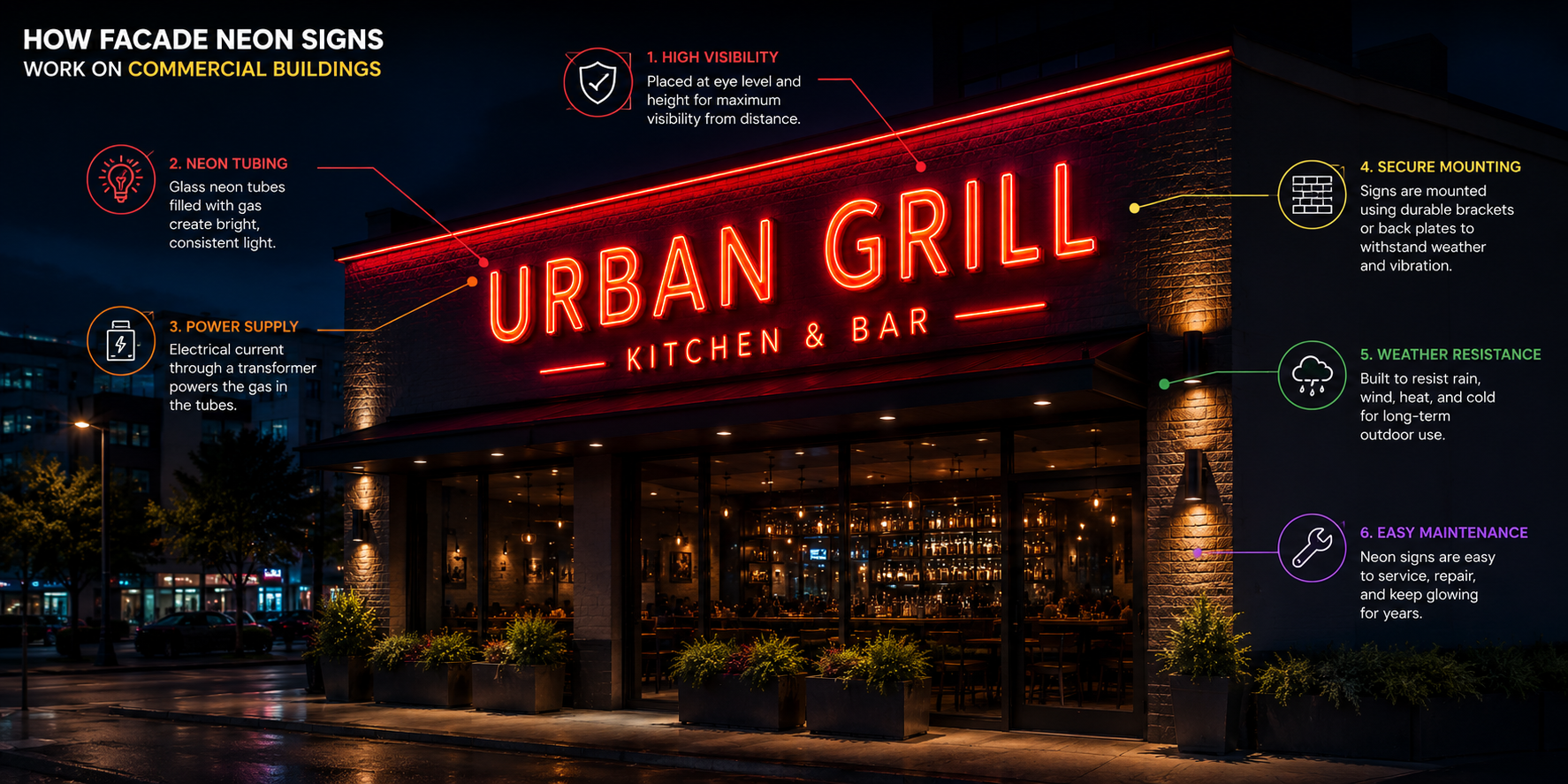
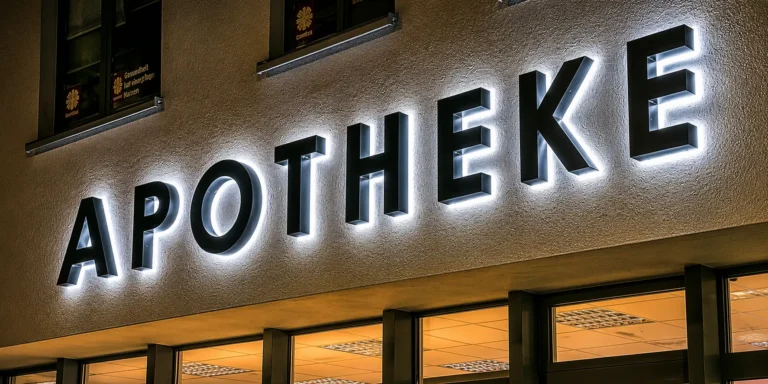
Fassaden-Neonschilder sind normalerweise so konzipiert, dass sie die Gebäudeerkennung verbessern, die Sichtbarkeit der Schaufenster verbessern und Unternehmen nach Einbruch der Dunkelheit auffällig bleiben. Im Gegensatz zu Restaurants oder Nachtbeschilderungen funktionieren Fassadenanwendungen häufig am besten, wenn sich die Beleuchtung eher in das Gebäude integriert anfühlt als optisch von diesem getrennt.
Gewerbebauten gehen in der Regel anders auf die Beschilderung an, da Kunden das Gebäude häufig aus größerer Entfernung erleben. Eine Restaurant-Front erfordert möglicherweise nur Sicht auf dem Bürgersteig, während Hotels, Einkaufszentren, Unterhaltungsstätten und gemischt genutzte Entwicklungen möglicherweise von Parkbereichen, nahe gelegenen Straßen oder Kreuzungen erkannt werden müssen.
Warum Skalierung und Platzierung wichtig sind
Bei der Fassadenbeschilderung hängt die Sicht in der Regel von mehr als nur der Schildgröße ab.
Ein Schild, das sich auf einem kleineren Laden optisch ausgewogen anfühlt, kann nach der Installation in einem größeren Gebäude nur schwer zu erkennen sein. Gleichzeitig verbessert die Erhöhung der Zeichengröße nicht immer die Leistung, wenn die Beschriftung schnell zu verarbeiten oder außerhalb der natürlichen Blickwinkel fällt.
Bei vielen kommerziellen Fassadenprojekten beeinflussen Platzierung, Lesbarkeit und Kundensichtlinien häufig die Anerkennung als die Dimensionen allein.
Sichtbarkeit von Fernabständen ändert häufig Designentscheidungen
Fassadenschilder werden häufig aus größeren Entfernungen als Schaufensterschilder betrachtet.
Das bedeutet, dass Unternehmen häufig Prioritäten setzen:
- Lesbare Typografie das bleibt aus der Ferne klar
- Stärkerer Kontrast für die Nachtsicht
- Ausgewogene Helligkeit ohne das Gebäude von außen zu überwältigen
- Richtige Montagehöhe Basierend auf den Blickwinkeln der Kunden
Für gewerbliche Gebäude, Hotels und Unterhaltungsstätten am Straßenrand ist die Erkennbarkeit oft wichtiger als die visuelle Komplexität.
Wetter- und Installationsplanung
Fassadenschilder neigen auch zu einer größeren Belichtung im Freien.
Regen, Feuchtigkeit, direkte Sonneneinstrahlung, Windeinwirkung und Montagehöhe können die langfristige Haltbarkeit beeinflussen. Dies ist einer der Gründe, warum viele kommerzielle Fassadenprojekte wasserdichte LED-Neonsysteme bevorzugen, insbesondere wenn der Zugang zur Wartung nach der Installation schwieriger wird.
Vor der Fertigstellung eines Fassadenschildes bewerten Unternehmen häufig:
- Wie weit entfernt Kunden das Gebäude zuerst bemerken
- Ob der Verkehr hauptsächlich fußgänger- oder fahrzeugbasiert ist
- Wenn die Beleuchtung in der Nähe nach Einbruch der Dunkelheit um Aufmerksamkeit konkurriert
- Ob das Schild Branding, Wayfinding oder Eingangserkennung unterstützt
Bei vielen kommerziellen Fassadenprojekten ist die Neon-Beschilderung im Freien normalerweise am besten, wenn die architektonische Integration, die Sichtweite und die praktische Installation der Installation zusammen berücksichtigt werden.
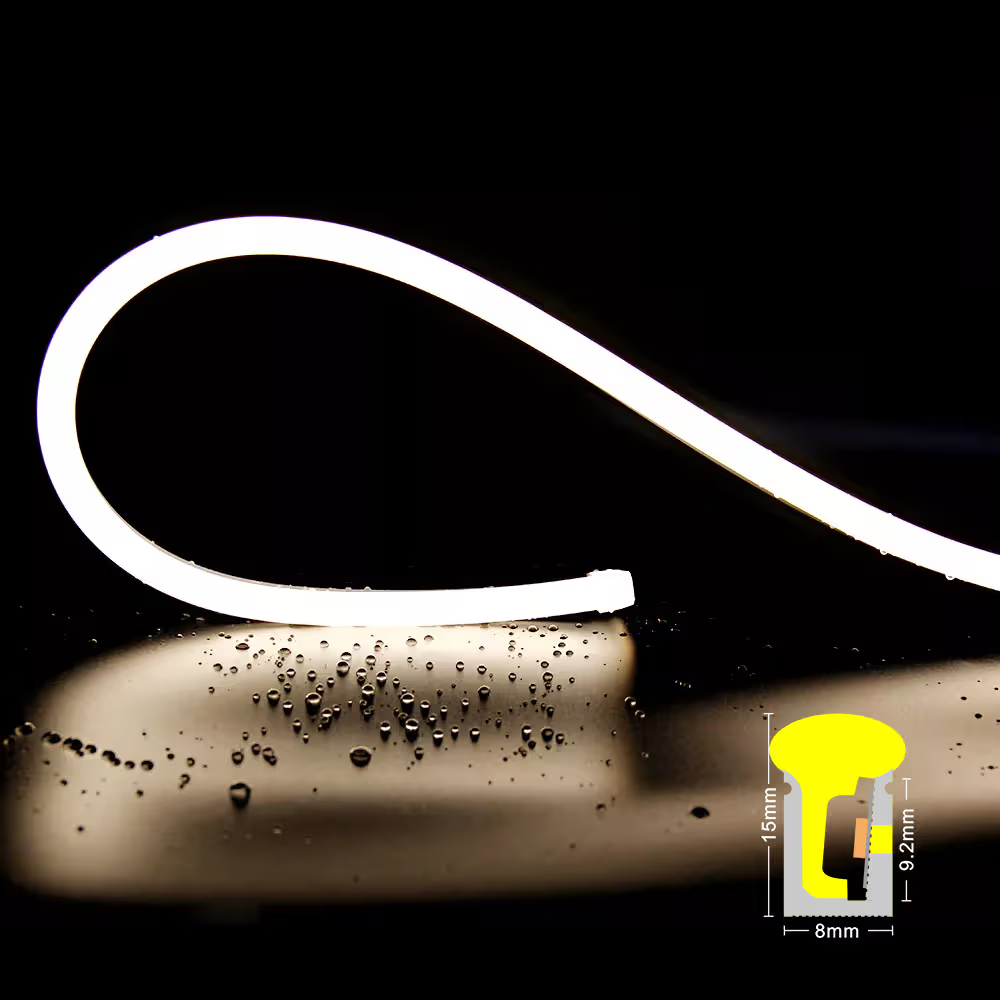
Seite Biegung S0815 Silikon LED Neon Flex Licht
Warum OEM-Support von Bedeutung für kommerzielle Zeichenprojekte
Bei größeren kommerziellen Projekten wird Konsistenz in der Regel zu den größten Prioritäten.
Eine Restaurantkette, die mehrere Standorte eröffnet, möchte, dass die Beschilderung selten von einem Laden zum anderen merklich unterschiedlich aussieht. Hotels, Einzelhandelsgruppen und Hotelunternehmen erwarten in der Regel, dass Farben, Abmessungen, Helligkeit und Markendetails an den Standorten visuell erkennbar bleiben.
Hier wird häufig die Unterstützung der OEM-Herstellung nützlich.
Anstatt die generischen Beschilderungen für jedes Projekt anzupassen, können Unternehmen die Spezifikationen von Anfang an standardisieren, basierend auf den tatsächlichen Installationsanforderungen.
Das kann sein:
- Maßanfertigungen für verschiedene Fassaden
- Wasserdichte Außenkonfigurationen
- Anforderungen an die Acryl-Unterstützung
- Helligkeitseinstellungen für Sichtbedingungen
- Montageüberlegungen für verschiedene Schaufenster
- Konsistente Markenpräsentation über Standorte hinweg
Bei kommerziellen Projekten geht es oft weniger um die Anpassung selbst als um die spätere Verringerung der Inkonsistenz.
Bei größeren Projekten für kommerzielle Beschilderungen wird die Unterstützung von OEM häufig am nützlichsten, wenn Unternehmen über mehrere Standorte hinweg konsistente Spezifikationen benötigen. Restaurantgruppen, Hotelmarken und Einzelhandelsketten erfordern möglicherweise standardisierte Helligkeit, wasserdichte Konfigurationen, Montagemethoden und Markenfarben und passen gleichzeitig die Beschilderung an verschiedene Installationsumgebungen an.
Unternehmen, die Rollouts mit mehreren Standorten oder Fassadeninstallationen verwalten, werden häufig bewertet Was ist beim Kauf von LED Neon Flex für große Projekte zu beachten? , insbesondere wenn die Abdichtung, die Montagemethoden und die Konsistenz über die Standorte hinweg wichtig sind.
Gleichzeitig erfordern die meisten größeren Projekte noch Flexibilität.
Ein Restaurant am Straßenrand benötigt möglicherweise eine andere Sichtbarkeitsplanung als ein Laden in einem Einkaufsviertel. Ein mehrstöckiges Fassadenschild kann andere Montageüberlegungen erfordern als die Schilder, die näher am Fußgängerverkehr positioniert sind.
Bei kommerziellen Projekten mit mehreren Standorten oder kundenspezifischen Fassadenanforderungen sind die Hersteller häufig früher an der Planung beteiligt, sodass Abmessungen, Montagemethoden, Abdichtung und Markenkonsistenz vor Produktionsbeginn berücksichtigt werden können.
Was Unternehmen erwarten sollten, für benutzerdefinierte Outdoor-Neonschilder zu bezahlen
Die Fabrikpreise für benutzerdefinierte Neonschilder im Freien hängen in der Regel weniger von der Größe der Schilder ab als von der Gesamtlänge der Neon, der Beschriftungsdichte, den wasserdichten Anforderungen, dem Trägermaterial und der Komplexität der Produktion. Für Restaurants, Bars, Schaufenster und Fassadenprojekte ist die Preisgestaltung häufig einfacher zu schätzen, sobald die Installationsbedingungen und die Sichtbarkeitsanforderungen frühzeitig verstanden werden.
Für gewerbliche Käufer, insbesondere Restaurants, Bars, Gastgewerbegruppen und Schaufensterprojekte, ist die Preisgestaltung in der Regel einfacher zu schätzen, sobald Größe und Komplexität frühzeitig verstanden werden.
Geschätzte Werkspreisreferenz für kundenspezifische Neonschilder (0,5 m – 1 m)
| Schildgröße (längste Seite) | Typischer Designtyp | Geschätzte LED-Neonnutzung | Empfehlung für Acryl-Backing | Geschätzter Werkspreis (Exw USD / Set) |
| 0,5 m / 50 cm (~20″) | Kleines Logo, kurzer Wortlaut, einfacher Schriftzug | 2–3,5 m | 4mm transparentes Acryl | $20–$32 |
| 0,5 m / 50 cm (~20″) | Dekoratives Layout, dichtere Formulierung | 4–6 m | 4mm transparentes Acryl | $32–$45 |
| 0,75m / 75 cm (~30″) | Restaurant-Logo, kurzer Firmenname | 4–7 m | 5mm Acryl für bessere Stabilität | $38–$55 |
| 0,75m / 75 cm (~30″) | Mehrwort-Zeichen, geschichtetes Design | 7–10 m | 5mm Acryl zur Verbesserung der Ebenheit | $55–$80 |
| 1,0 m / 100 cm (~40″) | Größere Schaufensterausbildung | 6–9 m | 5mm Acryl zur Reduzierung des Biegerisikos | $55–$78 |
| 1,0 m / 100 cm (~40″) | Komplexes Logo, mehrzeiliges Branding | 10–16 m | 5mm Acryl + optionaler UV-Untergrund | $88–$135 |
Diese Preise basieren normalerweise auf Standard-EXW-Angeboten und können sich je nach wasserdichten Anforderungen, Acryl-Finish, export-zertifizierten Netzteilen, Fernsteuerungsoptionen und Verpackungsstandards für den Versand nach Übersee ändern.
Die Zeichengröße allein bestimmt jedoch selten das endgültige Angebot.
In vielen Projekten ändert sich die Preisgestaltung aufgrund der Produktionsdetails, die die Unternehmen zunächst übersehen. Ein Schild mit mehreren Wörtern, dichten Strichen oder benutzerdefinierten Formen erfordert normalerweise mehr LED-Neonmaterial und mehr manuelle Montagezeit. Ebenso erfordern größere Schilder häufig eine stärkere Acryl-Unterlage, um das Biegen während des Transports oder der Wandinstallation zu verringern.
Was ändert normalerweise die Fabrikpreise?
| Kostenvariable | Warum es die Preisgestaltung in realen Projekten ändert |
| Schriftdichte | Mehr Hübe und engere Kurven erfordern in der Regel zusätzliche LED-Neon- und längere Montagezeit |
| Gesamtneonlänge | Größere Formulierungen oder Logos erhöhen den Materialverbrauch |
| Acryldicke | Schilder über ~75 cm erfordern häufig eine dickere Rückseite für die Transportstabilität |
| Außenabdichtung | Außenprojekte für Storefront erfordern möglicherweise wetterbeständige Konfigurationen |
| Montageanforderungen | Fassadenbeschilderung erfordert manchmal unterschiedliche Montagevorbereitung |
| Exportverpackung | Verstärkte Verpackungen können sich auf die Preisgestaltung für Lieferungen in Übersee auswirken |
Bei Restaurants, Bars und Fassadenprojekten profitieren Unternehmen häufig von der Diskussion der Installationsbedingungen, bevor die Produktion beginnt. Ein Schild für eine überdachte Ladenfront kann eine andere Konfiguration erfordern als ein Schild, das nach Einbruch der Dunkelheit Regen, direkter Sonneneinstrahlung oder hoher Sicht für Fußgänger ausgesetzt ist.
Abschluss
Kommerzielle Neonschilder im Freien funktionieren am besten, wenn sie in der Umgebung von realen Umgebungen und nicht nur für Design geplant sind. Restaurants, Bars und kommerzielle Fassaden haben oft sehr unterschiedliche Sichtbedürfnisse, was bedeutet, dass der gleiche Weg zur Beschilderung selten überall funktioniert.
In der Praxis beeinflussen Faktoren wie Betrachtungsabstand, Umgebungsbeleuchtung, Wetterexposition und Kundenbewegung häufig die Leistung, die die Unternehmen zunächst erwarten. Ein Schild, das gut für einen Nachtlokal funktioniert, kann sich auf einem Hoteleingang oder einer Restaurantterrasse völlig fehl am Platz anfühlen.
Wenn Unternehmen überlegen, wie Kunden den Raum nach Einbruch der Dunkelheit erleben, kommerzielle outdoor-neonschilder Normalerweise fühlen Sie sich natürlicher, leichter zu erkennen und besser mit dem Gebäude selbst verbunden. Bei vielen kommerziellen Projekten hängt eine erfolgreiche Neon-Beschilderung im Freien normalerweise von der Balancing-Sichtbarkeit, der Umweltbeständigkeit und der Installationsplanung ab und nicht nur von Design.
FAQs
Verwandte Artikel