English
  简体中文
简体中文  Deutsch
  Español
  Français
  Italiano
  日本語
日本語  한국어
한국어  Polski
  Português
  Русский
  Türkçe
  Nederlands
  Tiếng Việt
  ไทย
ไทย 
Commercial outdoor neon signs are widely used across restaurants, bars, retail storefronts, and building facades to improve nighttime visibility, strengthen brand recognition, and make businesses easier to identify in competitive commercial environments. However, successful outdoor signage usually depends on more than appearance alone. Factors such as viewing distance, weather exposure, mounting conditions, surrounding lighting, and customer movement can significantly influence how a sign performs once installed.
A restaurant storefront may need signage that improves entrance visibility without overwhelming outdoor dining areas, while nightlife venues often prioritize recognizability after dark in highly competitive environments. Commercial buildings and facade projects usually approach signage differently again, treating illuminated signage as part of the architecture itself rather than as a separate visual element.
For this reason, commercial outdoor neon signs rarely work as a one-size-fits-all solution. Waterproofing, brightness, installation height, long-distance readability, and material durability often matter as much as design.
In this article, we explore how outdoor commercial neon signs are used across restaurants, bars, and facades, along with the practical considerations businesses should evaluate before installation.
Quick Answer: Are Commercial Outdoor Neon Signs Suitable for Restaurants, Bars & Facades?
Commercial outdoor neon signs are widely used for restaurants, bars, retail storefronts, and building facades because they improve visibility, strengthen brand recognition, and help businesses remain noticeable after dark. For most exterior commercial projects, waterproof LED neon signs are generally preferred over traditional glass neon due to better durability, lower maintenance, and improved weather resistance. Depending on the environment, many businesses choose IP65 or IP67-rated outdoor neon systems to handle rain, humidity, dust, and long-term exterior exposure while maintaining consistent visibility.
What Makes Outdoor Commercial Neon Signs Suitable for Business Use?
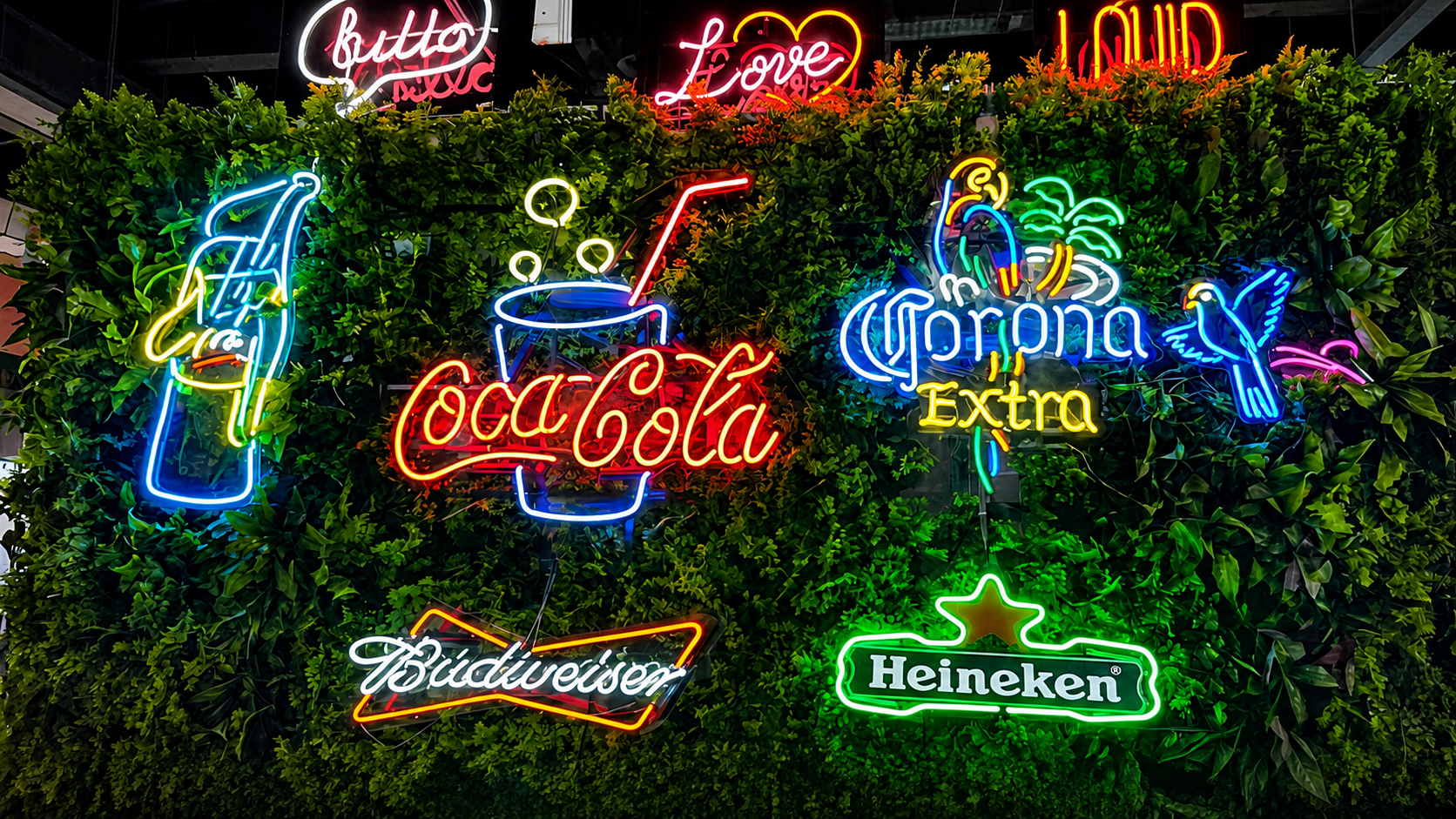
Commercial outdoor neon signs are designed differently from decorative indoor neon because exterior business environments create challenges that indoor signage was never built to handle. Restaurants, bars, storefronts, and commercial facades often face rain exposure, humidity, changing temperatures, strong sunlight, and varying viewing distances, which means outdoor signage usually requires more durable construction and installation planning.
For most commercial applications, performance depends on whether the sign can remain visible, reliable, and easy to maintain after long-term outdoor exposure. This is one reason many businesses now prefer waterproof LED neon systems for exterior installations, particularly where visibility after dark and weather resistance both matter.
Weather Resistance & Waterproof Protection
Outdoor signage often performs differently depending on environmental exposure. A restaurant patio exposed to rain usually requires different protection than a storefront installed under overhead coverage.
Many commercial projects therefore prioritize waterproof outdoor neon systems, particularly for restaurant facades, hospitality entrances, and roadside storefronts where weather exposure becomes part of normal operating conditions. In exterior applications, IP65 and IP67-rated LED neon signs are commonly selected because they provide stronger protection against moisture, dust, and outdoor environmental conditions.
Visibility From Different Viewing Distances
Commercial outdoor signage is rarely viewed the same way in every location.
A storefront located on a pedestrian street may allow customers to recognize smaller details up close, while roadside businesses often depend more heavily on fast recognition from longer distances. Because of this, brightness, lettering clarity, and placement often influence visibility more than sign size alone.
In many commercial environments, clean typography and stronger contrast usually perform more consistently than visually crowded designs.
Material Durability for Long-Term Outdoor Use
Outdoor commercial signage also needs materials capable of handling long-term environmental exposure.
Many modern exterior neon projects use silicone-based LED neon because it tends to offer better flexibility, UV resistance, and weather protection than materials intended mainly for indoor decorative use. For commercial businesses, long-term durability often matters as much as visual appearance, especially where maintenance access becomes difficult after installation.
Why Do Businesses Use Commercial Outdoor Neon Signs?
Businesses typically use commercial outdoor neon signs to improve nighttime visibility, strengthen brand recognition, and make storefronts easier to identify in busy commercial environments. For many restaurants, bars, hotels, and retail spaces, outdoor signage is not simply decorative. It often helps customers recognize entrances faster and remember a business more easily after dark.
However, what makes signage effective usually depends on the environment itself.
A restaurant on a busy dining street may prioritize entrance visibility so customers can quickly identify the storefront during evening hours. Bars in nightlife districts often focus more heavily on recognizability because customers may be comparing multiple venues while walking. Hotels and commercial buildings usually approach signage differently, treating illuminated signs as part of the facade rather than a separate visual feature.
In many commercial settings, visibility alone is rarely enough. A sign also needs to remain readable and practical once installed outdoors. Viewing distance, surrounding lighting, mounting height, and customer movement can all affect how signage performs in real conditions.
For example, pedestrian-facing storefronts often support more visual detail because customers experience the sign up close. Road-facing locations, however, usually benefit from cleaner lettering and stronger contrast since drivers only have a few seconds to recognize the business.
Weather conditions can also influence long-term performance. Businesses operating in areas exposed to rain, humidity, or direct sunlight often prefer waterproof LED neon systems because exterior environments place different demands on signage than indoor spaces.
| Commercial Environment | What the Sign Usually Prioritizes |
|---|---|
| Restaurant storefronts | Entrance visibility and recognition |
| Nightlife venues | Visibility after dark and memorability |
| Shopping centers | Brand recognition among nearby stores |
| Hotels and hospitality | Architectural integration |
| Mixed-use buildings | Building identification and wayfinding |
Because customer behavior and viewing conditions vary across commercial environments, businesses usually get better results when signage decisions are based on visibility needs, installation conditions, and customer movement rather than appearance alone.
This becomes especially noticeable in restaurants, where signage often needs to improve visibility without overpowering the overall atmosphere.
How Restaurants Actually Use Outdoor Neon Signs

Restaurants usually use outdoor neon signs to improve entrance visibility, strengthen storefront identity, and help customers recognize the business more easily after dark. However, what works for one restaurant environment may not work equally well for another. Customer movement, storefront competition, outdoor seating, and viewing distance can all influence how signage performs in real conditions.
Restaurant Storefront Visibility
For many restaurants, the first priority is helping customers quickly recognize the entrance, especially in busy dining streets where several storefronts compete for attention after sunset.
A takeaway restaurant or fast-casual venue may benefit from stronger visibility and simpler lettering because customers often make quick dining decisions while moving through crowded areas. In these environments, readability from a distance often matters more than decorative complexity.
Sit-down restaurants usually approach signage somewhat differently. Visibility still matters, but signage often works best when it feels connected to the storefront rather than visually overpowering the dining experience. Many hospitality-focused restaurants prefer signage that supports atmosphere while still remaining easy to recognize after dark.
Outdoor Dining & Patio Areas
Restaurants with outdoor seating often face different challenges.
A sign that feels balanced from across the street may suddenly feel too bright once customers sit nearby during dinner service. Excessive brightness can sometimes create glare around outdoor dining areas, particularly in patio-facing spaces where guests remain close to the lighting for longer periods.
For this reason, many restaurants prefer more controlled brightness levels that maintain visibility without becoming visually distracting.
Different Restaurant Types Often Need Different Signage
Restaurant type can also influence what signage performs best.
Fast-casual restaurants often prioritize stronger nighttime visibility and faster recognition because customer decisions happen quickly. Premium dining spaces, cafés, rooftop restaurants, and hospitality-focused venues may instead prefer signage that feels softer and more integrated into the overall environment.
This is one reason restaurants located on the same street often approach signage very differently, even when customer traffic appears similar.
Recommended Outdoor Setup for Restaurants
For many restaurant storefronts, businesses often prefer:
- IP67 waterproof LED neon for outdoor durability and weather resistance
- Warm white or amber lighting to create a welcoming storefront appearance
- Readable typography that remains clear from different viewing distances
- Controlled brightness levels to reduce glare near patios or outdoor seating areas
In many restaurant environments, outdoor neon signage usually performs best when customers can recognize the storefront quickly without the lighting feeling visually overwhelming.
Why Bars Often Use Outdoor Neon Differently Than Restaurants

Bars usually approach outdoor neon differently because customer behavior changes significantly after dark. Unlike restaurants, where many customers already know where they are going, nightlife venues often compete for spontaneous attention. People may already be walking through busy entertainment areas comparing multiple venues before deciding where to stop.
Because of this, outdoor signage in nightlife environments often becomes part of the first impression rather than simply helping customers identify the location.
Visibility in Nightlife Environments
Bars, pubs, and nightlife venues often operate in visually crowded environments where customers are surrounded by illuminated storefronts, LED displays, vehicle lighting, and competing venues.
In these conditions, visibility alone is rarely enough. Customers also need to recognize and remember the venue quickly. For this reason, readability often matters more than overly decorative designs. Clean lettering, stronger contrast, and thoughtful placement usually perform more consistently than visually crowded signage.
Different Bar Types Often Need Different Signage
Not every nightlife venue approaches signage in the same way.
Sports bars often prioritize stronger visibility because faster recognition helps attract walk-in customers. Cocktail lounges and rooftop bars may prefer more controlled lighting that supports atmosphere without overpowering the venue entrance. Live music venues often focus more heavily on recognizability so visitors can identify the location quickly after dark.
The surrounding environment also shapes the decision. A rooftop cocktail space may care more about ambiance, while a street-facing sports bar competing with nearby venues may prioritize stronger visibility and clearer branding.
Recommended Outdoor Setup for Bars & Nightlife Venues
For many nightlife businesses, operators often prefer:
- Waterproof LED neon systems for long-term outdoor durability
- Higher contrast typography for easier nighttime readability
- Moderate-to-strong brightness levels to remain noticeable in competitive nightlife areas
- Weather-resistant outdoor materials for rain, humidity, and changing temperatures
In many nightlife environments, outdoor signage usually performs best when recognizability and atmosphere work together rather than competing with each other.
Waterproofing & Outdoor Reliability for Commercial Neon Signs
Outdoor commercial neon signs are expected to operate in environments that indoor signage was never designed to handle. Rain, humidity, sunlight, dust, and changing temperatures can all influence how signage performs over time. For restaurants, bars, storefronts, and facade projects, outdoor reliability often matters as much as visual appearance.
One of the biggest mistakes businesses make is assuming all neon signs are equally suitable for exterior use.
In practice, outdoor projects usually require more durable materials, waterproof construction, and installation planning to maintain long-term performance.
Why Outdoor Commercial Neon Signs Sometimes Fail

Many outdoor signage problems begin long before installation.
In some cases, businesses focus heavily on design while overlooking environmental exposure or power requirements. A sign that performs well indoors may struggle outdoors if weather protection or electrical planning is underestimated.
Common outdoor signage issues often include:
| Common Problem | What Usually Causes It | Practical Solution |
|---|---|---|
| Water damage | Weak sealing or indoor-rated materials | Waterproof IP65/IP67 configurations |
| Flickering | Poor driver protection or unstable power supply | Weather-protected outdoor power systems |
| Reduced brightness | Voltage drop or unsuitable placement | Proper transformer planning and visibility positioning |
| Material aging | Long-term UV exposure | UV-resistant silicone LED neon |
| Maintenance difficulty | Poor installation access | Maintenance planning before installation |
Understanding IP Ratings for Outdoor Neon Signs
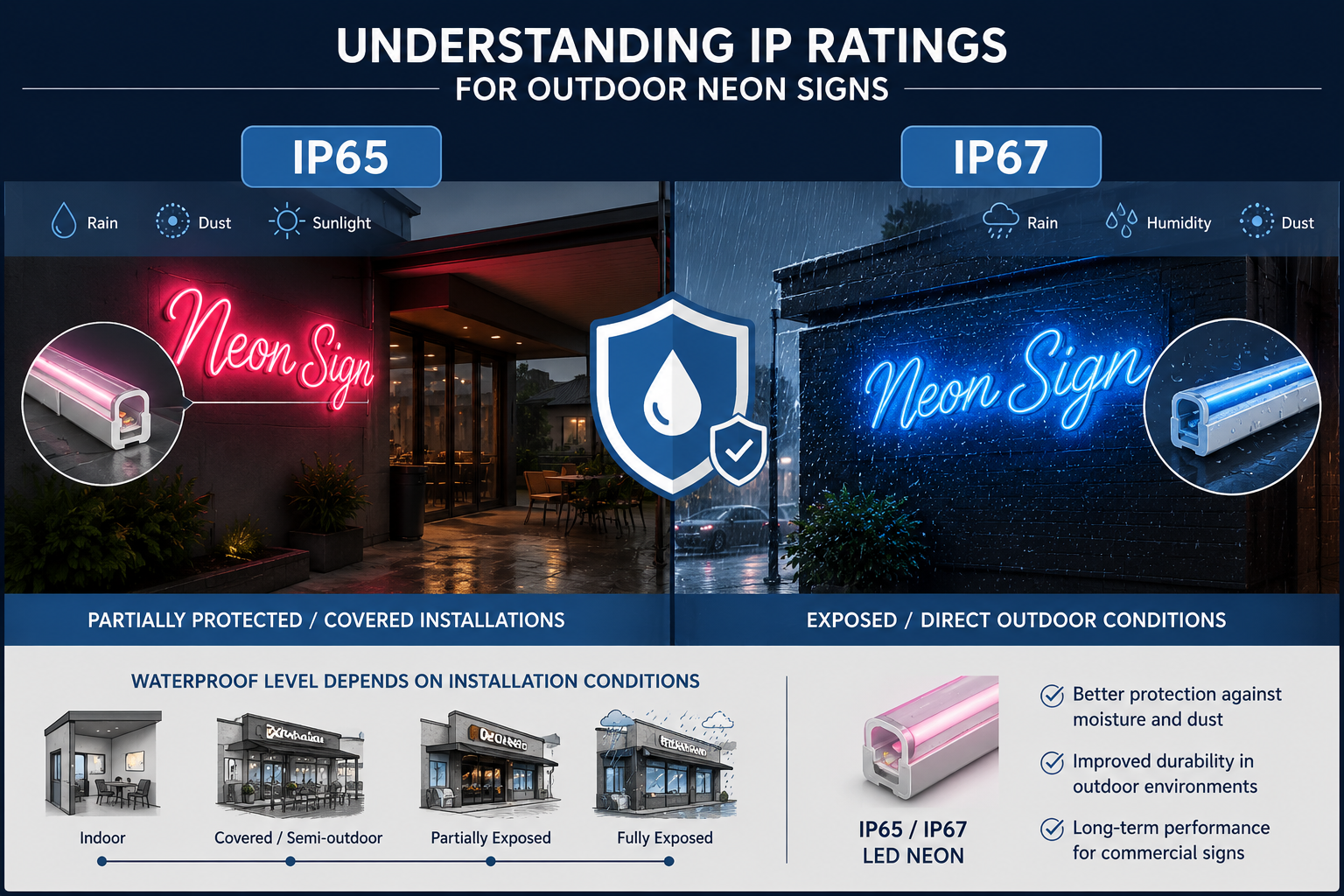
For outdoor commercial signage, waterproof protection often becomes an important consideration.
Many restaurant storefronts, bars, and facade projects prefer IP65 or IP67-rated LED neon systems because they provide better protection against moisture, dust, and changing weather conditions.
In general:
- IP65 is commonly used for partially protected storefronts or covered exterior installations
- IP67 is often preferred for projects exposed to rain, humidity, or direct outdoor conditions
However, the ideal waterproof level usually depends on installation conditions rather than the sign alone.
Why Outdoor Material Selection Matters
Material choice can also influence long-term durability.
Many commercial exterior projects now prefer silicone-based LED neon because it generally provides better flexibility, UV resistance, and weather protection than materials mainly designed for indoor decorative applications.
For businesses planning long-term exterior installations, reliability often depends on how well signage matches the environment where it will actually operate.
Long-term durability also depends on environmental exposure and installation quality. Outdoor commercial signs exposed to rain, humidity, or direct sunlight may experience different maintenance needs over time. Businesses evaluating exterior signage often look more closely at how long custom neon signs last when planning waterproof configurations, maintenance access, and long-term operating costs.
What Businesses Often Overlook Before Installing Outdoor Neon Signs
Many outdoor neon projects do not struggle because of poor design. More often, problems begin when businesses underestimate how the sign will function in a real commercial environment.
A sign that feels balanced in a mockup may perform very differently once installed outdoors. Viewing distance, mounting height, customer movement, and surrounding lighting often influence visibility more than businesses initially expect.
Viewing Distance Often Changes Everything
One of the most common mistakes is assuming customers experience signage the same way in every environment.
A pedestrian-facing storefront usually works differently from a roadside business where drivers only have a few seconds to recognize the sign. Likewise, a facade sign installed several meters above ground often requires different proportions than signage positioned closer to eye level.
In many commercial projects, cleaner lettering and simpler layouts usually perform better than visually crowded designs.
Surrounding Lighting Can Affect Visibility
Nearby storefront lighting, reflective windows, LED displays, and street lighting can completely change how signage feels after dark.
In some environments, increasing brightness alone does not improve recognition. Placement, contrast, and readability often matter just as much.
Maintenance Access Is Often Overlooked
Businesses sometimes focus heavily on appearance without considering how easily the sign can be serviced later.
A sign mounted high on a facade may eventually require cleaning, electrical servicing, or repairs. For larger commercial projects, maintenance access often matters almost as much as the installation itself.
| Installation Factor | Why It Matters in Real Projects |
|---|---|
| Viewing distance | Influences lettering size and readability |
| Mounting height | Affects how customers naturally see the sign |
| Nearby lighting | Changes nighttime visibility |
| Customer movement | Influences how quickly signage is recognized |
| Maintenance access | Affects long-term servicing |
In many successful projects, businesses usually avoid one common mistake: designing for appearance first and environment second.
How Businesses Choose the Right Commercial Outdoor Neon Sign
Choosing a commercial outdoor neon sign usually depends on where the sign will be installed, how customers will view it, and what the business expects the signage to achieve. A sign designed for a roadside restaurant rarely works the same way as one installed on a hotel facade or bar entrance.
Many businesses make the mistake of starting with design first.
In practice, commercial projects usually work better when decisions begin with environment, visibility, and customer behavior. Once those factors are clear, design choices often become easier and more practical.
Start With Viewing Distance
One of the first things businesses often underestimate is how customers will actually experience the sign.
A storefront designed mainly for pedestrians usually allows more visual detail because customers view the signage up close. Road-facing businesses, however, often benefit from simpler lettering and stronger readability because drivers only have a few seconds to recognize the storefront.
Likewise, signage installed on larger facades usually requires different scale planning than storefront signs positioned closer to eye level.
| Viewing Situation | What Businesses Usually Prioritize |
| Pedestrian storefronts | Clear close-range readability |
| Roadside locations | Long-distance recognition |
| Large commercial facades | Scale and visibility balance |
| Outdoor dining areas | Visibility without creating glare |
Understanding where customers first notice the sign usually prevents visibility problems later.
Decide What the Sign Actually Needs to Do
Not every business uses outdoor neon for the same reason.
Some businesses mainly need customers to locate the entrance more easily. Others care more about building recognition, storefront branding, or creating atmosphere after dark.
Restaurants, for example, often prioritize visibility without making the storefront feel visually overwhelming. Bars in nightlife areas may care more about recognizability because customers are often comparing multiple venues while walking. Commercial buildings and hotels frequently approach signage differently again, treating lighting as part of the facade itself rather than a standalone sign.
Knowing the sign’s primary job early often makes later decisions much easier.

Example of how flexible LED neon is formed into custom lettering for commercial outdoor signage
Consider the Environment Before Materials
Outdoor signage usually faces conditions indoor signage was never designed to handle.
Rain, humidity, direct sunlight, wind exposure, and changing temperatures can all influence long-term performance. This is one reason many commercial projects prioritize waterproof outdoor configurations, particularly for restaurant storefronts, hospitality entrances, and building facades exposed to weather.
However, weather resistance alone rarely solves every challenge.
Material selection also becomes easier when businesses understand how to buy custom neon signs and choose materials, particularly for projects exposed to rain, humidity, or changing outdoor conditions.
A sign installed under a covered storefront may require different planning than one exposed directly to rain. Likewise, outdoor dining areas often benefit from more controlled brightness because customers remain close to the lighting for longer periods.
Think About Maintenance Earlier Than Expected
Maintenance is one of the most overlooked parts of commercial signage planning.
A sign mounted high above a facade may eventually require cleaning, electrical servicing, or repairs. Businesses sometimes focus heavily on appearance without considering how easily the sign can be accessed later.
For larger commercial projects, installation access often matters almost as much as the sign itself.
In many successful projects, businesses usually make one important shift in thinking:
They choose signage based on the environment first and design second.
How Facade Neon Signs Work on Commercial Buildings
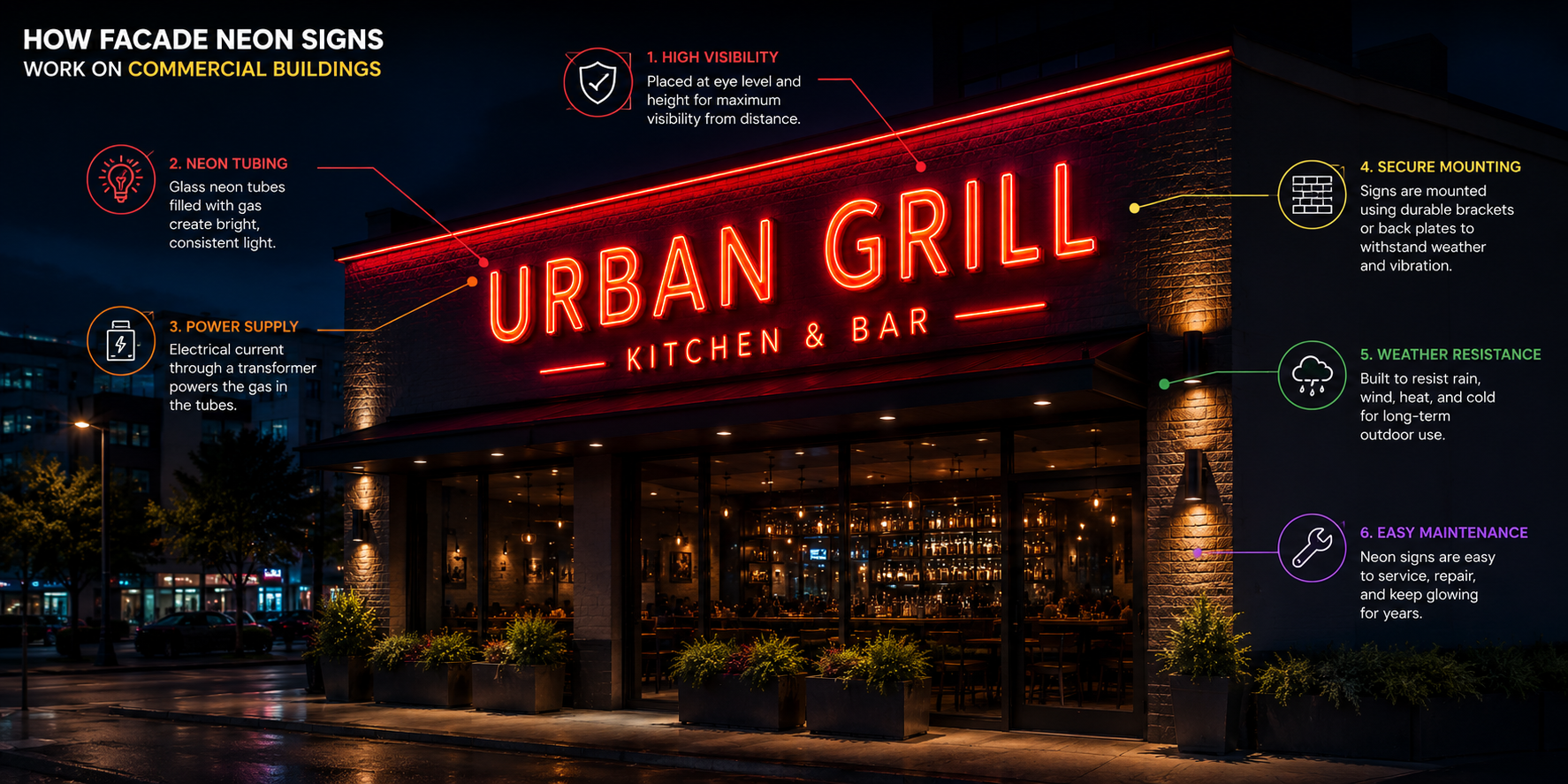
Facade neon signs are usually designed to improve building recognition, strengthen storefront visibility, and help businesses remain noticeable after dark. Unlike restaurant or nightlife signage, facade applications often work best when lighting feels integrated into the building rather than visually separate from it.
Commercial buildings usually approach signage differently because customers often experience the building from greater distances. A restaurant storefront may only require sidewalk visibility, while hotels, shopping centers, entertainment venues, and mixed-use developments may need recognition from parking areas, nearby roads, or surrounding intersections.
Why Scale and Placement Matter
For facade signage, visibility usually depends on more than sign size alone.
A sign that feels visually balanced on a smaller storefront may appear difficult to recognize once installed on a larger building. At the same time, increasing sign size does not always improve performance if lettering becomes difficult to process quickly or falls outside natural viewing angles.
For many commercial facade projects, placement, readability, and customer sightlines often influence recognition more than dimensions alone.
Long-Distance Visibility Often Changes Design Decisions
Facade signs are frequently viewed from longer distances than storefront signage.
This means businesses often prioritize:
- Readable typography that remains clear from a distance
- Stronger contrast for nighttime visibility
- Balanced brightness without overpowering the building exterior
- Proper mounting height based on customer viewing angles
For roadside commercial buildings, hotels, and entertainment venues, recognizability often matters more than visual complexity.
Weather Exposure & Installation Planning
Facade signage also tends to face greater outdoor exposure.
Rain, humidity, direct sunlight, wind exposure, and mounting height can all influence long-term durability. This is one reason many commercial facade projects prefer waterproof LED neon systems, particularly where maintenance access becomes more difficult after installation.
Before finalizing a facade sign, businesses often evaluate:
- How far away customers first notice the building
- Whether traffic is mainly pedestrian or vehicle-based
- If nearby lighting competes for attention after dark
- Whether the sign supports branding, wayfinding, or entrance recognition
For many commercial facade projects, outdoor neon signage usually performs best when architectural integration, long-distance visibility, and installation practicality are considered together.
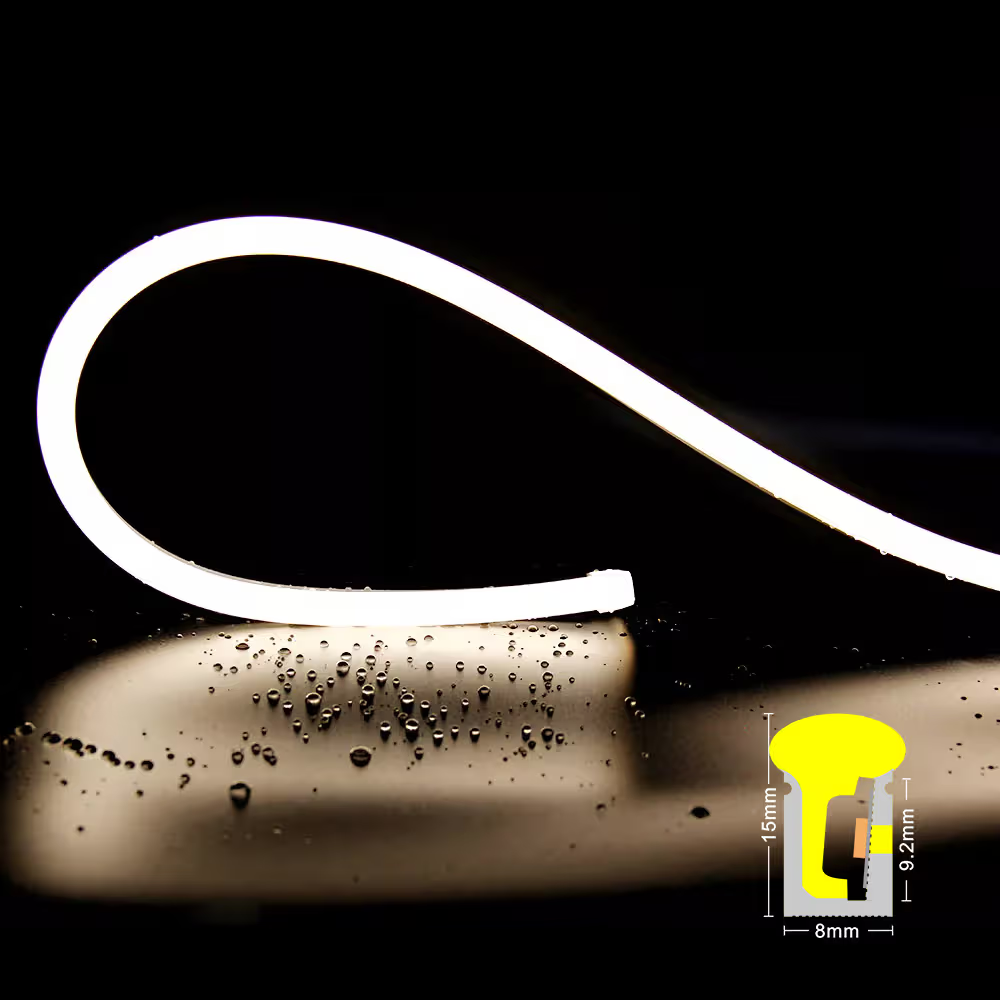
Side Bend S0815 Silicone LED Neon Flex Light
Why OEM Manufacturing Support Matters for Commercial Sign Projects
For larger commercial projects, consistency usually becomes one of the biggest priorities.
A restaurant chain opening multiple locations rarely wants signage to look noticeably different from one storefront to another. Hotels, retail groups, and hospitality businesses typically expect colors, dimensions, brightness, and branding details to remain visually recognizable across locations.
This is where OEM manufacturing support often becomes useful.
Instead of adapting generic signage for every project, businesses can standardize specifications from the beginning based on actual installation needs.
That may include:
- custom dimensions for different facades
- waterproof outdoor configurations
- acrylic backing requirements
- brightness adjustments for visibility conditions
- mounting considerations for different storefronts
- consistent brand presentation across locations
For commercial projects, the benefit is often less about customization itself and more about reducing inconsistency later.
For larger commercial signage projects, OEM support often becomes most useful when businesses need consistent specifications across multiple locations. Restaurant groups, hospitality brands, and retail chains may require standardized brightness, waterproof configurations, mounting methods, and brand colors while still adapting signage to different installation environments.
Businesses managing multi-location rollouts or facade installations often evaluate what to consider when buying LED neon flex for large projects , especially when waterproofing, mounting methods, and consistency across locations become important.
At the same time, most larger projects still require flexibility.
A roadside restaurant location may need different visibility planning than a storefront inside a shopping district. A multi-story facade sign may require different mounting considerations than signage positioned closer to pedestrian traffic.
For commercial projects involving multiple locations or custom facade requirements, manufacturers are often involved earlier in planning so dimensions, mounting methods, waterproofing, and branding consistency can be considered before production begins.
What Businesses Should Expect to Pay for Custom Outdoor Neon Signs
Factory pricing for custom outdoor neon signs usually depends less on sign size alone and more on total neon length, lettering density, waterproof requirements, backing material, and production complexity. For restaurants, bars, storefronts, and facade projects, pricing often becomes easier to estimate once installation conditions and visibility requirements are understood early.
For commercial buyers, especially restaurants, bars, hospitality groups, and storefront projects, pricing usually becomes easier to estimate once size and complexity are understood early.
Estimated Factory Price Reference for Custom Neon Signs (0.5m–1m)
| Sign Size (Longest Side) | Typical Design Type | Estimated LED Neon Usage | Acrylic Backing Recommendation | Estimated Factory Price (EXW USD / Set) |
| 0.5m / 50 cm (~20″) | Small logo, short wording, simple lettering | 2–3.5 m | 4mm transparent acrylic | $20–$32 |
| 0.5m / 50 cm (~20″) | Decorative layout, denser wording | 4–6 m | 4mm transparent acrylic | $32–$45 |
| 0.75m / 75 cm (~30″) | Restaurant logo, short business name | 4–7 m | 5mm acrylic for better stability | $38–$55 |
| 0.75m / 75 cm (~30″) | Multi-word sign, layered design | 7–10 m | 5mm acrylic to improve flatness | $55–$80 |
| 1.0m / 100 cm (~40″) | Larger storefront wording | 6–9 m | 5mm acrylic to reduce bending risk | $55–$78 |
| 1.0m / 100 cm (~40″) | Complex logo, multi-line branding | 10–16 m | 5mm acrylic + optional UV backing | $88–$135 |
These prices are usually based on standard factory EXW quotations and may change depending on waterproof requirements, acrylic finishing, export-certified power supplies, remote-control options, and packaging standards for overseas shipping.
However, sign size alone rarely determines the final quotation.
In many projects, pricing changes more noticeably because of production details businesses initially overlook. A sign with multiple words, dense strokes, or custom shapes usually requires more LED neon material and more manual assembly time. Likewise, larger signs often require thicker acrylic backing to reduce bending during transportation or wall installation.
What Usually Changes Factory Pricing?
| Cost Variable | Why It Changes Pricing in Real Projects |
| Lettering Density | More strokes and tighter curves usually require additional LED neon and longer assembly time |
| Total Neon Length | Larger wording or logos increase material consumption |
| Acrylic Thickness | Signs above ~75 cm often require thicker backing for transport stability |
| Outdoor Waterproofing | Exterior storefront projects may require weather-resistant configurations |
| Mounting Requirements | Facade-mounted signage sometimes requires different installation preparation |
| Export Packaging | Reinforced packaging may affect pricing for overseas deliveries |
For restaurants, bars, and facade projects, businesses often benefit from discussing installation conditions before production begins. A sign intended for a covered storefront may require a different configuration than one exposed to rain, direct sunlight, or high pedestrian visibility after dark.
Conclusion
Commercial outdoor neon signs tend to work best when they are planned around real environments rather than design alone. Restaurants, bars, and commercial facades often have very different visibility needs, which means the same signage approach rarely works everywhere.
In practice, factors such as viewing distance, surrounding lighting, weather exposure, and customer movement often influence performance more than businesses initially expect. A sign that works well for a nightlife venue may feel completely out of place on a hotel entrance or restaurant patio.
When businesses consider how customers actually experience the space after dark, commercial outdoor neon signs usually feel more natural, easier to recognize, and better connected to the building itself. For many commercial projects, successful outdoor neon signage usually depends on balancing visibility, environmental durability, and installation planning rather than design alone.
FAQ’s
Related Posts