English
  简体中文
简体中文  Deutsch
  Español
  Français
  Italiano
  日本語
日本語  한국어
한국어  Polski
  Português
  Русский
  Türkçe
  Nederlands
  Tiếng Việt
  ไทย
ไทย 
Cyan LED strip lights typically operate within the 485–505nm (nanometer) wavelength range. In recent years, cyan LED lighting has gained increasing attention across aquarium lighting, architectural lighting, medical illumination, scientific research, and specialty commercial lighting applications.
Compared with traditional blue or green LEDs, cyan LEDs occupy a unique spectral region that offers a balanced visual experience and specialized biological effects. This intermediate wavelength range can influence human visual comfort, underwater light penetration, coral fluorescence response, and even imaging accuracy in scientific environments.
This article explores everything from cyan LED strip light wavelength, spectral characteristics, industry applications, chip technologies, product specifications, and professional selection guidance.
What Is the Wavelength of Cyan LED Strip Lights?
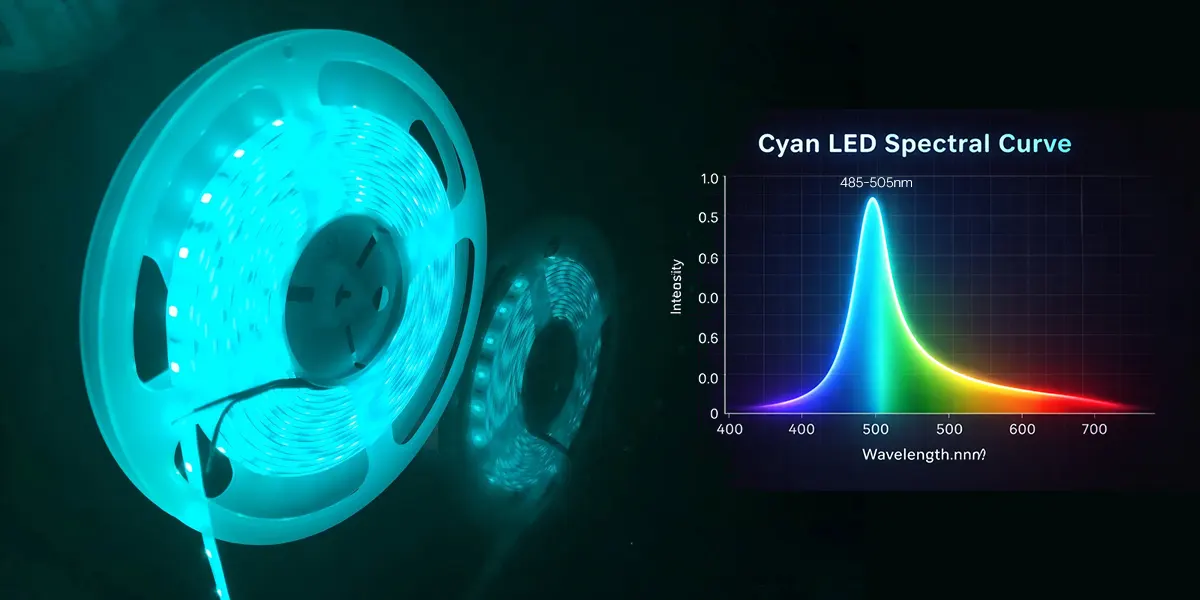
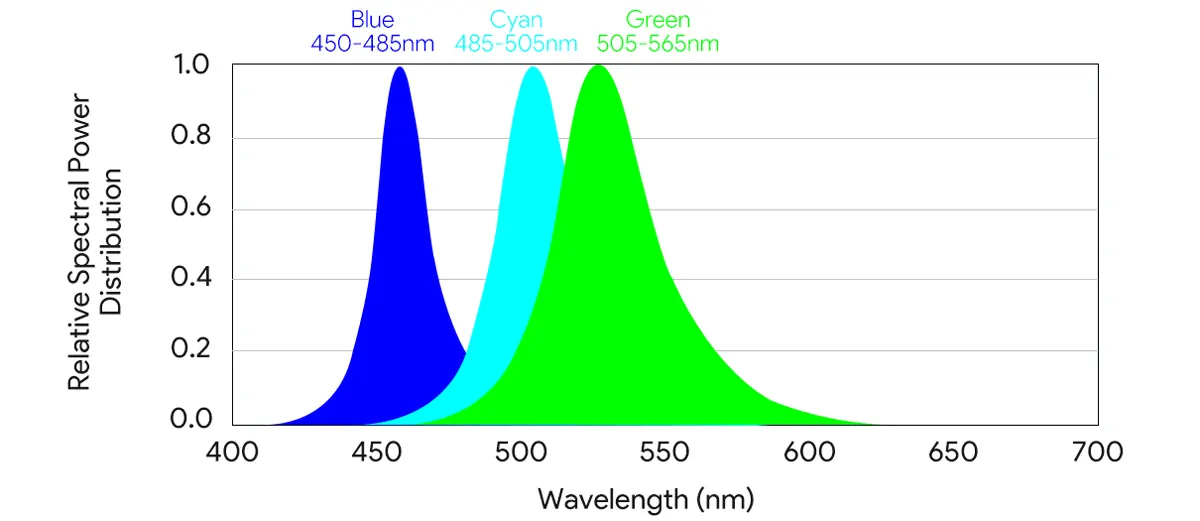
Cyan LEDs typically emit light within the 485–505nm range, positioned between blue LEDs (450–485nm) and green LEDs (505–565nm). This spectral range creates a visually soft yet highly vivid lighting effect that is widely considered more comfortable than deep blue light while remaining more energetic than green light.
For many professional lighting environments, cyan provides an excellent compromise between brightness perception and visual comfort.
| Color | Wavelength (nm) |
| Blue | 450–485 |
| Cyan | 485–505 |
| Green | 505–565 |
Most cyan LEDs exhibit a spectral peak around 495nm, with a typical full-width half-maximum (FWHM) of approximately 20nm. A narrower spectral distribution generally provides better wavelength consistency and more accurate color rendering in specialized applications.
Spectral curve analysis is particularly important for:
- Aquarium coral lighting
- Medical imaging systems
- Laboratory illumination
- Optical experiments
- Human-centric architectural lighting
In professional projects, even small wavelength differences can significantly affect visual output and biological response.
Why Cyan Wavelength Is Unique
Cyan occupies a transitional region in the visible spectrum where human eye sensitivity begins increasing compared with deep blue light. Because of this, cyan LEDs often appear brighter to the human eye at similar power levels.
This characteristic offers several advantages:
- Reduced glare perception
- Improved visual comfort
- Softer ambient lighting
- Better underwater visibility
- Enhanced fluorescent response in corals and materials
Unlike pure blue LEDs that can sometimes appear overly harsh or fatiguing, cyan lighting provides a cleaner and more balanced visual atmosphere.
In commercial lighting design, cyan is frequently associated with:
- Modern aesthetics
- Futuristic environments
- Calm visual environments
- High-tech architectural accents
- Marine-themed illumination
How Cyan Differs from Blue LEDs
Cyan LEDs produce a softer teal-like tone, while blue LEDs appear deeper, colder, and more intense.
Cyan Characteristics
- Softer visual perception
- Lower apparent glare
- Better eye comfort in long-duration exposure
- More natural underwater appearance
Blue Characteristics
- Stronger contrast
- Higher visual stimulation
- More dramatic lighting effect
- Deeper ocean-style appearance
For environments where people remain under lighting for extended periods, cyan is often preferred due to its reduced visual fatigue.
Common LED Chips Used for Cyan LEDs
Most cyan LED strip lights use:
- InGaN (Indium Gallium Nitride) semiconductor technology
- Phosphor-converted LED solutions
- High-efficiency SMD LED packages
- COB continuous-light technologies
Chip quality directly affects:
- Wavelength accuracy
- Brightness consistency
- Thermal stability
- Lifespan
- Energy efficiency
- Color uniformity
Higher-grade LED chips generally maintain tighter wavelength tolerances, which is especially important for scientific, aquarium, and medical applications.
Professional manufacturers also use:
- Multi-layer copper PCBs
- High thermal conductivity substrates
- Constant-current IC designs
- Precision binning systems
These features help maintain stable cyan output over long operating periods.
Cyan LED Strip Light vs Blue LED Strip Light
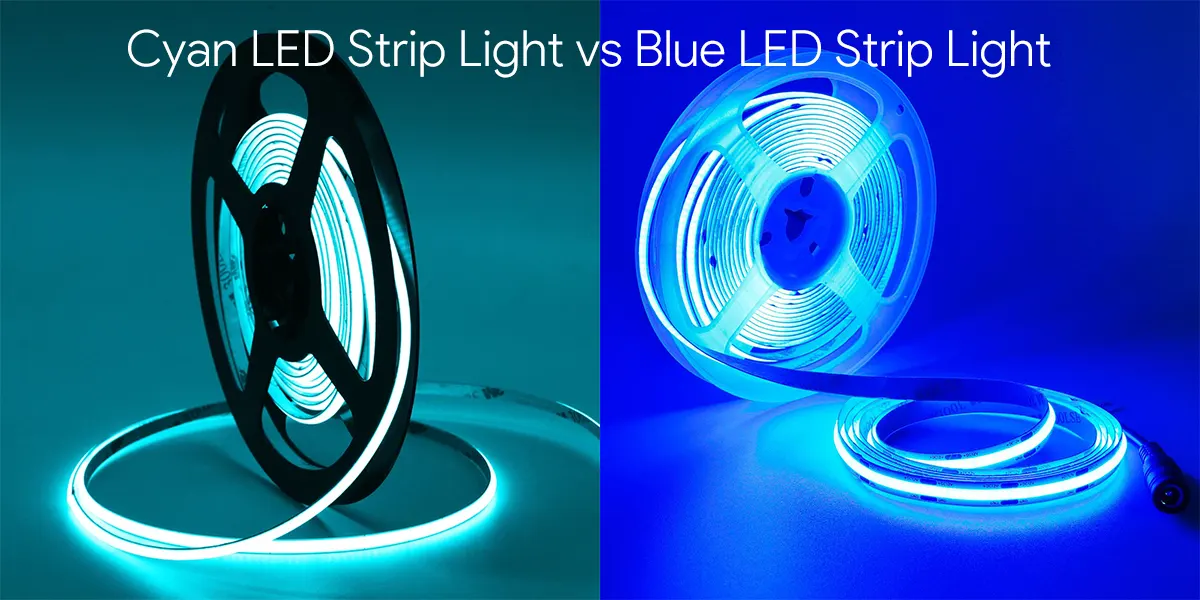
Wavelength Comparison
| LED Type | Wavelength (nm) | Typical Applications |
| Blue | 450–485 | Reef lighting, visual effects |
| Cyan | 485–505 | Aquarium, office lighting, architectural accent |
Visual Difference
Cyan LEDs appear softer and closer to teal tones, while blue LEDs appear deeper and cooler.
In real-world applications:
- Cyan creates a cleaner ambient atmosphere
- Blue creates stronger contrast and dramatic effects
The difference becomes especially noticeable in indoor environments and reflective surfaces.
Application Difference
Cyan LED Applications
- Coral reef aquariums
- Architectural accent lighting
- Museum lighting
- Office lighting
- Display cabinets
- Laboratory environments
Blue LED Applications
- Photosynthesis stimulation
- Stage lighting
- Entertainment lighting
- UV-adjacent visual effects
- Deep-water simulation
Energy Efficiency
Cyan LEDs may offer slightly improved luminous perception efficiency because the human eye is more sensitive to cyan wavelengths compared with deep blue.
In some applications, cyan lighting can achieve similar visual brightness with lower perceived glare.
Application Case: Cyan LED in Aquarium Lighting

Why Cyan Is Essential for Reef Tanks
Marine biology research shows that coral symbiotic algae (zooxanthellae) respond strongly to wavelengths around 490–500nm.
This wavelength region contributes to:
- Coral fluorescence enhancement
- Improved pigment visibility
- Balanced spectral penetration underwater
- Reduced excessive blue exposure
In reef aquarium systems, cyan light is often used together with royal blue and white LEDs to simulate natural ocean lighting conditions.
Real Project Example
Project Type: Commercial Reef Aquarium
Lighting Solution: Full-spectrum LED system with integrated cyan channels
Results:
- Improved coral coloration
- More vivid fluorescent pigments
- Reduced bleaching risk compared with excessive blue lighting
- More natural visual appearance for visitors
- Better depth perception inside aquarium tanks
Many professional aquarium designers now consider cyan wavelengths an important component of balanced reef lighting systems.
Recommended Spectrum Design
For optimal reef lighting performance:
- Blue: 450–485nm → primary photosynthesis support
- Cyan: 485–505nm → spectral balance and coral health
- White: Full-spectrum enhancement and natural appearance
This combination more closely replicates natural sunlight penetration through seawater.
Compared with pure blue-heavy systems, balanced cyan integration often produces:
- Better visual realism
- Improved coral fluorescence
- Lower visual fatigue for viewers
Additional Recommended Cyan LED Application Scenarios and Material Pairings
Because cyan LED strip lights sit between blue and green wavelengths, they create a unique balance of calmness, futuristic aesthetics, and visual softness.
In practical lighting design, cyan lighting is often combined with specific architectural materials, textures, and spatial environments to maximize its visual effect. Different applications may require different atmosphere goals, such as enhancing transparency, reducing visual fatigue, or creating immersive underwater-style environments.
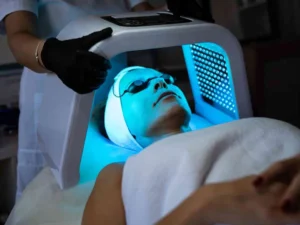
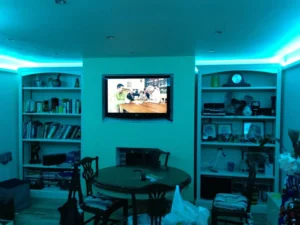
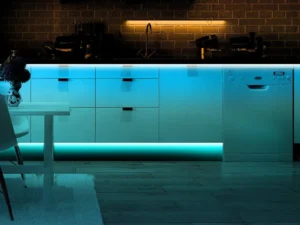
The following table summarizes common cyan LED strip light applications, recommended material combinations, and the visual atmosphere typically created in each environment.
Cyan LED Strip Light Application Guide
| Application Area | Typical Scenario | Core Visual Effect / Atmosphere | Recommended Materials & Elements |
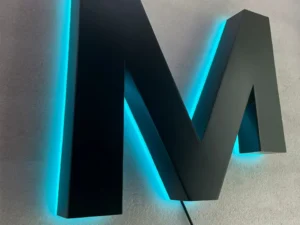
| Commercial & Office | Tech showrooms, esports venues, smartphone stores | Futuristic, high-tech, calm atmosphere | Aluminum profiles, tempered glass, carbon fiber textures |
| Commercial & Retail | Jewelry counters, luxury showcases | Enhanced transparency, premium cool-tone appearance | Mirror stainless steel, ultra-clear glass |
| Medical & Laboratory | Dental clinics, medical spaces, laboratories | Clean, professional, hygienic presentation | White marble, minimalist soft finishes |
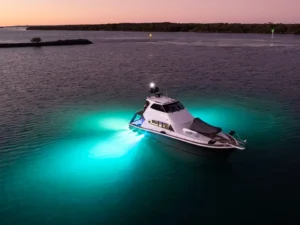
| Residential Decoration | Aquariums, underwater-themed spaces | Simulated ocean atmosphere, enhanced color vibrancy | Coral décor, marine elements, acrylic |
| Residential Entertainment | Home ambient lighting, home theaters | Stress relief, immersive atmosphere | Gray walls, projection surfaces |
| Residential Safety & Navigation | Staircases, corridor guidance lighting | Visual guidance, nighttime safety | Frosted acrylic diffusers |
| Outdoor Landscape | Swimming pools, fountains, waterscapes | Clean aquatic aesthetics, cool visual tone | Mosaic tiles, natural stone |
| Outdoor Architecture | Building facade contour lighting | Modern urban appearance, futuristic aesthetics | Glass curtain walls |
| Automotive & Industrial | Vehicle interiors, underbody lighting | Lightweight, sporty, cool-tone atmosphere | Leather, metallic trims |
| Marine & Industrial | Boat interiors, deck lighting | Polar-style atmosphere, safety indication | Teak wood flooring, stainless steel |

Why Cyan Lighting Works So Well in Modern Spaces
One reason cyan LED lighting has become increasingly popular is its ability to create both technological and calming visual effects simultaneously.
Compared with traditional blue LEDs, cyan lighting feels:
- Softer to the human eye
- More premium in commercial environments
- More natural in underwater simulations
- Less visually aggressive during long-term exposure
In many professional lighting projects, cyan is now used as a transitional ambient color between white functional lighting and decorative RGB effects.
Factors to Consider When Choosing Cyan LED Strip Lights
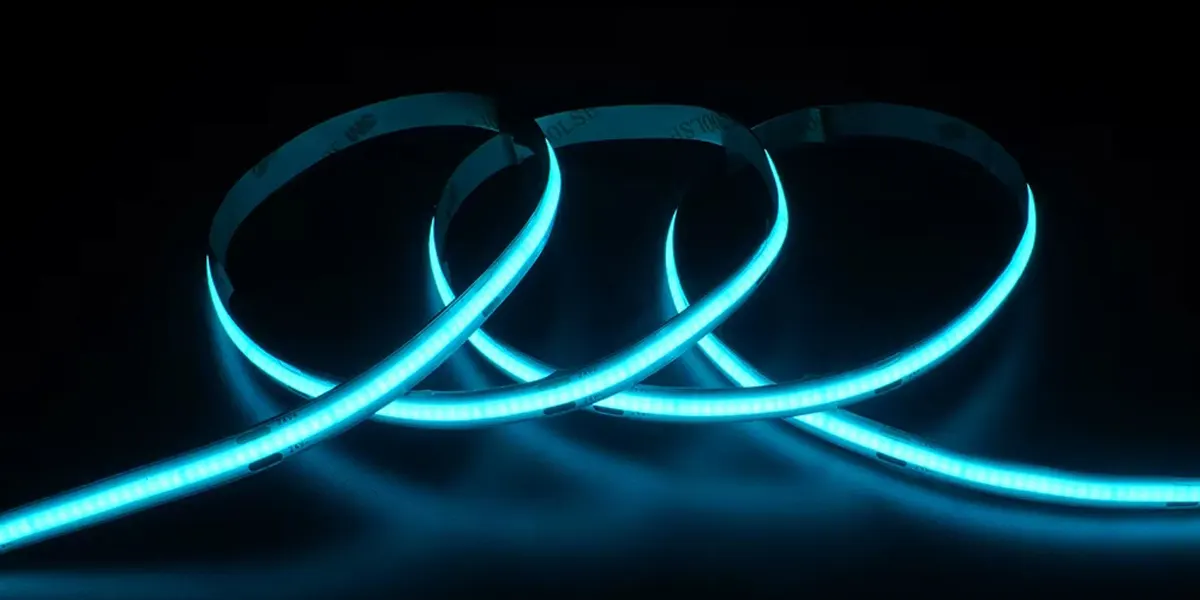
Selecting the right cyan LED strip involves more than choosing a wavelength. Important factors include:
1. Wavelength Consistency
Professional applications require tight wavelength tolerance to ensure visual consistency.
2. PCB Quality
Thicker copper PCBs improve:
- Heat dissipation
- Lifespan
- Current stability
3. LED Density
Higher LED density creates:
- Smoother illumination
- Reduced hotspot visibility
- Better linear lighting effects
4. Thermal Management
Efficient heat dissipation is critical for maintaining wavelength stability and long-term reliability.
Custom Cyan LED Strip Light Manufacturer
Looking for a reliable custom cyan LED strip supplier? SignliteLED specializes in delivering high-quality COB LED strip and SMD LED strip solutions with years of experience in design, development, and production. We help clients create tailor-made cyan LED strips that meet precise project requirements.
Our custom cyan LED strips feature:
- Wavelength options: fully customizable within 485–505nm for precise cyan tones
- PCB width options: 8–12 mm
- Waterproof protection: IP20 to IP68
- OEM and ODM services
- Custom packaging and labeling support
- Multiple LED density options
- Custom power and control solutions
Whether you require COB LED strips for seamless illumination or SMD LED strips for flexible installations, SignliteLED can provide professional solutions tailored to your project requirements.

Conclusion
Cyan LED strip lights occupy a specialized yet increasingly important position between blue and green light wavelengths, typically within the 485–505nm range. Their balanced spectral characteristics make them highly valuable in aquariums, scientific laboratories, medical imaging systems, and architectural lighting environments.
Understanding cyan wavelength characteristics, chip technologies, thermal management, and application requirements helps ensure optimal lighting performance and long-term reliability.
As professional lighting applications continue evolving, cyan LED technology is expected to play a growing role in both functional and decorative lighting systems.
FAQs
Related Posts