Deutsch
  English
  简体中文
简体中文  Español
  Français
  Italiano
  日本語
日本語  한국어
한국어  Polski
  Português
  Русский
  Türkçe
  Nederlands
  Tiếng Việt
  ไทย
ไทย 
Cyan-LED-Streifenleuchten arbeiten typischerweise im Wellenlängenbereich von 485–505 nm (Nanometer). In den letzten Jahren hat die cyanfarbene LED-Beleuchtung bei Aquarienbeleuchtung, architektonischen Beleuchtung, medizinischer Beleuchtung, wissenschaftlicher Forschung und speziellen kommerziellen Beleuchtungsanwendungen zunehmend an Bedeutung gewonnen.
Im Vergleich zu herkömmlichen blauen oder grünen LEDs besetzen Cyan-LEDs einen einzigartigen Spektralbereich, der ein ausgewogenes visuelles Erlebnis und spezialisierte biologische Effekte bietet. Dieser mittlere Wellenlängenbereich kann den menschlichen Sehkomfort, das Eindringen von Unterwasserlicht, die Korallenfluoreszenzreaktion und sogar die Bildgenauigkeit in wissenschaftlichen Umgebungen beeinflussen.
Dieser Artikel untersucht alles von Cyan LED-Streifen-Lichtwellenlänge, Spektraleigenschaften, Industrieanwendungen, Chiptechnologien, Produktspezifikationen und professioneller Auswahl an Auswahl.
Was ist die Wellenlänge von Cyan-LED-Streifen?
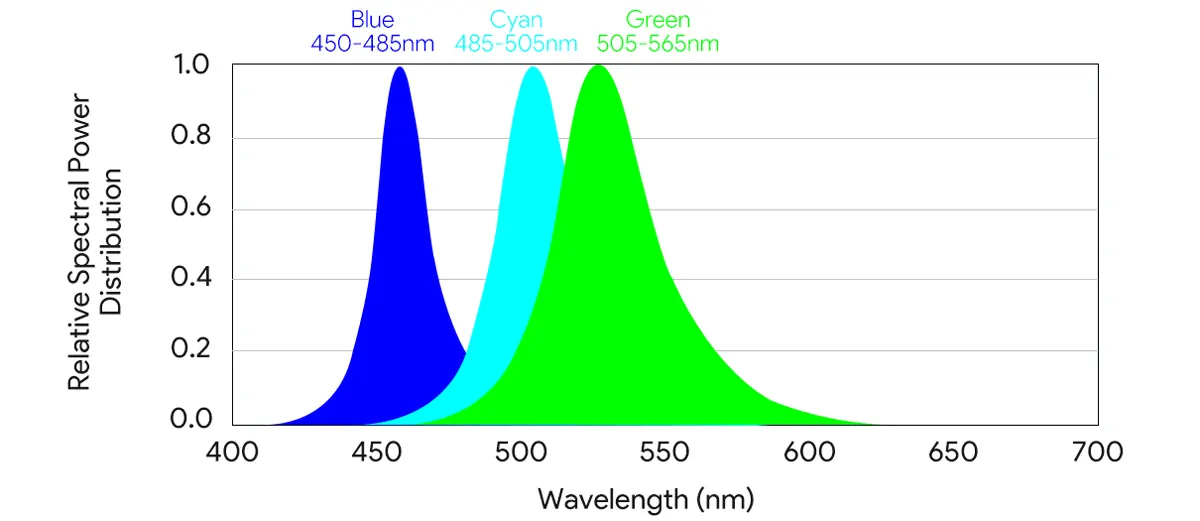
Cyan-LEDs geben normalerweise Licht im Bereich von 485–505nm ab, der zwischen blauen LEDs (450–485nm) und grünen LEDs (505–565nm) positioniert ist. Dieser Spektralbereich erzeugt einen optisch weichen und dennoch lebendigen Lichteffekt, der als trächtiger als tiefblaues Licht angesehen wird und gleichzeitig energetischer als grünes Licht bleibt.
Für viele professionelle Beleuchtungsumgebungen bietet Cyan einen hervorragenden Kompromiss zwischen Helligkeitswahrnehmung und Sehkomfort.
| Farbe | Wellenlänge (nm) |
| Blau | 450–485 |
| Cyan | 485–505 |
| Grün | 505–565 |
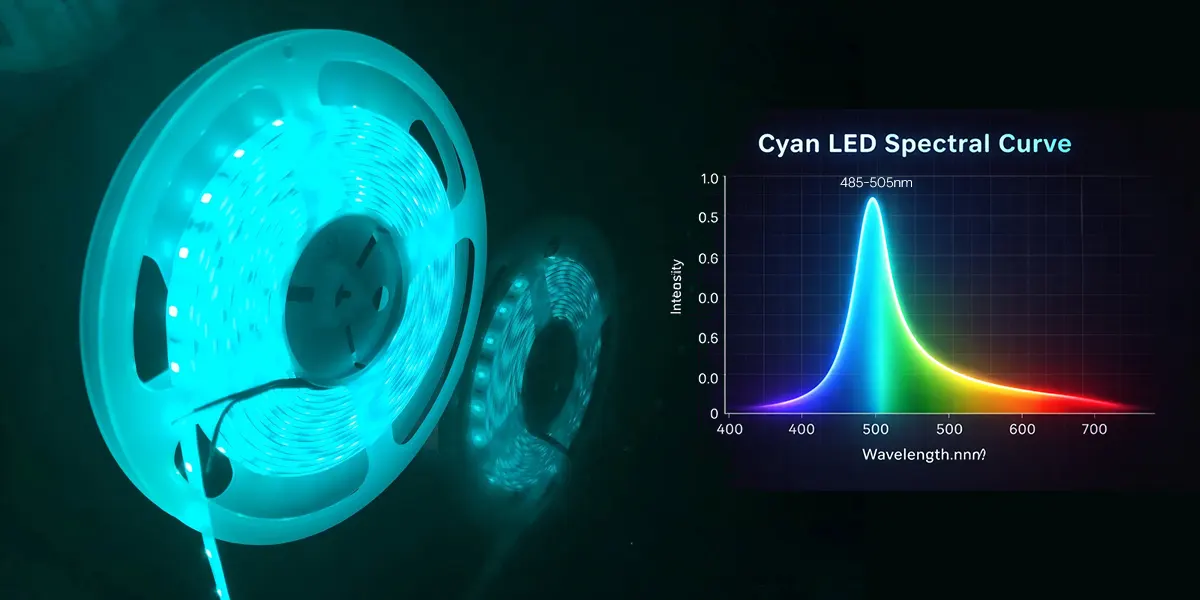
Die meisten Cyan-LEDs zeigen einen Spektralpeak um 495 nm mit einem typischen Halbmaximum (FWHM) mit voller Breite von ungefähr 20 nm. Eine engere Spektralverteilung sorgt im Allgemeinen für eine bessere Wellenlängenkonsistenz und genauere Farbwiedergabe in spezialisierten Anwendungen.
Spektralkurvenanalyse ist besonders wichtig für:
- Aquarium-Korallenbeleuchtung
- Medizinische Bildgebungssysteme
- Laborbeleuchtung
- Optische Experimente
- Menschliche architektonische Beleuchtung
In professionellen Projekten können selbst kleine Wellenlängenunterschiede die visuelle Leistung und die biologische Reaktion erheblich beeinflussen.
Warum die cyanfarbene Wellenlänge einzigartig ist
Cyan besetzt einen Übergangsbereich im sichtbaren Spektrum, in dem die Empfindlichkeit des menschlichen Auges im Vergleich zu tiefblauem Licht zunimmt. Aus diesem Grund erscheinen cyanfarbene LEDs für das menschliche Auge bei ähnlichen Leistungsstufen häufig heller.
Diese Eigenschaft bietet mehrere Vorteile:
- reduzierte Blendwahrnehmung
- Verbesserter Sehkomfort
- Weichere Umgebungsbeleuchtung
- Bessere Sicht unter Wasser
- Verbesserte Fluoreszenzreaktion in Korallen und Materialien
Im Gegensatz zu reinen blauen LEDs, die manchmal übermäßig hart oder ermüdend wirken können, bietet die cyanfarbene Beleuchtung eine sauberere und ausgewogenere visuelle Atmosphäre.
Bei der gewerblichen Lichtgestaltung wird Cyan häufig in Verbindung gebracht mit:
- Moderne Ästhetik
- Futuristische Umgebungen
- ruhige visuelle Umgebungen
- Hightech-Architekturakzente
- Marine-Themenbeleuchtung
Wie Cyan sich von blauen LEDs unterscheidet
Cyan-LEDs erzeugen einen weicheren, tealartigen Ton, während blaue LEDs tiefer, kälter und intensiver erscheinen.
Cyan-Eigenschaften
- Weichere visuelle Wahrnehmung
- geringerer scheinbarer Blend
- Besserer Augenkomfort bei Langzeitbelichtung
- Natürlicheres Unterwasser-Erscheinungsbild
Blaue Eigenschaften
- Stärkerer Kontrast
- Höhere visuelle Stimulation
- Dramaischerer Lichteffekt
- Tieferes Aussehen im Ozeanstil
Für Umgebungen, in denen Menschen über längere Zeit unter Beleuchtung bleiben, wird Cyan aufgrund der verringerten visuellen Ermüdung häufig bevorzugt.
Gemeinsame LED-Chips für Cyan-LEDs
Die meisten Cyan-LED-Streifen verwenden:
- Ingan (Indium Galliumnitrid) Halbleitertechnologie
- Phosphorkonvertierte LED-Lösungen
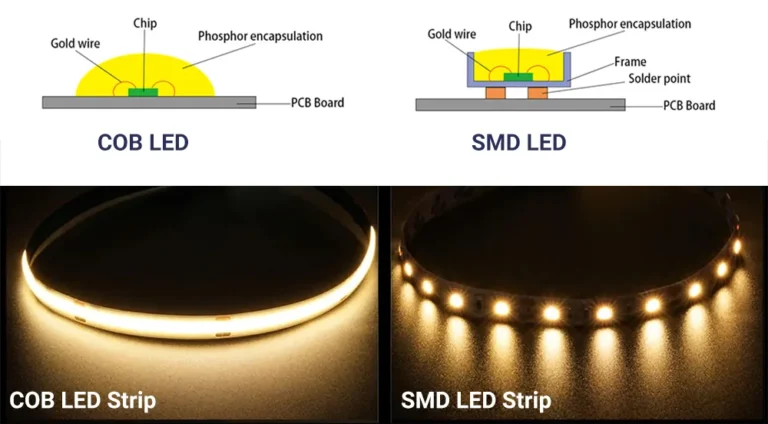
- Hocheffiziente SMD-LED-Pakete
- COB-Dauerlichttechnologien
Chipqualität wirkt sich direkt auf:
- Wellenlängengenauigkeit
- Helligkeit Konsisten
- Wärmebeständigkeit
- Lebenserwartung
- Energie-Effizienz
- Farbgleichheit
Höhere LED-Chips halten im Allgemeinen engere Wellenlängentoleranzen ein, was besonders wichtig für wissenschaftliche, Aquarien- und medizinische Anwendungen ist.
Profi-Hersteller verwenden auch:
- Mehrschichtige Kupfer-Leiterplatten
- Substrate mit hoher Wärmeleitfähigkeit
- Konstantstrom-IC-Designs
- Präzisions-Binning-Systeme
Diese Merkmale helfen, über lange Betriebszeiten eine stabile Cyan-Ausgabe zu erhalten.
Cyan LED Streifenlicht VS Blau LED Streifenlicht
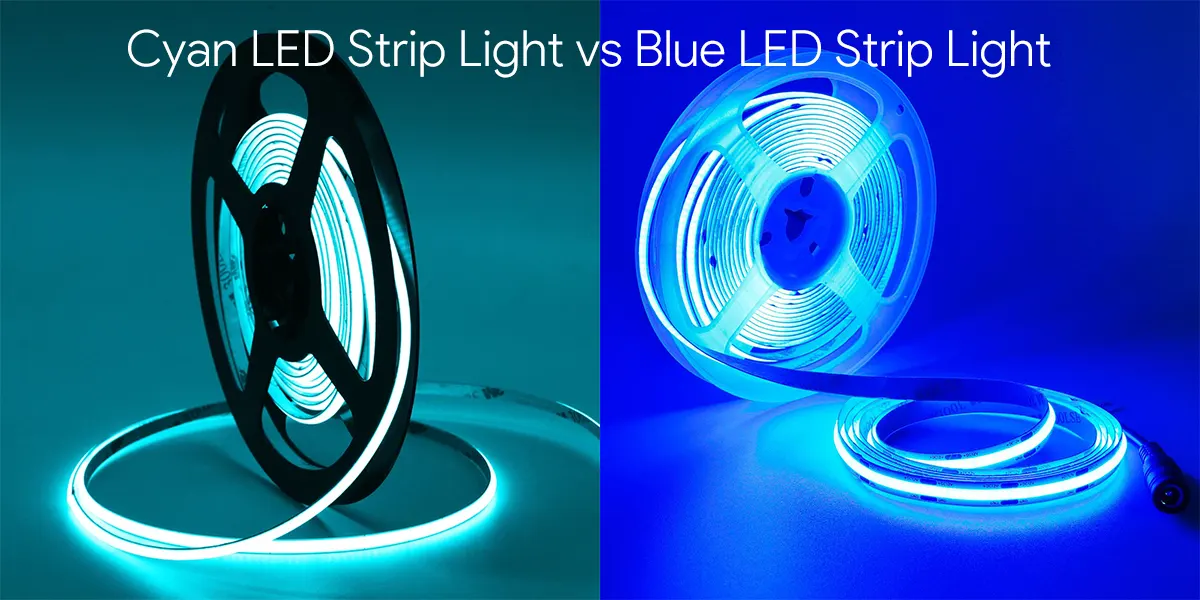
Wellenlängenvergleich
| LED-Typ | Wellenlänge (nm) | Typische Anwendungen |
| Blau | 450–485 | Riffbeleuchtung, visuelle Effekte |
| Cyan | 485–505 | Aquarium, Bürobeleuchtung, architektonischer Akzent |
Sehunterschied
Cyan-LEDs erscheinen weicher und näher an den blaugrünen Tönen, während blaue LEDs tiefer und kühler erscheinen.
In realen Anwendungen:
- Cyan schafft eine sauberere Umgebungsatmosphäre
- Blau erzeugt stärkeren Kontrast und dramatische Effekte
Der Unterschied macht sich besonders im Innenraum und reflektierenden Oberflächen bemerkbar.
Anwendungsunterschied
Cyan-LED-Anwendungen
- Korallenriff-Aquarien
- Architekturakzentbeleuchtung
- Museumsbeleuchtung
- Bürobeleuchtung
- Vitrinen
- Laborumgebungen
Blaue LED-Anwendungen
- Stimulation der Photosynthese
- Bühnenbeleuchtung
- Unterhaltungsbeleuchtung
- UV-begrenzte visuelle Effekte
- Tiefwassersimulation
Energie-Effizienz
Cyan-LEDs bieten möglicherweise eine leicht verbesserte Lichtwahrnehmungseffizienz, da das menschliche Auge gegenüber cyanerer Wellenlänge empfindlicher ist als bei tiefem Blau.
In einigen Anwendungen kann Cyan-Beleuchtung eine ähnliche visuelle Helligkeit bei geringerer wahrgenommener Blendung erzielen.
Anwendungsfall: Cyan-LED bei Aquarienbeleuchtung
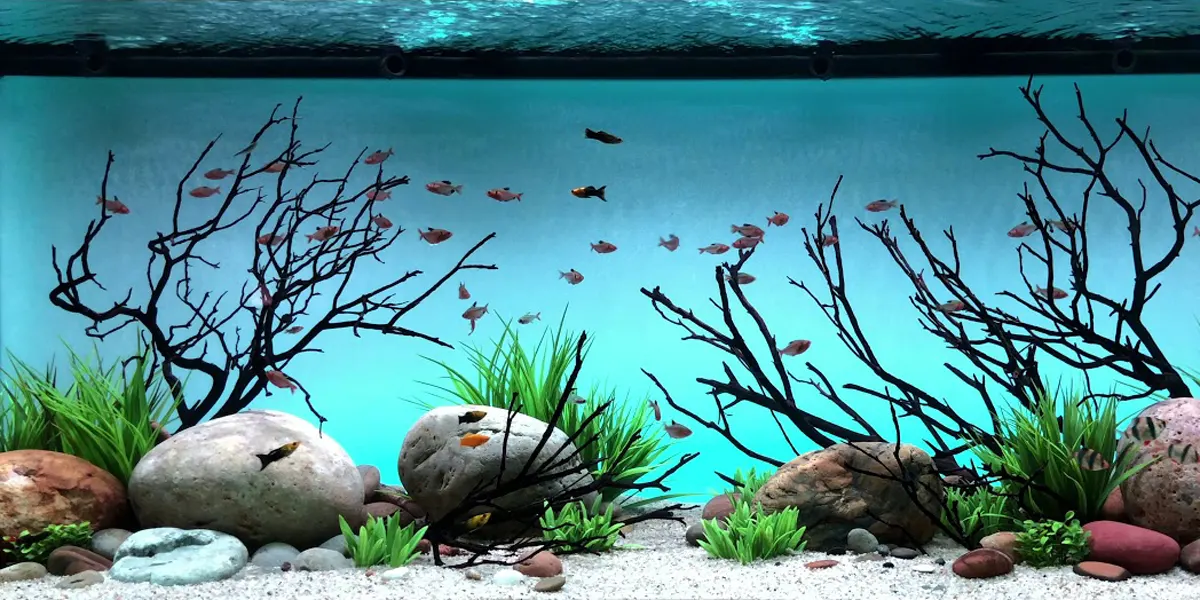
Warum Cyan für Rifftanks unerlässlich ist
Die marinen Biologie-Forschung zeigt, dass Korallen-Symbiotika-Algen (Zooxanthellen) stark auf Wellenlängen um 490–500 nm ansprechen.
Dieser Wellenlängenbereich trägt dazu bei:
- Korallenfluoreszenz-Verbesserung
- Verbesserte Sichtbarkeit der Pig
- Ausgewogene spektrale Penetration unter Wasser
- Reduzierte übermäßige Blaubelichtung
In Riffaquariumsystemen wird Cyan-Licht häufig zusammen mit königsblauen und weißen LEDs verwendet, um die natürlichen Lichtverhältnisse im Ozean zu simulieren.
Echtes Projektbeispiel
Projekttyp: Kommerzielles Riffaquarium
Beleuchtungslösung: Vollspektrum-LED-System mit integrierten Cyan-Kanälen
Befund:
- Verbesserte Korallenfärbung
- Lebendigere fluoreszierende Pigmente
- Reduziertes Bleichrisiko im Vergleich zu übermäßiger blauer Beleuchtung
- Natürlicheres Aussehen für Besucher
- Bessere Tiefenwahrnehmung in Aquarientanks
Viele professionelle Aquariendesigner betrachten die cyanfarbenen Wellenlängen jetzt als einen wichtigen Bestandteil von ausgewogenen Riff-Beleuchtungssystemen.
Empfohlenes Spektrum-Design
Für optimale Riffbeleuchtungsleistung:
- Blau: 450–485nm → Unterstützung der primären Photosynthese
- Cyan: 485–505nm → Spektralgleichgewicht und Korallengesundheit
- Weiß: Vollspektrumverbesserung und natürliches Erscheinungsbild
Diese Kombination repliziert das Eindringen von natürlichem Sonnenlicht durch Meerwasser genauer.
Im Vergleich zu reinen blau-schweren Systemen führt häufig eine ausgewogene Cyan-Integration zu:
- Besserer visueller Realismus
- verbesserte Korallenfluoreszenz
- Sehende visuelle Ermüdung für Zuschauer
Zusätzliche empfohlene Cyan-LED-Anwendungsszenarien und Materialpaarungen
Da cyanfarbene LED-Streifen zwischen blauen und grünen Wellenlängen liegen, schaffen sie eine einzigartige Balance zwischen Ruhe, futuristischer Ästhetik und visueller Weichheit.
Im praktischen Lichtdesign wird die cyanfarbene Beleuchtung häufig mit bestimmten architektonischen Materialien, Texturen und räumlichen Umgebungen kombiniert, um ihre visuelle Wirkung zu maximieren. Unterschiedliche Anwendungen erfordern möglicherweise unterschiedliche Atmosphärenziele, wie z. B. die Verbesserung der Transparenz, die Verringerung der visuellen Ermüdung oder die Schaffung eindringlicher Umgebungen im Unterwasserstil.
Die folgende Tabelle fasst die üblichen Cyan-LED-Streifen-Lichtanwendungen, empfohlene Materialkombinationen und die typische visuelle Atmosphäre in jeder Umgebung zusammen.
Anwendungsleitfaden für Cyan-LED-Streifen
| Anwendungsbereich | Typisches Szenario | Seheffekt / Atmosphäre | Empfohlene Materialien & Elemente |
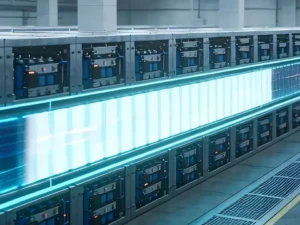
| Kommerzielle & Büro | Tech Showrooms, Esports, Smartphone-Stores | Futuristische, Hightech-, ruhige Atmosphäre | Aluminiumprofile, gehärtetes Glas, Carbonfaser-Texturen |
| Kommerzielle & Einzelhandel | Schmucktheken, Luxusvitrinen | Verbesserte Transparenz, Premium-Cool-Ton-Aussehen | Spiegel Edelstahl, ultraklares Glas |
| Medizinisch & Labor | Zahnkliniken, medizinische Räume, Labore | Saubere, professionelle, hygienische Präsentation | Weißer Marmor, minimalistische weiche Oberflächen |
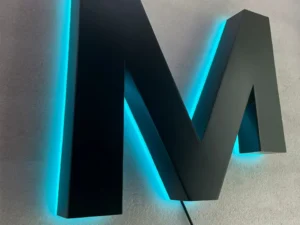
| Wohndekoration | Aquarien, Unterwasser-Raum | Simulierte Ozeanatmosphäre, verbesserte Farblebensfähigkeit | Korallendekor, Marineelemente, Acryl |
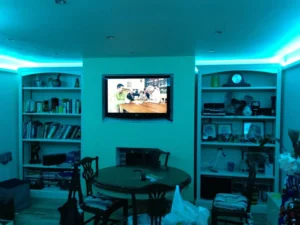
| Wohnimmobilien | Home Ambiente Beleuchtung, Heimkino | Stressabbau, immersive Atmosphäre | graue Wände, Projektionsflächen |
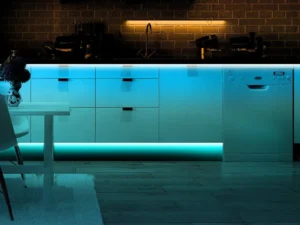
| Wohnsicherheit & Navigation | Treppen, Flurführungsbeleuchtung | Visuelle Führung, Nachtsicherheit | Diffusoren aus gefrostetem Acryl |
| Landschaft im Freien | Schwimmbäder, Brunnen, Wasserlandschaften | Saubere aquatische Ästhetik, cooler visueller Ton | Mosaikfliesen, Naturstein |
| Außenarchitektur | Gebäudefassadenkonturbeleuchtung | Modernes urbanes Erscheinungsbild, futuristische Ästhetik | Vorhangfassaden aus Glas |
| Automobil & Industrie | Fahrzeuginnenraum, Unterbodenbeleuchtung | Leichte, sportliche, kühle Atmosphäre | Leder, Metallic-Besatz |
| Marine & Industrie | Bootsinnenraum, Deckbeleuchtung | Polar-Atmosphäre, Sicherheitsanzeige | Teakholzboden, Edelstahl |
Warum Cyan-Beleuchtung in modernen Räumen so gut funktioniert
Ein Grund, warum die LED-Beleuchtung von Cyan immer beliebter wurde, ist ihre Fähigkeit, gleichzeitig technologische und beruhigende visuelle Effekte zu erzeugen.
Im Vergleich zu herkömmlichen blauen LEDs fühlt sich Cyan-Beleuchtung an:
- weicher für das menschliche Auge
- Mehr Premium in kommerziellen Umgebungen
- Natürlicher in Unterwassersimulationen
- Weniger optisch aggressiv bei Langzeitbelichtung
In vielen professionellen Beleuchtungsprojekten wird Cyan nun als Übergangsfarbe zwischen weißer Funktionsbeleuchtung und dekorativen RGB-Effekten eingesetzt.
Zu beachtende Faktoren bei der Auswahl von Cyan-LED-Leuchten
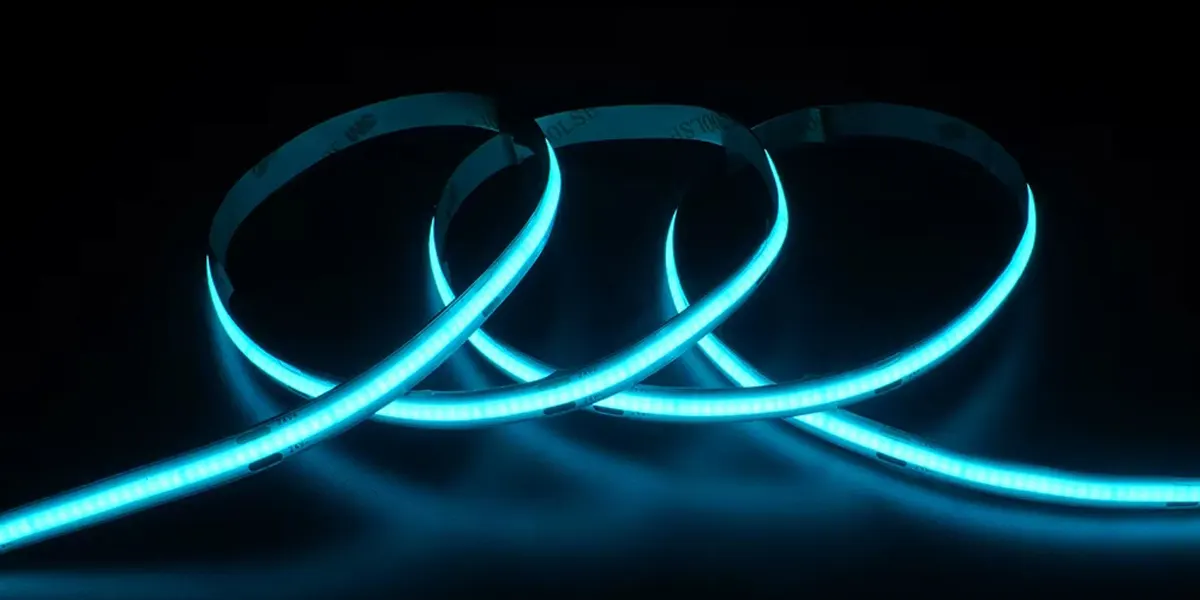
Die Auswahl des richtigen Cyan-LED-Streifens beinhaltet mehr als die Auswahl einer Wellenlänge. Wichtige Faktoren sind:
1. Wellenlängenkonsisten
Professionelle Anwendungen erfordern eine enge Wellenlängentoleranz, um die visuelle Konsisten
2 . Leiterplattenqualität
Dickere Kupfer-Platinen verbessern:
- Wärmeableitung
- Lebenserwartung
- Aktuelle Stabilität
3. LED-Dichte
Höhere LED-Dichte erzeugt:
- Reibungslosere Beleuchtung
- Reduzierte Sichtbarkeit des Hotspots
- Bessere lineare Lichteffekte
4. Thermomanagement
Effiziente Wärmeableitung ist entscheidend für die Wahrung der Wellenlängenstabilität und langfristige Zuverlässigkeit.
Cyan LED-Streifen-Licht Hersteller
Suchen Sie einen zuverlässigen Cyan LED-Streifenlieferanten? Signlited ist spezialisiert auf die Bereitstellung hochwertiger COB-LED-Streifen und SMD-LED-Streifenlösungen mit jahrelanger Erfahrung in Design, Entwicklung und Produktion. Wir helfen Kunden, maßgeschneiderte Cyan-LED-Streifen zu entwickeln, die genaue Projektanforderungen erfüllen.
Unsere kundenspezifischen Cyan LED-Streifen bieten:
- Wellenlängenoptionen: Vollständig anpassbar innerhalb von 485–505nm für präzise Cyan-Töne
- PCB-Breite Optionen: 8–12 mm
- Wasserdichter Schutz: IP20 bis IP68
- OEM- und ODM-Dienste
- Kundenspezifische Verpackung und Etikettierungsunterstützung
- Mehrere LED-Dichteoptionen
- Benutzerdefinierte Strom- und Steuerungslösungen
ob Sie benötigen COB-LED-Streifen für nahtlose Beleuchtung oder SMD-LED-Streifen Für flexible Installationen bietet SignLiteLed professionelle Lösungen, die auf Ihre Projektanforderungen zugeschnitten sind.

Abschluss
Cyan-LED-Streifen nehmen eine spezielle, aber immer wichtigere Position zwischen blauen und grünen Lichtwellenlängen ein, typischerweise im Bereich von 485–505 nm. Ihre ausgewogenen spektralen Eigenschaften machen sie in Aquarien, wissenschaftlichen Labors, medizinischen Bildgebungssystemen und architektonischen Beleuchtungsumgebungen sehr wertvoll.
Das Verständnis der Wellenlängeneigenschaften, Chiptechnologien, des Thermomanagements und der Anwendungsanforderungen trägt zur Gewährleistung einer optimalen Lichtleistung und langfristiger Zuverlässigkeit bei.
Da sich professionelle Beleuchtungsanwendungen weiterentwickeln, wird erwartet, dass die Cyan-LED-Technologie sowohl bei funktionalen als auch in dekorativen Beleuchtungssystemen eine wachsende Rolle spielt.
FAQs
Verwandte Artikel