Português
  English
  简体中文
简体中文  Deutsch
  Español
  Français
  Italiano
  日本語
日本語  한국어
한국어  Polski
  Русский
  Türkçe
  Nederlands
  Tiếng Việt
  ไทย
ไทย 
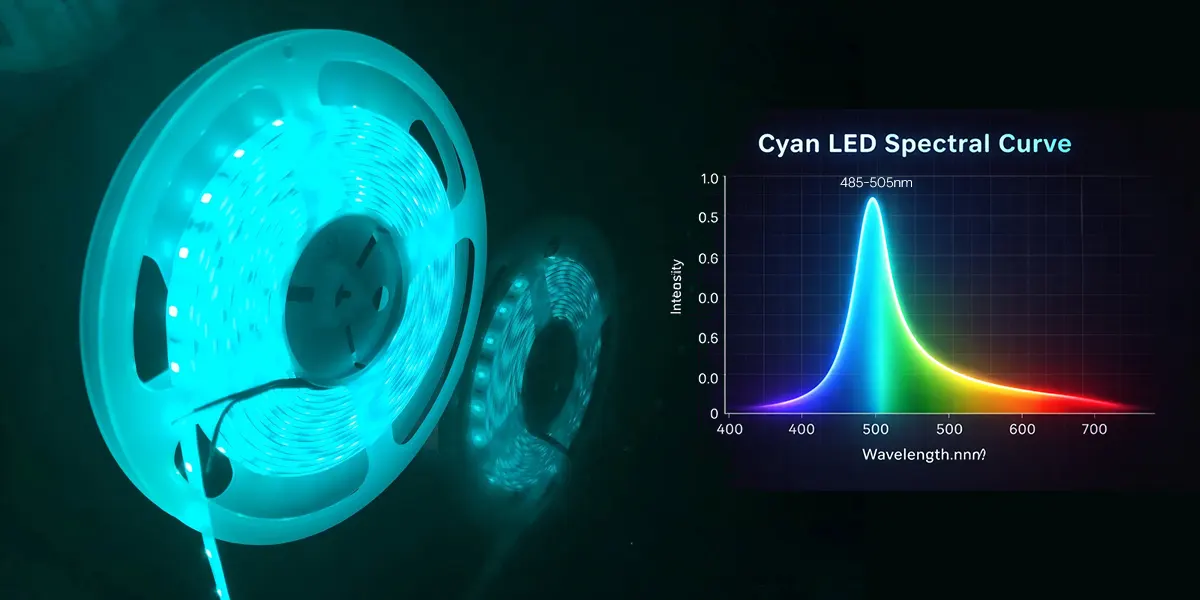
As luzes de tiras de LED Cyan normalmente operam dentro da faixa de comprimento de onda de 485 a 505 nm (nanômetro). Nos últimos anos, a iluminação LED Cyan ganhou cada vez mais atenção na iluminação do aquário, iluminação arquitetônica, iluminação médica, pesquisa científica e aplicações de iluminação comercial especializada.
Comparados com os LEDs tradicionais azuis ou verdes, os LEDs Cyan ocupam uma região espectral única que oferece uma experiência visual equilibrada e efeitos biológicos especializados. Essa faixa de comprimento de onda intermediária pode influenciar o conforto visual humano, a penetração de luz subaquática, a resposta à fluorescência de corais e até mesmo a precisão da imagem em ambientes científicos.
Este artigo explora tudo, desde o comprimento de onda da luz de tiras de LED Cyan, características espectrais, aplicações do setor, tecnologias de chip, especificações do produto e orientação profissional da seleção.
Qual é o comprimento de onda das luzes de tiras de LED Cyan?
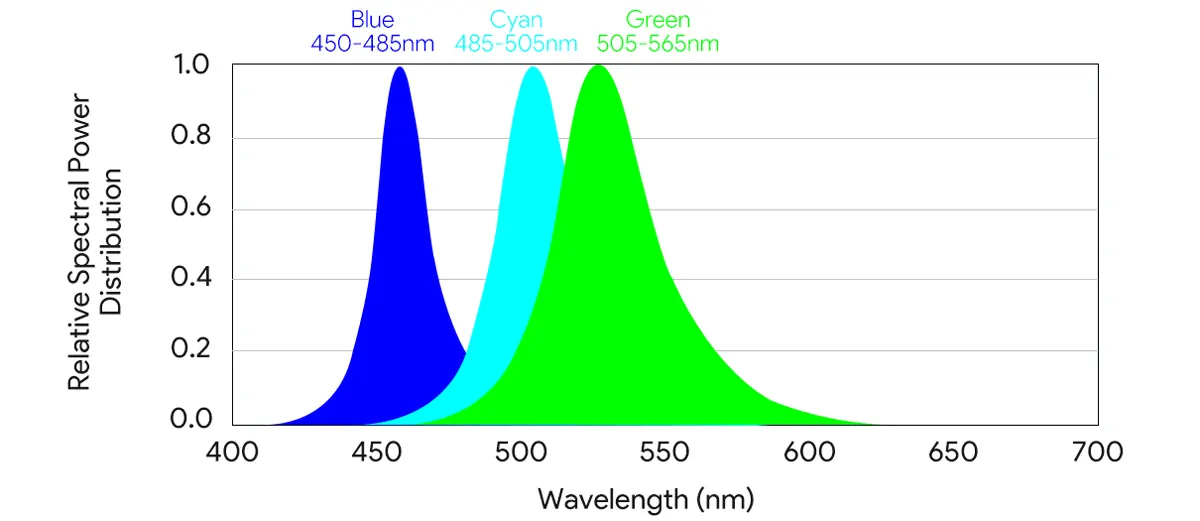
Os LEDs Cyan normalmente emitem luz dentro da faixa de 485 a 505 nm, posicionados entre LEDs azuis (450–485 nm) e LEDs verdes (505–565 nm). Esta gama espectral cria um efeito de iluminação visualmente suave, mas altamente vívido, que é amplamente considerado mais confortável do que a luz azul profunda, permanecendo mais enérgica do que a luz verde.
Para muitos ambientes de iluminação profissional, o Cyan oferece um excelente compromisso entre a percepção do brilho e o conforto visual.
| Cor | Comprimento de onda (nm) |
| Azul | 450–485 |
| ciano | 485–505 |
| Verde | 505–565 |
A maioria dos LEDs cianos exibe um pico espectral em torno de 495 nm, com uma metade do máximo de largura total (FWHM) de aproximadamente 20 nm. Uma distribuição espectral mais estreita geralmente oferece melhor consistência de comprimento de onda e renderização de cores mais precisa em aplicações especializadas.
A análise de curvas espectrais é particularmente importante para:
- iluminação de coral de aquário
- sistemas de imagens médicas
- iluminação laboratorial
- Experiências óp
- Iluminação arquitetônica centrada no ser humano
Em projetos profissionais, mesmo pequenas diferenças de comprimento de onda podem afetar significativamente a produção visual e a resposta biológica.
Por que o comprimento de onda ciano é único
O ciano ocupa uma região de transição no espectro visível, onde a sensibilidade do olho humano começa a aumentar em comparação com a luz azul profunda. Por causa disso, os LEDs Cyan geralmente parecem mais brilhantes para os olhos humanos em níveis de potência semelhantes.
Esta característica oferece várias vantagens:
- Percepção de brilho reduzida
- Conforto visual aprimorado
- iluminação ambiente mais suave
- Melhor visibilidade subaquática
- Resposta fluorescente aprimorada em corais e materiais
Ao contrário dos LEDs azuis puros que às vezes podem parecer excessivamente duros ou cansativos, a iluminação ciano proporciona uma atmosfera visual mais limpa e equilibrada.
No design de iluminação comercial, o Cyan é frequentemente associado a:
- estética moderna
- ambientes futuristas
- Ambientes visuais calmos
- Acentos arquitetônicos de alta tecnologia
- Iluminação com tema marinho
Como Cyan difere dos LEDs azuis
Os LEDs Cyan produzem um tom mais suave, semelhante a um tom azul-petróleo, enquanto os LEDs azuis parecem mais profundos, frios e intensos.
Características da Cy
- Percepção visual mais suave
- Ressurreição aparente mais baixa
- Melhor conforto ocular em exposição prolongada
- Aparência subaquática mais natural
Características azuis
- contraste mais forte
- Estimulação visual mais elevada
- Efeito de iluminação mais dramático
- Aparência mais profunda ao estilo do oceano
Para ambientes onde as pessoas permanecem sob iluminação por longos períodos, o ciano é frequentemente preferido devido à sua fadiga visual reduzida.
Chips de LED comuns usados para LEDs Cyan
A maioria das luzes de tiras de LED Cyan usa:
- Tecnologia de semicondutores Ingan (Nidio Gallium Nitrede)
- Soluções LED convertidas em fósforo
- Pacotes de LED SMD de alta eficiência
- Tecnologias de luz contínua COB
A qualidade do chip afeta diretamente:
- Precisão do comprimento de onda
- Consistência de brilho
- estabilidade térmica
- Tempo de vida
- Eficiência energética
- uniformidade de cor
Os chips LED de alta qualidade geralmente mantêm tolerâncias de comprimento de onda mais apertadas, o que é especialmente importante para aplicações científicas, de aquários e médicas.
Os fabricantes profissionais também usam:
- PCBs de cobre multicamada
- Substratos de alta condutividade térmica
- Projetos de IC de corrente constante
- Sistemas de binning de precisão
Esses recursos ajudam a manter a produção de ciano estável em longos períodos de operação.
Luz de tira de LED ciano vs luz de tira de led azul
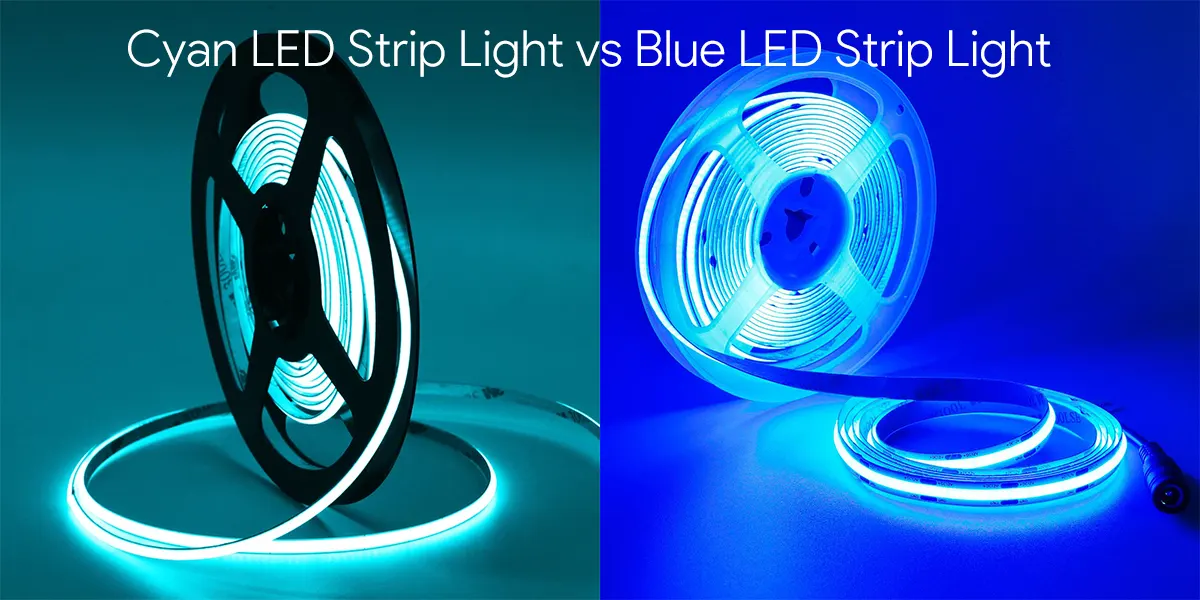
Comparação do comprimento de onda
| Tipo de LED | Comprimento de onda (nm) | Aplicações típicas |
| Azul | 450–485 | Iluminação de recifes, efeitos visuais |
| ciano | 485–505 | Aquário, iluminação de escritório, sotaque arquitetônico |
Diferença visual
Os LEDs Cyan parecem mais suaves e próximos dos tons de cerceta, enquanto os LEDs azuis parecem mais profundos e frios.
Em aplicações do mundo real:
- Cyan cria uma atmosfera ambiente mais limpa
- O azul cria um contraste mais forte e efeitos dramáticos
A diferença se torna especialmente perceptível em ambientes internos e superfícies reflexivas.
Diferença de aplicativo
Aplicações de LED Cyan
- Aquários de recife de coral
- Iluminação de destaque arquitet
- iluminação do museu
- iluminação do escritório
- vitrines
- ambientes laboratoriais
Aplicações LED azuis
- Estimulação da fotossíntese
- Iluminação de palco
- iluminação de entretenimento
- Efeitos visuais adjacentes a UV
- Simulação em águas profundas
Eficiência energética
Os LEDs Cyan podem oferecer uma eficiência de percepção luminosa ligeiramente melhorada porque o olho humano é mais sensível aos comprimentos de onda cianos em comparação com o azul profundo.
Em algumas aplicações, a iluminação ciano pode atingir um brilho visual semelhante com menor brilho percebido.
Caso de aplicação: LED Cyan em iluminação de aquário
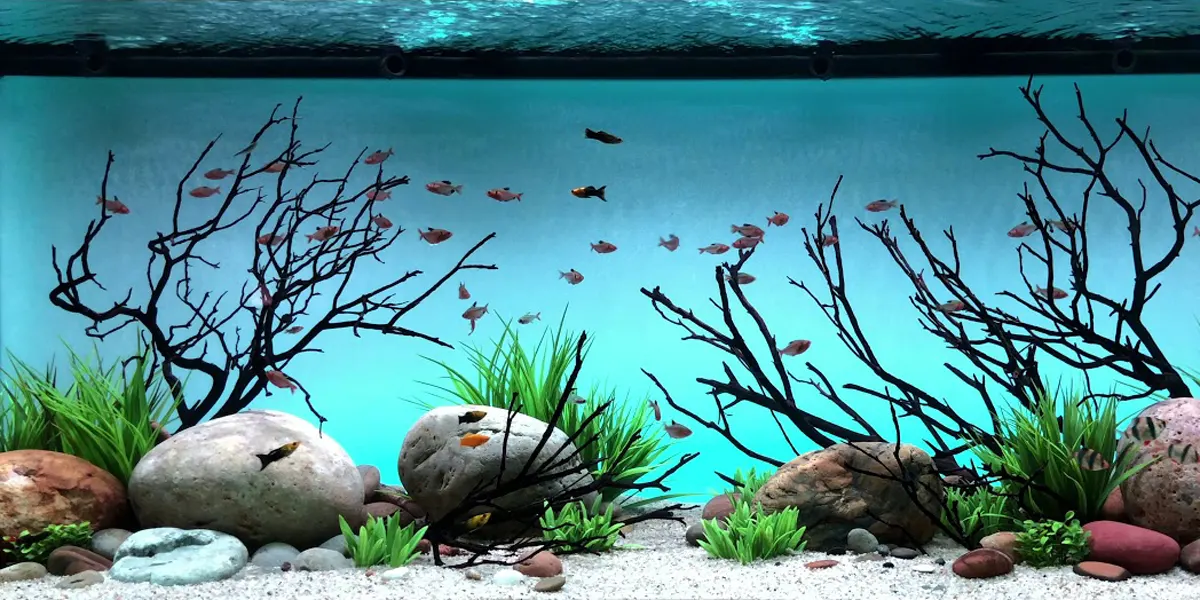
Por que o ciano é essencial para os tanques de recife
Pesquisas de biologia marinha mostram que as algas simbióticas de coral (Zooxanthellae) respondem fortemente aos comprimentos de onda em torno de 490-500 nm.
Esta região de comprimento de onda contribui para:
- Aumento da fluorescência de coral
- Visibilidade de pigmento aprimora
- Penetração espectral equilibrada debaixo d'água
- Exposição excessiva ao azul reduzida
Nos sistemas de aquário de recife, a luz ciano é frequentemente usada em conjunto com LEDs azuis e brancos para simular as condições de iluminação natural do oceano.
Exemplo de projeto real
Tipo de projeto: aquário comercial de recife
Solução de iluminação: Sistema LED de espectro total com canais ciano integrados
conseqüência:
- Melhor coloração de coral
- Pigmentos fluorescentes mais vívidos
- Reduz o risco de branqueamento em comparação com a iluminação excessiva em azul
- Aparência visual mais natural para os visitantes
- Melhor percepção de profundidade dentro dos tanques de aquário
Muitos designers profissionais de aquários consideram agora os comprimentos de onda cianos um componente importante dos sistemas de iluminação de recife balanceados.
Design de espectro recomendado
Para um desempenho ideal da iluminação do recife:
- Azul: 450–485nm → Suporte a fotossíntese principal
- ciano: 485–505nm → Equilíbrio espectral e saúde dos corais
- Branco: Aprimoramento de espectro total e aparência natural
Esta combinação replica mais de perto a penetração da luz solar natural através da água do mar.
Comparado com sistemas puros de azul-pesado, a integração ciano equilibrada geralmente produz:
- Melhor realismo visual
- Fluorescência de coral melhorada
- Menor fadiga visual para os espectadores
Cenários adicionais de aplicativos e LEDs Cyan recomendados adicionais
Como as luzes de tiras de LED Cyan ficam entre os comprimentos de onda azuis e verdes, elas criam um equilíbrio único de calma, estética futurista e suavidade visual.
No design prático de iluminação, a iluminação ciano é frequentemente combinada com materiais arquitetônicos específicos, texturas e ambientes espaciais para maximizar seu efeito visual. Diferentes aplicações podem exigir diferentes objetivos da atmosfera, como aumentar a transparência, reduzir a fadiga visual ou criar ambientes de estilo subaquáticos envolventes.
A tabela a seguir resume as aplicações comuns de luz LED Cyan, combinações de materiais recomendadas e a atmosfera visual normalmente criada em cada ambiente.
Guia de aplicação de luz de tira de LED ciano
| área de aplicação | cenário típico | Efeito visual central / atmosfera | Materiais e elementos recomendados |
| Comercial e escritório | Showrooms de tecnologia, locais de esports, lojas de smartphones | Ambiente futurista, de alta tecnologia e calma | Perfis de alumínio, vidro temperado, texturas de fibra de carbono |
| Comercial e varejo | Balcões de joias, vitrines de luxo | Transparência aprimorada, aparência premium de tom frio | Espelho de aço inoxidável, vidro ultraclaro |
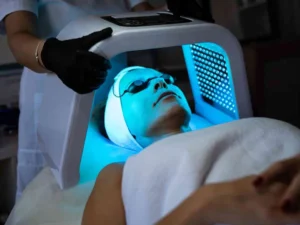
| Médico e laboratorial | Clínicas odontológicas, espaços médicos, laboratórios | Apresentação limpa, profissional e higiênica | Mármore branco, acabamentos suaves minimalistas |
| decoração residencial | Aquários, espaços com temas subaquáticos | Atmosfera simulada do oceano, vibração de cores aprimorada | Decoração de coral, elementos marinhos, acrílico |
| entretenimento residencial | Iluminação ambiente em casa, home theaters | Alívio do estresse, atmosfera envolvente | Paredes cinzas, superfícies de projeção |
| Segurança residencial e navegação | Escadas, iluminação de orientação do corredor | Orientação visual, segurança noturna | difusores de acrílico fosco |
| paisagem ao ar livre | Piscinas, fontes, paisagens aquáticas | Estética aquática limpa, tom visual legal | Mosaicos, pedra natural |
| arquitetura ao ar livre | Construindo iluminação de contorno de fachada | Aparência urbana moderna, estética futurista | paredes de cortina de vidro |
| automotiva e industrial | Interiores de veículos, iluminação da carroceria | Ambiente leve, esportivo e de tom frio | couro, guarnições metálicas |
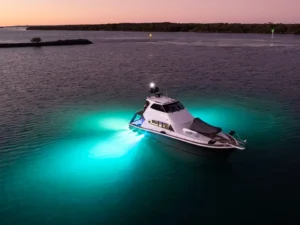
| Marinha e Industrial | interiores de barcos, iluminação do deck | Atmosfera de estilo polar, indicação de segurança | Piso de madeira em teca, aço inoxidável |
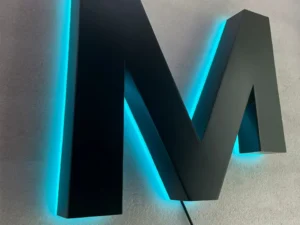
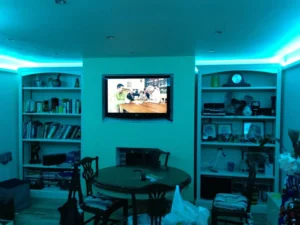

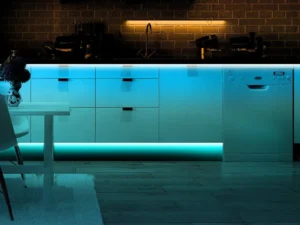
Por que a iluminação ciano funciona tão bem em espaços modernos
Uma razão pela qual a iluminação LED Cyan se tornou cada vez mais popular é sua capacidade de criar efeitos visuais tecnológicos e calmantes simultaneamente.
Comparado com os LEDs azuis tradicionais, a iluminação ciano parece:
- mais suave para o olho humano
- Mais premium em ambientes comerciais
- Mais natural em simulações subaquáticas
- Menos visualmente agressivo durante a exposição a longo prazo
Em muitos projetos de iluminação profissional, o Cyan agora é usado como uma cor de transição entre a iluminação funcional do branco e os efeitos decorativos RGB.
Fatores a serem considerados ao escolher as luzes de tiras de LED Cyan
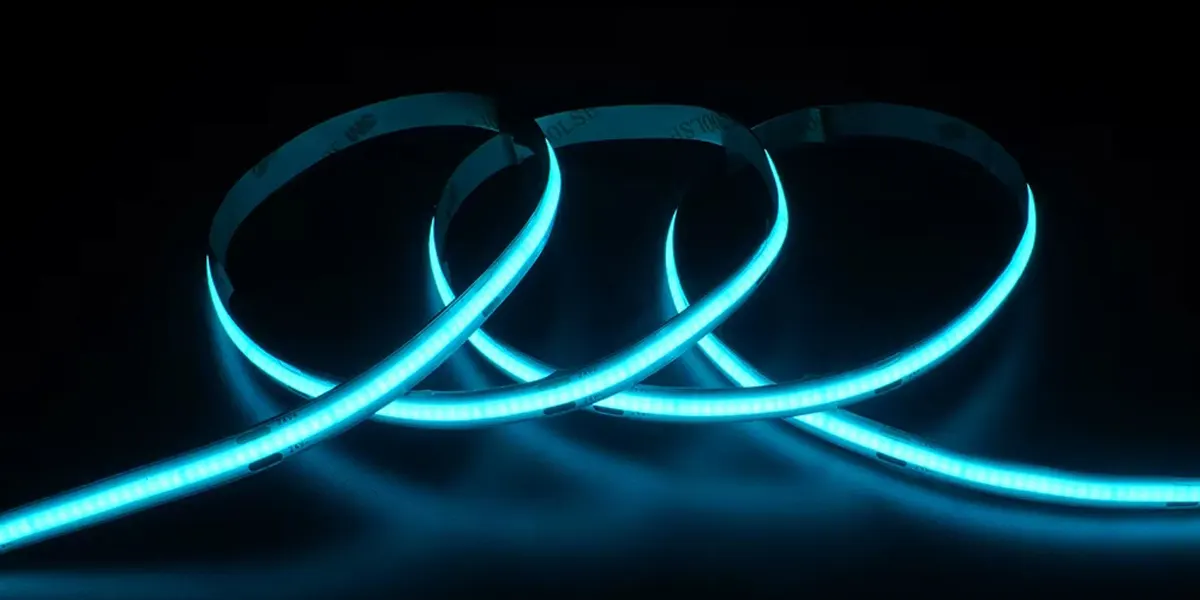
Selecionar a faixa de LED Cyan correta envolve mais do que escolher um comprimento de onda. Fatores importantes incluem:
1. Consistência do comprimento de onda
Aplicações profissionais exigem uma tolerância de comprimento de onda apertada para garantir a consistência visual.
2 . Qualidade do PCB
PCBs de cobre mais grossos melhoram:
- Dissipação de calor
- Tempo de vida
- Estabilidade atual
3. Densidade LED
A densidade de LED mais alta cria:
- iluminação mais suave
- Visibilidade reduzida do hotspot
- Melhores efeitos de iluminação linear
4. Gerenciamento térmico
A dissipação de calor eficiente é fundamental para manter a estabilidade do comprimento de onda e a confiabilidade a longo prazo.
Fabricante personalizado de luz de tiras de LED ciano
Procurando um fornecedor confiável de fitas de LED Cyan personalizadas? A Signliteled especializou-se na entrega de tiras de LED COB de alta qualidade e soluções de LED SMD com anos de experiência em design, desenvolvimento e produção. Ajudamos os clientes a criar tiras de LED Cyan feitas sob medida que atendem aos requisitos precisos do projeto.
Nossas tiras de LED Cyan personalizadas apresentam:
- Opções de comprimento de onda: totalmente personalizável dentro de 485–505nm para tons precisos de ciano
- Opções de largura de PCB: 8–12 mm
- Proteção à prova d'água: IP20 a IP68
- Serviços de OEM e ODM
- Suporte a embalagem e etiquetas personalizadas
- Opções de densidade de LED múltiplas
- Soluções personalizadas de energia e controle
Se você exigir Tiras de LED COB para iluminação perfeita ou Fitas LED SMD Para instalações flexíveis, a Signliteld pode fornecer soluções profissionais adaptadas aos requisitos do seu projeto.

Conclusão
As luzes de tiras de LED Cyan ocupam uma posição especializada, mas cada vez mais importante, entre os comprimentos de onda de luz azul e verde, normalmente dentro da faixa de 485 a 505 nm. Suas características espectrais equilibradas os tornam altamente valiosos em aquários, laboratórios científicos, sistemas de imagens médicas e ambientes de iluminação arquitetônica.
Compreender as características do comprimento de onda da Cyan, tecnologias de chip, gerenciamento térmico e requisitos de aplicação ajudam a garantir um desempenho de iluminação ideal e confiabilidade a longo prazo.
À medida que as aplicações profissionais de iluminação continuam evoluindo, a tecnologia Cyan LED deve desempenhar um papel crescente em sistemas de iluminação funcional e decorativa.
FAQs
Postagens relacionadas