Polski
  English
  简体中文
简体中文  Deutsch
  Español
  Français
  Italiano
  日本語
日本語  한국어
한국어  Português
  Русский
  Türkçe
  Nederlands
  Tiếng Việt
  ไทย
ไทย 
Cyjanowe światła taśmowe LED zazwyczaj działają w zakresie długości fali 485–505nm (nanometr). W ostatnich latach cyjanowe oświetlenie LED zyskuje coraz większą uwagę w oświetleniu akwarium, oświetleniu architektonicznym, oświetleniu medycznym, badaniach naukowych i specjalistycznymi aplikacjami oświetleniowymi.
W porównaniu z tradycyjnymi niebieskimi lub zielonymi diodami LED, cyjanowe diody LED zajmują unikalny region widmowy, który oferuje zrównoważone wrażenia wizualne i specjalistyczne efekty biologiczne. Ten pośredni zakres długości fal może wpływać na komfort wizualny człowieka, podwodne przenikanie światła, odpowiedź fluorescencji koralowej, a nawet dokładność obrazowania w środowiskach naukowych.
W tym artykule omówiono wszystko, od długości fali światła cyjanowego, charakterystyki spektralnej, zastosowań branżowych, technologii chipowych, specyfikacji produktów i wskazówek dotyczących wyboru profesjonalnych.
Jaka jest długość fali cyjanowych świateł LED?
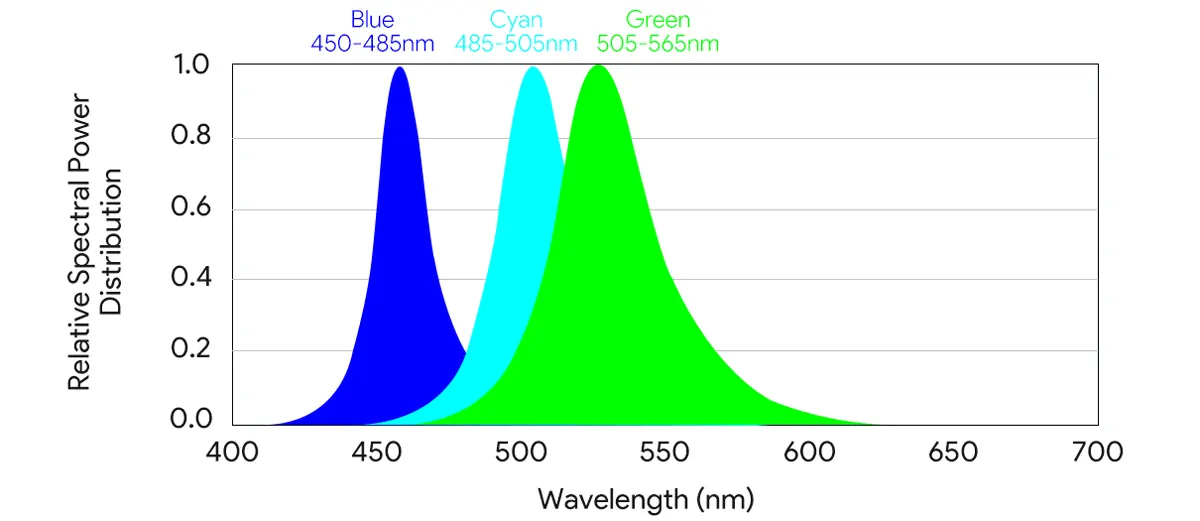
Niebieskie diody LED zazwyczaj emitują światło w zakresie 485–505 nm, umieszczone między niebieskimi diodami LED (450–485 nm) i zielonymi diodami LED (505–565nm). Ten zakres widmowy tworzy miękki, ale bardzo żywy efekt świetlny, który jest powszechnie uważany za bardziej komfortowy niż ciemnoniebieskie światło, pozostając bardziej energetyczny niż zielone światło.
W wielu profesjonalnych środowiskach oświetleniowych cyan zapewnia doskonały kompromis między postrzeganiem jasności a komfortem wizualnym.
| Kolor | Długość fali (nm) |
| Niebieski | 450–485 |
| cyjan | 485–505 |
| Zielony | 505–565 |
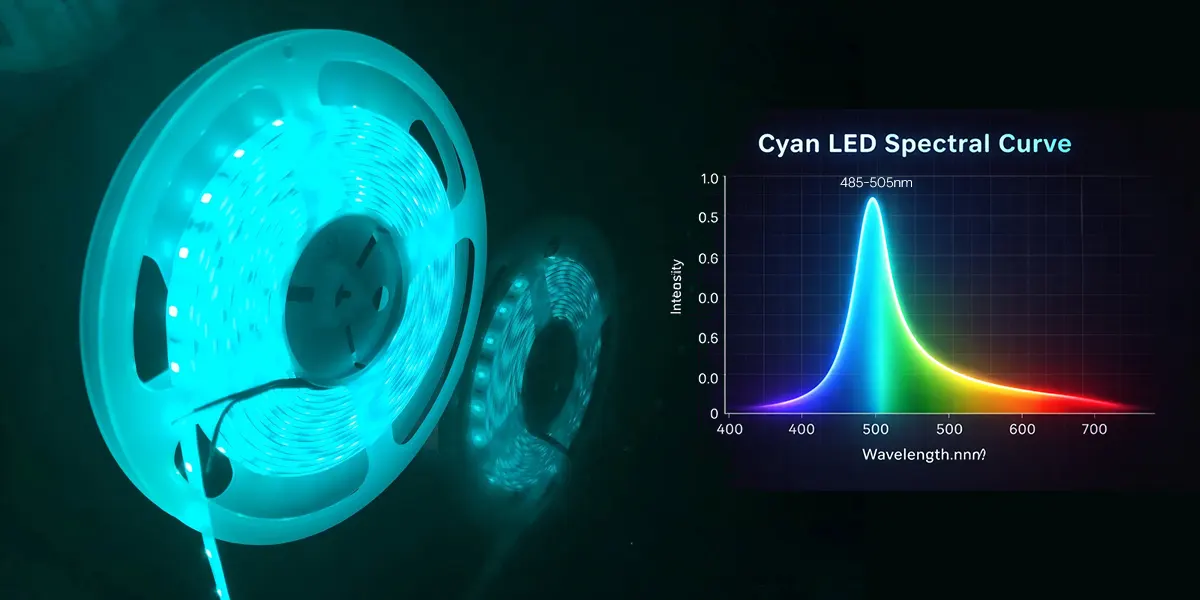
Większość cyjanowych diod wykazuje pik spektralny około 495 nm, z typową pół-maksymalną szerokością (FWHM) około 20 nm. Węższy rozkład widmowy generalnie zapewnia lepszą spójność długości fal i dokładniejsze oddawanie kolorów w specjalistycznych zastosowaniach.
Analiza krzywej widmowej jest szczególnie ważna dla:
- Oświetlenie koralowe akwarium
- Systemy obrazowania medycznego
- Oświetlenie laboratoryjne
- Eksperymenty optyczne
- Oświetlenie architektoniczne zorientowane na człowieka
W projektach profesjonalnych nawet niewielkie różnice długości fali mogą znacząco wpłynąć na wydajność wizualną i reakcję biologiczną.
Dlaczego długość fali cyjanowej jest wyjątkowa
Cyjan zajmuje obszar przejściowy w spektrum widzialnym, gdzie wrażliwość ludzkiego oka zaczyna wzrastać w porównaniu z ciemnoniebieskim światłem. Z tego powodu cyjanowe diody LED często wydają się jaśniejsze dla ludzkiego oka przy podobnych poziomach mocy.
Ta cecha ma kilka zalet:
- Zmniejszona percepcja ol
- Poprawiony komfort wizualny
- Miększe oświetlenie otoczenia
- Lepsza widoczność pod wodą
- Wzmocniona reakcja fluorescencyjna w koralowcach i materiałach
W przeciwieństwie do czystych niebieskich diod LED, które czasami mogą wydawać się zbyt ostre lub męczące, cyjanowe oświetlenie zapewnia czystszą i bardziej zrównoważoną atmosferę wizualną.
W komercyjnym oświetleniu cyjan jest często kojarzony z:
- Nowoczesna estetyka
- Futurystyczne środowiska
- Spokojne środowiska wizualne
- Zaawansowane technologicznie akcenty architektoniczne
- Oświetlenie o tematyce morskiej
Czym cyjan różni się od niebieskich diod LED
Niebieskie diody LED tworzą bardziej miękki, turkusowy odcień, podczas gdy niebieskie diody LED wydają się głębsze, zimniejsze i bardziej intensywne.
Charakterystyka cyj
- Bardziej łagodna percepcja
- Dolny pozorny odblask
- Lepszy komfort oczu w długim okresie ekspozycji
- Bardziej naturalny wygląd podwodny
Niebieskie cechy
- silniejszy kontrast
- Wyższa stymulacja wizualna
- Bardziej dramatyczny efekt świetlny
- Głębszy wygląd w stylu oceanu
W środowiskach, w których ludzie pozostają pod oświetleniem przez dłuższy czas, często preferowany jest cyjan ze względu na zmniejszone zmęczenie wzroku.
Wspólne chipy LED używane do cyjanowych diod LED
Większość cyjanowych świateł LED używa:
- Technologia półprzewodników Ingan (azotek galu indium)
- Rozwiązania LED z konwertacją fosforem
- Wysokowydajne pakiety LED SMD
- Technologie ciągłego światła COB
Jakość chipa bezpośrednio wpływa na:
- Dokładność długości fali
- Konsystencja jasności
- Stabilność term
- Długość życia
- Efektywność energetyczna
- Jednolitość koloru
Chipy LED wyższej jakości generalnie utrzymują wąskie tolerancje długości fal, co jest szczególnie ważne w zastosowaniach naukowych, akwariowych i medycznych.
Profesjonalni producenci używają
- Wielowarstwowe miedziane płytki drukowane
- Podłoża o wysokiej przewodności cieplnej
- Konstrukcje IC o stałym prądzie
- Precyzyjne systemy binningowe
Te cechy pomagają utrzymać stabilną wydajność cyjanową przez długi czas pracy.
Cyjan taśmy LED Light vs niebieskie paski LED pasek światła
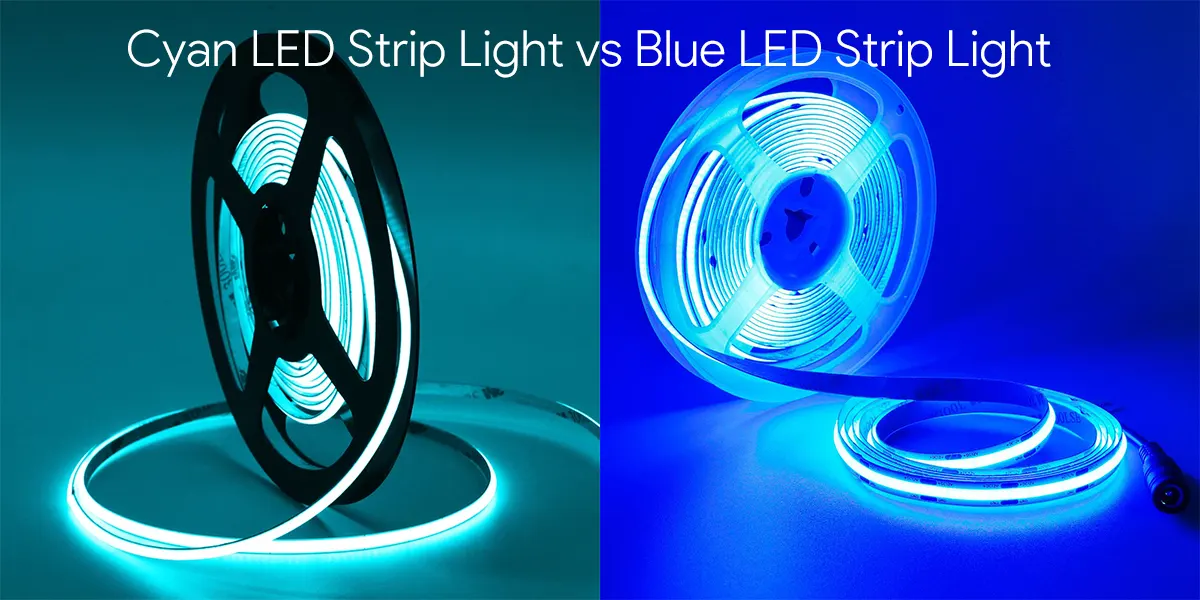
Porównanie długości fali
| Typ LED | Długość fali (nm) | Typowe zastosowania |
| Niebieski | 450–485 | Oświetlenie rafowe, efekty wizualne |
| cyjan | 485–505 | Akwarium, oświetlenie biurowe, akcent architektoniczny |
Różnica wizualna
Niebieskie diody LED wydają się bardziej miękkie i bliższe tonem turkusowym, podczas gdy niebieskie diody LED wydają się głębsze i chłodniejsze.
W rzeczywistych aplikacjach:
- Cyan tworzy czystszą atmosferę otoczenia
- Niebieski tworzy silniejszy kontrast i dramatyczne efekty
Różnica staje się szczególnie zauważalna w środowiskach wewnętrznych i powierzchniach odbijających.
Różnica aplikacji
Aplikacje LED cyjanowe
- Akwaria rafy koralowej
- Oświetlenie akcentujące architektoniczne
- Oświetlenie muzeum
- Oświetlenie biurowe
- gabloty
- Środowiska laboratoryjne
Niebieskie aplikacje LED
- Stymulacja fotosyntezy
- Oświetlenie sceniczne
- Rozrywkowe oświetlenie
- Efekty wizualne przylegające do promieniowania UV
- Symulacja głębinowa
Efektywność energetyczna
Cyjanowe diody LED mogą oferować nieco lepszą wydajność percepcji świetlnej, ponieważ ludzkie oko jest bardziej wrażliwe na długości fal cyjanowych w porównaniu z ciemnoniebieskim.
W niektórych zastosowaniach cyjanowe oświetlenie może osiągnąć podobną wizualną jasność z niższym postrzeganym odblaskem.
Etui na aplikację: Cyan LED w oświetleniu akwarium
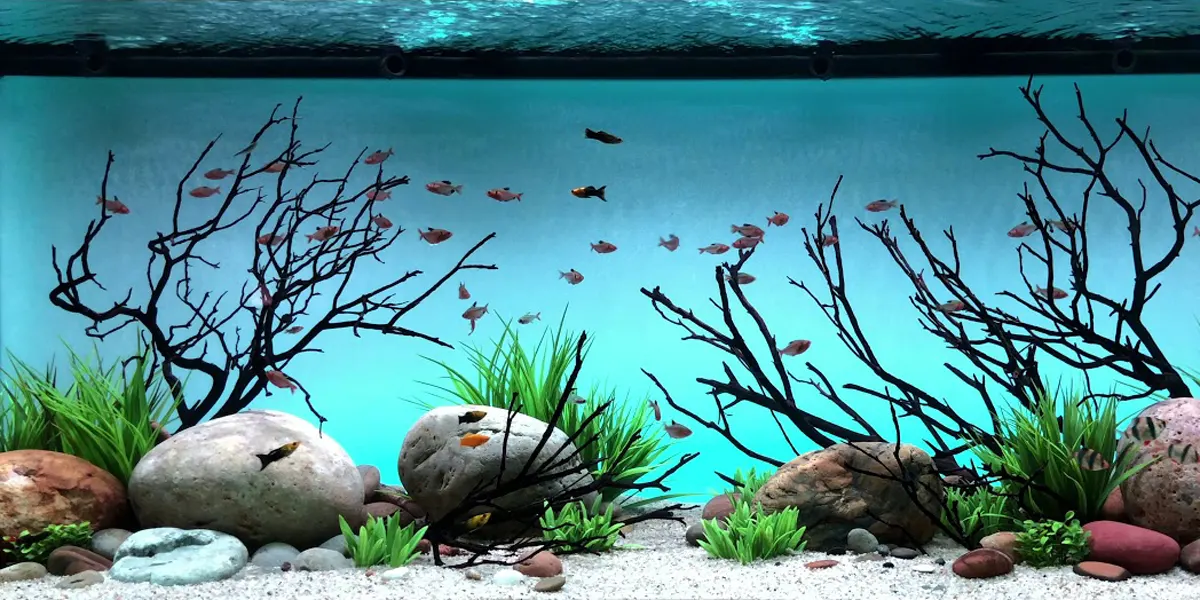
Dlaczego błękitny jest niezbędny dla zbiorników rafowych
Badania z biologii morskiej pokazują, że symbiotyczne algi koralowe (Zooxantellae) silnie reagują na długości fal około 490-500 nm.
Ten obszar długości fali przyczynia się do:
- Wzmocnienie fluorescencji koralowej
- Poprawiona widoczność pigment
- Zrównoważona penetracja widmowa pod wodą
- Zmniejszona nadmierna ekspozycja
W systemach akwariowych rafy, światło cyjanowe jest często używane wraz z królewskimi niebieskimi i białymi diodami LED do symulacji naturalnego oświetlenia oceanicznego.
Prawdziwy przykład projektu
Typ projektu: Akwarium rafowe komercyjne
Rozwiązanie oświetleni: System LED o pełnym spektrum ze zintegrowanymi kanałami cyjanowymi
wyniki:
- Poprawione ubarwienie koralowców
- Bardziej żywe pigmenty fluorescencyjne
- Zmniejszone ryzyko wybielania w porównaniu z nadmiernym niebieskim oświetleniem
- Bardziej naturalny wygląd wizualny dla odwiedzających
- Lepsze postrzeganie głębi wewnątrz zbiorników akwariowych
Wielu profesjonalnych projektantów akwariów uważa teraz długości fal cyjan ważnych elementów zbalansowanych systemów oświetlenia rafowego.
Zalecany projekt widma
Aby uzyskać optymalną wydajność oświetlenia rafowego:
- Niebieski: 450–485nm → Podstawowa fotosynteza pierwotna Obsługa fotosyntezy
- cyjan: 485–505nm → Bilans spektralny i zdrowie koralowców
- Biały: Wzmocnienie pełnego spektrum i naturalny wygląd
Ta kombinacja bardziej replikuje naturalne przenikanie światła słonecznego przez wodę morską.
W porównaniu z czystymi systemami o dużej niebieskiej, zrównoważoną cyjanową integrację często daje:
- Lepszy realizm wizualny
- Poprawiona fluorescencja koralowa
- Niższe zmęczenie wizualne dla widzów
Dodatkowe zalecane scenariusze aplikacji cyjanowych i pary materiałów
Ponieważ cyjanowe paski LED mieszczą się między niebieskimi i zielonymi falami, tworzą wyjątkową równowagę spokoju, futurystycznej estetyki i wizualnej miękkości.
W praktycznym projektowaniu oświetlenia oświetlenie cyjanowe jest często połączone z określonymi materiałami architektonicznymi, teksturami i środowiskami przestrzennymi, aby zmaksymalizować jego efekt wizualny. Różne aplikacje mogą wymagać różnych celów związanych z atmosferą, takich jak zwiększenie przezroczystości, zmniejszenie zmęczenia wizualnego lub tworzenie wciągających środowisk w stylu podwodnym.
W poniższej tabeli podsumowano typowe aplikacje z niebieskim paskiem LED, zalecane kombinacje materiałów i wizualną atmosferę zwykle tworzoną w każdym środowisku.
Przewodnik po aplikacji cyjanowej taśmy LED Light
| Obszar zastosowania | Typowy scenariusz | Podstawowy efekt wizualny / atmosfera | Zalecane materiały i elementy |
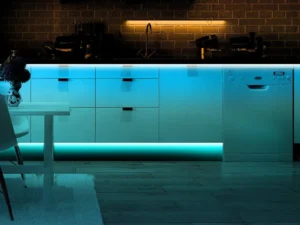
| Komercyjne i biurowe | Salony techniczne, sale e-sportowe, sklepy ze smartfonami | Futurystyczna, zaawansowany technologicznie, spokojna atmosfera | Profile aluminiowe, szkło hartowane, tekstury z włókna węgl |
| Handlowo-handel | Biżuteria, luksusowe gabloty | Zwiększona przezroczystość, premium wygląd w chłodnym odcieniu | Lustro ze stali nierdzewnej, ultra-przezroczyste szkło |
| Medyczne i Laboratoryjne | Kliniki stomatologiczne, przestrzenie medyczne, laboratoria | Czysta, profesjonalna, higieniczna prezentacja | Biały marmur, minimalistyczne miękkie wykończenia |
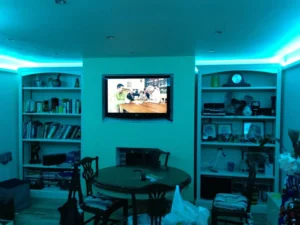
| Dekoracja mieszkaniowa | Akwaria, przestrzenie podwodne | Symulowana atmosfera oceanu, zwiększona żywiołowość kolorów | Wystrój koralowców, elementy morskie, akryl |
| Rozrywka mieszkaniowa | Oświetlenie otoczenia w domu, kina domowe | Odprężenie, wciągająca atmosfera | Szare ściany, powierzchnie projekcyjne |
| Bezpieczeństwo i nawigacja w dom | Schody, oświetlenie nawigacyjne korytarza | wizualne wskazówki, bezpieczeństwo w nocy | Dyfuzory akrylowe matowe |
| Pejzaż na zewnątrz | Baseny, fontanny, pejzaże wodne | Czysta estetyka wodna, fajny wizualny ton | Płytki mozaikowe, kamień naturalny |
| Architektura na zewnątrz | Oświetlenie konturowe fasady budynku | Nowoczesny wygląd miejski, futurystyczna estetyka | Szklane ściany kurtynowe |
| Motoryzacja i przemysł | Wnętrza pojazdu, oświetlenie podwozia | Lekka, sportowa, chłodna atmosfera | Skóra, metalowe wykończenia |
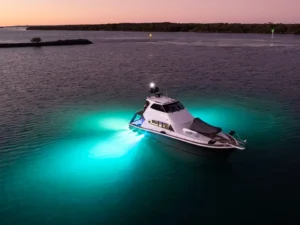
| Morski i przemysłowy | Wnętrza łodzi, oświetlenie pokładowe | Atmosfera w stylu polarnym, wskazanie bezpieczeństwa | Podłogi z drewna tekowego, stal nierdzewna |

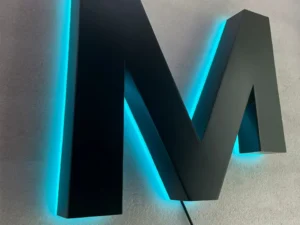

Dlaczego cyjanowe oświetlenie działa tak dobrze w nowoczesnych przestrzeniach
Jednym z powodów, dla których oświetlenie cyjanowe LED staje się coraz bardziej popularne, jest jego zdolność do jednoczesnego tworzenia zarówno technologicznych, jak i uspokajających efektów wizualnych.
W porównaniu z tradycyjnymi niebieskimi diodami LED, cyjanowe oświetlenie wydaje się:
- Miększe dla ludzkiego oka
- Większa premia w środowiskach komercyjnych
- Bardziej naturalny w symulacjach podwodnych
- Mniej agresywne wizualnie podczas długotrwałej ekspozycji
W wielu profesjonalnych projektach oświetleniowych cyan jest obecnie używany jako przejściowy kolor otoczenia między białym funkcjonalnym oświetleniem a dekoracyjnymi efektami RGB.
Czynniki, które należy wziąć pod uwagę przy wyborze cyjanowych lamp LED z taśmą
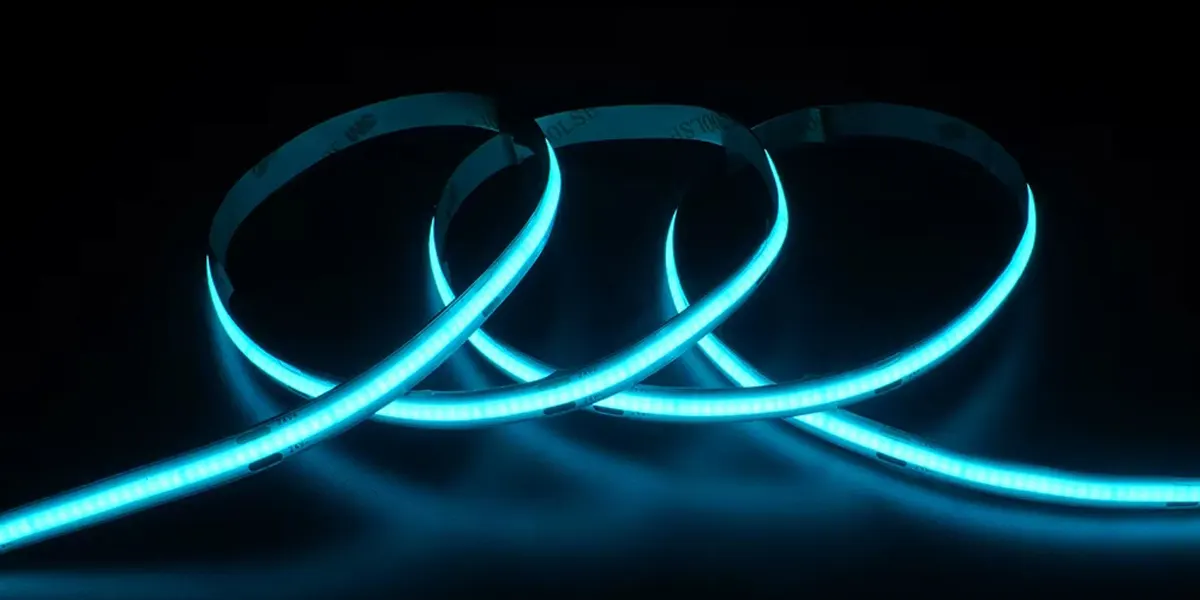
Wybór odpowiedniej cyjanowej taśmy LED to coś więcej niż tylko wybór długości fali. Ważnymi czynnikami są:
1. Konsystencja długości fali
Profesjonalne aplikacje wymagają ścisłej tolerancji długości fali, aby zapewnić spójność wizualn
2 Jakość PCB
Grubsze miedziane płytki PCB poprawiają:
- Rozpraszanie ciepła
- Długość życia
- Obecna stabilność
3. Gęstość LED
Wyższa gęstość LED tworzy:
- Płynne oświetlenie
- Zmniejszona widoczność hotspo
- Lepsze liniowe efekty świetlne
4. Zarządzanie termiczne
Wydajne odprowadzanie ciepła ma kluczowe znaczenie dla utrzymania stabilności długości fali i długoterminowej niezawodności.
Niestandardowe cyjanowe paski LED Light Producent
Szukasz niezawodnego dostawcy niestandardowych taśm LED z cyjanem LED? Signlited specjalizuje się w dostarczaniu wysokiej jakości taśm LED COB i taśm LED SMD z wieloletnim doświadczeniem w projektowaniu, rozwoju i produkcji. Pomagamy klientom w tworzeniu szytych na miarę szyn cyjanowych taśm LED, które spełniają precyzyjne wymagania projektowe.
Nasze niestandardowe paski LED cyjanowe cechują się:
- Opcje długości fali: w pełni konfigurowalny w granicach 485–505nm dla precyzyjnych tonów cyjanowych
- Opcje szerokości PCB: 8–12 mm
- Wodoodporna ochrona: IP20 do IP68
- Usługi OEM i ODM
- Niestandardowe wsparcie pakowania i etykietowania
- Wiele opcji gęstości LED
- Niestandardowe rozwiązania do zasilania i sterowania
czy potrzebujesz Taśmy LED COB do bezszwowego oświetlenia lub Taśmy LED SMD W przypadku instalacji elastycznych Signliteled może dostarczyć profesjonalne rozwiązania dostosowane do wymagań projektowych.

Wniosek
Cyjanowe światła taśmowe LED zajmują wyspecjalizowaną, ale coraz ważniejszą pozycję między długościami fal światła niebieskiego i zielonego, zazwyczaj w zakresie 485–505 nm. Ich zrównoważone cechy spektralne sprawiają, że są bardzo cenne w akwariach, laboratoriach naukowych, systemach obrazowania medycznego i środowiskach architektonicznych oświetlenia.
Zrozumienie charakterystyki długości fali cyjanowej, technologii chipów, zarządzania ciepłem i wymagań aplikacji pomaga zapewnić optymalną wydajność oświetlenia i długoterminową niezawodność.
Ponieważ profesjonalne aplikacje oświetleniowe wciąż ewoluują, oczekuje się, że technologia CYAN LED będzie odgrywać coraz większą rolę zarówno w funkcjonalnych, jak i dekoracyjnych systemach oświetleniowych.
Najczęściej zadawane pytania
Powiązane posty