Français
  English
  简体中文
简体中文  Deutsch
  Español
  Italiano
  日本語
日本語  한국어
한국어  Polski
  Português
  Русский
  Türkçe
  Nederlands
  Tiếng Việt
  ไทย
ไทย 
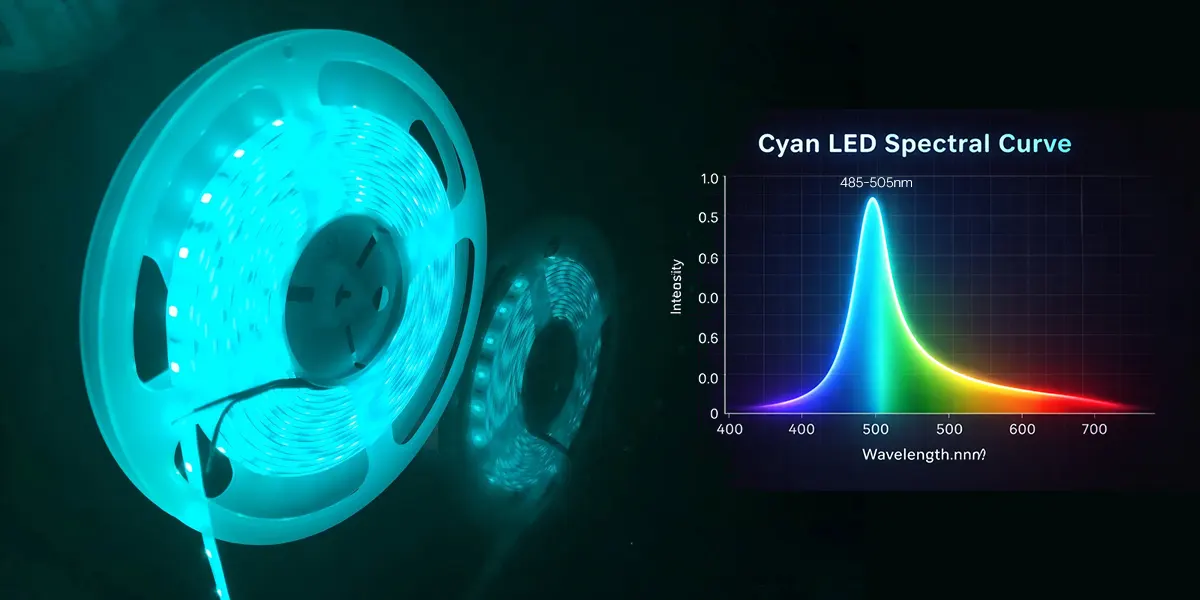
Les bandes de lumière LED Cyan fonctionnent généralement dans la plage de longueurs d'onde de 485 à 505 nm (nanomètre). Ces dernières années, l'éclairage LED Cyan a attiré l'attention de plus en plus sur l'éclairage d'aquarium, l'éclairage architectural, l'éclairage médical, la recherche scientifique et les applications d'éclairage commercial spécialisé.
Comparées aux LED bleues ou vertes traditionnelles, les LED cyan occupent une région spectrale unique qui offre une expérience visuelle équilibrée et des effets biologiques spécialisés. Cette plage de longueurs d'onde intermédiaire peut influencer le confort visuel humain, la pénétration de la lumière sous-marine, la réponse de fluorescence des coraux et même la précision de l'imagerie dans les environnements scientifiques.
Cet article explore tout, de la longueur d'onde de la lumière de bande cyan, des caractéristiques spectrales, des applications industrielles, des technologies de puce, des spécifications de produits et des conseils de sélection professionnelle.
Quelle est la longueur d'onde des bandes de LED cyan ?
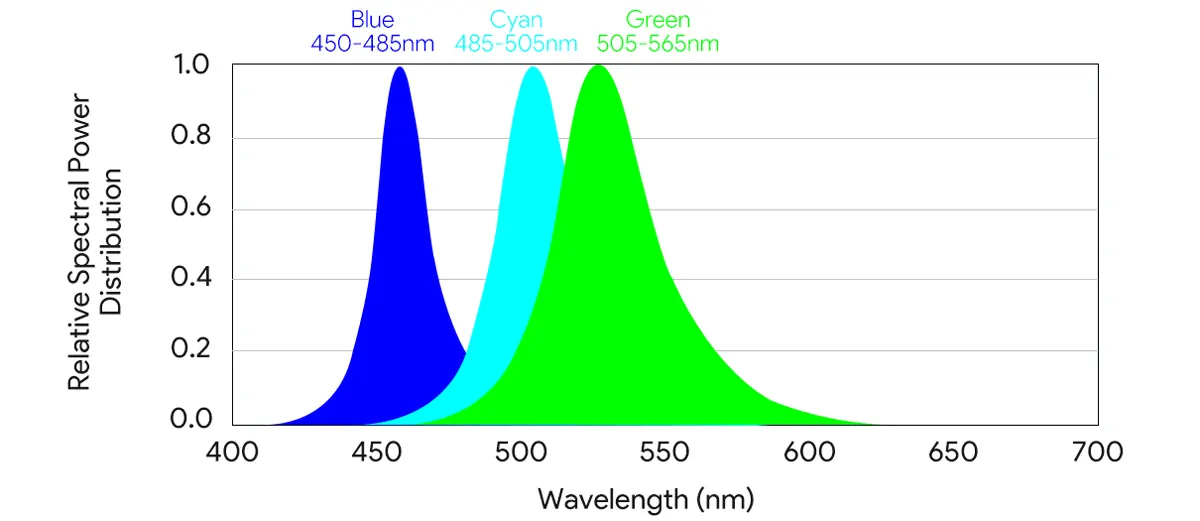
Les LED cyan émettent généralement de la lumière dans la plage de 485 à 505 nm, positionnée entre les LED bleues (450-485 nm) et les LED vertes (505-565 nm). Cette gamme spectrale crée un effet lumineux visuellement doux mais très vif qui est largement considéré comme plus confortable que la lumière bleue profonde tout en restant plus énergique que la lumière verte.
Pour de nombreux environnements d'éclairage professionnels, Cyan fournit un excellent compromis entre la perception de la luminosité et le confort visuel.
| Couleur | Longueur d'onde (nm) |
| Bleu | 450–485 |
| cyan | 485–505 |
| Vert | 505–565 |
La plupart des LED cyan présentent un pic spectral autour de 495 nm, avec une demi-maximum typique de pleine largeur (FWHM) d'environ 20 nm. Une distribution spectrale plus étroite offre généralement une meilleure cohérence de longueur d'onde et un rendu des couleurs plus précis dans des applications spécialisées.
L'analyse de la courbe spectrale est particulièrement importante pour :
- Éclairage de corail d'aquarium
- Systèmes d'imagerie médicale
- Éclairage de laboratoire
- Expériences optiques
- Éclairage architectural centré sur
Dans les projets professionnels, même de petites différences de longueur d'onde peuvent affecter de manière significative la production visuelle et la réponse biologique.
Pourquoi la longueur d'onde cyan est unique
Cyan occupe une région de transition dans le spectre visible où la sensibilité des yeux humains commence à augmenter par rapport à la lumière bleue profonde. Pour cette raison, les LED cyan apparaissent souvent plus lumineuses pour l'œil humain à des niveaux de puissance similaires.
Cette caractéristique présente plusieurs avantages :
- Perception réduite de l'éblouissement
- Amélioration du confort visuel
- Éclairage ambiant plus doux
- Meilleure visibilité sous-marine
- Amélioration de la réponse fluorescente dans les coraux et les matériaux
Contrairement aux LED bleues pures qui peuvent parfois sembler trop dures ou fatigantes, l'éclairage cyan offre une atmosphère visuelle plus propre et plus équilibrée.
Dans la conception d'éclairage commercial, le cyan est fréquemment associé à :
- Esthétique moderne
- Environnements futuristes
- Environnements visuels calmes
- Accents architecturaux de haute technologie
- Éclairage sur le thème de la marine
Comment Cyan diffère des LED bleues
Les LED cyan produisent une tonalité plus douce de type sarcelle, tandis que les LED bleues semblent plus profondes, plus froides et plus intenses.
Caractéristiques cyan
- Perception visuelle plus douce
- Incarnation apparente inférieure
- Meilleur confort oculaire en cas d'exposition de longue durée
- Plus d'apparence sous-marine naturelle
Caractéristiques bleues
- Contraste plus fort
- Stimulation visuelle plus élevée
- Effet d'éclairage plus spectaculaire
- Apparence plus profonde de style océan
Pour les environnements où les gens restent sous l'éclairage pendant de longues périodes, le cyan est souvent préféré en raison de sa fatigue visuelle réduite.
Puces LED communes utilisées pour les LED cyan
La plupart des éclairages de bandes LED cyan utilisent :
- IngI (Nitrure de gallium d'indium) Technologie semi-conductrice
- Solutions LED converties en phosphore
- Packages LED SMD à haut rendement
- Technologies de lumière continue COB
La qualité des puces affecte directement :
- Précision de la longueur d'
- luminosité
- Stabilité thermique
- Durée de vie
- Efficacité énergétique
- Uniformité des couleurs
Les puces LED de qualité supérieure maintiennent généralement des tolérances de longueur d'onde plus strictes, ce qui est particulièrement important pour les applications scientifiques, de l'aquarium et médicaux.
Les fabricants professionnels utilisent également :
- PCB en cuivre multicouche
- Substrats à haute conductivité thermique
- Conceptions de circuits intégrés à courant constant
- Systèmes de binning de précision
Ces fonctionnalités permettent de maintenir une production cyan stable sur de longues périodes d'exploitation.
Lumière de bande cyan LED VS Lampe de bande LED bleue
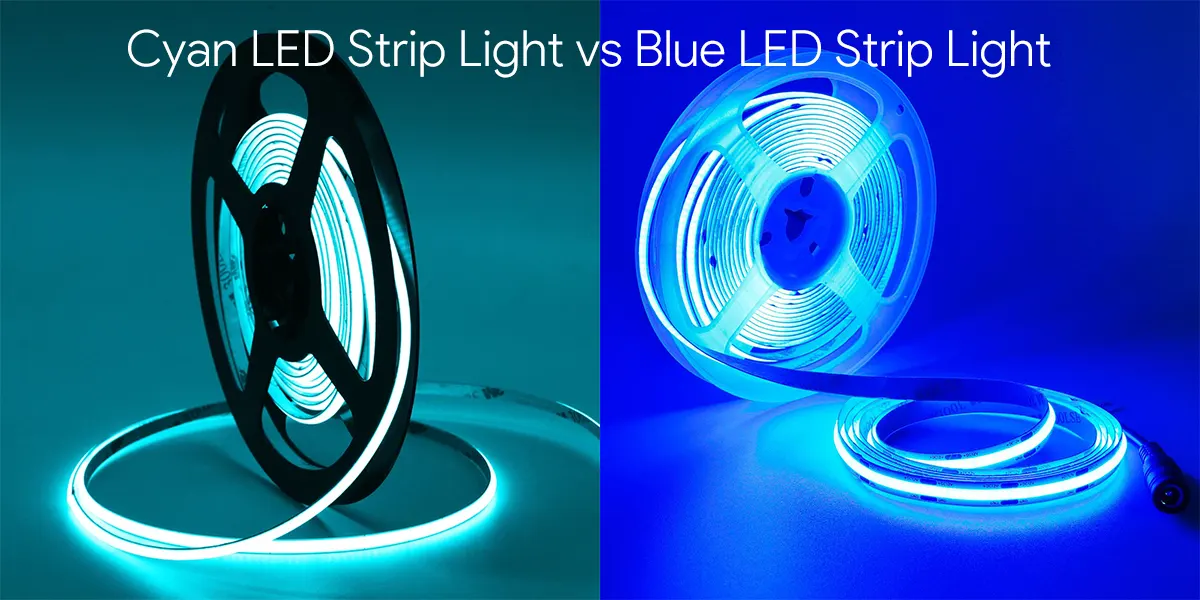
Comparaison des longueurs d'
| Type de LED | Longueur d'onde (nm) | Applications typiques |
| Bleu | 450–485 | Éclairage des récifs, effets visuels |
| cyan | 485–505 | Aquarium, éclairage de bureau, accent architectural |
différence visuelle
Les LED cyan semblent plus douces et plus proches des tons sarcelles, tandis que les LED bleues apparaissent plus profondes et plus fraîches.
Dans les applications du monde réel :
- Cyan crée une atmosphère ambiante plus propre
- Le bleu crée un contraste plus fort et des effets dramatiques
La différence devient particulièrement visible dans les environnements intérieurs et les surfaces réfléchissantes.
Différence d'application
Applications LED cyan
- Aquariums de récifs coralliens
- Éclairage d'accent
- Éclairage de musée
- Eclairage de bureau
- vitrine
- Environnements de laboratoire
Applications LED bleues
- Stimulation de la photosynthèse
- Éclairage de scène
- Eclairage de divertissement
- Effets visuels adjacents aux UV
- Simulation en eau profonde
Efficacité énergétique
Les LED cyan peuvent offrir une efficacité de perception lumineuse légèrement améliorée, car l'œil humain est plus sensible aux longueurs d'onde cyan que le bleu profond.
Dans certaines applications, l'éclairage cyan peut atteindre une luminosité visuelle similaire avec un reflet plus faible perçu.
Cas d'application: LED Cyan dans l'éclairage d'aquarium
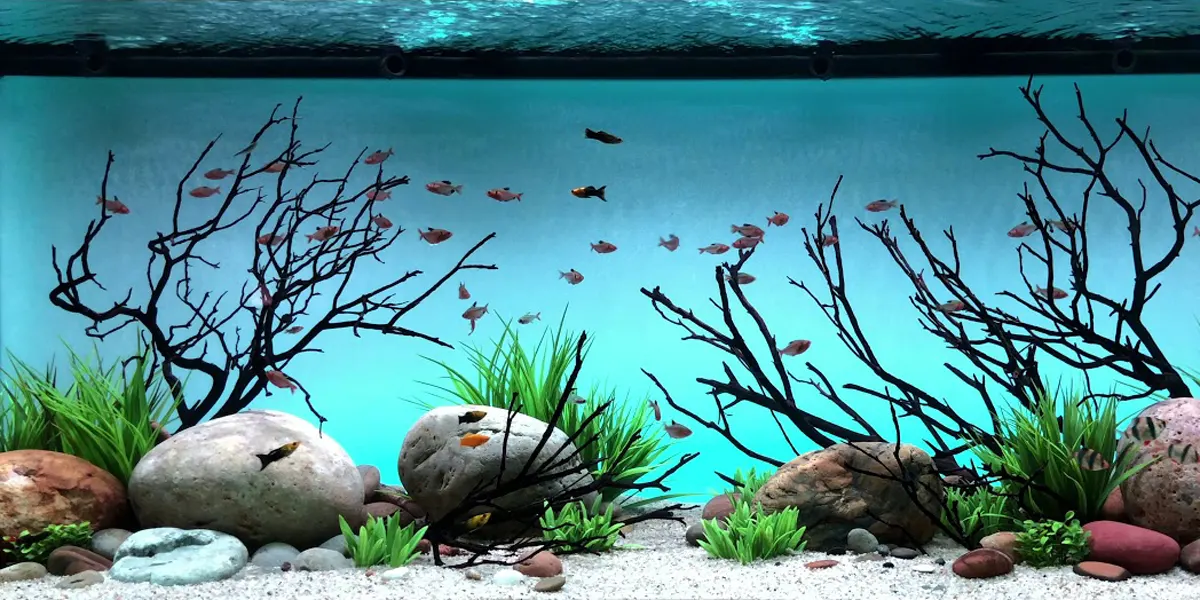
Pourquoi le cyan est essentiel pour les cuves de récif
La recherche en biologie marine montre que les algues symbiotiques coralliennes (zooxanthelles) réagissent fortement aux longueurs d'onde d'environ 490 à 500 nm.
Cette région de longueur d'onde contribue à :
- Amélioration de la fluorescence du corail
- Amélioration de la visibilité des pi
- Pénétration spectrale équilibrée sous l'eau
- Réduction de l'exposition au bleu excessive
Dans les systèmes d'aquarium de récif, la lumière cyan est souvent utilisée avec des LED bleu royal et blancs pour simuler les conditions d'éclairage naturels de l'océan.
Exemple de projet réel
Type de projet: Aquarium de récif commercial
solution d'éclairage: Système LED à spectre complet avec canaux cyan intégrés
résultats:
- Amélioration de la coloration du cora
- Pigments fluorescents plus vifs
- Risque de blanchiment réduit par rapport à un éclairage bleu excessif
- Apparence visuelle plus naturelle pour les visiteurs
- Meilleure perception de la profondeur à l'intérieur des réservoirs d'aquarium
De nombreux concepteurs d'aquarium professionnels considèrent désormais les longueurs d'onde cyan comme un élément important des systèmes d'éclairage de récifs équilibrés.
Conception de spectre recommandée
Pour une performance optimale d'éclairage de récif :
- Bleu: 450–485nm → Prise en charge de la photosynthèse primaire
- cyan: 485–505nm → Équilibre spectral et santé des coraux
- Blanc: Amélioration du spectre complet et aspect naturel
Cette combinaison reproduit de plus près la pénétration de la lumière naturelle du soleil à travers l'eau de mer.
Comparé aux systèmes bleus-lourds, l'intégration cyan équilibrée produit souvent :
- Meilleur réalisme visuel
- Amélioration de la fluorescence du corail
- Faiblesse visuelle réduite pour les spectateurs
Scénarios d'applications et appariements de matériaux à LED Cyan supplémentaires recommandés
Parce que les bandes de lumière LED cyan se situent entre les longueurs d'onde bleues et vertes, elles créent un équilibre unique entre calme, esthétique futuriste et douceur visuelle.
Dans la conception d'éclairage pratique, l'éclairage cyan est souvent combiné avec des matériaux architecturaux spécifiques, des textures et des environnements spatiaux pour maximiser son effet visuel. Différentes applications peuvent nécessiter des objectifs d'atmosphère différents, tels que l'amélioration de la transparence, la réduction de la fatigue visuelle ou la création d'environnements immersifs sous-marins.
Le tableau suivant résume les applications courantes de la lumière de bande de LED cyan, les combinaisons de matériaux recommandées et l'atmosphère visuelle généralement créée dans chaque environnement.
Guide d'application de la lumière de bande de LED Cyan
| Domaine d'application | Scénario typique | Effet visuel de base / atmosphère | Matériaux et éléments recommandés |
| Commercial et bureau | Showrooms Tech, Esports, Magasins de smartphones | Ambiance futuriste, high-tech et calme | Profils en aluminium, verre trempé, textures de fibre de carbone |
| Commercial & Commerce de | Comptoirs de bijoux, vitrines de luxe | Transparence améliorée, aspect cool de qualité supérieure | Miroir en acier inoxydable, verre ultra clair |
| Médecine & Laboratoire | Cliniques dentaires, Espaces médicaux, Laboratoires | Présentation propre, professionnelle et hygiénique | Marbre blanc, finitions douces minimalistes |
| Décoration résidentielle | Aquariums, espaces sous-marins | Ambiance océanique simulée, dynamisme des couleurs améliorée | Décor corail, éléments marins, acrylique |
| Divertissement résidentiel | Éclairage ambiant à domicile, cinéma maison | Soulagement du stress, atmosphère immersive | Murs gris, surfaces de projection |
| Sécurité résidentielle et navigation | Escaliers, éclairage de guidage de couloir | Guidage visuel, sécurité nocturne | Diffuseurs en acrylique givré |
| paysage extérieur | Piscines, fontaines, paysages aquatiques | Une esthétique aquatique propre, un ton visuel cool | Mosaïque, pierre naturelle |
| Architecture extérieure | Éclairage contour de façade de bâtiment | Apparence urbaine moderne, esthétique futuriste | Murs-rideaux en verre |
| Automobile & Industriel | Intérieurs de véhicules, éclairage de soubassement | Ambiance légère, sportive et tonique | Cuir, garnitures métalliques |
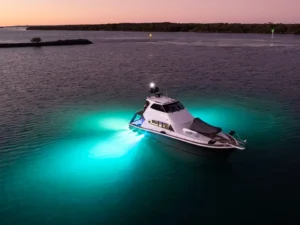
| Marine & Industriel | Intérieurs des bateaux, Éclairage de pont | Ambiance de style polaire, indication de sécurité | Plancher de bois de teck, acier inoxydable |
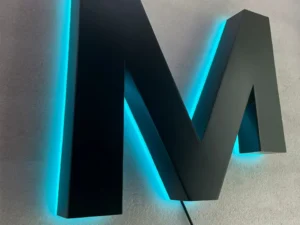
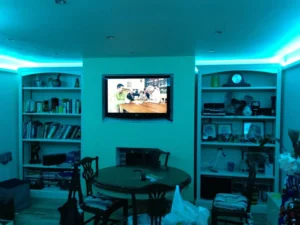

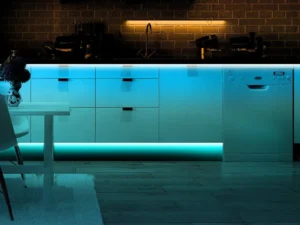
Pourquoi l'éclairage cyan fonctionne si bien dans les espaces modernes
L'une des raisons pour lesquelles l'éclairage LED Cyan est devenu de plus en plus populaire est sa capacité à créer simultanément des effets visuels technologiques et apaisants.
Comparé aux LED bleues traditionnelles, l'éclairage cyan se sent :
- Plus doux pour l'œil humain
- Plus de prime dans les environnements commerciaux
- Plus naturel dans les simulations sous-marines
- Moins visuellement agressif lors d'une exposition à long terme
Dans de nombreux projets d'éclairage professionnels, Cyan est désormais utilisé comme couleur ambiante de transition entre l'éclairage fonctionnel blanc et les effets RVB décoratifs.
Facteurs à prendre en compte lors du choix des socs de la bande LED Cyan
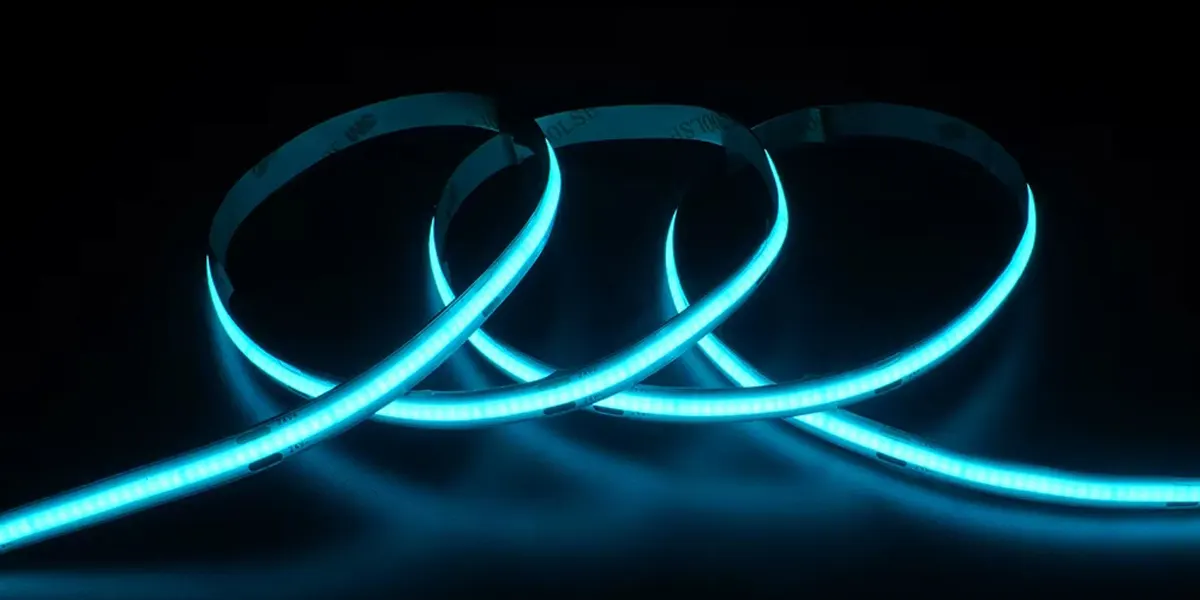
La sélection de la bonne bande LED cyan implique plus que de choisir une longueur d'onde. Les facteurs importants comprennent :
1. Cohérence de la longueur d
Les applications professionnelles nécessitent une tolérance de longueur d'onde stricte pour assurer la cohérence visuelle.
2 Qualité de circuit imprimé
Les PCB en cuivre plus épais s'améliorent :
- Dissipation de la chaleur
- Durée de vie
- Stabilité actuelle
3. Densité LED
Une densité de LED plus élevée crée :
- Éclairage plus fluide
- Visibilité réduite des points d'accès
- De meilleurs effets d'éclairage linéaires
4. Gestion thermique
Une dissipation thermique efficace est essentielle pour maintenir la stabilité de la longueur d'onde et la fiabilité à long terme.
Fabricant de lumière de bande de LED cyan personnalisée
Vous recherchez un fournisseur de bandes LED cyan personnalisées fiables? Signiteled est spécialisé dans la fourniture de solutions de bandes LED COB de haute qualité et de bandes LED SMD avec des années d'expérience dans la conception, le développement et la production. Nous aidons les clients à créer des bandes LED cyan sur mesure qui répondent aux exigences précises du projet.
Nos bandes de LED cyan personnalisées sont:
- Options de longueur d'onde : entièrement personnalisable dans les 485-505nm pour des tonalités cyan précises
- Options de largeur de circuit imprimé : 8–12 mm
- Protection imperméable : IP20 à IP68
- Services OEM et ODM
- Prise en charge de l'emballage et de l'étiquetage
- Plusieurs options de densité de LED
- Solutions de puissance et de contrôle personnalisées
Que vous ayez besoin Bandes LED COB Pour un éclairage transparent ou Bandes LED SMD Pour les installations flexibles, Signiteled peut fournir des solutions professionnelles adaptées aux besoins de votre projet.

Conclusion
Les bandes de signalisation cyan occupent une position spécialisée mais de plus en plus importante entre les longueurs d'onde de lumière bleue et verte, généralement dans la plage de 485 à 505 nm. Leurs caractéristiques spectrales équilibrées les rendent très précieux dans les aquariums, les laboratoires scientifiques, les systèmes d'imagerie médicale et les environnements d'éclairage architectural.
La compréhension des caractéristiques de longueur d'onde cyan, les technologies de puce, la gestion thermique et les exigences d'application contribuent à garantir des performances d'éclairage optimales et une fiabilité à long terme.
Alors que les applications d'éclairage professionnels continuent d'évoluer, la technologie Cyan LED devrait jouer un rôle croissant dans les systèmes d'éclairage fonctionnels et décoratifs.
FAQ
Articles Similaires