Italiano
  English
  简体中文
简体中文  Deutsch
  Español
  Français
  日本語
日本語  한국어
한국어  Polski
  Português
  Русский
  Türkçe
  Nederlands
  Tiếng Việt
  ไทย
ไทย 
Le insegne al neon all'aperto commerciali sono ampiamente utilizzate in ristoranti, bar, vetrine al dettaglio e facciate degli edifici per migliorare la visibilità notturna, rafforzare il riconoscimento del marchio e rendere le aziende più facili da identificare in ambienti commerciali competitivi. Tuttavia, la segnaletica esterna di successo di solito dipende da qualcosa di più del solo aspetto. Fattori come la distanza di visualizzazione, l'esposizione alle intemperie, le condizioni di montaggio, l'illuminazione circostante e il movimento del cliente possono influenzare in modo significativo il rendimento di un segno una volta installato.
Un negozio di ristoranti potrebbe aver bisogno di una segnaletica che migliori la visibilità dell'ingresso senza sovraccaricare le aree da pranzo all'aperto, mentre i locali notturni spesso danno la priorità alla riconoscibilità dopo il tramonto in ambienti altamente competitivi. Gli edifici commerciali e i progetti di facciata di solito si avvicinano di nuovo alla segnaletica in modo diverso, trattando la segnaletica illuminata come parte dell'architettura stessa piuttosto che come un elemento visivo separato.
Per questo motivo, le insegne al neon commerciali all'aperto raramente funzionano come una soluzione unica. Impermeabilità, luminosità, altezza di installazione, leggibilità a lunga distanza e durata del materiale spesso contano tanto quanto il design.
In questo articolo, esploriamo come Insegne al neon commerciali all'aperto vengono utilizzati in ristoranti, bar e facciate, insieme alle considerazioni pratiche che le aziende dovrebbero valutare prima dell'installazione.
Risposta rapida: le insegne al neon commerciali all'aperto sono adatte per ristoranti, bar e facciate?
Le insegne al neon all'aperto commerciali sono ampiamente utilizzate per ristoranti, bar, vetrine al dettaglio e facciate degli edifici perché migliorano la visibilità, rafforzano il riconoscimento del marchio e aiutano le aziende a rimanere evidenti dopo il tramonto. Per la maggior parte dei progetti commerciali esterni, le insegne a LED impermeabili al neon sono generalmente preferite rispetto al tradizionale neon di vetro a causa della migliore durata, della minore manutenzione e della migliore resistenza agli agenti atmosferici. A seconda dell'ambiente, molte aziende scelgono sistemi al neon per esterni con classificazione IP65 o IP67 per gestire pioggia, umidità, polvere e esposizione esterna a lungo termine mantenendo una visibilità costante.
Cosa rende le insegne al neon commerciali all'aperto adatte per l'uso aziendale?
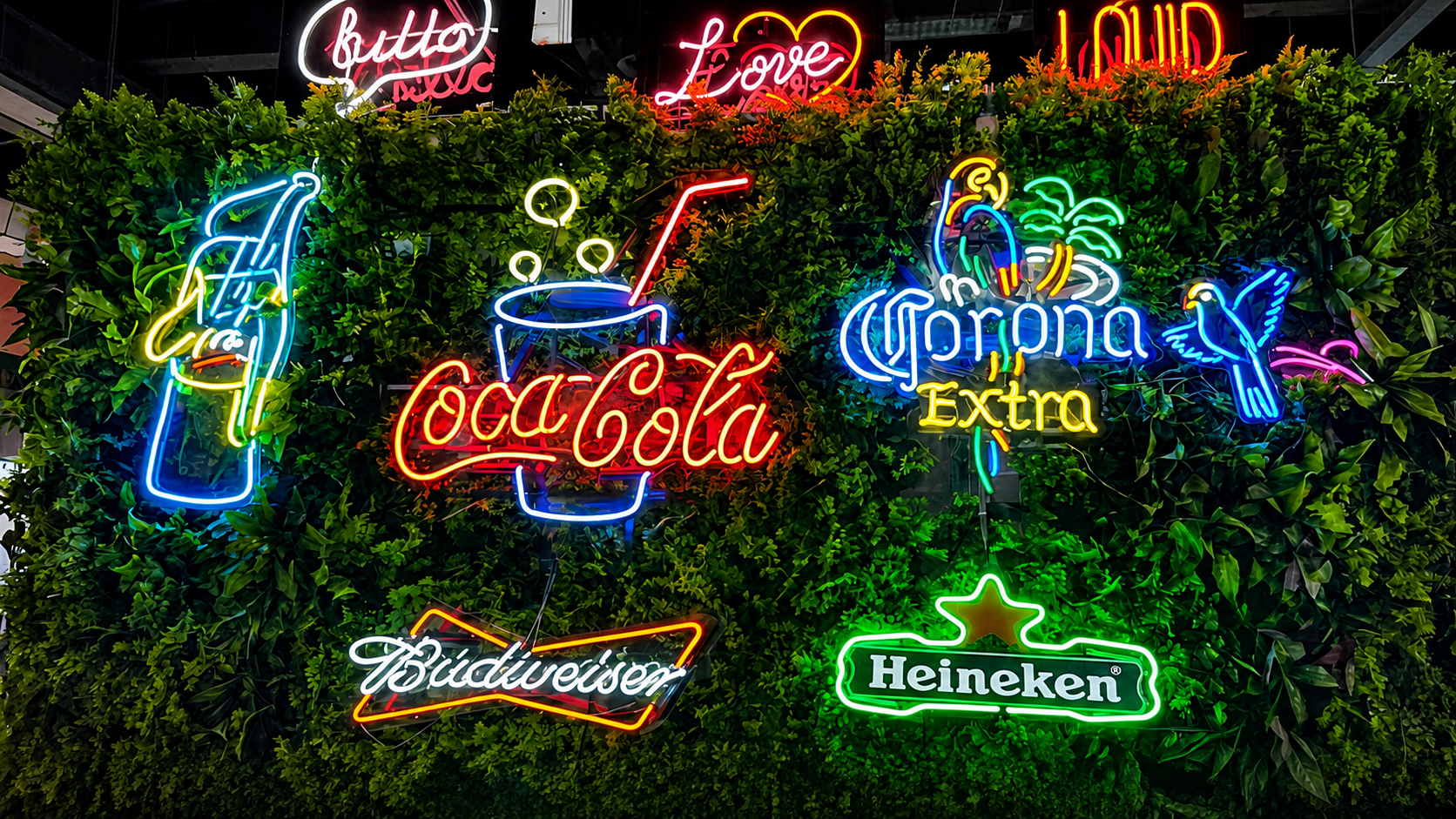
Le insegne al neon outdoor commerciali sono progettate in modo diverso da Neon decorativo per interni perché gli ambienti aziendali esterni creano sfide che la segnaletica interna non è mai stata costruita per gestire. Ristoranti, bar, vetrine e facciate commerciali spesso devono affrontare l'esposizione alla pioggia, l'umidità, le temperature che cambiano, la forte luce solare e le diverse distanze di visione, il che significa che la segnaletica esterna di solito richiede una costruzione più duratura e una pianificazione dell'installazione.
Per la maggior parte delle applicazioni commerciali, le prestazioni dipendono dal fatto che il segno possa rimanere visibile, affidabile e di facile manutenzione dopo un'esposizione all'aperto a lungo termine. Questo è uno dei motivi per cui molte aziende preferiscono ora i sistemi al neon a LED impermeabili per le installazioni esterne, in particolare dove la visibilità dopo il tramonto e la resistenza agli agenti atmosferici contano entrambi.
Resistenza agli agenti atmosferici e protezione
La segnaletica esterna spesso si comporta in modo diverso a seconda dell'esposizione ambientale. Un patio del ristorante esposto alla pioggia di solito richiede una protezione diversa rispetto a una vetrina installata sotto copertura aerea.
Molti progetti commerciali danno quindi la priorità ai sistemi al neon impermeabili all'aperto, in particolare per le facciate dei ristoranti, gli ingressi alberghieri e le vetrine lungo le strade in cui l'esposizione agli agenti atmosferici diventa parte delle normali condizioni operative. Nelle applicazioni esterne, le insegne a LED al neon con grado di protezione IP65 e IP67 sono comunemente selezionate perché forniscono una protezione più forte contro l'umidità, la polvere e le condizioni ambientali all'aperto.
Visibilità da diverse distanze di visualizzazione
La segnaletica esterna commerciale è raramente vista allo stesso modo in ogni luogo.
Una vetrina situata su una strada pedonale può consentire ai clienti di riconoscere da vicino dettagli più piccoli, mentre le attività lungo la strada spesso dipendono più fortemente dal riconoscimento rapido da distanze maggiori. Per questo motivo, la luminosità, la chiarezza delle scritte e il posizionamento spesso influenzano la visibilità più della sola dimensione del segno.
In molti ambienti commerciali, la tipografia pulita e il contrasto più forte di solito si comportano in modo più coerente rispetto ai design visivamente affollati.
Durabilità del materiale per uso esterno a lungo termine
La segnaletica commerciale per esterni ha bisogno anche di materiali in grado di gestire l'esposizione ambientale a lungo termine.
Molti moderni progetti al neon esterni utilizzano neon a LED a base di silicone perché tende a offrire una migliore flessibilità, resistenza ai raggi UV e protezione dagli agenti atmosferici rispetto ai materiali destinati principalmente all'uso decorativo per interni. Per le attività commerciali, la durata a lungo termine spesso conta tanto quanto l'aspetto visivo, specialmente quando l'accesso alla manutenzione diventa difficile dopo l'installazione.
Perché le aziende utilizzano insegne al neon commerciali all'aperto?
Le aziende in genere utilizzano insegne al neon all'aperto commerciali per migliorare la visibilità notturna, rafforzare il riconoscimento del marchio e rendere più facile l'identificazione delle vetrine in ambienti commerciali affollati. Per molti ristoranti, bar, hotel e spazi commerciali, la segnaletica all'aperto non è semplicemente decorativa. Spesso aiuta i clienti a riconoscere gli ingressi più velocemente e a ricordare un'attività più facilmente dopo il tramonto.
Tuttavia, ciò che rende efficace la segnaletica dipende solitamente dall'ambiente stesso.
Un ristorante in una trafficata strada da pranzo può dare la priorità alla visibilità dell'ingresso in modo che i clienti possano identificare rapidamente la vetrina durante le ore serali. I bar nei distretti della vita notturna spesso si concentrano maggiormente sulla riconoscibilità perché i clienti possono confrontare più luoghi mentre camminano. Gli hotel e gli edifici commerciali di solito si avvicinano alla segnaletica in modo diverso, trattando i segni illuminati come parte della facciata piuttosto che come caratteristica visiva separata.
In molti contesti commerciali, la visibilità da sola è raramente sufficiente. Un segno deve anche rimanere leggibile e pratico una volta installato all'aperto. La distanza di visualizzazione, l'illuminazione circostante, l'altezza di montaggio e il movimento del cliente possono influenzare il rendimento della segnaletica in condizioni reali.
Ad esempio, le vetrine rivolte ai pedoni spesso supportano più dettagli visivi perché i clienti sperimentano l'iscrizione da vicino. Le posizioni rivolte alla strada, tuttavia, di solito beneficiano di lettere più pulite e contrasto più forte poiché i conducenti hanno solo pochi secondi per riconoscere l'attività.
Le condizioni meteorologiche possono anche influenzare le prestazioni a lungo termine. Le aziende che operano in aree esposte a pioggia, umidità o luce solare diretta spesso preferiscono i sistemi al neon a LED impermeabili perché gli ambienti esterni richiedono richieste diverse sulla segnaletica rispetto agli spazi interni.
| ambiente commerciale | a cosa di solito dà la priorità al segno |
|---|---|
| Vetrine del ristorante | Visibilità e riconoscimento dell'ingresso |
| locali per la vita notturna | Visibilità dopo il tramonto e memorabilità |
| centri commerciali | Riconoscimento del marchio tra i negozi vicini |
| Alberghi e ospitalità | Integrazione architetto |
| Edifici ad uso misto | Identificazione e orientamento degli edifici |
Poiché il comportamento del cliente e le condizioni di visualizzazione variano in base agli ambienti commerciali, le aziende di solito ottengono risultati migliori quando le decisioni di segnaletica si basano sulle esigenze di visibilità, sulle condizioni di installazione e sul movimento del cliente piuttosto che sull'aspetto.
Ciò diventa particolarmente evidente nei ristoranti, dove la segnaletica spesso deve migliorare la visibilità senza sopraffare l'atmosfera generale.
Come i ristoranti utilizzano effettivamente le insegne al neon all'aperto

I ristoranti di solito utilizzano insegne al neon all'aperto per migliorare la visibilità dell'ingresso, rafforzare l'identità del negozio e aiutare i clienti a riconoscere l'attività più facilmente dopo il tramonto. Tuttavia, ciò che funziona per un ambiente di ristorante potrebbe non funzionare ugualmente bene per un altro. Il movimento del cliente, la competizione in negozio, i posti a sedere all'aperto e la distanza di visualizzazione possono influenzare il rendimento della segnaletica in condizioni reali.
Visibilità del negozio del ristorante
Per molti ristoranti, la prima priorità è aiutare i clienti a riconoscere rapidamente l'ingresso, soprattutto nelle trafficate strade da pranzo dove diverse vetrine competono per l'attenzione dopo il tramonto.
Un ristorante da asporto o una sede fast-casual possono beneficiare di una maggiore visibilità e di lettere più semplici perché i clienti spesso prendono decisioni rapide durante il viaggio attraverso aree affollate. In questi ambienti, la leggibilità a distanza spesso conta più della complessità decorativa.
I ristoranti sit-down di solito si avvicinano alla segnaletica in modo leggermente diverso. La visibilità è ancora importante, ma la segnaletica spesso funziona meglio quando si sente collegata alla vetrina piuttosto che sopraffare visivamente l'esperienza culinaria. Molti ristoranti incentrati sull'ospitalità preferiscono la segnaletica che supporta l'atmosfera pur rimanendo facile da riconoscere dopo il tramonto.
Cena all'aperto e patio
I ristoranti con posti a sedere all'aperto spesso devono affrontare sfide diverse.
Un cartello che sembra equilibrato dall'altra parte della strada può improvvisamente sembrare troppo luminoso una volta che i clienti si sono seduti nelle vicinanze durante il servizio di cena. L'eccessiva luminosità a volte può creare abbagliamento intorno alle sale da pranzo all'aperto, in particolare negli spazi rivolti al patio dove gli ospiti rimangono vicini all'illuminazione per periodi più lunghi.
Per questo molti ristoranti preferiscono livelli di luminosità più controllati che mantengono la visibilità senza distrarre visivamente.
Diversi tipi di ristoranti spesso hanno bisogno di segnaletica diversa
Il tipo di ristorante può anche influenzare la segnaletica che si comporta meglio.
I ristoranti fast-casual spesso danno la priorità a una visibilità notturna più forte e un riconoscimento più rapido perché le decisioni dei clienti avvengono rapidamente. Spazi per pasti premium, caffetterie, ristoranti sul tetto e locali incentrati sull'ospitalità possono invece preferire una segnaletica che si senta più morbida e più integrata nell'ambiente generale.
Questo è uno dei motivi per cui i ristoranti situati sulla stessa strada spesso si avvicinano alla segnaletica in modo molto diverso, anche quando il traffico dei clienti sembra simile.
Configurazione all'aperto consigliata per ristoranti
Per molti negozi di ristoranti, le aziende spesso preferiscono:
- IP67 Neon LED impermeabile Per la durata all'aperto e la resistenza agli agenti atmo
- Illuminazione bianca calda o ambrata Per creare un aspetto accogliente in negozio
- Tipografia leggibile che rimane chiaro da diverse distanze di visualizzazione
- Livelli di luminosità controllati Per ridurre l'abbagliamento vicino a patii o aree salotto all'aperto
In molti ambienti di ristoranti, la segnaletica al neon all'aperto di solito si comporta meglio quando i clienti possono riconoscere rapidamente la vetrina senza che l'illuminazione si senta visivamente travolgente.
Perché i bar spesso usano i neon all'aperto in modo diverso rispetto ai ristoranti

Le barre di solito si avvicinano al neon all'aperto in modo diverso perché il comportamento del cliente cambia in modo significativo dopo il tramonto. A differenza dei ristoranti, dove molti clienti sanno già dove stanno andando, i locali notturni spesso competono per un'attenzione spontanea. Le persone potrebbero già camminare attraverso le aree di intrattenimento trafficate confrontando più luoghi prima di decidere dove fermarsi.
Per questo motivo, la segnaletica all'aperto negli ambienti della vita notturna diventa spesso parte della prima impressione piuttosto che aiutare semplicemente i clienti a identificare la posizione.
Visibilità negli ambienti della vita notturna
Bar, pub e locali per la vita notturna spesso operano in ambienti visivamente affollati in cui i clienti sono circondati da vetrine illuminate, display a LED, illuminazione per veicoli e luoghi concorrenti.
In queste condizioni, la sola visibilità è raramente sufficiente. I clienti devono anche riconoscere e ricordare rapidamente la sede. Per questo motivo, la leggibilità spesso conta più dei disegni eccessivamente decorativi. Lettering puliti, contrasto più forte e posizionamento ponderato di solito si comportano in modo più coerente rispetto alla segnaletica visivamente affollata.
Diversi tipi di barre spesso richiedono una segnaletica diversa
Non tutti i locali notturni si avvicinano alla segnaletica allo stesso modo.
I bar sportivi spesso danno la priorità alla visibilità più forte perché il riconoscimento più rapido aiuta ad attirare i clienti walk-in. I cocktail lounge e i bar sul tetto potrebbero preferire un'illuminazione più controllata che supporti l'atmosfera senza sopraffare l'ingresso del locale. I locali di musica dal vivo spesso si concentrano maggiormente sulla riconoscibilità in modo che i visitatori possano identificare rapidamente la posizione dopo il tramonto.
Anche l'ambiente circostante modella la decisione. Uno spazio per cocktail sul tetto può interessarsi di più dell'atmosfera, mentre un bar sportivo rivolto alle strade che compete con i locali vicini può dare la priorità a una visibilità più forte e un marchio più chiaro.
Configurazione all'aperto consigliata per bar e locali notturni
Per molte attività della vita notturna, gli operatori spesso preferiscono:
- Sistemi a LED impermeabili Per una durata all'aperto a lungo termine
- Tipografia a contrasto più elevato Per una più facile leggibilità notturna
- Livelli di luminosità da moderata a forte rimanere evidente nelle aree della vita notturna competitiva
- Materiali per esterni resistenti agli agenti atmos Per pioggia, umidità e temperature variabili
In molti ambienti di vita notturna, la segnaletica all'aperto di solito si comporta al meglio quando la riconoscibilità e l'atmosfera lavorano insieme piuttosto che competere tra loro.
Impermeabilizzazione e affidabilità all'aperto per insegne al neon commerciali
Le insegne al neon commerciali all'aperto dovrebbero funzionare in ambienti in cui la segnaletica interna non è mai stata progettata per gestire. Pioggia, umidità, luce solare, polvere e temperature che cambiano possono influenzare il rendimento della segnaletica nel tempo. Per ristoranti, bar, vetrine e progetti di facciata, l'affidabilità all'aperto spesso conta tanto quanto l'aspetto visivo.
Uno dei più grandi errori che le aziende commettono è supponendo che tutte le insegne al neon siano ugualmente adatte per l'uso esterno.
In pratica, i progetti per esterni di solito richiedono materiali più durevoli, costruzione impermeabile e pianificazione dell'installazione per mantenere le prestazioni a lungo termine.
Perché le insegne al neon commerciali all'aperto a volte falliscono

Molti problemi di segnaletica all'aperto iniziano molto prima dell'installazione.
In alcuni casi, le aziende si concentrano fortemente sulla progettazione, al contempo trascurando l'esposizione ambientale o i requisiti di energia. Un segno che si comporta bene all'interno può avere difficoltà all'esterno se la protezione dagli agenti atmosferici o la pianificazione elettrica viene sottovalutata.
I problemi comuni di segnaletica all'aperto spesso includono:
| Problema comune | cosa di solito lo causa | Soluzione pratica |
|---|---|---|
| danni causati dall'acqua | Sigillatura debole o materiali classificati in interni | Configurazioni impermeabili IP65/IP67 |
| tremolante | Protezione del conducente scadente o alimentazione instabile | Sistemi di alimentazione per esterni protetti dalle intemperie |
| Luminosità ridotta | caduta di tensione o posizionamento non idoneo | Pianificazione corretta del trasformatore e posizionamento della visibilità |
| invecchiamento materiale | Esposizione UV a lungo termine | Neon LED in silicone resistente ai raggi UV |
| Difficoltà di manutenzione | Accesso scadente all'installazione | Pianificazione della manutenzione prima dell'installazione |
Comprensione delle valutazioni IP per le insegne al neon all'aperto
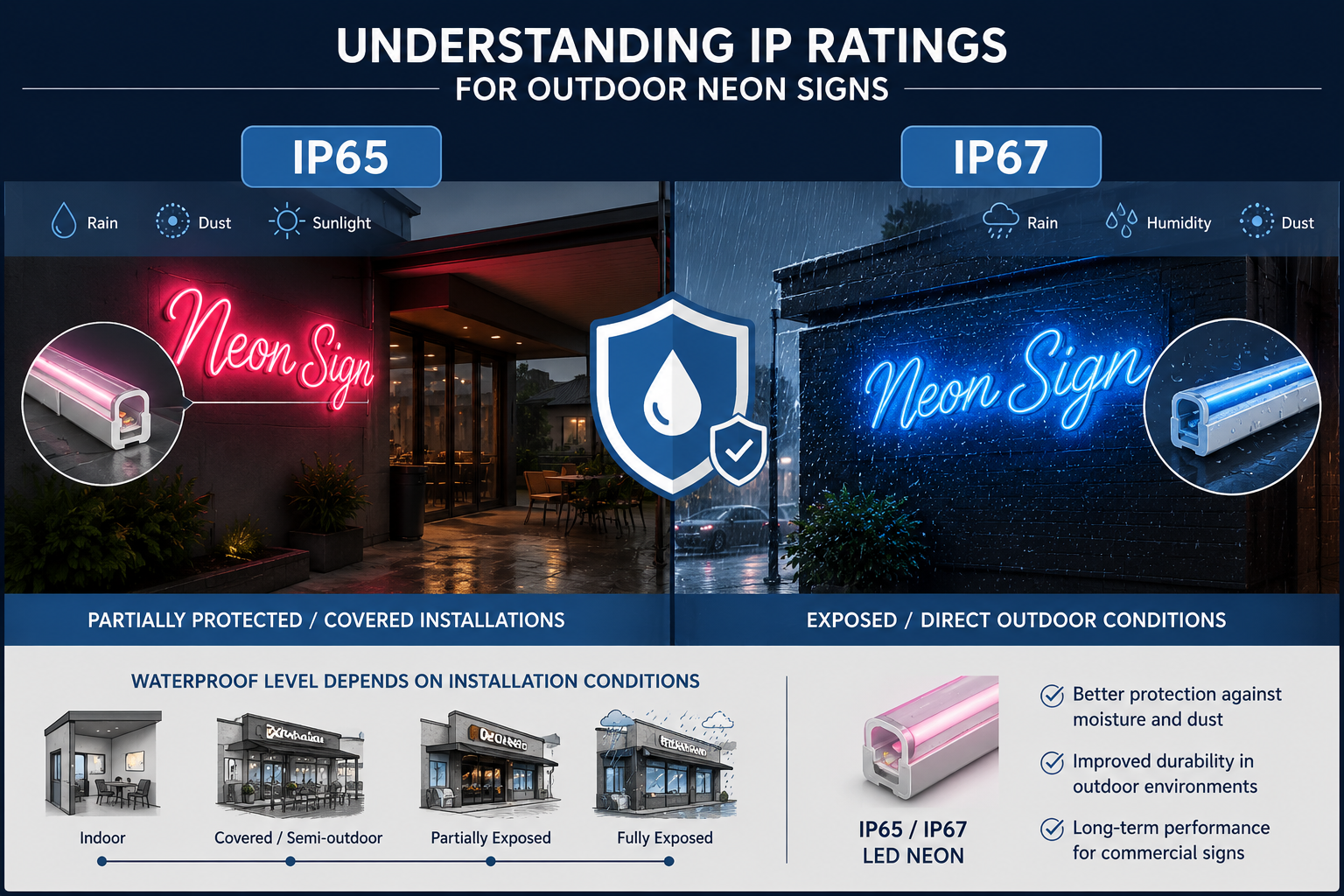
Per la segnaletica commerciale all'aperto, la protezione impermeabile diventa spesso una considerazione importante.
Preferiscono molti negozi di negozi, bar e progetti di facciate di ristoranti Sistemi a LED IP65 o IP67 Perché forniscono una migliore protezione contro l'umidità, la polvere e le condizioni meteorologiche variabili.
In generale:
- IP65 è comunemente usato per vetrine parzialmente protette o installazioni esterne coperte
- IP67 è spesso preferito per progetti esposti a pioggia, umidità o condizioni esterne dirette
Tuttavia, il livello di impermeabilità ideale di solito dipende dalle condizioni di installazione piuttosto che dal solo segno.
Perché la selezione dei materiali per esterni è importante
La scelta del materiale può anche influenzare la durata a lungo termine.
Molti progetti di esterni commerciali ora preferiscono Neon LED a base di silicone Perché generalmente fornisce una migliore flessibilità, resistenza ai raggi UV e protezione dagli agenti atmosferici rispetto ai materiali progettati principalmente per applicazioni decorative per interni.
Per le aziende che pianificano installazioni esterne a lungo termine, l'affidabilità spesso dipende da quanto bene la segnaletica corrisponda all'ambiente in cui funzionerà effettivamente.
La durata a lungo termine dipende anche dall'esposizione ambientale e dalla qualità dell'installazione. I segnali commerciali esterni esposti a pioggia, umidità o luce solare diretta possono riscontrare diverse esigenze di manutenzione nel tempo. Le aziende che valutano la segnaletica esterna spesso guardano più da vicino quanto durano le insegne al neon personalizzate Quando si pianificano configurazioni impermeabili, accesso alla manutenzione e costi operativi a lungo termine.
Cosa spesso trascurano le aziende prima di installare insegne al neon all'aperto
Molti progetti al neon all'aperto non lottano a causa del cattivo design. Più spesso, i problemi iniziano quando le aziende sottovalutano come funzionerà il segno in un ambiente commerciale reale.
Un segno che si sente equilibrato in un mockup può funzionare in modo molto diverso una volta installato all'aperto. La distanza di visualizzazione, l'altezza di montaggio, il movimento del cliente e l'illuminazione circostante spesso influenzano la visibilità più di quanto inizialmente previsto dalle aziende.
La distanza di visualizzazione cambia spesso tutto
Uno degli errori più comuni è supporre che i clienti sperimentino la segnaletica allo stesso modo in ogni ambiente.
Una vetrina rivolta ai pedoni di solito funziona in modo diverso da un'azienda stradale in cui i conducenti hanno solo pochi secondi per riconoscere il segno. Allo stesso modo, un cartello di facciata installato a diversi metri dal suolo richiede spesso proporzioni diverse rispetto alla segnaletica posizionata più vicino all'altezza degli occhi.
In molti progetti commerciali, le scritte più pulite e i layout più semplici di solito funzionano meglio dei design visivamente affollati.
L'illuminazione circostante può influire sulla visibilità
L'illuminazione del negozio nelle vicinanze, le finestre riflettenti, i display a LED e l'illuminazione stradale possono cambiare completamente il modo in cui si sente la segnaletica dopo il tramonto.
In alcuni ambienti, l'aumento della luminosità da solo non migliora il riconoscimento. Il posizionamento, il contrasto e la leggibilità spesso contano altrettanto.
L'accesso alla manutenzione è spesso trascurato
Le aziende a volte si concentrano fortemente sull'aspetto senza considerare la facilità con cui il segno può essere riparato in seguito.
Un cartello montato in alto su una facciata può eventualmente richiedere la pulizia, la manutenzione elettrica o le riparazioni. Per i progetti commerciali più grandi, l'accesso alla manutenzione conta spesso quasi quanto l'installazione stessa.
| fattore di installazione | Perché è importante in progetti reali |
|---|---|
| Distanza di visualizzazione | Influenza le dimensioni e la leggibilità della scritta |
| Altezza di montaggio | Influisce sul modo in cui i clienti vedono naturalmente il segno |
| Illuminazione vicina | Cambia la visibilità notturna |
| Movimento del cliente | influenza la velocità con cui viene riconosciuta la segnaletica |
| Accesso alla manutenzione | Influisce sulla manutenzione a lungo termine |
In molti progetti di successo, le aziende di solito evitano un errore comune: prima progettare per l'aspetto e poi l'ambiente.
Come le aziende scelgono l'insegna al neon commerciale all'aperto giusta
Scegliere uno spot pubblicitario Insegna al neon all'aperto Di solito dipende da dove verrà installato il segno, come lo vedrà i clienti e da cosa si aspetta che l'azienda ottenga la segnaletica. Un cartello progettato per un ristorante lungo la strada funziona raramente allo stesso modo di quello installato sulla facciata di un hotel o sull'ingresso del bar.
Molte aziende commettono prima l'errore di iniziare con il design.
In pratica, i progetti commerciali di solito funzionano meglio quando le decisioni iniziano con l'ambiente, la visibilità e il comportamento dei clienti. Una volta che questi fattori sono chiari, le scelte di progettazione spesso diventano più facili e pratiche.
Inizia con la distanza di visualizzazione
Una delle prime cose che le aziende spesso sottovalutano è come i clienti sperimenteranno effettivamente il segno.
Una vetrina progettata principalmente per i pedoni di solito consente più dettagli visivi perché i clienti visualizzano la segnaletica da vicino. Le aziende rivolte alla strada, tuttavia, spesso traggono vantaggio da lettere più semplici e leggibilità più forte perché i conducenti hanno solo pochi secondi per riconoscere la vetrina.
Allo stesso modo, la segnaletica installata su facciate più grandi di solito richiede una pianificazione di scala diversa rispetto a quella del negozio posizionata più vicino all'altezza degli occhi.
| Situazione di visualizzazione | Quali aziende di solito danno la priorità |
| vetrine pedonali | Chiara leggibilità a distanza ravvicinata |
| Posizioni lungo la strada | Riconoscimento a lunga distanza |
| Grandi facciate commerciali | Bilanciamento di scala e visibilità |
| Zone da pranzo all'aperto | visibilità senza creare abbagliamento |
Capire dove i clienti notano per la prima volta il segno di solito previene i problemi di visibilità in seguito.
decidere cosa deve effettivamente fare il segno
Non tutte le aziende utilizzano neon all'aperto per lo stesso motivo.
Alcune aziende hanno principalmente bisogno di clienti per localizzare l'ingresso più facilmente. Altri si preoccupano di più del riconoscimento della costruzione, del marchio in negozio o della creazione di atmosfera dopo il tramonto.
I ristoranti, ad esempio, spesso danno la priorità alla visibilità senza far sentire la vetrina visivamente travolgente. I bar nelle aree della vita notturna possono preoccuparsi di più della riconoscibilità perché i clienti spesso confrontano più luoghi mentre camminano. Gli edifici commerciali e gli hotel spesso si avvicinano di nuovo alla segnaletica in modo diverso, trattando l'illuminazione come parte della facciata stessa piuttosto che come un segno autonomo.
Conoscere presto il lavoro principale del segno spesso rende le decisioni successive molto più facili.

Esempio di come il neon LED flessibile si forma in lettere personalizzate per la segnaletica esterna commerciale
Considera l'ambiente prima dei materiali
La segnaletica esterna di solito affronta le condizioni La segnaletica interna non è mai stata progettata per gestire.
Pioggia, umidità, luce solare diretta, esposizione al vento e temperature variabili possono influenzare le prestazioni a lungo termine. Questo è uno dei motivi per cui molti progetti commerciali danno la priorità alle configurazioni impermeabili all'aperto, in particolare per le vetrine dei ristoranti, gli ingressi alberghieri e le facciate degli edifici esposte alle intemperie.
Tuttavia, la resistenza agli agenti atmosferici da sola raramente risolve ogni sfida.
La selezione del materiale diventa anche più facile quando le aziende capiscono Come acquistare insegne al neon personalizzate e scegliere i materiali, in particolare per progetti esposti a pioggia, umidità o condizioni esterne variabili.
Un cartello installato sotto una vetrina coperta può richiedere una pianificazione diversa da quella esposta direttamente alla pioggia. Allo stesso modo, le aree pranzo all'aperto spesso beneficiano di una luminosità più controllata perché i clienti rimangono vicini all'illuminazione per periodi più lunghi.
Pensa alla manutenzione prima del previsto
La manutenzione è una delle parti più trascurate della pianificazione della segnaletica commerciale.
Un cartello montato in alto sopra una facciata può eventualmente richiedere la pulizia, la manutenzione elettrica o le riparazioni. Le aziende a volte si concentrano fortemente sull'aspetto senza considerare la facilità con cui è possibile accedere al segno in seguito.
Per i progetti commerciali più grandi, l'accesso all'installazione spesso conta quasi quanto il segno stesso.
In molti progetti di successo, le aziende di solito fanno un cambiamento importante nel pensare:
Scelgono prima la segnaletica in base all'ambiente e poi progettano.
Come funzionano le insegne al neon di facciata sugli edifici commerciali
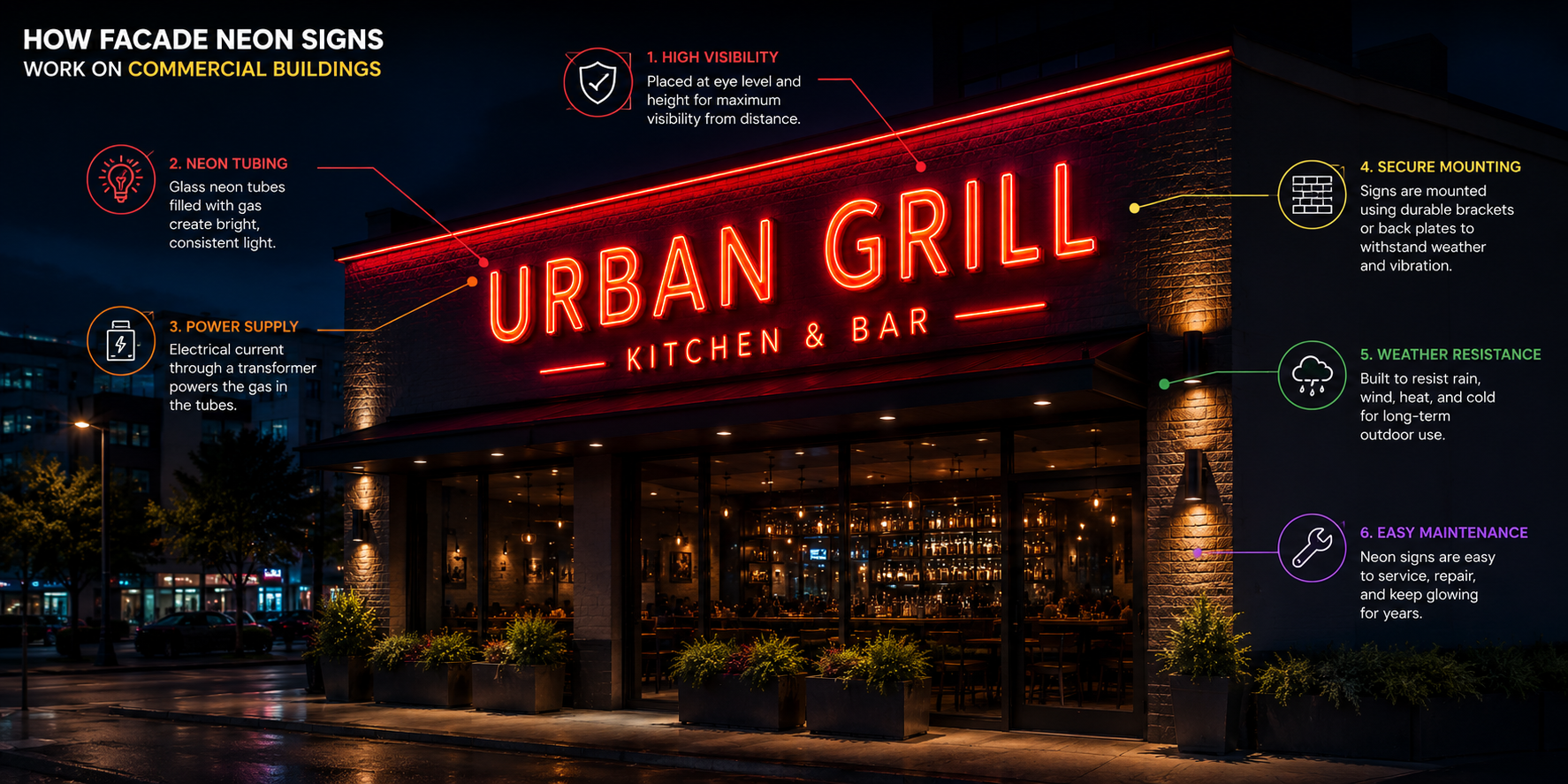
Le insegne al neon della facciata sono solitamente progettate per migliorare il riconoscimento degli edifici, rafforzare la visibilità del negozio e aiutare le aziende a rimanere evidenti dopo il tramonto. A differenza della segnaletica per il ristorante o la vita notturna, le applicazioni di facciata spesso funzionano meglio quando l'illuminazione si sente integrata nell'edificio piuttosto che visivamente separata da esso.
Gli edifici commerciali di solito si avvicinano alla segnaletica in modo diverso perché i clienti spesso sperimentano l'edificio da distanze maggiori. Un negozio di ristoranti può richiedere solo visibilità sul marciapiede, mentre hotel, centri commerciali, luoghi di intrattenimento e sviluppi a uso misto potrebbero richiedere il riconoscimento delle aree di parcheggio, delle strade vicine o degli incroci circostanti.
Perché la scala e il posizionamento contano
Per la segnaletica della facciata, la visibilità di solito dipende da qualcosa di più della sola dimensione del segno.
Un segno che si sente visivamente bilanciato su una vetrina più piccola può sembrare difficile da riconoscere una volta installato su un edificio più grande. Allo stesso tempo, l'aumento delle dimensioni dei segni non migliora sempre le prestazioni se l'iscrizione diventa difficile da elaborare rapidamente o non rientra negli angoli di visione naturali.
Per molti progetti di facciate commerciali, il posizionamento, la leggibilità e le linee di vista dei clienti spesso influenzano il riconoscimento più delle sole dimensioni.
La visibilità a lunga distanza cambia spesso le decisioni di progettazione
I segnali di facciata sono spesso visualizzati da distanze maggiori rispetto alla segnaletica in negozio.
Ciò significa che le aziende spesso danno la priorità:
- Tipografia leggibile che rimane chiaro da lontano
- contrasto più forte per la visibilità notturna
- Luminosità bilanciata senza sopraffare l'esterno dell'edificio
- Altezza di montaggio corretta in base agli angoli di visione del cliente
Per edifici commerciali, hotel e luoghi di intrattenimento lungo la strada, la riconoscibilità spesso conta più della complessità visiva.
Esposizione meteorologica e pianificazione dell'installazione
La segnaletica per la facciata tende anche ad affrontare una maggiore esposizione all'esterno.
Pioggia, umidità, luce solare diretta, esposizione al vento e altezza di montaggio possono influenzare la durata a lungo termine. Questo è uno dei motivi per cui molti progetti di facciata commerciali preferiscono i sistemi al neon a LED impermeabili, in particolare dove l'accesso alla manutenzione diventa più difficile dopo l'installazione.
Prima di finalizzare un cartello di facciata, le aziende spesso valutano:
- Quanto lontano i clienti notano per la prima volta l'edificio
- se il traffico è principalmente pedonale o basato su veicoli
- Se l'illuminazione vicina compete per l'attenzione dopo il tramonto
- Che il segno supporta il marchio, il wayfinding o il riconoscimento dell'ingresso
Per molti progetti di facciate commerciali, la segnaletica al neon per esterni di solito funziona al meglio quando vengono considerate insieme l'integrazione architettonica, la visibilità a lunga distanza e la praticità dell'installazione.
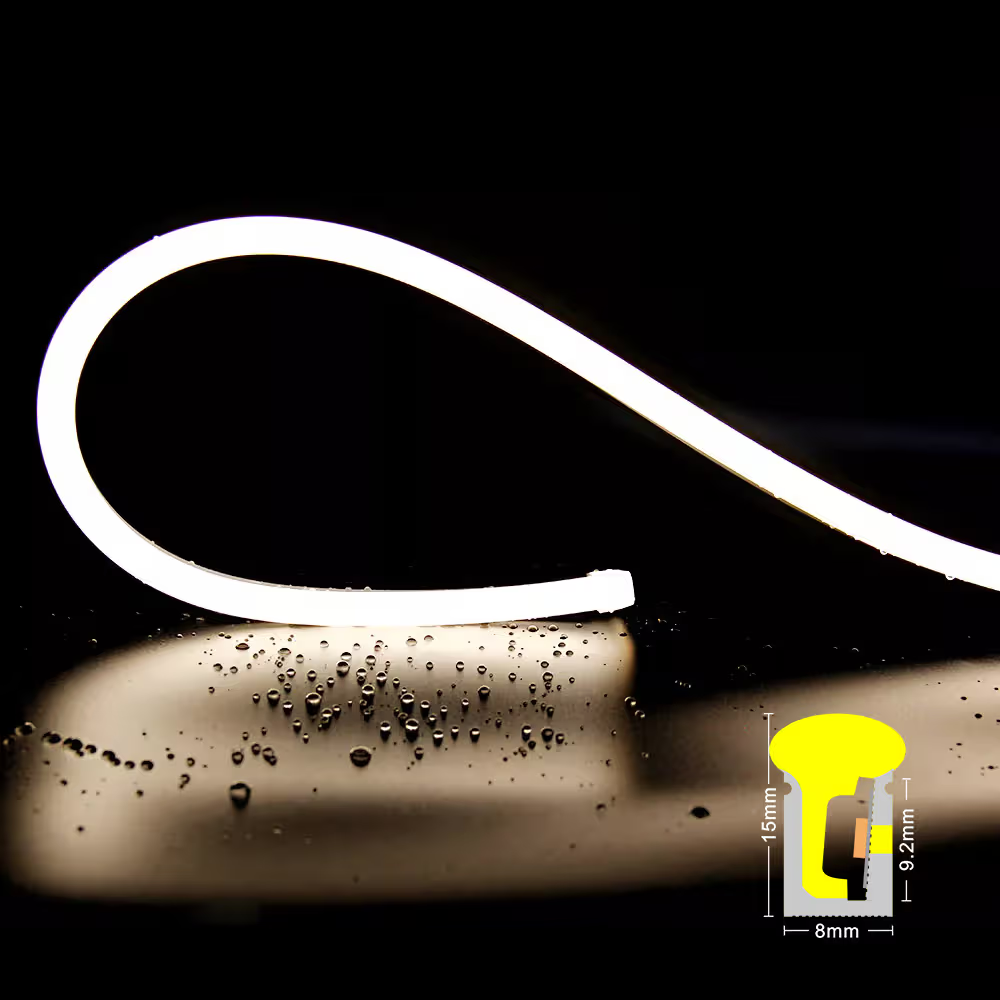
Side Bend S0815 Luce flessibile al neon a LED in silicone
- Tensione di ingresso: DC24V
- Watt: 9,6W/m
- LED Q.TÀ: SMD2835 120LED/m
- Temperatura del colore: 2700K/3000K/4000K/5000K/6500K/customizable
- CRI: >80
- Lumen: >330lm/m
- Grado IP: IP65/IP67
- Ingresso cavo: Anteriore/laterale/inferiore per l'opzione
- Diametro minimo di piegatura: 100 mm
- Lunghezza tagliabile: 50 mm
- Lunghezza: 5 metri/rotolo
Perché il supporto della produzione OEM è importante per i progetti di insegne commerciali
Per i progetti commerciali più grandi, la coerenza di solito diventa una delle maggiori priorità.
Una catena di ristoranti che apre più sedi raramente vuole che la segnaletica appaia notevolmente diversa da una vetrina all'altra. Hotel, gruppi di vendita al dettaglio e aziende di ospitalità in genere si aspettano che colori, dimensioni, luminosità e dettagli di branding rimangano visivamente riconoscibili in tutte le località.
È qui che spesso diventa utile il supporto per la produzione OEM.
Invece di adattare la segnaletica generica per ogni progetto, le aziende possono standardizzare le specifiche fin dall'inizio in base alle effettive esigenze di installazione.
che può includere:
- Dimensioni personalizzate per diverse facciate
- Configurazioni impermeabili all'
- Requisiti di supporto acrilico
- Regolazioni della luminosità per condizioni di visibilità
- Considerazioni di montaggio per diverse vetrine
- Presentazione del marchio coerente in tutte le località
Per i progetti commerciali, il vantaggio spesso riguarda meno la personalizzazione stessa e più la riduzione dell'incoerenza in seguito.
Per i progetti di segnaletica commerciale più grandi, il supporto OEM diventa spesso più utile quando le aziende necessitano di specifiche coerenti in più sedi. Gruppi di ristoranti, marchi di ospitalità e catene di vendita al dettaglio possono richiedere luminosità standardizzata, configurazioni impermeabili, metodi di montaggio e colori del marchio, adattando comunque la segnaletica a diversi ambienti di installazione.
Le aziende che gestiscono il rollout multi-locazione o le installazioni di facciate spesso valutano Cosa considerare quando si acquista un Flex al neon LED per progetti di grandi dimensioni , soprattutto quando diventano importanti i metodi di montaggio, i metodi di montaggio e la coerenza in tutte le posizioni.
Allo stesso tempo, la maggior parte dei progetti più grandi richiede ancora flessibilità.
Una posizione di un ristorante lungo la strada potrebbe aver bisogno di una pianificazione della visibilità diversa rispetto a una vetrina all'interno di un quartiere dello shopping. Un cartello per facciate a più piani può richiedere considerazioni di montaggio diverse rispetto alla segnaletica posizionata più vicino al traffico pedonale.
Per i progetti commerciali che coinvolgono più posizioni o requisiti di facciata personalizzati, i produttori sono spesso coinvolti in precedenza nella pianificazione in modo che le dimensioni, i metodi di montaggio, l'impermeabilizzazione e la coerenza del marchio possano essere considerati prima dell'inizio della produzione.
Cosa dovrebbero aspettarsi le aziende per insegne al neon outdoor personalizzate
I prezzi di fabbrica per le insegne al neon esterne personalizzate di solito non dipende dalla sola dimensione del segno e più dalla lunghezza totale del neon, dalla densità di scritte, dai requisiti di impermeabilità, dal materiale di supporto e dalla complessità della produzione. Per ristoranti, bar, vetrine e progetti di facciata, i prezzi spesso diventano più facili da stimare una volta che le condizioni di installazione e i requisiti di visibilità vengono comprese in anticipo.
Per gli acquirenti commerciali, in particolare ristoranti, bar, gruppi di ospitalità e progetti di vetrine, i prezzi di solito diventano più facili da stimare una volta che le dimensioni e la complessità vengono comprese all'inizio.
Riferimento al prezzo di fabbrica stimato per insegne al neon personalizzate (0,5 m–1 m)
| Dimensione del segno (lato più lungo) | Tipo di design tipico | Utilizzo stimato al neon LED | Raccomandazione di supporto acrilico | Prezzo di fabbrica stimato (EXW USD / set) |
| 0,5 m / 50 cm (~20″) | Piccolo logo, formulazione breve, scritte semplici | 2–3,5 m | 4mm acrilico trasparente | $20–$32 |
| 0,5 m / 50 cm (~20″) | Layout decorativo, formulazione più densa | 4–6 m | 4mm acrilico trasparente | $32–$45 |
| 0,75 m / 75 cm (~30″) | Logo del ristorante, nome commerciale breve | 4–7 m | Acrilico da 5 mm per una migliore stabilità | $38–$55 |
| 0,75 m / 75 cm (~30″) | Segno multiparola, design a strati | 7–10 m | Acrilico da 5 mm per migliorare la planarità | $55–$80 |
| 1.0m/100 cm (~40″) | Formulazione più grande della vetrina | 6–9 m | Acrilico da 5 mm per ridurre il rischio di flessione | $55–$78 |
| 1.0m/100 cm (~40″) | Logo complesso, branding multilinea | 10–16 m | 5mm acrilico + supporto UV opzionale | $88–$135 |
Questi prezzi si basano solitamente su quotazioni EXW di fabbrica standard e possono variare a seconda dei requisiti di impermeabile, finitura acrilica, alimentatori certificati all'esportazione, opzioni di controllo remoto e standard di imballaggio per la spedizione all'estero.
Tuttavia, la sola dimensione del segno determina raramente la citazione finale.
In molti progetti, i cambiamenti dei prezzi in modo più evidente a causa dei dettagli di produzione che le aziende inizialmente trascurano. Un segno con più parole, tratti densi o forme personalizzate di solito richiede più materiale al neon LED e più tempo di assemblaggio manuale. Allo stesso modo, i segni più grandi spesso richiedono un supporto acrilico più spesso per ridurre la flessione durante il trasporto o l'installazione a parete.
Cosa cambia di solito i prezzi di fabbrica?
| Variabile di costo | Perché cambia i prezzi in progetti reali |
| Densità di lettering | Più colpi e curve più strette di solito richiedono un neon LED aggiuntivo e un tempo di montaggio più lungo |
| lunghezza totale al neon | La formulazione o i loghi più grandi aumentano il consumo di materiale |
| spessore acrilico | I segni sopra ~75 cm spesso richiedono un supporto più spesso per la stabilità del trasporto |
| Impermeabilizzazione all' | I progetti di vetrine esterne potrebbero richiedere configurazioni resistenti agli agenti atmosferici |
| Requisiti di montaggio | La segnaletica montata sulla facciata a volte richiede una preparazione di installazione diversa |
| Imballaggio da esportazione | L'imballaggio rinforzato può influire sui prezzi per le consegne all'estero |
Per ristoranti, bar e progetti di facciata, le aziende spesso beneficiano della discussione delle condizioni di installazione prima dell'inizio della produzione. Un cartello destinato a una vetrina coperta può richiedere una configurazione diversa da quella esposta a pioggia, luce solare diretta o alta visibilità pedonale dopo il tramonto.
Conclusione
Le insegne al neon all'aperto commerciali tendono a funzionare meglio quando sono pianificate in ambienti reali piuttosto che a progettare da soli. Ristoranti, bar e facciate commerciali spesso hanno esigenze di visibilità molto diverse, il che significa che lo stesso approccio alla segnaletica funziona raramente ovunque.
In pratica, fattori come la distanza di visualizzazione, l'illuminazione circostante, l'esposizione meteorologica e il movimento dei clienti spesso influenzano le prestazioni più di quanto inizialmente si aspettano le aziende. Un cartello che funziona bene per un locale per la vita notturna può sembrare completamente fuori posto sull'ingresso di un hotel o sul patio del ristorante.
Quando le aziende considerano come i clienti sperimentano effettivamente lo spazio dopo il tramonto, Insegne al neon all'aperto commerciali Di solito si sentono più naturali, più facili da riconoscere e meglio collegati all'edificio stesso. Per molti progetti commerciali, la segnaletica al neon all'aperto di successo di solito dipende dal bilanciamento della visibilità, della durata ambientale e della pianificazione dell'installazione piuttosto che dal solo design.
Domande frequenti
Post correlati