日本語
日本語  English
  简体中文
简体中文  Deutsch
  Español
  Français
  Italiano
  한국어
한국어  Polski
  Português
  Русский
  Türkçe
  Nederlands
  Tiếng Việt
  ไทย
ไทย 
商用屋外用ネオン サインは、レストラン、バー、小売店、建物のファサードで広く使用されており、夜間の視認性を向上させ、ブランドの認知度を高め、競争の激しい商業環境でのビジネスの識別を容易にします。 ただし、屋外の看板が成功するのは、通常、外見だけではありません。 表示距離、天候の露出、取り付け条件、周囲の照明、顧客の動きなどの要因は、設置後のサインの性能に大きな影響を与える可能性があります。
レストランの店頭には、屋外ダイニング エリアが圧倒的になくても、入り口の視認性を向上させる標識が必要になる場合があります。一方、ナイトライフ会場では、競争の激しい環境で、暗くなってから認識しやすさを優先することがよくあります。 商業ビルやファサード プロジェクトは通常、再び別の方法で標識にアプローチし、照明付きの標識を別の視覚的要素としてではなく、建築自体の一部として扱います。
このため、商用屋外用ネオン サインが画一的なソリューションとして機能することはめったにありません。 防水性、明るさ、設置高さ、長距離の読みやすさ、および材料の耐久性は、多くの場合、デザインと同じくらい重要です。
この記事では、その方法を探ります 屋外の商用ネオンサイン レストラン、バー、ファサード全体で使用され、企業が設置前に評価すべき実際的な考慮事項があります。
簡単な回答: 商業用屋外用ネオン サインは、レストラン、バー、ファサードに適していますか?
商業用屋外用ネオン サインは、レストラン、バー、小売店、建物のファサードに広く使用されています。これは、視認性を向上させ、ブランドの認知度を高め、暗くなってもビジネスを目立たせるためです。 ほとんどの外部の商業プロジェクトでは、耐久性、メンテナンス性、耐候性の向上により、一般的に従来のガラス ネオンよりも防水 LED ネオン サインが好まれます。 環境に応じて、多くの企業が IP65 または IP67 定格の屋外用ネオン システムを選択して、一貫した視認性を維持しながら、雨、湿気、ほこり、および長期的な外部露出を処理します。
屋外の商用ネオンサインは、ビジネスでの使用に適している理由は何ですか?
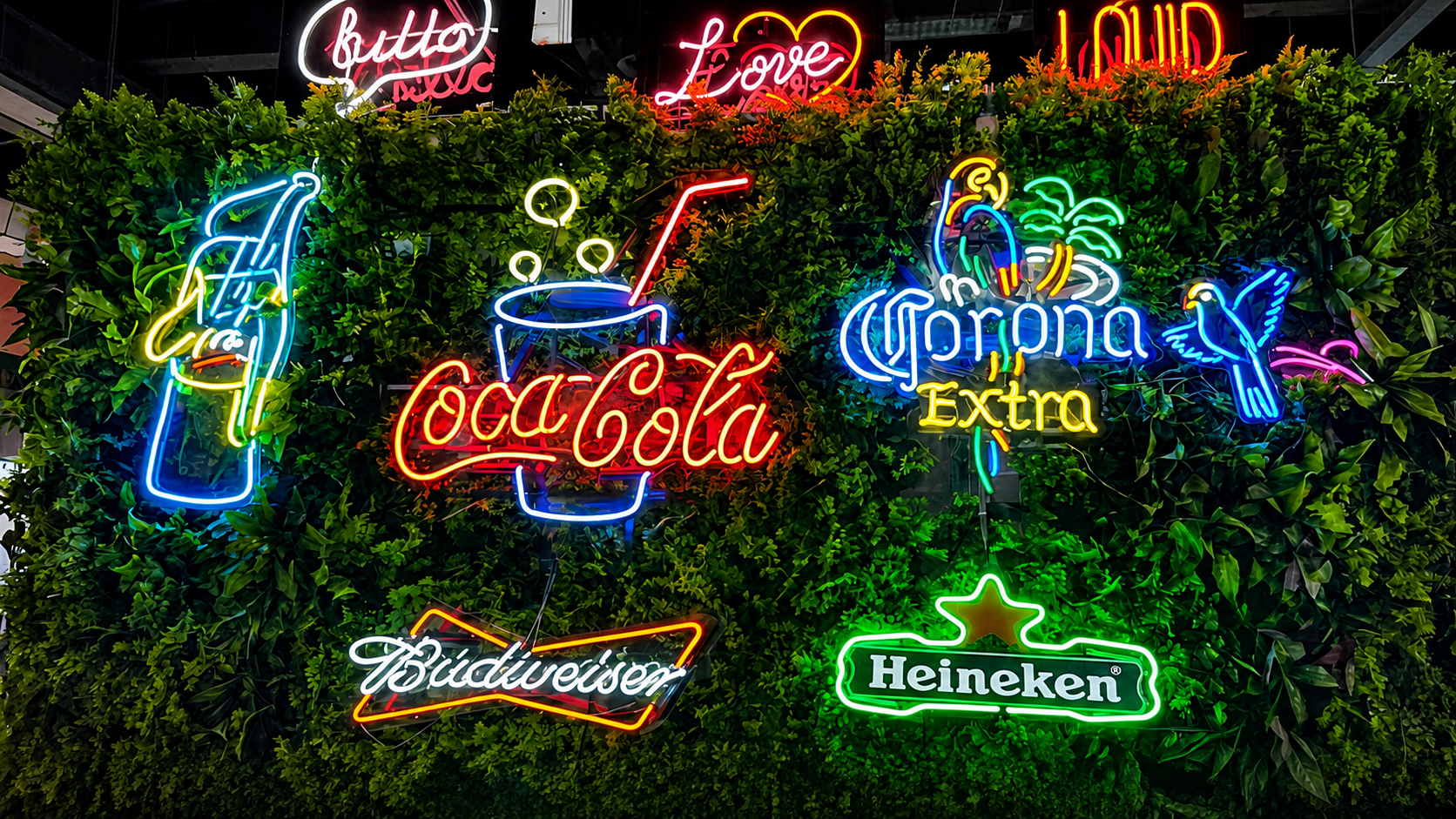
屋外のビジネス環境は、屋内の標識が処理するために構築されたことのない課題を生み出すため、商用屋外用ネオン サインは装飾的な屋内ネオンとは異なる設計になっています。 レストラン、バー、店先、商業施設は、雨の暴露、湿度、温度変化、強い日光、さまざまな視野に直面することがよくあります。つまり、屋外の看板は通常、より耐久性のある構造と設置計画を必要とします。
ほとんどの商用アプリケーションでは、長期屋外での露出の後でも、標識が可視で信頼性が高く、維持が容易かどうかに依存します。 これが、多くの企業が、特に暗くなった後の視界と耐候性の両方が重要な場合に、外部設置に防水 LED ネオン システムを好む理由の 1 つです。
耐候性と防水性の保護
屋外のサイネージは、環境への露出によって異なるパフォーマンスを発揮することがよくあります。 雨にさらされたレストラン パティオは、通常、オーバーヘッド カバレッジの下に設置された店頭とは異なる保護を必要とします。
したがって、多くの商業プロジェクトでは、特にレストランのファサード、ホスピタリティ エントランス、および気象暴露が通常の動作条件の一部となる道端の店頭など、防水屋外用ネオン システムを優先しています。 外部アプリケーションでは、IP65 および IP67 定格の LED ネオン サインが一般的に選択されています。これは、湿気、ほこり、屋外の環境からの保護を強化するためです。
さまざまな視野からの視認性
商用屋外の看板が、どの場所でも同じように見られることはめったにありません。
歩行者の通りにある店頭では、顧客は細部に至るまで細部を間近で認識できる場合がありますが、道路脇のビジネスは、より長い距離からの迅速な認識に大きく依存することがよくあります。 このため、明るさ、文字の明瞭度、配置が、サインのサイズだけでなく、視認性に影響を与えることがよくあります。
多くの商用環境では、通常、クリーンなタイポグラフィとより強力なコントラストは、視覚的に混雑したデザインよりも一貫して機能します。
長期屋外での使用に使用される素材の耐久性
屋外の商用標識には、長期的な環境暴露を処理できる材料も必要です。
近年の多くの外装ネオン プロジェクトでは、主に屋内の装飾用に向けられた素材よりも、柔軟性、紫外線抵抗性、および耐候性が向上する傾向があるため、シリコン ベースの LED ネオンを使用しています。 商業ビジネスの場合、特に取り付け後にメンテナンス アクセスが困難になる場合は、長期的な耐久性が視覚的な外観と同じくらい重要です。
企業はなぜ商用屋外用ネオンサインを使用するのですか?
企業は通常、商用屋外のネオン サインを使用して、夜間の可視性を高め、ブランドの認知度を強化し、多忙な商業環境で店頭を簡単に識別できるようにします。 多くのレストラン、バー、ホテル、小売スペースにとって、屋外の看板は単に装飾的ではありません。 これは、顧客が入場をより早く認識し、暗くなった後のビジネスをより簡単に覚えるのに役立つことがよくあります。
ただし、通常、標識を有効にするものは、環境自体に依存します。
にぎやかなダイニング ストリートにあるレストランでは、入場可視性を優先して、顧客は夜の時間帯に店頭をすばやく特定できます。 ナイトライフ地区のバーは、歩きながら複数の会場を比較する可能性があるため、認識可能性に重点を置くことがよくあります。 ホテルや商業ビルは通常、標識のアプローチが異なり、照明付きの標識を別の視覚的特徴ではなく、ファサードの一部として扱います。
多くの商用環境では、可視性だけでは十分ではありません。 標識は、屋外に設置した後も、読みやすく実用的なものである必要があります。 表示距離、周囲の照明、取り付け高さ、顧客の動きはすべて、実際の状況での看板のパフォーマンスに影響を与える可能性があります。
たとえば、歩行者向けの店舗は、顧客が間近でサインアップするため、より多くの視覚的な詳細をサポートすることがよくあります。 ただし、道路に面する場所は、通常、ドライバーがビジネスを認識するのに数秒しかないため、よりクリーンな文字とより強いコントラストの恩恵を受けます。
気象条件は、長期的なパフォーマンスにも影響を与える可能性があります。 雨や湿気や直射日光にさらされた地域で事業を展開する企業は、室外環境によって室内空間とは異なる看板に対する要求が生じるため、防水 LED ネオン システムを好むことがよくあります。
| 商業環境 | サインが通常優先すること |
|---|---|
| レストランの店先 | 入口の可視性と認識 |
| ナイトライフ会場 | 暗くなってからの視認性と記憶力 |
| ショッピングセンター | 近くの店舗でのブランド認知度 |
| ホテルとホスピタリティ | アーキテクチャ統合 |
| 多目的ビル | 建物の識別と道案内 |
顧客の行動や表示条件は商用環境によって異なるため、通常、看板の決定が可視性のニーズ、設置条件、および顧客の動きだけでなく、顧客の動きに基づいている場合、より良い結果が得られます。
これは、全体的な雰囲気を圧倒することなく、看板が視認性を向上させる必要があることが多いレストランで特に顕著になります。
レストランが実際に屋外のネオンサインを使用する方法

レストランは通常、屋外のネオン サインを使用して、入り口の可視性を高め、店頭でのアイデンティティを強化し、暗くなった後に顧客がビジネスをより簡単に認識できるようにします。 ただし、あるレストラン環境でうまくいくものは、別のレストランの環境に対しては同じように機能しない場合があります。 顧客の動き、店頭での競争、屋外の座席、および視聴距離はすべて、実際の状況での看板のパフォーマンスに影響を与える可能性があります。
レストランの店頭の視認性
多くのレストランにとって、最優先事項は、顧客が入り口をすばやく認識できるようにすることです。特に、日没後にいくつかの店先が注目を集めるにぎやかな食堂の通りでは。
テイクアウトのレストランやファスト カジュアルな会場は、混雑したエリアを移動しながら、顧客がすぐに食事を決定することが多いため、視認性が高く、レタリングが簡単になると、効果があります。 これらの環境では、遠くからの読みやすさは、装飾的な複雑さよりも重要な場合がよくあります。
着席レストランは通常、やや異なる方法で標識にアプローチします。 可視性は依然として重要ですが、看板が店頭につながったと感じたときに最も効果的です。視覚的にダイニング体験を圧倒するのではなく、 ホスピタリティに重点を置いたレストランの多くは、暗くなっても簡単に認識できる雰囲気の看板を好みます。
屋外ダイニングとパティオ エリア
屋外席のあるレストランでは、さまざまな課題に直面することがよくあります。
ディナー サービス中に顧客が近くに座ると、通りの向こう側からバランスが取れていると感じられる看板が、突然明るすぎると感じることがあります。 明るすぎると、屋外のダイニング エリア、特にゲストが長時間照明の近くにいるパティオに面したスペースで、まぶしさが生じることがあります。
このため、多くのレストランでは、視覚的に気を散らさないように、より制御された明るさレベルを好みます。
レストランの種類が異なれば、さまざまな看板が必要になることがよく
レストランのタイプは、最も効果的な看板に影響を与えることができます。
ファスト カジュアル レストランは、顧客の意思決定が迅速に行われるため、夜間の可視性を高め、より迅速に認識できるようにすることがよくあります。 高級ダイニング スペース、カフェ、屋上レストラン、ホスピタリティに重点を置いた会場では、より柔らかく、より全体的な環境に統合された標識を好む場合があります。
これが、同じ通りにあるレストランが、顧客のトラフィックが似ているように見える場合でも、非常に異なる方法で標識にアプローチすることが多い理由の 1 つです。
レストランの推奨屋外設定
多くのレストラン店では、企業は次のことを好むことがよくあります。
- IP67 防水 LED ネオン 屋外の耐久性と耐候性に優れています
- 暖かい白または琥珀色の照明 居心地の良い店頭の外観を作成するには
- 読みやすいタイポグラフィ 異なる視聴距離からはっきりと見える
- 制御された明るさレベル パティオや屋外の座席エリアの近くのまぶしさを減らすため
多くのレストラン環境では、屋外のネオン サイネージは、視覚的に圧倒される照明を感じずに、顧客が店頭をすばやく認識できる場合に最も効果的です。
バーがレストランとは異なる方法で屋外のネオンを使用する理由

バーは通常、暗くなると顧客の行動が大きく変わるため、屋外のネオンへのアプローチは異なります。 多くの顧客がすでにどこに行くのかを知っているレストランとは異なり、ナイトライフの会場はしばしば自発的な注意を引くために競争します。 人々は、どこで立ち寄るかを決める前に、複数の会場を比較して、忙しいエンターテイメント エリアをすでに歩いている可能性があります。
このため、ナイトライフ環境での屋外の看板は、単に顧客が場所を特定するのを助けるだけでなく、第一印象の一部になることがよくあります。
ナイトライフ環境での可視性
バー、パブ、ナイトライフの会場は、顧客が照明付きの店頭、LED ディスプレイ、車両の照明、競合する会場に囲まれる視覚的に混雑した環境で動作することがよくあります。
このような状況では、可視性だけでは十分ではありません。 お客様は、会場をすばやく認識して記憶する必要もあります。 このため、読みやすさは、過度に装飾的なデザインよりも重要です。 きれいな文字、より強力なコントラスト、思慮深い配置は、通常、視覚的に混雑した看板よりも一貫して機能します。
バーの種類が異なれば、さまざまな看板が必要になることがよく
すべてのナイトライフ会場が同じように看板に近づくわけではありません。
より迅速に認識できるようになると、スポーツバーは多くの場合、より強い視認性を優先します。これは、ウォークインの顧客を引き付けるのに役立つ カクテル ラウンジとルーフトップ バーは、会場の入り口を圧倒することなく、雰囲気をサポートする、より制御された照明を好む場合があります。 ライブ ミュージックの会場は、認識可能性により重点を置いていることが多く、訪問者が暗くなった後もすぐに場所を特定できます。
周囲の環境も決定を形成します。 屋上カクテル スペースは雰囲気にこだわるかもしれませんが、近くの会場と競合するストリート スポーツ バーは、より強い視認性とより明確なブランディングを優先する場合があります。
バーとナイトライフ会場の推奨屋外セットアップ
多くのナイトライフ ビジネスでは、オペレーターは次のことを好むことがよくあります。
- 防水 LED ネオン システム 長期間の屋外耐久性に
- よりコントラストの高いタイポグラ 夜間の読みやすさをより簡単にするため
- 中程度から強さのある明るさレベル 競争の激しいナイトライフ分野で注目を集め続けるために
- 耐候性屋外用素材 雨、湿度、温度変化に
多くのナイトライフ環境では、屋外の看板は通常、互いに競合するのではなく、認識しやすさと雰囲気が連携する場合に最もよく機能します。
商用ネオンサインの防水および屋外の信頼性
屋外の商用ネオン サインは、屋内の標識が処理されるように設計されていない環境で動作することが期待されています。 雨、湿度、日光、ほこり、気温の変化はすべて、時間の経過に伴う看板のパフォーマンスに影響を与える可能性があります。 レストラン、バー、店先、ファサード プロジェクトの場合、屋外の信頼性は、視覚的な外観と同じくらい重要です。
企業が犯す最大の間違いの 1 つは、すべてのネオン サインが外装での使用に等しく適していると仮定することです。
実際には、屋外プロジェクトでは、通常、より耐久性のある材料、防水構造、および長期的なパフォーマンスを維持するための設置計画が必要です。
屋外の商用ネオンサインが時々失敗する理由

多くの屋外の看板の問題は、設置前に始まります。
場合によっては、企業は環境への影響や電力要件を見逃しながら、デザインに重点を置いています。 屋内でうまく機能する兆候は、天候保護や電気計画が過小評価されている場合、屋外で苦労する可能性があります。
屋外の看板に関する一般的な問題は、次のようによく含まれ
| よくある問題 | 通常それを引き起こすもの | 実用的な解決策 |
|---|---|---|
| 水害 | 弱いシールまたは室内定格の材料 | 防水 IP65/IP67 構成 |
| ちらちら | ドライバーの保護が不十分または電源が不安定 | 天候保護屋外電源システム |
| 明るさを下げ | 電圧降下または不適切な配置 | 適切な変圧器の計画と可視性の位置決め |
| 素材の老化 | 長期の紫外線露出 | 紫外線に強いシリコン LED ネオン |
| メンテナンスの難しさ | インストールへのアクセスが不十分 | インストール前のメンテナンス計画 |
屋外のネオン サインの IP 評価について理解する
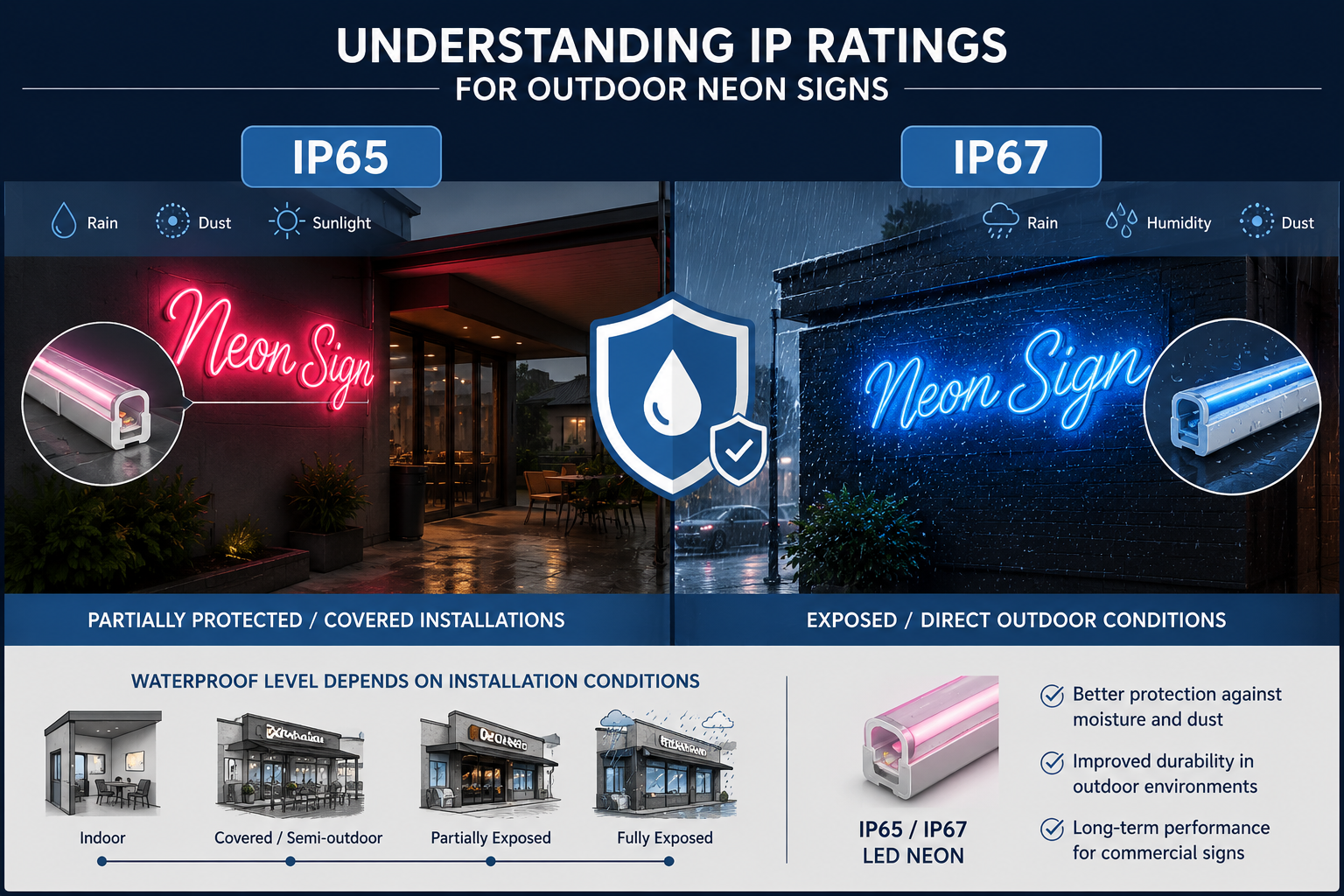
屋外の商用標識では、防水保護が重要な考慮事項になることがよくあります。
多くのレストラン店、バー、ファサード プロジェクトが好む IP65 または IP67 定格 LED ネオン システム 湿気、ほこり、変化する気象に対するより良い保護を提供するためです。
一般的に:
- IP65 部分的に保護された店頭または屋根付きの外装の設置に一般的に使用されます
- IP67 雨や湿度にさらされたプロジェクトや屋外での直接の状況によく見られる
ただし、理想的な防水レベルは、通常、標識だけではなく、設置条件に依存します。
屋外の素材の選択が重要な理由
素材の選択も長期的な耐久性に影響を与える可能性があります。
現在、多くの商業的なエクステリア プロジェクトが好まれ シリコンベースのLEDネオン 一般に、屋内の装飾用途向けに設計された材料よりも、柔軟性、紫外線耐性、および耐候性が向上するためです。
長期的な外装設置を計画している企業の場合、信頼性は、実際に動作する環境にあるサイネージがどの程度一致するかにかかっています。
長期的な耐久性は、環境への露出と設置品質にも依存します。 雨、湿気、または直射日光にさらされた屋外の商用標識は、時間の経過とともにさまざまなメンテナンス ニーズを経験する可能性があります。 外部の標識を評価する企業は、多くの場合、より詳しく調べています。 カスタム ネオン サインの持続時間 防水構成、メンテナンス アクセス、および長期的な運用コストを計画するとき。
屋外のネオンサインを設置する前に企業が見落としがちなこと
多くの屋外ネオン プロジェクトは、デザインが悪いため、苦労しません。 多くの場合、企業が実際の商用環境でどのようにサインが機能するかを過小評価すると、問題が発生します。
モックアップでバランスが取れていると感じられるサインは、屋外に設置すると、非常に異なる機能を発揮する可能性があります。 表示距離、取り付け高さ、顧客の動き、周囲の照明は、企業が当初の予想よりも視認性に影響を与えることがよくあります。
距離を表示すると、すべてが変わることがよくあります
最もよく見られる間違いの 1 つは、顧客がすべての環境で同じようにサイネージを体験することを想定していることです。
歩行者に面した店先は、通常、ドライバーが標識を認識するのに数秒しかない路上でのビジネスとは異なります。 同様に、地上数メートル上に設置されたファサード サインは、目の高さに近い標識とは異なる比率を必要とすることがよくあります。
多くの商業プロジェクトでは、通常、よりクリーンなレタリングとシンプルなレイアウトの方が、視覚的に混雑したデザインよりも優れたパフォーマンスを発揮します。
周囲の照明は視認性に影響を与える
近くの店頭照明、反射窓、LED ディスプレイ、街路照明によって、暗くなった後の看板の感触が完全に変わる可能性があります。
環境によっては、明るさを上げるだけでは認識が改善されません。 配置、コントラスト、読みやすさは、多くの場合、同じように重要です。
メンテナンス アクセスは見過ごされがちです
企業は、後で標識をいかに簡単に処理できるかを考慮せずに、外観に重点を置くことがあります。
ファサードに高い位置に取り付けられた標識は、最終的にはクリーニング、電気整備、または修理が必要になる場合があります。 大規模な商用プロジェクトの場合、メンテナンス アクセスは、多くの場合、インストール自体とほぼ同じくらい重要です。
| インストール要因 | 実際のプロジェクトでなぜ重要なのか |
|---|---|
| 表示距離 | 文字のサイズと読みやすさに影響を与える |
| 取付高さ | 顧客が自然にサインを見る方法に影響を与える |
| 近くの照明 | 夜間の視認性を変える |
| 顧客の動き | 標識が認識される速さに影響を与える |
| メンテナンス アクセス | 長期サービスに影響を与える |
多くの成功したプロジェクトでは、企業は通常、1 つのよくある間違いを回避します。つまり、外見を設計すること、次に環境を設計することです。
企業が適切な商用屋外用ネオンサインを選択する方法
コマーシャルの選択 屋外ネオンサイン 通常、標識が設置される場所、顧客がどのように表示するか、そして企業が看板が何を達成することを期待しているかによって異なります。 道端のレストラン用に設計された看板が、ホテルのファサードやバーの入り口に設置されたものと同じように機能することはめったにありません。
多くの企業は、最初にデザインから始めるという間違いを犯しています。
実際には、環境、可視性、顧客の行動から意思決定を開始すると、商用プロジェクトの方が効果的です。 これらの要因が明確になると、設計の選択がより簡単になり、より実用的になることがよくあります。
視距離から始める
企業がしばしば過小評価する最初のことの 1 つは、顧客が実際にサインをどのように体験するかということです。
主に歩行者向けに設計された店頭では、顧客は看板を間近で見るため、通常はより多くの視覚的な詳細を確認できます。 ただし、道路に面したビジネスでは、よりシンプルな文字とより読みやすさが得られることがよくあります。ドライバーは、店頭を認識するのに数秒しかないためです。
同様に、大型のファサードに設置された標識では、通常、目の高さに近い店頭の標識とは異なる規模の計画を必要とします。
| 表示状況 | 企業が通常優先するもの |
| 歩行者用の店先 | 近距離での読みやすさが明確 |
| 道端の場所 | 長距離認識 |
| 大規模な商業施設 | スケールと可視性のバランス |
| 屋外ダイニングエリア | まぶしさを生み出さずに |
顧客が最初に気付いた場所を理解すると、通常、後で視界の問題が発生しなくなります。
サインが実際に何をする必要があるかを決める
すべての企業が同じ理由で屋外用ネオンを使用しているわけではありません。
一部の企業では、主に顧客が入り口をより簡単に見つける必要があります。 他の人は、認知度の構築、店頭ブランド、または暗くなってからの雰囲気の作り方にもっと関心を持っています。
たとえば、レストランでは、店頭が視覚的に圧倒されることなく、視認性を優先することがよくあります。 ナイトライフ エリアのバーは、歩きながら複数の会場を比較することが多いため、認識可能性を重視する場合があります。 商業用の建物やホテルは、再び標識に別の方法でアプローチすることが多く、照明はスタンドアロンの標識ではなく、ファサード自体の一部として扱われます。
サインの主な仕事を早い段階で知ることで、後での決定がはるかに簡単になります。

LED ネオンがどのようにして商業用屋外用の標識に合わせてカスタム文字に形成されるかの例
材料の前に環境を考慮してください
屋外の看板は通常、条件に直面しています。屋内の標識は、処理するようには設計されていません。
雨、湿度、直射日光、風の影響、気温の変化は、すべて長期的なパフォーマンスに影響を与える可能性があります。 これが、多くの商業プロジェクトが、特にレストランの店先、ホスピタリティの入り口、天候にさらされた建物のファサードで、防水性のある屋外構成を優先する理由の 1 つです。
ただし、耐候性だけではすべての課題が解決することはめったにありません。
企業が理解すれば、素材の選択も容易になります カスタム ネオン サインを購入して素材を選ぶ方法、特に雨や湿度にさらされたプロジェクトや屋外の状況の変化に当てはまるプロジェクトの場合。
屋根付きの店先の下に設置された看板は、雨に直接さらされるものとは異なる計画を必要とする場合があります。 同様に、顧客は長時間照明の近くにいるため、屋外のダイニング エリアはより制御された明るさの恩恵を受けることがよくあります。
メンテナンスについては、予想よりも早く考えてください
メンテナンスは、商業用標識計画において最も見落とされがちな部分の 1 つです。
ファサードの上に取り付けられた標識は、最終的にはクリーニング、電気整備、または修理が必要になる場合があります。 企業は、後で標識に簡単にアクセスできることを考慮せずに、外観に重点を置くことがあります。
大規模な商業プロジェクトの場合、多くの場合、設置アクセスは、標識自体とほぼ同じくらい重要です。
多くの成功したプロジェクトにおいて、企業は通常、考え方において重要な変化をもたらします。
彼らは、環境に基づいてサイネージを選択し、次にデザインを選択します。
商業ビルでのファサード ネオン サインの仕組み
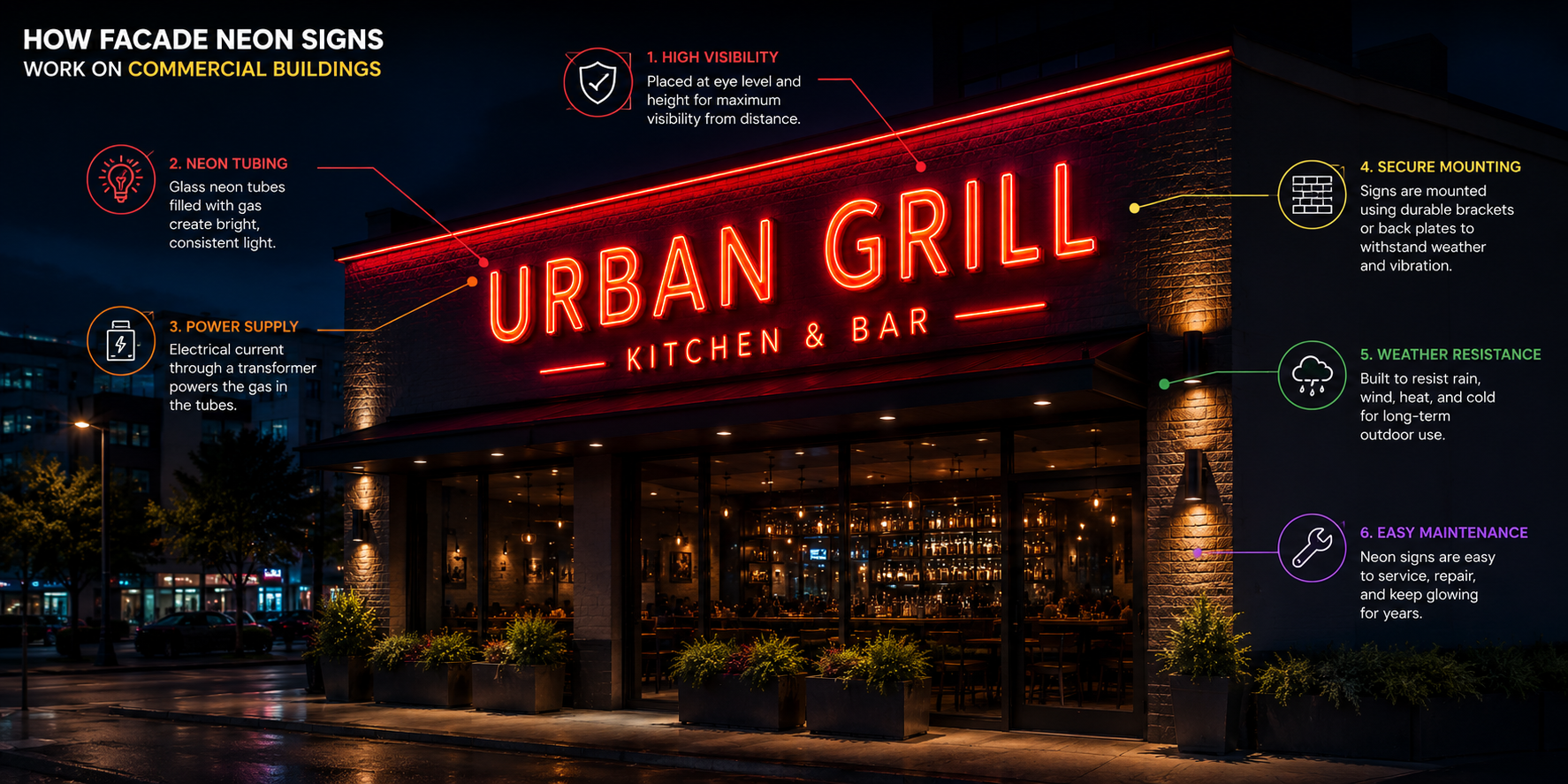
ファサードのネオン サインは通常、建物の認知度を高め、店頭での視認性を強化し、暗くなってもビジネスを目立たせるように設計されています。 レストランやナイトライフの看板とは異なり、ファサード アプリケーションは、照明が建物から離れた場所ではなく、建物に統合されていると感じたときに最もよく機能します。
顧客はより遠くから建物を体験することが多いため、商業ビルは通常、標識のアプローチが異なります。 レストランの店頭は歩道の視認性のみを必要とするが、ホテル、ショッピング センター、エンターテインメント会場、複合用途の開発は、駐車場、近くの道路、または周囲の交差点からの認識が必要になる場合があります。
なぜスケールと配置が重要なのか
ファサード サイネージの場合、通常、可視性は、標識のサイズだけではありません。
小さな店先で視覚的にバランスが取れていると感じられる標識は、大きな建物に設置すると認識するのが難しい場合があります。 同時に、文字の処理が迅速に困難になったり、自然な視野角の外に落ちたりすると、標識のサイズを大きくしてもパフォーマンスが向上するとは限りません。
多くの商用ファサード プロジェクトでは、配置、読みやすさ、および顧客の視線が、寸法だけよりも認識に影響を与えることがよくあります。
長距離の可視性により、設計上の決定が変わることがよくあります
ファサードの標識は、店頭の看板よりも遠距離から頻繁に見られます。
つまり、企業は次の優先順位を付けることができます。
- 読みやすいタイポグラフィ 遠くからははっきりと見える
- より強いコントラスト 夜間の視認性のために
- バランスのとれた明るさ 建物の外装に圧倒されることなく
- 適切な取り付け高さ 顧客の視野角に基づいて
道端の商業ビル、ホテル、娯楽施設の場合、認識可能性は視覚的な複雑さよりも重要であることがよくあります。
気象暴露と設置計画
ファサードの標識は、屋外での露出が増える傾向もあります。
雨、湿度、直射日光、風の露出、取り付け高さはすべて、長期的な耐久性に影響を与える可能性があります。 これが、多くの商用ファサード プロジェクトが、特に設置後にメンテナンス アクセスが困難になる防水 LED ネオン システムを好む理由の 1 つです。
ファサード サインを確定する前に、企業は次の評価を行うことがよくあります。
- 顧客が最初に建物に気付くまでの距離
- 交通が主に歩行者か車両ベースか
- 近くの照明が暗くなってから注意を引くために競合する場合
- 標識がブランディング、道案内、または入口認識をサポートしているかどうか
多くの商用ファサード プロジェクトでは、通常、屋外のネオン サイネージが、建築統合、長距離の視認性、および設置の実用性が一緒に考えられる場合に最もよく機能します。
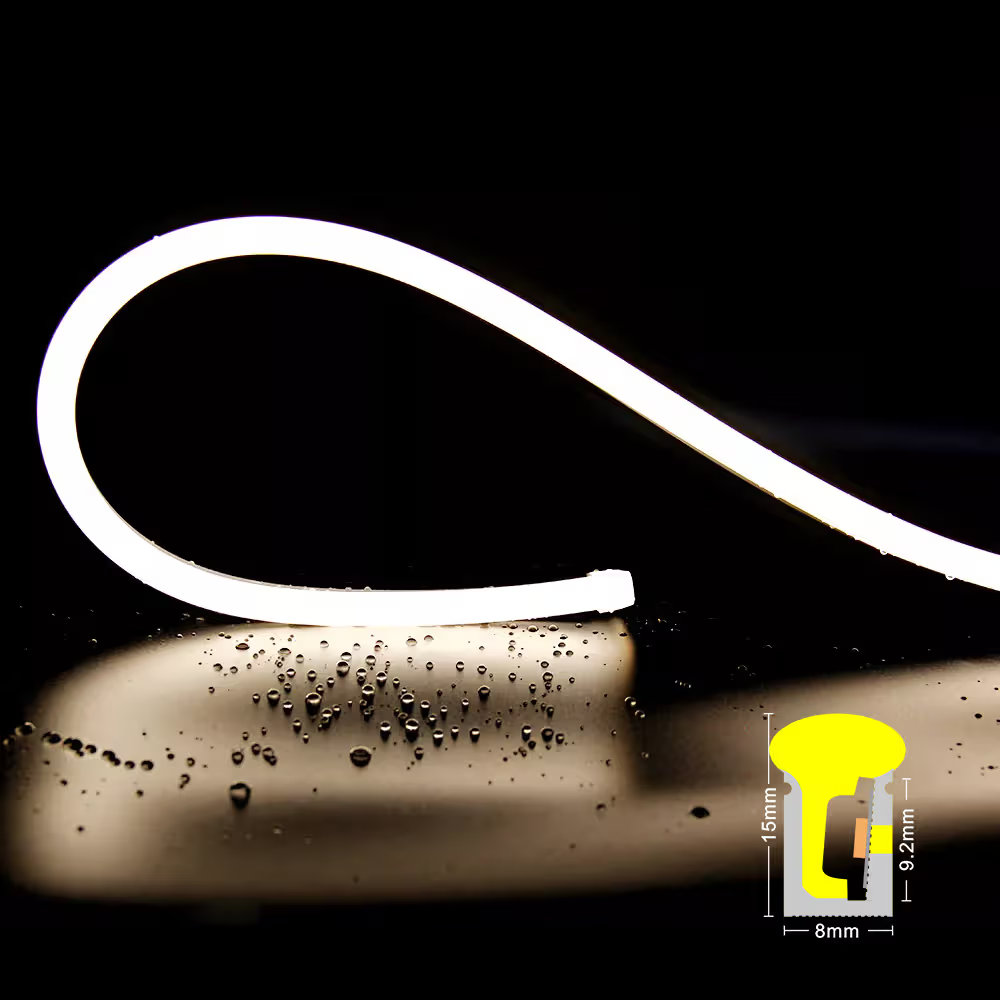
なぜ商業的サイン プロジェクトにおいて OEM 製造サポートが重要なのか
大規模な商業プロジェクトの場合、通常、一貫性が最優先事項の 1 つになります。
複数の場所をオープンするレストラン チェーンでは、店頭によって看板が著しく異なって見えることをめったに望まない。 ホテル、小売グループ、ホスピタリティ ビジネスでは、通常、色、寸法、明るさ、およびブランドの詳細を、場所全体で視覚的に認識できるようにする必要があります。
これは、OEM 製造サポートが役立つことが多い場所です。
すべてのプロジェクトに一般的なサイネージを適応させる代わりに、企業は実際のインストール ニーズに基づいて、最初から仕様を標準化できます。
これには次のものが含まれる場合があり
- さまざまなファサードのカスタム寸法
- 防水屋外構成
- アクリル裏地の要件
- 視認性条件の明るさ調整
- さまざまな店頭での取り付けに関する考慮事項
- 場所全体で一貫したブランド プレゼンテーション
商用プロジェクトの場合、メリットはカスタマイズ自体よりも後での不整合の軽減につながることが多いです。
大規模な商用サイネージ プロジェクトの場合、企業が複数の場所で一貫した仕様を必要とする場合に、OEM サポートが最も役立つことがよくあります。 レストラン グループ、ホスピタリティ ブランド、および小売チェーンでは、標準化された明るさ、防水構成、取り付け方法、ブランドの色を、さまざまな設置環境に合わせて調整する必要があります。
複数の場所での展開やファサードの設置を管理する企業は、評価の高い評価が得られることがよくあります 大規模なプロジェクトで LED ネオン フレックスを購入する際に考慮すべきこと 、特に防水、取り付け方法、および場所間の一貫性が重要になる場合はなおさらです。
同時に、大規模なプロジェクトのほとんどには柔軟性が必要です。
道端のレストランの場所では、ショッピング街内の店頭とは異なる可視性計画が必要になる場合があります。 複数階建てのファサード サインは、歩行者の交通の近くに配置された標識とは異なる取り付けの考慮事項を必要とする場合があります。
複数の場所またはカスタム ファサードの要件を含む商業プロジェクトの場合、製造業者は、生産開始前に寸法、取り付け方法、防水性、およびブランディングの一貫性を考慮して計画を立てるのに多くの場合、より早い段階で関与します。
企業が、屋外のカスタム サインに支払うと期待すべきこと
カスタム屋外用ネオンサインの工場価格は、通常、標識のサイズだけでなく、ネオンの全長、レタリング密度、防水要件、裏材、および生産の複雑さに大きく依存します。 レストラン、バー、店先、ファサード プロジェクトの場合、設置条件と可視性要件が早期に理解されると、価格の見積もりが容易になることがよくあります。
商業購入者、特にレストラン、バー、ホスピタリティ グループ、店頭のプロジェクトの場合、サイズと複雑さが早い段階で理解されると、価格の見積もりが容易になります。
カスタム ネオン サインの工場出荷価格の見積もり (0.5m ~ 1m)
| サインサイズ (最長側) | 典型的なデザインタイプ | LED ネオンの使用推定の使用 | アクリルの裏地の推奨 | 工場見積価格 (Exw USD / セット) |
| 0.5m / 50 cm (~20インチ) | 小さなロゴ、短い文言、簡単な文字 | 2~3.5 m | 4mmの透明アクリル | $20–$32 |
| 0.5m / 50 cm (~20インチ) | 装飾的なレイアウト、より高密度の表現 | 4~6m | 4mmの透明アクリル | $32–$45 |
| 0.75m / 75 cm (~30 インチ) | レストランのロゴ、短いビジネス名 | 4~7m | 5mmのアクリルで、安定性を向上 | $38–$55 |
| 0.75m / 75 cm (~30 インチ) | マルチワード記号、階層デザイン | 7~10 m | 平坦性を向上させるための5mmアクリル | $55–$80 |
| 1.0m / 100 cm (~40 インチ) | より大きな店頭の文言 | 6~9m | 5mm アクリルで曲げのリスクを軽減 | $55–$78 |
| 1.0m / 100 cm (~40 インチ) | 複雑なロゴ、複数行のブランディング | 10~16 m | 5mm アクリル + オプションの UV バッキング | $88–$135 |
これらの価格は通常、工場出荷時の標準的な見積書に基づいており、防水要件、アクリル仕上げ、輸出認証電源、リモート コントロール オプション、および海外発送の梱包基準によって変更される場合があります。
ただし、記号のサイズだけで最終的な引用が決まることはほとんどありません。
多くのプロジェクトでは、生産の詳細が最初から見落としているため、価格がより大きく変化します。 複数の単語、密なストローク、またはカスタム形状の記号は、通常、より多くの LED ネオン マテリアルとより多くの手動による組み立て時間を必要とします。 同様に、大きな標識では、輸送中や壁の設置時の曲げを減らすために、アクリルの裏紙が厚い必要があります。
通常、工場出荷時の価格は何が変わるの?
| 費用は変動 | 実際のプロジェクトで価格が変更される理由 |
| 文字密度 | ストロークが増え、曲線が狭くなると、通常、追加の LED ネオンとより長い組み立て時間が必要になります |
| 合計ネオンの長さ | 文言やロゴが大きいほど、材料の消費が増加します |
| アクリル厚 | ~75 cm を超える標識は、輸送の安定性のために、より厚い裏地が必要になることがよくあります。 |
| 屋外防水 | 外装の店頭プロジェクトには、耐候性の構成が必要になる場合があります |
| 取り付け要件 | ファサードに取り付けられた看板は、異なる設置準備が必要になる場合があります |
| エクスポート パッケージ | 強化パッケージは、海外配送の価格に影響を与える可能性があります |
レストラン、バー、ファサード プロジェクトの場合、企業は、生産開始前に設置条件について話し合うことでメリットが得られることがよくあります。 屋根付きの店先用の標識は、雨にさらされたり、直射日光にさらされたり、暗くなってからの高い歩行者の視認性とは異なる構成を必要とする場合があります。
結論
商用屋外用ネオン サインは、設計だけではなく、実際の環境を中心に計画した場合に最適に機能する傾向があります。 レストラン、バー、および商業施設は、視認性が大きく異なることがよくあります。つまり、同じ標識アプローチがどこでも機能することはめったにありません。
実際には、視聴距離、周囲の照明、天候の影響、顧客の動きなどの要因が、企業が当初の予想よりもパフォーマンスに影響を与えることがよくあります。 ナイトライフ会場にぴったりのサインは、ホテルの入り口やレストランのパティオで、まったく場違いに感じられるかもしれません。
顧客が暗くなってから空間を実際にどのように体験するかを考えるとき、 商業屋外用ネオンサイン 通常、より自然で、認識しやすく、建物自体とのつながりが深まります。 多くの商業プロジェクトでは、屋外のネオン サイネージの成功は、通常、設計だけではなく、視認性、環境耐久性、および設置計画のバランスを取ることにかかっています。
FAQ
関連記事